THE actress sister of a Hollywood star looked super stylish as she stepped out at Paris Fashion Week – but can you guess her famous relative?
This New York-born actress, 34, played the lead in HBO Max comedy-drama The Sex Lives of College Girls.
This actress looked very stylish at Paris Fashion Week – but can you guess her famous sibling?Credit: Shutterstock EditorialThe star attended the Zimmermann Womenswear Spring/Summer 2027 showCredit: Shutterstock Editorial
She has appeared in films including The King of Staten Island and The Devil Wears Prada 2 – but does she look familiar?
It’s Pauline Chalamet, whose younger brother is Golden Globe-winning actor Timothée Chalamet.
Sign up for the Showbiz newsletter
Thank you!
Pauline attended the Zimmermann Womenswear Spring/Summer 2027 show, held in the French capital.
Pauline’s younger brother is Golden Globe winner Timothee ChalametCredit: GettyTimothee has been dating Kylie Jenner since 2023Credit: Getty
Pauline had seemingly taken not-so subtle social media digs at Kylie in the past, slamming billionaires, extreme wealth and private jets.
Two well-placed insiders close to the siblings told The U.S. Sun that their relationship was at an “all-time low” due to Pauline’s disapproval of Kylie.
The first source said “something is broken” between the pair, claiming Pauline believed Kylie “doesn’t share the same values and morals as he does,” and that she will “leave him when she gets fed up.”
“Pauline thinks that Kylie is with her brother because it looks cool and it’s nice to be in a relationship with one of Hollywood’s most exciting young stars,” said the first source. “She thinks she’s with him to keep the spotlight on her.”
Different sources told The U.S. Sun there were serious family concerns about the relationship, suggesting it would be “a terrible mistake” for the couple to get married.
A family member, speaking anonymously, questioned how “two complete opposites” could make a marriage work.
Meanwhile, superstars Timothée and Kylie first began their relationship back in 2023.
Kylie, 29, has two children with her ex-boyfriend, rapper and record producer Travis Scott.
Walt Disney Co. laid off nearly 300 workers this week, the latest wave in an industry-wide consolidation that continues to reverberate throughout Southern California.
Several people close to the Burbank entertainment giant confirmed this week’s cuts, which came as Disney separately offered early retirement packages for older workers. The voluntary separation program is underway, and the number of executives who will exit later this year has not been determined, one of the knowledgeable sources said Friday.
D’Amaro took the reins from former CEO Bob Iger in March, and the former parks chief has begun to organize the company around a “One Disney” approach to break down corporate silos that sprouted with each large acquisition, including Disney’s 2019 takeover of much of 21st Century Fox.
Disney also has been working for the past year to make Disney+ the company’s central streaming hub. As part of that effort, executives have begun to diminish the Hulu service and brand, which sprung to life nearly 20 years ago.
Disney employees are bracing for further cuts. Many expect a significant television division restructuring early next year, which could result in hundreds of layoffs, according to the Wall Street Journal.
Disney’s legal government affairs department also will be downsized, according to a recent internal memo Disney Chief Legal Officer Horacio Gutierrez.
A Disney spokesperson declined to comment.
Disney President Dana Walden, during a Thursday appearance at Bloomberg News’ Screentime media conference in Hollywood, acknowledged the industry turmoil.
Traditional studios and TV networks have shed tens of thousands workers in recent years after the streaming bubble burst and twin labor strikes paused projects.
Production workers in Los Angeles have felt a double-whammy as other states and countries have offered generous tax subsidies that have pulled productions from L.A.
Separately, Warner Bros. Discovery workers are anxious that David Ellison’s planned takeover of their company next week will ultimately result in hundreds of layoffs as the tech scion and his team hunt for $6 billion in cost cuts that they promised investors and prospective debt holders.
The merger will leave the combined company, which will go by the name Skydance, with more than $80 billion in debt.
Walden suggested her company’s cuts would be more modest. She said restructurings were necessary as companies adapt to changing consumption patterns, which have eroded the more lucrative TV economics of yesteryear.
“There is a need to constantly evaluate how you’re structured,” Walden said. “It is extremely painful. We’ve exited colleagues who I’ve worked with for most of my career and it is, in many ways, a harsh reality.”
She described Disney’s voluntary retirement program as a “generous” program to give “long-tenured executives agency and the opportunity to make their own decisions around whether the timing was right to leave.”
“This evolution, it will never stop,” Walden added. “Technology set their sights on our business, and we must survive, and thrive and grow. And that’s what we’re going to do.”
Saeed Ayed* watches over his livestock herd. The animals are starving and parched due to a two-week-long Israeli siege on the Ras al-Ahmar Bedouin community in the occupied West Bank’s Jordan Valley.
Access to the community has been blocked since mid-September, as Israeli forces continue building a barrier through Palestinian land in the area, including a road for military patrols, trenches and embankments.
Recommended Stories
list of 3 itemsend of list
Since the road closures began, movement for Palestinians has been severely restricted. They are forced to move around at night, transporting water, fodder and milk via donkeys under the cover of darkness to avoid detection by Israeli soldiers and settlers.
Ayed told Al Jazeera that no water had entered the community over the past three days after Israeli forces sealed the access points residents had been using to bring in supplies.
“The situation is dire. We are completely besieged, and the livestock cannot survive without water and food for this long,” Ayed said. “We own 15,000 head of livestock, and we fear they will perish because of the siege.”
Ras al-Ahmar is a 300-person village home to around 50 families who have lived off livestock and herding since the 1970s. Ayed said that Israeli settler attacks – part of a wider pogrom against Palestinians across the West Bank – had intensified since February, accusing settlers of trying to force residents out to seize their land.
“We have faced livestock theft, attacks on our dwellings, beatings of residents and vandalism of our homes. This was happening almost daily, yet we refused to leave. Now, they are completely besieging us to force us out,” he added.
The greatest challenge facing residents is restricted access to medical care as a result of the siege, a particular concern for the elderly.
Disease is also rampant among livestock, particularly newborn animals. And with veterinary teams unable to reach the area and treat the animals, deaths have been reported.
The military barrier – which Israel calls Crimson Thread and says it is needed for security – runs for roughly 20km (12 miles) through the northern Jordan Valley, with a width of up to 50 metres (165 feet).
Construction expanded early this year, including the digging of trenches and the bulldozing of agricultural land that damaged wells, water networks and greenhouses. The Israeli military seized nearly 115 hectares, 85 percent of which is privately owned Palestinian land, according to Kerem Navot, which monitors Israeli land policies in the West Bank.
Abdullah Bisharat, head of the village council of Ras al-Ahmar and Atuf, a nearby rural area also facing the military blockade, told Al Jazeera that the Israeli blockade has stopped 51 schoolchildren from attending classes for two weeks because vehicles can no longer reach them.
Israeli forces confiscated a tractor belonging to the village council on Sunday, detaining its driver as he was delivering animal fodder and water to Ras al-Ahmar, Bisharat said.
“We reached out to human rights organisations, but unfortunately no one was able to break the siege. Hundreds of people there are suffering, the majority of whom are women and children,” Bisharat added.
A trench dug by Israel around the rural Bedouin community of Ras al-Ahmar has restricted their movement [File: Moath Ghannam/Al Jazeera]
Broader context
The targeting of Bedouin and herding communities in the Jordan Valley is part of a mounting pressure campaign on residents to abandon their properties by restricting access to land and pastures. The tactics include settler violence, the demolition of structures and the closure of roads and access points.
The United Nations Office for the Coordination of Humanitarian Affairs (OCHA) has described Bedouin and herding communities as among the groups most vulnerable to displacement in the West Bank. Dozens of Palestinian communities across the West Bank have been entirely or partially displaced since 2023, when Israel began its genocide in Gaza and ramped up its attacks on the West Bank after the October 7 Hamas attack.
OCHA has reported that at least 130 Palestinian communities have experienced full or partial displacement since January 2023, with 48 communities completely displaced, including 12 from January to August.
According to OCHA, more than 2,500 Palestinians were displaced in 2026 due to settler attacks and related access restrictions, out of a total of more than 6,400 displaced since 2023.
As the Israeli elections – scheduled for October 27 – approach, Palestinian analysts and rights advocates argue that the measures being implemented on the ground are entrenching a new reality that may persist regardless of the next government.
Hassan Mleihat, chairman of the al-Baydar Organization for Defense of Bedouin Rights, told Al Jazeera that settlers appear to be rapidly intensifying measures aimed at displacing Bedouin communities in the lead-up to the elections.
Mleihat said that Israel’s objective was to expel as many Palestinians as possible and seize control of their land.
“The road being constructed near Ras al-Ahmar aims to dominate the area’s land under security pretexts and to isolate Palestinian communities into tiny geographical pockets, effectively confining their presence there,” he said.
A new reality
Observers believe the significance of these Israeli measures against Palestinian communities extends beyond their immediate impact on the population, creating demographic, geographic and security-related changes that may prove irreversible even if the Israeli political landscape shifts after the elections.
Adel Shadid, an expert on Israeli affairs, told Al Jazeera that Israel currently exercises an unprecedented degree of control over Palestinian territory in the West Bank. Palestinians, he said, live in small, fragmented and scattered enclaves with Israeli control over security, military and economic matters, as well as the minutiae of daily life.
He said the change was not only limited to geography but also entails normalising the presence of illegal Israeli settlements in the West Bank so that they are viewed as an integral part of the region’s fabric, rather than a temporary presence or a reality subject to change.
“This shift is accompanied by the entrenchment of the perception that the West Bank is no longer viewed as a Palestinian area – or even a disputed one – but rather as a territory where Jews have the right to live in safety and security,” he said.
Shadid argued that this perspective also shapes how Israeli and Palestinian communities in the West Bank are perceived by the Israeli state. Israeli settlers are presented as a population requiring protection, while Palestinians are increasingly framed primarily as a security threat.
“This logic extends to how the land and the very elements of life are treated. A tree, for instance, might be viewed as a potential resource for acts targeting the Jewish community; consequently, cutting it down is seen, within this framework, as a security measure that warrants no intervention,” he said.
Shadid said this was also changing perceptions of the role of the Israeli army and police in the West Bank. He argued that the security forces’ role was increasingly seen as protecting settlers against a so-called “Palestinian threat”, rather than restraining settler aggression against Palestinians.
“This new reality is not tied to the current Israeli government. Rather, it creates a dynamic that will persist beyond the elections, regardless of the outcome,” Shadid said.
*Saeed Ayed is a pseudonym used at the individual’s request for security reasons.
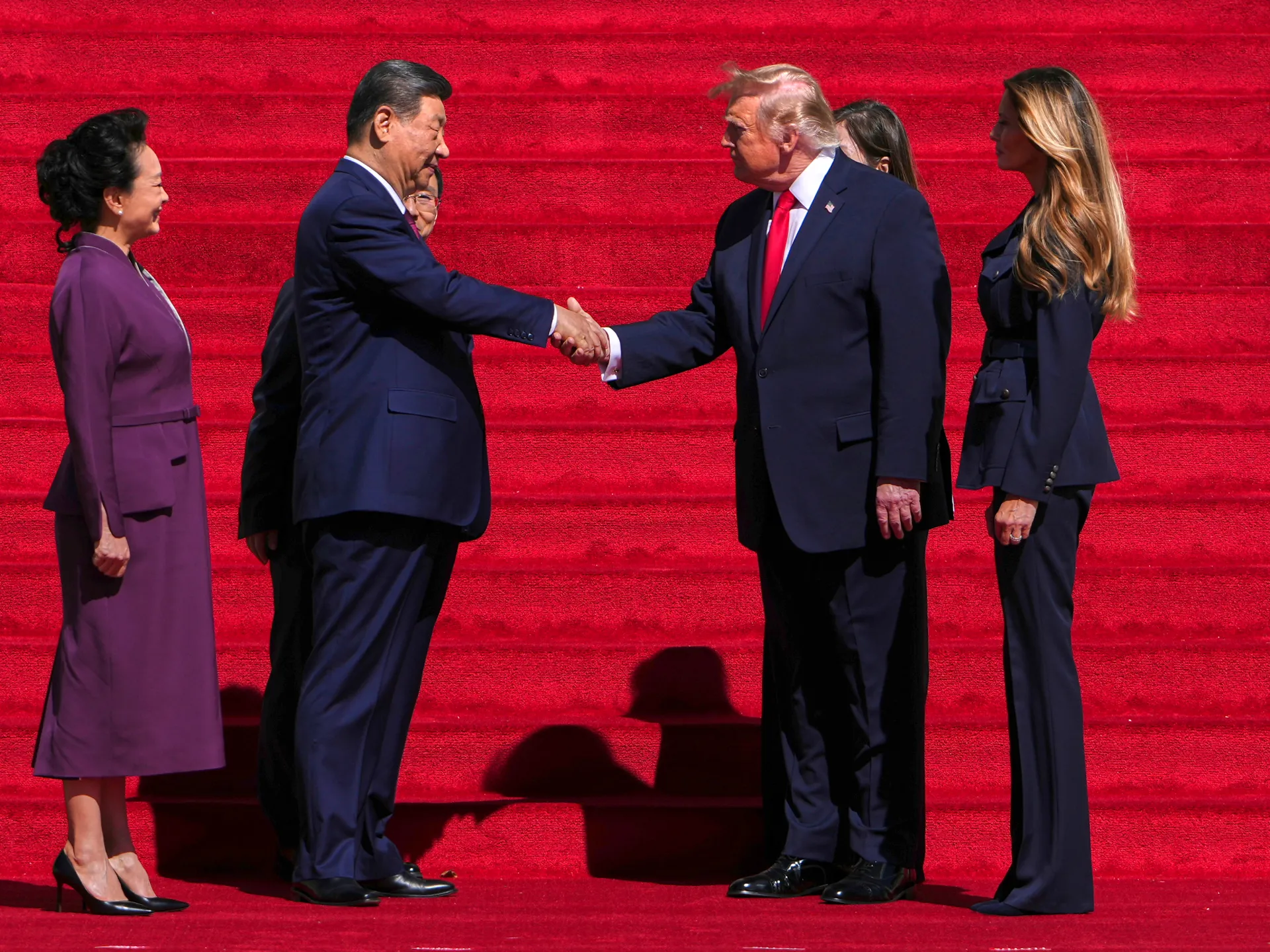
The United States and China have unveiled a list of goods recommended for reduced tariffs following last week’s summit between Presidents Donald Trump and Xi Jinping.
The release of the list on Sunday comes after Trump and Xi agreed to work towards lowering tariffs on $60bn worth of trade.
Recommended Stories
list of 4 itemsend of list
The agreement, which covers $30bn of each side’s imports, identifies 77 Chinese goods and more than 1,600 US products to be considered for more favourable tariff treatment.
Chinese goods on the list include microwave ovens, fish hooks, artificial flowers and weighing scales.
US exports identified for lower tariffs include poultry, dairy products, noodles, eggs, peanuts, canned tomatoes, pure-breed breeding horses, and silk.
US Trade Representative Jamieson Greer said the agreement would improve market access for about 30 percent of US exports to China and also benefit US consumers.
“The Trump Administration will continue to pursue fair, balanced, and reciprocal trade with China by ensuring compliance with commitments on agricultural and energy purchases, pursuing balanced trade in non-sensitive goods, and securing market access for American farmers, manufacturers, businesses, and workers,” Greer said in a statement.
China’s Ministry of Commerce, which confirmed the list on Monday, shortly after the White House announcement, said the sides would discuss “a reciprocal tariff reduction framework of $30 billion for $30 billion, aiming to reach a consensus”.
“This arrangement will help stabilize China-US trade, create better conditions for Chinese exports of relevant products to the US, meet domestic market demand, and strengthen trade cooperation in agricultural products, energy, manufactured goods, and consumer goods,” the ministry said in a statement.
While Trump and Xi’s summit was heavy on pomp and ceremony, their talks wrapped up on Friday with few concrete announcements on the myriad divisions between the superpower rivals, which span everything from trade to artificial intelligence and Taiwan.
Trump and Xi, who have held three face-to-face summits since last October, are expected to meet again at the Asia-Pacific Economic Cooperation (APEC) summit in Shenzhen, China, in November, and the Group of 20 gathering in Miami, Florida, in December.
Trade between the US and China, the world’s two largest economies, has declined substantially since Trump, a longtime critic of free trade policies, returned to the White House in January last year.
Two-way trade totalled $495bn in 2025, down 25 percent from the previous year, according to the US Trade Representative.
Deborah Elms, head of trade policy at the Hinrich Foundation in Singapore, said the latest announcement did not point to a major shift in US-China trade.
“Instead, both sides have largely listed goods that do not move the needle on overall trade flows,” Elms told Al Jazeera.
“They may reduce some prices in the US for consumers, but none is going to make a dramatic difference in inflation figures or result in meaningful sighs of relief by most US buyers,” Elms added.
“The same is broadly true with the Chinese list. Although there are many different agricultural products on the list, most are not actually exported to China or not exported in meaningful quantities.”
The Pentagon has reached an agreement with Lockheed Martin to lay the groundwork for stepped-up production and delivery of new AIM-260 Joint Advanced Tactical Missiles (JATM) to the U.S. military and allied air arms in the coming years. The AIM-260 is still in development, but the head of the Air Force Test Center also touted efforts to further accelerate that work just earlier this week. From the start, the U.S. military has presented JATM as especially critical for ensuring China, with its own growing array of longer-range air-to-air missiles, does not gain an edge in future air combat.
The new framework agreement announced today “is critical to ensuring long-term demand signals flow to key suppliers, allowing Lockheed Martin and the munitions supply chain to invest in manufacturing capacity, workforce, and production efficiencies,” according to a Pentagon press release. “It establishes a framework for future Multi-Year Procurement (MYP) of JATM, executing congressional authority to secure the nation’s highest-priority missile systems.”
“This agreement forms the foundational agreement for a multiyear procurement contract, pending Congressional approval, that provides long-term demand to strengthen and expand the defense industrial base for the program,” according to a separate release from Lockheed Martin.
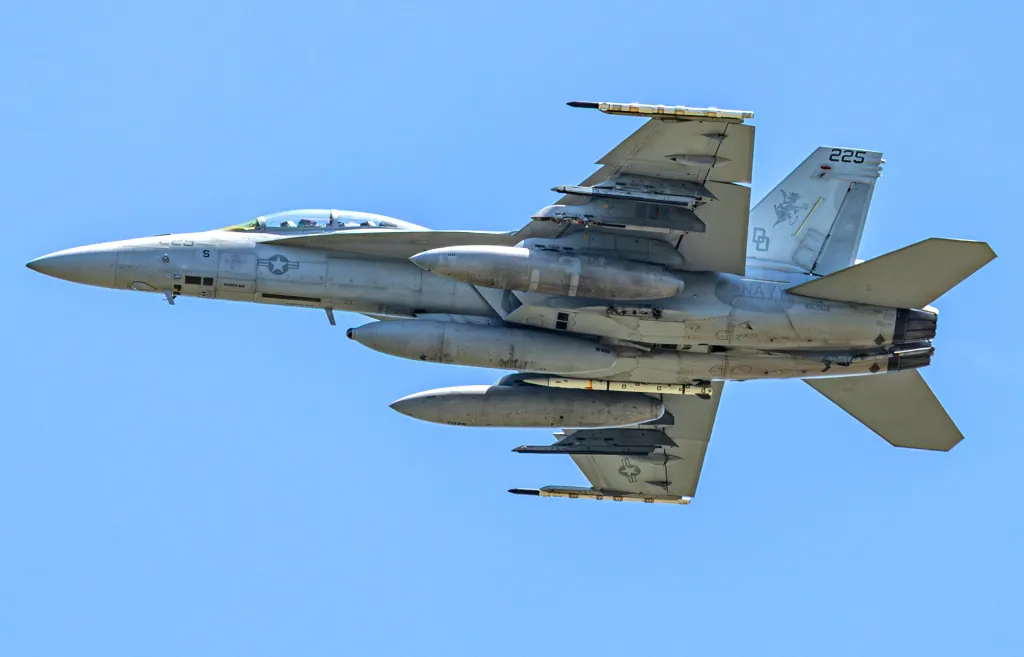
A US Navy F/A-18F Super Hornet seen carrying an AIM-260 Joint Advanced Tactical Missile (JATM). Jonathan Tweedy/ @flightline_visuals
In response to questions from TWZ, the Pentagon declined to comment on the projected number of JATMs covered under this agreement, as well as estimated costs and delivery schedules.
A rendering depicting an F-22 Raptor firing an AIM-260 JATM. USAF
The releases today from the Pentagon and Lockheed Martin confirm that the new framework deal also includes planned foreign military sales of AIM-260s. Australia, one of America’s top allies, is the first confirmed international customer for the JATM, and plans to integrate the missiles on its F/A-18Fs, F-35As, and EA-18G Growler electronic warfare jets. The Royal Australian Air Force’s MQ-28 Ghost Bat CCA-type drones, initial versions of which are already capable of firing AIM-120s, might be another AIM-260 launch platform in the future.
Uncrewed MQ-28 Ghost Bat showcases its combat capability
The AIM-260 remains in development, with the Navy and Air Force test communities supporting that work.
“We are accelerating weapons development from high-end air dominance weapons like the JATM to hypersonic strike systems like the Hypersonic Attack Cruise Missile,” Air Force Brig. Gen. Mark Massaro, head of the Air Force Test Center (AFTC) at Edwards Air Force Base in California, told TWZ and other outlets at a media roundtable yesterday. The roundtable took place at the Air & Space Forces Association’s (AFA) 2026 Air, Space & Cyber Conference.
“We’re actively testing JATM, and it’s progressing along its program path. In test, we are working through the development stages there,” Massaro added. “So, we’re testing it in [sic] the ground with models, like I mentioned. We’re testing it in the air on aircraft. So, from a performance standpoint, I’ll hold on to that from an operational security perspective. But we’re happy seeing where it’s going, and we expect that to be a key piece of capability for our warfighters to have.”
“Just from a testing perspective, we’re always looking at making sure that we’ve got the throughput,” he added when asked if he could talk about challenges or other issues AFTC has run up against in work on the AIM-260. “So, from a test perspective only, infrastructure and throughput to make sure that we can get things out … and make the testing happen. But I’m not, from a capabilities perspective, worried about the system.”
Another look at the AIM-260 loaded on the Navy Super Hornet. Jonathan Tweedy/ @flightline_visuals
It is unclear when the first operational AIM-260s may begin entering the U.S. inventory. When the program was first disclosed to the public in 2019, the stated goal was to start fielding the missiles in 2022. There were also reports in late 2025 that funding issues had caused a three-month delay, based on a fact sheet distributed to some members of the U.S. House Committee on Armed Services. The committee later said that the information was incorrect.
Work to date on JATM has been conducted under a heavy veil of secrecy, with the existence of the program only being announced in 2019. The first public glimpse of the missile only emerged in May of this year. Beyond the aforementioned size requirement and that the new missile will offer significantly greater engagement range over the AIM-120, details remain limited. Readers can learn more about what we do know so far here.
The AIM-260 is not the only longer-ranged air-to-air missile known to be in development in the United States, either. In 2024, the Navy revealed it had begun fielding an air-launched version of the surface-launched Standard Missile-6 (SM-6), called the AIM-174B Gunslinger, at least on a limited level. Just in August of this year, the service disclosed the existence of another very long-range air-to-air missile, the AIM-424 Malice, which has already reached the flight testing phase of development.
A US Navy F/A-18F Super Hornet test jet with four AIM-174B missiles under its wings. point_mugu_skiesA US Navy Super Hornet test jet carrying a load of AIM-424 Malice missiles. USN
An Air Force spokesperson told Air & Space Forces Magazine last month that the service was “closely following” the Navy’s work on the AIM-424. In June, the Air Force itself shared details about another potential future air-to-air missile, dubbed the Air Force Long Range Weapon (AFLRW), including a target requirement for a maximum range of at least 1,000 nautical miles.
Based on past experiences with public disclosures about the AIM-260, AIM-174B, and AIM-424 programs, additional work on advanced longer-range air-to-air missiles is certainly ongoing in the classified realm.
Today’s announcement about the new framework agreement, together with Brig. Gen. Massaro’s brief update yesterday, makes clear there is a continued commitment to JATM amid a still-growing field of new, longer-range air-to-air missiles.
A new drone collaboration by Cessna owner Textron and autonomy provider Merlin Labs aims to offer the U.S. military a hot production line and a familiar platform for uncrewed aerial logistics, including in contested environments.
The product is SkyCourier UX, a drone version of the Cessna 408 SkyCourier that has flown for FedEx, foreign special operations forces and small remote commercial airlines during its six years of active service. TWZ previously covered how the SkyCourier would likely end up taking on military applications when it was first announced, which you can read here.
Introducing SkyCourier UX
A partial full-size model on the show floor at the Air & Space Forces Association’s Air, Space & Cyber Conference in Washington, D.C., this week showed a nose that opened with hydraulics to a cargo bay in lieu of a cockpit. We have seen this same front door conversion concept for uncrewed cargo-carrying helicopters as of late. This allows for easy loading of outsized cargoes without specialized equipment, according to the company, though it does not increase the payload. Like the original SkyCourier, it’s good for about 6,000 pounds, or three standard containers.
(Hope Hodge Seck)
The form factor of the uncrewed SkyCourier variant is otherwise identical to its crewed counterpart, with twin turboprops, a high-wing configuration and an aluminum body.
As with the base SkyCourier, a major advantage of the aircraft is its optimization for loading and carrying standard pallets. This means that cargoes don’t necessarily have to be downloaded, broken up and repackaged for movement to forward positions. This is a big logistical advantage and can speed the flow of critical supplies to where they are needed most.
The aircraft’s range is about 900 nautical miles, which the makers say suits it well for Pacific island-hopping, allowing for refueling stops on austere runways. It can take off on runways as short as 3,300 feet and land in just 2,500 feet, according to a spec sheet.
SkyCourier can hold three standard LD3 pallets. (Textron)
The Textron/Merlin collaboration aims to differentiate itself with proven capability in the missions it intends to fulfill, along with the ability to roll out a new drone variant fast and one it can sustain consistently. Bob Gibbs, Textron’s vice president of special missions sales, told reporters in a Monday briefing that the conventional SkyCourier was now fulfilling new orders, not previously announced, to deliver modified aircraft to foreign nations for medical evacuation, casualty evacuation and environmental protection.
“The aircraft’s being operated literally from the Arctic to the Amazon,” Gibbs said. “There are three different island nations in the Pacific that have airline fleets of them. We support our aircraft in 170 countries around the world. So, just like a Cessna Caravan or a Beechcraft King Air, they’re ubiquitous. You find them anywhere, and we support them anywhere in the world.”
The $7 Million Flying Box: Inside the Cessna SkyCourier
While the 900-mile range can’t take the loaded-up aircraft the nearly 2,000-mile stretch between the first and second island chains, Merlin and Textron executives said they don’t need to accomplish that to make it effective.
“This is the ability to disperse the forces among the second island chain … to do the island-hopping to be able to get to, whether it’s Palau, Tinian, Saipan, pick your various islands there,” Kyle Kremer, a retired Air Force major general who now advises Merlin, said. “With the range that it has, it has the ability to agilely move through there” and connect logistics pipelines.
SkyCouriers are flying all over the world, including in some very harsh environments. (Textron)
The autonomy package, Merlin Pilot, is already in use under a $105 million U.S. Special Operations Command contract to develop autonomy for the C-130J Super Hercules transport aircraft. It’s been flown aboard four different single and multi-engine airframes, the company says. A promotional web page for Merlin Pilot shows tanker-class and commercial cargo applications with developing and future capabilities.
Merlin has also teamed with the Air Force to develop an AI copilot for KC-135 tankers that can decrease crew workload and even possibly fly the aircraft on its own in the future. TWZ reported on planned tests for these autonomy-enabled tankers in 2024, with the flights set to begin the following year.
However, the Air Force has not confirmed the completion of any flight tests for the effort since. And on Wednesday, Lt. Gen. Daniel Tulley, commander of Air Force Mobility Command, appeared to confirm that the tests had never taken place.
“There’s some companies out there who have offered to develop things where they can bring a carry-on kit onto old KC-135s and other aircraft, but we haven’t seen them test those successfully,” he said.
He added that autonomy technology may lack the maturity needed for tanker missions.
“An optionally manned or an unmanned tanker at range, [at] the ranges we needed to operate at. It’s a very large aircraft, and we’re not yet to where we’re employing fully autonomous large aircraft. But the technology, I would say, is there and rapidly getting there,” he said.
Tulley did stress that the Air Force saw a need for unmanned aircraft in the last-tactical-leg delivery.
“I’m wrestling with that as we develop an AMC strategy,” he said. “There is absolutely room for some sort of autonomous or other small light lift capability, and that’s just one domain in the air, right? This could be by sea, could be by land, but there is absolutely some requirement for distribution from those major points of debarkation.”
In addition to autonomous takeoff, landing and navigation, and protection of the flight envelope, Merlin Pilot, the company says, has digital copilot human-machine teaming characteristics that include pilot health monitoring, gaze tracking and fatigue detection; pilot incapacitation and contingency response; and flight monitoring and assistance.
A military variant concept of the SkyCourier. (Textron)
Some of Textron’s new features are making light steps toward autonomy already. Gibbs pointed out that the company’s Cessna Citation Gen3 business jets now include standard Garmin auto-land technology.
“Obviously, it’s a different scale than what Merlin’s doing as far as automation,” he said. “But … as we develop new products, we try to future-proof them, and so that’s where you get this nice transition between us.”
The SkyCourier can cost up to $8.5 million, depending on modifications, and while the SkyCourier UX sports GPS-denied navigation and the ability to seek different flight paths to avoid danger, it doesn’t have other built-in defenses. For contested logistics missions, it’s not clear how much risk the services are willing to tolerate for a relatively small logistics payload capability. Kremer maintained, though, that a drone of this size could be a mission-saving capability when dispatched to austere locations. And, in a Pacific conflict, it may reduce demand on already-stretched C-130 transports, now the smallest platform capable of carrying standard containers and long overtasked.
A U.S. Military C-130 prepares for takeoff at Pohakuloa Training Grounds, Hawaii, Oct 28, 2022. (U.S. Army photo by Pfc. Wyatt Moore / 28th Public Affairs Detachment) Spc. Wyatt Moore
“If you can’t get the spare tire, if you can’t get the component, that small thing where you need it in these dispersed operations, they don’t keep the big logistic supply chain built up in these locations,” Kremer said. “You have to be able to get it where you need it, when you need it, and that’s what this provides.”
Nonetheless, the Air Force has a clear appetite for a capability like this. Last year, it signed a $17.5 million contract to put a Reliable Robotics autonomy package on a Cessna 208B Caravan.
On Monday, Air Force Chief of Staff Gen. Ken Wilsbach reiterated the Air Force’s interest in unmanned aerial logistics platforms.
“We’re doing testing on them,” he said in response to an audience question. “We believe that there’s some value in that as well. It certainly could be valuable in the Pacific with the ranges that we’re talking about, and so we’re looking at several different options and evaluating them. But I would say nothing, no program of records just yet, but [we’re] certainly taking a look at some demonstrators and the like to see what’s available to us.”
Notably, China has made significant advancements in developing logistic drone capabilities, with reported successful flight tests of massive heavy-lift uncrewed aircraft, including a 7-ton cargo plane that’s currently the world’s largest uncrewed freighter to take flight. Among them is China’s CH-YH1000, a medium-altitude cargo drone developed by the China Academy of Aerospace Aerodynamics that boasts, like SkyCourier UX, a hatch in lieu of a cockpit for ease of flat-pallet loading up to a weight of 1.2 tons. These are just some of an increasing number of similar systems being developed in China that aim to take the crew out of lower-end logistical missions over short, medium and long distances.
China’s big CY-8 uncrewed logistics aircraft undergoing testing. (Chinese Internet)
Though Textron and Merlin have yet to build a SkyCourier UX prototype, Merlin CEO Matt George emphasized that the company had chosen to partner with Textron because they could start delivering aircraft fast.
“You’ll see over the course of the show a lot of concept aircraft. You’ll see a lot of renders. You’ll see a lot of people who have big empty factories all around the country,” he said. “But I also want to be very clear about the fact that none of this matters without production … There’s 14,000 Americans working in Wichita, Kansas, on a production line where these aircraft, at least in the crewed configuration, are coming off the production line. So when we talk about capability, we’re talking about that capability and bringing that capability to bear soon, rather than in the future.”
Next in the development process, executives say, will be an optionally piloted version of SkyCourier that will allow users to develop comfort with the platform and open the door to further iteration.
The Textron/Merlin team is also leaving its options open in terms of which U.S. military customer might find its platform most useful.
“I hope [the Army and Air Force] fight over it,” Gibbs said.
WASHINGTON — A federal judge has ruled that a plan by the Trump administration to slash staffing at the federal agency tasked with responding to disasters by 50% was unlawful.
The opinion issued late Friday marked a victory for labor groups who had sued the agency. The labor organizations had argued that plans by the Department of Homeland Security, which was then led by Secretary Kristi Noem, violated congressional protections that were designed to safeguard the independence of the Federal Emergency Management Agency.
The issue of the FEMA staffing was part of a much larger lawsuit filed by the American Federation of Government Employees and other labor groups, contesting efforts by the Trump administration to slash the federal workforce.
U.S. District Judge Susan Illston wrote in her opinion that top Homeland Security officials late last year directed FEMA’s leadership to submit a staffing plan that included a 50% staffing cut even though the agency’s own supervisors objected.
“Frankly, the FEMA staffing plan number appears as if pulled from thin air,” wrote Illston.
FEMA responded in a statement late Saturday saying that while it does not comment on personnel matters and ongoing litigation, “DHS and FEMA are ready for the 2026 hurricane season.”
“We’re ensuring workforce stability and a strong, deployable force for upcoming national events and potential disasters; making the agency leaner, faster and laser-focused on supporting state, local, tribal and territorial partners before, during and after disasters,” the statement said. “FEMA continues to maintain a roster of experienced leadership and support staff across headquarters and regional offices.”
The Department of Homeland Security did not immediately respond to requests for comment.
In the opinion, Illston wrote that it was clear that the government violated rules established after 2005’s Hurricane Katrina that put decisions on staffing levels squarely in the hands of FEMA, not the Department of Homeland Security, and that prevented Homeland Security from “substantially” reducing the “functions” of FEMA.
Illston didn’t order a specific remedy to carry out her opinion but directed the two sides to meet and decide on a course of relief.
Although FEMA has experienced terminations, the 50% staffing cuts ultimately were not carried out. In recent months, after top leadership changes at FEMA and the Department of Homeland Security, the agency has rehired some staffers who were let go.
FEMA was one of the agencies targeted for staff reductions in the federal government as part of a broad Trump administration plan to reduce the size of government. The embattled agency has been buffeted by mass staff departures, disruptions of grant programs and delays of disaster aid.
In May, a Trump-appointed FEMA Review Council submitted a final report recommending sweeping changes to how the agency supports states, tribes and territories in disaster.
The final version backed away from the recommendation to cut the FEMA workforce by 50%, which was included in a December 2025 draft reviewed by the Associated Press.
The council instead recommended the agency conduct a “strategic review” to determine “appropriate staffing levels.”
In an August report, the Government Accountability Office said it found that the departures of thousands of staff in 2025 resulted in a “loss of institutional knowledge and experienced personnel” and “exacerbated longstanding workforce challenges.”
More than 4,300 employees, or about 17% of FEMA’s workforce, separated from the agency in the 2025 budget year, with over 1,500 through voluntary reductions. The agency also made about 2,900 new hires.
The GAO recently recommended to Congress that it “consider requiring” FEMA to base “significant workforce decisions” on a more strategic planning process.
Without it, the GAO found, “FEMA cannot be assured that the agency is positioned to effectively meet its mission needs.”
WASHINGTON: A federal judge has ruled that a plan by the Trump administration to slash staffing at the federal agency tasked with responding to disasters by 50% was unlawful.
The opinion issued late Friday marked a victory for labor groups who had sued the agency. The labor organization had argued that plans by the Department of Homeland Security violated congressional protections that were designed to safeguard the independence of the Federal Emergency Management Agency.
The issue of the FEMA staffing was part of a much larger lawsuit filed by the American Federation of Government Employees and other labor groups, pushing back on efforts by the Trump administration to slash the federal workforce.
U.S. District Judge Susan Illston wrote in her opinion that top Homeland Security officials late last year directed FEMA’s leadership to submit a staffing plan that included a 50% staffing cut even though the agency’s own supervisors objected.
“Frankly, the FEMA staffing plan number appears as if pulled from thin air,” wrote Illston.
The Department of Homeland Security and FEMA did not immediately respond to requests for comment.
Illston wrote that it was clear that the government violated rules established after 2005’s Hurricane Katrina that put decisions on staffing levels squarely in the hands of FEMA, not the Department of Homeland Security and that prevented DHS from “substantially” reducing the “functions” of FEMA.
Illston didn’t order a specific remedy to carry out her opinion but directed the two sides to meet and decide on a course of relief.
Although FEMA has experienced terminations, the 50% staffing cuts ultimately were not carried out. In recent months, after top leadership changes at FEMA and the Department of Homeland Security, the agency has rehired some staffers who were let go.
FEMA was one of the agencies targeted in the federal government for staff reductions as part of a broad Trump administration plan to reduce the size of government. The embattled agency has been buffeted by mass staff departures, disruptions of grant programs, and delays of disaster aid.
In May, a Trump-appointed FEMA Review Council submitted a final report recommending sweeping changes to how the agency supports states, tribes and territories in disaster.
The final version backed away from the recommendation to cut the FEMA workforce by 50%, which was included in a December 2025 draft reviewed by The Associated Press.
The council instead recommended the agency conduct a “strategic review” to determine “appropriate staffing levels.”
In an August report, the Government Accountability Office said it found the departures of thousands of staff in 2025 resulted in a “loss of institutional knowledge and experienced personnel” and “exacerbated longstanding workforce challenges.”
More than 4,300 employees, or about 17% of FEMA’s workforce, separated from the agency in the 2025 budget year, with over 1,500 through voluntary reductions. The agency also made about 2,900 new hires.
The GAO recently recommended to Congress that it “consider requiring” FEMA to base “significant workforce decisions” on a more strategic planning process.
Without it, the GAO found, “FEMA cannot be assured that the agency is positioned to effectively meet its mission needs.”
Manila defence chief says Washington gave ‘definite assurances’ that its commitments to the Philippines remain.
Published On 7 Sep 20267 Sep 2026
Philippine Defence Secretary Gilberto Teodoro has warned that Beijing could view recent cuts to the joint US-South Korea military drills as an opportunity to reassert itself in the Asia Pacific.
Speaking on the sidelines of the Seoul Defense Dialogue, an annual multilateral security forum, Teodoro said that “China is very quick to exploit gaps”, when asked on Monday whether Beijing could seize on the move.
Recommended Stories
list of 3 itemsend of list
He added that Washington had given Manila “definite assurances” that the US commitments to the Philippines remained unchanged.
He also accused China of exploiting democratic systems to spread “distortive narratives”.
US General Xavier T Brunson, commander of the ROK/US Combined Forces Command (CFC), the United States Forces Korea (USFK) and the United Nations Command (UNC), shakes hands with a US Army soldier during a US-South Korea joint river-crossing exercise near the Demilitarized Zone separating South and North Korea, in Yeoncheon, South Korea [Kim Soo-hyeon/Reuters]
South Korea and the US shortened the duration of their annual joint military drills and scaled back field training exercises last month after US President Donald Trump ordered a “substantial reduction” in the annual war games.
The US-led Ulchi Freedom Shield war games ended six days earlier than originally planned.
Trump cited his “very good relationship” with North Korean leader Kim Jong Un and linked the decision to Seoul’s refusal to join the US and Israel’s war on Iran at the time.
Last week, South Korea’s presidential office said it was mulling “contributions” to the US’s freedom of navigation in the Strait of Hormuz. The presidential office later clarified that nothing has been decided, as any military deployment by South Korea requires a decision by the country’s National Security Council, a resolution at a cabinet meeting, and consent from the National Assembly.
Trump said he planned to meet with Kim later this year. Kim’s sister, Kim Yo Jong, later released a statement denying any ongoing communication between the US president and her brother and maintained that Washington continues to engage in a “hostile” policy towards her country, despite the warm relationship between the two leaders.
US, South Korea and Japan hold trilateral military drills
The US, South Korea and Japan are due to hold five days of military drills in waters east and south of South Korea’s Jeju Island starting on Monday.
South Korea’s military said in a statement that the Freedom Edge exercise is defensive in nature and meant to respond to North Korean nuclear and missile threats as well as promote regional peace and stability.
North Korea has previously slammed the trilateral drill as a “reckless show of strength” that proved its adversaries’ confrontational stance. Pyongyang has also said the drill contained a US intention to lay siege to China and exert pressure on Russia.















![US General Xavier T. Brunson, commander of the ROK/US Combined Forces Command (CFC), the United States Forces Korea (USFK) and the United Nations Command (UNC), shakes hands with a US Army soldier during a US-South Korea joint river-crossing exercise, which is a part of the annual Freedom Shield joint military training, near the demilitarised zone separating South and North Korea, in Yeoncheon, South Korea [Kim Soo-hyeon/Reuters]](https://i0.wp.com/www.aljazeera.com/wp-content/uploads/2026/09/2026-03-14T101408Z_1688914085_RC254KAMA6O8_RTRMADP_3_SOUTHKOREA-USA-MILITARY-1788746327.jpg?w=640&ssl=1)