Renoir art heist suspects were planning ‘imminent’ second robbery, prosecutors say.
Published On 12 Oct 202612 Oct 2026
Two paintings by the impressionist master Renoir which were stolen from a French museum last month have been found damaged behind a false wall in a private home after police made several arrests ahead of what prosecutors say was an imminent second heist.
Marseille prosecutor Nicolas Bessone said six suspects were arrested on Wednesday after authorities discovered they were planning to target the Fondation Maeght in Saint-Paul-de-Vence, home to one of Europe’s largest collections of modern art.
Bessone said the arrests were prompted by the “very strong suspicion that another heist was imminent”.
“We were very clearly looking at the repetition of a criminal scheme”, said Eric Antonetti, the head of the Alpes-Maritimes judicial police.
On September 8, thieves used an electric saw to cut through a fence to enter the Renoir Museum in Cagnes-sur-Mer on the French Riviera, according to investigators.
An alarm sounded and police officers arrived four minutes later, a swift response that “apparently caused the perpetrators to panic,” Bessone said.
The stolen works, “Madame Colonna Romano” and “Young Woman at the Well” by impressionist painter Pierre-Auguste Renoir, were valued at about 4.2m euros ($4.7m), Bessone said.
The thieves also attempted to steal two other Renoir paintings, “Madame Pichon” and “Coco Reading”, which depicts Renoir’s young son Claude. They abandoned them in the museum gardens while fleeing police.
“As they fled, they were unable to take all four paintings and abandoned two of them, which were later found in a protective sleeve,” he said.
Police chiefs speak to reporters in Nanterre on Monday following recovery of the stolen paintings last week [Thomas Samson/AFP]
Damaged and torn
The paintings were found hidden behind a false wall in a house on Friday. Both works were damaged and will need restoration. One of the paintings, “Madame Colonna Romano”, had been torn.
“These two paintings are not simply works of art. They are part of our city’s history,” Bryan Masson, the mayor of Cagnes-sur-Mer, near Nice, said on Friday. “Knowing they have been recovered is an immense relief.”
The recovery came almost exactly one month after the theft, following an investigation that used DNA evidence, mobile phone geolocation data and surveillance video.
The two key suspects include a 29-year-old, who was charged after investigators recovered DNA from a bag left behind during the getaway.
They were charged with organised theft and other offences. A third man, accused of hiding the paintings, was charged with organised handling of stolen goods.
A fourth suspect, who investigators say was approached about buying the artworks, was charged with handling stolen goods and taking part in a criminal conspiracy.
Bessone said the suspects had denied planning a second museum raid, but he added that he did “not believe the principal suspect visited that museum simply out of a love of art”.
The recovered Renoir paintings, valued at millions, were stolen in a daring heist at Cagnes-sur-Mer last month.
Published On 10 Oct 202610 Oct 2026
Two paintings by the French Impressionist artist Pierre-Auguste Renoir that were stolen from a museum in southern France a month ago have been recovered, the town’s mayor said.
“These two paintings are not simply works of art. They are part of our city’s history,” Bryan Masson, the mayor of Cagnes-sur-Mer, near Nice, said on Friday. “Knowing they have been recovered is an immense relief.”
Recommended Stories
list of 3 itemsend of list
Six people have been arrested in connection with the theft, local authorities said. Masson did not say where the paintings were found or in what condition.
How the theft unfolded
Two thieves broke into the Renoir Museum a little before 6am on September 8, cutting through a fence to enter the grounds, smashing a window and using an electric saw to cut the clips securing the frames, Masson said at the time.
He described them as “well equipped” and “well informed”.
The museum alarm sounded at 5:48am, and municipal police arrived five minutes later, forcing the thieves to flee.
They had taken four paintings, valued by the mayor at about nine million euros ($10.5m).
Two of the stolen works – Renoir’s “Portrait of Madame Pichon” and “Coco Reading” – were later found dropped in the museum garden, the prosecutor’s office said at the time.
The two works that remained missing were “Portrait of Madame Colonna Romano” and “Young Woman at the Well”, the office said.
Police said last month that the thieves were not first-time offenders and had scoped out the premises.
The Marseille prosecutor opened a theft investigation into an organised gang, and the national office for trafficking in cultural goods joined the probe.
A string of museum heists
The museum, opened in 1960, is in the painter’s last home, where he died in 1919.
“This incident should serve as a warning about the protection of our museums,” Masson said after the robbery.
The theft came less than a year after jewels worth about $100m were stolen from the Louvre in Paris in a daylight robbery.
The four suspected robbers have been arrested, but the jewels have not been found.
In August, Italian police said they had recovered paintings by Renoir, Cezanne and Matisse worth more than $10.4m that were stolen from a museum in March.
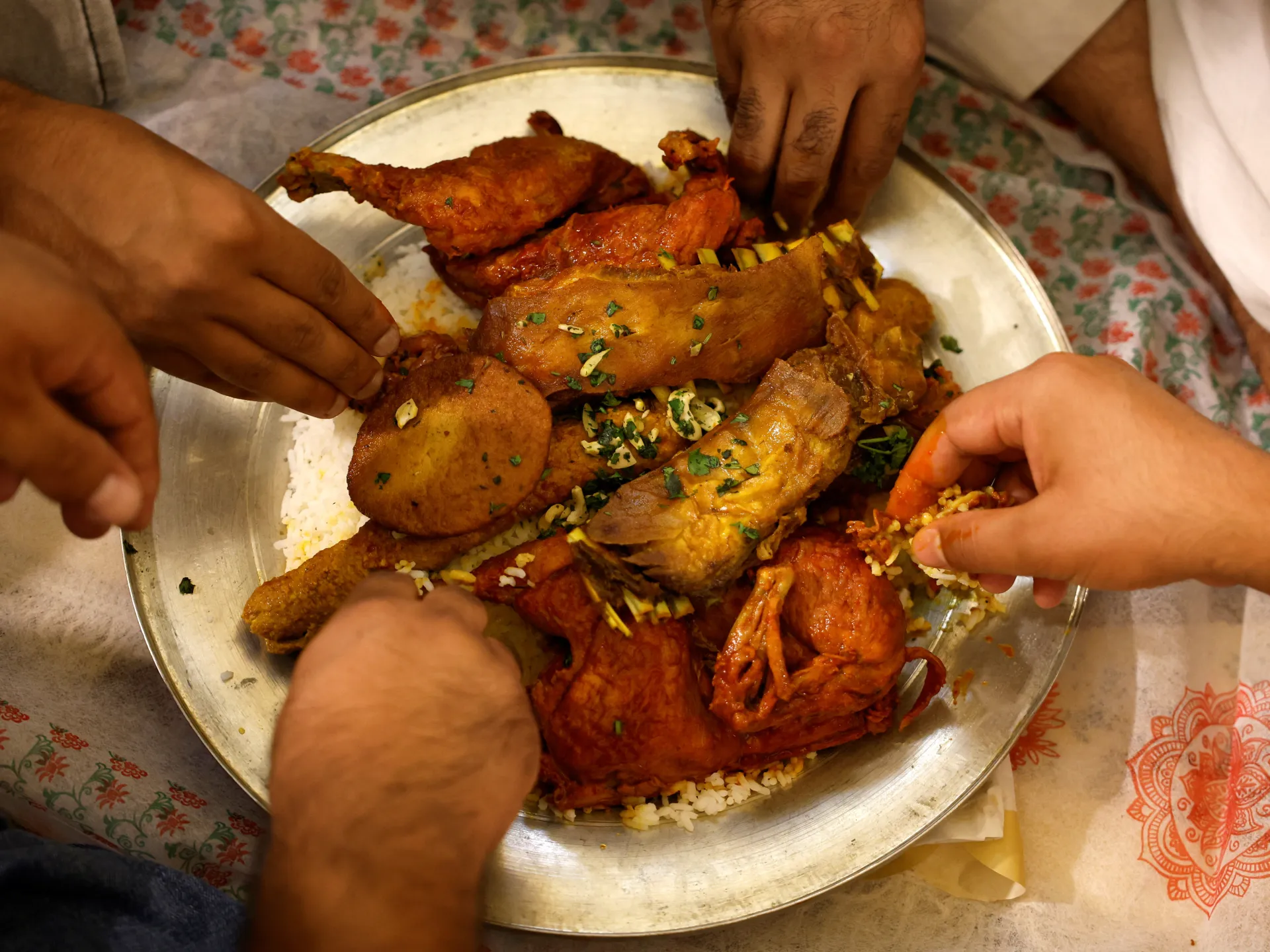
As autumn approaches, the rhythmic thud of wooden mallets pounding lamb echoes across courtyards and back lanes in Kashmir, where cooks prepare Wazwan – a lavish, multi-course mutton feast that remains central to traditional wedding celebrations.
Wazwan arrived in the valley from Central Asia in the 14th century, when rulers brought skilled chefs along with the carpet and shawl weavers that later defined the region’s craft heritage.
Today, the feast is both a marker of social status and a powerful symbol of Kashmiri identity.
Among its guardians is 74-year-old Ghulam Nabi Baba, a veteran Wazwan chef who traces his lineage to those early migrants. His forefathers settled in Srinagar’s old city as part of a community of cooks known as Wazpora.
“There were only seven mutton dishes at that time. Over the centuries we added more, and now there are around 20,” Baba said.
He explained how the number of dishes and the amount of meat often reflect a family’s wealth.
“Forty years ago in Delina [a village in north Kashmir] I cooked 4,500kg (9,920 pounds) of meat. That was a very big wedding. Normally, at an average marriage we cook 200kg (440 pounds),” he added.
Despite the expanding menu, the core techniques have changed little. Lightly spiced meat is still pounded by hand before being simmered slowly over wood fires – a labour-intensive process Baba has followed since joining his father as a cook at 15.
But the pressures of modern life are reshaping the tradition. Baba’s son has chosen to open a restaurant rather than work weddings, saying the round-the-clock demands are too exhausting.
He believes he is still carrying forward the family’s centuries-old culinary legacy – just in a different setting, as Wazwan adapts to contemporary tastes and lifestyles.
If the above sounds familiar, then you might already be a Wholigan — someone who routinely listens to the long-running celebrity podcast “Who? Weekly.” Part of the fun of listening to the thrice-weekly show (one being for Patreon members), aside from its hosts contextualizing a dizzying array of tabloid headlines, is learning its lexicon. For example, “Crunch, Crunch” spoofs a bit of sponsored content the pop singer Bebe Rexha did for Lay’s Potato Chips in 2019. Other popular phrases unique to the Who-verse: “Good form, Bella Thorne.” “Scar-Jo Yummy Pop.”
Launched in 2016 by pop culture journalists Bobby Finger and Lindsey Weber, “Who? Weekly” eagerly mines the growing world of lower-tier celebrity, with the two hosts categorizing trending names under two main umbrellas: the fame-hungry “Whos” (influencers, reality stars, a pre-royal Meghan Markle) and the instantly recognizable, likely critically acclaimed “Thems” (Tom Cruise, Taylor Swift, Beyoncé). Rounding out the paradigm are the “Nahs,” or folks who aren’t well known enough to claim “Who” status.
On the Shelf
“I Want to Be Famous: When Everybody and Nobody Is a Celebrity”
By Bobby Finger and Lindsey Weber Crown, $33
If you buy books linked on our site, The Times may earn a commission from Bookshop.org, whose fees support independent bookstores.
“We came of age reading all the [gossip] bloggers, from Perez Hilton to Liz Smith,” Weber tells The Times of why she and Finger originally started “Who? Weekly,” which technically began as a newsletter before it morphed into a podcast.
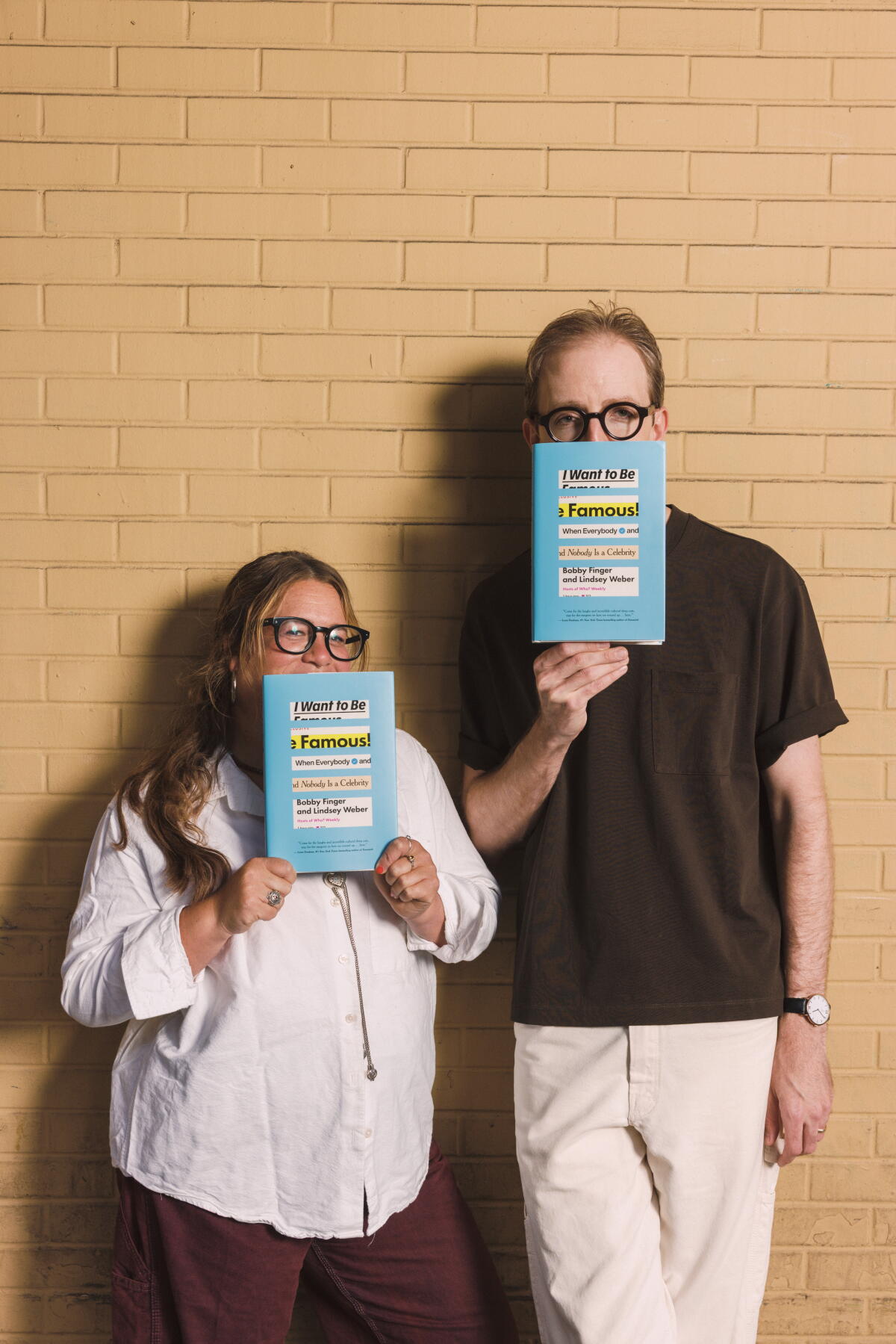
Lindsey Weber and Bobby Finger have co-written the newly released book, “I Want to Be Famous: When Everybody and Nobody Is a Celebrity.”
(Justin Jun Lee / For The Times)
Finger also cites influence from “Oh No They Didn’t,” a 2000s-era LiveJournal page that aggregated celebrity headlines and invited users to comment (kind of like a proto-Subreddit). “You read the story just as you read the comments, which were integral to the story,” Finger says. “All of the inside jokes, the additional commentary. That’s what ‘Who? Weekly’ has become, especially in our Patreon Discord. [Listeners] are always chiming in and creating their own language and extensions of the ‘Who? Weekly’ universe.”
That universe is about to expand again: In conjunction with the pod turning 10 this year, Weber and Finger are releasing a new book, “I Want to Be Famous: When Everybody and Nobody Is a Celebrity,” which looks at fame and celebrity through a historical lens while also exploring how the line between Whos and Thems got that much blurrier in the social media age. “I feel like we were always barreling towards a book,” Weber says. “Both of us are trained journalists. We were always kind of like, ‘When are we going to put our money where our mouth is?’”
To demonstrate how the binary is evolving into a spectrum, Weber and Finger revisit juicy pop cultural anecdotes (remember when Courtney Love threw her compact at Madonna at the VMAs? Or when Ariana Grande dated Pete Davidson? Or when Katy Perry flew into space on the Blue Origin?) while blanketing every chapter with an elucidation of why, no matter what decade we’re in, society just can never get enough gossip.
Meanwhile, unlike the podcast, “I Want to Be Famous” gives the hosts ample room to go deeper into the cultural framework of modern celebrity than they normally have time for. Each week, Weber and Finger dedicate one episode to unpacking a prepared list of Who-y headlines, and a follow-up episode, titled “Who’s There?,” is dedicated to listener calls. Which is to say, Weber and Finger usually spend more time explaining and trading jokes about what each micro-celeb is known for rather than how celebrity itself has evolved.
Lindsey Weber and Bobby Finger are celebrating the 10th year of their podcast “Who? Weekly.”
(Justin Jun Lee / For The Times)
“The pod is on the surface funny, [but] if you are a real fan, you’re like, ‘Oh, there’s actually some interesting stuff beneath the funny,’” Finger says. “We wanted this book to be the opposite, where it’s actually outwardly interesting and smart, and then inwardly funny when it can be.”
The writers’ tone might lean more academic within “I Want To Be Famous,” but longtime fans of the pod will recognize dozens of niche names, stories and extremely online subjects that were at one point or another discussed on the show. The authors present their grand theory of Whos and Thems by opening with the story of how former Who Meghan Markle shot to Them-dom after marrying Prince Harry. Other chapters observe what happens when Thems date or marry Whos. There’s a history of how celebrities say sorry (where there were once press releases there are now Notes app apologies) and a conversation about how nepo babies fit into the framework. As the book moves across history and demonstrates how the internet has completely upended the binary, they also show what hasn’t changed about the way fans relate to their favorites. “What we want most in a celebrity is authenticity,” Weber theorizes.
For Weber and Finger, the chance to tie the disparate threads they discuss on “Who? Weekly” was a major incentive to work on their book. “I kept being like, ‘Is this the first time anyone’s ever written about this in a book?’” Weber says with a laugh. “Because some of it was so stupid — these references to fandoms and Club Chalamet and niche things that are newer … I’m like, ‘Oh my God, are we doing this thing where now people have to read about Club Chalamet in 100 years?’ Obviously that would be incredible.”
“There’s a temporality to our show that is not the case with this book, which is very exciting,” Finger adds. “Because our show kind of exists to go in one ear and out the other. And I say that because it goes in one of our ears and out the other too, as the creators.”
Woven into the conversations around Whos, Thems, Thems behaving like Whos (see: brand deals), and Whos aspiring to be Thems is the authors’ palpable anxiety about the decaying role of entertainment journalism in an age in which celebrities can simply promote themselves via social media — or host their own podcasts. The authors are also painfully aware that most audiences have less of an appetite for reading, period. A chapter titled “The 2010s Killed the Cover Star” looks back what is thought to be the greatest piece of celebrity journalism ever written (Gay Talese’s 1966 Esquire classic, “Frank Sinatra Has a Cold”) and contrasts it with today’s style of uncritical, PR-friendly celebrity Q&As that boast nothingburger headlines that don’t tell us much of anything.
Conversations about media and journalism itself run through the podcast too, and that’s by design. “Sometimes we go so niche that it’s like, ‘Are we just making a podcast for our friends that work in media?’ And sometimes the answer is yes,” Weber says. “We can only speak from our experience. … But the most shocking thing about ‘Who? Weekly’ is that [media discourse] is actually quite interesting for lots of people.”
Finger adds, “Our past in media and our abundance of friendships with people who are still in media is like a crucial part of our show. It’s an industry we respect so much, you know, and we’re obsessed with the way it evolves. If we didn’t have that background, I don’t think the show would exist the way it does at this current moment.”
Even with a massive archive of episodes and no plans to stop, Weber and Finger are thrilled to have cemented their legacy with a book that could (and really should) be taught in media and communications classes. “Bobby and I both obviously love celebrities,” Weber says. “But we love media more.”
Brodsky is an L.A. culture and music writer. Her biography of Stevie Nicks, “Lessons & Lace,” published by Penguin Random House, is out now.
Perhaps no one genre of music screams “Mexican” more than mariachi music.
Yet a close second is probably the melodic sound of British rock band the Smiths.
Many have pondered why Mexicans and Mexican Americans have such an affinity for those blokes from across the pond. Maybe it’s that lead singer Morrissey’s outsider mentality and melancholic words resonate with the demographic — or there’s something acutely relatable about the melodramatic musings of a romantic yearner.
He noted that Morrissey’s malaise mirrors the sentiment of many ranchera songs, also citing that his effeminate onstage persona is a perfect subversion of Mexican machismo. These elements make the singer an anglophone mash-up of Pedro Infante and Juan Gabriel, Arellano added.
Both the Smiths and mariachi music can drive even the most macho Mexican man to tears with their poetic lyrics and layered instrumentals.
To celebrate the special choke hold these musical stylings have on Mexican Americans in Southern California, the L.A.-based group Mariachi Tierra Mia is putting on a “Mariachi Meets the Smiths” show at the Ford amphitheater on Sunday. The show will merge not only the cultural resonance of the two in Mexican American culture, but also unite the sounds.
The idea to incorporate elements of mariachi music into a cover of a Smiths tune happened by happenstance in December 2024.
Members of Mariachi Tierra Mia were performing at a Christmas party when an attendee requested that the group perform the 1984 Smiths track “Heaven Knows I’m Miserable Now.”
Members of rock band The Last Line of Defense who will perform at The Ford as part of “Mariachi Meets The Smiths.”
(Mariachi Tierra Mia)
The ensemble’s leader, Maira Solis, didn’t know the song — but her husband and fellow bandmate Ivan Peña signaled that he did. Later on in the night, he performed the song alongside two dancing, masked luchadors.
The video of Peña belting out the song while outfitted in his mariachi regalia struck a chord with audiences online after the group posted it on social media.
“The relationship between Mexicanos and the Smiths needs to be studied,” Peña told The Times. “[The video] seemed like a very innocuous thing, but days later, it had 3 million views. That was the first time that ever happened to us, and to me, personally.”
The overwhelmingly positive response to Peña’s rendition of the Morrissey-penned tune let him know that people had an appetite to see the Smiths and mariachi blended together.
Born in 1991, Peña was born years after the Smiths broke up, but was introduced to the group’s catalog at age 5, while his uncle drove him around in a lowrider. The first tracks he heard from the band were “Heaven Knows I’m Miserable Now” and “Ask.”
“I don’t think the music has aged a wink. It’s just gotten better with time,” he said. “It’s clearly resonated across generations. Now you even see Gen Z getting in on it too and realizing music of the past is so substantial.”
But the fandom surrounding the Smiths, and more specifically Morrissey, has entered more complex territory in light of the Smiths frontman’s past political commentary.
“I get that he’s a polarizing guy. I know he’s notorious,” Peña said. “I [say], separate the art from the people behind it … because the piece itself is not at fault for the shortcomings or views of the people who made it.”
Sunday night’s concert will be split in two acts, with the first being a bilingual mariachi set by Mariachi Tierra Mia composed of genre standards and more modern covers. For the second act, Peña’s rock group the Last Line of Defense will perform songs by the Smiths and be joined by the mariachi group to merge the sounds.
Incorporating the mariachi to create straightforward covers of the Smiths’ material proved challenging as Peña did not want to put a spin on the songs’ composition — no added notes and no new harmonies were allowed.
“You could task a mariachi band with doing a one-for-one adaptation of the Smiths’ songs, [but] most of the tracks do not work on the mariachi setting,” he said. “Whereas the guitar is leading the charge in a rock band. The guitar and the vihuela are essentially the rhythm section, so you have to translate guitar riffs to the melody section of the mariachi, [which is the] trumpets and violins.”
According to the 34-year-old musician, very few of the English band’s song fit into that mold.
He knows that fans love the original material and he wants to respect the essence of the time-tested songs. Out of that reverence for the group’s music, Peña noted that all the Smiths covers will be performed only in English.
Peña’s final take on why Mexicans are so infatuated with the Smiths?
“Mexicans love catchy music,” he said. “It’s all of the feels. It’s the good, the bad, and a bit of longing. The lyrics aren’t lying to you. [We can all relate to] Morrissey’s angst, his rebellion, his malaise, and, on the other side of that, his optimism.”
Hayley Williams is speaking out days after her ex-husband, Chad Gilbert, the founding guitarist of pop-punk band New Found Glory, died at 45 following a battle with cancer.
Williams posted the statement on her Instagram Stories on Wednesday, writing that she hasn’t known what to say or “if it’s appropriate” but that she wants to address her former husband’s death because “life is made of the paths we cross and the reasons we cross them are infinite.”
“Chad is indeed a legend in the scene and my time connected to him taught me a lot,” she wrote. “He introduced me to people that continue to shape my life in beautiful ways, and to music and culture that has made life a lot richer.
“There isn’t much that hasn’t already been said about what he contributed to the musical world a lot of us grew up in. His influence and attitude guided the genre forward. His passion for fostering the community was inspiring and sticks with me.
“I will forever be grateful that from him I gained a deeper understanding and a reverence for the community and the culture of hardcore.”
Musician Chad Gilbert of New Found Glory and singer Hayley Williams of Paramore arrive at the 2010 People’s Choice Awards.
(Christopher Polk / Getty Images for PCA)
Williams concluded her statement by sending her love and sympathies to Gilbert’s family, friends and his New Found Glory bandmates Jordan Pundik, Cyrus Bolooki and Ian Grushka.
Gilbert died Sunday morning “peacefully in his sleep,” the band and his wife, musician Lisa Cimorelli, announced on social media. No cause of death was given, but the musician had been candid about his battle with cancer in recent years.
“He left this world surrounded by friends and family and took his final breaths with his wife and mother by his side, just as he wished,” the joint statement posted Sunday to Instagram read.
Williams and Gilbert were married in February 2016 after nearly a decade of dating but split the following year in July 2017, saying at the time that marriage wasn’t for the faint of heart.
Gilbert later married Cimorelli in October 2020, and the two welcomed a daughter, Lily, in 2021.
Billy Bush, the veteran on-air host whose career was derailed by a crude off-camera conversation he had with President Trump in 2005, has signed on as a contributor to Fox News.
Bush will comment on cultural issues across Fox News Media platforms. He made his first appearance Tuesday on Fox News Channel’s “Jesse Watters Primetime.”
“I’m excited to join Fox News Media and its loyal audience to share my perspective on the people, ideas and moments shaping today’s culture as well as the ones trying to undo it!” Bush, 54, said Tuesday in a statement.
The longtime media personality is the nephew of former President George H.W. Bush and cousin to the 43rd president George W. Bush. He made his own mark on political history when audio of a 2005 conversation he had with Trump, then host of the NBC reality series “The Apprentice,” surfaced during the 2016 presidential campaign.
In the tape, made while Bush was co-host of NBC’s syndicated entertainment news show “Access Hollywood,” Trump boasted about his ability to kiss women and grope their genitals with impunity because he is a celebrity. Bush is heard chuckling and encouraging Trump’s coarse chatter as the future president crudely talked about how he tried to have sex with Nancy O’Dell, then a co-host on “Access.”
Bush is also seen on camera telling “Days of Our Lives” soap opera actress Arianne Zucker to embrace Trump just after the exchange.
Trump’s presidential campaign survived the scandal as he went on to defeat Hillary Clinton that November. Bush did not fare as well.
Bush’s career was on the ascent at the time that the tape made news, having been named co-host of the third hour of NBC’s “Today” in August 2016. He was part of the network’s coverage of the 2016 Summer Olympics coverage in Rio and Prince William’s wedding to Kate Middleton.
But the tape drew outrage from Bush’s female colleagues at NBC News. He apologized for his role in the conversation, saying he “was younger, less mature, and acted foolishly in playing along.” He was suspended from “Today” in October 2016 and did not return to the program as the network chose to pay out his contract.
Bush landed at the syndicated show “Extra” in 2019 and hosted for five seasons. He currently hosts a digital show, “Hot Mics with Billy Bush,” that covers sports, politics, entertainment, tech and pop culture.
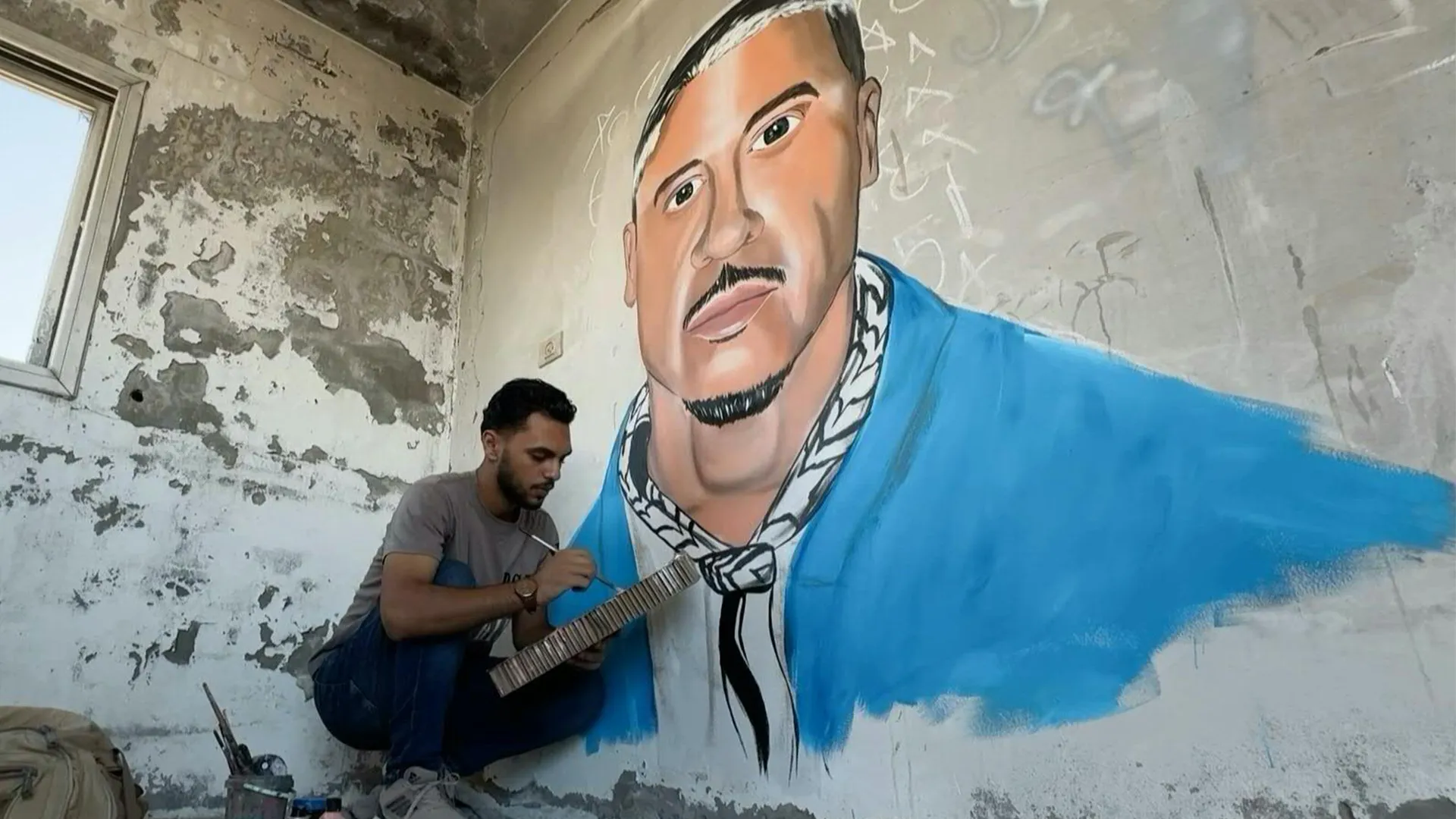
Artists in Gaza are painting murals on destroyed walls, honouring US rapper Macklemore for his support for Palestine. Despite a ceasefire agreement, Israel continues to kill Palestinians in frequent strikes across Gaza.
The UK needs a “culture shift” in how it does business, Andy Burnham has said ahead of a meeting with some of Britain’s biggest bosses.
The prime minister said those who take risks in business should be backed by government and local leaders should have the power to work with companies.
The Labour government has been criticised for increasing costs for firms, such as with the employer national insurance and minimum wage changes under Burnham’s predecessor Sir Keir Starmer.
The meeting comes as Chancellor John Healey prepares for his first Budget next month, with rising borrowing costs in recent weeks adding to the pressure on government finances.
Downing Street said Burnham will meet the chief executives of BP, Shell, HSBC, Morrisons, Sainsbury’s, BT, Vodafone, Rolls-Royce and several others at Number 10.
Ahead of the meeting, Burnham said he would give people “the confidence that if they have a great idea, they’ll get all the support they need to bring it to life”.
“When local leaders have the tools to get things done and government works in partnership with business, you can pull in investment, create jobs and transform communities,” he said.
He added the government would be “a partner for growth to make every part of Britain better off”.
Burnham will host a reception for the business community where local leaders are invited before a private engagement with senior chief executives at Downing Street on Monday evening.
The meeting comes as higher borrowing costs in the UK and other countries present problems for governments looking to spend money on business support or investment.
Separately, hundreds of hospitality businesses have written to the prime minister, calling on him to cut VAT for the sector.
More than 800 pub, restaurant and hotel bosses – include celebrity chefs Heston Blumenthal and Tom Kerridge – signed the letter asking for the hospitality VAT rate to be reduced from 20% to 10%.
When he was still Mayor of Greater Manchester, Burnham said he would argue for the tax to be in line with the lower rates seen in other European countries.
Chavez’s eyes still gaze from walls across Caracas. So too do the eyes of other figures, like Maduro and independence leader Simon Bolivar. Some images are faded. Others are accompanied by slogans like “To doubt is treason”.
Forastero has worked on government projects, including under Rodriguez. But he is critical of some of the newer images. He remembers a time when he painted murals of Chavez playing with children or riding a bicycle, not slogans.
“When Chavez was alive, people painted Chavez because we loved him very much. It’s as simple as that,” he said.
In recent decades, he argues that Venezuela’s public art has fallen increasingly under government control, with murals commissioned to carry explicitly political messages.
“Muralism is a story told on a wall,” Forastero said. “What we really see on the walls now are propaganda posters. I’m a chavista, and I’m disgusted by it.”
Still, the removal of the artwork is another form of propaganda, in Forastero’s eyes. He believes the Rodriguez government is seeking to project a more “neutral” appearance to better appeal to the US.
He also accuses Rodriguez of abandoning ideals key to the chavismo movement: namely, anti-imperialism and revolution. He pointed to the US’s role in shaping Venezuelan policy.
“The United States is forcing our government to behave this way,” Forastero said.
Forastero believes the removal of Hugo Chavez murals is part of an effort by Venezuela’s government to appeal to the US [Catherine Ellis/Al Jazeera]
Rafael Araujo, a Venezuelan activist, has a different view of the changing landscape.
To him, there was something “jarring” about seeing chavista figures plastered across city walls, especially the leaders who have caused the country so much pain.
During their time in power, Chavez and Maduro both faced allegations of overseeing human rights abuses, including through the violent suppression of dissent. Venezuela’s last two presidential elections have been widely denounced as illegitimate.
Known in Caracas as Senor Papagayo, Araujo has used colourful, handmade kites to protest against government violence and economic policy.
He sees the Chavez murals as a form of oppression, an ever-visible reminder of a repressive government apparatus.
His kites are a way of sending a different message. His favourite carries aloft a single word: “Freedom”.
“Freedom is what all countries need. Democracy is the most balanced system a citizen can live under,” Araujo said.