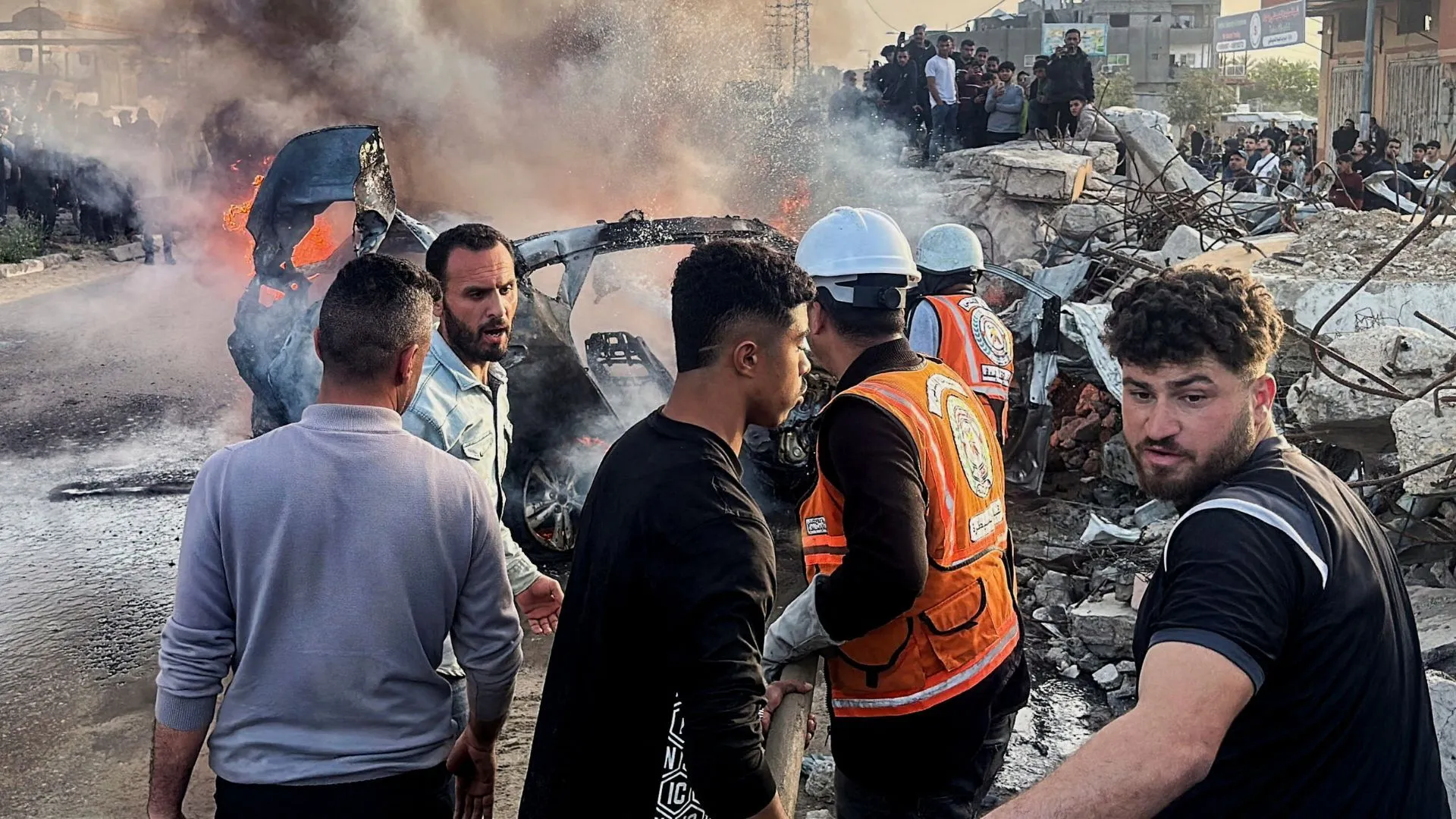
Conditions in Gaza worsen amid the United States-Israel war on Iran.
Humanitarian conditions in Gaza remain dire, despite the “ceasefire” that came into effect in October.
For months, the Israeli military has violated the agreement – carrying out air strikes and limiting the entry of aid.
But the situation got worse when Israel and the United States launched their war on Iran on February 28.
The Rafah border crossing was closed again. And deliveries of food, fuel and aid were further restricted.
With the Iran war disrupting global supply chains and the United Nations warning of threats to food security, what are the implications for Palestinians in Gaza?
Presenter: Imran Khan
Guests:
Dr Mohammed Tahir – Orthopaedic surgeon who has worked extensively in Gaza
Alex de Waal – Executive director of the World Peace Foundation
Xavier Abu Eid – Political analyst and former communications director for the Palestine Liberation Organization (PLO)
When I cracked open retired firefighter Bruce Hensler’s 15-year-old book, Crucible of Fire, I felt I had found an oracle.
Before 15 out of California’s 20 most destructive fires on record, Hensler described large chunks of cities burning to the ground, insurance companies jacking up premiums after realizing they wildly underestimated the risk and politicians failing to enforce the few fire safety rules on the books.
He even describes the fire chief of a decimated city criticizing city its politicians for failing to properly prepare for such a disaster, resulting in the city ousting the chief. (Sound familiar, Palisadians?)
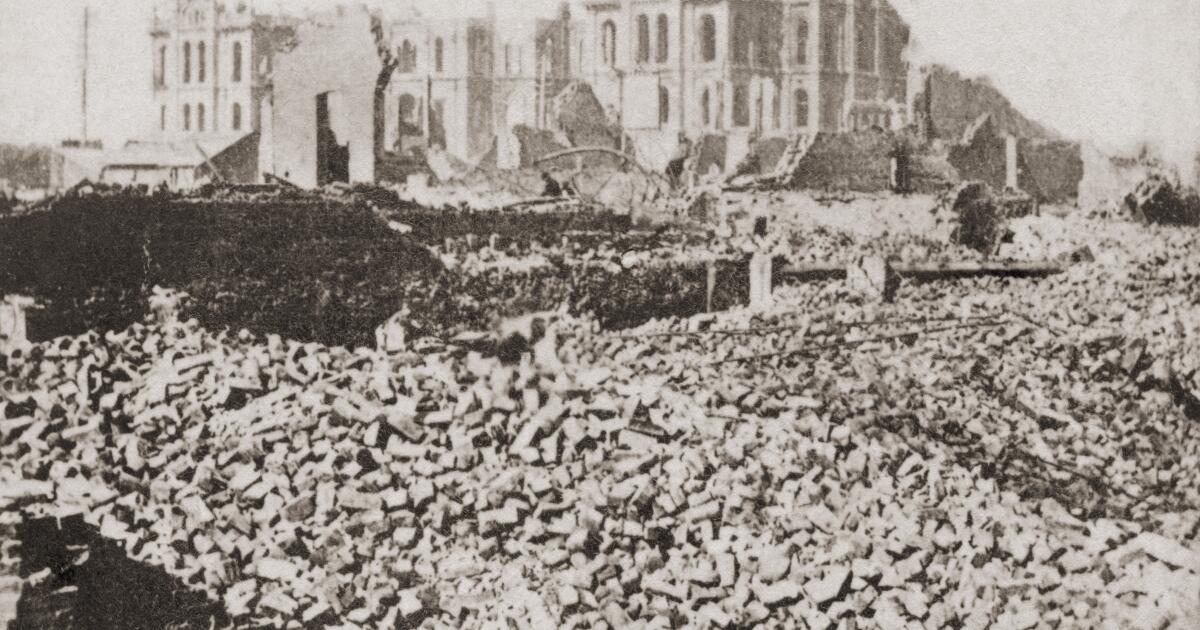
Yet Hensler wasn’t trying to predict what would unfold in California’s wildland-urban interface in the 21st century. He was simply telling the story of the late 1800s and early 1900s in the Eastern U.S.’ downtowns of dense, wooden buildings.
Spoiler: Firefighters, policymakers, local advocates and, notably, insurance professionals figured out how to stop it from happening. Here’s how they did it.
You’re reading Boiling Point
The L.A. Times climate team gets you up to speed on climate change, energy and the environment. Sign up to get it in your inbox every week.
By continuing, you agree to our Terms of Service, which include arbitration and a class action waiver. You agree that we and our third-party vendors may collect and use your information, including through cookies, pixels and similar technologies, for the purposes set forth in our Privacy Policy such as personalizing your experience and ads.
The Industrial Revolution, supercharged by the Civil War, transformed Northeastern cities into denser and denser wooden tinderboxes filled with tons of humans more than capable of accidentally generating sparks.
Fire departments, inspired by the war, were already reorganizing under a new paramilitary structure to more quickly and aggressively respond to blazes although most were still primarily volunteer-based. And beyond a few ad hoc fire safety laws that were scarcely enforced, cities’ building codes and water infrastructure naively lagged far behind the threat cities were creating.
So, cities started burning.
In 1866, a Fourth of July firecracker burned down much of Portland, Maine.
The destruction — more than $240 million in damage in today’s dollars — seriously spooked insurance companies focused on downtown industrial properties. Within days, they joined together to form the National Board of Fire Underwriters to try to stabilize their industry and promote fire-safety measures.
It wasn’t enough. A barn fire burned down Chicago in 1871 — more than $4 billion in damage in today’s dollars. A warehouse fire burned down Boston the next year — causing more than $1 billion in damage.
After the Boston fire, the board raised rates by 50% in large cities and began hurling ham-fisted threats to pull coverage altogether if cities didn’t get their act together and address their tinderbox problems quickly.
Over the next few decades, the board slowly got its own act together: It began collecting data on what caused cities to burn and funded a lab to run experiments. After Baltimore burned in 1904, the board released its own national fire-safety building codes based on that knowledge and created a grading scale to identify the risk of different cities based on their fire departments and water utilities as well as how closely their building practices aligned with the board’s building and electrical codes.
For politicians who dragged their feet because bolstering a water system or fire department is costly and designing a fire-safe building is, quite frankly, more cumbersome, the grading system made maintaining the status quo no longer viable — try explaining to your constituents that insurance rates in town are through the roof simply because the city won’t adopt the board’s new codes.
At some point, cities no longer burned down, only blocks or buildings did. As fire departments and cities continued to adopt new tech (with some pushing from the insurance industry) — motorized fire engines to replace horse-drawn ones, and later, smoke detectors and indoor sprinklers, then air tanks that allowed firefighters to enter buildings — fires didn’t often spread past a single floor or room.
These reforms, targeted mainly at commercial and industrial buildings in dense downtowns, largely missed the looming crisis in suburban residential areas that were slowly building themselves into a different kind of tinderbox that burned from the outside in.
In those areas, we’ve already seen many of the same dynamics play out: first the insurance rate hikes, then the cancellations. Now, some conversations and many heated debates — often driven by the insurance industry — are taking place around what we ought to do to protect our urban-wildland interface areas and how we can make them insurable again.
As Hensler wrote in 2011, we now “accept building fires as commonplace but no longer expect them to consume adjacent buildings or blocks.”
It reminds me of a text Keegan Gibbs, who leads the Community Brigade program with the Los Angeles County Fire Department, sent me when I asked what he hopes to see in 10 years’ time: “neighborhoods where wildfire can move through the landscape without becoming a community-level disaster.”
More recent wildfire news
State Farm reached a deal with California last month to keep a 17% rate hike that took effect after the 2025 L.A. County fires, my colleague Paige St. John reports. The state initially rejected State Farm’s 22% rate hike request but eventually offered a temporary approval of the 17% hike last year. State Farm — which said it paid $6.2 billion in claims last year, largely from the L.A. County fires — said the increase enables the company to continue serving Californians.
A monthlong heat dome over the American West, fueled by climate change, has melted mountain snowpacks significantly this year, writes fellow Boiling Point host Ian James. With more time for vegetation to dry out, the early melting brings an increased risk of wildfire across the region this year.
The U.S. Forest Service announced a major reorganization effort Tuesday that will move its headquarters from Washington to Salt Lake City, close research and development facilities in more than 30 states and shift management from broader regional offices to more localized state offices, reports Christine Peterson for High Country News. Former Forest Service employees and tribal leaders expressed concern that the move would uproot thousands of employees, scattering specialized regional knowledge. The chief of the Forest Service said the plan is intended to make the agency more “nimble, efficient, effective and closer to the forests and communities it serves.”
Gas prices in Los Angeles surged to $6 per gallon this week after the U.S. and Israel’s and the U.S.’s attack on Iran prompted the nation to close the Strait of Hormuz. However, California’s petroleum market watchdog is warning that some of the inflated price may be due to price gouging, my colleague Blanca Begert reports. In January, refineries were making 49 cents on the gallon, the watchdog group said; now, it’s closer to $1.25.
Honda is scrapping plans to build and sell three new electric-vehicle models in the U.S. after the Trump administration abandoned Biden-era policy goals to increase EV manufacturing and adoption, Dan Gearino reports for Inside Climate News. It comes after similar moves by Ford and Ram.
Finally, Heatmap News, in collaboration with MIT, has launched a new tool tracking electricity prices across the country on a month-to-month basis all the way down to the Zip Code level. You can check it out here.
This is the latest edition of Boiling Point, a newsletter about climate change and the environment in the American West. Sign up here to get it in your inbox. And listen to our Boiling Point podcast here.
Gurdaspur, Punjab, India – Ramesh Kumar, 42, is anxiously doing the calculations for his crops this year.
Standing at the edge of his wheat field in northwest Punjab’s Gurdaspur, he runs through the numbers in his head, totting up fertiliser costs, expected yield, and market prices.
Then he shifts to more personal concerns: School fees, household expenses, loan repayments and the money he has been saving for his daughter Varsha’s wedding.
“I don’t know if we can afford it this year,” he says. “Everything depends on the crop.”
The uncertainty has crept in quietly.
Fertiliser, once a fairly predictable staple in farming, has become more expensive and harder to secure in time. For Kumar, it is not so much a question of cost as it is the difference between stability and strain.
“If prices go up more, we will have to cut somewhere,” he says. “Maybe delay the wedding. If things get worse … even children’s education becomes difficult.”
School fees for his eldest son, Amit, 12, are due in the coming weeks, and Kumar has been setting aside money for his younger daughter Varsha’s future wedding.
It’s never easily affordable, even in good times. “We somehow manage,” Kumar says. “But if the harvest is weak, then we have to think about what to prioritise, what to delay.”
For farmers like him across South Asia, the United States-Israel war on Iran – unfolding thousands of kilometres away – is not just a matter of distant geopolitics.
It is shaping decisions inside their homes.
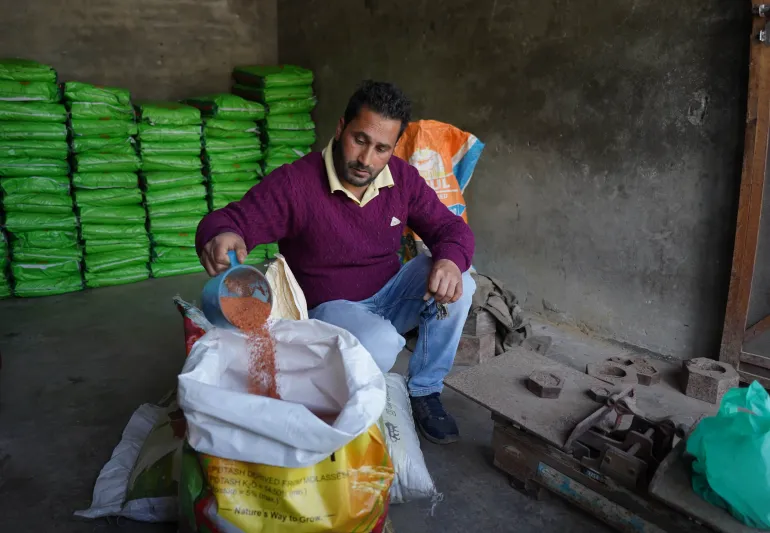
A worker pours fertiliser into a sack at a storage facility in Srinagar, Indian-administered Kashmir [Sajad Hameed/Al Jazeera]
A distant crisis with local consequences
At the centre of the unfolding crisis is the Strait of Hormuz, a narrow shipping lane more than 2,000km (1,240 miles) from India’s northern plains. It lies between Iran and Oman, linking the Gulf and its oil producers to the open ocean and, from there, to global markets.
About one-fifth of the world’s oil and liquefied natural gas (LNG) supplies pass through this body of water, which Iran closed down shortly after the first US-Israeli strikes on Tehran on February 28.
Vast volumes of LNG, essential for manufacturing nitrogen-based fertilisers, are transported from Gulf producers to Asia via this route. Any disruption can delay shipments, push up freight and insurance costs and place a stranglehold on supply.
Interruptions to the supply of fertiliser can ripple quickly, reducing crop yields, increasing costs and raising food prices.
The risks are already being felt thousands of kilometres away.
South Asia, home to nearly two billion people, relies heavily on fertiliser-intensive farming to produce staple crops such as wheat and rice. Over the past few decades, the increasing use of fertilisers – which can hugely boost crop yields – has played a key role in agricultural productivity across the region.
The agriculture sector now employs about 46 percent of the workforce in India, about 38 percent in Pakistan, nearly 40 percent in Bangladesh, and more than 60 percent in Nepal.
A farmer spreads fertiliser around apple trees in an orchard in Baramulla, Indian-administered Kashmir, March 2026 [Sajad Hameed/Al Jazeera]
The degree to which countries in the region depend on the Strait of Hormuz varies, but all rely heavily on the trade in fertilisers that this shipping route facilitates.
In India, the agriculture sector is worth $400bn, according to Indian government and World Bank data, and supports the livelihoods of more than half the population, either directly or indirectly. More than 100 million farming families are directly dependent on the sector.
The country imports a substantial share of its fertiliser requirements and other key raw materials, particularly phosphates and potash, as well as natural gas used to manufacture fertiliser, with about 30–35 percent of these supplies moving through or originating from routes that pass via the Strait of Hormuz.
In Pakistan, the agriculture sector contributes close to 20 percent of gross domestic product (GDP), according to Pakistan government estimates, and employs millions. About 20-25 percent of Pakistan’s fertiliser imports, particularly DAP (diammonium phosphate), pass through the Strait of Hormuz at some point in transit. Additionally, the sector relies on domestic natural gas for the production of urea, a key nitrogen-based fertiliser and, with Gulf natural gas supplies held up in the Strait of Hormuz, the price of natural gas everywhere – even at home – is on the rise.
In Bangladesh, where millions of smallholder farmers rely heavily on imported fertilisers, the agricultural sector accounts for about 12-13 percent of GDP, according to government data. The country’s farming industry relies heavily on imported fertilisers to sustain crops, meaning farmers are highly exposed to international supply shocks and price swings.
Furthermore, roughly 25-30 percent of Bangladesh’s imported fertiliser is shipped via routes passing through the Strait of Hormuz.
Nepal, where agriculture contributes about 24 percent of GDP, imports nearly all of its fertiliser needs, with about 25-30 percent of arriving via India, via the Gulf and the Strait of Hormuz.
A worker handles granular fertiliser at a storage facility in Punjab, northern India, March 2026 [Sajad Hameed/Al Jazeera]
Livelihoods at stake
Overall, even minor disruption in the Gulf – let alone the complete closure of the critical Strait of Hormuz – can have dire consequences for hundreds of millions of people.
The Indian government has sought to reassure farmers that supplies remain secure – for now.
Prime Minister Narendra Modi told Parliament on March 23: “Adequate arrangements have been made for fertiliser supply for the summer sowing season…The government has diversified options for oil, gas and fertiliser imports… Domestic production of urea, DAP and NPK [nitrogen, phosphorus and potassium fertilisers] has been expanded… Farmers now have access to Made in India Nano Urea and are encouraged to adopt natural farming…”
He added: “Under the PM Kusum scheme, more than 22 lakh (2.2 million) solar pumps have been provided, reducing dependence on diesel… I am confident that through joint efforts, India will manage these challenges effectively and continue to support our farmers.”
On the ground, however, confidence is low. Farmers say uncertainty is already influencing decisions.
In Pampore, in the south of Indian-administered Kashmir, 53-year-old mustard farmer Ghulam Rasool says price signals travel faster than supply disruptions.
“We hear about war, about shipping problems,” he tells Al Jazeera. “Even before shortages happen, fertiliser becomes expensive.”
Rasool says farmers often respond early by cutting down on the amount of fertiliser they are using, even before actual shortages emerge.
“If we use less, production will fall,” he says. “But sometimes we have no choice.”
In Pakistan’s South Punjab, wheat farmer Muneer Ahmad, 45, is preparing for the next sowing cycle.
“If fertiliser becomes expensive, it will affect everyone here,” he says.
Government officials have expressed confidence in Pakistan’s fertiliser supply amid the Middle East conflict, and claim the government is fully prepared to ensure adequate supplies during the region’s peak sowing period, which typically begins between April and June, depending on the crop.
According to a statement by Pakistan’s federal secretary for agriculture to Al Jazeera, Federal Minister Rana Tanveer Hussain told a meeting on March 25 that the government has started proactive monitoring, is expanding domestic urea and DAP production and taking steps to ensure fertilisers reach farmers at affordable prices.
However, urea production requires supplies of natural gas, meaning global energy price shocks can still translate into rising production costs.
A farm worker spreads fertiliser across a field as part of routine crop management during the growing season in north India [Sajad Hameed/Al Jazeera]
For farmers, even small increases matter
“We already have loans and expenses,” Ahmad says. “If costs go up, we feel it immediately.”
In Rangpur, northwestern Bangladesh, farmer Mohammad Ibrahim, 41, says fertiliser supplies are already becoming unpredictable.
“Sometimes it is available, sometimes not,” he says. “And when it comes, the price is higher.”
Meanwhile, in Nepal’s Gulmi district, farmer Meghnath Aryal, 38, worries that crops will be reduced if a major supply problem does appear.
“If fertiliser does not arrive on time, the crop suffers,” he says. “If it becomes expensive, we reduce use.”
Bangladesh’s Agriculture Secretary Rafiqul Mohammad told Al Jazeera the government is “closely monitoring the situation” and officials have tried to reassure farmers that fertiliser supplies are sufficient for the coming months.
The government has finalised plans to import about 500,000 tonnes of urea in the near term, while also exploring alternative suppliers such as China and Morocco to secure additional supplies in the longer term.
There is no immediate shortage at present, the Agriculture Ministry says.
Ram Krishna Shrestha, joint secretary at Nepal’s Ministry of Agriculture and Livestock Development, told Al Jazeera that fertiliser distribution within the country remains largely stable for now, with supplies already secured for the upcoming rainy season, particularly for paddy crops such as rice.
However, he warned that there may be delays to contracted shipments as a result of the Middle East crisis.
“We have managed fertilisers for the upcoming season, but there could be challenges in timely supply because of the current situation,” he said, pointing to global price increases and logistical disruptions, including those caused by the closure of the Strait of Hormuz.
Shrestha added that as companies report shortages and rising prices in international markets, the government has asked suppliers to expedite deliveries.
“Authorities are also advising farmers to increase the use of traditional nutrient sources such as farmyard manure, compost, green manuring and azolla [a natural fertiliser] to offset any potential shortfall in chemical fertilisers,” he said.
No immediate new fertiliser subsidies have been announced, he said, though adjustments remain under discussion as the situation evolves.
Mustard farmer Ghulam Rasool scatters fertiliser by hand in a field in Pampore, Kashmir, India [Sajad Hameed/Al Jazeera]
Rising food prices on the horizon
The implications extend beyond individual farmers.
Across South Asia, fertiliser use has been central to maintaining crop yields – and keeping large populations fed. Any reduction in availability or increase in costs can quickly lower production. That, in turn, pushes up food prices, a sensitive issue in a region where households spend a large proportion of their income on food.
For governments, the challenge is complex.
In the past, subsidies have kept fertilisers affordable for farmers, but this becomes a fragile balancing act if global prices rise, placing additional pressure on public finances.
In India, Ramesh Kumar is already making adjustments – but he is walking a tightrope.
He has decided to use less fertiliser this season, even though he knows it could reduce yields.
“It is a risk,” he says. “But what choice do we have?”
Lower production will mean less income and harder decisions at home.
“School fees have to be paid,” he says. “Household expenses cannot stop.” He looks across his field.
“And the wedding… we will see.”
Ultimately, sacrifices will have to be made in his household.
Across borders, the same uncertainty is unfolding.
In Pakistan, Ahmad is worried about rising costs. In Bangladesh, Ibrahim is mostly concerned about the availability of fertiliser and, in Nepal, Aryal fears delays in supply.
For Ramesh Kumar, the stakes are clear.
“For others, this is about war,” he says. “For us, it is about whether we can take care of our family.”
He explained: “At a time of great economic uncertainty and steps being taken to conserve energy worldwide, it is neither environmentally nor economically sound for us to continue flying with vastly reduced passenger numbers.”
Passengers affected will be fully refunded.
The flights between London and Cornwall take around 1hr20 and start from £79.99 each way.
This is not only faster – trains take around five hours and include a change to Newquay – but cheaper than the average train fare which is around £85.
Some passengers use it as a way of travelling further onto Europe as well.
One Brit, who was meant to fly from Newquay to Gatwick, then onto Seville told the BBC: “Gatwick is not the easiest airport to get to so our contingency is probably to use rail.”
In the mean time, Ryanair offers flights between Newquay and London Stansted all year round.
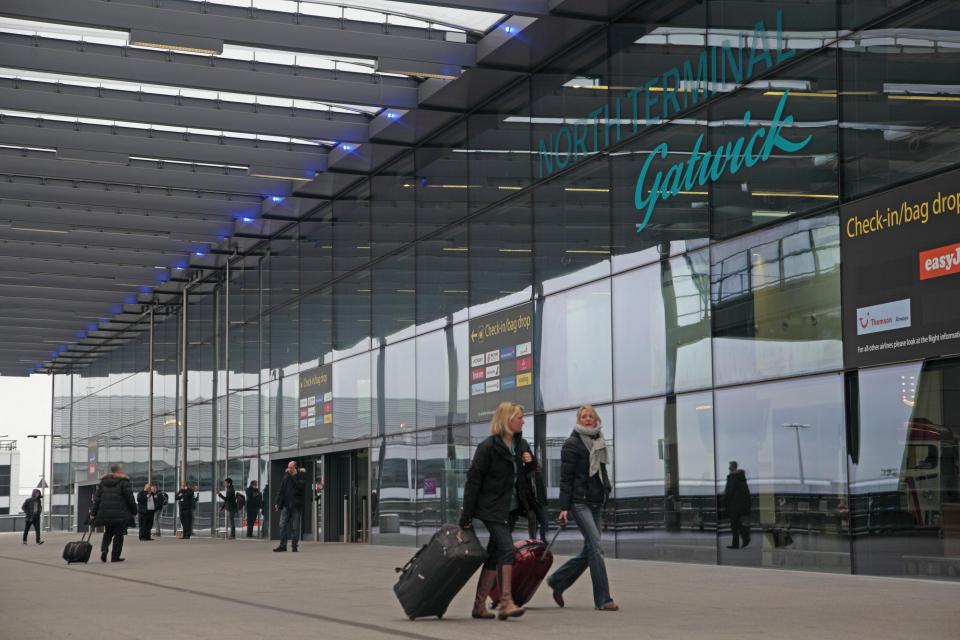
And easyJet is due to start a new flight route to Newquay from June 23, with two a week from London Gatwick on Tuesdays and Thursdays.
A Cornwall Airport Newquay spokesperson said: “We are actively working with airline partners and stakeholders to secure sustainable London connectivity for the future.”
He said: “We don’t expect any disruption until early May, but if the war continues, we do run the risk of supply disruptions in Europe in May and June.”
While he said he didn’t see the airline having to cancel flights just yet, he warned that as much as 20 per cent of its jet fuel is costing them nearly $150 a barrel.
Other airlines around the world have already started cancelling flights.
Both Air New Zealand and SAS confirmed that more than 1,000 have been cancelled, mainly affecting domestic routes.
And United Airlines said five per cent of flights would be cancelled in the second and third quarters of 2026 – working out to around 250 a month.
The airline will still operate flights to Newquay from the Isles of ScillyCredit: Alamy
It was just past 10:30 p.m. on Sunday, Sept. 14, 2025, when Allwell Nelson was abducted from her family residence in Dong, a community in Jos North Local Government Area (LGA), Plateau State, North Central Nigeria.
She and her niece had just finished bathing and were in their pyjamas, settling down to watch a film before bed, when her brother-in-law burst into the room.
“Armed robbers! Armed robbers! Call the police!” he shouted.
Her heart leapt. She grabbed her phone and called a friend who works at a nearby police station, barely ten minutes away, then tried to alert the neighbours. No one came out. Outside, the attackers struggled to break the front doors.
At the time, Allwell was serving with the National Youth Service Corps (NYSC) in Bauchi, northeastern Nigeria. She had returned home to prepare for her wedding, scheduled for the following Saturday.
The attackers, armed with handguns, cutlasses, an axe, and a digger, operated for over 45 minutes, she recounted. They first went to the master bedroom, which was empty. Her brother-in-law had fled through the back door, jumping over the fence to get help. From there, they moved to the children’s room, where the children were sleeping, before arriving at Allwell’s room.
“We were five in my room,” she said. “Me, my sister, my one-year-old niece, my older niece, and my cousin. We ran into the bathroom and locked ourselves in.”
When the attackers found them, they asked after her brother-in-law, insisting they had heard his voice, but they told them that he wasn’t around. After firing a gunshot, the four kidnappers moved the family to the living room and continued questioning them. “They eventually asked my cousin and me to follow them,” Allwell said.
Before leaving, they went to the kitchen and packed foodstuffs such as noodles and garri. One of them never spoke; his face was covered, and he carried the food. They forced the victims through the fence and across a nearby river, pausing at one point to make a phone call.
“The question here is, who were they calling?” she asked. “The person who sent them [informant], or the security agency?”
A spreading pattern across Jos
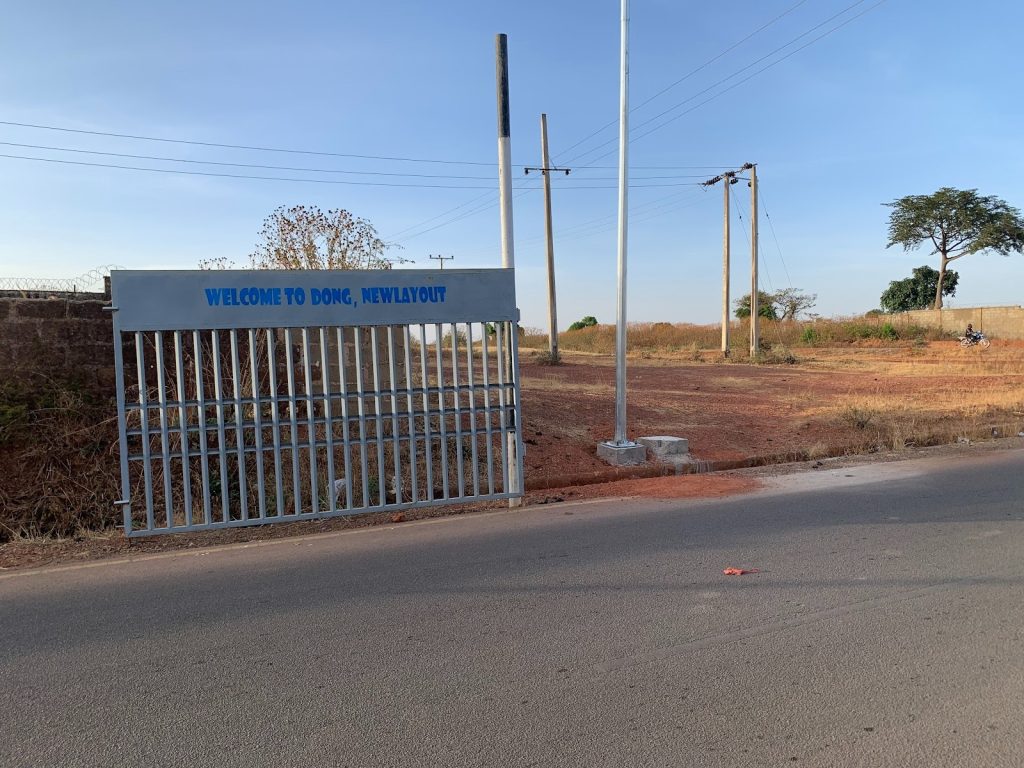
Welcome to Dong. Photo: Johnstone Kpilaakaa/HumAngle.
Dong is a fast-growing neighbourhood, bordering the conflict-hit Bassa Local Government Area and the Jos Wildlife Park. Despite nearby security posts and military checkpoints positioned at both ends of the route into the community, kidnappings have continued. Notably, these measures were already in place as the attacks persisted.
But the pattern seen in Dong is not confined to a single neighbourhood. Across the Jos-Bukuru metropolis, which includes Jos North and Jos South LGAs, similar incidents have emerged, suggesting a far-reaching threat.
Dong borders the Jos Wildlife Park and Bassa LGA. Map illustration: Mansir Muhammed.
On March 24, Sunday Agang, chairperson of the Board of Trustees of Evangelical Church Winning All (ECWA), was abducted from his residence in the Faringada area of Jos North. Earlier, in January 2026, three daughters of the Managing Director of the Plateau State Water Board, Apollos Samchi, were abducted during an attack on his residence in Rantya, in Jos South, about a fifteen-minute drive away from Dong.
In the same month, a retired Nigerian Army colonel was kidnapped in Rukuba Road, not far from Dong, and he was later rescued by security operatives. Barely weeks after Allwell’s abduction, Laven Jacob, a member of the Plateau State House of Assembly, was abducted in Dong.
These incidents, alongside others that often go unreported, reinforce the sense that kidnapping in Jos has evolved into a citywide crisis rather than a series of isolated events. Between September 2025, when Allwell was abducted, and March 2026, at least four reported kidnapping incidents were recorded in the Jos-Bukuru metropolis.
Similar incidents stretch back years. For instance, in 2022, a retired naval officer, Hellen Godos, was killed in her home in Dong by kidnappers, who were attempting to abduct her son.
The role of informants
Many of these incidents, residents and officials say, are driven by insiders within the communities themselves.
“The people work with informants,” said Peter, a community elder in Dong who gave only his first name. “They target specific people, who they believe are doing well.”
He added that during a security meeting held in the community in December 2025, the role of informants was discussed as one of the major factors responsible. “These criminals don’t know the communities; they depend on people from within.”
Generally, kidnappers often rely on information from inside communities to identify their targets, quietly shaping who is taken and when. A recent HumAngle investigation in Kano State found how kidnappers targeted a man after local knowledge of his movements and finances was passed on to criminals.
Get our in-depth, creative coverage of conflict and development delivered to you every weekend.
Subscribe now to our newsletter!
In December 2025, troops of the Joint Task Force, Operation ENDURING PEACE, neutralised a suspected kidnapper and arrested three alleged informants who were targeting Dong. In October 2025, the Plateau Police Command also arrested suspected kidnappers, including an informant who supplied foodstuffs to kidnappers in the mountainous Mazah community in Jos North.
Even so, the sense that local knowledge is being used to enable abductions persists.
Chris Iyama, an influential civil society leader in the state, described a similar pattern after he was abducted on March 8 in front of his residence in Rayfield-Guratopp.
“One of them, I presumed to be the leader of the [kidnappers], called my name and wanted to be sure if my name was Chris. I immediately affirmed. That was the beginning of my ordeal as we walked through different forests, mountains…,” he said.
He added that they took him to a forest somewhere between Bokkos and Barkin Ladi.
Captivity, ransom, and survival
A fact-finding committee set up by the Plateau State government reported that at least 420 communities across 13 local government areas – particularly in Bokkos, Barkin Ladi, and Riyom – were attacked between 2001 and 2025, with more than 11,000 people killed.
“They have been taken over, renamed, and people are living there conveniently on lands they pushed people away to occupy,” said Governor Caleb Mutfwang. “For those who think that the current situation is a farmer-herder issue, let me disabuse your mind from that perception; it is a product of organised crime by malicious elements who do not want peace to reign in the state.”
Allwell’s abduction unfolded within that wider landscape. She and her cousin were taken towards Bassa LGA, another hotspot. In April 2025, terrorists killed 52 people overnight in Zike village, in the Kimakpa/Kwall District of Bassa.
She said they were forced to walk through nearby Dong Kassa towards the Rafiki-Miango axis in Bassa. Along the way, they saw a police truck, and the kidnappers made them squat in the bush. “We trekked for over an hour,” she said.
The region where Allwell and her abductors went through. Illustration: Mansir Muhammed/HumAngle.
When they arrived in Bassa, the abductors, who she said did not speak Hausa properly but Fulfulde, led them towards an area where herders kept cattle. At the time, she was serving in the country’s North East, and she said she was able to identify the language.
“When we got nearby, the people tending the cattle started shining torchlights at us and asked who we were and why we were in their territory,” she said. The kidnappers shot two of the herders who questioned them. “At that point, I felt like I was dying.”
Hannah Silas, a development worker in the region, said incidents like this can feed into cycles of violence. “For instance, when the herders wake up and see someone dead, they will assume it was the locals who killed them, and it will lead to reprisals that should not happen,” she said.
The Miyetti Allah Cattle Breeders Association of Nigeria (MACBAN) has stated that “bad elements” and criminals have infiltrated their ranks, masquerading as herders to commit kidnappings and violent crimes. Misidentification, in this context, risks reinforcing the very cycles of violence residents are trying to survive.
They continued walking until they reached the captors’ den.
Allwell and her cousin spent more than three nights in captivity. Unlike Chris Iyama, who said he “was beaten black and blue and at some point they wanted to pull the trigger on my head”, Allwell told HumAngle that they were not physically assaulted and were given food, but she described intense fear and psychological pressure.
“I remember I was sick at that time, and one of them went to town to get medication for me,” she recounted. “I couldn’t take it because I was scared.”
The abductors demanded ₦50 million. “I told them that I am a civil servant and I don’t have [such an amount of money],” said Solomon Dansura, her brother-in-law.
As the incident gained attention on social media, NYSC officials visited the family.
“The authorities knew about the incident, but nothing was done,” Allwell said.
While negotiations continued, the abductors threatened to kill her cousin if the ransom was not paid. The family tried to raise funds without assistance from authorities.
A ransom was eventually paid, and they were released on Wednesday, Sept. 14, 2025.
Allwell does not know the exact amount, but the last figure she overheard was about ₦5 million. “The security did not rescue us,” she said.
A security post at the entrance of Dong. Photo: Johnstone Kpilaakaa/HumAngle.
Chris Iyama also said his family paid a ransom, and that his release was arranged in a forested, mountainous area in Bokkos.
Security gaps and fading trust
For residents, these experiences are rarely reflected in official communication.
Kidnap-for-ransom remains one of Nigeria’s most persistent security crises. Although ransom payments are illegal, families often treat them as the only viable option, citing slow responses from authorities. In some cases, influential public figures, including government officials, have openly crowdfunded ransom payments.
Between July 2024 and June 2025, at least 4,722 people were abducted across nearly 1,000 incidents nationwide, according to SBM Intelligence. Kidnappers demanded about ₦48 billion in ransom during that period, while families paid an estimated ₦2.57 billion. At least 762 people were killed in abduction-related violence.
Earlier in January, the Jos North Local Government Council launched a police outpost in Dong to improve security.
“This police outpost is not just a structure of blocks and mortar; it is a symbol of our resolve to protect lives and property,” said John Christopher, the local government chairperson, at the launch. “For the people of the Dong community who have endured the trauma of insecurity and kidnapping, this facility represents hope, reassurance, and a renewed sense of safety.”
A police post beside the Jos Wildlife Park, near the entrance of Dong. Photo: Johnstone Kpilaakaa/HumAngle
When HumAngle visited the facility, which is five minutes on foot from the main entrance to Dong, in March, it was deserted. Dry weeds filled the compound, the gate was locked, and no officers were present.
An 8 p.m. curfew imposed in Dong in 2025 was later relaxed in January, according to a security officer at a local church. “But once it is 10 p.m., you will not see people outside,” he said. “Some of the local hunters, who protect the community, recently engaged in a gun battle and killed a suspect, so the incidents have reduced.”
Even with that, some residents say they still feel unsafe.
SACRAMENTO — California has a huge deficit, a looming cash crisis, an angry public and pressure to raise taxes — and in this dismal state of affairs, the state’s minority Republicans see opportunity.
GOP lawmakers hope to use their leverage over the state budget, which cannot pass without some of their votes, to roll back landmark policies implemented by Democrats and the governor. Among them are curbs on greenhouse gas emissions, regulations banning the dirtiest diesel engines and rules dictating when employers must provide lunch breaks for workers.
None of those laws has any direct connection to the state budget; changing them will do nothing to close California’s $15.2-billion deficit. And the Democrats who control the Legislature already have rejected Republican proposals to delay or eliminate the laws through the regular legislative process.
But as pressure mounts on lawmakers to resolve the budget crisis, the GOP’s renewed requests could get some traction. Republican clout grows along with the state’s financial problems — at least during the summer budget season.
“We think the budget is an appropriate place to talk about these issues,” said Sen. George Runner (R-Lancaster). “We are setting them on the table for discussion.”
Runner acknowledges that the proposals won’t help balance the books in the coming fiscal year, but he argues that they would stimulate the economy and thus generate cash for the state over time.
“They are reasonable issues to bring up” now, he said.
Lawmakers are making little progress in those negotiations. Legislators did not meet their June 15 constitutional deadline for passing a budget, and they are saying publicly that a spending plan is unlikely to be in place by the July 1 start of the fiscal year.
The state will run out of cash in September, according to the state treasurer, and finance officials say that borrowing to remain solvent will be extremely tough without a budget in place by July. Securing a loan takes time, and lenders look for an enacted budget as assurance that the state will have enough cash to repay them.
Democrats, meanwhile, are calling for as much as $11.5 billion in new taxes — though they have not specified what they want to tax.
Republicans say cuts in government services and programs are the way to go — though they, too, mostly demur when it comes to specifics.
Republicans have made clear, however, that relaxing the environmental and labor laws would put them in more of a mood to compromise. That position has drawn a sharp rebuke from Democrats and activists.
“Using a fiscal crisis to delay and roll back protections for Californians is just wrong,” said Sen. Alan Lowenthal (D-Long Beach).
Sierra Club lobbyist Bill Magavern called the GOP lawmakers “a dwindling minority trying to exploit the limited leverage they have.”
Environmentalists are particularly outraged by the Republican call for a delay in the curbs on greenhouse emissions.
The global warming measure is one of Gov. Arnold Schwarzenegger’s proudest accomplishments. It has landed the governor, himself a Republican, on the covers of magazines around the world.
State officials are drafting rules for implementing the emissions caps, which are scheduled to take effect in January 2010. GOP legislators say complying with the rules will be costly for businesses at a time when they already are reeling from the poor economy and higher oil prices.
They want the governor to exercise a provision in the law that allows him to postpone implementation by declaring that it would cause the state “significant economic harm.”
“We’ve got a major downturn in the economy,” said Dave Cogdill of Modesto, leader of the state Senate’s Republicans. “We’re trying to convince the governor to give us more time on this.”
Republicans are making the same case for new rules requiring retrofitting of diesel engines on trucks, tractors and heavy construction equipment. The engines are a leading source of pollution and have been singled out by scientists as a cause of thousands of premature deaths and hospital admissions for respiratory problems in California each year.
Supporters of the laws say that the sickness they will prevent and the boost they will give to “green” technologies promise to be far more helpful to California’s economy than a delay in their implementation.
Schwarzenegger has said through aides that he does not wish to postpone environmental regulations and won’t let the budget situation sidetrack his long-term goals. But he also says nothing is off the table.
“We have open doors where everything is on the table,” Schwarzenegger said in a speech last month to the California Peace Officers Assn. “I don’t want to go and say to anything, ‘No.’ ”
Schwarzenegger spokesman Aaron McLear said the governor is interested, for example, in working with Republicans on a relaxation of workplace rules that dictate when employees must be granted lunch breaks.
The governor, an ally of the state Chamber of Commerce and other business groups, is sympathetic to complaints from business owners that some workplace rules cost them money without benefiting employees.
The example most often cited comes from restaurant owners who say they must give their workers breaks at particular times, even if it is in the middle of the busiest shift, when many would rather be working tables to collect tips.
The Legislature must sign off on changes to such laws, something Democrats say they have no intention of doing. Their labor allies say budget season is a cynical time to raise the issue.
“If these were viable policy proposals, they would pass on their own merits,” said Emily Clayton, policy coordinator with the California Labor Federation.
Republicans, she said, “are trying to hold the budget negotiations hostage.”
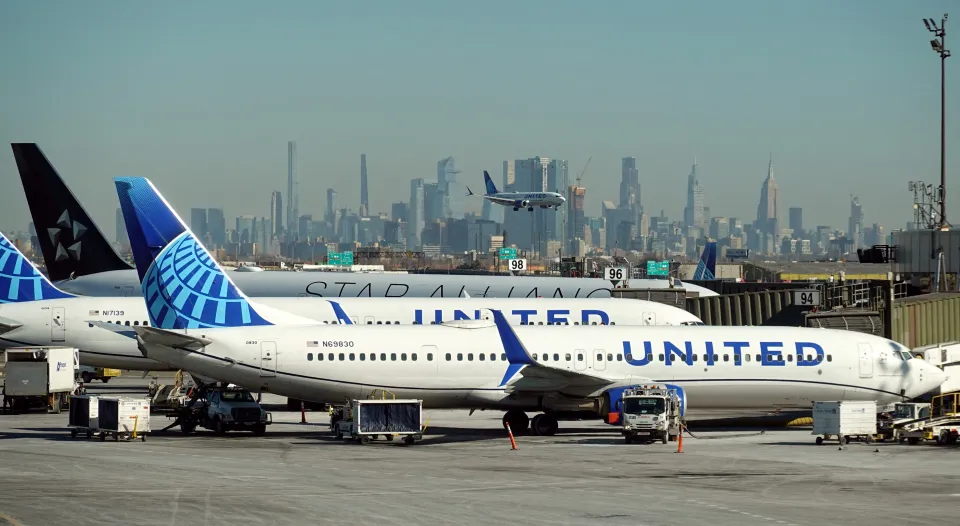
United Airlines is the latest to confirm that it would be cutting five per cent of flights in the second and third quarters of 2026.
With up to 5,000 flights a month – working out to around 4,000 domestic and 800 international routes – this means it affects around 250 flights a month.
And with this set to last until the end of summer, it means thousands of passengers will be affected.
While the affected flights haven’t been confirmed, it will mainly affect the “less profitable” routes so including midweek flights, as well as overnight and Saturday routes.
United Airlines has the world’s largest airline fleet with more than 1,075 aircraft.
United Airlines‘ Chief Executive Scott Kirby said the cancellations were due to fears of oil rising to as much as $175 (£131) a barrel, and remaining above $100 (£75) until the end of next year.
This would mean the airline’s fuel costs would rise to $11billion (£8.2billion) – double the profit of their best year which was $5billion (£3.7billion).
They warned: “There’s no point in burning cash in the near term on flying that just can’t absorb these fuel costs.”
It’s not just the cost of fuel but how much is being used by airlines as well.
The closure of airspaces and Middle East airports, particularly Dubai which is one of the world’s busiest, has forced airlines to fly alternative – and longer – routes, which burn more fuel.
Other airlines have already confirmed they would be cancelling flights due to expected fuel costs.
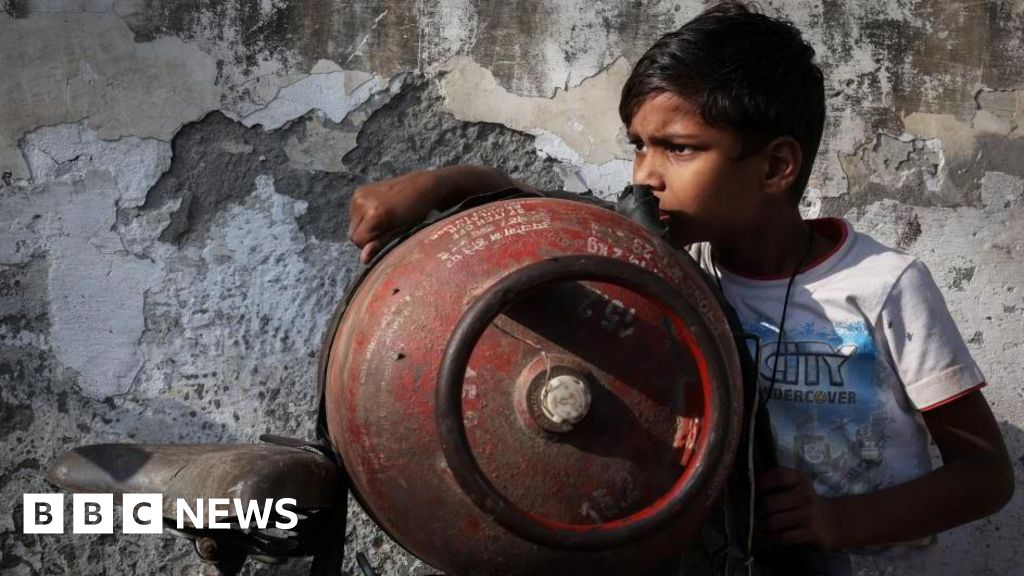
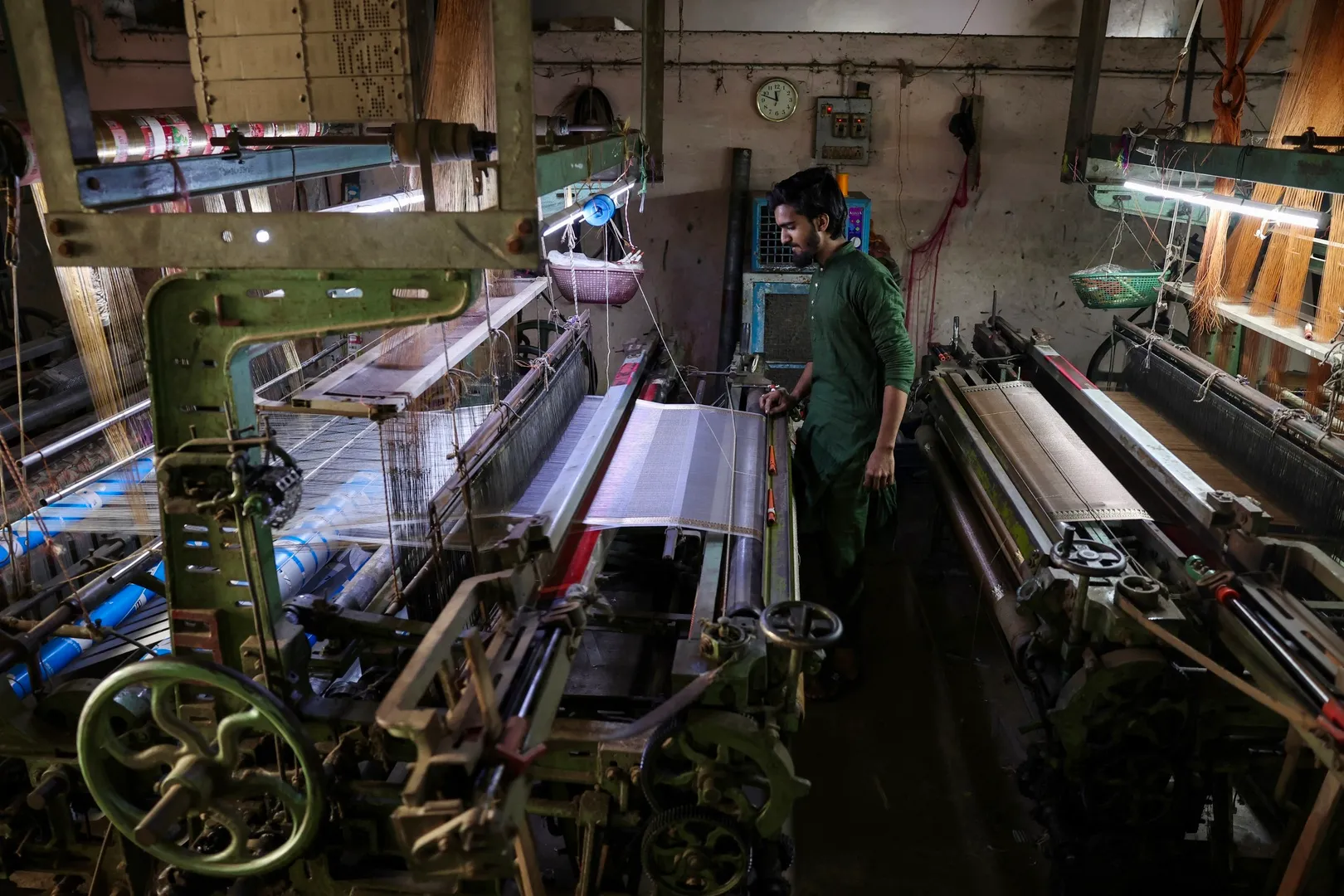
Workers in India’s textile hub Surat are returning home after days without cooking gas, as an LPG crisis linked to Iran war disruptions halts supplies. Industries face shutdowns, while authorities invoke emergency measures to prioritise households.
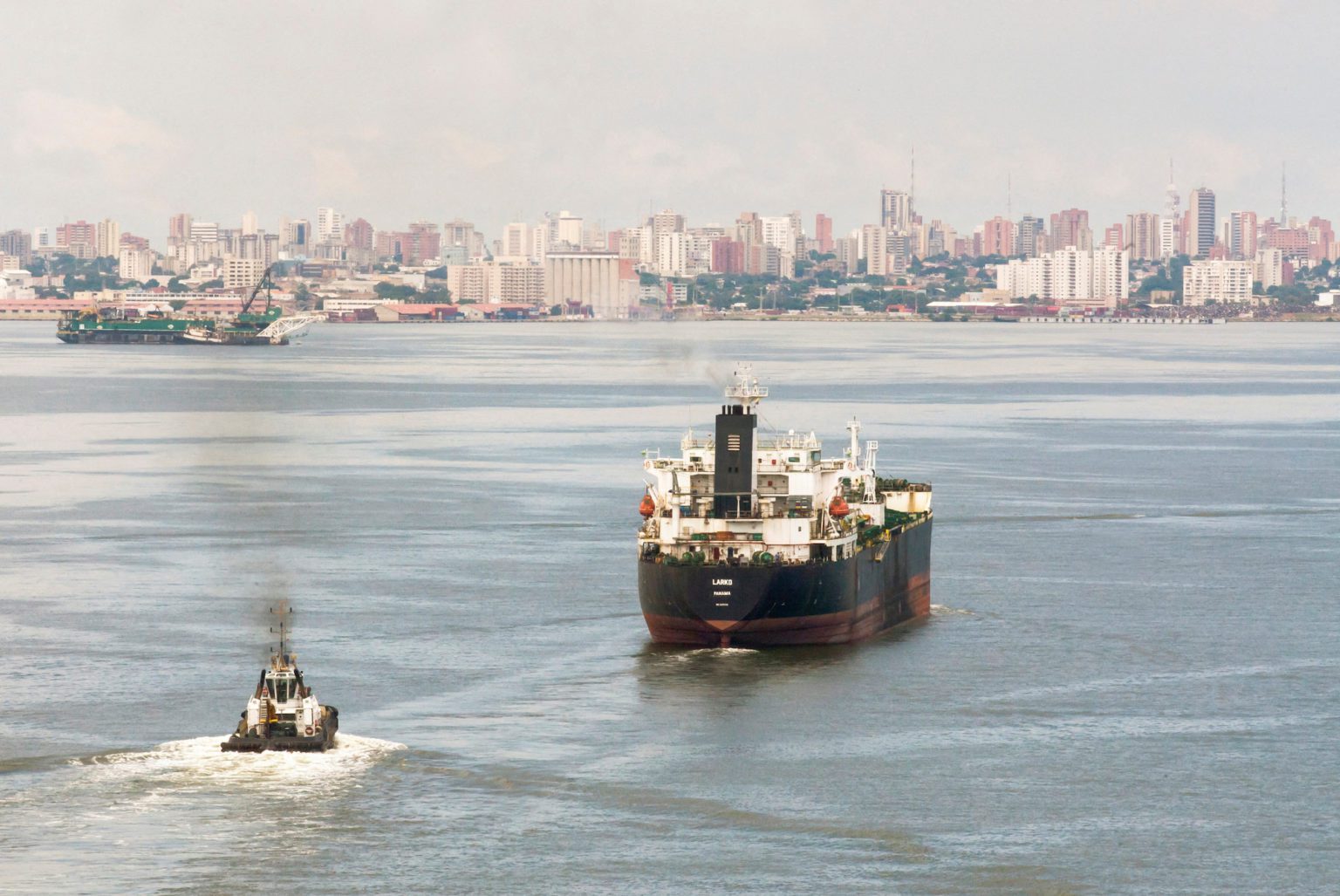
When the United States and Israel launched joint strikes on Iran on February 28, the Strait of Hormuz—the narrow waterway through which roughly one-fifth of the world’s oil passes each day—effectively ceased to function as a shipping corridor. Iran’s Revolutionary Guard Corps responded by warning off tanker traffic, and within days maritime transit had fallen to nearly zero. The consequences were immediate and severe: Brent crude has not dropped below the $100 threshold since March 13 and touched $119 on March 19 following Israeli strikes on Iran’s South Pars gasfield and retaliatory Iranian attacks on energy infrastructure in Qatar and the UAE. For Venezuela, a country sitting atop the world’s largest proven reserves but producing around 900,000 to one million barrels per day (a fraction of its historical capacity of over 3 million in the late 1990s) the disruption arrived at a peculiar moment. It was not a crisis of Venezuela’s making. But how Caracas responds to it may define the country’s energy trajectory for years to come.
On paper, the arithmetic is striking. Alejandro Grisanti, director of Ecoanalítica, estimates that Venezuela receives approximately $400 million in additional revenue for every extra dollar in the average crude price. This figure, at current price levels, represents a fiscal windfall without precedent in the post-Maduro transition. Venezuelan crude exports had already rebounded sharply in February to around 788,000 barrels per day (up from a depressed 383,000 bpd in January, when the post-Maduro-arrest disruption had frozen trade flows), with US refineries absorbing the majority of shipments directly through Chevron or energy intermediaries. Of course, production and exports are different things: Venezuela produces roughly one million bpd but consumes some 230,000 bpd domestically, meaning effective export capacity sits considerably below gross output.
The Hormuz disruption accelerated the export recovery dynamic: with Gulf supply stranded and Asian buyers scrambling for alternatives, Venezuelan crude became a more attractive proposition. Washington has responded in kind. On March 18, the US Treasury issued a broad license authorizing established American entities to conduct transactions with PDVSA directly, a landmark shift after years of near-total sanctions isolation, explicitly framed as a supply-side response to the Iran war. There are structural constraints baked into the relief: payments cannot flow directly to sanctioned Venezuelan entities but must pass through US-controlled accounts, and transactions involving Russia, Iran, North Korea, Cuba, or designated Chinese entities remain prohibited. The US will allow the oil trade, but it will control the cash flow.
The production ceiling, however, remains a formidable obstacle, and not merely a financial one. Venezuela’s Orinoco Belt produces extra-heavy crude with an API gravity typically in the 8–16° range and high sulfur content, which cannot simply be blended into a market substitute for the medium-sour grades displacing from the Persian Gulf. To reach export markets, Orinoco crude must either pass through an upgrader—facilities like Petropiar, which converts it to a synthetic crude of around 26° API—or be diluted with imported naphtha or lighter crude to create exportable blends like Merey. This means Venezuelan barrels serve a specific refinery profile: predominantly the cooking-capable refineries along the US Gulf Coast, which are well-suited to process heavy, sulfurous feedstocks. They are not a drop-in replacement for Middle Eastern crude, but a complementary supply for a defined segment of global refining capacity.
The US military backstop, the reformed hydrocarbon law, and now the broad PDVSA sanctions relief have together reduced the perception of expropriation risk and policy reversal that kept capital at bay for two decades.
ExxonMobil, whose assets were expropriated twice under chavismo, announced it would send an evaluation team to Venezuela within weeks, with Senior Vice President Jack Williams acknowledging the company’s heavy oil expertise from Canadian operations in Kearl and Cold Lake. The caveat was pointed: “Today it’s uninvestable,” CEO Darren Woods had said in January, and Williams’ more cautious optimism reflects the institutional memory of a company burned twice.
Chevron and PDVSA have meanwhile agreed on preliminary terms to expand Petropiar into the adjacent Ayacucho 8 block of the Orinoco Belt, while Shell is in advanced talks to develop the Carito and Pirital fields in eastern Monagas. These are among the few areas that produce the light and medium crude needed as diluent and blendstock for Venezuela’s heavy exports. Delcy Rodríguez has projected fresh oil investments of $1.4 billion for the year under the amended hydrocarbons law. These are meaningful steps. But a preliminary deal and a production ramp are different things. Rystad Energy estimates that simply holding production flat at around 1.1 million bpd requires $53 billion in upstream investment over 15 years, and getting to 2 million bpd by 2032 would demand $8–9 billion per year in sustained capital.
What has shifted—materially and quickly—is market sentiment about Venezuela as an investable destination, and the trajectory is meaningfully positive. Dozens of US hedge funds, asset managers, and energy investors are organizing trips to Caracas in the coming weeks: Signum Global Advisors is running a two-day conference in Venezuela from March 22–24 with 55 participants, roughly half of whom are bondholders who own or have recently purchased Venezuelan government and PDVSA debt (both in default since 2017).
Separate delegations invited by Trans-National Research and other groups are arriving, with agendas featuring meetings with Rodríguez and PDVSA CEO Héctor Obregón. The interest marks a sharp break from the isolation of the Maduro years. Country risk, while still elevated in absolute terms, has been repriced substantially since January: the US military backstop, the reformed hydrocarbon law, and now the broad PDVSA sanctions relief have together reduced the perception of expropriation risk and policy reversal that kept capital at bay for two decades.
Venezuela’s challenge is to use this window of geopolitical necessity to lock in investment commitments, debt restructuring negotiations, and production agreements that survive the normalization of oil markets.
What investors are now stress-testing is no longer whether Venezuela is open for business, but whether the legal and institutional architecture is durable enough to support long-horizon commitments. As analysts at Debatesiesa have noted in examining Venezuelan financial markets, sentiment can shift on headlines, but binding investment decisions require structural reforms and credible enforcement mechanisms. The framework is improving; the question is whether it improves fast enough, and on a stable enough trajectory, to convert this geopolitical moment into a genuine investment cycle.
The deeper question the Hormuz crisis forces is one of timing and durability. Oil prices are now trading above $110 per barrel and analysts at Wood Mackenzie and Rystad are no longer dismissing scenarios above $150 while the conflict shows no sign of imminent resolution, with Pete Hegseth signaling the “largest strike package yet” against Iran on March 19. The EIA, in its latest forecast issued prior to these newest escalations, projected Brent to remain above $95 through the next two months before falling below $80 in the third quarter of 2026 if supply flows gradually normalize. Whether that normalization materializes is the variable on which everything else depends. Venezuela’s challenge is not simply to capture today’s price premium, but to use this window of geopolitical necessity to lock in investment commitments, debt restructuring negotiations, and production agreements that survive the normalization of oil markets.
The country has rarely faced a more favorable confluence of factors: surging global demand for its barrels, a reformed legal framework for private investment, an unprecedented degree of US political and financial backing, and prices that make otherwise marginal projects viable. Whether Caracas—and the Rodríguez administration in particular—has the institutional bandwidth to convert a crisis into structural recovery, rather than another cycle of windfall and waste, is the defining question of Venezuela’s energy sector in 2026.
Health and environment advocacy groups in the United States are suing the Environmental Protection Agency (EPA) over the Trump administration’s decision to withdraw a key 2009 climate change ruling known as the “endangerment finding”.
That finding had established that greenhouse gases are a risk to public health and environmental safety, given that they are the primary drivers of climate change. It formed the legal basis for many regulatory policies aimed at curbing climate change.
When US President Donald Trump, who has called climate change a “hoax” and a “con job”, rescinded the declaration in February this year, the EPA supported the move, deeming it the “single largest deregulatory action in US history”.
The lawsuit, filed on Wednesday this week, alleges that the Trump administration’s decision will risk the health and welfare of US citizens.
“Repealing the Endangerment Finding endangers all of us. People everywhere will face more pollution, higher costs, and thousands of avoidable deaths,” Peter Zalzal, the associate vice president of clean air strategies at the Environmental Defense Fund, one of the plaintiffs, said in a statement.
Trump’s revocation of the endangerment finding is the latest in a series of steps he has taken to prioritise deregulation, boost fossil fuel production and reverse climate regulations.
But Trump is not the first US president to enact policy damaging to the environment. Here’s how decades of US policy have harmed the environment before he arrived in the White House
What is the ‘endangerment finding’?
The endangerment finding was established under the presidency of Democrat Barack Obama. It states that carbon dioxide and other greenhouse gases pose a threat to public health and welfare.
That ruling allowed the EPA under President Obama to move forward on policy aimed at limit the release of greenhouse gases in the US, Michael Kraft, professor emeritus of political science and public and environmental affairs at the University of Wisconsin-Green Bay, told Al Jazeera.
Under the endangerment finding, power plants were required to meet federal limits on carbon emissions or risk being shut down. This forced oil and gas companies to invest more to detect and fix methane leaks, curb flaring, and improve tailpipe and fuel‑economy standards to enable automobile companies to manufacture more efficient, lower‑emitting vehicles.
What does rescinding it mean?
“By allowing for increased pollution, these recent changes [by the Trump administration] will harm practically every single person on the planet,” Washington, DC-based policy researcher Brett Heinz told Al Jazeera.
“People living near fossil fuel facilities will be some of the most immediately affected, as they will be exposed to the new air and water pollution unleashed by deregulatory policies,” Heinz added.
Without the endangerment finding in place, the EPA has lost a key legal basis on which to limit greenhouse gas emissions, making it easier for coal plants, oil refineries and petrochemical complexes to run older, dirtier equipment for longer, expand without installing modern pollution controls, and emit more soot, smog‑forming gases and toxic chemicals into nearby communities.
Heinz explained that higher greenhouse gas emissions from burning fossil fuels in power plants, cars and industry as well as continued deforestation will also amplify the dangers posed by natural disasters. This is because increased warming exacerbates heatwaves, storms, floods and droughts, and raises sea levels – all of which turn existing natural hazards into more frequent and more destructive disasters.
“The only people who will benefit from these decisions are a small handful of wealthy fossil fuel executives and shareholders, who will see healthy profits while the world grows sick. These fossil fuel elites, many of whom contributed money to Trump’s presidential campaign, have now gotten a return on this investment,” Heinz said.
Experts say that Trump’s decision to entirely do away with environmental policy is unlike any president before him.
“The White House’s tidal wave of new pro-pollution policies is completely unprecedented. While past administrations have modified environmental rules, the second Trump administration is essentially trying to eliminate them entirely. So far, this has been the most radically anti-environmental presidency in American history,” Heinz said.
How have previous US presidents endangered the environment?
Trump is by no means the first US president to enact policy which is damaging to the environment, however.
Under Republican Theodore Roosevelt, who was president from 1901 to 1909, Congress passed the Reclamation (Newlands) Act of 1902, which treated land and rivers primarily as raw material for large infrastructure projects rather than as ecosystems in need of protection.
This was furthered by Democrat Harry Truman, who was president from 1945 to 1953 and pushed for rapid post‑war industrial and suburban expansion by commissioning the construction of interstate highways and promoting car‑centric development.
Under Republican Dwight Eisenhower, who was president from 1953 to 1961, the interstate highway system burgeoned, and the private car became a developmental priority in the US.
While Republican Richard Nixon, who was president from 1969 to 1974, signed key environmental laws, he also backed massive fossil‑fuel expansion. Under Nixon, the highly toxic herbicide, known as Agent Orange, was used by the US military during the Vietnam War.
Republican Ronald Reagan, who was president from 1981 to 1989, appointed people to the EPA and the Department of Interior who pushed for expanded oil, gas, coal and timber extraction on public lands.
To facilitate this, they favoured deregulation and industry interests, and rolled back existing environmental policy, slashing budgets for EPA enforcement of the Clean Air and Clean Water Acts, easing rules on toxic emissions and pesticides, and opening up more federal land – including wilderness and wildlife habitat – to oil, gas, mining and logging activities.
Republican George W Bush, who was president from 2001 to 2009, refused to ratify the 1997 UN-backed emissions reductions Kyoto Protocol and actively undermined global climate negotiations by formally withdrawing US support for Kyoto in 2001, appointing senior officials who questioned climate science, and pushing voluntary, industry-friendly approaches instead of binding emissions cuts.
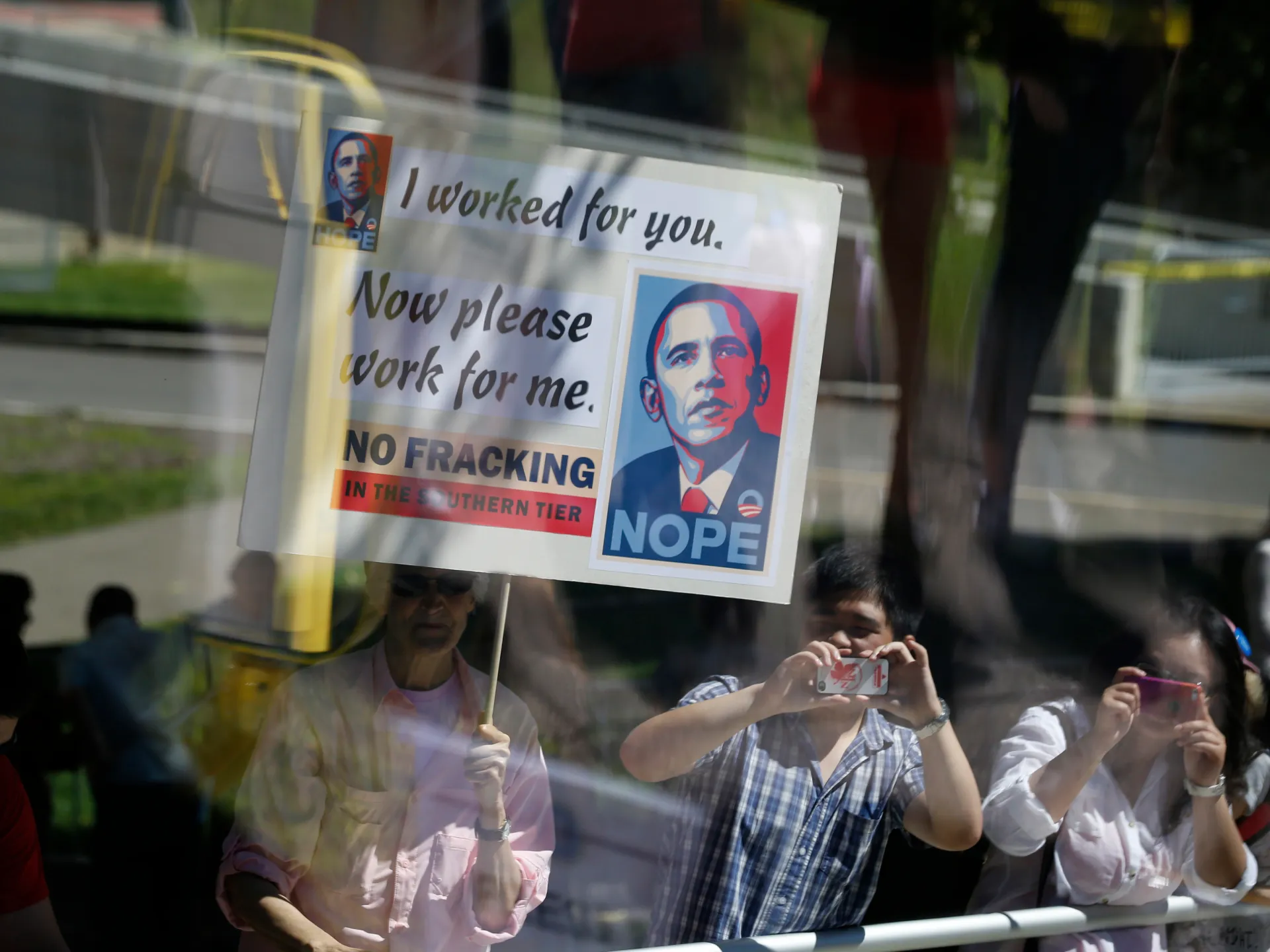
While Obama, who was president from 2009 to 2017, introduced several landmark climate regulations, he also oversaw the fracking boom, making the US the world’s largest oil and gas producer, and locking in long-term fossil infrastructure.
Fracking, or hydraulic fracturing, involves blasting water, sand and chemicals into shale rock to release oil and gas, a process believed to cause methane leaks, groundwater contamination, heavy water use and increased local air pollution.
Democrat Joe Biden, who was president from 2021 to 2024, approved large fossil projects such as the Willow project in Alaska. This involved oil development on federal land in the National Petroleum Reserve, projected to pump hundreds of millions of barrels of crude over several decades.
Figures released by the the US Bureau of Land Management (BLM) suggested that the project would release 239 million to 280 million tonnes of greenhouse gases over its lifetime. The project, approved in 2023 and ongoing, was projected to continue for 30 years.
Biden also backed LNG export growth by approving new and expanded export terminals and long‑term export licences, allowing companies to lock into multidecade contracts to ship US gas to Europe and Asia.
Is this a partisan issue?
No.
“The failure of US policymakers to aggressively tackle global warming is not so much a Democrat versus Republican matter,” Steinberg said.
“It’s neoliberalism, a form of corporate freedom, that is the heart of the problem. A bipartisan consensus on the need for economic growth has led to a general trend toward weakening environmental regulations,” he added.
The US once led the world in conservation by creating an extensive national park system in the 19th century, Ted Steinberg, a history professor at the US-based Case Western Reserve University, told Al Jazeera.
“That was then. US corporate interests, especially the fossil fuel industry, combined with the one-party political system, in which both Republicans and Democrats indenture themselves to the business class, have caused the United States to drag its feet on global warming,” Steinberg said.
What is the history of Washington’s impact on the environment?
The US has historically been the largest contributor to global warming, experts say.
“As in most countries, US environmental policy has been a response to the problems caused by industrialisation and urbanisation, starting in the mid-19th century and proceeding from there, happening at the local, state and national levels,” Chad Montrie, a history professor at the University of Massachusetts Lowell, told Al Jazeera.
“Much of that policy has been limited and inadequate, especially when corporations were able to exert their influence, but in some cases, it has been ahead of what other nations were doing,” Montrie, who specialises in environmental history, added.
There was a time when environmental policy was bipartisan. The EPA was, in fact, created by Republican President Richard Nixon in 1970.
“It wasn’t until the rise of pro-business politics in the 1980s that Republicans like President Reagan took a hard turn against environmental protections,” Heinz said.
“The Democratic Party continues to believe in environmental protection and climate-friendly policies to some degree, while the Republican Party has become one of the few political parties worldwide that completely denies the scientific facts around climate change.”
How does this affect the rest of the world?
“US policy often sets the standards for policy in other parts of the world, both because of its cultural influence and because of the control that the US has over global bodies like the International Monetary Fund,” Heinz said.
“Right now, the US is actively pushing dirty fossil fuels on the rest of the world and even threatening some of its allies for trying to negotiate new environmental agreements.”
Heinz explained that this pressure, coupled with soaring energy prices, seems to have convinced Europe to retreat from some of their climate goals. Household electricity prices jumped by about 20 percent across the European Union between 2021 and 2022, according to Eurostat data.
Heinz said that if the latest United Nations Climate Change Conference, or COP negotiations are any indication, global climate ambition appears to be on the decline right now.
The latest conference concluded in November 2025 in Brazil with a draft proposal which did not include a roadmap for transitioning away from fossil fuels, nor did it mention the term “fossil fuels” at all. This drew rebuke from several countries attending the conference.
“So long as Donald Trump remains in office, the hope of future generations relies upon the nations of the world coming together and acting responsibly to preserve a healthy environment at a time when the United States has gone truly mad.”
WASHINGTON — In the escalating war in Iran, the State Department’s Bureau of Near Eastern Affairs would ordinarily be at the center of the geopolitical fray.
Typically led by a veteran diplomat, the bureau’s role would be to coordinate U.S. foreign policy across an 18-country region, much of which has become a chaotic battlefield scarred by drone and missile strikes as the U.S. and Israel remain locked in conflict with Iran.
The Trump administration for a time put Mora Namdar, a lawyer of Iranian descent with limited management experience, in charge before later moving her to a different post. One of her credentials was her contribution to Project 2025, a conservative think tank’s blueprint for the second Trump administration. Namdar’s last Senate-confirmed predecessor was a longtime Middle East expert who had been with the department since 1984 and had served as the U.S. ambassador to the United Arab Emirates.
Now that bureau is also working with far fewer resources. The administration’s most recent budget proposed a 40% cut to the bureau, though Congress eventually enacted less dramatic cuts. The administration also eliminated the dedicated Iran office, merging it with the Iraq office.
Staff reductions and management choices hamper emergency response
These kinds of personnel and management choices — coupled with President Trump’s moves to shrink government and confine decision-making to a tight circle — are limiting the ability of the United States to handle a global emergency, according to interviews with more than a dozen current and former U.S. officials, many of whom recently left government.
In divisions of the State Department that typically would handle the Iran response, numerous veteran diplomats with decades of collective experience were fired, retired or were reassigned — replaced by more junior officials or political appointees. The administration cut more than 80 staffers in Near Eastern Affairs, according to numbers compiled by a State Department employee who was terminated last year based on surveys of colleagues. (The department does not release official figures on Foreign Service officer staffing levels but did not dispute the number.)
The Trump administration has left the assistant secretary position in charge of Near Eastern Affairs vacant, along with key ambassadorships in the Middle East. Four of the five supervisors in the bureau have temporary titles.
The current and former officials, some of whom asked for anonymity to discuss sensitive internal matters during an active conflict, paint a portrait of an understaffed government workforce struggling to execute the president’s agenda. Those who remain tell colleagues that their analysis, recommendations and advice go unheeded.
The State Department vigorously disputed those assessments.
“As far as we can tell, AP’s entire ‘report’ on the evacuations does not include any conversations with people actually involved. Instead, it relies on ‘outside’ or ‘former official’ sources that have no idea what they are talking about. We walked AP through specific inaccuracy after specific inaccuracy — indeed how the whole premise was wrong,” State Department spokesman Tommy Pigott said.
More than 3,800 State Dept. employees departed since Trump took office
The State Department saw a departure of more than 3,800 employees since President Trump took office through a combination of reductions in force, staffers taking the Fork in the Road deferred resignation plan and ordinary retirements. According to estimates by the American Foreign Service Association, the labor union that represents foreign service officers, senior foreign service ranks were disproportionately represented in the layoffs compared to their share of the overall workforce.
“He’s making choices without the larger expertise of the United States government that would flag issues of consequence,” said Max Stier, CEO of the nonpartisan Partnership for Public Service, a nonprofit group that studies federal workforce issues. “Sometimes government is slow-moving because there are a lot of different factors that need to be balanced against each other.”
For instance, the administration appears to have been caught off guard by what would happen once the U.S. struck Iran — something Trump himself acknowledged this week when he expressed surprise that Tehran retaliated with strikes on American allies in the region. “Nobody expected that. We were shocked. They fought back,” Trump told reporters this week.
Pigott said staffing reductions “are not having any negative impact on our ability to respond to this operation, our ability to plan, and our ability to execute in service to Americans.” He added that the department “rejects the premise that key decisions were made without meaningful input from experienced professionals.”
But Iranian retaliation on U.S. allies was predictable, according to former officials, as well as previous war games and conflict models run by both the U.S. military and private organizations. The National Security Council, which Trump has pared, typically would have presented the president with analysis from experts within the bureaucracy.
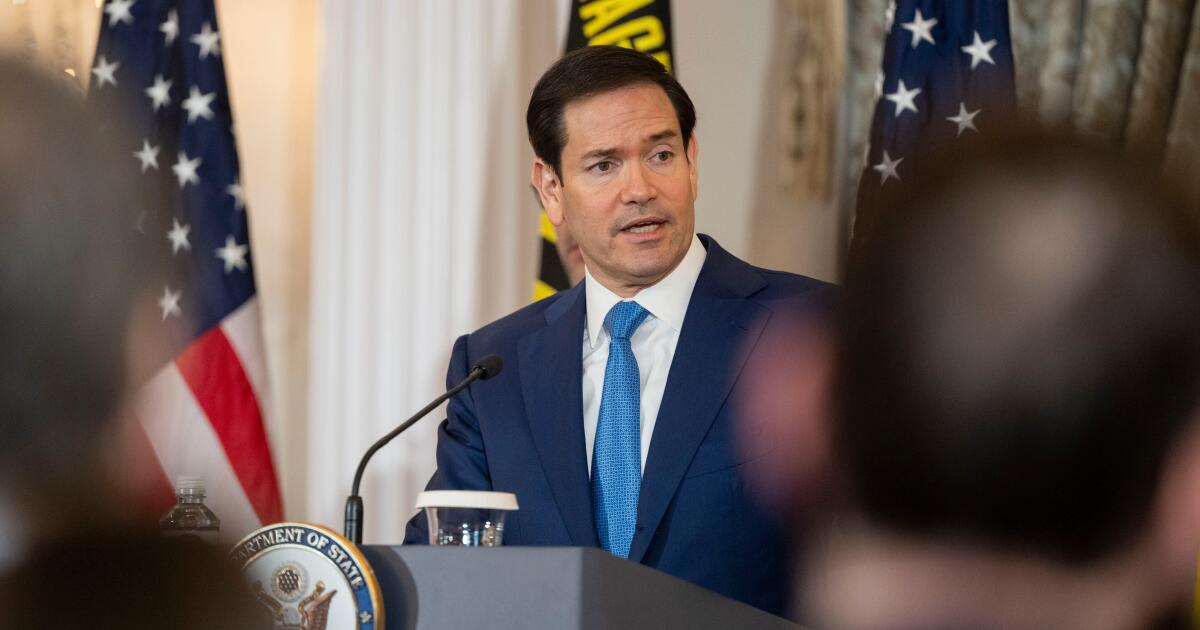
Instead, decisions are made by a small group of officials close to the president without the planning or coordination of the larger machinery of government, including Secretary of State Marco Rubio, who also serves as the president’s national security adviser.
“In the Trump Administration, decisions are made by President Trump and senior administration officials and not by no-name bureaucrat leakers who whine to the press about not being consulted about highly classified operations,” White House spokesperson Dylan Johnson said.
Advice from career officials often went unheeded
“In the time that I was there, there was no policy process to speak of,” said Chris Backemeyer, who served in Near Eastern Affairs as a deputy assistant secretary of state before resigning last year. Backemeyer was a major proponent of the Iran deal that Trump abandoned. He recently left government to run for Congress as a Democrat in Nebraska.
“They did not want to hear any advice from career people,” said Backemeyer.
Namdar was later moved to be the head of Consular Affairs, the part of the department responsible for providing assistance to American citizens overseas and issuing visas to foreign visitors.
When the U.S. made the decision to strike Iran, Ambassador to Israel Mike Huckabee offered embassy staff in Jerusalem the opportunity to evacuate — a sign that he knew strikes were coming. But some other embassies in the region did not make similar arrangements — leaving nonessential personnel and their families stranded in a war zone.
The department said it has been issuing travel warnings since January and was fully staffed to handle the crisis the moment the strikes were launched.
Evacuation planning was chaotic
Still, little planning appears to have gone into how to evacuate the Americans who were living, working, visiting or studying in many of the countries that became engulfed in the conflict — in part because the White House seems to have underestimated the possibility of the strikes expanding into a prolonged multi-country war, as evidenced by Trump’s own remarks.
After Iranian attacks on allies like Saudi Arabia, Qatar and the United Arab Emirates, the State Department began calling for Americans to leave the region. But numerous former Consular Affairs staffers say such planning should have begun long before U.S. strikes started.
In a statement posted to social media, Namdar only told Americans to evacuate several days into the conflict, when airspace was largely closed and many commercial flights were unavailable.
“The messaging that went out to American citizens — after the U.S. struck Iran — was woefully late and, initially, confusing,” said Yael Lempert, who served as U.S. ambassador to Jordan until 2025. Lempert is one of five former ambassadors expected to speak about the department’s failures at an event Thursday at the American Academy of Diplomacy in Washington.
Other poorly executed evacuations, such the Biden administration’s withdrawal from Afghanistan, have drawn criticism.
But this time they’re compounded by the loss of experienced people, officials say. Consular Affairs has lost more than 150 jobs in the Trump administration due to a combination of reductions in force, dismissals of probationary employees and retirements, according to a U.S. official who asked for anonymity — though other parts of the department were hit much harder.
The department notes that it has offered assistance to nearly 50,000 Americans impacted by the conflict, with more than 60 flights evacuating citizens from the region. In total, the department says more than 70,000 Americans have been able to return home since the outbreak of hostilities on Feb. 28.
“The loss of experienced personnel through these RIFs has clearly undermined the Bureau of Consular Affairs’ ability to fulfill its most important mission, to protect Americans abroad,” Sen. Jeanne Shaheen, the top Democrat on the Senate Foreign Relations Committee, said in a statement.
Language skills at the department are also atrophying. Thirteen Arabic speakers and four Farsi speakers, all trained at taxpayer expense, were among employees let go, according to a draft letter being circulated by former foreign service officers.
It can cost $200,000 to train a foreign service officer in a language. The letter estimates that the total number of people fired by the State Department in the name of efficiency received more than $35 million in taxpayer-funded language training and more than $100 million in total training and other career development.
The State Department has set up two temporary task forces to deal with the crisis in the Middle East. One aims to bolster the capacities of Near East Affairs and another is aimed at helping Consular Affairs evacuate Americans.
A group of more than 250 Foreign Service officers were part of the administration’s reduction-in-force last year but still remain on the State Department’s payroll. Many have volunteered to return to the department to work on either a task force or do any other job that needs to be done with the outbreak of a global crisis.
“I haven’t been given any separation paperwork. I still have an active clearance. I could go back to the department tomorrow, either to backfill or staff a task force,” said one foreign service officer who asked for anonymity because they are still technically on the department’s payroll and are not authorized to speak to the press. “I will do the scutwork jobs.”
The department hasn’t responded to their offer but said in a statement that the task force is “fully staffed.”
THERE could be trouble ahead for those who have booked holidays to far-flung destinations as airlines are warning of even more flight cancellations.
The rising price and shortage of jet fuel caused by the Iran crisis means airlines may be forced to axe longer journeys.
Sign up for the Travel newsletter
Thank you!
Certain airlines have already announced axing of flightsCredit: AlamyScandinavian Airlines System said it would be cancelling 1,000 flightsCredit: Alamy
Following the closure of the Strait of Hormuz, the price of jet fuel has risen sharply from $90 (£67) per barrel to as much as $200 (£150) per barrel – with oil traders now also expecting a shortage of it in the coming weeks.
As a result, there’s a rising risk of airlines cancelling services especially to long-haul destinations.
This is because airlines heading to far-flung places may not have enough fuel for the return journey.
The Times reported that the problem could even go on until summer quoting an industry source that said it could “take up to six months to get back to normal” – which sees us through to August.
The airline will see roughly a five per cent reduction in its services which works out to around 1,100 flights.
Following suit, Scandinavian Airlines System (SAS) announced that it would be cancelling 1,000 flights.
Certain countries, like Vietnam have now warned that flights could be cancelled from April, affecting the Easter break.
Meanwhile, China and Thailand have halted exports of fuel to maintain their own supplies – which in turn will affect airlines operating in other countries.
Closer to home, Brits could be affected as some of its jet fuel is imported from the likes of Kuwait, Saudi Arabia and the UAE.
International Air Transport Association said that “Europe is among the most exposed, with 25–30 per cent of its jet fuel demand originating from the Persian Gulf.”
Meanwhile, Watson Farley & Williams, the energy, infrastructure and transport law firm, said: “If airports and airlines’ stocks of fuel are depleted for any length of time, airlines will cease to be able to fuel their aircraft and will have to reduce their operations.
“This may have far-reaching consequences.”
This implies that there could be a knock-on effect for airlines later on, too.
It added that “further flight cancellations can be expected, even by airlines operating from home bases where there is a reliable supply of fuel.”
Certain UK airlines are less affected for now because they have secured some of their fuel at a fixed price for a certain amount of time.
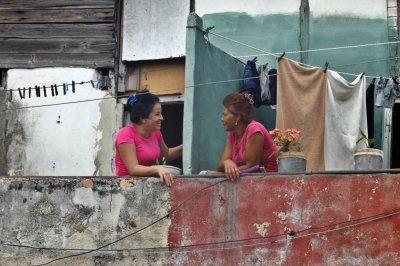
Women chat in Havana on Monday. Cuba’s national electrical grid has suffered a total collapse after a three-month halt in foreign oil shipments. Photo by Ernesto Mastrascusa/EPA
March 17 (UPI) — A magnitude 5.8 earthquake struck eastern Cuba early Tuesday, hours after the island’s national power grid collapsed, leaving nearly the entire country without electricity and compounding an already severe economic and social crisis.
The U.S. Geological Survey reported the quake at magnitude 5.8, while Cuba’s National Seismological Research Center measured it at 6.0. The epicenter was located off the coast of Guantánamo province and was widely felt across eastern Cuba.
State local newspaper Granma reported no fatalities or significant material damage.
The tremor followed the total disconnection of Cuba’s National Electric System shortly before 2 p.m. Monday, the sixth nationwide blackout in roughly 18 months. The Ministry of Energy and Mines said on X that the causes remain under investigation.
The outage left nearly 10 million people without electricity, disrupting water pumping, telecommunications and Internet service. Residents relied on candles, torches and battery-powered radios, according to a report by Mexican broadcaster TV Azteca.
The ministry said the failure affected the entire country, including Havana. The U.S. Embassy in Cuba issued a security alert saying no information was available on when power would be restored.
Energy Minister Vicente de la O Levy said on X that authorities are following established protocols and working to restore electricity to the country’s largest generating units.
Independent outlet Diario de Cuba reported that the government has yet to explain the collapse, which coincided with renewed protests in Havana and growing signs of public discontent.
Officials initially said service was being partially restored through localized “microsystems” in several provinces, prioritizing essential facilities while attempting to restart major thermoelectric plants. Full recovery could take time, especially due to fuel shortages that have limited distributed generation since January.
Frequent blackouts have slowed industrial activity and strained public services nationwide. Recent demonstrations in several cities have resulted in arrests.
Official figures show the Cuban economy has contracted more than 15% since 2020. Much of the state-run industrial sector remains idle and essential services have deteriorated sharply.
Independent experts estimate that fully restoring the power system would require between $8 billion and $10 billion, sums widely seen as beyond the reach of the Cuban economy.
Days after President Miguel Díaz-Canel acknowledged talks with the United States to address longstanding disputes, the government announced measures to allow greater entry of private capital, including from U.S. companies and Cuban expatriates in Miami.
In an interview with state-run Canal Caribe, Vice Prime Minister Óscar Pérez-Oliva Fraga said investors could own private companies on the island and access the financial sector. He confirmed that Cuban emigrants may become partners or owners of private businesses without living in Cuba and may associate with local firms under the Foreign Investment Law.
They also would be allowed to enter the national financial system, open foreign currency accounts and create cooperation and investment funds with authorization from the Central Bank.
Pérez-Oliva Fraga said the measures respond to demands from the diaspora and aim to expand its role in economic development as the government seeks to attract foreign capital and diversify the private sector.
He said “Cuba’s doors are open” to foreign investment, including U.S. companies, while again blaming the U.S. embargo for the island’s energy crisis and fuel shortages.
On Monday, President Donald Trump said he would have “the honor of taking Cuba,” describing the country as weakened after decades of rule by what he called violent leaders.
“You know, all my life I’ve heard about the United States and Cuba. When will the United States have the honor of taking Cuba? That would be a great honor,” Trump said from the Oval Office, according to CNN.
“Taking Cuba in some way, yes, taking Cuba. I mean, whether you free it or take it, I think I can do whatever I want with it,” he added.
His comments came as senior administration officials have repeatedly said a conflict with Iran could end within days and after Trump suggested that Cuba could be next on his agenda.
As the U.S. wades even deeper into the conflict with Iran, some Democratic and progressive political figures are trying to figure out how to connect the public’s wariness about war with concerns about affordability and the widespread reaction against President Trump’s xenophobic immigration policies.
If you’re looking for a template to do it well, one can be found in the words and actions of a political figure who recently passed away: the Rev. Jesse Jackson.
For while attention after his death has rightfully focused on Jackson’s long involvement with the civil rights movement, the more telling lesson for this moment is how his presidential campaigns connected a concern for addressing domestic disenfranchisement with a resolute stance against U.S. military adventures — a message that built on and echoed the Rev. Martin Luther King Jr.’s landmark 1967 speech against the Vietnam War, economic exploitation and racial injustice.
Jackson’s candidacies in 1984 and 1988 emerged at a moment when the social compacts forged by the labor, civil rights and women’s movements of the 20th century were being systematically undone. Deindustrialization was hollowing out working-class communities. Reaganism was consolidating power around tax cuts for the wealthy, deregulation and attacks on unions. A new corporate consensus was hardening — one that increasingly shaped both major parties — prioritizing financial elites while disciplining labor and shrinking the public sphere.
Sound familiar?
Jackson refused to accept that such a right-wing and corporate realignment was inevitable. His Rainbow Coalition was far more ambitious than a candidate-centered campaign. It was an attempt to build an organized, multiracial, cross-class political front capable of contesting the direction of the country itself.
The Rainbow brought together constituencies that conventional political wisdom said could not unite — Black voters in the South, industrial workers in the Midwest, family farmers in crisis, Latino and Native organizers, Arab American activists, peace advocates, labor insurgents and progressive whites.
Jackson’s platform did not treat these groups as symbolic additions to a coalition; it linked their material interests. Farmers facing foreclosure were not an afterthought — the farm crisis was up front. Deindustrialized workers were not rhetorical props — trade, jobs and industrial policy were central. Civil rights were braided together with economic justice.
And crucially, Jackson insisted, as King had, that economic populism could not be separated from anti-militarism.
At the height of the Cold War, amid Reagan’s military buildup and interventionist doctrine, Jackson argued that bloated Pentagon budgets were not abstract line items. They were resources diverted from schools, healthcare, housing and jobs. He connected the violence of abandonment at home to the violence of intervention abroad — and his campaign called for redirecting military spending toward human needs and for diplomacy over escalation.
When Jackson thundered that we should “choose the human race over the nuclear race,” this was not a simple turn of phrase. It was integral to the Rainbow’s moral and economic logic. A government that prioritizes war over welfare, weapons over workers, cannot sustain democratic life.
That clarity feels especially salient today, as the United States continues to pursue military interventions and proxy conflicts whose legality and human cost are deeply contested. Once again, defense budgets swell while public goods strain. Once again, dissent against war is treated as disloyalty. Jackson rejected that false choice decades ago. He understood that militarism abroad reinforces inequality and immorality at home.
Jackson’s 1988 campaign captured millions of votes, won primaries and caucuses across the country and forced issues into the Democratic Party that party elites preferred to sideline. He demonstrated that a progressive program grounded in the lived experiences of ordinary people — rural collapse, urban disinvestment, plant closures, racial injustice and war — could assemble a national constituency.
Unfortunately, after Jackson’s last campaign, the Rainbow’s experiment in independent organizational life was folded too tightly into the mainstream Democratic Party. While that seemed a strategy to achieve a broader front, it meant that the progressive anchor was unmoored — and the effort dissolved before it could truly mature.
But the lessons of that era may be more relevant than ever.
Today, we again confront an ever-ascendant rightward turn buttressed by concentrated corporate power and normalized militarism. As in Jackson’s day, some leaders seek to deflect our attention, blaming economic challenges on the proximate “other” — in his era, Black women taking welfare, in our era, immigrants taking jobs — rather than those with power.
Jackson understood that defeating reactionary politics required isolating it — not only morally, but structurally — by assembling a coalition larger than the right’s base and rooted in shared material demands. He understood that hope had to be organized and that peace had to be part of prosperity. His campaigns showed that racial justice, labor rights, rural survival, gender equality and anti-war politics were not competing claims but interlocking ones.
Protest has surged in the United States, particularly after the excesses in Minnesota. But protest alone does not prevent consolidation. Nor do narrow electoral bargains that leave the underlying corporate and military consensus intact.
At a time when both parties remain deeply entangled with corporate and defense interests, remembering the promise of the Rainbow is not nostalgia. It is instruction.
Rishi Awatramani is a postdoctoral scholar in sociology at USC, where Manuel Pastor is a professor of sociology and the director of the Equity Research Institute.
Islamabad, Pakistan — The war launched by the United States and Israel on Iran has already killed more than 1,400 people, set off retaliatory attacks by Tehran targeting Gulf nations and Israel, and pushed global oil prices above $100 a barrel.
Now, eighteen days into the conflict, aid agencies and countries neighbouring Iran are increasingly concerned about a potential refugee crisis.
Recommended Stories
list of 4 itemsend of list
The United Nations refugee agency, UNHCR, estimates that 3.2 million people have already been displaced in Iran since US-Israeli strikes began on February 28. For now, the number of people physically crossing Iran’s borders remains comparatively modest. But this is what could happen next, and has put Iran’s neighbours on high alert.
Iran borders seven countries: Afghanistan, Armenia, Azerbaijan, Iraq, Pakistan, Turkiye and Turkmenistan. Iraq shares the longest frontier, stretching for almost 1,600km (994 miles).
Each of these states faces its own political pressures, economic limitations and security concerns.
But pressure on the ground in Iran is mounting. The country’s Red Crescent Society reports that more than 10,000 civilian sites have been damaged since the war began, including 65 schools and 32 medical facilities, while more than 1,400 people have been killed in the US-Israel attacks. Strikes have hit residential areas in Tehran, Shiraz and Isfahan.
Meanwhile, commercial flights out of Iran have been suspended as airspace is closed.
Eldaniz Gusseinov, head of research at the geopolitical advisory firm Nightingale International, noted that because strikes have so far been concentrated largely on Tehran and western and southwestern Iran, other parts of the country — especially provinces bordering Turkmenistan, Afghanistan and Pakistan are absorbing much of the internal displacement.
“If the strike pattern remains the same, internally displaced people inside Iran will increasingly concentrate in provinces located near those states, creating the preconditions for cross-border movement,” the Almaty-based analyst told Al Jazeera.
And things could get worse. If Tehran, a city of about 10 million people, were to lose its electricity grid or water supply in a US-Israel attack, for instance, residents could be forced to leave en masse.
“Infrastructure destruction does not produce the gradual, manageable flows that the Syrian war initially generated. It produces sudden, massive displacement, driven by the collapse of basic urban services,” Gusseinov said.
Turkiye fears repeat of Syrian migration crisis
Among Iran’s neighbours, only Turkiye, Iraq and Pakistan have extensive experience of hosting large refugee populations.
Imtiaz Baloch, an independent researcher focusing on conflicts in Pakistan and Central Asia, said that if the crisis in Iran deepens, many Iranians could seek refuge in neighbouring states, particularly Iraq and Turkiye.
Analysts say no country faces greater political exposure than Turkiye.
“Turkiye is currently hosting many refugees from Syria and other countries. A new influx of Iranian migrants would likely intensify the humanitarian burden and create new challenges for both host countries and international relief agencies in the coming days,” Baloch said.
Turkiye shares a 530km (329-mile) border with Iran and allows visa-free entry for Iranian citizens. It already hosts the world’s largest refugee population, including roughly 3.6 million Syrians, and anti-immigrant sentiment has hardened within domestic politics over the past decade.
Turkiye’s interior minister, Mustafa Çiftçi, said earlier in March that the government had prepared three contingency plans for the war in Iran.
The first involves intercepting migration flows within Iranian territory before they reach the border. The second proposes establishing buffer zones along the frontier. The third would allow refugees to enter Turkiye under controlled conditions as a last resort.
Turkish authorities say they have already strengthened the border with Iran, adding 380km (236 miles) of concrete wall, 203 optical towers and 43 observation posts – undertaken, according to a Turkish Ministry of National Defence statement issued in January, as the US was building up its armada in the Gulf late last year.
“Although there is currently no mass migration detection at our borders, additional measures have been taken on the border line, and these measures will be implemented if needed,” the Defence Ministry stated on January 15.
So far, this has not been necessary. According to Turkish government data on the movement of people from Iran, 5,010 entered Turkiye from between March 1 and 3, while 5,495 exited.
But Turkiye has felt the effects of the war’s spillover in other ways. On March 9, NATO confirmed it had intercepted an Iranian ballistic missile over Turkish airspace. The debris landed near Gaziantep, in the western-most part of the country, about 50km (31 miles) from the Syrian border. Iran denied that it was behind the attack on Turkiye.
Crisis on an unprecedented scale?
What makes the current situation in Iran particularly urgent is the scale of its population, say analysts.
Syria had approximately 21 million people at the start of its civil war. Iran has roughly 90 million. The Syrian conflict caused more than 13 million people to be displaced, including more than 6 million who fled the country.
A proportionate displacement from Iran would represent a humanitarian crisis with few modern parallels. To put it into perspective, if a country of 90 million experienced the exact same scale of crisis as Syria, nearly 56 million people would be forced to flee their homes, and nearly 26 million of them would become international refugees.
Gusseinov said such a scale of displacement and the capacity of international aid agencies is “fundamentally mismatched”.
Furthermore, Iran itself hosts one of the world’s largest refugee populations: about 3.7 million displaced people, most of them from Afghanistan.
“Any mass displacement from Iran, therefore, creates a dual crisis: Iranian civilians fleeing outward, and Afghan and Iraqi refugees who were already in Iran being displaced a second time, or pushed back to countries that cannot absorb them,” he said.
Hamid Shirmohammadzadeh, 35, who arrived in Turkiye from Iran, shows his passport while staying at a hotel in Van province, Turkiye, March 5, 2026 [Dilara Senkaya/Reuters]
Iraq and the South Caucasus face difficult choices
Although most population movement is still taking place within Iran rather than across its borders, Iran’s neighbours do have cause for concern, analysts say.
“Iran’s neighbouring countries are already dealing with their own crises, which limits their ability to absorb a potential refugee influx. Countries such as Syria, Iraq, Azerbaijan, Pakistan, and Afghanistan are facing varying degrees of economic, political, or security challenges. These internal pressures make it difficult for them to accommodate a large influx of refugees,” Gusseinov told Al Jazeera.
Iraq, which shares Iran’s longest border, faces a particularly complex situation.
The country is not only a potential destination for Iranian refugees, but has also been caught in military exchanges between Washington and Tehran. US forces have targeted armed groups operating from Iraqi territory, while Iran and pro-Iran armed groups have struck – or attempted to strike – US military and diplomatic positions inside the country.
The UN’s International Organization for Migration says disruptions on the Iranian side of the border have led to the closure of several crossing points, although Iraqi crossings remain technically open. Meanwhile, the UNHCR says it is monitoring developments closely, and that the Iraqi government would lead any emergency refugee response.
The semi-autonomous Kurdish region of northern Iraq, which, unlike the rest of the country, still allows visa-free entry for Iranian passport holders, adds another layer of complexity.
The region hosts several Kurdish armed groups, some of which have reportedly been in discussions with Washington about receiving military support in return for joining the war against Iran. The development has prompted Iran’s Revolutionary Guard Corps (IRGC) to strike Kurdish positions inside Iraqi territory.
Baghdad has publicly stated that it will not allow its territory to be used to infiltrate Iran, but experts on the region say its ability to enforce the position is limited.
Further north, the South Caucasus states of Armenia, Azerbaijan and Georgia have each expressed concern while attempting to carefully balance relations with both Washington and Tehran.
Azerbaijan has closed its land borders to routine traffic, requiring government approval for any crossing, while Armenia’s border with Iran, which is just 44km (27 miles) long, remains open.
“Armenia is a small economy already absorbing Russian and Ukrainian migrants,” Gusseinov said.
(Al Jazeera)
Pakistan and Afghanistan confront overlapping crises
To Iran’s east lie Pakistan and Afghanistan, each grappling with existing refugee pressures.
According to the UNHCR, since October 2023, about 5.4 million Afghans have returned to Afghanistan from Iran and Pakistan, many not by choice.
Following the withdrawal of US troops from Afghanistan and the Taliban’s return to power in August 2021, a huge wave of Afghans sought refuge across the country’s borders, fearful of economic collapse and security threats.
The UN and international migration agencies estimate that between 1 and 1.5 million Afghans fled to Iran in the immediate aftermath of the US withdrawal, pushing the total Afghan population in Iran to upwards of 5 or 6 million.
Concurrently, hundreds of thousands of newly displaced Afghans crossed into Pakistan, joining a long-established refugee community there and swelling the total number of Afghans in the country to more than 3 million.
In response to this influx and citing domestic economic and security pressures, both Pakistan and Iran initiated aggressive mass deportation campaigns, forcing millions back into Afghanistan. Between late 2023 and the end of 2025, between 2.8 million and 3.5 million Afghans are thought to have been sent back.
Pakistan’s stringent repatriation plans pushed out more than 1.3 million people, while Iran drastically accelerated its expulsions, deporting nearly 2 million individuals in 2025 alone.
According to the UNHCR, in 2026 so far, more than 232,500 Afghans have returned to their country, including 146,206 from Pakistan and 86,253 from Iran.
The primary concern now is that the war in Iran could accelerate these returns, pushing people into communities already struggling to cope and potentially triggering further onward migration. The UNHCR has also warned that largescale and hurried returns of refugees could trigger further instability in the region.
Further complicating the situation, Pakistan and Afghanistan have been engaged in fighting, as Islamabad claims that Afghanistan is providing a safe haven to armed groups launching attacks at Pakistan. Kabul has consistently denied the presence of any such groups on its soil.
Another bout of hostilities in October 2025 led Pakistan to close its borders with Afghanistan. Since then, Afghanistan’s trade and economic ties with Iran have deepened.
“Destabilisation of the Iranian economy, therefore, hits Afghanistan through two channels simultaneously: reduced trade flows and refugee return surges,” Gusseinov said.
Meanwhile, Pakistan faces its own geographical and security challenges.
The country’s border with Iran runs through Balochistan, its largest but most volatile province, where separatist sentiment has simmered for decades. The province has seen an increasing number of attacks by armed groups seeking independence from Pakistan. In February this year, Pakistan’s military concluded a weeklong security operation in the province, and claimed it had killed 216 fighters in targeted offensives.
While Balochistan’s provincial officials say they have sufficient resources to accommodate refugees if large numbers begin arriving across the southern border, researcher Baloch said the reality was more complicated. Any refugee crisis, he said, could make the situation in Balochistan difficult for Islamabad to manage.
“Balochistan’s porous border is next to Iran’s Sistan and Baluchestan province, a region that has historically been home to various separatist groups. Any significant influx of refugees across this border could impose additional security and economic costs on Pakistan,” Baloch said.
AS A RESULT of the Iran crisis, Brits have been looking for different destinations to travel to, with demand rising for some countries.
The conflict in the Middle East has had a ripple effect throughout the travel sector, with Brits being forced to cancel their holidays as the Foreign Office has issued ‘do not travel’ warnings to some destinations.
Sign up for the Travel newsletter
Thank you!
A number of European destinations are experiencing a rise in demand including spots in Spain like Ibiza (pictured)Credit: GettyItaly has seen an increased in demand too, where you could visit cities like Florence (pictured)Credit: GettyWhile some providers are seeing bookings for Greece fall, despite it being safe to travel to (pictured: Corfu)Credit: Getty
And now, Brits looking at booking a holiday are choosing destinations closer to home in Europe.
Last week, On The Beach confirmed that they had experienced a drop in demand for popular holiday destinations including Greece, Turkey, Cyprus and Egypt, as a result of growing tensions in the Middle East.
This is despite the Government having no warning against travel to any of the popular holiday regions in these countries.
But on the other hand, TUI has seen increased interest in Greece, as well as Portugal and Spain, as customers look to “familiar destinations”.
Neil Swanson, a director at TUI, said: “While we are seeing some cancellations in the affected areas, these are currently outweighed by customers choosing to amend their plans instead,” reports The Guardian.
Hays Travel on the other hand, has seen interest grow for trips to Italy, Malta and Croatia.
And Surrey-based holiday operator Kuoni has seen interest in longer haul destinations such as the Caribbean grow although this also comes with a jump in price as well.
Mark Duguid from Kuoni said: “What we’ve seen is huge increases in flight prices, because the seats remaining are limited – we are talking about seats going up by £1,000 a person for an economy seat, which then prices the holiday out of the market for many customers.”
Pure One Travel founder, Wesley Baker, said: “Travellers are still eager to explore the world, but geopolitical events inevitably influence where people choose to go.
“We are seeing customers pivot towards destinations they perceive as easier and more straightforward to reach.”
The tour operator added that interest has increased for destinations such as Spain, Portugal, Italy and Greece.
Baker added: “Many travellers are simply redirecting their plans rather than cancelling them.
“Europe remains extremely popular, while long-haul destinations in Latin America are also attracting interest from travellers looking for something more adventurous.”
According to Expedia, popular European destinations for this spring based on search data include Paris in France; Amsterdam in the Netherlands; Rome in Italy and Majorca and Tenerife in Spain.
Hays Travel has seen interest grow for trips to Italy, Malta and Croatia (pictured: Florence, Italy)Credit: GettyPure One Travel are seeing increased interest for Spain, Portugal, Italy and Greece (pictured: Milan, Italy)Credit: Getty
Ljubljana in Slovenia has seen a 90 per cent increase in search as well, and Valencia in Spain has seen a 65 per cent increase.
The Sun’s Head of Travel Lisa Minot explained: “There’s no doubt the current crisis in the Middle East is going to have a seismic impact on our holiday habits.
“Reports of travellers stranded in the UAE and across the globe will certainly prompt those looking to travel long haul to look at alternative ways to fly – with direct flights to places like Thailand, the Maldives and Japan sure to be very popular.
“Closer to home, the situation will sadly likely impact destinations like Turkey, Egypt, Cyprus and possibly even Greece.
“And with soaring fuel costs, tour operators will be looking to price alternative destinations competitively.
“But there are other options – our traditional resorts in places like Spain and Portugal are good, safe bets.
“Comparison giant TravelSupermarket has crunched the numbers for this summer and declared Spain’s Costa Calida one of the best-value destinations for this summer.
“Dubbed the ‘warm coast’, this region stretching along the south eastern region of Murcia is one of Spain’s most underrated coastlines with 150miles of beaches, crystal clear waters and the unique Mar Menor lagoon, Europe’s largest saltwater lake.
“Also worth exploring are the likes of Montenegro, Albania and even North Macedonia for cheaper hotel and restaurant costs as well as traditional favourite Bulgaria.”
Fans flocked to the comments section to share their excitement as one said: “Yayy I love Dollywood!!”
Another person commented: “The girl next door who owns an amusement park. Because Dolly showed us, girls can do anything.”
Somebody else enthused: “Can’t wait to go back!!”
Dolly faced some health woes last yearCredit: AP
Yet another expressed: “The Queen of Tennessee, beautiful Dolly.”
While a fifth added: “Going in August – taking a family vacation and Dollywood is definitely on the itinerary.
This comes after Dolly sparked health concerns last fall when she canceled several performances.
At the beginning of fall in 2025, the Tennessee native announced she was forced to postpone her Las Vegas residency after dealing with a number of “health challenges.”
Dolly’s shows were scheduled for six dates in early December at The Colosseum at Caesars Palace.
Tim McGraw subsequently took her place and the rescheduled shows have been set for September 2026.
In her message to fans, Dolly explained that she couldn’t perform due to doctor’s orders and had to undergo “a few procedures.”
She previously took some time off to deal with her healthCredit: Getty
“He is telling me to slow down right now so I can be ready for more big adventures with all of you.
“I love you and thank you for understanding.”
She assured fans that she would be back on stage soon, writing, “And don’t worry about me quittin’ the business because God hasn’t said anything about stopping yet.
After taking some time off, she returned last month as she told her fans some exciting news.
Looking incredible while sitting in a colorful room, Dolly delivered the news that East Tennessee Children’s Hospital was officially becoming Dolly Parton Children’s Hospital.
In the video, she explained how she believed every child should grow up healthy and with a fair chance.
She then revealed the hospital’s name change before saying, “I can’t do it all myself,” and asking for people to get involved via her website.
Meanwhile, the caption of the video read: “A new chapter begins.
“East Tennessee Children’s Hospital is proud to share we are becoming Dolly Parton Children’s Hospital.
“Inspired by Dolly’s commitment to children, this transformation represents more than a name change, it’s a promise. A promise to bring hope, healing and world-class care to patients and families across our region.
“Together, we’re building a future where every child has the chance to grow, thrive and feel the comfort of compassionate care.
“The same dedicated team. The same trusted care. Now carrying a name that reflects the heart of our mission. Learn more at DollyChildrens.org.”
She’s opened up Dolly’s Children HospitalCredit: Instagram / dollychildrens