crews

P-8 Poseidon Crews Controlling MQ-4C Triton Drones Becoming A Reality

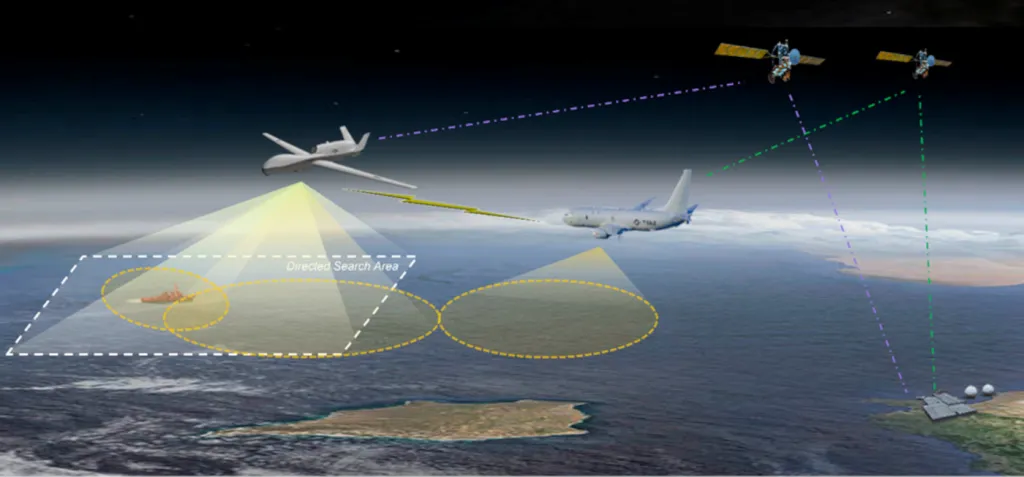
Boeing and Northrop Grumman are laying the groundwork to take teaming between the P-8A Poseidon maritime patrol plane and the MQ-4C Triton long-endurance maritime surveillance drone to a new level. A first-of-its-kind test has demonstrated common command and control architectures that will enable P-8A crews to issue orders to MQ-4Cs. The drones would then perform their assigned missions autonomously and report back. The Poseidon and Triton were designed to operate as a team from the start, but the ability to task the uncrewed aircraft directly in flight would offer new flexibility, especially to respond to sudden changes in the battlespace.

Press releases today from Boeing and Northrop Grumman shared details of the recent P-8/MQ-4 teaming test. The testing was conducted in a laboratory environment and no real aircraft were involved.

“A P-8A operator issued machine readable, machine actionable mission tasking to a simulated MQ-4C Triton using UCI [Universal Command & Control Interface] formatted messages,” according to Boeing’s release. “The P-8A cued the Triton transit to a specific area. After receiving the request, the Triton autonomously planned and executed a transit to the area, employed sensors per the tasking, processed findings onboard, and reported results back to the P-8A Poseidon.”

A graphic offering a very general overview of a concept of operations involving teaming of the P-8A and MQ-4C. Boeing

“In the exchange, Triton’s system used AI [artificial intelligence] algorithms to collect, process and share intelligence data with P-8A Poseidon in response to a request sent by the P-8A Poseidon system,” Northrop Grumman also said in its release.

“Data routes included satellite relay to reflect realistic operational communications. Mission management and autonomy layers communicated via OMS/UCI [Open Mission Systems/Universal Command & Control Interface] rather than custom point to point interfaces,” Boeing’s release adds. “Using UCI, the platforms can collaborate with any U.S. or allied asset sharing the same interface – reducing operator workload by distributing the mission tasks and accelerating commander decisions, making integration across platforms quicker and more cost effective.”

The P-8A was designed primarily as a maritime patrol platform, but has substantial additional intelligence, surveillance, and reconnaissance (ISR) capabilities baked in. This includes a surface search radar that also has a synthetic aperture radar (SAR) mode, allowing it to capture still radar ‘images,’ even through cloud cover, smoke, and dust, and at night. It also has a sensor turret with electro-optical and infrared full-motion video cameras, as well as a robust signals intelligence suite, as you can read more about here. Its communications capabilities are also critical to making use of all the intelligence it gathers, as well as leveraging data gathered by other platforms. The U.S. Navy also operates more specialized versions of the Poseidon with very advanced add-on sensor systems.

A stock picture of a US Navy P-8A. USN

The MQ-4C, which was derived from the RQ-4 Global Hawk drone, has a radar with a SAR mode, as well as electro-optical and infrared cameras, as well. In addition, the drones have electronic support measures systems that allow for the collection of electronic intelligence passively. Unlike Global Hawk, Triton also notably has the ability to descend to lower altitudes to more closely investigate targets of interest.

So far, the United States and Australia are the only countries to operate the MQ-4C, and both of them also have fleets of P-8s. Canada, Denmark, Germany, India, New Zealand, Norway, South Korea, and the United Kingdom all fly P-8s or are in the process of acquiring them, as well. Last month, Denmark, Finland, Germany, and Norway announced a new joint plan to acquire and operate a fleet of Triton drones under the umbrella of the NATO alliance.

A depiction of an MQ-4C Triton in NATO markings. Northrop Grumman

As already noted, the intention has always been for the P-8A and MQ-4C to work closely together, and the U.S. Navy actively teams the two platforms up today.

“Currently, the MQ-4C is being used as a long endurance, maritime ISR [intelligence, surveillance, and reconnaissance] asset, that often times feeds us updated posits [positions] on contacts of interest,” a P-8A pilot assigned to the Navy’s Patrol Squadron Five (VP-5), the “Mad Foxes,” explained to TWZ in an interview years ago. “They can fly significantly higher and longer than us and are able to provide a more constant feed of ISR.”

“The Triton will be flown and monitored out of NAS Jacksonville [Naval Air Station Jacksonville in Florida], and we have already seen some pilots and NFOs [naval flight officers] being selected to operate the aircraft,” the Navy P-8A pilot also noted at that time, and this is the crux of the matter.

What Boeing and Northrop Grumman have now demonstrated, at least in a test lab, is the ability of P-8A crews to dynamically task and retask MQ-4Cs without having to go through a command center on the ground that could be thousands of miles away. This, in turn, can only speed up the process of responding to sudden developments, which could include potential threats that pop up unexpectedly or targets of interest that appear to be fleeting.

A look inside the main cabin of a P-8A during a mission. USN Petty Officer 2nd Class Andy Anderson

As the pilot from VP-5 previously explained, the MQ-4C already offers a valuable broad-area maritime surveillance asset that can cover vastly more area, and do so more persistently, than a P-8A can by itself. This, in turn, can also help keep Poseidons further away from potential dangers.

Though treated as something of an aside in the press releases today, work to enable the MQ-4C to do at least some level of immediate autonomous processing of the data it collects using AI-driven systems is also an important development. The amount of data that drones like the Triton can collect can easily be overwhelming for sensor operators and intelligence analysts. A new electronic and signals intelligence (ELINT/SIGINT) suite is in development now for the MQ-4C that will only expand the breadth and volume of data the drones can collect. The U.S. Navy is also in the process of upgrading its P-8As with the explicit aim of improving their already substantial ISR, targeting, and networking capabilities.

With all this in mind, the ability to detect and classify potential items of interest and then highlight them for human personnel offers immense benefits for shrinking down the time it takes to go from data collection to appropriate action. Having a collection platform, crewed or uncrewed, do at least some of that work in an automated fashion upfront can only help further speed up the process. Not having to send as much data can help reduce bandwidth demands and, by extension, latency in the transfer, too.

A stock picture of a US Navy MQ-4C drone. Northrop Grumman A Multi-Int MQ-4C Triton drone. Northrop Grumman

The OMS/UCI architecture used to support the new P-8/MQ-4C teaming testing could further open the door to pairing the Poseidon with other uncrewed teammates, as well. General Atomics has already been pitching the SeaGuardian version of its MQ-9B drone as a new partner for the P-8A. In its standard configuration, the SeaGuardian is also primarily intended for maritime surveillance and reconnaissance. However, there has also been work to give the drone new capabilities to support anti-submarine warfare missions, including with underwing dispensers for sonobuoys and the ability to pass data they collect along to other nodes.

An MQ-9 drone with a sonobuoy dispenser under its left wing seen during a test. General Atomics

We could see more teaming opportunities emerge for the P-8A in the future on the smaller tactical side if the aircraft gain the ability to launch drones of their own. TWZ has laid out a detailed case for adding this capability to the Poseidon in the past. More broadly speaking, the U.S. military is investing heavily in crewed-uncrewed teaming capabilities in the air and in other domains, and this is also a growing trend globally.

Especially with the P-8 user base already large and continuing to expand, a new level of interoperability between the Poseidon and the Triton, specifically, could be valuable for the U.S. military and its allies and partners during future coalition operations. This could also create new interest in the MQ-4C among existing and future P-8 operators.

“MQ-4C Triton and P-8A are the backbone of the U.S. Navy’s maritime patrol and reconnaissance force, delivering complementary capabilities unmatched by any other platforms,” Jane Bishop, Vice President and General Manager of the Global Surveillance Division at Northrop Grumman, said in a statement today. “This demonstration underscores the flexibility of our systems, our unwavering industry investment and the strength of our industry relationships. Our commitment to pushing the boundaries of advanced technology ensures that the U.S. and allied nations operators maintain an unparalleled edge against evolving maritime threats.”

“This Poseidon-Triton teaming demonstration unlocks real-world capability and interoperability for the U.S. and allies,” Tory Peterson, Vice President of the P-8 program at Boeing, also said in a statement. “We’re investing so that current and future global P-8A operators can expand the scope and effectiveness of their missions with low risk, evolutionary enhancements on the most advanced maritime patrol and reconnaissance aircraft already in service.”

Another look at a US Navy P-8A Poseidon. USAF

It remains to be seen when Boeing and Northrop Grumman might demonstrate the new P-8/MQ-4C teaming capabilities in a real-world flight test.

“Next steps and timing will depend on customer requirements and would follow established acquisition, testing and fielding paths,” a Boeing spokesperson told TWZ when asked about any potential flight testing plans. “This was a jointly funded technology collaboration between Boeing and Northrop Grumman, demonstrating a practical, low-risk approach for integrating standards-based capabilities into existing platforms.”

The recent laboratory test is still an important step toward a future in which P-8A crews are able to issue direct commands to their uncrewed MQ-4C partners.

Contact the author: joe@twz.com

Joseph is TWZ’s Deputy Editor, helping to oversee the site’s highly experienced and dedicated team, while also writing informative and impactful defense and national security content. He lives right in the thick of it in the Washington, D.C. area.


Source link

Trump administration pushes tougher English rules for Mexican train crews crossing into the U.S.

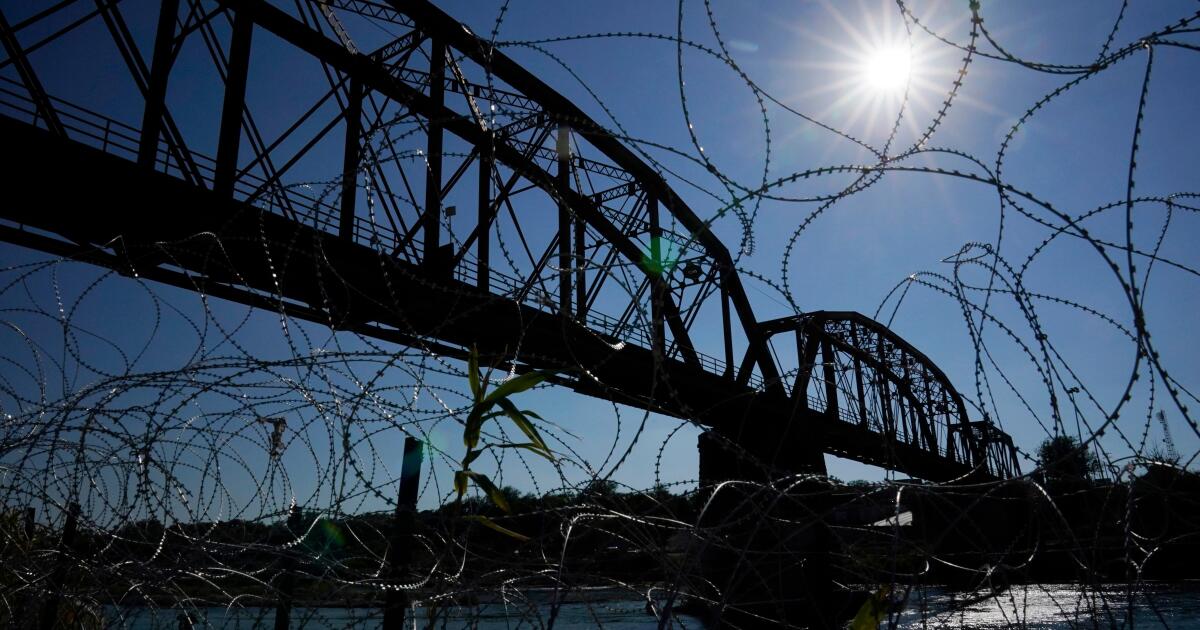
The Trump administration wants to make sure that the Mexican train crews who haul freight over the border can understand key safety information in English and that the common practice of using foreign crews to cross into America doesn’t threaten U.S. jobs.

Two major rail unions praised the proposed rule announced Friday that would also strengthen the standards for certifying that crews can safely operate a train.

The government had concerns after inspecting two Texas rail yards near the border last fall on the two railroads directly affected by these restrictions on Mexican crews — Union Pacific and Canadian Pacific Kansas City, or CPKC. Union Pacific didn’t immediately respond but CPKC and the Assn. of American Railroads trade group declined to comment while they study the rule.

The Federal Railroad Administration sent letters to both CPKC and Union Pacific in December after inspections found that train crews often had trouble understanding English during focused inspections. The government urged those railroads to reexamine their practices and make sure that Mexican crews can speak English and don’t operate a train more than 10 miles inside the United States.

Last fall, federal inspectors found numerous problems in Union Pacific’s Eagle Pass rail yard and CPKC’s facility in Laredo where train crews were having a hard time understanding English-language operating bulletins and U.S. regulations. Information about hazardous materials and emergency responses are required to be in English.

Both Union Pacific and CPKC have pledged to make sure they were following the existing rules, including that the Mexican crews do not travel more than 10 miles into the United States. But now the federal government wants to strengthen the rules “because railroad crews must be able to communicate fully and accurately when crossing into the United States, most notably with dispatchers and emergency responders during a crisis, as a safety-critical function.”

This rail safety effort aligns closely with the Transportation Department’s efforts to ensure that truck drivers can understand English, so they can read road signs and warnings and communicate with first responders after an accident or during an inspection. The government has tried to withhold millions of dollars in highway funding from New York and California because it isn’t satisfied with the steps those states have taken to make sure the commercial driver’s licenses they issue are valid.

Mark Wallace, the national president of the Brotherhood of Locomotive Engineers and Trainmen union, has been raising concerns about this practice of using Mexican train crews for several years because of safety, security and job concerns.

The union has said that the handoffs used to happen right at the border, but now Union Pacific and CPKC routinely ask Mexican crews to bring trains several miles over the border to one of their rail yards where the crew switches can be done more safely. But the firm 10-mile restriction in this rule will prevent the railroads from expanding this practice to rail yards farther into the United States. The union said Union Pacific was considering this type of expansion in New Mexico.

Wallace said the language barrier would pose a hazard in the event of issues such as a derailment.

But the railroads have said that this practice of using Mexican train crews to bring the trains into rail yards in America was developed in 2018 with the approval of the first Trump administration to address smuggling concerns. When trains are stopped at the border, smugglers often try to conceal drugs or other contraband aboard them and immigrants might jump aboard to get into the United States.

It is also routine for Canadian crews to bring trains a few miles over the northern border with the United States before handing off to American crews.

The SMART-TD union that represents conductors and other rail workers also said the provisions of the rule that will prohibit train crews from using a system that’s similar to cruise control when they take their certification tests will help ensure they can operate a train safely.

“Railroad certifications should represent proven ability, not simply possession of a certificate,” said Jared Cassity, who is SMART-TD’s top safety expert. “When lives are on the line, the FRA must know that an engineer can safely operate a train, not just supervise a computer doing it.”

Funk writes for the Associated Press.

Source link

Fire crews battle blaze on Arthur’s Seat in Edinburgh

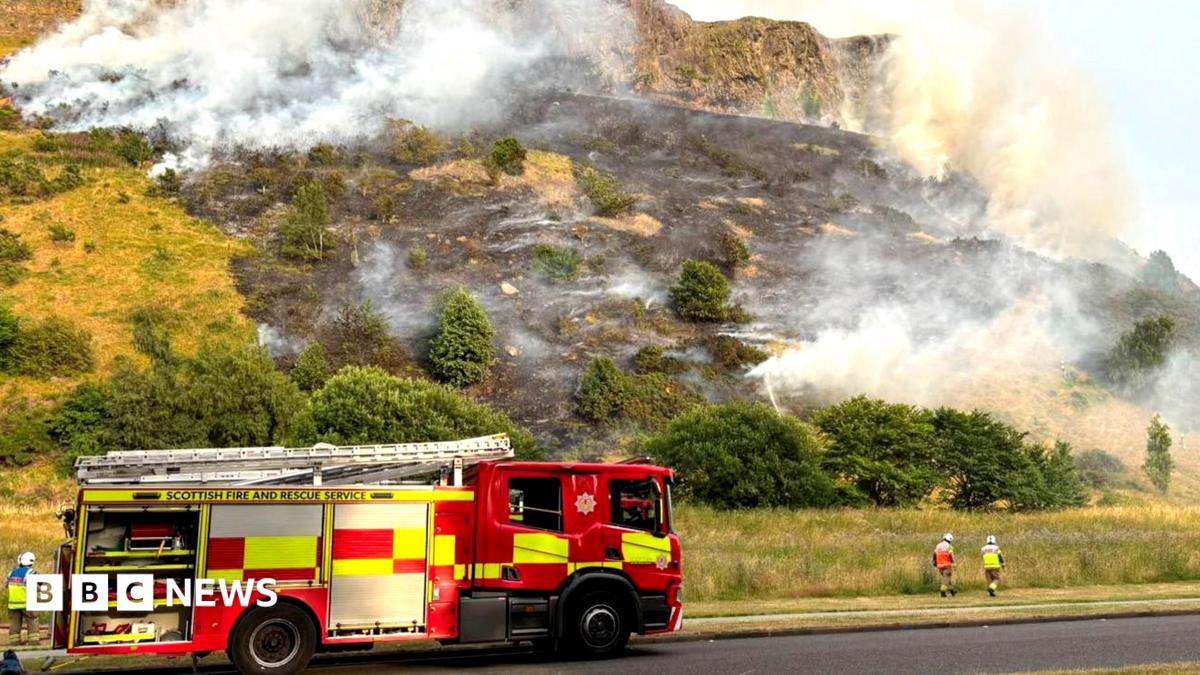
It is the latest wildfire call out for the Scottish fire service during the recent stretch of warm, dry weather.

Hundreds of firefighters, two helicopters and specialist resources were sent to the Cairngorms National Park where a blaze has been ongoing for four days.

Six square kilometres of land had been affected resulting in homes and businesses, including campsites and a ski resort in the Glenmore Forest Park area, being evacuated as a safety precaution.

A high volume pump has been used to draw water from Loch Morlich to support firefighting efforts.

On Sunday, fire crews said the fire was now “surrounded” and police began escorting residents and campers back to properties and campsites to collect personal belongings.

Source link

Crews are draining the Lincoln Memorial Reflecting Pool again as part of Trump’s troubled revamp

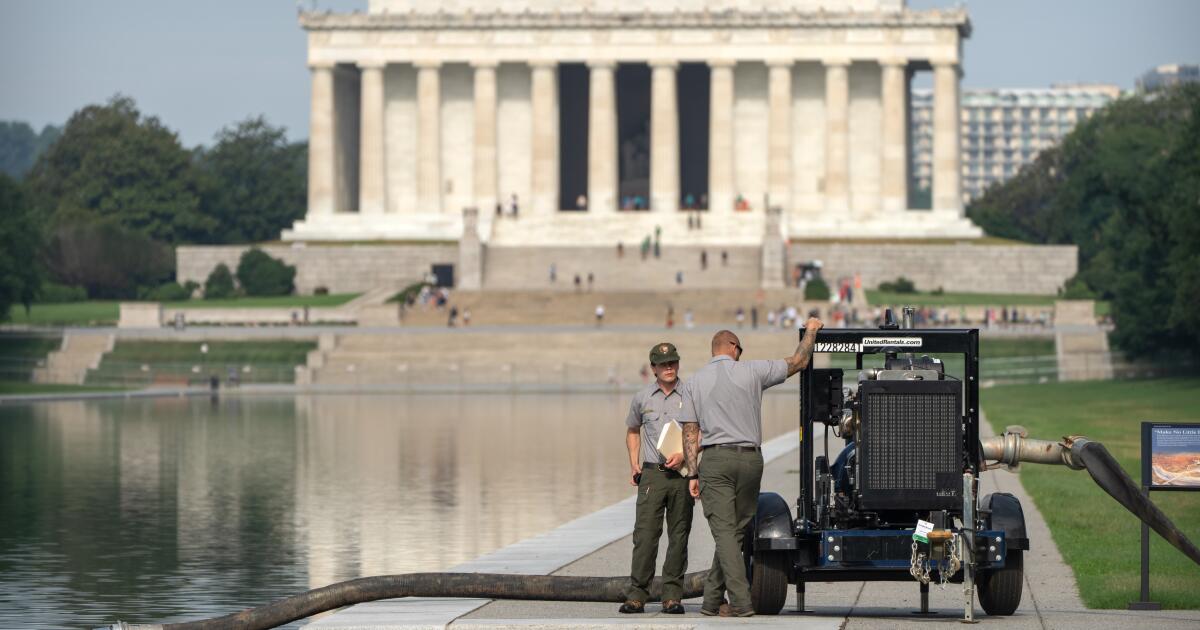
Crews are again draining the Lincoln Memorial Reflecting Pool as President Trump’s problem-plagued efforts to revamp the waterway pushes well past his initial goal of having it ready by July 4 to mark the nation’s 250th birthday.

The president at first suggested his renovations would last a century. But within weeks of the project originally reaching completion last month, the water was beset by an algae bloom and pieces of the new coating appeared to be peeling off the bottom.

Trump has blamed the peeling on vandals, though critics allege it’s from shoddy repair work.

Interior Secretary Doug Burgum, whose agency oversees the National Park Service, told conservative podcaster Katie Miller in an interview released earlier this week that the new round of draining was planned. He also said that the water might still contain debris from an extensive Independence Day fireworks display over the National Mall.

“Drain the water, clean up the fireworks stuff,” Burgum told Miller, who is the wife of deputy White House chief of staff Stephen Miller. “Repair the vandalism that was done. Fill it back up again.”

The work on the Reflecting Pool is just one of a number of projects Trump has spearheaded across the nation’s capital. Most prominently, he demolished the White House’s East Wing to build a $400-million ballroom and plans to build a towering arch between the Lincoln Memorial and Arlington National Cemetery.

He initially announced his intentions to beautify the Reflecting Pool this spring, saying he wanted it completed before the nation’s 250th birthday celebrations.

Water was drained and Trump directed that the bottom be painted what he called “American flag blue.” In May, the president posted on his social media site of the pool: “The goal is to have it done, at this higher level, prior to July 4th — We are ahead of schedule!”

But problems began quickly after the initial work was finished. Trump blamed vandals, and court documents later showed that the National Park Service reported to the U.S. Park Police a June 9 incident in which a sharp knife or razor cut the pool’s new liner.

On Thursday, former Olympic canoe racer David Hearn pleaded not guilty in D.C. Superior Court to deliberately damaging the Reflecting Pool. Hearn has said he reached inside the pool to examine the peeled sealant and let go of a chunk when he was told to by a park worker.

His attorneys and other Trump administration critics have derided the case as an abuse of prosecutorial power and maintain he is being scapegoated for the poor job done fixing up the Reflecting Pool.

At least three other people have been charged in the same court with misdemeanors for allegedly removing pieces of paint from the Reflecting Pool, according to online court records. All three pleaded not guilty during their initial court appearances Wednesday.

The pool was closed for the Independence Day celebration, which featured what Trump said was the largest fireworks display in the world. The president had said that the pool would have to be drained anew as part of the new round of repairs.

Burgum has also said that the Trump administration won’t seek bids for the new rounds of repairs. He told CNN’s “State of the Union” last weekend: “We’ll use the same company because they did a fantastic job.”

Ohio-based Green Water Solutions, also known as Greenwater Services, was given a $1.7-million contract to install a water-purification system in the Reflecting Pool, while Virginia-based Atlantic Industrial Coatings was awarded $14.7 million to repaint and waterproof the pool’s concrete floor.

Democratic senators and House members are investigating the pool project, including seeking answers about how much taxpayer funding is involved.

Weissert writes for the Associated Press.

Source link

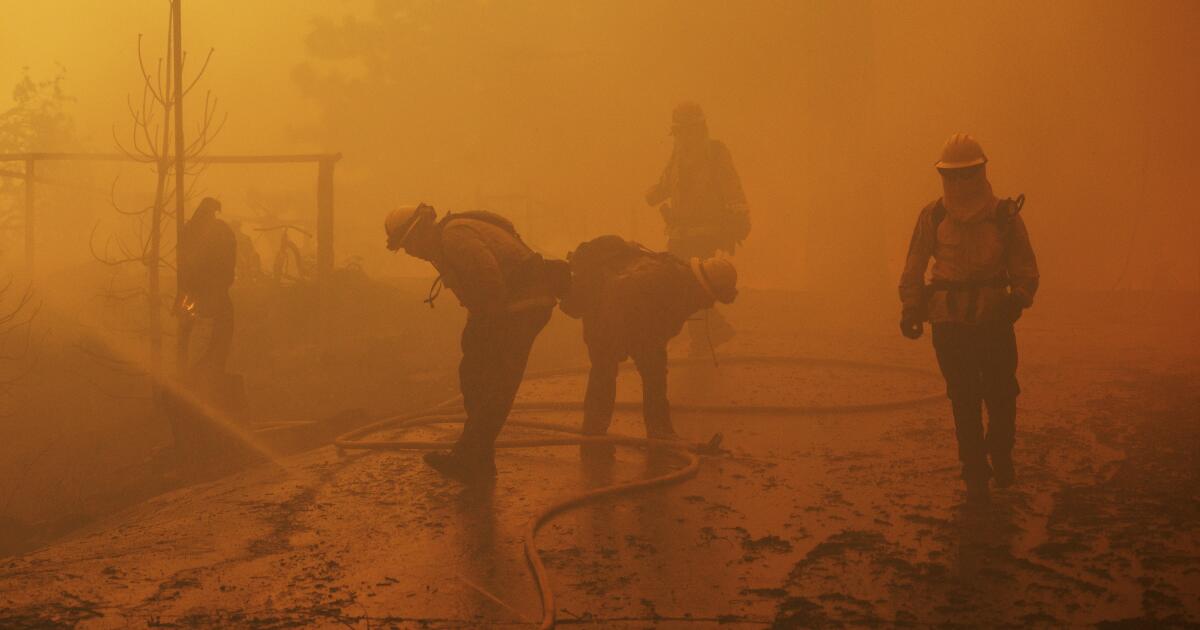
Why it took so long for feds to allow masks for crews fighting fires

Last week, the U.S. Forest Service and Department of the Interior expanded the situations in which their firefighters are allowed to wear N95 masks.

Starting in September, the federal government began allowing firefighters to wear the masks, but not when they were working on the fire line, only at times such as in camp and sitting in vehicles. Now they’ll be allowed to wear them during some work battling wildfires, including patrolling for areas where the blaze has jumped past fire lines and putting out smoldering remains after a fire is contained.

Masks are still prohibited during firefighters’ most grueling tasks — digging lines to stop fires and directly attacking flames. And the masks they’re using, N95s, do not protect against all of the toxic substances in wildfire smoke.

Nonetheless, health experts applauded the move as a step in the right direction.

Here’s why it took so long to get here:

You’re reading Boiling Point

The L.A. Times climate team gets you up to speed on climate change, energy and the environment. Sign up to get it in your inbox every week.

Research has linked wildfire smoke to a range of long-term health issues, including respiratory problems, cardiovascular diseases and cancers.

“The fire service knows that,” said Rachael Jones, professor and chair of environmental health sciences at UCLA’s Fielding School of Public Health. “They all have stories” of lung damage or cancer, either their own or their coworkers’.

But this wasn’t always common knowledge.

“The verbiage was that wildland smoke was benign,” one firefighter told Jones’ colleagues for a recent study on firefighters’ thoughts on mask use. “It was like sitting around a campfire.”

Even as scientists and fire officials came to terms with the very real long-term health risks, some firefighters still had concerns that masks could muffle communication, make it hard to breathe and interfere with other equipment. That slowed adoption.

Missing crucial orders because a voice is muffled, or struggling to pull out an emergency fire shelter because a mask is in the way, could be the difference between life and death.

“These are not trivial things when the fact is that they reflect life safety outcome,” Jones said.

Deciding on the right type of mask or respirator has slowed adoption too. There are no commercially available respirators that protect against all of the dangerous pollutants in wildfire smoke.

Scientists have not even fully determined which pollutants pose the greatest risks to firefighters, further complicating a choice.

N95s filter for solid particles in the air but not dangerous gases. Heavy smoke or sweat can cause them to clog.

Half-face respirators — often gray rubber with pink canisters — offer different filters for different gases, but none can filter all of the concerning gases in wildfire smoke. The masks and backup canisters are also much bulkier to carry around than N95s.

Respirators that can filter out all of the “literally hundreds” of concerning compounds in smoke “just simply don’t exist,” said Matt Rahn, research director for the Wildfire Conservancy, a nonprofit dedicated to protecting firefighters.

The result: “In our pursuit for perfection in finding the best respiratory devices for firefighters, we’ve basically fallen into a decision paralysis of doing nothing,” Rahn said. “It’s been that way for years.”

The federal government acknowledges the limitations of N95s in its educational material for firefighters. In a statement to The Times, the Forest Service said it will begin studying different respirators in a small pilot program to “determine if their use will be suitable for the wildland fire environment.”

The Forest Service said that N95s are already “readily available” to its firefighters and that it has more than 30,000 of them.

More recent wildfire news

Many in the western United States will have to celebrate the country’s 250th birthday with fewer fireworks due to heightened wildfire risk. Utah’s governor restricted fireworks statewide through July 5 as multiple wildfires raged in the state and the National Weather Service issued a rare “Particularly Dangerous Situation” warning, Kathy McCormack reports for the Associated Press. California officials, meanwhile, warned of zero tolerance for illegal fireworks, with some local governments recently increasing fines, Kassia Bonesteel reports for CBS News.

Three federal wildland firefighters were killed and two were injured by the fast-moving Knowles fire in Colorado on Saturday. As a ground crew began some of the first attacks on the fire, an order came over the radio to “get out of there now,” CNN reported. Within minutes, the crew was forced to deploy their emergency shelters, a desperate last line of defense when escape is impossible. Firefighters lined the streets of Grand Junction, Colo., on Sunday in a procession for their fallen colleagues.

Much of the western U.S. is facing above normal fire potential after one of the hottest and driest winters in recent years. Coastal Southern California, conversely, is facing average wildfire potential, fire weather analysts say, thanks to monsoon breezes bringing damp air from the tropics.

A few last things in climate news

A pair of hazardous chemical crises in Greater Los Angeles — at an aerospace facility in Garden Grove and a warehouse in Boyle Heights — have left Californians questioning why environmental and public health agencies such as the South Coast Air Quality Management District and the state’s Division of Occupational Safety and Health failed to address known risks, a team from CalMatters and the LA Local reports.

The Boyle Heights warehouse fire coincided with a spike in emergency room visits for smoke inhalation and throat pain, my colleague Hayley Smith found. Meanwhile, the water used to fight the toxic blaze ended up in the Los Angeles River, The Times’ Mack Baysinger reports. Local organizers collected water samples for testing as L.A. County public works deployed floating barriers to contain the runoff.

The headwaters of the Colorado River, a vital source of water for 35 million people and 5 million acres of farmland, is drier than anyone can remember, my colleague Ian James reports. As seven U.S. states and Mexico remain gridlocked in complex debates over use of the river, it’s a stark reminder that the climate of the 21st century will leave less for everyone.

Europe is facing its second major heat wave of the year, with France recording its hottest day ever, Lauren Dalban reports for Inside Climate News. As residents struggled to handle the extreme heat, worsened by climate change, so did climate infrastructure championed to combat it. Trains were halted as the heat risked buckling tracks and nuclear reactors were slowed or powered off as the cooling water they discharged became too hot, the New York Times’ Chico Harlan reported.

This is the latest edition of Boiling Point, a newsletter about climate change and the environment in the American West. Sign up here to get it in your inbox. And listen to our Boiling Point podcast here.

For more wildfire news, follow @nohaggerty on X and @nohaggerty.bsky.social on Bluesky.

Source link

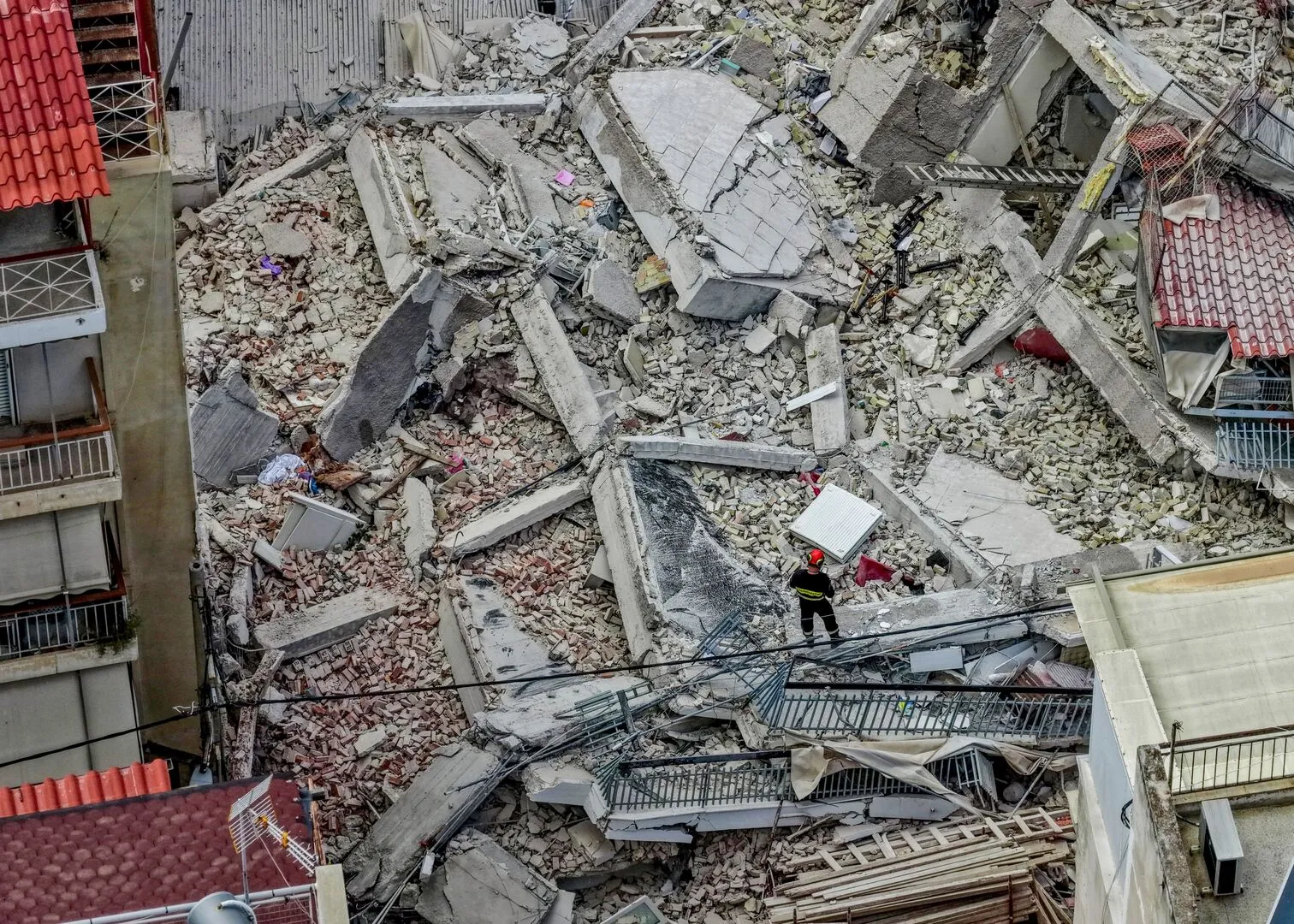
Emergency crews search rubble after Athens building collapse | Housing

NewsFeed

Rescue teams in Greece are combing through the rubble for survivors after a four-story apartment building in Athens collapsed on Tuesday. Four people have since been rescued from beneath the debris. Authorities are still investigating the cause of the collapse.

Source link