covers

Band gobsmacked as noughties rock legend is spotted dancing alone to Rolling Stones covers in random bar

A LITTLE-known band were left totally gobsmacked after a rock legend turned up in the audience at one of their shows.

The Rolling Stones cover band were playing to a small crowd in a bar when the iconic musician revealed himself as a fan, dancing alone in the bar.

The music legend enjoyed a night out in his hometown of Franklin, Tennessee Credit: tiktok/@jennyteator
The frontman forewent his trademark red cap and goatee for a striking white-bearded look Credit: tiktok/@jennyteator

The mystery figure was none other than Noughties nu-metal megastar Fred Durst, frontman of Limp Bizkit.

Fellow punters couldn’t believe their eyes and quickly pulled out their phones to capture the surreal moment as the Rollin’ singer rocked out to their set.

Musician Jenny Teator, who was singing on stage shared the clip on TikTok, writing: “This was unexpected. Get it, Fredddd!! We had so much fun at @GRAYSonMAIN.”

The unlikely scene unfolded at Grays on Main, a bustling music venue and dining room in downtown Franklin, Tennessee – the town Fred now calls home.

rock of ages

Can YOU tell who this 90s rock icon is? Fans say he looks like Richard Gere!


doped up

Shaggy 2 Dope fails as he tries to dropkick Limp Bizkit’s Fred Durst on stage

The Limp Bizkit star danced alone to Rolling Stones classics at the small-town venue Credit: tiktok/@jennyteator
Fred during Limp Bizkit’s chart-topping Noughties heyday. Credit: Redferns

The star looked almost unrecognisable with a full white beard, although he still sported the signature baseball cap fans will remember from the band’s heyday.

Other diners appeared oblivious to the famous face in their midst, continuing with their meals unaware they were in the company of rock royalty.

One viewer commented: “The people sitting there eating, completely unbothered that Fred Durst is getting down right beside them, is killllling me!”

Fred and Limp Bizkit were one of the biggest bands of the late Nineties and early Noughties, with hits including Break Stuff, My Way and Rollin’.

Limp Bizkit still perform more than 25 years after the band’s breakthrough success Credit: Getty
Fred during a recent Limp Bizkit performance at Gunnersbury Park. Credit: Getty

Their album Chocolate Starfish and the Hot Dog Flavoured Water debuted at number one on the Billboard 200 and sold over one million copies in its first week.

The singer was also linked to a string of high-profile romances, including rumoured relationships with pop stars Christina Aguilera, Britney Spears and Avril Lavigne. He has been married four times and has two children.

Despite stepping out of the spotlight in recent years, Fred, now 55, continues to record and perform with Limp Bizkit.

Limp Bizkit’s last official UK tour was last year, with the band appearing at the Reading and Leeds festivals.

Besides continuing to tour and perform with the band, Fred has made his mark as a film director with movies like The Education of Charlie Banks and The Longshots.

He also directed the film The Franatic in 2019 which starred John Travolta.


Source link

Spotify bets big on AI covers and early concert tickets

Spotify Technology SA announced several new initiatives — from concert ticket perks to a major AI-generated music licensing deal — that the Swedish audio streaming company said will help fuel growth over the next four years.

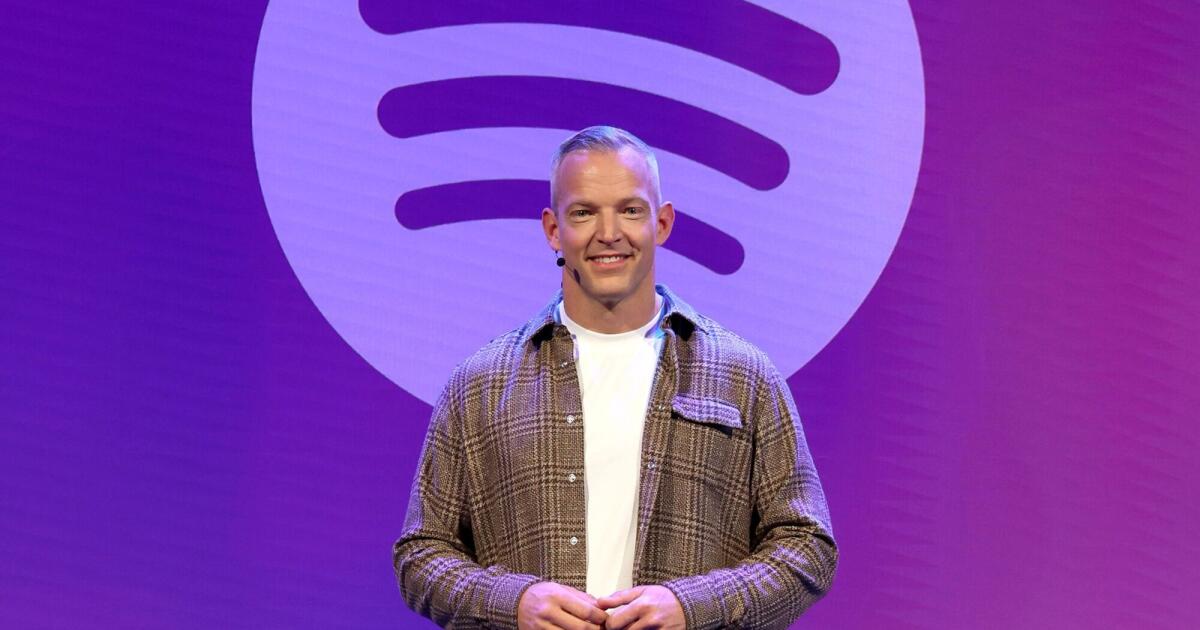
At the first investor day led by new co-chief executives Gustav Söderström and Alex Norström, Spotify outlined a vision revolving around features that will allow people to personalize their listening experience, whether with music, podcasts, audiobooks or working out. Investors liked what they heard, pushing Spotify shares up as much as 18% over the course of the presentation.

Spotify addressed one of Wall Street’s biggest concerns about artificial intelligence by announcing a major new licensing deal with Universal Music Group NV. The agreement will let Spotify launch a tool to let fans create covers and remixes of their favorite songs from artists and songwriters who opt in. Powered by generative AI, the tool will be available as a paid add-on for Spotify Premium users. It will open up additional revenue streams for Spotify and create a new source of income for artists and songwriters on top of what they already earn on the platform, according to the companies.

Spotify has been working with the music industry on ways to harness the power and consumer interest in AI without violating artists’ rights. Last October, the company announced an agreement with the biggest record labels to use AI in a “responsible way,” but didn’t specify at the time what those tools would look like.

“This era of generation doesn’t need to threaten the future of music,” said Charlie Hellman, Spotify’s head of music. “Because we built the system legal, trusted and aligned, we can make sure that the value flows back to the people who created it.”

In another big announcement, the company laid out plans to work with Live Nation Entertainment Inc. to offer Spotify subscribers the option to purchase two tickets to their favorite star’s concert before they go on sale to the general public. The move could help resolve some of the issues fans have had in beating ticket resellers to face-value tickets, while encouraging customers to stay on as subscribers even as Spotify raises monthly fees.

Fans have long complained about the ticketing process for live performances, which often pit people against bots and scalpers, leading to high prices and sold-out shows.

“It’s frustrating for fans,” said Rene Volker, head of live events. “It’s frustrating for artists too, who look out at a crowd and wonder, are the fans who built my career actually here?” The new “Reserved” perk is designed to relieve some of that tension. “No racing bots, no chasing around online for presale codes. Just two tickets held for you,” she said.

The presentations Thursday were designed to comfort investors and prove that Spotify can still innovate. Wall Street has been skeptical that the company can rein in costs while staying ahead of competitors, particularly as it relates to AI. Those concerns have weighed on shares this year, sending them down 25% through Wednesday’s close. While the company makes most of its money through subscriptions, the executives sought to reinforce the idea that they have other levers to pull in order to generate sales beyond monthly fees and that people are willing to spend more for certain features.

The company outlined its growth targets through 2030, including a compound annual growth rate in the mid teens, a gross margin of 35% to 40% and an operating margin above 20%. Spotify remains committed to its long-term goal of 1 billion subscribers, $100 billion in revenue and over 40% in gross margin, the executives said.

Spotify sees its podcast and audiobook features as complementary to music and said the combination of the multiple verticals has helped broaden its community and convert users from free listeners to paid subscribers. Today, more than 500 million people have streamed a video podcast on Spotify, up nearly 50% from a year ago. And in just a few years, Spotify has captured about 20% of the audiobooks market in the US, executives said. People who use all three verticals — music, podcasts and audiobooks — are engaging with Spotify almost every day of the month, according to the company.

Giving people the tools to personalize their listening experience helps keep them in Spotify’s universe — creating what executives described as the “all day user.”

Personal Podcasts, for example, lets people write a prompt in the Spotify app and AI will create a unique podcast in response.

“We see this much more as a daily brief and a recommendation engine than something that would replace you listening to one of your favorite podcasts,” Söderström said in an interview. He noted that 60% of users in mature markets for Spotify don’t yet listen to podcasts, so features like Personal Podcasts could get them to dive into the medium.

The company said its podcast business has been profitable for two years.

Spotify’s Audiobook+ tier gives listeners more than their allotted 15 hours of audiobook listening per month for an additional fee. It has 1 million subscribers and is on track to generate $100 million in annualized revenue, the company said. To capitalize on the demand, Spotify will start selling even more audiobook hours to super users. Additionally, it will allow podcasters to offer memberships, so subscribers can access special episodes and other content. Spotify will take an undisclosed slice of revenue from the memberships.

Carman writes for Bloomberg.

Source link