counter

Trump’s decision to waive Russian sanctions outrages Congress, but no quick counter seen

Lisa MascaroAP Congressional Correspondent 

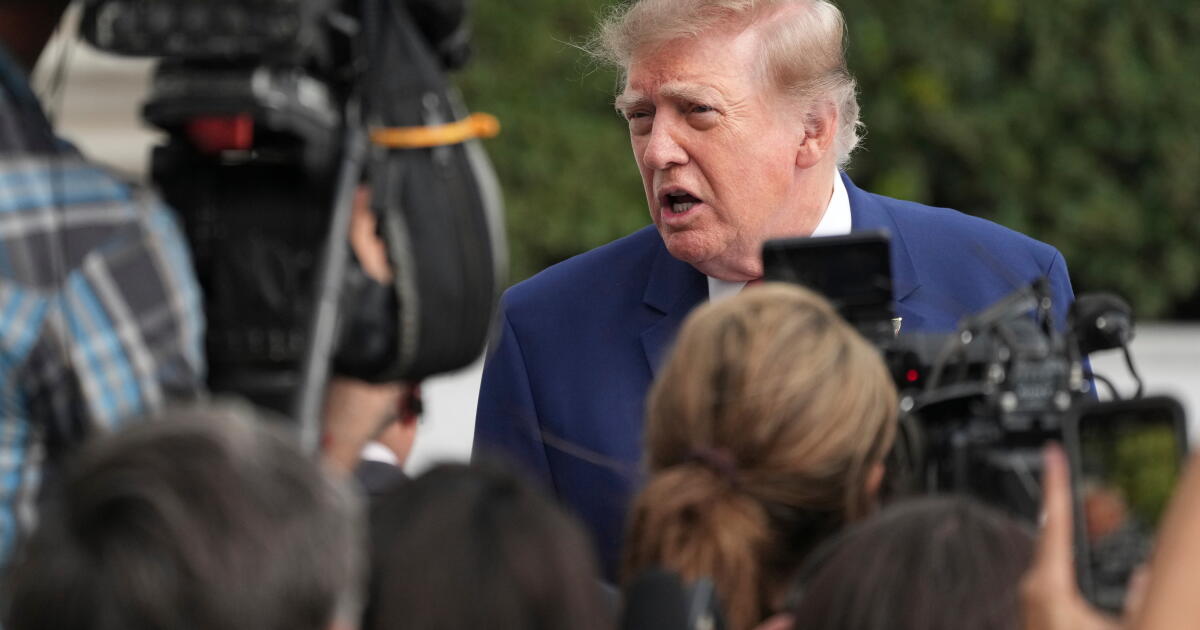
President Trump’s abrupt decision to waive sanctions on Russia days before they were to take effect drew outrage Saturday from members of Congress, which had overwhelmingly passed the legislation in a bipartisan display of American support for Ukraine in the war with Russia.

Lawmakers from both parties blasted the executive order late Friday, the latest in a series of steps that the Republican president has taken drawing the United States closer to Russia’s Vladimir Putin. Trump recently announced a diesel deal with Putin to import Russian energy in a long-shot effort to curb high gas prices in the U.S. that are roiling the midterm elections on Nov. 3.

“Beyond irresponsible,” said Sen. Thom Tillis (R-N.C.), on social media, hours after Ukrainian President Volodymyr Zelensky expressed hope that the sanctions that were supposed to take effect Sunday targeting Russian’s economy could be revived.

“What part of enforcing a law passed 86-11 by the Senate does the President and his advisors not understand?” Tillis said. “It’s unconscionable that this administration is capitulating to a Russian dictator who illegally invaded Ukraine.”

Tillis said that if Trump wants to actually bring down energy prices, he should resolve the Iran war, which is largely blamed for the spike at the pump, and “not by doing a solid for Vladimir Putin.”

Republican Sen. John Cornyn of Texas said, “Lindsey would be appalled,” referring to the late Sen. Lindsey Graham (R-S.C.), who worked endlessly on the bill before he died this summer. The bill is known as the Lindsey Graham Russian Sanctions Act.

Sen. Elizabeth Warren (D-Mass.) said Trump is “thumbing his nose” at Congress and “enabling Vladimir Putin to continue his war of aggression.” She urged her colleagues to take action to reverse course.

Trump’s actions come as Ukraine is bracing for a stark winter confronting Russia’s ongoing attacks on its energy infrastructure to heat homes and keep the lights on. Zelensky, who has endured a rocky relationship with Trump but stayed close to the U.S. lawmakers, urged supporters to speak out on behalf of the sanctions.

The next steps are highly uncertain with the House and Senate on recess until after election day. Trump said he was waiving the sanctions indefinitely, citing national security concerns. It is unlikely Congress would be in a position to take any action to challenge Trump’s moves until lawmakers return to Washington.

It took almost a year for Graham to persuade Trump to agree to the Russian sanctions package. It was designed to impose steep tariffs on countries that import large amounts of Russian oil and energy products and was promoted as way to halt the flow of funds fueling Putin’s four-year war against Ukraine.

But even as Zelensky had watched from the visitor gallery as the Senate advanced the package after Graham’s death, skeptics in Congress warned Trump would be unlikely to follow the bill once he had signed it into law a month ago.

Last week, a bipartisan group of senators urged the Trump administration to more quickly clamp down on Russia, particularly the “shadow fleet” of tankers that Moscow is using to transport oil and bypass America’s sanctions. The senators noted that the bulk of the new law’s provisions were to be effective Sunday.

Instead, Trump soon announced the diesel deal with Putin, saying that Russia had agreed to supply tons of fuel to the U.S., where gas prices have skyrocketed in some areas and voters saying affordability issues are a top concern.

Outraged lawmakers have pledged to stop the Trump-Putin deal.

New York Rep. Gregory Meeks, the ranking Democrat on the House Foreign Affairs Committee who had led opposition to the Graham bill — warning that Trump would flout the law — introduced legislation Friday that would block Trump’s diesel deal with Putin.

“At a time when the United States should be increasing pressure on the Kremlin, Donald Trump is cozying up to Putin and striking self-enriching deals instead of standing with Ukraine,” Meeks said in a statement.

He called the deal “corrupt” and said it “goes against everything the United States stands for.”

Mascaro writes for the Associated Press. Associated Press writers Kevin Freking and Mary Clare Jalonick contributed to this report.

Source link

L.A. voting rights groups mobilize to counter possible November election disruption

The once simple message, “Get out the vote,” now has a corollary: “Protect the vote.”

That message was hammered home Saturday for dozens of voting rights groups, community organizations and unions attending a rally to recruit and train poll watchers for the November election.

Organizers for several groups brought together under the banner of Love Powers L.A. offered scenarios of the threats that could materialize on Nov. 3 — from ICE raids to intimidation by the Proud Boys — and detailed strategies to counter them.

Their goal was to raise a cadre of volunteers for a Neighborhood Vote Protection Program to observe 650 polling places throughout the 11 days of voting and to turn fear and confusion sought by election deniers into a celebration of the right to vote.

“We want to make it a season of excitement,” said Jeremy Payne of the social justice group Catalyst California.

1

David Gutierrez signs up Jocelyn Elizalde and Manuel Becerra to help with outreach.

2

Evelyn Gonzalez attend a workshop for activist dance and street activation.

1. David Gutierrez right, of Inner City Struggle, signs up Jocelyn Elizalde, 22, and Manuel Becerra, 19, from left, to help with outreach, during an event held by Love Powers LA, representing dozens of community groups and labor unions, provide education and training to Angelenos on how to protect their vote and respond to threats of election interference at East Los Angeles College on Saturday, September 26, 2026. (Christina House/Los Angeles Times) 2. Participants including Evelyn Gonzalez, right, attend a workshop for activist dance and street activation during an event by Love Powers LA, representing dozens of community groups and labor unions, providing education and training to Angelenos on how to protect their vote and respond to threats of election interference, at East Los Angeles College on Saturday, September 26, 2026. (Christina House/Los Angeles Times)

The event kicked off with multicultural music by Native American, Korean and West African drum ensembles.

Speakers from groups as diverse as Can’t Stop California, Inner City Struggle and Strategic Concepts in Organizing and Policy Education: SCOPE detailed the threat and their programs to respond to it for 300 prospective volunteers.

“L.A. is a target for retribution and spectacle,” said John Lee, also of Catalyst California. “When they try to steal an election, it is a sign they know they are losing.”

Godfrey Plata, of LA Forward and Jung Hee, of We Are CA, present skits on how to talk to neighbors about voting.

Godfrey Plata of L.A. Forward, left, and Jung Hee Choi of We Are California present skits on how to talk to neighbors about voting during the event Saturday.

(Christina House / Los Angeles Times)

The event, involving numerous nonprofit organizations, stayed away from endorsements or political messages aimed at the coming election. But speakers didn’t hold back on their views of President Trump.

“Trump is a chicken and a loser,” said Jung Hee Choi, of the umbrella group We Are California.

Choi described two personality types, skeptics and frozen, that the group is targeting.

She urged volunteers to hold ballot parties in their homes to move skeptics “from the couch to the poll” and routine voters from the “frozen mode to the fight mode.”

“We need people out at the polls,” she said. “You are the greatest tool to fight back and grow our movement.”

The groups held their event just a day after Trump’s latest move in his attempt to reshape voting in America.

The Supreme Court upheld Trump’s expanded use of government data to search for noncitizens who are registered to vote. The impact of the decision is likely to be limited, other than to highlight Trump’s distrust of elections and his unproven claims that a large number of illegal voters are casting ballots.

Azenith Morales, Marise Roxas, and Liezl Japona of the Filipino Workers Center.

Love Powers L.A., representing dozens of community groups and labor unions, provides education and training to Angelenos including Azenith Morales, Marise Roxas, and Liezl Japona, from left, of the Filipino Workers Center, on how to protect their vote and respond to threats of election interference.

(Christina House/Los Angeles Times)

Breakout sessions covered how to plan a ballot party, activist dances and street activations.

Attendee Joe Pugh, who works for the community services organization ATAP, said she planned to host a block party to push the importance of voting in South-Central.

“They’re always talking about ‘my vote doesn’t count,’” she said.

During the poll monitoring session, Emma Olson Sharkey, a partner at the Political Law Group, outlined what poll watchers should look for and what they should do about it.

Their role, she said, is not to engage. They will observe and report any attempt to intimidate voters or poll workers.

The organization provides an online report form to report incidents.

“We hope it is boring,” Payne said. “In most cases, nothing will happen.”

Source link

Jammertest: Arctic exercise to counter satellite jamming | Technology

Defence and tech companies have been taking part in annual exercises in Norway aimed at countering the threat against satellite signal jamming, which can affect everything from aircraft and ships to financial markets. Paul Rhys explains from Norway.

Source link