This charming town offers all the charm of the Cotswolds without the crowds
09:13, 20 Aug 2026Updated 09:15, 20 Aug 2026
This article contains affiliate links, we will receive a commission on any sales we generate from it. Learn more
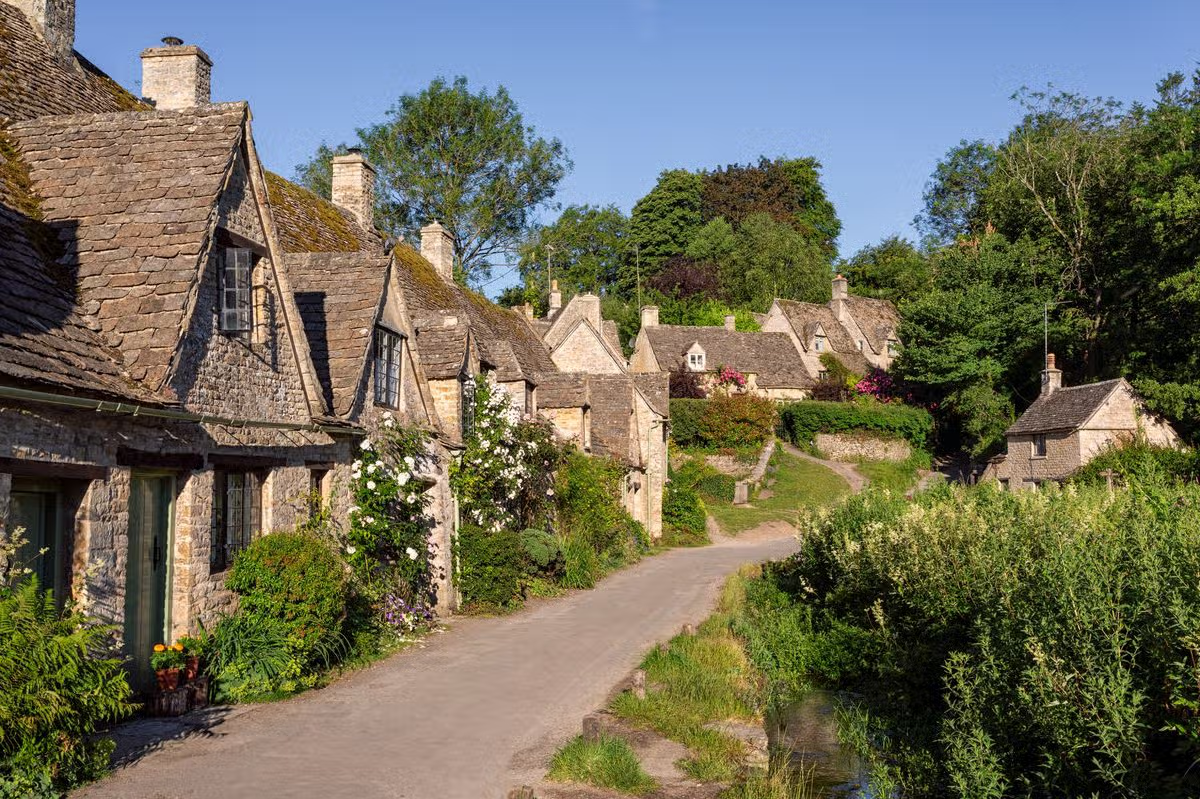
The Cotswolds are beautiful – but they can be very crowded(Image: scu)
The Cotswolds might be one of Britain’s most recognisable countryside escapes, but its popularity can make a summer visit feel very different from the peaceful rural holiday many tourists picture when they visit. The area is famous for its charming villages, cobbled streets and of course, its traditional stone cottages – but this fame is a double edged sword.
It might make the area famous – but it also means that the Cotswolds are frequently swarmed by tourists. For anyone hoping to enjoy a slower-paced weekend, battling through crowds can quickly take the shine off a trip. Luckily, you don’t have to give up the quintessentially British village experience altogether.
There are plenty of gorgeous places in the UK to explore that don’t involve doing battle with crowds. In fact, one place offers all the beauty of the famous Cotswolds, including the iconic stone cottages and flower boxes – but you don’t have to spend your holiday dodging crowds.
Travel experts at Parkdean Resorts have revealed this North Yorkshire town as the perfect Cotswolds dupe.
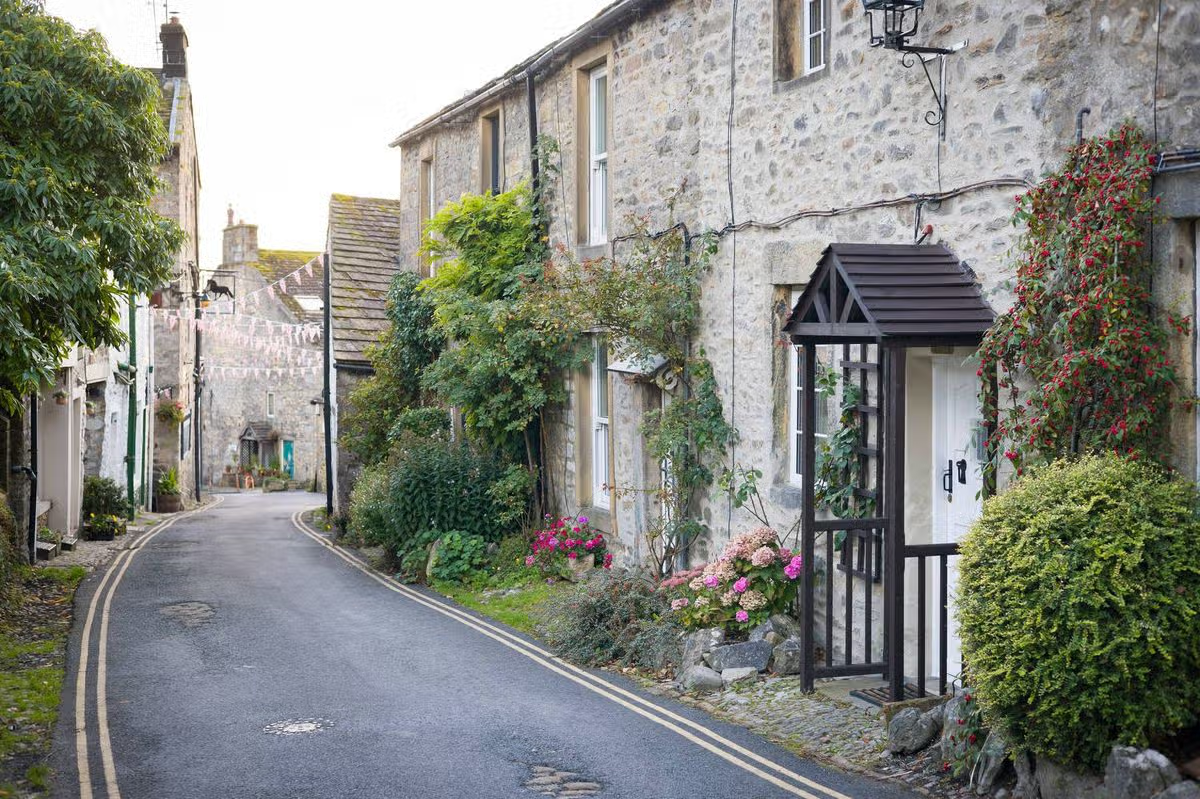
Set in the Yorkshire Dales, it has a traditional cobbled centre surrounded by some of the country’s most impressive countryside. The village square is a natural starting point, with independent businesses and places to eat clustered around its historic streets.
It’s got all the stone cottages, the flower boxes and historic pubs just like the Cotswolds – but you won’t find it teeming with tourists. This charming village is so beautiful it was picked as the main filming location for the fictional village of Darrowby in All Creatures Great and Small.
It’s Grassington in North Yorkshire – and it’s the perfect place to explore for a weekend.
The high street is packed with independent shops where you can pick up home made art and jewellery as well as delicious sweet treats and books.
Grassington is particularly appealing for tourists who want their break to combine sightseeing with walking. Rather than spending the day squeezing through a packed tourist centre, visitors can explore the village before heading out into the surrounding Dales.
If Yorkshire doesn’t tickle your fancy, the experts at Parkdean Resorts do have another destination that they think gives Cotswolds charm without the crowds.
Rye in East Sussex is another destination that rewards visitors who are prepared to look beyond the usual summer hotspots.
The town is packed with historic streets and distinctive old buildings, while independent shops and places to eat make it easy to spend a leisurely day exploring without needing a packed itinerary.
Its biggest advantage, however, could be its location.
Rye provides easy access to the Sussex coast, meaning a short break can include both an atmospheric old town and a day by the sea. Visitors can explore the historic centre in the morning before heading towards the beaches and coastline nearby.
It’s an appealing option for anyone who can’t decide between a countryside escape and a seaside break.
From ancient sites home to centuries of fascinating history to breathtaking natural wonders, here are some of the most magical places to visit on home shores
This article contains affiliate links, we will receive a commission on any sales we generate from it. Learn more
Portmeirion Village in North Wales is ranked one of the top among the UK’s hidden gems(Image: Getty Images)
Summer holiday season may soon be coming to an end, but for those already mourning their time abroad, staying on UK shores doesn’t have to mean a return to the mundane. There are countless places to discover tucked away in all corners of the country that rival holiday destinations overseas with their stunning scenery and fascinating history.
If Brits are seeking inspiration on where to visit next to stave off those post-summer holiday blues, our travel experts have picked out some lesser-known destinations across the UK that are sure to impress. The list below includes five of the top-rated attractions that are branded ‘hidden gems’ on TripAdvisor, with each having earned glowing reviews from visitors.
Our experts have also included tour options from the travel experiences website Viator, for visitors who want to take their excursions to the next level and tick off several beauty spots and historical sites in one day. These tours rank among the highest rated in the area, earning praise from participants for their organisation and informative guides.
READ MORE:
Viator offers flexible booking options, such as 24-hour cancellation and the option to reserve now and pay later, Meanwhile, the app allows travellers to manage all their bookings in one place and search for things to do nearby.
From the ancient Roman ruins of northern England to a one-of-a-kind village in Wales, here are five places to put on your travel list for the remainder of 2026. As well as uncovering hidden gem places, several of the tours found by our travel writers include stop-offs at some of the UK’s most iconic sites too, from Stonehenge to the Giant’s Causeway.
Viator offers thousands of tours and experiences across the UK.
Vindolanda, Northumberland, England
Hidden in the Northumberland countryside is one of the most important Roman archaeological sites in all of Europe. Vindolanda was once a key military post along the famous Hadrian’s Wall, with its ancient ruins still visible today alongside an on-site museum displaying some of the fascinating finds that have been unearthed, including the Vindolanda Writing Tablets – the oldest surviving handwritten documents in Britain.
Take a tour: For a day trip delving into the rich history of Northumberland, a top-rated option on Viator is the Hadrian’s Wall and The Borders Tour from Edinburgh. Priced from £88 per person, this 10.5-hour tour begins in Edinburgh before crossing the border into the awe-inspiring Hadrian’s Wall country to stop off at several historical sites, from an Augustinian abbey to a Victorian spa town.
Operated by Rabbie’s Trail Burners, this tour has been praised as a “very interesting and engaging experience” in reviews, with several participants praising their guide as “very knowledgeable”. While one reviewer thought that the tour felt “a bit rushed” and another fed back that they would have “loved more time at Vindolanda”, multiple others said they had “plenty of time at each stop”.
The price of this tour includes admission to the Vindolanda and Roman Army Museum. For those organising their own trip to this part of Northumberland, tickets are available to buy online via the Vindolanda Charitable Trust.
Castle Combe, Wiltshire, England
Dubbed the “prettiest village in England”, Castle Combe ranks highly on TripAdvisor’s list of the country’s best hidden gems. A trip to this tiny picture-perfect village feels like stepping back in time, as it has changed very little over the centuries, with its honey-coloured cottages nestled in a woodland valley.
Visit Wiltshire notes that the village is “vulnerable to the pressures of over-tourism” due to its small size, and is therefore not an all-day destination. A visit is best taken as part of a wider tour, with plenty of options available on Viator that include stop-offs at other must-visit spots in this picturesque part of England.
Take a tour: One of the most highly rated options on Viator is the Private Tour to Stonehenge, Bath and The Cotswolds. Lasting around 10 hours, this tour doesn’t come cheap with prices starting from £1,100 per group of up to seven people, but it does check off multiple bucket-list worthy destinations, from the iconic Stonehenge to the Roman Baths, making it a dream for lovers of history and idyllic scenery.
Run by Tailored Tours, this excursion has been branded an “enriching experience” in reviews, with participants having high praise for the “vast and in-depth knowledge” of their guide. In fact, with nearly 200 reviews, it has received five-star ratings exclusively, with others describing it as “a perfect mix of fun, historical and beautiful”, although one person noted that they “wish we’d had more time to explore Bath”.
The price of this tour does not include admission to Stonehenge. Anyone planning their own visit to the world-famous prehistoric monument can book tickets via English Heritage, which also includes admission to an exhibition housing more than 250 artefacts discovered in the landscape.
Portmeirion Village, Gwynedd, Wales
Over in Wales, the number one hidden gem attraction according to Tripadvisor rankings is the spectacular Portmeirion Village. This unique tourist village will have visitors thinking they’ve travelled to the Italian Riviera with its colourful buildings and ornamental gardens, with shops, cafés, tea-rooms and restaurants too.
Take a tour: Travellers can explore the treasures of North Wales with the Portmeirion, Castles and Snowdonia Tour, a top-rated option on Viator that embarks from Llandudno on a drive along the one-way road of the Great Orme headland with its spectacular mountain drop off into the sea. Alongside a visit to Portmeirion, tourists will stop off at the medieval castle towns of Conwy and Caernarfon, before driving through part of the Snowdonia National Park for a chance to experience its breathtaking scenery from mountains to waterfalls.
Operated by Adventure Tour Snowdonia, the action-packed day has been hailed as an “insightful” trip offering “a great taste of North Wales” and “a great way to see the Snowdonia area without a car”. One reviewer remarked that “the three longer stops felt a bit too long”, while someone else thought that “some spots did not feel worthy of time”, although a different participant said they “enjoyed every moment”.
This tour is priced from £65 per person and is a full day lasting around nine hours. Meanwhile, tourists who want to turn a visit to Portmeirion Village into a holiday have a choice of hotels and self-catering cottages in the village itself for a one-of-a-kind retreat, from the striking Castell Deudraeth to the characterful Village Rooms.
Dean Village, Edinburgh, Scotland
Up in Scotland, Dean Village in Edinburgh takes the top spot when it comes to hidden gems to discover in the country, rated by visitors on TripAdvisor. An ancient settlement with roots dating back to the 12th century, this cherished beauty spot offers a tranquil retreat at the heart of the city, steeped in fascinating history.
Take a tour:Offering the chance to fully experience this hidden gem with the help of expert local insight is the Dean Village Circus Lane Walking Tour with a Local, which is priced from £18 per person and comes recommended by 100% of reviewers on Viator. Following a visit to Dean Village, this two-hour tour will lead to the New Town of Edinburgh, followed by the Water of Leith Walkway, before finishing at Circus Lane – the so-called ‘most Instagrammable lane in Edinburgh’.
Run by Local Eyes Tours, this walk has impressed participants with no ratings below four stars and reviews praising it as “very informative” and “picturesque”. Although multiple reviewers named the “flat, clear walking surfaces” as a bonus, one reviewer advised: “You’ll be in the weather elements, so bring a jacket and an umbrella or a waterproof coat. There might be a little bit of mud.”
For more tours exploring Edinburgh and wider Scotland, the award-winning Rabbie’s Tours offers more than 30 options, travelling to beauty spots such as Loch Ness, Loch Lomond and the Isle of Skye.
Dunluce Castle, County Antrim, Northern Ireland
And finally, Northern Ireland’s top hidden gem according to TripAdvisor reviews is the majestic ruins of Dunluce Castle. Described as “one of the most picturesque and romantic of Irish Castles” by Discover Northern Ireland, its remains date from the 16th and 17th centuries, with its position on the coastal cliffs of County Antrim making it an all the more dramatic sight.
Take a tour: For a tour that includes Dunluce Castle alongside several more of Northern Ireland’s most awe-inspiring sites, one option that comes highly rated by participants is the Giant’s Causeway Sightseeing Day Tour from Belfast. Lasting around nine hours and priced from £30 per person, this tour offers magnificent views of the Giant’s Causeway, plenty of photo stops along the Antrim Coastal Road, and the chance to learn all about the history of Northern Ireland.
Operated by Citysightseeing Belfast, participants said they loved the “amazing scenery” and “knowledgeable” guides, saying the Giant’s Causeway was “spectacular to see in person”. One reviewer described Dunluce Castle as “beautiful and majestic”, although one person felt that they spent “a little too much time on the bus”.
The National Trust also offers Giant’s Causeway experiences available to book, including a five-mile guided cliff hike along the coastline, and seasonal events such as twilight tours.
THE UK isn’t short of pretty market towns, but while everyone else is fighting for parking in Cornwall or the Cotswolds, there’s a gorgeous alternative without the massive crowds.
Tavistock in Devon is a historic market town sat on the edge of Dartmoor National Park.
Tavistock in Devon is a historic market townCredit: AlamyIt sits right on the edge of Dartmoor National ParkCredit: Cyann Fielding
And it has a rather big claim to fame…
The town is where the cream tea was invented, with the earliest recording of the tradition dated to 11th century at Tavistock Abbey.
Sign up for the Travel newsletter
Thank you!
And, to put the decades-long debate to an end, the monks that created the cream tea in fact did put the cream first and then the jam.
There are so many spots in the town to grab a cream tea but my personal favourite is Café Liaison, where you can sit with your cream tea overlooking the Churchyard and former Cloisters of the Abbey.
The town itself is a UNESCO World Heritage town, due to the town’s medieval tin mininghistory as well as 19th century copper and metal production.
Wandering around the town, you’ll notice all the buildings are made of dark grey stone.
You might also spot some Dartmoor granite in the buildings as well.
One top building to spot is the Town Hall, which is in the heart of the town
The town is made up of buildings with dark stone that is actually volcanincCredit: AlamyAnd Tavistock is even known to be the birthplace of the cream teaCredit: Alamy
Make sure to visit the ancient Pannier Market too, which was granted its Royal Charter in 1105.
Inside, you will find traders selling all sorts of different items, that change depending on the day of the week.
For example, on Tuesdays you will find antiques and collectables, whereas on Fridays you will find locally produced goods.
Instead, you pitch your tent right next to the River Tavy – which runs through the holiday park and is gentle and shallow.
Just outside the town, you can stay at Harford Bridge Park campsite and caravan parkCredit: Campsites.co.ukMake sure to book a pitch right by the riverCredit: Campsites.co.uk
When I used to visit the campsite as a child along with my family, we would make sure to have a pitch right next to the river.
Then, in the blazing sun, my sister and I would put up our camping chairs directly in the river and sit with our feet in the water.
It is ideal for families who want to explore Dartmoor but want a few more facilities than wild camping.
On the site there is a heated toilet block as well as hot showers and a laundry room.
If you have forgotten anything, there is also a shop onsite, as well as a games, TV and book room, children’s play park with seesaws and climbing frames and a tennis court.
Dogs are welcome too, with a sprawling meadow for them to roam in.
Make sure to book a ‘grass riverside’ pitch, which costs £24 per night for two people without electricity, working out at just £12 per person.
If you are a family of four, the pitch will set you back £44 per night – working out at £11 per person, per night.
A BRAND-NEW luxury holiday resort is under construction in the Cotswolds – and it will have cabins, a natural spa and swimming pools.
The whole project is predicted to cost £24million and it’s due to open in 2027 in Langley, Oxfordshire.
A new holiday resort is under construction in the CotswoldsCredit: CABÜThe resort will have indoor and outdoor pools with hot tubsCredit: CABÜ
CABÜ is in the process of building 51 self-catered ‘eco timber cabins‘ with wooden panels and green window detail.
Each will have either one, two or three bedrooms inside.
Sign up for the Travel newsletter
Thank you!
The high-end resort will have lots of facilities for relaxation, from large swimming pools to its natural spa with hot tubs, saunas and a plunge bucket.
The indoorswimmingpoolwhich is surrounded by loungers and huge windows.
Along with an outdoor pool, there will also be a shop, restaurant, two bars, an events space and a sitooterie social space.
The website says “Our Cotswolds holiday cabins are being designed for year-round stays, with plans to offer relaxing 2, 3 and 4-night breaks that balance comfort, wellbeing and nature-led experiences.”
Sitting on the edge of the Cotswolds but not quite in it, Bradford-on-Avon currently has direct links to Bristol and Bath, which is only 10 minutes away.
You’ll find lots of quaint cottages as well as picturesque countryside walks.
In the heart of the town, you can head to the Bradford-on-Avon Museum, where you can explore the local history.
There are also a number of pubs you can visit
To enjoy the architecture of the town, make sure to stop by the Saxon Church, which dates back to the early eleventh century.
Make sure to also visit the 14th- century Tithe Barn, which is an English Heritage site measuring 51.2 metres long.
For a fun activity, make sure to hop on a canal trip along the Kennet and Avon Canal and Avoncliff Aqueduct.
There are multiple different boat trips you can head on, including afternoon tea ones, with tickets starting from as little as £10 per person.
After exploring, if you fancy a bite to eat, head to The Bridge Tea Rooms, where you’ll be served afternoon tea for £13.95 per perso, by people in Victorian costumes.
Or if you want a pint, you won’t be short on pubs with options including The Dandy Lion and Timbrell’s Yard – which you can stay at as well, from £167 per night.
Or you could head to The Hall Estate, which is a 400-year-old Grade-I listed Jacobean mansion, costing from £160 a night.
Organising a day trip doesn’t have to be too strenuous as you can find so many inspirations online. Now have you ever visited these three villages which are just as pretty as the Cotswolds?
You have to visit this gorgeous village(Image: Getty Images/iStockphoto)
We all know the Cotswolds is popular for its storybook English charm. With rolling hills, honey-coloured cottages and picturesque villages like Castle Combe to enjoy, it’s understandable why many Brits vacate there for a weekend or day trip.
Now if you’ve explored the entire region, which lies about 90 miles from London, it can be understandable to turn your interest elsewhere. Luckily if you want the same level of charm and beauty, there are many villages in England which are “just as pretty as the Cotswolds”. One woman who often shares the “best London and global tips” named three destinations you must visit this weekend.
On TikTok, Shruti Priya began her post: “Villages in England that just as pretty as the Cotswolds.”
She named Lavenham (Suffolk), Wherwell (Hampshire) and Amberley (West Sussex) as the top places to visit.
Content cannot be displayed without consent
What To Do in Lavenham, Wherwall and Amberley Explained
Lavenham is a great location if you’re a huge fan of the Tudors. With architecture dating back to the 1400s, this village serves as one of Britain’s finest surviving medieval villages. It boasts more than 300 listed timber-framed buildings and even gained fame for serving as a filming location for JK Rowling’s Harry Potter and the Deathly Hallows.
Getting to Lavenham by car takes just under two hours via the M11 – if you’re coming from London, while a train from Liverpool Street can get you there in roughly an hour. Driving may well be the more practical choice, as Lavenham has no direct train station.
Picture-Perfect Hampshire and West Sussex Villages to Visit
Now if you’re visiting Wherwell, you can wander the stunning streets and enjoy this quintessential village which is renowned for its beautifully preserved, timber-framed thatched cottages. It also offers breathtaking views along the River Test, situated approximately 3 miles south of the town of Andover.
So if you’re leaving from London again, this should take roughly 1 hour and a half. Alternatively, you can hop on a direct train from Clapham Junction to Winchester, which should take around 50 minutes.
And finally, Shruti’s last choice was West Sussex. History fans will adore the Amberley Castle which is a 900-year-old fortress with high stone walls, and a portcullis. It now operates as a luxury hotel and wedding venue. From there you can soak up the natural beauty along the River Arun too.
Meanwhile you must not forget visiting the Amberley Museum.
This journey from London by car is also quite manageable, coming in at just under 2 hours and covering 57.4 miles. By train, you’re looking at roughly an hour for a one-way trip.
Since Shruti’s suggestions were shared on social media, many people rushed to the comments section. One said: “Great looking places,” while another added: “Can’t wait to visit these beautiful places with my baby.”
Someone else commented: “Wherwell is beautiful, I knew someone who lived there in a beautiful cottage.”
IF you fancy a trip to the Cotswolds, then how about a stay in the quaint village of Burford?
Here is everything you need to know about staying at one of its hotels, the Prince of Burford.
The Prince of Burford is a 18th-century coaching inn boasting dark wood interiorsThe Suite is dressed in Costwold–style charm and interiors.Credit: Supplied
What is the Prince of Burford like?
We loved this super cosy 4* hotel in the historic market town of Burford, in the Cotswolds.
The former 18th-century coaching inn is packed full of original features, including dark wood wall panelling and an impressive wooden carved staircase.
Sign up for the Travel newsletter
Thank you!
The hotel has been recently refurbished, with a big bar area and a more formal dining room – but we loved the squidgy sofas by the fireplace, the perfect place for a glass of red.
What are the rooms like?
We stayed in the spacious Family Suite room, and were blown away by the humongous bed – it was one of the best night’s sleep we had in a long time.
The neutral-coloured furnishings made the room feel warm and bright, while the plump velvet armchair tucked away in the corner made for a perfect place to have our morning cuppa.
The toiletries smelt amazing and we enjoyed the rainfall shower. All rooms come with an ensuite, desk, TV, hairdryer and ironing board.
Double rooms start from £136 per night, including breakfast. See princeofburford.co.uk.
What is there to eat and drink at the hotel?
You won’t be disappointed by the grub.
The hotel won a 2025-26 Rosette Award for culinary excellence and the menu features pub classics like a pie of the week as well as more adventurous options, such as venison, swede mash and kale.
It was a little on the pricey side – I had a large Jerusalem artichoke risotto for £18.10 – but you won’t walk away hungry as the portions were huge.
My husband had the rump steak with mac and cheese for £38.50.
Next time I’d give dessert a miss – while the Brantley Apple Choux bun (£9.20) was decent, I didn’t think it was worth the money, and wish I had tried the dark chocolate and pecan brownie (£8.90) instead.
Breakfast was the star of the show. The ingredients were top quality – the fry up was perfectly cooked with a juicy sausage and hot buttered toast.
Prince of Burford holds a 2025-26 Rosette Award for culinary excellenceCredit: SuppliedSignature room invites plenty of sunlight and welcomes dogs for £20 a nightCredit: Free for editorial use
What else is there to do there?
While Burford was a quaint little market town, it was small – we finished looking around in under an hour.
It was posh and felt like the Mayfair of the Cotswolds, and you should expect to pay similar prices too.
We paid a painful £7.50 for a sausage roll at a nearby cafe, and £15 for two pints at The Bull along the high street.
I’d recommend going to Blenheim Palace nearby – an impressive stately home with huge grounds to keep the kids busy.
I’d love to go back around Christmas – the hotel’s rustic charm would be perfect for a cosy festive stay.
Is it family friendly?
From the Suite or Family Room where pullout beds can be made available to dedicated children’s menus makes this a family friendly option.
Is there access for guests with disabilities?
For guests with disabilities, it is advised to contact the bookings team at Prince of Burford to discuss requirements for their stay.
Sitting atop a hill in the heart of one of the most popular areas in the UK is a charming market town that offers a step back in time along its narrow lanes and medieval backdrop
I visited this charming UK town, brimming with traditional tearooms and independent businesses(Image: Amy Jones)
While it may be compact, this idyllic UK town is brimming with traditional tearooms and one of the best bookshops in the UK, as I discovered on a recent visit.
The Cotswolds are well-known for being home to quaint towns filled with honey-coloured cottages and meandering rivers against rolling countryside hills, so there’s a very good reason why it’s an Area of Outstanding Natural Beauty (AONB). One settlement that makes up this notoriously beautiful part of the world is Stow-on-the-Wold, the highest town in the Cotswolds.
Perched nearly 800ft above sea level in Gloucestershire, Stow-on-the-Wold is famed for its ancient market square, thriving independent scene, and for being regarded as the ‘antique capital of the Cotswolds’. Positioned just a 10-minute drive from Bourton-on-the-Water and 30 minutes from Cheltenham, it attracts visitors far and wide who come to marvel at its charms.
The renowned market square that characterises this town, dating back to 1107, is surrounded by an abundance of shops, from the gift store, The Honey Pot, sheepskin goods at Lambswold and the Cotswold Sweet Company. But if you wander further into the town, down sloping streets and past medieval stonework and climbing ivy, there’s so much more to discover.
I visited Stow-on-the-Wold for the first time this month and was left in awe of how many shops lined its narrow, honey-hued streets. There weren’t any empty stores in sight, but thriving independent businesses like Ella’s Emporium, Rhubarb Rhubarb Boutique, the florist Allium, kitchen store, The Crock Shop, beer cafe and bottleshop, Off the Square, and a local favourite at lunch, Cotswold Baguettes.
If you don’t take time strolling along its narrow lanes, off the main high street, it’s easy to miss a hidden gem, with some shops tucked a little out of the way. I could have easily missed Talbot Court, where green shopfronts and string lights adorn a courtyard, and the Borzoi Bookshop, which quickly became my favourite find.
Tucked down another courtyard decorated with flags, hanging lights and potted plants, just off Digbeth Street, the independent bookshop has been trading for more than 40 years. Packed with novels for all ages, Borzoi’s is a sanctuary for bibliophiles who are looking to find their next best read in a cosy, secluded store, or to join one of their book clubs, and I could have spent hours inside.
One visitor shared on TripAdvisor: “Lovely quaint book shop with a wide variety of books, cards and wrapping. They had a lovely children’s section with beanbags to sit on, which was inviting for our child. Staff were pleasant, and the shop was fairly busy with customers. They even had signed copies of books on sale. Would definitely recommend.”
Naturally, Stow-on-the-Wold is home to a variety of antique stores, including the White Cottage and Tare Antiques, where visitors are guaranteed to find a vintage treasure, with displays decorating entrances. But what truly makes this town stand out are the collection of traditional tearooms, which really felt as though I had stepped back in time.
Lucy’s tearoom was particularly noteworthy, with elegant seating outside and its curved window frames, while I also found the Old Bakery Tearoom, tucked inside the Fountain Court, offering classic cream tea. Huffkins also appeared to be a favourite among locals, as they sat in the summer sunshine savouring a slice of cake and a cuppa against the town’s medieval backdrop.
But a trip to Stow-on-the-Wold isn’t complete without stopping by The Porch House, which is claimed to be the oldest pub in England. I glimpsed inside the medieval pub, where its historic wooden beams and uneven floors, dating back to the 10th century, made it feel as though a pint should be served in a drinking tankard.
Meanwhile, residents were filling the streets around The Queen’s Head Inn, sipping drinks in the afternoon summer sun, with the pub adorned with hanging baskets. Others opted for a glass of wine outside at Massimo or a cocktail and bite at The Cotswolds Farm shop, before taking a stroll around the market town packed with charm.
The town is also celebrated for the ‘Tolkien Door’, located at the north entrance of St. Edward’s Church, surrounded by towering intertwined yew trees which are believed to have inspired the ‘Doors of Durin’ in J. R. R. Tolkien’s The Lord of the Rings. Twice annually, Stow-on-the-Wold also plays host to the traditional Gypsy horse fair, which stretches back over 500 years and originated as a sheep and wool fair, reflecting the town’s trading heritage.
Do you have a travel story to share? Email webtravel@reachplc.com
This village in the Cotswolds has been named the world’s most beautiful village in a Forbes-featured ranking, with its honey-slicked cottages and River Coln setting beating Mediterranean destinations
The village is predominantly owned by The National Trust (Image: CHUNYIP WONG via Getty Images)
Travel lovers have awarded this charming village with cobbled streets a top spot as the most picturesque village on the planet.
Now a thriving tourist destination, Forbes crowned the Cotswolds settlement as the most beautiful village in the world, giving Mediterranean coastal hotspots a real run for their money.
While England has no shortage of stunning landscapes, from the rugged beauty of the Lake District to the sweeping coastlines of Cornwall, the Cotswolds continues to attract visitors from across the globe with its fairytale villages and quintessentially English charm.
Yet it’s one particular village that has truly made a name for itself. Forbes, in partnership with Unforgettable Travel Company, revealed the 50 most stunning villages in the world — and placed Bibury firmly at the top.
The publication wrote: “Bibury unfurls like a watercolour dream-where honey-slicked cottages line Arlington Row; their mossy roofs whispering tales of 14th-century weavers. The River Coln murmurs gently here-weaving through golden buttercups and forget-me-nots, while plump ducks paddle lazily beneath canopies of willow.”
Visitors travel from all corners of the globe to admire these honey-coloured cottages and sweeping willow trees, located just a 15-minute drive outside of Cirencester. However, locals are increasingly vocal about the issue of overtourism, as thousands descend upon the tiny village during peak season.
Residents are calling for greater action to preserve the peaceful and intimate atmosphere that makes the area so beloved in the first place. Nestled on the banks of the River Coln, Bibury is steeped in history and natural beauty, with the cottages on Arlington Row dating back as far as 1380.
Today, the village’s character is safeguarded by the National Trust, who own most of the properties along the row, except for two that are now operated as holiday lets.
The historic row was subsequently transformed into weavers’ cottages during the 17th century and has remained unchanged ever since. Their characteristics appear to be straight from a storybook, and their location beside the meadow, which is inhabited by water-loving plants and birds, feels like something from a fantasy novel.
One visitor shared their thoughts on Tripadvisor, saying: “Quintessential English rural scene. Okay, we were one of the many tourists doing the same thing in admiring the buildings, but it didn’t spoil our time.
“We managed to park nearby for free, and the walk by the beautiful clear river is all part of the experience. Worth a visit.”
With nature forming the essence of this small village, many choose to visit England’s oldest trout farm, Bibury Trout Farm, where they can wander the grounds and observe vibrant wildlife. Tucked away within the village, this is a destination where you can catch a fish, hire a barbecue, enjoy a round of Crazy Golf, or simply relax in the welcoming onsite cafe.
One visitor who made the trip to the farm wrote: “We had such a fun trip at Bibury Trout Farm! The grounds were beautifully maintained, everything was clean, and the trout fishing and BBQ experience were fantastic.
“The staff were incredibly friendly, and we really appreciated the effort they made to make our visit enjoyable. Highly recommend it!”.
Should you be considering a day out to Bibury, it’s worth planning your parking arrangements ahead of time to avoid causing unnecessary disruption to the village. Where possible, experts advise visiting during the off-peak season and mid-week to ensure a more relaxed experience.
Just 35 minutes from London’s Victoria station lies a charming neighbourhood bursting with independent shops.
11:46, 03 Jul 2026Updated 11:50, 03 Jul 2026
The London suburb that is often dubbed a ‘Victorian town’ (Image: Getty)
When Brits picture stunning and historic spots across the UK, places like the Cotswolds, Edinburgh, Somerset, and York typically spring to mind, renowned for their enduring appeal, charming streets, and centuries-old buildings.
Yet despite boasting a wealth of heritage, London’s neighbourhoods rarely feature in discussions about the nation’s most enchanting locations. Our capital is enormous and brimming with hidden treasures.
As a native South Londoner, I hardly venture up North, but just 35 minutes from Victoria station sits a charming neighbourhood nestled between Finsbury Park and Wood Green that feels like travelling back through the decades, complete with cobbled lanes, vintage and independent retailers, and an impressive 19th-century clock tower.
Here’s why Crouch End deserves a spot on your must-visit list.
What sets Crouch End apart?
My favourite part of exploring this neighbourhood was discovering all the independent retailers, which have remained bustling thanks to the local community. From organic health shops that have traded since 1986 to a florist, garden centre, and pet emporium open seven days a week, there’s a varied selection of outlets on every street.
According to Hornsey Town Hall, “Crouch End is a captivating neighbourhood that exudes a bohemian charm unlike any other in London. With its quirky character, artistic flair, and vibrant community, living in Crouch End offers a unique and enriching experience.”
They added: “Crouch End is often affectionately referred to as ‘a village within the city,’ and for good reason. Despite being only a few miles away from the bustling heart of London, this neighbourhood feels worlds apart.”
I particularly enjoyed browsing fashion boutiques such as Rhoda, which displays original creations from local and international designers and stocks trinkets, mugs, jewellery, ceramics, and more. The shop has been trading since 1998 and was established by three sisters.
A statement on its website read: “Our store is a labour of love and a testament to the power of meaningful connections. Our passion for curating unique fashion and heartfelt gifts led to the establishment of our shop, and we’ve been spreading the joy ever since.”
The neighbourhood is also renowned for its dining and leisure scene. Just a brief stroll through the suburb reveals bakeries, pubs, restaurants, and cafés – you’re truly spoilt for choice in Crouch End.
I’d suggest popping into Sourdough Sophia for a delectable sweet indulgence in a stunningly decorated setting. I sampled a scrumptious Baileys-filled croissant and a decadent hot chocolate.
Crouch End boasts a vibrant creative energy, drawing artists, writers, musicians, and actors for generations. The ArtHouse Crouch End, situated in a former Salvation Army Hall, serves as a local cultural centre, while pubs and venues throughout the area host a dynamic blend of up-and-coming and established live music.
During a visit in early June, I stumbled upon Crouch End’s annual festival, reportedly one of the UK’s largest independent community festivals, taking place at Hornsey Town Hall in the neighbourhood’s centre.
It was established to unite local creatives and celebrate the community and the arts. I have never witnessed a neighbourhood come together so harmoniously and happily to champion and recognise their area.
A brief history of Crouch End
Crouch End began life as a modest rural settlement at the crossroads of ancient pathways, deriving its name from a wooden cross that once stood where the Clock Tower now sits.
It remained predominantly agricultural for centuries until the railway arrived in late 1867, triggering swift expansion. New housing, retail outlets and enterprises transformed the district into a flourishing Victorian suburb and, by the close of the 19th century, Hornsey’s commercial centre.
The iconic Clock Tower, still standing today, was erected in 1895 to commemorate local reformer Henry Reader Williams, symbolising Crouch End’s evolution. More than 130 years on, it remains the neighbourhood’s most recognisable landmark and the focal point of the local community.
Why is the area so hidden?
Crouch End no longer has a railway station, with no underground tube or overground trains serving it. The nearest stations are Finsbury Park, Archway, Hornsey, and Crouch Hill.
According to Ham High, “The line never quite achieved its potential in terms of passenger numbers.” They added: “In the mid-1930s, a plan was devised to incorporate the track and stations into London Underground’s Northern Line.
“Work on electrification was started but then halted early in the Second World War and subsequently abandoned. A peak-hours-only service was maintained using locomotives and rolling stock almost as old as the stations – but that simply staved off the inevitable, and Crouch End and the handful of other stations on the line closed to passenger traffic in July 1954.”
Crouch End may not be on the typical tourist trail, but those who stumble upon it tend to fall head over heels for it. American travel blogger, A Lady in London, paid the area a visit and shared: “Crouch End is one of my favourite under-the-radar London neighbourhoods.
“It has lots of independent shops and restaurants, vibrant streets, and great views of London. East of Highgate and south of the Alexandra Palace, it stays incognito partly because it’s not really on the tube.”
Yet beyond its delightful, characterful appeal, locals cherish the area for its close-knit, welcoming community spirit that looks out for one another — a quality that’s genuinely hard to come by in the capital.
Speaking to long-term resident Judith Abbs, who has called the area home for a number of years, she said: “We thought we knew Crouch End quite well before we moved here five years ago. But one wonderful surprise has been how many friendly people we meet.
“My husband is disabled, and a passing stranger often stops to ask if they can help. It really has a strong community feel.”
IF you’re looking for a staycation with all the beauty of the Cotswolds but fancy somewhere different – maybe head to East Sussex this summer.
Rye has all the charm of the region and even better – it’s just 10 minutes away from the seaside.
Sign up for the Travel newsletter
Thank you!
Rye is a Cotswolds-alternative town in East SussexCredit: GettyIt has cobbled streets, historic houses and independent shopsCredit: Getty
Country lifestyle experts at Welligogs say that Rye is one of the UK’s most beautiful small towns and even dubbed it the “new Cotswolds”.
While it might be miles away from Oxfordshire and Gloucestershire, Rye actually shares lots of the same qualities as towns found in the Cotswolds.
Some of the most famous spots near the Cotswolds include Castle Combe, Bibury and Bourton-on-the-Water which have honey-coloured stone buildings and pretty streets.
In East Sussex, Rye has a similar look with cobbled streets lined with cottages and plenty of independent shops.
Tess Annan, manager at Welligogs said: “Part of Rye’s appeal is its storybook atmosphere.
“For those who love culture, you can spend the morning exploring antique shops and independent boutiques, before wandering up to Mermaid Street for some of the most photographed views in the UK.
“The 14th century Ypres Tower (Rye Castle) is also always worth a trip. Then head towards the nearby beaches for sea air and treat yourself to freshly-caught fish and chips.”
While the Cotswolds has plenty of rivers running through the villages, Rye offers a beach escape for those who want the delights of the seaside instead.
Camber Sands is just 10-minutes away in the car to get from the village to the dunes.
Rye is just 10-minutes from the delights of Camber SandsCredit: Alamy
Caroline said: “The medieval town of Rye in East Sussex isn’t strictly seaside, but you can see the sea from its cobble streets and it has a harbour where boats sail out to the English Channel.
“Plus, if you go back as far as the 15th century, the sea came much closer to the foot of the hill the town is built on.
“It’s the perfect place to spend a day out – taking an hour and six minutes on the train from Kings Cross St Pancras.
“If you fancy a morning on the beach, a bus runs from the town to the stunning Camber Sands beach – a three-mile stretch of golden sand backed by dunes.
“Or you can for a six-mile circular walk from Rye to Winchelsea beach. Back in the town after lunch, there are plenty of fantastic pubs to choose from, my favourites being the 12th century Mermaid Inn and the George In Rye, as well as the Globe Inn Marsh on the outskirts of the town.
“Equally, you could book a taxi and check out Tillingham vineyard in nearby Peasmarsh, with its Michelin Green Star wine tours and excellent pizzas.
“Make sure to save some time to rummage through the many, many antiques shops, as well as Knoops hot chocolate shop and the wonderfully old fashioned Britcher and Rivers sweet shop.”
A haven for the rich and famous, the Cotswolds reportedly welcomes more than 35 million visitors each year, but one writer suggests it’s on something of a “downturn”
A luxury hotel chain has chosen a county known for its “chocolate box” villages(Image: Getty Images)
A plush hotel group has passed over the picturesque Cotswolds for its newest venture, instead setting its sights on a county renowned for its “chocolate box” villages. Nobu Hotels, co-founded by celebrity chef Nobu Matsuhisa and actor Robert De Niro, boasts properties in some of the world’s most chic destinations, including Malibu, Ibiza, Las Vegas and Dubai.
Casting its eye across the UK for a potential location, there is no shortage of contenders — perhaps the Lake District or the Scottish Highlands — though many would argue the Cotswolds would be the most obvious fit.
A haven for the rich and famous, including Simon Cowell, Michael McIntyre and Jeremy Clarkson (whose Diddly Squat Farm sits near Chipping Norton), the Cotswolds reportedly attracts more than 35 million visitors each year.
Yet it appears Nobu has opted for somewhere even more exclusive: Britain’s smallest county, Rutland in the East Midlands. Indeed, one writer suggests the Cotswolds are experiencing something of a “downturn”.
The Mail’s Claudia Connell writes: “The East Midlands may seem an unlikely venue for such a venture, but for those watching the quiet rise of Rutland it makes perfect sense.”
“While other places — most notably the Cotswolds — are experiencing a downturn, Rutland and surrounding areas are riding high thanks to a combination of beautiful countryside, historic towns, chocolate box villages and excellent schools.”
Nobu Woolfox will be situated near the town of Stamford on 185 acres and will include a hotel, restaurants, gym, spa and private residences, combining what its website describes as luxury hospitality, dining and “refined living with a slower, more restorative pace”.
Nobu Hospitality CEO Trevor Horwell said: “This is a truly special location in the heart of England. For the first time within our portfolio, we have the opportunity to create a countryside retreat experience in a setting defined by nature, tranquillity and a sense of escape.”
To understand why the Cotswolds was off the menu for the plush hotel group, Claudia pointed to Rutland’s comparative lack of celebrities.
It was also noted that the county offers all the joys of the English countryside while remaining within reach of the capital (around 2 hours and 32 minutes by car).
House prices in the Cotswolds are said to have fallen by 12 per cent, with reported complaints of overcrowding, escalating prices and claims of being “Disney-fied”. Locals have also reportedly pointed to an influx of “trendy” coffee shops.
Adding to the apparent dissatisfaction is the rise of so-called “TikTok tourists” — influencers who visit the area largely to film content and take selfies for social media.
Meanwhile, Rutland is viewed as a quieter alternative, with the county’s schools proving to be a key pull factor.
The prettiest village in the UK draws visitors from around the world with its stunning stone cottages and river bridge
It’s easy to see why it’s voted as England’s prettiest village(Image: Sophie Harris)
The Cotswolds stand as one of England’s most celebrated regions, spanning multiple counties across the south-west. I’m absolutely smitten with the Cotswolds and have explored every village, returning to some while others remain a one-time visit.
The area is renowned for its undulating countryside, independent retailers and charming villages. A substantial portion has been designated as an Area of Outstanding Natural Beauty, drawing tourists from across the globe.
Amongst its idyllic villages sits Castle Combe. It’s consistently labelled and routinely crowned as the prettiest village in the UK.
This accolade stems from its narrow streets, stone bridge spanning the River Bybrook, and rows of classic Cotswold cottages.
I chose to visit Castle Combe during a trip to the region, anticipating a tranquil, serene experience, typical of much of the Cotswolds.
Upon arrival, I found myself parking a considerable distance away, which turned out to be essential considering how restricted and strictly managed parking is in and around the village.
When I finally reached the village, my initial reaction genuinely lived up to its standing. The settlement was unquestionably breathtaking.
The stone structures, the waterway and the tight lanes resembled something plucked from a film set.
However, the visit wasn’t particularly pleasant. It was extremely crowded, considerably more than I’d anticipated.
Tour parties, photography enthusiasts and day visitors were literally everywhere, all attempting to capture identical shots and vistas.
Naturally, I was engaged in exactly what everyone else was doing, but I simply hadn’t bargained on it being quite so heaving. Given how compact Castle Combe is, even a modest crowd can leave it feeling somewhat swamped.
Fortunately, returning early the next morning made a world of difference.
With significantly fewer visitors around, I was able to truly soak it all in and snap some stunning photographs of the village.
The stark contrast between the village’s tranquil charm and the hordes of tourists all jostling for the perfect picture was quite something to witness.
There isn’t an enormous amount to keep you busy there, and it’s very much a place to admire, stroll through and appreciate for its sheer beauty. Once you’ve wandered down the main street, crossed the bridge and taken in the scenery, you’ve essentially seen the best of what it has to offer.
Castle Combe is utterly breathtaking — arguably as close to a quintessential English village as you’re ever likely to find — and that’s precisely what draws visitors from far and wide.
Fans have been gripped by the latest dramatic season of Clarkson’s Farm, but where is Diddly Squat actually located?
Clarkson’s Farm location and how to get there(Image: GETTY)
Fans should definitely pay a visit to The Farmer’s Dog.
Clarkson’s Farm fans want to know exactly where the iconic Diddly Squat Farm location actually is.
Former Top Gear presenter Jeremy Clarkson returned to Prime Video this year with another gripping instalment of the documentary series, which sees him taking on numerous farming challenges to highlight the insurmountable tasks facing modern British farmers.
However, Jeremy faced even more hardship in Season 5 as it kicked off with his emergency heart surgery in October 2024 and concluded with the announcement that he had been diagnosed with prostate cancer.
Thankfully, his cancer is now in remission and Diddly Squat is back in business for Season 6, which is expected to arrive on screens next summer.
Now filming is once again underway, let’s take a look at the precise location of Clarkson’s Farm.
Where is Clarkson’s Farm?
Jeremy’s Diddly Squat Farm is located in the Cotswolds Area of Outstanding Natural Beauty in West Oxfordshire, England.
It’s just a short drive from the market town of Chipping Norton to the north, while to the south is the village of Chadlington.
Diddly Squat’s nearest major city is Oxford, which is about a 50 minute drive away.
The farm is also drivable from London in around two hours.
For visitors who want to reach the farm by public transport, the easiest route from London is the Great Western Railway from Paddington station to Charlbury.
From there, it’s just a 20 minute bus ride on the X9, which runs past the Diddly Squat Farm Shop managed by Jeremy’s partner Lisa Hogan.
If you’re travelling from Birmingham, it’s the Cross Country train to Worcestershire Parkway you want before getting the GWR to Charlbury and taking the same X9 bus. This can take around two and a half hours.
In addition to the farm itself, Jeremy also owns the iconic pub The Farmer’s Dog, which serves Diddly Squat’s very own Hawkstone lager.
Get 30 days of Prime Video totally free
This article contains affiliate links, we will receive a commission on any sales we generate from it. Learn more
TV lovers can get 30 days’ free access to binge great shows like Clarkson’s Farm by signing up to Amazon Prime. Just remember to cancel at the end and you won’t be charged.
The pub is just a half-hour’s drive away from the farm by the Asthall Barrow roundabout on the A40, a few miles from the town of Burford.
While it’s definitely possible to visit both the farm and The Farmer’s Dog in the same day, those using public transport will find the journey a little trickier.
From the shop, you can take the X9 bus back past Charlbury and down to the town of Witney. This takes about 40 minutes.
Visitors can then take the shorter 234 bus to Burford and it’s then just a few minutes’ walk to the pub. All in all the journey should take just over an hour.
Clarkson’s Farm is available to stream on Prime Video.
The “overlooked” town has been named one of the top places to visit in the UK for 2026, crowning the historic Cotswolds town ahead of overrun tourist hotspots like Bibury and Bourton-on-the-Water
The market town has been named one of the best places to visit in the UK in 2026 (stock image)(Image: Brian Scantlebury via Getty Images)
The best place to visit in the Cotswolds has been revealed – and it’s not the usual suspects like Chipping Campden, Bibury or Bourton-on-the-Water.
There’s an abundance of stunning beauty spots scattered across the UK, with rugged landscapes, peaceful golden beaches, vibrant and quirky towns, craggy rocks and cliffs, vast woodlands, rolling green hills, and plenty more besides.
For a relatively small country, there’s a rich variety of diverse destinations to pick from – whether you fancy exploring the peaceful glacial lakes and fells of the Lake District, or the seemingly endless dramatic coastlines of Scotland, the history and intrigue of sites like the Mourne Wall in Northern Ireland, or the impressive peaks of Eryri/Snowdonia in Wales; there’s no shortage of choices.
This is equally true when it comes to the varied towns scattered throughout the UK, from sleepy fishing villages and bustling market towns, to picturesque places that offer a glimpse into the past, and much more.
If you’re keen to embark on a “staycation” in the UK and feel overwhelmed at the prospect of deciding where to go, you’re in luck.
Time Out has issued a round-up of “the best places to go in the UK in 2026” – and a Gloucestershire town has made the cut. Widely celebrated as the “Capital of the Cotswolds”, the historic market town of Cirencester has claimed fifth place on a national list.
Time Out said: “When it comes to ‘where to travel in the UK’, you might think the Cotswolds has been done to death. Actually, it hasn’t. In fact, only teeny tiny portions of the region tend to get all the love.”
The publication described Cirencester as “often-overlooked” and championed the town – the largest in the region – for being “much better equipped for tourism” than overcrowded destinations such as Bibury.
Cirencester boasts a seamless fusion of Roman heritage with a vibrant independent shopping scene – particularly within the historic Corn Hall and Arcade – alongside stunning green spaces, including Cirencester Park. Home to the 9th Earl and Countess Bathurst, the park is a haven for deer and horses alike.
History enthusiasts will be in their element at the award-winning Corinium Museum, which houses an impressive Roman collection; “one of the largest collections of Romano-British antiquities extensively from Corinium”.
Featuring mosaics, sculptures, coins and much more, the fully accessible venue also includes a gift shop, café, and the Cirencester Visitor Information Centre.
The town is equally well-stocked with stunning historic buildings and characterful pubs that are well worth exploring.
Of summer visits, Time Out noted: “Heading here in summer? Go for a dip in the Cirencester Open Air Swimming Pool, a beautiful old spot for a swim surrounded by old buildings.
“It’s a slice of history all by itself – around since 1869, making it one of the oldest in the country.”
THE release of Rivals series two has thrust the Cotswolds into the spotlight once more.
Brits are seeking out the pretty scenery of Rutshire with its stone cottages, rolling countryside and delightful pubs in beautiful villages like Kemble.
Sign up for the Travel newsletter
Thank you!
Kemble has a ‘vintage’ train station with Victorian featuresCredit: AlamyThe village pub is called the ‘Tavern Inn’ and is considered a ‘gem’ by visitorsCredit: Google maps
Data from Trainline revealed that since Rivals returned on May 18, passengers to Cotswolds ‘gateway stations’ have risen by an average of 22 per cent.
That includes the tiny town of Kemble which is a 12-minute drive away from Cirencester.
Kemble is considered a ‘rail gateway’ for the southern Cotswolds as it’s one of the smaller spots that actually has a train station and a direct link to London.
With Great Western Railway, visitors can get from London Paddington to Kemble in just over an hour.
For those who want a great view of the runway, the airport has its own restaurant called AV8 where visitors sit on the terrace and look out over the airfield.
Other villages in the Cotswolds that have seen an increase in visitors since the release of series two of Rivals are Moreton-in-Marsh and Charlbury.
As seen on screen in Disney’s hit show Rivals, this country home is just as beautiful in real life now that fans of the show can see it up close and personal
The TV show uses this real life manor as one of its many sets (Image: UNKNOWN)
Rivals is back on our screens once again, and with it comes a growing intrigue into the beautiful setting, based predominantly in the UK’s Cotswolds, including this stunning manor.
Playing a huge part in the Disney Plus series is its countryside setting, with beautiful backdrops and unbelievable luxury homes all set within the fictional county of Rutshire.
One of those very settings is The Priory, the home belonging to Declan O’Hara in the show, a highly regarded Irish TV presenter and journalist. Although, in real life, it’s privately owned by an entirely different family and known as Chavenage House.
Set back within Tetbury, the home was up until recently under the helm of the chatelaine and matriarch for 67 years, Rona Lowsley-Williams. Rona sadly passed away in July 2025 and is much to thank for transforming the estate from a fading Edwardian household to a visitor attraction.
It stands proudly as an Elizabethan house, a Grade I listed building, built in 1576 by a man named Edward Stephens. Over time it has transformed with extensions done in the 17th, 19th and 20th centuries, looking rather different from its more humble beginnings but keeping with the original style and materials.
Filming
The house has been used as a prime filming location for a number of film and TV productions, not just for Rivals. Famous faces have graced its grounds over the last few decades, including the likes of Eddie Redmayne, Jamie Dornan and Aidan Turner.
A big example of this is the BBC’s Poldark, where Chavenage portrays the fictional house of Trenwith in the series. It also featured as Candleford Manor in the BBC’s Lark Rise to Candleford from 2008 while also appearing in The House of Eliott, Casualty and Dracula, to name a few.
Now, outside of its scheduled filming, the wonderful home is open for the public to see and explore a real-life set of their favourite show.
Visiting
According to its website, the opportunity to tour the house is limited and so allows for guests to make reservations prior to turning up, subject to availability, as it is a privately owned residence after all.
The cost of this unique attraction is £12 a head for adults with a minimum group size of 21 and £6 for children. If group tours aren’t available and an individual visit is wanted, the bespoke private tour will begin at £250.
A recent visitor claimed it’s unmissable, writing on TripAdvisor: “This privately owned manor is full of history and artefacts, and the owners are lovely people. What a treat to have a personal tour of this incredibly special place, built in the Elizabethan period. If you have seen Poldark, you will recognise many of the scenes filmed in this historic home.”
Another shared: “Wow. After visiting many beautiful estates and castles (Buscot and Highclere), I didn’t expect to be blown away. However beautiful they were, I enjoyed Chavenage House so much more.
“Primarily, because the host was personally invested – he is part of the Lowsley-Williams family that has been at home here since 1891 and takes great pride in personally giving the tour. This truly makes a difference; the personal stories, pride and detail makes it very intimate.”
BRITAIN’S best staycations for 2026 have been revealed, with Cornwall’s St Ives once again taking the top spot and the Northumberland village of Bamburgh in second place as a new entrant.
The annual staycation report, based on a survey of 2,000 adults, revealed Bourton-on-the-Water and Salcombe have risen in popularity while other seaside destinations also saw shifts in the rankings.
Sign up for the Travel newsletter
Thank you!
Britain’s best staycations for 2026 have been revealed, based on a survey of 2,000 adults,Credit: SWNSBamburgh came in second place for the first timeCredit: SWNS
Brighton overtook Lyme Regis after climbing to sixth place, ahead of the Dorset town, which has moved from fifth last year to seventh.
Almost a third of adults (28 per cent) are more likely to take a holiday on home soil this year than in 2025.
The research, commissioned by Sykes Holiday Cottages, also found 38 per cent plan to take their main holiday in the UK this year, rising to 53 per cent among Gen Z.
This compares with 34 per cent of adults who said the same last year, while Gen Z’s interest in UK holidays has risen from 45 per cent in 2025.
James Shaw, chief commercial officer at the holiday brand which launched the annual Staycation Index Report, said: “The continued popularity of UK breaks demonstrates that staycations remain a key part of how Brits holiday.
“More people are choosing to stay at home and prioritising value, flexibility and reassurance when planning time away, particularly amid ongoing uncertainty around overseas travel.
“What’s especially notable this year is the growing influence of younger travellers, Gen Z is increasingly embracing UK holidays, with more people opting for experience-led trips that combine scenery, food, culture and the chance to explore multiple destinations in one break.
Bourton-on-the-Water also remains popularCredit: SWNSSalcombe has risen in popularity according to the reportCredit: SWNS
“From seaside towns and national parks to countryside retreats, the UK continues to offer an enormous variety of holiday experiences, and that’s reflected in the strength and diversity of destinations featured in this year’s rankings.”
The research also found when it comes to budgeting, staycation goers expect to spend an average of £1,171 in total on accommodation, food, travel and spending money.
It also emerged 64 per cent are planning to – or have considered – a multi-destination road trip, stopping off at an average of three locations.
Coastal spots (65 per cent) are the most sought after, followed by rural areas (56 per cent) and national parks (38 per cent).
Tourist attractions (48 per cent) were big influences when deciding where to visit, alongside locations with fond memories (38 per cent) and good reviews and ratings (35 per cent).
Of the 78 per cent hoping for a UK break this year, 67 per cent say they enjoy the country’s scenery and nature, while 48 per cent claim it’s simply the time they have to switch off and relax.
TOP 50 UK LOCATIONS BRITS HOPE TO VISIT THIS YEAR:
1. St Ives (Cornwall) 2. Bamburgh (Northumberland Coast) 3. Ambleside (Lake District) 4. Grasmere (Lake District) 5. Robin Hood’s Bay (North Yorkshire Coast) 6. Brighton (East Sussex) 7. Lyme Regis (Dorset – Jurassic Coast) 8. Bakewell (Peak District) 9. Salcombe (Devon) 10. Bourton-on-the-Water (Cotswolds) 11. Alnwick (Northumberland) 12. Lerwick (Shetland) 13. Tenby (Pembrokeshire) 14. Conwy (North Wales) 15. Fort William (Gateway to Ben Nevis & the Highlands) 16. Betws-y-Coed (Snowdonia) 17. Castleton (Peak District) 18. Shanklin (Isle of Wight) 19. Lyndhurst (New Forest) 20. Haworth (Yorkshire Dales) 21. Dartmouth (South Devon) 22. Boscastle (North Cornwall) 23. Oban (West Coast gateway to the Isles) 24. Brecon (Brecon Beacons) 25. Wells-next-the-Sea (Norfolk) 26. Portree (Isle of Skye) 27. Llangollen (North Wales) 28. Exmouth (East Devon) 29. Rye (East Sussex) 30. Hastings (East Sussex) 31. Aviemore (Cairngorms National Park) 32. Hay-on-Wye (Brecon Beacons) 33. Broadway (Cotswolds) 34. Whitstable (Kent) 35. Holt (North Norfolk) 36. Brodick (Isle of Arran) 37. Staithes (North Yorkshire Coast) 38. Stamford (Lincolnshire) 39. Salisbury (Wiltshire) 40. Moffat (Dumfries and Galloway, Scotland) 41. Melrose (Scottish Borders) 42. Elan Valley (Mid Wales) 43. Ballintoy (Causeway Coast, Ireland) 44. Pitlochry (Perthshire) 45. Kelso (Scottish Borders) 46. Kingsbridge (South Hams, Devon) 47. Symonds Yat (Forest of Dean) 48. Dunster (Somerset) 49. Luskentyre (Isle of Harris) 50. Anstruther (East Neuk of Fife)
The research, carried out via OnePoll, found 14 per cent have been influenced by a film or TV show, with Peaky Blinders the most influential following its film release this year (11 per cent), set in Birmingham.
Similarly, Northern Island, home of the Game of Thrones prequel, and Northumberland, which was a location for Jurassic World, were also popular (both 10 per cent).
James Shaw, added: “For many people, holidays remain one of the most important opportunities in the year to properly switch off and spend quality time together, even as budgets remain under pressure.
“What this research highlights is that UK travel continues to appeal because it offers both convenience and variety – whether that’s a coastal escape, a countryside road trip or revisiting places that hold personal memories.
“We’re also seeing more travellers embrace flexible, multi-stop breaks, with people increasingly keen to experience more of what the UK has to offer in a single trip.”
TOP 10 UK LOCATIONS BRITS HOPED TO VISIT IN 2025:
1. St Ives (Cornwall) 2. Ambleside (Lake District) 3. Grasmere (Lake District) 4. Robin Hood’s Bay (North Yorkshire Coast) 5. Lyme Regis (Dorset – Jurassic Coast) 6. Fort William (Gateway to Ben Nevis & the Highlands) 7. Brighton (East Sussex) 8. Bakewell (Peak District) 9. Alnwick (Northumberland) 10. Wells-next-the-Sea (Norfolk)
With families growing faster than bedroom numbers, an intriguing trends in staycations sees friends meet in the middle with their families instead of having each other to stay
Emily and Hannah, longtime friends, with two of their children, Henry and Molly
“I’d love to get together, but we just have no room for you all.” Sound familiar? It’s certainly true for me. And I’m by no means alone. As longtime friends grow their families, leading to limited space for guests in their own homes, a rising staycation trend is emerging that sees both parties meet in the middle at a holiday rental. Dubbed “nesting holidays”, the idea is simple. No space? No problem. Families avoid the squeeze by booking somewhere big enough for everyone at an equidistance from both homes.
I’m a mum to two girls, and I came across the idea of a nesting holiday by chance when trying to book in my best friend Emily to stay with us. She’d recently had twins, adding to her brood to take her tally up to three children. Along with her husband Mike, they were a family of five – too many for our small spare room. And with them in the middle of a house renovation, there was no room at the inn for our family of four there either.
Just what were a pair of Millennial mums to do? “Why don’t we meet in the middle?” I offered. “Somewhere wipe clean…” And, reader, I found the perfect place. Browsing Sykes Cottages, I came across Bears Court in Little Rissington in the Cotswolds. On first glance, I’ll admit looks a bit soulless. A plant wouldn’t go amiss…
It’s a newly built complex of holiday houses, each one identical to the next. There’s nothing traditionally “Cotswolds” about them. But – and it’s a BIG but – boy oh boy is there method in their madness. Where Bears Court lacked in country charm it made up for it in spades with space and amenities. And for parents looking for a wipe-clean “nesting holiday” they are nigh on perfect.
Set overlooking the stunning Cotswold countryside, albeit with fences too high to see any of it from the garden, they are slap bang in the middle of the action. It’s close enough to all the bustle of local villages, like Stow-on-the-Wold, for easy exploration, but remote enough for complete and utter peace. Five minutes in the car will take you into Bouton-on-the-Water to paddle in the low river, and feast on local ice cream.
15 minutes in the car will take you to The Plough Inn at Ford, a brilliant pub with an even more brilliant pub garden with kids menu and adventure playground. And right out of the front door are public footpaths to take you through the fields and meadows that surround the complex. Within seconds you are in nature. The Cotswolds Way is yours for the taking if you fancy a scenic hike.
The house itself (we had number five Bears Court) is minimal to say the least, but has everything you need for a relaxing weekend away as a group: big table, large lounge area, four bedrooms, multiple toilets, a ping pong table, dart board and – everyone’s highlight – a hot tub in the yard. The cavernous downstairs area was big enough for all five children to run around in, and the yard area was nice and secure with a bolted gate. There was nothing for the children to break or destroy, yet everything we needed from plentiful towels and a washing machine, to a fully equipped kitchen and picnic-style bench outside.
“Dare I say it, I feel relaxed,” said Emily as we sat in the sun with a cold beer and had our first face-to-face conversation in months. I couldn’t help but agree. Wipe clean and wonderful. As two tired parents in need of a natter, we couldn’t have asked for more.
There’s over 260 species and tickets are super affordable
10:42, 25 May 2026Updated 10:50, 25 May 2026
The park boasts over 260 species(Image: Sophie Harris)
Nestled within the picturesque Oxfordshire countryside, Cotswold Wildlife Park & Gardens is amongst the finest zoos I’ve visited across the UK. Recently, it was named Britain’s top zoo in a nationwide survey assessing everything from species diversity to visitor experience and value for money. As someone who adores discovering the Cotswolds, I was thrilled to explore what this attraction had in store.
From the moment you enter, there’s an unmistakable sense that considerable care has gone into creating an environment where both creatures and guests feel comfortable. Spread across 160 acres of parkland and gardens, the setting is serene and calming — ideal for a leisurely, unhurried visit.
The park features more than 260 species, all living in generous, naturalistic habitats that blend harmoniously with the surroundings. As you stroll through, you’ll come across magnificent animals from across the globe.
These include giraffes, white rhinos, lemurs, Asiatic lions, Humboldt penguins and red pandas.
Every creature appears content and well cared for, a perception supported by the park’s impressive visitor reviews and numerous recent accolades for animal welfare and guest satisfaction.
One of the highlights during my trip was the giraffe feeding experience, a special encounter available to book as an additional activity.
Coming face-to-face with these magnificent, gentle giants proved truly memorable, while the keeper shared captivating insights about their habits, nutrition and conservation efforts. It proved both educational and enchanting to observe their lengthy eyelashes and tongues at such proximity.
Despite ranking among the UK’s premier wildlife attractions, the park never seemed crowded or hurried.
The gardens and gently undulating lawns provided numerous places to pause, unwind and appreciate the natural surroundings.
Part of what earned the park its best zoo accolade is its outstanding value for money.
Standard day admission costs roughly £19 for adults and £13.50 for youngsters aged three to 16, with marginally reduced online rates available when purchased in advance.
Little ones under three enter free, and parking is included with admission.
Given the grounds’ size, the standard of animal welfare, and the variety of experiences available, I found this remarkably fair, particularly when compared with other UK wildlife venues.
Whether you’re passionate about wildlife or a family seeking a memorable day out, Cotswold Wildlife Park & Gardens delivers on every front.
Its combination of landscape, immersive encounters and diversity of species makes this among the finest experiences I’ve ever enjoyed.
If you’re considering a trip, reserve your tickets in advance, allow yourself time to wander at your own pace, and be sure to greet the giraffes.