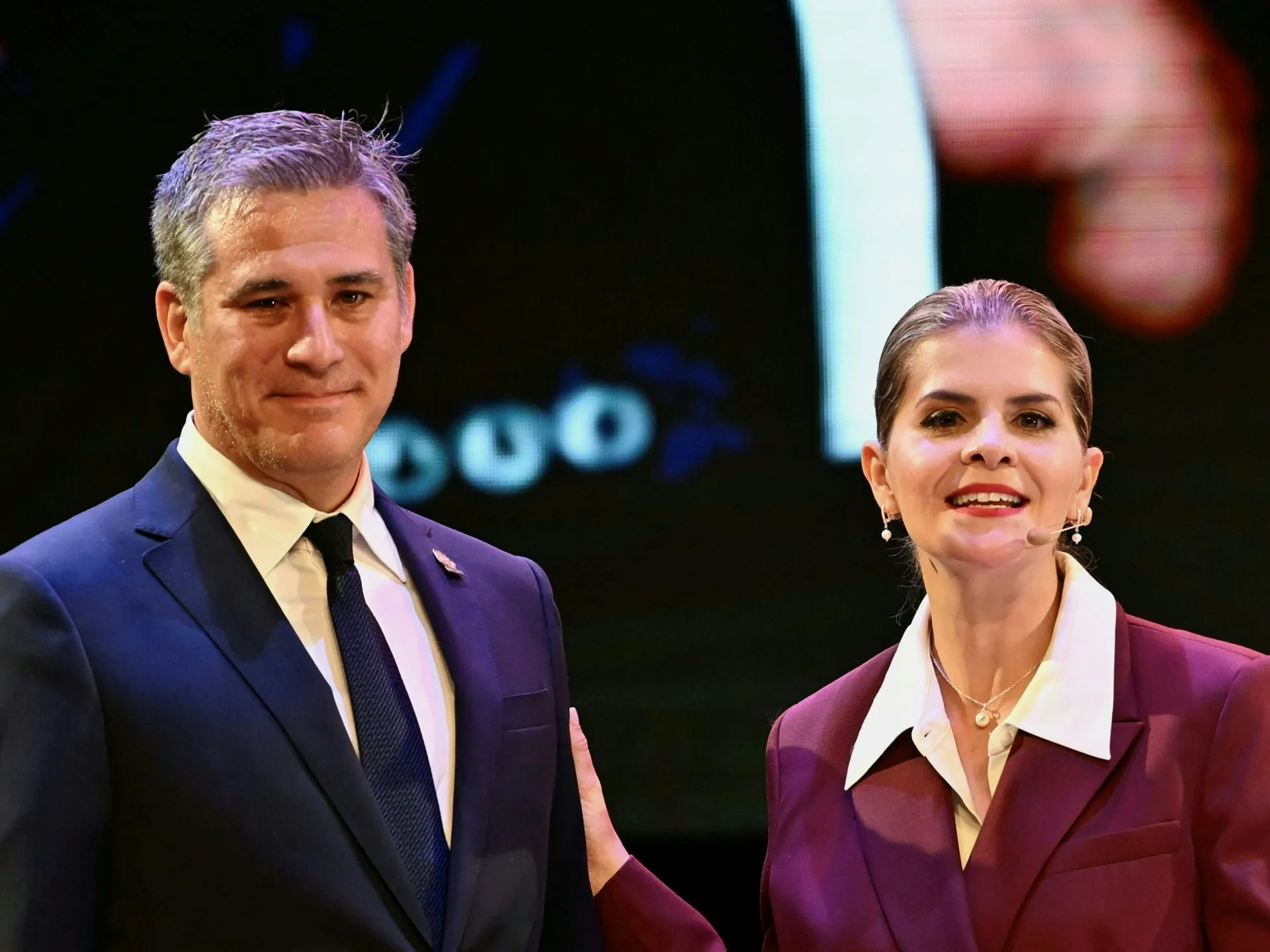
Costa Rica opens mega-prison as Bukele model embraced across Latin America | Prison News
President Laura Fernandez says mega-prison is part of ‘tough-on-crime model’ embraced by her government.

Published On 15 Oct 2026
Costa Rica has announced the opening of a new mega-prison amid near-record homicide levels and growing organised crime, as countries across the region embrace police crackdowns that have proven popular but often weaken key civil liberties.
President Laura Fernandez opened the High-Containment Centre Against Organised Crime, or CACCO, on Wednesday. The prison will have capacity for 5,100 people, equivalent to about 20 percent of the country’s current prison population.
Recommended Stories
list of 3 itemsend of list
“The CACCO will force criminals to face a new model – a tough-on-crime model. Costa Rica will become a global benchmark for prison security,” Fernandez said during an inauguration ceremony.
Candidates across Latin America have embraced mega-prisons, seeking to replicate the policies of Nayib Bukele, the president of El Salvador, who has won widespread popularity through a campaign of mass arrests and the suspension of basic rights in the name of combating crime.
Costa Rica, long spared from high levels of violent crime compared with its neighbours, saw a record-setting 905 homicides in 2023, followed by 876 in 2024 and 873 in 2025.
Analysts say that is partly due to increased fighting between criminal groups over lucrative drug routes.
The first transfers to Costa Rica’s new mega-prison will take place at the end of October, with Justice Minister Gabriel Aguilar saying the facility will help the government reassert control over the prison system and diminish infiltration by organised crime.
Right-wing leaders in other Latin American countries have also sought to replicate the mega-prison model.
Peruvian President Keiko Fujimori, inaugurated in July, has announced plans to tour El Salvador’s Terrorism Confinement Centre (CECOT), in anticipation of creating a similar facility in her country. CECOT can hold about 40,000 people.
In Colombia, meanwhile, newly elected leader Abelardo de la Espriella campaigned for the presidency, in part, on a pledge to build 10 mega-prisons. He took office in August.
Brazil, the largest country in Latin America, is currently in the midst of its own presidential election, and right-wing Senator Flavio Bolsonaro has advanced to the final round of the vote. His platform also includes building five mega-prisons, citing the Salvadoran model.
El Salvador first imposed a “state of exception” under Bukele in 2022, expanding police and military powers.
That emergency declaration has been credited with a sharp drop in that country’s homicides, but rights groups say it has led to severe rights abuses and has been weaponised against critics of the government.
The “state of exception” has also resulted in mass arrests and mass trials, with rulings delivered against hundreds of defendants at a time. Some defendants have been detained without charge.
While the Bukele administration frequently touts its success in dismantling the gangs, the government has continuously extended the state of exception since it was first imposed.
Critics have warned that conditions inside mega-prisons are often poor, with imprisoned people facing overcrowding, due process violations and alleged torture in facilities like CECOT.