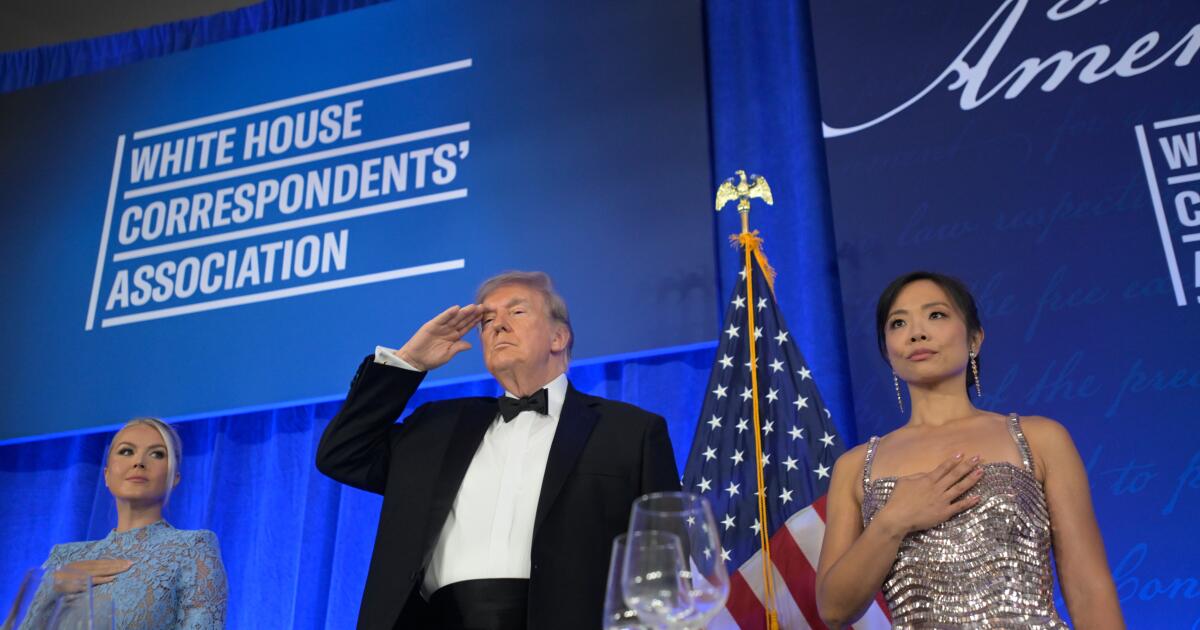
WASHINGTON — For the rescheduled White House Correspondents’ Assn. dinner on Friday at Washington’s Waldorf Astoria hotel, security will be much tighter, the guest list smaller, the partying pared down, and the dress code more relaxed.
That much, the correspondents’ association can control.
What remains out of its control — and perhaps the biggest question — is what the dinner’s most prominent guest, President Trump, will bring to the table.
Call it White House Dinner 2.0, or Take Two, or, in Trump’s own words, a “HOT ticket.” The big unknown is whether Trump will bring the fighting words (“rather nasty,” he said) against the press that he’d planned to deliver in April — before the event descended into chaos when a gunman stormed a security checkpoint, forcing an evacuation of the room.
“The president looks forward to finishing what he started,” press secretary Karoline Leavitt said on Thursday, confirming Trump’s attendance. “I encourage everyone watching tomorrow night to tune in for what promises to be a very entertaining and memorable evening.”
Trump has been coy about what he might say
As for Trump himself, he indicated last month he wasn’t sure. “I don’t know whether or not I will give the same rather nasty statements, at least as it concerns certain people, but we will soon find out,” the Republican president wrote on his Truth Social platform. “In any event, it will be a ‘HOT’ ticket!”
Besides the pared-down approach, there is another change at Friday’s dinner: two additional awards. One will be presented to Victor Gonzales, the Secret Service agent who was staffing a security checkpoint in April and was struck in his protective vest.
“Officer Gonzales … ran toward danger so that thousands of others could make it home safely,” WHCA President Weijia Jiang said in a statement. “His courage stemmed from a dedication to service, which we are looking forward to honoring this week.”
A second award will be presented to the staff of the Washington Hilton hotel, site of the first dinner.
Other changes: With security in mind, there will be only one entrance at the much smaller venue, with airport-style metal detectors. Guests received individual QR entry codes in advance, and nobody can get in unless recognized. “There is NO red carpet at this dinner,” said a memo Jiang sent to some guests last month, seen by The Associated Press. “There are NO onsite pre-dinner receptions.”
The dress code this time is a looser “black tie optional,” and dinner includes grilled peach and burrata salad, lobster, and beef Wellington. The evening, as at the last dinner, has entertainment by mentalist Oz Pearlman, along with the awards presentations and Trump’s remarks.
Jiang and her fellow board members worked hard to bring about this WHCA dinner 2.0, not wanting to let a violent act — or the image of colleagues hiding under tables — remain the final thought. Announcing the rescheduling, she emphasized the dinner’s stated purpose: “a celebration of a free press and the vital role of journalism in our democracy for over a century.”
“We will not allow an act of violence to have the last word, especially during a year when we are reflecting on the 250th anniversary of America and everything we stand for,” Jiang said.
There’s still lots of criticism of the event
But it’s also clear that some people felt the dinner should not be rescheduled at all.
Many never thought it was much of a good look in the first place, with the sight of journalists in formal wear cozying up to their sources, or the objects of their reporting.
“It undermines the public faith in how the press does its work, and it makes it look like we are pals with the people we cover,” Kelly McBride, an ethics expert at the Poynter Institute, a journalism think tank, said when the deliberations were taking place.
The new dinner comes during a time of fast-increasing tension between the media and a president who, in his second term, has tried to exert pressure on media outlets he is unhappy with in a variety of ways. That pressure has ranged from sanctions against members of the White House press corps to regulatory actions through the Federal Communications Commission to outright lawsuits.
Those tensions have only escalated since April, with the latest example reaching a New York courtroom on Thursday. There, criticized by a federal judge for sloppy legal work, the government withdrew subpoenas that would have compelled three New York Times reporters to testify about their sources for articles about Trump’s Qatari-gifted Air Force One jet.
That escalation was the impetus behind a letter from a coalition of press freedom groups and hundreds of former journalists, urging the WHCA to stand up to Trump forcefully at the dinner.
“We believe it is hypocritical to celebrate the First Amendment in front of the man who relentlessly attacks it,” the letter says. “We urge the WHCA to condemn the administration’s actions from the podium and pledge to fight all attempts by his administration to undermine this core pillar of a functioning democracy.”
Since last week, the world’s attention has been set again on Venezuela just like six months ago.
Of course, the differences between the events of January 3rd and the terrible disaster of June 24th could not be more stark, even if both evenets have massive implications for the country’s future.
Most coverage coming from international media these days has highlighted two things: first, the terrible devastation seen in worst-hit areas like parts of Caracas and especially in La Guaira State (formerly known as Vargas); and second, that many are complaining about the official response and even calling it “negligent”, like in this report from BBC News correspondent Yogita Limaye.
Interestingly enough, in recent months there has been a reopening to the presence of foreign reporters in the country, a shift from the heavily restricted access during the Maduro years. A larger number of reporters and media crews arrived in the last few days. They have been mostly allowed to do their job (unlike Sky News’ Trump 100 podcast, interrupted by government officials while recording), but they’ve been facing their own set of specific challenges.
Earlier this week, NGO IPYS Venezuela offered a summary of some apparent restrictions from the Communication and Information Ministry to international media workers, like indicating that they could be mobilized to affected areas only through State-authorized buses and establishing a schedule for those trips from the Media Center established at La Carlota Airport in Caracas.
One person quoted in the summary is British freelance journalist Catherine Ellis, who’s covering the disaster for Al-Jazeera and UK weekly magazine The Spectator while also doing some radio interviews for other outlets. She has worked in Venezuela since 2023 and, before that, volunteered for an NGO in Colombia and Spain, helping Venezuelan immigrants. It was Ellis who published on X a picture of the buffet the regime was offering to foreign correspondents while thousands of people were thirsty and hungry.
At the time of writing, several international reporters told Delcy Rodriguez during her recent press conference what they’ve seen firsthand. She minimized those criticisms against the official response and pointed her finger at “media matrixes created in laboratories” (matrices de opinión is a popular term in Venezuela to describe artificial narratives in journalism or social media).
Caracas Chronicles interviewed Ellis earlier this week to discuss what she recently witnessed.
How has it been for you and other international correspondents to cover the disaster on the ground? Have there been any limitations by government officials and particularly from the Communication and Information Ministry?
The experience so far as a journalist in terms of getting in and communicating with the Ministry has been quite strange in some ways. It needs to be said that it has been much more open than it usually is. Quite often, if I come to Venezuela, I can’t really do any reporting or get a journalist visa; they give very few journalist visas, and it’s particularly hard for freelance journalists when you’re not a fixed employee for a certain media outlet. But this time they let journalists in. They’re letting foreign journalists in without visas. On one hand, it’s been much, much better. This time journalists are actually allowed into the country, and access is not restricted, although we don’t know how long that will go on for. Communications have been terrible and completely lacking to the point of being almost non-existent.
How was your experience with the bus trip to La Guaira the day after registering at La Carlota airbase in Caracas?
We took the bus on June 28, the day after we registered in La Carlota. They told us they would take us there, and we left for La Guaira an hour and a half late. No problem, that happens sometimes, but there was no communication about what was happening. The following day was the worst because I arrived early thinking it might leave on time, only to wait for two hours with no explanation at all. Then we knew from other journalists that the trip was cancelled and access had been suspended for 48 hours for journalists. No one on the logistics team provided any explanation. They just said: “we are not in charge of it, we don’t know.” One person told me: “you have to be patient, you have to wait… This is a complex situation, and things don’t move quickly.”
How are you and your colleagues doing your work in the disaster area?
We were completely given free rein… We were taken to a Misión Vivienda place, but we could go wherever we wanted, so I spoke to people from that place, and some were very critical of the government. I went to other buildings around, which were either for retired people or just normal apartment buildings, and I spoke to lots of people. I was very, very free to speak to people. So much that I missed the bus and the Guardia (Nacional) took another journalist and me to the next site to speak to people.
Have there been any issues involving the police, the military, intelligence services or local officials?
Some people have been helpful, and some haven’t in terms of the authorities. In La Guaira, generally, no one stopped me from doing anything. Police and military pulled me away from a building because they were excavating to take bodies out, but to be honest, that was more for health and safety reasons, and I did understand. I went to the hotel in Caracas where the Venezuelan deportees were supposed to arrive after they got back, and the hotel collapsed. It was full of SEBIN agents. We weren’t allowed to pass because of “security reasons.” When I started to take photos, I was told off by SEBIN. That was interesting.
Genuinely, I have to say the police and military have not stopped me speaking to anybody or stopping doing anything. And to be honest, some of them haven’t really been around. I think it’s because, as you wear the pink armband (identifying as foreign press), they know you’re press, that you’ve been approved, but getting to the hotel where the deportees were was impossible.
How has the relationship been with the civilians in the area? How do they react to the presence of the media?
Civilians have been brilliant. Absolutely brilliant. Everybody is very, very open to talking. Venezuelans are incredibly warm and open people. I have no problem chatting to people. If I see people who are visibly, incredibly upset, who have family (members trapped) in buildings, it’s not the right time to talk to them.
Sometimes, I’ve approached them very sensitively, and people have shared their stories, described the people they have lost, told about what they’re lacking or what they need. Some people openly criticize the government, but others who have criticized the government then say they don’t want their names used, and others are not thinking about politics. They’re just in shock.
How has the relationship been between international correspondents and Venezuelan journalists?
Venezuelan journalists are incredibly helpful. I think there has been a lot of solidarity between all journalists, between Venezuelan and international journalists and among the international journalists themselves. I’ve been speaking to people from the US, Canada, Argentina, parts of Europe, and they all want to help each other.
On a critical note, there have been a couple of international journalists who either pushed me out of the way at certain sites because they want to film or come up to me when I’m interviewing people and taking my interviewees. This isn’t a show, people have lost (their) lives. I would encourage the international press to have a heightened level of sensibility and respect for all Venezuelans and all affected by this crisis.
Have you noticed the difference between how you see the situation on the ground, how it is covered outside, and how it is covered inside, how the government is presenting it?
From what I’ve seen, Delcy and the government are trying to project an image of solidarity with the international community, thanking and praising them for being here and helping Venezuelans in their time of need. But not necessarily announcing tangible and concrete steps of what they’re actually putting in place. Someone put it to me like this: “The government has been very visible, key figures have been very visible in terms of presence on social media and even visiting sites, but there has not been enough concrete information about donation centers, about what’s happening next, about actually managing the actual crisis.”
How have people in La Guaira been coping?
A lot of people are still in shock. It’s very hard to process, but everybody seems to be very grateful to everyone who is helping them, either members of their own community or the international rescue teams. Some people have said, “Other governments are helping us more than our own government.”
I think the most important thing to emphasize, which is non-political, is that people are saying “Venezuelans are helping Venezuelans, they’re helping each other.” Someone said to me the other day, “We are a family, this is what we do, we help each other, we won’t give up, and you know, keep going.”
I spoke to a guy who came from Valencia. He had three kids back home and said, “I couldn’t bear to think of my own kids lying somewhere like that and no one going to find them,” so he came on his way, he got lists from people, and he came so he can help with the search and rescue.
There’s definitely a lot of shock. A lot of kids are still scared and adults feel that any movement or anything, not just aftershocks, mean something is going to happen again. People are getting through by supporting each other.
Is the aid arriving properly? Have you seen aid being delivered?
There’s so much aid everywhere. In Caracas, I’ve seen so many trucks coming in. The problem is that I can’t exactly say what’s happening to the aid. Some aid is getting through, but there seem to be a little bit of bottlenecks or bureaucracy; I don’t know the full reasons… It’s getting through to some people but isn’t getting through to other people, and they’re running out of some things. People want proper accommodation also. Definitely, in a lot of places there are now international NGOs setting up food points as well.
–
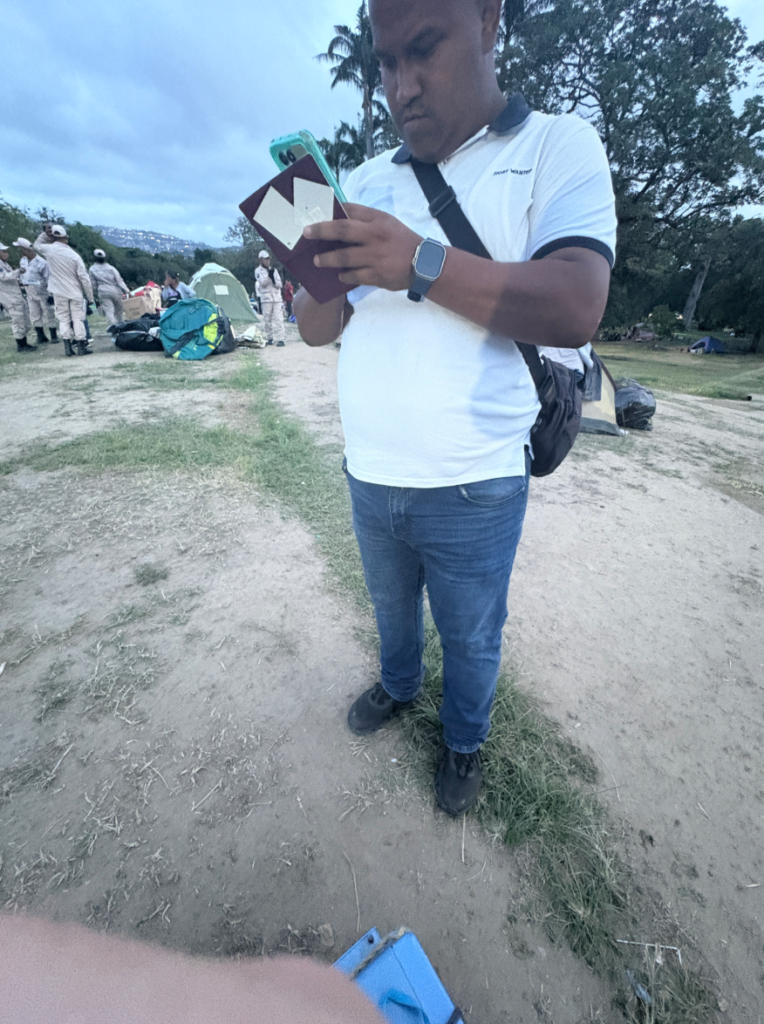
Just yesterday, while covering relief efforts taking place at Parque del Este, Ellis was approached by a couple of suspicious looking fellows. This was the exchange:
I was in Parque del Este tonight speaking to volunteers and affected families camping there. I was chatting to one family when two men came over to look what was going on then left. I started helping the family move their stuff to the road (I was carrying the cat!) as they were moving somewhere else. The two men called me over, asked me if I was a journalist, to which I said yes and showed them my wristbands. Asked more questions, who I was, where from, what I was doing. I asked who they were, as they still hadn’t introduced themselves by this point. One (the politer one) said they were intelligence police, asked what I was doing, so I said speaking to the family etc. Asked if I knew them, I said no. Then asking qus like my age, which was weird as one had my passport which has my DOB. Took photos of my passport. Asked where I lived, said I didn’t want to give that info. I asked why they wanted to know all this, they said for security and that people were taking children, so I asked if they thought I was taking kids. They said no. I told me they were asking me because I was a journalist and there was not a real free press. One was fairly polite and said they didn’t want to make me uncomfortable. I said they already had. Eventually they gave me it back. It’s ok to check who someone is, check they have a wristband which you now should have in the park – but I did, and I showed them, so why the need for questionning and taking photos of my passport? And why was the first qu, are you a journalist? Does everyone who enters the park get that level of treatment?
It doesn’t take much for chavismo to step back into its old ways.
Your friendly neighborhood regime intelligence goon.
While the smoke has begun to clear at “60 Minutes” after three correspondents were fired, CBS News leadership now faces the challenge of finding journalists who can fill their shoes just three months before a new season starts.
The venerable news magazine was plunged into crisis last week as longtime correspondent Scott Pelley confronted management about the May 28 firings of his colleagues Sharyn Alfonsi and Cecilia Vega along with the program’s executive producer Tanya Simon and her second-in-command Draggan Mihailovich.
Pelley, who also accused CBS News Editor-in-Chief Bari Weiss of “murdering” the program, was terminated June 2 after a 37-year career at the network. He later gave an interview to The New York Times, accusing Weiss of “putting her thumb on the scale” for the Trump administration when guiding the editorial direction of stories.
(CBS News denied Pelley’s accusations. But Paramount Chief Executive David Ellison, who has given Weiss a free hand in disrupting the CBS News hierarchy, found the turbulent situation concerning enough to personally reach out to veteran “60 Minutes” correspondent Lesley Stahl, according to The New York Times. He assured Stahl the program would not be subject to political interference, a message she passed along to the staff.)
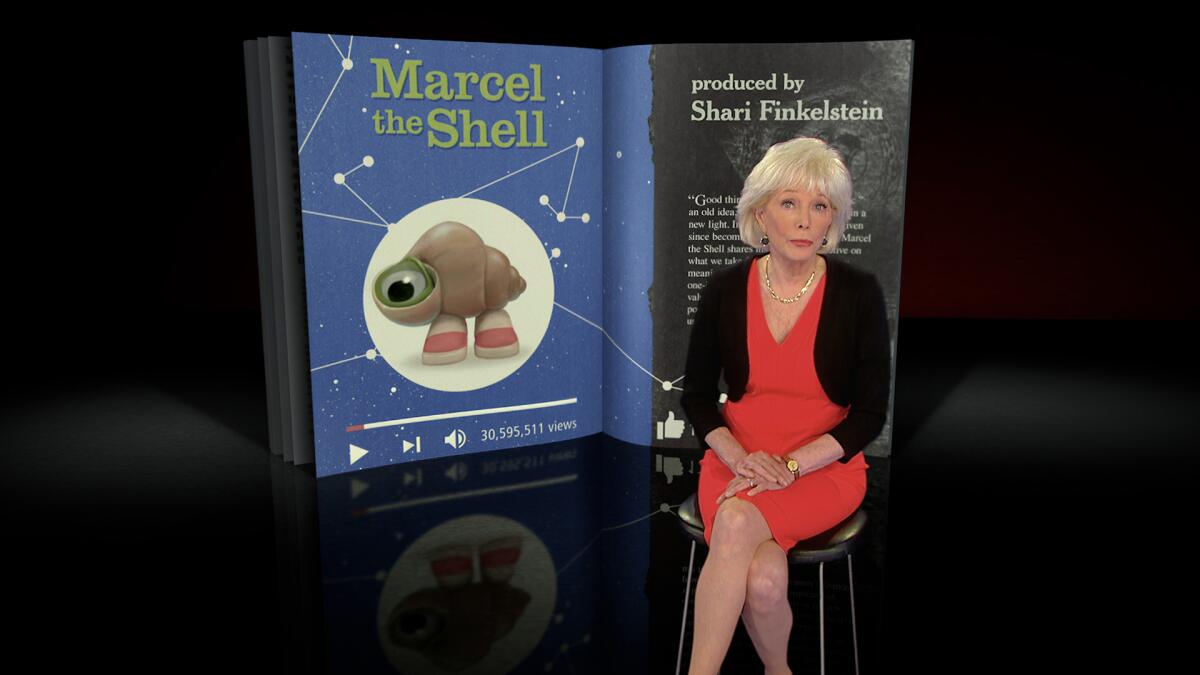
Lesley Stahl in the 2022 film “Marcel the Shell With Shoes On.”
(A24)
The recent personnel bloodbath followed the already announced departure of Anderson Cooper, and leaves CBS News with four correspondent roles to fill and a far less experienced executive producer — former tech journalist Nick Bilton in place to keep the program on track.
Remaining staffers were encouraged that Maria Gavrilovic, a 19-year veteran of CBS News who worked closely with Pelley, was promoted to senior producer under Bilton. They are also relieved that correspondents Stahl, Jon Wertheim and Bill Whitaker chose to remain with the program rather than leave in solidarity with Pelley.
Norah O’Donnell’s interview with Crown Prince Mohammad bin Salman in 2021.
But “60 Minutes” is under pressure to get a new team in place as newcomers will have little time to learn the program’s formula that gives it the comforting consistency its viewers seek. The 13-minute pieces on “60 Minutes” are filmed, written and voice-tracked in a distinctive narrative style that takes time to master, according to people who have gone through the process.
Weiss has told people internally that “60 Minutes” is the most important platform within the news division and if a major story comes from outside its corps of correspondents, it will find a place on the program.
Here are the leading contenders for full-time roles based on interviews with several sources at CBS News who were not authorized to discuss the matter publicly. A CBS News representative declined comment.
Holly Williams: Williams has been a foreign correspondent working out of Istanbul since 2012. The Australian journalist has reported extensively from war zones in Iraq, Afghanistan, Libya, Gaza and Ukraine. When covering Syria’s civil war from inside the country, she and her team gained access to a prison where alleged ISIS terrorists were being held.
Williams has contributed reports to “60 Minutes” over the years. Before joining CBS, she was a Beijing-based correspondent for Sky News.
CBS News foreign correspondent Holly Williams,
(Michele Crowe / CBS News)
Tony Dokoupil: The anchor of “CBS Evening News” is expected to be added as a contributor to “60 Minutes,” a role also given to his predecessors at the newscast including Dan Rather, Katie Couric, Scott Pelley and Norah O’Donnell.
Dokoupil has done longer interviews and segments for “CBS Sunday Morning” over his 11 years at the network. The additional exposure to a Sunday night audience of more than 9 million who tune into “60 Minutes” could also help boost his nightly newscast. The program has struggled in the ratings since he took over in January when, during his inaugural week, he awkwardly saluted Secretary of State Marco Rubio at the close of one episode.
“CBS Evening News” anchor Tony Dokoupil and the network’s chief national correspondent Matt Gutman.
(CBS News)
Matt Gutman: The network’s national correspondent was Weiss’ first significant on-air talent hire when he joined from ABC News in December. Gutman has been a frequent presence on big stories and breaking coverage for “CBS Evening News” since he arrived.
Mariana van Zeller at the Ultimate Disney Fan Event at the Anaheim Convention Center in September 2022.
(Image Group LA / Walt Disney Co.)
Mariana van Zeller: The multilingual journalist is best known for her documentary series “Trafficked,” which airs on the National Geographic Channel. Van Zeller, 50, has won dozens of awards for the program that has taken her around the world to report on black market activities and human trafficking.
Norah O’Donnell: Currently a contributor to “60 Minutes” who already appears on the program’s trademark open, O’Donnell’s role is expected to expand. After CBS settled a $16-million lawsuit filed by President Trump against the program for what he claimed was deceptive editing of an interview, O’Donnell helped the program by stepping up to interview the president twice, subjecting him to tough questions. Her recent joint interview with three U.S. cardinals about Pope Leo XIV and his church’s opposition to the Iran war and Trump’s aggressive immigration crackdown became a major story in April.
Major Garrett: The network’s chief Washington correspondent recently appeared on “60 Minutes” to interview Israeli Prime Minister Benjamin Netanyahu. The assignment caused internal tension as Stahl was pursuing a sit-down with the leader. But Weiss handled the booking and gave Netanyahu the option to select Garrett.
While the decision faced some criticism, the program regularly agreed to former President Obama’s preference for now-retired “60 Minutes” correspondent Steve Kroft to interview him even though other journalists on the team wanted a chance.
June 2 (UPI) — Officials have rescheduled the White House Correspondents’ Association Dinner for July 24, several weeks after a gunman disrupted the original event.
Weijia Jiang, president of the association and a senior White House correspondent for CBS, said Tuesday that the event will be a “more intimate gathering” with additional security precautions.
“When gunfire interrupted this year’s event, it further clarified the WHCA’s mission to advocate for the freedoms that are protected in the First Amendment,” Jiang wrote in an email to WHCA members. “We will not allow an act of violence to have the last word, especially during a year when we are reflecting on the 250th anniversary of America and everything we stand for.”
The original event April 25 ended when an armed man charged a security checkpoint outside the event at the Washington Hilton, and the president and other officials evacuated. The suspect, Cole Allen, 31, has been charged with attempting to assassinate the president, assaulting a federal law enforcement official with a deadly weapon and other offenses. Allen pleaded not guilty to all charges.
Trump said the dinner will take place at the Waldorf Astoria in Washington, D.C., which is the former Trump International Hotel. In the email announcing the rescheduling, Jiang did not mention a site.
“This dinner will not only be an opportunity to carry out our program,” she wrote. “It will be a statement that violence has no place in American life and a free press will not be intimidated into silence. As you have all demonstrated, courage and community can and should rise above.”
The Washington Post reported after the prior event that some critics thought the president should not be so prominently featured.
“Why do I need to pay hundreds of dollars and dress up in a tuxedo to go listen to the president of the United States insult my colleagues?” Steven Herman, executive director of the University of Mississippi’s Jordan Center for Journalism Advocacy and Innovation, said in the Post. “I think he’s made it pretty clear he is not a champion of free speech or a free press. He only likes press or speech when it reflects positively on him.”
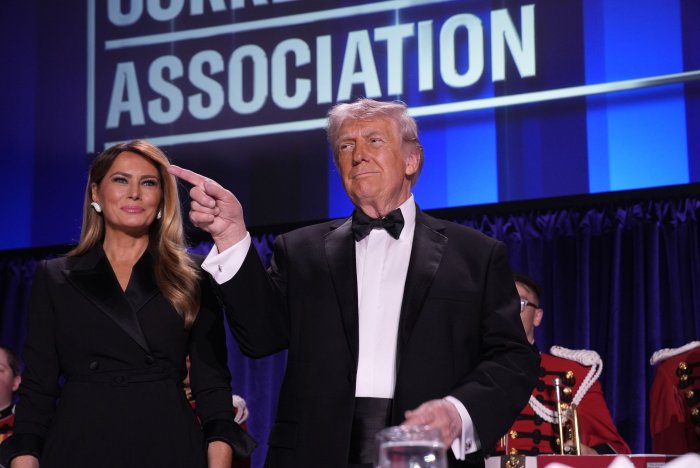
President Donald Trump and first lady Melania Trump participate in the 2026 White House Correspondents’ Association Dinner in Washington on April 25, 2026. Photo by Yuri Gripas/UPI | License Photo
WASHINGTON — A man accused of storming the White House Correspondents’ Association dinner while armed with guns and knives pleaded not guilty on Monday to charges that he attempted to kill President Trump and fired a shotgun at a Secret Service officer who tried to stop the attack.
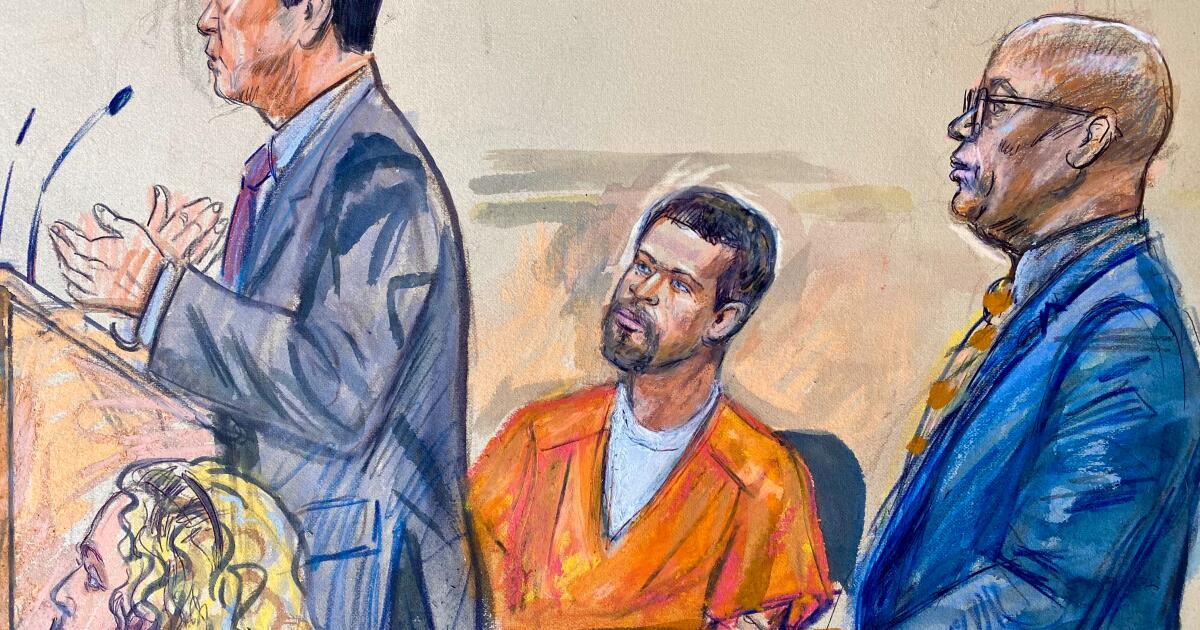
Cole Tomas Allen was handcuffed and shackled and wearing an orange jail uniform when he appeared in federal court for his arraignment. Allen didn’t speak during the brief hearing. One of his attorneys entered the plea on his behalf.
Allen’s lawyers are asking U.S. District Judge Trevor McFadden to disqualify at least two top Justice Department officials from direct involvement in prosecuting him because they could be considered victims or witnesses in the case, creating a potential conflict of interest.
Acting Atty. Gen. Todd Blanche and U.S. Atty. Jeanine Pirro were attending the event when Allen ran through a security checkpoint and fired a shotgun at a Secret Service officer, authorities said. In a court filing last week, Allen’s attorneys argued that it creates at least the appearance of a conflict of interest for Blanche and Pirro to be making any prosecutorial decisions in the case.
McFadden, a Trump nominee, didn’t rule from the bench on that question but asked Allen’s attorneys to elaborate on the possible scope of their recusal request. Defense attorney Eugene Ohm said the defense likely would seek to disqualify Pirro’s entire office from involvement in the case. Ohm acknowledged that a bid to disqualify the entire Justice Department would be unlikely.
“That would be quite a request,” the judge said.
McFadden gave prosecutors until May 22 to respond in writing to the defense’s request. The judge asked the government to specify whether it believes Pirro and Blanche could be considered victims in the case.
“That might add some clarity here,” McFadden said.
In their filing, Allen’s attorneys suggested that the appointment of a special prosecutor might be warranted.
Allen is scheduled to return to court on June 29.
A Secret Service officer was shot once in a bullet-resistant vest during the April 25 attack at the Washington Hilton hotel, which disrupted and ultimately prompted an early end to one of the highest-profile annual events in the nation’s capital. The officer fired five shots but didn’t hit anybody, authorities said.
Allen, 31, of Torrance, was injured but was not shot.
Besides the attempted-assassination count, Allen also is charged with assaulting a federal officer with a deadly weapon and two additional firearms counts. He faces a maximum sentence of life in prison if convicted of the attempted assassination charge alone.
Allen was placed on suicide watch after his arrest, but jail officials removed him from that status after several days. Allen’s attorneys complained that he had been unnecessarily confined in a padded room with constant lighting, repeatedly strip searched and placed in restraints outside his cell.
Allen told FBI agents that he didn’t expect to survive the attack, which could help explain why he was deemed to be a possible suicide risk, a Justice Department prosecutor has said.
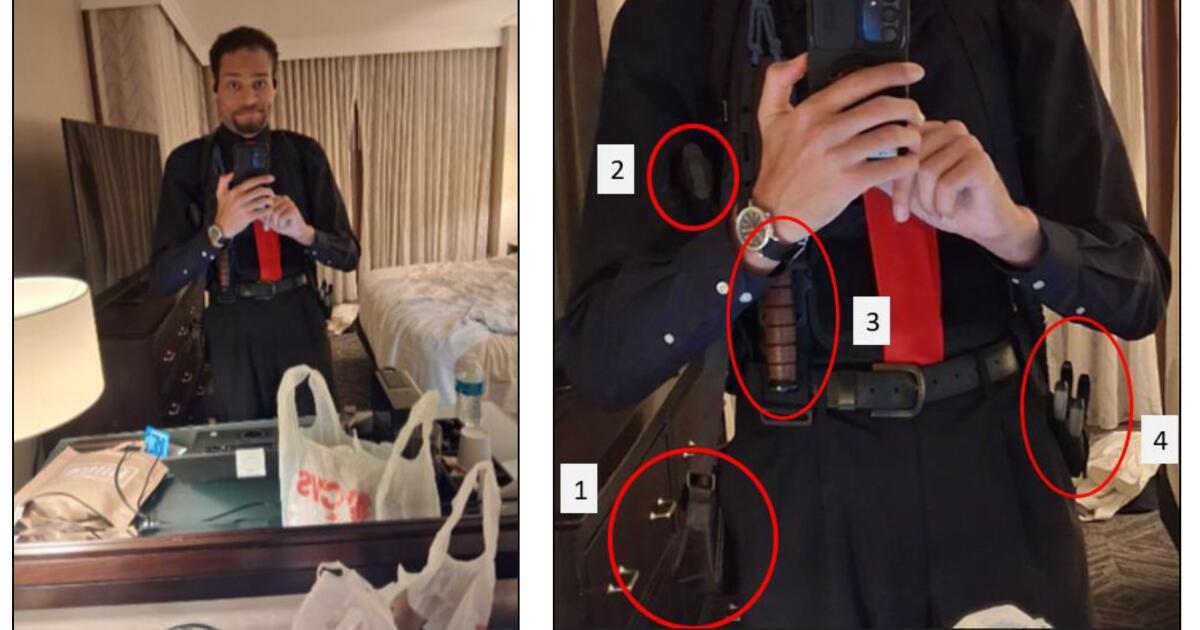
Allen was outfitted with an ammunition bag, a shoulder gun holster and a sheathed knife when he took a photo of himself in his room at the hotel just minutes before the attack, according to prosecutors. In a message that authorities say sheds light on his motive, Allen referred to himself as a “Friendly Federal Assassin” and alluded obliquely to grievances over a range of actions by Trump’s Republican administration.
Authorities have alleged that Allen on April 6 reserved a room for himself at the Hilton where the event would be held weeks later under its typical tight security. He traveled by train cross-country from California, checking himself into the hotel a day before the dinner with a room reserved for the weekend.
Trump was rushed off the stage by his security team at the Saturday night event and appeared at the White House two hours later, still in his tuxedo, to talk about the attack and the suspect.
“When you’re impactful, they go after you. When you’re not impactful, they leave you alone,” the president said. “They seem to think he was a lone wolf.”
WASHINGTON — A man charged with attacking the White House Correspondents’ Assn. dinner is seeking to disqualify top Justice Department officials from direct involvement in prosecuting him because they could be considered victims or witnesses in the case, creating a potential conflict of interest.
Acting Atty. Gen. Todd Blanche and U.S. Atty. Jeanine Pirro were attending the April 25 event at the Washington Hilton when Cole Tomas Allen allegedly ran through a security checkpoint and fired a shotgun at a Secret Service officer.
In a court filing late Thursday, Allen’s attorneys argued that it creates at least the appearance of a conflict of interest for Blanche and Pirro to be making any prosecutorial decisions in the case.
“As this case proceeds closer to trial, the country and the world will continue to wonder — how can the American justice system permit a victim to prosecute a criminal defendant in a case involving them?” defense attorneys Eugene Ohm and Tezira Abe wrote.
Ohm and Abe, who are assistant federal public defenders, suggested that the appointment of a special prosecutor might be warranted. They urged U.S. District Judge Trevor McFadden, a Trump nominee assigned to Allen’s case, to disqualify Pirro, Blanche and possibly other Justice Department officials from direct involvement in the investigation and prosecution.
“Both heard gunshots, which presumably forced them to duck below the tables with the rest of the occupants. They were quickly evacuated. Shortly thereafter, they learned that law enforcement believed the target was certain administration officials,” Ohm and Abe wrote.
Pirro said her office will respond to the defense lawyers’ arguments in its own court filing.
“We will not tolerate people who come to the District of Columbia to engage in antidemocratic acts of political violence; and we will prosecute all such acts to the fullest extent of the law,” Pirro said in a statement.
Allen is scheduled to be arraigned Monday on charges in an indictment handed up Tuesday by a grand jury in Washington.
The charges include attempting to assassinate President Trump, who is a longtime friend of Pirro’s. Blanche served as a personal attorney for Trump before joining the Justice Department last year.
Blanche, through a spokesperson, referred a request for comment to Pirro’s office.
Allen also is charged with assaulting a federal officer with a deadly weapon and two additional firearms counts. He faces a maximum sentence of life in prison if convicted of the attempted assassination charge alone.
The Secret Service officer who was shot once in a bullet-resistant vest fired his own weapon five times without hitting anybody. Allen, 31, of Torrance, was injured but was not shot.
WASHINGTON — A federal magistrate judge on Monday pressed a jail official to explain why a man charged with trying to storm the White House Correspondents’ Assn. dinner and attempting to kill President Trump was placed on restrictive suicide watch after his arrest.
Officials at the city jail in Washington removed Cole Tomas Allen from its designated “suicide status” over the weekend after his attorneys complained that he had been unnecessarily confined in a padded room with constant lighting, repeatedly strip-searched and placed in restraints outside his cell.
But the relaxed conditions didn’t satisfy U.S. Magistrate Judge Zia Faruqui’s concerns that Allen may have received disparate, punitive treatment in violation of his due process rights. Faruqui noted that the D.C. jail routinely houses convicted killers and others charged with violent crimes without placing them on 24-hour lockdown.
“It could drive a person crazy to be in that situation,” he said.
Faruqui apologized to Allen over his confinement conditions. In response to a news report on that apology, U.S. Atty. Jeanine Pirro criticized him in a social media post that said Faruqui “believes a defendant armed to the teeth and attempting to assassinate the president is entitled to preferential treatment in his confinement compared to every other defendant.”
Allen’s lawyers said he wasn’t showing any suicidal risk factors after his arrest. But a jail psychiatrist evaluated him and initially concluded that he posed a suicide risk, according to Tony Towns, acting general counsel for the city’s corrections department.
“Every case is different, your honor,” Towns said.
Allen was moved into protective custody after the jail lifted the suicide prevention measures. His attorneys didn’t object to his new confinement status. They had asked the magistrate to cancel Monday’s hearing, but Faruqui forged ahead with it due to his “grave concerns” about Allen’s treatment in jail.
Allen was injured but was not shot during the April 25 attack at the Washington Hilton, which disrupted one of the highest-profile annual events in the nation’s capital.
Allen was armed with guns and knives when he ran through a security checkpoint and pointed his weapon at a Secret Service agent, who fired back five times, authorities said. Pirro has said that Allen fired a shot that struck the agent’s bullet-resistant vest.
Allen later told FBI agents that he didn’t expect to survive the attack, which could help explain why he was deemed to be a possible suicide risk, said Justice Department prosecutor Jocelyn Ballantine.
Allen, 31, of Torrance, is charged with attempted assassination of the president and two additional firearms counts. He faces up to life in prison if convicted of the assassination count alone.
Defense attorney Eugene Ohm said Allen was prohibited from having anything in his cell. He asked for a Bible and a visit from a chaplain but hasn’t received either, according to Ohm.