Holcim CFO Steffen Kindler on executing a regional spinoff, AI value creation, and team leadership.
This article appears in the July/August issue of Global Finance Magazine.
Steffen Kindler has served as Holcim’s CFO since 2023. He brings with him two decades of finance leadership experience from his time at Nestlé. He now guides the financial strategy of the Swiss multinational building materials giant, which generated CHF15.7 billion (approximately $19.7 billion) in net sales last year.
Holcim, listed on the SIX Swiss Exchange, commands a global footprint with more than 45,000 employees. It operates across 43 markets in Europe, Latin America, Asia, the Middle East, and Africa.
Global Finance: What do you consider your main achievements since joining Holcim?
Steffen Kindler: A major achievement was helping drive the decision to split Holcim into a North American company and a rest-of-the-world company, and then successfully executing the spinoff. We completed a financial carve-out, established the new company’s finance organization, and listed the North American entity on the New York Stock Exchange. Since then, both companies have operated smoothly and separately.
Another major achievement was defining a standalone company strategy and equity story. We identified where we want to grow, how we want to allocate capital, the financial KPIs we want to be measured against, and our people plan. The strategy was very well received by the financial markets, reflected in strong share price appreciation throughout 2025.
Since then, the focus has been on executing that strategy quarter after quarter, demonstrating progress on both the strategy and our financial results, and earning the confidence and support of shareholders and stakeholders.
GF: Why did you split off the North American entity?
Kindler: The logic was sustainability and different market environments. In Europe, decarbonizing the product portfolio and production process was a key driver of our strategy and financial success. In the U.S., customers were more focused on volume growth, and the sustainability strategy was not as relevant. We felt the regions were hindering each other more than helping.
GF: Holcim expects AI to generate CHF200 million in recurring EBIT by 2028. How so?
Kindler: We began exploring AI more than three years ago and felt we were leading in that area. Technology has now matured to the point that we can reliably say it is creating value. Rather than focusing on savings or restructuring, we see AI as a value-creation tool.
Key applications include predictive maintenance, where AI anticipates machine breakdowns, and commercial sales where AI analyzes large amounts of data to optimize our offers to customers for all types of building projects. We are already seeing tangible benefits of roughly CHF30 million this year, even before scaling these programs further.
GF: Can you provide details on how you expect to achieve that EBIT goal?
Kindler: Holcim said that roughly half of the CHF200 million AI benefit will come from additional profit and the other half from cost avoidance. Predictive maintenance helps avoid losses by reducing breakdowns, while AI supporting the commercial teams creates additional value by giving them better insights, faster project proposals, and the ability to participate in more projects. It gives commercial teams insights into how the different inputs of an offer were determined and reduces the manual work involved in bidding. By automating data analysis and proposals, teams can evaluate more projects and focus on judgment and decision-making rather than information gathering.
GF: How important is it to have a strong finance team?
Kindler: I cannot do a job of this scale on my own: the team is everything. I spend about a third of my time on people-related topics, including succession planning, coaching, and career development. We have a structured process for discussing talent, open jobs, strengths and weaknesses, and career paths with regional CFOs and direct reports. It is also important to keep people motivated by giving them interesting roles, exposure, and support through an open-door approach.
Tiziana Barghini is a contributing writer based in New York.
For these CFOs, summer is where the year is won or lost.
This article appears in the July/August issue of Global Finance Magazine.
Every spring, airlines, cruise lines, travel booking platforms, golf tour operators, race promoters and other seasonal businesses begin trying to answer the question that will define much of their year: How is summer shaping up? For their CFOs, a few months of peak demand often determine whether the entire year meets expectations.
This year, the early signals have been broadly encouraging. Despite conflict in the Middle East that rattled European and Asian bookings, travel advisories in Mexico, and lingering concerns about consumer sentiment, many travel companies reported strong demand. Europe’s TUI Group reported its best-ever first half, with 7.9 million summer bookings already in place, while Expedia posted its highest first-quarter EBITDA margin in 15 years.
But the stakes remain unusually high because many of these businesses generate a disproportionate share of their annual revenue in a relatively short window. Whether they operate airlines, racetracks, or golf tours, their finance chiefs spend months forecasting demand, managing labor and capital, and preparing for risks—from weather disruptions to geopolitical shocks—that could derail the season.
The Aviation CFO: Gauging Bad Weather
Max Mertz, Alaska Seaplanes
Today, by contrast, consumers want to travel, and the booking window is holding steady. That signal is especially important to the CFOs at companies whose fortunes depend on summer travel.
Max Mertz is CFO and co-owner of Alaska Seaplanes, which operates a fleet of 20 aircraft based in Juneau and serves communities throughout southeast Alaska. Summer brings millions of visitors to the state, many seeking flights over glaciers, bear safaris, and trips to remote fishing lodges.
“June, July, August, and then, if you add the shoulder season, which starts around mid-May and lasts until about a week after Labor Day, account for two-thirds of our revenue. It’s critical, honestly,” Mertz says.
Bookings at his company’s tourism subsidiary arrive months in advance, enabling year-over-year comparisons. Fishing lodges commit capacity based on their own guest projections. Strong retail sales and corporate bonus cycles in the Lower 48 states translate into lodge demand. Construction projects and gold and silver mines in remote communities create predictable demand for cargo and charters.
The seasonal concentration is all about costs.
“Aviation is a high fixed-cost industry,” Mertz says. “On a per-flight, per-unit basis, obviously the higher your volume, the more you cover fixed costs, so you’re making a good chunk of your bottom line as well.”
What makes Alaska Seaplanes unusual — even among seasonal businesses — is the extent to which weather inserts an uncontrollable financial variable. Anyone who has flown in Alaska knows how its dense cloud layer and mist can quickly form, grounding aircraft for days. Mertz has invested in reliability. Alaska Seaplanes has spent multiple seven-figure sums on specialized navigation systems that increase aircraft safety and reliability.
No Do-Overs: Running Racetracks
Weather also matters to Mike Morrisey. As CFO of Green Savoree Racing Promotions for the past 31 seasons, he oversees four motorsports race properties: Mid-Ohio; a newly built circuit in Markham, Ontario; St. Petersburg, Florida; and Portland, Oregon. “The summer is where you make your revenue,” he says.
Often, a big race weekend is a single 72-hour window when gate revenue, hospitality, suites, sponsorships, and concessions converge. There is no making it up later.
“When the checkered flag drops, we have crews out there tearing it all down” at the temporary street racing circuits, Morrisey says.
The leading indicators he watches for signs of summer success are ticket renewals and suite sales. The next forecasting cycle begins almost immediately after the prior season ends.
“We typically launch ticket renewals in the fall for the following year,” Morrisey says. “St. Pete tickets go on sale in mid-September, and Mid-Ohio in mid- to late October.” Suite customers are approached for renewal while the race is still being torn down.
The logistics of motorsports racing would likely surprise CFOs in other industries. Green Savoree owns roughly $4 million in portable grandstands and suite infrastructure. These aluminum structures sit in a St. Petersburg warehouse between events, are loaded onto about 40 trucks after the Florida race, and are shipped to Canada for use in Markham. The company operates with fewer than 50 full-time employees year-round, a number that swells to about 270 during the peak summer season.
Golf’s Stark Scheduling Problem
Gordon Dalgleish co-founded Perry Golf in 1984 and remains president of the luxury golf travel company he and his brother built around the British Isles. The company is now majority-owned by private equity investors. His seasonal challenge is stark: He sells access to some of the world’s most coveted golf inventory in a region that is closed for business for roughly half the year.
“It is very seasonal, and it doesn’t matter what you do,” says Dalgleish. “You cannot sell golf trips for November. It gets dark and rainy.”
The business operates at near-full capacity during the peak season and near-zero outside it; the peak season runs from late April to early October. St. Andrews, which Dalgleish calls the engine that “drives the bus” for the entire Scottish golf hospitality industry, closes for three weeks in September and early October for the Royal and Ancient Golf Club’s autumn meeting and the Dunhill Links Championship. When St. Andrews closes, the broader market goes quiet.
Booking lead time has changed dramatically, reshaping Perry Golf’s forecasting model.
Pre-Covid, Dalgleish saw a fairly predictable 12-month booking cycle. Inquiries would begin in July for the following summer, slow through the holidays, and ramp back up in January and February, giving him a clear picture of the season by late February. Today, he sees inquiries for July 2028 arriving in spring 2026. By this Christmas, he expects to have 40% to 50% of next summer’s bookings in hand.
One possible driver of this shift is affluent Americans, a key customer segment, who have reoriented their spending toward experiences rather than assets and who plan farther in advance to secure exactly what they want. However, the supply of premium Scottish golf inventory has barely grown.
“There are 25 courses that are on everyone’s must-play list in Scotland,” Dalgleish notes. Demand is running ahead of last year’s pace, and father-son trips are booking at high volumes. “There’s an affluence slushing around in golf just now.”
The Franchise Model Meets the Heat Wave
Josh Greear, Authority Brands
Josh Greear models a different kind of seasonal pressure. As CFO of Maryland-based Authority Brands, which derives over 90% of its revenue and more than $2 billion in annual system sales from 15 home services franchise brands, he manages seasonal concentration across a portfolio of businesses, each facing different summer inflection points.
“Summer’s always been important to Authority Brands,” Greear says. Its America’s Swimming Pools franchise business faces heavy warm-weather demand. Consumers tend to seek the services of its Mosquito Squad brand as critters emerge in warm weather. One Hour Heating & Air is driven by heat waves, not the calendar. Figuring out when to hire is tricky.
“The hardest time to manage labor is on the shoulder of the seasons, when you’re seeing the largest change,” Greear observes. In a business like One Hour Heating and Air, if temperatures spike sharply and you’re not prepared, you miss the demand and usually have no easy way to make it up. Conversely, if you’ve overstaffed in anticipation of early summer, profitability erodes.
To better manage risk, Greear says Authority Brands has invested in large-language-model-driven forecasting that integrates local weather trends, historical demand patterns, and brand-specific variables at the ZIP code level. The business now uses multivariate models that ingest large datasets and distill them into actionable insights for specific locations. For summer 2026, Greear flagged a milder-than-typical start to the season in many parts of the US, which will affect the timing of demand for weather-sensitive brands.
Greear measures success by revenue, share gains, and franchisee health: “If we’re taking share, our customers are happy, and, most importantly, our franchise owners are healthy, then our business is in a very stable, long-term strong position.”
Another way to manage seasonal risk, however, is to diversify: in this case, by owning businesses that operate year-round, collectively if not individually.
California-based Youth Enrichment Brands traces its roots to summer camp and has spread that model across 12 months; its portfolio now includes US Sports Camps, i9 Sports, and School of Rock, which together smooth the seasonal curve.
“As of 2025, less than 20% of our systemwide sales are derived from summer-based activities alone,” says Dustin Bertram, CFO. Winter programs, year-round leagues, and music instruction have broadened the revenue base. “The platforms that win will be those that remain focused on the customer experience, maintain diversified offerings, exercise disciplined cost control, and invest in evolving their programs.”
Summer by the Numbers
7.9 Million: Summer bookings already reported by TUI Group for 2026.
66%: Share of Alaska Seaplanes’ annual revenue generated between mid-May and shortly after Labor Day.
$4 Million: Value of Green Savoree Racing Promotions’ portable grandstands and hospitality infrastructure.
50 to 270: Growth in Green Savoree’s workforce during peak racing season.
40% to 50%: Portion of Perry Golf’s following summer bookings expected to be secured by Christmas.
20%: Share of Youth Enrichment Brands’ systemwide sales now derived from summer-only activities.
$4.5 Trillion: Estimated decline in global travel and tourism GDP during the pandemic.
62 Million: Travel and tourism jobs lost worldwide during Covid-19.
3 CFOs’ Offseason Work
As October arrives in Juneau, Alaska, rain socks in, cold air takes hold, and days grow short, but hibernation is the last thing on Max Mertz’s mind.
The CFO of Alaska Seaplanes leads a post-mortem of the mid-May to early September season: what worked and what didn’t. He dissects the summer’s financial results and builds budgets for the year ahead. He maps out fleet and capital needs and evaluates staffing levels against forecasts from fishing lodges and gold and silver mines, which are major users of Alaska Seaplanes in the summer.
The planning runs from October until it’s set by March or April. In between planning for the next summer, it’s party season — one for each major unit, always well attended, according to Mertz.
In the fall, Chris Scheer, CFO of KOA, which operates a network of 500 campgrounds across North America, evaluates the compressed summer window, during which he must execute flawlessly on pricing, operations, and the guest experience, because the period accounts for about half of KOA’s total annual revenues. That means during the off-season, he focuses on strategic planning for cash flow, rate setting, staffing, and capital expenditures.
In Indianapolis, Green Savoree Racing Promotions CFO Mike Morrisey spends his autumns calculating costs and securing funding for capital upgrades—such as replacing grandstands and revamping hospitality suites. Ticket renewals go out before Thanksgiving, and Morrisey watches how quickly they come in because the fans who’ll fill those grandstands are also the ones driving his financial projections.
Weld Royal is a contributing writer based in the U.S.
Why finance leaders are taking over operations—and why the new COFO role isn’t a simple shortcut.
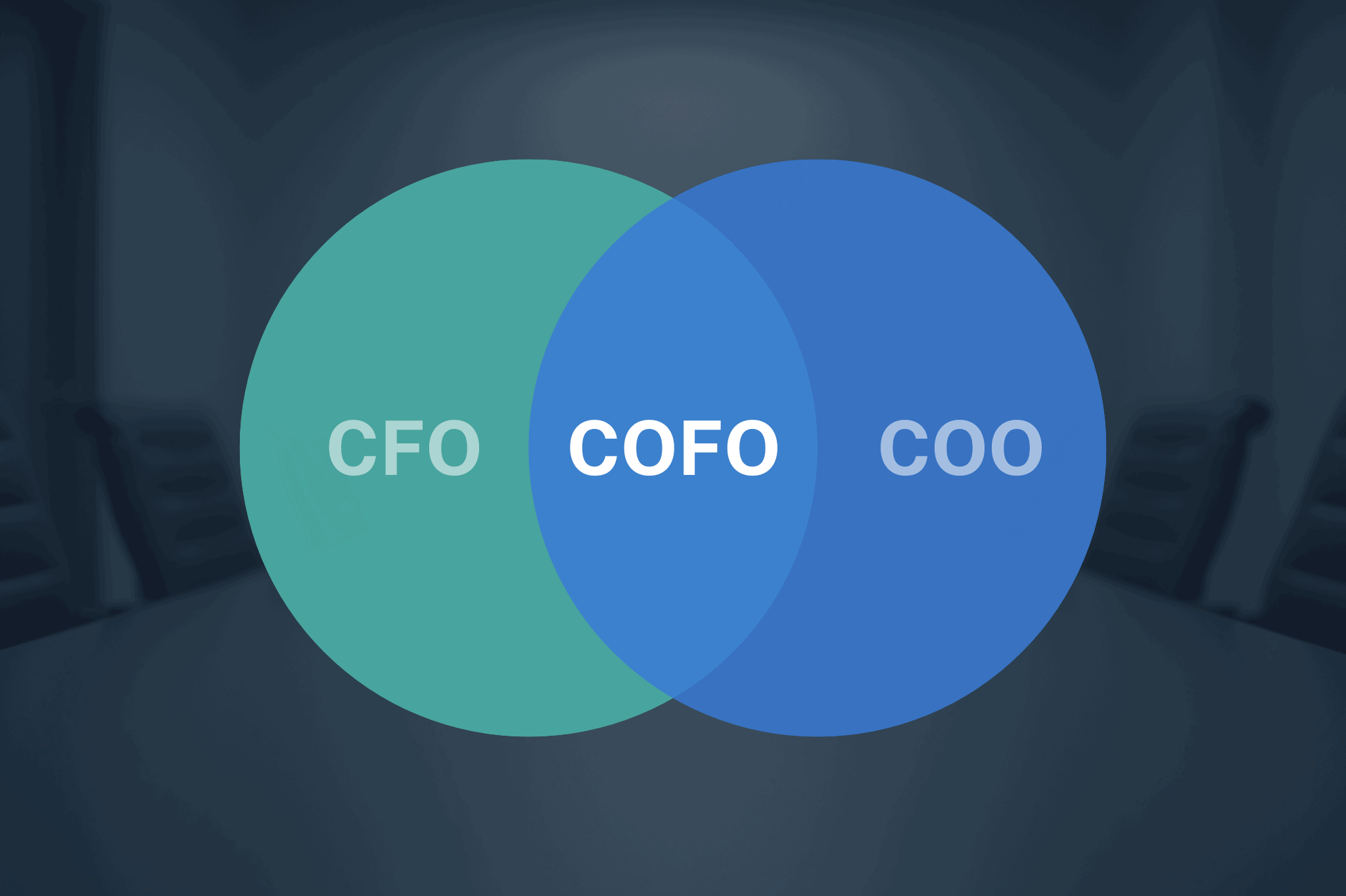
There’s a new acronym roaming the C-suite. The so-called COFO — a hybrid chief operating and financial officer — is more common than ever, marking a structural shift in how companies are deciding who runs the business. But the combined role is a risky one: it works far better going one direction than the other, industry watchers tell Global Finance.
Salesforce made it official last year. The San Francisco-based company named Robin Washington its first COFO — tasking a 30-year finance veteran with steering both the balance sheet and the company’s artificial intelligence (AI) and digital-labor transformation.
PayPal, headquartered in San Jose, California, took a similar route. The company expanded CFO Jamie Miller’s mandate to cover operations as well as finance, putting one executive in charge of the strategic growth initiatives that used to require two separate memos and a joint meeting to sort out. Two very different companies, same conclusion: the boss who understands the cash is likely the person who’s expected to move it.
While some observers view this trend as temporary, many industry leaders see the hybrid COFO as a permanent shift in corporate leadership.
“I do think this is a trend that’s here to stay,” said Jaylene Kunze, COFO at Denver-based LegitScript, a risk management service.
For decades, the CFO and COO occupied a kind of awkward office marriage: sharing a roof, splitting the chores, occasionally blaming each other when the numbers didn’t add up.
“Historically, the CFO and COO were often set up to work against each other by default since each one’s success depended on the other, but neither had the full picture needed to make the best decisions for the company,” Kunze added.
That being said: Does the COO job disappear? Kunze calls “operational acumen and a real connection” to the business as “essential.” However, she argues the CFO seat has evolved past spreadsheets and GAAP.
“That’s exactly why the COFO role is emerging as such a powerful one,” she said. “It’s not enough to build the model; you must know what growth targets you’re driving toward and which levers to pull, when, and how.”
‘A Whole New Job’
Executive coach Edith Hamilton, who works with CFOs and COOs at NEXT New Growth, noticed the same pattern.
“It’s not title inflation. It’s authority redistribution,” she said, pointing to AI-driven process change as a major accelerant. But the honeymoon, she warns, is short.
“The second emotion is, ‘Oh dear Lord, this is a whole new job.’” Boards, she added, flip the script overnight — from “protect the numbers” to “use your authority to change the business.”
Her verdict: durable, but not universal. “It will work in companies where finance and operations need to be welded together — not merely coordinated.”
Sierra Hinson has been living this arrangement for over a decade under various titles. Most recently, as a “fractional CFOO” through her firm, Additive Insights. Her reaction to the sudden buzz? “What took so long?” Splitting finance and operations creates blind spots and slows everyone down, she said. And it shows up at the worst possible moment — the exit. “In a transaction, buyers look for inconsistency between what the financials say and what the operations show,” she said. “The title is the easy part — the track record is not.”
Missing the Point
Not everyone’s convinced the direction of travel could reverse. Ariela Tannenbaum, former CFO at Wilson Sonsini Goodrich & Rosati and now a profitability architect, thinks the whole debate is arguing about the wrong things. “The COFO debate misses the point on two counts,” she said. “First, titles. Whether you call it inflation or evolution, a title reflects accountability, not capability. The higher the title, the greater the responsibility. Rebranding a role does not dilute it; it expands it.”
Her second point takes aim at the assumption that AI is what’s really behind all this. “Faster information is not faster judgment,” Tannenbaum said. “A CFO or COO in a COFO role will spend exactly as much time reviewing, analyzing, validating, and deciding as before. AI compresses the data cycle. The thinking, judgment, and responsibility cycle remains unchanged.”
What’s actually driving the trend, she argues, is something more old-fashioned: good managers building good benches. “Great financial leaders already mentor, elevate, and develop their teams to the point where the CFO can spread his or her wings to take on an expanded operational mandate,” she said. Given the chance herself, she wouldn’t blink: “I would run the operation with conviction through the financial lens, where clarity lives.”
The Risk of Reversing the COFO Role
But Tannenbaum, like Hamilton, sees the arrangement working in only one direction. “Can an experienced CFO absorb the COO role? Absolutely,” she said. “Capital discipline, resource allocation, performance accountability — these are financial constructs applied operationally.”
The reverse, however, is not symmetrical.
A COO assuming the COFO role introduces real risk: technical gaps in financial analysis, regulatory exposure, and the kind of judgment calls that only come from deep financial experience.
Her bottom line: “The COFO is not a shortcut. But it works in one direction far better than the other.” And for companies simply focused on saving a salary line rather than building real bench strength, she has a warning dressed up as a punchline: “Can’t find two great executives? Look under the light.”
Which brings the debate back to a question. Firms like Ridgeway Financial Service ask CEOs: does your team just report the numbers, or help run the business? Increasingly, in this new hybrid role, the answer is both — same office, same person, one very full inbox.
Anthony Noto covers corporate finance and private credit. Contact him at anoto@gfmag.com
Breaking a six-month record, the investment banking giant capitalizes on a surging wave of global megadeals.
Goldman Sachs said it had advised on more than $1 trillion of announced global mergers and acquisitions so far this year, the fastest any investment bank has reached that milestone in a six-month period, citing data from capital markets data provider Dealogic.
The bank attributed the milestone to a string of marquee mandates, including serving as co-financial adviser to Dominion Energy on its roughly $67 billion sale to rival utility NextEra Energy, announced last month, along with other major transactions.
Rise of the Megadeal
Goldman reported that its investment banking fees rose 48%, to $2.8 billion in the first quarter. It’s a reflection of the “K-shaped” M&A market, where megadeals are the dominant force, but deal volumes are declining, and mid-market activity is subdued.
Data compiled by PwC revealed that the global M&A market is on track to reach $4 trillion in 2026, a 13% annual increase, with major sales estimated to account for 48% of deal value worldwide, a significant expansion from two years ago.
“Goldman has been the global leader in M&A advisory fees for more than 90 consecutive quarters. The fact that it’s reaping benefits from a moment of megadeal activity simply proves the strength of its franchise,” said Mark Narron, senior director at Fitch Ratings. “However, advisory revenues are generally a small share of total revenues. In 2021, which was Goldman’s record year for advisory, advisory revenues contributed only 10% of total revenues.”
Fitch says it’s difficult to forecast whether Goldman’s advisory revenues will continue to climb, given the cyclical nature of advisory fees and uneven regional M&A trends — with most deal activity still concentrated in the U.S.
Fitch expects M&A activity to be sensitive to market conditions, economic growth, geopolitical events, and interest rates. Global growth is estimated to decelerate to 2.8% this year, according to the latest OECD economic outlook report. Inflationary pressures are rising in advanced and emerging economies due to energy shocks from the Iran conflict. Prices in the G20 economies are expected to climb to 4% in 2026. In a “prolonged disruption” scenario, inflation could rise further, which may prompt hawkish interest rate responses from central banks.
Peter Taberner is a contributing writer based in the U.K.
A veteran dealmaker takes the helm as large-cap M&A shows signs of a selective recovery.
JPMorgan Chase, the global leader in investment banking revenue, has named Anu Aiyengar global chair of Investment Banking and M&A, signaling a renewed emphasis on dealmaking as a pillar of its investment banking strategy.
As part of a broader divisional shift, the bank also named Dorothee Blessing, Kevin Foley, and Jared Kaye as co-heads of Global Investment Banking, while Charles Bouckaert succeeds Aiyengar as global head of M&A.
The changes come as deal activity shows signs of recovery after nearly two years of sluggish momentum. Dealogic estimates that global deal announcements reached nearly $2 trillion by May 11. That’s a 33% increase from the same period last year.
Still, observers note that the current cycle is far from a repeat of the free-flowing deal market of 2021. Higher financing costs have made boards more disciplined about price and timing, while closer regulatory scrutiny from antitrust watchdogs in both the U.S. and Europe has raised the financial and reputational cost of getting large transactions wrong.
A Selective, Large-Cap Rally
“This has not been a full-spectrum, feel-good rally. It has been a highly selective one, skewed toward strategic, large-cap deals,” said Marc Cooper, CEO of Solomon Partners. “Deals valued at $5 billion and up accounted for more than half of all volumes. That distinction matters.”
Against this backdrop, Aiyengar’s appointment suggests JPMorgan sees senior dealmaking expertise as a defining advantage in the current market. The firm expects the dealmaking veteran to work closely with senior clients as boards decide whether to move forward with transactions or wait for better conditions.
Since joining JPMorgan in 1999, Aiyengar has advised on more than $1 trillion in transactions. She became sole head of the bank’s global M&A franchise in 2023, making her the only woman leading M&A at a major Wall Street house at the time.
Her move also carries symbolic weight in an industry where senior dealmaking roles remain dominated by men. In 2025, Business Insider named her the top U.S. M&A banker on its Rainmakers list, making her the first woman to hold the No. 1 position.
CFOs lag on the AI curve, risking the growth and value creation they want, EY warns.
CFOs are sitting on a goldmine of tech potential—but most aren’t ready to dig in. That’s the major takeaway from a new Ernst & Young survey titled the DNA of the CFO.
Finance chiefs want to make investment decisions and create value. Yet, the majority of these bosses remain constrained by skills gaps, limited AI readiness and outdated measurement frameworks.
The London-based accounting firm sourced responses from more than 1,600 CFOs and senior finance leaders across 28 countries and 22 industries. The consensus shows a widening gap between CFO ambition and actually getting the job done.
“While CFO ambitions are clear, there’s quite a gap when it comes to execution,” Myles Corson, EY Global Strategy and Markets Leader for Financial Accounting Advisory Services, told Global Finance.
Consider the numbers: 60% of CFOs wish to lead on value creation, but only about a quarter currently guide value-creation discussions or make key investment decisions.
Another finding from the EY CFO survey reinforces that disconnect: Only 27% of respondents say their organizations view finance as a key partner in value creation.
“Organizations that treat finance as a key partner have a common trait: their finance functions demonstrate insight beyond the ‘comfort zone’ of financial performance,” Corson said. “They are also more actively involved in decisions—and it’s this that builds their reputation as valuable business partners.”
AI: What Must Change
A majority of respondents (68%) also say the definition of enterprise value needs to change. This reflects frustration with traditional metrics that fail to capture newer sources of growth. Nearly half (49%) say conventional measurement tools cannot adequately reflect value created by technology, data and long-term investments, while half (50%) cite difficulty in demonstrating upfront returns on investment.
The report also points to significant barriers in AI adoption across finance functions. Only 21% of CFOs say their organization’s AI readiness is “leading” or “advanced,” while fewer than 15% describe their teams as highly adaptable or confident using new technologies. Less than half of CFOs see strong AI potential in areas such as data analysis (49%), growth forecasting (45%), and dynamic pricing (41%).
However, confidence rises sharply among those further along the maturity curve: 71% of CFOs who describe their organizations as fully AI-ready say the technology can meaningfully support growth forecasting.
Finance teams continue to face structural hurdles in scaling AI, with 61% citing poor data quality, 51% struggling to articulate AI’s benefits clearly, and 50% reporting insufficient skills or capacity to use the technology fully.
Leadership Challenges
The survey also highlights talent pool challenges within finance organizations. About 38% of CFOs say they are evolving faster than their wider finance leadership teams, and 68% of CFOs say they require new leadership styles and skills to remain effective.
Just 12% of CFOs say their transformation outcomes exceeded expectations. Organizations with highly adaptable teams are three times more likely to achieve successful transformation outcomes, so leaders who foster a culture of adaptability and continuous learning are more likely to drive differentiated outcomes.
“For finance leaders, one of the key questions is: What is the right balance between specialist and generalist roles?” Corson said.
In the current high-tech environment of continuous change, generalists with broad experience are increasingly important.
“Finance leaders need to assess how to consistently develop broader skills, whether through rotations or other structured programs, including the opportunity to develop collaboration skills across functions,” Corson added. “Future finance leaders will need to be more than simply stronger technicians: they will need to demonstrate the skills of a complete enterprise leader—financial discipline, strategic thinking, technological fluency, and the ability to lead change.”