There’s also a handy hack you should try – and it involves socks
People should visit their GP if they are worried(Image: whitebalance.space via Getty Images)
The British Red Cross has highlighted something many of us already know: “it can be difficult to sleep in a heatwave”.
However, what fewer people realise is that the amount of sleep you get can influence how your body copes with the heat – and we’re not just talking about your mood.
It explains: “If it’s too hot or too cold, your internal body temperature may be affected, disrupting your ability to fall asleep and stay asleep. This is important as getting good-quality sleep during a heatwave helps your body recover, stay cool, and maintain overall physical and mental health.
For people in vulnerable groups, getting sufficient rest is especially important. Good-quality rest can help support the immune system, improve energy levels, promote heart health, and help the body manage the additional strain caused by extreme heat.
How can I sleep during a heatwave?
Discussing how to sleep during a heatwave and periods of high temperatures, it is important to aim for the recommended seven to nine hours of sleep each night. With temperatures expected to rise across the UK this week, this is a timely reminder of the importance of prioritising rest during hot weather.
It explains: “According to the NHS, an adult usually needs between seven to nine hours sleep a night. However, this will change depending on age, health and personal circumstances. Teenagers, children and babies need more sleep than others.”
In fact, a lack of sleep, even for one night, can impact your health and may negatively affect your:
immune system
alertness and reaction times
attention
cognitive ability
mood changes and irritability
anxiety and depression
quality of life and social activity
The NHS notes that there are signs and symptoms of sleep problems you should keep an eye out for.
You may:
find it difficult to fall asleep
lie awake for long periods at night
wake up several times during the night
wake up early and be unable to get back to sleep
feel down or have a lower mood
have difficulty concentrating
be more irritable than usual
It adds: “Longer-term sleep problems can affect our relationships and social life, and leave us feeling tired all the time, eating more and not able to do daily tasks.”
If you regularly struggle to sleep and find it difficult to get at least seven hours of rest, consider speaking to your GP. This is particularly important if poor sleep is starting to affect your daily life and wellbeing.
Did you know that cooling your feet may help you feel cooler overall? The Red Cross suggests placing a pair of socks in the fridge during the day and putting them on before bed to create a refreshing cooling effect as you wind down for the night.
You can read more about how to stay cool and sleep during a heatwave here.
Stephanie says she has also started sprinkling her seven-year-old daughter’s bed sheet with water and putting it in the freezer for about half an hour before bedtime – long enough for it to be cool for falling asleep on, but not long enough for it to actually freeze.
Gordon Cooper, 73, from High Wycombe, told BBC Your Voice that he hangs a wet bath towel in his bedroom and places his fan nearby to help cool down the room.
Others have been changing where they sleep to escape the stifling heat.
During the last heatwave, Anabelle Holschuh, 30, found it so hard to sleep in her attic bedroom that she picked up a blanket and cushion and slept on the floor in the hallway.
This time round, Anabelle, who lives in London, is sleeping on her living room sofa, which is north-facing and in a room with tall ceilings and an electric fan. “Last night I slept fairly well on the sofa, so no need to wander further downstairs to the hallway,” she says.
Perrie Edwards hints Zayn Malik cheated on her after she revealed her ‘hellish’ split and ‘breakdowns’ as she struggled to copeCredit: Instagram/greatcompanypodcastThe pair got together in 2012 and became engaged the next yearCredit: Splash News
The pair became engaged prior to calling time on their relationship, yet things ended badly, with Perrie, 32, claiming thatZayn broke up with her via text.
Rumours were also rife that he cheated on the Black Magic singer and the popstar, who now is a mum of two and set to wed fiance Alex Oxlade-Chamberlain, has again hinted at infidelity and “overlap” in a new chat on podcast Great Company.
She bravely re-visited her “hellish” heartache in the chat with Made in Chelsea alum Jamie Laing and said of her split with Zayn: “When you go through heartbreak, it is hellish.
“It’s the worst thing in the world. You can’t eat. You can’t sleep. You feel horrendous.
They broke up in 2015 and she has now hinted at an ‘overlap’ for the One Direction starCredit: Not known clear with Picture DeskPerrie told of feeling ‘abandoned’ and ‘not good enough’ in the aftermath of their splitCredit: Instagram/greatcompanypodcastZayn went on to date Gigi Hadid in 2015, the year he and Perrie splitCredit: Getty Images – GettyShe was in pop band Little Mix at the time and told of her struggles to copeCredit: Getty
“You feel abandoned and you don’t feel good enough and you feel like you’ve been left for something better or whatever it is.
“And then what makes it even worse is, I felt like the world was then looking at me, laughing at me.
‘Not my fans, my fans were like, ‘we love you, we’ll fight your corner no matter what.’ But I felt embarrassed. I felt horrified. It was awful”.
The Shout Out To My Ex hitmaker then told Jamie she didn’t stay sane in the aftermath of the split and had “serious breakdowns”.
Perrie said she felt ‘ridiculed’ in the aftermathCredit: Refer to SourcePerrie said of Zayn ‘they’ve left me for someone more beautiful than me’Credit: GettyZayn starred with Gigi Hadid in the Pillowtalk music videoCredit: YOUTUBEPerrie said ‘then you have a song that they’ve written about you, but then someone else is in the video’Credit: Refer to Caption
She added: “It wasn’t just the heartbreak I was dealing with.
“I was dealing with everybody looking at me and I felt ridiculed. I just couldn’t cope with it.
“I hated it. I was breaking down in performances, which isn’t like me at all. I was breaking down. I was crying constantly. I think I was depressed.
“And I know it sounds ridiculous, but I think it was this plus, this plus, this and everything on top.
Perrie is now a mum of twoCredit: PERRIE EDWARDS / INSTAGRAMShe is now happily loved up and engaged to Alex Oxlade-Chamberlain, with whom she shares two kidsCredit: Getty
“I had to be there for the girls. I had to be switched on. I had to power through for Little Mix, but I also just wanted to be left the f**k alone. But I also was getting followed every two seconds and asked about it 24/7”.
In the lengthy chat she hinted at an “overlap” between Zayn and another of his lovers and admitted she “needed to be careful” how to phrase it.
She then referenced his music video for his debut solo single Pillowtalk, which featured supermodel Gigi Hadid, who would go on to be his girlfriend and the mother of his child.
Perrie said: “I need to be careful how I say this, but there was, let’s just say there was a bit of a… I’m just going to say it.
“So there was a bit of an overlap.
“I think when you’re moving on with somebody else you always get on better.
“When you’re the one left behind, that’s when it’s hard because it’s like, ‘Oh s**t, they’ve left me for someone more beautiful than me, someone better than me.’
‘Whatever it is, that’s how it felt at the time.
“And then you have a song that they’ve written about you, but then someone else is in the video.”
The Sun has gone to Zayn’s rep for comment.
Thankfully, Perrie’s love life is now firmly on the up.
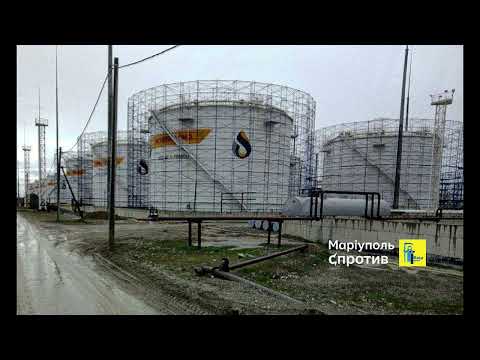
An image posted on X by Israel’s I24 News outlet shows what it claims is caging around oil tanks near Dubai International Airport. In the far-right section of the photo, what appears to be a more complete metal enclosure of some of the fuel tanks can be seen, while in the foreground, construction looks to be taking place on caging for additional tanks.
בדובאי החלו למגן באמצעות רשתות ברזל אתרים אסטרטגיים שקשורים לתעשיית הנפט, סמוך לנמל התעופה pic.twitter.com/mL4n28dBSH
This seems to be the first sighting of these structures in the UAE and across the Gulf Arab nations. It is unclear when construction on the structures began or how many of these barriers the UAE is building or plans to build. We have reached out to the UAE Embassy in Washington for more details.
As we have reported in the past, the idea behind these kinds of metal structures is to mitigate the damage caused by incoming munitions by creating a barrier between the point of weapon impact and the target. The caging depicted is not designed to protect against Iranian ballistic missiles, and even cruise missiles could be a challenge. These kinds of structures are made to help defend against one-way attack munitions, such as the Shahed-136, many of which Iran has launched against the UAE. They can also protect from near-field small suicide drone attacks, although these have not been a major issue in the UAE during this conflict.
As noted earlier, while these structures may be new to the UAE, it is not the first time metal caging and even mesh nets have been used to protect critical energy infrastructure. Russia has employed these measures on its oil storage facilities in attempts to protect them from repeated Ukrainian drone attacks for a number of years now.
You can see some of those defensive measures in the following images and videos.
Russia Puts Cope Cages on Oil Storage Tanks
It is no surprise that the UAE would resort to such measures. Since the conflict broke out on Feb. 28, the Emirates have been particularly hard hit by Iranian attacks, especially on its energy infrastructure.
The UAE Defense Ministry says its air defenses “have engaged a total of 551 ballistic missiles, 29 cruise missiles, and 2,265 UAVs” fired by Iran.
Two of the UAE’s major energy infrastructure sites – the oil storage facilities at the UAE Port of Fujairah and the Habshan natural gas processing facility – have been damaged by Iranian missiles and drones. You can see video of some of the Iranian attacks on the UAE below.
🇮🇷🇦🇪 UAE Attacked AGAIN
Iran is suspected to have done it in retaliation to yesterday strikes. Waiting for comment from Iran.
There are reports of SMOKE at the airport, unclear if it is related to this event or something else. Pending confirmation.
⚡🇮🇷🇦🇪 Iranian attack drones struck oil storage infrastructure worth around $50 billion in Fujairah, UAE, this morning, causing a large fire.
Notably, Fujairah is the only major oil export terminal in the UAE that bypasses the now closed Strait of Hormuz. Oil could hit $100 this… pic.twitter.com/nyIStj7gak
Habshan, the main natural gas plant supplying the fuel in the United Arab Emirates “will only return to full capacity next year, highlighting the long recovery times for some of the region’s most critical infrastructure that was damaged in the Iran war,” Bloomberg News noted.
🚨 The Habshan Gas Facility In 🇦🇪 UAE Will Not Be Restored To Its Complete Operational Capacity Before 2027 Because of 🇮🇷 Iranian Strikes.
The most recent Iranian attack on the UAE came on May 10, more than a month after the U.S. and Iran agreed to a ceasefire that is barely holding on. The Emirates, however, haven’t just taken defensive measures. As we noted earlier this week, reports emerged that it carried out secret airstrikes on Iranian targets.
The war has once again highlighted the need for hardened structures to protect valuable assets, an issue TWZ has frequently covered. Meanwhile, shortly before the war broke out, the U.S. took a step toward acknowledging the importance of these kinds of defensive systems. The Pentagon issued new guidance for protecting critical infrastructure against drone attacks that calls for increased use of netting, cables, and other kinds of passive physical defenses.
The following video shows War Secretary Pete Hegseth introducing the Pentagon’s new approach to protecting infrastructure from drone attacks.
Whether the new structures UAE is building to defend its energy infrastructure actually work will only be known should Iran launch a new round of attacks that target these sites. Clearly, the world will be watching and taking notes.
Weekly insights and analysis on the latest developments in military technology, strategy, and foreign policy.
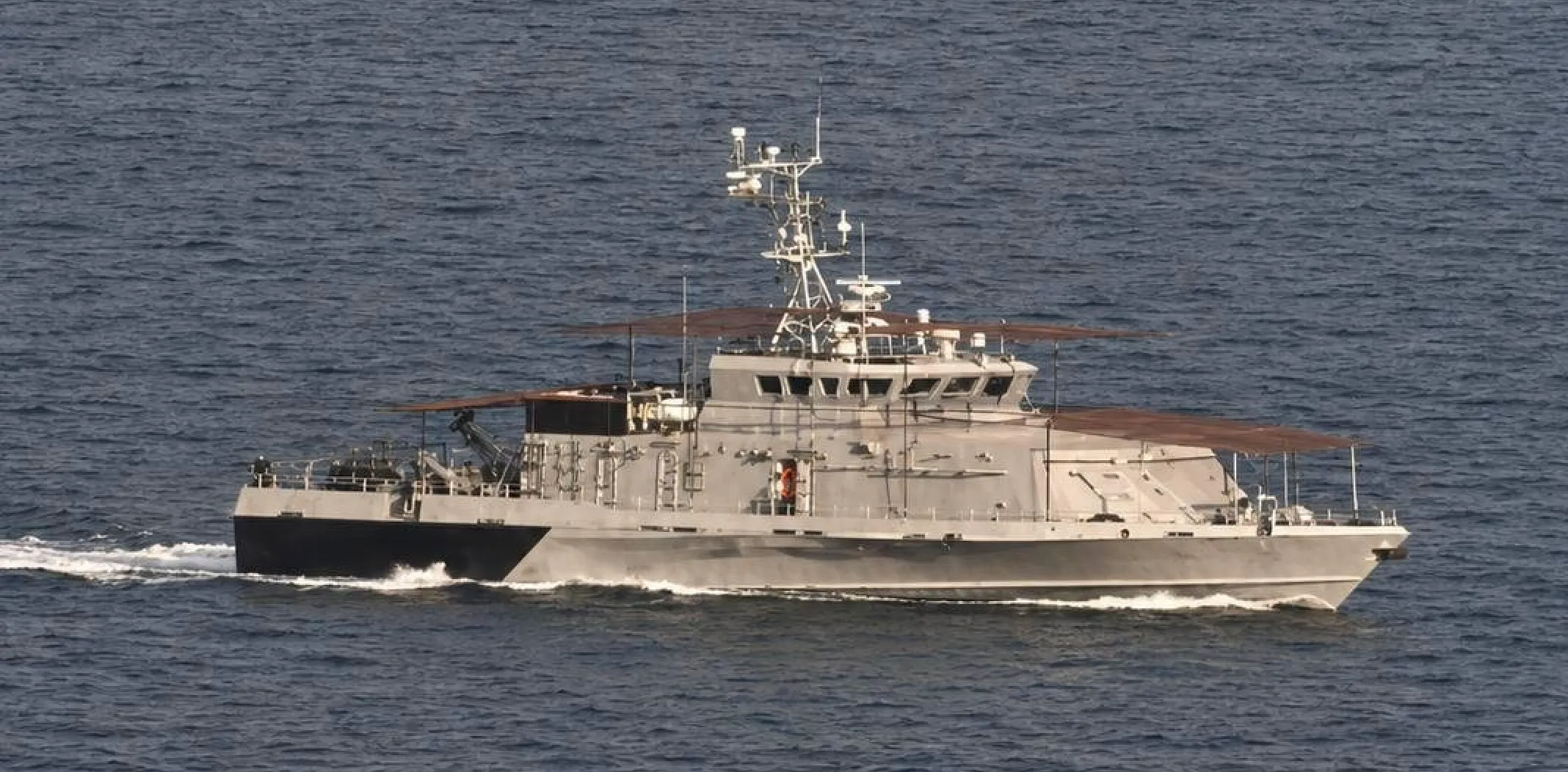
A recent development in the Black Sea drone war has seen a Russian Navy patrol boat appear with a screen, commonly known as a “cope cage,” on top of its superstructure to help protect against drones. Whether the modification is a one-off or part of a broader plan, it emphasizes the growing ubiquity of drone threats, a reality that the U.S. Navy is also increasingly having to contend with.
Two photos showing Russian Navy Project 21980 Grachonok class patrol boats underway in the Black Sea were published by Ukrainian defense adviser Serhii Sternenko. The photos were reportedly taken this month, but it’s not clear if they show the same vessel (in one photo, the Russian Navy flag is flying from a mast, and in the other, it is not).
Another view of a Russian Navy Project 21980 Grachonok class patrol boat underway in the Black Sea, with anti-drone protection, but no Russian Navy flag flying. via X
A view of the ballistic missile submarine Tula’s conning tower with an apparent counter-drone screen installed. Russia-24 capture
The Project 21980 vessel is described by Russia as a multi-purpose anti-saboteur boat. Primarily designed to protect ports and other naval installations, they are used by the Russian Navy as well as the Border Service. Around 30 of the vessels have been completed since 2008.
According to Ukrainian sources, Russia’s Black Sea Fleet operates nine Project 21980 boats, while another four are assigned to the Border Service.
Displacing around 150 tons, the Project 21980 is a little over 100 feet long and can be armed with a 14.5 mm machine gun, anti-sabotage grenade launchers, and an Igla-series man-portable air defense system (MANPADS). Ironically, the Russian media has, in the past, heralded the success of the Grachonok class during exercises in which the vessel was used to detect and destroy uncrewed aerial vehicles (as well as uncrewed surface vessels and other small-sized surface targets).
The cope cage covers most of the surface area of the vessel, with three distinct levels: a first section protecting the area above the stern; a second section mounted above the bridge and projecting aft of it, but below the antenna array; and a third section aft of the main superstructure. The sides of the vessel appear entirely unprotected; this may well be to allow normal operations such as docking. Furthermore, access here is required to operate the weapons, as well as the rigid-hull inflatable boat (RHIB) that is typically stowed at the stern, and which is deployed and recovered by crane.
Considering the normal mounting of the machine gun on the bow and the grenade launchers firing aft from the rear of the superstructure, it’s not clear how these weapons function after the cope cage is fitted. At the very least, the additional protection screens would appear to significantly reduce their fields of fire, limiting them to a very depressed trajectory.
The Project 21980 patrol boat Vladimir Nosov attends the Navy Day Parade in Saint Petersburg, Russia, on July 31, 2022. Photo by Contributor/Getty Images Contributor#8523328
Moreover, while the cope cage provides a degree of overhead protection against drone-delivered munitions, it can be easily seen how a skilled drone operator would be able to find a gap in the protection. FPV drones, in particular, are highly maneuverable and have already demonstrated their ability to penetrate inside armored vehicles through open hatches and into buildings through whatever openings might be available. In this case, flying a drone around the static cope cages would not appear to be too difficult.
The threat of Ukrainian naval drones was most recently underscored in an incident on the night of April 30, when, according to reports, a Border Service PSKA-300 class patrol boat was struck, close to the Kerch Bridge. A photograph subsequently published on a Telegram channel showed a memorial plaque indicating that nine members of the Russian crew were killed in the strike. Ukrainian reports suggest that, as well as the PSKA-300, a Project 21980 Grachonok class patrol boat was also hit in the same raid.
🚨⚓ BREAKING: Ukrainian Navy struck Russian patrol boats guarding the Kerch Bridge overnight on April 30.
— Special Kherson Cat 🐈🇺🇦 (@bayraktar_1love) April 30, 2026
The PSKA-300 and Project 21980 are both regularly used to patrol the waters around the Kerch Bridge, linking mainland Russia with occupied Crimea, which is a regular target of Ukrainian strikes.
As the war has progressed, the threat of Ukrainian aerial drones has been extended into the Black Sea.
Last summer, we reported on how Ukraine had begun using so-called bomber drones launched from USVs to attack targets in Crimea. The occupied peninsula is especially target-rich, hosting high-value Russian radar and air defense systems, as well as military aircraft. In that context, Ukraine using similar weapons to target Russian surface vessels in the Black Sea should come as no surprise.
A Project 21980 patrol boat takes part in Russian Navy exercises in the eastern Mediterranean, outside the Syrian port of Tartus, on February 15, 2022. Photo by RUSSIAN DEFENSE MINISTRY/Anadolu Agency via Getty Images Anadolu
Bomber drones launched from drone boats offer various advantages. They give Ukrainian operators the ability to strike more than one target per drone with heavier warheads than typical FPV drones usually carry. They can also travel farther while maintaining their connection, as they don’t have to dive to the ground to hit their targets. As we have reported in the past, Ukraine also has bomber drones that can launch guided munitions with a heavier punch. All of these would offer a significant threat to Russian vessels in the Black Sea.
A Baba Yaga captured by Russian forces. This is, to date, the best-known type of Ukrainian bomber drone. via Telegram
Already, Ukrainian actions have effectively forced the Black Sea Fleet to vacate Crimea and instead operate from Novorossiysk, although this hasn’t removed the Ukrainian threat entirely.
As well as heavier and more capable bomber drones, Ukrainian drone boats are also increasingly being used as platforms for launching FPV drones. Back in 2024, the first evidence emerged that Ukraine was using a capability like this, with aerial drones being launched from USVs as part of its campaign of attacks on Russian offshore platforms.
Meanwhile, it was reported recently that the HX-2 strike drone, from German manufacturer Helsing, has been adapted for launch from small boats. The company states that the HX-2s feature standoff range and artificial intelligence (AI) enabled capabilities that make them resistant to electronic warfare systems, and can be employed in networked swarms.
🇩🇪 German HX-2 strike drone, which is used by 🇺🇦Ukraine, has been adapted for deployment from boats, – Militarnyi
Helsing reported that it successfully conducted the first launch of the drone from a coastal vessel. pic.twitter.com/PAujJE2Wd5
Further proliferation of FPV drones and new missions for these types include a growing emphasis on using them in a coastal defense capacity. Here, again, patrol boats like the Project 21980 would be exposed to additional threats.
Overall, questions remain about how effective the drone protection on the Project 21980 patrol boat might be in practice. However, the emergence of the fixture again underscores Russia’s concerns about the dangers posed by Ukrainian weaponized drones. This is a threat that is now very real across all domains and one that is steadily growing worldwide.