While Brits usually have to join the line with other non-EU citizens, one airport will offer a lane solely for those with British passports after a new system led to huge delays for holidaymakers

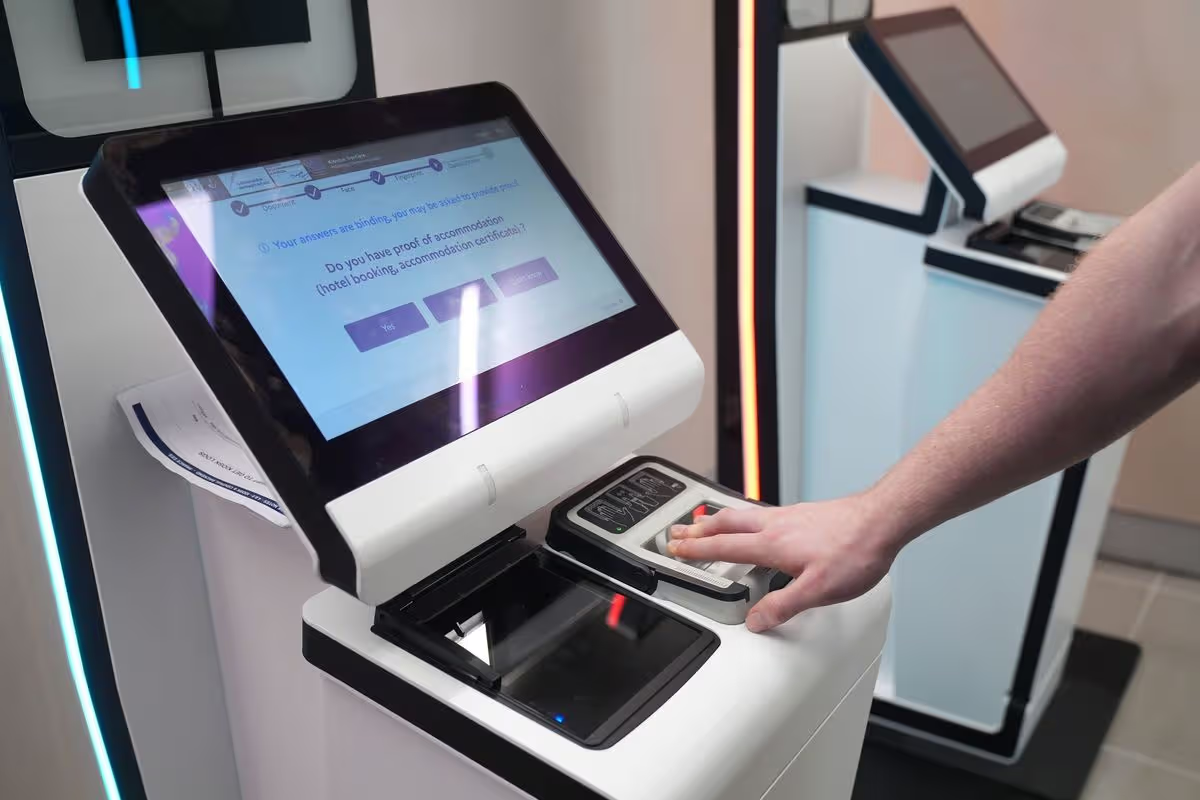
Brits will now need to use EES when they enter the EU(Image: Lucy North/PA Wire)
The long-delayed European Entry/Exit System (EES) has officially been implemented today (April 10), which means that all non-EU citizens, Brits included, need to register their biometric data when entering the European Union (EU).
However, during the gradual implementation phase, long queues have been reported at several airports, especially in areas with lots of British tourists such as Spanish holiday hotspots. One spot that has been affected is the holiday island of Majorca, where long queues were reported by Majorca Daily Bulletin over the Easter weekend, a combination of the new systems and airport strikes.
Palma de Mallorca Airport is the third busiest airport in Spain with over 33.3 million passengers a year, even beating major cities on the mainland such as Alicante and Malaga.
The airport has a single terminal, divided into four zones, and while many reviews praise it for its efficiency in handling so many passengers, there have been complaints about long queues and overcrowding. However, it has been confirmed by an airport spokesperson, speaking to the Majorca Daily Bulletin, that dedicated lanes will be set up for British travellers.
The move could help ease pressures at passport control, as first-time registrations can reportedly take several minutes for each passenger. British travellers will be directed to a specific area with kiosks to collect their biometric data, and additional staff from the Guardia Civil will be on-hand to help manage the process.
The new EES system involves taking a photograph and fingerprints from non-EU citizens, and its aim is to be able to easily track those who overstay. Eventually, it will replace manual passport stamps, allowing EU countries to identify whether someone has followed the 90-day rule.
So far, the system has reportedly caught out over 4,000 travellers who’ve either accidentally or deliberately overstayed. Brits visiting the EU are allowed to stay up to 90 days visa-free within an 180-day period, although many don’t realise this is a rolling window, which could lead to confusion when calculating how long someone has been in the EU.
READ MORE: ‘I’m a travel expert – there are 4 simple tricks to avoid huge airport queues’READ MORE: Italy airport strikes update as three UK tourist hotspots face disruption – key dates
Brits visiting Portugal or Sweden can download the official Travel to Europe app to save time. This app allows them to scan their passports and capture their biometric data in advance before generating a QR code. If no further checks are needed at the airport, then visitors can then simply scan the code at the EES kiosk on arrival.
Later this year, Brits will also need to participate in the new visa-waiver scheme, the ETIAS (European Travel Information and Authorisation System), which is set to be implemented in late-2026.
Not to be confused with EES, ETIAS will require Brits visiting the EU to apply for a visa-exemption, with the application costing €20 (about £17.42), although it will be valid for three years.
Have a story you want to share? Email us at webtravel@reachplc.com