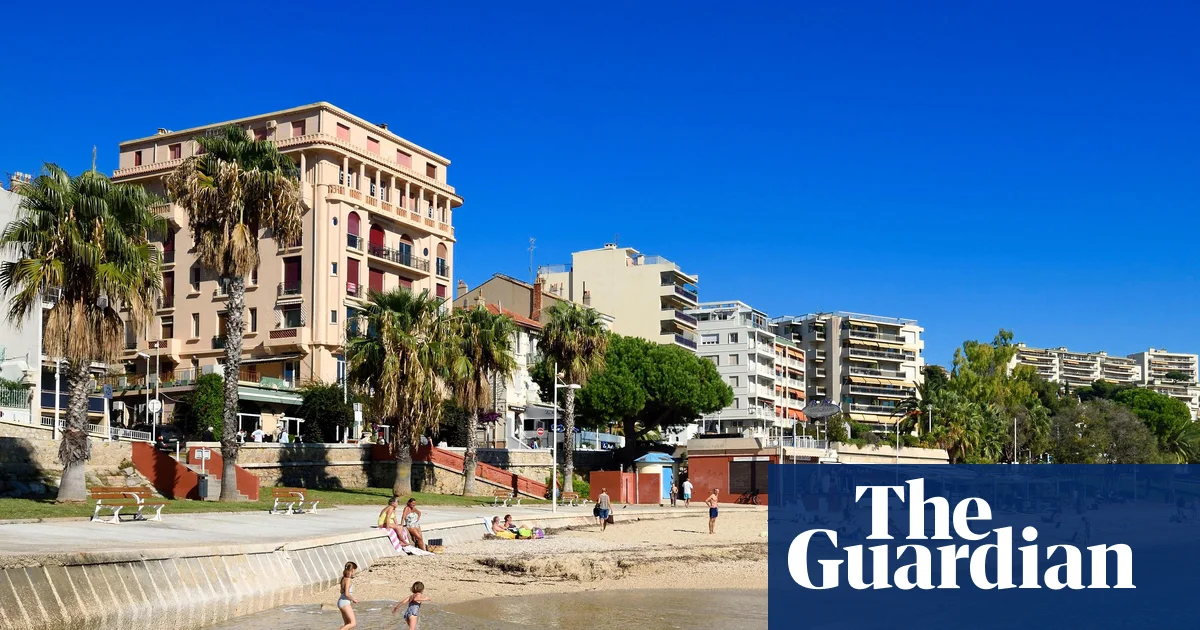
South of the city centre, Le Mourillon is Toulon’s characterful and unpretentious seaside quarter. Once a fishing village, Le Mourillon is home to little shops selling Provençal produce such as huge garlic bulbs and tomatoes in vibrant shades, alongside lively bars and restaurants. It’s not as glamorous or polished as the likes of Antibes or Saint-Tropez – you won’t find designer brands – but it’s all the more charming for that.
The hilly, narrow streets wind down to Le Mourillon’s star attraction: its beaches. Widely recognised as the second sunniest city in France, Toulon practically guarantees year-round blue skies and sunshine. The clear, azure sea sparkles and the beaches are lined with restaurants and date palms. While cruise ships come and go from the city’s main port, Le Mourillon is far enough from the centre that you only see them in the distance, alongside sailing boats and fishing vessels.
Where to eat and drink
Eating and drinking is one of the main pastimes in the south of France, especially on Sundays when many shops are closed. Le Mourillon is home to some of the best restaurants in Toulon, most of which celebrate Mediterranean cuisine and ingredients. Try AOC 41 for fresh, seasonal fare and some of the most flavoursome meals I’ve had, such as confit beef open ravioli with sand-grown carrots and bourguignon jus whipped with bone marrow (starters from €12, mains from €26). If you fancy a pre- or post-dinner drink, pop round the corner to Havana Cafe, which in the summer months spills out across the whole square.
Down by the beaches, restaurants offer everything from a p’tit dej formule (classic French set breakfast of bread, a pastry, coffee and juice) to freshly caught fish of the day. La Sorga serves an incontournable(unmissable) caesar salad with breaded chicken and oven-baked potatoes, best enjoyed with a glass of rosé overlooking the sea. This being the south of France, the wine is cheap and you certainly won’t be rushed.
Cultural experiences
Les Toulonnais flock to the Fête de la Mer for fresh oysters every spring. Photograph: Hemis/Alamy
Created in the 1970s, the four human-made beaches are the main attraction in Le Mourillon. Swim in the (usually calm) Mediterranean or rent a paddleboard or kayak from the yacht club. While strolling along the promenade, take in the local people playing pétanque and beach volleyball, while children play mini golf, bounce on trampolines and enjoy churros.
At one end of the beaches, next to a little fishing harbour, you’ll find Fort Saint Louis – built in the 17th century, it’s still used by the French navy (albeit for staff lunches rather than warfare).
Back in the heart of Le Mourillon, Saint-Flavien church, built in 1868, is a beautiful building worth admiring, and you might get lucky and hear some music or singers. Art lovers should visit the Museum of Asian Art, just back from the beaches, or head inland to one of the many galleries on Rue Lamalgue, Le Mourillon’s main street, such asGalerie d’art Toulon Inna Khimich.
Joshua Redman at last year’s Toulon jazz festival. Photograph: Jean-Michel Elophe
In the height of summer, Toulon’s jazz festival (26 July-8 August) brings free concerts to Le Mourillon’s beaches. Every year on 15 August, the Feast of Assumption is marked with a spectacular fireworks display from the fort. In spring, La Fête de la Mersees local producers and winemakers set up stalls in the port to sell fresh oysters, baked goods and local wine and beer. Tables are filled with les Toulonnais, who arrive en masseto settle in for a day of live music, drinks and seafood.
Where to shop
Rue Lamalgue is the place to shop. Photograph: Veronique Tournier/Hans Lucas/AFP/Getty Images
Rue Lamalgue is a narrow street lined with Provençal buildings in shades of pale pink and terracotta with faded blue shutters, decorated with strings of bunting and floral arrangements on the lamp-posts. It’s the heart of Le Mourillon and home to many independent boutiques and cafes. For tasteful gifts, from vases to children’s toys, visit Oblada, and try Acanthe for chic French clothing for the whole family. But be warned: most shops close for up to 3.5 hours over lunch, as well as all day Sunday and Monday.
Pick up artisan cheeses at Fromagerie Grosso, meat at one of Lamalgue’s multiple boucheries, fruit and veg at Primeurs Vitamine, wine at Cave Faubourg du Mourillon or La Dégust Nature, and bread, pastries, chocolates and cakes at one of the many bakeries. Of course, there’s a market too, selling fresh produce every morning except Mondays. Saturday mornings is when Le Mourillon is most alive, as local people amble around, picking up fresh bread and stopping for a coffee and croissant.
Don’t miss
The coastal path to Plage de La Mitre. Photograph: Jacques Dreano/Alamy
Walking along the beaches of Le Mourillon is lovely, but the best trails are the coastal paths that continue from each end. If you go east, past the yacht club, the path winds around the coast with various sets of steps down to tiny beaches. Keep going past Fort Cap Brun, and you’ll eventually get to Anse de Méjean, one of the most beautiful coves in the area, which almost feels like a tiny Greek fishing village. Toulon may not be as bougie as Cannes or Nice, but you might still see a family sail in on a yacht for lunch at L’Escale, a hidden gem of a restaurant that is well worth a visit (bear in mind it closes in the winter).
Walk the other way from the beaches of Le Mourillon and the path winds round to Plage de La Mitre, another beautiful stretch of sand.
Stay
There aren’t many hotels in Le Mourillon, but Hôtel Les Voiles offers simple accommodation with sea views (doubles from €112). A little more upmarket is the four-star L’Eautel in central Toulon (doubles from €119).
My wife and I moved from London to Marseille a little over five years ago when our British passports still conferred “right to reside” in France. That first winter on the beach, in short sleeves, as our daughters played in the topaz-coloured Mediterranean and the sun set across an ever-clear blue sky, I understood why this part of southern France has always been popular with artists.
I was recently speaking about this with the painter Fanny Nushka and her sailor husband, Benoît Bouchet, on the terrace of Café la Muse in Marseille’s “coolest” neighbourhood. She said: “It took a long time to go back to blue. It’s like being in Paris and painting the Eiffel Tower. It’s dangerous to paint the Calanques [limestone coves] as an artist from here.”
We moved to Marseille for the same reason that has attracted countless artists: it’s cheaper to live here. Marseille’s affordability enables Fanny to paint full-time and Benoît to sail without being away from his family for weeks. Benoît runs daily catered cruises on a listed sailing yacht, Le Don du Vent. For €135, you get a taste of Mediterranean luxury with swimming, snorkelling and sunbathing in the unspoiled sea coves around Marseille, pausing briefly for wine and a lunch prepared onboard.
Always buzzing … La Friche in Marseille. Photograph: Hemis/Alamy
Céline Ghisleri, co-president of Provence Contemporary Art, which represents 62 arts organisations in and around Marseille, tells me the city has always had a dynamic art scene. However, the turning point came when Marseille was named European Capital of Culture in 2013. Since then, large institutions such as Frac Sud, Mac and the Museum of European and Mediterranean Civilisations (Mucem) have expanded the city’s offering with bigger exhibitions from more widely recognised artists.
This summer, the Mucem’s exhibitions are Bonnes Mères, a collection of contemporary and historical works on the theme of motherhood, and Clément Cogitore’s fascinating Ferdinandea, l’île éphémère, a body of work centred on the brief existence of a volcanic Mediterranean island. At the end of August, the art fair Art-O-Rama will be hosted at La Friche La Belle de Mai. La Friche (the Wasteland) was a tobacco factory and is now an enormous warren of a multidisciplinary arts centre that is always buzzing, especially in the summer when they set up a movie screen and food trucks on the roof. La Friche is emblematic of the art scene in Marseille: absolute chaos, but somehow it works.
Outside Marseille, Plein Sud, a network of contemporary art organisations between Monaco and Montpellier, produces a guide with travel itineraries. It’s how I discovered the charming Gallifet art centre in nearby Aix-en-Provence, which is only about 40 minutes from Marseille but exists in a completely different universe.
Mucem in Marseille. Photograph: Pcalapre/Alamy
You couldn’t be further away from Marseille’s port city energy than Aix’s daily market at Place Richelme, where you can grab a coffee and, if you are lucky, an outdoor seat at the patisserie and salon de théMaison Weibel. For lunch, I recommend Drôle d’Endroit (Funny Place). It is tucked down an alley off a sidestreet, but the meals are always pleasing and the atmosphere friendly. Another solid choice is Tita for Levantine street food.
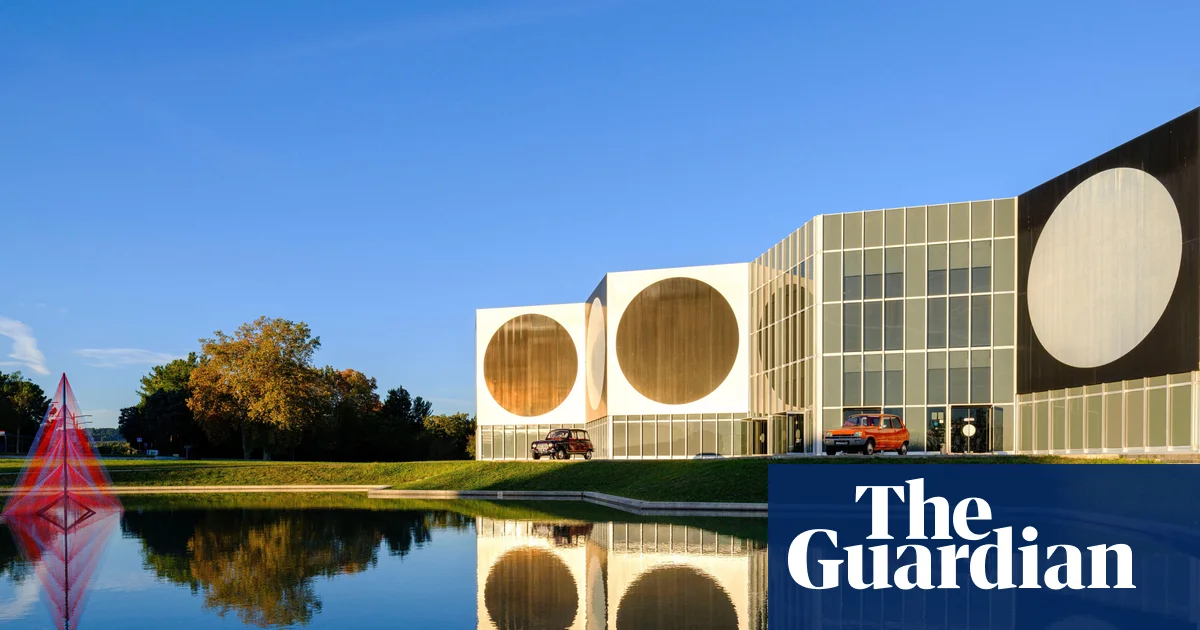
As tiny and quiet as Aix is, it has an abundance of museums, such as the Granet Museum, the Caumont Art Centre and the Vasarely Foundation, but they tend to lean heavily on art that historians have already anointed. For example, it wasn’t until 1984 that the Granet acquired any works by the local boy done good, Cézanne, whose preserved studio is just up the hill.
A striking sculpture by Diadji Diop in the courtyard of Gallifet gallery, Aix-en-Provence. Photograph: Javier Larrea/Alamy
That’s why it was refreshing to find Gallifet trying something different. The owners, Nicolas Mazet and Kate Davis, have a mission to bring contemporary art to conservative Aix. Located on the ground floor of an 18th-century townhouse, the courtyard’s striking red sculpture of a swimmer mid-stroke, by Diadji Diop, hints that Gallifet is more than just a home (the owners live above the art centre).
This summer’s exhibition features a retrospective of the photographer François Halard, with more than 100 works spanning more than three decades. Until the end of September, Gallifet also hosts a seasonal restaurant and chef’s residency. This year, two Paris-based chefs, Lisa Desforges and Bruno Hammerle, will use Provence’s abundant and delicious ingredients to create menus including entrees such as smoked ricotta gnocchi with peas and a peapod veloute. Gallifet also offers two apartments (from €200 and €160 per night), both decorated with pieces from previous exhibitions and filled with Provençal features such as marble fireplaces and tomette terracotta tiles.
Palais des Papes, in Avignon. Photograph: Image Broker/Alamy
A little further up the Rhône, Avignon nestles against the river, enclosed by preserved medieval walls. The Palais des Papes overlooks the renowned vineyards of Châteauneuf-du-Pape to the north and lavender fields to the south. Each July, the town is taken over by the Avignon festival, one of the oldest performance arts festivals.
After a visit, take a walk along the most picturesque and charming street in Avignon, La Rue Peyrolerie. A winding medieval cobbled alley leads to an equally charming restaurant, L’Épicerie, situated in a square beside a small 14th-century gothic church with an ornately carved walnut-wood door. The cuisine is classic French, served in generous portions by friendly staff. Every time we visit Avignon, we dine here and have never been disappointed, but be warned that the terrace fills up quickly. This is a well-known and well-loved spot among locals. Another safe bet for outdoor courtyard dining is Numéro 75.
The most notable address for contemporary art in Avignon is the Lambert Collection, housed in two stunning 18th-century townhouses, Hôtel de Caumont and Hôtel de Montfaucon. The collection is the legacy of Yvon Lambert, a celebrated gallerist and collector who made his reputation in the latter half of the 20th century championing American artists such as Nan Goldin, Donald Judd, Lawrence Weiner and Cy Twombly. The collection continues to support up-and-coming local artists in its Antechamber of Summer exhibition. This year’s exhibition is by Melika Sadeghzadeh, an Iranian artist living and working in Montpellier.
Luma art complex, with a tower by the architect Frank Gehry, in Arles. Photograph: Hesham Elsherif/Getty Images
Just south of Avignon, Arles has at its centre a nearly 2,000-year-old Roman amphitheatre, which hosts plays and concerts. The Vincent van Gogh Foundation and Luma host several exhibitions throughout the year, but the real treat comes in July during the Rencontres d’Arles. For 50 years, venues across town, from galleries to grocery stores, have showcased a wide range of contemporary and historical photography.
Recently,we went to Arles for its Festival of Drawing. After a wander through the picturesque medieval streets of the Roquette district on the east side of town, popping into venues as we went, we discovered the tiny restaurant Páouin the quaint Place Paul Doumer. The menu promised sharing plates starring local produce and wines. So we sat down for another meal at another terrace table, under another clear blue sky.
This once declining industrial city is on the up, but not so much that it has been ruined – yet. See it now, mid-gentrification, before its humble seafood restaurants become overpriced and its beautifully curated museums and galleries overrun.
Five miles north-west of Porto city centre, Matosinhos (pronounced mh-to-ZEE-nyosh) is a municipality built on the fishing. After the construction of the vast Port of Leixões in the 19th century, its fishing industry boomed and supported 54 canneries in its mid-20th-century heyday. Two survive, but most have been demolished, along with the textile factories and sugar refinery that occupied the district south of the harbour, next to the extensive sands of Matosinhos beach, which are fringed by surf schools and rammed with Porto residents in summer.
Luxury apartment blocks have risen from the ashes of once prosperous industries, but these stand cheek by jowl with 19th-century tiled houses, abandoned buildings daubed with graffiti and faded mid-century architectural classics championing raw concrete. The faculty of architecture at the University of Porto exerted its influence on the city’s renaissance, and sights include works by Pritzker prizewinning architect Álvaro Siza, born in Matosinhos, and the coolly contemporary Casa da Arquitetura – a cultural centre and exhibition space incorporating Siza’s remodelled family home, plus warehouses used for bottling and packing port wine in the 19th century. When I visited, it was deserted.
Where to eat and drink
The bounty of the sea is on show at the strikingly modern Mercados Municipais. Photograph: Kuki Waterstone/Alamy
In 2025 Matosinhos was recognised as a Unesco creative city of gastronomy for its long history of harvesting and preparing produce from the sea. Though Leixões port has huge container docks and a futuristic cruise terminal, part of it remains a fishing harbour with its own fish market. Behind it is Rua Heróis de França, a street packed with seafood restaurants – many dating from the 1950s, when fishers set up basic premises in which to cook and serve their catch.
Here, the air is filled with the smoky aroma of grilled sardines. Follow your nose and take your pick as most are good, affordable – from €20 for two courses and a drink – and serve not just sardines but horse mackerel, golden bream, sea bass and percebes (goose barnacles), plucked from the rocks, a nugget of salty flesh extracted from a leathery tube.
The bounty of the sea is on show at the strikingly modern Mercados Municipais, where the first floor serves as an “incubator” for design and architecture start-ups. Downstairs, you can select fish from a stall and have it cooked at an outlet on the fringes, or check out Bistrô by Vila Foz, a spin-off from the Michelin-starred Vila Foz in Porto, presided over by chef Arnaldo Azevedo. I had tuna tartare with avocado and chilli, horse mackerel escabeche, and a cataplana fish stew.
Across the Leça River is the parish of Leça da Palmeira. Next to the 17th-century Leça da Palmeira fort, Rua do Castelo has a handful of decent, reasonably priced restaurants – as well as the O Batô nightclub, a 1970s classic, one of several bars in the area. Back near the port, A Marisqueira de Matosinhos restaurant serves the most generous seafood platter I have tasted. Soup, main course and wine from €45.
Heading north up the coast, 7 miles from Matosinhos is Angeiras with its beachy, sun-drenched Atlantic vibe and small fishing community. A Casa do Gordo serves shared plates of percebes, prawns, octopus, grilled sardines and codfish tempura, and main courses including bream with arroz malandro (a soupy rice dish). Meals from €30 a head, with wine.
Cultural experiences
Álvaro Siza’s Piscina das Marés saltwater pools are shaped to follow the rocky contours of the coast. Photograph: Josef Kubes/Alamy
Here, it is all about architecture – not just signature works by Álvaro Siza and other Portuguese masters, but the pristine and pleasing spaces in which everything from art to tins of sardines is presented. One highlight is the Piscina das Marés, Siza’s stunning 1960s complex of two seawater pools, changing rooms and bar, following the rocky contours of the coast in Leça da Palmeira. Busy in high summer, it is best visited in June or September for a taste of Siza’s playful use of light, shade and ocean views and his love of weather-resistant concrete and wood.
The same materials and mischief are evident at Siza’s landmark Casa de Chá da Boa Nova, opened as a tea room in 1963 and now a two-Michelin-star restaurant with a €140-plus tasting menu. Stand on the rocky promontory outside and take in views of the coast and the Farol da Boa Nova, the second-tallest lighthouse in Portugal.
Álvaro Siza’s Casa de Chá da Boa Nova is now a two-Michelin-star restaurant. Photograph: Luso Architecture/Alamy
For a cultural one-stop shop, head to the area around the city hall, where the Galeria Municipal exhibits works by Portuguese contemporary artists. Opposite is the Museu da Memória, located in the Visconde de Trevões mansion, built between 1910 and 1913 as a home for rubber baron and philanthropist Emídio José Ló Ferreira. Beautifully restored, airy and inviting, it is now a museum celebrating the history and culture of Matosinhos, with an Archive of the First Person – recordings made by local people sitting in a soundproof booth.
On Avenida Menéres, immerse yourself in the light, space and designer ambience of Casa da Arquitetura, housed in part of the Quarteirão da Real Vinícola complex of renovated wine warehouses, with exhibition spaces, a cafe, a shop and an archive of architectural projects from Portugal and its former colonies. A couple of blocks away, Conservas Pinhais is one of two surviving canneries in the city and offers interactive tours of its sardine factory and museum – highly professional and fun.
Where to shop
Flashy stores selling designer furniture and covetable surfing gear are springing up, but in Matosinhos (as opposed to Porto) retail therapy isn’t really a thing; food is the focus. Pick up beautifully packaged tins of Pinhais or Nuri branded sardines after your factory tour, or shop for cheeses, olive oils or rice at the Mercados Municipais.
Pinhais sardines. Photograph: Godong/Alamy
Don’t miss
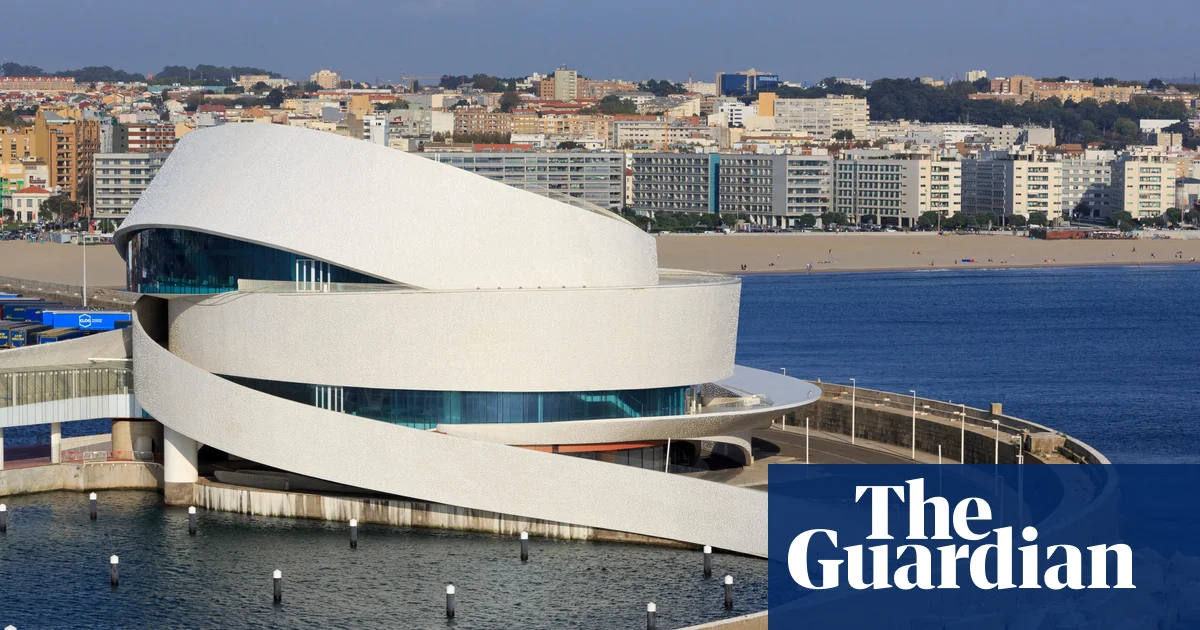
Of all the city’s architectural landmarks, the futuristic Porto Cruise Terminal is the most conspicuous. Dominating the Port of Leixões, the white circular building recalls (variously) coiled ribbons, a seashell – thanks to the play of light on the million hexagonal tiles cladding its surface – and an octopus with four “tentacles” that are actually ramps. Completed in 2015, and the catalyst for a tourism boom in Matosinhos, it houses the laboratories of CIIMAR, a University of Porto research and training institution dedicated to maritime science. The view from the rooftop is sensational and a guided tour (Sundays only) essential.
Where to stay
Totally in keeping with Matosinhos and its history is the Vintage Beach House (doubles from £111), built in 1851 and once the holiday home of Portuguese aristocrats. Faithfully restored with period details intact, including a majestic wooden staircase, the seven-bedroom guesthouse with its red facade is family-owned and near the beach, but most rooms are small and there is no restaurant. For more space and facilities but less character, consider Eurostars Matosinhos (doubles from £63) or the Sea Porto Hotel (doubles from £82).
The trip was organised by the City of Matosinhos; meals were provided by the restaurants named
They call this place the Sunshine State for a reason. It beats down with a fierce intensity, allowing little air to puncture it… until a fierce thunderstorm hits.
Such sweltering conditions were exactly what Clarke wanted, though, as he stressed the importance of “acclimatising” this week to the conditions his squad will face throughout their tournament.
The Scots start against Haiti (Sunday, 14 June, 02:00 BST) – live across the BBC – and also play Morocco in Boston, before returning to Miami to face Brazil on Wednesday, 24 June (23:00).
“It maybe would have been a shock if we had came out to the Miami game because it hits you as soon as you come off the plane, the humidity and the heat,” Hendry told BBC Scotland at the team’s hotel in Fort Lauderdale.
“So it’s good that we can come out here for this week, prepare and get used to it and I’m sure that will put us in really good stead going into the game.”
Water breaks will be in operation, and Hendry stressed the importance of “using them efficiently”.
“They’re certainly going to help us from a recovery point of view, but maybe tactical. as well,” he said.
“I’m accustomed to it in Saudi; we have these water breaks and it might disrupt the rhythm of the game a wee bit, but from the players’ point of view it definitely helps.”
By the time the Scots return south following back-to-back games in Boston, it could be they have already done what no other Scotland side have by reaching the knockout stages of a World Cup.
It’s undoubtedly the aim for this talented, together squad, but they’re not looking too far ahead. They’re still Scottish after all.
“It’s just trying to get as far as possible, I think,” Hendry said of what success for the country looks like this summer.
“It’s difficult to look too far ahead. The main ambition is going to be trying to get out of the group. Then we see where we can go afterwards.
“We can’t look too far ahead, just take it game by game and if we do that, enjoy it and play the best we can, then we should be able to achieve that.
“We’ve got to make the most of it and make sure we don’t come out of this with any regrets.”
Rosary Academy sprint coach Jon Gilmer was worried 4×100-meter relayers Tra’via Flournoy, Justine Wilson, Pfeiffer Lee and Maliyah Collins might get complacent at prelims, but the Royals were the top qualifiers in 45.13 seconds — nearly a full second faster than Canyon Country Canyon (46.07) — at Buchanan High School.
“It’s different not having Calabasas here,” Gilmer said. “Now we’ve got to push ourselves.”
Rosary set a state record (44.23) at the Arcadia Invitational on April 11, but lost to the Coyotes one week later at the Mt. SAC Relays. However, the anticipated state finals clash was not to be as Calabasas dropped the baton in the Southern Section finals and failed to advance.
Collins had a huge lead by the time she received the stick for the anchor leg Friday.
“This is maybe our fourth- or fifth-fastest time but we just wanted to make finals,” said Wilson, who ran the second leg before handing off to Lee. “We want to run faster tomorrow when we go for a PR, the meet and the state record.”
Calabasas might be out of the relay, but three Coyotes remain in contention in the 100, led by Malia Rainey (the top qualifier in 11.54), Marley Scoggins (11.63) and Olivia Kirk (11.63).
Calabasas sprinter Marley Scoggins, center, wins her 100-meter heat at the CIF state track and field preliminaries on Friday.
(Steve Galluzzo / For The Times)
Collins won her heat in 11.62, the third-fastest time.
Servite won the first heat in the boys 4×100 relay in 40.29 — two hundredths off its winning time at last year’s state finals — and is primed to defend its title in the event. Concord De La Salle (40.81) was the second-fastest qualifier, followed by the other heat winners, Rancho Cucamonga (40.87) and Loyola (40.93).
“We got the stick around pretty good today,” said Jorden Wells, who ran the first leg Friday instead of his customary second leg, which was run by Jaelen Hunter. “Did it feel different? Not really, I’ve done it before.”
Wells said his twin brother Jace will run the first leg Saturday, he will run the second while Kamil Pelovello and Benjamin Harris will stay in the third and fourth positions.
Harris, the favorite to win the 100 meters, won his heat in a wind-legal 10.36, but three others were fractions faster in wind-aided times — Elk Grove’s Cy Lugo (10.20), Will Wood’s Deshawn Seymour (10.34) and De La Salle’s Damari Dean (10.34). Newbury Park’s Jaden Griffin won the last heat in 10.37, setting the stage for an exciting finals sprint as all nine qualifiers ran under 10.48.
Harris put himself in position for a Saturday double by winning his 200 heat in 21.10 but as he did in the 100, Lugo (the Sac-Joaquin Section record holder) had the fastest time (20.73), followed by Seymour (20.88), Camren Hughes (20.93) of Palos Verdes and Jace Wells (21.02). Jordan Wells (21.11) also made the cut.
Newbury Park’s Jaden Griffin, center, shouts after winning his heat in the 100 meters at the CIF state track and field preliminaries on Friday.
(Steve Galluzzo / For The Times)
Servite (3:15.43) had the second-fastest qualifying time in the 4×400-meter relay behind only El Cerrito (3:14.96) of the North Coast Section.
Coming off a state-record 3:33.83 at the Masters Meet in Moorpark, Long Beach Wilson’s 4×400 girls relay had the fourth-fastest qualifying time (3:46.73) without two out of its best runners (Clara Adams and Saniah Varnado), taking second in the first heat behind San Luis Obispo (3:45.85) and safely advancing to the finals along with Heat 2 runner-up Rosary (3:45.08) and Heat 3 winner Canyon Country Canyon (3:46.77).
Having broken the Southern Section record in the 400 meters six days earlier in 51.98, Adams put it in cruise control to win her heat in 53.53, the fastest qualifying mark. Joining her in the final will be her three relay teammates Varnado (54.42), Wilson (54.57) and Fowler (54.62). Adams later won her 200 heat in 23.60, a tenth of a second behind fastest qualifier Naiaja Sizemore of Vanden.
San Jacinto Valley Academy’s Kaahliyah Lacy ran a wind-legal 13.59 for the top qualifying spot in the girls 100 hurdles and Varnado (40.85) was the top qualifier in the 300 hurdles.
Another showdown is brewing in the boys 400, where Loyola’s Ejam Yohannes (47.08) and Hunter (47.21) won their heats in the two fastest times Friday. Hunter clocked 46.32 to set a California freshman record last spring, but lost to Yohannes by 11 hundredths of a second at the Masters Meet.
City Section champion Jayden Rendon showed good form in his bid to defend the state 300 hurdles crown, posting the fastest prelims time (36.80). He also advanced to the finals in the 110 hurdles with a 13.83 effort. Moorpark’s Davis Benson (14.03) nabbed the last spot.
Corona Santiago’s Braelyn Combe, right, wins the first heat of the 800 meters at the CIF state track and field preliminaries on Friday.
(Steve Galluzzo / For The Times)
Corona Santiago senior Braelyn Combe won her 1,600 heat in 4:46.88 and is set for a four-lap battle with San Diego Section champion Chiara Dailey of La Jolla, who won the second heat in 4:46.00. Combe is the defending champion, having edged Hanne Thomsen of Santa Rosa Montgomery by five hundredths of a second in the finals last year.
“I just wanted to advance with as little effort as possible,” Combe said. “It was not as hard as I expected. I don’t want to leave any regrets. I’m taking it one race at a time.”
Combe also had the fastest time (2:08:25) of three heats in the 800 meters.
Venice senior Lawrence Kensinger, who set the City Section shot put record with a state-leading throw of 65 feet 11 inches last week, had the third-best mark at prelims (59-6¾) and easily advanced to the finals. Defending state high jump champion JJ Harel of Sherman Oaks Notre Dame tied nine others for the second-best mark (6-6) heading into the second day.
Aliso Niguel senior Jaslene Massey had the top marks in the girls shot put (51-3¾) and discus (175-6) and transgender athlete AB Hernandez from Jurupa Valley was the leading qualifier in the girls long jump (20-5½) and triple jump (41-8½) and was one of 13 qualifiers in the high jump.
AB Hernandez competes at the CIF state track and field preliminaries at Buchanan High School on Friday.
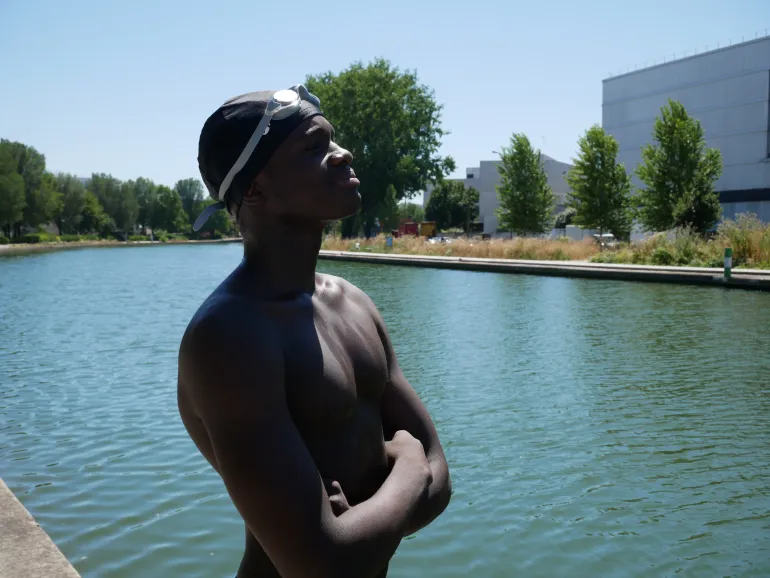
Parisians cooled off in the city’s Saint-Martin canal as an unprecedented heatwave pushed temperatures across Europe far above seasonal norms. Swimmers ignored long-standing bans, swimming outside designated bathing sites.
Shoppers looking for travel accessories could be in luck at the high street retailer
The retailer is selling travel accessories ahead of summer (stock photo)(Image: Getty)
Home Bargains customers can upgrade their travel days for £2 with a ‘refreshing’ accessory. There’s nothing better than a sunny forecast for family day trips or a weekend getaway. But getting to your destination is sometimes easier said than done when you have to battle the heat while carrying luggage.
Thankfully, Home Bargains is selling a portable accessory to help travellers ‘stay cool on the go’. The discount chain has launched a £1.99 Travel Water Mist Spray Fan, and it could be ideal for summer.
The retailer explains: “Stay cool on the go with the Travel Water Mist Spray Fan from the Simple family – just fill with cold water, add ice for extra chill, and enjoy a refreshing mist whenever you need it.” The description continues: “Simply fill the bottle with cold water, turn on the fan and pull the trigger whenever you require a light covering of cool mist.
“Add ice to the tank for an even cooler mist! Empty water after every use and dry, always use fresh distilled water (to prevent mineral build-up and mould).”
For shoppers who don’t want the water mist, Home Bargains also sells a 99p Travel Mini Hand Held Fan. The description states: “Mini Hand Held Fan fits comfortably in your hand, making it easy to carry wherever you go. It’s small enough to slip into your bag or pocket, yet powerful enough to provide a refreshing breeze, keeping you cool for warmer days.”
Ahead of summer, Home Bargains is stocking a range of travel products. Other items include travel cubes, organisers, and luggage solutions. One option that could impress fans of the spray fan is the 99p Lakescape Foldable Water Bottle 500ml.
The foldable water bottle is designed for adventure, according to the retailer. Home Bargains says: “Stay hydrated wherever your adventures take you with the Lakescape Foldable Water Bottle! This 500ml reusable gem rolls, folds, and stands tall when full, plus it comes with a handy carabiner clip for easy travel.”
Customers who prefer stainless steel bottles might like the £4.99 Kitchen Stainless Steel Bottle. Home Bargains says the bottle is “durable and easy to use” with a “spill-proof lock.”
For dogs, there’s also a £2.99 My Pets Pet Water Bottle. The description reads: “Making travelling with your pet easier with this amazing reusable water bottle fills when pressed and can be locked to avoid leaks. Comes with handy lanyard style strap for easy carrying. Three colours, pink, blue and grey.”
For customers looking for more items, Home Bargains offers a wide range of products on its website. Shoppers could also visit their local store.
And the best part? You can go back to load up your plate as many times as you like.
So if you try to be healthy at 9am with a fruit plate and a smoothie, then regret it, you can return at 1pm for a sausage sandwich, a plate full of pastries and three cappuccinos.
When I stayed at the Tent Bahia de Palma, in the Majorcan resort of S’Arenal about eight miles from capital city Palma, the buffet was overwhelming. It had everything from pastries to a full fry-up, salads and open sandwiches.
At one point I even considered a slice of pizza to go with my chicken sausages — surprisingly nice — and Spanish tortilla.
Bar Abaco is housed in an old mansionCredit: AlamyStop by the pool area at Tent Bahia de PalmaCredit: Supplied
It’s a good thing the gym at the hotel is open 24 hours a day — but then again, so is the bar.
And after a few hours spent digesting my trip — OK, two trips — to the brunch buffet on the hotel’s Instagrammable red-and- white checked sunbeds by the pool, it was time to explore S’Arenal’s beach.
Here, the water is unbelievably clear and the sand — which I watched being lovingly raked each morning — is white and gloriously litter-free.
The main beach is flanked by a strip of bars, as well as wooden umbrellas for shade, and children’s play areas.
The bars all offer fabulous views of the ocean — but be warned, they shut at 6pm, so sunsets are best watched from the sands.
If you’re looking to snorkel, the island’s famed rocky-inlet beaches, called calas, are on the island’s south coast.
The most easily accessible from Tent Bahia de Palma is Cala Mosques. It’s ten minutes from S’Arenal on the 504 bus, then a five-minute stroll through the posh Cala Blava area, to find the steps down to the cove.
As you walk down the hill, you’ll spot a small sandy beach surrounded by majestic rock formations and lapped by the bluest water you’ve ever seen.
Take a mask and snorkel and you’ll be able to spot saddled sea bream and parrot fish — but watch out for brave locals jumping off the cliffs into the sea.
The hotel’s breakfast buffet is worth getting up forCredit: SuppliedThe Sun’s Issy soaks up the sightsCredit: Supplied
If you want to swap beach bars for the island’s capital, Palma, it’s just a short trip from S’Arenal — the 504 bus takes 15 minutes and costs just over £2 one way.
But remember to tap on and off the bus with your bank card to pay the correct fare.
Get off at Le Seu, the Cathedral of Santa Maria of Palma, which was built between 1229 and 1601. It’s one of the biggest cathedrals in Europe. Entry is 11 euros, or 30 euros for a guided tour.
Palma’s streets are lined with tapas restaurants and bars and the capital’s pedestrianised Passeig del Born has a lot of them, as well as a mix of high-end shops and historic buildings.
Stroll down the tree-lined road like Majorcans do after work, or step into the back streets to find Bar Espanya — a traditional tapas bar full of locals eating pintxos — small tapas snacks laid out on the bar — for £2 a plate.
I polished off a tuna paté on bread and Iberian ham croquette pintxos, but they also had prawns, deep-fried cheese and sobrasada, which is a cured pork sausage.
After dinner, don’t miss Palma’s most dramatic place to enjoy a cocktail, Bar Abaco — a no-reservations spot in an old house filled with flowers and very over-the-top decor.
With piles of fake fruit, massive bouquets and a fountain in the courtyard, it’s like stepping into an episode of TV hit The White Lotus.
I recommend getting there soon after it opens at 8pm — and it’s well worth a trip to the loos to fully explore the mansion and snap a few pictures away from the “no photography” signs downstairs.
Just a few minutes’ walk away — and on the way to the bus stop that will take you back to S’Arenal — Bar Rita is a beautiful, old locals’ bar that lies in the shadow of the Nostra Senyora dels Socors church.
With eight tables in a square, a cash-only rule and glasses of white wine for around £3, it’s the perfect place to end the night.
GO: MAJORCA
GETTING THERE: Fly to Palma with easyJet from most UK airports with fares from £19.99 in June. To book, go to easyjet.com.
STAYING THERE: Rooms at Tent Bahia de Palma start from £79 per night. See tenthotels.com/en.
THE sun is making more of an appearance and the temperature is warming up, so there couldn’t be a more perfect time than now to book a camping holiday.
And what better place to go to than a campsite that is right by the UK’s best beach?
Sign up for the Travel newsletter
Thank you!
Henry’s Campsite is family-run and right by one of the best beaches in EnglandCredit: Henry’s Campsite
Follow The Sun’s award-winning travel team on Instagram and Tiktok for top holiday tips and inspiration @thesuntravel.
Henry’s Campsite is family-run and can be found at the most southerly point of Cornwall and some visitors have even said it feels like being in the ‘Caribbean‘.
On the site, there are a variety of different pitches including ones with a sea view.
Each has an electrical hookup, with some also surrounded by exotic plants.
As for facilities, the campsite has four showers, seven toilets, hot water, washing up facilities, a large washing machine and the showers cost 40p for three minutes.
For some quick essentials, there’s an onsite shop too that sells BBQ charcoal and even local cider.
Pitches are surrounded by exotic plants and some spots even have sea viewsCredit: HENRY’S CAMPSITE
Each pitch also comes with bricks, in case you want to create a firepit during the warm summer evenings.
To book, keen campers will need to email Henry’s Campsite directly with as many details as possible to secure a spot.
For those who would opt for glamping over camping, there’s the option to book the Bell Tent which comes with either a double bed and single beds, a lamp, rug, and a trunk.
The seaside campsite and its location is such a hit with travellers that it’s even been said to look like it belongs elsewhere.
One visitor wrote on Tripadvisor: “A campsite with a real difference – designed with thought, flair, and so many little touches that make you smile.
The campsite is 25-minutes from Kynance Cove on the Lizard peninsularCredit: Alamy
“We stayed on the 16th and 17th of September when the wind was howling and the rain pouring down, yet the ambience around the site (especially the main facilities) transported us to the Caribbean!”
Another called it an “outstanding site… such a gem I don’t want to share it!”
Adding to its beauty is the fact that it’s under half an hour away from Kynance Cove.
The beach was recently named the 26th best beach in Europe, according to Europe’s Best Beaches 2026 awards – and was the only one in England to make the list.
Aside from beaches, guests nearby can visit Lizard Village – it’s a great spot to grab a bite to eat whether that be the seaside staple fish and chips, to Cornish pasties or a cream tea.
The fishing village of Cadgwith Cove known for its pretty thatched cottages and shingle beach is just three miles away.
Acoma makes 100 years of history look like small change. To get there, you veer south from old 66 for 14 miles at the tiny town of Paraje, about an hour west of Albuquerque.
Also known as Sky City, Acoma is a Native community of earthen homes perched atop a 357-foot-high mesa. It has been occupied for roughly 1,000 years by the Acoma Pueblo tribe, which is independent of the nearby Navajo, Zuni and Laguna, with its own language and about 5,000 enrolled members.
Thanks to revenues from their Sky City Casino and hotel along Interstate 40, the Acoma also have a large, handsome Haa’ku Museum and Sky City Cultural Center next to the historic mesa. There, outsiders can gather for escorted tours of 60 to 90 minutes, mostly walking. It’s $30 per adult. Photography, binoculars and note-taking are closely restricted, and outsiders are generally forbidden from the mesa except on tours.
My group of 18 travelers was led by guide Gail Toribio, 27. After a quick bus ride up a steep road built in the 1950s, we found ourselves on top of the mesa, facing one massive church, about 500 homes and several pottery stalls that materialize during tours. The views were spectacular, the pottery was full of painstaking detail, and it was fascinating to see the ancient and modern elements together in the hilltop homes. But the biggest thing and most astonishing story on the mesa is the San Estévan del Rey Mission.
When Spanish troops and missionaries showed up in the 16th century, they forced labor and Christianity upon Native groups, often slaughtering and maiming those who resisted, including many Acoma. By the 1640s, forced labor had produced the church on the mesa, its 40-foot-long ponderosa pine beams dragged from Mt. Taylor, more than 30 miles away. Somehow, when the area’s tribes rose up in the Pueblo Indian revolt of 1680 and killed most of the Catholic priests in New Mexico, the church endured. And over time, Toribio told us, most Acoma families settled into a sort of dual faith, combining their traditional beliefs with Catholic rituals, including Christmas.
After the church, we walked among two-story homes that were here long before the first Europeans showed up. (Only a handful of the homes are still occupied full time.)
“I was actually raised up there,” potter Gwen Patricio, 52, told me back at the visitor center. “No electricity, no running water. They asked the elders if they wanted electricity, but they said no.”
When friends came to visit while I was studying in Berlin or I wanted to flaneur through the city, I would go to Maybachufer, a neighbourhood in the Neukölln district. Wander from U-Bahn station Kottbusser Tor in the direction of the Landwehrkanal and peruse the multicultural market taking place Tuesdays and Fridays. You can also attempt to haggle in your best German at the fortnightly Sunday flea market. Useful phrase: das ist zu teuer für mich (that’s too expensive for me). Stop for a bite to eat (or an Aperol spritz) alfresco at buzzing La Maison and spend the afternoon sat by the canal next to the Admiralbrücke historic wrought iron bridge, or at the nearby independent cinema Moviemento, which shows a wide variety of English-subtitled films. End the day with a döner kebap from one of the many takeaways or restaurants nearby and a trip to one (or more) of the local bars: Multilayerladen for its laid-back, homely aesthetic or Soulcat Music Bar for 50s and 60s music on vinyl. Kitty
Profile
Readers’ tips: send a tip for a chance to win a £200 voucher for a Coolstays break
Show
Guardian Travel readers’ tips
Every week we ask our readers for recommendations from their travels. A selection of tips will be featured online and may appear in print. To enter the latest competition visit the readers’ tips homepage
–
A Glaswegian neighbourhood ‘packed with hidden gems’
Albert Bridge and the Gorbals waterfront. Photograph: Allan Wright/Alamy
The Gorbals is an often overlooked neighbourhood in Glasgow but has a fascinating history and is packed with hidden gems. The Southern Necropolis is a must visit – it’s lovingly preserved by dedicated volunteers and celebrates the lives of ordinary local people alongside the likes of celebrated 19th-century architect Alexander “Greek” Thompson. No two streets are the same, with many buildings incorporating artwork such as The Gatekeeper, one of the UK’s few permanent suspended public sculptures, as well as murals of local legends and award-winning architecture. Keep your eyes peeled for seals (and even otters) by the river, before heading to the Pig and Whistle’s hidden beer garden. End the day at the iconic Citizens theatre, where a beautiful Victorian auditorium and the UK’s oldest surviving stage equipment have been restored, showcasing the biggest names in comedy and theatre alongside community productions. One of the best ways to see the neighbourhood is to take a Women of the Gorbals Heritage walk. Esther
Head out of Porto to the seaside
Foz do Douro in Portugal. Photograph: Wirestock/Alamy
To get to Foz do Douro from Porto it’s a quick journey on a tram from the riverside. The tram follows the beautiful River Douro, and you end up at the delightful seafront. There are sandy beaches, a 17th-century fort and a pleasant, shaded park. You can enjoy a stroll out to a picture-book lighthouse that sticks out into the Atlantic too. It is so close to the city, but allows you to melt into an entirely distinct, relaxed world. Alexander
A peaceful corner of Rome
The Coppedè district of Rome is famous for its curious fusion of architectural styles. Photograph: Alexander Langauer/Alamy
My favourite discovery in Rome lay just beyond the historical centre in the Coppedè district. Named after its architect, Gino Coppedè, who built it between about 1915 and 1927, the area is a curious fusion of styles, all blended in a way that feels almost Gaudí-esque. It’s easily reached by tram or bus, and it really lends itself well to slow exploration. Spend a morning wandering its quiet streets, admiring whimsical houses, ornate palazzos and fountains, before arriving at the beautiful Piazza Mincio. It’s a peaceful corner hiding right under our noses. Michael
Slovenian counterculture in Ljubljana
Metelkova Mesto art centre in Ljubljana. Photograph: Michalis Ppalis/Editorial/Alamy
Nestled just north of Ljubljana’s postcard-pretty centre, Metelkova, a former military barracks, has found a new lease of life as the heart of Slovenian street art and counterculture. By day, you can wander past graffiti-clad buildings, artists’ studios and small galleries; by night, explore quirky bars and a welcoming, laid-back crowd. The antithesis of the rest of Slovenia’s more polished, traditionally beautiful capital, it’s an ideal place to people watch and experience the raw, vibrant soul of the underground culture. It’s exactly the sort of place you stumble into by mistake and end up staying all afternoon. Michael Kuipers
Grand villas and nostalgia in Zagreb
A street in Gornji Grad, Zagreb. Photograph: Todamo/Alamy
I lived close to the Tuškanac neighbourhood while studying in Zagreb. Slip off a street called Ilica – the artery running east to west – and you’re suddenly on quiet, leafy slopes between Britanski trg (British Square) and Gornji Grad (Upper Town), oddly calm for somewhere so close to the centre. Grand villas sit alongside crumbling houses, half-hidden in the trees. Sundays meant a wander round Britanski trg – antiques, trinkets, and a sense of Jugonostalgia (nostalgia for Yugoslavia) I have absolutely no real claim to. Or a mali macchiato before a long walk uphill, passing Kino Tuškanac and its outdoor cinema. Louis Tomlinson
Haarlem shuttle
De Adriaan windmill in Haarlem. Photograph: Wiskerke/Alamy
Although it may be a prosaic observation, the public transport in the Netherlands really is fantastic. That’s how we found ourselves taking a 15-minute train ride to Haarlem while on a short break in Amsterdam. The centuries-old cobblestone streets, picture perfect canals and cafe-ringed squares were as lovely as you’d expect but my highlight was a tour of De Adriaan windmill. Run by enthusiasts, and half the price of some of the big-hitting museums, the guide gave a condensed social history of the Netherlands through the lens of a cultural icon. Jane Thomas
The best Brussels neighbourhood
Ixelles in Brussels. Photograph: Bildarchiv Monheim GmbH/Alamy
Ixelles in Brussels has everything that makes a neighbourhood fun: characterful backstreets to wander through; friendly bars; multicultural restaurants; plentiful green space; and interesting architecture from many periods including the newly restored, art nouveau Maison Hannon. But better than all this, it is a genuine community where people look out for each other and are welcoming to visitors. I am looking forward to visiting next year for the long-awaited reopening of the Ixelles Museum (currently scheduled for 19 March 2027). It’s worth a detour. Noelle
Culture and leafy walks in Cologne
Salon Schmitz in the Belgian quarter. Photograph: mauritius images GmbH/Alamy
Away from Cologne’s soaring Dom cathedral, the Belgisches Viertel (Belgian quarter) is an oasis of leafy streets and parks, just a short walk from the majestic Rhine. Stroll along avenues lined with art nouveau mansion blocks, pick up an art book at one of the many independent design boutiques, including Siebter Himmel, browse unique finds at vintage store Sevenues and eat vegetarian plates at the uber-cool Hallmackenreuther on Brüsseler Platz. In summer months, locals pack out bars along Aachener Straße for kölsch beer and cocktails, and in winter the Stadtgarten hosts an alternative arts Christmas fair, while park venue Jaki stages experimental theatre and club nights. Sophie
Winning tip: like being in a Strindberg play, Stockholm
Cafes in Rörstrandsgatan, Birkastan. Photograph: Michael Brooks/Alamy
Away from the centre of Stockholm where cruise ships drop large groups of passengers, try a stroll around the lovely area of Birkastan. I got off at the Sankt Eriksplan metro and immediately felt as if I was in an early 20th-century August Strindberg play as I explored cobbled streets with wooden houses and churches everywhere I turned. It’s a peaceful place where fika breaks (coffee and cakes) last longer and locals threw welcoming smiles at me as I browsed vintage clothes and record shops. The Rörstrandsgatan is its culinary centre and full of cosy cafes and cool restaurants serving cheap, filling soups with homemade bread – a perfect place to spend a winter’s day in Stockholm. Don’t miss the nearby Karlberg Palace and the wonderful walks in the area. Hire a bicycle to really get into the vibe of the district. Helen
Ibiza might be famed for its sleepless nights, but where you stay can shape the whole experience.
From serene sea-view luxury to buzzy beachside energy, the White Isle serves up escapes to match every mood.
Sign up for the Travel newsletter
Thank you!
Find rooftop heaven at Ibiza’s Ocean Drive Talamanca,
says writer Mia Lyndon
Talamanca’s whitewashed architectureCredit: Getty ImagesWe catch the sunset at the hotel’s rooftop Up And Down eateryCredit: Supplied by hotel PR
Sleepless nights are often a given on this island – but not at this stylish retreat. Here, you’ll find panoramic ocean views, an extensive pillow menu and truffles delivered at bedtime.
Tucked between Talamanca’s sandy beaches and whitewashed architecture are Ocean Drive’s four pools and 117 rooms, all facing the sparkling waters of Talamanca Cove.
Our room is decked out with a rainfall shower, floor-to-ceiling windows and a tower speaker – plus a welcome flaó, an Ibizan mint and aniseed cheesecake.
There’s a complimentary hangover supplement, too (though that remains in its box).
Take the plunge into the rooftop poolCredit: Supplied by hotel PRWe tuck into fresh seabass and prawns in a rich coconut, oyster and lime sauce, £30Credit: Supplied by Mia Lyndon
Downstairs, walls are adorned with local modern art, plus there’s a balmy sun terrace and the Almendra Boutique shop, stocked with whimsical Ibizan trinkets.
We catch the sunset at the hotel’s rooftop Up And Down eatery, and sip Montenovo, a crisp, vibrant white wine, £35 a bottle, while gazing at Ibiza Castle across the bay, as we tuck into fresh seabass and prawns in a rich coconut, oyster and lime sauce, £30.
Lunch is equally tempting, with indulgent sandwiches loaded with Iberian ham, Mahón cheese and truffle, £24, soaking up our rosé sangria, £7 a glass, before we plunge back into the rooftop pool.
Mia takes a stroll on the sandCredit: Supplied by Mia Lyndon
Mornings here are slow and relaxed – breakfast is served until noon and boasts local meats, Spanish cheeses and warm, freshly baked cookies.
We stroll along Talamanca’s sandy boardwalk ogling the yachts, and stop by B London Boutique to browse the colourful rails of swimsuits, wraps and shades (Blondonboutique.com), before setting up camp on the golden beach.
This is bliss. Double rooms at Ocean Drive Talamanca cost from £170 per night (Od-hotels.com).
Seek out Hyde Ibiza. . . For a cool pool scene,
says Assistant Editor Kelly Allen
Dive right in at HydeCredit: Supplied by hotel PRChill out back in the roomCredit: Julius Hirtzberger
Perched in the hills of Cala Llonga, 15 minutes further along the Isle’s east coast, is boho-chic Hyde Ibiza.
Head to its main pool, Hyde Beach, for an excellent playlist and cabanas, from £131 a day, to live it up – the fee is redeemable on food and drink.
At beachside eatery Sonrojo, we order seafood paella, £30, and sangria, £35 a jug.
Later, we catch the sunset on the terrace of Japanese restaurant Niko, feasting on umami-rich tuna and truffle maki, £24, and miso-glazed black cod, £37.
Hyde is just steps from the public ferry to Ibiza Town, Santa Eulalia and Leonardo DiCaprio’s fave nearby island, Formentera.
It’s also just 20 minutes from UNVRS, where we catch David Guetta (Unvrs.com), Ushuaïa, where Calvin Harris performs alfresco (Theushuaiaexperience.com), and Hï Ibiza, with its Wild Corner complete with a DJ booth inside the unisex loos (Hiibiza.com).
Recovery at beach club Amante proves a winner (Amanteibiza.com), and the views are so impressive that a mate back home thinks my pics are AI! Double rooms at Hyde Ibiza cost from £161 per night (Hydehotels.com/ibiza).
You’ll long for Cala Llonga beachCredit: Supplied by hotel PRKelly’s ready for the nightlifeCredit: Supplied by Kelly Allen
SHE was 35 and in her prime when Smash Hits magazine published images of her parading the stage in a skimpy bra – and scoffed: “Calm down, grandma!”
But the cutting headline, which accompanied a review of her Girlie Show tour in 1993, did nothing to deter the uniquely stylish Madonna.
Sign up for the Showbiz newsletter
Thank you!
In a career spanning more than 40 years, Madonna became the hottest female singer in the world, selling over 400million recordsCredit: Rafael PavarottiThe Queen of Pop has faced intense backlash over her appearance through it allCredit: InstagramMadonna with her boyfriend, former footballer Akeem Morris, 29Credit: instagram
In a career spanning more than 40 years, she became the hottest female singer in the world, selling over 400million records.
But through it all, the Queen of Pop faced intense backlash over her appearance.
Critics have judged everything from her cone bra in 1990 to her Met Gala “bondage”-style outfit in 2016, when she was 57.
But now, as Madge prepares to return to the spotlight with her 15th studio album, she has done what many thought would never be possible.
The Vogue singer confirmed this week that she will release her first record in seven years this July — a sequel to her 2005 smash Confessions On A Dance Floor.
The original, inspired by disco and Eighties electropop, shifted more than 10million copies.
It featured No1 singles Hung Up and Sorry, and ushered in a new era of dance music.
Now, Confessions On A Dance Floor: Part II is promising to be a continuation of the project.
And Madonna is still not letting her age define her fashion, posing in a blue leotard, fishnets, a silver jacket and shades in a defiant photo to promote the record.
The Vogue singer confirmed she will release her first record in seven years this July — Confessions On A Dance Floor: Part IICredit: APMadonna guest DJ’s with producer Stuart PriceCredit: instagram/madonna
A music insider said: “Madonna has locked in for this project and it’s not at all what you’d expect from any other woman who is nearly 70.
“It has roots in New York house music and rave culture and her record label believes it will usher in a whole new generation of fans.
“Confessions 1 showed Madonna at her coolest and, after straying into other genres on her last few albums, this feels wonderfully authentic.”
Madge is yet to release the album’s first single, but she has been steadily building a Gen Z fanbase, who have been discovering her back catalogue.
Last month, her 1985 chart-topper Into The Groove returned to the Top 20 after going viral on TikTok.
Cruz Beckham, KSI, Aitch and Sam Thompson were among those who shared videos of themselves dancing to the song 41 years after it was a No1 hit.
Madge is yet to release the album’s first single, but she has been steadily building a Gen Z fanbase, who have been discovering her back catalogueCredit: GettySabrina Carpenter said: ‘She’s so lovely and so exactly how you expect her to be — just, like, so magnetic’Credit: Getty
And she is heavily tipped to make a live return tonight at the buzziest festival of the year alongside one of the world’s hottest young pop stars, Sabrina Carpenter, 26.
The Espresso singer will headline the second weekend of Coachella in California and has extended her set by ten minutes, further fuelling industry whispers that Madge may join her on stage.
It would be the veteran pop star’s first performance there in 20 years. She delivered a memorable set in 2006 following the release of her first Confessions album.
Sabrina idolises Madonna as a blueprint for pop music — and there are suggestions they may have collaborated on a song.
In 2024, she paid tribute to Madge by attending the MTV VMAs in a vintage strapless gown previously worn to the Oscars by her musical hero in 1991.
Sabrina said of Madonna last year: “She’s so lovely and so exactly how you expect her to be — just, like, so magnetic.”
Madonna plays an epic set at Coachella Festival 20 years agoCredit: GettyStuart Price was musical director on her 81-date Celebration Tour in 2023 and 2024Credit: Getty
Many of the current crop of pop starlets have named Madonna as their top inspiration.
Dua Lipa has said her 2020 No1 album Future Nostalgia was heavily influenced by Madge, and she worked with her on a remix of her song Levitating.
Jade Thirlwall said last year: “She is one of the best pop stars we will ever get.”
It is a sea-change from previous generations who used Madge as a verbal punching bag.
When asked to name the most overrated person in pop, Lily Allen once said: “Madonna. She might have meant something once, but I don’t know many people my age who care.”
A Smash Hits magazine headline pouring scorn on her style back in 1993Credit: Unknown
And Lady Gaga insisted she could not be compared to the megastar, explaining: “I play a lot of instruments. I write all my own music . . . I’m a producer. I’m a writer. What I do is different.”
On Wednesday, Madonna released a snippet of upcoming track I Feel So Free, which heavily samples the 1989 house tune French Kiss by Lil Louis.
The original features more than two minutes of sex noises — something which seems fitting for pop’s most notorious provocateur.
For Confessions II, Madonna has teamed up again with British producer Stuart Price, who was musical director on her 81-date Celebration Tour in 2023 and 2024.
Meanwhile, her boyfriend, former footballer Akeem Morris, 29, is regularly seen dancing and larking around with her in videos on TikTok, where her clips have been liked over 45million times.
Last month, Madonna was in Venice shooting for the second series of the Apple TV show The Studio, in which she will appear opposite Julia Garner.
But now it is full steam ahead with her music, after re-signing with Warner Records — her label for the first 24 years of her career.
Madonna said of her new album: “When Stuart Price and I first started working on this record, this was our manifesto: We must dance, celebrate and pray with our bodies . . . To rave is an art. It’s about pushing your limits and connecting to a community of like-minded people.”