continued

S. Korea’s Lee vows continued efforts to replace inter-Korean armistice with peace regime

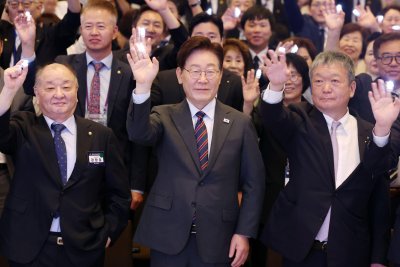
South Korean President Lee Jae Myung (C) poses for a photo during a meeting of the Peaceful Unification Advisory Council at a hotel in Incheon on Wednesday. Pool Photo by Yonhap

President Lee Jae Myung said Wednesday the government will pursue sustained efforts to engage North Korea and replace the Korean War armistice with a peace regime.

Lee made the remarks in a meeting of the Peaceful Unification Advisory Council, a presidential advisory body on unification of the two Koreas.

“At least to open a ‘Korea premium’ era for the future Korean Peninsula that is drawing global attention, we must replace the armistice with a peace regime,” Lee said.

However difficult it may be, the government should continue to “knock on North Korea’s closed door,” the president said.

“Difficult does not mean impossible … If we keep knocking, it will eventually open.”

North Korea has remained unresponsive to the Lee administration’s repeated dialogue overtures, instead hardening its hostile stance toward Seoul.

Since the 1950-53 Korean War ended in an armistice, not a peace treaty, the two Koreas remain technically at war.

“Now is the time to resume action toward peace,” Lee declared, pledging to find a way for the two Koreas to peacefully coexist while respecting each other’s political systems and sovereignty.

“We will never give up (the effort), however slow (the process) may be,” he said.

The president also reaffirmed this administration’s commitment to nonaggression toward Pyongyang, saying Seoul will respect the North Korean system, will not pursue unification through absorption and will not engage in hostile actions.

“I will keep these promises without fail,” he pledged.

Copyright (c) Yonhap News Agency prohibits its content from being redistributed or reprinted without consent, and forbids the content from being learned and used by artificial intelligence systems.

Source link

OPEC to increase oil output amid continued closure of Strait of Hormuz

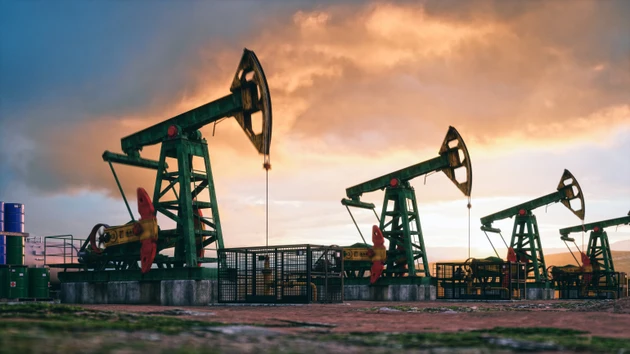
OPEC on Sunday announced that its member nations will increase oil production by nearly 200,000 barrels per day in July, despite the Strait of Hormuz remaining closed and it being very difficult to ship it anywhere out of the Middle East. Photo by Ismael Mohamad/UPI | License Photo

June 7 (UPI) — The Organization of the Petroleum Exporting Countries on Sunday agreed to increase production by nearly 200,000 barrels per day despite the Strait of Hormuz remaining closed, making it near-impossible to ship any of it.

Ordinarily, OPEC increasing oil production among the group of nations that comprise it would lower its cost, but experts have called the move largely symbolic because of the ongoing war in Iran, The New York Times and Wall Street Journal reported.

The Strait of Hormuz, which 20% of the world’s oil supply ordinarily would pass through daily, has been closed since early in the war as part of Iran’s effort to counter the war launched by the United States and Israel in February.

The OPEC members that agreed to the 188,000-barrel increase for July — the fourth month in a row that the group is increasing production — include Saudi Arabia, Russia, Iraq, Kuwait, Algeria, Kazakhstan and Oman.

The countries agreed to the increase as part of the group’s “commitment to support oil market stability” and said the latest production increase would also allow the participating nations to “accelerate their compensation,” OPEC said in a statement.

“The countries will continue to closely monitor and assess market conditions, and in their continuous efforts to support market stability, they reaffirmed the importance of a cautious approach,” the group said in the statement.

The Trump administration continues to negotiate an end to the war that would lead to the reopening of the Strait, in addition to working to limit Iran’s ability to build a nuclear weapon, amid a shaky weeks-long cease-fire.

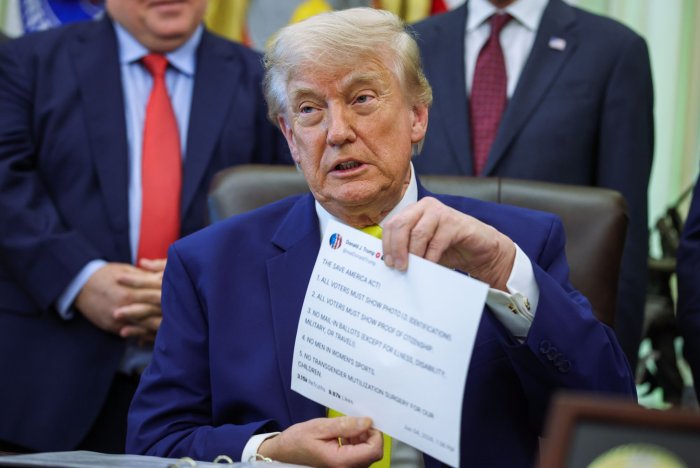
President Donald Trump discusses renovations to the Lincoln Reflecting Pool and makes an announcement on coal in the Oval Office at the White House on Thursday. Photo by Samuel Corum/UPI | License Photo

Source link