Venezuelan Authorities Begin Consultations on Amnesty Law
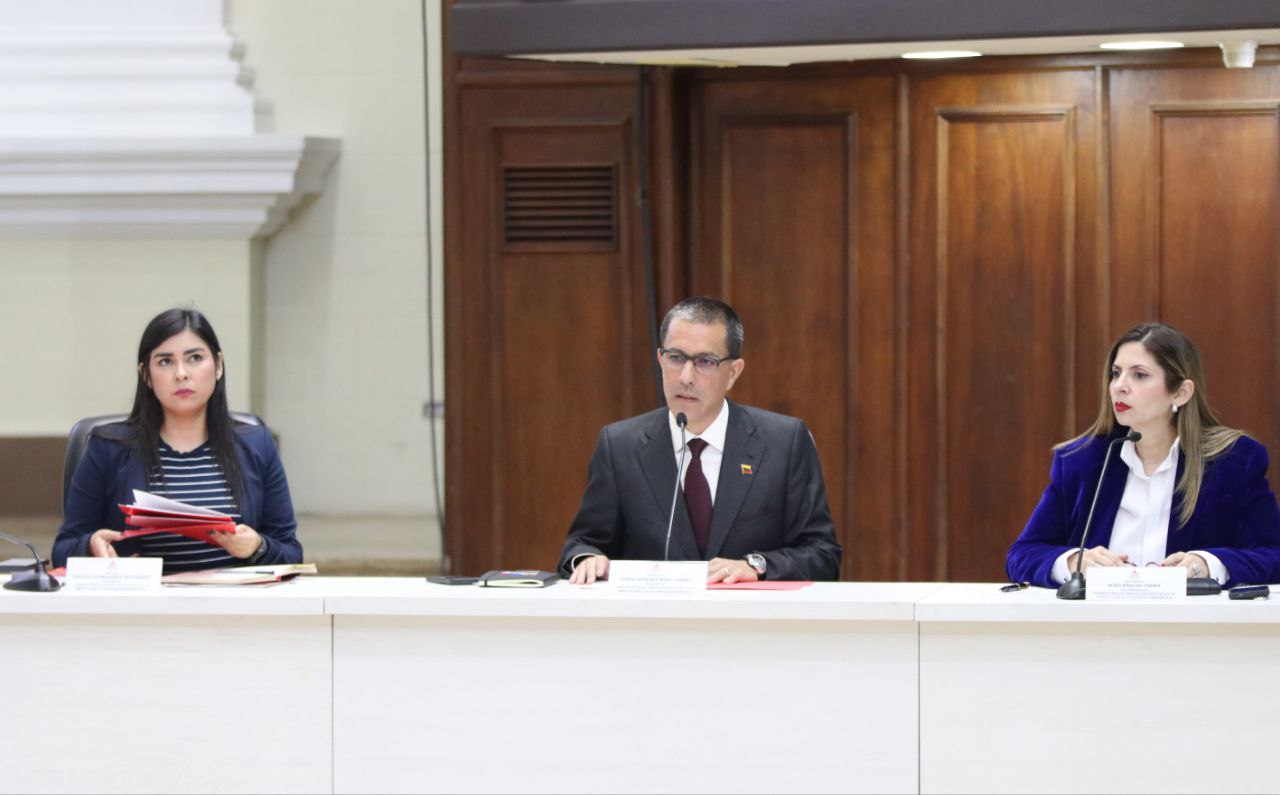
Jorge Arreaza (center) will head a parliamentary commission tasked with conducting consultations on the amnesty bill. (Asamblea Nacional)
Mérida, February 9, 2026 (venezuelanalysis.com) – The Venezuelan National Assembly has launched discussions on a preliminarily-approved “Amnesty Bill for Democratic Coexistence,” including public consultations with community peace judges, NGOs and academics.
Deputy Jorge Arreaza, who heads the parliament’s special commission for the amnesty bill, said that the legislature’s intention was to shape the law as a mechanism to ensure political stability in Venezuela but without impunity.
“The goal of this law is to contribute to peace, democratic coexistence and national reconciliation,” he explained during a meeting with community peace judges on Sunday. “It is a necessity of the new political moment we are going through.” Arreaza had previously served as Foreign Minister and Communes Minister.
The National Assembly commission’s consultations included a meeting with NGOs such as Provea, Foro Penal, and Acceso a la Justicia on Saturday. One they earlier, the legislators hosted deans from sixteen public and private university law schools to receive their input on the project.
During these meetings, Arreaza stressed the importance of community justice participation, civil society organisations and academia.
“We went to the law, reviewed each of the contributions, and will conduct an evaluation. We must contribute to the dialogue; we must listen to each other with patience and empathy,” he emphasized.
The Amnesty Bill for Democratic Coexistence, first announced by Acting President Delcy Rodríguez on January 30, was approved in its first reading on Thursday. A revised text is expected to be submitted to a final vote in the coming weeks.
The central stated objective of the initiative is national reconciliation and social peace through the pardon of political and related crimes committed between January 1, 1999, and January 30, 2026.
According to Venezuelan authorities, the project aims to address the political conflict that occurred between 1999 and 2026 by channelling differences through constitutional means, as well as modernise the legal system to help secure social peace.
The bill’s Article 6 explains that the selected period covers significant conflicts such as the 2002 coup d’État, the 2002-03 oil lockout and opposition-led violent street protests in 2013, 2014 and 2017.
However, the bill sets strict limits, excluding those responsible for serious human rights violations, crimes against humanity, homicide, drug trafficking, and corruption from any benefits. In addition to the release of those who have been prosecuted or convicted, the law establishes the termination of legal proceedings and the removal of criminal records from police and military files for those who benefit from it.
The Venezuelan government’s consultations likewise included a meeting between Acting President Delcy Rodríguez and former Spanish President José Luis Rodríguez Zapatero in Caracas on Friday. Zapatero, who has mediated past dialogue initiatives with the Venezuelan opposition, expressed his support for the Amnesty Bill, considering that it will mark “a turning point” for the country’s future and reconciliation.
He emphasized that the amnesty should be as extensive as possible and implemented swiftly to meet the expectations of families affected by arrests. Zapatero pledged to assist in any requested way, arguing that forgiveness and dialogue are essential elements in what he described as an “extraordinary moment” for the Caribbean nation.
Amid amnesty debates, the Committee of Family and Friends for the Freedom of Imprisoned Workers demanded that the legislation extend to imprisoned workers who have been criminalized on charges of ‘terrorism’ and ‘treason’ for defending labor rights or speaking out against corruption.
In a statement, the committee argued that the amnesty should not be limited to high-profile political figures, but rather apply to working-class and grassroots activists as well.
Investigative blog La Tabla also put forward a proposal to expand the removal of charges and convictions to campesino leaders who have been targeted amid ongoing land struggles. In recent years, rural organizations have denounced a growing criminalization of local activists, accusing judicial authorities of favoring landowning interests.
Releases of high-profile opposition figures continue
In recent days, Venezuelan judicial authorities have continued a process of prisoner releases which, according to the President of the National Assembly, Jorge Rodríguez, are intended to promote national reconciliation. The Venezuelan government has reported around 900 releases since December.
Rodríguez recently announced that further detainees would be released this week, describing the process as an “act of justice and forgiveness.” The people released are still facing trial, with charges against high-profile anti-government figures including “terrorism” and “treason.”
NGO Foro Penal reported the release of dozens of opposition politicians on Sunday, including several associates of far-right leader María Corina Machado. However, hours after exiting prison, former Deputy Juan Pablo Guanipa was arrested again in Caracas.
The Venezuelan Attorney General’s Office published a statement arguing that Guanipa had violated the conditions of his release, though it did not offer specifics, and requesting a court order to move him to house arrest.
Edited by Ricardo Vaz in Caracas.