consultant

Clint Reilly, influential California political consultant, dies at 79

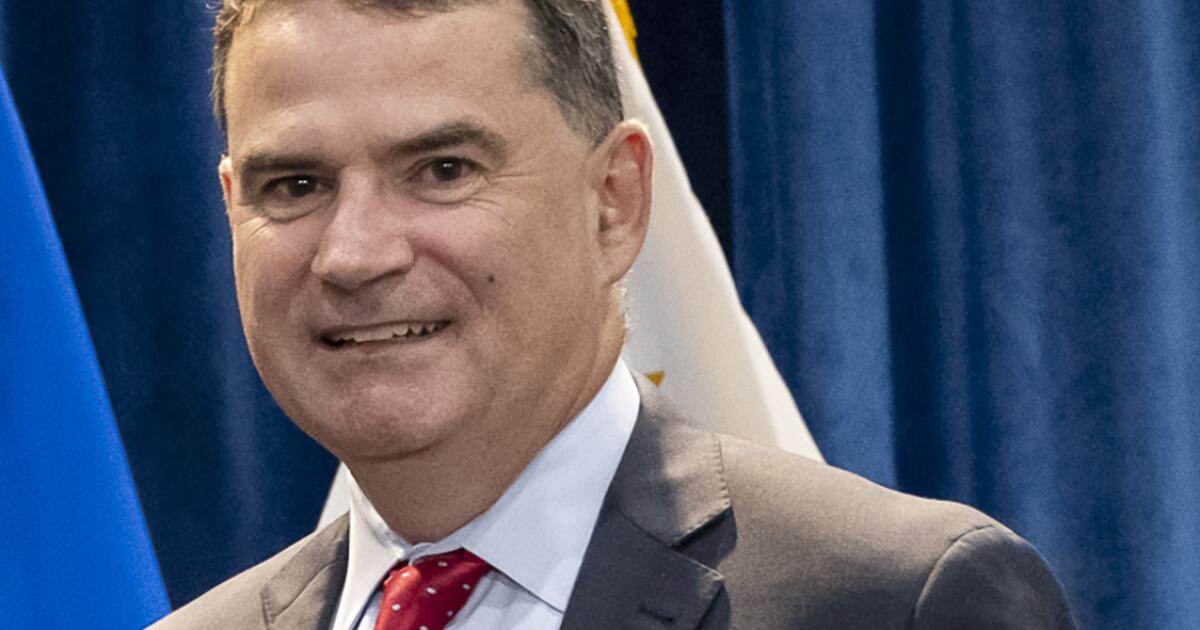
Clint Reilly, a Bay Area milkman’s son who rose to manage the campaigns of California’s most influential political figures, has died at age 79.

A savvy political consultant, Reilly spearheaded early winning campaigns for some of the most recognizable names in California politics: former U.S. House Speaker Nancy Pelosi, Sen. Barbara Boxer and Sen. Dianne Feinstein.

Brandon Heist, Clint Reilly Organization’s head of business operations, said in a statement to The Times that Reilly died over the weekend in San Francisco. He died surrounded by family, which requested privacy. The San Francisco Examiner newspaper, which Reilly bought in 2020, earlier announced its owner’s death Sunday.

“I will always be grateful for Clint’s friendship and counsel over so many years,” Pelosi said in a statement. “As the manager of my first campaign for Congress in 1987, he brought his unmatched strategic mind to help create and amplify my slogan: A Voice That Will Be Heard.”

In a 1987 article, The Times attributed the success of Pelosi’s congressional bid to money — her campaign spent $1 million, more than her 13 opponents combined — and a sophisticated voter turnout program devised by Reilly. At the time, Pelosi was a 46-year-old mother of five children and a party activist known for raising large sums for Democratic candidates.

Reflecting on Pelosi’s rise last November, Reilly wrote in a San Francisco Examiner op-ed, “The mystery of being a political consultant is that you never know how your winning candidate’s career will turn out.”

Reilly’s legacy went beyond catapulting politicians into office.

He helped transform modern campaigning, said Oakland political consultant Jim Ross, who worked for Reilly throughout the ’90s, including on the election and reelection campaigns of San Francisco Mayor Frank Jordan.

In the ‘80s, Reilly was among the first consultants to merge grassroots organizing with new technology: using voter roll data to segment and target pivotal voters for turnout and persuasion, Ross said.

“It was a way to make sure that he spent resources effectively,” Ross said.

Reilly’s data-driven voter targeting tactics helped Feinstein, then-San Francisco mayor, beat a recall effort in 1983. They later had a public falling-out in 1989 during Feinstein’s failed campaign for governor.

Reilly’s portfolio wasn’t strictly Democratic. In 1993, he coordinated businessman Richard Riordan’s successful campaign for Los Angeles mayor by targeting homeowners’ anxieties about unemployment, crime and other symptoms of urban decay. When elected, Riordan became the first Republican mayor of Los Angeles in 36 years — and no Republican has been elected to that office since.

Reilly also advised the California insurance industry.

In 1988, he led the insurance industry’s losing $60-million initiative campaigns for Propositions 104 and 106. The pair of insurance industry-sponsored measures was designed to compete with Propositions 100 and 103, initiatives backed by trial lawyers and consumer advocates who wanted to reform the industry.

Voters ultimately passed Proposition 103, which promised insurance rate roll-backs and created the elected state insurance commissioner role. But Ross said it was one example of how Reilly would search for creative ways to achieve his client’s goals.

“Clint really pioneered in that election the idea of running competing ballot measures,” Ross said. “The reform measure was extraordinarily popular, it was going to pass, so instead of going at it directly, he ran a competing measure.”

A 1994 profile in The Times, from when Reilly was running Democrat Kathleen Brown’s bid for governor, described him as “one of the most powerful–and feared–political operatives in California.”

“When the opponent knows you have (him) on your side, a chill goes up their spine,” former San Francisco Mayor Frank Jordan told The Times. “He’s certainly better to have inside the tent than outside.”

Born in Oakland in 1947, Reilly was drawn to politics from an early age. He ran successfully for class president during fifth grade, with a campaign slogan his sister devised: “Take a Hint, Vote for Clint.”

Reilly’s relationship with Eugene Boyle, a Bay Area Catholic priest and liberal activist known for supporting the Civil Rights Movement, shaped his political views. He was passionate about supporting “the underdogs,” Ross said.

Reilly spent nine years in seminary before switching to pursue politics. His big break came in 1979, when he ran San Francisco Supervisor Quentin Kopp’s campaign for mayor. Kopp lost, but Reilly’s name stuck.

He soon developed a reputation for charging top dollar for his campaign strategy services and for his heavy campaign spending. In 1982, after Reilly brought Boxer to a decisive primary victory in her first congressional race, she fired him over excessive campaign spending, the Times reported in the 1994 profile.

As a boss, Reilly was “extraordinarily demanding,” Ross said, adding, “I reread pieces of direct mail five and six times now because of him.”

He also had a generous side, Ross said. Reilly spent time teaching young staffers the art of campaigning, a rarity in politics. Even after he left political consulting and shifted his focus to real estate, Reilly continued to help candidates with fundraising and messaging.

Reilly ran unsuccessfully for San Francisco mayor in 1999 and later turned his attention to local media and philanthropy, founding a nonprofit in 2008 to offer scholarships for low-income students to attend private college-preparatory high schools.

Reilly’s passing will not change the structure or current operations of the Clint Reilly Organization, Heist said. The organization’s media division includes the San Francisco Examiner — which Reilly acquired in 2020 alongside its now-defunct affiliate SF Weekly — and the Nob Hill Gazette, which he bought in 2016. The organization also has a hospitality company and real estate division.

“The organization’s commitment to its employees, partners, and the community remain firmly in place,” Heist said.

Condolences poured in from leaders across California on Monday.

Gov. Gavin Newsom and his wife Jennifer Siebel Newsom in a statement honored Reilly as a “San Francisco institution” with a brilliant mind and generous heart.

San Francisco Mayor Daniel Lurie said on social media the city “lost a civic leader who left a lasting mark on our city.”

Reilly is survived by his wife Janet and two daughters, Jill and Ava. Memorial arrangements will be announced later.
Source link

Consultant worked on $577,000 airport contract while advising Bass for free

An informal advisor to Los Angeles Mayor Karen Bass handled communications for her office for free while simultaneously working on a three-year contract with Los Angeles World Airports worth nearly $600,000.

Yusef Robb, who runs the firm tk/Communications, was an unpaid spokesperson and advisor for Bass from February through the beginning of June.

On June 19, Robb began working for Lineage Logistics, whose cold food storage facility in Boyle Heights burned for more than a week last month. He continued to serve as an unpaid, unofficial advisor to the mayor, though no longer as a spokesperson, until The Times and other outlets reported on his work for Lineage on Saturday.

Robb said the airport contract was unrelated to his work for the mayor. But a legal expert said the arrangement raises questions about whether his free labor was a gift to the mayor and whether working for the city and private clients creates conflicts of interest.

“This was done through a transparent and public competitive bidding process,” Robb said in an email to The Times. “I provide communications support and training.”

The Bass administration said Robb’s unpaid assistance was “for the benefit of the city. It’s not a gift.”

In 2024, Robb signed the contract with Los Angeles World Airports, or LAWA — the city department that operates Los Angeles International Airport and the Van Nuys Airport — for $450,000 over three years.

He won the contract, which involved “executive media training” as well as “crisis communications,” over 10 other firms. It was updated in April to include additional work for $137,500.

A report from LAWA in support of the contract update said that “executive management at LAWA have benefited from successful, professional media training as well as support for LAWA crisis communications and response.”

Because tk/Communications has subcontracted to at least two other companies, Robb said his firm has earned no more than $315,000 over the three-year contract.

“There is no connection between the work Mr. Robb performs for LAWA and the assistance he provides for Mayor Bass’ Office,” said a spokesperson for Bass’ office. Bass is running for reelection against City Councilmember Nithya Raman.

The LAWA contract was Robb’s second with the city during the Bass administration. The city paid a total of $75,000 in 2022 and 2023 to Robb’s firm to provide “various communications services related to the start-up of the administration,” according to a contract.

Tk/Communications has worked for government agencies as well as political campaigns and private businesses, including the Los Angeles Department of Transportation, the Los Angeles Unified School District and the music and entertainment company AEG, according to the company’s website.

“We develop powerful narratives and engagement to accelerate and amplify our clients’ messages, whether they’re grounded in an investment proposal or a political campaign,” the website states. “We author and tell stories that build deep connections and lasting relationships that deliver more than you asked for.”

Robb has worked in and around City Hall for decades. He was a press aide in Mayor Jim Hahn’s administration, then worked for Eric Garcetti when Garcetti was a city council member and then mayor. He left Garcetti’s office in 2015.

Robb said he has provided “unpaid help to all sorts of people and businesses, to advance criminal justice reform, organize community movements, or just to find the right words.”

“I feel it’s important to help the city if I can,” he said.

Jessica Levinson, a professor at Loyola Law School and former president of the city’s Ethics Commission, said the airport contract shows how valuable Robb’s labor is, raising the question of whether he is providing a gift to Bass by working for her for free.

Another concern for the public, Levinson said, is that Robb is working for Bass at the same time that he has other clients and could potentially use his position at City Hall to advance those clients’ interests. His work for Bass could also make him more desirable for clients who believe he has the mayor’s ear, she said.

“What we’re worried about is undue influence, preferential access and backroom deals that benefit certain people, as opposed to the public,” said Levinson. “We don’t want public officials serving two masters.”

Still, Levinson said she does not believe that Bass has violated any laws by using Robb pro bono.

“This is an unusual setup,” she said. “That does not mean it’s illegal.”

Source link

Becerra’s consultant to plead guilty to skimming campaign funds

A veteran California political consultant has agreed to plead guilty in a scheme to steal campaign funds from Xavier Becerra, now a leading candidate for governor, when he served in the Biden administration, according to filings in her criminal case on Thursday.

Dana Williamson will plead guilty to three counts, including bank fraud and lying to authorities. In exchange, the federal government will dismiss 20 other counts against her related to her tax filings and a federal COVID-era loan she received.

A court hearing is scheduled Thursday morning.

Williamson, a former chief of staff to Gov. Gavin Newsom, was arrested in November and pleaded not guilty. The government secured guilty pleas in December from two advisors who worked with alongside her to skim money from Becerra.

The case against her and a looming plea deal have taken center stage in the California governor’s race as rivals seek to tie the charges to Becerra, who is a Democratic front runner. He hasn’t been charged, and prosecutors paint him as a victim.

Prosecutors say that Williamson, Becerra’s then-chief of staff Sean McCluskie and lobbyist Greg Campbell took part in a scheme to siphon money from Becerra’s dormant campaign account and funnel it to McCluskie.

McCluskie needed the money, according to prosecutors, so he could afford to fly home frequently to see his family in California while working for Becerra, who was Biden’s health secretary, in Washington, D.C.

As part of the scheme, Williamson and another consultant charged Becerra’s account up to $10,000 a month to manage one of his dormant state campaign accounts.

Becerra approved the payments, even though he had never paid such a high amount for a similar job. He told The Times that McCluskie told him to pay the fees.

Becerra’s rivals in the governor’s race are hammering him over his decision, arguing he should have known something wasn’t right. Becerra has said that he didn’t know about the criminal behavior and has called the charges a “gut punch.”

Known as an hard-nosed and aggressive operator, Williamson’s career in politics also included working for former governors Jerry Brown and Gray Davis and mentoring other women.

McGregor Scott, Williamson’s attorney, told reporters last year that federal authorities initially approached Williamson about helping them with a probe into Newsom. She refused, he said, and was subsequently charged.

Details contained in the indictment and other public records suggest that federal authorities were looking into the state’s handling of alleged sexual harassment at Activision Blizzard Inc., a video game company.

Source link

Becerra’s advisor pleaded guilty. Gubernatorial rivals are piling on

As Xavier Becerra rose to the top echelons of power in Washington and Sacramento over the last two decades, his trusted advisor Sean McCluskie joined him at every step.

The son of a Scottish immigrant, McCluskie had a reputation as a political street fighter and his gruff style complemented Becerra’s more measured, cerebral approach.

Now Becerra is under attack in California’s wide-open governor’s race after McCluskie, 57, pleaded guilty in December to stealing more than $200,000 from Becerra’s campaign account.

The charges were part of a broader scandal that implicated or brushed up against some of Sacramento’s most influential Democratic political advisors, a scheme prosecutors allege included payments, bank fraud and an FBI sting operation that swept McCluskie’s incriminating private conversations and texts into evidence.

Rivals in the California governor’s race have seized on the case to question whether Becerra, one of the front-runners in the contest to succeed outgoing Gov. Gavin Newsom, is fit for office and could be swept up in the case.

“We can’t have someone who is running as a Democrat who could run into legal difficulties,” said candidate Tom Steyer, who is close to Becerra in the polls.

Becerra has not been accused of wrongdoing, and prosecutors’ court filings describe him as a victim. He told The Times that he cooperated with investigators, including appearing before the grand jury.

“Sean was as close as any staffer that I’ve ever had,” Becerra said in an interview last week, describing how McCluskie moved across the country twice to work for him.

He added that he’s “racked” his brain to understand the case involving McCluskie and his longtime political consultant, Dana Williamson, both of whom he described as “very highly accomplished people.”

Williamson, who also served as Gov. Gavin Newsom’s chief of staff, was indicted in November. She had refused to cooperate with federal investigators and pleaded not guilty, but recently discussed a plea deal with prosecutors. A court hearing is set for Thursday, according to court filings.

An agreement could unearth more details about the case in the coming weeks, a possibility not lost on the Democrats and Republicans running for governor.

Former Orange County Rep. Katie Porter, one of the Democrats who has watched Becerra’s rapid ascent in the race, said in a CNN interview Monday that California can’t risk having Becerra in the race with the specter of the ongoing criminal case.

She acknowledged that “I do not have the facts” about the case, but said if Becerra were to finish in the top two in the June 2 primary and then be indicted by the Trump administration’s Department of Justice, a Republican ultimately could win the governor’s race in November.

“Secretary Becerra cannot and has not guaranteed or promised the people of California that he will not be named as a co-conspirator and indicted,” she said.

Other candidates, and reporters, have questioned whether Becerra had a blind spot in trusting McCluskie.

Appearing on Fox40 News last year, Becerra likened the criminal case to being “married for 20 years” and “all of a sudden you find out that your spouse has been cheating.”

According to prosecutors, McCluskie, Williamson, and another consultant skimmed $225,000 from one of Becerra’s dormant campaign accounts and funneled it to McCluskie through various entities.

McCluskie, who declined to speak to The Times, sought the money because he’d taken a pay cut after joining Becerra in Washington when Becerra became Health and Human Services secretary in 2021, according to prosecutors.

And unlike Becerra, he didn’t move full-time to D.C., and was splitting his time between the nation’s capital and California, where his family lived.

On a phone call recorded by the FBI in 2024, McCluskie talked about the scheme and told a consultant, “This money you guys are giving me is helping me fly back and forth to D.C. and live there half part time.”

Becerra, in an interview, said McCluskie never mentioned his money problems. The pair worked together when Becerra served in Congress and as California attorney general.

After President Biden appointed Becerra to lead Health and Human Services, the pair discussed the move back to D.C.

“Even before we went to HHS, we had talked about whether we wanted to do this,” Becerra said. “We both agreed, ‘Yeah, you know, it’s going to be a sacrifice. We’re going to have to make changes.’”

Former Becerra staffers told The Times that Becerra and McCluskie were such a close team that they have a hard time imagining Becerra working in government without McCluskie.

Another former staffer, Amanda Renteria, said the two men bonded over their humble immigrant backgrounds. McCluskie’s family came from Scotland and Italy; Becerra’s relatives came from Mexico.

McCluskie relished going to battle for those less fortunate, she said.

“When Becerra became A.G., [people questioned] whether or not he had the style that could really take on Trump. If you were to meet Sean, you’d be like, Oh yeah, Sean is totally ready for a fight, he’s ready to take him on.

“That was sort of a difference with Becerra. Becerra had that fight in him. Sean wore it a little bit more,” said Renteria, a political strategist.

Becerra has faced repeated questions about his financial judgment after the criminal case revealed that he agreed to pay up to $10,000 a month to Williamson and another consultant to oversee one of his dormant campaign accounts.

The consultants charged him the fee as part of the scheme to divert money to McCluskie, prosecutors allege.

At the time, Becerra, a Biden Cabinet member, was barred from involving himself in campaign matters.

Becerra defended the payments during an interview with Fox40 last year, stating, “I was told that’s the rate I would have to pay to get someone who could manage that and make sure that I don’t have to worry about [violating any federal rules].”

Campaign finance records show Becerra had never paid such a high fee for his other accounts.

Becerra told The Times that his longtime attorney Stephen Kaufman, whom he was also paying to oversee the account, didn’t flag the payments. “I would have expected him to raise issues if he thought there was something wrong,” Becerra said.

Kaufman didn’t respond to questions about the account.

Los Angeles-based political consultant Eric Hacopian told The Times that the fees are “certainly high.”

“It’s obviously something he should’ve noticed. Either he was not paying attention, or was too trusting of these people,” said Hacopian, who isn’t involved in the governor’s race. “At the end of the day, he’s the primary victim.”

At a debate last week, rival candidate Antonio Villaraigosa pounced on the payments made by Becerra, saying that the politician “has to be under suspicion because it doesn’t pass the smell.”

Danni Wang, a spokesperson for Steyer, said in a statement, “So, which is it — did Becerra know about the illegal payments and participate in the campaign’s corruption, or was he a totally incompetent manager oblivious to what was going on underneath his nose?”

Renteria, the former Becerra staffer, said the allegations against McCluskie and others are particularly surprising given Becerra’s reputation as a “straight A student.”

“Part of it broke my heart,” she said.

Jonathan Underland, a Becerra spokesperson, said Becerra “has always been consistent and clear: Every action he took was in accordance with the law.”

“What he didn’t know — and what the FBI’s own investigation goes out of its way to clarify — is that his staff cooked up a scheme designed to deceive him.”

Becerra, in an interview, repeatedly said that he relied on McCluskie. It was McCluskie, he said, who advised him to make the payments. “I trusted him to handle the accounts,” he said.

He also said he was unaware of some of the details laid out by prosecutors.

Prosecutors said Williamson and others created a “no show” job for McCluskie’s wife, Kerry MacKay, to do work for the consultants.

MacKay never was paid, however, and the money went to an account controlled by McCluskie. MacKay, who didn’t respond to requests for comment, was not charged.

McCluskie’s plea agreement states that he told Becerra about his wife’s job with the consultants, though he didn’t tell the politician that his wife wouldn’t actually be doing any work.

Becerra, in an interview, said he didn’t recall McCluskie informing him about his wife’s work.

McCluskie’s sentencing is scheduled for June 4, two days after the primary.

Source link