Trump’s remarks come amid a fractious moment between the US president and the journalists who cover him.
Published On 24 Oct 202624 Oct 2026
United States President Donald Trump has confirmed he could move the White House press corps to a different location, possibly away from the executive residence.
In a social media post on Friday, Trump described reports that he planned to remove the White House press briefing room in favour of restoring a historic swimming pool located underneath as “Fake News”.
Recommended Stories
list of 3 itemsend of list
“I NEVER even thought to do such a stupid thing!” he wrote in a Truth Social post.
Trump, however, indicated he may relocate dozens of reporters who cover the White House “to a less obnoxious location”.
The New York Times on Tuesday reported that Trump had pitched his former press secretary, Karoline Leavitt, on an idea to move journalists out of the White House’s storied James S. Brady Press Briefing Room. That proposal did not move forward during Leavitt’s tenure, which ended on August 27.
Trump’s remarks come amid a fractious moment between him and the journalists who cover him.
Last month, Trump banned journalists from three US-based media outlets – CNN, MS NOW and POLITICO – from the White House, a move that proponents of free speech said violated First Amendment protections.
A US federal judge ruled that the order was likely unconstitutional, forcing the White House to restore the journalists’ access. The Trump administration continues to fight the ruling.
Trump has also regularly chided and denigrated members of the media he claims cover him unfairly.
The latest incident was during an Oval Office event on Tuesday when Trump attacked The Independent’s White House Correspondent Andrew Feinberg.
“What’s wrong with you? Are you a sick person? I actually think there’s something wrong with you”, Trump said as Feinberg tried to ask a question. The moment was amplified by the White House on social media.
If Trump opts to proceed with changes to the White House press briefing room, it would be the latest in a long list of controversial projects he has ordered that would transform the property.
Since returning to power last year, the US president has demolished the White House East Wing to construct a new ballroom, installed concrete pavers over the lawn centred in the White House Rose Garden and built a helipad on the South Lawn.
The Times reported Trump told aides he wanted to bring back a West Wing indoor pool constructed in 1933 for use by President Franklin D Roosevelt, who suffered from polio and often swam, according to his presidential library, to ease soreness.
In the 1970s, former President Richard Nixon had a floor constructed above the pool to accommodate a briefing room for the growing White House press corps. The pool remains beneath the floor of the briefing room.
Leavitt confirmed during a Friday interview that Trump was “flirting” with the idea of restoring the pool.
“He just, maybe, wants to restore it to all of its glory”, Leavitt said during an appearance on HBO’s “Real Time with Bill Maher”. “I don’t know if he’ll do it.”
The White House did not immediately return Al Jazeera’s request for comment.
Iran is rebuilding Eagle 44, a hardened underground airbase carved into the side of a mountain that can shelter fighter aircraft, drones, and potentially cruise and ballistic missiles, despite the remote facility absorbing at least three rounds of airstrikes this year. High-resolution satellite imagery captured by Planet Labs in late September and reviewed by TWZ shows a new section of taxiway completed, several support buildings still destroyed or damaged, wrecked equipment cleared off the pavement, and obstacles that were placed to obstruct the runway now removed. Construction is ongoing at a time when the Pentagon and Trump administration maintain there is little remaining of the Iranian air force for such a facility to protect.
Eagle 44, also called ‘Oghab 44’ after the 44th anniversary of the 1979 revolution, was unveiled by Iranian state media in February 2023 when senior officials visited what was described as the country’s newest underground airbase. Islamic Republic of Iran Air Force (IRIAF) F-4D/E Phantom IIs, armed with AGM-65 Maverick air-to-ground missiles, laser and electro-optically guided bombs, unguided ‘dumb’ bombs, as well as domestically produced anti-ship missiles, were shown using the facility in the footage. The IRIAF had roughly 60 examples in service at the time, its most numerous combat jet by some margin, though how many remain today, and are actually operational, is unknown. In addition to the Phantoms, one-way attack drones were also seen in the background.
F-4 Phantom at Eagle 44. Photo: Iranian state media Another view of an F-4 Phantom at Eagle 44. Photo: Iranian state media
The IRIAF, rather than the Islamic Revolutionary Guard Corps (IRGC) Aerospace Force, operates the base, which is located in Hormozgan province and sits in the foothills of the Zagros Mountains, approximately 100 miles northwest of the Strait of Hormuz. Iranian state media described it as “one of the army’s most important air force bases, with fighters equipped with long-range cruise missiles and built in the depths of the Earth.” Then-Chief of Staff of the Armed Forces Maj. Gen. Mohammad Bagheri, who was present at the unveiling, warned that “any attack on Iran from our enemies, including Israel, will see a response from our many air force bases including Eagle 44.” He was eliminated in the opening strikes of the Twelve-Day War, which Israel dubbed Operation Rising Lion, in June 2025.
Location of Eagle 44 airbase in southern Iran. Photo: Google Earth
Work on the cavernous underground tunnel complex began in 2013. Construction of a 2.7-mile main runway, situated on the northern side of the base on a valley floor below the mountain range, started roughly eight years later. Two taxiways run through a smaller ridge connecting the runway to four entrances to the primary tunnel complex, where the jets and weapons are stored, although only one taxiway is currently operational.
The promotional video released in 2023 revealed at least one internal blast door, as well as branches from the main tunnel to revetment areas to park fighters and drones. A support compound of several buildings is on the west side of the base, next to the unfinished taxiway. The purpose of each structure is unclear, but a functioning airbase requires maintenance and repair facilities, crew quarters, reserves of fuel and munitions, security and force protection assets, and infrastructure to coordinate air traffic control and command and control functions.
Video released by Iranian state media in February 2023 reportedly showing the inside of the tunnel complex at Eagle 44.
The United States kicked off Operation Epic Fury alongside Israel on February 28, launching a massive wave of strikes against Iran from the west and south. Eagle 44 is located within striking distance of the munitions carried by air wings embarked on U.S. Navy aircraft carriers operating in the northern Arabian Sea and missiles fired by the guided-missile destroyers that escort them, as well as Air Force tactical and strategicaircraft and Army assets in the region. However, low-resolution images reviewed by TWZ through March 16 indicated that while the base was targeted, little damage was visible.
HIMARS fired during OEF. CENTCOM photo B-1B fuels for OEF mission. USAF photo Super Hornets launch during OEF. Navy photo Guided-missile destroyer USS Spruance fires a Tomahawk Land Attack Missile (TLAM) in support of Operation Epic Fury (OEF). U.S. Navy photo
As the U.S. and Israel continued the relentless air campaign over the next several weeks, the base was targeted again at the end of March, with greater effect, according to a report from The New York Times. High-resolution images the paper reviewed revealed impact craters on the taxiways near the tunnel entrances, one building leveled, and small mounds placed along the runway, presumably to prevent enemy aircraft from landing. Battle damage assessments suggested the strikes were intended to cut the underground caverns off from the runway, trapping whatever was inside and preventing takeoff. The report did not state whether U.S. or Israeli aircraft carried out the attack, and Israeli officials declined to comment. However, the U.S. was primarily responsible for pressuring Iran’s southern flank, while the Israelis attacked the western front.
After the fragile April ceasefire collapsed and the U.S. imposed a second blockade, U.S. Central Command (CENTCOM), based out of MacDill Air Force Base in Tampa, Florida, and responsible for executing day-to-day operations of the war, launched multiple strikes across Iran on July 15, and Eagle 44 was hit for at least a third time. An analysis published by Soar Atlas, a satellite imagery provider, identified four aimpoints on July 16, with cratered taxiways and damage to additional infrastructure. According to that analysis, the structures targeted were related to the base’s construction unit, but TWZ has not independently verified this claim. The Pentagon and CENTCOM have not specifically named Eagle 44 in any press briefing or release, and Iran has not acknowledged the base was struck.
United States Navy forces on station in mid-July 2026 when the second blockade began and strikes resumed. TWZ/IAN ELLIS-JONES
The Planet Labs satellite imagery from September 29, obtained exclusively by TWZ, indicates that Iran began reconstruction after the July attacks and that the effort is ongoing.
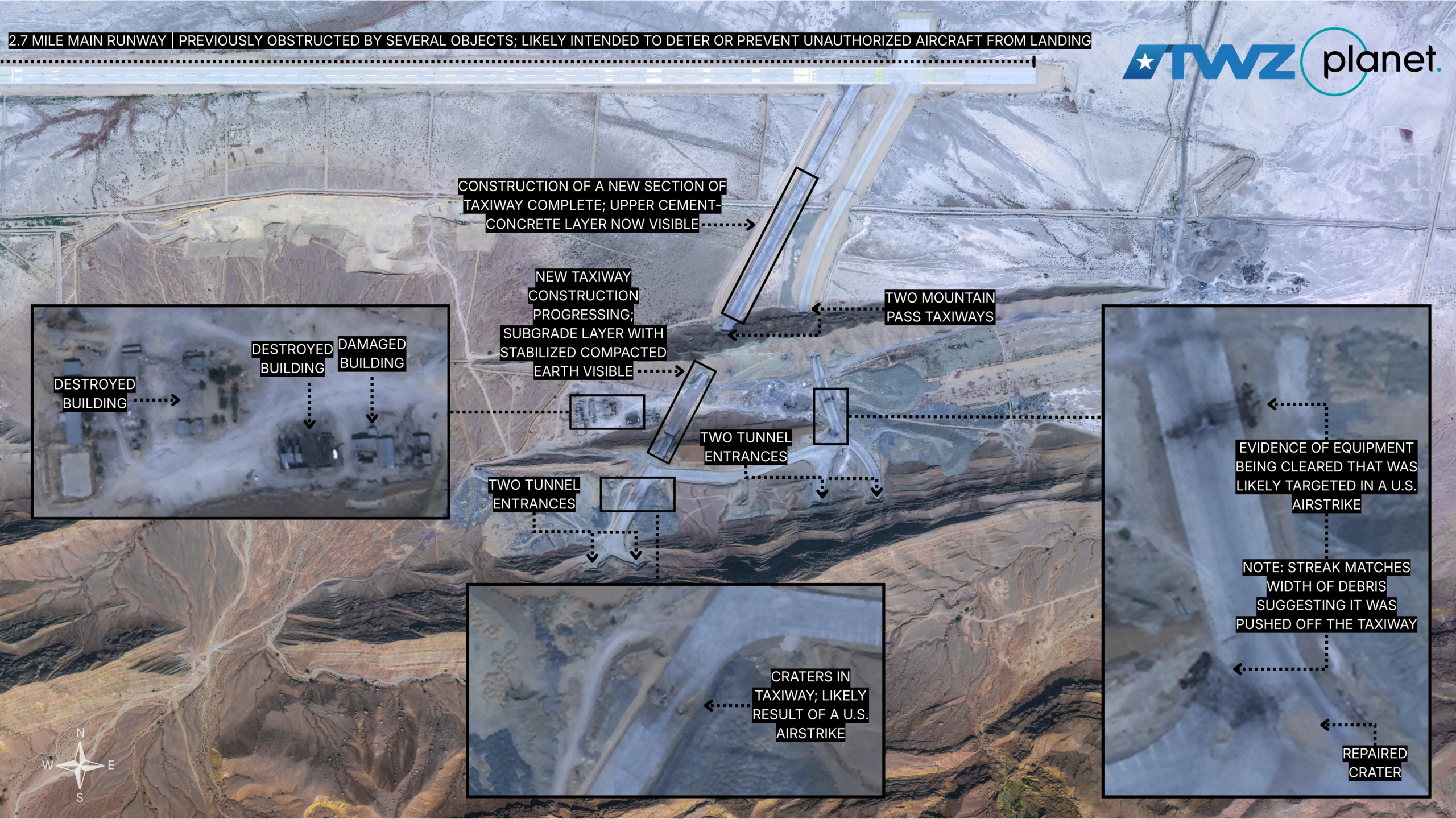
The main runway, previously blocked by obstacles meant to deter and prevent unauthorized aircraft from landing, is now clear. On the western taxiway (marked in red below), a new section leading into the ridge ‘pass-through’ is complete, with its finished upper cement-concrete layer visible. On the other side of the pass, construction of the next segment is underway, with a subgrade layer of stabilized, compacted dirt laid down but not yet paved (orange). Farther south, in front of the western tunnel entrances, impact craters (blue) are still visible. When finished, the second taxiway will provide a direct link between the western hangars and the runway, allowing additional aircraft to move freely without sharing a single taxiway, a major bottleneck for higher operational tempos and more complex sortie launches and recoveries. A second functional taxiway and tunnel would also provide critical redundancy if the other is hit.
On the primary eastern taxiway, two dark streaks (green) that appeared following the strikes in July run off the edge of the pavement, likely debris left by equipment that was struck and removed. Notably, the streak marks match the width of the wreckage, suggesting it was bulldozed or pushed off the taxiway to reopen it. There is no sign of the equipment being recovered, only that it was cleared out of the way.
In the main support compound (yellow) next to the western taxiway, two buildings are clearly destroyed and a third is damaged. They have not been rebuilt yet, which is consistent with previous reporting from The Times and Soar Atlas that the attacks degraded construction capabilities, and suggests the regime may be focused on completing and repairing the taxiways rather than the installations.
The four entrances to the main tunnel complex (white), arranged in two pairs less than half a mile apart at the end of each taxiway on the southern part of the base, appear to be intact, although the angle makes it unclear whether they are open or sealed. What’s inside the mountain, and how many fighters remain in Iran’s inventory, is unknown. Regardless of the status of the fighter fleet, as we noted earlier, the base can also store drones and could be packed with cruise or ballistic missiles.
The U.S. and Israel have a range of bunker buster bombs that could be used in an attempt to collapse the tunnel entrances, a major choke point for any underground weapons storage site. While not destroying what is being held within, doing so would block anything inside from leaving — and being used — for a period of time. Additionally, the pass-through tunnels make for easy targets, and hitting them would keep fixed-wing aircraft from reaching the runway. No impact points on the mountain itself or damage to the portals inside is apparent, but they could have been sealed and hit farther in, which may not be highly visible via satellite imagery. Reaching the main storage caverns themselves would likely be far harder. Larger bunker busters in the U.S. inventory include the GBU-57 Massive Ordnance Penetrator (MOP) guided munition, which could be capable of reaching deeper into the main site, but these are very limited in number and can only be delivered by the Air Force’s B-2A Spirit stealth bombers. It’s highly unlikely the U.S. would expend such resources on a site like this over many others of higher strategic importance.
Eagle 44 is not the only base that Iran is fixing during the lull in hostilities. By the end of May, Iran had cleared 50 of 69 tunnel entrances struck at 18 underground facilities, including some “missile cities,” according to a report by CNN− and that number is likely higher now. Planet Labs, Airbus, and Vantor imagery reviewed by The Wall Street Journal in July showed rebuilt entrances near Kangavar, fresh excavation at Dezful, and repairs near Kermanshah. “They have very impressive industrialization and reconstruction capabilities,” Israeli Brig. Gen. Ran Kochav told the paper. “They refilled their stockpiles,” he added.
A Western official toldBloomberg earlier this month that Iran “remains well-stocked with ballistic missiles and some anti-ship missiles, and can quickly add more,” and a U.S. official posited in May that “the Iranians have exceeded all timelines the IC [Intelligence Community] had for reconstitution.” Both assessments are at odds with what the White House and Pentagon have repeatedly claimed. Secretary Pete Hegseth stated in April that Iran’s air force was “wiped out” and its missile program was “functionally destroyed; launchers, production facilities, and existing stockpiles depleted and decimated,” while acknowledging a week later that the regime was “digging out” launchers, missiles, and bombed facilities but had “no ability to replenish offensive or defensive capabilities.” In May, CENTCOM Commander Adm. Brad Cooper told Congress, “Before Operation Epic Fury, the Iranian Air Force flew between 30 and 100 sorties each day; today that number is zero.” More recently, at a campaign rally in Kansas on Monday, U.S. President Donald Trump said, “They have no air force… their 229 beautiful fighter jets are now scattered all over the runways, the beautiful runways of the Islamic Republic of Iran.”
Video released by Iranian state media in May 2022 showing a different underground missile and drone complex.
At the very least, strikes on Eagle 44 cratered the taxiways and degraded support infrastructure, which likely put at least some of whatever airpower is stored there, if any, out of action. But even after enduring months of war and extreme economic pressure due to the ongoing U.S. blockade and sanctions, as well as dealing with damage across the country, Tehran continues to prioritize construction on the remote base. That fact alone could put it back on the target list if the U.S. and Israel launch another operation. But above all else, it points to how important this facility is to the regime, for whatever reason.
In the summer of 1957, Walt Disney spotted a monorail in Europe and decided he’d like to have one of his own. Design and construction began in 1958, and the following year, Disneyland had a monorail.
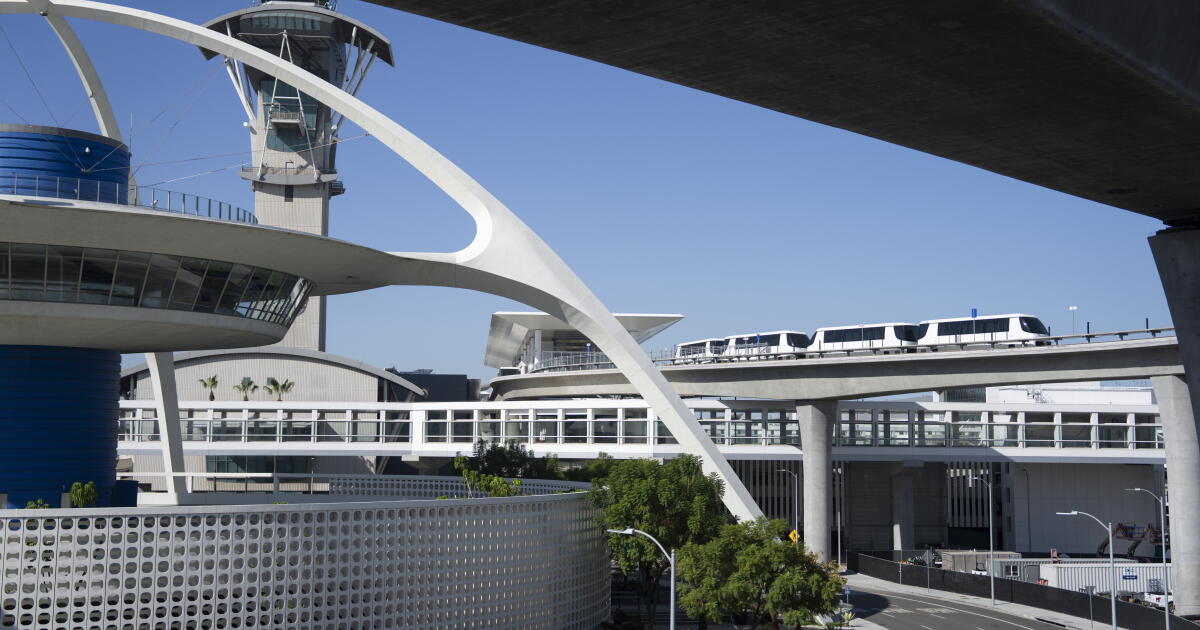
The LAX SkyLink people mover was approved by the L.A. City Council in 2018 and construction began in 2019, with a targeted completion date of 2023. In the latest news of yet another delay, the hoped-for startup has been pushed into next year.
Almost eight years, and the train has not left the station.
It’s the little engine that can’t.
The people mover that doesn’t.
There’s been finger-pointing, litigation and a grand jury probe into how a $1.9-billion choo-choo has become a $3.3-billion boondoggle.
Maybe they should have hired Disney.
“Tell me about it,” said Los Angeles City Councilmember Monica Rodriguez, who noted that Disney imagineer Bob Gurr, who helped design the monorail and other iconic Disneyland attractions, lives in her district.
I’m waiting to hear back from Gurr, who’s in his mid-90s, to see if he’s available to work a little magic and help get the people mover moving.
“I’m down with that,” Rodriguez said. “And we get an E Ticket ride.”
To fully appreciate the madness, a bit of historical context is helpful.
Given the region’s legendary traffic, a well-designed transit system has always made sense in Southern California, and billions of dollars have been invested, with quite a bit to show for voter-approved sales tax increases with Measures R and M and boatloads of federal dollars.
But the ride has been bumpy.
In the 1990s, the Green Line, as it was then known, was supposed to go to the airport.
It stopped two miles short.
The rail line known as the purple, or the D, was sometimes referred to as the Subway to the Sea.
But even if its next phase is ever completed, it would stop about 3.5 miles short of the beach. (You can, however, take the E Line to downtown Santa Monica.)
Meanwhile, as The Times’ Colleen Shalby just reported, construction is beginning this week on the Van Nuys-Pacoima light rail line.
Only five years behind schedule.
And the cost has gone from $1.3 billion originally to almost $4 billion.
Are you catching on to a pattern here?
And these are not rocket launches we’re talking about. A light rail line. A people mover.
We’re in California, which has a Silicon Valley and Silicon Beach and a few remnants of the aerospace industry, but we can’t get Joe Blow from the Hertz rental lot to an airport terminal in less than eight years?
Meanwhile, the Vision Zero plan introduced 11 years ago by then-Mayor Eric Garcetti, with a goal of eliminating traffic deaths with roadway design and safety improvements, has fallen far short. As Damian Kevitt of Streets Are for Everyone told Shalby, for three years running, L.A. has had more traffic fatalities than homicides.
“The rest of the world has seen a decrease in traffic deaths,” Kevitt told me. “There are ways to do this, and we run into roadblocks. … It’s lack of leadership … at every level. … To me, the people mover is almost an indicator of systemic issues across the city.”
L.A. Mayor Karen Bass is the chair of Metro and appoints airport commissioners. So unsurprisingly, Councilmember Nithya Raman, her challenger in the mayoral campaign, is going after her on the people mover debacle and other transportation shortcomings.
Bass says the LAX project began before she took office, and regarding disputes that led to delays, “we pushed for a settlement so there would be a firm finish line.”
That’s weak.
There’s never been a firm finish line.
It’s like every other major public project in L.A. and beyond. They come with no firm starting time and no firm completion date, and the only two guarantees are that the tab will keep growing, and when the job finally is complete, public officials will take bows at the ribbon cutting.
So what happened in the case of the people mover?
The grand jury report goes into great detail about an arrangement in which L.A. World Airports awarded designing, building and operating authority to a private contracting consortium called LINXS, for LAX Integrated Express Solution.
Are you comfortable with that? Can you understand why anyone would be, other than the contractors?
The grand jury found no criminal activity on anyone’s part, but you’ll be shocked to know there was a considerable amount of eyebrow-raising behavior. The contractor has sued the city, blaming it for delays, but the grand jury suggested it was the contractor who caused the delays, essentially holding out for payment of $550 million in settlement claims.
It’s as if city officials, who missed out on having the project done in time for the World Cup matches, were easy marks, desperate to make sure the trains are running at least by the 2028 Olympics.
We could have flying taxis by then, but no airport locomotive. This would not be a good look.
Rodriguez, who initially voted no on the upcoming convention center expansion project, said she was explicit about one concern she had regarding that public-private partnership.
“Whatever contract language was in the people mover contract, make sure it’s not in the convention center project,” she said.
“This is an embarrassment, by all means,” said James Moore, emeritus engineering professor at USC.
Although the people mover — which would finally make it possible for rail passengers to connect to LAX — is only 2.25 miles long, it’s a sophisticated feat of engineering. But, as Moore noted, countless airports around the world have figured out how to get the job done.
“Should it have taken this long? No,” Moore said. But “when anything goes right in Los Angeles, that’s when I’m surprised.”
Paging Bob Gurr, Disney designer extraordinaire.
We need your help, Bob, and you can name your price.
WEST PALM BEACH, Fla. — President Trump on Sunday announced plans to close a historic public golf course in the nation’s capital for 15 months and redevelop it despite an ongoing court challenge to his long-sought renovation.
Trump posted on social media about his intent to shut the East Potomac Golf Course, not far from the White House, starting Nov. 15 to make it “one of the Best and Most Spectacular Golf Courses anywhere in the World.”
A judge last week, however, ordered a halt to his redevelopment plans until at least Oct. 26 after scolding the government for starting a large-scale tree removal at the course over a holiday weekend while providing little notice to the court or the plaintiffs trying to stop the makeover.
Trump did not acknowledge the legal fight in his post, which included an artist’s rendering for the course redesign.
“When completed, it will be open to the Public while, at the same time, designed to the Highest Level of Golf and able to hold World Class Tournaments such as the U.S. Open, the PGA Championship, the Ryder Cup, and the Presidents Cup,” Trump wrote.
Democracy Forward, which is representing the plaintiffs challenging his renovation plans, responded by saying that the course is part of a national park and recreation facility that is meant for everyone to enjoy.
“Our litigation is intended to protect this community jewel for the people and communities it serves and we will continue to work with our plaintiffs to defend it from unlawful and harmful intrusion,” Skye Perryman, the president and chief executive of the group, said in a statement.
The judge in the case took notice of Trump’s online message and ordered the government to notify her by 8 p.m. Eastern time Sunday whether its position had changed from a court filing Friday that said “at most” Trump has given “preliminary thought” to the rebuilding plan and “there is no final agency action.”
Extensive makeover
Trump, a golf aficionado who plays often, already had announced plans to makeover the links as part of his broader project to renovate and refurbish places around Washington, including the White House and the Kennedy Center for the Performing Arts. Many of his projects, including plans for a huge ballroom at the White House, the installation of his own name on the Kennedy Center and construction of a massive arch, have been challenged in courts.
The 106-year-old park and course has been the subject of many emergency hearings as the president has sought to renovate it. Although it has been open to Washingtonians of all income levels, opponents of Trump’s plans to turn it into a high-end course have argued that it will alter the character of the space and make it less affordable.
Trump in his post echoed arguments he has made to justify his plans to remake the Kennedy Center, arguing it is in such dangerous condition that it needs to close.
“The current Course is old, broken, dilapidated, and of no further use or effect. It is in very poor condition, with falling, dangerous, and disease infested trees and, importantly, a collapsing and hazardous seawall,” Trump wrote.
Debris from the demolition of the White House East Wing to make way for his ballroom project also has been dumped on the grounds. The National Park Service has said the debris tested positive for lead, chromium and other toxic metals.
Trump also sought to justify the National Park Service’s removal of hundreds of trees that the judge paused, writing in his announcement that when the golf course was originally built, “it was famous for no trees, with views of Washington, D.C., for all to see, but now, it is completely overgrown, dysfunctional, and unsafe.”
Case returns to court
Trump’s post outlining a clear plan for construction complicates a federal court hearing scheduled for Monday in a lawsuit filed by the DC Preservation League and two golfers opposing the construction.
U.S. District Judge Ana Reyes has ordered key members of the administration to testify on the recent tree cutting and whether those actions are tied to the president’s plans for the historical public links.
The administration on Friday asked for Reyes to be replaced on the case, questioning her impartiality and citing what it called “egregious” behavior from the bench in response to an emergency hearing Oct. 12. Her frustration boiled over in a three-hour hearing when she lambasted the government’s attorney for the lack of notification she and the plaintiffs received before the trees were chopped down.
At the upcoming hearing, the judge is expected to address the request that she step aside. Meanwhile, over the weekend the plaintiffs asked that she grant them a more long-standing preliminary injunction in the case and/or a stay.
Price writes for the Associated Press. AP writer Gary Fields in Washington contributed to this report.
Incident took place at festival in north Kolkata in India’s West Bengal state amid big crowds and rainfall, police said.
Published On 17 Oct 202617 Oct 2026
A “stampede” during a Hindu religious festival in eastern India has killed at least 17 people and injured 25, officials said.
A seven-year-old girl was among the fatalities in Saturday’s disaster in north Kolkata in West Bengal, the state’s Chief Minister Suvendu Adhikari told reporters.
Recommended Stories
list of 3 itemsend of list
“Six bodies have so far been identified,” Adhikari said.
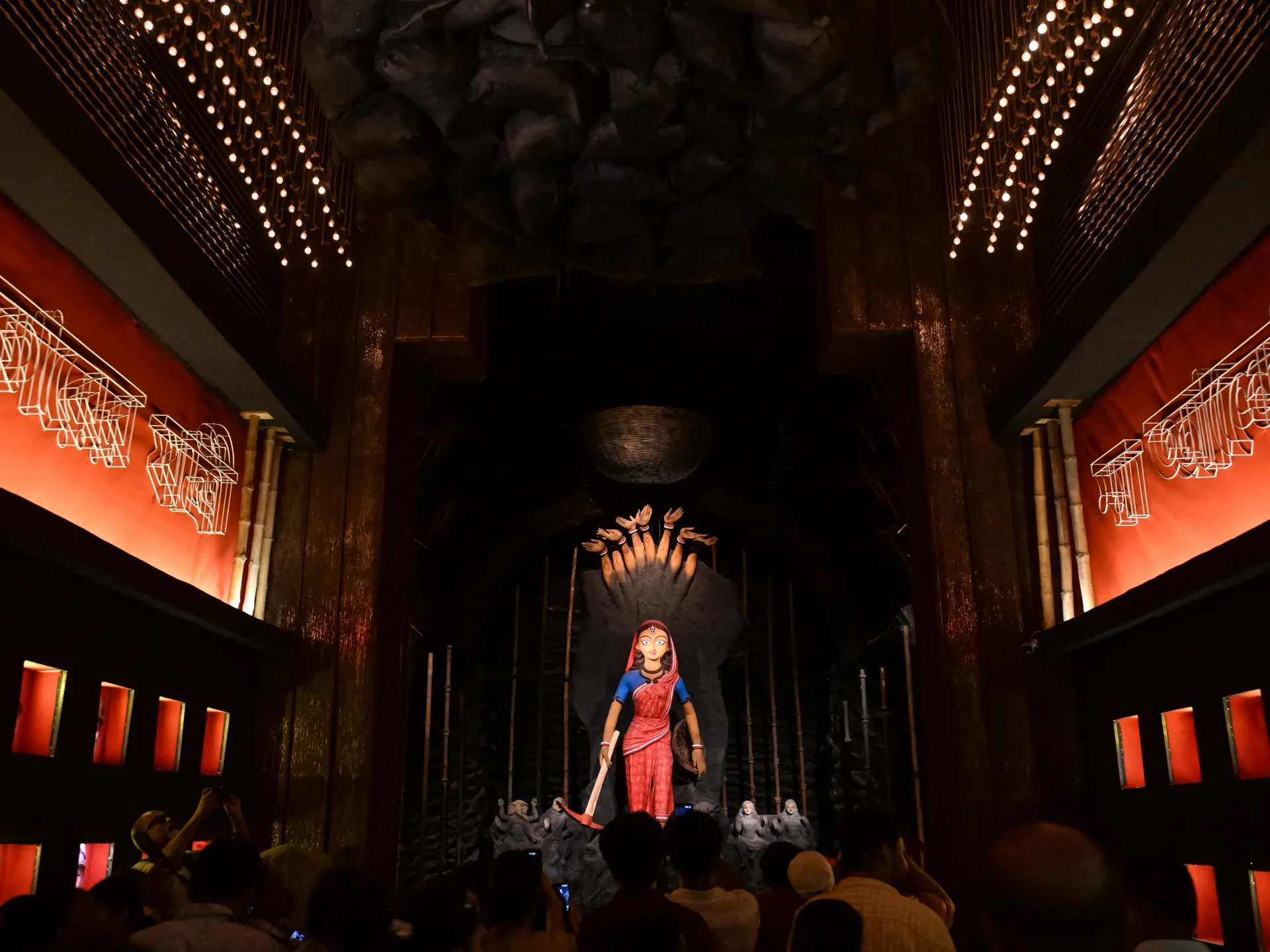
Police said the injured were taken to hospital from a Durga Puja pandal, a temporary pavilion housing idols of the goddess Durga at a festival which attracts thousands of devotees.
A police statement said the stampede happened in the evening due to “heavy crowds of pandal hoppers amid rainfall”.
A senior police official at the scene told the AFP news agency that an announcement caused “commotion” after it started raining and the “crowd waiting outside the pandal [pavilion] was pushing, pulling and rushing forward and fell on the ground, leading to the stampede.”
Prime Minister Narendra Modi described the incident as “saddening.”
“Condolences to the bereaved families. Wishing the injured a speedy recovery. The West Bengal Government is providing all possible help to the affected families,” Modi wrote on X.
Modi’s office announced a compensation payment of 200,000 rupees ($2,106) for the next of kin of those who died and 50,000 rupees ($527) each for the injured.
Interior Minister Amit Shah said the “administration is ensuring that all possible medical facilities are being provided to the injured.”
Deadly crowd incidents happen frequently at Indian mass events, such as religious festivals, often due to poor management and safety lapses.
Last year, a stampede at India’s Kumbh Mela religious fair killed 30 people and injured several others. In Bengaluru, 11 fans were crushed to death during celebrations for the local cricket team’s first Indian Premier League title.
In southern Tamil Nadu state, 36 people were killed in a stampede at a campaign rally for a popular actor-turned-politician
In 2024, 121 people were killed in northern Uttar Pradesh state during a Hindu religious gathering.
When a county judge put the brakes on what would be the largest data center in California, ruling the whole project needed extensive environmental review, Kristian Salgado was relieved.
The community organizer lives in Imperial County, where the nearly one-million-square-foot facility was proposed. The rural county near the Mexico border struggles with bad air pollution and has one the state’s highest rates of asthma hospitalization for kids, according to the National Institute of Environmental Health Sciences. One of Salgado’s nephews lives right next to the site and struggles with the respiratory disease.
“It just seemed very unusual that a project of this scale, with that many backup generators could be permitted without requiring any further [analysis] of what that would mean for residents,” she said.
Now, Salgado and others who share her concern believe Proposition 45 on the November ballot could roll back their wins. The initiative changes the California Environmental Quality Act, or CEQA, a law intended to inform decision makers and the public about a project’s possible environmental impacts — and mitigate them to the extent possible.
Supporters say Prop 45 will speed up environmental review for essential housing, transportation, water, health, education and other projects, cutting costly delays and passing the savings on to consumers. Opponents say it not only weakens environmental protections for many developments, but will cover potentially polluting ones — including data centers. The Yes on 45 campaign forcefully rejects the data center claim, but independent legal experts are divided.
At the heart of the debate is the definition of one of the categories covered by Prop 45: “broadband internet access projects” or “mass-market retail service … that provides the capability to transmit data to, and receive data from, all or substantially all internet endpoints.”
Dan Dunmoyer, president and chief executive of the California Building Industry Assn., which supports the proposition, was adamant: “We specifically excluded data centers” when crafting the measure.
Yet the proposition expressly names certain excluded projects: nuclear energy, high-speed rail, jails and Delta conveyance facilities. Data centers aren’t among them.
Dunmoyer maintains that even if they’re not explicitly listed, data centers just don’t fit the measure’s definition.
In a Daily Journal op-ed, Rachelle Chong, a former Federal Communications Commission member, similarly argues that the definition refers to internet access bought from a provider like AT&T or Comcast. “A conventional data center ordinarily performs an entirely different function,” she wrote, arguing data centers aren’t in play.
But land use attorneys Matthew McKerley and Richard Frank, in another op-ed, say many modern data centers fit the bill because they house equipment used to transmit consumer data to and from the internet.
They also highlight conspicuous campaign finance contributions, including $250,000 from Prologis, which developed two data centers in San Jose.
Ethan Elkind, director of the climate program at UC Berkeley Law, said data centers will argue they fit the definition — and then it will be up to the courts to decide.
“Anyone telling you that it’s definitely not going to be data centers, they cannot read the future,” he said. “The way they’ve written the language, they can’t provide 100% assurance.”
Eric Biber, a UC Berkeley law school professor with expertise in environmental law, pointed to language in the measure requiring it to be interpreted broadly “to afford the fullest possible weight to the interest of, and the approval and realization of, essential projects.” In a blog post, he called it “a thumb on the scale” that could lead courts to conclude that projects should be covered when their eligibility is in doubt.
But Ryan Thomason and J. Scott Miller, partners at the law firm Mitchell Chadwick with CEQA expertise, think it’s likely courts would rule otherwise. In an article, they note that the definition used in the measure hews closely to another section of California law, which distinguishes providing internet services from offering content, services and applications online. “Courts generally interpret identical language in related statutes to have the same meaning,” they write.
Dunmoyer, of the California Building Industry Ass., stressed that the measure doesn’t overthrow local zoning rules.
Opponents are “making it sound like in your backyard will be a data center,” he said. “Well, that doesn’t happen at all by this initiative. That has to happen by a county board of supervisors voting to put a data center in your backyard. And if they decide to do that, this initiative does nothing to expedite that CEQA review.”
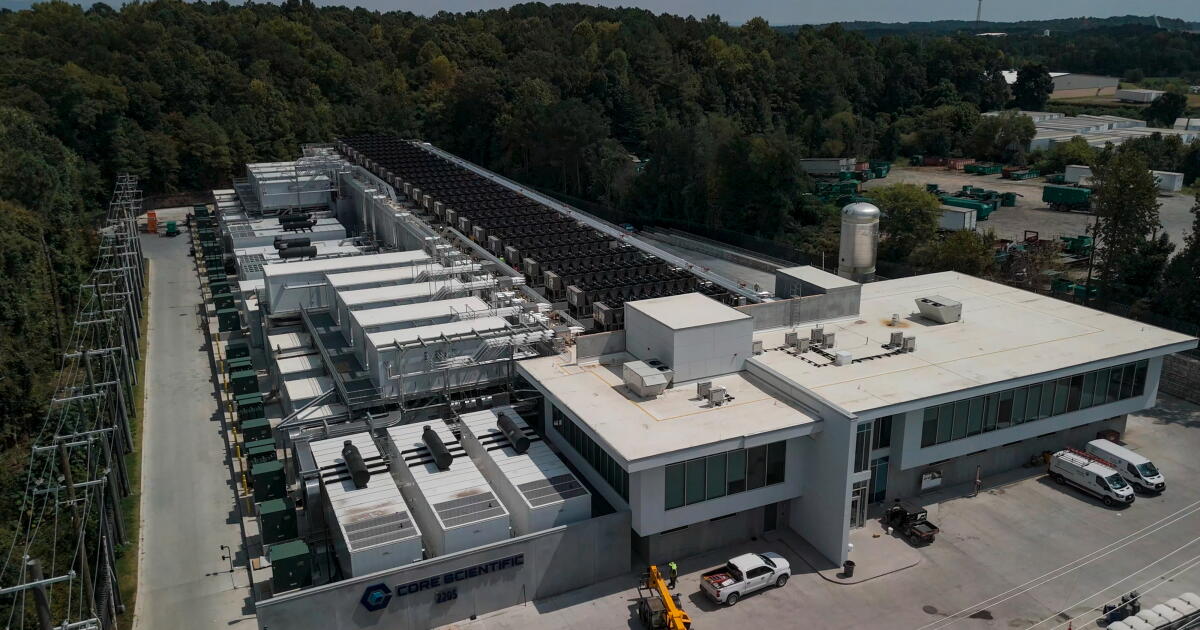
But what if local officials run afoul of their constituents? In the case of the Imperial Valley Data Center Campus, the roughly 75 acres of unincorporated land where it would go had already been zoned for data centers. As a result, county officials said they had the power to move forward with the facility for artificial intelligence computing infrastructure without city approval.
They granted the project an exemption from the state environmental review.
Then came the backlash. Residents spoke out at public meetings, rallied on the streets, circulated a petition and formed a community organization. The city of Imperial and the Sierra Club sued. In the wake of the outrage, the county walked back its decision, declaring a moratorium on data centers. (The developer sued the county over the ban, and the county recently rescinded it following a court order.)
If Prop 45 passes — and data centers are covered by it — Eric Biber, of UC Berkeley Law, told The Times that such a moratorium wouldn’t be possible. That’s because the measure prevents state and local officials from changing the rules for a project once its application is submitted, he said. So if a community didn’t have a moratorium in place and its zoning laws allow a data center, “They’re done,” said. Existing bans aren’t expected to be affected.
Attorneys for the No on Prop 45 campaign argue that it could have real-world impacts for the Imperial Valley facility, saying the developer could claim the new rules apply. For instance, the measure would prevent courts from overturning approvals of qualifying projects because of CEQA violations. Courts would only be able to halt the affected portion of the project while the issue is fixed.
Sebastian Rucci, principal developer of the Imperial Valley data center, said he will fight for his project to move forward and that there’s an environmentally sound way to do it. He said he’s willing to negotiate and mitigate where necessary — but will not go through the CEQA process. If push comes to shove, he said he’ll move the project elsewhere. California could “get in the game” or be left in the dust, he said.
Imperial Valley Computer Manufacturing, the company behind the project, says it will create at least 100 permanent jobs and generate $28.7 million in annual property tax revenue.
CEQA requirements “are not about the environment,” Rucci said. “They may be for some, but they’re not for many. For many, they are about killing things.”
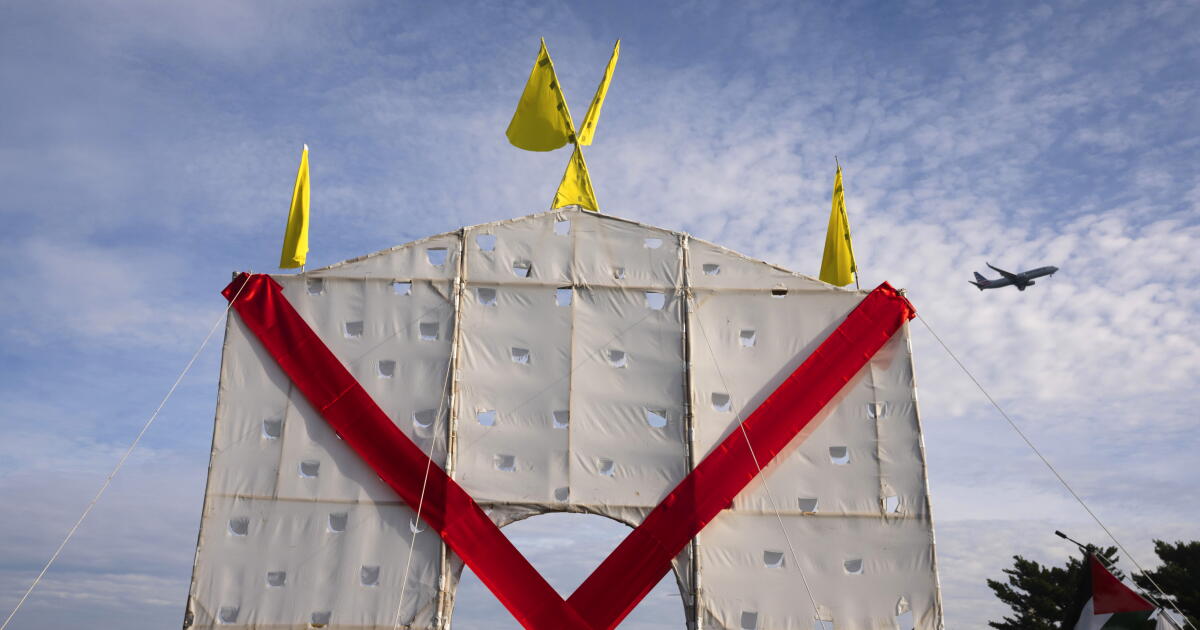
WASHINGTON — The Arlington County Board in Virginia filed a lawsuit Thursday opposing the construction of the Triumphal Arch, becoming the first governmental body to take legal action against President Trump’s planned monument.
The lawsuit, filed in the Eastern District of Virginia, criticized the speed at which the project slated for Memorial Circle has moved without going through the full review process.
“The National Park Service, the agency responsible for projects on national park land such as Memorial Circle, is proceeding full-speed toward ground-disturbing construction,” the lawsuit said. “Although the agency has claimed that a final decision to construct the Arch has not yet been made and purports to be engaged in a routine decisional process, that rushed process appears to be a pretext designed to shore up justifications for building the Arch in accordance with the President’s repeated marching orders.”
The lawsuit asks that “the agency’s feverish pace toward construction of the arch” be halted to ensure that the requirements of the National Environmental Policy Act be followed and proper analysis and testing be done.
“The Arlington County Board has filed this lawsuit because our community has the most to lose from this egregious and unlawful proposed project,” Arlington County Board Chair Matt de Ferranti said in a statement. He added that the county has acted in good faith in the review process, pointing out the “severe, unique, and wide-ranging negative impacts” the project will have on the county and its residents, only to see them ignored.
Memorial Circle sits on federal parkland west of the Potomac River across the Memorial Bridge and immediately adjacent to Arlington County.
The county is being represented in the lawsuit by legal advocacy group Democracy Forward.
White House spokesman Davis Ingle said the Trump administration and White House have been “fastidiously compliant with all procedural and legal requirements and are certain this meritless and dilatory lawsuit will be dismissed.”
The arch will become one of the world’s most iconic landmarks, he added. “It will enhance the visitor experience at Arlington National Cemetery for veterans, the families of the fallen, and all Americans alike.”
The lawsuit came a day after the Association of Flight Attendants-CWA President Sara Nelson expressed concerns that the 250-foot arch compounds multiple safety issues that she said have gone unaddressed since a deadly January 2025, crash over the Potomac River that killed 67 people. Nelson also criticized Trump’s plan to turn the arch into “a top grade military complex” able to host drones and snipers while storing ammunition.
Though the arch has received early approval from the U.S. Commission of Fine Arts, whose members were all tapped by Trump, a group of three veterans and an architectural historian sued in federal court in Washington, D.C., saying the project needs to be approved by Congress. The judge in that lawsuit said the administration must give the court 48 hours before undertaking any activities related to or in preparation for construction of the arch.
The arch is one of several projects around Washington that Trump has undertaken as he remakes the city, from renovating one of its storied public golf courses to threatening to demolish the John F. Kennedy Center for the Performing Arts.
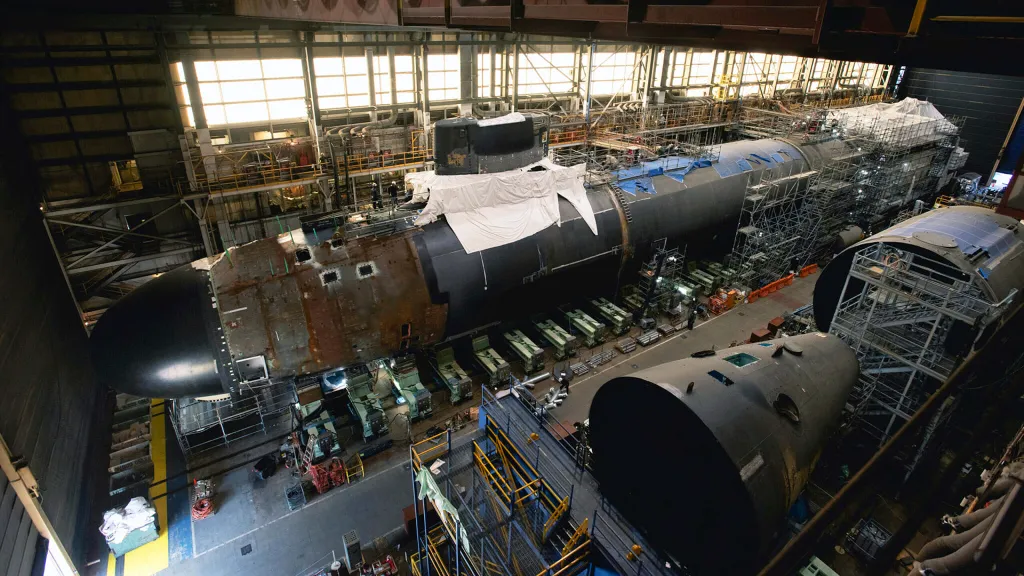
As part of its overall effort to boost America’s flagging shipbuilding capacity, the Trump administration on Tuesday announced that Anduril is building a new two-million-square-foot facility in Baltimore designed to help speed up the production of Virginia class nuclear-powered attack submarines. The plant, dubbed Arsenal-2, will eventually produce components like torpedo tubes and spherical air flasks, which will then be sent to the two shipyards that build nuclear submarines, General Dynamics Electric Boat and Huntington Ingalls Industries’ Newport News Shipbuilding. Anduril’s plan to build complex submarine components is a huge leap for a company with a shipbuilding portfolio consisting of a limited number of smaller craft.
The submarine component plant announcement was made as the Navy is struggling to keep up with its goal of producing two of these boats per year amid a wider issue of construction and delivery delays across the service. However, it will be years before the first Anduril-produced components are placed on a submarine, with no specific timelines for that effort yet established, an industry official told us. We will discuss that in greater detail later in this story.
A Virginia class submarine under construction. (HII) HII
“Today’s $6.6 billion investment represents the president’s commitment to restoring American maritime dominance by constructing new vessels in communities like Baltimore and across the country,” White House spokesperson Anna Kelly told a group of reporters, including from TWZ, at a Tuesday morning press conference.
Those funds include a $3.7 billion investment from Anduril to build and staff the new facility and a contract worth up to $2.9 billion awarded to Anduril by the Navy to produce the components.
“The Virginia class submarine program is one of the most critical warfighting capabilities that our nation has that guarantees deterrence every single day,” Anduril President and Chief Strategy Officer Chris Brose stated. “It is also a program that has been challenged in terms of the ability to meet the Navy’s requirements. So we’re, as a nation, not necessarily where we need to be, and that’s not because of our shipyard workers.”
The Navy currently has 26 Virginia class boats, with two more expected to be commissioned next spring, a senior administration official told reporters on Tuesday. Another 31 vessels are still needed to meet the Navy’s overall plan to have 59 Virginia class boats.
The USS Idaho (SSN 799) pulls into Submarine Base New London in Groton, Conn. for the first time on Monday, Dec. 15, 2025. When commissioned, it became the 26th Virginia class attack submarine and fifth U.S. Navy ship to be named for the Gem State. (U.S. Navy Photo by John Narewski) John Narewski
However, while the Navy has been buying them at a rate of two per year from Fiscal Year 2011 through Fiscal Year 2024, “the actual Virginia class production rate has never reached 2.0 boats per year, and since 2022 has been limited by shipyard and supplier firm workforce and supply chain challenges to about 1.1 to 1.2 boats per year, resulting in a growing backlog of boats procured but not yet built,” according to a Congressional Research Service (CRS) report published in January. “Key drivers of the drop in production include workforce challenges, first-time quality, material and supplier delays, and lead ship issues associated with the Virginia Payload Module [VPM] variant. The Navy is working closely with the shipbuilders to drive improvement throughout the Virginia enterprise.”
A briefing slide with details about the Virginia Payload Module (VPM) that will be added to the Block V Virginia class submarines. USN
Adding to the strain on production and delivery, Australia is set to get one new-build Virginia class boat and two from the U.S. Navy’s fleet under the 2021 trilateral AUKUS nuclear submarine acquisition deal with the United States and the United Kingdom.
In May, Chief of Naval Operations Adm. Daryl Caudle told Congress that the service would meet its two-boat-a-year delivery rate by 2032.
During Tuesday’s press conference, officials laid out claims that the new Anduril plant will address several of the issues that have slowed down the construction and delivery of these submarines.
“If you look at this in terms of capacity, the potential based on the area and what Anduril plans to do is to add about 9 million hours of labor a year at this facility,” stated a senior administration official, who, like others on Tuesday spoke on condition of anonymity. “That would be the equivalent of about a 15% increase, and so that would be directly translatable to Virginia class submarine production. So having those torpedo tubes earlier would let us move production of current Virginia submarines under construction faster.”
Adm. Frank Caldwell, Jr., director of the Naval Nuclear Propulsion Program, examines a torpedo tube aboard the Virginia class fast attack submarine USS Illinois (SSN 786) during Ice Exercise (ICEX) 2022. (U.S. Navy photo by Mass Communication Specialist 1st Class Alfred Coffield/Released) Petty Officer 1st Class Alfred Coffield
In addition, Anduril plans to draw on a huge potential workforce to staff the plant.
“If you basically draw like a one-hour radius around the Baltimore County area, there are millions and millions of people who could potentially contribute and work at this shipyard, and that is a huge selling point for us,” an industry official suggested.
The greater Baltimore area. (Google Earth)
Beyond producing components like torpedo tubes, Anduril aspires to eventually build “full ship sections, bows, sterns, etc.” at Arsenal-2, the industry official added.
Anduril said Arsenal-2 will be “purpose-built” for the “high-volume, high-precision production of undersea naval capabilities.”
“The shipyard’s layout is optimized for production,” the company stated in a media release. “Reduced distances between fabrication, assembly, testing, and integration areas eliminate the staging bottlenecks that slow conventional yards.”
“A functional 1,200-foot graving dock and multimodal road and rail access support large-scale component movement,” Anduril added. “High-bay assembly halls, adjacent fabrication areas, and reconfigurable production lines allow the yard to shift rapidly as Navy requirements evolve.”
ArsenalOS, Anduril’s industrial software platform, “will provide the digital backbone for the yard and its production systems,” the company further pointed out. “It will connect fabrication workflows, outfitting sequences, material movement, inspection protocols, and documentation requirements in a single system, giving workers and managers real-time visibility into the state of production. Digital work instructions, embedded quality controls, modern sensing, and automation will support the expertise of welders, pipefitters, electricians, shipfitters, inspectors, and other skilled trades.”
ArsenalOS™: The Digital Backbone of Modern Defense Manufacturing
Anduril claims the project “will create 3,100 direct jobs and support more than 11,000 indirect jobs. The site will drive $2 billion in annual economic output, including an estimated $312 million in wages each year.”
Before Arsenal-2 is up and running, Anduril said it plans to “manufacture critical Virginia class submarine components at a new 160,000-square-foot facility in Orange County, California, purpose-built to support key submarine construction processes and SUBSAFE-qualified production qualification [efforts].”
The Orange County facility will give Anduril “a two-year operational head start to develop and validate manufacturing methods, production workflows, and quality systems before Arsenal-2 comes online,” the company noted. “It will support prototyping and production of Virginia-class test assets and critical maritime components, including torpedo tubes, while allowing Anduril to recruit and train the early workforce on the systems and standards that will ultimately scale at Arsenal-2. Once Arsenal-2 comes online, the Orange County facility will continue supporting broader maritime manufacturing efforts across Anduril’s industrial network.”
Newly built Virginia-class submarine #Massachusetts launches for the first time #shorts
As we noted earlier in this piece, it will be years before anything produced by Anduril winds up on a sub. In addition to recruiting and training a workforce to build the components and ensuring the production system can meet goals, the parts then have to be tested to ensure they are safe enough to place on boats.
The industry official told TWZ that there is no schedule yet for when that will happen.
“We are starting this work now,” the industry official said. “We’re going to be working quickly. There’s a lot we’re going to have to do to prove the ability to produce the initial components – the torpedo tubes. We’re going to have to work with our partners in industry and partners in government on the certification. So it’s really not possible to put a time stamp on it as much as I’d like to.”
“I think our goal, and I know this is shared by the administration, is to go as fast as possible while keeping the bar of safety as high as it needs to be, and try to get these systems certified so that they go into the production of boats… and solve the critical limiting factor currently in our supply chain, and help our industry partners produce more submarines.”
Arsenal-2 follows the development of Anduril’s Arsenal-1 plant in Ohio, first announced two years ago. That five-million-square-foot facility, once fully up and running, will be able to “produce tens of thousands of autonomous weapons systems addressing the urgent needs of the United States and our allies,” the company said at the time.
Anduril’s Arsenal-1 plant in Ohio. (Anduril)
Arsenal-1, however, remains a work in progress, with more construction work yet to be done. Still, Anduril’s first product from that plant, the U.S. Air Force’s Collaborative Combat Aircraft (CCA) known as the YFQ-44A Fury, rolled off the assembly line there in July. That milestone met the company’s initial production schedule announced in January 2025, according to JobsOhio, the state’s business development arm.
A U.S. Air Force YFQ-44A Fury aircraft, assigned to the Collaborative Combat Aircraft Experimental Operation Unit, takes off for a mission flight during an Agile Combat Employment exercise at Creech Air Force Base, Nevada, July 21, 2026. (U.S. Air Force photo by Staff Sgt. Kristal Munguia) Staff Sgt. Kristal Munguia
Anduril, which also produces systems like the Ghost Shark extra-large autonomous undersea vehicle (in partnership with Australia), the Roadrunner reusable missile-like air vehicle, the Iris family of passive infrared sensors, and a wide range of other items, is playing a growing role in the Trump administration’s weapons development efforts.
Last month, Defense Secretary Pete Hegseth announced that Anduril co-founder Palmer Luckey, who made a name for himself and his fortune in the virtual reality space with Meta, will help lead a new program dubbed Project Meridian. The goal, according to a Pentagon memo, is to “map the trajectory of future warfare, identify critical capability gaps, and propose actionable solutions in furtherance of the identified goals in the 2026 National Security Science and Technology Strategy.”
The Pentagon’s Chief Technology Officer, Emil Michael, has been directed to set up this project. SpaceX founder Elon Musk and Newt Gingrich are other key members.
A screen capture from last month’s livestream of Secretary Hegseth’s speech announcing new plans for autonomous warfare capabilities. From left to right, Palmer Luckey, Newt Gingrich, and Elon Musk. U.S. Military capture
“The inclusion of Musk and Luckey does raise ethical questions, as they both lead companies with major U.S. government contracts already, and which could be in line to see more opportunities based on Project Meridian’s findings. What guardrails might be put in place to prevent conflicts of interest is unclear.”
Regardless of any such concerns, today’s shipyard announcement is a clear indication that the Trump administration and the Pentagon see Anduril as a major player across its weapons manufacturing industrial base. It’s also a reminder of just how challenging it is to actually expand America’s ability to build fighting vessels.