consent

Age of consent: Pat McFadden says changes to law will be discussed after Brand allegations

A discussion over a staggered age of consent is to take place, the work and pensions secretary has said, as the government faces calls to change the law following the case against Russell Brand.

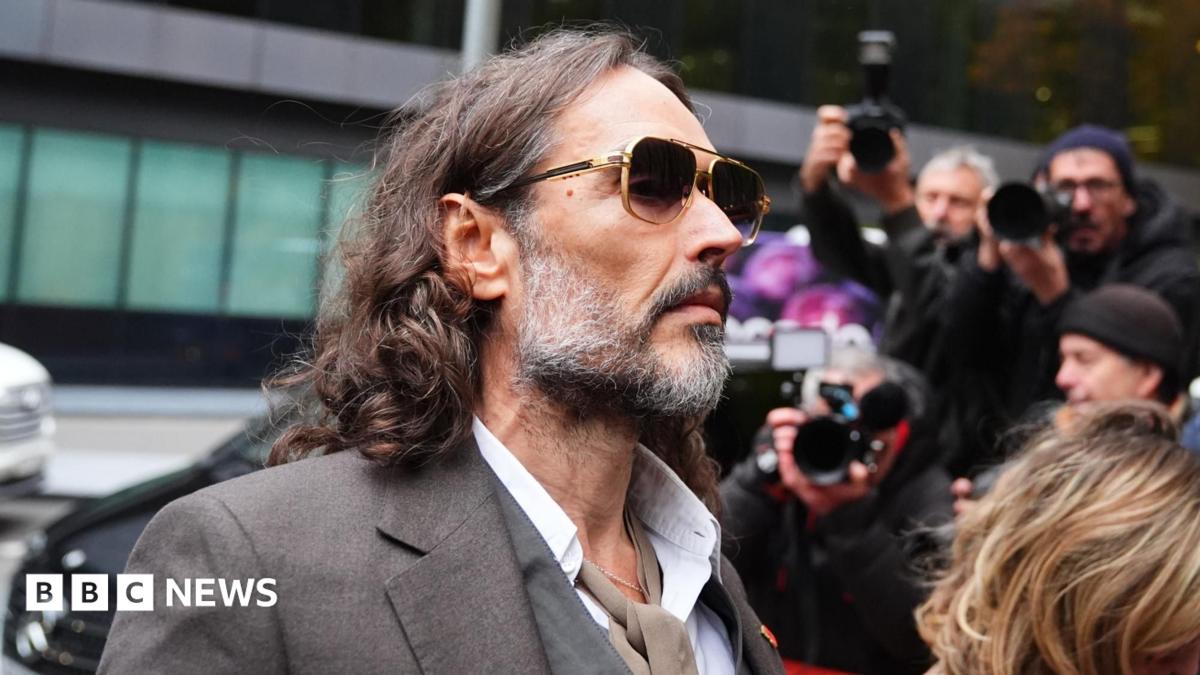
Speaking to the BBC’s Sunday with Laura Kuenssberg, Pat McFadden said that “appalling” stories of “abuse of power by powerful men” have emerged this week.

A woman who alleges she was raped by jailed comedian Brand when she was 16 is now campaigning to see the law changed so that relationships between 16 and 17-year-olds and adults would be illegal.

Questions over a staggered age of consent have “been raised and will be discussed” McFadden said, adding: “[I] can’t tell you what the conclusion of that would be, but the last week has certainly put that up in lights.”

Adults of any age are legally able to have sex with 16 and 17-year-olds, under UK law.

Mia Latter, who has waived her right to anonymity, told the Sunday Times that she wants the age of consent to be staggered.

Latter is one of six women who made allegations against Brand in 2023 as part of a Times, Sunday Times and Channel 4’s Dispatches investigation.

She was known by the pseudonym “Alice”. Brand denied the allegations at the time and none of the six women were complainants in Brand’s recent criminal trial.

At Southwark Crown Court on Monday, Brand was sentenced to 10-and-a-half-years imprisonment after being convicted of one count of rape and three counts of sexual assault, involving four women between 2004 and 2009. He was acquitted of two counts of rape and one allegation of attempted indecent assault.

Latter said she was 16 when she met the comedian, then 30. She told the Sunday Times: “I think people were so struck by my story because of the age difference and the clear imbalance [in power].

“I don’t want to criminalise teenagers having sex with each other.

“If you’re between the ages of 16 and 18, it seems reasonable that you can have relationships with each other, and [teenagers] are always going to.

“But…if you’re in your thirties, forties and fifties and you’re trying to have a relationship with someone under the age of 18, it [should be] a criminal offence.”

Layla Stone, founder of the campaign group Close the Consent Gap, said bringing in a staggered age of consent was about addressing a “power imbalance” in relationships involving 16 and 17 year-olds and adults. She urged ministers to commit to such a change.

Stone, a child protection social worker, told the BBC that 16 and 17 year-olds were seen as children in “every single framework of the law” and “we don’t believe [they are] old enough to consent to having sex with much older adults”.

Close the Consent Gap is proposing that 16 year-olds would not be able to have a sexual relationship with anyone older than 19, and that someone aged 17 would be prohibited from a relationship with anyone older than 20.

Further allegations of sexual misconduct in the entertainment industry came in the same week Brand was convicted.

ITV News and the Guardian published a story alleging that comedian David Walliams had been accused of sexual misconduct by several women.

One woman said she now characterises her alleged encounter with Walliams at 15 years old as a “sexual assault”. Walliams strongly denied he had any sexual contact with the girl.

Other women alleged inappropriate behaviour when he was a judge at ITV’s Britain’s Got Talent, such as inviting girls and young women to his dressing room.

Walliams said he rejected any allegations of criminal activity and that he has never engaged in the grooming of young women.

The Metropolitan Police said on Friday it has launched an investigation into Walliams over reports of “alleged serious sexual offences”, after the ITV News and the Guardian story. The Met said that the allegations it is investigating are separate from those reported by ITV and the Guardian but that it was “also proactively reviewing that reporting”.

Speaking to Sky News, the work and pensions secretary said: “I do think that between Russell Brand, David Walliams, what’s been put out there, people are looking at these issues in a new light.”


Source link

‘Queen at Sea’ review: Binoche excels as concerned daughter

Early in “Queen at Sea,” there’s a sex scene. It’s brief and shows little, but the fleeting moment will inform everything that happens in writer-director Lance Hammer’s crushing second feature. This movie about consent and dementia — and ultimately, far much more — hinges on a questionable act that provokes a hasty emotional reaction. In the process, a family tries to come to the aid of its ailing matriarch, presented with only a series of unappealing options, each more unbearable than the next.

Juliette Binoche is beautifully fragile as Amanda, the dutiful daughter of Leslie (Anna Calder-Marshall), who herself has been married to second husband Martin (Tom Courtenay) for 18 years. Amanda and her teenage daughter Sarah (Florence Hunt) visit the older couple’s London home one morning, shocked to open their bedroom door to find Martin on top of Leslie, thrusting away. But embarrassment quickly gives way to anger for Amanda: Leslie has advanced dementia and her doctor has told Martin that he can no longer have sex with Leslie because she doesn’t possess the mental acuteness to give consent. Furious at her stepfather, Amanda phones the police, hoping the authorities can put a scare into him.

But Amanda’s call has unintended consequences. When the police arrive, they arrest Martin, advising Amanda that she take her mother for a “forensic medical examination” — or, as Amanda puts it bluntly, a rape exam — to ensure she has not been injured. Amanda’s rage quickly morphs into panic because she knows how dependent the childlike Leslie is on her husband, who functions as her primary caregiver. She just wanted to teach Martin a lesson, but soon, social services intervene to determine whether the elderly couple has to be separated for Leslie’s safety.

Even before the police becomes involved, Hammer hints at his film’s tense tenor. You can feel it in how he shoots the house’s severely winding stairs — dangerous for Leslie and Martin to navigate — from occasionally vertiginous angles. The camera rarely moves as we spy charged conversations from a distance, sometimes from another room or from a floor above the characters. We’re intruders, stealing glimpses of a private domestic drama not meant for our prying eyes.

Unlike previous terrific pictures about dementia (such as “The Father”), “Queen at Sea” is less about the crippling condition than it is the fulcrum for a troubling exploration of several topics: mortality, love, parenting and the grim futility of everything. Similarly, although Hammer takes seriously the question of consent, he widens his narrative’s lens to provide a thoughtful, complex view of the issue. Martin adores his wife, insisting that their doctor is wrong and that Leslie, in fact, does understand her sexual urges. To back up his argument, he informs Amanda that, frequently, it is her mother who initiates sex. But is that because dementia has robbed Leslie of the ability to modulate her urges? “Queen at Sea” offers no answers, leaving the viewer as uncertain as Amanda, who wants to protect her mother but cannot deny how drawn Leslie is to her kindly husband.

At the film’s heart is a terribly relatable family conflict in which each character assumes that they know best. Binoche plays Amanda with a surfeit of tenderness for her mother, who goes from being lucid to infantile without warning. (Calder-Marshall poignantly channels the silent helplessness that consumes those with dementia, making her an unstable chemical compound always on the verge of explosion.)

Just as fiercely loyal as Amanda, Martin vainly advocates for his beloved, knowing that Amanda has power of attorney and, therefore, the upper hand. Courtenay gives a marvelous performance suffused with simmering rage: To Martin’s way of thinking, it was Amanda’s foolish overreaction to seeing them have sex that led to all these problems. That feeling of betrayal resides on his face for the rest of “Queen at Sea,” even as he and his stepdaughter negotiate a wobbly truce concerning Leslie’s future, which includes an unexpectedly fraught trip to a care home.

Hammer has not made a film since 2008’s “Ballast,” another spare drama about brittle lives. Eighteen years later, his formal command remains formidable. Eventually, Hammer starts cutting away from the central narrative to focus on Sarah as she hangs out with friends and spends time with a cute boy, James (Cody Molko). At first, these carefree interludes seem to be a welcome respite from “Queen at Sea’s” choking anxiety. But as Leslie’s situation grows increasingly complicated, Sarah’s emerging love story proves to be a bittersweet, ironic counterpoint. Maybe Sarah will find love and great sex — like her parents and grandparents before her — but the shadow of despair that has descended on her family will someday come for her. She’s still too young to know how impossible aging can be.

‘Queen at Sea’

Not rated

Running time: 2 hours, 1 minutes

Playing: Opens Friday, Nov. 6 at Laemmle Monica Film Center and Laemmle Town Center

Source link

SoCal artist says Trump administration used her fan art: ‘I … would never consent’

Devin Elle Kurtz makes her opinion on generative AI known. For the last few years, the 29-year-old Pasadena artist says she’s been frustrated when strangers tell her that her art style looks AI-generated.

They have it backward, she insists. Kurtz, who has been sharing her art on the internet since she was a teenager, suspects that her viral art may have been used to train AI models. Her Instagram bio reads, “NO AI,” alongside a circle-backslash emoji.

Her feelings on the subject made what she discovered Thursday morning all the more painful, the artist said. Kurtz woke up to multiple emails from fans telling her that the Trump administration’s Department of Education had posted a meme on X that looked eerily similar to one of her works — fan art inspired by one of her favorite scenes from the animated series “Avatar: The Last Airbender.” In the work, Aang and Zuko are shown practicing fire-bending moves as two dragons move around them.

The Department of Education’s post includes an image of the two characters in seemingly identical stances, outfits and color scheme. “There’s magic in learning,” reads text added over the image. “Make education great again.”

The Department of Education did not immediately respond to a request for comment late Thursday.

Kurtz soon took to social media to condemn the Trump administration. She wrote on the platform: “I did not and would never consent to this administration running my fanart through AI and posting it. Can’t even believe I’m saying these words.” Her response had 150,000 likes as of late Thursday night.

“It definitely made me angry,” Kurtz told The Times on Thursday. “Seeing something that I made appropriated with a Make America Great Again-adjacent slogan on it made me quite upset. I knew I wanted to make it really clear that this was not something that I co-signed.”

Kurtz said she made the artwork in 2023 to share her love of the series with its creators and with other fans.

“Fandom at its core is supposed to be humans loving something together,” Kurtz said. “I want to live in a world where the things that I see around me are made by people. That is what being a human being is all about. Not just output for the sake of output.”

Kurtz said several tells led her to conclude that AI was likely used to alter her work. In the version shared by the Trump administration, the dragons have been removed, and the platform the duo is standing on has oddly sized bricks.

Since her fan art is based on existing intellectual property, she doesn’t intend to pursue legal action.

“It would be fantastic if the government didn’t take artists’ work and run it through AI and post it,” Kurtz said.

Kurtz joins a laundry list of artists who have accused the Trump administration of using their work without their knowledge, including singer Olivia Rodrigo and Japanese artist Hiroshi Nagai.

In December, singer Sabrina Carpenter was angered when her song “Juno” was used in the soundtrack for a Department of Homeland Security promotional video featuring clips of officers tackling and handcuffing people.

“[T]his video is evil and disgusting,” Carpenter replied. “Do not ever involve me or my music to benefit your inhumane agenda.” The Department of Homeland Security has since deleted that video.


Source link