congress

US Congress seeks answers, Maxwell invokes Fifth amid Epstein case tensions | Politics News

Ghislaine Maxwell avoids answering questions on alleged co-conspirators in case of convicted sex offender Jeffrey Epstein.

The associate and former girlfriend of convicted late sex offender Jeffrey Epstein has declined to answer questions during a deposition before the United States Congress.

Lawmakers expressed frustration after Ghislaine Maxwell, currently serving a 20-year prison sentence for her role in helping Epstein abuse teenage girls, invoked her Fifth Amendment right against self-incrimination.

Recommended Stories

list of 3 itemsend of list

“As expected, Ghislaine Maxwell took the Fifth and refused to answer any questions,” Representative James Comer, Republican chairman of the House Oversight Committee, told reporters. “This is obviously very disappointing.”

“We had many questions to ask about the crimes she and Epstein committed as well as questions about potential co-conspirators,” he added.

Maxwell was subpoenaed to appear before the committee to discuss her relations with Epstein, but her lawyers stated that she would only testify if US President Donald Trump granted her clemency. Lawmakers had declined a previous request to grant Maxwell legal immunity before testifying.

“She [Maxwell] pleaded the Fifth, which under the US Constitution gives you the right not to answer questions on the grounds that you might incriminate yourself,” said Al Jazeera correspondent Alan Fisher.

“People were waiting to hear answers to important questions, but we got nothing from Ghislaine Maxwell,” he added. “What she did say, very briefly, was that she never saw any evidence of Donald Trump or [former US President] Bill Clinton involved in anything that was illegal. Many people suggest that was a deliberate ploy on her part to say, ‘Look, you buy my silence, but I want clemency.’ She’s appealing to both parties here to say, ‘I will clear the people that you care most about.’”

In a letter released on Sunday by Representative Ro Khanna expressing frustration with Maxwell’s refusal to testify, Khanna noted that Maxwell had spoken with Deputy Attorney General Todd Blanche, who previously worked as Trump’s personal lawyer, without invoking the Fifth Amendment.

“This position appears inconsistent with Ms Maxwell’s prior conduct, as she did not invoke the Fifth Amendment when she previously met with Deputy Attorney General Todd Blanche to discuss substantially similar subject matter,” he said.

Maxwell was moved to a minimum-security prison in Texas after meeting twice with Blanche last year.

Lawmakers such as Democratic Senator Sheldon Whitehouse have called the decision “highly unusual” and questioned whether Maxwell had “been given special treatment in exchange for political favours” as President Trump’s own relationship with Epstein comes under growing scrutiny. Trump has strongly denied any wrongdoing and called the Epstein scandal a “hoax”.

Blanche has said that Maxwell was moved due to “numerous threats against her life”, without providing details. Maxwell has asked Trump to commute her sentence, which she was given in 2022 after being convicted on charges of sex trafficking minors.

She is the only person convicted of crimes related to Epstein, whose connections to a wide array of individuals at the height of political and economic power in the US and around the world have been revealed in the Epstein files.

Source link

Congress fears job loss in Hollywood, amid Warner Bros. acquisition

California lawmakers are expressing concern about how the future of Warner Bros. Discovery could affect Hollywood’s workforce.

In an open letter addressed to Netflix Chief Executives Ted Sarandos and Greg Peters and Paramount Skydance Corporation CEO David Ellison, U.S. Sen. Adam Schiff (D-Calif.) and Rep. Laura Friedman (D-Glendale) call for the industry giants to make “concrete commitments to Californian and American workers.”

Late last year, Netflix won the highly anticipated bidding war for Warner Bros, which would give the streamer control over Warner Bros.’ storied Burbank film and TV studios, HBO and HBO Max. The pending $72-billion deal would greatly reshape the Hollywood landscape. Separately, Paramount has continually thrown in counter-bids and has been consistently rejected.

With all of these moving pieces, there’s a bipartisan fear among the nation’s lawmakers about how the acquisition could affect jobs in the U.S. entertainment industry . As stated in the letter, the industry “supports more than 680,000 jobs and contributes over $115 billion annually to the regional economy.”

Given the slowdown the industry has seen post-COVID and the growing number of international productions, Los Angeles film activity was down 13.2% from July through September 2025 when compared with the same period last year. This downward trend continues to build on the loss of 42,000 jobs in L.A. between 2022 and 2024.

Ellison and Sarandos have made arguments for why they believe their respective companies are best positioned to take over Warner Bros.

But each deal comes with major cuts. Paramount is projected to slash $6 billion in expenses over three years, and Netflix is projecting to cut $2 billion to $3 billion. Some analysts believe these cuts will have a significant effect on the workforce.

Previously, Ellison said, “We believe that what we are offering is better for Hollywood. It’s better for the customers and it’s pro-competitive.”

Sarandos is also quoted in the letter saying: “We think it’s great for consumers. We think it’s a great way to create and protect jobs in the entertainment industry.”

Earlier this week during a Senate subcommittee hearing, Sarandos said Netflix plans to increase its film and television production spending to $26 billion this year, with a majority of that happening in the U.S.

The lawmakers’ letter raises a series of questions surrounding the livelihood of creators, the use of AI and “concrete steps” about preserving jobs in L.A. Schiff and Friedman also offer the CEOs an opportunity to meet with them to discuss their answers.

In an effort to ensure “America continues to lead the world in the creative economy,” the letter said that Congress is currently working on bipartisan legislation that would establish a federal film tax incentive. It will be modeled after state programs in California, Louisiana and Georgia.

“We view this as a tool to not just protect but encourage more domestic filming and sustainable job creation on American soil,” wrote the lawmakers.

Source link

Democrats demand ‘dramatic changes’ for ICE regarding masks, cameras, warrants

Democrats are threatening to block funding for the Homeland Security Department when it expires in two weeks unless there are “dramatic changes” and “real accountability” for U.S. Immigration and Customs Enforcement and other law enforcement agencies carrying out President Trump’s campaign of federal immigration enforcement in Minnesota and across the country.

Congress is discussing potential new rules for ICE and U.S. Customs and Border Protection after officers shot and killed two people in Minneapolis in January. Senate Democratic leader Chuck Schumer and House Democratic leader Hakeem Jeffries reiterated their party’s demands on Wednesday, with Schumer telling reporters that Congress must “rein in ICE in very serious ways, and end the violence.”

Democrats are “drawing a line in the sand” as Republicans need their votes to continue the funding, Jeffries said.

The negotiations come amid some bipartisan sentiment that Congress should step in to de-escalate tensions over the enforcement operations that have rocked Minnesota and other states. But finding real agreement in such a short time will be difficult, if not “an impossibility,” Senate Majority Leader John Thune (R-S.D.) said Tuesday.

Trump last week agreed to a Democratic request that funding for Homeland Security be separated from a larger spending bill and extended at current levels for two weeks while the two parties discuss possible requirements for the federal agents. House Speaker Mike Johnson (R-La.) said this weekend that he was at the White House when Trump spoke with Schumer and that they were “on the path to get agreement.”

But it’s unclear whether the president or enough congressional Republicans will agree to any of the Democrats’ larger demands that the officers unmask and identify themselves, obtain judicial warrants in certain cases and work with local authorities, among other asks. Republicans have already pushed back.

And House GOP lawmakers are demanding that some of their own priorities be added to the Homeland Security spending bill, including legislation that would require proof of citizenship before Americans register to vote. Sen. Lindsey Graham of South Carolina and other Republican senators are pushing for restrictions on sanctuary cities that they say don’t do enough to crack down on illegal immigration. There’s no clear definition of sanctuary jurisdictions, but the term is generally applied to state and local governments that limit cooperation with federal immigration authorities.

It’s also uncertain whether Democrats who are furious over the Trump administration’s increasingly aggressive immigration enforcement operations would be willing to compromise.

“Republicans need to get serious,” Schumer, a New York Democrat, said, adding that they will propose “tough, strong legislation” in the next day.

A look at Democrats’ demands and what Republicans are saying about them:

Agreement on body cameras

Republicans say they are open to officer-worn body cameras, a change that was already in the underlying Homeland Security spending bill. Homeland Security Secretary Kristi Noem backed that up on Monday when she ordered body-worn cameras to be issued to every DHS officer on the ground in Minneapolis, including those from ICE. She said the policy would expand nationwide as funding becomes available.

The bill already directed $20 million to outfit immigration enforcement agents with body-worn cameras.

Gil Kerlikowske, who served as commissioner of U.S. Customs and Border Protection from 2014 to 2017, said that most agents are “very supportive” of cameras because they could help exonerate officers. But he added that complex questions remain, including when footage should be released and when cameras must be activated.

“When do you turn it on? And if you got into a problem and didn’t have it on, are you going to be disciplined? It’s really pretty complex,” he said.

Schumer said Tuesday that the body cameras “need to stay on.”

Disagreement on masking

As videos and photos of aggressive immigration tactics and high-profile shootings circulate nationwide, agents covering their faces with masks has become a flash point. Democrats argue that removing the masks would increase accountability. Republicans warn it could expose agents to harassment and threats.

“State law enforcement, local folks don’t do it,” said Rep. Bennie Thompson, the top Democrat on the Committee for Homeland Security. “I mean, what’s so special about an ICE law enforcement agency that they have to wear a mask?”

But Republicans appear unlikely to agree.

“Unlike your local law enforcement in your hometown, ICE agents are being doxed and targeted. We have evidence of that,” Johnson said on Tuesday. He added that if you “unmask them and you put all their identifying information on their uniform, they will obviously be targeted.”

Immigration officers are already required to identify themselves “as soon as it is practical and safe to do so,” according to federal regulations. ICE officials insist those rules are being followed.

Critics, however, question how closely officers adhere to the regulations.

“We just see routinely that that’s not happening,” said Nithya Nathan Pineau, a policy attorney with the Immigrant Legal Resource Center.

Judicial vs. administrative warrants

Democrats have also demanded stricter use of judicial warrants and an end to roving patrols of agents who are targeting people in the streets and in their homes. Schumer said Tuesday that they want “arrest warrants and an end to racial profiling.”

Most immigration arrests are carried out under administrative warrants, internal documents issued by immigration authorities that authorize the arrest of a specific person but do not permit officers to forcibly enter private homes or other nonpublic spaces without consent. Traditionally, only warrants signed by judges carry that authority.

But an internal ICE memo obtained by the Associated Press last month authorizes ICE officers to use force to enter a residence based solely on a more narrow administrative warrant to arrest someone with a final order of removal, a move that advocates say collides with 4th Amendment protections.

Democrats have not made clear how broadly they want judicial warrants used. Jeffries of New York said that Democrats want to see “an end to the targeting of sensitive locations like houses of worship, schools and hospitals.”

Johnson said Tuesday that Democrats are trying to “add an entirely new layer” by seeking warrants signed by a judge rather than the administrative warrants that are signed by the department. “We can’t do that,” he said.

The speaker has said that an end to roving patrols is a potential area of agreement, but he did not give details.

Code of conduct and more accountability

Democrats have also called for a uniform code of conduct for all ICE and federal agents similar to that for state and local law enforcement officers.

Federal officials blocked state investigators from accessing evidence after Renee Good was shot and killed by an ICE agent on Jan. 7. Gov. Tim Walz, a Democrat, demanded that the state be allowed to take part, saying that it would be “very difficult for Minnesotans” to accept that an investigation excluding the state could be fair.

Hoping for a miracle

Any deal Democrats strike on the Department of Homeland Security is unlikely to satisfy everyone in the party. Rep. Ayanna Pressley of Massachusetts said she would never support an agreement that didn’t require unmasking.

“I ran for Congress in 2018 on abolish ICE,” Pressley said. “My position has not changed.”

Thune, of South Dakota, has repeatedly said it’s an “impossibility” to negotiate and pass something so complicated in two weeks. He said any talks should be between Democrats and Trump.

“I don’t think it’s very realistic,” Thune said Tuesday about finding quick agreement. “But there’s always miracles, right?”

Jalonick and Cappelletti write for the Associated Press. AP writer Rebecca Santana contributed to this report.
Source link

California leaders decry Trump call to ‘nationalize’ election, say they’re ready to resist

President Trump’s repeated calls to “nationalize” elections drew swift resistance from California officials this week, who said they are ready to fight should the federal government attempt to assert control over the state’s voting system.

“We would win that on Day One,” California Atty. Gen. Rob Bonta told The Times. “We would go into court and we would get a restraining order within hours, because the U.S. Constitution says that states predominantly determine the time, place and manner of elections, not the president.”

“We’re prepared to do whatever we have to do in California,” said California Secretary of State Shirley Weber, whose office recently fought off a Justice Department lawsuit demanding California’s voter rolls and other sensitive voter information.

Both Bonta and Weber said their offices are closely watching for any federal action that could affect voting in California, including efforts to seize election records, as the FBI recently did in Georgia, or target the counting of mailed ballots, which Trump has baselessly alleged are a major source of fraud.

Weber said California plays an outsized role in the nation and is “the place that people want to beat,” including through illegitimate court challenges to undermine the state’s vote after elections, but California has fought off such challenges in the past and is ready to do it again.

“There’s a cadre of attorneys that are already, that are always prepared during our elections to hit the courts to defend anything that we’re doing,” she said. “Our election teams, they do cross the T’s, dot the I’s. They are on it.”

“We have attorneys ready to be deployed wherever there’s an issue,” Bonta said, noting that his office is in touch with local election officials to ensure a rapid response if necessary.

The standoff reflects an extraordinary deterioration of trust and cooperation in elections that has existed between state and federal officials for generations — and follows a remarkable doubling down by Trump after his initial remarks about taking over the elections raised alarm.

Trump has long alleged, without evidence and despite multiple independent reviews concluding the opposite, that the 2020 election was stolen from him. He has alleged, again without evidence, that millions of fraudulent votes were cast, including by non-citizen voters, and that blue states looked the other way to gain political advantage.

Last week, the Justice Department acted on those claims by raiding the Fulton County, Ga., elections hub and seizing 2020 ballots. The department also has sued states, including California, for their voter rolls, and is defending a Trump executive order purporting to end mail voting and add new proof of citizenship requirements for registering to vote, which California and other states have sued to block.

On Monday, Trump further escalated his pressure campaign by saying on former FBI Deputy Director Dan Bongino’s podcast that Republicans should “take over the voting in at least 15 places,” alleging that voting irregularities in what he called “crooked states” are hurting his party. “The Republicans ought to nationalize the voting.”

On Tuesday morning, Karoline Leavitt, the White House press secretary, appeared to try to walk back Trump’s comments, saying he had been referring to the Save Act, a measure being pushed by Republicans in Congress to codify Trump’s proof-of-citizenship requirements. However, Trump doubled down later that day, telling reporters that if states “can’t count the votes legally and honestly, then somebody else should take over.”

Bonta said Trump’s comments were a serious escalation, not just bluster: “We always knew they were going to come after us on something, so this is just an affirmation of that — and maybe they are getting a step closer.”

Bonta said he will especially be monitoring races in the state’s swing congressional districts, which could play a role in determining control of Congress and therefore be a target of legal challenges.

“The strategy of going after California isn’t rational unless you’re going after a couple of congressional seats that you think will make a difference in the balance of power in the House,” Bonta said.

California Democrats in Congress have stressed that the state’s elections are safe and reliable, but also started to express unease about upcoming election interference by the administration.

Rep. Ro Khanna (D-Fremont) said on Meet the Press last week that he believes the administration will try to use “every tool in their toolbox to try and interfere,” but that the American people will “overcome it by having a battalion of lawyers at the polls.”

California Sen. Adam Schiff this week said recent actions by the Trump administration — including the Fulton County raid, where Director of National Intelligence Tulsi Gabbard put Trump on the phone with agents — were “wrong” and set off “alarm bells about their willingness to interfere in the next election.”

Democrats have called on their Republican colleagues to help push back against such interference.

“When he says that we should nationalize the elections and Republicans should take over, and you don’t make a peep? What is going on here?” Senate Minority Leader Chuck Schumer (D-N.Y.) said Tuesday. “This is the path that has ruined many a democracy, and our democracy is deep and strong, but it requires — and allows — resistance to these things. Verbal resistance, electoral resistance. Where are you?”

Some Republicans have voiced their disagreement with Trump. Senate Majority Leader John Thune (R-S.D.) said Tuesday that he is “supportive of only citizens voting and showing ID at polling places,” but is “not in favor of federalizing elections,” which he called “a constitutional issue.”

“I’m a big believer in decentralized and distributed power. And I think it’s harder to hack 50 election systems than it is to hack one,” he said.

However, other Republican leaders have commiserated with Trump over his qualms with state-run elections. House Majority Leader Mike Johnson (R-La.), for example, took aim at California’s system for counting mail-in ballots in the days following elections, questioning why such counting led to Republican leads in House races being “magically whittled away until their leads were lost.”

“It looks on its face to be fraudulent. Can I prove that? No, because it happened so far upstream,” Johnson said. “But we need more confidence in the American people in the election system.”

Elections experts expressed dismay over Johnson’s comments, calling them baseless and illogical. The fact that candidates who are leading in votes can fall behind as more votes are counted is not magic but math, they said — with Democrats agreeing.

“Speaker Johnson seems to be confused, so let me break it down. California’s elections are safe and secure. The point of an election is to make sure *every* eligible vote cast is counted, not to count fast,” Sen. Alex Padilla (D-Calif.) wrote on X. “We don’t just quit while we’re ahead. It’s called a democracy.”

Democrats have also expressed concern that the administration could use the U.S. Postal Service to interfere with counting mail-in ballots. They have specifically raised questions about a rule issued by the postal service last December that deems mail postmarked on the day it is processed by USPS, rather than the day it is received — which would impact mail-in ballots in places such as California, where ballots must be postmarked by Election Day to be counted.

“Election officials are already concerned and warning that this change could ultimately lead to higher mailed ballots being rejected,” Senate Democrats wrote to U.S. Postal Service Postmaster General David Steiner last month.

Some experts and state officials said voters should make a plan to vote early, and consider dropping their ballots in state ballot drop boxes or delivering them directly to voting centers.

Source link

North Korea rehearses parade as party congress nears, report says

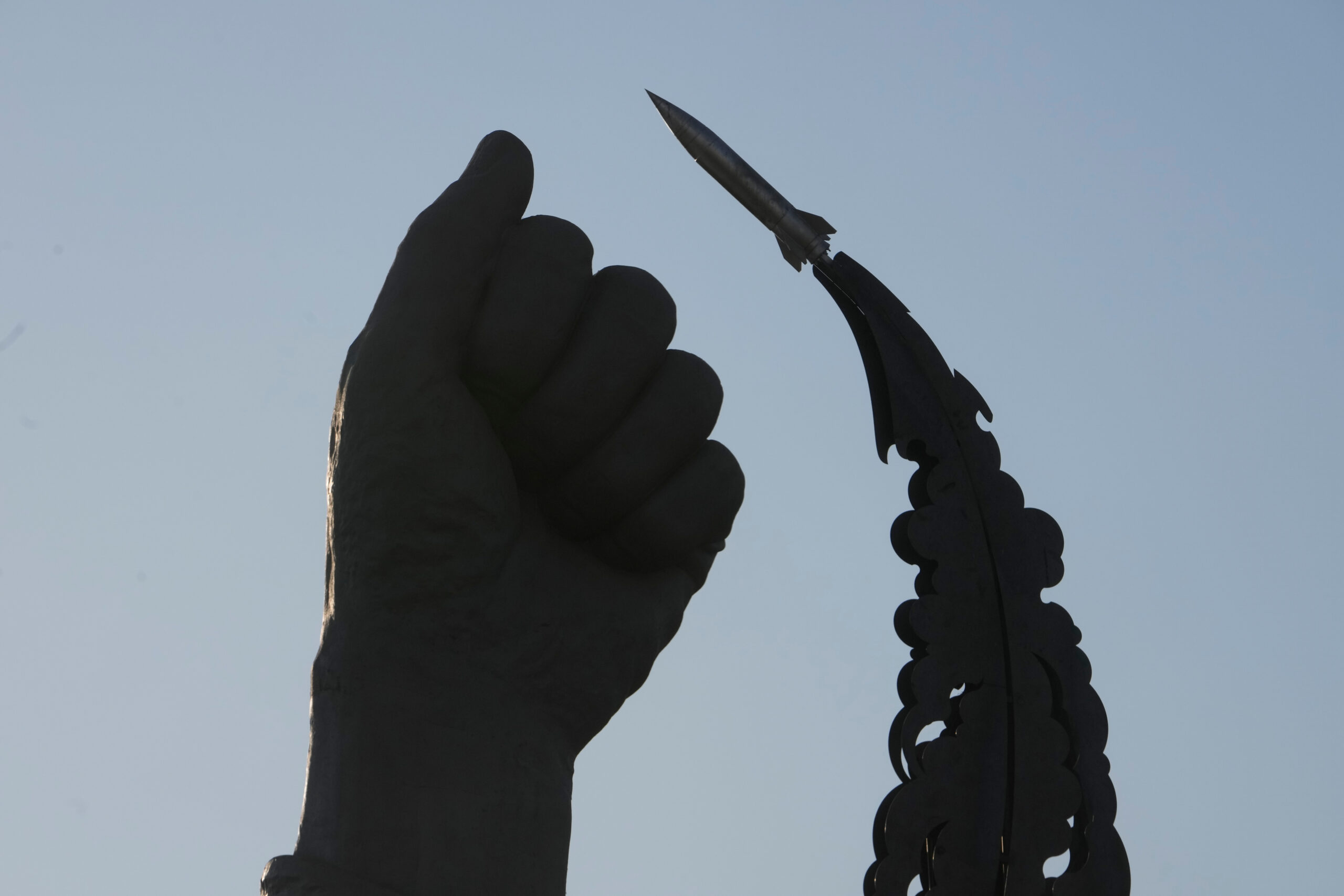
North Korean soldiers are rehearsing for a possible parade ahead of the country’s upcoming Ninth Party Congress, according to an analysis of satellite imagery by 38 North released Monday. This file photo shows an October military parade in Pyongyang’s Kim Il Sung Square. File Photo by KCNA/EPA

SEOUL, Feb. 3 (UPI) — Hundreds of North Korean soldiers were seen practicing marching formations in preparation for a possible military parade ahead of the country’s long-anticipated Ninth Party Congress, according to a new report.

Recent commercial satellite imagery shows large formations of troops conducting drills at the Mirim Parade Training Ground in east Pyongyang, analysts at the Stimson Center-based 38 North said in an assessment published Monday.

The activity is “likely in preparation for a parade to mark the upcoming Ninth Party Congress,” the report said.

Imagery shows soldiers arranging themselves into shapes resembling the hammer, sickle and brush, the emblem of the ruling Workers’ Party of Korea.

The party congress, held every five years, is where North Korea sets its domestic and foreign policy agenda. Leader Kim Jong Un is expected to unveil a new plan guiding political, economic and military priorities through 2031, the 38 North report noted.

While the official date for the Ninth Party Congress has not been announced, South Korean government officials and the National Intelligence Service have said they expect it to take place in early to mid-February.

Seoul’s Joint Chiefs of Staff said Tuesday it has detected signs of parade preparations at the Mirim Airfield and Kim Il Sung Square, where similar events have been held in the past.

“It’s not yet clear whether a military parade will take place,” JCS spokesman Col. Lee Sung-jun said in a press briefing. “As I understand, preparations are currently being made as a civilian event.”

The apparent parade preparations come amid a string of public appearances by Kim Jong Un that underscore the regime’s push to demonstrate progress ahead of the congress.

Last week, Kim attended the groundbreaking ceremony for a regional development project in Unnyul County, part of a broader effort to modernize local industry and infrastructure. He has also intensified on-site inspections, recently dismissing a vice premier over construction delays at a major machinery plant.

A report by the state-funded Korea Institute for National Unification said the firing suggests the regime may be under mounting pressure to show tangible economic results, as sanctions and chronic shortages continue to constrain growth.

Military signaling has remained prominent as well. In late January, Kim oversaw the test-firing of an upgraded large-caliber multiple rocket launcher system and said plans to further bolster the country’s nuclear deterrent would be detailed at the congress.

Against that backdrop, 38 North said the timing of the congress could be influenced by whether Pyongyang plans additional public events ahead of the gathering.

“If there are more economic projects to showcase or weapons to test before the Party Congress commences, the event could take longer to open,” the report said.

Source link

Trump says federal government should ‘take over’ state elections

President Trump said Monday that the federal government should “nationalize” elections, repeating — without evidence — his long-running claim that U.S. elections are beset by widespread fraud.

Speaking on a podcast hosted by former FBI Deputy Director Dan Bongino, Trump said Republicans should “take over the voting in at least 15 places,” alleging that voting irregularities in what he called “crooked states” are hurting the GOP.

“The Republican ought to nationalize the voting,” Trump said.

The proposal would clash with the Constitution’s long-standing framework that grants states primary authority over election administration, and underscored Trump’s continued efforts to upend voting rules ahead of this year’s midterm elections.

Trump, for example, lamented that Republicans have not been “tougher” on the issue, again asserting without evidence that he lost the 2020 election because undocumented immigrants voted illegally for Democrats.

“If we don’t get them out, Republicans will never win another election,” Trump said. “These people were brought to our country to vote and they vote illegally, and it is amazing that the Republicans are not tougher on it.”

In his remarks, the president suggested that “some interesting things” may come out of Georgia in the near future. Trump did not divulge more details, but was probably teasing what may come after the FBI served a search warrant at the election headquarters of Fulton County, Ga.

Days after FBI agents descended on the election center, the New York Times reported that Director of National Intelligence Tulsi Gabbard was with agents at the scene when she called Trump on her cellphone. Trump thanked them for their work, according to the report, an unusual interaction between the president and investigators tied to a politically sensitive inquiry.

In the days leading up to the Georgia search, Trump suggested in a speech during the World Economic Summit in Davos, Switzerland, that criminal charges were imminent in connection to what he called a “rigged” 2020 election.

Georgia has been central to Trump’s 2020 claims. That’s where Trump called Republican Secretary of State Brad Raffensperger on January 2021, asking him to “find” 11,780 votes to overturn the state’s results. Raffensperger refused, affirming that a series of reviews confirmed that Democrat Joe Biden had won the state.

Since returning to office a year ago, Trump has continued to aggressively pushed changes to election rules.

He signed an executive order in March to require proof of U.S. citizenship on election forms, but months later a federal judge barred the Trump administration from doing so, saying the order violated the separation of powers.

“Because our Constitution assigns responsibility for election regulation to the States and to Congress, this Court holds that the President lacks the authority to direct such changes,” Judge Colleen Kollar-Kotelly of the Federal District Court for the District of Columbia wrote in October.

In Congress, several Republican lawmakers have backed legislation to require people provide proof of citizenship before they register to vote.

Some conservatives are using the elections bill as bargaining chip amid negotiations over a spending package that would end a partial government shutdown that began early Saturday.

“ONLY AMERICAN CITIZENS SHOULD BE VOTING IN AMERICAN ELECTIONS. This is common sense not rocket science,” Rep. Anna Paulina Luna (R-Fla.) wrote on X on Monday as negotiations were continuing.

Source link

GOP chair rejects Clintons’ offer in Epstein investigation ahead of contempt of Congress vote

The Republican chair of a House Committee rejected an offer Monday from former President Clinton to conduct a transcribed interview for a House investigation into convicted sex offender Jeffrey Epstein, pushing the threat to hold both Clintons in contempt of Congress closer toward a vote.

The impasse comes as the full House is headed toward potential votes this week on criminal contempt of Congress charges against the Clintons. If passed, the charges threaten Bill Clinton and former Secretary of State Hillary Clinton with substantial fines and even incarceration if they are convicted.

Rep. James Comer, the chair of the House Oversight Committee, said on social media that he would insist on both Clintons sitting for a sworn deposition before the committee in order to fulfill the panel’s subpoenas. A letter from the committee to attorneys for the Clintons indicates that they had offered for Bill Clinton to conduct a transcribed interview on “matters related to the investigations and prosecutions of Jeffrey Epstein” and for Hillary Clinton to submit a sworn declaration.

“The Clintons do not get to dictate the terms of lawful subpoenas,” Comer, a Kentucky Republican, said.

The Republican-controlled Oversight panel had advanced criminal contempt of Congress charges last month. Nine of the committee’s 21 Democrats joined Republicans in support of the charges against Bill Clinton as they argued for full transparency in the Epstein investigation. Three Democrats also supported the charges against Hillary Clinton.

Bill Clinton’s relationship with Epstein has re-emerged as a focal point for Republicans amid the push for a reckoning over Epstein, who killed himself in 2019 in a New York jail cell as he faced sex trafficking charges.

Clinton, like a bevy of other high-powered men, had a well-documented relationship with Epstein in the late 1990s and early 2000s. He has not been accused of wrongdoing in his interactions with the late financier.

After Bill and Hillary Clinton were both subpoenaed in August by the House Oversight Committee, their attorney had tried to argue against the validity of the subpoena. However, as Comer threatened to begin contempt of Congress proceedings, they started negotiating toward a compromise.

Still, the Clintons remained highly critical of Comer’s decision, saying that he was bringing politics into the investigation while failing to hold the Trump administration accountable for delays in producing the Department of Justice’s case files on Epstein.

Groves writes for the Associated Press.

Source link

Man who squirted vinegar on Omar charged with assault and intimidation

The Justice Department has charged a man who squirted apple cider vinegar on Democratic U.S. Rep. Ilhan Omar at an event in Minneapolis, according to court papers made public Thursday.

The man arrested for Tuesday’s attack, Anthony Kazmierczak, faces a charge of forcibly assaulting, opposing, impeding and intimidating Omar, according to a complaint filed in federal court.

Authorities determined that the substance was water and apple cider vinegar, according to an affidavit. After Kazmierczak sprayed Omar with the liquid, he appeared to say, “She’s not resigning. You’re splitting Minnesotans apart,” the affidavit says. Authorities also say that Kazmierczak told a close associate several years ago that “somebody should kill” Omar, court documents say.

It was unclear whether Kazmierczak had an attorney who could comment on the allegations. A message was left with the federal defender’s office in Minnesota.

The attack came during a perilous political moment in Minneapolis, where two people have been fatally shot by federal agents during the White House’s aggressive immigration crackdown.

Kazmierczak has a criminal history and has made online posts supportive of President Trump, a Republican.

Omar, a refugee from Somalia, has long been a target of Trump’s anti-immigrant rhetoric. After she was elected seven years ago, Trump said she should “go back” to her country. He recently described her as “garbage” and said she should be investigated. During a speech in Iowa this week, shortly before Omar was attacked, he said immigrants need to be proud of the United States — “not like Ilhan Omar.”

Omar blamed Trump on Wednesday for threats to her safety.

“Every time the president of the United States has chosen to use hateful rhetoric to talk about me and the community that I represent, my death threats skyrocket,” Omar told reporters.

Trump accused Omar of staging the attack, telling ABC News, “She probably had herself sprayed, knowing her.”

Kazmierczak was convicted of felony auto theft in 1989, has been arrested multiple times for driving under the influence and has had numerous traffic citations, Minnesota court records show. There are also indications he has had significant financial problems, including two bankruptcy filings.

In social media posts, Kazmierczak criticized former President Biden and referred to Democrats as “angry and liars.” Trump “wants the US … stronger and more prosperous,” he wrote. “Stop other countries from stealing from us.”

In another post, Kazmierczak asked, “When will descendants of slaves pay restitution to Union soldiers’ families for freeing them/dying for them, and not sending them back to Africa?”

Threats against members of Congress have increased in recent years, peaking in 2021 after the Jan. 6 attack on the U.S. Capitol by a mob of Trump supporters before dipping slightly, only to climb again, according to the most recent figures from the U.S. Capitol Police.

Officials said they investigated nearly 15,000 “concerning statements, behaviors, and communications directed against Members of Congress, their families, staff, and the Capitol Complex” in 2025.

Richer and Karnowski write for the Associated Press. Richer reported from Washington.
Source link

FBI raid in Georgia highlights Trump’s 2020 election obsession and hints at possible future actions

Donald Trump lost his bid for reelection in 2020. But for more than five years, he’s been trying to convince Americans the opposite is true by falsely saying the election was marred by widespread fraud.

Now that he’s president again, Trump is pushing the federal government to back up those bogus claims.

On Wednesday, the FBI served a search warrant at the election headquarters of Fulton County, Georgia, which includes most of Atlanta, seeking ballots from the 2020 election. That follows Trump’s comments earlier this month when he suggested during a speech at the World Economic Forum in Davos, Switzerland, that charges related to the election were imminent.

“The man has obsessions, as do a fair number of people, but he’s the only one who has the full power of the United States behind him,” said Rick Hasen, a UCLA law professor.

Hasen and many others noted that Trump’s use of the FBI to pursue his obsession with the 2020 election is part of a pattern of the president transforming the federal government into his personal tool of vengeance.

Sen. Jon Ossoff, a Georgia Democrat, compared the search to the Minnesota immigration crackdown that has killed two U.S. citizen protesters, launched by Trump as his latest blow against the state’s governor, who ran against him as Vice President Kamala Harris’ running mate in 2024.

“From Minnesota to Georgia, on display to the whole world, is a President spiraling out of control, wielding federal law enforcement as an unaccountable instrument of personal power and revenge,” Ossoff said in a statement.

It also comes as election officials across the country are starting to rev up for the 2026 midterms, where Trump is struggling to help his party maintain its control of Congress. Noting that, in 2020, Trump contemplated using the military to seize voting machines after his loss, some worry he’s laying the groundwork for a similar maneuver in the fall.

“Georgia’s a blueprint,” said Kristin Nabers of the left-leaning group All Voting Is Local. “If they can get away with taking election materials here, what’s to stop them from taking election materials or machines from some other state after they lose?”

Georgia has been at the heart of Trump’s 2020 obsession. He infamously called Republican Secretary of State Brad Raffensperger on Jan. 2, 2021, asking that Raffensperger “find” 11,780 more votes for Trump so he could be declared the winner of the state. Raffensperger refused, noting that repeated reviews confirmed Democrat Joe Biden had narrowly won Georgia.

Those were part of a series of reviews in battleground states, often led by Republicans, that affirmed Biden’s win, including in Michigan, Wisconsin and Nevada. Trump also lost dozens of court cases challenging the election results and his own attorney general at the time said there was no evidence of widespread fraud.

His allies who repeated his lies have been successfully sued for defamation. That includes former New York Mayor Rudolph Giuliani, who settled with two Georgia election workers after a court ruled he owed them $148 million for defaming them after the 2020 election.

Voting machine companies also have brought defamation cases against some conservative-leaning news sites that aired unsubstantiated claims about their equipment being linked to fraud in 2020. Fox News settled one such case by agreeing to pay $787 million after the judge ruled it was “CRYSTAL clear” that none of the allegations were true.

Trump’s campaign to move Georgia into his column also sparked an ill-fated attempt to prosecute him and some of his allies by Fulton County District Atty. Fani Willis, a Democrat. The case collapsed after Willis was removed over conflict-of-interest concerns, and Trump has since sought damages from the office.

On his first day in office, Trump rewarded some of those who helped him try to overturn the 2020 election results by pardoning, commuting or vowing to dismiss the cases of about 1,500 people charged in the Jan. 6, 2021, attack on the U.S. Capitol. He later signed an executive order trying to set new rules for state election systems and voting procedures, although that has been repeatedly blocked by judges who have ruled that the Constitution gives states, and in some instances Congress, control of elections rather than the president.

As part of his campaign of retribution, Trump also has spoken about wanting to criminally charge lawmakers who sat on the House committee investigating the Jan. 6 attack, suggesting protective pardons of them from Biden are legally invalid. He’s targeted a former cybersecurity appointee who assured the public in 2020 that the election was secure.

During a year of presidential duties, from dealing with wars in Gaza and Ukraine to shepherding sweeping tax and spending legislation through Congress, Trump has reliably found time to turn the subject to 2020. He has falsely called the election rigged, said Democrats cheated and even installed a White House plaque claiming Biden took office after “the most corrupt election ever.”

David Becker, a former Department of Justice voting rights attorney and executive director of The Center for Election Innovation & Research, said he was skeptical the FBI search in Georgia would lead to any successful prosecutions. Trump has demanded charges against several enemies such as former FBI Director James Comey and New York’s Democratic Atty. Gen., Letitia James, that have stalled in court.

“So much this administration has done is to make claims in social media rather than go to court,” Becker said. “I suspect this is more about poisoning the well for 2026.”

Riccardi writes for the Associated Press.
Source link

Rubio stands by Venezuela attack, says Trump retains authority to use force

Secretary of State Marco Rubio left the door open Wednesday to future U.S. military action in Venezuela, telling lawmakers that while the Trump administration does not anticipate further escalation, the president retains the authority to use force if Venezuela’s interim leadership or other American adversaries defy U.S. demands.

Rubio’s remarks came hours after President Trump deployed what he called a “massive armada” to pressure Iran back to the negotiating table over its nuclear weapons program, amid broader questions about how recent U.S. tensions with Denmark over Greenland are affecting American relations with NATO allies.

“The president never rules out his options as commander in chief to protect the national interest of the United States,” Rubio told the Senate Foreign Relations Committee. “I can tell you right now with full certainty, we are not postured to, nor do we intend or expect to take any military action in Venezuela at any time.”

The appearance marked Rubio’s first public testimony before a congressional panel since U.S. forces seized former Venezuelan President Nicolás Maduro and brought him to New York to face narco-trafficking charges nearly a month ago. Rubio was pressed by Democratic lawmakers over congressional war powers and whether the operation had meaningfully advanced democracy in Venezuela.

“We’ve traded one dictator for another. All the same people are running the country,” said Sen. Jeanne Shaheen (D-N.H.). Acting President Delcy Rodríguez “has taken no steps to diminish Iran, China or Russia’s considerable influence in Venezuela.”

Rodríguez, who formerly served as Maduro’s vice president, has committed to opening Venezuela’s energy sector to American companies, providing preferential access to production and using revenues to purchase American goods, according to Rubio’s testimony.

But questions remain about Rodríguez’s own alleged ties to trafficking networks. The Associated Press reported that she has been on the DEA’s radar for years for suspected involvement in drug and gold smuggling, though no public criminal charges have been filed.

And despite Trump’s warning that Rodríguez would “pay a very big price” if she does not cooperate, she has pushed back in public against U.S. pressure over trade policy.

“We have the right to have diplomatic relations with China, with Russia, with Iran, with Cuba, with all the peoples of the world. Also with the United States. We are a sovereign nation,” Rodríguez said earlier this month.

Venezuela is among the largest recipients of Chinese loans globally, with more than $100 billion committed over recent decades. Much of that debt has been repaid through discounted oil shipments under an oil-for-loans framework, financing Chinese-backed infrastructure projects and helping stabilize successive Venezuelan governments.

U.S. military leaders have warned Congress about Iran’s growing strategic presence in the hemisphere, including concerns over ballistic missile capabilities and the supply of attack and surveillance drones to Venezuela.

“If an Iranian drone factory pops up and threatens our forces in the region,” Rubio said, “the president retains the option to eliminate that.”

Democrats also argued that the administration’s broader foreign policy is undercutting U.S. economic strength and alliances, particularly in competition with China.

Despite Trump’s tariff campaign, China posted a record global trade surplus in 2025, lawmakers noted, while estimates show U.S. manufacturing employment has declined by tens of thousands of jobs since the tariffs took effect.

Senators pushed back on the State Department’s assertion that U.S. policy has unified allies against China, arguing instead that tariffs and recent military escalations involving Greenland, Iran and Venezuela have strained relations with key partners. They pointed to Canada as an example, noting that Ottawa recently reached a trade deal with China amid concerns about the reliability of the United States as a partner.

Sen. Rand Paul (R-Ky.), a Republican dissenter on Venezuela, rejected the Trump administration’s framing of Maduro’s capture as a law enforcement operation rather than an act of war.

He pressed Rubio on congressional authorization.

“If we said that a foreign country invaded our capital, bombed all our air defense — which would be an extensive bombing campaign, and it was — removed our president, and then blockaded the country, we would think it was an act of war,” Paul said as he left the hearing.

Congressional Republicans voted to dismiss a war powers resolution earlier this month that would have limited Trump’s ability to conduct further attacks on Venezuela after two GOP senators reversed course on supporting the legislation.

They did so based on informal assurances from the administration that it would consult members of Congress before taking military action.

“I was a big fan of [congressional] consultation when I was sitting over there,” Rubio said, joking about his tenure as a senator on the committee. “Now, you know, it’s a different job, different time.”

The War Powers Act dictates how the executive must manage military operations, including that the administration must notify Congress within 48 hours of a military operation.

“And if it’s going to last longer than 60 days, we have to come to Congress with it. We don’t anticipate either of these things having to happen,” Rubio said.

He added that the administration’s end goal is “a friendly, stable, prosperous Venezuela,” and cautioned that free and fair elections would take time as the administration works with Rodríguez to stabilize the country.

“You can have elections all day, but if the opposition has no access to the media … those aren’t free and fair elections,” Rubio said. “There’s a percentage of the Venezuelan population … that may not have liked Maduro, but are still committed to Chavista ideology. They’ll be represented in that platform as well.”

Rubio fell short of providing concrete timelines, prompting skepticism from lawmakers who cited ongoing reports that political prisoners remain jailed and that opposition figures such as Edmundo González Urrutia and María Corina Machado would still be blocked from seeking office. He will meet with Machado this week to discuss her role in the ongoing regime change.

“I’ve known Maria Corina for probably 12 or 13 years,” Rubio said. “I’ve dealt with her probably more than anybody.”

But the reality on the ground remains difficult, he said, adding the administration has hedged its bets on the existing Venezuelan government to comply with U.S. efforts to stabilize the economy and weed out political violence before fair elections can be held.

“The people that control the guns and the institutions of government there are in the hands of this regime,” Rubio said.

Source link

Longtime D.C. Delegate Eleanor Holmes Norton is ending her reelection campaign for Congress

Eleanor Holmes Norton, the 18-term delegate for the District of Columbia in Congress and a veteran of the Civil Rights Movement, has filed paperwork to end her campaign for reelection, likely closing out a decades-long career in public service.

Norton, 88, has been the sole representative of the residents of the nation’s capital in Congress since 1991, but she faced increasing questions about her effectiveness after the Trump administration began its sweeping intervention into the city last year.

Mayor Muriel Bowser congratulated Norton on her retirement.

“For 35 years, Congresswoman Norton has been our Warrior on the Hill,” Bowser wrote on social media. “Her work embodies the unwavering resolve of a city that refuses to yield in its fight for equal representation.”

Norton’s campaign filed a termination report with the Federal Election Commission on Sunday. Her office has not released an official statement about the delegate’s intentions.

The filing was first reported by NOTUS.

Her retirement opens up a likely competitive primary to succeed her in an overwhelmingly Democratic city. Several local lawmakers had already announced their intentions to run in the Democratic primary.

An institution in Washington politics for decades, Norton is the oldest member in the House. She was a personal friend to civil rights icons such as Medgar Evers and a contemporary of other activists turned congressional stalwarts, including Rep. Jim Clyburn (D-S.C.) and the late Reps. John Conyers (D-Mich.) and John Lewis (D-Ga.).

But Norton has faced calls to step aside in recent months as residents and local lawmakers questioned her ability to effectively advocate for the city in Congress amid the Republican administration’s aggressive moves toward the city.

The White House federalized Washington’s police force, deployed National Guard troops from six states and the federal district across the capital’s streets and surged federal agents from the Department of Homeland Security into neighborhoods. The moves prompted outcry and protests from residents and a lawsuit from the district’s attorney general.

Norton’s retirement comes as a historically high number of lawmakers announce they will either seek another public office or retire from official duties altogether. More than 1 in 10 members of the House are not seeking reelection this year.

Norton’s staunch advocacy for her city

As the district’s delegate, Norton does not have a formal vote in the House. But she has found other ways to advocate for the city’s interests. Called the “Warrior on the Hill” by her supporters, Norton was a staunch advocate for D.C. statehood and for the labor rights of the federal workers who called Washington and its surrounding region home.

She also secured bipartisan wins for district residents. Norton was the driving force behind the passage of a law that provides up to $10,000 per year for students who attend public colleges outside the district. It also provides up to $2,500 per year for students who attend select private historically Black colleges and universities across the country and nonprofit colleges in the D.C. metropolitan area.

In the 1990s, Norton played a key role in ending the city’s financial crisis by brokering a deal to transfer billions of dollars in unfunded pension liabilities to the federal government in exchange for changes to the district’s budget. She twice played a leading role in House passage of a D.C. statehood bill.

Steeped in the civil rights movement

Norton was born and raised in Washington, and her life spans the arc of the district’s trials and triumphs. She was educated at Dunbar High School as part of the school’s last segregated class.

“Growing up black in Washington gave a special advantage. This whole community of blacks was very race conscious, very civil rights conscious,” she said in her 2003 biography, “Fire in My Soul.”

She attended Antioch College in Ohio and in 1963 split her time between Yale Law School and Mississippi, where she worked as an organizer during the Freedom Summer of the Civil Rights Movement.

One day that summer, Evers picked her up at the airport. He was assassinated that night.

Norton also helped organize and attended the 1963 March on Washington.

In an interview with the Associated Press in 2023, Norton said the march was still “the single most extraordinary experience of my lifetime.”

She went on to become the first woman to lead the Equal Employment Opportunity Commission, which helps enforce anti-discrimination laws in the workplace. She ran for office when her predecessor retired to run for Washington mayor.

Brown writes for the Associated Press.

Source link