conduct

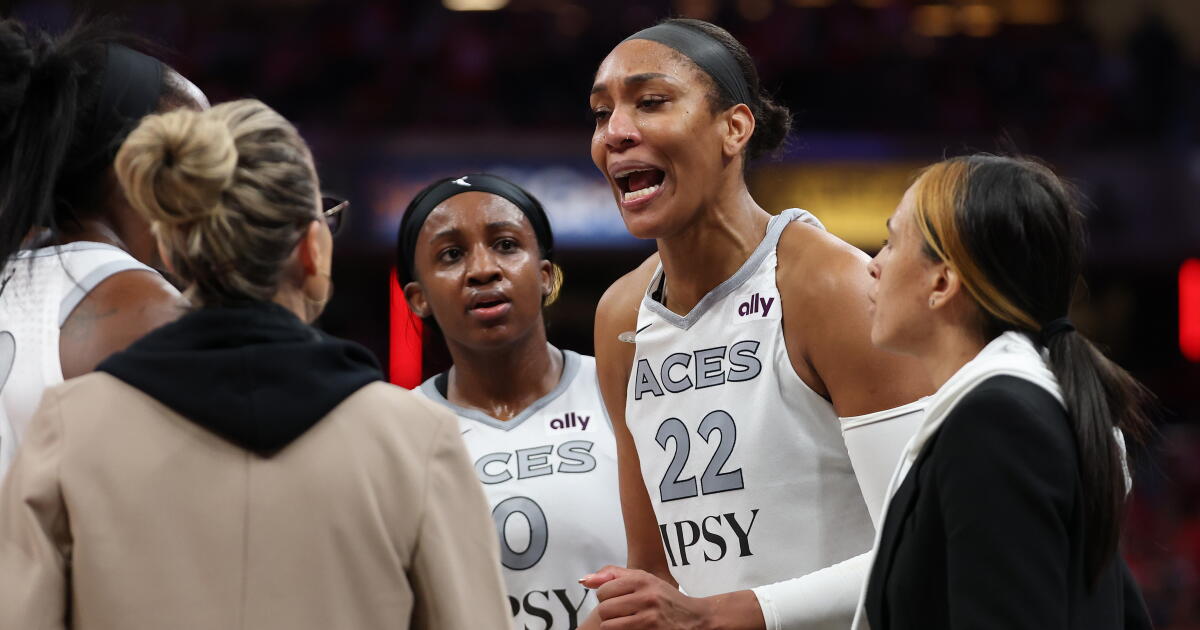
Should hair pulling be violent conduct? Does it deserve three-match ban?

Cast your mind back to August 2022. Tottenham defender Cristian Romero tugged back Chelsea‘s Marc Cucurella by his hair.

The VAR, Mike Dean, opted not to intervene for an obvious red card.

It created a line in the sand. From that point on, a zero tolerance approach was adopted.

Has the hair been tugged? Then it is a red card for violent conduct.

A strict application means we have to accept that there are cases, like Keane and Martinez, where the punishment appears too severe.

It is a bit like handball in the Champions League. People do not like some of the penalties, but they know what they are getting.

If you want consistency then you cannot have common sense too.

After the Keane red card, referees’ boss Howard Webb was very clear that hair pulling was “quite an offensive thing”.

“It was the appropriate outcome,” Webb said. “It was unusual but if we see it again next week it will be the same outcome.”

It took a few months before we did see it in similar circumstances with Martinez, and Webb was proved to be correct.

There has only been one other VAR red card in the Premier League, for Southampton’s Jack Stephens on Cucurella.

There have been several other instances in the Club World Cup, Women’s Super League and Women’s Euros.

Hair pulling is one of those dark arts which is usually only spotted through video evidence.

It happens off the ball but is more identifiable than the subtle elbow to the chest or a nip to the stomach.

Even in the EFL, which does not have VAR, Ipswich’s Leif Davis was recently banned after being picked up on camera pulling the hair of Leicester’s Caleb Okoli.

Evidence is not always clear, however.

Fulham‘s Kenny Tete could have been sent off for yanking the hair of Manchester City‘s Antoine Semenyo in February. It may well have happened, but the VAR did not feel the evidence was conclusive enough for a review.

Source link

Trump isn’t immune from civil claims his Jan. 6 rally speech incited riot, judge says

President Trump is not immune from civil claims that he incited a mob of his supporters to attack the Capitol on Jan. 6, 2021, a federal judge has ruled in one of the last unresolved legal cases stemming from the riot.

U.S. District Judge Amit Mehta ruled Tuesday that Trump’s remarks at his “Stop the Steal” rally, held on the Ellipse near the White House shortly before the siege began, “plausibly” were inciting words that are not protected by the 1st Amendment right to free speech.

The Republican president is not shielded from liability for much of his Jan. 6 conduct, including that speech and many of his social media posts that day, according to the judge. But Mehta said Trump cannot be held liable for his official acts that day, including his Rose Garden remarks during the riot and his interactions with Justice Department officials.

“President Trump has not shown that the Speech reasonably can be understood as falling within the outer perimeter of his Presidential duties,” Mehta wrote. “The content of the Ellipse Speech confirms that it is not covered by official-acts immunity.”

Not the first court ruling on presidential immunity

The decision is not the court’s first ruling that Trump can be held liable for the violence at the Capitol and it is unlikely to be the last given the near-certainty of an appeal. But the 79-page ruling sets the stage for a possible civil trial in the same courthouse where Trump was charged with crimes for his Jan. 6 conduct, before his 2024 election ended the prosecution.

Mehta previously refused to dismiss the claims against Trump in a February 2022 ruling that Trump was not entitled to presidential immunity from the claims brought by Democratic members of Congress and law enforcement officers who guarded the Capitol on Jan. 6. In that decision, Mehta also concluded that Trump’s words during his rally speech plausibly amounted to incitement and were not protected by the 1st Amendment.

The case returned to Mehta after an appeals court ruling upheld his 2022 decision. He said Tuesday’s ruling on immunity falls under a more “rigorous” legal standard at this later stage in the litigation.

Mehta, who was nominated by Democratic President Obama, said his latest decision is not a “final pronouncement on immunity for any particular act.”

“President Trump remains free to reassert official-acts immunity as a defense at trial. But the burden will remain his and will be subject to a higher standard of proof,” the judge wrote.

Official capacity vs. office-seeker

Trump spoke to a crowd of his supporters at the rally before the mob’s attack disrupted the joint session of Congress for certifying Democrat Joe Biden’s 2020 electoral victory over Trump. Trump closed out his speech by saying, “We fight. We fight like hell and if you don’t fight like hell, you’re not going to have a country anymore.”

Trump’s lawyers argued that Trump’s conduct on Jan. 6 meets the threshold for presidential immunity.

The plaintiffs contended that Trump cannot prove he was acting entirely in his official capacity rather than as an office-seeking private individual. They also said the Supreme Court has held that office-seeking conduct falls outside the scope of presidential immunity.

Rep. Bennie Thompson, D-Miss., who at that time led the House Homeland Security Committee, sued Trump, Trump’s personal attorney Rudolph Giuliani and members of the Proud Boys and Oath Keepers extremist groups over the Jan. 6 riot. Other Democratic members of Congress later joined the litigation, which was consolidated with the officers’ claims.

‘Victory for the rule of law’

The civil claims survived Trump’s sweeping act of clemency on the first day of his second term, when he pardoned, commuted prison sentences and ordered the dismissal of all 1,500-plus criminal cases stemming from the Capitol siege. More than 100 police officers were injured while defending the Capitol from rioters.

The plaintiffs’ legal team includes attorneys from the Lawyers’ Committee for Civil Rights Under Law. Damon Hewitt, the group’s president and executive director, praised the ruling as a “monumental victory for the rule of law, affirming that no one, including the president of the United States, is above it.”

“The court rightly recognizes that President Trump’s actions leading to the January 6 insurrection fell outside the scope of presidential duties,” Hewitt said in a statement. “This ruling is an important step toward accountability for the violent attack on the Capitol and our democracy.”

Kunzelman writes for the Associated Press.

Source link

Englands Harry Brook and Jacob Bethell reprimanded over conduct on tour of New Zealand

Brook was fined and given a final warning over his conduct following the incident. But that only came to light more than two months later, after the final Test against Australia in Sydney.

In January, 27-year-old Brook said supporters have “every right to be annoyed” with his behaviour as he issued a public apology.

But he also stated he was on his own when the bouncer “clocked ” him and only later admitted other players had been present. He explained he had lied about that because he had been trying to protect his team-mates from further scrutiny.

It also emerged the Cricket Regulator was looking into the matter.

England’s players were widely criticised for their off-field behaviour during the Ashes, including claims of excessive drinking during a mid-series break in the coastal resort of Noosa.

Tongue, 28, told BBC Sport earlier this week he had learned from what had happened in the New Zealand capital and is “just trying to focus on the cricket now”.

During a meeting at Lord’s to discuss the findings of a review of the tour last week, England’s managing director Rob Key said there is not an “easy fix” to cricket’s relationship with alcohol.

Source link

USC reaches settlement in Mike Bohn racial harassment lawsuit

USC has settled a lawsuit with a former high-ranking athletic department official who alleged the university allowed former athletic director Mike Bohn to racially harass and discriminate against her, then fired her when she voiced concerns about Bohn’s behavior.

Joyce Bell Limbrick was the highest-ranking Black and female official in USC’s athletic department when she was fired by the university in September 2023, four months after Bohn resigned amid an internal investigation into his conduct and the culture of the department. Bell Limbrick filed suit early last year, accusing USC of wrongful termination.

That dispute was settled out of court this week. Terms of the settlement were not disclosed.

When reached by The Times, Bell Limbrick declined to comment. Bohn has never publicly addressed the allegations.

While the lawsuit never made it to trial, it nonetheless offered the most detailed account yet of the conduct that led to Bohn’s resignation.

Bell Limbrick filed a Title IX complaint with the university against Bohn in October 2022, after an incident in which she says Bohn punched her on the arm at a USC volleyball match. That complaint ultimately compelled an investigation, during which, according to her complaint, Bell Limbrick told USC officials of “Bohn’s history and rumors of inappropriate and unwanted touching involving … other females at both Cincinnati and USC.”

The university hired an outside law firm that specializes in institutional responses to racial and sexual harassment and discrimination to investigate Bohn five months later. The Times learned of that investigation shortly thereafter, as well as a previous investigation into Bohn’s conduct at Cincinnati, and in May, asked both Bohn and USC about those concerns.

Bohn resigned a day later.

Soon after that, the university fired Bell Limbrick, citing “a pattern of poor performance.” She was the only member of an 11-member executive team to lose her job and, according to the complaint, had just been awarded a “merit increase” on account of her “overall job performance.”

Bell Limbrick worked at USC for nine years, initially as the director of athletic compliance, before Bohn was hired in 2019. Shortly after he became athletic director, Bohn promoted Bell Limbrick to senior woman administrator, one of the highest-ranking positions in the department. According to her complaint, she had been one of the few Black women to hold such a position at a major American university.

“Ms. Bell Limbrick had a thriving career at USC and she loved her work. Then, Mike Bohn arrived,” her attorney, J. Bernard Alexander, said in a statement in 2025.

”[Bohn’s] incessant, racially charged remarks made Joyce feel uncomfortable and undervalued, but more than that — he actively isolated her from the executive team and undermined her work. She already was vulnerable as the only Black woman on the team, and rather than support her, the university allowed Bohn to make her life hell.”

Her complaint detailed inappropriate comments made in front of USC donors and staff, as well as insensitive or discriminatory remarks made in her presence. At the time, The Times spoke with six people with knowledge of the department’s inner workings who largely corroborated her claims about Bohn’s conduct.

Bohn declined to respond to The Times’ questions about his conduct leading the athletic department, but he provided a statement to The Times on the day of his resignation in May 2023 stating he would “always be proud of leading the program out of the most tumultuous times in the history of the profession.”

“In moving on, it is important now that I focus on being present with my treasured family, addressing ongoing health challenges, and reflecting on how I can be impactful in the future,” Bohn said in the statement.

Source link

Man in pipe bomb case argues Trump’s Jan. 6 riot pardons apply to him

President Trump’s sweeping act of clemency for rioters who stormed the U.S. Capitol also should apply to a man charged with planting pipe bombs near the national headquarters of the Democratic and Republican parties on the eve of the Jan. 6, 2021, riot, the suspect’s attorneys argue in a bid to get his case dismissed.

In a court filing Monday, defense attorneys assert that Trump’s blanket pardons extend to the charges against Brian J. Cole Jr. because his alleged conduct on Jan. 5, 2021, is “inextricably tethered” to what happened at the Capitol the next day. They’re asking U.S. District Judge Amir Ali to throw out the case before trial.

Justice Department prosecutors didn’t immediately respond in writing to the defense’s request. In a previous court filing, prosecutors said Cole, under questioning by FBI agents, denied that his actions were related to the Jan. 6 proceedings at the Capitol.

On his first day back in the White House last year, Trump pardoned, commuted prison sentences and ordered the dismissal of all 1,500-plus people charged in the attack by a mob of his supporters.

Nearly a year later, Cole was arrested on charges that he placed two pipe bombs outside both the Republican and the Democratic national committees’ headquarters in Washington the night before the riot. The devices didn’t detonate before law enforcement officers discovered them Jan. 6.

Cole’s attorneys said the Justice Department’s framing of the case has explicitly linked Cole’s alleged conduct on Jan. 5 to the events of Jan. 6, when rioters disrupted the joint session of Congress for certifying Joe Biden’s electoral victory over Trump.

“That is not happenstance sequencing in time. It is the government’s theory of Mr. Cole’s alleged motive and context,” defense lawyers wrote. “According to the government, the timing was chosen because of what was scheduled to occur at the Capitol on January 6.”

They also argued that prosecutors’ theory of a possible motive places Cole’s alleged conduct “in the same political controversy that animated the January 6 crowd.”

In court filings, prosecutors have said that Cole confessed to investigators after his Dec. 4 arrest. He told FBI agents that he felt “bewildered” by conspiracy theories related to the 2020 presidential election and “something just snapped” after “watching everything, just everything getting worse,” prosecutors said.

Cole has remained jailed since his arrest. His attorneys have appealed Ali’s refusal to order Cole’s pretrial release from custody. The judge hasn’t set a trial date yet.

Cole, 30, of Woodbridge, Virginia, has been diagnosed with autism and obsessive-compulsive disorder. His attorneys say he has no criminal record.

Authorities said they used phone records and other evidence to identify him as a suspect in a crime that confounded the FBI for more than four years.

Kunzelman writes for the Associated Press.

Source link