Britain’s culture minister may challenge Paramount Skydance’s takeover of Warner Bros. Discovery — presenting a potential speed bump to David Ellison’s plan to wrap up his $111-billion deal by September.
Earlier this month, Paramount secured the U.S. Justice Department’s blessing to buy the Warner assets, which include CNN, HBO, Cartoon Network, Animal Planet and the Warner Bros. film and TV studios in Burbank.
Paramount also must win the approval of British and European regulators, who are known for drilling deeply into media matters because of their influence on society.
Britain’s Competition and Markets Authority took a preliminary step this month by opening an investigation into Ellison’s proposed merger.
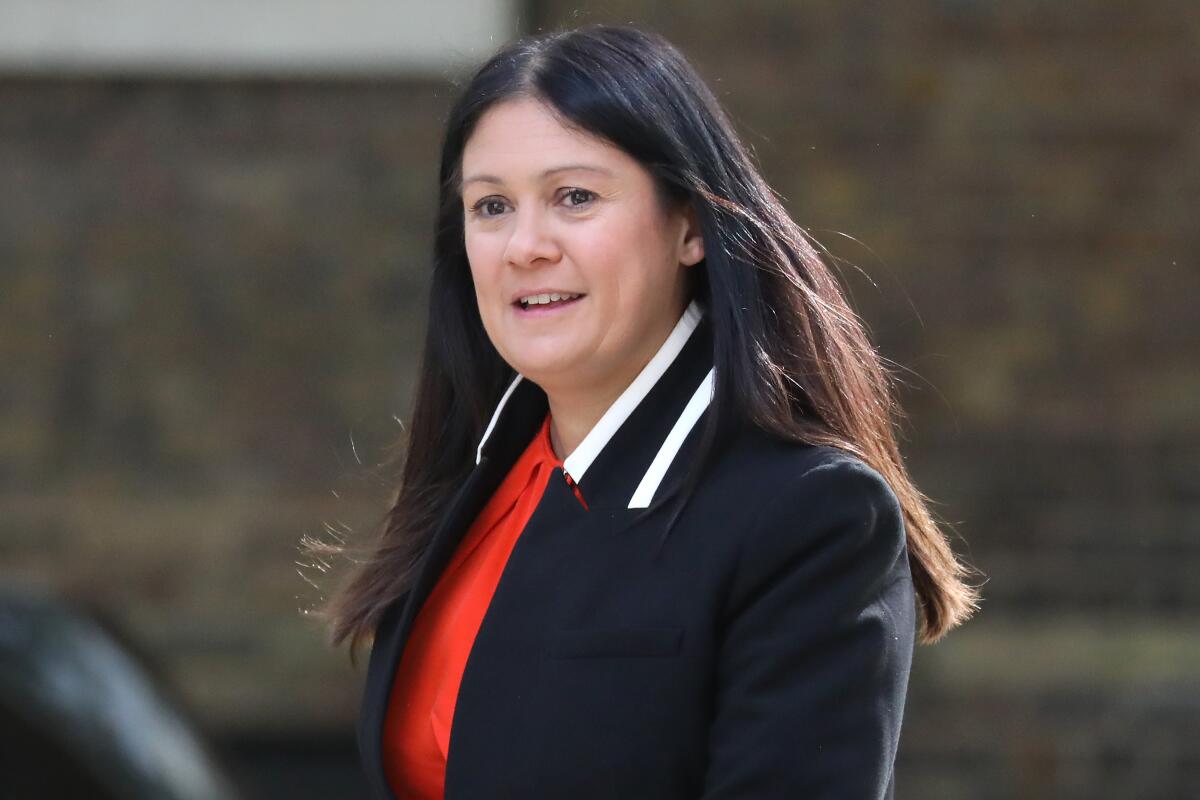
On Tuesday, Lisa Nandy, Britain’s secretary of state for culture, media and sport, notified Parliament that she was inclined to intervene in the blockbuster deal.
In a written statement, Nandy cited her ability to weigh in on “public interest grounds,” due to concerns about maintaining a competitive media market in Britain.
“The UK’s move to intervene in the Paramount–WBD deal confirms what we’ve been saying for months. The real regulatory risk was never in the US — it’s in Europe,” Forrester VP Research Director Mike Proulx said Tuesday in a statement.
While Nandy cautioned she has not made “a final decision on intervention at this stage,” she has invited Paramount and Warner Bros. to respond to her concerns by Monday.
Lisa Nandy, Britain’s secretary of state for culture, media and sport, has said she may intervene in the deal on “public interest grounds.”
(Alishia Abodunde / Getty Images)
Paramount did not offer immediate comment.
The company owns CBS News, children’s channel Nickelodeon and Channel 5, one of the largest over-the-air television broadcasters in the United Kingdom.
Warner Bros. Discovery owns CNN, Cartoon Network and TNT Sports, which broadcasts the Olympics, Champions League and Premier League soccer matches.
“I am conscious that the proposed acquisition is global in nature,” Nandy wrote in her statement. “In reaching this decision, my focus has been, and will remain, on the UK public interest and the range of services available to UK audiences, including Channel 5, TNT Sports, Cartoon Network, Nickelodeon, and CNN International, as well as Paramount+ and HBO Max.”
If Nandy decides to intervene, the Office of Communications, known as Ofcom, would launch an assessment of the deal. Britain’s Competition and Markets Authority also would determine how the merger might reshape the competitive landscape.
Teams from the two companies have been huddling for months to plan for the melding of the two operations as soon as Paramount receives all of its regulatory approvals.
Australia, New Zealand, China, Saudi Arabia, Ukraine, Serbia, France and Italy have already given their approvals to the deal.
Saudi Arabia’s Public Investment Fund is planning to contribute $10 billion to help the billionaire Ellison family pull off the merger, which would make the Saudi royal family a significant, although passive, equity owner. In addition, the royal families of Qatar and Abu Dhabi have agreed to each contribute $7 billion in equity financing.
The Federal Communications Commission must evaluate the foreign ownership stakes due to Paramount’s holding of CBS broadcast licenses. U.S. antitrust regulators already have concluded the combination would not violate federal anticompetition laws.
The U.S. government stopped short of asking Paramount to make concessions or divestitures. Many expect that Paramount may have to reconfigure its children’s television holdings abroad due to the proposed combination of two large players — Nickelodeon and Cartoon Network.
Nandy suggested that Britain also should scrutinize the impact of combining two major streaming services, HBO Max, a Warner property, with Paramount+.
HBO programming, including “Game of Thrones,” “Boardwalk Empire” and “Succession,” has long been popular in Britain.
A coalition of state attorneys general, led by California‘s Rob Bonta, also is expected to challenge the deal, in part, due to concerns about news media consolidation. Bonta’s office has said the matter remains under review.
Opposition to the deal has been building in the U.S. for months. A group of Hollywood activists — led by actors Jane Fonda and Mark Ruffalo — have spearheaded a “block the merger” campaign that now has support from more than 5,000 entertainment workers.
The group’s open letter calls on Bonta to take action to thwart the Ellison expansion effort. Paramount’s Chief Legal Officer Makan Delrahim has blasted the campaign, calling it “fear-mongering” and a partisan distortion of antitrust law.
Forrester’s Proulx noted differences in attitudes toward the deal among the various constituencies.
“For U.S. consumers, this merger has become a proxy fight about political influence and control of media,” Proulx said. “In the UK, it’s being treated as a structural competition issue where regulators, not consumers, will decide how this deal plays out and how long it takes.”
Through the first two games of this summer’s World Cup, the U.S. was about as perfect as a team could be. It won both games, never trailed, gave up just a goal and won its group handily, playing with a verve and confidence that erased all the doubts that had shadowed it coming in.
Then came Thursday.
With Mauricio Pochettino making a record nine changes to a lineup that had given the U.S. its most successful start to a World Cup in 96 years, the B team that closed the group stage at SoFi Stadium with a 3-2 loss to Turkey served to remind everyone how flawed this group can be.
The backline was porous, goalie Matt Turner gave up goals on the first two shots he faced and with the exception of midfielder Sebastian Berhalter, who had a goal and an assist, none of the starters really distinguished themselves. Whether any of that matters won’t be known until the U.S. next takes the field in the knockout rounds, facing Bosnia and Herzegovina on Wednesday in Santa Clara, Calif.
For Pochettino, whose contempt for convention has been a hallmark of his team’s World Cup run, clearing his bench and getting a U.S.-record 23 players on the field in the group stage was more more important than the result.
“The objective was to finish first and we are first,” he said. “Now it is the next stage and it is going to be a final. And we are ready. We are much better than before that game because we had players now with 90 minutes in their legs and performing and ready to help if we need from the beginning or from the bench. It’s all positive.”
Maybe. Sure, Christian Pulisic, who hadn’t played since the first half of the first game, got back on the field and looked good in a 32-minute cameo. But other than that the game was meaningless since the Americans had already won the group and qualified for the next round while Turkey was going home no matter the result.
The U.S. came in riding a huge wave of momentum, though, and that’s gone now, erased on Kaan Ayhan’s goal on the last touch of the game.
Does that matter?
“No,” captain Tim Ream said with conviction. “You just turn the page.”
The experience the role players got, he said, is more important than the final score.
“When we say it didn’t mean anything, it’s still a meaningful game, right? It’s a World Cup game,” he said. “So it gives everybody a taste of what life will be like if they are called upon and have to contribute.”
Midfielder Tyler Adams wasn’t so sure.
“I don’t know what it’s going to do,” he said. “I can’t predict the future. I don’t have an eight ball in front of me. We’ll see what happens.”
What Adams can say with certainty, however, is that in the future the U.S. will have no room for error. The games are all elimination matches now and 13 players on the U.S. roster, including Adams, have experienced that first hand, having lost in the round of 16 four years ago in Qatar.
Turner said it’s up to those veterans to impart that wisdom on the 13 who are playing in their first World Cup.
“You need to really take care of the boxes when it comes to knockout round. That’s the biggest lesson that we learned,” said Turner, who started all four games in the last World Cup. “It’s not necessarily how beautiful a style you play. The chances you create is important, [but] the way you defend your box is more important.
“Those games are going to be decided by one goal, they’re going to be narrow, and we’re going to have to be compact and be together, defensively, offensively, and take the chances when they come.”
The U.S. did little of that Thursday.
After a Berhalter corner set up Trusty for the first goal in the third minute, Turkey’s Arda Guler, a Real Madrid midfielder, tied the score seven minutes later, splitting a pair of U.S. defenders and running onto a pass from Kenan Yildiz in the center of the box, then lifting a shot over Turner.
Orkun Kokcu handed the U.S. its first deficit of the tournament when he found another big hole in the U.S. defense, redirecting a cross from Eren Elmali in from the center of the box to give Turkey a 2-1 lead.
Berhalter tied the score again four minutes into the second half, latching onto a loose ball at the top of the penalty area and one-hopping a right-footed shot just inside the near post. The game stayed that way until Ayhan, who came on with two minutes left in regulation, slid between two U.S. defenders to knock in the game-winner eight minutes into stoppage time.
For Berhalter, one of a record 21 Americans to get a start in this World Cup, Pochettino’s decision to clear his bench was not only a reward, it was preparation for what’s to come.
“It’s every little kid’s dream, across the United States of America, to play in a home World Cup. Just in a World Cup in general,” he said. “People made their debuts today, so congratulations everyone. This is what everybody looks forward to.”
More important, he added, “we know everyone’s ready to step up at any moment.”
Which is good because history suggests the road ahead is about the get a lot more challenging. The loss to Turkey was the Americans’ 10th straight to a UEFA team, running their winless streak against European opponents to 13 in a row.
Guess which continent Bosnia and Herzegovina, who the U.S. faces next, is from?
Sports editor Iliana Limón Romero contributed to this story.
SACRAMENTO — Gov. Gavin Newsom vetoed legislation to require proposed data centers to provide estimates of their water usage last year, saying he was “reluctant to impose rigid reporting requirements” without understanding the impact on businesses and consumers.
Opposition to the mammoth tech hubs and their massive thirst of water, power and land has only escalated throughout the state and nation ever since. In just a matter of months, Newsom again could find himself in the political crosshairs.
Several bills to regulate the facilities and increase public transparency on their impacts are progressing in the California Legislature, which could create a conundrum for a governor who has long aligned with the tech industry but also paints himself as an environmental and social justice advocate.
“I think the governor is in a fragile position,” said Megan Mullin, a public policy professor at UCLA. “Tech has been a long backer of his, but at the same time there is this growing national outcry against data centers.”
Data centers have existed for decades but are rapidly expanding due to the worldwide boom in artificial intelligence. The newer centers built to power AI are far larger than their original counterparts and require immense amounts of water and energy.
The facilities also contribute to fossil fuel emissions, with Cornell University researchers estimating last year that AI growth could add 24 to 44 million metric tons of carbon dioxide to the atmosphere annually by 2030. Fossil fuel emissions are drivers of climate change and linked to a range of health conditions, including asthma, various cancers and birth defects.
Environmental Protection Agency Administrator Lee Zeldin announced last week that the Trump administration will not set national environmental requirements or recommendations for the data center industry, leaving it to state lawmakers to determine best policies.
Thad Kousser, a political science professor at UC San Diego, said the nation will likely look to the Golden State for guidance.
“California’s laws will create a national model,” he said. “We’re the home of Silicon Valley and we’re just a massive state — the way we regulate data centers will set the tone.”
The political landscape around data centers has since changed since Newsom’s veto in October, said Dan Schnur, a political science professor who teaches at UC Berkeley and USC.
“No one should assume he will automatically act in the same way,” Schnur said. “Newsom is an incredibly savvy politician so he is clearly aware that voters are a lot more upset or concerned about data centers than they were a year ago.”
A Gallup poll released last month found 7 out of 10 Americans oppose data centers being built in their area.
The facilities can create thousands of jobs for construction workers and generate significant revenue for local governments due to sales and property taxes. The artificial intelligence they power is also — at least temporarily — boosting the stock market, leading to more tax dollars for California.
But residents who live near hyperscale centers have expressed outrage over a range of issues, including health impacts, spiking utility bills, constant noise, dropping water pressure and concerns about potentially losing their land through eminent domain. Meanwhile, community meetings about data centers are growing contentious, with police arresting a farmer in Oklahoma, three women in Wisconsin and a man in California.
“Six months ago, politicians of both parties were falling all over each other to bring data centers into their states,” Schnur said. “Now that the public backlash has erupted, they are working just as hard to distance themselves from these projects.”
With Newsom eyeing a presidential bid in 2028, he might be reluctant to brand himself as a defender of an increasingly unpopular industry.
But Schnur said the governor likely also has concerns about angering one of his biggest backers.
“The tech community is a critical part of Newsom’s donor base, so he has to keep fundraising in mind when he makes these decisions,” Schnur said.
A spokesperson for the governor’s office declined to comment on data centers or pending legislation.
Newsom, during an interview at a Center for American Progress conference in May, said the concern that data centers may drive up electricity costs for Californians is a “legit issue,” but not the main one.
“The tech genie is not going to go back in the bottle,” Newsom said. “Just saying that you should not or cannot build a data center is not going to slow this technology down. What can be, will be. Nature of technology. And so we just have to steer it and not make the mistakes we made with social media.”
Among the measures in the Legislature are two bills from Sen. Steve Padilla (D-San Diego). SB 886 would create a corporate tariff to cover the cost of data center-related grid upgrades. SB 887 would ban data centers from receiving ministerial exemptions from the California Environmental Quality Act, known as CEQA.
Neither bill picked up support from Republicans, but both cleared the Senate and were recently referred to the Assembly Utilities and Energy Committee.
Padilla represents Imperial County, a farming community near the border of Mexico where plans for a 950,000–square–foot data center face fierce opposition from residents. The county exempted the proposal from CEQA, which requires projects to undergo an extensive state environmental review before breaking ground.
The city of Imperial sued the county earlier this year, arguing the project should not have received an exemption. The San Diego Chapter of the Sierra Club joined the lawsuit last month. The county board of supervisors last week approved a 45-day moratorium on all new data centers to allow the county to evaluate proposed data center development.
Two other data center-related bills recently passed the Assembly, each picking up support from a few Republicans. They now await action from the Senate.
AB 2619 from Assemblymember Diane Papan (D-San Mateo) would require data center owners to provide an estimate under penalty of perjury about expected water usage and sources before applying for a business license. AB 1577 from Assemblymember Rebecca Bauer-Kahan (D-Orinda) would require data center owners to submit monthly information to a state commission about water and fuel consumption.
Ben Green, an assistant public policy professor at the University of Michigan who is researching how data centers impact communities, said reporting requirements are a “bare minimum” type of regulation, making it especially noteworthy that Newsom vetoed a similar measure last year.
For comparison, several states are weighing more restrictive bills — New York recently sent legislation to the governor’s desk that would enact a one-year moratorium.
“It seems that there was a ton of lobbying pressure that he was getting,” Green said. “The tech industry doesn’t want to have any restrictions.”
Green said data centers could be a hot topic in upcoming elections, as Americans on both sides of the aisle are expressing valid concerns.
“There’s not an easy fix for getting the public on board with data centers because their critiques are grounded in reality,” he said. “This is not just some sort of reactionary NIMBY-ism or pearl clutching.”
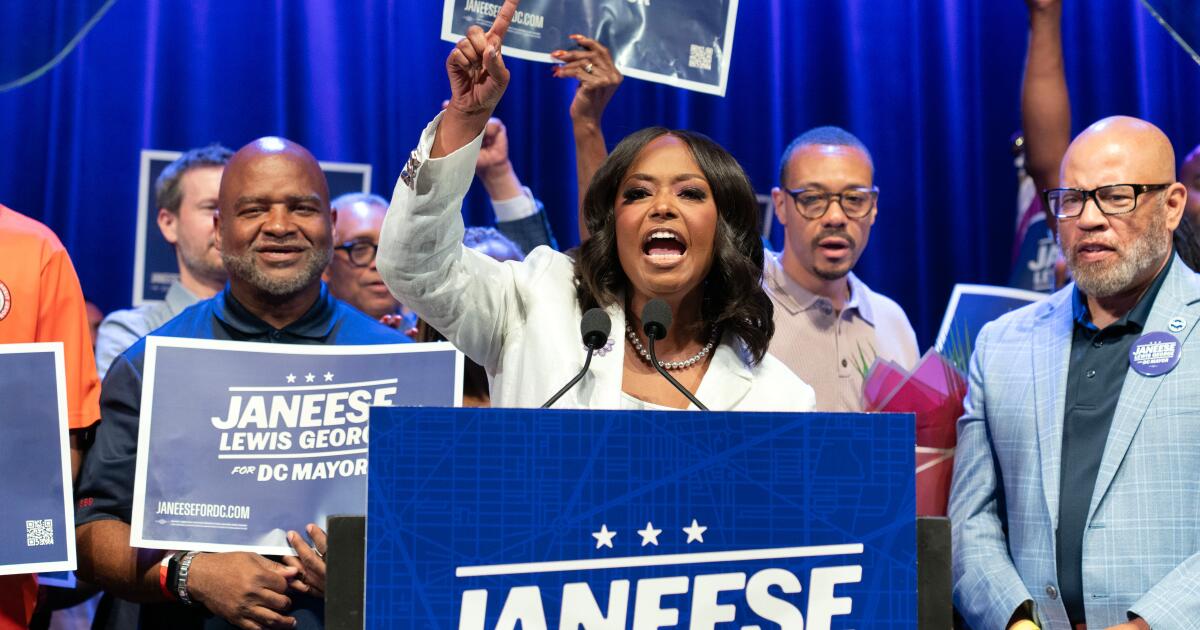
WASHINGTON — As Janeese Lewis George paves a path to the mayor’s office in Washington, D.C., she’s told voters they could have it all.
Her unapologetically expansive, left-wing agenda includes subsidized or even free childcare, increased down payment assistance for homebuyers and community resources to reduce crime, plus a promise to aggressively confront President Trump’s attempts to reshape the nation’s capital.
“People are tired of hearing what government can’t do. They want to hear what government can do,” Lewis George said in an interview before the city’s primary, where she defeated her Democratic opponents and positioned herself to win the general election in November in a city dominated by Democrats.
Lewis George’s victory signals a break with a quarter-century of centrist governance in Washington, and it puts her in the vanguard of democratic socialists who have ascended in urban politics over the last year. Zohran Mamdani toppled Andrew Cuomo, the scion of a political dynasty, on his way to becoming New York City mayor. Katie Wilson won an upset victory to lead Seattle last fall. And this month, Nithya Raman clinched a spot in the November runoff against Los Angeles Mayor Karen Bass.
All of them are members of the Democratic Socialists of America, or DSA. The political organization has seen its membership ranks swell from a few thousand to more than 100,000 nationwide over the last decade after an influx of younger Americans joined following the presidential bids of Vermont Sen. Bernie Sanders, also a self-described democratic socialist.
There’s little sign of national coordination among the candidates, and it’s unclear whether voters are gravitating toward their promises of improved government services, their vows to fight the Trump administration or their critiques of capitalism.
But from coast to coast, confrontational progressives are advancing in mayoral races. City leaders can draw outsized attention for their successes and failures, and democratic socialists will be under pressure from residents to deliver on their vows for a new kind of governance. Whether that translates to national politics is a next test for their movement.
“They are all channeling a displeasure with a status quo and a serious desire for economic populism that the establishment Democratic Party hasn’t been preaching,” said Eric Stern, a Democratic strategist with Fight Agency, a political consulting firm that strategized Mamdani’s mayoral campaign.
Stern added that Democratic voters appeared more willing to support the most progressive candidate in mayoral races rather than in contests for the U.S. House. Candidates like Mamdani and Raman, Stern said, are “daring voters to dream and fall in love not just with the individual candidates but also the political process as a whole.”
A rising left navigates America’s urban challenges
The trend of progressives surging in urban areas may have limits for its broader impact on Democratic politics. Democratic mayors in cities including Atlanta, Houston, Miami and San Francisco won on relatively moderate platforms in recent years.
Progressive have also faced noteworthy challenges. Chicago Mayor Brandon Johnson was endorsed by the city’s DSA chapter during his 2023 mayoral run but has since faced criticism from both moderate and liberal local leaders on issues such as immigration, the local budget and public safety. Recalls and public pressure ousted progressives elected to district attorney offices in multiple jurisdictions over the last five years, when criminal justice reform efforts ran into dissatisfaction over public disorder following the COVID-19 pandemic.
Trump’s hardline immigration and law enforcement tactics have also become a challenge for liberal cities. The president’s agenda poses an especially serious threat to Washington, D.C., because of its status as a federal territory.
“Maybe we take back Washington and run it on a federal basis,” Trump told reporters this month when asked about the potential election of a democratic socialist as the district’s mayor. “We won’t put up with it.”
But progressives hope the current wave of anti-Trump furor in deep blue cities across the country will help buoy the chances of those on the hard left.
“It’s not folks looking for the leftmost option so much as looking for a candidate who’s gonna be on their side,” said Ravi Mangla, speaking for the left-wing Working Families Party. The party often endorses the same candidates as the DSA and is readying to target more mayoral offices in the country’s biggest metropolises this fall and in 2028.
“It’s less about whether you are on the right or on the left so much as whether you are willing to punch up at the powerful,” he added.
Mamdani and Lewis George are both self-described “sewer socialists” who emphasize the need for responsive government services rather than critiques of market economics. The phrase recalls the socialist Gilded Age mayors whom critics derided as too preoccupied with managing public works projects.
The term’s revival is partly a strategic move to align leftist ideas with concerns over affordability and the economy, voters’ top concern in the midterm elections, and shift the public perception of democratic socialists from firebrands who support radical policies to independent-minded public servants.
“This is absolutely a change election and I’m excited to bring the change that people want, which is really putting people first in the city and having the moral clarity and courage to stand up to Trump,” Lewis George said.
For voters the ‘socialist’ label did not seem to matter
While conservatives have used the “socialist” label to attack Democrats as extreme or incompetent, some D.C. voters appeared ambivalent before Tuesday’s primary.
Several lifelong residents said they believed Lewis George was a “fighter” but didn’t think she’d have much of an impact on the local economy, given the city’s status as a federal district.
“I go back and forth on my own labels and whether I am supportive of that movement or not, but I am supportive of making D.C. more affordable,” Owen Fitzgerald, a University of Maryland graduate student, said of his support for democratic socialism.
Fitzgerald voted for Lewis George because she would stand up to Trump and said he’d first learned of her campaign from friends in his neighborhood. But he didn’t know she was a democratic socialist until he saw news reports describing her with the label.
“It sends a cultural message to this administration that the people who are surrounding them in the capital are opposed to their platform, opposed to their political agenda, and I think that it will send a message, both nationally and internationally,” Fitzgerald said.
ASHLEY Cain was secretly sacked from a BBC job last year for being ‘drunk on set’.
The star, 35, has come under-fire this week after historic tweets were exposed in which Ashley made degrading comments about women and suggested blurring the lines of consent during sex in worrying messages.
Sign up for the Showbiz newsletter
Thank you!
Ashley Cain was secretly sacked by the BBC for being ‘drunk on set’Credit: BBCConcerns were raised last year when he was hand-picked to front a BBC programme in Las VegasCredit: BBC
The posts were made by Ashley between 2013 and 2015 after he first rose to fame in footballing and his appearances on MTV show Ex On The Beach.
The Guardian has compiled a range of messages, posts and concerns relating to Ashley’s behaviour in the past – which has since led to him being dropped by the BBC.
Last night, the publication detailed new allegations that Ashley was secretly sacked from filming a BBC documentary in June of last year for being ‘drunk on set’.
The TV personality, who had already begun to work with the BBC on their documenary series, Into The Danger Zone, had been picked to host, Sin City: The Real Las Vegas.
Ashley has worked extensively with the BBC but has now been axed for good by the channelCredit: BBCThe BBC admitted their vetting process on the star had ‘failed’Credit: Instagram
He was flown out to Nevada to film the show but concerns were raised about his conduct.
Appearing to be drunk during filming of the show, the production was suspended and Ashley was ultimately dropped from the project.
Another presenter was then chosen to front the programme instead.
Nonetheless, the incident went largely ignored as Ashley returned to filming with the BBC earlier this year for the second series of his Into The Danger Zone series.
However, following The Guardian’s reports, that series has now been axed and won’t be making it to air.
The BBC revealed they had no plans to work with Ashley again in the future after admitting that their “vetting” process before hiring talent had “failed”.
A BBC spokesperson told The Sun: “The posts by Ashley Cain, albeit from many years ago, are completely unacceptable.”
“The BBC has clear requirements around vetting and social media checks, which are undertaken by the production company. In this instance, the process clearly failed and we are investigating why. We are continuing to strengthen our processes to ensure everyone working for, and on behalf of, the BBC meets our values and standards.”
“We have no plans to broadcast the new series of ‘Into the Danger Zone’, and no future projects with Ashley Cain.”
The Sun has contacted a representative for Ashley Cain for comment.
Ashley’s comments and behaviour – which largely took place over 10 years ago – first began to emerge after he took part in the very succesful first series of MTV show Ex On The Beach which propelled him to national fame.
Derogatory terms allegedly written in 2014 and 2015 include “sl**s”, “b***hes” and “psychos”, while he said he’d like to “choke slam” and “spit in the face” of Love Island star Jessica Hayes while commenting on the ITV2 reality show.
The Guardian reports that other misogynistic tweets saw him say he wanted to “talcum powder pimp slap these b***es already!” while watching a Channel 4 documentary and demean women by writing: “I DO NOT.. I repeat I DO NOT think EVERY girl is a slag! There are some absolute PHENOMENAL women out there.. They’re just a rare commodity.”
In 2015, Cain was accused of recording Rachel Roftis, 33, during sex and sharing clips to Snapchat without her consent — something he strongly denied.
The pair met at a club in Bexleyheath before spending the night together in a hotel.
Roftis told The Guardian she “screamed” at Cain when she realised the footage had been shared publicly and the incident has “massively affected her relationships with men. She doesn’t trust anybody really now.”
The notoriety from the posts, which saw Cain brand himself the “Snapchat King” and rack up 60,000 views, led to an appearance on short-lived ITV Daytime show O’Brien where he boasted of being a “play boy” and sleeping with 15 girls a week.
Of his attitude towards women, he said: “If you are a lady, I respect you. But if you don’t respect yourself, how can you expect me to respect you?”
WASHINGTON — As Spencer Pratt fell behind in the Los Angeles mayoral primary, an unexpected group began claiming election fraud: people tracking the Republican’s success on prediction markets, the increasingly popular online exchanges on which people can make bets on almost anything.
“Crazy how much voter fraud can be done with mail in ballots,” one user following bets on the mayoral race wrote last week on Kalshi, one of the top trading platforms.
“Same old California fraud,” said another who had bet that Pratt would win.
Election fraud claims extended to social media, where a handful of influencers who post content for prediction market platforms questioned the ballot count. “It’s a dead heat on Kalshi,” one user wrote on social media. “Is CA cheating to get Spencer Pratt out?”
Kalshi told the influencers to delete the posts, which violated company guidelines. Polymarket, the other leading platform, directed them to remove the paid partnership label from those posts.
The amplification of election misinformation by users who had money staked on the mayoral race adds a new twist to evolving scrutiny of prediction markets, and scholars say the ability to bet on elections broadly raises questions about whether the exchanges could alter how Americans engage in democracy.
“Elections are not a game,” said Davina Hurt, director of government ethics at the Markkula Center for Applied Ethics at Santa Clara University. “[If market] probabilities begin influencing donor decisions, media attention, the energy around [campaign] volunteers — at that point, markets aren’t just observing the election. They’re a part of it.”
Fans of the exchanges say they are powerful tools that can help decision makers, and company leaders have touted them as highly accurate predictors that can act as an antidote to misinformation and provide election insights.
“By shifting focus from ‘what people say’ to ‘where they put their money,’ and filtering out social media noise and pundit bias, we are providing a level of clarity and predictive power that cannot be matched,” said Kalshi spokesperson Dani Lever .
But these markets’ rapid rise has also raised a host of questions among members of Congress, state lawmakers and others — about betting on elections, wars and other political events, about potential insider trading, and about whether the platforms should be left to self-regulate. Some states are also in legal battles with the federal government over whether the activity amounts to gambling, which they seek to regulate.
“It’s like we’re in the 1930s with financial markets — we have some things that we want to regulate and restrict [as a country], and we’re sort of in the early stages of trying to lay out what the rules are,” said Koleman Strumpf, an economist at Wake Forest University.
Concerns about insider trading
The discourse around the Los Angeles mayoral race was the latest to raise questions at the intersection of prediction markets and politics. Earlier this year, an Army soldier was indicted after allegedly using his knowledge of the planned U.S. operation to capture former Venezuelan leader Nicolas Maduro to make bets on it, winning more than $400,000. He has pleaded not guilty.
Around the same time, several anonymous users reportedly earned $2.4 million combined by making remarkably prescient bets on the Iran war, prompting concern in Congress about insider trading. And during the primary elections, Kalshi fined a few politicians for betting on themselves, while the Justice Department began investigating a former congressman on similar charges.
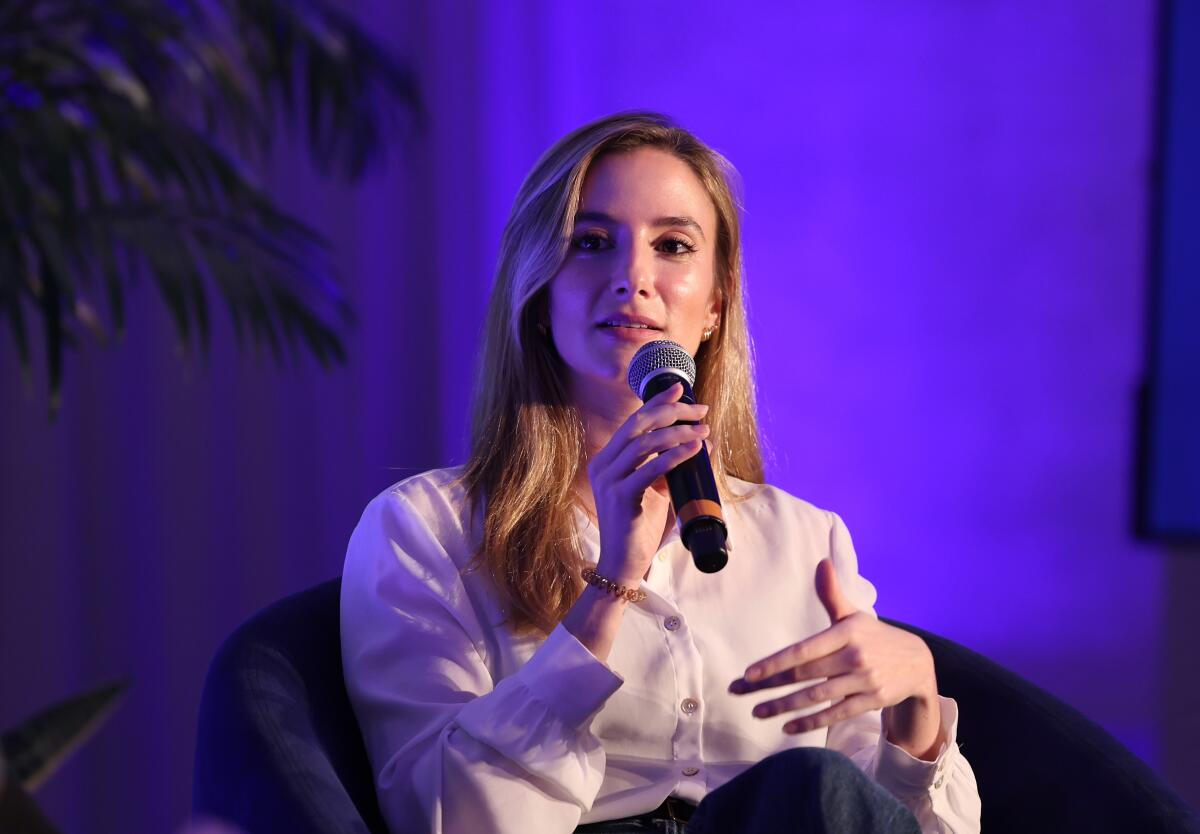
Kalshi co-founder Luana Lopes Lara speaks at a conference in Santa Monica, Calif., in April.
(Anna Webber / Inc.)
The episodes set off a debate in Washington. The Republican-led House Oversight Committee opened an investigation into potential insider trading, and a bipartisan group in Congress has introduced a flurry of bills seeking to put up guardrails. It remains unclear whether any will pass this session.
The chatter in Congress appeared to lead the Commodities Futures Trading Commission, which regulates prediction markets, to propose a new framework last week to govern issues raised by lawmakers, such as potential betting on wars. Commission Chair Mike Selig said the proposal would allow for scrutiny of suspicious activity “while letting legitimate markets move forward pursuant to the public interest.”
The markets commission under former President Biden was viewed as somewhat skeptical of prediction markets; the agency under President Trump — whose eldest son holds advisory positions at both Polymarket and Kalshi — has been seen as more favorable to the industry. The federal government has sued several states over their attempts to regulate the markets under state laws banning sports gambling and other measures.
Sen. Adam Schiff (D-Calif.), who has introduced legislation on the topic, said the agency’s framework would benefit the industry at the expense of the public interest.
The agency lacks “the leadership, will and investigative staff needed to confront the dangers of election misinformation, insider trading, and more,” Schiff said, “and seems content to allow the industry to police itself.”
Making bets
As California’s primary neared, people staked their dollars on the state’s races in droves. On Kalshi, trading volume on one contract about who will win the L.A. mayoral race in November had reached more than $117 million as of Tuesday.
Prediction market users trade on the outcome of future events, making money if they’re correct and losing money if they’re wrong. Someone can purchase a contract on the prediction that L.A. Mayor Karen Bass will win in November, a yes contract, or on the prediction that she will lose, a no contract.
On Tuesday, Bass contracts on Kalshi were selling at 63 cents each for yes and 38 cents for no, meaning the market was forecasting a 63% chance of her winning. Users receive $1 per contract if their prediction is correct, creating a profit on their initial investment.
Prediction markets generally create more accurate forecasts than political polls, according to Strumpf, whose research has examined 30 years of prediction markets in various forms.
Many of the issues critics raise are theoretical and have not been seen in practice, Strumpf said. By his analysis, there is no evidence that the markets have ever influenced an election outcome. He said serious traders tend to do extensive research in order to make money, meaning their bets are educated.
Rep. Mike Levin (D-San Juan Capistrano), who has introduced legislation to prohibit event contracts involving terrorism, war, assassination and deaths, said the platforms may be useful in some cases but shouldn’t be left to police themselves. He said he’s concerned that the markets create “all the wrong incentives” for people, including political candidates and officials, to abuse inside knowledge.
“I don’t trust them to self-regulate at all,” Levin said of the companies. “The federal role should be guardrails that are reasonable and pragmatic.”
‘The sanctity of our elections’
Skeptics’ concerns regarding elections largely center around the markets’ introduction of a new way for money to potentially influence politics.
They say the desire to elevate a candidate’s market odds could create an incentive for market manipulation, and they worry that the votes of Americans using the market could be influenced by their desire to profit.
“This has real impacts for the sanctity of our elections,” said Assemblymember Maggy Krell (D-Sacramento), who raised concerns about how prediction markets could impact the democratic process in a March letter to the state’s Fair Political Practices Commission. (California lawmakers are looking at the issue, a spokesperson for Assembly Speaker Robert Rivas (D-Hollister) said, though none of the bills introduced this year have yet moved forward.)
The platforms create a potential new channel “for dark money to flow into our elections,” Krell said. “Specifically, someone who’s opposing or supporting a candidate could potentially use sites like Kalshi to elevate that candidate and impact the entire pool.”
The industry has endeavored to “get out in front” of concerns by creating their own policies aimed at preventing insider trading, market manipulation and other issues, said attorney Ronak D. Desai, partner and head of the congressional practice at the Washington law firm Paul Hastings.
Kalshi has a ban on those practices and has banned markets tied directly to death and war, Lever said. It also screens all new users and, in the first quarter of this year, blocked more than 100 potential insider trades and referred more than 20 cases to law enforcement.
In the case of the military member who bet on the United States’ operation in Venezuela, for instance, Polymarket caught the activity and referred the case to the Justice Department, a spokesperson said. The company has referred nearly 100 cases of suspicious activity to law enforcement, he said.
Election markets are not offered on Polymarket’s U.S. exchange — though users in the U.S. and other countries that ban the company’s international exchange are widely reported to access it using online tools.
“Polymarket prohibits trading based on stolen information, illegal tips, or information obtained in breach of a duty of trust, confidentiality, or other legal obligation,” the Polymarket spokesperson said in a statement.
Aaron Klein, senior fellow in the Center on Regulation and Markets at the Brookings Institution, predicted that pressure for further regulation would continue to mount.
“The top goal of a society is to have free and fair elections,” Klein said. “At a time in our nation’s history where people are doubting the integrity of elections and foreign governments are stoking those flames, we ought to be pretty careful.”
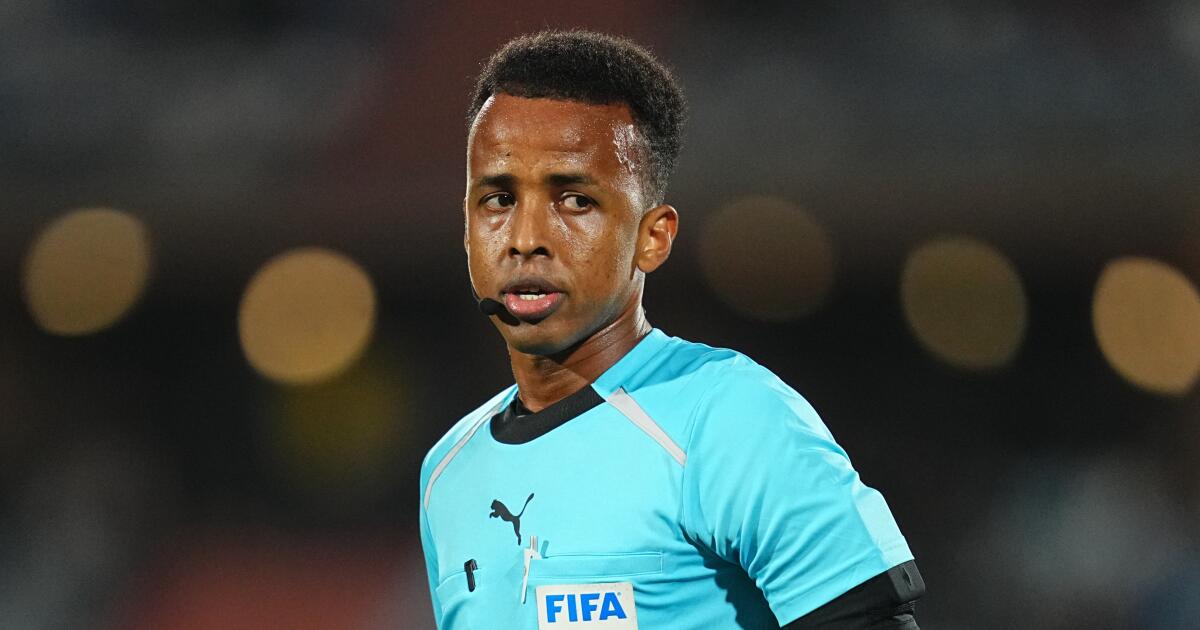
Somali referee Omar Abdulkadir Artan was denied entry into the United States for the World Cup after enduring an 11-hour interrogation in Miami, according to media reports. Andrew Giuliani, head of the White House Task Force on the World Cup, indicated Artan was suspected to having ties to a Somali militant group.
“We want to make sure we are not going to allow a soccer tournament to be the opportunity for terrorists to potentially get in the country or anybody who is actually talking to them,” Giuliani told the British Broadcasting Corporation.
“I am very, very disappointed,” Artan told the Times from Istanabul, where he stopped on his way back to Somalia. “I’m just simply a referee who’s trying to live his dream, the biggest dream of my life, to come to the World Cup.”
Safety was purportedly the concern with Artan, whose interrogation was conducted by the U.S. Customs and Border Protection.
“During processing, the traveler underwent additional inspection, a routine part of CBP’s inspection process when officers need to verify information or determine admissibility,” CBP said in a statement. “Following inspection, the traveler, a referee for the FIFA World Cup, was determined to be inadmissible due to vetting concerns and was denied entry.”
Somalia is on the U.S. list of banned countries for immigration, although exceptions can be made. Artan is considered one of the best referees in Africa, having officiated in the Somali national football league championship and at the African Cup of Nations.
“Despite the circumstances, I am in a positive mood and focused on the next challenges in my refereeing career,” Artan said in a statement. “I would like to thank FIFA and [the African federation] for all their support and I promise to keep my refereeing levels up as I concentrate on the future.”
Artan, Africa’s Referee of the Year in 2025, was greeted Wednesday at Aden Adde International Airport in Somalia by government officials and hundreds of well-wishers.
“I want to thank FIFA for supporting me all the way, and for Somali people also,” he told Al Jazeera. “So I am very grateful for FIFA and for CAF also. This is what I have to say.”
Fans were left concerned for Stephen Sanchez after his chaotic Summertime Ball performanceCredit: Shutterstock EditorialThe star stepped out on stage and immediately almost fell overCredit: TikTok/ @_floss._
A video of Stephen Sanchez has emerged and shows the star’s chaotic performance at the Summertime Ball.
Taking to the stage the flamboyant star was dressed in a peach suit.
But as The Until I Found You hitmaker started to perform, he was seen slipping and sliding everywhere.
At one point Stephen looked like he was about to fall off the stage, as he tried to regain his balance.
WASHINGTON — A Treasury inspector general report raises concerns about Immigration and Customs Enforcement’s ability to safeguard taxpayer information after ICE and the Internal Revenue Service agreed in 2025 to share taxpayer data for the purpose of immigration investigations.
The recently released report provides the first official accounting of the scale of the IRS-ICE information transfer and documents security concerns surrounding an arrangement that has been the subject of multiple lawsuits and significant controversy inside both agencies.
The Treasury Inspector General for Tax Administration found that the 2025 data-sharing agreement between ICE and the Treasury Department — which allowed ICE to submit names and addresses of immigrants in the U.S. illegally to the IRS for cross-verification against tax records — resulted in inconsistent formatting in ICE’s data and the IRS’ matching criteria, which led to errors.
The deal led the then-acting commissioner of the IRS to resign.
The report says that after the agreement was signed, ICE requested address information on more than 1.2 million people, and that the IRS ultimately provided last-known addresses for about 47,000 people.
The inspector general concluded that the IRS’ automated matching process was flawed. Inconsistent formatting in ICE’s data led to questionable matches, including in cases in which incomplete or inaccurate addresses were labeled as valid, the report says.
Representatives from the Treasury Department and the IRS did not respond to a request for comment.
The plan to cross-verify tax and immigration data is part of President Trump’s agenda to secure U.S. borders and his nationwide immigration crackdown, which has resulted in deportations, workplace raids and the use of an 18th century wartime law to deport Venezuelan migrants.
However, this is not the first time it’s been revealed that tens of thousands of taxpayers’ information was revealed to ICE.
In February, a federal judge said the IRS broke the law by disclosing confidential taxpayer information to ICE, referring to the same 47,000 disclosures that the inspector general points out.
U.S. District Judge Colleen Kollar-Kotelly found that the IRS had erroneously shared the taxpayer information of thousands of people with the Department of Homeland Security as part of the 2025 agreement.
No recommendations were made in the new inspector general report, according to a letter by Nancy A. LaManna, deputy inspector general for inspections and evaluations.
“However, we plan to share some concerns we identified during our review with the DHS Office of Inspector General,” her letter says.
WASHINGTON — It was perhaps a surprising private overture from OpenAI Chief Executive Sam Altman to Sen. Bernie Sanders.
The meeting between the two had come just after the Vermont senator announced a plan for the public to take a 50% ownership stake in artificial intelligence companies such as OpenAI, using their stock to create a public wealth fund that would spread the fortune generated by AI behemoths.
Altman told Sanders that he, too, wants the public to have equity in AI companies. Though the CEO said he couldn’t support Sanders’ threshold of 50%, he nonetheless wanted to work with him to advocate for the general idea, according to people with knowledge of the conversation.
The nearly hourlong meeting in Sanders’ Senate office this week, held at Altman’s request, highlighted the inherent tension between AI powerhouses and policymakers as Americans are increasingly asked to accept the costs of the AI boom even as many remain unconvinced of its direct benefits. Yet it’s also creating odd political bedfellows fueled by populism as politicians from Sanders to President Trump embrace giving the public a stake in AI’s growth.
Speaking to reporters Friday on Air Force One, Trump described a potential partnership “where the American people can benefit from the success of AI” and said executives from leading AI companies will visit the White House, perhaps in the coming week, to discuss the idea.
“There’s something very interesting about it, where it almost becomes a partnership with the American public,” Trump said.
When reporters noted to the Republican president that Sanders, a democratic socialist and political independent, had proposed public ownership in AI companies, he pointed to similarities in their coalitions. The economic views of Trump voters and those who have supported Sanders for president, Trump said, “aren’t that far apart.”
Trump has embraced government investment in private companies in his second term, scrambling his party’s politics. His administration last year secured a 10% stake in the struggling Silicon Valley company Intel, and it considered a government takeover of Spirit Airlines earlier this year, although the airline couldn’t reach a deal and ultimately closed.
Public backlash
The positioning of leading figures such as Trump and Sanders comes as concerns about AI are emerging far beyond Washington.
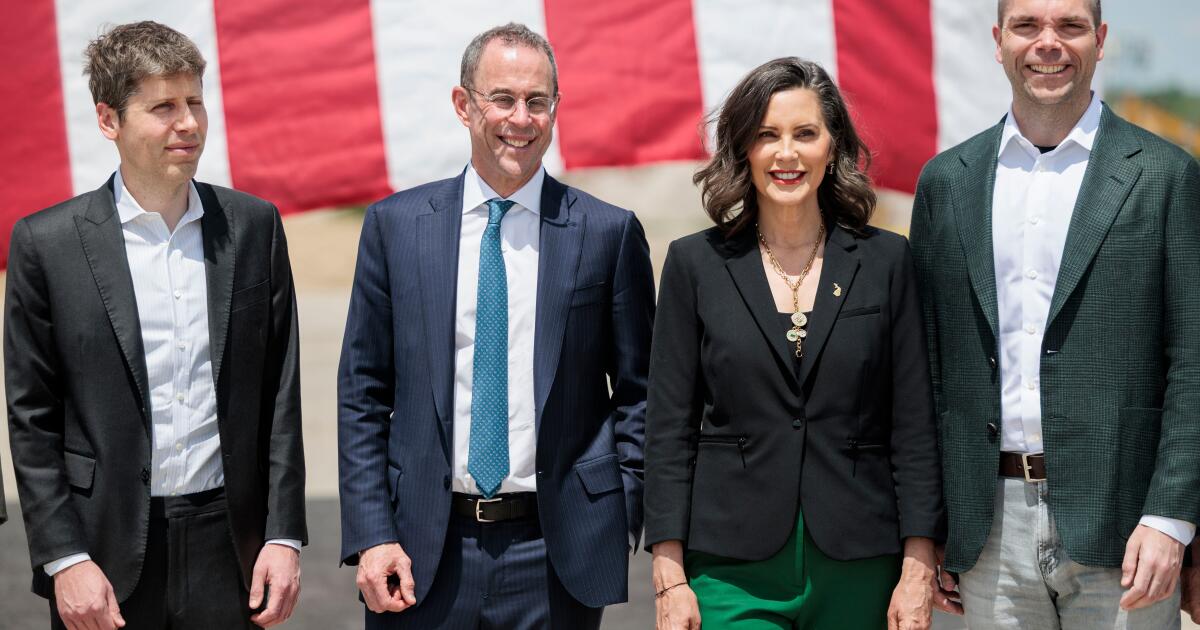
In Michigan, Democrats recently clashed over Gov. Gretchen Whitmer’s appearance with Altman at the site of a major data center. Candidates such as New York Democratic House candidate Alex Bores have also made AI regulation a campaign issue by tapping into voters’ unease about the technology.
“This is a real change to society,” Altman told reporters this week. “I think it’s possible both that people can use AI a lot and like using it and also have anxiety about what it’s going to do for the future.”
Data center projects across the country have drawn opposition from residents concerned about electricity demand, water consumption and environmental impacts. Some states once eager to attract the facilities, including Ohio and Virginia, have moved to reconsider tax incentives.
“We need to pass legislation right now that says there’s not going to be any further data center development until they agree to pay for their own electricity, build their own grids and pay for their own water supply,” Sen. Josh Hawley of Missouri, a leading Republican skeptic of Big Tech, told the Associated Press.
Before arriving in Washington, Altman stopped in Michigan on Monday to appear alongside Whitmer, a Democrat, at the site of a 1.65 million-square-foot data center project. Whitmer’s team said the project will create more than 2,500 union construction jobs.
But it also drew criticism from local activists and some fellow Democrats, including Rep. Rashida Tlaib of Michigan, who called the project “disgusting.” She said she was “so disappointed” in Whitmer.
“It’s a very controversial topic right now and it’s coming from the ground up,” Sen. Elissa Slotkin, another Michigan Democrat, said about the grassroots resistance. “People feel very strongly about it.”
Whitmer defended her appearance, telling reporters afterward that “one thing’s very clear: Everyone has a cellphone in our pocket.”
“We are all, more and more, consuming technology and data, and these data centers are going to get built. So, my thought is if we can hold them to a high standard and do it in Michigan, that’s the best way to do it,” she said.
The tensions extend beyond data centers. On college campuses, commencement speakers have been interrupted by boos when discussing artificial intelligence. About 70% of college students see AI as a threat to their job prospects, according to a 2025 poll by the Institute of Politics at the Harvard Kennedy School.
Altman acknowledged those concerns. He said that while “the impact on jobs has been less than many people in our field expected,” he understands “that college students have a lot of anxiety about the future.”
Washington seeks an AI bargain
The idea that AI’s expansion is inevitable is increasingly shared by leaders across the political spectrum, even as they disagree sharply about how to manage it.
That reality was at the center of Altman’s conversations in Washington. In addition to Sanders, Altman met with Trump administration officials such as Michael Kratsios, the White House’s chief science and technology advisor, and congressional leaders from both parties.
Sanders’ team emphasized that the two did not reach an agreement on the main points that the senator made to Altman, including the 50% figure to ensure that the public has decision-making power. The senator also expressed opposition to the growing spending on elections by the AI industry.
“Unfortunately, Sam Altman did not commit to any of those,” Sanders spokesperson Jeremy Slevin said.
Altman, emerging from the conversation, described it as “great,” though noting that the two “obviously don’t agree on everything.”
How AI should be governed
Congress this week released a bipartisan framework that would establish the first broad federal approach to AI regulation while temporarily preempting many state laws.
Anthropic, one of OpenAI’s top competitors, has proposed mechanisms for coordinating pauses on advanced AI development if systems become too powerful.
The Trump administration has also begun constructing its own oversight structure, signing an executive order to establish a process for reviewing national security risks posed by advanced AI systems before their public release.
Sanders said he found the administration’s move notable after years of warnings that regulation could slow American innovation.
“Even these guys are beginning to catch on that there are legitimate concerns that have to be dealt with,” Sanders said.
Cappelletti and Kim write for the Associated Press.
EXCLUSIVE: Love Island fans were shocked to hear that George Knight had quit the show just hours after arriving in the villa as a bombshell and now they reckon someone else has left
15:03, 05 Jun 2026Updated 15:05, 05 Jun 2026
Love Island fans reckon another contestant has secretly quit the show(Image: ITV)
Love Island fans reckon another contestant has secretly quit the show. Just days into the new series, viewers were shocked to hear that George Knight had left the villa after arriving as a bombshell in Spain due to “personal reasons”.
Lifting the lid on his sudden exit, a Love Island spokesperson said: “For private reasons, George has left the Love Island villa. Duty of care for the Islanders is paramount so at this stage any further comment will come from George. Bosses and viewers alike had been loving his contribution.”
Viewers were left reeling by the news, however they are now convinced that another Islander has left after claiming he had gone ‘missing’ from the show.
Electrician, Sam Workman from Dudley, says he came on the show because he feels “genuinely ready to settle down.” However, he wasn’t featured once in last night’s episode, promoting some fans to speculate he’d followed George back to Blighty.
Taking to social media, one viewer said: “Wait… where was Sam in this episode? Is he still around? A second asked: “Did we even hear Sam speak once in this episode?” Meanwhile, a third mused: “Is Sam still here?”
However, the Mirror understands that Sam is still very much part of the show and will be featured in tonight’s episode. Sam also features on today’s First Look from Love Island on the show’s Instagram page.
The electrician’s ‘disappearance’ comes after it was confirmed that footballer George had left after shortly after sending Samraj and Ellie home.
George made his mark upon arrival at the villa and wasted no time in getting to know Robyn and Mica. Robyn, who quickly friend-zoned Sam, appeared keen to forge a pairing with George, after they shared a snog on the terrace.
Before leaving, George and fellow bombshell Yasmin were given the tough task of choosing one guy and girl to dump from the villa for any reason they chose.
They had only 24 hours to make the decision while everyone in the villa was completely oblivious to what was going to unfold.
The pressure left Yasmin reduced to tears, but in the end the duo sent Ellie Chadwick and Samraj Toor packing. But while tears were shed and gutted Samraj and Ellie headed for the exit, they were told that all may not be as it seemed. It left fans confused over what’s to come next in the series that has already thrown up a number of twists in the first week.
Straight off the bat, Islanders had to choose their own couples. This moved away from the public who normally picked who they thought was best matched.
Love Island All Stars winner, Gaby Allen, told us of the bold move: “The producers are doing a great job at changing things up. This has never been done before.
“A recoupling done by themselves is crazy! I would panic in this situation and hope somebody whisked me off my feet so I didn’t have the decision.”
WASHINGTON — President Trump said Thursday that federal housing finance regulator Bill Pulte, his pick for acting director of national intelligence, would not be his “permanent” choice for the critical security post.
The Republican president’s disclosure that he was ruling out installing Pulte in the position full time came after bipartisan pushback on Capitol Hill in recent days over Pulte’s lack of national security experience. The position requires Senate confirmation, something that lawmakers indicated was unlikely if Pulte were the nominee.
“He’s not going to be permanent because, you know, I don’t think he’d want to be permanent,” Trump said while taking questions in the Oval Office after an event on coal. He called Pulte a “very smart guy” and said he may look at past elections that Trump claims, without credible evidence, were “rigged” against him.
Trump said other candidates were under consideration for nomination to the post. “We’re interviewing people right now,” he said.
Pulte, a grandson of the founder of PulteGroup, has been a source of controversy within the administration for his work as director of the Federal Housing Finance Agency and his oversight of the mortgage companies Fannie Mae and Freddie Mac.
Pulte has used his position to pursue Trump’s perceived political rivals for alleged mortgage fraud and has verbally attacked Jerome H. Powell, whose term as the Federal Reserve chairman recently ended after months of Trump and Pulte attacking him for not slashing the central bank’s benchmark rates. The federal housing finance regulator has also pitched a 50-year mortgage, an idea that backfired as it meant that the process of building wealth through homeownership would be slowed.
Both Republican and Democratic senators expressed concerns about Pulte and his lack of national security credentials in occupying a role coordinating 18 federal agencies involved in domestic and foreign security issues. Trump’s initial director of national intelligence, Tulsi Gabbard, resigned last month, citing her husband’s recent cancer diagnosis.
Senate Majority Leader John Thune, a Republican from South Dakota, said the national intelligence director job shouldn’t be “weaponized” and should be led by “professionals.”
Republican Sens. Thom Tillis of North Carolina, Bill Cassidy of Louisiana and John Cornyn of Texas, who are each leaving the chamber after this year’s elections, also expressed concerns about Pulte.
Democratic senators view Pulte as a risk even if he is serving only temporarily as the director of national intelligence while keeping his position at the FHFA.
Sen. Elizabeth Warren (D-Mass.) sent Trump a letter on Thursday calling on him to rescind Pulte’s national security appointment.
“Americans cannot trust him to protect our nation and refrain from misusing the sensitive information he will have access to,” Warren wrote, saying that giving Pulte the job on an acting basis was a risk because Trump’s own words suggested the federal agency could be used “to promote election denial theories.”
At a hearing on Wednesday, Treasury Secretary Scott Bessent confirmed reports that he had threatened to fight Pulte in September, a sign of the friction that the federal housing finance director had generated inside the administration.
But as a frequent traveler on Air Force One, Pulte has a close relationship with Trump.
“He’s a person who’s got high integrity,” Trump said Thursday about Pulte.
BOSTON — A federal judge on Tuesday heard from voting rights groups and a coalition of two dozen states that want the courts to halt President Trump’s executive order seeking to create a federal voter list and limit who can receive a mail ballot.
The plaintiffs argued in two lawsuits that Trump’s order should be found unconstitutional because the states and Congress, not the president, have the power to set election rules. They also told the court that the move imposes a costly burden on state election officials to comply and would spread fear about the possibility of prosecution.
“This is going to be a sea change in the way that some states administer their ballots,” said Michael Cohen, who was part of a team representing California, adding that “it will be difficult to overstate the disruption that this will cause.”
Trump’s executive order, the second one aimed at elections during his second term, comes as he continues to raise the specter of widespread voting by noncitizens as a reason to change election rules. But states already have detailed processes aimed at keeping their voter rolls accurate, and voting by noncitizens has been shown to be rare. It also is a felony that can be punishable by deportation.
His latest order is being challenged through multiple lawsuits, including two filed in U.S. District Court in Boston.
The American Civil Liberties Union, which represented the League of Women Voters in one of the two Boston cases, has called the order “a dangerous attempt to disenfranchise eligible voters nationwide.” The group said the order transforms “the U.S. Postal Service from a neutral mail carrier to an arbiter of who may cast a ballot by mail.”
“This case challenges an extraordinary and abusive assertion of executive power over the administration of federal elections,” the organization said in its complaint.
The hearing comes less than a week after another judge declined to halt the order. U.S. District Judge Carl Nichols, a Trump appointee in Washington, agreed with the Trump administration’s contention that it was too early to block the order because it has yet to be implemented.
The administration, in its motions to dismiss the lawsuits, argued that the plaintiffs lack standing to bring their claims. They also argued the motions are premature and that plaintiffs lack the legal basis to bring their Administrative Procedure Act claim, which governs how federal agencies develop and issue regulations.
Stephen Pezzi, a lawyer for the Trump administration, said the harms the plaintiffs referred to were subjective, since much can change with the voting list before it is finalized. He also said no one would be prosecuted for violating the executive order.
Missouri Solicitor Gen. Lou Capozzi, speaking for the states supporting the list, argued it was too early to say how his state might use the list, but that it was “unlikely” any voter would be removed this year from the voter rolls because of it.
“We are not exactly sure how we would use it,” Capozzi said, adding that “we don’t want this process to be strangled in the crib, so to speak.”
U.S. District Judge Indira Talwani took the requests for motions to halt the order, along with motions to dismiss the cases under advisement.
During oral arguments, Talwani expressed concerns about whether the federal system envisioned under the executive order could be ready for the upcoming midterm elections and about the risks posed to election workers who rely on a state list that differs from the federal one. She also raised doubts about the reliability of a federal list — noting, for example, women who changed their names after getting married or someone who has moved from state to state might be missed.
“Isn’t there a reasonable fear and concern on behalf of voters that they will be precluded?” Talwani asked.
Trump issued the order in March after a bill he supported to overhaul voting stalled in Congress. The order would have had the federal government create a list of eligible voters and then directed the postal service to deliver mail ballots only to those on the list. Election officials argued that it was ripe for abuse and could cause chaos, and the postal union has objected to the idea of mail carriers policing ballots.
The postal service has published a proposed rule required by Trump’s executive order in the Federal Register. Among other things, the rule would not apply to primary elections or overseas ballots.
Since his 2020 presidential election loss to Democrat Joe Biden, Trump has groundlessly claimed mail voting is rife with fraud and has launched a federal investigation into that year’s vote, even though repeated audits and investigations, including ones run by Republicans, found it was free of widespread fraud. Trump also has said he wants to “take over” election administration in Democratic areas.