competitors

EU orders Google to share data, Android with competitors

July 16 (UPI) — The European Commission has ordered Google to share its Android features and search data with competitors on Thursday.

The European Union has placed these requirements on Google under the Digital Markets Act. It said that Google sharing features and data with competitors will allow fair competition for third-party AI developers.

“Today’s decision will ensure that users can activate their preferred AI assistant via voice commands, similar to the ‘Hey Google’ command,” the announcement by the European Commission said of sharing Android services. “Users will be able to use third-party AI assistants to perform actions in apps on their behalf. Importantly, the measures incorporate robust safeguards to ensure that the privacy of users, device integrity and security are protected.”

As for Google sharing search data, the commission said data sharing is “crucial for the development and optimization of third-party search engines.” It added that Google’s data sharing has been ineffective, necessitating new requirements.

Google is required to begin sharing search data with “eligible search engine providers” beginning in January. Users will begin to see changes to Android in July 2027. The commission notes that these specification requirements are legally binding.

“The aim of these measures is to allow companies to be able to offer European users a wider and more feature-rich range of options to choose from, both when it comes to their AI services on Android and to search services,” the commission said.

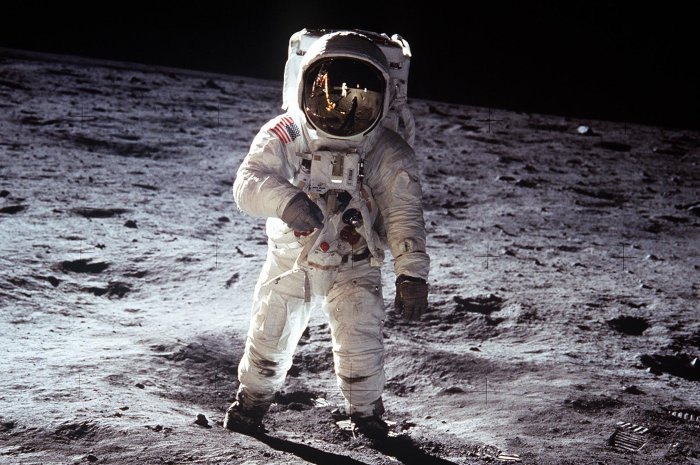
Astronaut Buzz Aldrin walks on the surface of the Moon during the Apollo 11 mission on July 20, 1969. Photo by NASA/UPI | License Photo

Source link

EU car industry clashes over strategy to fight Chinese competitors

Published on

European car suppliers and manufacturers are divided over Brussels’ “Made in Europe” strategy, an effort to shield the EU market from Chinese competition.


ADVERTISEMENT


ADVERTISEMENT

The EU car industry is facing fierce competition from China, threatening hundreds of thousands of jobs across the bloc. To address the issue, the EU is preparing the so-called Industrial Accelerator Act, which is designed to favour electric vehicles constructed mostly with European components in public procurement and public support schemes.

However, EU car suppliers and manufacturers disagree over the proposed law, currently under discussion by EU countries and the European Parliament, which sets a 70 percent local content threshold for electric vehicles.

According to the European Association of Automotive Suppliers (CLEPA), the Commission’s proposal is a step in the right direction. Based on a study commissioned from management consultancy Roland Berger that Euronews has seen, plug-in hybrid electric vehicles and battery-electric vehicles manufactured in Europe already contain between 80 percent and 90 percent made-in-Europe components.

Consequently, it considers the Commission’s 70 percent threshold to be achievable.

But the European Automobile Manufacturers’ Association (ACEA) is pushing for a different methodology, under which regulators would assess finished vehicles instead of the local content in vehicle components.

“A vehicle is far more than the sum of its parts. Its value also lies in the R&D, advanced engineering and highly skilled workforce behind it,” ACEA said in a position paper published on 1 July.

CLEPA responded that under this methodology, a finished vehicle would require only 50 percent EU-made parts and components, with the remaining 20 percent coming from R&D, design and other activities.

This 20 percentage-point dilution of the requirement for EU-made parts “could result in the loss of 350,000 jobs”, CLEPA warned, saying the Commission’s component-level approach would “safeguard the existing manufacturing base”.

“What we are looking at right now is significant competition from best-cost countries, and the dragon in the room is China,” CLEPA Secretary General Benjamin Krieger told Euronews.

“A ‘Made in Europe’ threshold that ignores where the actual parts are built is a label that ignores the European worker,” he said.

Source link

Lufthansa jet fuel update as airline ‘in better position than most competitors’

The German airline is one of the biggest in Europe

Lufthansa has issued a statement after energy bosses claimed Europe has six weeks’ supply of jet fuel left. Fatih Birol, executive director of the International Energy Agency (IEA), warned there could be flight cancellations ”soon” if oil supplies remain restricted by the Iran war.

When approached for comment, Lufthansa told the Mirror that it claims to be in a better position than most competitors regarding its kerosene requirements. A spokesperson for the airline said: “The Lufthansa Group has secured (‘hedged’) approximately 80 per cent of its kerosene requirements for 2026.

“And approximately 40 per cent for 2027 based, among other things, on the price of crude oil – both at pre-crisis price levels. With this level of hedging, we are in a better position than most competitors.”

It comes as the airline announced it will cut 20,000 short-haul flights from its schedule this summer to save money amid rising jet fuel costs. Most of these cuts are due to the shutdown of its unprofitable CityLine fleet and the retirement of its 27 planes. The airline pointed out that jet fuel prices have more than doubled and noted labour disputes involving its employees.

A statement on the Lufthansa Group website reads: “In total, 20,000 short-haul flights will be removed from the schedule through October, equivalent to approximately 40,000 metric tons of jet fuel, the price of which has doubled since the outbreak of the Iran conflict. The schedule adjustments reduce the number of unprofitable short-haul flights across the Lufthansa Group network.

“The planned consolidation of the European network is being carried out across Lufthansa Group’s six hubs in Frankfurt, Munich, Zurich, Vienna, Brussels, and Rome. Passengers will therefore continue to have access to the global route network, particularly long-haul connections. However, due to the increase in jet fuel prices, this will be achieved significantly more efficiently than before.”

On Tuesday, April 21, the Prime Minister discussed the Government’s work to ease pressures caused by the Iran conflict with ministers and officials at a meeting of the Middle East Response Committee. A government spokesperson said: “The discussion focused on the Government’s ongoing work to ease pressures being felt here in the UK.

“This included the diplomatic activity to promote progress on negotiations, and bring back security and stability for the region, and the military planning to restore freedom of navigation in the Strait of Hormuz. The Prime Minister acknowledged that the impact of the war in the Middle East will be felt beyond the end of the conflict, and stressed the importance of protecting British families.

“They discussed a range of ongoing contingency planning, such as our work with fuel suppliers, airlines and international counterparts, to ensure people keep moving and businesses are supported. UK airlines are clear that they are currently not seeing a shortage of jet fuel, and it is right that the Government continues to work with industry to ensure we closely monitor the situation.

“They said it was right that this Government is introducing wider measures to strengthen long-term resilience, including measures announced today to accelerate breaking the link between gas and electricity prices to support families and businesses under pressure and exposed to volatile gas prices.”

Source link