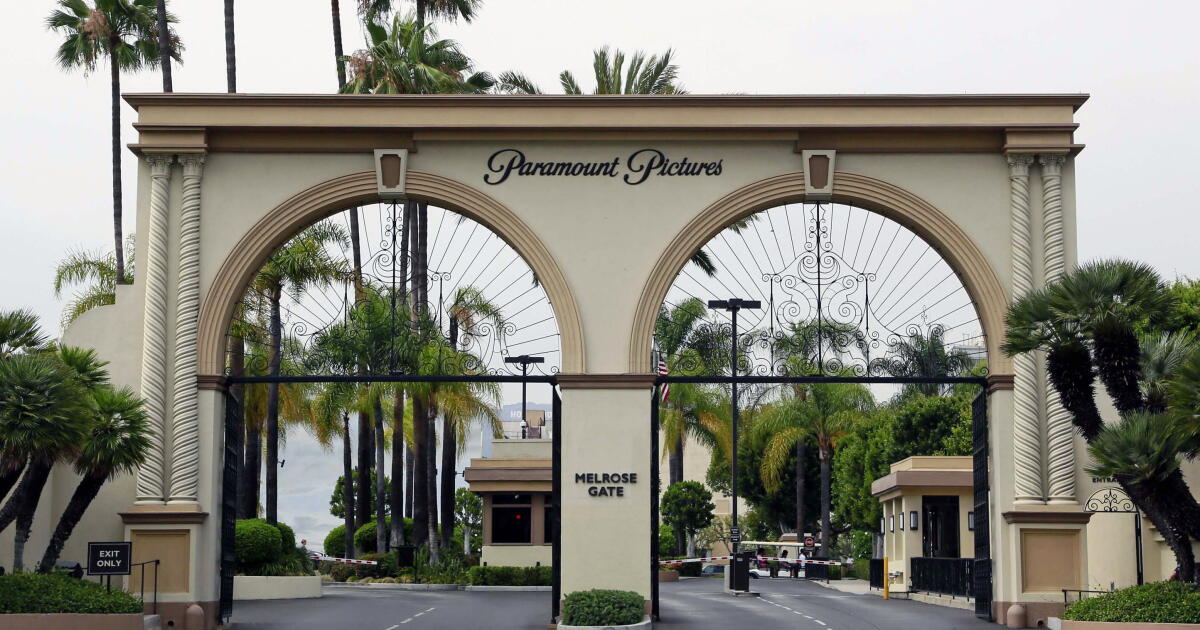
The year was 1923, and thousands of people a month were flooding into Los Angeles in hopes of finding a job in the nascent film business.
Many planned to start as background actors, dreaming they’d be discovered by a director and finally get their big break. These behind-the-scenes actors would wander from studio lot to studio lot, lining up in hopes of being cast.
But the chaos of aspiring actors searching for jobs eventually became too much. Even silent screen star Mary Pickford took to warning wide-eyed newcomers that they should save enough money to survive for five years before coming out to Hollywood.
Out of calls to create safeguards around this fledgling business, and more order around background acting opportunities, emerged the Central Casting Corp.
Central Casting — now so eponymous that its name has become a cultural phrase — celebrated its 100th anniversary earlier this month.
I recently spoke with Mark Goldstein, president and chief executive of the Burbank-based company, to talk about changes in the industry, including the threat of artificial intelligence, runaway production and the role of a background actor in 2025.
Goldstein acknowledged the tough environment for background performers, also commonly known as extras, who populate restaurants, parks and other film and TV scenes to make the environment seem more realistic — all without saying a word.
After the lows of the pandemic, and then the explosion of content during the peak TV era, one of the main challenges for Central Casting’s members is just finding new roles, he said.
“There’s been a little bit of a pullback in production over the last year,” said Goldstein, who serves as president and CEO of Central Casting as well as production finance and management tools firm Entertainment Partners, which owns the agency. “It’s really just constantly finding the right roles for people.”
In Southern California, of course, jobs have been more scarce as production has flowed to other states and countries offering steeper film incentives.
Then there is the advent of computer-generated imagery, which has lessened the need for massive crowd scenes that were once standard.
“Before [CGI] technology, we may fill up an arena, like we may fill a 5,000-person shoot or a 10,000-person shoot,” Goldstein said.
Remember the long lines for casting calls?
No more.
More recently AI has been a key concern for background actors, though Goldstein said he doesn’t think the new digital tools and the rise of synthetic characters will eliminate the need for background actors.
“There’s a lot of conversation [about] is it human or technology? And we kind of view it as human and technology,” he said. “The consumer wants believability, and so there’ll be situations where it’s really important to have the human role involved, but there may be other situations where AI and technology can be helpful.”
He added: “We have legendary people that started their career because they wanted to follow their dream to become an actor in Hollywood,” he said, ticking off the names of famous alumni such as Clark Gable, Carole Lombard, Eva Longoria, Will Ferrell and Brad Pitt. “And we don’t see that changing.”
Despite the challenges, aspiring actors still register with Central Casting every day, Goldstein said. The company has 200,000 background actors in its database, with more than 20,000 new names added a year. About 3,000 are placed in roles each day, the company says.
One of those is Jaylee Maruk, 38, who signed up with Central Casting in 2009 and has worked steadily ever since.
Maruk works often on “Grey’s Anatomy” and has credits on Hulu’s “Paradise” and Apple TV’s “Shrinking.” She once stood in for Greta Lee in Apple TV‘s “The Morning Show.”
You’re reading the Wide Shot
Samantha Masunaga delivers the latest news, analysis and insights on everything from streaming wars to production — and what it all means for the future.
“What I love about doing background is it really gives a solid foundation about what it’s like to be on set and what the expectations are,” Maruk said.
But she worries about her future, especially with the rise of AI and the migration of production.
“Productions will pack up and leave,” she said. “They’ll go somewhere cheaper, and it’s becoming harder and harder for us. That’s really the biggest concern, trying to entice and support productions staying here.”
Towns in far-off countries like Hungary and Turkey can be made to look just like places in America, she says. And they can cast local residents instead of U.S.-based performers like Maruk. After all, background actors don’t have speaking roles, so not speaking English isn’t a problem.
“We want our work to be here,” said the Lake Balboa resident. “Our families are here, our lives are here.”
Last year, I got a glimpse into the world of background acting when I covered the annual Los Angeles Union Background Actors Awards. Though tongue-in-cheek at times — the awards themselves are called Blurries — the ceremony and winners’ speeches also highlighted these actors’ key roles in Hollywood.
I met background actors who had done the job for years, including one who got his first role as a 12-year-old in “Hello, Dolly!” Many talked about the difficulty of the last few years and the desire for respect for their professional work. Some were full-time background actors; others did the work part time. All were passionate about what they did.
“It really is just preparedness and luck, as they say,” Maruk said. “And also just having a lot of motivation and resilience.”
Stuff We Wrote
Film shoots
Number of the week
James Cameron’s “Avatar: Fire and Ash” brought in $89 million in the U.S. and Canada during its opening weekend. Globally, the film made $346 million, with big hauls in China and France.
That opening total came in at the lower end of box office analysts’ expectations and is also less than the massive opening weekend for its predecessor film, 2022’s “Avatar: The Way of Water,” which grossed $134 million in its domestic debut. But “Avatar” films tend to build momentum at the box office over subsequent weekends, so the Na’vi aren’t vanquished yet.
In addition to “Avatar,” this past weekend also saw strong performances from Angel Studios’ animated “David,” as well as Lionsgate’s thriller “The Housemaid,” pushing the year-to-date domestic box office total a slim 1% above the same time period last year. That’s helpful for theaters but doesn’t bode well for the box office’s overall performance this year.
Finally …
My colleague Josh Rottenberg looks at what movie stardom will mean in an age of AI. In that story, he has an interview with the creator of Tilly Norwood, the AI-generated character that recently sparked a furious debate in Hollywood about the role of synthetics in film and TV.
Under the glow of fluorescent lights at Seafood City market in North Hills, packages of pre-made adobo, salted shrimp fry and and dried anchovies glisten in meat coolers.
A DJ, dressed in a traditional barong, blasts a dance remix of Whitney Houston’s “I Wanna Dance with Somebody” as a crowd gathers to take a shot of fish sauce together.
“That was disgusting!” a man shouts into the mic, flashing a grimacing expression.
At Seafood City, DJs 1OAK, left, EVER ED-E and AYMO spin in barongs, the Philippines’ national formal shirt.
The smells of lechon and lumpia float through the air. Smiling children munch on halo-halo (a Philippine dessert made with ube ice cream, leche flan and shaved ice). Flags of the Philippines wave in the air as a man in UCLA Health scrubs hops into the center of an energetic dance circle. Employees shoot store coupons out of a money gun and toss bags of Leslie’s Clover Chips into the crowd. Fathers hold their children on their shoulders as a group of college students perform a Tinikling routine, a traditional Philippine dance in which performers step and hop over and between bamboo poles.
“This is so Filipino,” a woman says, in awe of the scene.
Sabria Joaquin, 26, of Los Angeles, left, and Kayla Covington, 19, of Rancho Cucamonga hit the dance floor at “Late Night Madness” in North Hills.
“I came here for groceries,” explains an elderly man, adding that he decided to stay for the party.
Seafood City, the largest Philippine grocery store chain in North America, typically closes at 9 p.m. But on certain Friday and Saturday nights, its produce or seafood aisle turns into a lively dance floor for “Late Night Madness.” On social media, where the gathering has exploded, it looks like a multigenerational nightclub that could use dimmer lighting. But for attendees who frequent the store, it’s more than that. It’s a space for them to celebrate their Filipino heritage through food, music and dance in a familiar setting.
“This is something that you would never expect to happen — it’s a grocery store,” says Renson Blanco, one of five DJs spinning that night. He grew up going to the store with his family. “My mom would [put] us all in the minivan and come here, and she’d let us run free,” he adds. “It’s comfortable here. It’s safe here.”
1
2
3
1.Rhianne Alimboyoguen, 23, of Los Angeles follows an employee through the produce section.2.Allison Dove, 29, left, and Andrea Edoria, 33, both of Pasadena, enjoy Philippine street food. 3.Katie Nacino, 20, left, Daniel Adrayan, 21, and Sean Espiritu, 21, of the Filipino American Student Assn. at Cal State Northridge, practice tinikling, a traditional Philippine folk dance, in an aisle.
The first Seafood City location opened in 1989 in National City, a suburb of San Diego, which has a nearly 20% Asian population including a rich Filipino community. For its founders, the Go family, the mission was simple: to provide a market where Filipinos and people within the diaspora could comfortably speak their native language and buy familiar products. It’s since become a community anchor. Of the nearly 40 locations in Northern America, at least half of them are based in California, which has the highest population of Asian Americans in the United States.
Share via
The first “Late Night Madness” event happened in September in Daly City, Seafood City’s newest location. The company wanted to launch a street food program at the store’s food hall in a fun and creative way.
The DJ played a selection of hip-hop, pop, soul and classic Pinoy records like VST & Company’s “Awitin Mo, Isasayaw Ko.” Hundreds of people showed up, and videos of people of all ages turning up in the popular supermarket spread like wildfire. So the company decided to continue hosting the event in October during Filipino American History Month and for the rest of the year. It’s since expanded to more locations around the country and in L.A., including Eagle Rock.
By 10 p.m. at the Seafood City in North Hills, at least 500 people are dancing in the produce section, next to rows of saba bananas, fresh taro leaves and bok choy. The lively crowd forms dance circles throughout the night, taking turns jumping in the center to show off their moves to songs like Earth, Wind & Fire’s “Let’s Groove,” “Nokia” by Drake and Justin Bieber’s “I Just Need Somebody to Love.” At one point, TikToker and artist Adamn Killa hops on the mic and says “If you a Filipino baddie, this is for you,” before doing his viral dance.
Among the Philippine street food offerings were pandesal sliders, lumpia-style nachos, lobster balls and various skewers.
(Christina House/Los Angeles Times)
A group of employees dance behind the counter as they serve hungry patrons who fill their trays with various Filipino street food including pandesal sliders (soft Philippine bread filled with adobo, lechon or longganisa) and Lumpia Overload (think nachos, but a bed of lumpia instead of tortilla chips), lobster balls and barbecue chicken skewers. (No alcohol is served.) Meanwhile, a few lone shoppers sprinkle into the store to get their weekly groceries as music blasts through the speakers.
First-generation Filipino American Andrea Edoria of Pasadena says “Late Night Madness” reminded her of the family parties she attended as a child in L.A. and in Manila, where her parents are from.
“Growing up as a child of immigrants, I was kind of self conscious about displaying too much of my culture,” she says between bites of spiral fried potato. She went to the Eagle Rock event with her mother last month as well. “So it kind of fed my inner child to see so many people celebrating this shared culture and experience that we each grew up [with].”
A multi-generational crowd is drawn to the dance floor. At center is Jade Cavan, 44, of Chatsworth.
Members of the Filipino American Student Assn. at Cal State Northridge perform a tinikling performance.
She adds, “I think it’s so important especially now at a time where our country is so divisive and culture is kind of being weaponized, I think it’s a beautiful reminder that we can come together and find something that unites us.”
About 10 minutes before midnight, the grocery store is still bustling with activity. A dance battle breaks out and people begin hyping up the young women. The DJ transitions into slower tracks like Beyoncé’s “Love on Top” and Mariah Carey’s “All I Want for Christmas is You.” The remaining folks sing along loudly as they walk toward the exit, smiles imprinted on their faces. Staff rush to clean up, then huddle together for group photos to memorialize the evening.
After the final song is played, employees rush to clean up the supermarket.
Patrick Bernardo, 34, of Van Nuys looks at the counter, where a man had been chopping lechon, before stepping outside.
“There’s barely anything left on that pig,” he says, pointing to it as proof that the night was a success.
Billionaire Larry Ellison has stepped up, agreeing to personally guarantee part of Paramount’s bid for rival Warner Bros. Discovery.
Ellison’s personal guarantee of $40.4 billion in equity, disclosed Monday, ups the ante in the acrimonious auction for Warner Bros. movie and TV studios, HBO, CNN and Food Network.
Ellison, whose son David Ellison is chief executive of Paramount, agreed not to revoke the Ellison family trust or adversely transfer its assets while the transaction is pending. Paramount’s $30-a-share offer remains unchanged.
Warner Bros. Discovery’s board this month awarded the prize to Netflix. The board rejected Paramount’s $108.4-billion deal, largely over concerns about the perceived shakiness of Paramount’s financing.
Paramount shifted gears and launched a hostile takeover, appealing directly to Warner shareholders, offering them $30 a share.
“We amended this Offer to address Warner Bros. stated concerns regarding the Prior Proposal and the December 8 Offer,” Paramount said in a Monday Securities & Exchange Commission filing. “Mr. Larry Ellison is providing a personal guarantee of the Ellison Trust’s $40.4 billion funding obligation.”
The Ellison family acquired the controlling stake in Paramount in August. The family launched their pursuit of Warner Bros. in September but Warner’s board unanimously rejected six Paramount proposals.
Paramount started with a $19 a share bid for the entire company. Netflix has offered $27.75 a share and only wants the Burbank studios, HBO and the HBO Max streaming service. Paramount executives have held meetings with Warner investors in New York, where they echoed the proposal they’d submitted in the closing hours of last week’s auction.
On Monday, Paramount also agreed to increase the termination fee to $5.8 billion from $5 billion, matching the one that Netflix offered.
Warner Bros. board voted unanimously to accept Netflix’s $72-billion offer, citing Netflix’s stronger financial position, the board has said.
Three Middle Eastern sovereign wealth funds representing royal families in Saudi Arabia, Qatar and Abu Dhabi have agreed to provide $24 billion of the $40.4-billion equity component that Ellison is backing.
The Ellison family has agreed to cover $11.8-billion of that. Initially, Paramount’s bid included the private equity firm of Jared Kushner, Trump’s son-in-law, but Kushner withdrew his firm last week.
Paramount confirmed that the Ellison family trust owns about 1.16 billion shares of Oracle common stock and that all material liabilities are publicly disclosed.
“In an effort to address Warner Bros.’s amorphous need for ‘flexibility’ in interim operations, Paramount’s revised proposed merger agreement offers further improved flexibility to Warner Bros. on debt refinancing transactions, representations and interim operating covenants,” Paramount said in its statement.
Paramount has been aggressively pursuing Warner Bros. for months.
David Ellison was stunned earlier this month when the Warner Bros. board agreed to a deal with Netflix for $82.7 billion for the streaming and studio assets.
Paramount subsequently launched its hostile takeover offer in a direct appeal to shareholders. Warner Bros. board urged shareholders to reject Paramount’s offer, which includes $54 billion in debt commitments, deeming it “inferior” and “inadequate.” The board singled out what it viewed as uncertain financing and the risk implicit in a revocable trust that could cause Paramount to terminate the deal at any time.
Paramount, controlled by the Ellisons, is competing with the most valuable entertainment company in the world to acquire Warner Bros.
Executives from both Paramount and Netflix have argued that they would be the best owners and utilize the Warner Bros. library to boost their streaming operations.
In its letter to shareholders and a detailed 94-page regulatory filing last week, Warner Bros. hammered away at risks in the Paramount offer, including what the company described as the Ellison family’s failure to adequately backstop their equity commitment.
The equity is supported by “an unknown and opaque revocable trust,” the board said. The documents Paramount provided “contain gaps, loopholes and limitations that put you, our shareholders, and our company at risk.”
Netflix also announced Monday that it has refinanced part of a $59 billion bridge loan with cheaper and longer-term debt.
A shell company with Israeli ties exploited Palestinians desperate to flee the ongoing war in Gaza, charging them large sums of money to covertly exit the country in what may be an official plan to ethnically cleanse the territory.
In an exclusive digital investigation, Al Jazeera probed last month’s mystery flight that spirited 153 passengers from Gaza to South Africa, unearthing figures working for Al-Majd Europe, an unregistered front organisation that falsely claimed to be working for humanitarian aims.
Recommended Stories
list of 3 itemsend of list
The Palestinians arrived at OR Tambo International Airport, which serves the cities of Johannesburg and Pretoria, on November 13. Refused entry by border police as they did not have departure stamps from Israel on their passports, they were stuck on the aircraft for 12 hours before being allowed to disembark.
South African President Cyril Ramaphosa admitted the passengers “out of compassion”, but said at the time that his government, which has long been a strong supporter of the Palestinian cause, would investigate as it seemed that they had been “flushed out” of the Gaza Strip.
Forced evacuations
Israeli officials have previously openly stated that they support what they have termed the “voluntary emigration” of Palestinians from Gaza, in what effectively would be their forced evacuation.
In March 2025, Israel’s security cabinet set up a controversial bureau to get Palestinians to leave Gaza voluntarily, which was headed by former deputy director of the Ministry of Defence, Yaakov Blitstein. Israeli Defence Minister Israel Katz said at the time that 40 percent of Gaza residents were “interested in emigrating”.
The previous month, Al-Majd Europe set up its online presence with a new website stating that it focused on relief efforts in Muslim countries, specifically “for Gazans wishing to exit Gaza”, with claims that it had organised mobile health clinics in the enclave and trips for Palestinian doctors abroad that Al Jazeera later discovered to be false.
A passenger from the November flight to South Africa, whose identity was kept hidden for his own protection, said he contacted the organisation after finding the link online, which promised not only a way out of Gaza, but safety and medical treatment for injuries. “Initially, it said it was free. Then they asked for $1,400 [per person]. Then the price went up to $2,500,” he said.
Testimonies gathered by Al Jazeera showed that payments requested varied from $1,000-2,000 per person, with strict criteria for signing up. Only families would be accepted on condition that they kept their departure secret, with details on flight departures only released a few hours before takeoff.
Passengers say they were told to arrive at the Karem Abu Salem crossing (called Kerem Shalom in Israel) in southern Gaza. When they arrived, their personal belongings were confiscated, and they were put on buses to Ramon Airport, near the Israeli city of Eilat, apparently by Israeli authorities.
Nigel Branken, a South African social worker who helped tho Palestinians on the plane, previously told Al Jazeera that there were “very clearly … marks of Israel involved in this operation to take people … to displace them”.
Evacuees told Al Jazeera they were not informed of their final destination until moments before boarding. They were then escorted onto a flight registered to a brand new airline called FLYYO without exit stamps in their travel documents.
Al Jazeera discovered that FLYYO has organised a number of similar flights, all taking off from Israeli airports, headed to Romania, Indonesia, South Africa, Kenya and other destinations.
False identity
Further scrutiny of Al-Majd Europe, which said it was a “humanitarian foundation established in 2010 in Germany”, with a head office located in Sheikh Jarrah, a neighbourhood in occupied East Jerusalem, later revealed its identity to be a sham.
Al Jazeera found no company registered by that name on any German or European database. The supposed address does not appear in official Jerusalem records, with the location on Google Maps corresponding to a hospital and a cafe.
While digging into the flights, Al Jazeera found two faces linked to the organisation – both Palestinians. The first was Muayad Hisham Saidam, which the organisation lists as its humanitarian projects manager in Gaza.
A search of Saidam’s name reveals that in May 2024, his wife created a public page to ask for donations to help her family leave Gaza. A year later, Saidam posted an image of himself boarding a plane chartered by Fly Lili, another Romanian airline, announcing that he was departing Gaza.
Using the angle of his shadow, time of the flight and the location of the plane on the Ramon Airport runway, Al Jazeera discovered Saidam was likely on a flight on May 27, 2025, which left Israel for Budapest, with 57 Palestinian passengers from Gaza.
It appears that Saidam’s identity is real, and that his family was likely evacuated to Indonesia. But his connection to Al-Majd Europe is unclear.
The second public face of the organisation belongs to a man named only as Adnan, though he appears to have no digital footprint.
On November 13, the day of the Johannesburg flight, a page containing a number of partner companies was deleted from Al-Majd’s website. Using open-source intelligence techniques, Al Jazeera recovered the page, which showed a number of well-known groups that Al-Majd claimed to have been working with, including the International Red Cross.
One name stood out: Talent Globus – a recruitment company established in Estonia in 2024, with a fund containing only $350. Its website lists four employees, including Director Tom Lind, a businessman with Israeli and Estonian citizenship.
Lind’s name has been linked to a number of other companies where he’s listed either as a founder or director – all without official registration or physical addresses.
Lind’s name appeared in reports by Israeli newspaper Haaretz as one of the coordinators of the flights of Palestinians leaving Ramon Airport.
In May 2025, Lind posted on his LinkedIn page that he had left Talent Globus, and was instead focused on “humanitarian efforts to support Palestinians”. He said that, alongside a network of individuals and groups, he had assisted with the evacuation of a “substantial number” of people from Gaza.
Photos of the other three employees of Talent Globus from its website – James Thompson, Maria Rodriguez, David Chen – all turned out to be stock images.
And much like those employees, it appears as though Al-Majd itself is a fake humanitarian group, leading to the question of what those behind the organisation are trying to hide.
Publicly, Israel has seemed to back down from its plan to encourage “voluntary emigration”. But Al Jazeera’s investigation poses more questions – is Al-Majd part of a bigger plan, a way to quietly empty Gaza of its inhabitants, one secret flight at a time?
Walt Disney Co. is expanding its presence in the Middle East, inking a deal with Saudi media conglomerate MBC Group and UAE firm Anghami to form a streaming bundle.
The bundle will allow customers in Bahrain, Kuwait, Oman, Qatar, Saudi Arabia and the UAE to access a trio of streaming services — Disney+; MBC Group’s Shahid, which carries Arabic originals, live sports and events; and Anghami’s OSN+, which carries Arabic productions as well as Hollywood content.
The trio bundle costs AED89.99 per month, which is the price of two of the streaming services.
“This deal reflects a shared ambition between Disney+, Shahid and the MBC Group to shape the future of entertainment in the Middle East, a region that is seeing dynamic growth in the sector,” Karl Holmes, senior vice president and general manager of Disney+ EMEA, said in a statement.
Disney has already indicated it plans to grow in the Middle East.
Earlier this year, the company announced it would be building a new theme park in Abu Dhabi in partnership with local firm Miral, which would provide the capital, construction resources and operational oversight. Under the terms of the agreement, Disney would oversee the parks’ design, license its intellectual property and provide “operational expertise,” as well as collect a royalty.
Disney executives said at the time that the decision to build in the Middle East was a way to reach new audiences who were too far from the company’s current hubs in the U.S., Europe and Asia.
Despite complaints from customers about rising electric bills, the California Public Utilities Commission voted 4 to 1 on Thursday to keep profits at Southern California Edison and the state’s other big investor-owned utilities at a level that consumer groups say has long been inflated.
The commission vote will slightly decrease the profit margins of Edison and three other big utilities beginning next year. Edison’s rate will fall to 10.03% from 10.3%.
Customers will see little impact in their bills from the decision. Because the utilities are continuing to spend more on wires and other infrastructure — capital costs that they earn profit on — that portion of customer bills is expected to continue to rise.
The vote angered consumer groups that had detailed in filings and hearings at the commission how the utilities’ return on equity — which sets the profit rate that the companies’ shareholders receive — had long been too high.
Among those testifying on behalf of consumers was Mark Ellis, the former chief economist for Sempra, the parent company of San Diego Gas & Electric and Southern California Gas. Ellis estimated that the companies’ profit margin should be closer to 6%.
He argued in a filing that the California commission had for years authorized the utilities to earn an excessive return on equity, resulting in an “unnecessary and unearned wealth transfer” from customers to the companies.
Cutting the return on equity to a little more than 6% would give Edison, Pacific Gas & Electric, SDG&E and SoCalGas a fair return, Ellis said, while saving their customers $6.1 billion a year.
The four commissioners who voted to keep the return on equity at about 10% — the percentage varies slightly for each company — said they believed they had found a balance between the 11% or higher rate that the four utilities had requested and the affordability concerns of utility customers.
Alice Reynolds, the commission’s president, said before the vote that she believed the decision “accurately reflects the evidence.”
Commissioner Darcie Houck disagreed and voted against the proposal. In her remarks, she detailed how California ratepayers were struggling to pay their bills.
“We have a duty to consider the consumer interest in determining what is a just and reasonable rate,” she said.
Consumer groups criticized the commission’s vote.
“For too long, utility companies have been extracting unreasonable profits from Californians just trying to heat or cool their homes or keep the lights on,” said Jenn Engstrom at CALPIRG. “As long as CPUC allows such lofty rates of return, it incentivizes power companies to overspend, increasing energy bills for everyone.”
California now has the nation’s second-highest electric rates after Hawaii.
Edison’s electric rates have risen by more than 40% in the last three years, according to a November analysis by the commission’s Public Advocates Office. More than 830,000 Edison customers are behind in paying their electric bills, the office said, each owing a balance of $835 on average.
The commission’s vote Thursday was in response to a March request from Edison and the three other big for-profit utilities. The companies pointed to the January wildfires in Los Angeles County, saying they needed to provide their shareholders with more profit to get them to continue to invest in their stock because of the threat of utility-caused fires in California.
In its filing, Edison asked for a return on equity of 11.75%, saying that it faced “elevated business risks,” including “the risk of extreme wildfires.”
The company told the commission that its stock had declined after the Jan. 7 Eaton fire and it needed the higher return on equity to attract investors to provide it with money for “wildfire mitigation and supporting California’s clean energy transition.”
Edison is facing hundreds of lawsuits filed by victims of the fire, which killed 19 people and destroyed thousands of homes in Altadena. The company has said the fire may have been sparked by its 100-year-old transmission line in Eaton Canyon, which it kept in place even though it hadn’t served customers since 1971.
Return on equity is crucial for utilities because it determines how much they and their shareholders earn each year on the electric lines, substations, pipelines and the rest of the system they build to serve customers.
Under the state’s system for setting electric rates, investors provide part of the money needed to build the infrastructure and then earn an annual return on that investment over the assets’ life, which can be 30 or 40 years.
In a January report, state legislative analyst Gabriel Petek detailed how electric rates at Edison and the state’s two other biggest investor-owned electric utilities were more than 60% higher than those charged by public utilities such as the Los Angeles Department of Water and Power. The public utilities don’t have investors or charge customers extra for profit.
Before the vote, dozens of utility customers from across the state wrote to the commission’s five members, who were appointed by Gov. Gavin Newsom, asking them to lower the utilities’ return on equity.
“A profit margin of 10% on infrastructure improvements is far too high and will only continue to increase the cost of living in California,” wrote James Ward, a Rancho Santa Margarita resident. “I just wish I could get a guaranteed profit margin of 10% on my investments.”
STATESVILLE, N.C. — A business jet crashed Thursday while trying to return to a North Carolina airport shortly after takeoff, killing all seven people aboard, including retired NASCAR driver Greg Biffle and his family, authorities said.
The Cessna C550 erupted into a large fire when it hit the ground. It had departed Statesville Regional Airport, about 45 miles north of Charlotte, but soon crashed while trying to return and land, the North Carolina State Highway Patrol said.
Flight records show the plane was registered to a company run by Biffle. The cause of the crash wasn’t immediately known, nor was the reason for the plane’s return to the airport in drizzle and cloudy conditions.
Biffle was on the plane with his wife, Cristina, and children Ryder, 5, and Emma, 14, according to the highway patrol and a family statement. Others on the plane were identified as Dennis Dutton, his son Jack, and Craig Wadsworth.
“Each of them meant everything to us, and their absence leaves an immeasurable void in our lives,” the joint family statement said.
Biffle, 55, won more than 50 races across NASCAR’s three circuits, including 19 at the Cup Series level. He also won the Trucks Series championship in 2000 and the Xfinity Series title in 2002.
NASCAR said it was devastated by the news.
“Greg was more than a champion driver; he was a beloved member of the NASCAR community, a fierce competitor, and a friend to so many,” NASCAR said. “His passion for racing, his integrity, and his commitment to fans and fellow competitors alike made a lasting impact on the sport.”
The plane, bound for Florida, took off from the Statesville airport shortly after 10 a.m., according to tracking data posted by FlightAware.com.
Golfers playing next to the airport were shocked as they witnessed the disaster, even dropping to the ground at the Lakewood Golf Club while the plane was overhead. The ninth hole was covered with debris.
“We were like, ‘Oh my gosh! That’s way too low,’” said Joshua Green of Mooresville. “It was scary.”
The National Transportation Safety Board and the Federal Aviation Administration were investigating.
The Cessna plane, built in 1981, is a popular mid-sized business jet with an excellent reputation, aviation safety expert Jeff Guzzetti said. It has two engines and typically seats six to eight passengers.
In 2024, Biffle was honored for his humanitarian efforts after Hurricane Helene struck the U.S., even using his personal helicopter to deliver aid to flooded, remote western North Carolina.
“The last time I spoke with Cristina, just a couple of weeks ago, she reached out to ask how she could help with relief efforts in Jamaica. That’s who the Biffles were,” U.S. Rep. Richard Hudson, a Republican from North Carolina, said.
Wadsworth was Biffle’s friend and helped him with odd jobs, including delivering supplies to places hit by Hurricane Helene, roommate Benito Howell said.
“He didn’t know how to say no,” Howell said of Wadsworth, who had worked for several NASCAR teams. “He loved everybody. He always tried to help everybody.”
The joint family statement also spoke about Dutton and his son Jack, saying they were “deeply loved as well, and their loss is felt by all who knew them.”
With 2025 almost over, there have been 1,331 U.S. crashes this year investigated by the NTSB, from two-seat planes to commercial aircraft, compared to a total of 1,482 in 2024.
Major air disasters around the world in 2025 include the plane-helicopter collision that killed 67 in Washington, the Air India crash that killed 260 in India, and a crash in Russia’s Far East that claimed 48 lives. Fourteen people, including 11 on the ground, died in a UPS cargo plane crash in Kentucky.
A pair of blue and yellow earplugs dangle on Jose’s neck while waiting for work as a day laborer out of the Home Depot in Cypress Park.
They’ve been a necessity for laborers in the area since late November, when Home Depot installed three machines in the parking lot that emit a high-pitched tone. The noise, typically kept on all day, is a piercing sound that “penetrates your bones,” he said.
The Instituto de Educacion Popular del Sur de California (IDEPSCA), a nonprofit that supports day laborers, held a press conference at Home Depot Wednesday, calling for the company remove the machines and vocalize opposition to the ICE raids taking place in its parking lots, part of a growing number of protests targeting corporate cooperation with immigration enforcement.
Home Depot locations nationwide have been a prime target for ICE raids under President Donald Trump’s immigration crackdown. In early November, ICE agents detained a man at the Cypress Park location and then drove off with his toddler in the back of the vehicle.
Around 50 people have been detained at the Cypress Park location this year, said Maegan Ortiz, IDEPSCA’s executive director. The machines are an attempt to push day laborers off its lots, she said.
The machines were turned off by the company during the press conference, but were turned back on about an hour after it ended, according to workers. The noise is in earshot of the IDEPSCA’s day laborer center, one of five operated by the organization that have supported workers for over two decades.
“We have been here and remain open through global pandemics, providing services and creating community,” Ortiz said. “We’re not going to let sound machines, gates and intimidation get rid of us. Day laborers are here to stay. IDEPSCA is here to stay. The immigrant community is here to stay.”
Evelyn Fornes, a spokesperson for Home Depot, wrote to The Times that the company “has several initiatives we use to keep our stores safe, including human and technology resources.” The company did not address questions on why or when the machines were installed.
George Lane, a company spokesperson, previously told The Times that the company doesn’t coordinate with ICE or Border Patrol.
“We’re not involved in the operations. We aren’t notified that immigration enforcement activities are going to happen, and often, we don’t know operations have taken place until they’re over,” Lane wrote.
Jose’s earplugs, which IDEPSCA provided to workers, help muffle the sound, but aren’t enough to completely mask it, he said. The noise causes workers headaches, nausea and dizziness, said Jose and Andres Salazar, the center’s site coordinator.
Salazar said the noise often follows him home, still ringing in his ears long after he’s left the parking lot.
The machines were installed only days after the latest raid at the location in late November, during which day laborers were taken and IDEPSCA staff members were harmed, Ortiz said.
The machines were installed on light posts in the parking lot situated directly under the 5 freeway overpass. Hernandez and Ortiz said that portion of the parking lot is Caltrans property and not owned by Home Depot. They urged the city to look into the machine’s installations.
Home Depot also installed yellow barriers that close off access to the parking lot near IDEPSCA’s day labor center, located at the corner of the Cypress Park location.
The machines are “a deliberate choice by a multi billion dollar corporation that absolutely knew what it was doing and chose to weaponize sound literally,” said Councilwoman Eunisses Hernandez, who represents the city’s first district. “Devices like these are used as torture against our people.”
Home Depot relies on immigrant and Latino communities, Hernandez said, including customers who shop inside and day laborers, who seek work outside their storefronts.
The day laborer center is more than just a workplace, said Jose, who asked to withhold his last name for fear of retaliation by immigration agents. For many day laborers, it’s a second home, and for some, their only one. The center is bursting with greenery – plants that are cared for by the workers themselves.
“This space is something truly beautiful,” Jose said. “But, everything they’re doing with the noise and the barriers, it is affecting us…We’re here to help serve the community, not steal from the company.”
The noise is an added another layer of stress to day laborers, who are already struggling with less work opportunities and navigating lingering trauma from ICE raids. Jose was at the Home Depot when the last raid took place, only days before the company implemented the noise machines.
He watched in horror as coworkers were taken and volunteers were beaten.
“It made me angry, but I felt so impotent because, well, what do I do?” Jose said. “If I start fighting them, they’re going to knock me down, they’re going to take me.”
Southern California Edison did not spend hundreds of millions of dollars on maintenance of its aging transmission lines that it told regulators was necessary and began billing to customers in the four years before the Jan. 7 wildfires, according to a Times review of regulatory filings.
Edison told state regulators in its 2023 wildfire prevention plan that it believed its giant, high-voltage transmission lines, which carry bulk power across its territory, “generally have a lower risk of ignition” than its smaller distribution wires, which deliver power to neighborhoods.
After two of the most destructive fires in the state’s history, The Times takes a critical look at the past year and the steps taken — or not taken — to prevent this from happening again in all future fires.
While it spent heavily in recent years to reduce the risk that its smaller lines would ignite fires, Edison fell behind on work and inspections it told regulators it planned on its transmission system, where some structures were a century old, according to documents.
Edison’s transmission lines are now suspected of igniting two wildfires in Los Angeles County on the night of Jan. 7, including the devastating Eaton fire, which killed 19 people and destroyed more than 9,000 homes and other structures in Altadena.
Twenty miles away, in the San Fernando Valley, terrified Sylmar residents watched a fire that night burning under the same transmission tower where the deadly Saddleridge fire ignited six years before. Firefighters put out that Jan. 7 blaze, known as the Hurst fire, before it destroyed homes.
Roberto Delgado said the 2019 Saddleridge fire started at this powerline in the hillside behind his Sylmar house. He said the January 7 Hurst began with sparks at this and another nearby powerline. Photographed in Sylmar, CA on Wednesday, Aug. 20, 2025.
(Myung J. Chun/Los Angeles Times)
After the fires, Edison changed course, and began spending more on its transmission lines, according to executives’ recent comments and state regulatory documents.
The utility began installing more grounding devices on its old transmission lines no longer in service, like the one suspected of igniting the Eaton fire. The company says it believes the idle line, last used 50 years ago, may have momentarily reenergized from a surge in electricity on the live lines running parallel to it, sparking the blaze. The official investigation hasn’t been released.
Transmission work Edison failed to perform
Here are examples of work that Edison told regulators was needed and that it was authorized to charge to customers but did not perform. The amounts are for the four years before the Jan. 7 wildfires.
Transmission maintenance $38.5 million Transmission capital maintenance $155 million Fixing illegally sagging lines $270 million Substation transformer replacement $136 million Pole loading replacement $88 million* Transmission line patrols $9.2 million Intrusive pole inspections $1.4 million
Source: Edison’s “Risk Spending Accountability Report” filed in April 2025 *Edison said customers weren’t charged
The added devices give unexpected power on the old lines more places to dissipate into the earth.
A helicopter transports workers during the process of removing Southern California Edison’s tower 208, which is suspected of causing the Eaton Fire, on Monday, May 5, 2025, in Pasadena, Calif.
(William Liang/For The Times)
Edison also began replacing some aging equipment. Sylmar residents said they saw workers in trucks and helicopters replacing hardware on the transmission line where they had watched early flames of both the Hurst fire and the 2019 Saddleridge blaze.
“Not until this year did we see repairs,” said Roberto Delgado, a Sylmar resident who can see Edison’s transmission towers from his home. “Obviously the maintenance in the past was inadequate.”
Jill Anderson, the utility’s chief operating officer, told regulators at an August meeting that the company replaced components prone to failure on a certain transmission line after Jan. 7. Edison later confirmed she was referring to equipment on the line running through Sylmar.
In interviews, Edison executives disputed that maintenance on the company’s transmission lines suffered before Jan. 7.
A helicopter transports workers during the process of removing Southern California Edison’s tower 208, which is suspected of causing the Eaton Fire, on Monday, May 5, 2025, in Pasadena, Calif.
(William Liang/For The Times)
“I do not think that our inspections and maintenance in the years leading up to 2025 were at depressed levels,” said Russell Archer, a top Edison regulatory lawyer.
Scott Johnson, an Edison spokesman, said: “The 13,500 people at Southern California Edison show up every day committed to the safety of the communities where we live and work. There is no higher value than safety here.”
Johnson said the utility prioritized safety both before and after the fire. For example, he said, the company increased aerial and ground inspections of transmission lines in areas at high fire risk in 2022 — and kept them at that higher level in subsequent years.
Among the company’s increased spending this year was an expensive upgrade to a transmission line that the state’s grid operator said was required to more safely shut down five critical transmission lines in L.A. County including those running through Sylmar and Eaton Canyon. That work was expected to be finished by 2023 but was still in progress on Jan. 7.
Edison didn’t preventively shut down the lines in Eaton Canyon or Sylmar on Jan. 7, but said the delayed upgrade had nothing to do with that decision. The company said the wind that night combined with other factors didn’t meet its protocol at the time for the lines to be turned off.
Some proposed maintenance changes will take years.
Work crew dismantles a section of Southern California Edison’s tower 208 which will be removed for further examination on Wednesday, May 7, 2025. The idle transmission tower is suspected of sparking the Eaton fire.
(Myung J. Chun/Los Angeles Times)
For example, executives recently told regulators that next year they may begin determining whether some of its 355 miles of idle transmission lines in areas at high-risk of wildfire should be removed for safety reasons. The company said 305 miles of those dormant lines run parallel to energized lines, like the one in Eaton Canyon.
Regulators at the state Office of Energy Infrastructure Safety asked Edison this summer if any of those lines posed a risk of induction, where they become energized from nearby electrified lines. Edison told them it “has not done a line by line analysis.”
Pedro Pizarro, chief executive of Edison International, the utility’s parent company, acknowledged in a November interview that the company made changes after the fires, including by replacing a steel part called the y-clevis, which was found to have failed in the minutes before the 2019 Saddleridge fire.
“We saw some concerns with that so we accelerated a program to replace them,” he said.
Pizarro said he continued to back the company’s statements before Jan. 7 that it had decreased the risk that its lines would spark a wildfire by as much as 90% since 2018, including by spending billions of dollars for prevention work on its smaller distribution lines.
He called the Eaton fire “a black swan event” — one of “low probability, but high consequence.”
Aging equipment
About 13,000 miles of transmission lines carry bulk power through Edison’s territory. In comparison, it has nearly 70,000 miles of the smaller distribution lines, delivering power to homes.
Because the high-voltage transmission lines are interconnected, utilities must keep the system balanced, trying to prevent sudden increases or decreases in power. An abrupt jump in electricity flowing on one transmission line can cause surges and problems miles away.
In 2023, Edison said in a filing to the state Public Utilities Commission that the average age of its infrastructure was increasing as it replaced equipment less frequently than in previous times.
More than 90% of its transmission towers are at least 30 years old — the age when the first signs of corrosion appear, it said in a filing. Some transmission lines and pylons are nearing 100 years of service and have never had major overhauls, the company said.
Edison said it began looking for corroded transmission towers in 2020, but found so many that it temporarily stopped those evaluations in 2022 to focus on fixing those found unsafe.
In 2021, the commission’s Public Advocates Office warned that Edison wasn’t completing maintenance and upgrades that the utility said was “critical and necessary” and was authorized to bill to customers.
Edison had been under-spending on that work since 2018, staff at the Public Advocates Office wrote. They urged regulators to investigate, saying that “risks to the public are not addressed” and customers may be owed a refund.
That shortfall in spending continued through 2024.
According to a report Edison filed in April, the company did not spend hundreds of millions of dollars on transmission system work that regulators had authorized from 2021 to 2024.
Among the shortfalls was $270 million to fix thousands of deficiencies found more than a decade ago where its transmission lines hang too close to the ground, the report said. Also unspent was $38.5 million authorized for transmission operating maintenance and an additional $155 million for capital maintenance.
Edison planned to perform 57,440 detailed inspections of its transmission poles in those four years, the report said, but performed only 27,941, citing other priorities.
Edison said its inspection numbers still met state regulatory requirements.
A helicopter flies over the downtown Los Angeles skyline during a cloudy day on Monday, May 5, 2025, in Pasadena, Calif.
(William Liang/For The Times)
The utility also replaced 38% fewer substation transformers than it said it would. And while it was authorized to replace 14,280 transmission poles it restored just 10,031, the report stated.
Archer said some uncompleted work was for an inspection program using drones in areas at lower risk of fire. Instead the company focused those aerial inspections in high-risk areas, he said.
He said some shortfalls were for upgrade projects that were delayed for reasons beyond the company’s control.
Utilities are allowed to pass on the costs of approved maintenance projects to customers in the monthly rates they charge. State regulators also give them some flexibility to decide whether to spend the money on approved projects, or something else.
Archer said that most of the unspent money involved capital expenses like purchases of new transmission towers and upgrade projects. Once regulators authorize a capital project, he said, customers begin paying a small portion of the cost annually over the assets’ expected life, which is often decades. If the project is not completed, those annual payments stop, he said, adding that state regulations don’t allow Edison to issue refunds for most unspent funds.
Transmission lines known to spark deadly fires
Before Jan. 7, Edison told regulators in its wildfire mitigation plan that it had focused its prevention efforts on its smaller distribution system. It said transmission lines posed a lower threat because they were taller and had wires more widely spaced.
Yet the deadliest wildfire in state history was caused when equipment on a century-old Pacific Gas & Electric transmission tower failed. The 2018 Camp fire killed 85 people and destroyed most of the town of Paradise.
A year later, the Kincade fire in Sonoma County ignited when a steel part on a PG&E transmission line broke. Like Edison’s line in Eaton Canyon, that transmission cable was no longer serving customers.
Edison is now facing hundreds of lawsuits claiming it was negligent in maintaining its transmission lines in Eaton Canyon and for leaving the old unused line in place — allegations the company denies.
At 6:11 pm on Jan. 7, Edison recorded a fault — a sudden change in electricity flow — on a transmission line running from La Cañada Flintridge to Eagle Rock, according to its report to regulators.
Faults can be caused by lines slapping together, a piece of equipment breaking or other reasons. Edison said it did not know the cause.
The fault caused a momentary surge in current on the four live lines running through Eaton Canyon, the company said, which may have energized the idle line.
Investigators view the Edison electrical lines, transmission towers and surrounding area, which is a location that is being investigated as the possible origin of the Eaton fire in Eaton Canyon in Altadena Tuesday, Feb. 11, 2025.
(Allen J. Schaben/Los Angeles Times)
State regulations require utilities to remove old lines no longer in service. Edison says that even though it hasn’t used the line in decades it sees a need for it in the future.
Edison’s transmission manual dated December 20, 2024 states that it inspects idle lines every three years, while active ones are inspected annually.
Executives said they went beyond the manual’s requirements, inspecting the idle line in Eaton Canyon annually in the years before the fire.
Edison declined to provide records of those inspections.
Sylmar line suspected of two wildfires
Edison says it believes its transmission line running through the foothills above Sylmar was involved in the ignition of the Jan. 7 Hurst fire. But it denies the line ignited the 2019 Saddleridge fire.
The 2019 fire killed at least one and destroyed or damaged more than 100 homes and other structures.
This year, lawyers for victims of the 2019 fire argued in court the two fires started in the same way: steel equipment holding up the transmission lines broke, causing a sudden, massive surge in energy that triggered sparks and flames at two or more towers located miles away.
The lawyers say the line, constructed in 1970, is not properly grounded so that sudden increases in energy don’t disperse into the soil — a problem they say the company failed to fix.
Edison denies the claims, calling their description of the fire’s start an “exotic ignition theory…contrary to accepted scientific principles.”

A judge recently denied Edison’s request to dismiss the case.
A coalition of Eaton fire survivors and community groups called on Southern California Edison on Tuesday to provide immediate housing assistance to the thousands of people who lost their homes in the Jan. 7 wildfire.
The coalition says an increasing number of Altadena residents are running out of insurance coverage that had been paying for their housing since they were displaced by the fire. Thousands of other residents had no insurance.
“When a company’s fire destroys or contaminates homes, that company has a responsibility to keep families housed until they can get back home,” said Joy Chen, executive director of the Eaton Fire Survivors Network, one of the coalition members asking Edison for emergency assistance of up to $200,000 for each family.
At the coalition’s press conference, Altadena residents spoke of trying to find a place to live after the Jan. 7 fire that killed at least 19 people and destroyed more than 9,000 homes, apartments and other structures. Thousands of other homes were damaged by smoke and ash.
Gabriel Gonzalez, center, an Eaton Fire survivor, shown with Joy Chen, Executive Director of the Eaton Fire Survivors Network (EFSN), left, and other survivors at a press conference in Altadena. They urged Southern California Edison to provide urgent housing relief to keep Eaton Fire families housed this winter.
(Gary Coronado/For The Times)
Gabriel Gonzalez said he had been living in his car for most of the last year.
Before the fire, Gonzalez had a successful plumbing company with six employees, he said. He had moved into an apartment in Altadena just a month before the fire and lost $80,000 worth of tools when the building was destroyed.
His insurance did not cover the loss, Gonzalez said, and he lost his business.
Edison is now offering to directly pay fire victims for their losses if they give up their right to file a lawsuit against the utility.
But members of the coalition say Edison’s program is forcing victims who are most desperate for financial support to give up their legal right to fair compensation.
Andrew Wessels, Strategy Director for the Eaton Fire Survivors Network, speaks about Edison’s Wildfire Recovery Compensation Plan (WRCP).
(Gary Coronado/For The Times)
“If families are pushed to give up what they are owed just to survive, the recovery will never have the funds required to rebuild homes, restore livelihoods or stabilize the community,” said Andrew Wessels. He said he and his family had lived in 12 different places since the fire left ash contaminated with lead on and in their home.
In an interview Tuesday, Pedro Pizarro, chief executive of Edison International, the utility’s parent company, said the company would not provide money to victims without them agreeing to drop any litigation against the company for the fire.
“I can’t even pretend to understand the challenges victims are going through,” Pizarro said.
He said the company created its Wildfire Recovery Compensation Program to get money to victims much faster than if they filed a lawsuit and waited for a settlement.
“We want to help the community rebuild as quickly as possible,” he said.
Pizarro said Edison made its first payment to a victim within 45 days of the compensation program launching on Oct. 29. So far, he said, the company has received more than 1,500 claims.
The company has said a leading theory is that its century-old transmission line in Eaton Canyon, which it last used in 1971, briefly became energized from the live lines running parallel to it, sparking the fire.
The program offers to reimburse victims for their losses and provides additional sums for pain and suffering. It also gives victims a bonus for agreeing to settle their claim outside of court.
Pizarro said the program is voluntary and if victims don’t like the offer they receive from Edison, they can continue their claims in court.
Edison has told its investors that it believes it will be reimbursed for all of its payments to victims and lawsuit settlements by $1 billion in customer-paid insurance and a $21 billion state wildfire fund.
Zaire Calvin, of Altadena, a survivor who has lost his home and other properties, speaks.
(Gary Coronado/For The Times)
Gov. Gavin Newsom and lawmakers created the wildfire fund in 2019 to protect utilities from bankruptcy if their electric wires cause a disastrous wildfire.
State officials say the fund could be wiped out by Eaton fire damages. While the first $21 billion was contributed half by customers of the state’s three biggest for-profit utilities and half by the companies’ shareholders, any additional damage claims from the Jan. 7 fire will be paid by Edison customers, according to legislation passed in September.
Some Altadena residents say Edison’s compensation program doesn’t pay them fully for their losses.
Damon Blount said that he and his wife had just renovated their home before it was destroyed in the fire. They don’t believe Edison’s offer would be enough to cover that work.
Blount said he “felt betrayed” by the utility.
“They literally took everything away from us,” Blount said. “Do the right thing, Edison. We want to be home.”
At the press conference, fire victims pointed out that Edison reported nearly $1.3 billion in profits last year, up from $1.2 billion in 2023.
Last week, Edison International said it was increasing the dividend it pays to its shareholders by 6% because of its strong financial performance.
“Their stock is rising,” said Zaire Calvin, one of the Altadena residents calling on Edison for emergency relief. Calvin lost his home and his sister died in the fire. “They will not pay a penny when this is over.”
“While I have been concerned about WWE‘s close relationship with Donald Trump for several months — especially in light of his administration’s ongoing cruel and inhumane treatment of immigrants (and pretty much anyone who “looks like an immigrant”) — reading the President’s incredibly cruel comments in the wake of Rob Reiner’s death is the final straw for me,” Foley, 60, wrote Tuesday on Instagram.
“I no longer wish to represent a company that coddles a man so seemingly void of compassion as he marches our country towards autocracy. Last night, I informed @WWE talent relations that I would not be making any appearances for the company as long as this man remains in office.
“Additionally, I will not be signing a new Legends deal when my current one expires in June.”
WWE did not immediately respond to a request for comment from The Times.
Following the killings of Hollywood icon Reiner and wife Michele Singer Reiner, Trump wrote on social media that the couple died “reportedly due to the anger he caused others through his massive, unyielding, and incurable affliction with a mind crippling disease known as TRUMP DERANGEMENT SYNDROME.”
Trump added of Reiner, who had campaigned for liberal causes: “He was known to have driven people CRAZY by his raging obsession of President Donald J. Trump, with his obvious paranoia reaching new heights as the Trump Administration surpassed all goals and expectations of greatness, and with the Golden Age of America upon us, perhaps like never before. May Rob and Michele rest in peace!”
Nick Reiner, 32, has been arrested on suspicion of murdering his parents. Trump’s comments have drawn bipartisan backlash.
Foley won the WWF (as the company was then known) championship three times in the late 1990s in his Mankind persona. He has also won eight WWF tag team titles and also has wrestled as Cactus Jack, Dude Love and under his own name. He retired from the ring in 2012 but has appeared in various roles for the league since then.
Foley was inducted into the WWE Hall of Fame in 2013. So was Trump, as a celebrity inductee.
A longtime pro wrestling fan, Trump has hosted WWE events and has been an active participant, both in and out of the ring, in a number of storylines. Late last year, Trump named Linda McMahon — the former longtime WWE chief executive and president whose husband, Vince McMahon, is the company’s founder — as secretary of Education for his second term.
The sale of Warner Bros. — whether in pieces to Netflix or in its entirety to Paramount — is stirring mounting worries among Hollywood union leaders about the possible fallout for their members.
Unions representing writers, directors, actors and crew workers have voiced growing concerns that further consolidation in the media industry will reduce competition, potentially causing studios to pay less for content, and make it more difficult for people to find work.
“We’ve seen this movie before, and we know how it ends,” said Michele Mulroney, president of the Writers Guild of America West. “There are lots of promises made that one plus one is going to equal three. But it’s very hard to envision how two behemoths, for example, Warner Bros. and Netflix … can keep up the level of output they currently have.”
Last week, Netflix announced it agreed to buy Warner Bros. Discovery’s film and TV studio, Burbank lot, HBO and HBO Max for $27.75 a share, or $72 billion. It also agreed to take on more than $10 billion of Warner Bros.’ debt. But Paramount, whose previous offers were rebuffed by Warner Bros., has appealed directly to shareholders with an alternative bid to buy all of the company for about $78 billion.
Paramount said it will have more than $6 billion in cuts over three years, while also saying the combined companies will release at least 30 movies a year. Netflix said it expects its deal will have $2 billion to $3 billion in cost cuts.
Those cuts are expected to trigger thousands of layoffs across Hollywood, which has already been squeezed by the flight of production overseas and a contraction in the once booming TV business.
Mulroney said that employment for WGA writers in episodic television is down as much as 40% when comparing the 2023-2024 writing season to 2022-2023.
Executives from both companies have said their deals would benefit creative talent and consumers.
But Hollywood union leaders are skeptical.
“We can hear the generalizations all day long, but it doesn’t really mean anything unless it’s on paper, and we just don’t know if these companies are even prepared to make promises in writing,” said Lindsay Dougherty, Teamsters at-large vice president and principal officer for Local 399, which represents drivers, location managers and casting directors.
Dougherty said the Teamsters have been engaged with both Netflix and Paramount, seeking commitments to keep filming in Los Angeles.
“We have a lot of members that are struggling to find work, or haven’t really worked in the last year or so,” Dougherty said.
Mulroney said her union has concerns about both bids, either by Netflix or Paramount.
“We don’t think the merger is inevitable,” Mulroney said. “We think there’s an opportunity to push back here.”
If Netflix were to buy Warner Bros.’ TV and film businesses, Mulroney said that could further undermine the theatrical business.
“It’s hard to imagine them fully embracing theatrical exhibition,” Mulroney said. “The exhibition business has been struggling to get back on its feet ever since the pandemic, so a move like this could really be existential.”
But the Writers Guild also has issues with Paramount’s bid, Mulroney said, noting that it would put Paramount-owned CBS News and CNN under the same parent company.
“We have censorship concerns,” Mulroney said. “We saw issues around [Stephen] Colbert and [Jimmy] Kimmel. We’re concerned about what the news would look like under single ownership here.”
That question was made more salient this week after President Trump, who has for years harshly criticized CNN’s hosts and news coverage, said he believes CNN should be sold.
The worries come as some unions’ major studio contracts, including the DGA, WGA and performers guild SAG-AFTRA, are set to expire next year. Two years ago, writers and actors went on a prolonged strike to push for more AI protections and better wages and benefits.
The Directors Guild of America and performers union SAG-AFTRA have voiced similar objections to the pending media consolidation.
“A deal that is in the interest of SAG-AFTRA members and all other workers in the entertainment industry must result in more creation and more production, not less,” the union said.
SAG-AFTRA National Executive Director Duncan Crabtree-Ireland said the union has been in discussions with both Paramount and Netflix.
“It is as yet unclear what path forward is going to best protect the legacy that Warner Brothers presents, and that’s something that we’re very actively investigating right now,” he said.
It’s not clear, however, how much influence the unions will have in the outcome.
“They just don’t have a seat at the ultimate decision making table,” said David Smith, a professor of economics at the Pepperdine Graziadio Business School. “I expect their primary involvement could be through creating more awareness of potential challenges with a merger and potentially more regulatory scrutiny … I think that’s what they’re attempting to do.”
Congressional Democrats are sounding alarms over the deep involvement of Saudi Arabian and other Middle Eastern royal families in Paramount’s proposed bid for Warner Bros. Discovery.
Warner Bros. Discovery owns CNN, HBO and the historic Warner Bros. film and television studios in Burbank, behind such beloved American classics as “Casablanca,” “Citizen Kane,” and Bugs Bunny, and blockbuster hits including “Harry Potter,” “Dirty Harry,” “The Matrix,” and “Friends.”
Late last week, the Larry Ellison controlled Paramount came up short in the bidding for Warner Bros., in part, over the Warner board’s concerns about Paramount’s deal financing. On Monday, Paramount launched a hostile takeover of Warner Bros., appealing directly to Warner shareholders — asking them to sell their Warner stock to Paramount for $30 a share.
Paramount’s gambit has thrown the auction, and Warner board’s selection of Netflix’s $72-billion deal, into doubt.
Paramount has long insisted that it represents the best partner for Warner Bros., in part, because of the Ellison family’s cozy relations with President Trump. The company has trumpeted its ability to gain the blessing of the Trump administration.
Paramount’s bid is heavily backed by Saudi Arabia, Abu Dhabi and Qatar’s sovereign wealth funds. The three royal families have agreed to contribute $24 billion — twice the amount the Larry Ellison family has agreed to provide in financing for Paramount’s proposed $78-billion takeover of Warner Bros. Discovery, according to regulatory filings.
Trump son-in-law Jared Kushner’s private equity firm, Affinity Partners, would also have an ownership stake.
On Wednesday, U.S. Reps. Sam T. Liccardo (D-San Jose) and Ayanna Pressley (D-Boston) called on Warner Bros. board to recognize the consequences of selling the legendary company, which includes news organization CNN, to foreign governments.
“This transaction raises national security concerns because it could transfer substantial influence over one of the largest American media companies to foreign-backed financiers,” Liccardo and Pressley wrote.
“Warner’s platforms reach tens of millions of American households through HBO, Max, CNN, Warner Bros. Pictures, Discovery, and numerous digital and cable properties,” the lawmakers wrote. “They also shape the news, entertainment, and cultural content consumed by the American public.”
Transactions “foreign investors with governance rights, access to non-public data, or indirect influence over content distribution creates vulnerabilities that foreign governments could exploit,” the lawmakers wrote.
Paramount Chairman and Chief Executive David Ellison on the Paramount lot in August.
(Paramount)
Paramount, in its regulatory filings, said the three Middle Eastern families had agreed to give up voting rights and a role in the company’s decision-making — despite contributing more than half the equity needed for the deal.
Representatives of Warner Bros. and Paramount declined to comment.
The Ellison family acquired Paramount in August. David Ellison, the chief executive, attended a White House dinner last month to celebrate Saudi Crown Prince Mohammed bin Salman.
The involvement of bin Salman was concerning to the lawmakers.
“The fund is controlled by Crown Prince Mohammed bin Salman, whom (according to the declassified 2021 report of the U.S. Director of National Intelligence) ordered the murder of U.S. resident and Washington Post journalist Jamal Khashoggi,” the lawmakers wrote.
Over the weekend, Trump said the Netflix deal, which would give the streaming an even more commanding presence in the industry, “could be a problem.”
After 18 months of shopping the script, the proposed Lionsgate Television series based on the gambling scandal involving Dodgers superstar Shohei Ohtani’s interpreter is in development at Starz.
The project will spotlight the audacious theft by Ippei Mizuhara of $16 million from Ohtani to pay off staggering gambling debts. Mizuhara was fired by the Dodgers after the crimes came to light in March 2024. A year later, he was convicted of defrauding Ohtani in federal court and sentenced to 57 months in prison.
The series will be produced by Tony Award winner Scott Delman, known for “The Book of Mormon” and “A Raisin in the Sun,” and sports journalist Albert Chen. Alex Convery, who wrote “Air,” is on board as showrunner and screenwriter while Justin Lin (the “Fast and Furious” franchise) will direct, according to the Hollywood Reporter.
“This is Major League Baseball’s biggest sports gambling scandal since Pete Rose — and at its center is its biggest star, one that MLB has hitched its wagon on,” Chen said in a statement to The Times. “We’ll get to the heart of the story — a story of trust, betrayal and the trappings of wealth and fame.”
Lionsgate was having trouble selling the project to companies with media rights agreements with Major League Baseball — Disney, Warner Bros., Discovery, Apple, Netflix and Comcast — because the companies didn’t want to jeopardize their relationships with the league, according to the Hollywood Reporter. Lionsgate is the former parent company of Starz, but the two formally separated in May.
The story unquestionably is compelling. Mizuhara befriended Ohtani in Japan when the player who would become the most accomplished hitting and pitching combination in baseball history was an 18-year-old rookie with the Hokkaido Nippon-Ham Fighters.
Ohtani came to the United States in 2018 at age 23, signing with the Angels. Mizuhara soon became his most trusted friend and interpreter, serving as an intermediary between Ohtani and nearly everyone who spoke English, including the media, his agent and Angels officials.
Mizuhara arranged wire transfers from Ohtani’s bank account without the player’s knowledge or permission and impersonated him during more than two dozen phone calls with bank employees, all to feed a gambling habit that accumulated $40 million in losses across thousands of bets.
Mizuhara allegedly collected $142 million in winnings but lost about $183 million.
Ohtani signed a 10-year, $700-million contract with the Dodgers in December 2023 and the scandal came to light three months later. Ohtani was absolved of wrongdoing and described as a victim by federal authorities.
“Ippei has been stealing money from my account and has told lies,” Ohtani said through his new interpreter, Will Ireton, shortly after Mizuhara was arrested. “I never agreed to pay off the debt or make payments to the bookmaker.
“I’m just beyond shocked. It’s really hard to verbalize how I am feeling at this point.”
Ohtani quickly put the episode behind him, leading the Dodgers to World Series championships in 2024 and 2025. He was named National League Most Valuable Player both years.