companies

Tokyo protests as China blocks ‘dual-use’ exports to 20 Japanese companies | International Trade News

China’s Commerce Ministry says the move against Japanese firms will prevent the remilitarisation of Japan.

Japan has strongly protested China’s move to restrict the export of “dual-use” items to 20 Japanese business entities that Beijing says could be used for military purposes, in the latest twist in a months-long diplomatic row between the two countries.

Japanese Deputy Chief Cabinet Secretary Sato Kei said at a news conference that the move by China’s Ministry of Commerce on Tuesday was “deplorable” and would “not be tolerated” by Tokyo.

Recommended Stories

list of 4 itemsend of list

Companies affected by China’s export ban on dual-use items, or items that can be used for civilian or military purposes, include Mitsubishi Heavy Industries’ shipbuilding group, aerospace and marine machinery subsidiaries, Kawasaki Heavy Industries, Japan’s National Defense Academy, and the Japan Aerospace Exploration Agency.

Beijing said restricting the export of dual-use items to the Japanese firms was necessary to “safeguard national security and interests and fulfil international obligations such as non-proliferation”, adding that the companies were involved in “enhancing Japan’s military strength”.

China’s Commerce Ministry said on Tuesday that it would also add another 20 entities to its export restrictions watchlist, including Japanese automaker Subaru, petroleum company ENEOS Corporation, and Mitsubishi Materials Corporation.

Chinese exporters must submit a risk assessment report for each company to ensure “dual-use items will not be used for any purpose that would enhance Japan’s military strength”, according to a statement on the Commerce Ministry’s website.

China has imposed similar restrictions on the US and Taiwan as a form of political protest, particularly over Washington’s ongoing unofficial support for the self-governed island. Beijing claims democratic Taiwan as its territory and has not ruled out using force for “reunification”.

Tokyo and Beijing have a historically acrimonious relationship, but diplomatic ties took a turn for the worse in November, when Japanese Prime Minister Sanae Takaichi told legislators that a Chinese attack on Taiwan would constitute a “survival-threatening situation” for Japan, which could necessitate military action.

Japan has had a pacifist constitution which restricts its use of force, but an attack on Taiwan could legally allow Tokyo to activate its army, the Self-Defence Forces, Takaichi said.

Takaichi’s remarks were some of the most explicit regarding whether Japan could become involved in a conflict in the Taiwan Strait, and have been accompanied by a push to expand Japan’s military capability.

Beijing reacted with fury to Takaichi’s remarks, discouraging Chinese citizens from visiting Japan, leading to a major drop in tourism revenue from Chinese visitors.

In January, Beijing also imposed Japanese export restrictions on rare earths like gallium, germanium, graphite and rare earth magnets that could be used for defence purposes, according to the US-based Centre for Strategic and International Studies (CSIS) think tank.

The CSIS said at the time that “these retaliatory measures underscore rising tensions between Beijing and Tokyo and serve as a pointed warning from China to countries that take explicit positions on cross-strait relations”.

Tokyo does not have official diplomatic relations with Taiwan, but several of its outlying islands, including Okinawa, are geographically closer to Taiwan than mainland Japan. Taiwan is also enormously popular with the Japanese public.

Source link

Argentina sees 22,000 companies close over two years

More than 22,000 companies have closed and more than 300,000 formal jobs have been lost in Argentina over the past two years as a result of a trade liberalization policy that reduced tariffs with the promise of lowering consumer prices, a trade association says. File Photo by Juan Ignacio Roncoroni

BUENOS AIRES, Feb. 20 (UPI) — The announcement of the closure of FATE, the only tire manufacturer entirely owned by the Argentine capital and with more than 80 years of history, became the most visible symbol of the fracture facing industry under the government of Javier Milei.

FATE’s decision, announced on Wednesday, was made due to the company’s inability to compete with a wave of imported tires arriving from Asia at prices far below local costs.

FATE’s case was not isolated. According to the association Industriales Pymes Argentinos, or IPA, more than 22,000 companies have closed and more than 300,000 formal jobs have been lost over the past two years as a result of a trade liberalization policy that reduced tariffs with the promise of lowering consumer prices.

This strategy left local production facing competition that many business owners describe as unequal and difficult to sustain.

Daniel Rosato, the IPA president, told UPI that over the past two years, the country experienced an avalanche of imports, ranging from capital goods to food products.

He said Milei’s government reduced tariffs to boost competitiveness, but the outcome was different.

“Argentina has very high dollar-denominated costs and the domestic industry was unable to compete against cheaper imported products, many of these come from Asia,” Rosato said.

“It is very difficult to compete with China. This led the industry to begin producing less due to a lack of competitiveness. The recession is deepening. Factory closures affect not only small companies, but the entire industrial sector,” he said.

Economist Leonardo Park, a researcher at the think tank Fundar, said the government implemented a sweeping deregulation of foreign trade.

Some of these measures, he said, were necessary, such as eliminating bureaucratic systems that previously delayed or limited product imports and simplifying the permits companies needed to bring goods from abroad.

However, tariffs were also reduced, technical standards relaxed, customs controls loosened and the anti-dumping system was reformed.

“All of these reforms generated strong growth in imports since last year,” he said.

Park warned that a rapid increase in foreign purchases creates a risk for local production, as it competes directly with it.

“A drop in production can translate into a risk for the employment associated with that activity,” he said, adding that FATE’s case illustrates such an impact.

“More imported tires mean less domestic production,” Park said. “When production falls, companies downsize or close. The final effect is layoffs and job losses.”

The economist also pointed to two central concerns: the loss of industrial capabilities the country already developed and employment.

“Displaced workers often face difficulties finding jobs in other sectors, whether due to a lack of dynamism in the labor market, a shortage of new skills or because growing activities are concentrated in other regions,” Park said.

From a legal perspective, labor attorney Walter Mañko, partner at Deloitte Legal Argentina, said the company cited a loss of competitiveness that made the business unviable.

“It is true that tires coming from China have a much lower cost than those manufactured in Argentina and that generates a decline in domestic demand,” he said.

Mañko also underscored the social impact. The 920 jobs lost with FATE’s closure represent families that could be left without income. In economic terms, he added, the country loses its main tire manufacturer, a loss that he said cannot be overlooked.

After the closure announcement, Milei’s government intervened through the Labor Secretariat and ordered mandatory conciliation. It is a legal tool the state can activate without prior request from the company or the union to halt the conflict and restore the situation to the point before the crisis.

For 15 days, with the possibility of extending the period by five more, both sides must sit down to negotiate. The room for agreement is narrow. What happens in those talks will not only define FATE’s future, but also send a signal about Argentina’s industrial direction in this new economic phase.

Source link

Social media companies face trials for alleged addictive design

Jan. 27 (UPI) — Meta, Snap, TikTok and YouTube will face accusers in a series of lawsuits alleging that they intentionally design their platforms to be addictive.

The trials begin in Los Angeles Superior Court Tuesday, filed by a group of parents, teens and school districts. Once teens are addicted to the platforms, plaintiffs allege, they suffer from depression, self-harm, eating disorders and more. There are about 1,600 plaintiffs involving 350 families and 250 school districts.

“The fact that a social media company is going to have to stand trial before a jury … is unprecedented,” Matthew Bergman, founder of the Social Media Victims Law Center and an attorney in the cases, said in a press conference.

The first case involves a 19-year-old identified as KGM and her mother, Karen Glenn. They are suing TikTok, Meta and YouTube because they say the companies created addictive features that damaged her mental health and led to self-harm and suicidal ideation. Snap was also a defendant in the case, but it settled the case last week.

Her case’s outcome could help determine the outcomes of more than 1,000 injury cases against the companies. The case is expected to last several weeks.

The thousands of cases against these tech giants have been lumped together in a judicial council coordination proceeding, which allows California cases to collaborate and streamline pre-trial hearings.

The plaintiffs want financial damages as well as injunctions that would force the companies to change the design of their platforms and create industry-wide safety standards.

Top company executives are expected to testify, including Meta founder Mark Zuckerberg, Snap CEO Evan Spiegel, Instagram’s Adam Mosseri and more. Experts in online harm are also expected to testify.

“For parents whose children have been exploited, groomed, or died because of big tech platforms, the next six weeks are the first step toward accountability after years of being ignored by these companies,” Sarah Gardner, CEO of the Heat Initiative, which advocates for child safety online, told CNN. “These are the tobacco trials of our generation, and for the first time, families across the country will hear directly from big tech CEOs about how they intentionally designed their products to addict our kids.”

KGM alleges in court documents that on Instagram she was bullied and sextorted, which is when someone threatens to share explicit images of the victim unless they send money or more photos.

For two weeks, KGM’s friends and family had to ask other Instagram users to report the people targeting her before Meta would do something about it, court documents said.

“Defendants’ knowing and deliberate product design, marketing, distribution, programming and operational decision and conduct caused serious emotional and mental harms to K.G.M. and her family,” the suit said. “Those harms include, but are not limited to, dangerous dependency on their products, anxiety, depression, self-harm, and body dysmorphia.”

Tech companies and their CEOs reject the allegation that social media harms teens’ mental health. They argue that it offers a connection with friends and entertainment. They also lean on Section 230, a federal law that protects them from liability over content posted by users.

Picketers hold signs outside at the entrance to Mount Sinai Hospital on Monday in New York City. Nearly 15,000 nurses across New York City are now on strike after no agreement was reached ahead of the deadline for contract negotiations. It is the largest nurses’ strike in NYC’s history. The hospital locations impacted by the strike include Mount Sinai Hospital, Mount Sinai Morningside, Mount Sinai West, Montefiore Hospital and New York Presbyterian Hospital. Photo by John Angelillo/UPI | License Photo

Source link

Minnesota’s Fortune 500 companies speak out on ICE, not loudly enough

Here are a couple of points about the business community of Minnesota you may not have known.

First, it’s home to a surprisingly large cadre of 17 major corporations, members of Fortune’s roster of the 500 largest U.S. companies.

Some of America’s best-known consumer companies, including UnitedHealth Group, Target, Best Buy, 3M and General Mills have chosen the windy, cold and snowy — but heretofore tranquil — state for their headquarters.

To get all 60 of the major CEOs to sign onto a statement was a remarkable feat.

— Bill George, former Minnesota corporate executive

Second, this collection of elite businesses largely has been silent about the federal government’s assault on the people of Minneapolis, which has been going on since the beginning of December. The silence ended Sunday, when 60 Minnesota businesses issued a joint statement through the state Chamber of Commerce calling for “an immediate deescalation of tensions.”

That so many businesses came together for the statement was an achievement, given the customary reluctance of corporate leaders to address incendiary political issues. But in terms of its actual content, the statement was pretty thin gruel, bristling with public relations-style circumlocution and vagueness.

Get the latest from Michael Hiltzik

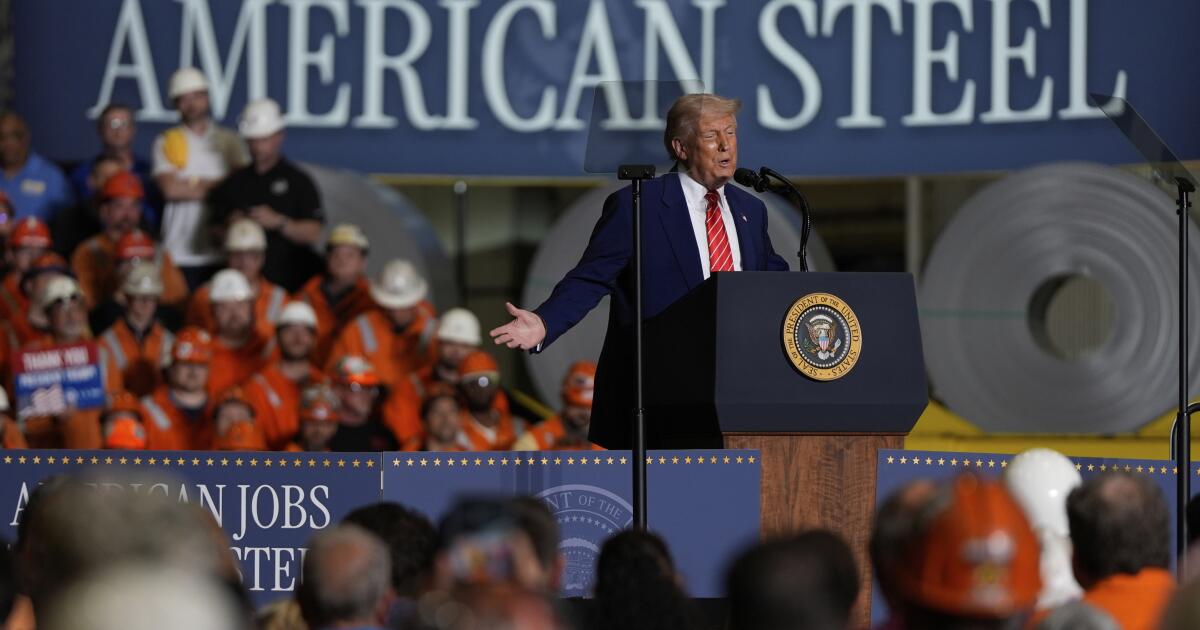
If anything, the Minnesota statement underscores the quandary facing American corporations in the Age of Trump, when the president viciously and publicly attacks anyone he deems to be a personal adversary. For a business, that can translate into a threat to the top and bottom lines.

Business leaders faced with a choice between going along with Trump, or poking him with a stick, almost invariably have chosen the first path.

That Minnesota’s businesses even went as far as they did does suggests the tide may have turned on challenges to Trump’s policies. Even so, we’re still standing only on the edge of the water.

The refusal of the American business community to take a strong stand against Trump’s policies has been a long-lasting scandal.

“This shows the greatest cowardice in the history of the Business Roundtable,” says Jeffrey Sonnenfeld, the Yale School of Management’s expert in corporate leadership, referring to the organization of corporate chief executives that should carry the flag of backlash against Trump’s actions.

I asked the Roundtable to comment on the chaos in Minneapolis. It replied with a statement from CEO Joshua Bolten, a former White House aide to George W. Bush, endorsing the Minnesota Chamber’s call for “cooperation between state, local, and federal authorities to immediately de-escalate the situation in Minneapolis.”

Is that sufficient?

What’s needed is for leaders to name names and demand concrete steps, at least as long as our political leaders remain missing in action. In Minnesota — indeed, wherever Trump policies trample norms and values — the situation has become a moral crisis for all American society, including the commercial.

That said, it isn’t surprising that Minnesota’s big corporations, like almost all American corporations, have been gun-shy about confronting a political issue like this head-on. They can properly feel that they’ve been burned before.

Target, the second-largest public corporation headquartered in the state (after UnitedHealth), experienced a front-page blowback from political controversies twice in recent years.

In 2023, as I reported then, the company capitulated when a braying mob of anti-LGBTQ+ reactionaries targeted it for displaying Pride-themed merchandise in its stores during June’s Pride Month observances.

Target, which had proudly displayed such merchandise in previous years, told personnel in many stores to shrink or even eliminate their Pride-themed merchandise displays or move them to less conspicuous sections of the stores. Some LGBTQ+ designers discovered that their products had been taken off the shelves.

Last year, only days after Trump launched his second term with a flurry of antidiversity executive orders, Target announced it was “concluding our three-year diversity, equity and inclusion goals.” The company also withdrew from “all external diversity-focused surveys,” including a widely followed Corporate Equality index sponsored by the Human Rights Campaign, which tracks corporate policies on LGBTQ+ rights and inclusion.

The backtracking backfired. Target’s sales cratered, in part because consumers were angry about its DEI reversals. During a conference call with Wall Street analysts following its first-quarter earnings report, CEO Brian Cornell attributed the company’s ugly performance to factors including “the reaction to the updates we shared … in January,” an allusion to its ending of DEI initiatives.

The escalating crisis in Minneapolis seems to have been the trigger for the state’s business leaders to issue their joint statement. “To get all 60 of the major CEOs to sign onto a statement was a remarkable feat,” says Bill George, a former CEO of Minneapolis-based medical device maker Medtronic and a former Target board member.

“Maybe some people wanted it to be stronger,” George told me, “but I believe a statement signed by every Minnesota CEO of size represents a turning point in the whole discussion between the federal government and the state government.” He hoped that it would be enough to prompt Trump to simply “declare victory” in Minnesota and “move on to other challenges.”

Still, the text of the Minnesota chamber’s communique illustrates that corporate America still is reluctant to confront Trump directly.

The statement refers, vaguely, to “the recent challenges facing our state,” which “created widespread disruption and tragic loss of life.”

In other words, the statement alludes to something having happened, but doesn’t identify who did it or even what it was. A “tragic loss of life,” after all, can befall people slipping on the ice and cracking their head, as well as someone being shot 10 times in an unprovoked attack.

The statement asserts that “for the past several weeks, representatives of Minnesota’s business community have been working every day behind the scenes with federal, state and local officials to advance real solutions. These efforts have included close communication with the Governor, the White House, the Vice President and local mayors. There are ways for us to come together to foster progress.”

It calls for “an immediate deescalation [sic] of tensions and for state, local and federal officials to work together to find real solutions.”

Lacking are specifics. What “real solutions” are on the table in these “close communications” with public officials? Who is in on these behind-the-scenes conversations? What actions would bring about “an immediate deescalation of tensions”?

I asked the Chamber of Commerce to answer those questions, but a spokesman told me the statement would have to stand by itself.

The statement doesn’t even mention Renee Good and Alex Pretti, whose killing finally provoked the Chamber’s members to speak out. Nor does it address the unmistakable discrepancies between how the Trump administration described the killings and their victims, and what millions of people can see in videos.

What’s infuriating is that for many Americans — including, notably, Minnesota Gov. Tim Walz and Minneapolis Mayor Jacob Frey — the solution to this crisis is crystal clear: Get ICE and the Border Patrol out of Minneapolis neighborhoods. That even occurred to the editorial board of the Wall Street Journal, which on Sunday advised Trump to “pause ICE enforcement in the Twin Cities to ease tensions and consider a less provocative strategy.”

One might have thought that Minnesota companies would be among the leaders pushing back against Trump policies, especially those unfolding in their front yards.

“Minnesota in general has been the hotbed of traditional progressive politics,” Sonnenfeld says. “The Minnesota business community was always the paragon of social investment — very philanthropic and socially responsible — and had soaring performance to show for it. Minneapolis was always the model showing that doing good is not antithetical to doing well.”

Minnesota business leaders clearly were becoming concerned that Trump’s anti-immigrant surge threatened their ability to do well.

“This situation is very harmful to their businesses,” George says. “It’s extremely important that their employees feel that they are safe and secure in their place of work, and that their corporate leaders have their back.”

Some Minnesota companies feared Trump’s immigration crackdown could make it harder to recruit executives.

“If this drags on, it will have a devastating effect on Minnesota companies’ ability to attract people from around the world,” George told me. “They depend upon bringing executives in from New York and L.A., but also from China, Japan and Europe. This situation is really a deterrent to that.”

Whether Minnesota’s corporate pushback will move the needle on Trump’s policy isn’t clear, though there are faint signs that he recognizes he isn’t winning fans on the issue.

On Monday he assigned his border czar, Tom Homan, to take charge of the Minnesota surge — not that Homan has the reputation of a peacemaker on immigration issues.

According to Border Patrol official Gregory Bovino, up to now the face of the surge, the agents involved in Saturday’s killing, including the two known to have fired gunshots at Pretti, are still on the job, though he said they were transferred out of Minneapolis “for their safety.” (There were reports Monday that Bovino is being sent out of Minnesota and back to his prior post in California.)

Nor are there signs that the surge is over. ICE and the Border Patrol are still on the streets of Minneapolis, so further mayhem is possible.

Source link