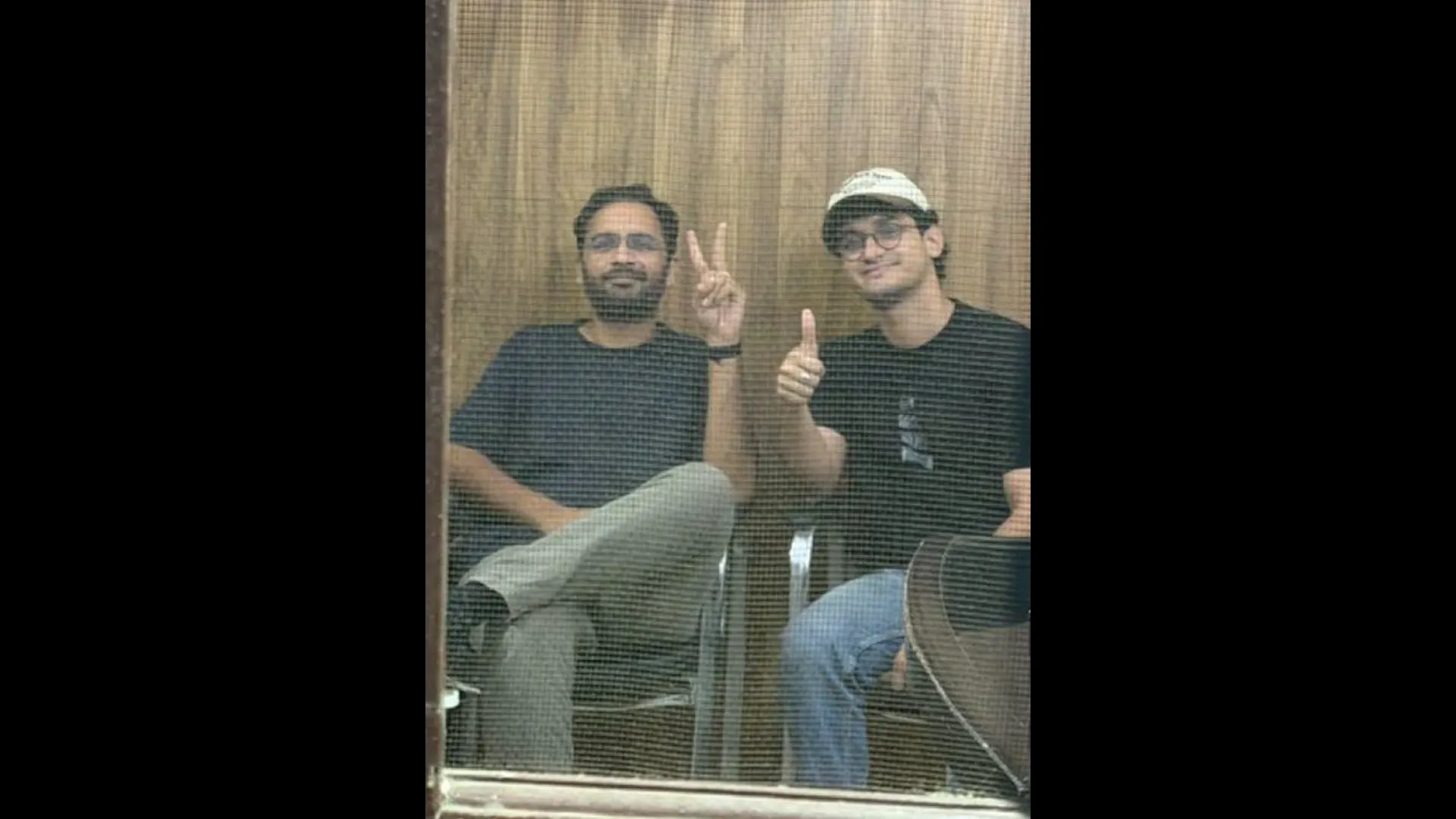
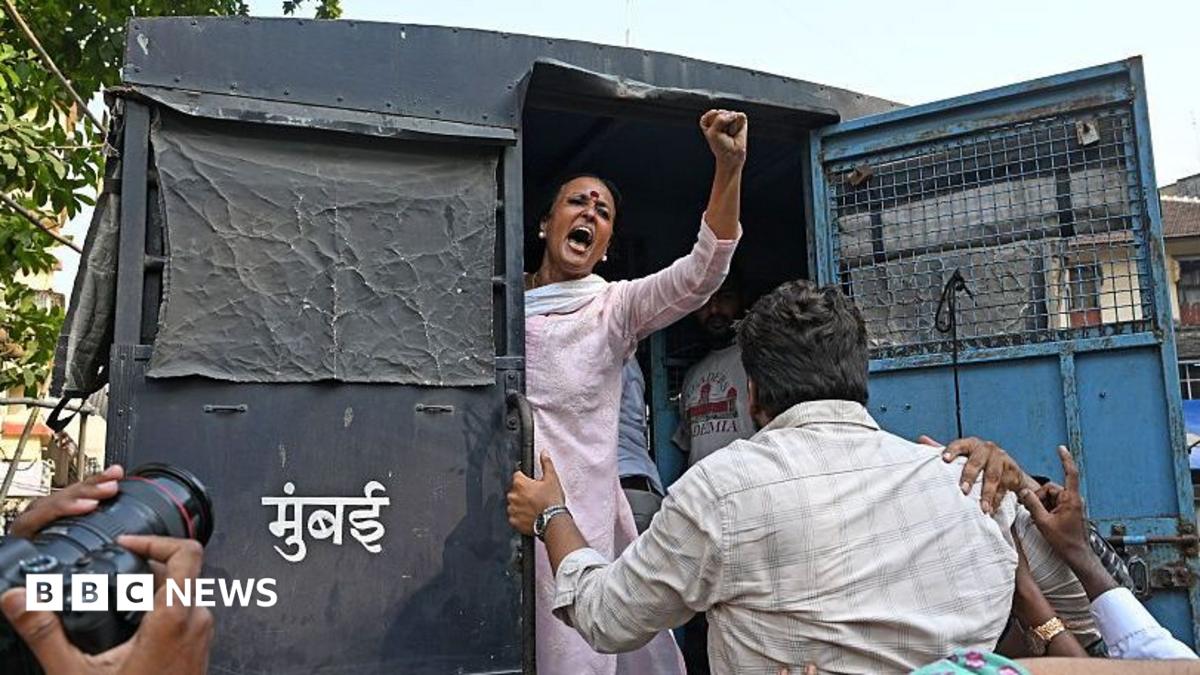
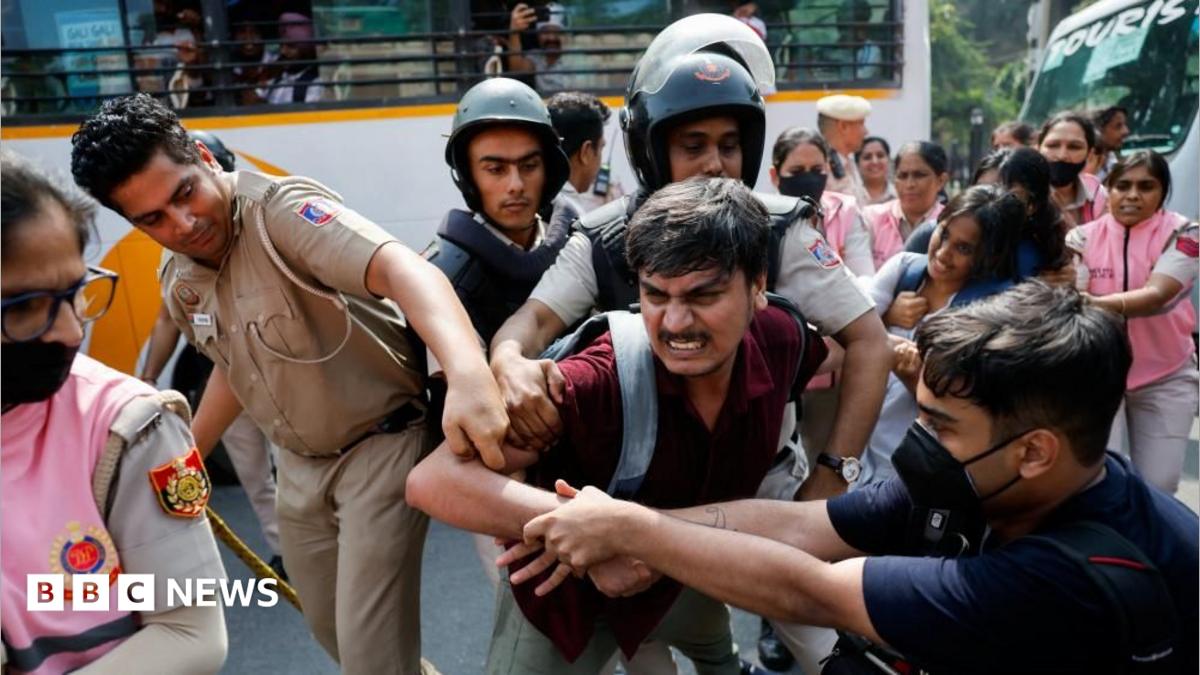
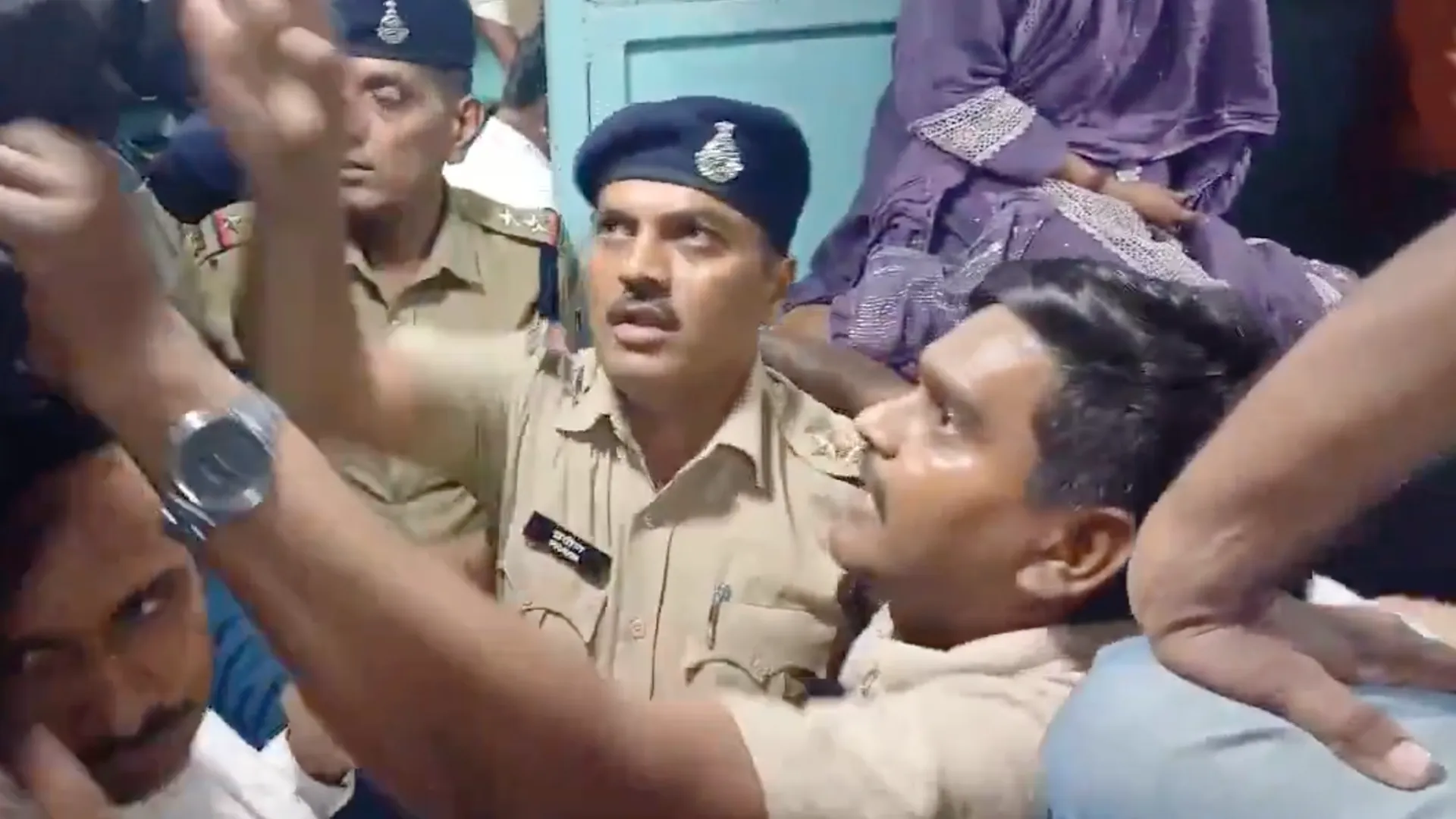
An investigation by Amnesty International says the Indian government used lethal weapons, including pellet-firing shotguns, grenades, batons and electric shock devices against Cockroach Janta Party-led protesters. The Modi government has denied it used excessive force.
New Delhi, India — On August 13, Abdul Hafeez returned to the primary school he once went to, in Karisunda, a village in Bankura district in the eastern Indian state of West Bengal.
The 26-year-old was visiting his alma mater as part of a campaign by the Cockroach Janata Party, a popular Indian pressure group, to audit conditions of the country’s under-funded, often dilapidated government-run schools.
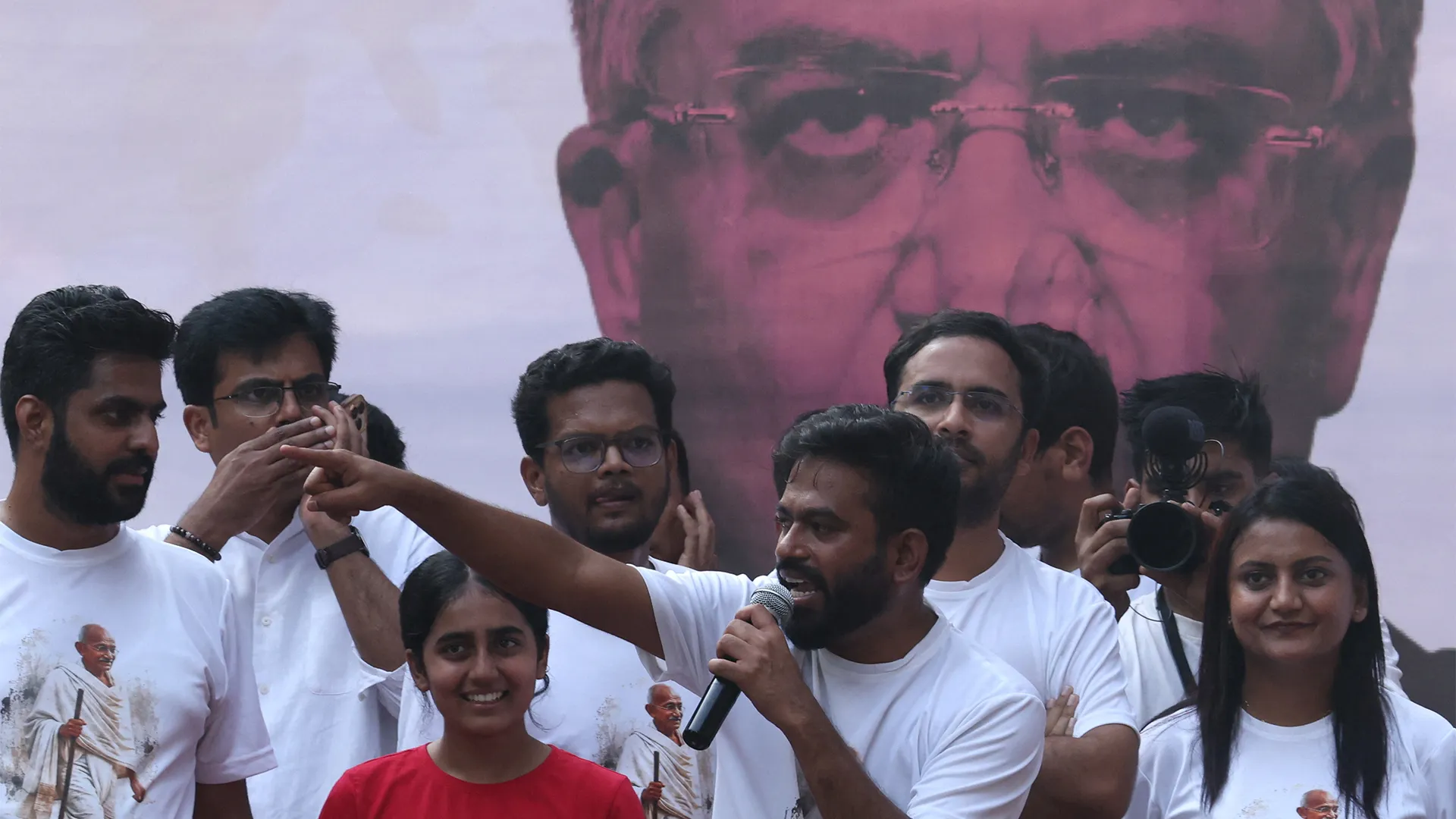
The CJP had just succeeded in forcing the resignation of Prime Minister Narendra Modi’s education minister, Dharmendra Pradhan, in July, after a 37-day sit-in in the national capital that prompted antigovernment Gen Z protests across the country.
But in Bankura, things would turn deadly. Hours after Hafeez’s visit to his school, he alleged that local workers of Modi’s Hindu majoritarian Bharatiya Janata Party (BJP) arrived at his home and assaulted him and his father, Mohammad Mafik. Two days later, Hafeez’s 51-year-old father died from his injuries.
On Sunday, Suvendu Adhikari, the chief minister of BJP-ruled West Bengal, said the attackers were “criminals with no BJP connection” and assured action.
But a day after burying his father, Hafeez told Al Jazeera that he stands firm in calling for accountability and reforms in government-run schools. “We will fight for justice for my father, but these attacks will not stop us from demanding better education,” he said.
That demand marks a new line in the sand for the CJP. Fresh from successfully forcing Modi and his government onto the defensive — the Indian PM has only rarely sacked ministers even in the face of credible accusations of wrongdoing or public pressure — the group has now announced its next battleground: India’s public-funded schools.
CJP leaders have asked their supporters, who thronged the protests in New Delhi from different parts of the country, to visit their nearby schools and audit their conditions.
They are working around a basic four-point checklist for what the CJP is calling its Fix the Schools campaign: drinking water and functional toilets; electricity and usable classrooms; boundary walls and campus safety; and midday meals and teacher attendance.
And the murder of Hafeez’s father has raised the already high stakes in a battle between the well-oiled machinery of Modi’s BJP and the fledgling, thin-on-organisation CJP.
“Abdul went to inspect the [government] school in Bengal where he once studied,” said Abhijeet Dipke, founder of the CJP. “It makes my blood boil that people are being murdered simply for demanding better schools.”
Cockroach Janta Party (CJP) founder Abhijeet Dipke speaks to victims who were injured during a protest demanding the resignation of India’s Education Minister Dharmendra Pradhan over alleged NEET exam irregularities, in New Delhi on July 21, 2026 [Arun Sankar/AFP]
‘A disruptive change’
Ashutosh Ranka, a co-convenor of the Cockroach group, appeared emotional after meeting Hafeez’s family on Monday. He told reporters that the group proposed to press the government for compensation; however, Hafeez requested that a school be named after his father.
In Rajasthan, Ranka’s home state in western India, the group has faced other challenges.
Ranka joined a sit-in with primary school students in Alwar district on August 14 to demand additional rooms, clean toilets and drinking water. Local publications reported that the officials accepted the demands.
On Sunday, the Rajasthan government, also led by Modi’s BJP, imposed restrictions on so-called outsiders entering government schools and on taking photos and videos, citing students’ privacy.
The government notice, which ordered the school management to pursue criminal action against such surveys, came after Ranka had announced visits by CJP volunteers across the state.
Samina Bano, an education-policy expert who has advised several Indian states on reforms, told Al Jazeera that “it is essentially the system itself that is not working anymore for the people”.
In the last 10 years, Bano said, she had found “drunk teachers on duty during spot checks”, fake appointments in rural areas that many teachers do not want to go to, and other systemic failures that she insisted are common in the Indian public school system.
“Education in government-run schools a sorry state of affairs. It requires a disruptive change,” Bano said.
“The real problem is the quality of teaching, learning outcomes and the food,” Bano added, crediting the Cockroach pressure group for bringing the demands for reform into mainstream politics.
“They are bringing it into the discourse, but once people start demanding, there needs to be actual institution building, and that’s different work altogether,” Bano said. “There has to be an appetite to reimagine public education in India.”
Supporters of the Cockroach Janta Party (CJP) chant slogans and wave their mobile phones with their flashlights on as they gather during a sit-in protest demanding the resignation of Indian Education Minister Dharmendra Pradhan, at Jantar Mantar in New Delhi, India, on July 19, 2026 [Anushree Fadnavis/Reuters]
‘Playing to strength’
After Gen Z protesters returned from the streets in New Delhi, the internet was instead flooded with videos of school-going children asking for better facilities across several states. They were blocking roads, circling local administration offices and fighting with bureaucrats.
The Cockroach party tapped into the momentum and announced its next phase in a smart mobilisation strategy, said Asim Ali, a political analyst in New Delhi.
“It plays to their strength of leveraging social media. Without many volunteers [like a traditional political party], they can outsource the grassroots work to followers on social media itself,” he said.
“By leveraging the power of social media, which is now felt in the remotest of corners in India, the Cockroach party has dramatically driven down organisational resource costs of a movement,” Ali added.
But Ali cautioned that this approach of relying on volunteers without political or organisational skills, protest experience or institutional support also exposes them to violence, as happened with the Hafeez family in West Bengal.
Yet the blood spilled in the eastern state hasn’t dimmed the drive from the CJP to demand accountability from authorities.
On Tuesday, Ranka announced on X that multiple venues in West Bengal’s capital Kolkata had cancelled or refused permission to the CJP to hold meet-ups with students.
“This only reinforces the fact that the BJP is scared from the cockroaches,” he wrote. “Cockroaches of Bengal will continue to visit govt schools and push the Bengal govt to get them fixed.
New Delhi, India – On the night of August 4, in a counting hall in the eastern Indian city of Patna, some 1,000km (620 miles) from the national capital, Prime Minister Narendra Modi’s Bharatiya Janata Party (BJP) suffered one of its most stunning political setbacks in 12 years.
Bankipur, a constituency in the legislature of the state of Bihar, had been held by the BJP for three decades. But the fledgling Jan Suraaj Party, led by political strategist-turned-politician Prashant Kishor, ended that reign, winning a seat that the BJP’s national president, Nitin Nabin, had held until just a few months earlier.
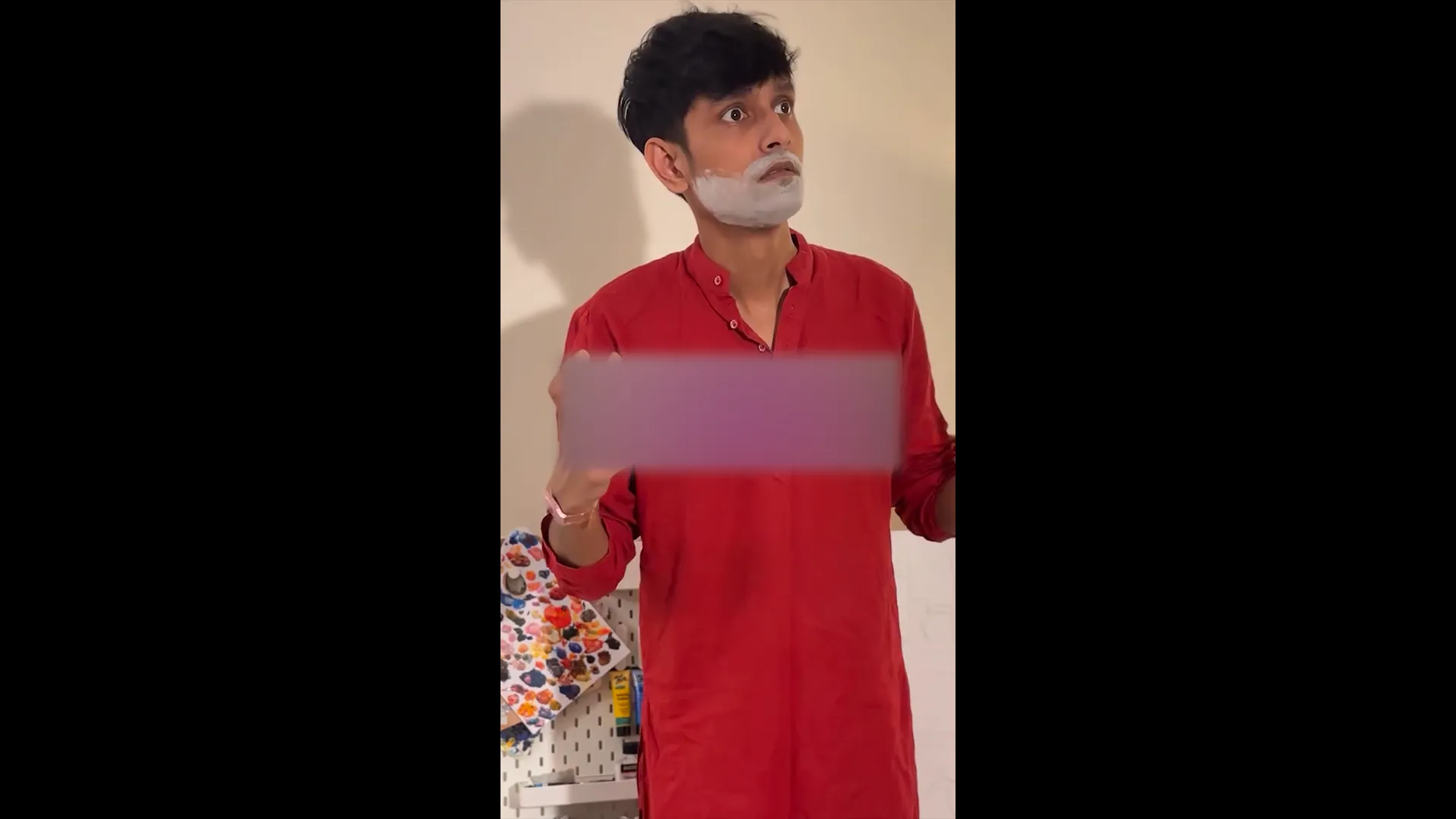
The defeat came less than two weeks after India’s Education Minister Dharmendra Pradhan resigned, bowing to seven weeks of student-led protests that had shaken New Delhi and spread to several cities. The Cockroach Janta Party (CJP), a satirical outfit born on Instagram in May after India’s chief justice, Surya Kant, compared unemployed young Indians with “cockroaches” and “parasites”, had led those protests.
Nabin, the BJP chief, had spent the Bankipur campaign denouncing the country’s Gen Z protesters as “a virus and a cockroach gang devoted to breaking the country”.
Instead, it was the BJP’s stranglehold over the constituency that was broken. That surprise electoral verdict has thrust upon India a broader question, say analysts: Will India’s most formidable political machine — the BJP — be forced to change?
A charm offensive, gone slightly wrong
The clearest sign that the BJP treats the Gen Z uprising as more than a passing nuisance is the sheer awkwardness of the party’s response. During the peak of the protests, Modi released a string of selfie-style videos on Instagram addressing the exam paper leaks that led to the protests. He reportedly told cabinet colleagues that young people were “just on Instagram”, urging ministers to court them on the platform with reels rather than media briefings.
Demonstrators holding posters take part in a protest rally in Mumbai on July 24, 2026, in solidarity with the CJP at New Delhi’s Jantar Mantar [Indranil Mukherjee/AFP]
In Uttar Pradesh, India’s most populous state, the party has launched a Gen Z outreach initiative directing civil administrative officers into schools for career counselling sessions.
The BJP has also released a gym-set video in which young people trade internet slang with an older trainer who steers the talk towards the government’s development record. The slang was laid on so thick that many Instagram users mocked the party, joking that it had seemingly paid young people to write propaganda aimed at their own generation.
After another video of Modi that briefly vanished from Facebook, the parliamentary committee on information technology demanded an apology from Meta chief executive Mark Zuckerberg.
New Delhi-based analyst Asim Ali says this sudden scramble for social media relevance reveals a lot about the party itself.
The BJP once produced narratives that its own supporters would circulate unprompted. Today, he said, much of its messaging “feels more managed and paid for” – a mismatch for a decentralised space that rewards top-down discipline far less than Facebook and WhatsApp once did.
“The party’s communications machinery remains powerful, given its control over the mainstream media,” Ali told Al Jazeera. “But on social media, especially Instagram, it is unable to generate the kind of organic emotional identification that it could around 2011 to 2014.”
Gilles Verniers, a researcher at the Center for International Studies (CERI) at Sciences Po in Paris, described the BJP’s outreach as “a battle for perception” rather than a policy shift.
“There haven’t been any proposals that fundamentally change anything,” he said. “There’s a new minister for education, but he comes from the same background, an old man from the RSS.” The Rashtriya Swayamsevak Sangh (RSS) is the far-right ideological parent of the BJP.
Verniers argued that what was genuinely broken is the BJP’s usual playbook against dissent: branding protesters antinational, foreign-funded or terrorists, as they did during demonstrations against the controversial Citizenship Amendment Act (CAA) in 2019-20. The changed citizenship law, for the first time, introduced a religious test for naturalised citizenship: non-Muslim asylum seekers from India’s neighbouring nations were given a faster track to citizenship.
That past approach towards protests failed this time partly because the movement mocked itself before the state could, and partly because it was pluralistic.
Bollywood and Assamese singer Zubeen Garg, centre, sings during a protest rally by the All Assam Students’ Union and 30 other Indigenous organisations against the Citizenship Amendment Act in Guwahati, Assam, India, on January 9, 2020 [Anupam Nath/AP Photo]
Unlike the anti-CAA or farmers’ protests, it could not be pinned to one religion or community, and also drew in young people from the BJP’s own so-called “upper-caste” Hindu base. It was a “truly caste-blind movement”, Verniers said.
The episode also punctured a notion pushed by the BJP, he said, that Modi held a natural command over the youth.
For the first time, the prime minister “appears his age”, Verniers said of 75-year-old Modi.
“What the movement has done is really turn him into a boomer in the public imagination, and that must really, really hurt,” he added.
Does any of this show up in the numbers?
The BJP lost two of the three by-elections held in the first week of August, in states it governs – Bankipur in Bihar and Datia in Madhya Pradesh. However, it comfortably retained the third, Manjalpur in Gujarat, Modi’s home state.
Opposition leaders drew a straight line from the losses to the student protests, but analysts were more cautious. Ali warned against reading too much into the Bankipur vote.
By-elections, Verniers added, are decided by a fraction of the electorate, “barely a third of the population vote”, and that the BJP’s system of power “has proved very resilient to absorbing setbacks”.
Verniers points to Haryana, where the BJP won a majority a few years after the northern state’s farmers joined a yearlong movement to oppose three controversial agricultural laws. It was an election fought “not on farmers, but on caste”, he said.
What had shifted was not the vote count but a surrounding story now building “into a broader narrative of challenges to the BJP”.
An MP on the ground
Few politicians visited Jantar Mantar, the epicentre of the Gen Z protests in New Delhi, as often as Pushpendra Saroj, 27, a Samajwadi Party member of parliament from Kaushambi in Uttar Pradesh. The Samajwadi Party is the main opposition to the BJP in Uttar Pradesh, India’s most populous state.
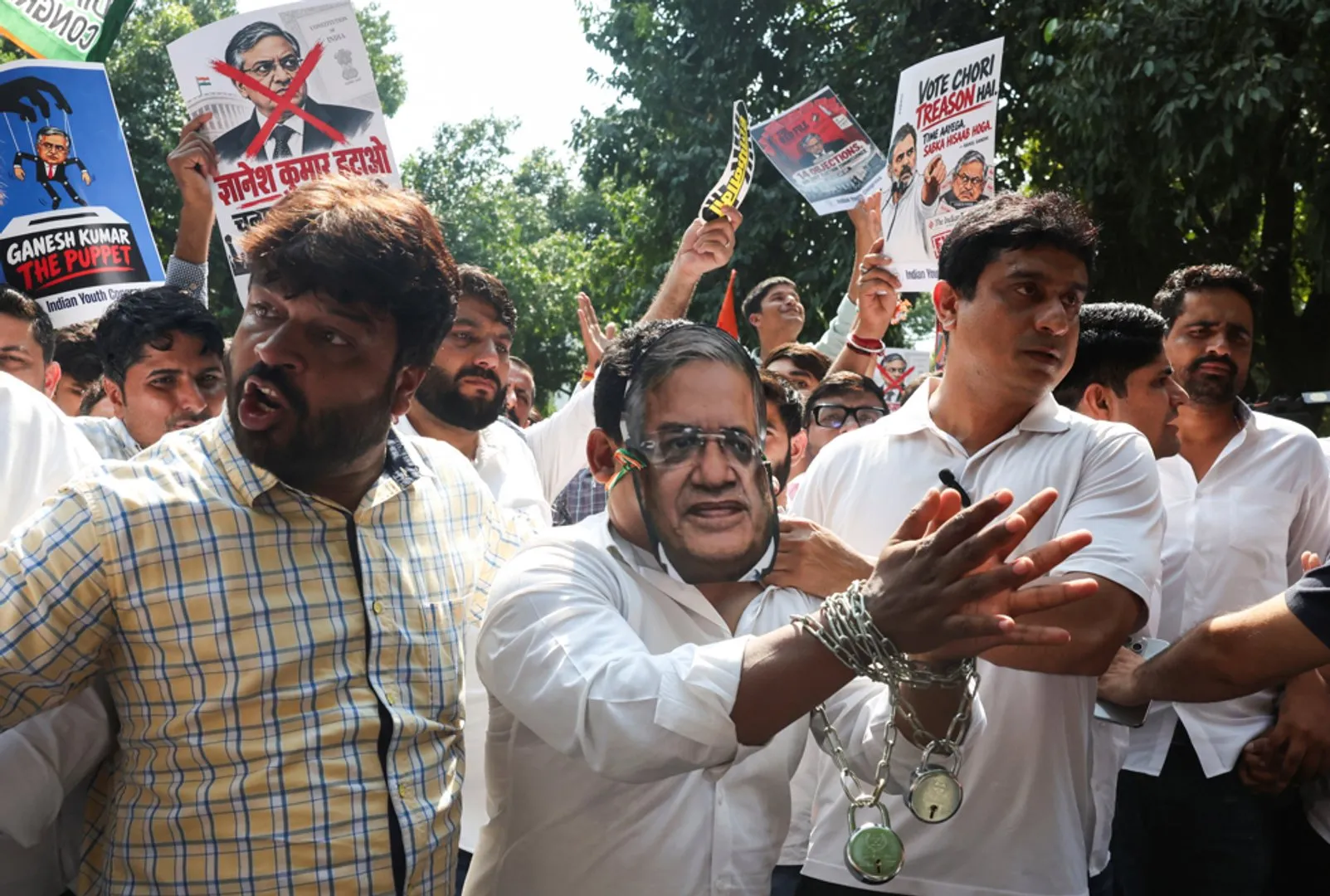
Saroj watched a gathering of a few hundred swell into thousands after activist Sonam Wangchuk was hospitalised following a 20-day hunger strike. He credited this to “the aggression from the government” – weeks of silence, alleged cuts to power and water and the July 20 baton charge against protesters in New Delhi. The crowd had grown beyond its student base to include army veterans and even serving police officers.
The politician pointed out that the education minister’s resignation came only after “fingers got pointed at the prime minister directly”.
A simpler sympathy helped, too. “Nobody likes to see children getting beaten up,” Saroj said.
‘This is not a victory in any terms’
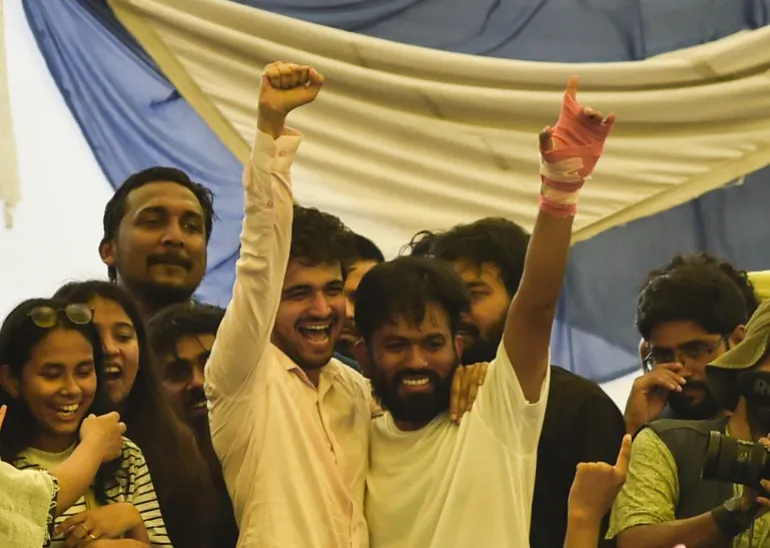
For many who marched in New Delhi, the story is bigger than a satirical “Cockroach” Instagram page or a single resignation. Anjali, a postgraduate student and secretary of the All India Students’ Association (AISA) at the University of Delhi, an older left-aligned group that mobilised alongside the CJP, reads the protests as the surfacing of a longer-term anger.
“We know for a fact that this did not originate from a particular remark or any particular leak,” she told Al Jazeera. “This is an accumulated anger of the youth of this country for the last 12 years. As long as communal, casteist, anti-women politics is not ended, this is not a victory in any terms,” she said.
Student activists take part in a demonstration demanding educational reforms as part of the CJP’s movement, in Kolkata, India, on July 24, 2026 [Bikas Das/AP Photo]
Anjali was also critical of who paid the price once the protests ended. Muslim and Dalit students, she said, were “the first to be put behind bars”, the first to face intimidation and police complaints, echoing the 2019 raid on Jamia Millia Islamia, the New Delhi university at the heart of the anti-CAA protests.
In the western state of Goa, police detained two young men for allegedly backing jailed activists Umar Khalid and Sharjeel Imam while celebrating Pradhan’s exit, an episode she reads as part of the same pattern.
What comes next for the CJP movement?
Ali, Verniers and Anjali all agree that a leap into electoral politics is unlikely for the CJP.
Verniers called that restraint from the group so far “tactically smart”, citing the example of the Aam Aadmi Party (AAP), a protest movement that built a successful party but, a decade into power, is “seen as a disappointment” and “on the verge of disappearance” in some former strongholds.
A national campaign demands money, volunteers and organisation that a young, often underemployed movement lacks. Its more durable influence, Verniers suggested, will be on other parties’ agendas, “as an interest group, rather than as a separate political force”, one the opposition has been unusually willing to embrace.
Anjali described AISA’s posture in similar terms: present at Jantar Mantar, but unwilling to let the fight narrow to one resignation. The group, she said, plans to keep building the argument against the government on campuses nationwide.
Al Jazeera reached out to 18 BJP national spokespeople for their responses to this article, but did not receive any replies.
The gap between power and legitimacy
Ali said he did not expect the BJP to trade its Hindu majoritarian politics — an ideology known as Hindutva — for one built on jobs and education, as demanded by CJP-led Gen Z protesters.
“I don’t think the BJP would dilute its Hindutva agenda; if anything, it would double down on it, so that the most salient issue in any election is religious identity.”
That may be, but what has changed, Verniers suggested, is not so much the BJP’s raw political power as its legitimacy.
“Electorally speaking, they are as dominant as they’ve ever been, perhaps more,” Verniers said. He cited the party’s ability to win elections, engineer defections, and outspend rivals, as proof of their continued success and of the BJP having pushed “the boundaries of what is democratically admissible”.
But the authority behind that dominance is what the protests have dented. And that gulf “between the actual power that the BJP has, and its ability to have citizens comply and obey” is harder to repair with a by-election win or a polished reel, he said.
That gap, Verniers said, “is the really important, interesting disconnect” the party now has to live with.