coast

Share a tip on a UK coast walk | Travel

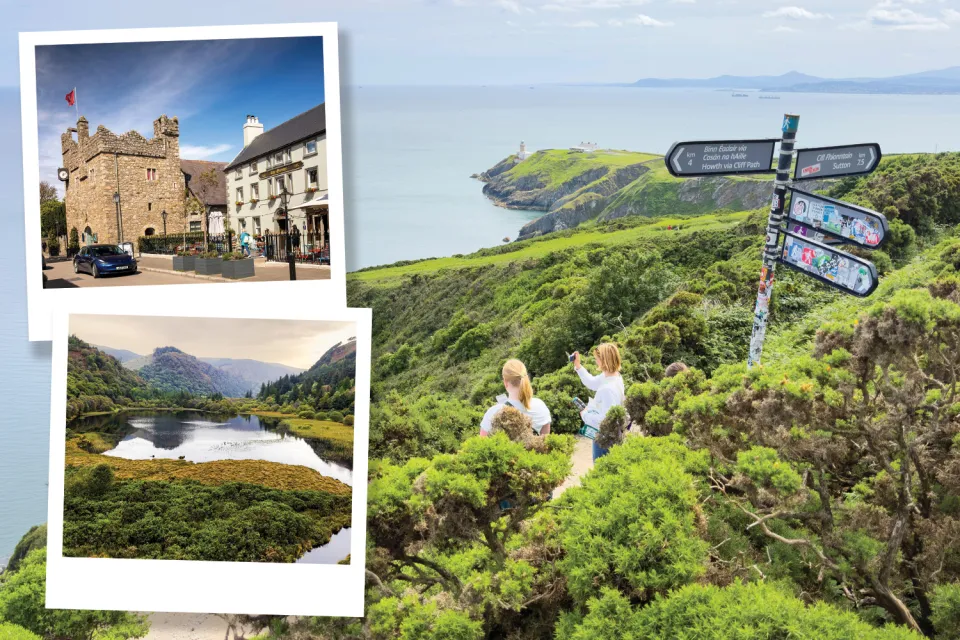
The King Charles III England Coast Path, which launches officially this year, is opening up miles of previously inaccessible coastal terrain to walkers in England. We’d love to hear about your favourite coastal walks all around the UK, from the White Cliffs of Dover to the Western Isles of Scotland.

The best tip of the week, chosen by Tom Hall of Lonely Planet wins a £200 voucher to stay at a Coolstays property – the company has more than 3,000 worldwide. The best tips will appear in the Guardian Travel section and website.

Keep your tip to about 100 words

If you have a relevant photo, do send it in – but it’s your words we will be judging for the competition.

We’re sorry, but for legal reasons you must be a UK resident to enter this competition.

The competition closes on Monday 18 May at 10am BST

Have a look at our past winners and other tips

Read the terms and conditions here

Share your tip

Share your travel tip using the form below.

Your responses, which can be anonymous, are secure as the form is encrypted and only the Guardian has access to your contributions. We will only use the data you provide us for the purpose of the feature and we will delete any personal data when we no longer require it for this purpose. For alternative ways to get in touch securely please see our tips guide.

If you’re having trouble using the form click here. Read terms of service here and privacy policy here.

Source link

The disaster unfolding on Russia’s Black Sea coast is of its own making | Environment

Southern Russia is facing one of the largest environmental disasters in its modern history. In April, repeated Ukrainian strikes on Russian oil infrastructure in Tuapse triggered massive refinery fires and oil spills along the Black Sea coast, including near Sochi. Residents described “black rain” falling from the sky as smoke and petroleum residue spread across the region. Weeks later, wildlife is still dying, beaches remain polluted and volunteers trying to respond say their efforts have often been obstructed. The authorities, meanwhile, have focused less on confronting the scale of the catastrophe than on silencing those speaking out about it. Despite the ongoing environmental damage, officials are already discussing reopening the beaches and launching the tourist season.

The catastrophe raises difficult questions about environmental destruction during wartime. Ukraine, which has experienced countless environmental catastrophes related to Russia’s all-out war, has been among the leading actors advocating for the recognition of ecocide as an international crime, even though the concept has yet to be formally codified in international law. Following the April strikes, however, some environmental activists in Russia and beyond are now also accusing Ukraine of hypocrisy and causing long-term environmental harm through strikes on oil infrastructure. There is a real debate over whether such actions can be justified, even when targeting an aggressor, if their environmental consequences may last for decades.

But focusing exclusively on Ukrainian strikes risks obscuring the deeper structural causes of the disaster. Russia’s oil infrastructure is deeply embedded in its war economy, and environmental damage of this magnitude does not occur in a vacuum. It is shaped by years of deregulation, lack of oversight and the systematic dismantling of environmental protections. These trends have only intensified during the full-scale invasion, as environmental safeguards have increasingly been cancelled in order to sustain the war economy. This includes recent legislative changes affecting the protection of Lake Baikal — a unique ecosystem that contains around 23 percent of the world’s unfrozen freshwater — raising concerns among experts about long-term environmental risks.

For years, environmental organisations in Russia have been labelled “foreign agents” or declared “undesirable”, independent environmental movements have been dismantled and activists forced into exile. The current catastrophe is unfolding in a country where ecological disasters are often silenced rather than addressed.

What is striking in the current situation is not only the scale of the damage but the response of the authorities. Rather than responding with transparency and accountability, Russian officials have largely attempted to silence discussion around the disaster. This recalls earlier patterns, including the initial response to the Chornobyl disaster, where secrecy and delayed disclosure significantly worsened the human and environmental consequences.

In this sense, responsibility does not lie only in the immediate cause of the disaster, but also in the absence of preparedness, regulation and accountability.

This disaster has also triggered an unusual wave of discussion within Russia itself, much of it unfolding online, despite increasing censorship. Volunteers on the ground have reported being obstructed and, in some cases, harassed while trying to rescue wildlife. Journalists attempting to document the situation have faced detention. Even as the catastrophe unfolds, the space to speak about it remains tightly controlled.

Yet the public reaction is telling. Much of it is happening on Instagram, which is banned in Russia, and on other social media platforms, with people still using VPNs to speak out and read real news. Rather than turning primarily into accusations against Ukraine, much of this discussion has been directed at the Russian authorities. The disaster is being used, implicitly and sometimes explicitly, to question the lack of coordination, the absence of transparency and the broader political system that allows such crises to happen.

This is significant. In a country where even calling the war a war is effectively prohibited, environmental catastrophe has become one of the few channels through which criticism can still surface.

The situation also exposes a deeper problem that goes beyond Russia. It highlights a fundamental gap in international law: the lack of effective mechanisms to address large-scale environmental destruction in the context of war.

Recent events illustrate the consequences of this gap. The destruction of the Kakhovka Dam caused massive ecological damage, yet failed to generate sustained legal or political accountability at the international level. Since then, environmental destruction has continued to accompany the war, without clear mechanisms to address it.

More broadly, the issue is being sidelined. The war in Ukraine has become so heavily politicised globally that discussions of its environmental consequences are often reduced, avoided or absorbed into larger geopolitical narratives. From the perspective of an environmental activist from Russia, this creates a deep sense of helplessness. These issues are becoming harder to raise, not because they are less important, but because they are competing with an overwhelming number of global crises.

This frustration is also visible within parts of the Russian antiwar movement, where there is a growing perception that international actors are more focused on the economic consequences of the conflict than on addressing its deeper causes and risks that go beyond military threats.

Meanwhile, environmental destruction across Russia, a country that spans one-10th of the Earth’s land surface, continues with little international attention. This includes not only wartime damage, but also longstanding patterns tied to extractivism, colonial governance in national republics, and the systematic marginalisation of Indigenous communities. These are not separate issues. They are part of the same underlying problem, one that remains largely unaddressed.

Environmental exploitation in Russia’s regions has long been tied to older imperial patterns of control and dispossession. These same southern regions are also the regions where the Russian Empire committed genocide against the Indigenous Circassian people, exterminating and expelling more than 95 percent of the local population in the late 19th century. And now, what the Russian authorities seem to care about is not the environmental devastation itself, but reopening the beaches so the region can continue generating income.

While Europe is preparing to spend hundreds of billions of euros responding to what it sees as a growing Russian military threat, far less attention is being paid to the political and economic structures sustaining environmental destruction inside Russia itself. From the perspective of an environmental activist and someone finishing a master’s degree in international affairs, there is a striking gap in how the root causes of this crisis are being addressed.

Too little attention is paid to the deeper structures that sustain it: Russia’s colonial governance and extractivist economic model in the regions of Russia. These issues remain underexplored not only in political decision-making but also in academia and media coverage. This gap is particularly visible in the missed opportunities to engage with emerging Russian decolonial movements and Indigenous activists from national republics, who have long been raising precisely these concerns. Their perspectives remain marginal, even though they are essential for understanding both environmental destruction and political instability in the region.

Many international organisations and NGOs have also scaled down or abandoned work related to Russia’s internal environmental and human rights issues, as well as broader regional dynamics in Eastern Europe and Central Asia. As a result, entire areas of expertise are disappearing at the very moment they are most needed. Voices that could contribute to a deeper understanding, and potentially to long-term solutions, are increasingly sidelined or ignored.

And when catastrophe comes, people are left asking how it became possible for oil to fall from the sky.

The views expressed in this article are the author’s own and do not necessarily reflect Al Jazeera’s editorial stance.

Source link

Coast Guard Creates Its Own Special Operations Command

With new threats emerging at home and abroad, the U.S. Coast Guard has created a new Special Missions Command (SMC) to oversee its “deployable specialized forces.” The move, officially unveiled today, comes as the Trump administration is increasing the use of these units for ship and drug interdictions around the globe. The Coast Guard is a uniformed military service, but has specific law enforcement authorities. Under Title 14 of the U.S. Code, its personnel can board vessels, carry out seizures, and make arrests.

The Coast Guard’s uniquely trained and equipped units are often at the tip of the spear for both the Department of Homeland Security (DHS), under which the service currently falls, and the Department of War (DoW). Some of its ‘deployable’ teams, for instance, recently helped interdict and seize Iranian-linked oil tankers in the Indian Ocean. Earlier this year, Coast Guard specialized forces chased a sanctioned Russian oil tanker from the Caribbean and across the Atlantic Ocean to take it over. They also play a large role in reeling in large amounts of illicit drugs, enforcing immigration laws at sea, protecting ports in the United States, and taking part in counter-terrorism operations.

Operation Pacific Viper 200k thumbnail

Operation Pacific Viper 200k


The SMC will “fully integrate the service’s Deployable Special Forces under a single operational commander to provide oversight and advocacy, improve readiness, mission effectiveness, and interoperability,” according to the Coast Guard.

“The creation of the Special Missions Command is a vital evolution for our service,” Adm. Kevin Lunday, Commandant of the Coast Guard, said in a statement. “We are forging our most elite operators into a single, razor-sharp instrument of national power. The Special Missions Command is not an administrative change; it is an investment ensuring these elite teams are the best trained, equipped, and organized force possible, ready to protect the Homeland and support the Joint Force.”

The proposed budget for Fiscal Year 2027 includes funding to support an increase of 130 personnel “to manage the complexity of modern specialized missions,” a Coast Guard spokesman told us. It would also give the service $20.8 million “to establish a command to unify the service’s specialized tactical communities, streamline training, doctrine, and equipment procurement to enhance readiness and global responsiveness,” the spokesman added.

210401-N-RL695-1205 ATLANTIC OCEAN (April 1, 2021) Coastguardsmen assigned to Tactical Law Enforcement Team 109, Cape Cod Maritime Safety Security Team (MSST), and Sailors assigned to the Freedom-variant littoral combat ship USS Sioux City (LCS 11), participate in a non-compliant vessel pursuit tactics exercise in a rigid-hull inflatable boat (RHIB), April 1, 2021. Sioux City is operating in the U.S. 2nd Fleet in support of naval operations to maintain stability and security in the Atlantic and Arctic in order to ensure access, deter aggression and defend U.S., allied and partner interests. (U.S. Navy photo by Mass Communication Specialist 2nd Class Marianne Guemo/Released)
Coast Guardsmen assigned to Tactical Law Enforcement Team 109, Cape Cod Maritime Safety Security Team (MSST), and Sailors assigned to the Freedom class littoral combat ship USS Sioux City (LCS 11), participate in a non-compliant vessel pursuit tactics exercise in a rigid-hull inflatable boat (RHIB). (U.S. Navy photo by Mass Communication Specialist 2nd Class Marianne Guemo/Released) Petty Officer 1st Class Marianne Guemo

The new SMC “shifts specialized force management from a geographic model to a functional one,” the spokesman explained. “For example, in a complex scenario such as a high-consequence maritime threat at one of our nation’s major ports requiring the employment and integration of counter-terrorism teams (MSRT), deployable boat units (MSSTs), and hazardous material experts (NSF), the SMC streamlines the force-generation by reducing the need to coordinate between two geographical commands and headquarters and allowing us to mobilize with speed.”

Coast Guard members from Maritime Safety and Security Team Alameda patrol the Rio Grande near McAllen, Texas, Oct. 28, 2025, aboard a 29-foot Response Boat–Small (RB-S). The patrol supports maritime security and law enforcement operations along the river. (U.S. Coast Guard photo by Petty Officer 3rd Class Perry Shirzad)
Coast Guard members from Maritime Safety and Security Team Alameda patrol the Rio Grande near McAllen, Texas, Oct. 28, 2025, aboard a 29-foot Response Boat–Small (RB-S). (U.S. Coast Guard photo by Petty Officer 3rd Class Perry Shirzad) Petty Officer 3rd Class Perry Shirzad

“Under the legacy system, Area Commanders may consider coordinating across regional boundaries to align priorities; however, the SMC will have the full operational picture before any major incident occurs,” the spokesman noted. “A single operational commander for the SMC separates force generation from mission execution, standardizes tactical readiness, and creates a unified hub for Joint Force integration.”

The U.S. Coast Guard is creating a new Special Mission Command to meet with the demand from the Trump administration for ship seizures and drug interdictions.
Coast Guard specialized mission teams patrolling New York Harbor. (Photo by Ramin Talaie/Corbis via Getty Images) (Photo by Ramin Talaie/Corbis via Getty Images)

By establishing the SMC, “the service is creating a singular standard for training, readiness, and integration,” according to the spokesman. “This uniformity ensures our teams are prepared to deploy at peak readiness and interoperability for any emergent crisis.”

The SMC will be commissioned on Oct. 1 and headquartered at the Coast Guard’s C5I Service Center facility in Kearneysville, West Virginia. It will include the following Coast Guard units, according to the service, which provided a description for each.

• “Maritime Security Response Teams serve as the Coast Guard’s first responders to maritime terrorism and other high-risk threats. They are equipped to conduct the nation’s most critical maritime security and defense operations at home or abroad, with both partner law enforcement agencies and joint services.”

Maritime Security Response Team (MSRT) 360 thumbnail

Maritime Security Response Team (MSRT) 360


• “Tactical Law Enforcement Teams provide law enforcement expertise across the full spectrum of maritime response situations with specific focus on counter-trafficking and criminal networks attempting to exploit maritime transit zones.”

210427-N-RL695-2031 CARIBBEAN SEA - (April 27, 2021) — The Freedom-variant littoral combat ship USS Sioux City (LCS 11) and U.S. Coast Guard Tactical Law Enforcement Team 109, Cape Cod Maritime Safety Security Team (MSST), prepare to load approximately 510 kilograms of suspected cocaine, onto an MH-60S Seahawk attached to the “Sea Knights” of Helicopter Sea Combat Squadron (HSC) 22, Detachment 3, for transport, April 27, 2021. Sioux City is deployed to the U.S. 4th Fleet area of operations to support Joint Interagency Task Force South’s mission, which includes counter-illicit drug trafficking missions in the Caribbean and Eastern Pacific. (U.S. Navy photo by Mass Communication Specialist 2nd Class Marianne Guemo/Released)
U.S. Coast Guard Tactical Law Enforcement Team 109, Cape Cod Maritime Safety Security Team (MSST), prepare to load approximately 510 kilograms of suspected cocaine, onto an MH-60S Seahawk attached to the “Sea Knights” of Helicopter Sea Combat Squadron (HSC) 22, Detachment 3, for transport, April 27, 2021. (U.S. Navy photo by Mass Communication Specialist 2nd Class Marianne Guemo/Released) Petty Officer 1st Class Marianne Guemo

• “Maritime Safety and Security Teams are rapidly deployable boat teams that provide port, waterway, and coastal security capability to safeguard the public, protect the marine transportation system, and respond to maritime crime, sabotage, and terrorist activity.”

Coast Guard Maritime Safety and Security Team New York boat crews transit near the Statue of Liberty while escorting ferries in New York Harbor, Sept. 21, 2021. MSST New York is co-located with Coast Guard Station New York in Staten Island, New York. (U.S. Coast Guard photo by Petty Officer 2nd Class Cory J. Mendenhall)
Coast Guard Maritime Safety and Security Team New York boat crews transit near the Statue of Liberty while escorting ferries in New York Harbor, Sept. 21, 2021. (U.S. Coast Guard photo by Petty Officer 2nd Class Cory J. Mendenhall) Petty Officer 1st Class Cory Mendenhall

• “Port Security Units provide shoreside and waterborne security including point defense of strategic shipping, designated critical infrastructure, and high value assets in joint and combined expeditionary warfare environments.”

Coast Guard Petty Officer 1st Class Giordano Rodriguez, a maritime enforcement specialist assigned to Coast Guard Port Security Unit 301, climbs a Jacob’s ladder to board an oil tanker vessel for a large vessel security boarding off the coast of San Pedro, California, April 8, 2026. Large vessel security boardings are a critical component of the U.S. Coast Guard's mission to ensure the safety and security of our nation's maritime interests and are essential for protecting our ports and waterways from a variety of threats. (U.S. Coast Guard photo by Petty Officer 3rd Class Roberto A. Nieves Felix)
Coast Guard Petty Officer 1st Class Giordano Rodriguez, a maritime enforcement specialist assigned to Coast Guard Port Security Unit 301, climbs a Jacob’s ladder to board an oil tanker vessel for a large vessel security boarding off the coast of San Pedro, California, April 8, 2026. (U.S. Coast Guard photo by Petty Officer 3rd Class Roberto A. Nieves Felix) Petty Officer 3rd Class Roberto Nieves

• “Regional Dive Lockers provide dedicated undersea capabilities for a variety of missions. These missions include ensuring the security of ports and waterways, maintaining aids to navigation, and conducting ship maintenance and repair, often in extreme environments like the remote polar regions.”

SAN DIEGO -- Crewmembers from Regional Dive Locker West prepare to dive underwater to inspect the hull of the Coast Guard Cutter Sea Otter, homeported here October 20. The Coast Guard recently created regional dive lockers and teams on both coasts capable of responding to apportioned or emergent operations. (U.S. Coast Guard photo by Petty Officer 3rd Class Melissa Hauck)
Crewmembers from Regional Dive Locker West prepare to dive underwater to inspect the hull of the Coast Guard Cutter Sea Otter. (U.S. Coast Guard photo by Petty Officer 3rd Class Melissa Hauck) U.S. Coast Guard District 11

• The “National Strike Force provides highly trained technical experts and specialized equipment to Coast Guard and other federal agencies to prepare for and respond to the most complex crises and natural disasters, including oil, hazardous substances, and chemical, biological, radiation and nuclear incidents.”

National Strike Force Training at Camp Fuji, Japan thumbnail

National Strike Force Training at Camp Fuji, Japan


“The geopolitical landscape is evolving and the demand for Coast Guard Deployable Specialized Forces is at an all-time high,” said Capt. Robert Berry, Special Missions Command pre-commissioning team lead. “These forces are instrumental to the Coast Guard’s readiness and its role as a global leader in maritime contingency response. The service has always turned to its specialized forces to respond to national threats and disasters, and establishing this command is the natural next step to enabling our forces to lead the way at the tip of the spear.” 

Contact the author: howard@twz.com

Howard is a Senior Staff Writer for The War Zone, and a former Senior Managing Editor for Military Times. Prior to this, he covered military affairs for the Tampa Bay Times as a Senior Writer. Howard’s work has appeared in various publications including Yahoo News, RealClearDefense, and Air Force Times.


Source link

Spain’s hidden coast – where you get two countries for the price of one and £2.60 beers

THE Costa de la Luz coastline is far lesser-known than its neighbour, the Costa del Sol, which is a shame as it has so much to offer.

It should definitely be on your radar if you want cheap hotels, affordable drinks and the chance to visit another country in 15-minutes.

Spain’s lesser-known coastline is Costa de la Luz Credit: First Choice
It has beautiful beaches – and you can be in Portugal in less than 15-minutes Credit: Getty

The Costa de la Luz coastline sits along the south of Spain offering beers for under £3 and hotel breaks from £55pppn.

If you’re looking for the beauty of Marbella but without the price tag or the noise, Costa de la Luz is a great, and budget friendly, option.

The most well-known spots along this coastline are the likes of Cadiz and Huelva.

But First Choice suggests heading to Isla Canela, a small beach escape at the very top of the coastline where Portugal is less than 20-minutes away. 

SUN SPOT

Travel experts’ guide to lesser-known holiday spots that are quieter AND cheaper


BARGAIN HOL

Travel companies reveal their CHEAPEST spots this summer, with hols from £189pp

It has golden beaches, low-cost but authentic tapas and of course, lots of sun.

One travel expert even saidyou can still find really good tapas and fresh seafood dinners for €10-15 (from £8.65) a head here , if you go local.

Staying here also means holidaymakers can visit Portugal very easily.

There’s a regular ferry between Isla Canela and Portugal’s Santo Antonio that takes just 15-minutes and costs as little as €2.50 (£2.16).

The ferry crosses the Guadiana River which forms a natural border between the two countries – so travellers wanting to explore both spots can do so in a single daytrip.

There isn’t any need to book multiple hotels and little fuss as the crossings don’t have routine passport checks (although take ID to be safe).

Santo Antonio itself is a city that’s considered a quieter alternative to the Algarve – especially on its sandy beach, Praia de Santo António.

If you’re keen to see more of Spain, just a short trip away from Isla Canela is the town of Ayamonte.

The Hotel Barcelo Isla Canela is a perfect base to explore both Spain and Portugal Credit: First Choice

It’s known to have a traditional Andalusian feel with white-washed streets, riverside promenades and you can pick up a pint from just €3 (£2.60).

One top restaurant choice is Restaurante Le Casona where tapas dishes like garlic prawns and Spanish tortilla starts from €3 (£2.60).

First Choice suggests booking an authentic flamenco show with a tapas dinner at La Puerta Ancha which starts from £48.

If you’re wanting a city feel, then the city of Seville is under two hours away by car.

The city is a favourite of Kara Godfrey’s (Deputy Travel Editor) who discovered its royal palaces, tower viewpoints and cheap wine.

For those who want to set up a base, First Choice suggests a stay at the Hotel Barcelo Isla Canela which starts from £383pp for stays in May.

The pretty hotel is designed to look like a traditional building so it has white-washed buildings and terracotta roof tiles.

For guests, it has two outdoor pools, a huge golf course, tennis court, buffet restaurant and live entertainment.

Each room either has a terrace, full balcony, or French-style balcony – and can be upgraded to have sea views.

Prices at Hotel Barcelo Isla Canela from £383 per person include seven-nights in a twin room on a half board basis, departing Newcastle Airport on May 10, 2026.

Source link

Iran’s gunboat fires on container ship off Oman coast | US-Israel war on Iran News

The IRGC says the aggression came in response to what it described as the US seizure of an Iranian commercial vessel.

An Iranian gunboat has fired on a container vessel near the coast of Oman, according to a British maritime monitoring agency, in an incident that occurred hours after United States President Donald Trump said he would extend a ceasefire with Iran.

The United Kingdom Maritime Trade Operations (UKMTO) centre said on Wednesday that the ship’s captain reported that the vessel had been approached by a vessel of Iran’s Islamic Revolutionary Guard Corps (IRGC) before shots were fired.

Recommended Stories

list of 4 itemsend of list

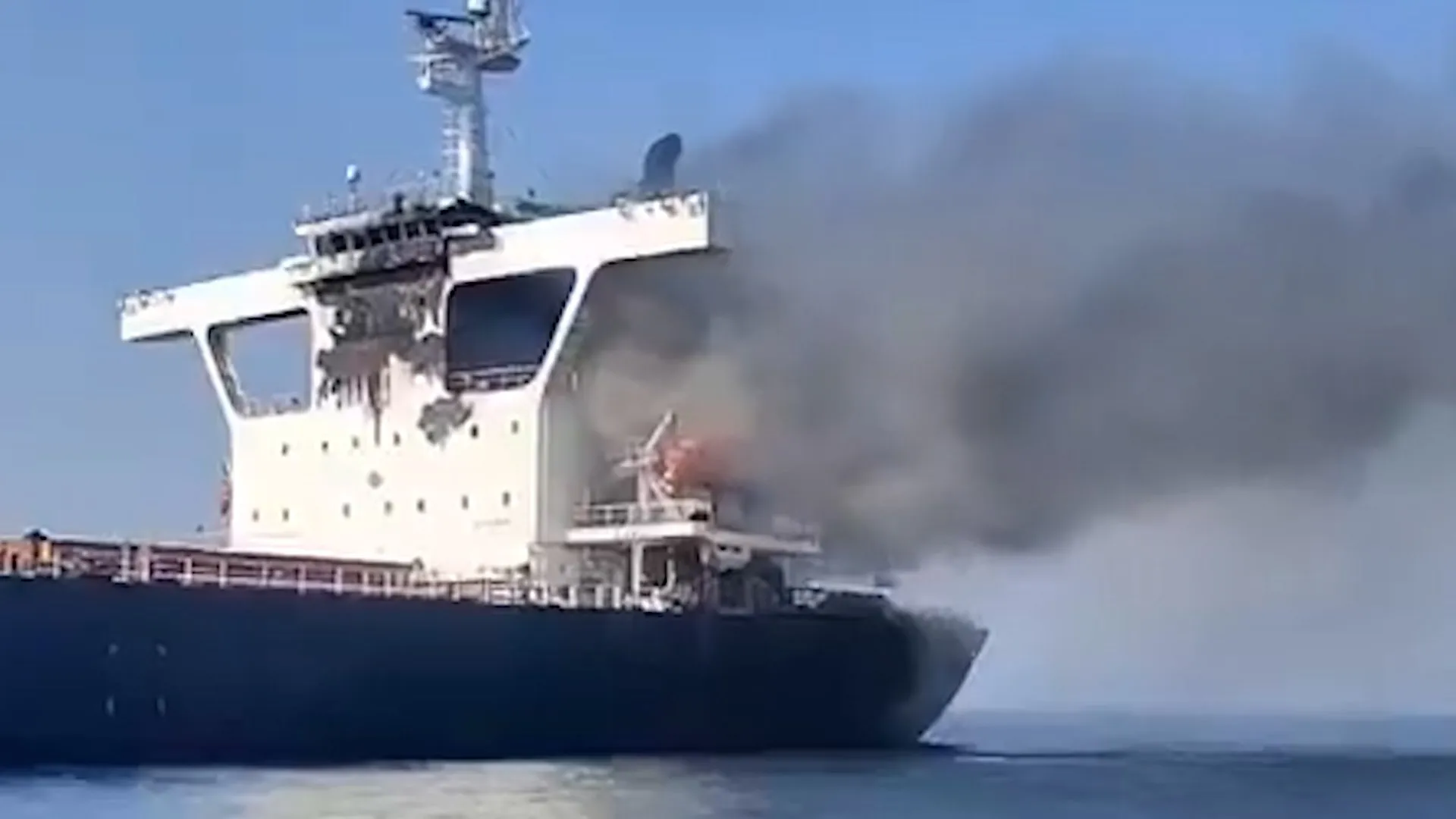
It “has caused heavy damage to the bridge. No fires or environmental impact reported,” the agency added. No casualties were reported, and all crew members were said to be safe.

British maritime security firm Vanguard Tech said the ship was sailing under a Liberian flag and had been informed it had permission to pass through the Strait of Hormuz, one of the world’s most strategically important waterways.

Iranian news agency Tasnim, however, said the vessel had ignored warnings issued by Iran’s armed forces.

The incident followed a warning from the IRGC’s Khatam al-Anbiya Central Headquarters after what it described as the US seizure of an Iranian commercial ship in the Sea of Oman, the IRNA news agency reported.

It accused Washington of violating the ceasefire and carrying out “armed piracy” after allegedly firing on the Iranian vessel and disabling its navigation systems.

Trump extends ceasefire

Trump earlier announced he would delay a planned military attack on Iran after requests from Pakistan’s army chief Asim Munir and Prime Minister Shehbaz Sharif.

Writing on Truth Social, Trump said the decision was made because Iran’s government was “seriously fractured” and needed time to present a unified position.

“We have been asked to hold our Attack on the Country of Iran until such time as their leaders and representatives can come up with a unified proposal,” he wrote.

He added, however, that the US naval blockade of the Strait of Hormuz would remain in place and said the military had been ordered to stay “ready and able”.

The announcement marked a shift from comments made a day earlier, when Trump said it was “highly unlikely” he would extend the truce beyond Tuesday.

‘Positive and negative signals’ from Tehran

Al Jazeera’s Tohid Asadi, reporting from Tehran, said Iranian officials were sending mixed messages over the ceasefire and the prospects for negotiations.

“Tehran is saying they won’t negotiate under imposed terms and conditions … when we compare the initial 10-point and 15-point proposals by the Iranians and Americans, we can understand that the two sides are poles apart,” he said.

“The atmosphere is also clouded by this mistrust in Tehran towards the United States, as well as the simultaneous military rhetoric related to a potential failed negotiation … It is a warning that another round of confrontation may be ahead.”

He said Iran still viewed the Strait of Hormuz as a key source of leverage in any talks.

“It’s trying to exercise authority over the ships and vessels transiting this strategically significant chokepoint,” he said.

Asadi added that Iranian officials framed their regional position as based on mutual security. “Iranians are saying that the basis of their foreign policy behaviour, particularly when it comes to Israel, is security for all versus security for none,” he said.

Source link

North Korea launches ballistic missiles towards sea off its east coast | Kim Jong Un News

Multiple ballistic missiles fired from eastern Sinpo area in seventh such test this year.

North Korea has launched multiple ballistic missiles towards the sea off its eastern coast, according to South Korea and Japan.

The incident on Sunday marked North Korea’s seventh ⁠ballistic missile launch this year and its fourth in April.

The missiles were fired near the city of Sinpo on North Korea’s east coast at about 6:10am on Sunday (21:10 GMT, Saturday), South Korea’s military said in a statement. It added that South Korea had bolstered its surveillance posture and was closely exchanging information with the United States and Japan.

Japan’s ⁠government posted on social media that the ballistic missiles were believed to have fallen near the east coast of the Korean Peninsula. No incursion into Japan’s exclusive economic zone was confirmed.

South Korea’s presidential office said it has held an emergency security meeting, according to media reports.

Such tests violate United Nations Security Council resolutions against North Korea’s missile programme. The diplomatically isolated country rejects the UN ban and says it infringes on its sovereign right to self-defence.

The launches come as China and the US prepare for a summit in mid-May, ⁠in which Chinese President ⁠Xi Jinping and his US counterpart, Donald Trump, are expected to discuss North Korea.

North Korea has made “very serious” advances in its ability to turn out nuclear weapons, with the probable addition of a new uranium enrichment facility, ‌International Atomic Energy Agency chief Rafael Grossi said on Wednesday.

Late last month, North Korean leader Kim Jong Un said his country’s status as a nuclear-armed ‌state ‌was irreversible and that expanding a “self-defensive nuclear deterrent” was essential to national security.

Source link

Sun-soaked Turkish Aegean coast with beach clubs, sublime seafood and two wonders of the ancient world

©News Group Newspapers Limited in England No. 679215 Registered office: 1 London Bridge Street, London, SE1 9GF. “The Sun”, “Sun”, “Sun Online” are registered trademarks or trade names of News Group Newspapers Limited. This service is provided on News Group Newspapers’ Limited’s Standard Terms and Conditions in accordance with our Privacy & Cookie Policy. To inquire about a licence to reproduce material, visit our Syndication site. View our online Press Pack. For other inquiries, Contact Us. To see all content on The Sun, please use the Site Map. The Sun website is regulated by the Independent Press Standards Organisation (IPSO)

Our journalists strive for accuracy but on occasion we make mistakes. For further details of our complaints policy and to make a complaint please click this link: thesun.co.uk/editorial-complaints/

Source link

Beautiful European town is ‘like mini Amalfi Coast’ but cheaper – and less crowded

This destination is a ‘like for like’ alternative to pricey Italian hotspots with beer under £2

While a trip to the Amalfi Coast might seem like the ideal getaway, it’s one that can prove rather pricey, particularly once you account for spending money while you’re there. Yet elsewhere across Europe, there’s another breathtaking coastal spot that serves as an excellent alternative.

Laura Evans-Fisk, head of digital and engagement at Eurochange, has noted a substantial rise in British tourists visiting Bulgaria, with Sozopol emerging as a fantastic alternative to the Amalfi Coast.

Laura says: “Although Bulgaria has joined the euro, prices for things like food, accommodation and drinks are still particularly low compared to other popular holiday destinations like Greece, Spain and Italy.”

For example, you can expect to pay less than €2 (£1.7) for a beer and around €10 (£8.7) for a meal.

“And, Brits don’t need to compromise on the beautiful scenery and beaches these popular hotspots offer. In fact, there are plenty of destinations in Bulgaria that are almost a ‘like for like’ but at a fraction of the cost.”

Championing Sozopol specifically, she added: “This gorgeous coastal town has a really similar feel to the likes of Positano and Cinque Terre, in Italy’s famous Riviera.

“Sozopol’s old town is dotted with quaint wooden houses and cobbled streets that overlook the stunning coastline and bright blue waters.” Stunning Sozopol ranks among Bulgaria’s most ancient coastal towns and remains far less crowded than many other European hotspots.

Sozopol boasts Kavastie and Harmani beaches, along with several beach bars, ensuring that whether you’re after a family outing or an evening of drinks, you’ll find exactly what you need.

And if you fancy a change from lounging on the sandy coastline, there’s no shortage of alternative activities, from discovering the town’s historic churches, to soaking up some culture at Ravadinovo Castle or Sozopol Archaeological Museum, or enjoying a fun-packed day at Aquapark Neptun.

A recent visitor to Kavastie Beach posted on Tripadvisor: “Fantastic beach, one of the very best that I’ve ever been to. Extremely clean, wonderful sand and safe sea ideal for children. Decent bars and restaurants. We’ll definitely be back next year.”

Meanwhile, a tourist who explored Ravadinovo Castle wrote: “A very eclectic castle, but a marvel to behold. A place of wonder. Around every corner was an amazing sight and a surprise. The floors inside the chapel and the ceiling were incredible. A stunning day out.”

And a visitor to the Sozopol Archaeological Museum added: “We spent a few hours at the museum this summer. Although it’s not a huge museum, they have interesting exhibitions. The lady who was in charge of the museum was very nice and told us some peculiar facts about the history of Apolonia. Recommend taking a look at the second floor, where you can find an ancient ‘vampire’ skeleton.”

Source link

‘Magic’ Italian fishing village that’s hundreds cheaper than the Amalfi coast

IF you want the beauty of the Amalfi coast but without the hefty price tag, then there is an alternative to consider.

The pretty fishing village of Camogli in northern Italy has beautiful multi-coloured houses and has even been dubbed a gem of the Italian Riviera.

Pretty Camogli is a cheaper alternative to jetting off to the Amalfi CoastCredit: Alamy
Camogli has similar qualities to Positano town on Amalfi CoastCredit: Alamy

Camogli sits on the Ligurian Riviera and its main stretch of beach is lined with pretty pastel buildings – much like towns on the Amalfi Coast.

Spiaggia di Camogli is the village’s pebbled beach that is lined with restaurants, cafes as well as sunloungers and parasols.

It’s quite a famous spot so it can get quite busy, especially on the weekend when there are daytrippers from Portofino.

One visitor who recommends visiting in low season said: “Camogli seafront always offers a bit of magic.”

DIG IN

We found 20 of the cheapest all-inclusive hotels for summer… with breaks from £349pp


KID YOU NOT

Five UK destinations with loads of cheap family attractions AND £9.50 Holidays

Another added: “Lovely town, one of the cutest that I have visited in Liguria. Better than most Cinque Terre villages since it has a proper beach!”

One secluded bay that is a must-visit is called San Fruttuoso di Camogli.

On the shore is a 10th-century abbey, crystal-clear water, and the underwater “Christ of the Abyss” statue.

It is only accessible by boat or scenic hiking trails – so it takes a bit of effort to see this one.

Fans of snorkelling should head to another spot called Punta Chiappa.

It’s a narrow rock formation popular for diving and snorkelling because of the amount of marine life seen in the water like snappers and amberjacks.

Visiting Camogli over destinations on the Amalfi Coast could save you money too.

Global booking platform Omio named the village as a cheap and lesser-explored Italian spot.

Doing the maths, Omio worked out that a round-trip from London to Amalfi’s Positano, which requires a changeover in Naples, costs £230.

A round-trip from London to Camogli, which has a stopover in Genoa, costs £74.

So the cost of a round-trip in July to Camogli rather than the Amalfi coast Omio could save up to £156.

San Fruttuoso Bay is a secluded spot in Camogli accessible by boat or a steep hikeCredit: Alamy

window.itgHolidayConnectHolidayDealsFrames =
window.itgHolidayConnectHolidayDealsFrames || [];
window.itgHolidayConnectHolidayDealsFrames.push({
cid: “c44183d2”,
pid: “8925dc20-49c7-4663-9c7c-547ad29879e4″,
config: {
poweredBy:”travelsupermarket”,title:”Italy Holidays”,destination:”26649,26847,175905,28102″,departureMonth:”4,5,6,7,8,9,10,11,12″,maxPrice:”60000″,utm_campaign:”Italy Holidays >600″,layout:”carousel”,container:”false”
},
});

https://holidayconnect-app.icetravelgroup.com/supersonic-assets/scripts/holiday-deals/init.js

Summers on the Amalfi coast are known for being hot and dry – Positano can reach highs of 33C.

It’s a tad cooler in the north of Italy and Camogli has average highs of 27C in July and August.

Another multi-coloured town along the coastline that you might want to tag onto your trip is Boccadasse.

Like Camogli, it has pastel-coloured houses built on top of cliffs and was a former fishing village.

It’s said to look like it’s ‘frozen in time’, and sits outside the city of Genoa and is a 30-minute drive from Camogli.

You’ll get the best views of the coastline if you walk along Corso Italia which connects Boccadasse to Genoa.

Boccadasse is also has independent restaurants that you’ll want to pop into and try Ligurian specialities like focaccia and pesto-based pasta dishes are served.

For more on Italy, check out this Italian paradise that has British Airways flights and found pretty towns away from the crowds.

And Head of Sun Travel Lisa Minot reveals more about the sleepy Italian island village she visited with 40p beers and £1.80 bottles of wine.

Camogli is considered a cheaper alternative to spots on the Amalfi CoastCredit: Alamy

Source link

Ivory Coast 1-0 Scotland: ‘Scotland fans can fret – but they need to keep perspective too’

The booing, though. Silly, but also deeply annoying for the players, you’d imagine.

They tried to play progressive football against Ivory Coast, but they were undone too often by their own wastefulness, lack of accuracy, and a shortage of the kind of explosiveness and cleverness that Ben Gannon-Doak gives them on his best days.

The hope is that Gannon-Doak continues his recovery and is flying come Boston. The hope, too, is that Scott McTominay and John McGinn and the other totems of this team find their very best stuff on the biggest stage.

That’s a lot to hope for. The alternative is to mope and boo and there’s no future in that.

Scotland had 14 shots to Ivory Coast’s 12 and four on target to their opponents’ three. They created difficulties for a team that went through their entire World Cup qualifying campaign without conceding a goal.

Clarke’s side will never be as ruthless as they were against Denmark on that famous night at Hampden – an overhead kick from McTominay, a world-class finish from Tierney, a miracle from halfway from Kenny McLean.

Lawrence Shankland’s goal was a tap-in, but he admits Lewis Ferguson’s corner was probably going in anyway, before he made sure.

There was a freakishness about the four goals and the whole occasion. Reality is hitting home again now.

Scotland have to get back to what has brought them joy in the recent past – huge tempo, dangerous deliveries from wide, a flooding of an opponent’s penalty box, a creation of chaos, a flick-on, a ricochet, a breaking ball launched into a net.

They need McTominay and McGinn and Ryan Christie crashing into penalty areas and finishing.

They need Andy Roberton on one side and Gannon-Doak on the other whipping in crosses that spark mayhem.

As a central striker, Clarke has who he has. None of them are Harry Kane. The star quality lies elsewhere in this team. They all need to step up.

A second friendly defeat in four days was no calamity since it came on the back of an admirable performance, unworthy of booing.

Be fretful, be anxious, be a quivering wreck about what might be in America, but keep perspective, too. Scotland are there and they have a chance to do what none of their exalted predecessors have done.

Whoever’s booing them now must be the type of character that smiles at themself in the mirror in the morning, just to get it over with.

Source link

How to follow Ivory Coast v Scotland on BBC

TV coverage is on the BBC Scotland channel from 19:15 BST, with the match also available on iPlayer.

Jonathan Sutherland is your host, with Rachel Corsie and Charlie Adam providing analysis, while commentary comes from Liam McLeod and a third former Scotland international, James McFadden.

Sportsound will also be on BBC Radio Scotland from 18:00 BST. Andy Burke is presenting, with former Scotland players Willie Miller and Leanne Crichton, plus BBC Scotland’s chief sports writer Tom English, in the studio.

Alasdair Lamont and former Scotland midfielder Stuart McCall are on radio commentary duty.

As ever, you can follow everything on the BBC Sport website and app, including text updates on the action, in-play clips, and have your say as it happens.

Source link

Portugal’s ‘Silver Coast’ that is cheaper than the Algarve with £1.08 beers and pretty surf towns

EACH year around 1.4million Brits head to Portugal’s Algarve – so why not explore a quieter Portuguese gem that is cheaper?

Portugal’s Silver Coast – also known as Costa de Prata – stretches for 155 miles from central to western Portugal.

Portugal’s Silver Coast stretches for 155 milesCredit: Getty

And it offers several different holiday types.

Think dramatic landscapes to be explored, beaches to sunbathe on and historic towns to investigate.

Spanning from north of Lisbon to near Porto, the Silver Coast tends to be less crowded than the Algarve.

One spot you can head to is Nazare, known for having the world’s biggest surfable waves.

TAKING OFF

I’ve visited 50 countries & this much-loathed budget airline is the world’s best


SUITE DREAM

The cheap hotels that are BETTER than a 5* by holiday expert who visited 200

The old fishing town features a long, crescent shaped beach with white sand and crystal clear water.

And this is one of the spots in the town where you will find surfers tackling huge waves.

In fact, it is the Nazaré Canyon that is the largest underwater canyon in Europe, that produces the town’s colossal waves.

Away from the water, the town also has a lot of narrow streets to explore with cosy restaurants serving fresh seafood.

For example, you could head to Restaurante Maria do Mar, which is the best-rated restaurant on TripAdvisor in the area, serving ‘Maria do Mar’ fish stew for just €9.50 (£8.20).

Surfers should also head to Ericeira, which is another popular surf town.

It is widely known as the ‘surfing capital of Europe‘ and is home to one of only two World Surfing Reserves in Europe.

If you are not a surfer, then simply enjoy the town’s beautiful beaches such as Praia dos Pescadores (Fisherman’s Beach) or Praia do Norte.

There’s also Obidos, which has a charming, medieval walled town.

In the picturesque town you can walk through Moorish gates and see colourful houses covered in bright pink flowers in summer.

Across the coastline, there are a number of towns and cities to explore including one spot dubbed the ‘Venice of Portugal’Credit: Getty

The medieval walls encircle the entire village, which you can explore.

There’s even a spot that is dubbed the ‘Venice of Portugal’ – Aveiro.

The nickname comes from the colourful boats that sail down canals in the town.

Originally, the boats – called moliceiros – were used to carry seaweed that had been harvested, but now they offer tours to visitors along the canals and past Art Nouveau buildings.

In the Old Town, you’ll find cobblestone streets with small fish and coastal images embedded into the cobbles.

Make sure to visit Ponte dos Laços de Amizade (Bridge of Friendship Ties) where couples tie ribbons on to the bridge.

And definitely grab some Ovos Moles which are sweets from the area.

They are egg yolk and sugar mixed together and then moulded into different shapes, like seashells.

Drop by Confeitaria Peixinho, the oldest Ovos Moles shop in Aveiro, which has been running since 1856 – each Ovos Mole costs about €1.60 (£1.38).

You can also see a village full of striped housesCredit: Getty

Nearby Aveiro there is another spot worth visiting called Costa Nova.

Here you will find rows upon rows of colourful striped beach cottages.

Elsewhere along the Silver Coast, you can visit the coastal village of Foz do Arelho and two beaches created by a saltwater lagoon.

Both feature white sand and are the ideal places to go paddleboarding.

If you want to grab a bite to eat, there are plenty of cafes and restaurants along the promenade.

Several of the pubs and bars along the Silver Coast sell beers for €1.25 (£1.08), like at Marcianus 3.0 in Foz do Arelho, where you can pick up a bottle of Imperial beer for this price.

One of the towns is home to the biggest surfing waves in the worldCredit: Getty

Depending on where you wish to go on the Silver Coast, you can fly into either Lisbon or Porto Airports.

One-way flights from the UK to Lisbon or Porto cost as little as £15 per person in April.

Also, depending on where you want to visit, there are a number of different accommodation options.

The average cost for a night in a four-star hotel in the region costs between £65 and £80.

For more places to explore in Portugal, there’s a secret side to the country that has just been crowned one of the best places in Europe to visit this year.

Plus, the pretty city that was the birthplace of the first king of Portugal that is set to be big this year.

And flights to the region can cost as little as £15 one-wayCredit: Getty

Source link