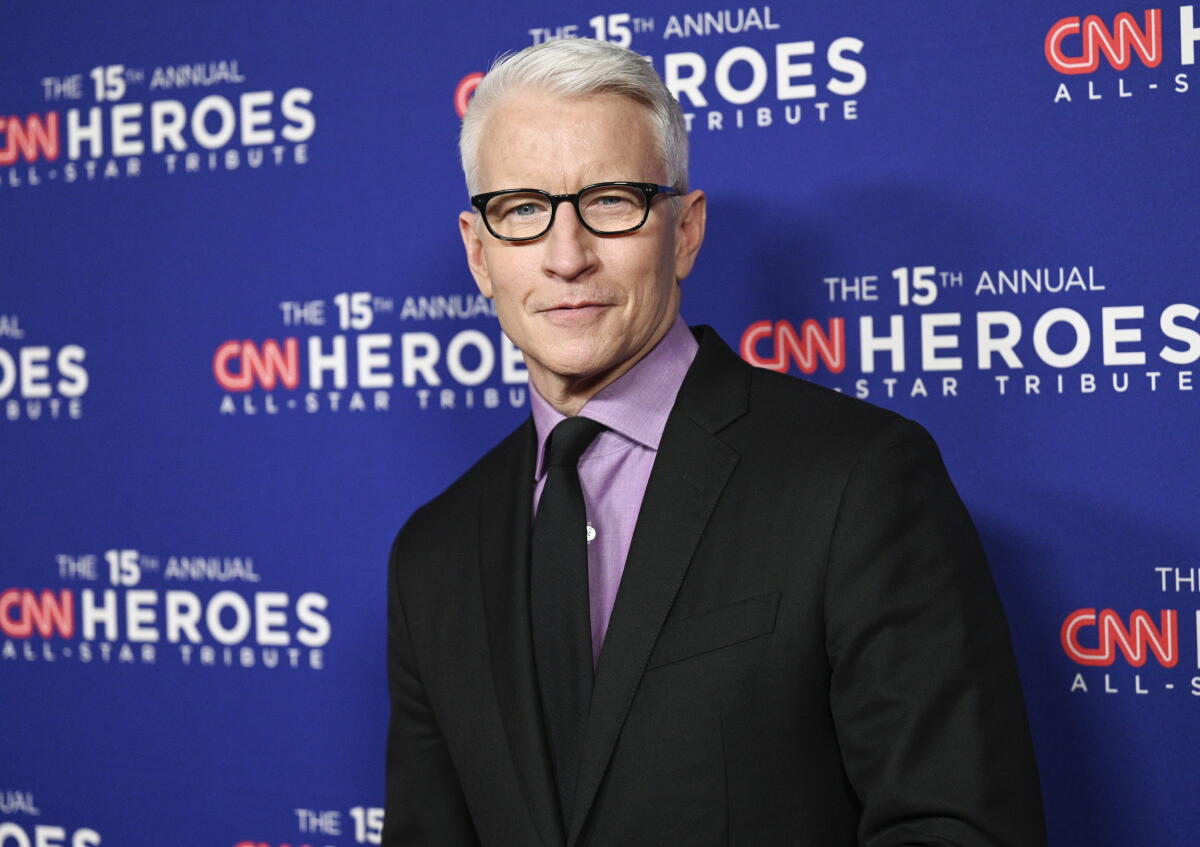
“Things can always evolve and change, and I think that’s awesome, and things should evolve and change, but I hope the core of what ’60 Minutes’ is always remains,” Anderson said on-air. “I think the independence of ’60 Minutes’ has been critical.”
Throughout the farewell segment, the 58-year-old journalist, who was hired in 2007, reminisced about some career highlights, like speaking with Holocaust survivors and people battling malnutrition in Niger, as well as interviewing A-listers like Lady Gaga and Prince Harry. He also said he hopes the show continues to be a reliable source of investigative journalism.
“I think the trust it has with viewers is critical to the success of ’60 Minutes.’ When you see a ’60 Minutes’ story, and you’re like, ‘That was a really good story.’ It was a good story because it requires time, it requires patience, it requires money,” he said. “I hope that’s known and honored and valued and continues.”
Two months after taking on the new role, Weiss made the widely panned decision to pull a “60 Minutes” episode that examined the alleged abuse of deportees sent from the U.S. to an El Salvador prison. The decision earned Weiss heavy criticism and accusations that the move was politically motivated, which CBS has denied.
Cooper said that he’s leaving the program to spend more time with his young children. He will remain as an anchor for CNN.
He added, “I hope ’60 Minutes’ is around for when my kids grow up and have kids of their own, and they can watch it with their kids.”
When political commentator Ana Navarro recently arrived at Mercado Little Spain, the José Andrés-owned food hall downstairs from CNN’s New York studios, a seat was ready for her constant companion, a rust-colored miniature poodle named ChaCha.
“I am her service human because I’m servicing her all day,” Navarro said of the well-behaved pooch who has been by her side since the 2020 COVID-19 lockdown.
As Navarro and a reporter order tapas dishes for the next two hours, patrons at nearby tables raise their cellphone cameras. Andrés’ daughter Carlota stops by and gives an update on her father, a Navarro pal. Later, a Spanish-speaking young woman comes over and thanks Navarro, a political exile from Nicaragua, for defending immigrants amid the aggressive deportation efforts of the Trump administration.
In a fragmented media world where critical mass is becoming harder to attain, Navarro has become one of media’s most recognizable political talking heads thanks to her two high-profile TV roles.
She is a co-host of ABC’s “The View,” the No. 1-rated daytime talk show that has become a target in Federal Communications Commission Chairman Brendan Carr’s efforts to discipline President Trump’s broadcast media critics. She is also a regular panelist on CNN’s roundtable program “NewsNight with Abby Phillip,” which extends its reach far beyond its modest ratings through frequent viral clips on social media.
In February, Navarro, 54, joined the growing list of media personalities who have launched a digital platform to reach consumers no longer watching traditional TV with a weekly podcast for iHeart called “Bleep! With Ana Navarro.”
Navarro is her uncut self on “Bleep!” She interviews guests but can also go into a 30-plus minute monologue without a script when she records at iHeart’s midtown Manhattan studios, where ChaCha looks on from a cushy pillow.
Navarro delivers her arguments against the Trump administration as if she’s schmoozing with friends across a kitchen table. She always appears calm but as the podcast title suggests, she serves up a few four-letter words she doesn’t use on TV.
“Bleep!” gives Navarro her own platform at a time when the legacy media networks she works at are under pressure. Upheaval is expected at CNN if parent company Warner Bros. Discovery becomes a part of Paramount and its Trump-friendly owners David and Larry Ellison.
Carr recently called for an early review of ABC’s TV station licenses. He said its related to an investigation into parent company Disney’s diversity practices but it comes amid the administration’s criticism of the network’s Trump coverage, which has included “The View.”
Ana Navarro on the set of ABC’s “The View.”
(Lou Rocco (ABC))
Navarro was pulled into the fray last year when she was approached by Walt Disney Co. Chief Executive Bob Iger at ABC’s upfront advertiser presentation in New York. The huddle led to reports that they discussed the anti-Trump commentary on “The View.”
“We had an honest conversation but I’m not going to tell you what it was,” she said. “Nobody is muscling us. All I’ve got to do is show up and do the same thing that I’ve always done, which is be as truthful, and authentic and informed.”
(On Friday, ABC filed a petition with the FCC over the agency’s recent scrutiny of “The View,” and whether the program qualifies for an exemption from seldom enforced equal time rules for political candidates. The network accused the FCC of actions violating its 1st Amendment right to free speech.)
Navarro has been pounding at Trump for so long, it’s hard to remember that her rise as a TV pundit began 14 years ago when she was a loyal conservative Republican. Jeff Zucker, who ran CNN from 2012 to 2022, said her personal evolution sets her apart from other pundits.
“She’s funny, insightful, knows how to turn a phrase and she’s gone on a political journey,” Zucker said in a recent interview. “So she understands the entire political spectrum as well as anyone.”
Navarro was eight years old in 1980 when her family fled Nicaragua and sought political asylum in the U.S. after the socialist Sandinista National Liberation Front took power. Her father stayed behind to fight with the anti-communist rebel Contras in the country’s civil war.
“Reagan was taking on the Sandinistas when Bernie Sanders wasn’t,” she said.
She was granted amnesty and became a U.S. citizen under the immigration reform bill signed by President Reagan in 1986.
Growing up in Miami, Navarro was part of the enclave of Latinos whose political perspectives were shaped by having fled Fidel’s Castro’s Cuba and other communist regimes in Latin America. She became a political operative in Republican politics, starting in local Miami races and eventually served as national Hispanic chair for 2008 GOP presidential nominee John McCain. Her Cuban-born husband, Al Cardenas, was on Reagan’s transition team and once led the Republican Party in Florida.
Navarro watched in dismay in 2015 when Trump came down the escalator of the midtown Manhattan skyscraper that bears his name to announce he was seeking the Republican presidential nomination. “Calling Mexicans rapists and criminals — that just hurt my heart,” she said.
When Trump mocked a disabled journalist during a campaign rally, Navarro was reminded of family struggles with one of her older brothers, who has non-verbal autism and is self-injurious. “That brought back so much outrage and anger,” she said. “For me that was a line I could never forgive.”
But being an anti-Trump Republican has become a lonelier job in recent years as the party establishment’s support solidified behind Trump during the historically successful campaign in 2024 that returned him to the White House. For Navarro, it has meant the end of many long-standing relationships.
“I’ve lost some very close friends over Donald Trump,” she said. “And I’ve had to make peace with that. They feel that I’ve betrayed the Republican Party. Some of them think I’m an opportunist, doing this for today.”
One of those friends is Secretary of State Marco Rubio, who she’s known her entire adult life. Navarro still has his cell number in her contacts, but it’s been awhile since she’s called. She still respects Rubio‘s credentials in foreign policy but doesn’t see herself ever supporting him if he runs for president.
“Unless he was running against Satan incarnate, no, I would not go over to him,” she said.
Navarro keeps her cool on “NewsNight,” which occasionally erupts into bedlam when guests clash with Scott Jennings, the show’s resident MAGA Republican. But she misses the days of sparring with Democratic operative Donna Brazile when they were on opposing sides on CNN’s Washington set, and then went out for oysters and wine at Old Ebbitt Grill afterward.
“It’s a completely different world than it was,” Navarro said.
The highly self-confident Navarro has always spoken her mind, encouraged by her father and the Sacred Heart nuns who operated her private school in Miami where she still resides. “Those nuns could run Fortune 500 companies,” she said.
She is not afraid to draw on her own painful, personal experiences to deliver a point. Another older brother died of a heart attack at age 38. Her cousin’s son was a fatality at the 2016 Pulse night club shooting in Orlando, Fla.
“I refuse to live in hopelessness and trauma,” she said. “The things I’ve gone through have shaped me into who I am and made me resilient and empathetic. One of the reasons I abhor Donald Trump is because he completely lacks empathy.”
Where Navarro often separates herself from most Democrats is foreign policy. When Venezuela President Nicolás Maduro was ousted and arrested by U.S. forces, Navarro, on holiday in Madrid, joined exiles from the country as they celebrated in Puerta del Sol.
Navarro expects to have the same reaction if Trump makes good on his threats to end Cuba’s communist regime.
“I will go out there with my metal pan and my metal spoon and I will bang the drums in joy,” she said.
Two press freedom groups that own shares in Paramount Skydance are demanding to see the company’s books and internal documents, citing allegations that the company’s leaders may have promised favors to the White House to win approval for Paramount’s deal to acquire Warner Bros. Discovery.
The letter, sent Thursday to Paramount chief legal officer Makan Delrahim, says that media reports alleging that Paramount owner David Ellison and others promised favors to the Trump administration “create credible concern that Paramount leadership has offered, solicited, or effectuated a corrupt exchange,” which the groups argue would “constitute a breach of fiduciary duties” and open the company up to a “range of potential civil and criminal penalties.”
The letter cites Delaware law that allows stockholders to inspect the company’s books and records “for any proper purpose.”
Paramount declined to comment on the letter.
Among the issues raised in the letter are promises reportedly made by David Ellison and his father, Oracle billionaire Larry Ellison, that they would make “sweeping” changes at the news network CNN, which is owned by Warner Bros. Discovery.
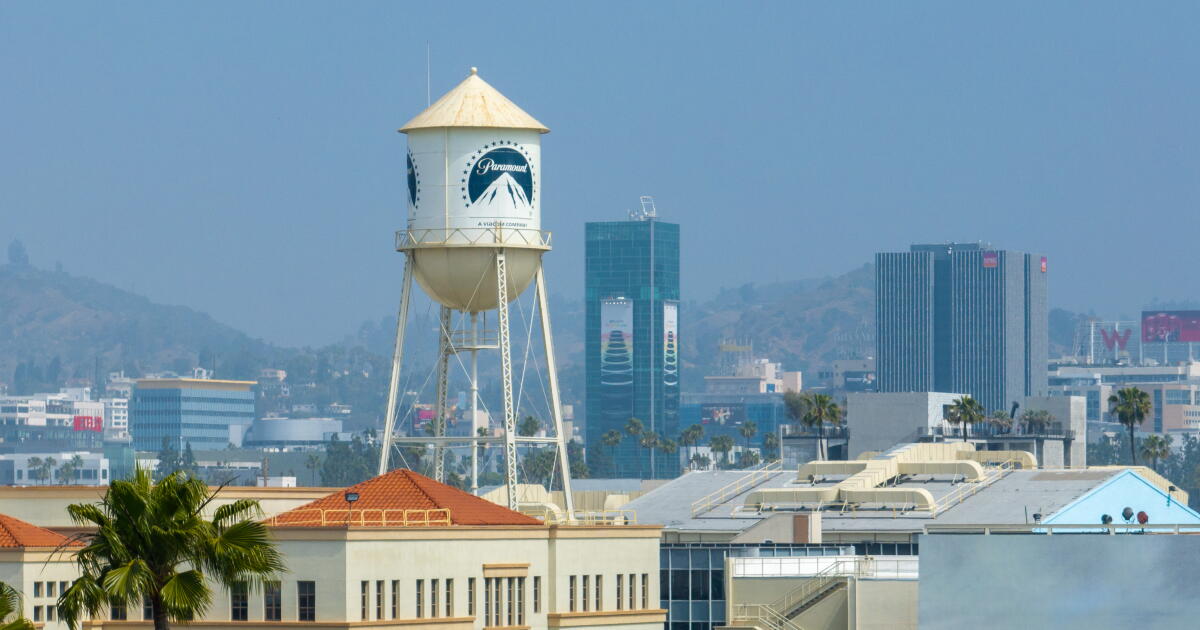
The Ellison family acquired Paramount, which includes CBS and the storied Melrose Avenue film studio, last summer.
The letter cites changes implemented in CBS since their acquisition, including their decision to end late night television house Stephen Colbert’s show days after he characterized a settlement Paramount reached with Trump as a “big fat bribe.”
Under Ellison’s ownership, the letter says, numerous high-profile reporters have left the network and its ratings have dropped to “historic lows.”
Larry Ellison, who is backing the financing of Paramount’s proposed takeover of Warner, reportedly told White House officials that Paramount would “implement the CBS playbook” at CNN if the merger is approved, and remove anchors and commentators at the cable news network that Trump doesn’t like, according to the letter.
The effort comes just two weeks after Warner Bros. Discovery shareholders overwhelmingly approved the proposed merger. Investors have supported the Larry Ellison family takeover, which would become the biggest Hollywood merger in nearly a decade. The deal would pay Warner stockholders $31 per share — four times the stock price a year ago.
The letter was written on behalf of the Freedom of the Press Foundation, which develops secure communication tools for journalists and tracks violations of press freedom, and Reporters Without Borders, which tracks press freedom globally.
The organizations are being represented by former federal prosecutor Brendan Ballou, who established the Public Integrity Project this year to challenged alleged government corruption, as well as Delaware attorney Ronald Poliquin.
The missive, which could be a precursor to a lawsuit, opens another avenue of attack against the controversial $111-billion deal, which would transform the smaller Paramount into an industry titan.
With Warner Bros. Discovery, the Ellisons would also control HBO, TBS and the vast film and TV library of Warner Bros., which includes the Harry Potter, DC Comics, and Scooby-Doo, in addition to CNN.
Paramount, led 43-year-old David Ellison, wants to finalize its Warner Bros. takeover by the end of September. President Trump favors the deal; he has long agitated for changes at CNN.
Politicians, unions and progressive groups separately have pressed California Atty. Gen. Rob Bonta to scrutinize the proposed merger, hoping that he brings an antitrust lawsuit in an attempt to upend the deal.
More than 4,000 film industry workers, including Ben Stiller, Bryan Cranston, Ted Danson, J.J. Abrams, Jane Fonda and Kristen Stewart, have signed an open letter imploring Bonta and other regulators to block the merger. The group lamented the proposed tie-up, saying it “would reduce the number of major U.S. film studios to just four.”
Opponents fear the consolidation would lead to massive layoffs and diminish the quality of programming that Warner Bros., CNN and HBO are known for.
Hollywood has sustained thousands of layoffs over the last seven years since Walt Disney Co. swallowed Fox’s entertainment assets in another huge merger. In addition, the film production economy hasn’t recovered from shutdowns during the 2023 labor strikes. An estimated 42,000 entertainment industry jobs were lost from 2022 and 2024.
On Thursday, 34 California Democrats in Congress also sent a letter to Bonta, encouraging him to look closely at the merger.
The deal is expected to become one of the largest leveraged buyouts ever.
Ballou, who is working with the press freedom groups, previously served as a Justice Department special counsel with expertise in private equity transactions.
He resigned from the Justice Department in January 2025 when Trump returned to office. In his book, “Plunder: Private Equity’s Plan to Pillage America,” Ballou examined large leveraged buyouts and found that many of which resulted in bankruptcies.
Ted Turner, the brash media mogul who created CNN and revolutionized how Americans watched television, and who wielded his media empire and wealth to pursue liberal global causes and land conservation, has died. He was 87.
In 2018, he revealed he had been diagnosed with Lewy body dementia, a neurodegenerative disease, which had been progressing in recent years.
Turner’s outsized public persona — some called him the “Mouth from the South” for his free-wheeling trash talk — matched the Georgian’s influence on news, politics, sports and entertainment in the late 20th century. Turner repeatedly shook up established industries by invading quickly and expanding options for consumers, while railing against monolithic competitors who were less daring or nimble than his maverick Turner Broadcasting System.
Turner created the cable stations TBS and Turner Classic Movies; he owned the Atlanta Braves baseball team, the Atlanta Hawks basketball team and revitalized professional wrestling with World Championship Wrestling.
Turner was one of the first adopters of cable and satellite broadcasting technology, and for many rural Americans living beyond the tower signals of major cities, he was the first person to bring them interesting TV.
The media baron constantly generated headlines. He had a Clark Gable pencil mustache, raced sailboats, cavorted with the late communist leader Fidel Castro in Cuba, and at one point married Academy Award-winning actress and activist Jane Fonda. His wealth enabled him to become one of the largest private landowners and wealthiest philanthropists in the U.S.
July 1990 image of Ted Turner with Jane Fonda.
(Tony Duffy/Getty Images)
His crowning cultural achievement was the creation of the Cable News Network in 1980, which created the model for today’s cable news titans. The 24-hour news channel was not widely expected to be a success. All-night broadcasting had not been proven as a business model in an industry dominated nationally by corporate monoliths like ABC, NBC and CBS, where news programming was something that happened on a set schedule. And CNN’s headquarters weren’t in media centers like New York or Los Angeles, but Atlanta.
But Turner believed that “over-the-air networks would decline as audiences turned to videos and other outlets for entertainment on demand,” wrote the late journalist Daniel Schorr in a 2001 memoir.
“The network future belonged to whoever would deliver what was happening now — live news and live sports. That was why he wanted to be the first to deliver all news, all sports, all the time,” wrote Schorr, whom Turner courted to join CNN.
Within two years, CNN had more than 9 million subscribers. By the 2000s, Turner’s once far-flung idea for an around-the-clock news service had become so successful that it had attracted imitators like MSNBC (now called MS NOW) and Fox News.
“We not only became profitable, but also changed the nature of news — from watching something that happened to watching it as it happened,” Turner said of CNN in 2004. “If we needed more money for [broadcasting from] Kosovo or Baghdad, we’d find it. If we had to bust the budget, we busted the budget. We put journalism first, and that’s how we built CNN into something the world wanted to watch.”
Fox Corp. Chairman Emeritus Rupert Murdoch, who was both a rival and friend of Turner, said his “vision for 24-hour cable news transformed the media industry and gave viewers everywhere a front seat to witness history unfold. His impact as a trailblazer has left an indelible mark on our cultural landscape.”
Turner recognized the value of global distribution long before his rivals, launching CNN’s international business in the mid-1980s. He bought his first western property, The Bar-None Ranch in Montana, and would eventually become one of the nation’s largest individual landowners with nearly 2 million acres, which provide habitat for threatened species and his beloved American bison.
“Ted’s entrepreneurial spirit, creative ambition and willingness to take risks changed the media industry forever,” David Zaslav, chief executive of Warner Bros. Discovery, which owns CNN, said Wednesday in a note to employees. “He believed deeply in the power of ideas, in doing things differently and in building platforms that could inform, inspire and connect people around the world.”
Robert Edward Turner III was born in Cincinnati on Nov. 19, 1938, and raised in Georgia. A mischievous child — who later became a mischievous adult despite attending the Georgia Military Academy — he had a tough childhood at the hands of his alcoholic father, Ed.
“Ninety percent of the arguments I had with Ed were over his beating Ted too hard,” Ted’s mother, Florence Turner, recalled later.
“My dad ran an old-fashioned household and he insisted that pretty much everything had to be his way,” Ted Turner said in a 2008 memoir. “My father and I had a complex relationship but I loved him.”
The younger Turner attended Brown University but dropped out before graduating. His savings had run out, his father had stopped financially supporting his tuition, and in his final days on campus, he was suspended for bringing a woman to his dorm room, according to his memoir.
He soon joined his father’s expanding billboard advertising company, Turner Advertising, where he had been working off and on for years since childhood.
He inherited the business at the age of 24 after his father died by suicide. By then, Turner had already had years of experience , and he worked furiously to reverse his father’s recent sale of part of the company to a competitor and paid down its daunting debt, an act that presaged the empire-building to come.
While growing the business, Turner also pursued his passion for competitive sailing, which is how he met his first wife, Judy Nye, in college. It’s also how their marriage ended. Turner intentionally hit his wife’s boat during a 1963 race to keep her from passing him, and the pair, who had two children, split immediately afterward.
It was to be the first of three divorces. . “My problem is I love every woman I meet,” Turner has said. He would go on to win the America’s Cup in 1977 while expanding his father’s company into a modern multimedia conglomerate.
Leveraging the billboard business, Turner started buying local radio stations across the South in the late 1960s. In 1970, he bought the Channel 17 television station in Atlanta, competing with local network affiliates by airing old movies whose rights were affordable and picking up programming dropped by the less nimble competition. He didn’t like putting news on prime time back then — too negative — and soon picked up broadcast rights for the Braves, Hawks and other local sports.
Oct. 1998 photo of former President Jimmy Carter, right, and Atlanta Braves team owner Ted Turner, during Game 6 of the National League Championship Series in Atlanta.
(PAT SULLIVAN/AP)
The Braves were a ratings hit, and when the team flailed and went up for sale, Turner’s company became its owner in 1976. The team continued to flail but Turner boosted its profile with gimmicks such as sewing “Channel 17” on the back of a pitcher’s jersey and dressing up as the team’s batboy and manager, to the league’s disdain. Turner bought the Hawks shortly after.
Facing entrenched local network affiliates, Turner expanded his independent station’s reach across the South and then the U.S. by embracing the new technologies of cable and satellite broadcasting. Channel 17 became nationally known as the “SuperStation,” with call letters WTBS, later shortened to TBS.
The quirky Atlanta station’s local broadcasts of old movies and sports games had become national broadcasts.
Still hungry for more, Turner finally turned his attention to news programming. He launched CNN in 1980 in a desperate bid to create a national 24-hour news channel before the broadcast titans ABC, NBC and CBS — and their gargantuan budgets — could beat him to it.
“The 24/7 genre started with Ted Turner,” veteran CNN journalist Christiane Amanpour said Wednesday on CNN. “He was the original, and he made us all proud, and he made us all hopeful, and he made us all strive for his vision of a better world.”
There were some lean early years. But the nascent channel fended off an attempt by ABC to create a competitor, and critics could see the value of an ever-present news channel, even if quality was a little thin at times.
“Non-viewers of CNN are missing a lot. There are so many reasons to watch,” Los Angeles Times critic Howard Rosenberg wrote in 1986, hailing the 6-year-old channel as an “institution.” “It’s not always good, but it’s always there.”
In 1986, CNN was the only broadcaster running live coverage when the Challenger shuttle liftoff ended in disaster. In 1991, the network gave Americans a live and uninterrupted look at the invasion of Iraq. American officials held news conferences knowing that Iraqi leader Saddam Hussein was watching them on CNN.
Americans had seen images of war before, but not broadcast nonstop into their homes.
“CNN seeks to be a stethoscope attached to the hypothetical heart of the war, and to present us with its hypothetical pulse,” the French theorist Jean Baudrillard wrote, critiquing the conflict as a media spectacle. Media scholars began to wonder whether a “CNN effect” was influencing government policy. Officials found that they now had to respond much more quickly to crises unfolding on live television.
Turner was not adversarial to communist countries of the era and even tried his own version of the Olympics, called the Goodwill Games, a bit of private-sector peace-craft that brought the Soviet Union and the U.S. out of their respective Olympic boycotts and back into direct competition in the 1989s. All on television, of course.
Turner also saw professional wrestling as part of his sports portfolio, at one point trying to pit his World Championship Wrestling program against competitor Vince McMahon’s wrestling empire, then called the World Wrestling Federation. Turner similarly tried to take a bite out of MTV with the Cable Music Channel, with a promise “to stay away from the excessive, violent or degrading clips to women that MTV is so fond of putting on.”
Moralism was a Turner hallmark. Turner had started his life as a conservative — Turner had met his second wife, Jane Smith, at a 1964 fundraiser for Republican presidential candidate Barry Goldwater — and turned toward more liberal-leaning causes, such as world peace, nuclear nonproliferation and fighting climate change, later in life.
At the 1990 American Humanist Assn.’s annual convention, Turner presented his “Ten Voluntary Initiatives” — his atheistic version of the Ten Commandments — which included pledges to world peace, environmentalism, nonviolence and “to have no more than two children, or no more than my nation suggests.” He would become a major private donor to the United Nations, pledging $1 billion and launching the United Nations Foundation nonprofit.
In 1991, a year marked by the collapse of the Soviet Union, the first U.S. war against Iraq and the confirmation hearings of Supreme Court Justice Clarence Thomas, Time magazine named Turner its “Man of the Year” for his “visionary” creation of CNN, which covered those events live. He also married Fonda that year (the ceremony was reported by CNN) and his Braves narrowly lost the World Series.
Time’s honorific was also a nice bit of corporate synergy. The magazine’s parent company, Time Warner, owned about 20% of Turner Broadcasting System stock.
Turner launched the Cartoon Network in 1992, which helped introduce his then-newly acquired Hanna-Barbera characters — including Fred Flintstone, Yogi Bear and Scooby-Doo — to a new generation of viewers.
Adversaries thought that Turner’s ventures could be reckless and impulsive. Far-seeing accomplishments in national broadcasting and the creation of CNN were also paired with several expensive misadventures, including a failed attempt to buy CBS.
Turner had to unwind a purchase of the MGM film studio less than a year after buying it, though he held onto one valuable asset: The studio’s film library, which became the foundation of the Turner Classic Movies channel and, later, jewels in the Burbank-based Warner Bros. studio vault.
In 1996, Turner Broadcasting merged with Time Warner to form the world’s largest media company, marking the beginning of the end of Turner’s apex in corporate media. Time Warner’s 2000 merger with budding internet giant AOL, then the largest-ever corporate merger, ended in disaster. Turner, who had not been a key player in the negotiations and had made no secret of his disdain for that deal, was fired as an executive.
“Ted Turner was one of the rare leaders who truly changed the trajectory of an industry,” Versant Media Chief Executive Mark Lazarus, a former Turner underling, said in a statement. “I saw firsthand his willingness to take risks and his belief that media could be something bigger and more impactful.”
CNN Worldwide Chairman Mark Thompson added: “He was and always will be the presiding spirit of CNN. Ted is the giant on whose shoulders we stand.”
Turner resigned from the AOL Time Warner board in 2003, and in 2007, announced he had sold his company shares. In his later days, one of his best-known ventures was his Ted’s Montana Grill restaurant chain. His philanthropy and land conservation efforts and protection of the American bison became guide posts during his retirement years.
While CNN maintains influence in the U.S. and abroad, its TV ratings have declined in recent years — a casualty of changing consumer behavior, the rise of social media, derision from President Trump — and several ownership changes.
During the past decade, CNN has had three different corporate owners. The company is poised to be sold again, this time to billionaire David Ellison’s Paramount Skydance. That proposed merger would bring CNN under the same roof as CBS News.
“I’ve often considered and joked about what I might want written on my tombstone,” Turner said in a 2008 memoir. “At one point, when I felt like I could get out of the way of the press, ‘You Can’t Interview Me Here’ was a leading candidate. … These days, I’m leaning toward, ‘I Have Nothing More to Say.’”
Turner is survived by his five children — Laura Turner Seydel (Rutherford), Robert Edward “Teddy” Turner IV (Blair), Rhett Turner, Beau Turner, Jennie Turner Garlington (Peek) — 14 grandchildren and a great granddaughter. The family plans a private and public service at a later date.
Pearce is a former Times reporter. Times Staff Writer Stephen Battaglio contributed to this report.
For the third time in as many weeks, the leading candidates for California governor met on the debate stage Tuesday night.
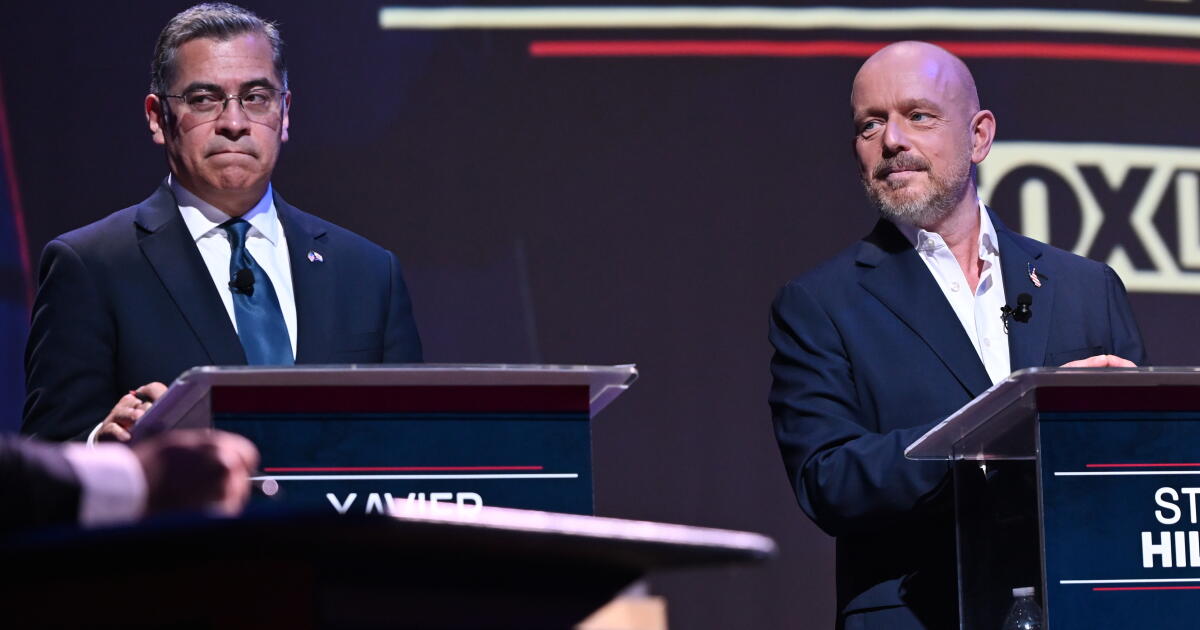
The latest installment was a two-hour session, hosted and carried live from Monterey Park by CNN. The debate marked the first time the candidates appeared before a national audience and came as mail ballots have begun arriving in homes throughout the state.
Columnists Gustavo Arellano, Mark Z. Barabak and Anita Chabria took in all 120 minutes, absorbed every zinger — scripted and otherwise — and dutifully observed each parry and thrust. Here’s what they took away:
Arellano: Antonio Villaraigosa finally rises above his gubernatorial rivals. Is it too late?
I wrote my thoughts about this debate while writing my next columna on … something, stopping to pay attention only when issues in my bailiwick like immigration and the failure of the Democratic Party were the subject of discussion. The rest of the time, what the candidates said came off as one giant shout-fest straight out of the studios of the late, great Wally George, with everyone playing true to form.
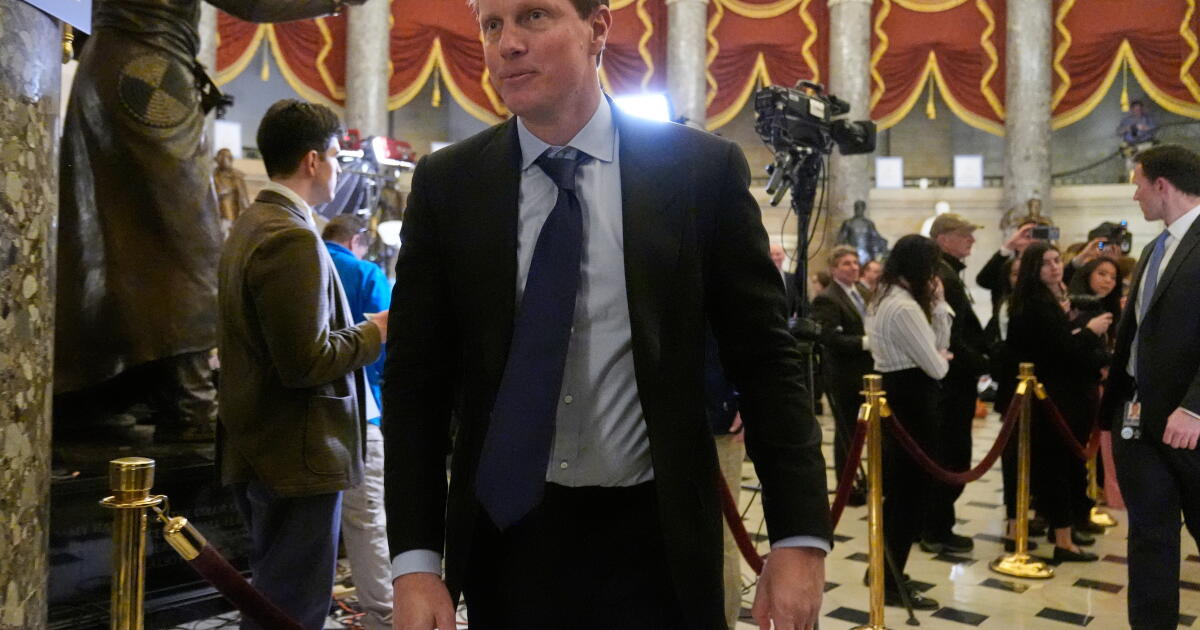
Chad Bianco raged, Steve Hilton tried to mask his MAGA-ness with his British accent. Katie Porter scolded, Tom Steyer channeled Bernie. Xavier Becerra did his best impression of the old Bunsen character from “The Muppet Show.” Matt Mahan was just … there.
You know who sounded the best? Antonio Villaraigosa.
Anyone who really knows the former L.A. mayor has always seen him as Chicano Prince Hal, someone who doesn’t take himself as seriously as he should. His infidelities effectively killed his political career after his mayoral years; his consulting for the nutritional supplement company Herbalife made Villaraigosa a walking joke among too many Latinos I know.
He has spent the last decade effectively embodying Marlon Brando’s famous quote in “On the Waterfront”: He coulda been a contender. Even his gubernatorial run, announced way before many of his opponents, has mostly had the air of a has-been — that’s one of the reasons why Villaraigosa has polled so low through most of the race to the point he was excluded from many of the early debates.
But that hangdog Villaraigosa was nowhere to be seen tonight.
His wisecracks were kept to a minimum. He stayed mostly within his time limits and didn’t interrupt much. He hammered Hilton over his refusal to admit that President Trump lost the 2020 presidential election and his dismissal of undocumented immigrants.
Villaraigosa especially went hard on his forever frenemy Xavier Becerra on everything from his time as President Biden’s health secretary to how former staffers have been charged with stealing millions of dollars from his campaign funds. (Becerra has not been accused of any wrongdoing.)
When CNN co-moderator Elex Michaelson asked Villaraigosa if he would cancel California’s much-maligned high-speed rail project, the candidate’s emphatic “No” thundered down like a Lebron James dunk. He called out the waste on the multibillion-dollar project, said he revived L.A.’s subway to the sea, and spoke with a passionate gravitas that Becerra could only dream of doing.
“When I make a mistake, I’m accountable,” Villaraigosa said at the end of the debate. This sounded like a candidate who can win — and now he has a month to make a comeback worthy of his political mentor, the late, great Gloria Molina.
Four weeks to prove them wrong, Antonio.
Barabak: It was a no-hitter.
No startling breakthrough. No game-changing moment. No candidate so irresistibly charming he or she knocked the race akimbo and stamped themselves as the far-and-away front-runner in the slowly consolidating contest.
By now, the candidates are plowing well-furrowed ground.
To anyone who has watched each of the debates — and there may not be a great many of those viewers out there — it was all quite familiar.
What is new, and what may have been the draw for those just tuning in, is a sense the race is finally taking a coherent shape, with Xavier Becerra unexpectedly emerging as the candidate to beat.
A month ago, Eric Swalwell was a leading contender in the dozy contest and Becerra was an afterthought, being urged to quit for the sake of his dignity and the good of the Democratic Party. (Fears of a Democratic shutout in the June 2 primary have greatly receded.)
When Swalwell left the race and vacated his congressional seat amid allegations of sexual assault and other potentially illegal misconduct, it was widely assumed much of his support would move to either Steyer or Porter, the two other leading Democratic contenders.
But Becerra has been the clear-cut beneficiary and his new status was evident Tuesday night as he faced repeated attacks. He didn’t particularly dazzle, but that’s not his appeal. It’s his steadiness and seeming unflappability in a time of great upheaval and stress, and that was again evident.
With less than four weeks to election day — and voting already underway — time is waning for another dramatic shake-up like the one that took place between Swalwell’s implosion in April and Becerra’s surge in May.
It seems, however, as though little to nothing will change, with Becerra steadily gaining ground, Hilton consolidating GOP support and the remainder of the field looking for something — or someone — to drastically shake up the race one more time.
Chabria: I don’t know about a winner, but the debate definitely had a biggest loser: Bianco. The Riverside County sheriff, to his credit I guess, didn’t try for a hot second to hide who he really is — a conspiracy-loving immigration hardliner with ties to an extremist group.
Bianco sort-of said he was a member of the Oath Keepers, a far-right organization best known for some of its members participating in the Jan. 6, 2021, storming of the Capitol. He threw out election fraud theories, even suggesting state Atty. Gen. Rob Bonta could be involved. He made it clear that undocumented folks are breaking the law by existing in the state.
Maybe some MAGA voters will stick by that shtick, but I’m guessing independents and more moderate Republicans will find Hilton, the Trump-endorsed Republican, even more appealing after Bianco’s ragey ramblings. Hilton may well be sending his opponent a thank-you note and a bottle of bubbly for that performance.
As for winners, a couple of the Democrats had their moments. Porter spoke with clarity and force on issues including single-payer healthcare (she supports it) and resisting Trump’s immigration policies in this state of immigrants.
But she also directly addressed the criticism of her having a bad temper in a way that I think may haunt her.
As her male opponents bickered back and forth, taking swipes at each other, Porter said that given all the “shouting” and “disrespect” onstage, she was shocked that “anyone wants to talk about my temperament.” It’s a pushback she tried out earlier in the week with a new advertisement that sought to make a punchline out of the criticism.
I get her point and I don’t think a male candidate would face the same scrutiny for yelling at a staffer as she has, but also — what’s more unappealing to voters than an angry woman? A complaining one. That moment of resistance against the narrative may not land the way she intends with voters.
I agree with Gustavo that Villaraigosa had a good night, and that Steyer had Bernie energy — which may be good.
Steyer was the most lively and direct he’s been in a debate, landing a few punches and making points with clarity (far less wonky than he’s been in the past). He’s owning his far-left politics, and labeling himself the “change-maker.”
Steyer has been trailing Becerra in the polls, but Becerra again had a steady if less-than-thrilling appearance. For fed-up Democrats, Steyer may be looking better all the time.
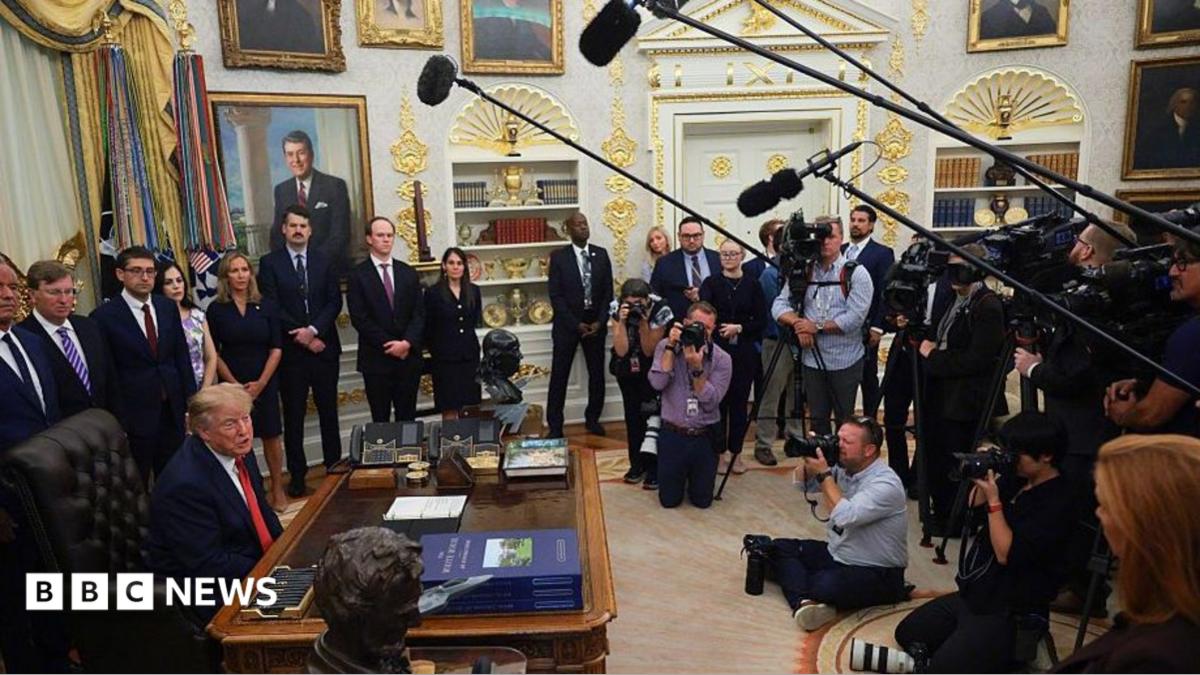
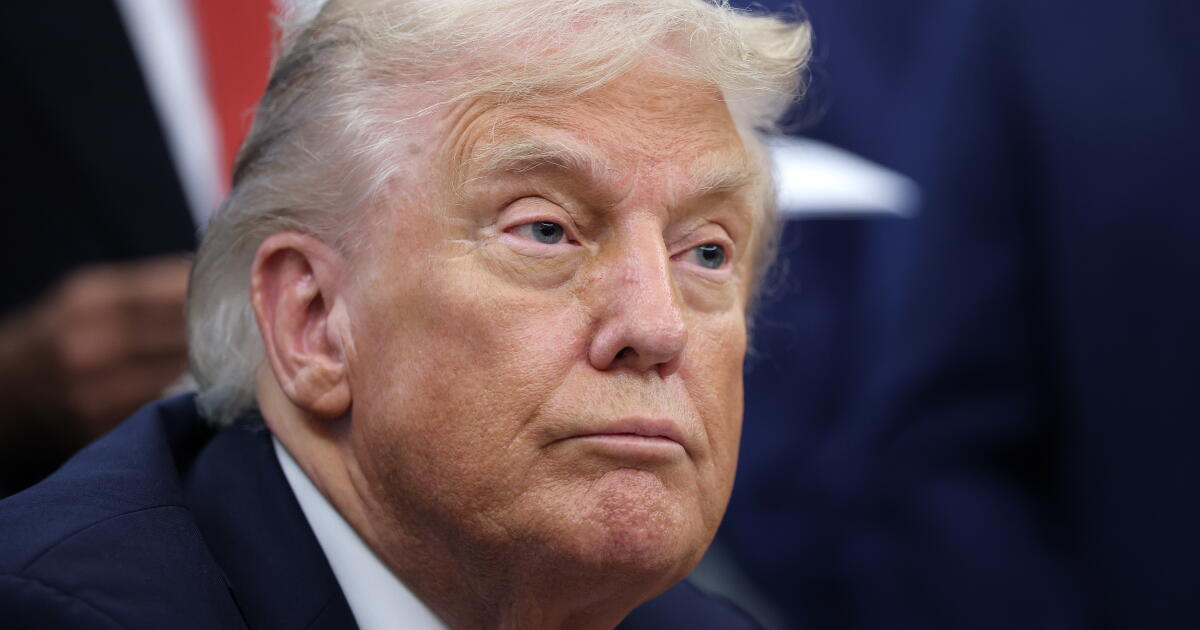
US President Donald Trump on Thursday sharply criticized The New York Times and CNN over their coverage of the US-Israeli war on Iran, describing CNN as “stupid” and claiming the newspaper’s reporting was “seditious,” Anadolu reports.
Trump said he had “militarily decapitated” Iran, speaking to reporters at an Oval Office event where he signed an executive order aimed at expanding workers’ access to retirement savings, while also criticizing Democratic efforts to limit his war powers.
“And every day, I read about how well they’re doing militarily,” he said. “They’ve got nothing left, they’re done. And yet I read in The New York Times, I see on stupid CNN — which I only watch because you have to watch a little bit of the enemy.”
Trump also said coverage by the two outlets implied that Iran is “winning the war,” criticizing their reporting on the war.
“If you read The New York Times — it’s actually seditious, in my opinion,” he said. “You read some of these columnists, but it all starts with the top. It’s a terrible thing.”
He said he did not “care, and everybody knows the facts. We are decimating the country.”
Earlier, the New York Times editorial board suggested that the US military is “losing its edge” in the Iran war, arguing that tactical gains have not translated into overall victory and may weaken Washington’s position.
Paramount Skydance’s proposed takeover of Warner Bros. Discovery cleared a major hurdle Thursday as Warner stockholders overwhelmingly embraced the $111-billion deal.
Approval was expected. Paramount Chairman David Ellison’s proposal would pay Warner investors $31 a share — four times the price of the company’s stock a year ago. Warner Bros. officials did not disclose the precise vote count during the nine-minute special shareholder meeting beyond saying the merger “received sufficient votes and has overwhelmingly passed.”
Paramount offered the generous premium to compete with, and ultimately triumph over, Netflix, which withdrew from the auction in late February after Ellison’s father, Oracle billionaire Larry Ellison, agreed to guarantee the financing of his son’s deal.
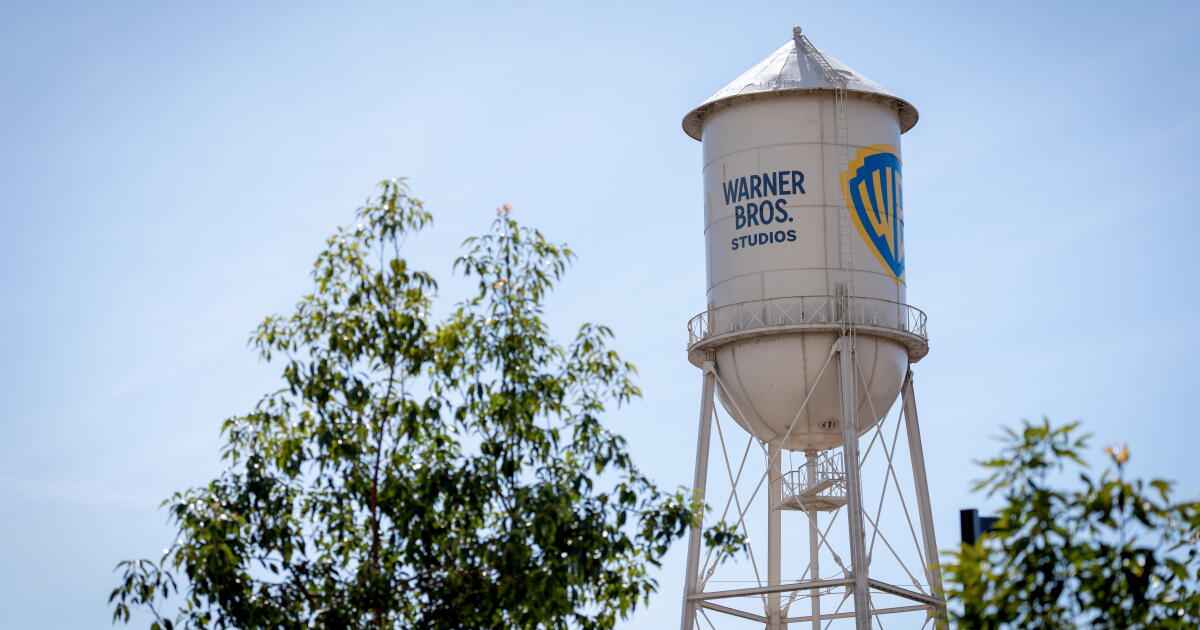
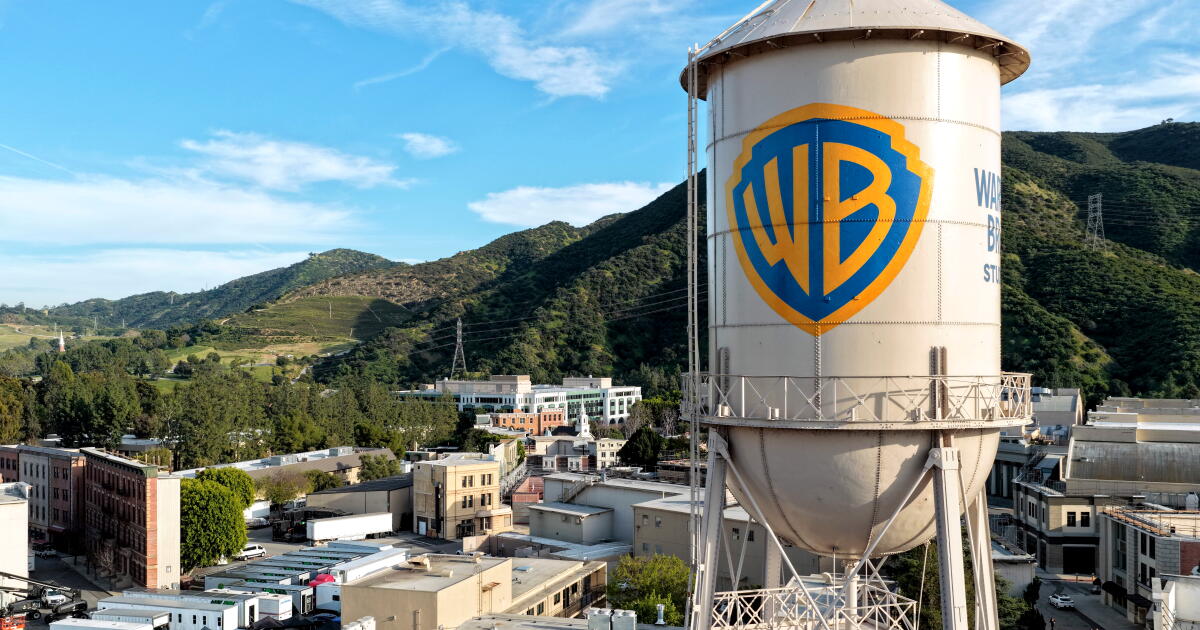
The merger would create a new Hollywood behemoth by giving Paramount, which owns CBS and the Melrose Avenue film studio, such valuable assets as HBO, HBO Max, CNN, TBS, Food Network and Warner Bros.’ film and television studios in Burbank. Warner controls beloved TV shows, franchises and movies, including “Casablanca,” Harry Potter, D.C. Comics, “Game of Thrones,” “Euphoria,” “The Pitt,” and “Rooster.”
“Shareholder approval marks another important milestone towards completing our acquisition of Warner Bros. Discovery, building on our successful equity and debt syndications and progress across regulatory approvals,” Paramount said Thursday in a statement. “We look forward to closing the transaction in the coming months and realizing the creation of a next-generation media and entertainment company that better serves both the creative community and consumers.”
Paramount now must secure regulatory approvals in the U.S. and abroad. Ellison, who is poised to honor President Trump with a dinner Thursday evening in Washington, hopes to complete the deal by late summer.
Shareholders, however, made known their disdain for Warner Chief Executive David Zaslav’s proposed golden parachute, which could swell to $887 million, depending on when the transaction closes. His cash, stock and options would be valued at more than $550 million. Warner board members also agreed to pay his tax bill, which could approach $330 million, should the merger be completed by year’s end.
Shareholders, in a non-binding vote, voted against Zaslav’s package.
Paramount’s deal has encountered significant opposition in Hollywood and beyond.
More than 4,000 filmmakers, actors and industry workers, including Ben Stiller, Bryan Cranston, Ted Danson, J.J. Abrams and Kristen Stewart have signed an open letter asking California Atty. Gen. Rob Bonta and other regulators to block the deal.
Opponents fear the consolidation would be lead to massive layoffs and diminish the quality of programming that Warner Bros., CNN and HBO are known for. Hollywood has sustained thousands of layoffs over the last six years; the film production economy hasn’t recovered from shutdowns during the 2023 labor strikes.
“This is already an incredibly consolidated industry where writers have seen merger after merger leave fewer and fewer companies in control of what our members can get paid to write,” Michele Mulroney, president of the Writers Guild of America West, said Wednesday during a press briefing organized by Free Press and other progressive groups that oppose the merger.
“A combined Warner Bros. and Paramount would create a media behemoth with tremendous leverage to reduce content, to raise prices, to increase control of production, to suppress member compensation, worsen working conditions and silence the voices of our members,” Mulroney said.
Trump has long agitated for changes at CNN, and few expect his Justice Department to block the transaction. Defense Department Secretary Pete Hegseth echoed the sentiment. “The sooner David Ellison takes over that network the better,” Hegseth told reporters in March.
It’s unclear whether Bonta or other state attorney generals will file a lawsuit to try to stop the deal. Bonta previously told The Times that his office is reviewing the consolidation.
“This deal can get blocked. I personally think it will get blocked — or undone,” Alvaro Bedoya, former Federal Trade Commission member who now serves as a senior adviser to the American Economic Liberties Project, told reporters Wednesday. He pointed to other proposed mergers that unraveled due to fierce opposition, including the proposed combinations of grocery giants Kroger and Albertson’s.
David Ellison has promised to keep HBO entact and the Paramount and Warner Bros. movie studios humming. He promised cinema owners last week that a combined Paramount-Warner Bros. would release 30 movies into theaters each year.
“This transaction uniquely brings together complementary strengths to create a company that can greenlight more projects, back bold ideas, support talent across multiple stages of their careers,” Paramount said in a statement to push back on the opposition. The company would have the power to “bring stories to audiences at a truly global scale — while strengthening competition by ensuring multiple scaled players are investing in creative talent.”
To finance the Warner takeover, Ellison’s billionaire father, Larry Ellison, has agreed to guarantee the $45.7 billion in equity needed. Bank of America, Citibank and Apollo Global have agreed to provide Paramount with more than $54 billion in debt financing.
Paramount has enlisted a former Trump administration official, lawyer Makan Delrahim, who served as Trump’s antitrust chief during the president’s first term.
In a confident move, Delrahim filed to win the Justice Department’s blessing in December — even though Paramount didn’t have an agreement with Warner Bros. Discovery’s board at the time. In February, a key deadline for the Justice Department to raise issues with Paramount’s proposed Warner takeover passed without comment from the Trump regulators.