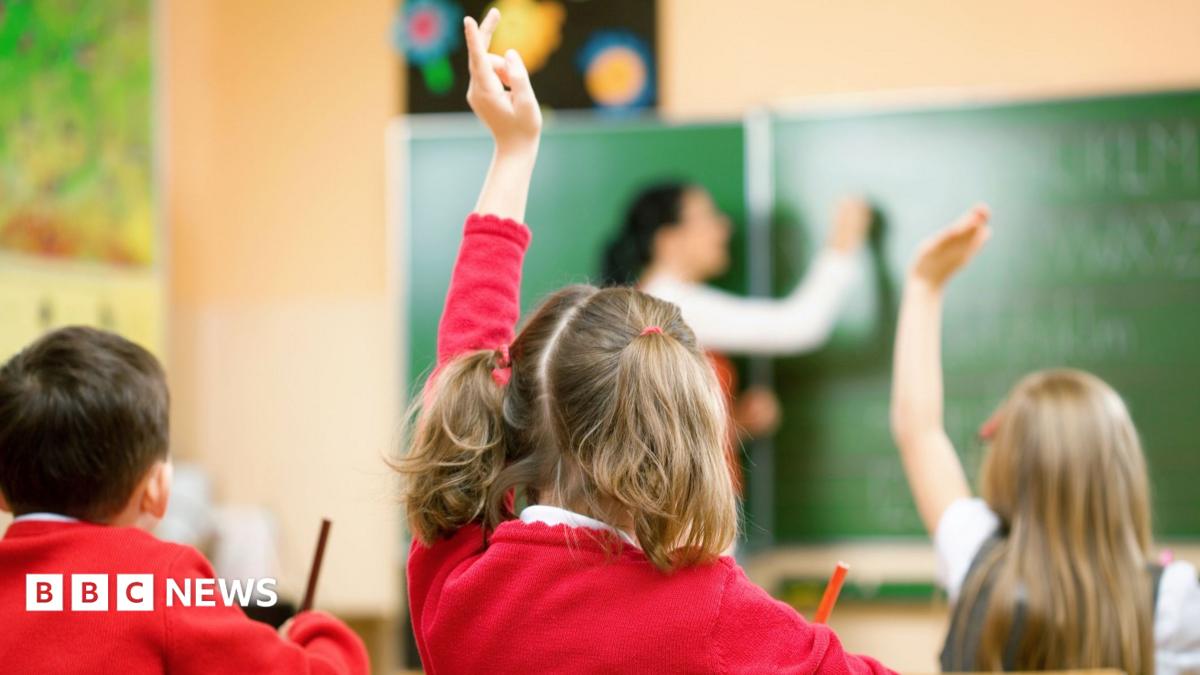
Energy costs: ‘Wear more clothes if it’s cold’, pupils and staff told
Rising energy costs are already affecting households across Northern Ireland.
The impact of the US-Israel war with Iran is one of the factors behind the increase.
The letter from the EA to head teachers said that “recent geopolitical events are expected to have a substantial impact on energy costs across the Education Authority (EA) during the 2026/27 financial year”.
It said that total school gas bills were expected to go up by 60% from £10.7m to £17m by March 2027.
Meanwhile, total school electricity bills are expected to rise by 5% from £23.8m to £25.1m by March 2027.
“Given the scale of the anticipated cost increases, we are asking all schools to review their energy usage and identify opportunities to reduce consumption wherever possible,” the EA said.
Among the measures the authority has suggested to schools are cutting heating use by an hour a day and switching off classroom lights to use natural daylight instead.
Staff and pupils have also been advised to “wear more clothes” rather than turn the heating thermostat up if it is cold.
But principals have told BBC News NI that it is not straightforward for schools to cut heating costs.
The principal of Tullygally Primary School in Craigavon, Kirsty Logan-Hall, said that the school was “committed to promoting responsible energy consumption and regularly reinforce good practice with staff and pupils”.
“However, our ability to achieve significant reductions in energy usage is constrained by the nature of our estate,” she said.
“The school operates from an older building which presents inherent energy efficiency challenges.
“In addition, our site is particularly spread out due to the accommodation and operational requirements associated with our specialist provision.
“This necessitates the heating, lighting and ongoing use of multiple areas across the site throughout the school day to ensure appropriate learning environments, accessibility and pupil welfare.
“It is important to recognise that there is limited scope for reducing energy consumption without adversely impacting the quality of provision, staff working conditions or the wellbeing of pupils, including those with additional needs.”
Emma Quinn from Rathcoole Primary told BBC Good Morning Ulster that the “lack of maintenance” has an impact on schools, adding that pupils have a right to come into a warm school after being outside.
“Putting this pressure onto us at the minute is ridiculous, when we are eco schools, we are doing all of these, we are turning off lights, but yet this lands in on our doorstep and we’re suddenly expected to jump and to fix a problem that is so systemic, it’s just not good enough.”