Clayton

Jay Clayton confirmed as national intelligence director

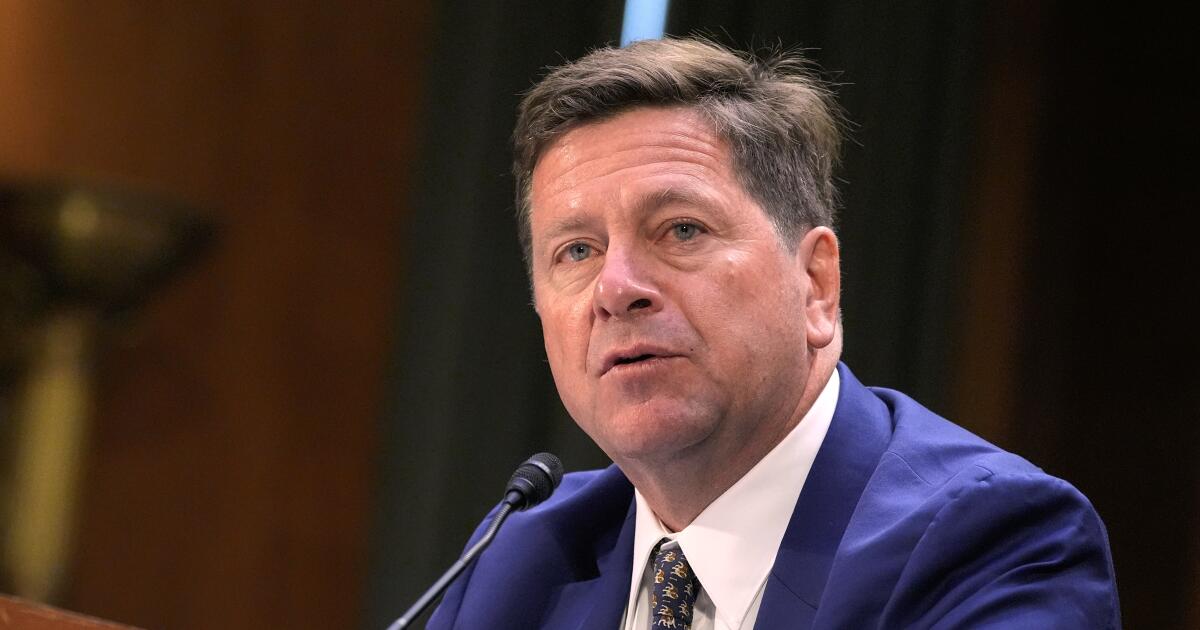
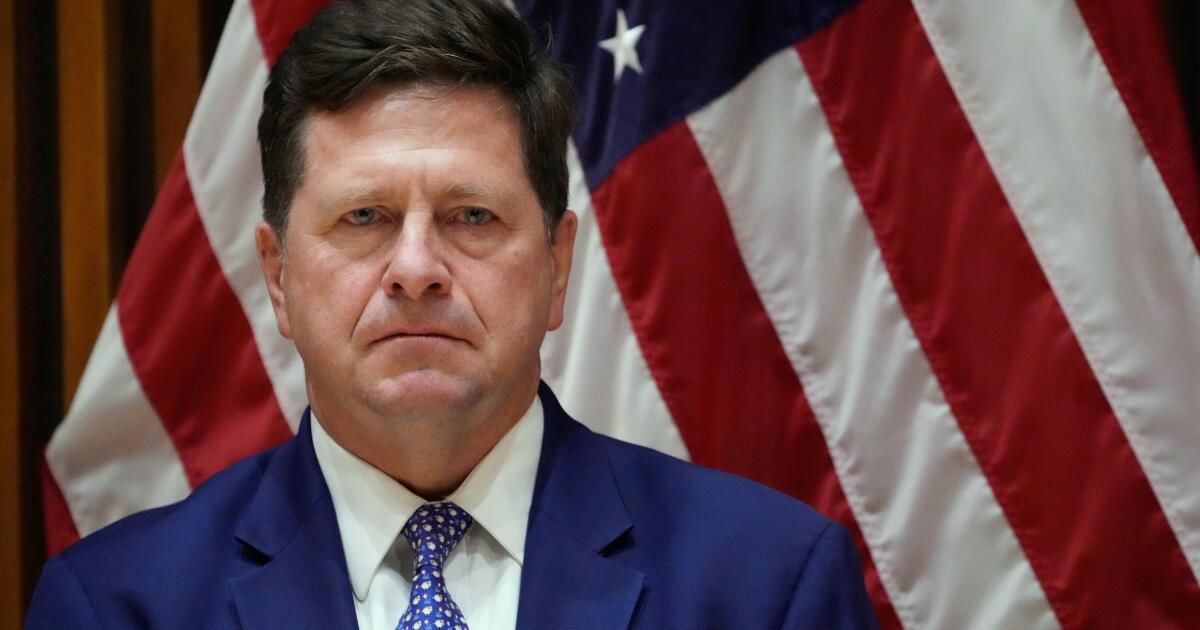
Walter “Jay” Clayton III, nominee to be director of national intelligence, speaks during a Senate Intelligence Committee hearing on his nomination on July 15. The Senate on Tuesday voted to advance his nomination. Photo by Bonnie Cash/UPI | License Photo

July 28 (UPI) — The U.S. Senate voted 51-47 along party lines Tuesday evening to confirm Jay Clayton as director of national intelligence, succeeding Bill Pulte.

The vote comes one day after lawmakers voted to advance Clayton’s nomination with no Democrats voting to approve.

After the vote Tuesday, Sen. Mark Warner, D-Va., the top Democrat on the Senate Intelligence Committee, said that he is skeptical of Clayton in the role.

“I came away from his confirmation process with serious reservations about whether he would be willing to stand up to political pressure when it matters most,” Warner said. “Now that he has been confirmed, I sincerely hope he proves those concerned unfounded, because the intelligence community deserves steadier leadership than it has received in recent months.”

Bill Pulte, the acting director, announced Tuesday on social media that he had executed “a fifth and near-final round of TERMINATIONS” that mark a 30% staff reduction during his time in the office.

On July 15, Democrats in the Senate questioned Clayton, a U.S. attorney, on Trump’s allegations that he won the 2020 election. Clayton wouldn’t say that former President Joe Biden won the election, but would say that he was “certified” as president. Clayton said he is not an election denier.

“You refuse to answer a basic question about who won a presidential election, but you ask to lead America’s intelligence community,” Sen. Jon Ossoff, D-Ga., said the confirmation hearing. “Isn’t it humiliating to be unable to answer this question, to have to indulge the president’s delusions?

President Donald Trump announced Clayton as his nominee in June as senators on both sides of the aisle protested the placement of Pulte. Pulte runs the Federal Housing Finance Agency and has referred four of Trump’s perceived enemies for prosecution on allegations of mortgage fraud.

Democrats in the House wouldn’t renew Section 702 of the Foreign Intelligence Surveillance Act, a bill that would have extended warrantless spy powers rules, in retaliation for Pulte being named for the position. It’s unclear if the Senate will vote to extend FISA once Clayton is approved.

The House will not be back in session until September.

Tulsi Gabbard resigned from the ODNI in May.

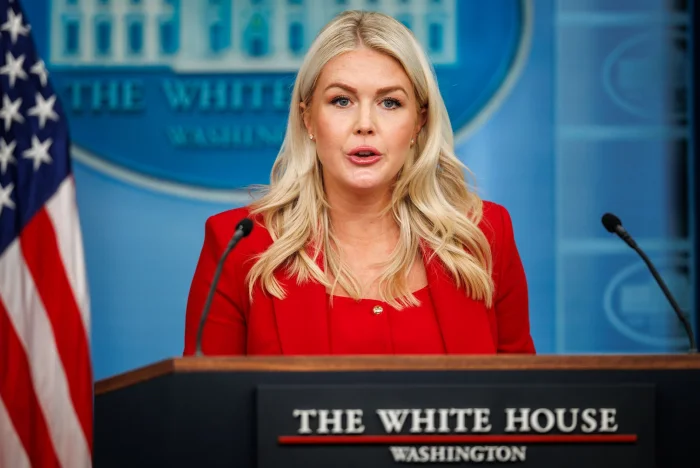
White House Press Secretary Karoline Leavitt speaks during a press briefing in the James S. Brady Press Briefing Room at the White House on Thursday. Photo by Samuel Corum/UPI | License Photo

Source link

Trump’s intelligence nominee Jay Clayton clashes with Democrats over 2020 election

President Trump’s pick to head the nation’s intelligence agencies struggled to win Democratic support in a contentious confirmation hearing Wednesday where he clashed repeatedly with them over the 2020 election.

Democrats asked Jay Clayton, the U.S. attorney for the Southern District of New York and a former Securities and Exchange Commission chairman, over and over again whether former President Biden won the election and defeated Trump. Echoing many of Trump’s nominees, Clayton said many times that the election was “certified” for Biden, declining to say outright that the Democrat won.

“I’m not going to get into this with you,” Clayton told Georgia Sen. Jon Ossoff, the last of several Democrats on the committee to grill Clayton on the 2020 election. Clayton appeared frustrated and flustered as Ossoff repeated the question several times. “I’ve answered it,” he said.

Virginia Sen. Mark Warner, who had praised Clayton’s nomination when Trump picked him for the role last month, expressed exasperation with him at the end of the hearing. Democrats say they are concerned that Trump will try to direct intelligence agencies to influence U.S. elections as the president has repeated his false claims that the 2020 contest was stolen.

“I’ve known Mr. Clayton for some time, I worked with him closely when he was at the SEC,” said Warner, the top Democrat on the intelligence panel. “But I am bitterly disappointed.”

While Clayton has broad support among Republicans, the acrimony with Democrats could be a blow to GOP leaders who had hoped to gain their consent for a quick vote to replace temporary intelligence director Bill Pulte, a former housing official with no known intelligence experience and who used his previous administration perch to target perceived adversaries of the president.

Senators in both parties have criticized Pulte, and Republicans had hoped to confirm Clayton immediately after he was nominated in June so Pulte did not take over when Gabbard left office. But Trump delayed Clayton’s nomination, allowing Pulte to take the job temporarily.

Senate Intelligence Committee Chairman Tom Cotton, R-Ark., said the committee will vote on Clayton’s nomination next week.

Clayton emphasizes national security experience

Clayton did not mention Pulte in the hearing. But he emphasized his own government and national security experience, attempting to assuage senators in both parties.

“I saw firsthand how a strong national security apparatus depends on decisive judgment, discipline, integrity, and effective communication and cooperation across different branches of the government,” Clayton said in his opening statement. “If confirmed as Director of National Intelligence, I will commit to upholding these principles every day.”

Cotton expressed frustration last month when the hearing was delayed. He said in his opening statement Wednesday that Clayton has a reputation for operating with “morality, decency and integrity” in his previous positions and that he hopes his nomination will win bipartisan support.

Democrats press Clayton on Gabbard’s election activities

Democrats also pressed Clayton on former National Intelligence Director Tulsi Gabbard’s visit to a Georgia election office earlier this year during an FBI search related to the 2020 election. Trump administration officials have given varying explanations for Gabbard’s involvement in the search, which appeared to be outside of her intelligence role.

Clayton declined to say whether Gabbard’s visit was appropriate or how he would handle the same situation. At one point he said he wasn’t aware of Gabbard’s visit before this week, then later appeared to backtrack, saying “it wasn’t something on my mind” before he started to prepare for the hearing.

Warner said it “strains credibility” that Clayton wasn’t aware of Gabbard’s election activities.

Democrats also asked Clayton about Trump’s announcement that he will deliver a primetime address on Thursday with a focus on elections, after the president suggested he could revisit long-debunked conspiracy theories about his 2020 defeat. Clayton said he had has no involvement with that speech.

As U.S. attorney in Manhattan, Clayton oversees vast portfolio

Clayton is currently the U.S. attorney for the Southern District of New York, one of the most prestigious of the Justice Department’s prosecution offices. His cases have ranged from terrorism and espionage cases to security fraud and public corruption.

Democrats pressed Clayton on subpoenas of four New York Times journalists after they reported on security concerns involving the new, Qatari-gifted Air Force One. The Committee to Protect Journalists has called the subpoenas “an extraordinary escalation in President Trump’s efforts to threaten and intimidate independent news organizations and have a chilling effect on the work of journalists across the country.”

Clayton said he was not able to discuss the details of the subpoenas and declined to elaborate on whether he spoke to the White House before they were issued. He said he is “confident in procedures we have in place to protect freedom of press.”

Under Clayton, the office also facilitated the unsealing of thousands of pages of court records from the prosecutions of Jeffrey Epstein and Ghislaine Maxwell — documents that were made public as part of the Justice Department’s release of records related to the late sex offender and his longtime confidant.

Clayton has also overseen the prosecution of former Venezuelan President Nicolás Maduro and Maduro’s wife, Cilia Flores, on drug trafficking charges.

Confirmation vote could unlock renewal of surveillance authority

Clayton’s confirmation could potentially clear the way for bipartisan legislation to renew Section 702 of the Foreign Intelligence Surveillance Act, or FISA, which stalled last month when Democrats had said they would not provide the necessary votes to pass the bill unless Pulte’s temporary appointment was withdrawn.

The law, which aims to prevent terrorist attacks by monitoring the communications of targeted foreigners located outside the United States, expired in June.

Even if Democrats relent, it is unclear if Trump would sign the bill. He said in his June social media post delaying Clayton’s nomination that he would not sign the FISA renewal without his legislation to require proof of citizenship for all voters. The voting bill does not have enough support to pass the Senate.

Jalonick writes for the Associated Press. AP writer Eric Tucker contributed to this report.
Source link

Trump delays Clayton’s nomination for intelligence director to try to push Congress on voter ID bill

President Trump said Wednesday that he was delaying federal prosecutor Jay Clayton’s nomination to lead the U.S. intelligence community in a bid to force Congress to act on a voter ID bill that currently lacks enough support for passage.

The Republican president said in a social media post just hours before Clayton’s scheduled confirmation hearing that he will keep Bill Pulte, a top U.S. housing official, as acting director of national intelligence. Democratic and Republican lawmakers had opposed Trump’s selection of Pulte, citing his lack of known experience in intelligence and his use of his current administration perch to target perceived adversaries of the president — resistance that last week forced Trump to turn to Clayton.

The abrupt announcement creates instant uncertainty over the long-term leadership of the 18-agency intelligence community and dashes hopes for a swift renewal of a crucial surveillance program that expired in Congress last week due to bipartisan anger over Trump’s pick of Pulte.

That tool, Section 702 of the Foreign Intelligence Surveillance Act, permits spy agencies to collect without a warrant the communications of targeted foreigners located outside the United States. National security officials across both major political parties have for years described Section 702 as vital for gathering intelligence that can disrupt terror attacks and espionage operations, though some lawmakers and civil liberties advocates have raised concerns over the government’s use of information about Americans that is incidentally collected through the program.

Clayton had been set to appear on Wednesday for a Senate confirmation hearing that was fast-tracked because of the program’s lapse. Democrats had said they would not renew the expired surveillance programs until Trump withdrew the selection of Pulte.

Trump’s post suggests that debate to revive Section 702 could be indefinitely postponed. Lawmakers have sounded the alarm about the government operating without congressional authorization of the powerful spy tool.

A court order from last March certified that the program could continue for another 12 months, though it’s possible that communications companies could challenge the government’s authority to force them to cooperate and share data.

In his social media post, Trump accused Democrats of breaking a deal to renew the program after he nominated Clayton. Trump also said he does not want to remove Clayton from his current position as U.S. attorney for the Southern District of New York before his replacement, James McDonald, is approved. McDonald was named to the Justice Department post on Saturday.

And Trump added another condition: linking his approval of the surveillance program to the passage of a bill requiring people to show ID to vote.

“Therefore, to add a slight bit of intrigue but, for the Good of the Nation, and the People of our Country, I will not approve FISA without THE SAVE AMERICA ACT going along with it,” Trump said, using the acronym for the surveillance program and his name for the voter ID bill.

The Republican-controlled Congress has not acted on the voting bill because it does not have enough support in either chamber, particularly from Democrats.

Trump made the announcement in Evian-les-Bains, France, where he was participating in the final day of the Group of Seven summit of leading industrial economies.

The intelligence director position became available after Tulsi Gabbard, who had held the job, announced last month that she was resigning to spend time with her husband as he fights cancer.

Clayton, a chairman of the Securities and Exchange Commission during Trump’s first term, has spent the last 14 months as the top federal prosecutor in Manhattan, one of the Justice Department’s premier posts.

His office during that time facilitated the unsealing of thousands of pages of court records from the prosecutions of Jeffrey Epstein and Ghislaine Maxwell, documents that were made public as part of the Justice Department’s release of records related to the late sex offender and his longtime confidant.

Clayton has also overseen the prosecution of former Venezuelan President Nicolás Maduro and Maduro’s wife, Cilia Flores, on drug trafficking charges.

Epstein died by suicide in a New York jail cell in 2019 while awaiting trial on sex trafficking charges. Maxwell was convicted of luring teenage girls to be sexually abused by Epstein but insists she’s innocent. Maduro and his wife have protested their capture and said they’re not guilty.

Madhani, Superville, Tucker and Jalonick write for the Associated Press. Superville reported from Geneva. Tucker and Jalonick reported from Washington.

Source link

Trump plans to nominate U.S. Atty. Jay Clayton to be national intelligence director

President Trump said Thursday that he plans to nominate Jay Clayton, the U.S. attorney for the Southern District of New York and a former Securities and Exchange Commission chairman, as director of national intelligence.

Trump announced the nomination on social media amid pressure from Congress to name a permanent replacement for Tulsi Gabbard, who resigned last month. Trump faced intense pushback over his decision to name Bill Pulte, head of the Federal Housing Finance Agency, as acting director.

The situation has led to a standoff in Congress as Democrats said they would refuse to renew foreign intelligence powers unless Trump pulled Pulte’s nomination and named a permanent nominee.

“Few people anywhere in the Legal Community are respected at the level of Jay,” Trump wrote. “I encourage the United States Senate to confirm Jay as soon as possible.”

Source link