Civil Rights

Kashmiri rights activist wins partial court victory but remains behind bars | Civil Rights News

The Delhi High Court grants bail to Kashmiri rights activist Khurram Parvez, jailed in India for nearly five years.

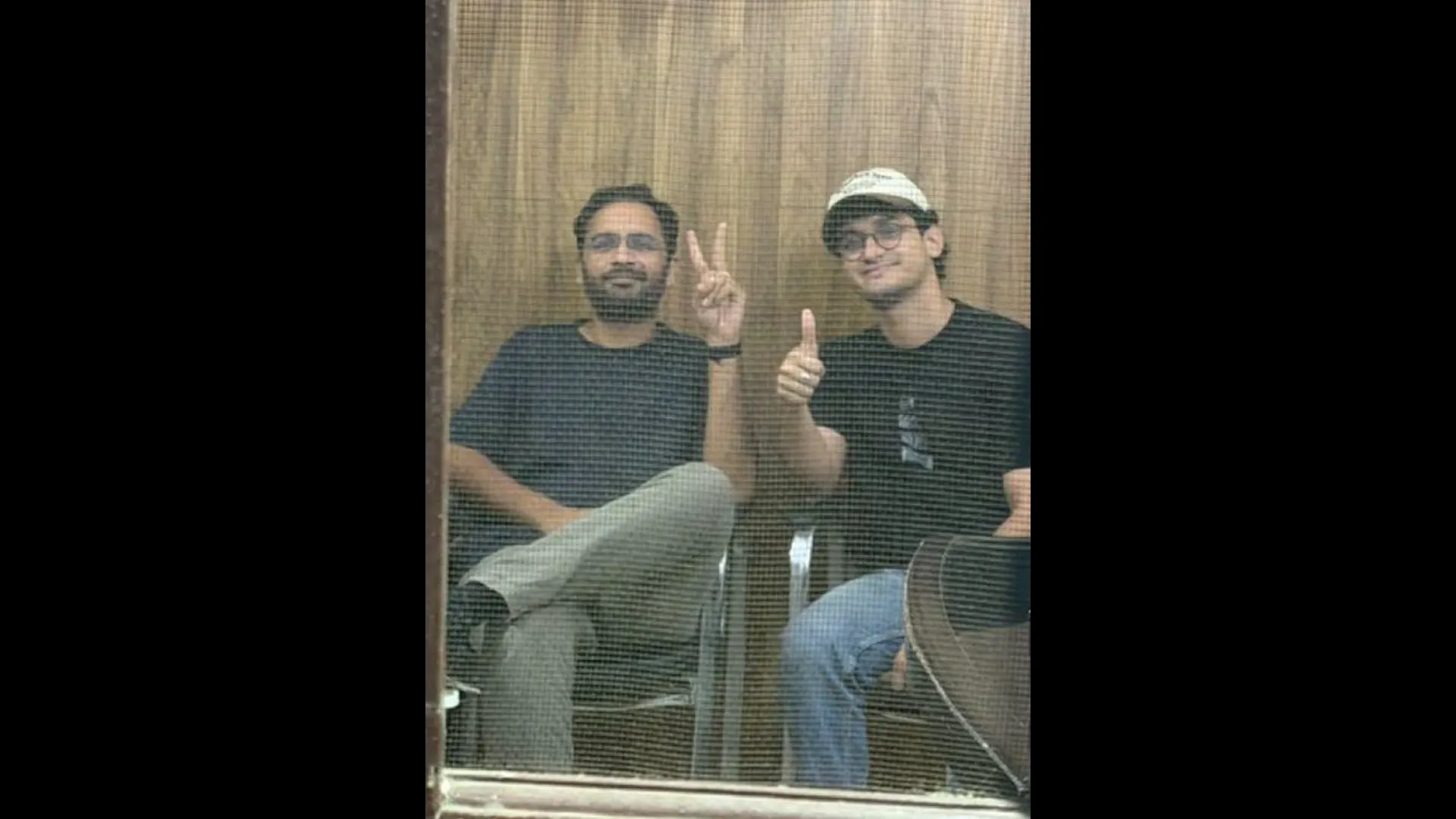
New Delhi, India — A prominent Kashmiri human rights activist who has been imprisoned for nearly five years has won a partial legal victory after being granted bail in a “terror funding” case, but remains in jail over a second case.

The Delhi High Court granted Khurram Parvez, 49, bail in a November 2021 case on Wednesday, according to legal website LiveLaw. However, he will remain in jail in a separate case from March 2023.

Recommended Stories

list of 3 itemsend of list

Parvez was first arrested about five years ago by India’s main counterterrorism law enforcement bureau, the National Investigation Agency (NIA), over accusations of “terror funding”, recruitment of rebels in Indian-administered Kashmir and mobilising protesters during a civilian uprising. The second case is also related to alleged “terror funding”.

International rights groups have widely condemned Parvez’s arrest and continued imprisonment.

His lawyer, Swati Khanna, said she hoped Parvez could be freed from jail soon if there was a “positive result” in the second case.

“We are hoping, in a month or two, he could be out,” she told reporters.

The trial has not begun in either of the cases – an issue highlighted by international rights organisations, which say the process becomes the punishment for political prisoners in India who have to wait years behind bars before even facing trial.

The conviction rate in the counterterror law, the Unlawful Activities Prevention Act (UAPA), remains low at 5 percent nationally. It dips further, to less than 1 percent, when it comes to Indian-administered Kashmir.

Prime Minister Narendra Modi’s Hindu nationalist government has been criticised for persecuting dissent and criminalising expression in Kashmir, the country’s only Muslim-majority region.

kashmir
Kashmiris protest against the scrapping of the special constitutional status for Indian-administered Kashmir by the government, in Srinagar, September 26, 2019 [Danish Ismail/Reuters]

“Khurram’s arrest proved to be the last nail in the coffin of any meaningful rights activism in Kashmir, one of the world’s most militarised zones,” said a political analyst based in Srinagar, Kashmir, who requested anonymity fearing repercussions from the authorities.

“This bail comes in a completely shallow, and nearly fictitious, trumped-up case after years in jail, and Khurram would still not walk free.”

Kashmir remains disputed between India, Pakistan, and China, which control parts of the region. Pakistan controls the northern and western portions – Azad Kashmir; and Gilgit and Baltistan. India controls the southern and southeastern parts – the Kashmir valley, including its biggest city, Srinagar; Jammu; and Ladakh. China controls the Aksai Chin area in the northeast.

The two neighbours have fought three major wars over Kashmir since the end of British colonial rule and their partition in 1947 led to the creation of Muslim-majority Pakistan and Hindu-majority India. Both countries continue to assert claims to the entire region of Kashmir.

Source link

Deadly protests in Pakistan-administered Kashmir: What’s going on? | Civil Rights News

At least 11 people were killed on Sunday during clashes between police and protesters in Pakistan-administered Kashmir’s Rawalakot city, capital of Poonch district, before a major demonstration scheduled by a banned civil society group for Tuesday.

Authorities in Pakistan-administered Kashmir deployed federal paramilitary troops and issued a strict travel advisory before the Tuesday protest, which has gone ahead despite the restrictions.

Recommended Stories

list of 4 itemsend of list

Here is what we know about the latest unrest.

What’s happening in Pakistan-administered Kashmir?

Eleven people have been killed in clashes between the police and protesters, while more than 70 have been injured. The ban on the organisation, alongside regional grievances, set off the protests.

On Tuesday, Sardar Waheed Khan, commissioner of the Pakistan side of the Poonch district, a militarised region shared between Indian-administered and Pakistani-administered Kashmir, told the news agency Reuters that four police officers and a passer-by died “after miscreants shot at them”. Six protesters were killed, he said.

Police Chief Liaqat Malik said 23 security officials and 50 protesters were among those injured in Sunday’s clashes.

On Friday, local authorities issued an advisory urging visitors to avoid travelling to the area.

“The measure is advised to save intending visitors from any unexpected situation or inconvenience,” an unnamed official said in a statement issued by the region’s Press Information Department (PID).

“The government also requests those already in the territory for sightseeing or any other purpose to leave by Friday evening so that they do not confront any unpleasant situation,” the statement added.

Kashmir is a disputed Himalayan region which is claimed in full by both India and Pakistan, with China also controlling a portion of the territory. Pakistan-administered Kashmir – known locally as Azad Jammu and Kashmir (AJK) – is governed under a semi-autonomous system, with its own prime minister and legislative assembly, but ultimate authority resting with Islamabad. Its population exceeds four million people, according to the 2017 census. It is separated from India-administered Kashmir by what is known as the Line of Control (LoC).

Interactive_Kashmir_June9_2026_Territorial_claims

The LoC is the 740km (459-mile) military border dividing the disputed Kashmir region between Indian-administered and Pakistan-administered territories.

Interactive_Kashmir_June9_2026_Line-of_control

Who is behind the protests?

The Jammu Kashmir Joint Awami Action Committee (JAAC) is a grassroots umbrella organisation that emerged in 2023 as the leader of a protest movement across the Pakistani-administered part of the region. The JAAC, led by activist Shaukat Nawaz Mir, represents traders and civil society groups.

On Friday, the local government proscribed the JAAC under a regional legislative framework in Pakistan-administered Kashmir called the Anti-Terrorism Act of 2014.

In a circular, the government’s home department claimed the JAAC “is engaged in terrorism, acted in a manner prejudicial to the peace & security of the State, involved in creating anarchy in the State by intimidating public, promoting hatred & creating sense of insecurity in society and public at large, etc”.

In the past, protests organised by the JAAC have led to violent clashes between protesters and security forces, leading to casualties.

In a video message on X responding to Sunday’s incident, Mir accused the authorities of unleashing violence in Rawalakot, saying, “The state has begun a massacre of our people in Rawalakot.”

In response, Khan, the commissioner of Pakistani Poonch, said, “The JAAC leadership is misleading the masses by terming it a massacre. The state’s action was meant to restore law and order.”

On Tuesday, the internet monitoring group NetBlocks said that its data showed that access to the web remained severely restricted in Pakistan-administered Kashmir for a third day in a row.

What is the trigger behind these protests?

These protests are against the reservation of 12 seats in Pakistan-administered Kashmir’s legislature for refugees from Indian-administered Kashmir who now live in other parts of Pakistan. If the refugees live in Pakistan-administered Kashmir, they are not eligible to contest for these reserved seats.

The region votes on July 27 to elect its next legislature, which has 45 seats in all — including the 12 reserved ones.

The JAAC is calling for the abolition of the reserved seats, arguing that all seats in the legislature must go to those who actually reside in Pakistan-administered Kashmir, and not those living in other constituencies scattered across Pakistan.

Abdul Jabbar Nasir, a journalist currently based in Karachi, but originally from a village near the LoC in the Gilgit Baltistan area, which is the majority of the Pakistan-administered Kashmir region, told Al Jazeera that the seats are reserved for those who migrated from Indian-administered Kashmir to Karachi or any other part of Pakistan in 1947.

Nasir explained that the reserved seats have existed in various forms since the late 1940s and were formalised in Pakistan-administered Kashmir’s 1974 interim constitution, which treats the region as a self-governing, autonomous state, with its own prime minister, president and courts, while defence, foreign affairs, currency and communications remain under Pakistan’s control.

“If the constitutional protection provided begins to be changed by these protesters, then I don’t think things can function,” Nasir said.

“It is essential for these seats to exist. If we abolish them, on one hand, Pakistan’s own case for Kashmiri statehood in the United Nations will be weakened, and India’s case will be strengthened,” he added.

He drew a parallel with India, noting that New Delhi historically kept a number of seats vacant in its parliament and the former Jammu and Kashmir assembly as a way of asserting that those bodies represented the entire former princely state, including areas under Pakistani control. If Pakistan now dismantles refugee representation in Pakistan-administered Kashmir, he warned, India could argue that both countries have effectively “regularised” their control over their respective portions of the disputed region.

Marathon talks between a federal ministerial team, including leaders from Pakistan and Pakistan-administered Kashmir, and JAAC leadership in late May failed to yield a breakthrough. This resulted in the JAAC announcing that the protest on Tuesday would proceed as planned.

On Sunday, a top court in Pakistan-administered Kashmir, called the Supreme Court of Azad Jammu and Kashmir, ruled that the 12 reserved seats are constitutionally protected, and a constitutional amendment would be needed to abolish the reservation.

“This ruling effectively closed the legal route for groups seeking to challenge the existing arrangement and intensified calls for protest by the [JAAC],” Raja Qaiser Ahmed, director for the Area Study Centre for Africa, North and South America at the Islamabad-based Quaid-i-Azam University, told Al Jazeera.

What are the deeper issues?

Experts say the current crisis is part of a deeper, long-running debate about governance, political representation, resource allocation and regional autonomy in Pakistan-administered Kashmir. The protest on Tuesday is the fourth such protest led by the JAAC.

“The current crisis reflects a broader and longer-term debate about governance, political representation, resource distribution, and regional autonomy in AJK,” Ahmed said.

“While the refugee-seat issue has become the focal point of the present mobilisation, it is intertwined with wider grievances that have surfaced repeatedly over the past several years.”

In September and October 2025, the JAAC officially released a comprehensive 38-point charter of demands and initiated a lockdown. The government, in response to a lockdown initiated by JAAC, imposed a complete communications blackout.

The protests had their roots in May 2023, when residents first protested skyrocketing electricity bills alongside widespread flour smuggling and acute shortages in subsidised wheat supplies. The movement hit its first major flashpoint in May 2024, when protesters set off on a long march towards Muzaffarabad. The ensuing violent clashes left at least five people dead, among them a police officer.

The 38-point charter remains the focal point of current tensions. The demands of the charter include economic subsidies, investigation of corrupt officials, social welfare and infrastructure, as well as the abolition of the 12 reserved seats.

Bilawal Bhutto-Zardari, chairman of the Pakistan Peoples’ Party (PPP), the party with the most seats in Pakistan-administered Kashmir’s Legislative Assembly, said on Sunday that he would meet Prime Minister Shehbaz Sharif to discuss the ongoing tensions in the region.

“Thirty-five out of 38 demands have been implemented,” Bhutto-Zardari said during a news conference in Islamabad, explaining that the rest of the demands are not feasible or have court orders barring their implementation.

“More fundamentally, the protests reveal an ongoing tension between constitutional arrangements linked to the broader Kashmir dispute and growing demands for greater local accountability and political participation,” Ahmed said.

“The debate is therefore not only about a specific set of assembly seats but also about competing visions of representation, governance, and the future political trajectory of the region.”

Source link

Tunisians protest for press freedom and release of political prisoners | Civil Rights News

NewsFeed

Hundreds marched in Tunisia’s capital demanding press freedom and the release of political prisoners detained during President Kais Saied’s crackdown on dissent, which has jailed opposition figures including Ennahda party leader Rached Ghannouchi.

Source link

France opens ‘war crimes’ probe into Israel’s treatment of Gaza activists | Human Rights News

French activists who took part in a Gaza-bound foreign aid flotilla accuse Israeli forces of abuse and torture.

French anti-terrorism prosecutors say they have opened a preliminary investigation into suspected “torture” and “war crimes” over Israel’s alleged mistreatment of French activists who took part in a Gaza-bound aid flotilla last month.

The probe was opened on Friday following a referral from the foreign ministry late last month, said the national counterterrorism prosecutor’s office (PNAT), after activists on the Global Sumud Flotilla accused Israeli authorities of severe mistreatment during their detention.

Recommended Stories

list of 3 itemsend of list

Israel abducted and detained some 430 activists from about 40 countries after intercepting them in international waters on May 18 as they made the latest in a string of attempts to break the blockade on Gaza, which the United Nations and human rights organisations say is illegal, describing it as a form of collective punishment.

Israeli far-right National Security Minister Itamar Ben-Gvir attracted widespread condemnation after he posted a video mocking the flotilla activists while they were bound.

France banned Ben-Gvir from entry and, like several other allies of Israel, summoned the Israeli ambassador over the incident.

Several French activists described what they said was a violent and humiliating ordeal when eight of them returned to France on May 22.

Two of the more than 30 French people who were on board the flotilla were still hospitalised in Turkiye, they told reporters.

One returnee described a soldier groping and slapping her in a dark container, and being terrified that she would be raped.

Another recounted detained activists being put in what she called a “stress position”, on their knees with their foreheads on the ground for several hours, while the Israeli national anthem played on repeat.

‘Most severe case of ill-treatment’ in a decade

Speaking to Al Jazeera late last month, Suhad Bishara, legal director at Adalah, the Israeli legal centre for Palestinian rights, said that without accountability, Israel will continue to use violence against activists.

“Based on accounts received, and drawing on over a decade of representing flotilla participants, this appears to be the most severe case of ill-treatment documented in the past 10 years, potentially amounting to torture,” said Bishara.

Adalah lawyers have been informed of repeated physical violence resulting in serious injuries, prolonged stress positions, and sexual humiliation and harassment.

The Global Sumud Flotilla said it has documented at least 15 cases of sexual abuse.

Lawyers for French flotilla activists have said they plan to file a separate complaint on behalf of their clients over allegations of rape, torture and humiliation.

The activists have refused to meet with the French government to discuss their experiences, accusing it of supporting Israel’s genocidal war on Gaza.

Asked by the AFP news agency to respond to the claims of mistreatment, the Israeli prison service said the accusations were “entirely without factual basis”.

Francesca Albanese, an outspoken UN expert on the Palestinian territory, has said the treatment of the flotilla activists “is a luxury compared to what is inflicted on Palestinians in Israeli prisons”.

Source link

Louisiana lawmakers pass congressional map favouring Republicans | US Midterm Elections 2026 News

Louisiana lawmakers have passed a new map of congressional districts designed to help Republicans pick up a seat in the United States House of Representatives.

But to do so, the map eliminates one of the state’s two majority-Black districts, both of which are represented by Democrats.

Recommended Stories

list of 3 itemsend of list

Approval in Louisiana’s legislature came on Friday. It follows an April decision from the US Supreme Court striking down Louisiana’s current map as an illegal racial gerrymander because it was drawn to include two majority-Black districts.

That ruling, in the case Louisiana v Callais, weakened the landmark 1965 federal Voting Rights Act, meant to prevent discrimination against minorities at the ballot box.

It also intensified a national redistricting battle fuelled by President Donald Trump’s efforts to protect the Republicans’ slim House majority in the midterm elections. Louisiana is one of several Southern states now redrawing their maps to help Republicans.

Louisiana Republicans had considered drawing a map giving the party a shot at winning all six of the state’s US House seats. But that would have required adding more registered Democrats to Republican-held districts, which could have potentially backfired with Republican losses.

Republicans currently hold four of Louisiana’s six congressional seats, and they are slated to pick up a fifth with the newly passed map.

It was approved on Friday by the Louisiana state Senate in a 28-to-10 vote.

‘Vicious race to the bottom’

Republican Governor Jeff Landry is expected to sign the new map into law, even as threats of more litigation emerged Friday.

A half-hour Senate floor debate revolved around Democrats contending that the proposed map is racially gerrymandered to squeeze more Black voters, who tend to be registered Democrats, into a single district.

Democratic state Senator Royce Duplessis pointed out that some fellow Southern states, such as South Carolina, had refused to redraw their maps in the middle of an election year.

He warned that Louisiana is participating in a “vicious, vicious race to the bottom” by participating in the redistricting push.

The bill’s sponsor, Republican state Senator Jay Morris, repeatedly insisted that party affiliation, not race, drove the new district boundaries.

“I purposely put more Democrats into District 2 to make the remaining districts better performing for Republicans,” Morris said at one point.

Morris said he instructed the map demographers to avoid including any data on race or including those statistics in information shared with lawmakers before the vote.

Democratic state Senator Sam Jenkins told Morris, “I think it’s a racially gerrymandered district that’s going to get us into a lot of trouble here.”

“Agree to disagree,” Morris told Jenkins.

More litigation expected in Louisiana

Louisiana is currently using a map ordered by a lower court in 2024 to comply with the Voting Rights Act. It includes a second district with a majority-Black population.

That map, however, was challenged in court, and the Supreme Court responded on April 30 by striking it down as an illegal racial gerrymander.

Landry has postponed the state’s closed US House primary slated for May 16 to allow for the new congressional map to be implemented.

He later signed a law making the US primary open and shifted the date to November 3 to allow time for Republican lawmakers to draw and pass a new map. All candidates, regardless of party affiliation, will be on the ballot for voters in their district.

The proposed map redraws a district currently represented by Democratic Representative Cleo Fields, clustering it around predominantly white communities in the Baton Rouge area and southern Louisiana.

It also adds part of Baton Rouge to a heavily Democratic, majority-Black district based in New Orleans, represented by Democratic Representative Troy Carter.

More lawsuits are expected over the new map.

Democrats say the proposed map could draw a legal challenge over racial gerrymandering, and the American Civil Liberties Union (ACLU) of Louisiana suggested Friday that it could sue, calling the map a “racial gerrymander hiding behind the thin veneer of partisanship”.

“This fight is just beginning,” the ACLU branch added.

Meanwhile, the victorious plaintiffs in the US Supreme Court’s decision criticised the legislature’s map for leaving a majority-Black district in place.

Nationwide battle over district lines

In the weeks following the Supreme Court’s decision, other Republican-controlled Southern states have seized upon the weakened federal Voting Rights Act to redraw their own congressional districts.

So far, Republicans are winning the nationwide redistricting contest, passing more partisan maps to gain House seats than Democrats.

But that doesn’t necessarily mean they will win in the narrowly divided US House in November.

Republicans think they could gain as many as 15 seats from their redistricting efforts so far, while Democrats think they could gain six seats from new districts in California and Utah.

Meanwhile, a court decision in Wisconsin on Friday could give Democrats a new avenue to pick up seats in 2028.

The liberal-controlled Wisconsin Supreme Court said it would hear an appeal of a case filed by a bipartisan coalition of business executives that seeks to redraw the state’s Republican-friendly congressional districts. Republicans hold six of the state’s eight House seats, but only two are considered competitive.

A three-judge panel dismissed the case in April. Those who filed the lawsuit weren’t seeking a ruling in time for the 2026 election. Instead, they asked the state Supreme Court to send the case back to the lower court for a trial on their claims, which would likely not take place until 2027.

Source link

ICE agent arrested over shooting of Venezuelan man in US immigration raid | Civil Rights News

The charges stem from the January 14 shooting of Julio Cesar Sosa-Celis in Minneapolis during Operation Metro Surge.

An Immigration and Customs Enforcement (ICE) agent charged with shooting a Venezuelan man during a controversial immigration raid in Minnesota has been arrested in Texas, according to United States authorities.

Agent Christian Castro, 52, was taken into custody on Friday after investigators from Minnesota tracked him down in the southern state, where he was arrested with assistance from the Texas Rangers and the Department of Homeland Security’s (DHS) inspector general’s office. He faces four counts of second-degree assault and one count of falsely reporting a crime.

Recommended Stories

list of 3 itemsend of list

The charges stem from the non-fatal shooting on January 14 of Julio Cesar Sosa-Celis in Minneapolis during Operation Metro Surge, a large-scale immigration enforcement campaign that drew widespread criticism for its aggressive tactics.

Prosecutors allege Castro fired through the front door of a residence, striking Sosa-Celis in the leg.

“Mr Castro was charged earlier this month with four counts of second-degree assault and one count of falsely reporting a crime for an incident on January 14, 2026, when he discharged his weapon through the front door of a home knowing there were people who had just run inside,” the Hennepin County Attorney’s Office said in a statement.

“The bullet travelled through the door and struck one victim in the leg before making its final impact in the wall of a child’s room.”

Minnesota officials welcomed Castro’s arrest, saying federal agents should be held to the same legal standards as everyone else.

“In Minnesota, we believe in equal justice under the law. That means nobody is above the law, including agents of the federal government,” said Minnesota Attorney General Keith Ellison. “I am pleased to hear Christian Castro has been taken into custody and will stand trial for the crimes he allegedly committed in Minnesota.”

The case became a flashpoint after federal authorities initially claimed Sosa-Celis and another man had assaulted ICE officers.

Those allegations later unravelled when video and other evidence emerged that contradicted agents’ accounts, prompting prosecutors to drop charges against Sosa-Celis and his housemate, Alfredo Aljorna.

The DHS later acknowledged that officers involved in the incident had provided false information about the shooting.

The outgoing director of ICE, Todd Lyons, also indicated a federal investigation was under way. “Lying under oath is a serious federal offense,” he said.

But through a spokesperson, ICE rejected Minnesota’s effort to prosecute the agent involved, calling the case “unlawful” and “a political stunt”.

Castro is the second federal officer charged this year in connection with Operation Metro Surge, an unusual step that reflects growing scrutiny of federal agents’ conduct during the immigration crackdown.

Hennepin County Attorney Mary Moriarty is also pursuing investigations into other incidents linked to the operation.

Operation Metro Surge began in Minnesota in December 2025. By the time Sosa-Celis was shot on January 14, hundreds of federal agents had been deployed across the Minneapolis-St Paul area in what officials described as the largest DHS operation in US history.

The crackdown ultimately prompted intense controversy, particularly after the fatal shootings of two US citizens: Renee Good on January 7 and Alex Pretti on January 24.

Against that backdrop, the investigation into the Sosa-Celis shooting further intensified scrutiny of federal agents’ tactics and conduct during the operation.

Source link

Report warns pro-Palestine protesters face legal crackdown: What to know | Protests News

A new report warns that Britain is undergoing a “deeply troubling transformation” in how it treats political protest as climate activists and pro-Palestine campaigners increasingly face lengthy prison sentences, sweeping legal restrictions and months in jail before trial.

The report, Britain’s Political Prisoners, copublished by researchers at the Centre for Climate Crime and Climate Justice at Queen Mary University of London and the campaign group Defend Our Juries, said the UK has “witnessed an increase in anti-protest powers granted to the police and the courts through legislation” that has “created a significantly more repressive legal terrain for activists engaging in civil disobedience and direct action”.

Recommended Stories

list of 4 itemsend of list

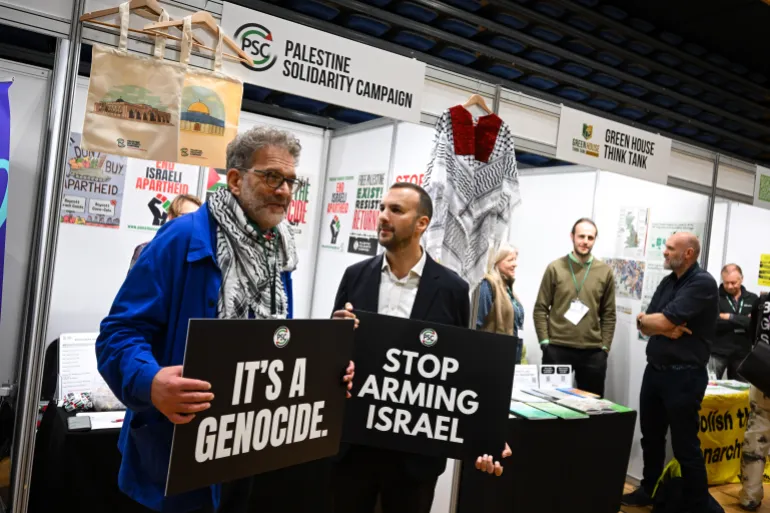
It traces the shift from crackdowns on protests by Extinction Rebellion, Black Lives Matter, Insulate Britain and Just Stop Oil to more recent prosecutions linked to Palestine solidarity actions, including campaigns targeting British factories operated by Elbit Systems, Israel’s largest weapons manufacturer.

The report, released on Tuesday, found that a combination of new laws, broader police powers and increasingly punitive court tactics has reshaped Britain’s protest landscape since 2019.

The United Kingdom has witnessed numerous mass protests and direct actions by activists to pressure the government to stop selling arms to Israel during its genocidal war on Gaza, in which more than 72,000 Palestinians have been killed, including more than 40,000 women, children and elderly.

So what does Britain’s shifting stance on protests mean for civil rights, and what’s behind the legal clampdown on climate and pro-Palestine protests?

The report painted a stark picture of how Britain’s legal system has changed in response to climate and pro-Palestine direct action campaigns through a mix of new laws, expanded police powers and what campaigners describe as increasingly punitive court tactics. What this means for protesters is longer jail sentences, stricter bail conditions and harsher treatment in the courts than was once typical for acts of civil disobedience, according to the report.

At the centre of that shift are two major laws introduced after waves of demonstrations by groups such as Extinction Rebellion and Just Stop Oil, two environmental groups that employ nonviolent civil disobedience tactics to pressure governments to address the climate crisis.

The Police, Crime, Sentencing and Courts Act 2022 transformed the old common law offence of “public nuisance” into a formal criminal offence carrying a sentence of up to 10 years in prison. This means actions that seriously disrupt the public – such as blocking roads, stopping traffic or shutting down infrastructure – can now lead to far more severe criminal penalties than before because the offence was never previously codified into legislation. Campaigners said the law has given prosecutors a powerful new tool to pursue long prison sentences against protesters.

The Public Order Act 2023 introduced a series of protest-specific offences in May of that year, largely in response to climate protests by groups including Just Stop Oil, Insulate Britain and Extinction Rebellion, whose actions included blocking motorways, occupying oil terminals and targeting infrastructure projects in an attempt to pressure the government to halt new oil and gas extraction.

Such offences under the act included “locking on”, in which protesters attach themselves to roads, buildings, vehicles or each other using chains, glue or other devices to make removal difficult. The law also criminalised tunnelling, a tactic used by some activists to delay infrastructure projects, and introduced offences for disrupting major transport networks, oil terminals and other nationally important infrastructure. 

The legislation also significantly widened police powers whereby officers may now place restrictions on even one-person protests if they are deemed disruptive. Police were also granted powers to carry out stop-and-search operations in designated protest zones without needing reasonable suspicion that someone has committed an offence – a significant expansion of police authority criticised by civil liberties groups.

But the report argued the crackdown extends beyond parliament and into the courts.

One of its central findings is the growing use of civil injunctions and contempt of court proceedings against activists.

Oil companies, arms manufacturers, councils and universities have increasingly obtained court orders banning protests near their sites, the report said.

The report identified contempt of court as the most common route to imprisonment among the 249 protest-related cases it analysed. Contempt of court usually refers to someone disobeying a judge’s order or behaving in a way the court says interferes with justice. In protest cases, it has increasingly been used against activists who ignore injunctions or refuse to follow restrictions imposed during trials.

Because contempt proceedings are handled directly by judges rather than juries, campaigners argued they allow courts to imprison protesters more quickly and with fewer legal safeguards.

Researchers also highlighted what campaigners described as the “gagging” of defendants. Judges have increasingly stopped protesters from mentioning climate concerns, Gaza, international law or their political motivations in front of juries.

Courts have often argued that juries should focus only on whether a defendant broke the law, not on the political or moral reasons behind their actions. Critics said those restrictions prevent activists from fully explaining why they protested in the first place.

Campaigners also said the legal shift reflects a broader political change, driven in part by corporate lobbying under successive Conservative governments and continuing under Prime Minister Keir Starmer’s Labour government. They argued that peaceful protest is increasingly being criminalised to protect corporate interests, regardless of wider ethical concerns about the supply of arms to Israel during its war on Gaza or opposing fossil fuel projects linked to the climate crisis.

Perhaps most controversially, the report pointed to the growing use of lengthy pretrial detention. That means protesters being held in prison before they have been convicted of any crime.

According to the findings, many activists spend months on remand awaiting trial while some Palestine Action defendants have been held for more than a year before their cases are heard in court.

In 60 percent of the cases studied, the final sentence handed down was shorter than the time defendants had already spent in custody awaiting trial.

Are lobbyists influencing the crackdown?

Tim Crosland, director of Defend Our Juries, said the findings challenge Britain’s claims of ensuring democratic protections.

“This report strips away the illusion that Britain remains committed to democratic principles,” Crosland said.

“It reveals that peaceful protesters are being jailed in ever-increasing numbers under pressure from the oil and arms industries, the Israeli government and their lobbyists.”

The report pointed to what it described as growing political and corporate pressure behind Britain’s crackdown on protest movements.

Researchers cited reports that parts of the Police, Crime, Sentencing and Courts Act may have originated in proposals from the right-wing think tank Policy Exchange. According to the investigative news site Open Democracy, Policy Exchange has previously received funding from ExxonMobil. The think tank had earlier published a report titled Extremism Rebellion, which called for new laws targeting Extinction Rebellion activists.

Al Jazeera could not independently verify the links between the think tank and the legislation.

The report further alleged that British officials came under pressure from both Elbit Systems and the Israeli government to take a tougher approach towards Palestine Action protests targeting Elbit’s UK factories.

According to correspondence quoted by the researchers, the British government said in 2022 that it had “expressed our support in recognising the attacks and boycott on Elbit UK”. The report said the issue was later raised directly with then-Foreign Secretary Dominic Raab during a visit to Israel, where he reportedly “declared that the British government is committed to stopping the attacks”.

Zoe Blackler, founding director of the London events space Kairos, said: “In the face of this clampdown on the right to peaceful protest, we need to come together in solidarity and defiance.”

Which are the cases at the centre of Britain’s protest crackdown?

The report traced Britain’s hardening response to the protests through a series of landmark cases involving climate activists and Palestine solidarity campaigners, many of whom received lengthy prison sentences or spent months behind bars before trial.

Among the most high-profile is the case of the Whole Truth Five, a group of Just Stop Oil activists jailed in July 2024 over a Zoom call discussing plans to disrupt the M25 motorway. The five were convicted of conspiracy to cause a public nuisance and initially sentenced to between four and five years in prison.

The report described the case as one of the clearest examples of the tougher approach now being taken towards protest movements. Campaigners argued the sentences were extraordinary because the activists were punished largely for planning disruptive action rather than carrying it out. Prosecutors relied on conspiracy laws, which allow people to be charged for agreeing to commit an offence even if the planned action never ultimately happens.

Four Palestine Action activists were also sentenced to between 23 and 27 months for conspiring to damage an Israeli-linked arms factory in Wales. Meanwhile, four Just Stop Oil activists received prison terms of up to 30 months over plans to disrupt Manchester Airport despite never reaching the site. A fifth defendant, Noah Crane, spent almost a year in jail on remand before later being acquitted.

Another major case involved the Filton 24, Palestine Action activists prosecuted after a protest at an Elbit Systems factory in Bristol. Some defendants were held on remand for up to 18 months before trial.

After several activists were acquitted of aggravated burglary charges, most were eventually granted bail.

The report said the case raises “serious concerns” that prosecutors used unusually serious charges to justify holding defendants in prison for long periods before trial.

The report also highlighted the Brize Norton Five, activists accused of spray-painting air force planes in protest against Britain’s military links to Israel’s genocidal war on Gaza. According to the report, the group has remained on remand since August and is not expected to stand trial until 2027, meaning some could spend close to two years in jail before a verdict is reached.

Other cases revealed the growing use of judicial “gagging orders”.

During the retrial of the Filton 6, a separate trial from the Filton 24, the judge barred defendants from mentioning Gaza, Elbit’s role in supplying weapons to Israel and their political motivations for protesting. Critics argued such restrictions make it harder for juries to hear the broader context behind direct action campaigns.

In another case, three Insulate Britain activists were imprisoned for contempt of court after defying a judge’s order not to mention the “climate crisis” or “fuel poverty” before a jury.

Despite the legal restrictions, several juries continued to acquit activists. The report pointed to acquittals involving Just Stop Oil protesters, Extinction Rebellion activists and a hung jury in the first Filton 6 trial as evidence that some jurors remained unconvinced by the increasingly aggressive prosecution of protest movements.

Kerry Moscogiuri, Amnesty International UK CEO, told Al Jazeera that “the right to protest is being eroded before our eyes.”

“We’re seeing a worrying shift where the state is using remand, sweeping injunctions and contempt proceedings to lock people up or silence them before they’ve even stood trial.

“The broader legal implications here are concerning. It’s not just about one group of activists; it’s about a systemic attempt to shut down dissent, something we’ve been ringing the alarm on for a long time.

“By replacing the presumption of liberty with preemptive legal intimidation, it creates a chilling effect, undermines the rule of law and flies in the face of basic human rights.”

Source link

Turkish opposition leader vows to stay after court ousts him | Turkey Attempted Coup News

NewsFeed

Turkiye’s main opposition leader Ozgur Ozel has vowed not to leave party headquarters after a court ruling removed him from power. Speaking to supporters in Ankara, Ozel accused judges and prosecutors of carrying out a coup attempt against his party.

Source link

Trump holds prayer rally to ‘rededicate’ US as ‘one nation under God’ | Donald Trump News

The administration of United States President Donald Trump has hosted a nine-hour prayer event on the National Mall in Washington, DC, as part of its efforts to commemorate the country’s 250th anniversary.

Sunday’s event was called “Rededicate 250: A National Jubilee of Prayer, Praise and Thanksgiving”, and it took place from 9am to 6pm Eastern US time (13:00 to 22:00 GMT).

On the jubilee’s website, organisers explained that their aim was to mark “rededication of our country as One Nation to God”.

The event featured performers, pastors and civil rights leaders, as well as Trump’s Republican allies, among them Senator Tim Scott of South Carolina.

“Our rights don’t come from the government,” Scott told the crowd. “No, our rights come from God, the king of kings.”

Members of the Trump administration, including the president himself, also recorded video messages that were broadcast from the stage.

Trump’s video showed him seated behind the Resolute Desk in the White House, reciting a speech from the Book of Chronicles that God gave to King Solomon, promising protection to his followers and destruction to those who forsake him.

Secretary of State Marco Rubio, meanwhile, used his video to describe the US as a country uniquely shaped by the “Christian idea”.

“Before the Christian West, most societies – and civilisations, for that matter – thought in stagnant cycles: the flooding of the Nile, the return of the rains, the cycle of the harvest. History for them was a wheel to nowhere,” Rubio said.

“But our faith calls us outwards into the limitless darkness of the unknown. It tells us to go forth and preach the gospel to the world as a witness unto all nations and to the ends of the earth.”

The event was not without controversy, though. Critics pointed out that only one speaker, a rabbi, was non-Christian.

Some religious leaders even rejected the event as a political stunt, rather than a sincere testament to faith.

Paul Raushenbush, a reverend and president of the Interfaith Alliance, posted on social media that his objections did not stem from an “antipathy towards religion”. Rather, he said his faith compels him to cherish the “rich tapestry of beliefs” that come together in the US.

“Rededicate 250 is a betrayal of America’s founding values guaranteed in the First Amendment – which made clear that there shall be no establishment of religion by the government and that each one of us should be free to live out our beliefs in our own way,” Raushenbush wrote.

Traditionally, the Establishment Clause of the US Constitution has been interpreted as prohibiting the government from establishing or imposing religious beliefs on its citizens.

But critics argue the Trump administration has blurred the separation between church and state, including by having regular prayer services at the Department of Defense.

Trump, however, has accused the federal government of “anti-Christian bias“. He launched a task force last year to root out the purported discrimination.

Evangelical Christians form a pillar in Trump’s right-wing base of support. The demographic is a powerful force during election seasons in the US, and Trump has sought to rally Christian voters ahead of major votes.

Their views could reshape how the US Constitution is interpreted. A survey from the Pew Research Center released last week found a slight uptick in the number of US adults who believe Christianity should be named as the country’s official religion. Seventeen percent now share that view, up from 13 percent in 2024.

That said, Pew researchers noted that a majority of Americans, roughly 54 percent, still believe in the separation of church and state.

About 52 percent also said that “conservative Christians have gone too far in trying to push their religious values in the government and public schools”.

Source link

Iranian Nobel laureate Narges Mohammadi hospitalised as health deteriorates | Human Rights News

Mohammadi has lost consciousness twice and suffered a severe cardiac crisis, her foundation has announced.

Iranian human rights activist and 2023 Nobel Peace Prize laureate Narges Mohammadi has been transferred from prison to a hospital due to a sharp decline in her health.

Mohammadi had two episodes of complete loss of consciousness and a severe cardiac crisis, her foundation announced on Friday.

Recommended Stories

list of 3 itemsend of list

“This transfer was done as an unavoidable necessity after prison doctors determined her condition could not be managed on-site, despite standing medical recommendations that she be treated by her specialized team in Tehran,” the Narges Mohammadi Foundation said.

Earlier on Friday, Mohammadi had fainted twice in prison in Zanjan in northwestern Iran, according to the foundation.

She was believed to have suffered a heart attack in late March, according to her lawyers, who visited her a few days after the incident. At the time, she appeared pale, underweight and needed a nurse to help her walk.

‘Life-threatening mistreatment’

Mohammadi, 53, has been imprisoned since December 12 after she was arrested during a visit to the eastern Iranian city of Mashhad.

In February, she was sentenced to more than seven years in prison. Her lawyer said six years of that sentence was for the accusation of “gathering and collusion to commit crimes”.

Her family said in February that her health was worsening in prison, in part because of an alleged beating she had endured during her arrest in December. They said multiple men hit and kicked her in her side, head and neck.

The Nobel committee condemned the “ongoing life-threatening mistreatment” of Mohammadi in a statement in February.

The Iranian government has not commented on the alleged attack.

Prior to her arrest in December, Mohammadi had already been serving a sentence of 13 years and nine months on charges of collusion against state security and propaganda against Iran’s government, but had been released on furlough since late 2024 due to medical concerns.

Source link

US appeals court rejects Trump’s immigration detention policy | Donald Trump News

In a 3-0 ruling, court says Trump administration misread a decades-old immigration law to justify mandatory detention.

A United States federal appeals court has rejected the Trump administration’s practice of subjecting most people arrested in its immigration crackdown to mandatory detention without the opportunity to seek release on bond.

In a 3-0 ruling on Tuesday, a panel of the New York-based US Court of Appeals for the Second Circuit said the administration relied on a novel but incorrect interpretation of a decades-old immigration law to justify the policy.

Recommended Stories

list of 4 itemsend of list

Writing for the panel, US Circuit Judge Joseph F Bianco, a Trump appointee, warned that the government’s reading “would send a seismic shock through our immigration detention system and society”, straining already overcrowded facilities, separating families and disrupting communities.

Lawyers for the Trump administration say the mandatory detention policy is legal under the Illegal Immigration Reform and Immigrant Responsibility Act, passed in 1996.

But Bianco said the government had made “an attempt to muddy” the law’s “textually clear waters”, arguing that the administration’s interpretation “defies the statute’s context, structure, history, and purpose” and contradicts “longstanding executive branch practice”.

Under the Trump administration policy, the Department of Homeland Security last year took the position that non-citizens already living in the US, not just those arriving at the border, qualify as “applicants for admission” and are subject to mandatory detention.

Under federal immigration law, “applicants for admission” to the US are detained while their cases proceed in immigration courts and are ineligible for bond hearings.

The Department of Homeland Security has been denying bond hearings to immigrants arrested across the country, including those who have been living in the US for years without any criminal history, the Associated Press (AP) news agency reports.

That is a departure from the practice under previous US administrations, when most non-citizens with no criminal record who were arrested away from the border were given the opportunity to request a bond while their cases moved through immigration court, according to AP.

In such cases, bonds were often granted to people who were deemed not to be flight risks, and mandatory detention was limited to those who had just entered the country.

Amy Belsher, director of immigrants rights’ litigation at the New York Civil Liberties Union, said the appeals court ruling affirmed “that the Trump administration’s policy of detaining immigrants without any process is unlawful and cannot stand”.

“The government cannot mandatorily detain millions of noncitizens, many of whom have lived here for decades, without an opportunity to seek release. It defies the Constitution, the Immigration and Nationality Act, and basic human decency,” Belsher said in a statement.

Conflicting rulings set stage for Supreme Court review

The New York court’s decision comes after two other appeals courts ruled in favour of the Trump administration’s policy.

Acknowledging the opposing rulings, Judge Bianco said the panel was parting ways with them and instead aligning with more than 370 lower-court judges nationwide who have rejected the administration’s position as a misreading of the law.

The split among the courts increases the likelihood that the US Supreme Court will weigh in.

The latest ruling also upheld an order by a New York judge that led to the release of Brazilian national Ricardo Aparecido Barbosa da Cunha, who was arrested by immigration officials last year while driving to work after living in the US for more than 20 years.

“The court was right to conclude the Trump administration can’t just ⁠reinterpret the law at its own whim,” Michael Tan, a lawyer for Barbosa at the American Civil Liberties Union, said in a statement.

The Department of Justice, which is defending the mandatory detention policy in court, did not respond to a request for comment.

Source link

Belarus eyes Western ties as it frees journalist Andrzej Poczobut | Prison News

President Alexandr Lukashenko is hoping to improve relations with the West once more.

Belarus has released Polish-Belarusian journalist Andrzej Poczobut from jail as part of a prisoner exchange.

Poland’s Prime Minister Donald Tusk confirmed the release on Tuesday, noting that Warsaw had been helped in a joint diplomatic push on Minsk by the United States, Romania and Moldova.

Recommended Stories

list of 4 itemsend of list

The prisoner swap with Poland saw 10 prisoners released overall, with signs that Belarusian President Alexandr Lukashenko is hoping to improve relations with the West once more. Ties have deteriorated due to his support for Russia’s invasion of Ukraine.

Poczobut was detained by Belarusian authorities in 2021 and later sentenced to eight years in a labour camp after a trial widely criticised by rights groups and Western governments as politically motivated.

Concerns had grown in recent years about his health while in detention.

“Andrzej Poczobut is free! Welcome to your Polish home, my friend,” Tusk posted on social media.

Belarus also ⁠released Polish priest ⁠Grzegorz Gawel and a Belarusian who helped Polish ‌services, whose name was not to be revealed, ⁠the Polish leader added.

‌Russians and Moldovans were also among the prisoners swapped in a “five ⁠for ⁠five” exchange.

Joint-effort

Tusk also noted that the release followed lengthy diplomatic efforts.

“The exchange at the Polish-Belarusian border is the finale of a two-year-long intricate diplomatic game, full of dramatic twists,” he said.

“It succeeded thanks to the outstanding work of our services, diplomats and prosecutors, as well as the tremendous help from our American, Romanian and Moldovan friends.”

The announcement came hours after Polish Foreign Minister Radoslaw Sikorski published a photograph of a meeting with US Special Envoy to Belarus John Coale, saying the pair had discussed “important issues”.

Coale later said that the US had helped to secure the release of three Polish nationals and two Moldovans.

“We thank Poland, Moldova, and Romania for their invaluable support in this effort, as well as President Lukashenko’s willingness to pursue constructive engagement with the United States,” he said.

“Under President Trump, America shows up for its allies and delivers diplomatic victories no one else can,” he claimed.

Poczobut, who had worked as a correspondent for the Polish newspaper Gazeta Wyborcza, has been arrested numerous times in Belarus over the past decade.

In 2011, he was fined and jailed for 15 days for his participation in protests following Belarus’s 2010 presidential election. He was later detained again in 2011 and 2012 on accusations of insulting Lukashenko.

His cases drew international condemnation, with the European Parliament, Reporters Without Borders and Amnesty International among organisations calling for his release.

Earlier this year, the European Parliament awarded Poczobut and Georgian journalist Mzia Amaglobeli the Sakharov Prize.

Source link

Bahrain strips 69 people of citizenship over Iran support | US-Israel war on Iran News

Rights groups have described the move as a “blatant abuse of power”.

Bahrain has stripped dozens of people of their citizenship for allegedly supporting Iranian attacks on the country.

Bahrain’s Ministry of Interior announced on Monday that it had revoked the citizenship of 69 people, some of whom were related, after accusing them of sympathising with Iran and “colluding with foreign entities”. The move comes after Tehran carried out strikes on facilities in Bahrain as part of the war launched against Iran by Israel and the United States.

Recommended Stories

list of 3 itemsend of list

The directive, issued by King Hamad bin Isa Al Khalifa, stated that all 69 people were “of non-Bahraini origin”. Under Bahraini law, a person can be stripped of citizenship if they are deemed to have caused harm to the country or shown disloyalty.

The London-based Bahrain Institute for Rights and Democracy described the move as “dangerous” and a clear violation of international law.

The organisation said the individuals had not been publicly identified, and it remained unclear whether they had been arrested, whether they were inside or outside Bahrain, and whether they held another nationality.

Iranian strikes

Tehran began striking its Gulf neighbours on February 28, shortly after Israel and the United States began the war by launching attacks on Iran.

Tehran accused the targeted countries of allowing the US to conduct its strikes from their territory. Iran’s retaliatory attacks reportedly caused significant damage to US military sites across the region, including a Navy base in Bahrain, which was hit by missiles and drones.

Iran ceased its attacks on Gulf neighbours on April 9, following the introduction of a ceasefire brokered by Pakistan. Negotiations to permanently end the war are ongoing three weeks later.

Bahrain’s Shia population has long accused authorities of marginalising them. During the Arab Spring in 2011, mass protests against the country’s leadership broke out. The Bahraini government has long blamed Iran for fomenting unrest against it.

Source link

US professors sue university over arrest during pro-Palestine protest | Israel-Palestine conflict News

Three professors at Atlanta’s Emory University in the United States have filed a lawsuit over their arrests during a 2024 campus protest over Israel’s genocidal war on Gaza.

Their lawsuit on Thursday argued that the university broke its own free-speech policies when it called in police and state troopers to aggressively disband the protest, making 28 arrests.

Recommended Stories

list of 3 itemsend of list

“The judicial system would find that Emory failed to protect its students, to protect its staff, to protect the educational mission of the university,” said philosophy professor Noelle McAfee, one of the plaintiffs.

“So this isn’t just about people’s individual rights. It’s our educational mission to train people in free and critical inquiry, to be able to learn how to engage with others, to be fearless.”

Laura Diamond, a spokesperson for Emory, responded that the university believes “this lawsuit is without merit”.

“Emory acts appropriately and responsibly to keep our community safe from threats of harm,” Diamond said in a statement. “We regret this issue is being litigated, but we have confidence in the legal process.”

The suit is just one example of how the nationwide wave of protests from 2023 and 2024 continues to reverberate on elite campuses.

There have been multiple instances where students and faculty have filed lawsuits against universities, arguing they were discriminated against because of the protests.

But the Emory suit is unusual. McAfee and her fellow plaintiffs — English and Indigenous studies professor Emilio Del Valle-Escalante and economics professor Caroline Fohlin — all remain tenured faculty members. None were convicted of any charges.

The civil lawsuit in DeKalb County State Court demands that the private university repay money the three spent defending themselves against misdemeanour charges that were later dismissed, along with punitive damages.

McAfee said she’s suing her employer “to try to get them to be accountable and to change”.

All three say they were observers on April 25, 2024, when some students and others set up tents on the university’s main quad to protest the war. They say Emory broke its own policies by calling in Atlanta police and Georgia state troopers without seeking alternatives.

McAfee was charged with disorderly conduct after she said she yelled “Stop!” at an officer roughly arresting a protester. Del Valle-Escalante said he was trying to help an older woman when he was arrested and charged with disorderly conduct.

Fohlin said that, when she protested against officers pinning a protester to the ground, she herself was thrown face-first to the ground and arrested, suffering a concussion and a spine injury. Fohlin was charged with misdemeanour battery of an officer.

Emory claimed that those arrested that day were outsiders who trespassed on school property. But 20 of the 28 people arrested were affiliated with the university.

The professors said that, after their arrests, they were targeted by threats and harassment, part of a pushback by conservatives who said universities were failing to protect Jewish students from anti-Semitism and allowing lawlessness.

Nationwide, however, advocates say there is a “Palestine exception” in which universities are willing to curb pro-Palestine speech and protest. Palestine Legal, a legal aid group supporting such speech, said Tuesday that it received 300 percent more legal requests in 2025 than its annual average before 2023, mostly from college students and faculty.

McAfee served as president of the Emory University Senate after her arrest. The body makes policy recommendations and has helped draft the university’s open expression policy.

She said she asked then-President Gregory Fenves in fall 2024 why Emory police weren’t dropping the charges against her and others. McAfee said Fenves told her that he wanted “to see justice”.

The open expression policy was revised after 2024 to clearly prohibit tents, camping, the occupation of university buildings and demonstrations between midnight and 7am.

Whatever the policy, McAfee said students are afraid to protest at Emory, saying the university has turned its back on what Atlanta civil rights icon John Lewis called “good trouble”.

“Students know right now that any trouble is not going to be good trouble at Emory, that they could get arrested,” she said. “So students are afraid.”

Source link