HOT cross buns; sticky, sweet, delicious and a sign that Easter is on its way – but where did the original bun come from?
Ironically, the origins are in my stomping ground of St Albans, so I went to see where it all began – and you can still buy a classic bun now.
Sign up for the Travel newsletter
Thank you!
The hot cross bun originates in St Albans – and you can still buy them todayCredit: Ricky Barnett PhotographyYou can enjoy an old school hot cross bun outside the historic St Albans AbbeyCredit: Sophie Swietochowski
In trying times, nothing quite provides comfort like a freshly-baked bun.
That was certainly Brother Thomas Rocliffe’s thinking when he handed out his humble creation to the poor and disgruntled townspeople of St. Albans back in 1361, a couple of decades before the Peasant Revolt.
The 14th century monk had just invented a treat that would become a symbol of Easter for hundreds of years to come: the hot cross bun.
The original recipe relied on a traditional bread dough, laced with exotic spices and dried fruit, which was then rolled into balls and scored with a cross symbol ahead of baking.
Today, the buns we see in supermarkets feature a piped cross, not scored, and they are a little more sweet and cake-like in flavour, relying primarily on cinnamon for spice.
If you’re keen to sample the traditional version, though, Brother Thomas’ original recipe is still being baked today within the same centuries-old walls of St Albans Cathedral, where it was first concocted.
The ingredients are a secret, of course, but those heading down this Easter may be lucky enough to uncover them with the help of one of the cathedral’s expertly knowledgeable guides.
“How much did Rocliffe charge?” my guide asks me. “One a penny? Two a penny?”
The answer is still unknown – but just shy of a fiver seems more apt in these times, I tell him.
These buns weren’t just for Easter in Rocliffe’s era. In fact, in the mid-1500s they became an emblem of protection and soared in popularity.
Everyday folk would buy them year round and nail them to their doors under the belief that it would stop their houses from burning down.
Queen Elizabeth I was not amused by such superstitions, though, so banned the sale of the hot cross bun (it’s colloquial name by this point) on all dates except for Christmas, funerals and, of course, Good Friday.
Traditions change over time and now most of the local bakeries in St Albans sell the treat at Easter only, including the cathedral’s Abbot’s Kitchen.
You can still try the original hot cross recipe in St AlbansHead baker Graca at Abbots Kitchen makes 120 buns everyday at Easter timeOther local bakeries sell the sweet treats too – like ProtoCredit: Sophie Swietochowski
Head baker Graca whips up a whopping 120 of these buns a day at this time of year and locals will order in batches – a sign that they’re still adored in these parts.
Round, fluffy and fresh out of the oven, the original Alban Bun is definitely a massive step above the supermarket variations.
I love its breadlike flavour and whack of cardamom. The fact that it’s not overly sweet means you can eat three in a row – what a win.
After tucking into them, make sure to explore the rest of the cathedral.
Daily tours are thoroughly fascinating – and completely free, although donations are heavily relied upon, so don’t forget to pop some cash in the box on your way out.
If you’re looking for even more historic fun to sink your teeth into, the city’s Verulamium Park is brimming with Roman history and the remains of old, slightly battered walls can still be seen as you wander among the greenery.
Make sure to detour for a stroll along the River Ver, too, one of few remaining chalk rivers in the UK.
Then you can reward your efforts with a pint at one of the many cute and quirky pubs.
St Albans is reportedly home to more pubs per square mile than any other city in the UK, so it would be rude not to sample its tipples.
The Boot, in the city centre serves proper ales alongside its Mexican themed food menu, meanwhile Ye Olde Fighting Cocks, at the foot of the cathedral’s hill, claims to be one of the oldest boozers in the country and has a lovely pub terrace.
I wonder if Brother Thomas ever sunk a few in here.
It’s definitely worth trying some of the other bakeries too
Here’s where you’ll find the best buns in St Albans…
St. Albans is not short of excellent bakeries and in the name of good journalism I made sure to try them all.
Here’s two of my other picks.
Proto Artisan Bakery Sticky on the outside, with a glossy glaze, and fluffy on the inside, these buns look more akin to the ones you see in the shops, but are ten times more flavourful.
Baked fresh everyday, they are crammed with a great amount and variety of dried fruit and soft and light in texture, it needs nothing more than a slab of butter.
Glaze Bakery A minutes’ walk from the cathedral’s entrance, this bun is as delicious as the above.
The cross is not piped, but made from laminated dough that puffs up in the oven. The shiny crust is sprinkled with sugar crystals. Owner Oli recommends toasting it and eating with Marmite. BLOB: See enjoystalbans.com or visit @enjoystalbans on social media.
Roy Hodgson said there was much he missed about football after coming out of retirement to return to the dugout as caretaker manager of Bristol City.
The 78-year-old accepted the role at the Championship club until the end of the season following the sacking of Gerhard Struber on Friday.
The former England manager has not worked since leaving Crystal Palace in 2024 and confirmed he will only be in the position for City’s seven remaining games, insisting he was “too old” for a long-term position.
“You don’t work at top-level football at my age really very often,” Hodgson said.
“I’d come to terms with that quite well then something like this happens and you realise that there’s a lot I do miss.
“Having this opportunity to get a feel for that again, and have a chance to work with a good group of players – it seems from what I saw this morning – and to relive being on the grass and doing the coaching, which I’ve always been really keen to do, and with a group of players without necessarily having all the drawbacks.”
Hodgson returns to the club where he began his career in 1982, spending four months as Bristol City manager during a turbulent financial time when the club nearly went out of business.
“I’ve been perfectly happy in my retirement period – a little bit bored from time to time – but a challenge like this was hard to turn down,” Hodgson said.
“Plus the fact it is Bristol which is a lovely city and I do have fond memories of my time here, despite the fact I shouldn’t have fond memories – I should be having nightmares.”
Witnesses have captured intense US-Israeli attacks on Isfahan, a city in Iran with a population of 2.3M, and home to the Badr military airbase. Huge explosions and fires have lit up the night sky.
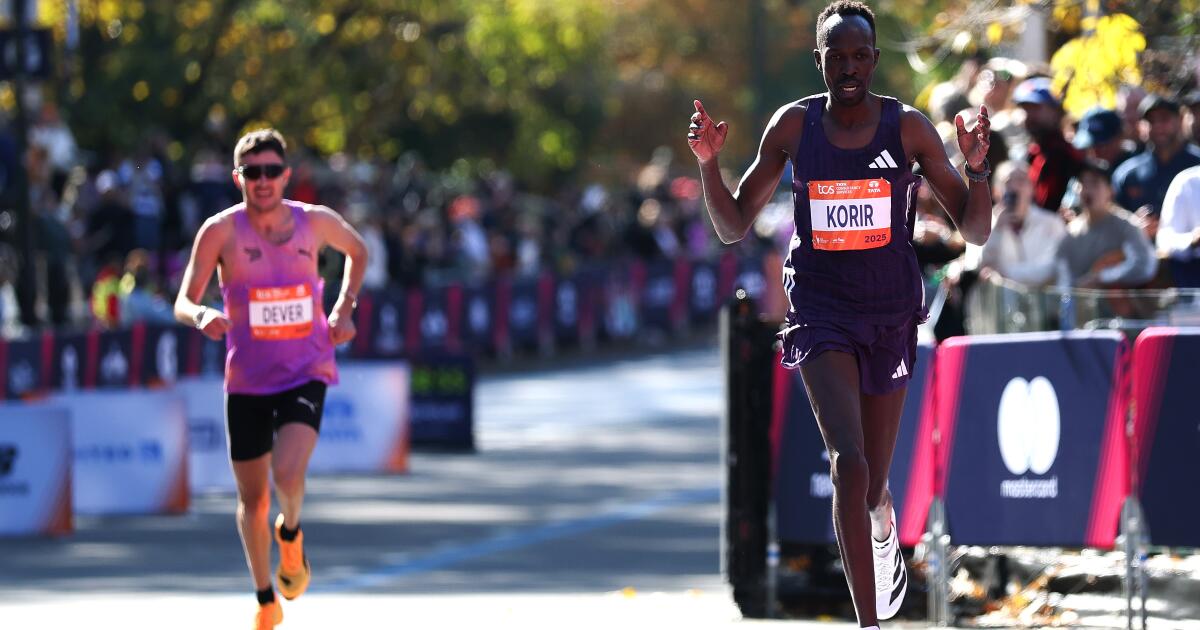
Kenyan distance runner Albert Korir has admitted to doping, prompting officials on Monday to ban him for five years.
Long a fixture at the New York Marathon, Korir tested positive for a blood-boosting substance in three separate samples taken in October while he was training to run in the New York Marathon on Nov. 2. He finished third in the race.
A verdict issued by the Athletics Integrity Unit said that Korir’s results since October will be disqualified, including that third-place finish in New York.
The three positive results provide “clear evidence of the athlete’s use of a prohibited substance on multiple occasions which is expressly identified in the definition of aggravating circumstances,” the verdict stated.
The punishment was reduced by one year because Korir, 32, admitted to taking a banned substance without requesting a hearing. He is banned until January 2031.
Korir will keep his 2021 New York Marathon title. He also was runner-up in 2019 and 2023, and finished third in 2024 in addition to 2025. His other first-place finishes came in the 2019 Houston Marathon, the 2017 Vienna Street Race and the 2019 and 2025 Ottawa Race Weekend.
Korir tested positive for Continuous Erythropoietin Receptor Activator (CERA), a long-acting agent that stimulates red blood cell production much like the banned substance EPO. It is used legally to treat anemia associated with chronic kidney disease and typically is administered once every two to three weeks.
The World Anti-Doping Agency said in October that Kenya had made “significant” progress in tackling doping but the country remains on probation while it seeks to improve its monitoring.
The action by WADA occurred after Kenyan runner Ruth Chepngetich, the world marathon record holder, was banned for three years after admitting the use of Hydrochlorothiazide (HCTZ), a banned diuretic used as a masking agent.
ONE of the UK’s most popular seaside towns is undergoing a £750,000 revamp to its historic promenade.
Brighton has long been a popular destination for holidaymakers but its famous Victorian promenade has been partially closed to the public since 2012 following safety concerns.
Sign up for the Travel newsletter
Thank you!
Brighton’s famous Victorian promenade has been partially closed to the public since 2012 following safety concernsCredit: AlamyBut it is currently having £750,000 spent on it and will reopen later this yearCredit: purcelluk.The structure was originally built to create a sheltered promenade for Victorian touristsCredit: purcelluk.
Now, the promenade is expected to reopen this winter after an extensive restoration project.
Known as the Madeira Terrace, the historic promenade structure stretches 865metres-long with 151 large arches and was built between 1890 and 1897.
Parts of the cast iron railing decorations depict Poseidon – the Greek god of the sea – and Aphrodite – the goddess of love – as well.
The structure is also Grade II listed and thought to be the longest continuous cast-iron structure in the UK.
The first phase of the project includes restoring 28 of the arches between the Royal Crescent steps and Concorde 2, as well as installing a new lift.
The new lift will create step-free access to and from Madeira Drive.
Work on the lift has already begun with the next stage involving 20,000 bricks being placed around a frame that has been built.
Parts of the cast iron structure of Madeira Terrace have already been returned to the promenade after being sent to a specialist foundry for repairs.
The structure was originally built to create a sheltered promenade for Victorian tourists and was designed by Philip Lockwood – the same man behind the Bandstand, also known as the Birdcage, on Brighton seafront.
As wealthy visitors arrived by train, the terrace would allow them to promenade along the beach no matter the weather.
Over the decades it has become a key part of Brighton’s image as well as appearing in a number of productions such as films Wimbledon (2004) and TV series Dr Who.
Councillor Julie Cattell said: “We’re moving forward with very visible and eye-catching elements of the restoration, and I know residents and visitors are enjoying seeing the structure take shape.
“There has been huge interest in the work being done to create the lift and residents will continue to see real progress being made over the coming months.
“It is great that so many people are really captivated and engaged in this project – and have such goodwill towards the work being done.
As wealthy visitors arrived by train, the terrace would allow them to promenade along the beach no matter the weatherCredit: purcelluk.Parts of the cast iron railing decorations depict Poseidon – the Greek god of the sea – and Aphrodite – the goddess of love – as wellCredit: Alamy
“We know Madeira Terrace is a vital part of our city’s architectural heritage and is something people really care about.
“That is partly why we are taking a firm, heritage-led approach.
“Restoring the existing structure does take more time than simply replacing it – particularly with the testing required – but it is the correct approach.
“We’re determined to get this restoration right – and see Madeira Terrace once again become a thriving and important part of our iconic seafront.”
The renovations to the terrace are also part of a wider multi-million-pound project that will develop the area around the Brighton Centre – a conference and exhibition space where previously The Who, Queen and Bob Marley have performed.
The project includes opening a new lift that will create step-free accessCredit: Getty
Dubbed the Waterfront Project, work will expand Churchill Square shopping centre as well as establish a new conference centre and entertainment venue.
In 2024, plans were also submitted to widen the beach in Brighton’s neighbour – Hove.
The plans were later approved for the coastal defense works, which includes widening and adding new pebbles and groynes to the beach.
The city has seen a huge influx of new restaurants open in the first few months of 2026. From street food to Michelin-starred dining, there’s something for every foodie
Freshly baked kanelbullar (traditional Swedish cinnamon buns) in a Gothenburg bakery window(Image: Getty)
Some people travel for culture, some for sandy beaches and sunshine, and others for culinary experiences. If you’re passionate about discovering exceptional dining spots, there’s one overlooked destination that deserves a place on your bucket list.
In the first months of the year, this Swedish destination has welcomed 20 new eateries to complement its already celebrated Michelin-starred establishments. Beyond its thriving food scene, this city also boasts a theme park, a warm café culture and genuinely beautiful streets perfect for exploring.
This remarkable city is Gothenburg, Sweden’s second-largest urban centre. Frequently overshadowed by its better-known counterparts Stockholm or Malmö, it absolutely shouldn’t be.
The city boasts five restaurants with a single Michelin star and one holding two stars. These establishments serve everything from Japanese cuisine to spectacular seafood dishes.
If you’re prepared to splash out on a truly memorable dining experience, the two-starred establishment Signum must feature on your itinerary.
The menu concentrates on seafood and fish complemented with produce grown in the on-site gardens.
All the ingredients are from Scandinavia, and a meal here will comprise 18 exquisitely crafted courses, all featuring seasonal produce.
If you’re the type who prefers to meander through the city, sampling local delicacies along the way, then you should schedule your visit for May.
Gothenburg is set to transform its iconic 19th-century fish market into a brand new seafood festival. The entire building, including its floating outdoor terrace, will be converted into a seafood extravaganza, with top-notch vendors showcasing their offerings, reports the Express.
Also launching in May is Vassen Market, a sprawling 6,500 square metre waterfront haven featuring street food, cocktails, live music, art pop-ups and even skateboarding.
Constructed entirely from recycled containers and encircled by verdant pocket parks, it’s the ultimate spot for a leisurely weekend stroll.
Later in the year, the Slakthuset district will play host to a three-day neighbourhood festival brimming with music, food and local beverages. Scheduled for July, this event perfectly encapsulates the relaxed community spirit of the city.
For those who prefer thrill rides over wine tasting, Gothenburg’s Liseberg is a must-visit. Opened in 1923, this theme park is the largest in Scandinavia and draws visitors from far and wide.
Boasting 42 attractions, there’s something to suit everyone’s tastes, promising an exhilarating day out. Just remember to don your most comfortable walking shoes, as the park spans a whopping 42 acres.
RABAT, Morocco — A Moroccan court sentenced a rapper known for his criticism of the country’s ties with Israel and accusations of government corruption to eight months in prison, the latest in a string of penalties against young musical artists.
Souhaib Qabli’s songs sharply criticize Morocco’s 2020 decision to normalize ties with Israel in an accord brokered by the first Trump administration. His lyrics also call out problems with public services and restrictions on freedom of speech, grievances also voiced by Morocco’s Gen Z protesters last year.
The judge ruled Thursday that Souhaib Qabli, a 23-year-old rapper, was guilty of insulting a constitutional body, his attorney Mohamed Taifi told the Associated Press. Qabli, who is a member of Al Adl Wal Ihsane, a banned but tolerated Islamist association, was also fined $106.
“The court did not clarify what it meant by a constitutional body. No specific party was identified in the case file, and there are many constitutional institutions,” Taifi said.
The attorney said that his client is appealing the verdict. He also said Qabli was cleared of other charges, including insulting public officials and disseminating false allegations.
Before the public hearing, dozens of supporters gathered outside the court in Taza, a city in north-central Morocco about 160 miles from the capital, Rabat, holding banners calling for Qabli’s release. Rights groups in the North African kingdom have described the case as a political measure aimed at curbing freedoms.
Qabli, known by the stage name L7assal, was arrested earlier this month and remained in custody until the court delivered its verdict. He was studying refrigeration and air conditioning at a vocational training institute in addition to his music career.
His attorney said that Qabli was questioned in court about his songs and social media posts. Qabli said he had no intent to insult any constitutional body and was expressing his views through his music.
His songs include “No to the Normalization,” referring to Morocco’s decision to normalize ties with Israel in the U.S.-brokered Abraham Accords in 2020, in exchange for Washington’s recognition of Morocco’s claim to the disputed Western Sahara territory.
The move was criticized by Morocco’s pro-Palestinian supporters and sparked large protests in several cities. While authorities allowed the rallies, they have arrested activists who criticized the decision.
Morocco’s constitution generally guarantees freedom of expression, and the country is seen as relatively moderate compared with others in the Middle East. Yet certain types of speech can trigger criminal charges, and Morocco has seen tightening restrictions on dissent, including against journalists and activists.
Good morning, and welcome to L.A. on the Record — our City Hall newsletter. It’s Noah Goldberg, with an assist from David Zahniser and Rebecca Ellis, giving you the latest on city and county government.
Adam Miller is running for mayor.
You might not know that, and you might not even know who he is — and his campaign team wouldn’t blame you.
In fact, the Miller team’s own internal poll of 800 likely voters shows the tech entrepreneur with just 6% support, behind incumbent Mayor Karen Bass, City Councilmember Nithya Raman, conservative reality TV star Spencer Pratt and leftist Rae Huang. Only 13% of Angelenos even have an opinion of Miller, with 7% coming down on the positive side and 6% negative.
Miller’s pollster, Jefrey Pollock, admits it’s not often that a campaign brags about a humble 6% backing their candidate.
But during a video conference with reporters, Pollock argued that Miller’s support rises along with his name recognition. When likely voters were given more information about the candidates, he shot up to 20%, according to the poll. When provided with additional positive information about the candidates, Miller finished first, with 27%.
“Adam is the one who jumps up,” said Pollock, who runs Global Strategy Group.
After voters got the first dose of information, 22% supported Bass, down from 26%; 21% went with Pratt, up from 14%; 14% backed Raman, up from 12%; and 8% chose Huang, down from 9%.
In a poll earlier this month by the UC Berkeley Institute of Governmental Studies, co-sponsored by The Times, Miller also came out with 6% support. Bass was supported by 25% of voters, while Raman drew 17% and conservative reality TV star Spencer Pratt came in third at 14%. About a quarter of voters were undecided.
Paul Mitchell, vice president of the bipartisan voter data firm Political Data Inc., said the Miller campaign poll was compelling.
“What I see is a good argument that he can make the runoff,” Mitchell said. “This is a real deal.”
The question for Miller and his team then becomes, how can he introduce himself to more voters before the June 2 primary?
Miller is the former CEO of Cornerstone OnDemand, a global training and development company he built over the course of more than 20 years. The publicly traded company was eventually sold to a private equity firm for $5.2 billion. He is also a co-founder of Better Angels, a nonprofit focused on preventing homelessness and building affordable housing.
Among everyday Angelenos, he’s a no-name.
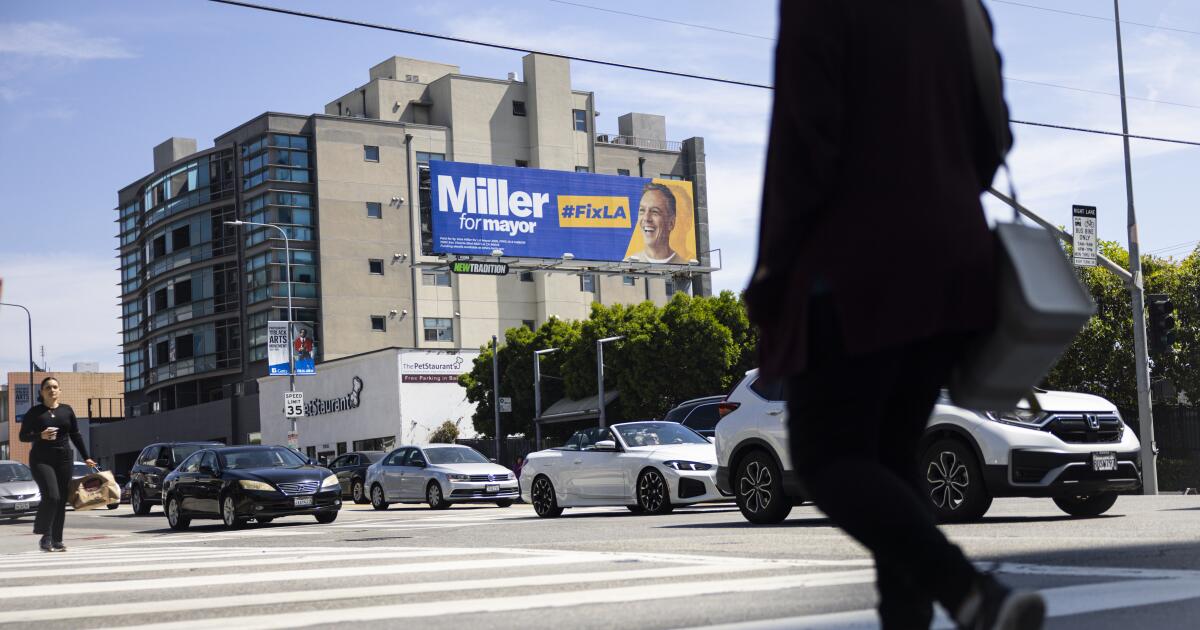
A television, social media and outdoor billboard advertising campaign launched this week should help change that, Miller’s team said. They said the “omnichannel” blitz cost seven figures but did not provide an exact amount.
The first billboard went up this week at Bundy Drive and Wilshire Boulevard, not far from Miller’s Brentwood home. More are expected next week in the San Fernando Valley.
Miller said he personally loaned his campaign a “majority” of the money for the ad blitz.
How much Miller is willing to spend on his mayoral ambitions?
In 2022, billionaire developer Rick Caruso threw more than $100 million of his own money into his campaign against Bass during the primary and runoff elections. He still lost by more than 10 percentage points.
“Obviously, we have the benefit of hindsight that that strategy did not work,” Miller said of the Caruso campaign. “There’s reasons my candidacy is different.”
For one thing, as opposed to Caruso, who was a Republican before registering as a Democrat to run for mayor, Miller is a lifelong Democrat. (That said, Miller voted for Caruso in 2022, said his spokesperson, Jaime Sarachit).
Miller is a moderate who sees himself as leader who gets things done. He believes the LAPD needs a minimum of 10,000 officers, up from about 8,700. He thinks the city should use anti-encampment laws to move homeless people away from sensitive areas like schools and day cares.
Miller would not directly answer a question about how much of his own money he will spend on his campaign. He has so far loaned it $2 million, “to get it up and running,” Sarachit said.
“That’s a significant sum, obviously,” said longtime L.A. political consultant Bill Carrick. “It’s a lot more efficient to write a check from your personal account than it is to go raise $2 million.”
But Miller said his campaign will largely be “traditionally financed,” meaning he plans to fundraise.
You’re reading the L.A. on the Record newsletter
Sign up to make sense of the often unexplained world of L.A. politics.
By continuing, you agree to our Terms of Service, which include arbitration and a class action waiver. You agree that we and our third-party vendors may collect and use your information, including through cookies, pixels and similar technologies, for the purposes set forth in our Privacy Policy such as personalizing your experience and ads.
State of play
— AO-K’ed: Metro’s board on Thursday unanimously approved a new route for a rail line that would extend from South L.A. into West Hollywood — a milestone deal struck after last-minute negotiations between Bass and local leaders. The K Line northern extension would link with four major rail lines and increase the number of riders to 100,000 a day.
— SOCIALIST SNUB: The Los Angeles chapter of the Democratic Socialists of America will not endorse a candidate for mayor. Last weekend, the group voted on whether to reopen its endorsement process and consider backing Huang or Raman but ultimately decided to stay out of the fray for the June primary.
— GUNNING FOR COUNCIL: Leftist City Council candidate Estuardo Mazariegos was convicted of misdemeanor gun possession in 2009. He thinks the conviction is a strength, not a weakness.
— SMALLER BIGGER: On Tuesday, the City Council adopted a strategy that would delay the effects of SB 79 citywide by upzoning 55 single-family and low-density areas, allowing for buildings of four to 16 units that are up to four stories tall. Under SB 79, buildings adjacent to certain transit stops can be up to nine stories.
— NOT UP FOR DEBATE: USC canceled its Tuesday gubernatorial debate, a stunning about-face after days of fiery criticism that every prominent candidate of color was excluded. Although the university defended the methodology used to determine who was invited, it ended up calling off the event with less than 24 hours’ notice.
— PHANTOM SUIT: A man said he has no idea how he became a plaintiff in the county’s $4-billion payout for sex abuse in juvenile halls and foster homes. His lawsuit, which he says was filed without his consent by Downtown LA Law Group, deepens questions around possible fraud in the nation’s largest sex abuse settlement.
— TAX TAKEAWAY: The proposal from a group of business leaders to repeal the city’s business tax has qualified for the November ballot. Organizers said their success — gathering twice as many signatures as needed — shows that voters “want affordability and fairness to be addressed immediately.” Labor unions have vowed to fight the proposal, which would rip an $800-million hole in the city budget.
— HOUSING HUDDLE: Three of the mayoral candidates — Miller, Huang and Raman — took the stage Monday for a downtown forum. The trio went back and forth on housing, transportation and other issues, particularly the future of Measure ULA, the so-called mansion tax. Bass did not attend, citing a previous engagement in New Orleans, where she held a campaign fundraiser with U.S. Rep. Troy Carter (D-La.) and the city’s mayor, Helena Moreno. Pratt also did not show.
QUICK HITS
Where is Inside Safe? The mayor’s signature program visited Skid Row in Councilmember Ysabel Jurado‘s district, moving 25 people indoors.
On the docket next week: The City Council is on recess next week.
Stay in touch
That’s it for this week! Send your questions, comments and gossip to LAontheRecord@latimes.com. Did a friend forward you this email? Sign up here to get it in your inbox every Saturday morning.
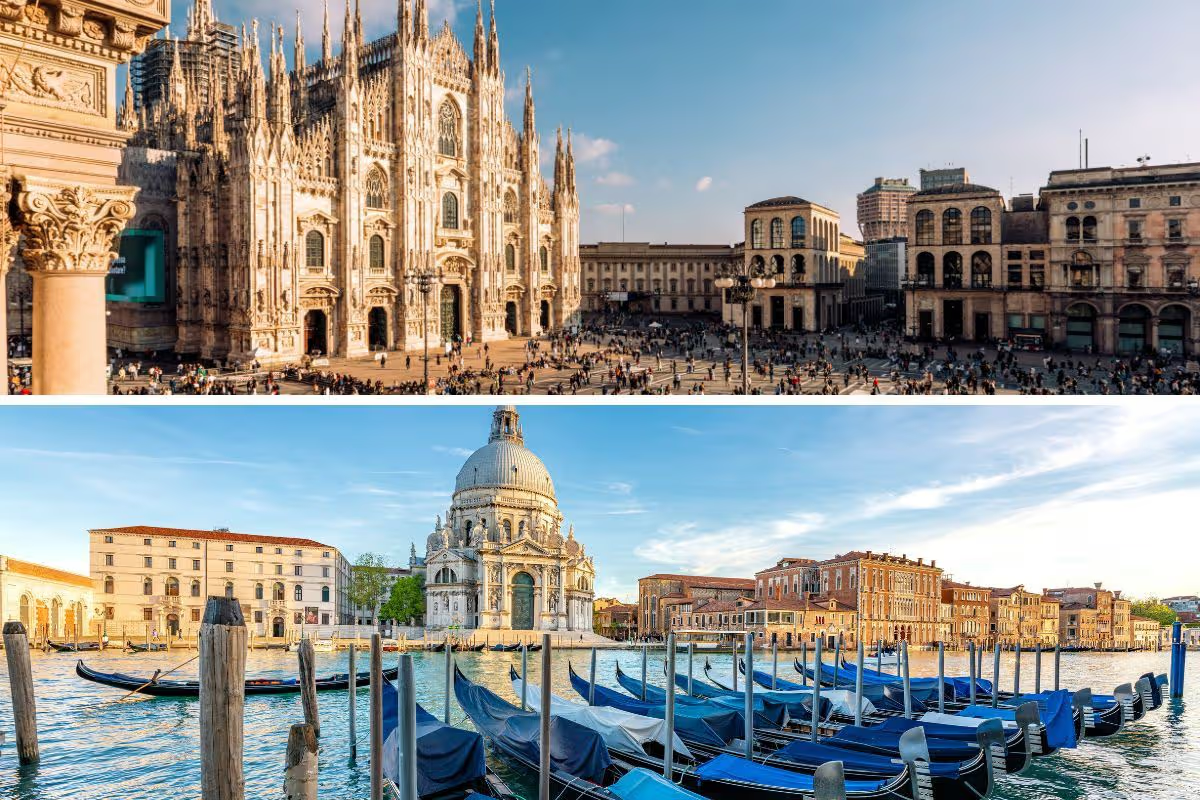
Why limit yourself to one beautiful, romantic Italian city when you can pack two into the same break and see, discover, enjoy and eat twice as much?
This article contains affiliate links, we will receive a commission on any sales we generate from it. Learn more
A tale of two cites: how to cover Milan and Venice in one romantic city break(Image: Getty)
Italy has so many fascinating cities to explore and it’s incredibly easy to hop between them, and that’s exactly what I found out on a dual-destination interrail trip to Milan and Venice, reports Abby Wells
With its biannual fashion weeks and designer shops galore, Milan is known as the fashion capital of the world – and as something of a seasoned shopaholic, I was looking forward to discovering its glamorous side. Our base while in Milan was Avani Palazzo Moscova, a historic hotel in the Porta Nuova district that housed the city’s first railway station back in 1840.
Its rooms are chic and modern, with everything you need for a comfortable stay.
A number of experiences can be booked through the hotel, helping to make your stay an unforgettable one. First up for us was a two-hour tour of the city in a vintage Fiat 500, during which our driver, Milan-born Federico, took us to places you wouldn’t normally see.
One hidden gem was Villa Invernizzi, a serene oasis in the middle of the bustling city where you can catch a glimpse of flamingos roaming in the gardens. It was great fun whizzing around with the car’s sunroof open, and a must to get a feel for the city.
The next day we had a personalised cosmetics experience at City Lab Cosmetics, where we got to make our own lipstick. Here experts help you discover a shade suited to your skin colour, and you get to choose the finish, formula, scent and even the shape of your lipstick, and see it being made from scratch in the lab – a unique experience.
Then, finally, we got to do some shopping, courtesy of an expert-led tour around some of Milan’s best vintage boutiques. It started with the bargain ones, where I picked up a gorgeous little black bag for five euros, before finishing in a more upmarket store filled with Chanel dresses and Gucci bags (sadly out of my price range).
All the sightseeing certainly helped me work up an appetite and the food I had in Milan was delicious. I mainly stuck to the Italian staples of pasta and risotto. Avani Palazzo Moscova’s restaurant specialised in fish, but our tiramisu, made at the table, was a particular highlight.
Another restaurant definitely worth a visit is Osteria del Gambero Rosso, barely a five-minute walk from the hotel and where the friendly atmosphere made for a really special evening.
Fitting Venice into the same trip
Then it was on to our next stop, Venice, a speedy and easy two-hour train ride away. We walked out of the station to a postcard-worthy view of the canal in all its glory, with gondolas and water taxis going up and down the waterways. It felt like walking onto a film set.
A short walk away was our hotel, Avani Rio Novo Venice, which is tucked away in a sought-after neighbourhood where Venetians actually live, away from the main tourist drag. Here I enjoyed kicking back and enjoying the views of the canal through my room’s floor-to-ceiling windows.
How to cover the classic sights of Venice
As it was my first time in Venice, a gondola ride was top of my hit list and it didn’t disappoint. Our gondolier was lovely, happily entertaining us with facts and answering all our questions. One top tip is to make sure you have cash on you, as it’ll often mean you pay a bit less – and the more of you there are, the cheaper it is. As in Milan, the Avani hotel here can book various experiences to show off the best of Venice.
First, we paid a visit to Lunardelli Venezia, a workshop specialising in making wooden furniture and objects. Here we saw the intricate processes behind creating the exceptional designs and also had a go at crafting a piece ourselves.
The hotel also arranged a water taxi to the interconnecting Murano islands, an area known for its glass-making workshops.
The one we visited even supplies beads for Milan Fashion Week. Here we learnt to make our own beads to take home as a one-of-a-kind souvenir. I couldn’t wait to wear mine on a necklace.
Another must-visit in Venice is St Mark’s Square and we made our way there through narrow alleys and over the historic Rialto Bridge, which crosses the Grand Canal at its narrowest point. Obviously popular, it was very busy, but getting to St Mark’s Square as the sun was setting had a magical feel.
Both of these iconic cities exceeded all my expectations, and the country’s excellent rail network makes city-hopping a smart option when planning your next Italian escape.
WASHINGTON — When President Trump ordered immigration raids in Los Angeles last June, only a handful of those arrested were violent criminals. The sweeps split families, cost businesses millions of dollars and drove many undocumented residents into hiding.
Activists protested the Immigration and Customs Enforcement actions, prompting the president to deploy thousands of federal troops in what he called a security operation. A federal judge called it unlawful and said the deployment caused “greater harm” to the city.
Now, Trump wants a redo.
At a Cabinet meeting Thursday, he called on the mayors and governors of several blue cities and states to allow troops to “come in and stop the crime,” pointing to purported successes in Washington, Memphis and New Orleans.
“Crime is down 75% in a short period of time,” Trump told his top advisors. “We could do that for L.A. and we could do that for, frankly, San Francisco.”
The president framed the deployments as both a crime-fighting and immigration enforcement tool, saying that federal authorities can remove people from cities in ways local officials cannot.
“We can do it much more effectively, because [local leaders] can’t do what we do,” Trump said. “All the time, people come up to me … and they say ‘thank you so much.’ I know immediately what they’re talking about. They’re able to walk to work.”
Trump also said this week that he would consider deploying the National Guard at airports to assist with mounting security delays amid a 40-day partial government shutdown.
The renewed call comes after a series of controversial federal interventions in cities across the country. In Washington, Trump has repeatedly touted a visible security presence near federal buildings, crediting it with improving public safety, though local officials and analysts have debated how much of any decline in crime can be attributed to his order.
U.S. Marines stationed outside the federal detention center in downtown Los Angeles in June.
(Allen J. Schaben / Los Angeles Times)
In January, Trump threatened to invoke the Insurrection Act to deploy troops to Minneapolis during the civil unrest that followed the fatal shooting of Renee Good by a federal immigration agent. The Pentagon prepared active-duty troops for a possible deployment, but they were ordered to stand down following the shooting of a second Minneapolis civilian, Alex Pretti, the same month.
Immigration sweeps in Los Angeles targeted workplaces, neighborhoods and churches, stirring widespread panic and forcing many undocumented residents — including those with long-term residency and native-born children — into hiding. As a result, businesses reported sharp declines in revenue and customer traffic. A county analysis found that 82% of surveyed businesses experienced negative impacts, with some losing more than half their income amid workforce shortages and traffic reductions.
During the fallout, Mayor Karen Bass condemned Trump’s deployment of some 4,000 California National Guardsmen and 700 U.S. Marines.
“Deploying federalized troops on the heels of these raids is a chaotic escalation,” she said. “The fear people are feeling in our city right now is very real — it’s felt in our communities and within our families, and it puts our neighborhoods at risk. This is the last thing that our city needs.”
The president called the occupation off after U.S. District Judge Charles Breyer ruled that control of the California National Guard should be returned to the governor, rejecting the federal government’s authority to maintain control indefinitely. A similar Supreme Court ruling effectively ended federalized deployments throughout the country.
“The judges are really hurting this country,” Trump said Thursday. “Frankly, the justices — the Supreme Court — has really hurt our country, too.”
At the meeting, Trump also narrowed his comments on San Francisco and its mayor, Daniel Lurie.
“San Francisco was a great city, could quickly become a great city again,” Trump said. “But we can do it much more effectively.”
Last year, Trump considered carrying out similar federal law enforcement operations in the city. He backed off after a somewhat conciliatory phone call with Lurie, in which Trump said the mayor asked him “very nicely” to call off the deployment. Afterward, he agreed to give the newly elected mayor “a chance” to address crime in the city.
“In San Francisco, crime is down 30%, encampments are at record lows, and our city is on the rise,” Lurie said in a statement Thursday. “Public safety is my number one priority, and we are going to stay laser focused on keeping our streets safe and clean.”
A spokesperson for Lurie’s office said the two have not spoken since that October conversation, indicating Trump’s latest remarks do not reflect any new request or ongoing negotiations. Even so, the president struck a measured tone toward the San Francisco mayor on Thursday. He said Lurie is “trying very hard” but insisted federal intervention would get the job done faster.
Whether any Democrat-led city will take Trump up on that offer remains to be seen. City leaders have previously resisted federal deployments, arguing they undermine local control and risk inflaming already tense situations.
The White House did not respond to questions about whether any current plans exist to redeploy federalized troops to California cities.
Times staff writer Melissa Gomez in Los Angeles contributed to this report.
A YouTuber who visited Riga, Latvia, was stunned by the four-star hotel prices in the city voted one of Europe’s cheapest by Post Office Travel
13:41, 26 Mar 2026Updated 13:41, 26 Mar 2026
Ed Chapman travelled to Riga in Latvia(Image: YouTube/@EdChapman23)
A YouTuber who toured Europe‘s most affordable city was taken aback by the cost of one item he purchased during his journey.
Ed Chapman, who shares his adventures on his eponymous YouTube channel, visited Riga, the capital of Latvia, and filmed a video about his experiences in the city after it was named one of Europe’s cheapest in a survey by Post Office Travel.
His primary reason for visiting Riga was to compare it with one of the priciest cities in Europe, Oslo, Norway. According to Skyscanner, flights to Riga can be purchased for as little as £28 from Leeds Bradford Airport.
One of the most striking differences between the two, Ed pointed out, was the disparity in hotel prices.
In Oslo, he stayed at a three-star hotel for one night, while in Riga, he lodged at a four-star hotel, but the price difference was significant, reports the Express.
After exploring and commenting on his hotel room, he remarked: “We’re in the heart of the city centre, literally one street away from the main stuff. Four-star hotel. £62 a night. Now that’s tasty. For a capital city, for the middle of the city centre that’s a bit mad isn’t it?
“Bearing in mind in Oslo I stayed in a three-star hotel, also bang in the city centre and that was £140 for a night there. Less than half price that’s crazy.”
Ed isn’t alone in highlighting Riga’s charm. The city, home to approximately 600,000 residents, is located at the centre of the Gulf of Riga where the Daugava River flows into the Baltic Sea.
Additionally, the city’s historic centre has been designated a UNESCO World Heritage Site, with its Jugendstil and Art Nouveau architecture standing out as two of its main attractions.
Among Riga’s most distinctive landmarks is the Riga Central Market. Built using repurposed German Zeppelin hangars, these structures rank amongst the city’s most recognisable buildings, spanning 778,000 square feet and housing approximately 3,000 trading stalls.
Furthermore, Riga offers convenient access to nearby coastal areas such as Jurmala. The Mirror previously reported that one visitor was impressed not just by the affordability, but by the amenities available.
They commented in a review: “Changing pods are available on the beach and the sand is soft and flat. We paid €5 each for a sun lounger for the day, although in the afternoon people could help themselves to ones that were left or that people had finished with.
“Well worth the journey from Riga which is about 25 mins by train from central Riga and very cheap. We booked the day before online and it cost us about €6 return for both of us – amazing value.”
When Estuardo Mazariegos was 22, he was pulled over by Los Angeles police officers who found a gun and ammunition in the back seat of his Nissan Sentra.
The gun, he said, was not his. He was holding onto it for a friend, he said, but he got hit with a felony gun possession charge, later pleading it down to a misdemeanor.
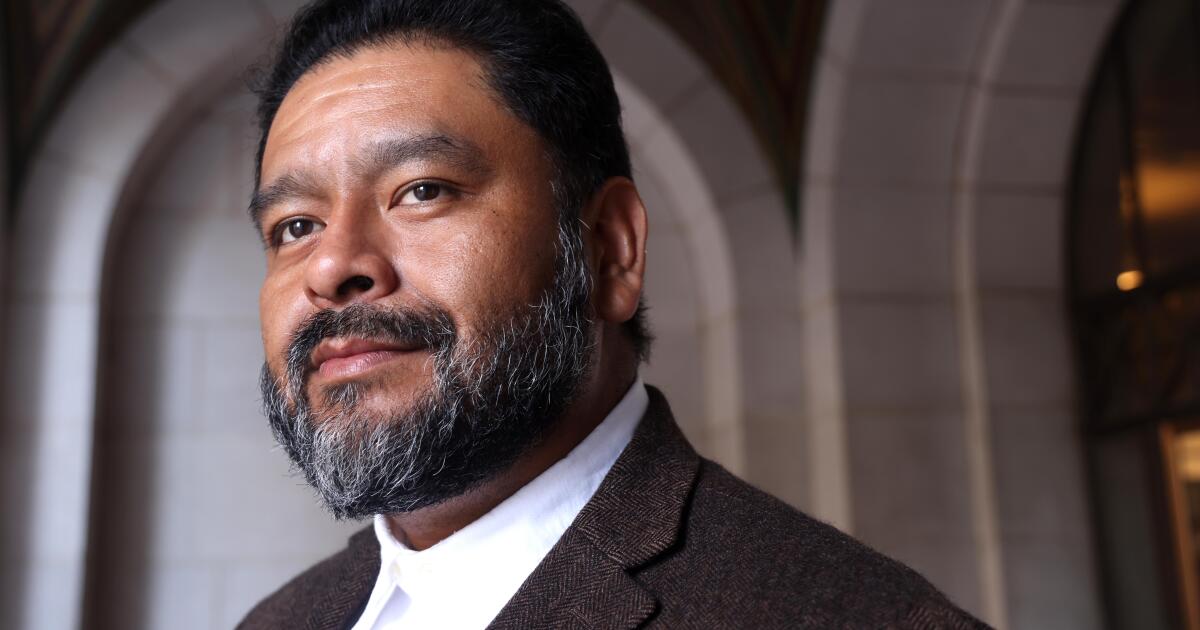
Seventeen years later, Mazariegos is running for Los Angeles City Council — and he believes his gun conviction makes him a better candidate.
“I think it’s a strength. It’s not a liability,” said Mazariegos, who was born in Guatemala and grew up in Hollywood and South L.A. “I feel like it creates more of a connection with me and the community, because there’s so many people that are justice-impacted.”
But the gun charge could also be an issue for Mazariegos in his race against five other candidates to represent Council District 9, which covers part of South L.A. He was also convicted of shoplifting when he was 19.
The district is the poorest the city, and the council race is expected to be one of the most competitive city contests this June, with the current council member, Curren Price, terming out.
Mazariegos is head of the Alliance of Californians for Community Empowerment Los Angeles, a grassroots advocacy organization. The 40-year-old is backed by the L.A. chapter of the Democratic Socialists of America and supports leftist policies like reducing funding to the LAPD to spend more on other programs.
Jose Ugarte, a District 9 candidate who was a longtime Price staffer, believes his opponent’s criminal history is a red flag.
“Getting arrested and convicted for multiple crimes, including carrying a concealed loaded gun, should disqualify Estuardo in this race,” Ugarte said in a statement. “Instead, the Democratic Socialists of L.A. are propping up his candidacy and hiding his criminal past from voters who deserve to know the truth.”
DSA-LA co-chair Leslie Chang said her group is “proud” to stand with Mazariegos.
Mazariegos’ supporters say he hasn’t hidden his past.
Georgia Flowers-Lee, a vice president with United Teachers Los Angeles, said Mazariegos discussed his gun conviction and the circumstances surrounding it during his interviews with the union, which ended up endorsing him.
“He was up front, honest about the challenges and honest about the gun charge,” she said. “Walked us through what had happened and where it led and how and why he ended up pleading it out,” she said.
Flowers-Lee, who lives in the district, said that young men of color like Mazariegos are overpoliced.
“I do not see this as a disqualifier. And let’s talk about redemption,” she said.
Wednesday night, Mazariegos released a campaign video featuring him discussing gun violence and his conviction with childhood friends. He said it was a turning point in his life.
“That was the moment where I was like, it’s either now or never,” he said. “Either I leave this s— behind, or it’s going to eat me up. I’m never going back to that lifestyle. I’m going to dedicate myself to the people.”
Mazariegos said he never carried a gun, except for that one day, but many of his friends did.
“Guns were a very common thing. It was almost like having a bike,” he said.
Mazariegos said that in 2009, he was driving home from the San Fernando Valley in the early morning, after dropping friends off, when he was pulled over by the LAPD. He said the officers gave no reason for stopping him, but they made him get out of his car and searched it without a warrant, finding the gun.
He was a permanent resident at the time, after moving from Guatemala at a young age, and was advised by his attorney to plead guilty to a misdemeanor charge of carrying a concealed weapon in a vehicle, to avoid possible deportation, he said.
He was sentenced to 24 months of probation and one day in jail, court records show.
Growing up in Hollywood and Hyde Park, among other parts of the city, Mazariegos was intimately familiar with gun and gang violence.
His friend, Oscar Michael Morales, was shot to death in 2001 at age 14. He remembers Morales’ mother cleaning the blood off the sidewalk the next day.
His gun conviction helps him connect with residents of Council District 9, Mazariegos said, and he frequently discusses it while door-knocking.
Price himself has been criminally charged with four counts of voting on matters in which he had a conflict of interest, five counts of embezzlement and three counts of perjury. Prosecutors allege he voted to approve deals with developers or agencies that had done business with his wife.
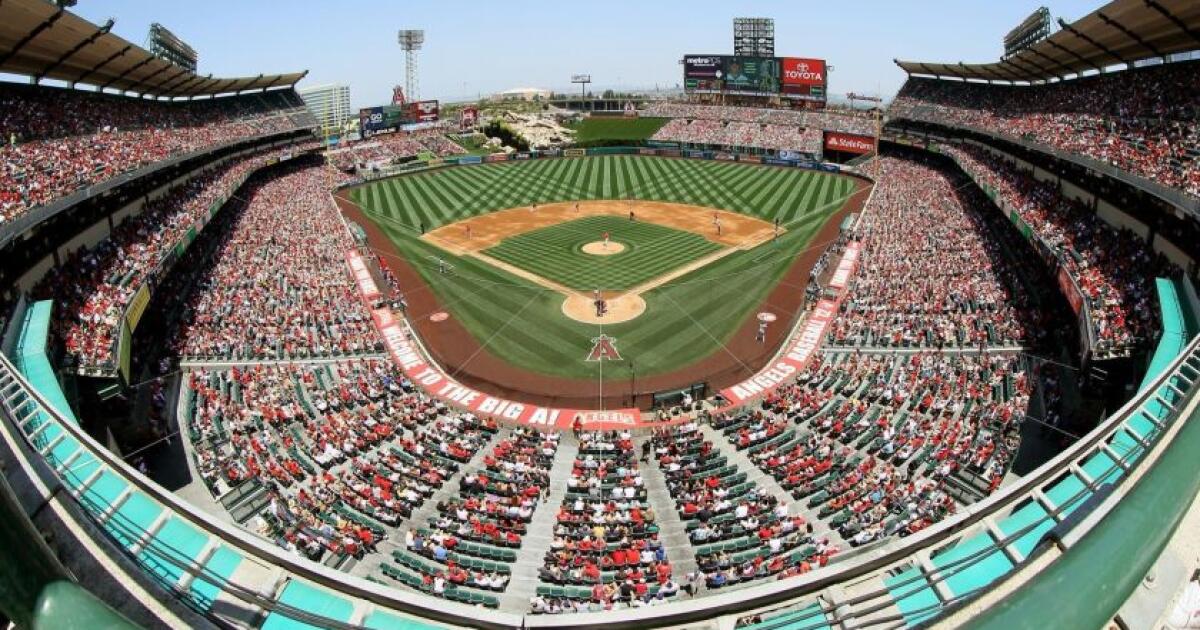
At the dawn of the 2025 season, we published a column with the headline, “What’s the future for aging Angel Stadium? It feels like an increasingly uncertain one.”
With opening day 2026 upon us, we’d like to update that: “What’s the future for the Angels? It feels like an increasingly uncertain one.”
I don’t mean to be an alarmist. Nothing is happening today, or tomorrow, or in the very near future.
However, the Angels’ stadium lease expires in six years, so what might happen beyond then is starting to come into focus. Angels owner Arte Moreno turns 80 this summer. Moreno — or a new owner, if Moreno eventually sells the team — could simply exercise options to extend the lease for another six years.
But that would not resolve the larger issue of replacing or renovating Angel Stadium. In the coming months, the city expects to release an assessment of what it would take to keep the stadium up and running for years to come, and that could trigger a debate between the city and the Angels about who should pay for what.
The Angels are frustrated by all of this, and in particular by what they consider the curiously timed skirmishes over their 21-year-old Los Angeles name. They are annoyed that, for the second consecutive season, city issues have detracted from the hope and faith and joy that surrounds opening day. It is the city, after all, that walked away from two deals that would have secured the Angels’ long-term future in Anaheim.
During negotiations for the last deal, city officials made clear that keeping the Angels was the top priority, even if Anaheim could make more money selling the stadium property to a developer that would not need to retain the stadium.
Now, with six years left on the lease and no commitment beyond then, the mayor of Anaheim says it is time to prepare for a future with or without the Angels.
“We need to plan for what we see as a vision for that property when the lease has expired,” Mayor Ashleigh Aitken told me. “That’s going to take time. No matter how that deal goes, we’re not breaking ground on any project next year.
“But what we need to do, whether it includes the Angels — which I hope it does — or not, is come up with a vision that includes everything residents want to see happen on that land. And only then can we truly advocate for a project that makes sense for us.”
On the day of the home opener last season, Aitken issued an open letter inviting Moreno to meet with her for “an open and honest conversation about the future of baseball in Anaheim” and listing eight starting points for negotiations on a new deal, including the Angels’ restoration of the Anaheim name.
“They have not reached out to us about reopening negotiations for potential development around the property,” Aitken said.
Moreno previously explored other potential ballpark sites, including Tustin in 2014 and Long Beach in 2019.
In Tustin, the targeted land is no longer available. In Long Beach, the proposed waterfront lot remains vacant, but the challenge remains too: Over 81 games each season, how would tens of thousands of fans drive into and out of a ballpark primarily accessible by a single freeway?
For the Los Angeles Angels, perhaps the solution could be found in Los Angeles County.
The Dodgers could bar every other major league team from moving into L.A., but not the Angels. Under MLB rules, neither team could stop the other team from moving anywhere within Los Angeles County or Orange County.
The logical landing spot would be Inglewood, where the Rams, Chargers and Clippers have moved since 2020. Inglewood Mayor James Butts said Sofi Stadium and Intuit Dome have helped to revitalize the city, with unemployment down, home prices up, and municipal revenue up.
“Before, we were known for gangs and crimes and poverty,” Butts told me.
“Now, we are known as the sports and entertainment capital of the western United States.”
How about a baseball stadium in place of the Forum?
“The Forum parcel is absolutely not large enough for a baseball stadium,” Butts said.
Butts said he believes a baseball stadium there would require about 170 acres for the stadium and surrounding parking. Angel Stadium and its surrounding parking lots cover about 150 acres.
On the other hand, the Athletics are building a ballpark on a nine-acre site in Las Vegas, where nearby parking, entertainment and dining options already exist, with more on the way, and with the A’s not responsible for any of that. The same could be true for the Angels in Inglewood, with Rams owner Stan Kroenke and Clippers owner Steve Ballmer developing the land around the sports facilities.
However, Butts said he did not envision baseball coming to Inglewood, at least so long as he remains the mayor. Not enough room in town, he said.
“We’re maxed out when it comes to sports,” Butts said. “We are not going to reduce the housing stock and move residents out to have a baseball team.”
Anaheim has one, plus a 150-acre site perfect for a new stadium surrounded by restaurants and shops and homes. There will be days to be anxious and worried about the Angels’ future in the city they have called home for 60 years. Today is not one of them.
Take it from the mayor of Anaheim, who told me that even after telling me why she wants the city attorney to look into whether the Angels are violating their stadium lease.
“Opening day, to me, is nothing about clauses in a contract,” Aitken said. “It’s about family traditions. It’s about kicking off summer. And it’s about getting so many factions and neighborhoods of Anaheim together for a singular purpose, which is cheering on our hometown boys. That’s the beauty of baseball.”
And, as a lifelong Angels fan, she had one more thing to say.
“Right now,” Aitken said, “we’re tied for first place.”
Dodgers fans generally hiss at the mention of Frank McCourt — the former owner took the team into bankruptcy, after all — but today is about tipping our cap to him.
Without him, fans would have no option to take public transit directly to Dodger Stadium. On his watch, the Dodgers helped secure government funding for the shuttle buses that provide free rides between Union Station and Dodger Stadium.
Sixteen years later, beyond the addition of a sister shuttle from the South Bay, that’s it.
The Dodgers boast the best team in the world. Shohei Ohtani is a tourist attraction. So is their historic ballpark. The Dodgers sold a record 4 million tickets last year.
In 1990, the last year Fernando Valenzuela pitched for the Dodgers, Los Angeles County unveiled a report that suggested ways to improve access to Dodger Stadium “for those who cannot or do not wish to drive.”
The options: a monorail, people mover, or light rail extension from the Chinatown Metro station; the shuttle buses that McCourt and Metro launched 20 years later; the gondola that McCourt first pitched in 2018 and continues to pursue; and a walking path.
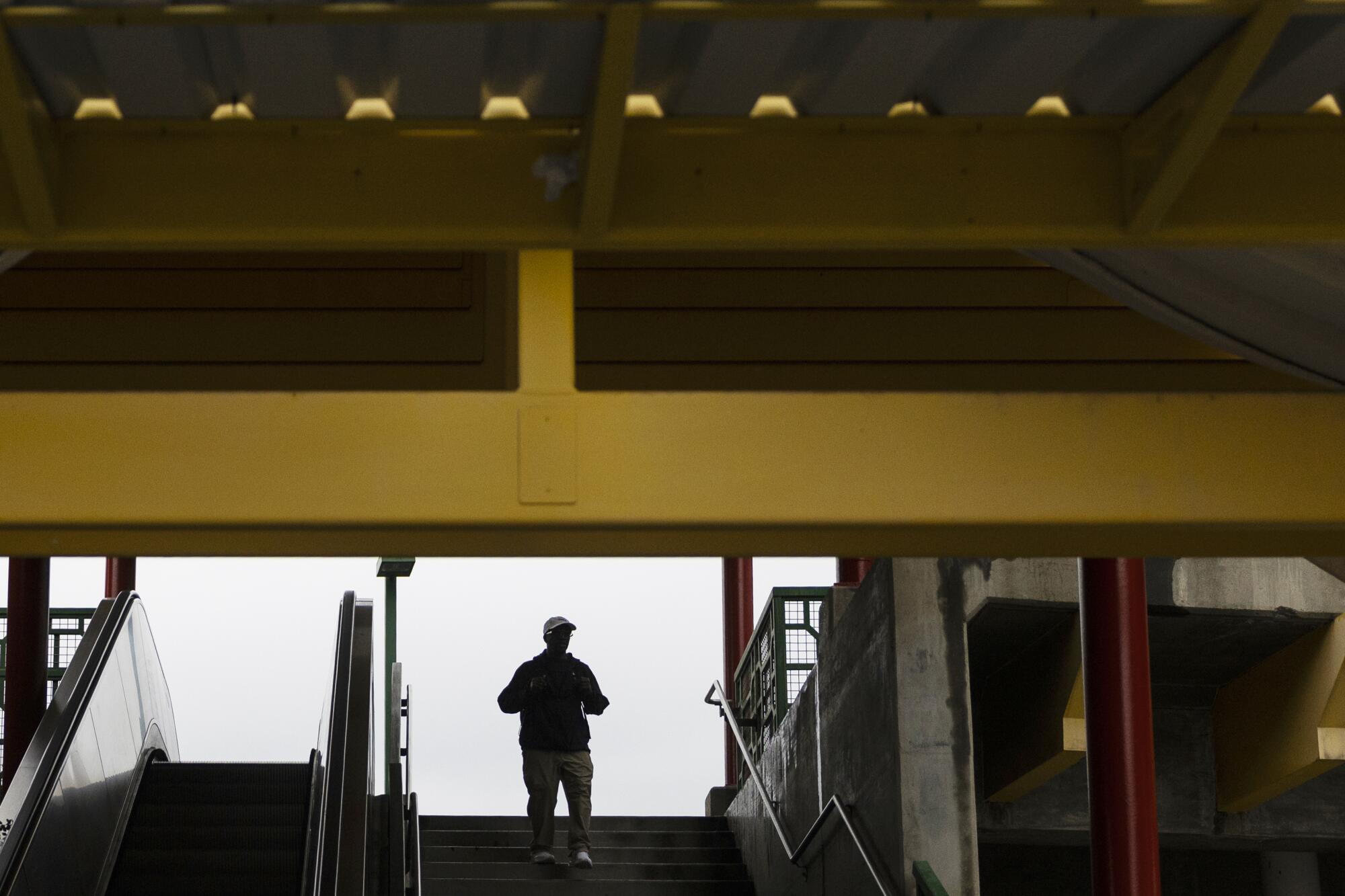
A passenger exits the Chinatown Metro station in January.
(Etienne Laurent/For The Times)
L.A. is all about the car. You will most likely drive to Dodger Stadium, and so will your children.
For decades, the Dodgers have promised to ease traffic by adding amenities that encourage fans to come early and stick around after the game. That has not materialized, and notorious congestion within and around the stadium is as much a tradition as Dodger Dogs.
What if you could walk, for real? What if you could head into the stadium along a beautifully landscaped and wide Dodgers-themed path, a blue ribbon of fans coalescing into a community, with decorations and food carts, shade and lighting, and chants of “Let’s Go Dodgers!” along the way?
You can walk now, sort of. It’s about a mile.
There’s a map at the Chinatown Metro station displaying the pedestrian path toward Dodger Stadium.
(Etienne Laurent/For The Times)
At one end of the Chinatown station, there is a map with a pedestrian route, in a glass case that faces away from Dodger Stadium. If you walk out of the station at the other end, or if you just start heading in the direction of Dodger Stadium, good luck finding the map.
There are Metro signs leading you back to the station from Dodger Stadium, but none leading you along the route there.
The Dodgers actually would prefer you did not take that route, or at least the last part of it. I walked it with Alissa Walker, whose Torched newsletter is the go-to place to learn how major sporting events impact the everyday lives of Angelenos.
We entered the Dodger Stadium property at an intersection with no crosswalks, where cars enter and exit the 110 freeway. We stood atop a dirt patch next to a crumbling curb.
“To go a very short distance safely with a feeling that you’re not going to die,” Walker said, “is very difficult.”
With Game 3 of the World Series underway at Dodger Stadium last October, a few folks scurried across a pedestrian bridge with LED lights and blue glow sticks.
The bridge connects Chinatown with Dodger Stadium, traversing the 110. Without this bridge, there is no walking path to Dodger Stadium.
“Our goal was, just by adding some lights, to make the really dark path at the top of the bridge at night a little bit brighter, so that it felt a little less scary,” transit advocate Jeremy Stutes said, “and to add a little bit of fun and whimsy.”
Glow sticks forming the “LA” logo of the Dodgers were placed on a pedestrian bridge over the 110 Freeway connecting Chinatown to the area where Dodger Stadium is located during the World Series and for several months after. As of last week, the glow sticks were no longer there.
(Etienne Laurent/For The Times)
From the Chinatown Metro station, the bridge is three blocks up College Street and one block down Yale Street. It’s an easy walk, and for now you pass an elementary school, a church, a row of Chinese restaurants, a dirt lot where a hospital once stood, parking lots, and an auto repair facility with a Dodgers flag hung on a wall.
When I did the walk last week, the trash at the foot of the bridge included a plastic cup, socks, a piece of rotting fruit, a half-full bottle of tequila, and half of a turkey sandwich, peeking out from torn plastic wrapping that indicated the sandwich had gone bad three days earlier. On the bridge: shopping bags, a pair of flip-flops, stray clothes scattered at one end, and graffiti everywhere.
A sign painted on the sidewalk indicates the direction toward the Chinatown Metro station.
(Etienne Laurent/For The Times)
That was the point those volunteers made last October: Clean up the bridge and light up the bridge — as they did for three days — and fans will walk there.
“It’s not that it’s not used,” Stutes said. “It’s not designed to be a safe space to use as an alternative to driving.”
When you cross the bridge, you can turn right or left along Stadium Way to get to a stadium entrance.
Turn right, as the map tells you to do, and you’ll encounter decaying sidewalks, with cracked and buckled concrete that turns a modest uphill walk into an obstacle course. Once you get onto the stadium grounds, the paint is fading along the pedestrian path, which offers you no protection from passing cars.
Turn left, and you’ll have to walk part of the way in the street, on an unprotected bike lane. You also could walk along the road behind the Fire Department training center, a path with no sidewalks and passing fire trucks. Either route takes longer than the one on the map, but you would enter Dodger Stadium through a pair of protected and brightly painted pedestrian paths. (That entrance, along Vin Scully Avenue, is a quarter-mile from Sunset Boulevard, where two Metro bus routes stop.)
If the primary choices for getting out of Dodger Stadium after a game are car congestion or Dodger Stadium Express shuttle bus congestion, a downhill walk to Chinatown Metro station — 12 minutes, Metro says — would be a nice option. That’s why those folks lit up the bridge over the freeway during the World Series.
“The lights were just a fun way,” transit advocate Kevin Dedicatoria said, “to show, ‘Hey, here’s a bridge so you don’t have to play, ‘Dude, where’s my car?’ or have to worry about waiting for the bus.’”
McCourt hails from Boston, where the local subway drops Red Sox fans a few short blocks from Fenway Park. When McCourt owned the Dodgers, I asked him if he could envision a subway or light rail extension to Dodger Stadium.
He’d love it, he said then, but the Dodgers were a private business, and government should pay for public transit.
Homes line a street in Eylsian Park, where Dodger Stadium is located.
(ETIENNE LAURENT/For The Times)
It was a fair point. The Dodgers pay taxes. In an era where teams regularly demand stadium and arena deals that exempt them from property tax, the Dodgers have paid $12.8 million in property taxes over the past three years, according to Los Angeles County tax collection records.
Would demand for public transit amid a car culture justify the investment? The Dodger Stadium Express indicates it could: Ridership has just about quadrupled since its inaugural season, from 122,273 in 2010 to 463,147 last year, according to Metro.
Even along the poorly maintained, poorly lit and poorly advertised pedestrian path, Metro said more than 700 riders returned to the Chinatown station on each of the three nights of World Series home games last year.
“As seen in social media videos during the 2025 postseason, the walking path continues to explode in popularity,” Metro spokesman Jose Ubaldo said.
Next steps?
“It’s astonishing to me that the Dodgers have not taken it upon themselves, as this great community partner, to fix this problem,” Walker said. “It is the city’s responsibility, but the Dodgers should be doing this, as part of what they want to represent to this community.”
The walking path includes segments along city streets, a Caltrans bridge, and Dodger Stadium property. Just who is the responsible party?
A Caltrans spokesman said the city is responsible for maintaining the bridge. A spokesman for the city’s department of street services did not provide an answer. A spokesman for the Dodgers declined to comment.
You could almost hear the sigh from city councilwoman Eunisses Hernandez, whose district includes Dodger Stadium.
“That’s what my job is: to bring people and agencies and organizations together to accomplish a goal,” Hernandez said. “We’re already in conversation with all these entities.
“We’re looking at some of the things we can enhance to make this a more walkable and accessible option for people.”
City Council member Eunisses Hernandez, center, talks with Circle outreach workers in Los Angeles.
(Allen J. Schaben/Los Angeles Times)
How much might those enhancements cost?
Without a look at a city-commissioned Dodger Stadium traffic mitigation study, expected to be completed this fall, Hernandez said she could not put a price tag on it.
“What I can tell you,” she said, “is that it will be less than half a billion dollars, for sure.”
By year’s end, the Los Angeles City Council is expected to vote on McCourt’s gondola project, estimated to cost $500 million and proposed as privately financed. Last November, the council voted 12-1 to urge Metro to kill the project.
Metro granted its approval, but with conditions that included a requirement to explore supplementing the gondola with other Dodger Stadium transit options, including more buses along Sunset Boulevard and a designated walkway from there to the stadium.
The walking path proposed in that 1990 study would have avoided Sunset Boulevard and the current Stadium Way routes — the ones with crumbling sidewalks, or no sidewalks at all — by using escalators and walkways to get fans up and down the hill between Lookout Drive, just off Stadium Way, and Dodger Stadium.
“Pedestrians could be directed through Chinatown,” the study read, “where numerous restaurants, shops and pedestrian amenities are provided.”
It’s hard to sell Chinatown businesses on the benefits of the gondola when fans would ride between Union Station and Dodger Stadium, soaring over Chinatown. It would be easier if a walking path led at least some of those fans through Chinatown, even if only on the way back from the game.
Even if the gondola system really can accomplish what its proponents say it can — loading 35 people into a cabin every 23 seconds — thousands of riders leaving when the game ends could mean a long line to board.
One of the entrances to Dodger Stadium on Stadium Way, the easiest access when walking from Chinatown Metro station.
(Etienne Laurent/For The Times)
“Also,” the 1990 study said, “passenger waiting following a game is psychologically perceived as being three to four times longer than actual waiting time.”
From this perspective, McCourt might win a few council votes by funding a first-class walking path. The cost, I’m told, would depend on what the enhancements include: signs, lights, trees, shade canopies, sidewalk repairs, escalators, and so on. For something close to $5 million — one one-hundredth of the projected cost of gondola construction — McCourt likely could do an exceptional job.
Is there any sign of progress here? Happily, yes.
In an internal report last December, Metro said Zero Emissions Transit (ZET) — the nonprofit organization now shepherding the gondola project — is pursuing ways to link pedestrians and bicyclists to the transit system and to Dodger Stadium. Those potential improvements include sidewalk repairs and a revitalized pedestrian pathway from the Chinatown Metro station to the bridge across the 110 and then across Stadium Way, to Lookout Drive and the hill above.
“Dodger Walk is envisioned as a series of switchbacks,” the report said, “inspired by the original walking path up Lookout Mountain that existed prior to the construction of Dodger Stadium.”
Whether such switchbacks would make the walk to the stadium longer or shorter than the current path remains to be determined.
In a statement, ZET said: “We embrace and include active transit solutions to increase pedestrian and bike access throughout the project area.” In particular, ZET said, it was “supportive” of a walking path to Dodger Stadium.
The Metro report cautioned the concepts “are in the early planning stage,” so L.A. might get an extravagant walking path, a utilitarian one, or none at all.
Here’s hoping McCourt gives us a path of some kind — whether the city approves the gondola or not — because a pretty walk generations can enjoy would be a prettier civic legacy than driving a team into bankruptcy.
A new ranking compares international tourist numbers to locals in European cities – and one tops the list with a staggering 16,250 visitors for every 100 residents
These destinations are the most crowded in Europe(Image: Alexander Spatari via Getty Images)
Summer is on the horizon, and folks are starting to map out their holiday plans. Being based in the UK, we’re fortunate to have some of the world’s most stunning destinations within easy reach, with iconic cities just a short flight away.
However, many of these sought-after spots are now swamped with tourists – in fact, some now host more visitors than locals. DiscoverCars.com has compiled a new ranking that contrasts the number of international tourists with the local population in European cities. Five of the top holiday hotspots now boast more tourists than residents.
Topping the list is Dubrovnik in Croatia. This breathtaking historical city gained even more fame after serving as the backdrop for King’s Landing in the HBO series Game of Thrones.
Last year, this fortified city welcomed 6.5 million tourists – an astounding figure compared to its 40,000 inhabitants. That equates to 16,250 tourists for every 100 locals.
Taking second place is Reykjavik in Iceland, reports the Express. This Arctic city attracted even more tourists than Dubrovnik, with 7.4 million visitors compared to its 140,000 residents, resulting in 5,286 tourists per every 100 locals.
The city is renowned for its Blue Lagoon thermal baths and, of course, the opportunity to witness the Northern Lights illuminating the sky.
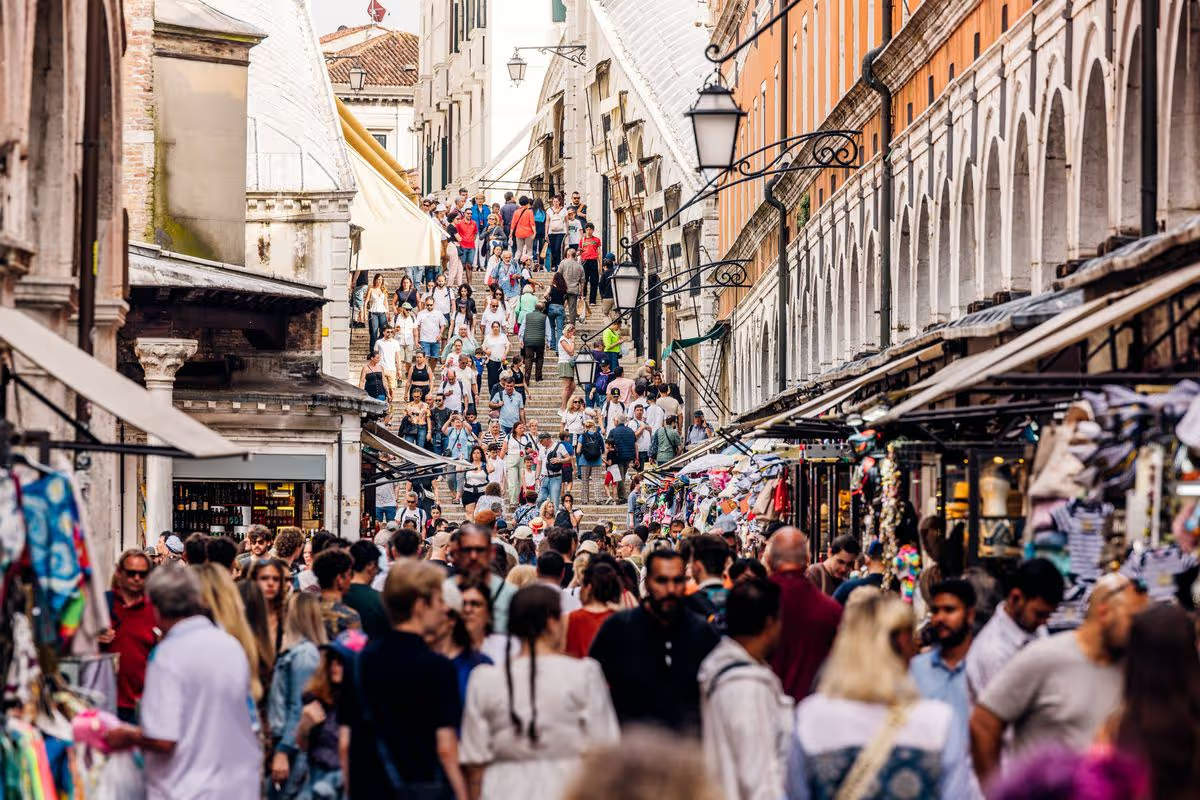
Securing third place is the floating city of Venice in Italy. Arguably one of the most famous cities globally, Venice played host to 10.6 million tourists last year.
Compared to its population of 250,000, that’s a whopping 4,240 international visitors per 100 residents. The city is a hit with tourists for its stunning architecture and the opportunity to glide along its canal streets by gondola.
Switzerland’s Geneva secured fourth place on the list, welcoming 7.8 million tourists in 2025. With a local population of 200,000, this equates to 3,900 visitors per 100 residents.
Renowned for its breathtaking views of the Alps, Geneva serves as an excellent base for day trips into the mountains and exploring the picturesque villages scattered throughout them.
Porto in Portugal claimed fifth place. The city attracted seven million international tourists in 2025, against its population of 250,000.
With 2,800 tourists for every 100 residents, it’s a highly sought-after destination. The narrow streets are adorned with beautiful architecture and striking Portuguese tiles, providing a perfect backdrop for photos.
With the river slicing through the city, you can discover both sides of the city in a day – just remember to bring your walking shoes.
This sun-soaked city that welcomes more than 3,000 hours of sunshine a year and a tropical climate, is a haven for holidaymakers seeking a quieter escape from the tourist crowds
This beautiful coastal city, with nearby towns, is a lesser-known destination (Image: Getty Images)
A beautiful coastal city, less than three hours from the UK, offers a scenic escape with 21C April temperatures and £13 flights.
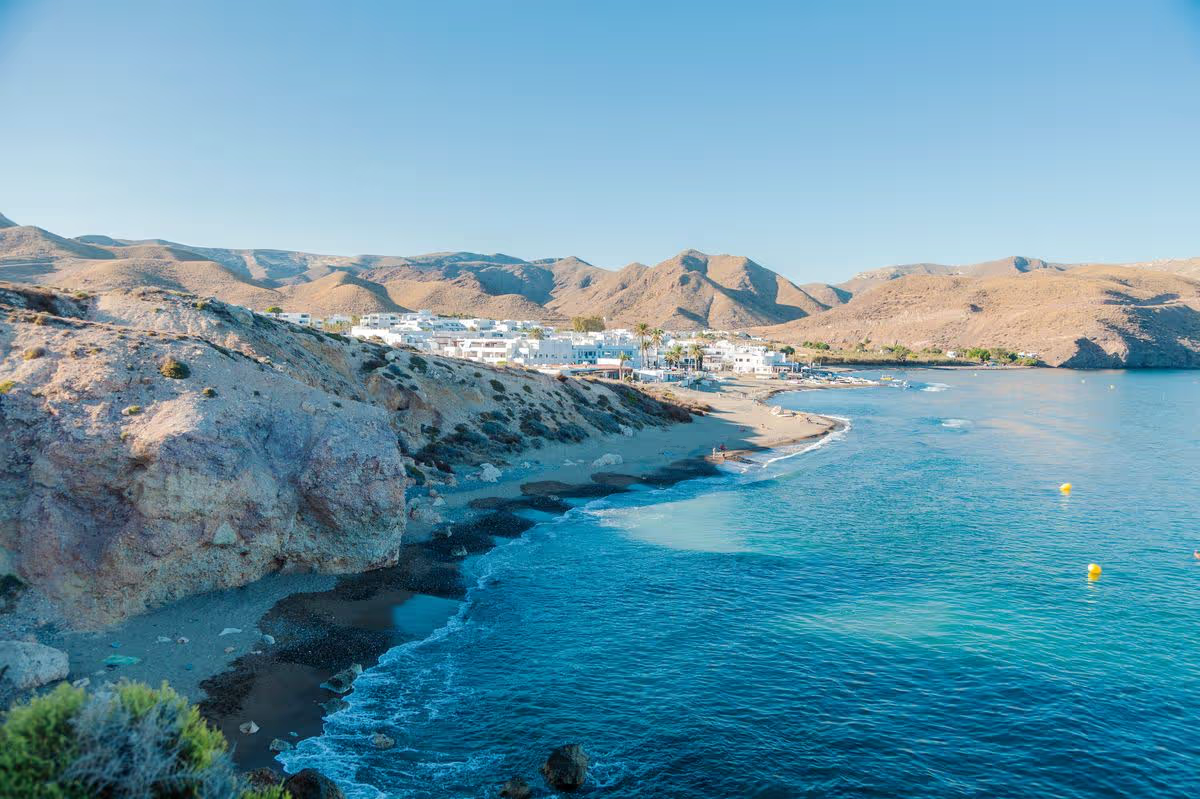
Almería, in southeast Spain, is set against the diverse landscapes of volcanic beaches, azure waters, and dramatic desert, with balmy rays and virtually year-round sunshine. It’s a lesser-known destination compared to the likes of Costa del Sol, with quieter beaches and a laid-back atmosphere for a more authentic Spanish experience.
Due to its location near the Tabernas Desert, Almería is known as the ‘desert coast’ and enjoys a warmer, drier climate than neighbouring areas. It welcomes more than 3,000 hours of sunshine a year and only around 26 days of rainfall, making it a highly desirable sun-soaked destination.
In April, visitors can expect to bask in a balmy 21C and enjoy eight hours of blistering sunshine. During the summer months, temperatures can creep up to 32C, with an inviting 12 hours of sunshine every day, and a warm 24C in the turquoise sea.
Aside from the inviting climate, the coastal city offers an affordable holiday, with flights from London to Almería starting at £13 in April, or £17 from Manchester, according to Skyscanner. What’s more, prices don’t rise too much during the peak summer season, with flights from Manchester to Almería costing from £28 one-way in July, or from £33 departing from London.
Once you’ve arrived in the pretty Spanish city, the appealing prices only continue. Travel experts at First Choice found that a beer could set you back just £3 (€3.50) in Almería, while a three-course meal for two typically costs between £25 (€30) and £30 (€35).
Alongside its stretches of golden-sand beaches, crystal-clear blue waters, and diverse landscapes, there’s plenty to explore in the Spanish region. The walkable, compact city centre is brimming with charm, from its Gothic and Renaissance architecture to ancient landmarks, narrow streets and bustling tapas bars.
Almería is renowned for its huge tapas culture and vibrant bars, so you’ll often get free tapas with every drink, as you dine alongside Spaniards. There’s also the 16th-century cathedral towering over the streets, the Plaza Vieja with its beautiful architecture and palm trees, and the main shopping area of Puerta de Purchena, which is brimming with boutique shops.
Away from the city is the protected Cabo de Gata-Níjar Natural Park, with volcanic cliffs, hidden coves, and some of the most stunning Spanish beaches. There’s also the striking Tabernas Desert that you can explore during a guided day tour, as well as the charming whitewashed hilltop village of Mojácar.
The village may look recognisable to some as it was famously used as the backdrop for major Hollywood movies, including Indiana Jones, and the hit TV series Game of Thrones. There’s even the opportunity to visit the preserved Wild West film set of MiniHollywood Oasys, which offers various shows and attractions in a setting that will transport you straight onto the set of Indiana Jones.
Do you have a travel story to share? Email webtravel@reachplc.com
WHEN it comes to city breaks, some of the cheapest in Europe are found a bit further east.
And Romania‘s Bucharest is not only affordable, but is getting more flights too.
Sign up for the Travel newsletter
Thank you!
The Romanian city has just got new UK flights – and you can get there for less than £20Credit: Getty Images – GettyOne of the biggest draws to Bucharest is its Therme spa and waterparkCredit: Alamy
Romanian airline, AnimaWings, has started six new weekly flights from London Gatwick to Bucharest.
This isn’t the only option though as there are also cheap flights with Ryanair from London Stansted with one-way journeys starting from £18.99.
Wizz Air also offers cheap flights to the city from London Luton.
With a flight time of just over three hours, Bucharest is the ideal city break destination.
Last year, The Telegraph even named Bucharest as being one of Europe’s ‘last great cheap cities’.
It added that Bucharest has everything you need for a good city break with “expansive, tree-lined avenues, lively bars and characterful museums.”
Bucharest is inexpensive, according to Numbeo – a pint of local beer costs on average £2.55 and an average meal is around £10.18.
For a three-course meal, you’re looking at around £50 and a cappuccino is just £2.45.
It’s not just food and drink that’s on the cheaper side as public transport is the same – a typical single journey on the tram and metro network is as little as 85p.
One of the most popular places in the city to go is Therme Bucharest, a spa and waterpark.
Split into three parts, the Galaxy area is a more family-orientated with 17 water slides, a wave pool and water playground.
The Palm zone is where people go to relax – with three mineral pools and swim-up bars, it has been created for relaxation.
And Elysium is a ”restoration area’ with lots of traditional and modern treatments from hammams to infrared light therapy beds.
Sun Writer Steve Corbett visited Therme and called it one of ‘Europe‘s greatest secrets’.
He compared it to Center Parcs’ Subtropical Swimming Paradise as he tried out the water slides, high-tech treatments and poolside bars.
It also has cheap beer with a pint costing £2 on averageCredit: AlamyThe city even has it’s own Van Gogh-inspired cafeCredit: Alamy
One woman even flew to Bucharest for a spa break at the Therme because it was cheaper than one in the UK.
Kara Wildbur booked her and her mum in at the Therme for £64 after finding out a spa break would be £400 back home.
Even with the flights being £157 return for the two of them, with the hotel costing £94 – it worked out cheaper than a UK spa day.
Another attraction is the Museum of Senses, which is an interactive museum – especially good if you’re visiting the city with kids.
It’s full of optical illusions, infinity rooms and hands-on exhibits.
Tickets for adults start from £9.33, and £6.79 for children.
When it comes to eating, there’s plenty of quirky cafes within the city.
Some top spots include The Grand Café Van Gogh in Bucharest which some visitors have said reminds them of Amsterdam.
It’s an art-themed cafe filled with Van Gogh artwork in the Old Town.
Another is Dulcinella which sells éclairs, New York-style rolls and is known for having an ‘Instagrammable-vibe’.
Caru’ cu Bere is considered the most famous restaurant and beerhouse in Bucharest and was founded in 1879.
Its house beer, called Berea casei, is brewed on-site and is still made from the original recipe – you can pick up 400ml from £4.30.
The best times of year to visit Bucharest are between April and October, with highs of 31C in June and July.
Just skip the winter months – the average temperature in December and January is around -2C.
THERE’s a Spanish city that is set to be nearly 30C this week – and luckily for Brits it’s less than three hours from the UK.
Seville’s got everything Spain has to offer from affordable wine to beautiful plazas and free flamenco performances.
Sign up for the Travel newsletter
Thank you!
Plaza de Espana is one of the most well-known landmarks in SevilleCredit: AlamyIt has four pretty mosaic bridges over the canal
This week, temperatures in Seville are set to soar with highs of 27C, according to the BBC.
Thanks to its location in southern Spain, Seville often sits 17C and higher – even in the winter months.
It’s very easy to get to as well with direct flights from all over the UK although the cheapest is with Ryanair, who has £14.99 flights from London Stansted next month.
When it comes to what to do there, you’ll be spoiled for choice at the riverside city with lots of beautiful sites and great food for affordable prices.
On average, a meal at an inexpensive restaurant start from £10.50.
As for wine, it tends to sit between £2.50 and £3 – depending on where you go within the city.
Plaza de España is one of the biggest and most well-known landmarks in Seville.
It’s a huge semi-circular plaza stretching over 50,000 square metres with four bridges sitting over a canal decorated with brightly coloured mosaic.
It’s a favourite spot within the city for pretty pictures, and if you’re lucky, you might even spot a free flamenco dance.
If you want to get out onto the water, you can rent pedalos for a few euros.
The square even doubled as the planet of Naboo in the second Star Warsfilm.
In the middle of the city is the enormous Seville Cathedral – which is the biggest Gothic cathedral in the world.
You can choose to go inside if you wish, but as someone who has been you can see plenty of its grandeur from outside.
Seville Cathedral is the biggest Gothic cathedral in the worldCredit: Alamy Stock PhotoThere are lots of horse and carts around the cathedral – and palm trees too
But if you want to head inside a standard ticket costs €13 (£11.25).
Other hot spots include the Real Alcázar palace and La Giralda tower.
Travel Reporter Alice Penwill visited the city two years ago. She said: “I loved strolling about Seville, particularly the Alfalfa neighbourhood.
“It’s got plenty of pretty little cafes and restaurants to explore – one of my favourites was Casa Toni which cooks up tasty paella.
“Salvador Square is beautiful in the morning time, take a stroll there and make sure to pick up some brunch from Sagasta.
“It has outdoor seating too so you can bask in the spring sunshine.”
She said: “The Royal Alcázar of Seville, a palace dating back 1,000 years, offers limited free tickets on Mondays between 6pm and 7pm.
“Or for Seville Cathedral, there are 100 free tickets a day between 2pm and 3pm.”
Kara’s favourite bar is El Rinconcillo which is the city’s oldest tapas bar which dates back to 1670.
And you can get a huge glass of wine for £3.
Our favourite Spain holidays
*If you click on a link in this box, we will earn affiliate revenue.
Hotel Best Punta Dorada, Salou
The Spanish resort is a popular destination near PortAventura World, a theme park with over 40 attractions and huge rollercoasters. It’s also close to sandy beaches like Platja de Llevant, and the scenic Camí de Ronda coastal walk.The hotel itself has an outdoor swimming pool to enjoy, as well as two bars along with evening entertainment and shows.
With its palm tree-lined pool and Mediterranean backdrop, it’s a miracle this Majorca resort is so affordable. Expect a classic family holiday feel – where days revolve around soaking up the Spanish sunshine, chilling by the spacious pool and sipping on frozen cocktails. Set away from the busier resorts, it’s a good option if you’re after a more out-of-the-way escape.
The Magic Aqua Rock Gardens Hotel is African-themed and less than a mile from the beach. It has two outdoor pools, including a children’s freshwater pool with a waterfall and a tipping water bucket for the little ones. There’s also an aquapark with slides, and a kids club for both younger children and teens.
For a calmer side of Ibiza, this hillside resort has two pools, a kids’ splash zone, and an all-inclusive buffet with a poolside bar. It’s a 10-minute walk from Cala Llonga’s shallow turquoise bay, offering a scenic, family-friendly base away from the island’s main party zone.
Hi, and welcome to another edition of Prep Rally. I’m Eric Sondheimer. One month into the high school baseball season, the top teams in the City Section are becoming clear.
Get our high school sports newsletter
Prep Rally is devoted to the SoCal high school sports experience, bringing you scores, stories and a behind-the-scenes look at what makes prep sports so popular.
By continuing, you agree to our Terms of Service, which include arbitration and a class action waiver. You agree that we and our third-party vendors may collect and use your information, including through cookies, pixels and similar technologies, for the purposes set forth in our Privacy Policy such as personalizing your experience and ads.
Top City teams emerge
With league play having begun, top teams are stepping forward in City Section baseball one month into the season.
To no one’s surprise, West Valley League rivals Birmingham (10-1, 3-0) and El Camino Real (9-3, 3-0) deserve to be ranked No. 1 and No. 2 in the City Section going into their first matchup of the season Tuesday at Birmingham. They are slated to play three league games. Both teams’ pitching has been outstanding.
Birmingham junior Nathan Soto is 3-0 with an 0.34 ERA. Sophomore Carlos Acuna is 4-0 with a 1.44 ERA. El Camino Real’s Jackson Sellz is 3-0 with an 0.54 ERA. Hudson December and Andrew Katz have also contributed on the mound. Look for a low-scoring game with some bunts Tuesday.
Bell (12-1, 2-0) is back to playing the way the Eagles performed in 2024 when they won the City title. Jayden Rojas, the City player of the year as a sophomore, is batting .421 and 4-0 on the mound with an 0.32 ERA. The Eagles are the heavy favorite to win the Eastern League.
Carson (9-1-1, 3-0) has taken early charge of the Marine League race, getting some clutch hits from Skylar Vinson.
Sun Valley Poly (6-3, 3-0) already has wins over Sylmar, North Hollywood and Kennedy in the Valley Mission League. Fabian Bravo is the pitcher/hitter to watch.
Perhaps the biggest surprise is Monroe at 11-0 and now the favorite to win the East Valley League. Four-year varsity pitcher Miguel Gonzalez is 4-0 with an 0.85 ERA and 32 strikeouts and only three walks in 24 2/3 innings. The leading hitter with 21 hits is junior Luis Martinez. The Vikings have yet to face a top opponent, so it remains to be seen which playoff division they will end up in.
Garfield, Sylmar, San Fernando, Cleveland and Narbonne are all capable of working their way into an Open Division playoff berths after slow starts.
Basketball awards time
Maxi Adams of Sierra Canyon was The Times’ boys’ basketball player of the year.
(Craig Weston)
During a season in which the individual talent for boys and girls basketball was extraordinary, earning all-star recognition became quite an achievement.
The Times’ boys’ basketball player is Maxi Adams of Sierra Canyon. Here’s the report.
The versatile Anthony Murphy of Corona showed off his speed and power in 8-3 win over King, getting a home run, triple, double and single. That’s called hitting for a cycle. And he almost did it again in the next game with a home run, a double and two singles. He also struck out all three batters he faced in a relief role.
Corona (7-0) is set to face Corona Santiago (9-2) in a three-game series this week. To say scouts will be out en masse when Santiago’s Striker Pence pitches Wednesday might be an understatement. He’s only a sophomore with a fastball that can reach 100 mph. The games are Monday at Santiago, Wednesday at Corona and Friday at Santiago.
Santa Margarita has lost standout shortstop Brody Schumaker for the rest of the season because of a shoulder injury. Freshman Cooper Holland provided a lift in Las Vegas with 11 RBIs. The new shortstop is sophomore Warren Wulfemeyer, whose grandfather, Mark, is one of the most recognizable names in Orange County basketball history.
Former Sherman Oaks Notre Dame pitcher Justin Lee, the 2023 player of the year by The Times, was clocked throwing his fastball between 97 and 99 mph pitching for UCLA.
Two unbeaten teams, St. John Bosco and Sherman Oaks Notre Dame, are ranked No. 1 and No. 2 in this week’s this week’s top 25 rankings by The Times. St. John Bosco has shut out five of its seven opponents. Jack Champlin is creating options for the St. John Bosco coaching staff. He continues to be a great closer but is also effective as a starter.
The National High School Invitational begins Wednesday in Cary, N.C. Southern California is well represented with Orange Lutheran, St. John Bosco, Aquinas and Harvard-Westlakek participating.
Friday marks the end of the sit-out transfer period in the Southern Section. Players who did not move become eligible. Bishop Alemany could be the team to watch. Mikey Martinez, who helped Crespi win the Mission League title last season as a pitcher and outfielder, will join the Warriors.
Softball
Murrieta Mesa continues to dominate with 14 consecutive wins to start the season. Sophomore Tatum Wolff is hitting .533 with 24 hits, including eight doubles.
Chaminade is 9-0 and came through with a break-through win over defending Mission League champion Sherman Oaks Notre Dame 7-6, scoring five runs in the seventh. The Eagles have an outstanding sophomore pitcher in Finley Suppan, the daughter of former major leaguer Jeff Suppan. Here’s the report.
JSerra (13-2), Fullerton (11-1), Norco (9-2), Oaks Christian (10-1) and Etiwanda (14-1) continue to be teams on the rise.
City Section softball is wide open as teams test themselves against Southern Section opponents. Defending champion Granada Hills is 5-5.
Banning is 7-6. Carson is 7-5. They will join San Pedro in another tough Marine League battle.
Track and field
The impressive early marks in the 100 meters for boys signals some real fast times will be coming later in the spring.
Benjamin Harris of Servite leads the way at 10.23 seconds. Next are Quran Clayton Jr. of Oak Hills and Jorden Wells of Servite at 10.28. Others include Nicolas Obimgba of Torrance (10.34), Zion Phelps of Loyola (10.39), Jaden Griffin of Newbury Park (10.43), Wesley Ace of Gardena Serra (10.51), Quincy Hearn of Sherman Oaks Notre Dame (10.52) and AJ McBean of Mira Costa (10.55).
Many are football players using track to get faster, and college recruiters are noticing.
Ejam Yohannes of Loyola has stamped himself the favorite in the 400 with a time of 46.11. Imagine if he improves a little what he might be running coming June.
Dean Guzman of Moorpark cleared 6-9 in the high jump at the Maurice Greene Invitational.
For girls, Olivia Kirk of Calabasas ran a state-leading 11.51 in the 100 meters at Oaks Christian. Teammate Malia Rainey ran 11.76. Kirk also has the leading 200 time at 23.46.
Sophomore Grace Smith from Claremont ran the 800 in 2:08.80 at the Hi-Racer Meet of Champions.
Volleyball
Loyola’s JP Wardy, left, tries to tip the ball past Mira Costa’s Colby Graham, center, and Miles Crotty during a match at Mira Costa in Manhattan Beach on March 20, 2026.
(Steve Galluzzo / For The Times)
Always expect drama and excitement when volleyball rivals Loyola and Mira Costa meet. It happened again Friday, with Mira Costa rallying from a 2-0 deficit to beat the Cubs in five sets. It was a remarkable performance turned in by junior Mateo Fuerbringer, who recorded 37 kills. He’s committed to UCLA.
Boys Volleyball: Full Playoff Results From The 9th Annual Chatsworth Invitational Tournament Are In. Saugus Defeats Host Chatsworth To Capture Gold, Village Christian Takes Silver, East Valley Earns Bronze, And Van Nuys Finishes With Copper. @CIFLACS#RepTheCitypic.twitter.com/yQdRlZf6tc
Saugus defeated the host Chancellors to win the Chatsworth tournament championship.
So long Angelo Gasca
Venice coach Angelo Gasca showing off City Division I title trophy in 2021.
(Cliff Kensinger)
The high school sports community was in mourning after the death of Venice football coach Angelo Gasca. He was 65.
Few have made a bigger impact for their community on and off the field than Gasca, who was involved as a coach at Venice for 36 years and also played for the Gondoliers.
Todd Quinsey is the new football coach at Ayala. . . .
Christian Collins of St. John Bosco, a McDonald’s All-American, has committed to USC. . . .
Inglewood guard Jason Crowe Jr. was selected the Gatorade state player of the year. . . .
Jon Palarz has resigned after 17 years as basketball coach at Calabasas. . . .
Former Granada Hills Kennedy football coach Dion Lambert is the new defensive coordinator at Simi Valley. . . .
Brandon Clifford has been named the basketball coach at Campbell Hall. He last coached in Greensboro, N.C. . ..
Derek Allen is the new boys water polo coach at Agoura. . . .
United Teachers Los Angeles has announced members would strike on April 14 if no deal is reached with the Los Angeles Unified School District. That would disrupt spring sports in the City Section, likely forcing games to be postponed or canceled based on previous strikes. Charter schools such as Birmingham and Granada Hills would not be affected since their teachers have separate contracts. . . .
Dylan O’Leary is the new football coach at San Dimas after being an assistant at South Hills. . . .
In 2021, JSerra pitcher Gage Jump delivers a pitch against Harvard-Westlake.
(Robert Gauthier/Los Angeles Times)
Former JSerra pitcher Gage Jump has become one of the top pitching prospects in the Oakland Athletics organization. The left-hander originally signed with UCLA before transferring to LSU. He was drafted No. 74 overall in 2024. He’s listed at 6-feet tall but throws with power.
From On3, a story on the controversy in Nevada, where public schools in Clark County are moving to independent status as protest against Bishop Gorman’s powerful football program.
Granada Hills Kennedy QB Diego Montes has been accepted to UCLA Henry Samueli School of Engineering and Applied Science with Civil Engineering. What an achievement. Ringer for intramural football team.
Incredibly, former Sherman Oaks Notre Dame pitcher Jack McDowell is not in the College Baseball Hall of Fame. He was an All-American at Stanford, a Cy Young Award winner with the White Sox. That needs to change. One of the greatest high school and college pitchers of the 1980s.
The new shortstop for Santa Margarita is sophomore Warren Wulfemeyer. His grandfather, Mark, is one of the best basketball players produced in Orange County. A look back at what grandpa did at Troy. https://t.co/CRXwYqZUPt
Have a question, comment or something you’d like to see in a future Prep Rally newsletter? Email me at eric.sondheimer@latimes.com, and follow me on Twitter at @latsondheimer.
Did you get this newsletter forwarded to you? To sign up and get it in your inbox, click here.
A blast occurred in an apartment above a restaurant in Gaza City, causing a blaze. Rescue teams headed to the site to put off the fires. The cause of the blast is suspected to be an Israeli drone attack, several people had died in the blast.
Jim Michaelian, the race car driver who helped launch the annual Acura Grand Prix of Long Beach, has died. He was 83.
The Grand Prix Assn. of Long Beach confirmed his death on Saturday, just weeks before this year’s race, which is scheduled for April 17-19.
Michaelian joined the Grand Prix Assn. of Long Beach in 1975, a then-fledgling competitive race, and grew it into one of the most popular street racing events in the world. The annual three-day event draws thousands of race car enthusiasts and brings tens of millions of dollars into the city of Long Beach.
“Jim was a leader of a small, passionate group who believed in the concept of bringing elite open-wheel competition to Long Beach in the 1970s,” said Roger Penske, Penske Corporation chairman, in a statement. “His vision and energy surrounding this great event remained boundless for 50 years.”
Penske Entertainment acquired the Grand Prix Assn. of Long Beach in 2024.
Michaelian was a competitive sports car racer for more than 25 years, competing in endurance events at tracks including Le Mans, Daytona Beach, Nürburgring, Dubai and Sebring in Florida. He told The Times in 2019 that he was still racing sports cars at 76.
“As long as I can achieve some level of success, I’m going to continue doing it until they tell me I can’t anymore,” he said then.
A native of Monterey Park, Michaelian (pronounced meh-KAY-lee-un) graduated from UCLA with a bachelor’s degree in physics. But he turned his attention to business and went on to earn an MBA there. Driven by a love of motor racing, Michaelian eventually talked his way onto the staff of the Long Beach Grand Prix.
He served as the association’s controller and chief operating officer before being appointed president and chief executive in 2001. During his 51-year tenure, Michaelian transformed Long Beach into an iconic stop in the world of motor racing.
A variety of races are run during the three days on the city’s seaside streets, culminating with a big-league IndyCar Series race Sunday. The races feature different types of cars, and one is for trucks, to appeal to a broad audience.
But the Long Beach Grand Prix is more of a festival that’s been built up around the racing. There are concerts, a lifestyle expo, a kids’ zone with go-karts and other activities, along with an array of food and drink spots, all centered on the Long Beach Convention Center and Shoreline Drive.
Michaelian said he kept the pulse of the crowd by constantly walking the track to monitor how the grand prix’s fans were enjoying the activities. He would survey for problems that might need fixing or whether changes needed to be made for the following year.
“Many young people don’t want to sit in the seats now,” he told The Times in 2019. “They’re out taking selfies, they’re chronicling their experience at Long Beach, and the only way to do that is for them to get around.
“So, if they’re moving around, I’m moving around” by creating more places where they can gather, listen to music and having food options nearby, he said then.
Last year, Michaelian was inducted into the Long Beach Motorsports Walk of Fame.
“Jim was a racer’s racer and a dear friend to IMSA and the motorsports community at large,” John Doonan, president of International Motor Sports Assn., said in a statement. “We will sorely miss his presence at Long Beach and racetracks everywhere.”
The Grand Prix Assn. of Long Beach did not release his cause of death.
Michaelian is survived by his wife, Mary, and his sons, Bob and Mike.
Former Times staff writer James F. Peltz contributed to this report.