citing

Wolfspeed targets $140M-$160M Q1 FY2027 revenue while citing AI data center growth and continued negative gross margin (NYSE:WOLF)

Earnings Call Insights: Wolfspeed (WOLF) Q4 FY2026

Management View

  • CEO Robert Feurle said Q4 reflected progress “since we substantially refreshed our leadership team and capital structure,” and reported “fourth quarter revenue results of $150 million,” which he said “represents another quarter of delivering results at the

Seeking Alpha’s Disclaimer: This article was automatically generated by an AI tool based on content available on the Seeking Alpha website, and has not been curated or reviewed by humans. Due to inherent limitations in using AI-based tools, the accuracy, completeness, or timeliness of such articles cannot be guaranteed. This article is intended for informational purposes only. Seeking Alpha does not take account of your objectives or your financial situation and does not offer any personalized investment advice. Seeking Alpha is not a licensed securities dealer, broker or US investment adviser or investment bank.

Source link

Paramount demands $1.9 billion from states, citing Warner deal delays

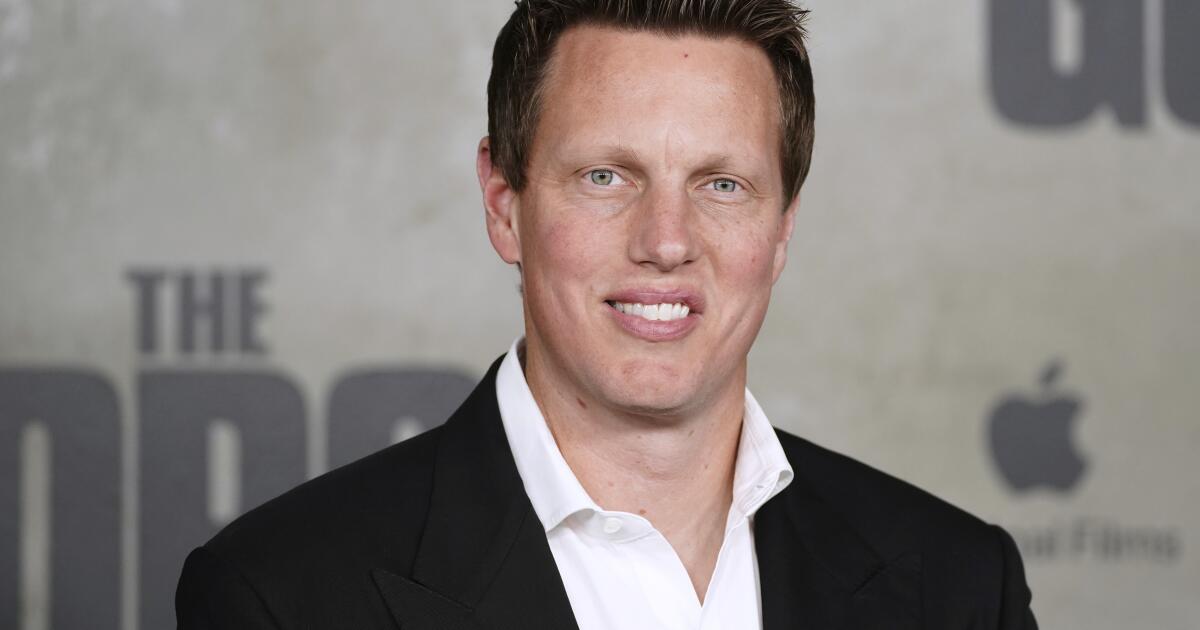
David Ellison’s Paramount Skydance has asked a judge to force California Atty. Gen. Rob Bonta and his coalition of 11 other states to prepare to set aside as much as $1.9 billion as the Warner Bros. Discovery merger challenge heads into overtime.

In Monday’s court filing, Paramount requested the plaintiff states, including New York, Colorado, Oregon and Nevada, as well as the Writers Guild of America, post a bond that would cover the “ticking fees” Paramount promised to pay Warner shareholders should the deal stretch beyond its anticipated September close.

Ellison was confident his proposed Warner takeover would sail through its regulatory clearances. President Trump’s Justice Department approved the merger in June, as have dozens of other countries.

The states would not be required to pay the full $1.9 billion upfront. Instead, they would have to come up with a portion of that amount by Sept. 30. Should the Democrat state attorneys general and WGA lose their lawsuits, they would ultimately have to pay the full amount.

Monday’s court filing highlights Ellison’s frustrations and the financial pressures that deal delays will bring the media company. The filing also continues Paramount’s full-court political pressure campaign to get Bonta and the other states to abandon their antitrust lawsuit.

Paramount did not expect such a spirited challenge from Bonta and the 11 other Democratic state attorneys general who banded together with the WGA to try to block the $111-billion merger of two historic Hollywood studios.

Paramount’s 23-page filing, signed by former high profiile federal prosecutor Danielle Sassoon, was intended to rattle the states.

Paramount is trying to create divisions among the plaintiff states by prompting them to question their resolve in fighting a protracted and potentially expensive legal battle, according to a person familiar with Paramount’s strategy who was not authorized to speak publicly.

Because WGA has separately sued to unravel the deal, Paramount has asked the judge to have the union post a bond to cover some of the costs, too.

In its motion, Paramount cited the Clayton Antitrust Act, which is the foundation for Bonta’s lawsuit. The law carries a provision to require plaintiffs to post a bond to cover the potential financial harms of halting a transaction.

The bond gives a defendant, in this case Paramount, a way to recover lost funds should they ultimately prevail in court.

U.S. District Judge Araceli Martínez-Olguín will be asked to rule on the request during a Wednesday court hearing.

“We have satisfied all closing conditions under our merger agreement, having received regulatory clearances from 68 jurisdictions,” Paramount said in a statement. “These two lawsuits are the only barrier to closing this transaction.”

Paramount is incurring considerable legal fees and deal-related costs.

The company cited a potential eight-month merger delay because Martínez-Olguín scheduled the trial for March 2. If the case goes to trial, it might not be decided until next May.

At issue are the “ticking fees” that Paramount in February agreed pay to Warner investors should the merger be delayed . Paramount agreed to pay $.25 a share for every quarter until the acquisition finalizes.

The fees add up to $7 million a day, or $650 million per quarter.

Paramount is facing a June 4 deadline to close the deal. That’s when Warner Bros. Discovery can demand a $7-billion break-up fee.

Paramount wants to get the deal done as soon as possible, and with the approval of Mexican regulators last week, only Bonta and the states’ lawsuit stands in their way.

Paramount also is cognizant of shifting winds in Washington should Democrats regain control of Congress in November, which could bring fresh scrutiny to the merger .

Ticking fees weren’t the only costs of the extended timeline.

“There will be no integration and no ramped-up investment in content, production, and creative talent by the combined company,” Paramount said . “Employees of both Paramount and WBD are also harmed by the uncertainties caused by the delay.”

Last week, the Directors Guild of America and the International Alliance of Theatrical Stage Employees — which represent a combined 200,000 union members — waded into the clash over the merger, which continues to carve deep divisions throughout the industry.

“We remain confident that plaintiffs’ case is without merit and will defend our pro-competitive transaction in court,” Paramount said. “We look forward to closing this transaction and delivering its benefits to consumers and entertainment industry workers in California, the United States and around the world.”

Source link

US Fed holds interest rates steady citing ‘elevated’ inflation | Inflation News

The United States Federal Reserve is set to hold interest rates steady as inflationary pressures mount, driven by heightened fuel prices as tensions between the US and Iran continue.

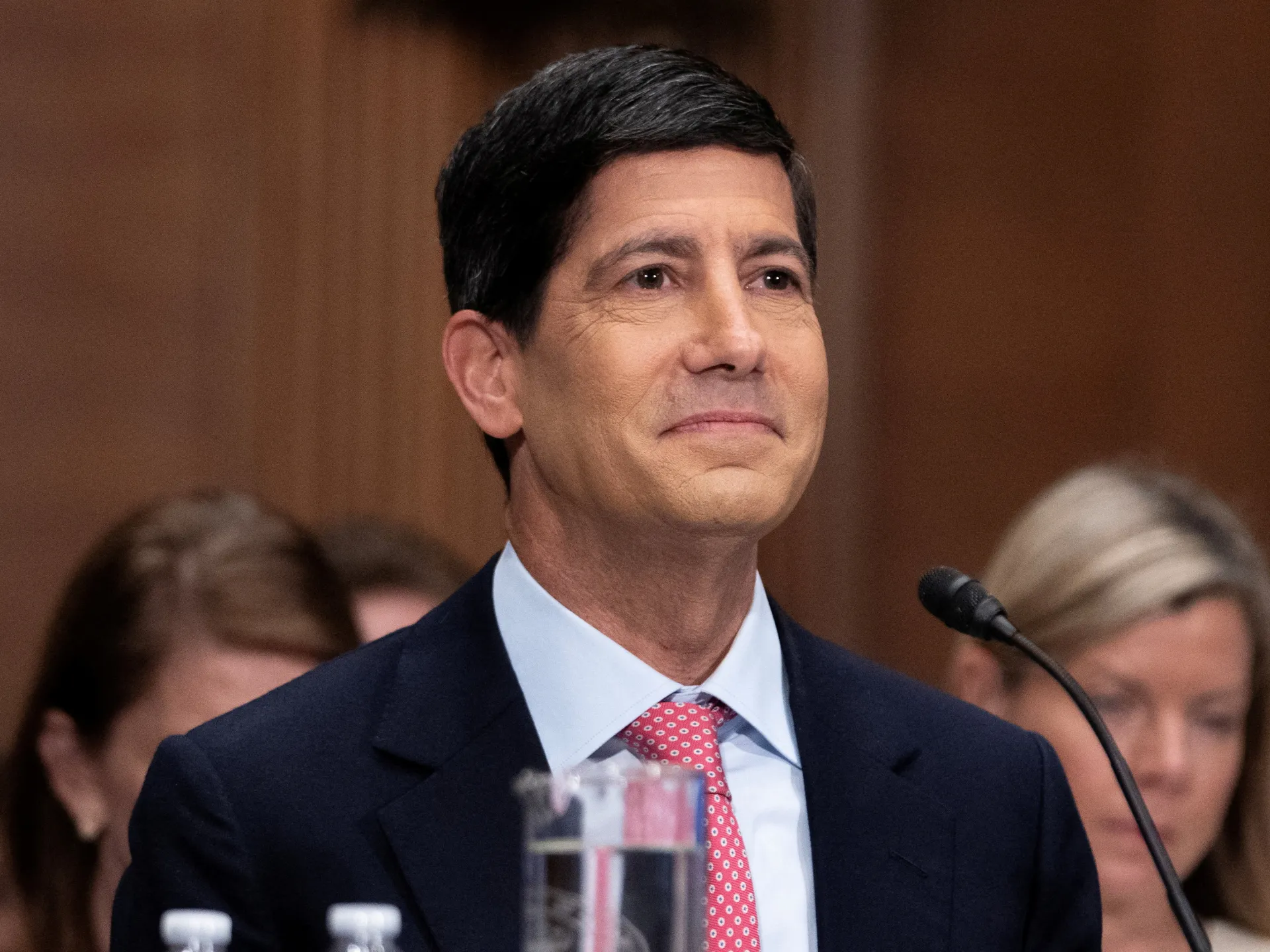
The central bank said on Wednesday that it will maintain rates at 350-375 basis points during the second monetary policy decision under new Chairman Kevin Warsh.

Recommended Stories

list of 4 itemsend of list

“Inflation remains elevated relative to the Committee’s 2 percent goal, in part reflecting supply shocks that have driven price increases in certain sectors, including energy. The Committee will deliver price stability,” the central bank said in a statement upon the release of its decision.

CME FedWatch, which tracks the likelihood of monetary policy decisions, forecast a 66.3 percent chance of maintaining rates, while there was a 33.7 percent chance that rates would increase to 375-400 basis points.

Of the 12, three members, Beth M Hammack, Neel Kashkari, and Lorie K Logan, voted to raise rates by 25 basis points.

“My colleagues and I considered the economic shocks of recent years, strained supply chains arising from the pandemic, military conflicts, energy supply disruptions, substantial increases in tariff rates, and yes, the surge in AI-related investment,” Warsh told reporters.

“We are not relying on any one individual piece of data as cover or as an excuse, or as validation. What I care about and what I think the Committee cares about is trends on the data.”

Monetary policy decisions have become more uncertain as Warsh has scrapped forward guidance, which typically helps financial institutions and journalists better understand upcoming policy choices.

Flying blind

That is putting pressure on analysts.

“With little guidance on the reaction function under the new chairman, markets are filling the void with speculation that Warsh may be eyeing a surprise hike to reinforce anti-inflation credibility,” Barclays economists said in a note.

Citadel Securities earlier this week forecast a rate hike. Meanwhile, analysts at S&P Global forecast that rates would hold steady.

At the last meeting, the central bank’s governors were evenly split on whether to raise interest rates this year, as the central bank maintained rates during its first meeting under Warsh.

Warsh had previously said that there was “no tolerance” for inflation as the central bank pushes to reach the Fed’s 2 percent target.

Market shifts

Financial pressures on the broader market eased last month, with consumer inflation moderating. The Consumer Price Index report released in July for the month of June by the US Labor Department’s Bureau of Labor Statistics showed a 0.4 percent decline in consumer inflation, marking the first monthly decline since April 2020 in the early days of the COVID-19 pandemic. However, that was a correction from the previous month, when the CPI rose by 0.5 percent.

The CPI remains elevated at 3.5 percent on an annual basis, according to the report, though that is still a slowdown from 4.2 percent in May. However, consumers are still feeling the pinch, especially at the petrol pump.

Prices are on the upswing. The average price for a gallon of petrol is $4.09 ($1.08 per litre), up 3 cents from this time last week, and up from $3.86 ($1.02 per litre) this time last month, according to the American Automobile Association (AAA), which tracks daily petrol prices. By comparison, daily petrol prices were $2.98 ($0.78 per litre) when the US and Israel first struck Iran on February 28.

Those pressures are echoed by a slump in consumer confidence for the third straight month, according to The Conference Board, which released its report on Tuesday.

“Consumers anticipate little improvement in business conditions over the next six months,” Dana M Peterson, chief economist at The Conference Board, said upon the report’s release.

Political flashpoint

The decision is overshadowed by pressure from the White House. Interest rates have been a point of contention between Trump and the central bank. Trump has long pushed the Fed to cut rates, putting former Chair Jerome Powell in the crosshairs and making him the subject of investigations by the US Department of Justice.

But Warsh has yet to become a target of Trump’s scorn. “Kevin is fantastic,” he told reporters on Monday on board Air Force One. “He’s got a board, and the board members are very political.”

Trump made those claims despite the central bank’s longstanding commitment to maintaining its independence from political pressure.
Source link

Trump imposes 50% US tariffs on some Canadian goods, citing discrimination | International Trade News

Tariffs apply to Canadian wine, hockey sticks, cement, and other products, sparking fears of escalating trade tensions.

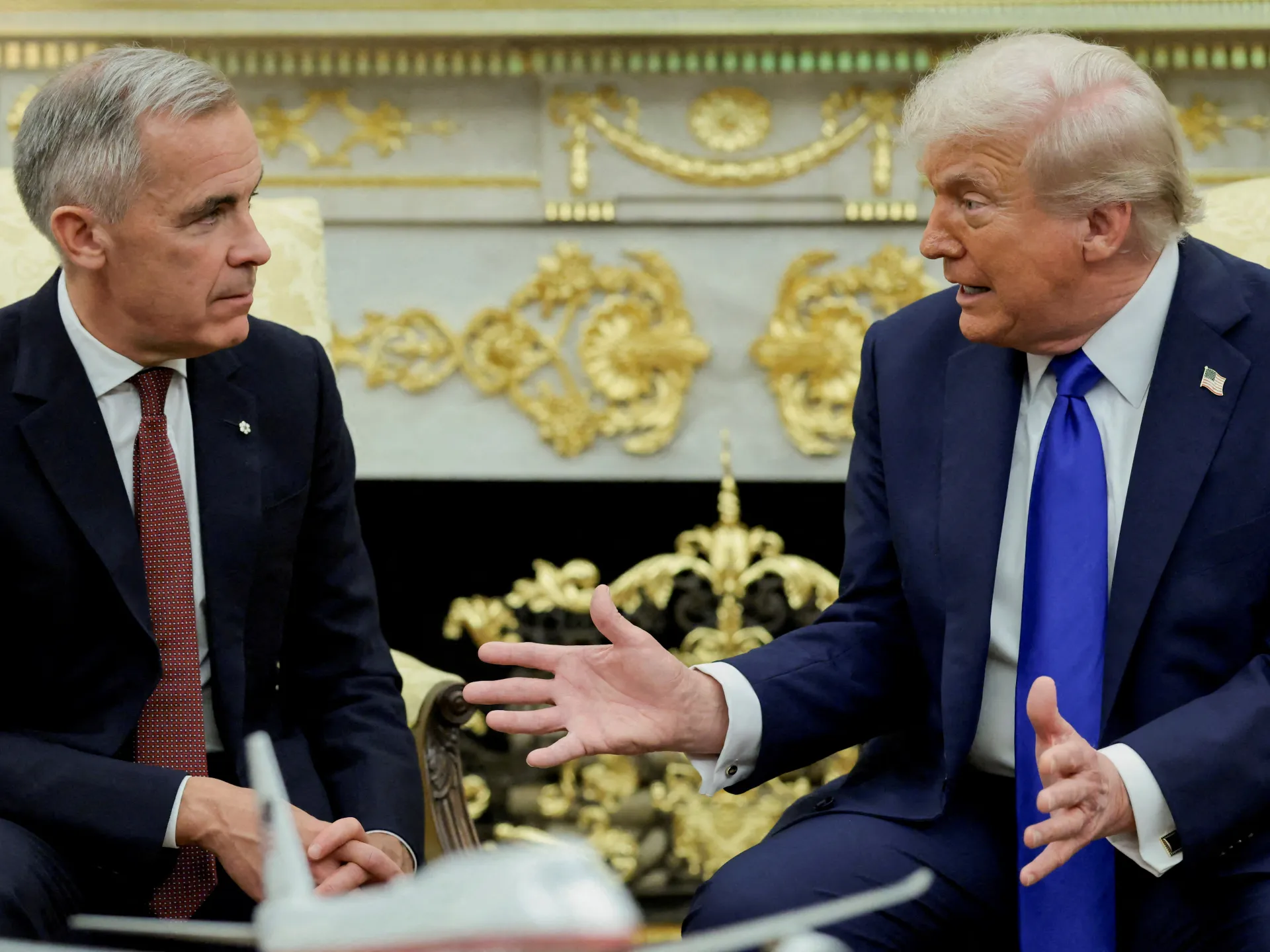
US President Donald Trump will impose new 50 percent tariffs on many Canadian goods, claiming “discriminatory treatment” by Ottawa against US alcohol, automobile and dairy products.

The tariffs, ordered by Trump on Monday, will take effect in 30 days and cover a range of items, including wine, hockey sticks, and cement, according to a White House fact sheet.

Recommended Stories

list of 3 itemsend of list

Trump, who saw many of his tariffs struck down by the Supreme Court earlier this year, is using an untested legal provision for the new duties: Section 338 of the Tariff Act of 1930.

The latest duties will not apply to energy, potash, and goods already impacted by sector-specific tariffs, the White House said.

Crucially, however, they will hit products covered under the US-Mexico-Canada free trade agreement (USMCA).

The tariff announcement quickly raised concerns of escalation among some businesses.

While Trump has slapped sweeping duties on US trading partners since returning to the presidency last year, the orders generally exempted goods entering his country under the North American free trade pact.

His latest actions threaten to further strain ties with the second-largest US trade partner and come just days after he threatened Canada with increased tariffs over a wave of wildfire smoke that descended on the US.

The White House, in announcing the new tariffs, said Canada was one of only two countries – along with China – to retaliate against Trump’s tariffs last year.

It also took aim at the fact that most Canadian provinces have stopped buying US alcohol, boycotting the products over Trump’s tariff threats and repeated calls for annexation of Canada as America’s “51st state”.

“Canada has taken US alcohol products off Canadian shelves, given better market access to dairy products from the European Union, and has put a cap on US vehicle exports to Canada from companies reshoring to the United States,” US Trade Representative Jamieson Greer charged in a statement.

The tariff announcement aims to “hold Canada accountable for its retaliation and discrimination”, he added.

Source link

Chemical weapons watchdog restores Syria’s voting rights, citing progress | Weapons News

Syria regains voting rights in the OPCW as new leadership makes progress in addressing chemical weapons issues.

The global chemical weapons’ watchdog has announced it has handed voting rights back to Syria because “concrete steps” have been taken to address outstanding issues since the fall of the Bashar al-Assad regime.

In a statement published on Thursday, the Organisation for the Prohibition of Chemical Weapons (OPCW) said the decision follows a “significant change” in circumstances since Syria was suspended in 2021. That was due to the former government’s failure to declare the full scope of its chemical weapons programme and the repeated use of poison gas during the civil war.

Recommended Stories

list of 3 itemsend of list

Since a lightning offensive ousted long-time ruler al-Assad in 2024, “the new Syrian authorities committed to fulfilling Syria’s obligations under the Convention and have since taken concrete steps to cooperate with the Technical Secretariat to achieve this goal”, read the statement.

Actions taken by the new government of President Ahmed al-Sharaa include facilitating verification activities and taking initial steps in destroying identified remnants.

“These decisions reflect the tangible progress achieved through continued cooperation and constructive engagement between the Technical Secretariat and the Syrian Arab Republic, with the support of the wider community of States Parties,” said OPCW Director-General Fernando Arias.

In 2013, Syria joined the OPCW and agreed to the destruction of its weapons to be supervised by the watchdog. Back then, Syria was believed to possess about 1,000 tonnes of toxins and had agreed to destroy them under a joint Russian-US proposal designed to avert a US military strike on its territory.

Syria’s decision followed a global outcry over a suspected chemical attack that same year in Ghouta, an eastern suburb of the capital Damascus.

US intelligence estimated that at least 1,400 people, including 426 children, were killed in that attack which it attributed with “high confidence” to the Syrian government. Al-Assad denied involvement and blamed rebels.

According to OPCW, while Syria submitted an initial declaration of its chemical weapons programme, the former government did not declare all its chemical weapons programme and attempted to mislead inspectors about its overall scope and scale.

Source link

Trump, citing vandalism, says pool repairs to begin ‘immediately’

June 21 (UPI) — President Donald Trump said Sunday that work will begin “immediately” to repair the Lincoln Memorial Reflecting Pool, blaming vandalism for problems at the newly renovated Washington, D.C. landmark.

Trump repeatedly claimed over the weekend on social media that there had been arrests in connection with vandalism at the Reflecting Pool, which has been plagued by issues since undergoing a $15 million restoration ordered by the president.

From algae blooms to blue coating peeling off its bottom, the Reflecting Pool has been a target of criticism of the Trump administration, which has defended the restoration as necessary while blaming vandals for at least some of the damage.

In a social media statement on Sunday, Trump said he inspected the Reflecting Pool and was in disbelief at what he saw.

“I just inspected it, and could only say to myself, and those gathered around me, WOW, who would do such a thing? SICK, DERANGED PEOPLE!” he said.

It was unclear exactly what damage Trump was attributing to vandalism.

In a Saturday post, Trump referenced the need to drain the pool in order to conduct vandalism-related repairs, which was in addition to alleged vandalism to landscaping.

“They took some form of knife or blade, and put a 250 foot long gash into the beautiful facade of what took so much work, competence and money to build and complete,” he said.

“They also poured corrosive and destructive chemicals into the Pool.”

Trump first commented on the pool Saturday evening, saying in a statement that U.S. Park Police had arrested “multiple individuals for vandalizing our Nations magnificent Reflecting Pool.”

He then said hours later that “many additional people have been arrested having to do with the disgraceful Vandalism of our beautiful Reflecting Pool.”

UPI has asked U.S. Park Police for confirmation of arrests and damage to the pool caused by vandalism.

Trump first announced plans to restore the pool in November. Atlantic Industrial Coatings Limited was awarded $6.89 million in April to paint the bottom of the pool. The broader restoration has since been reported to cost about $15 million.

He announced June 6 that work on the pool was complete ahead of celebrations marking the 250th anniversary of the United States to be held alongside Trump’s 80th birthday.

But within days of the completion, the pool began experiencing issues. Videos posted online show the pool’s surface green with algae, while others show individuals reaching into the pool to handle the peeling blue paint.

On Friday, three-time U.S. Olympian David Hearn was arrested for allegedly damaging the pool. He has claimed in interviews with multiple news organizations that he only touched the edge of hardened paint that was peeling off the pool’s floor.

“I didn’t vandalize anything,” he said.

Source link