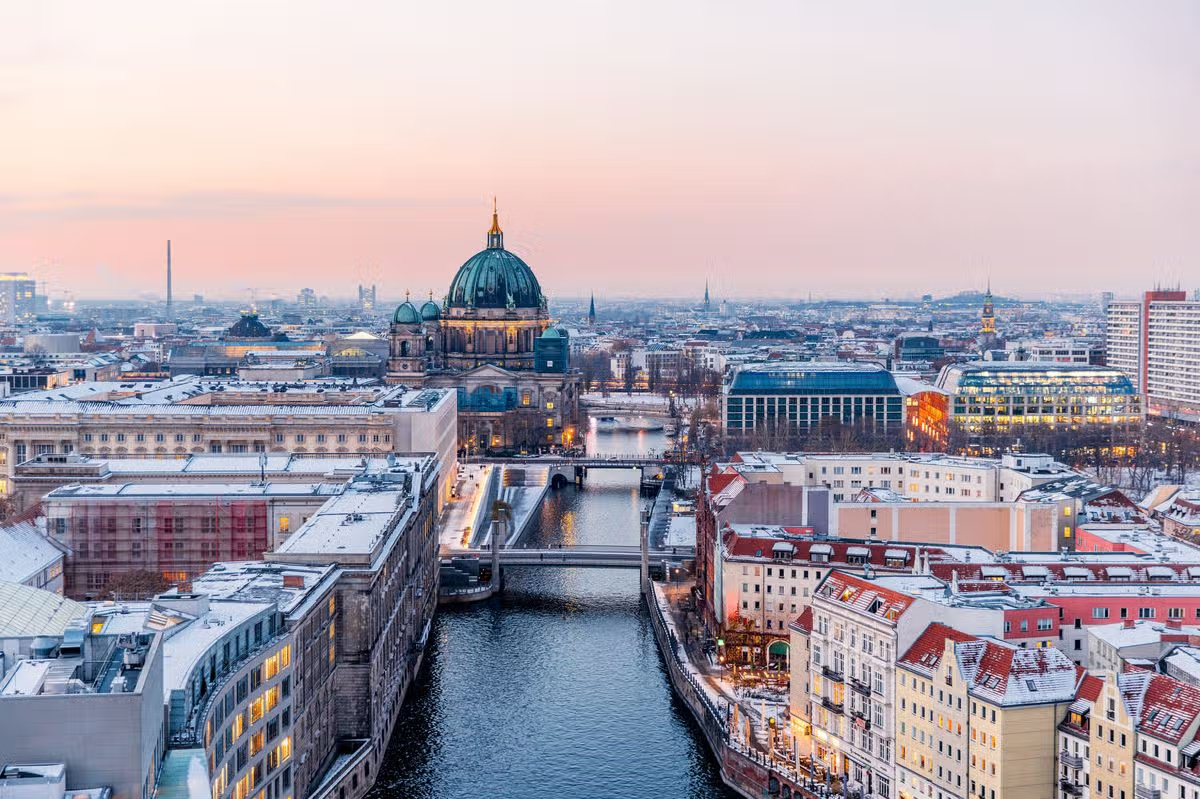


WHEN you think of Sweden, you think ABBA, IKEA and Northern Lights – as well as it being an expensive holiday destination.
However, I got to know another side of its capital city Stockholm when I lived there for a few months as a student.
Stockholm might be known as an expensive city but there is a way to do it on a budgetCredit: Alamy
And as a student, it meant I was on a strict budget, so I was on the hunt for the cheapest places to eat and drink as well as finding the best free things to do.
So here’s everything you need to know to avoid emptying your wallet, from cheap transport to bargain hidden gems.
Sign up for the Travel newsletter
Thank you!
Travel passes
If you’re planning on travelling around the city by public transport, then the SL Smart Card can save you money.
Instead of topping up or paying a fare everyday, you purchase a time-limited travel card and this lets you take all the buses, trams, inner-city commuter ferries, metro and commuter trains your heart desires.
When I found the perks of the SL cards, I was exploring the city like nobody’s business as I didn’t have to think about the logistics of costs if I wanted to go to two different neighbourhoods in one day.
Depending on how long you’re there you can choose from different time periods, starting at 24 hours for £13.83 (SEK 180).
Compare that to a 24-hour pass across Zones 1-6 in London is £23.60?
A much bigger bargain.
An SL Smart Card is great if you plane on travelling around all dayCredit: Alamy
Hidden gems
While the centre of Stockholm is great, did you know that the Stockholm Archipelago is home to 30,000 islands?
So one thing I highly recommend is hopping on an inner-city commuter ferry, which you can use with your SL card.
I recommend stopping off at Djurgården, known as Museum Island and is home to ABBA Museum.
But Art-lovers will also love Modern Museet and it is free to visit on Friday evenings between 6pm and 8pm during spring and autumn.
Otherwise ride the metro to Gamla Stan and find Stortoget, the city’s oldest square which is referred to as ‘The Bloodbath,’ having sparked the Swedish War of Liberation.
You may need to squint your eyes for this one; the Iron Boy (Järnpojke) sculpture is the smallest public monument in Stockholm.
You might also miss is the narrowest street in the whole city, found down the steps of Mårten Trotzigs gränd. Touch both walls with your hands and make a wish for some good luck.
The Nobel Prize Museum is touristy but also worth a visit too, as included in the entry ticket is a guided tour around the displays so it’s a great way to get a glimpse into ideas that have transformed the way we live.
Use your pass to get a ferry to ‘Museum Island’Credit: Alamy
Cheap eats and drink
The Swedes love a coffee break, which loosely translates to ‘fika’ – and there are some insanely delicious places to go.
One of my favourites which I went to every week was Stora Bageriet in the district of Östermalm.
Built into a former military bakery that supplied soldiers with bread rations, now you can watch the bakers at work.
Don’t expect to get a table inside as it’s pretty small, but the huge courtyard is where to go instead, especially in the summer months.
As well as the traditional sweet treats up for grabs, I would suggest opting for their other pastries because I can guarantee you that you will not find anything like it elsewhere. I loved the danish buns with rhubarb, which cost just £3.89.
Lots of the city’s bars and restaurants are on floating platforms on the river, and one of my favourites is Mälarpaviljongen.
If you know where to look, you can find some grat hidden gems in the cityCredit: AlamyThe Ostermalm district is one to go to for bakeriesCredit: Alamy
You might expect the garden-restaurant to be on a single platform but actually there are several platforms that are joined through footpaths and bridges.
Take your time to wander through before picking up a tray and working through the window displays.
Otherwise find beers for under a fiver at the much loved Ölstugan Kungsholmen.
As a student, you’d often find me in the local McDonald’s after a late night out, but Stockholm also has its own take on Maccy D’s called MAX Burgers.
No matter where you are, I guarantee you’ll find a MAX close to you and the best thing is that the quality of food is better with the same cheap prices.
My go-tos were a box of cheese fries (£3.42), crunchy chicken wings (£2.64) or a bacon cheeseburger (£6.76). If you love cheese or want to splurge, try the ‘Original Cheese Can’ (£6.92) which is a burger served with a side of melted cheese dip.
Otherwise when in Sweden – have the IKEA meatballs?
For under a fiver, you can get a plate of 8-piece meatballs with the traditional sides of cream sauce, lingonberry jam, peas and a choice of boiled or mashed potatoes.
MORE cheap flights to the US could soon be launching from the UK.
The airline has revealed it could be adding even more flights to some very popular cities after rise in demand after the World Cup.
Norse Atlantic Airways could add more flights to its roster from London to New YorkCredit: GettyPassenger could get more options to Orlando tooCredit: Alamy
Norse Atlantic Airways revealed that as a result of cutting back capacity by almost a third in July due to rising fuel prices, it could actually add more flights to its roster.
Chief executive Eivind Roald said in a statement that the airline was considering adding more flights to New York and Orlando due to a rise in demand.
Sign up for the Travel newsletter
Thank you!
It comes after the low-cost airline ran special flights to the World Cup in the US for Norway and England supporters.
New York City is famous across the globe but it is popular with Brits as it can be reached in seven hours.
There are also lots of other places to explore including its many neighbourhoods like Mills 50 which has Asian American and Pacific Islands influences.
Norse Atlantic Airways runs low-cost journeys between the UK and the USCredit: Alamy Stock Photo
Streets are cobbled and there are lots of historic houses and moss-draped oak trees.
Then there’s the Milk District with plenty of street murals and lakeside neighbourhood Winter Garden, with its clutch of museums on Plant Street.
When it comes to eating in Orlando, the city has more than 50 Michelin Guide restaurants.
Round-trips to Orlando from London Gatwick starts from £343pp.
Chief executive Eivind Roald of Norse said: “Our airline on demand strategy enables us to respond quickly to market changes.
“With fuel prices slowly trending downward and demand remaining strong, we see an opportunity to increase capacity on our own network in the coming months, which may include adding more US flights to New York and Orlando.”
What’s it like to fly with Norse Atlantic Airways?
Head of Sun Travel (Digital), Caroline McGuire, flew with Norse and revealed exactly what she thought…
“On a recent trip toCape TownI flew with Norse – it allowed me to do the 11-hour overnight stint in Premium Economy for the same price as a rival company in Economy seats.
“To give you an idea of price, return fares for two adults and one child in premium economy cost £3,583 toCape TownnextMarch, while return fares in Premium Economy on a rival airline cost £5,000.
“Keen to test it out, we flew to the South African city in their posh Premium seats and returned in Basic Economy. So what do those Premium Economy seats get you on an 11-hour Norse flight? Well it starts with a priority lane at check-in.
“Norse doesn’t do online check-in – everyone checks in at the airport. And Premium passengers are given their own lane, so we waited about five minutes before dropping off our bags and getting our tickets.
“You get a small handbag, a cabin bag and a checked suitcase included in the price of a Premium ticket.
“You also get priority boarding, which I’m not normally a fan of given I have a young child who needs to let off steam before a flight, but given our seats were massive, it was worth it.
“he chairs are very roomy. With a very decent recline that allowed my whole family to get a decent night’s sleep. My son pretty much slept uninterrupted from 10pm to 7am, while I snatched a manageable 5ish hours, which is far more than I’ve ever done before in Economy on a long haul flight.
“Crew hand over ear plugs, eye masks, pillows and blankets at the start of the flight, as well as headphones for the TVs (you have to pay £5 for these in Economy).
“Two meals are also included – I had a decent tortellini, side salad and cheesecake-type evening meal with complimentary wine, and a hot cooked breakfast, plus a croissant, yogurt and mini fruit salad.
“All in all, we disembarked from the flight at 8.30am feeling so well-rested that we managed a whole day at the beach in Cape Town, followed by an evening meal.”
The alerts have triggered health warnings for millions of people, including tourists
12:40, 07 Aug 2026Updated 12:42, 07 Aug 2026
A volunteer cools off tourists under mist cannons set by the Civil Protection in front of the Colosseum in Rome(Image: Getty )
Anyone going on holiday to certain parts of Europe has been issued a health warning from an NHS GP. It comes as numerous alerts have been issued in several well-known areas due to severe heat across many popular tourist destinations.
All 27 of Italy’s major cities are now under extreme heat alerts as a blistering heatwave hits Europe. The severe weather has caused temperatures to exceed 40 degrees Celsius in multiple countries, prompting health alerts for millions of people, including tourists and families going abroad during the six-week holiday.
On Thursday, Italy’s Health Ministry issued a red alert for all 27 cities in its national heat surveillance system. This marks the first time this year that the entire network has reached the highest warning level simultaneously. The red alert network spans key areas, starting in Trieste in the northeast and extending to Palermo in Sicily – including Rome, Milan, Venice, Florence, Naples, Turin, and Bologna.
In response to this, NHS GP Dr John Akinjolire is urging travellers not to underestimate the risks. He is warning that soaring temperatures can quickly lead to heat exhaustion and heatstroke.
The GP has shared the simple steps holidaymakers should take before and during their trip to stay safe in the heat. He’s also shared the key warning signs to watch for and how to access healthcare if they become ill while abroad.
NHS GP Dr John Akinjolire, working with travel insurance company PayingTooMuch, explained how you can avoid heatstroke when travelling during a heatwave in Europe. He said: “With temperatures reaching 40°C in parts of France, Spain and Portugal, alongside active wildfires across these countries and Greece, travellers should be aware that this is more than a typical summer heatwave.”
In an important reminder, he said: “Extreme heat can pose serious health risks, particularly for people with underlying medical conditions.” The health expert says people with heart disease, diabetes or respiratory conditions may find that high temperatures place extra strain on their health.
“If you’re travelling near the ongoing wildfires, the smoke can also worsen breathing problems, even in those who do not usually experience respiratory issues,” he warned. “Before travelling, it’s important to store temperature-sensitive medication such as insulin correctly, check air quality forecasts as well as the weather, and be aware that some medications like certain antibiotics, acne treatments and antidepressants, can increase sensitivity to the sun.”
He says staying well hydrated is important and it’s worth remembering that alcohol accelerates dehydration, so drinking more than usual in the heat can increase risk significantly. He added: “It is advisable to avoid prolonged periods in direct sunlight during the hottest part of the day typically between 11am and 3pm, wearing lightweight clothing and seeking shade wherever possible can all help reduce the risk of heat exhaustion and heatstroke.”
The NHS GP says it is important to know the difference between the two. “Heat exhaustion can usually be managed with rest, shade and fluids, but heatstroke, where the body can no longer regulate its own temperature, is a medical emergency requiring urgent attention,” he said. “Signs to watch for include confusion, a lack of sweating despite the heat, and a rapid or irregular heartbeat.”
Travellers should also familiarise themselves with how healthcare works in their destination. Unlike the NHS, many European countries require patients to pay for treatment upfront before claiming costs back even if you have a GHIC.
Access to care can also vary, particularly in more remote areas such as the smaller Greek islands. Serious medical emergencies in these parts may require transfer to a larger island or the mainland.
“These risks should not discourage people from travelling, but they do highlight the importance of preparation,” the NHS GP said “Having comprehensive travel insurance that accurately reflects any pre-existing medical conditions, alongside the right medication, lightweight clothing and other essentials for extreme heat, can protect you in case you find yourself becoming unwell while abroad.”
TUI is opening two new hotels in destinations a few hours from the UK.
New TUI Blue hotels will open their doors to guests in both Seville and Lisbon as it expands to European cities as well as beach destinations.
One of the new hotels will be the TUI BLUE Rossio in LisbonCredit: TUI GroupThe second city getting a new TUI Blue Hotel will be SevilleCredit: TUI Group
The first new TUI Blue Hotel will be in the pretty Spanish city of Seville, which is set to open later this year.
Called TUI Blue Sevilla Suites, it will be the first TUI Blue hotel to open in a European city.
Sign up for the Travel newsletter
Thank you!
It will have 89 rooms, co-working space and even a rooftop pool which will no doubt have incredible views.
It’s in Vega del Rey which is a 10-minute drive from the city centre.
The second European city hotel will be in TUI Blue Rossio in Lisbon‘s Baixa district.
It’s currently undergoing ‘a comprehensive redesign’ but is set to open as a 30-room boutique early next year.
The TUI Blue Sevilla will open later this year and will be just 10-minutes from the city centreCredit: TUI Group
Lisbon can be reached in as little as two hours 35-minutes from the UK and is the perfect spot for a city-by-the-sea break.
It’s also a cheap spot and one expat who moved there from the UK suggests picking up a local ‘vinho verde’ which costs “a few euros“.
The city itself can be explored via the tram system with tickets starting from as little as £2.70.
In Lisbon, a Lisboa card is a savvy way to save – buy one from £27 for access to 51museums and galleriesacross the city.
TUI Group Chief Operating Officer Marco Ciomperlik said: “Following the first openings in cities across Asia, we are now bringing our distinctive leisure hotel concept to some of Europe’s most attractive urban holiday destinations.
“Lisbon and Seville are ideal destinations, combining strong city break appeal with the rich local culture, food and experiences that sit naturally at the heart of the TUI Blue concept.”
This comes after TUI announced its expansion in Asia.
It announced the opening of two new hotels last year in both Malaysia and Cambodia.
A POPULAR European city break destination is set to get a new airport within the next decade.
Plans are currently underway in Portugal to build a new airport near Lisbon, around 31 miles from the centre of the city.
Lisbon is set to get a new airportCredit: ANA Aeroportos de PortugalIt is set to cost £7.63billion and will host up to 56million passengers a yearCredit: ANA Aeroportos de Portugal
Estimated to cost €8.9billion (£7.63billion), Luís de Camões Airport would feature two runways, with the possibility of adding two more in the future.
There will be 120 aircraft parking spots, 64 gates and 76 bridges at the airport, allowing it to handle up to 56million passengers a year, rising to 85million by 2082.
Sign up for the Travel newsletter
Thank you!
Included in the plans is also a new high speed rail network, that would connect the airport to Lisbon in 26 minutes.
The new airport would replace Humberto Delgado Airport and is planned to open in 2037, but could be as early as 2034.
In a YouTube video showing what the new airport could look like, a spokesperson states: “From the moment you arrive at the terminal, every stage of the journey is designed to be simple, intuitive, and comfortable.
“Featuring smart, innovative solutions and technology that ensures a seamless experience with information always at hand.
“An airport that is more efficient, better connected, more intuitive, and distinctly Portuguese.”
Alongside the new airport, Portugal is investing €400million (£343million) in its existing airports including Porto, Faro and Funchal airports.
There will be two runways which could be increased to four in the futureCredit: ANA Aeroportos de PortugalOther airports across Portugal are also set for upgradesCredit: ANA Aeroportos de Portugal
At Funchal Airport, the terminal is due to be extended.
Then at Porto there will be 14 new aircraft positions and at Faro, there will be new boarding gates as well as an expanded check-in area.
Back in March, TravelSupermarket found that the Portuguese capital was home to the cheapest five-star European city holidays, costing under £310 per person.
In 2007, for the first time in recorded history, more humans were living in urban spaces than rural ones. The animal kingdom has followed suit. In our cities, we are surrounded by synanthropes — wild animals that have adapted to human-modified environments and have learned to thrive in them — yet most of us are unaware of the biodiversity of this urban wildlife and how it functions along a parallel track with its human brethren.
Dan Werb’s latest book “Our Wild Familiars” explains how these “soil churners … epidemic vectors and ecosystem partners” have a crucial role to play in the future sustainability of our communities. I talked to Werb about coyotes, the health benefits of birdsong and seagulls with junk-food issues.
You’re reading Book Club
An exclusive look at what we’re reading, book club events and our latest author interviews.
By continuing, you agree to our Terms of Service, which include arbitration and a class action waiver. You agree that we and our third-party vendors may collect and use your information, including through cookies, pixels and similar technologies, for the purposes set forth in our Privacy Policy such as personalizing your experience and ads.
✍️ Author Chat
You are an epidemiologist.
I was trained as a social epidemiologist — somebody who can look at how societal factors influence the health of populations. I study how society determines who lives and dies, who is sick and who is healthy.
I’m wondering if it was your interest in Zoonotic viruses that led you to this subject?
The last book I wrote was called “The Invisible Siege.” It is an overview of the history of coronavirus science, starting in the ‘80s, braided with the much longer history of the coronavirus family. And it ends with this scientist who is describing being in northern Thailand and moving through Myanmar and Yunnan Province in China in the ‘90s. And he stumbles upon this exotic animal market near the Shan Autonomous state, which is an ethnic enclave in northern Myanmar that’s been at war with the junta there forever. And this market’s got cloud leopard skins, civets and every crazy, exotic animal that you can imagine. And they were all being sent directly into China. And it’s exactly this kind of trafficking that is carrying all these viruses, like this superhighway of exotic animals into urban areas.
But not all urban animals are vectors for disease. In fact, we have fostered very cushy urban environments for many different species. Pigeons, for example, who don’t have to fly in cities because they have no natural predators.
Chris Shell, a coyote expert from Altadena that I interviewed, pointed out that pigeons do have to worry about predators now, because there are red tail hawks and coyotes and other creatures. Our urban ecosystems are becoming more complex. There are some biologists that are describing our time right now in North America as the great urban shift. They’ve done modeling exercises showing that over the next few decades there are literally going to be thousands of species moving into urban areas. They’re increasingly going to be mega-fauna, much larger animals.
Why is that happening?
We’re seeing the continuing acceleration of the transformation of wild spaces into human modified spaces. But it’s also because of extreme weather events. If you look at the horrible fires that occurred in Los Angeles last year, one of the things that happened was hundreds of thousands, even millions, of animals had to flee those areas that were on fire, and they fled into urban areas. What do urban areas provide? Constant sources of freshwater, continual sources of food waste, and other prey. You’ve got climate change happening, and that’s causing this real shift of animals moving into different places.
Dan Werb, author of “Our Wild Familiars,” a new book about wild animals who’ve managed to survive in human communities.
(Joseph Fuda)
What about a less traditional metropolitan space, like L.A. County, which is a hodgepodge of so many different kinds of topography and terrain.
L.A. is super fascinating because lot size isn’t directly related to income. It’s very much more heterogeneous and variable, even within neighborhoods. The wealthier a neighborhood is, the higher the biodiversity is going to be, because we’re going to have larger lots, more green space, fewer fences, things like that.
We have a complicated relationship with coyotes in L.A., especially those of us who have lost pets to them. But according to your book, we have trapped them in our cities.
Coyotes need to have pathways that allow them to move in and out cities. As it is now, they move into urban environments looking for food and water, and they can’t get out. They get trapped in cities, and conflict happens. Like black bears in suburbs across large parts of North America that dig into people’s garbage.
And bears and other animals eating, say, fast food leftovers is a nutritional disaster as well.
It’s like an ecological trap. They see no reason why they would leave, even though staying is actually more dangerous for them. And there are all kinds of ecological traps across cities that manifest in different ways. One that I always think about is seagulls at the seashore that have evolved over tens of millions of years to be able to hunt fish and shellfish. And the fish are right there, yet they’re eating french fries because it’s slightly less work.
You mention the Wallis Annenberg Wildlife Crossing that spans the 101 freeway in Agoura Hills, the first animal crossing of its kind in America, as a potential solution to this problem.
I think it’s great. One hopes there will be more projects like that undertaken in other cities around the world.
We’ve discussed all the rotten things that are going on with animals in cities. Why is it a wonderful thing that animals have come into our cities and our lives?
If we hear birdsong, we’re less stressed. If we hear additional birdsong, it multiplies the stress-relieving effect. Being close to animals is biologically beneficial for us. It’s really about connection. I look at AI, and there’s this kind of sense that an AI chat bot can decrease loneliness. But it’s just an echo chamber. I think a true connection is bridging some kind of divide in the way that you think or perceive the world. And in that sense, being aware of an animal who is aware of you takes you out of yourself in a way that I think is really, really special.
This Q&A was edited for length and clarity.
📰 The Week(s) in Books
Book jacket for “You Won’t Get Free of It: Stories of Mothers and Daughters” by Rachel Aviv
(Los Angeles Times illustration; book jacket from Knopf)
The ostensible topic of Rachel Aviv’s new essay collection, “You Won’t Get Free of It,” is mothers and daughters, but according to Julia M. Klein, Aviv’s sparkling, sharp-eyed pieces “involve the slipperiness of truth and the crushing inadequacy of our mental-health system and social safety net.”
“Cool Machine,” the final volume of Colson Whitehead’s Harlem trilogy, is an “American epic disguised as a heist novel,” writes Leigh Haber. “Whether or not New York is your jam, or a place you have escaped from or to, Whitehead’s Harlem Trilogy is destined to live on as an American classic.”
Whitney Friedlander profiles Jessica Knoll, one of America’s most successful authors of sexy thrillers that “depict the absolute worst things one person could do to another — but in such a sensational, tongue-prickling-sour-candy kind of way that her books come off as devilishly evil beach reads.”
Finally, Dan Tana’s book about his legendary, eponymously-named restaurant in West Hollywood, “Everybody Came to Tana’s,” has been posthumously published. Sixty-two years after the restaurant’s opening, it’s still a tough reservation to snag. “In a town that’s always trying to be something that it’s not, it’s not trying to be anything,” his daughter Katerina tells Maddie Connors. “Dan Tana’s is longevity in the midst of ephemera.”
📖 Bookstore Faves
The Philosophical Research Society is a Los Angeles Historic Cultural Monument in Los Feliz.
(Philosophical Research Society)
There is nothing else in L.A. like the Philosophical Research Society. The nonprofit was founded by scholar Manly Hall in 1934 as a place for the curious to explore wisdom, philosophy, mysticism and mythology across all cultures. Its visually striking Mayan Revival Los Feliz campus, a Los Angeles Historic Cultural Monument, features an auditorium, a gallery and a library of 30,000 volumes. The PRS bookshop is its own gem, a well-curated miscellany of books for spiritual seeking and enlightenment.
In a joint email exchange, PRS staffers dama, Jarrett Schaefer, Kelly Carmena and Amanda Brass explain what makes the store a sui generis experience.
How does the bookshop tie in thematically with the Philosophical Research Society?
The PRS Bookstore is a reflection of all that we do here at PRS. It is an extension of the library created by Manly Hall where you will find foundational texts in alchemy, mythology, philosophy, astrology, and art. You will also find a selection of books based on themes explored in our talks and screenings and from recommendations made by the team at PRS.
It’s a very well-curated inventory of new and secondhand books — I assume you’re very careful about what you stock on the shelves.
We select works that are meaningful to us and hope that they will resonate with everyone too. We highlight works by mystics and visionaries. In our staff recommendations section, you’ll find titles like Ben Caldwell and Robeson Taj Frazier’s “Kaos Theory,” art books by Penny Slinger, Betye Saar and Remedios Varo, Yoko Ono’s “Grapefruit,”“Red Tarot” by Christopher Marmolejo, “The Bhagavad Gita,” and “Time, Myth & Matter” by LD Deutsch. We also feature items from local artists like Moss Candles, Black Willow Jewelry, and perfume by Syd Botanica. Our secondhand books are donation-only and are a kaleidoscopic bag of surprises.
The Philosophical Research Society features an auditorium, a gallery, a library of 30,000 volumes and a bookshop.
(Philosophical Research Society)
What book genres tend to sell well?
Esoteric art, mythology, tarot and divinatory practices, ancient philosophy, and hermeticism are all popular subjects. The top-selling book every year is Manly Hall’s seminal work “The Secret Teachings of All Ages,” which is an encyclopedic outline of symbolic philosophy. The used astrology books and children’s books are quite popular too.
Do you have author events?
We’ve hosted book talks with Mark Mothersbaugh, Michelle Coltrane, Mitch Horowitz and Susan Orlean. We regularly co-present events with publishers like Hat & Beard Press, Angel City Press, the Library of Esoterica, Sky Press, Ouroboros Press and Bibliomancers. There are also monthly events that are centered around the bookstore: The Manly Hall Book Club, Astro Study Group, Surrealist Study Group, Tarot Salon and an Esoteric Game Night.
Future Works, a group of infrastructure experts, believe this tunnel can be done for just under £2bn and improve the links between key northern cities.
Michael Dnes, the co-founder of Future Works, said he had guilt about not getting this product off the ground years ago when he worked for the Department for Transport.
When he left in 2024, he looked to Norway for a way to get the plan up and running for cheaper than £10bn, the cost of a similar shelved government scheme.
A spokesperson for Future Works, said: “High demand for the route means that the project could pay for itself, without the need for Westminster funding.
“Scandinavian tunnels are often owned by local councils, who recover the costs through tolls. Equally, northern pension funds have hundreds of billions in investment capital that could be mobilised to build the project.
“They aim to create a shovel-ready scheme, and to bring this through the planning system faster than the 10+ year processes that have become the norm in UK planning.
“Work could begin before the end of the decade, with the road and railway open in the mid-2030s.”
Monitor ranks Toronto as having the worst air quality on earth, surpassing Kinshasa, DR Congo, and New Delhi, India.
Published On 16 Jul 202616 Jul 2026
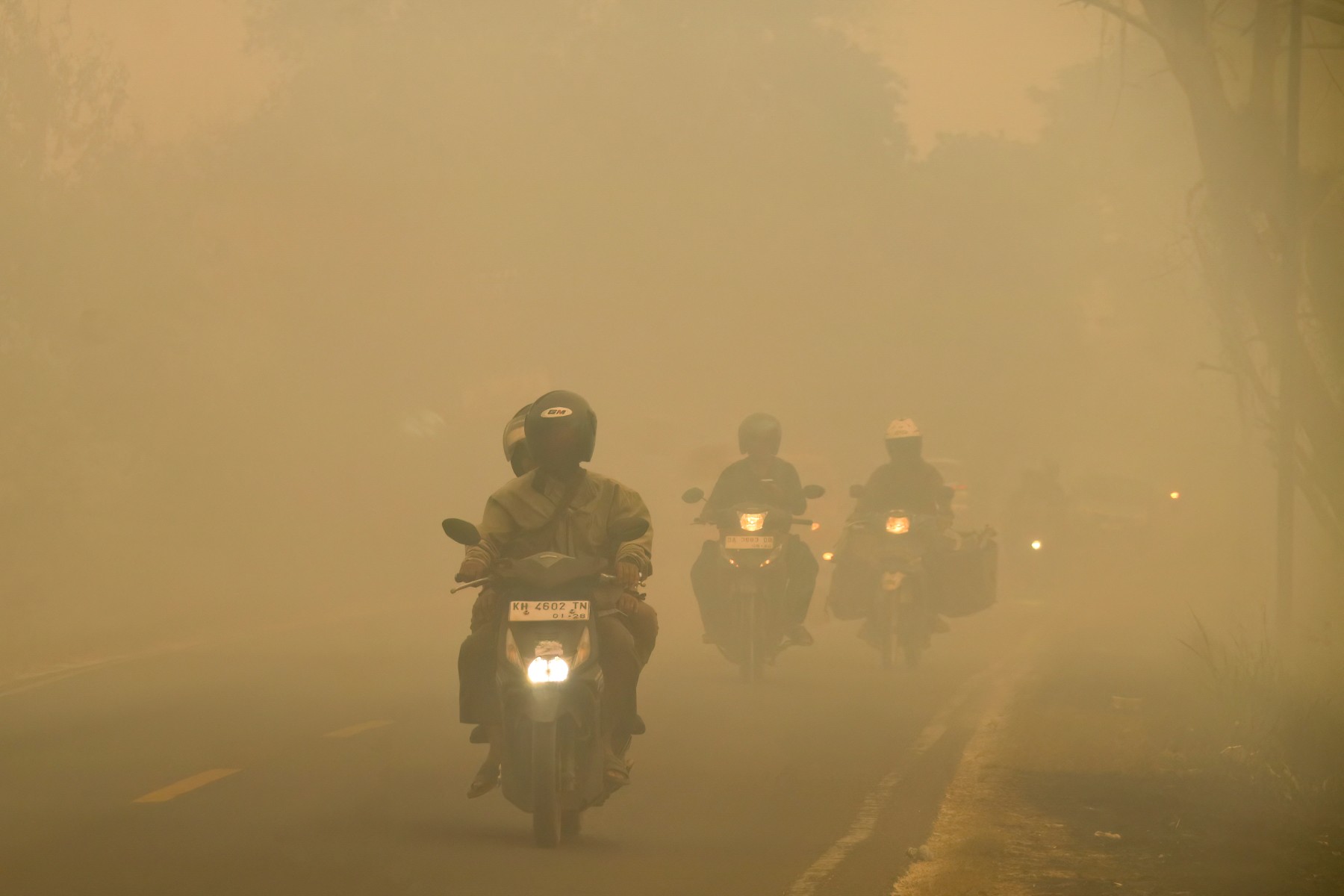
Toronto’s air quality has ranked the worst among all major cities in the world as smoke from wildfires in northwestern Ontario blankets the skies and spreads into the northeastern United States, triggering multiple health warnings and evacuations.
Wildfires continued burning through sparsely populated areas hundreds of miles from Toronto, Canada’s largest city, on Wednesday, sending smoke over a wide area, although cities in the area are not being threatened.
Recommended Stories
list of 3 itemsend of list
Environment Canada reported an Air Quality Health Index reading of 10+, classified as “very high risk”, for Toronto. Forecasts suggested that hazardous conditions could persist through Thursday night.
IQAir, a Swiss air quality technology company, ranked Toronto as having the worst air quality across the globe, surpassing the Democratic Republic of the Congo’s Kinshasa and India’s New Delhi.
“The biggest contributor to Toronto’s spike in air pollution right now is wildfires, though the higher-than-average temperatures are also playing a role,” Armen Araradian of IQAir told the AFP news agency.
While this year’s wildfire season in Canada has been fairly muted compared with recent years, there are more than 800 active fires nationwide.
A video that went viral on social media showed a Canadian National train surrounded by fire near Armstrong, Ontario. Canadian National employees in the area and residents of Armstrong were evacuated on Monday night, the railroad operator said in a statement. It suspended rail operations near Armstrong as a precaution.
Smoke from the wildfires also worsened air quality across the border in the US, with the states of Pennsylvania, New York, Connecticut, Massachusetts, Maine and New Hampshire particularly affected.
Authorities in New York City have issued an alert over unhealthy air quality, urging residents to reduce strenuous outdoor activity and take extra breaks if they are outside on Wednesday and Thursday.
The National Weather Service said smoke could linger until the end of the week.
“We probably haven’t seen the worst of it yet for New York City. We probably haven’t seen the worst of it yet for the Great Lakes and upstate, and New England yet either,” Dan Westervelt, Lamont associate research professor at Columbia University, told the Reuters news agency.
More than 80,000 people are expected to attend the FIFA World Cup final at an open-air stadium in New Jersey on Sunday, with another 50,000 planning to watch the game from New York City’s Central Park, where skies appeared hazy.
New York Governor Kathy Hochul urged people, especially those with health conditions, to exercise caution.
A person puts on a mask as reflected in a souvenir shop mirror, as wildfire smoke from northwestern Ontario fills the sky, in Toronto on Wednesday [Carlos Osorio/Reuters]
The Canadian government has said that wildfire season began more slowly this year than in 2023 or 2025 – the two worst seasons for wildfires – but warned that fires were likely, due to warmer-than-usual temperatures across the country.
It said some 835 active fires were burning across the country on Wednesday, with 112 considered out of control, and most in the central provinces of Manitoba, Saskatchewan and Ontario.
They have burned 1.9 million hectares (4.7 million acres) so far.
Greg Evans, a professor of chemical engineering and applied chemistry at the University of Toronto, said the city had been simultaneously hit with severe heat and wildfire smoke.
“I expect that this will occur more frequently over the coming decades, so cities and residents need to prepare for this in the future,” he said.
We threw in an education in United States history, geography, and the economics of the $20 baseball cap.
They expected an athletic tournament.
We staged a county fair, featuring nine exhibits stretched across 3,000 miles, with people and surroundings as varied as our twangs.
Visitors to the Boston venue will remember the success of the Soccer Train, a commuter rail and site of opposing pep rallies on the 50-minute trip to Foxboro Stadium.
Classic stories from the Los Angeles Times’ 143-year archive
Imagine that, longtime Bostonians said. A culture clash where nobody gets hurt.
Visitors to the Dallas venue will remember our failures: the blight around the aging Cotton Bowl, the empty seats inside, the construction-hampered traffic flow that turned game days into nightmares.
For nearly a month, in nine locations, the world has applauded our wonders, cringed at our bruises, and, in some places, even felt our embrace.
So how did we do?
Sometimes, we shined. Other times, we stumbled.
Sometimes we yelled too much, pushed too much. When the rest of the world was rushing joyfully out of a subway or dancing through an alley, often we put up our dukes and played the frightened bullies.
But we also smiled a lot, and listened a lot, and sometimes accepted that which we did not understand.
Like those hourlong postgame fan celebrations that forced stadium police to work overtime. We eventually realized something could not be so bad if it made so many people so happy.
We hollered and hugged, we were impatient and helpful. In other words, we were ourselves.
Sometimes we thrilled. But other times, we disappointed.
Visitors to the New York venue will remember what Dublin sales representative Gerry Taylor remembers.
Nothing.
Taylor learned on the first weekend that despite slick World Cup advertisements, New York was not New York.
Just as Boston was not Boston, but Foxboro. And Detroit was not Detroit, but Pontiac. And Los Angeles was Pasadena.
And New York was actually a smelly, industrial area in northern New Jersey.
Taylor left his Manhattan room early one Saturday morning, four hours before the opener between Italy and Ireland.
He wrapped himself in an Irish flag and planned on a making a pregame stop in a pub next door to Giants Stadium.
“Do this all the time in Dublin,” he said. “Pop a few Guinness at the pub, talk to other fans, get ready for the game.”
But upon arriving in East Rutherford, N.J., he realized the only thing he could drink next door to the stadium was toxic waste.
There wasn’t a pub in sight. Or a store. Or a house. Or even a street that wasn’t an expressway.
He spent the next three hours sitting with two friends on a curb, cursing his introduction to sports in America.
“Are all stadiums like this, away from cities, in the middle of nothing?” he asked. “Seems to me it must be hard to have good sports in places like this, isn’t it? We are let down.”
The only thing we can assure him, and others as disillusioned as Taylor, is it wasn’t because we didn’t try.
Rating the 1994 World Cup venues, best and worst of show:
Chicago
BEST: We knew this would be a great spot from the moment we first bit into something called “the Belly Buster,” sold at a hot dog stand near Soldier Field.
Ingredients: Polish beef dog, relish, ketchup, mustard, onions and jalapeno peppers. It lived up to its billing. Trust us.
And so did everything else.
Soldier Field is the perfect location for an international event, being just a short cab ride from one of America’s great downtowns.
Michigan Avenue has been buzzing for a month, what with German tourists in Bermuda shorts buying black patent leather shoes to accompany their white socks. At night, horse-drawn carriages fought with taxis for street space in some of the best action since Ben Hur.
Bolivian Marco Etcheverry tackles German captain Lothar Matthaeus from behind in Chicago, Ill. (AP Photo/Santiago Lyon)
(Santiago Lyon / Ap)
WORST: The only people who didn’t enjoy themselves here were the Greeks, both the national soccer players and the large Chicago-area community that gathered to watch them one Sunday morning against Bulgaria.
Greece lost that game, 4-0. In the process, the teams drove Greek fans so crazy they started seeing things.
At one point during the game, a Greek tossed a smoke bomb on the field, later claiming it was tradition to do so after his team scored.
His team is back in Athens, and it still hasn’t scored.
IMPRESSIONS: The World Cup’s kind of town, Chicago is. Not only were the streets brimming with international flavor, the shuttle system to Soldier Field was so efficient that cabbies complained about not getting enough chances to rip people off.
Now that’s a venue.
YOU HAD TO BE HERE: During a bachelor party held on the 36th floor of a prominent local hotel, somebody poured beer down the elevator shaft. By morning, the ale had dripped to ground floor and short-circuited the electrical system.
Many hotel guests–some checking out with reams of World Cup-related luggage–were forced to carry everything down 20 flights of stairs.
Once at the bottom, they had to tip valet-parking drivers for walking 10 steps to pick up their cars.
Boston
BEST: We marveled not at a city’s effect upon a World Cup, but vice versa.
“What has happened to a town divided along ethnic lines has been remarkable,” said E.J. Kahn of the Boston Host Committee.
By order of Mayor Tom Menino, the historic City Hall area was turned over to foreigners of every imaginable color and tongue.
Old-timers who never thought they would see an African soccer team playing at the home of the New England Patriots also never thought they would see people dancing on their cobblestone streets in tribal costumes.
Police were particularly worried the night after Argentina had defeated Greece in a first-round game. While the Greeks partied in front of City Hall, the Argentines celebrated eight blocks away in Copley Square.
The fiestas drew closer and closer until five Argentine fans wearing blue-and-white uniform shorts stood directly behind a dozen Greeks dancing in a circle.
Just as security guards prepared to move in, the circle slowly opened, and the Greeks motioned for the Argentines to join them. The Argentines did.
The hardened city sighed.
WORST: Many fans apparently didn’t realize that the game would be played about 45 minutes south of Boston in the desolate suburb of Foxboro.
And nobody knew that once they arrived at the stadium, in a forested area where parking availability seemed unlimited, parking spaces would cost $20 each.
Visitors got even with the World Cup Organizing Committee, though, by leaving their hotels in Boston and staying closer to the stadium in places such as Providence, R.I.
Our smallest state as a World Cup host? Not quite what organizers had in mind.
IMPRESSIONS: The Northeast may have tried harder than any other area, and it showed.
The normally reserved Bostonians, ranked 28th out of 36 U.S. city residents in a recent survey rating kindness to strangers, discovered warmth and tolerance.
When dozens of Irish tourists were swindled out of tickets, Bostonians found them more. When foreigners didn’t understand those distinct accents, Bostonians spoke more slowly.
YOU HAD TO BE HERE: For an hour after Argentina’s victory over Greece, more than a hundred Argentine fans remained at Foxboro Stadium, dancing and singing.
Police politely asked them to leave their seats, but the group only moved as far as the lower concourse. Thirty minutes later, police finally escorted them down the concourse and out the front gates, where they continued to party.
Was the game that exciting? Well, yes and no. With this stadium being 20 miles from the nearest decent-sized city, they had nowhere else to go.
Dallas
BEST: From the World Cup volunteers to city cab drivers, we appreciated the people. Amid bleak surroundings and uncomfortable temperatures, they provided the venue with some badly needed touches of humanity.
One hero was Laura Addington, a schoolteacher from Louisiana. She served as an interpreter for everyone. Well, at least everyone who spoke English, French, Spanish, Italian, German or Arabic.
Other stars were the African taxi drivers. They knew the roads, and they knew soccer, which is the only reason we were able to find Maradona during rush hour.
WORST: Some nights were almost cool enough to hold a sporting event. Yet most of the games were held in the blazing afternoon or early evening sun to accommodate European television.
Those brave enough to attend games suffered through stifling heat. Don’t buy those happy expressions you saw on ESPN. It was torture.
IMPRESSIONS: Dallas is a Cowboy town. And not the Germans, Argentines or any of the soccer fanatics who came through here changed that.
With poor attendance and a distinct lack of any electricity other than that generated by the Cowboys’ new set of uniforms, this proves there are about a thousand better places in this country to hold an international event.
Not that Dallas is a bad place–it’s merely the wrong place.
We have learned that events such as the World Cup require diversity of thought and appreciation of differences. Dallas is just too danged American for any of that.
What Dallas’ failure here portends for the 1996 Olympics in another southern town called Atlanta, well, that’s for another story.
YOU HAD TO BE HERE: By some estimates, the World Cup games here were outdrawn even by the demolition of the Cotton Exchange building downtown one Saturday morning. But at least at the soccer games, nobody was treated for smoke inhalation.
New York-New Jersey
BEST: With the melting pot of New York City nearby, this was the only truly international venue.
The stadium rocked with the sounds, colors and even smells of those countries competing.
Except for its location in New Jersey, Giants Stadium was also the perfect World Cup facility, with a beautiful field and gleaming facilities that had foreigners gawking.
WORST: The only Cup fever to hit New York City involved the Stanley Cup.
Maybe it was because of the Rangers. Or Knicks. Or Gay Games. It certainly wasn’t the Yankees, whose attendance was routinely tripled by the World Cup games.
Maybe it was because every day in New York City feels like an international festival. Or maybe it was because New York City simply didn’t have the time.
Whatever, the city that doesn’t sleep also didn’t care. It was interesting to drive to the stadium listening to New York City sports-talk radio hosts rip soccer, then arrive to discover mile-long lines at the front gates.
New Jersey license plates, all of them.
IMPRESSIONS: Organizers could save tourists and taxi fare by dropping all pretenses that the game is being played in New York City.
The success of this venue proves it is time to start celebrating the ethnic charms and splendid facilities of northern New Jersey . . . and leave New York to worry about the Mets.
YOU HAD TO BE HERE: The location for the World Cup host committee in this country’s largest city? New Brunswick, N.J., 90 minutes from Manhattan.
The location of these New Jersey-played games as listed on commemorative postal stamps? New York.
Detroit
BEST: Do not underestimate the accomplishment of organizers who ran the Detroit venue by avoiding all traces of Detroit.
Games were staged an hour’s drive north in the suburb of Pontiac, a bedroom community dominated by large front lawns and strip malls. If Detroit street gangs possess missiles that can fly that far, we didn’t see them.
The venue MVP (Most Valuable Professor) was Trey Rogers, the god of sod. The assistant prof of turf-grass science at Michigan State actually made grass grow inside the Silverdome.
After three years of experiments, at a cost of $2.4 million, the indoor stuff held up admirably and was hailed by all but the most serious allergy sufferers.
The crowd cheers at the Pontiac, Mich., Silverdome as the United States and Switzerland play. (AP Photo/Bill Waugh)
(Bill Waugh/AP)
WORST: Much like East Rutherford and Foxboro, there was no there there. The venue lacked big-city energy and a pulse.
The streets emptied at 10 p.m. After night games, if you hadn’t paid someone to hold a spot in line at Herschel’s Deli, the happening spot was a Taco Bell drive-through.
Of course, after a game in the non-air-conditioned Silverdome, all anybody wanted to do was lie down in a nice comfortable meat locker.
YOU HAD TO BE HERE: After the June 24 game between Brazil and Sweden, a thunderstorm passed directly over the media tent as hundreds of journalists were filing their stories. The thunder was deafening and the tent shook as if it were going to break.
Lightning threatened to knock out the power. The lights flickered, World Cup officials implored reporters to save their files or risk losing them.
This scene was repeated at media and hospitality tents in most of the venues. But aside from the Mexican team, nothing in the tournament has collapsed.
Washington
BEST: We never thought we’d say this, but we liked the subways.
The blue line, which stopped three blocks from RFK stadium, was a shoulder-to-shoulder mass of international passion.
The Dutch fans made their mark by pounding on the ceilings. The Swiss, by chanting through the underground terminals.
The Mexicans demonstrated their presence with songs, singing loud even though they could barely breathe while crushed in overloaded cars during the final 10 minutes of the trip.
It was all underground, but it was true democracy, rare even for our nation’s capital.
WORST: Everything was wonderful until you actually walked inside RFK.
The stadium is falling apart. The Mexican fans literally caused it to rock with their constant bouncing during Mexico’s emotional tie with Italy.
The stadium security officials were surly and overbearing. Maybe it was those horrible purple berets that made them so mad.
The stadium media-tent volunteers, mostly of college age, were the worst. This would be of no interest to the public, except many worldwide impressions of this country are created by foreign journalists.
And those foreign journalists were treated horribly. Little attempt was made to understand or deal with them.
Tickets were refused with no explanation given. Attempts to talk with media coordinators were denied. Questions about the facility were greeted with shrugs.
Translators working player interviews refused to even offer translated quotes until they had been typed and apparently approved by supervisors, which often took two or three hours.
When one Middle Eastern journalist complained about discrimination, one college girl working as a volunteer laughed in his face and replied, “I don’t think so.”
IMPRESSIONS: Sports organizers beware. Any further events staged here should not involve any local volunteers or officials from this World Cup.
This is a wonderful city, and as our capital, it should be the one of the first places promoters go for big events. But now we wonder if haughty attitudes and low-rent facilities haven’t kept the big games away.
The pre-game show at RFK Stadium prior to the Norway v Mexico group stage match of 1994 FIFA World Cup. (Photo by David Caban/Archive Photos/Getty Images)
(David Caban/David Caban)
YOU HAD TO BE HERE: A local activist hung a “Save Bosnia” sign in the stands during the opening game here between Mexico and Norway. It was taken down by local officials. He sued for the right to display it. He won.
Not that the guy wanted to rub it in, but visible the next game were two “Save Bosnia” signs.
San Fransisco-Palo Alto
BEST: We love Los Gatos. This mountain town of 28,000 near San Jose has adopted–and been adopted by–the Brazilians.
After Brazil’s games at Stanford Stadium in Palo Alto, Los Gatos became Little Rio, complete with samba music, incessant drumbeats and conga lines through Town Plaza Park.
“This is very exciting,” local resident Judy VanKampen said. “It is totally different than what you normally see in Los Gatos, which is people walking down the street with dogs and strollers.”
Even though crowds were lively, they were orderly. Some of the women might have strained the city’s public decency codes with their skimpy bikinis, but city officials, to their credit, looked the other way.
Sure they did.
Brazilian forward Romario beats United States defender Alexi Lalas at Stanford Stadium, July 4, 1994 in Stanford, Calif. (AP Photo/Thomas Kienzle)
(Thomas Kienzle / Associated Press)
WORST: The whining of Palo Alto politicians because World Cup organizers identified the venue as San Francisco.
But unless we are missing something, nobody has written a song called, “I Left My Heart in Palo Alto.”
IMPRESSIONS: Of all the venues, Stanford University was the worst in creating obstacles for World Cup organizers.
University officials were in position to drive a hard bargain because FIFA, soccer’s organizing body, wanted a presence in San Francisco but did not want to use Candlestick Park because of its smaller size.
Thus, Stanford Stadium is by far the least modern of the venues. Even though some improvements were made, World Cup organizers did not get all of their demands met.
Yet those academics learned that the World Cup is just the type of event that educational institutions should be encouraging.
The excellent soccer is the least of its legacies. Teams from four continents played here, and the visitors who followed those teams to Palo Alto left something of themselves behind.
Unfortunately for the merchants, it was not money. They were disappointed in their take.
But the visitors contributed something more valuable, their cultures. Los Gatos, one feels, will never be the same.
YOU HAD TO BE HERE: A Brazilian woman walked into an ice cream store in Los Gatos one hot day and ordered a beer.
Los Angeles-Pasadena
BEST: My, but the old lady still can sing. Our Rose Bowl looked wonderful with its face lift and colorful frills.
When the air is clear and the heat isn’t oppressive, there is no better view in this World Cup than that of the San Gabriel mountains looming behind the Rose Bowl scoreboard.
Well, OK, the view of that scoreboard after the United States played Columbia was pretty nice too.
Soccer fans inside the Rose Bowl stadium in Pasadena, Calif., prior to World Cup Final match between Brazil and Italy, Sunday July 17, 1994. (AP Photo/Lois Bernstein)
(Lois Bernstein / Associated Press)
WORST: That World Cup chief Alan Rothenberg would allow his hometown facility to rip off hungry and thirsty soccer fans–many of them his neighbors–with inflated prices is inexcusable. Two dollars and fifty cents for a Sno-cone? Fish and chips for $7.50?
IMPRESSIONS: The scene reminds us of the 1984 Olympics, causing emotions we never thought we would feel again. Traffic flowing smoothly, the city clean and pressed, citizens talking about something fun.
Surveys say that many people here couldn’t care less about the event, but the ones who do have made it memorable.
YOU HAD TO BE HERE: With so many men ignoring the “Women” signs on the portable toilets outside the Rose Bowl, officials placed “Out of Order” signs on several working potties and secretly passed around the word that women should use those.
Orlando
BEST: Quick, somebody get this town an NFL team. There was no better stadium-area atmosphere than here, where fans congregated less than a mile from the Florida Citrus Bowl at a trendy shopping and dining area called Church Street Station.
One night the Dutch fans were having so much fun, they started stealing baseball caps from policemen. Another night, the Mexicans were having so much fun they lay down on the railroad tracks upon hearing an oncoming train.
OK, so maybe we don’t all have the same kinds of fun.
Expensive restaurants became rollicking pubs. Thousands of foreigners became wailing, wandering messes.
Did we mention that the Irish were also in town?
WORST: This was soccer in a sauna. Every team that played under the unforgiving midday sun recorded a triumph of spirit.
For fans, merely getting to the games was a similar triumph. Ten dollars to ride a parking lot shuttle? Fifteen dollars to park at a local school, with the money being handed to a member of the PTA?
This was central Florida hucksterism at its worst. But then, they learned from the experts down the street, those guys wearing the ears.
IMPRESSIONS: With the Dutch and Belgians in town, this was supposed to be the site of hooliganism. Police from around the state were summoned for 12-hour shifts. But nothing happened. The most serious crime involved people refusing to leave bars at closing time.
Already our vacation capital, Orlando proved that it deserves to become a sports capital as well. It knows how to turn a game into an event without anybody getting hurt.
After existing for so long in the shadow of fantasyland, it acts as if it loves this real stuff.
YOU HAD TO BE HERE: In the downtown area on July 4, fans from everywhere joined to sing “Happy Birthday.”
To whom? To the United States, of course. Considering how we came of age in yet another international sporting scene this summer, it was a happy birthday indeed.
Times staff writers Elliott Almond, Julie Cart, Lisa Dillman, Chris Dufresne, Helene Elliott, Randy Harvey, Mike Penner and Times Sports Editor Bill Dwyre contributed to this story.
IF YOU are looking for your next European city break, then look no further as the best spots on the continent have been announced.
From popular Spanish spots to Italian hidden gems, the best 15 cities in Europe have been named – though it is bad news for the UK that didn’t feature on the list at all.
Florence in Italy has been named the best city in Europe by Travel + LeisureCredit: Alamy
Travel + Leisure’s World’s Best Awards are decided by readers’ votes and this year over 661,000 people took part.
Coming out on top is Florence in Italy, scoring 89.48 out of 100.
Sign up for the Travel newsletter
Thank you!
Deputy Travel Editor Kara Godfrey, who has previously visited the city, said: “There is no better place to go for art lovers, with Florence being home to famous works from Michelangelo, Botticelli and Leonardo da Vinci.
“You can also dine like a king, with slices of pizza for €1.50 (£1.29) and pasta dishes from €5 (£4.29).
“All of the major attractions are a short walk from each other although if you really need a break, you can book an electric golf-buggy eco-tour that traverses the narrow roads.
“Something unusual to keep an eye out for is Florence’s wine windows – ordering a glass of vino through a tiny hole in the wall was created as a way to socially distance during the plague in the 17th century.”
Then in second place is Prague, in the Czech Republic – nicknamed ‘jewel in the crown of Europe’ – scoring 88.89 out of 100.
Prague in Czech Republic came in second placeCredit: AlamyThe city is known for having the largest castle in the worldCredit: Getty
One Sun reporter who previously visited the city said: “Prague may be best known for its beer, but hillside winery Vini ní Altan is a great option.
“There are great views from inside the intricately carved wooden gazebo, and children can burn off some energy in the vine-strewn park below.
“Prague boasts the largest castle in the world — effectively a small town on top of a hill.
Rounding out the top three is Salzburg in Austria, scoring 88.31 out of 100.
Rounding out the top three is Salzburg in AustriaCredit: GettyThe city is known for being the home of the famous film The Sound of MusicCredit: Getty
The Sun’s Laura Purkess said: “Salzburg, the home of Mozart and The Sound of Music, sits in Austria’s beautiful Eastern Alps.
“While most of us associate the Alps with snow- caps and skiing, this city makes an ideal summer holiday destination — and it’s affordable.
“If you’re a keen hiker, it’s relatively easy to get from the city centre into the mountains which are filled with stunning, tree-lined trails that take anywhere from 15 minutes to three hours to complete.
“Hardcore fans of The Sound of Music should swap the free walking tour for a proper guided one of the film sets that takes you to locations beyond the city centre, including Church Mondsee, where Maria wed the Baron.”
Porto, Portugal and Ljubljana, Slovenia – nicknamed the ‘green jewel of Europe’ – then followed to round out the top five.
Two spots in Spain featured on the list with Seville in 10th and Madrid in 13th.
A couple of Spanish cities also featured on the list as wellCredit: AlamyAnd a lesser-known Italian gem did tooCredit: Alamy
Seville is the capital of Spain’s Andalusia region and is known for its Moorish architecture as well as UNESCO World Heritage Sites.
As for the Spanish capital, Madrid, you can head to a number of museums and Royal Palaces.
Two spots in Italy also featured on this list with Rome in seventh, and for a lesser-known Italian spot, head to Siena which featured in 14th.
The medieval city found in Tuscany, boasts a UNESCO-listed historic centre, where you can head to Piazza del Campo – the main square – and Duomo di Siena – a cathedral with black-and-white marble.
And places like Funchal – nicknamed the Hawaii of Europe – snuck into the top 20.
Europe’s best cities, according to Travel + Leisure
One solo traveller who often shares tips and clips from his overseas adventures with his online followers has named the five cities he’d ‘never go back to if his life depended on it’
Cathedral of León, Nicaragua(Image: Getty Images/iStockphoto)
Many people are often looking for new places to explore if they’re planning to go travelling, whether that be alone or in a group. However, one solo traveller who says he’s been to 60 countries has advised against the places you definitely shouldn’t go – according to him.
Lucas Brancatisano, who is known as @alocalguide_ on Instagram, often shares travel tips, experiences and clips from his overseas adventures with his 6,300 followers on the site. In one of his latest reels, he named the five cities he’s visited during his travels that he’d ‘never go back to if his life depended on it’.
1. New Delhi, India
Lucas described the Indian capital as a ‘whole new level of overstimulation’, saying that there’s pollution, noise, busses, horns and cows on the road, and claims that the sky is ‘filled with smog’.
He exclaimed: “It’s not for me, I don’t think I’ll ever go back.
“The rest of India in parts is absolutely lovely, but New Delhi… not for me.”
2. León, Nicaragua
The solo traveller described León as “sweaty and dangerous at night”. Lucas said Nicaragua itself is fantastic and he had a “great time” there in 2024, but that he just didn’t enjoy going to León. “I’ll never go back,” he said.
3. Oia, Santorini
Lucas exclaimed: “This place is my definition of hell,” as he describe the holiday spot.
He added: “In summer, getting sunburnt, 1,000 selfie sticks with everyone getting the same sunset photo.
“You can just look at it online, you don’t have to go and get a photo of it.
“Don’t go there, you’ll have a really bad time.”
4. Phnom Penh, Cambodia
Lucas said he went to Phnom Penh in Cambodia “a long time ago”, but said that when he went there, all he remembers is a very built up city with lots of tyre shops and “not much going on”.
He added: “I could be wrong, and please let me know in the comment if I am wrong, because Phnom Penh maybe I would go back to.
5. Benidorm, Spain
The traveller descried Benidorm as “hell”, adding: “If you find yourself there and you’re not British, you’re in hell.
Lucas said there’s English breakfasts on every single menu there and loads of British people “rolling around”, as well as “pasty skin everywhere”, saying that it’s just “not a very nice place”.
He added: “If you’re in Spain and you’re going to Benidorm, you need tor rethink all the life choices you’ve made up to that point, because your’e in the wrong spot.”
Concluding his reel, Lucas exclaimed: “That’s my list, there’s not many I wouldn’t go back to, but they are five of them.”
Despite the post racking up more than 6,000 likes, some people had differing views.
One person wrote: “Will definitely go back to León in Nicaragua.”
While another added: “I was in Phnom Penh last year. It was very cool. Great riverside markets, river cruise, pubs and restaurants, temples. Beauty everywhere.”
A third chimed in: “I loved Oia!”
While a fourth added: “Benidorm to Brits is Cancun to Americans.”
A fifth chimed in: “Went to India, New Delhi, 10 years ago; the taxi just dropped me off in the city centre and left. I was so overwhelmed with everything going on that I sat down on the footpath and started to cry, a cow came out of nowhere and started to eat a cardboard box beside me.
“Locals stopped and started pointing at me and taking photos. Weirdest and best travel story I think I have, would I do it again? Hell ya haha.”
“TIKTOK made me do it”, I say to my friend, as I send her a snap of my coffee made by a robot.
If there was ever a city that embraces technology to celebrate the ridiculous, it’s Tokyo. And coffee is just the beginning.
Sign up for the Travel newsletter
Thank you!
Tokyo is one of the most interesting cities in the worldCredit: GettyThe Sun’s Helen dons traditional Japanese dressCredit: supplied
Last time I went to Japan’s capital, around 10 years ago, it was an expensive trip. Back then, the Yen (the country’s currency) was strong against the British pound and everything was twice the price.
This time around, with rates dropping over the years, one of the world’s coolest cities is surprisingly affordable again.
And I was buzzing to begin exploring on a budget.
Starting strong, I’d checked into trendy Yotel, a slick and modern hotel that embodies Japan’s futuristic vibe.
With 23 properties around the world, the brand is known for its prime locations, without the steep price tag.
The Tokyo one has room rates from £118 per night and is just steps away from one of the city’s coolest areas, the Ginza district.
The well-heeled neighbourhood is packed with stylish restaurants and bars, high-end shopping and elegant department stores.
Shopping is a major activity in Tokyo, with the flagship Uniqlo store just a few minutes from Yotel. This is the biggest Uniqlo in the world, its 12 floors packed with cool clothes and knitwear at a fraction of the UK price.
Then there is possibly the most famous shopping district in Tokyo, Harajuku. This is the place for eccentric outfits, outrageous headwear and funky souvenirs.
There are also cool vintage stores nestled between the tourist tat, but I was more concerned with all the ridiculous things to eat and drink along here.
Carve your own chopsticks like HelenCredit: suppliedA traditional Japanese tea ceremonyCredit: Getty
A toasted sandwich with rainbow cheese, followed by a giant multicoloured candyfloss and a coffee at Café Reissue that had a foamy top in the shape of Hello Kitty.
This is where you will also find the Shibuya crossing, the busiest pedestrian crossing in the world, where crowds get ready to race across when the traffic stops.
With 3,000 people crossing every two minutes, this interchange has become a tourist attraction in itself, as you run for your life and dodge people making TikTok videos, taking selfies and proposing.
For dinner, we bunked down at Kushiyaki Bistro Fukumimi Ginza, an underground izakaya.
The antidote to Tokyo’s tech-savvy tourist trails, this traditional tavern serves meat skewers and Japanese picky bits, with lots of lively banter.
As well as the great food, we made some new pals at the bar.
The language barrier didn’t seem to matter in the jovial atmosphere.
After a taste of authentic Japanese dining, I wanted to experience the country’s unique culture and try some traditional pastimes.
First stop was a Tea Ceremony at Maikura (£43, mai-ko.com).
Once we’d been decked out in colourful kimonos, we all sat on the floor to enjoy matcha with a special blessing.
Then it was straight on to Ginzabashi to make and carve our own chopsticks at an independently owned cafe (£18, ginzabashi.com).
By this point, we had worked up quite the appetite, so we tried our hand at sushi making at the famous Tsukiji Fish Market.
Covered in rice and with a not-so-artistic display of Nigiri and Maki in front of me, I can confirm it is not as easy as it looks.
Making some delicious sushiCredit: supplied
But, our patient sushi master was on hand to help us out and the end result was a lot more impressive than I was expecting.
The experience is £52 per person, but the price includes a tour of the market and you get to eat all the sushi you roll and some extras too (japanwondertravel.com).
Simply wandering around the city itself is enough to keep you busy. Street art, historic buildings, quirky characters and buzzing neighbourhoods are all part of Tokyo’s appeal.
That’s how I found myself at the hole-in-the-wall coffee shop in Harajuku being served by a bear.
The name Anakuma Café means “bear in a hole” in Japanese, and this tiny booth is exactly that.
I order my flat white on a tablet and it’s served through a hole in the wall by a comedy furry hand.
By the time I stopped laughing and taking pictures, my coffee had gone cold, but it was all about the experience. Which is as cheap as chopsticks.
GO: Tokyo
GETTING THERE: British Airways flies from Heathrow to Tokyo from £1,013 return.
It was praised for both its stability and security, citing its “old-fashioned sense of security”.
It explained: “Young children walk to school unaccompanied by their parents, huge events take place every week without major disorder, and crime rates are consistently low.
Tokyo came in first, with its safety highly praisedCredit: AlamyLisbon’s strong sense of community put it into third placeCredit: Alamy
“Tokyo should celebrate being such a well-mannered metropolis but its exemplary conduct is never taken for granted.”
However, a number of European cities made the top 20 list.
In second place was Copenhagen, citing its “booming restaurant and sauna scene” as well as its low crime rate and urban cycling schemes.
This was followed by Lisbon in third place, for it’s great public transport and local communities.
Sydney was one of the few outside of Europe to make the top 20Credit: Alamy
Lisbon has even become one of the top expat destinations in the world.
Coming in fourth was Vienna, followed by Sydney in 5th.
Other European entries to make the top 10 include Zurich (6th), Madrid (7th), Paris (8th), Munich (9th) and Oslo (10th).
Stockholm, Barcelona, Milan, Amsterdam and Helsinki all snuck into the top 20.
Israel’s military has advanced beyond Lebanon’s Litani River for the first time since 2006.
Israel’s military has advanced beyond the Litani River in southern Lebanon for the first time since 2006 and appear poised to encircle the major city of Nabatieh.
Senior Lebanese military sources on Saturday told the Turkish state news agency Anadolu that Israeli forces had crossed the Litani River, which Israel has declared the perimeter of its unofficial buffer zone.
Recommended Stories
list of 3 itemsend of list
Israeli forces are now on the outskirts of Nabatieh, a city that is key to southern Lebanon’s economy and a cultural hub for the region. If the Shia-majority city were to fall, it would mark a significant development in the war on Lebanon, which began in October 2023 and subsequent official ceasefire.
Nabatieh is viewed by many Lebanese as a symbol of resistance due to its historic role on the frontline of Israeli assaults.
Reporting from the southern city of Tyre, Al Jazeera’s Obaida Hitto said Israel was expanding its air campaign in southern Lebanon and encircling Nabatieh in preparation for a potential assault on the city.
“It looks like Israel is trying to make this final push to encircle Nabatieh, breaking through the second and third lines of defence of Hezbollah and isolating the western Bekaa Valley from the south of the country,” Hitto said.
Israel has issued evacuation orders for at least 10 villages in southern Lebanon, as it expands its invasion, despite being engaged in ongoing peace talks with Lebanese officials.
The Israeli army’s Arabic spokesperson, Avichay Adraee, instructed residents in several Lebanese villages to evacuate immediately, warning they could be killed if they remained.
The order came the day after officials from both countries met in Washington to discuss a permanent end to the war. It began in early March when Iran-backed Hezbollah began attacking Israel following the assassination of Iran’s Supreme Leader, Ali Khamenei.
Hitto said people fleeing their homes have few options, with more than 20 percent of the population — around 1.2 million people — displaced by fighting.
“Those options are turning into basically people living with relatives if they have that option, or people living in makeshift camps in public parks and public spaces. I’ve seen many families living in their vehicles for long periods of time,” Hitto said.
“Some of these families have been continuously displaced since 2023,” Hitto added.
The latest forced displacement orders are a further test to the nominal “ceasefire” in place since mid-April and repeatedly violated by Israel. It justifies its actions by saying it is targeting Hezbollah as part of efforts to disarm the group.
On Friday, at least 14 people were killed in Israeli air raids in southern Lebanon.
Lebanese officials are working to disarm Hezbollah, but the task has proved extremely difficult.
Lebanese and Israeli officials are currently engaged in negotiations to end the war, marking the first time the two sides have spoken directly in decades.
The talks are being facilitated by the United States, and a new round is expected in Washington next week.
Lebanon’s President, Joseph Aoun, held talks with Prime Minister Nawaf Salam on Saturday to discuss the security situation and ongoing negotiations with Israel. According to the state-run National News Agency, they agreed to intensify efforts to end the war, which has triggered a humanitarian crisis.
Aoun also spoke by phone with US Secretary of State Marco Rubio and stressed the importance of Israel respecting the current ceasefire.
THIS summer, six cities across the UK will be hosting a major sporting tournament – and each one makes for a great weekend break.
This summer, the ICC Women’s T20 World Cup 2026 will take place from June 12 to July 5 across Manchester, Birmingham, London, Leeds, Southampton and Bristol.
Sign up for the Travel newsletter
Thank you!
The cricket ICC Women’s T20 World Cup 2026 will take place in six cities across the UK this yearCredit: Getty
Follow The Sun’s award-winning travel team on Instagram and Tiktok for top holiday tips and inspiration@thesuntravel.
With the cricket being played in these cities, it is the perfect excuse to book a UK staycation city break and enjoy everything else each city has to offer.
Whilst fans of fast bowling, wearing white and tea breaks will delight in the cricketing drama, there are plenty of other opportunities to relish during a summer city break in England.
Birmingham
Outside of the sporting event, Birmingham has a lot to offer – with everything from Peaky Blinders sets, the Balti curry and a jewellery quarter, according to Visit England.
Head to the Black Country Living Museum to learn about the industrial history of the city or, if you are a fan of Formula 1, then drop by the F1 Arcade for some competitive racing.
The city is also home to a number of canals which are the ideal place to paddle on Roundhouse Birmingham’s three-mile kayak tour.
If heading to a match in Birmingham, you can follow in the footsteps of characters to Peaky BlindersCredit: Alamy
For Peaky Blinders fans, you can step into the living set and filming spots featured in the series including St George’s Hall, the Georgian Quarter and Stanley Dock.
You can even grab a ‘Ruby Murray’ (a 1950s singer who’s name became Cockney rhyming slang for curry) on Birmingham’s famous Balti Triangle.
Make sure to explore Digbeth too, which is a trendy neighbourhood with a new food hall.
A Visit England spokesperson said: “Top tip – Edgbaston Village is not only home to the cricket ground but also leafy streets, a buzzing food scene and historic gardens.
“Take a leisurely stroll around the reservoir or try your hand at paddleboarding, kayaking or sailing via Edgbaston Watersports (disability-friendly sessions are available).”
Matches will be taking place at Edgbaston Cricket Ground on:
Friday June 12 – England vs Sri Lanka
Sunday June 14 – Bangladesh vs Netherlands & India vs Pakistan
Wednesday June 17 – South Africa vs Pakistan
Bristol
In Bristol, you can look at all the street artCredit: Alamy
Heading more south, Bristol offers amazing street art as well as swimming and even surfing.
Visitors can head to The Wave, which is a surfing and bodyboarding simulator, in an in-land lake.
But if you prefer a dip, you can head to Bristol Lido instead, which dates back to the Victorian period.
If you prefer to see art, then Bristol is ideal as you can head to Wake the Tiger or visit the new ‘Cracking Exhibition Gromit: 50 Years of Aardman’ in Bristol at M Shed between June 20 and September 13.
If you want to get even more hands on and embrace your inner Banksy, you can participate in a Where the Wall spray painting session.
And you can even have a go for yourselfCredit: Alamy
A Visit England spokesperson said: “Don’t forget to call into the Gloucestershire Cricket Museum and Learning Centre for the chance to see some top cricket memorabilia.
“The collection includes the Benson & Hedges Super Cup, won in 1999, plus a collection of bats, balls and other cricketing equipment signed by some of the most famous cricketers of our time, including Brian Lara, Courtney Walsh and Jack Russell.”
The museum is open on match days.
Matches taking place at Bristol County Ground include:
Sunday June 21 – West Indies vs Sri Lanka
Tuesday June 23 – New Zealand vs Scotland & Sri Lanka vs Ireland
Thursday June 25 – South Africa vs Netherlands
Saturday June 27 – Pakistan vs Netherland & West Indies vs Ireland
Manchester
In Manchester, you can head to the National football museumCredit: Getty
In Manchester, football lovers can check out the National Football Museum and even try out the interactive games floor with a penalty shoot-out challenge.
If history is more your thing, then make sure to not miss out on the Everyone Welcome Manchester LGBTQ+ Walking Trail, which heads around the Gay Village.
Alternatively, you could swing by the Manchester Museum, where you can come face-to-face with a T-rex named Stan.
Currently, The Mystery of Banksy – A Genius Mind exhibition is also on at Depot Mayfield until July 5
And as for music events, visit Aviva Studios which has events year-round.
A Visit England spokesperson said: “Stay as close to the action as possible with a pitch-side hotel room at Hilton Garden Inn, Emirates Old Trafford.
A Visit England spokesperson recommends staying at the Hilton Garden Inn, Emirates Old TraffordCredit: Google maps
“Rooms look over the grounds, with two match tickets offering access to a private balcony overlooking the pitch.”
Matches at Old Trafford Cricket Ground include:
Saturday June 13 – Scotland vs Ireland & Australia vs South Africa
Sunday June 21 – South Africa vs India
Thursday June 25 – India vs Bangladesh
Friday June 26 – Sri Lanka vs Scotland
Leeds
In Leeds, you can get into the cricket atmosphere by heading to Sixes, which allows visitors to play the sport in a fun, party-style way, with World Cup and T20 ‘modes’ available to play.
Elsewhere in the city, visitors can also head on a guided food tour and visit six independent spots to eat, showcasing the best of Yorkshire food.
Make sure to also wander around the Victorian Quarter, where you’ll find a mix of high-street, designer and independent brands across the historic shopping arcades.
A Visit England spokesperson said: “The suburb of Headingley is buzzing with bars, pubs and restaurants and is sure to provide a lively atmosphere around the match.
Make sure to also wander around the Victorian Quarter when in LeedsCredit: Alamy
“Post-match, sports bar The Box, offers rooftop views over towards the stadium.
“For a pre-match bite, another rooftop location is Crowded House in Leeds city centre set within the Trinity Centre, alongside Trinity Kitchen which offers an array of global cuisine.
“Stay at Headingley Stadium Hotel and wake up close to the action.”
Matches at Headingley Cricket Ground include:
Wednesday June 17 – Australia vs Bangladesh & India vs Netherlands
Thursday June 18 – West Indies vs Scotland
Saturday June 20 – England vs Scotland
Tuesday June 23 – Australia vs Pakistan
Southampton
The World Cup Cricket Tournament is taking a ‘tea break’ in the Southampton Hampshire Bowl, where reigning champions New Zealand will try to defend their titleCredit: Alamy
For a sporting city on the south coast, you should visit Southampton.
The World Cup Cricket Tournament is taking a ‘tea break’ in the Southampton Hampshire Bowl, where reigning champions New Zealand will attempt to defend their title.
Of course though, while in Southampton, you have to make the most of the water and can do so by heading to Southampton Water Activities Centre with canoeing and jet skiing.
Alternatively, you could step into the Solace Sauna in Lepe Country Park, which is a heated, beachside sauna experience with add ons including aromatherapy, scrubs and masks.
A Visit England spokesperson said: “Following a World Cup tour can be tiring, Eforea Spa at Utilita Bowl however offers a side of relaxation and rejuvenation alongside the thrilling jeopardy.
“Guests can experience an outdoor hot tub, Ice Fountain and Hydrotherapy Pool pre- or post-match.”
Matches at Utilita Bowl include:
Saturday June 13 – West Indies vs New Zealand
Tuesday June 16 – New Zealand vs Sri Lanka & England vs Ireland
Friday June 19 – New Zealand vs Ireland
Saturday June 20 – Australia vs Netherlands & Pakistan vs Bangladesh
Near Lords in London, you can venture around Marylebone Village where you will find cosy shops and cafesCredit: Alamy
London
Would this list really be complete if it didn’t feature the UK’s capital?
London has two major cricket venues – Lords in North London and The Kia Oval in South London – which will both host matches in the ICC Women’s T20 World Cup 2026.
Lords is home to the Marylebone Cricket Club which is one of the most famous clubs in the world.
And if you are heading to a match at Lords, then you can also visit the nearby Regent’s Park and Marylebone Village, which is bursting with spots to grab a bite to eat, bars and independent shops.
Even though you are in a city, you can still enjoy a bit of water fun as well by heading paddleboarding with Paddleboarding London, which operates tours around Primrose Hill, Little Venice and Camden Market.
As for The Oval south of the river, it is home to Surrey County Cricket Club and you can even go on a tour of the grounds.
And near to The Oval, you grab a bite to eat at Market Place in VauxhallCredit: Alamy
Nearby, make sure to visit Market Place in Vauxhall for some top notch street food.
A Visit England spokesperson recommended: “Lords is the fitting backdrop to host the final, taking place on July 5.
“Cricket enthusiasts can go behind the scenes and gain access to exclusive areas of the ground including the Long Room, Player’s Dressing Rooms and MCC Museum, home of the Ashes Urn – cricket’s best-known artefact, as part of a museum and tour experience.”
Matches in London at Lords in North London and The Kia Oval in South London include:
Wednesday June 24 – England vs West Indies at Lords
Saturday June 27 – England vs New Zealand at The Oval
Sunday June 28 – South Africa vs Bangladesh & Australia vs India at Lords
A BUDGET train operator has launched a brand new rail service.
From this week, travellers can take a cross-border train journeys for under £30.
Sign up for the Travel newsletter
Thank you!
Lumo is now offering budget-friendly train tickets between London Euston and StirlingCredit: AlamyThe journey creates a direct connection between London Euston, Stirling, and west coast townsCredit: Lumo
Lumo’s new low-cost journeys between London and Scotland have launched this week, connecting travellers between London Euston and Stirling.
Customers can travel on this 300 mile train route for only £29.90 per person, with journeys scheduled multiple times a day.
Stirling council leader, Cllr Susan McGill, said: “The sight of the first blue Lumo train in Stirling is an exciting moment, and we will continue to work closely with Lumo to ensure the new service is a success and delivers lasting benefits for everyone across the region.”
The new route also includes a handy connection between London and Preston, Lancashire, for just £23.90, and between Preston and Stirling for £14.90.
Four direct return journeys will take place between Stirling and London Euston every day, with a fifth service running between Preston and London.
Lumo already runs a budget-friendly passenger train along the East Coast Main Line, connecting travellers between London King’s Cross, the North East of England and Edinburgh.
This new west coast route will call at Milton Keynes, Nuneaton, Crewe, Carlisle, Lockerbie, Motherwell, Whifflet, Greenfaulds and Larbert.
For Scottish towns Whifflet, Greenfaulds and Larbert, this is the first ever direct rail connection to London.
Graeme Cook, rail director for Transport Scotland, said: “Lumo’s new Stirling to London route is a very welcome addition to cross-border services which will provide wider economic and connectivity benefits to Scotland.
“The new services will not only boost tourism and hospitality for Stirling and the Forth Valley, but also increase connectivity by now providing customers from Whifflet, Greenfaulds and Larbert with direct access to rail connections on the West Coast Main Line and London.”
The train service will run from Monday, May 25, with the full timetable set to be available in July.
Zurich may be known as a financial centre, but it has a creative side, too. The Kunsthaus Zürich became the biggest art gallery in the country when its David Chipperfield-designed extension opened in 2021. Its collection spans 800 years of art, and includes old masters, Swiss artists such as Giacometti, works by Monet, Cézanne, Picasso, Van Gogh and Warhol, and contemporary artists.
The area around the Kunsthaus is now the Zurich Gallery Mile, best explored on the Zurich Art Weekend (12-14 June), held a week before the more famous Art Basel. Galleries have special exhibitions, guided tours and talks, and there are performances, art walks, screenings and parties.
The Löwenbräukunst-Areal. Photograph: Peter Baracchi/Courtesy of Löwenbräukunst Zürich
In Zurich-West, a brewery built in the 1890s became an arts centre in the 1990s. The Löwenbräukunst-Areal now houses several modern and contemporary galleries, including a branch of Hauser & Wirth.
Near Lake Zurich, the Museum Rietberg showcases non-European art in three historic villas (one where Wagner wrote Tristan and Isolde), a modern extension and surrounding parkland. Current exhibitions focus on Indian paintings, Japanese woodblock prints and Chinese lacquerware.
Day trip In Baden, 15 minutes away by fast train, the Museum Langmatt reopened this month after two years of renovation. The art nouveau villa displays about 50 French impressionist masterpieces by Cézanne, Degas, Gauguin, Monet, Pissarro, Renoir and more.
Lille, France
Lille’s Palais des Beaux-Arts. Photograph: Bouilland Stephane
Paris is the undisputed art capital of France, but Lille has some excellent galleries with lower prices and a fraction of the crowds, and can be reached even more quickly by Eurostar from London (just 1hr 20mins). The Palais des Beaux-Arts, in a beautiful 19th-century building, houses perhaps France’s richest art collection after the Louvre, by artists such as Rodin, Van Dyck, Rubens, Delacroix, Goya and Courbet (and entry is just €7 versus the Louvre’s €22).
LaM, a modern and contemporary art gallery that’s a 30-minute bike, Métro or bus ride from the city centre, reopened in February after an extensive renovation. The inaugural exhibition is a Wassily Kandinsky retrospective (until 14 June), while the permanent collection includes work by Modigliani, Fernand Léger, Paul Klee and Louise Bourgeois. Its sculpture garden contains 10 monumental pieces by Alexander Calder and more.
LaM museum of modern art. Photograph: Abaca Press/Alamy
Day tripIn Roubaix, 10 minutes away by fast train, an art deco former swimming pool is now La Piscine museum. The old showers and changing rooms now display ceramics (some by Picasso), paintings, textiles, jewellery and sculpture, all lit through stained-glass windows. In nearby Lens, the Louvre-Lens museum – a satellite gallery of the Louvre – has 250 artworks arranged chronologically from the third century BC to the mid-19th century.
Warsaw, Poland
Warsaw’s Museum of Modern Art opened in 2024. Photograph: Sipa US/Alamy
Warsaw’s art scene had a huge boost in 2024 with the opening of the Museum of Modern Art (MSN Warsaw). The bright white building stands in contrast to Stalin’s menacing Palace of Arts and Science next door, and showcases Polish and international artists of the 20th and 21st centuries, including Sarah Lucas and Wolfgang Tillmans.
Other modern galleries include the Zachęta National Gallery of Art, which has 20th-century and contemporary art from painting to installation, video and performance. It has staged exhibitions by artists including Marlene Dumas and Luc Tuymens, and is currently showing the American abstract artist Barbara Kasten (until 7 June). The Ujazdów Castle now houses the Centre for Contemporary Art, with a diverse programme of exhibitions, talks, films and outdoor events in the surrounding park.
The National Museum. Photograph: Maciek Leszczelowski/City of Warsaw
Warsaw isn’t just about modern art. The National Museum, founded in 1862, is one of the oldest museums in the country. Its six permanent art galleries range from antiquity through medieval art to the 19th century. One highlight is Jan Matejko’s enormous Battle of Grunwald (1878), one of the best-known paintings in Poland. A temporary exhibition of 30 paintings by the Krakow-born artist Olga Boznańska (1865-1940), who also has work in the Musée d’Orsay in Paris, runs until 5 July.
And at the Royal Castle, the two most prized paintings in the Lanckoroński Gallery are by an old master: The Girl in a Picture Frame and The Scholar at the Lectern by Rembrandt.
Castelvecchio now houses a museum. Photograph: Frank Bienewald/Alamy
Fair Verona, the home of Shakespeare’s star-crossed lovers, is overshadowed as an artistic centre by its neighbour, Venice. But this romantic city has more to offer than Juliet’s balcony. The Palazzo Maffei, a 17th-century baroque building on Piazza della Erbe, opened as a gallery in 2020. It is laid out like a cabinet of curiosities, displaying an incredible private collection of art from antiquity to today. There is a strong focus on modern masters, including Picasso, Miró, Kandinsky and Magritte.
GAM, the modern art gallery, is in the Palazzo delle Ragione, one of the oldest public buildings in Italy (built in the mid-1100s). The collection spans from the early 19th century to the present day, with a focus on the Italian avant garde. As well as the artworks, visitors can see the palace’s beautiful Cappella dei Notai and ascend the Torre dei Lamberti, the tallest building in Verona.
The Castelvecchio museum, housed in the 14th-century castle, displays Veronese and Venetian paintings from the medieval period to the 1700s, with work by Bellini, Tintoretto, Veronese and Rubens.
The Palazzo della Gran Guardia hosts temporary exhibitions – most recently the photography exhibition Human. The VisitVerona website has an events calendar with all upcoming exhibitions.
The Scrovegni Chapel in Padua. Photograph: Stefano Politi Markovina/Alamy
Day trip Book ahead to see the Giotta frescoes in the Scrovegni Chapel in Padua, 45 minutes away by fast train. The crowds here mean the city’s other attractions, such as the art gallery inside the Eremitani Museum next door, are often empty.
Oslo, Norway
The Munch museum and Tracey Emin’s The Mother sculpture. Photograph: UCG/Universal Images/Getty Images
Modern art lovers will find much to admire in the Norwegian capital. Edvard Munch has his own 13-storey museum, Munch, displaying three versions of The Scream and other renowned works including The Sun, Madonna, The Dance of Life and Love and Pain. The museum also showcases painting by Munch’s contemporaries, and holds temporary exhibitions – currently Paula Rego (until 2 August). Outside is Tracey Emin’s 9-metre high sculpture The Mother.
The National Museum, which opened in 2022, is the biggest gallery in the Nordic countries. It has a room devoted to Munch, and its own versions of The Scream and Madonna. The pioneering female artist Harriet Backer also has her own room, with many more Norwegian artists displayed alongside Berthe Morisot, Matisse, Picasso and others.
The Astrup Fearnley Museum was designed by Renzo Piano. Photograph: Berk Ozdemir/Alamy
The Astrup Fearnley Museum, designed by Renzo Piano (the architect behind the Pompidou Centre in Paris and the Whitney in New York), has a leading collection of contemporary art, plus temporary exhibitions.
Day tripMunch owned a villa at Ramme, 40 minutes from Oslo, from 1910 until his death in 1944. The property has been restored and visitors can now book a guided tour, visit an underground art gallery displaying his work and that of other Norwegian artists from the 19th and 20th centuries, and follow an outdoor culture trail along the fjord.
European capitals continue to be beloved getaway destinations for countless Britons looking for a quick break from daily life. With straightforward access by plane or train, these cities are perfect for long weekend trips. Yet an increasing number of locations are gaining notoriety amongst travellers for being hostile, dirty and dangerous.
One city in particular has been singled out as a place to avoid, according to recent reviews from British visitors. Long considered the ultimate destination for a romantic retreat, Paris has faced significant backlash, reports the Express.
In a Reddit thread, one user branded the city as grimy and said locals were “unbelievably rude”.
ExplanationWorried14 wrote: “I said ‘merci’ when someone actually stopped at a crossing and he looked angry and shrugged like I was an idiot.
“Some school girls sang a song about me being an English w****, despite me wearing a long, flowing hippie dress that in no way revealed any flesh, and I felt unsafe.”
“Got followed by two men near the Louvre. Would never go back. I don’t know why people say it’s romantic… I guess those people are into some weird stuff.”
Another commenter pointed to rampant criminal behaviour and mentioned that the French capital came with a steep price tag.
Mister Pink said: “Lots and lots of crime is very visible all around in the form of pickpockets and con artists. Very expensive, and the Parisians generally were pretty rude.
“At least when you go to the nicer bits of London for food, the area tends to be quite nice to match the outrageous prices.”
Other well-known European cities fared little better in the eyes of the Reddit users, who were equally ruthless in their verdicts.
Berlin was branded as a city overrun with rude locals.
Philosophyguilty wrote: “Old school Berliners are vicious. If you live in Berlin for any length of time, you will have a tale or two about them.”
Softwarepanda agreed, writing: “Never been in a place with so much grumpiness.”
Brussels was labelled as having a “pretty grim vibe”, while Rome — a city forever synonymous with La Dolce Vita — was alleged to be crawling with “scammers and gropers”.