citgo

Venezuela: Trump Administration Lifts Sanctions on Acting President Rodríguez

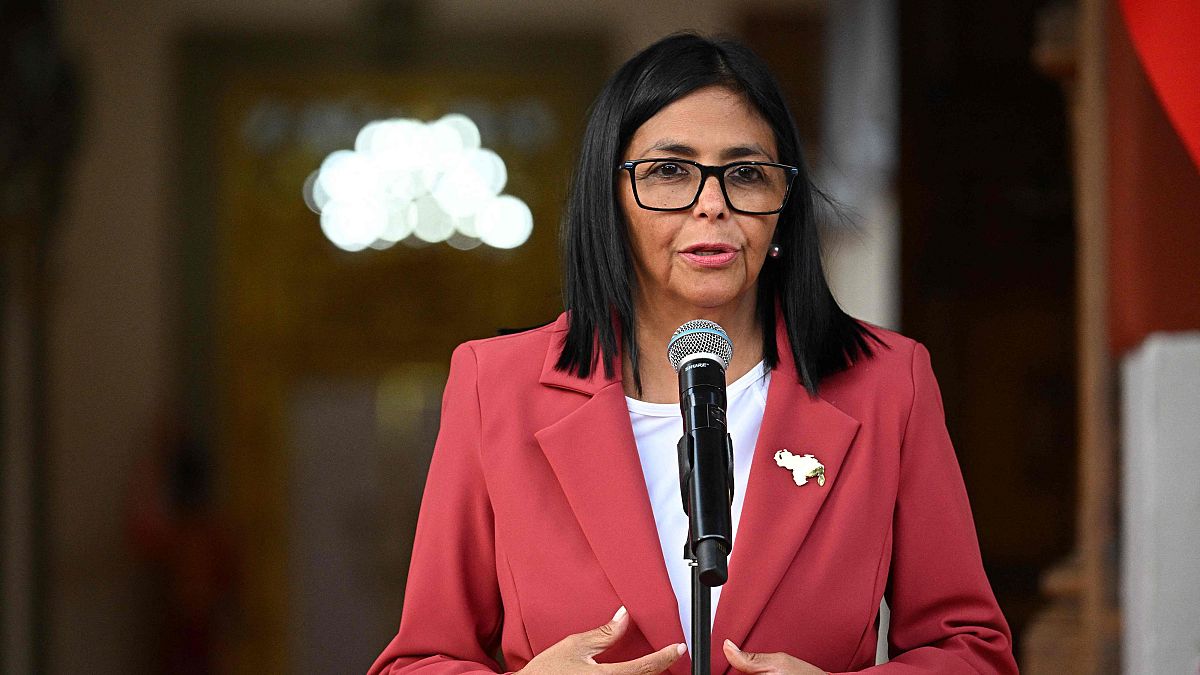
The Venezuelan acting leader called the decision “a step for the normalization” of bilateral relations. (RTVE)

Caracas, April 2, 2026 (venezuelanalysis.com) – The US Treasury Department removed Venezuelan Acting President Delcy Rodríguez from the Office of Foreign Assets Control (OFAC) “Specially Designated Nationals” list on Wednesday, April 1.

Rodríguez had been on the list since 2018. The sanctioned individuals are barred from any sort of economic or financial relationship with US entities and have any US-based assets frozen.

The Venezuelan acting head of state reacted to the decision with a message on her X account, calling it “a step in the direction of normalizing and strengthening relations between our countries.”

Rodríguez added that she is confident this step will lead to the lifting of all sanctions currently in place against Venezuela “in order to guarantee an effective binational cooperation agenda” that benefits both Washington and Caracas. In recent weeks, the Trump administration has issued licenses allowing Western corporations to engage with the Venezuelan energy and mining sectors, but wide-reaching coercive measures remain in place.

The US government targeted Rodríguez in September 2018, Trump’s first presidential term, alleging that the then–vice president was part of a group that contributed “to the destruction of democracy.” The same round of sanctions targeted First Lady and Deputy Cilia Flores, as well as Vladimir Padrino López and Jorge Rodríguez, who respectively served as defense and communications ministers at the time.

Delcy Rodríguez denounced the 2018 measures as “illegal” and “unjust,” arguing that they were part of an “economic blockade” that undermined her country’s right to food, health, and sovereignty.

The Venezuelan leader’s sanctions removal opens the door for direct engagement with US entities and multilateral organizations such as the IMF. Creditors have likewise expressed intentions to launch renegotiation efforts surrounding Venezuela’s sizable foreign debt.

The Trump administration’s move comes on the heels of a fast-tracked rapprochement with Washington that Rodríguez has spearheaded since the January 3 attacks and kidnapping of President Nicolás Maduro. Rodríguez, who took over the acting presidency, has hosted a number of high‑ranking US officials, among them Trump Energy Secretary Chris Wright.

Similarly, last week Rodríguez took part via videoconference in a business gathering in Miami organized by Saudi Arabia’s Future Investment Initiative Institute. During her address, she touted the country’s recent pro-business reforms and urged investors to come to Venezuela.

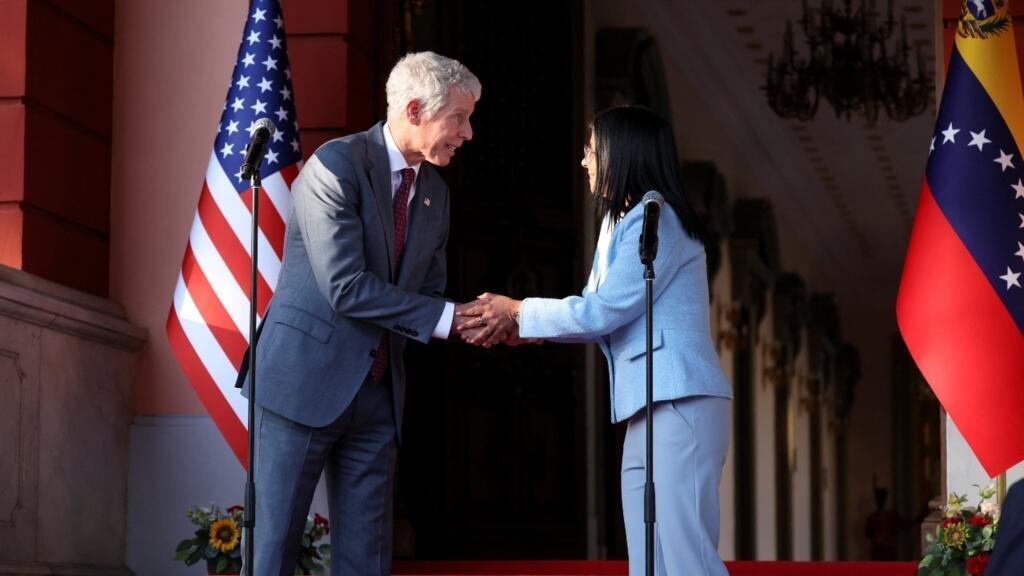
Caracas and Washington formally reestablished diplomatic ties on March 5, with the Trump administration recognizing the acting president as Venezuela’s “sole” leader days later.

Regaining control of CITGO

The lifting of coercive measures against the Venezuelan acting president raised the possibility of the Rodríguez acting government retaking control of US-based assets that had been frozen and placed under the control of the hardline opposition. According to Reuters, Venezuelan authorities are preparing to take control of the boards of directors of the US subsidiaries of state oil company PDVSA, including refiner CITGO. However, the US State Department must also sign off on the appointments.

This past March, PDVSA’s board ratified Asdrúbal Chávez, cousin of the late Venezuelan President Hugo Chávez, as director of all its US subsidiaries. Nonetheless, Chávez, who was previously denied a US visa to run Houston-based CITGO, has been unable to manage the companies for more than seven years.

CITGO has been administered since 2019 by boards of directors appointed by a defunct Venezuelan opposition‑led National Assembly whose term expired in January 2021. The company, which is Venezuela’s most valuable foreign asset, underwent a long and protracted court-mandated auction to satisfy creditor demands which concluded with a winning bid from vulture fund Elliott Management.

The CITGO sale requires a US Treasury license in order to conclude. The Trump administration has not publicly disclosed whether it will greenlight or halt the ownership transfer.

Edited by Ricardo Vaz in Caracas.
Source link

The US Has Recognized Delcy Rodríguez. What Now?

For years, the legal fight over Venezuelan assets abroad turned on one basic question: who does a foreign government recognize as the person entitled to act for Venezuela? In the United States, that question once pointed toward the opposition-led structure tied to the 2015 National Assembly and, before that, Juan Guaidó. After Guaidó fell, Dinorah Figuera became the head of what remains of that 2015 Assembly, the Comisión Delegada. Through that entity, the opposition continued trying to preserve control over foreign assets such as Citgo and funds held abroad.

Reuters reported in 2023 that the new opposition leadership under Figuera moved to oversee foreign assets, including Citgo and gold held at the Bank of England. During the Biden administration, the State Department likewise said in January 2023 that it would continue to recognize the democratically elected 2015 National Assembly as the last remaining democratic institution in Venezuela.

That is no longer the key US posture. In March 2026, the US government formally told a federal court in New York that the United States is recognizing Delcy Rodríguez as the “sole Head of State, able to take action on behalf of Venezuela.” The filing relied on the State Department’s March 5 statement normalizing relations with Venezuela under Delcy Rodríguez and on President Trump’s public remark that the United States had “formally recognized” the Venezuelan government. That is the legal pivot. Once Washington says who it recognizes as Venezuela’s head of state, US courts and agencies do not get to run their own foreign policy.

This is why the debate about Delcy’s legitimacy under Venezuelan domestic law, while politically important, is not the decisive question in New York, Delaware, Texas, or Washington. The majority of Venezuelan lawyers believe that Delcy Rodríguez is illegitimate. I am not arguing otherwise. However, under US constitutional law, recognition of a foreign sovereign belongs exclusively to the President of the United States.

The recognition question has shifted sharply in Delcy’s favor, even if some operational steps are still controlled by licenses, sanctions, and pending litigation.

In the case Zivotofsky v. Kerry, decided in 2015, the US Supreme Court said exactly that: the President has the exclusive power to grant formal recognition, and the nation must speak with “one voice” on that subject. Older US Supreme Court cases say the same thing in slightly different words. The practical result is simple: if the President recognizes one person as the one entitled to act for a foreign state, US courts (federal and state courts) generally follow that determination.

So, does that mean Delcy now controls Citgo? As a matter of US recognition law, the answer is yes, in the sense that authority now runs through the person Washington recognizes, not through whichever Venezuelan faction lawyers or commentators prefer. But there is one important practical wrinkle: Reuters reported that Delcy’s team still needs US Treasury clearance to take over Citgo’s US subsidiaries, and Citgo also remains entangled in ongoing court proceedings. In other words, the recognition question has shifted sharply in Delcy’s favor, even if some operational steps are still controlled by licenses, sanctions machinery, and pending litigation.

England works in much the same way. In the Bank of England gold litigation, the Supreme Court of the United Kingdom held that recognition of foreign heads of state is a matter for the executive, not the courts. The Court called this the “one voice principle”: English courts must accept the executive’s recognition position as conclusive. That is why the courts treated Juan Guaidó as the recognized head of state when the UK government recognized him. The logic is straightforward. English judges do not decide who truly won the constitutional struggle in Caracas. They follow the position taken by His Majesty’s Government.

If London does the same, the same logic will likely carry over to Venezuelan assets in England, including the gold dispute.

That is also why there is no serious legal basis for pretending that personal politics can change the answer. A lawyer may dislike Delcy Rodríguez. Another may dislike Dinorah Figuera. Someone else may prefer Edmundo González. None of that changes the recognition rule. On this issue, legal analysis is supposed to be colder than politics. If Washington recognizes Delcy, US institutions will generally treat Delcy as the person entitled to act for Venezuela. If London does the same, the same logic will likely carry over to Venezuelan assets in England, including the gold dispute. The law here is not about who we admire or dislike. It is about who the executive power of the US recognizes. Nothing else.

One last point matters. I have not found any official UK statement, as of now, publicly recognizing Delcy Rodríguez in the same clear way the United States has. A January 2026 statement by the UK Foreign Secretary referred to her as “acting President” and urged democratic steps, but it did not announce the kind of formal recognition statement the UK issued for Guaidó in 2019.

So the US conclusion is already here. The English conclusion depends on whether London takes that additional recognition step.

Source link