Thinking of heading to Europe’s Christmas markets this year? Here are some destinations you can reach directly on Eurostar, making them ideal for a day trip or a quick overnight break

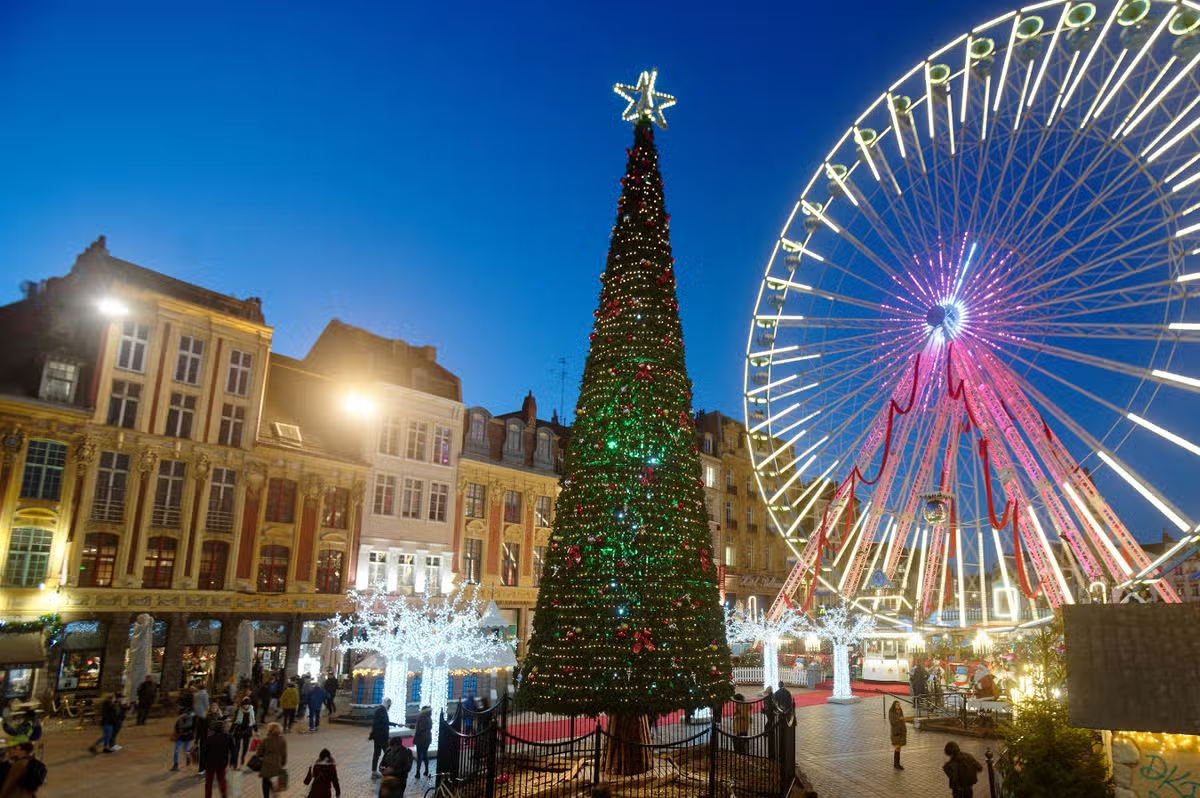
Cities such as Lille are easy to reach via Eurostar(Image: Sylvain Lefevre/Getty Images)
A European Christmas market is an amazing way to get into the festive spirit. The historic city backdrops, authentic food and drink, and unique gifts all make it a must-do in the run up to Christmas.
Eurostar can be a good alternative to flying for short breaks, as it allows you to get to the heart of the city for a day trip or quick overnight stay, without the hassle of the airport. (Although do factor in the logistics of getting to London from where the trains depart).
If you’re already starting to count down the days until Christmas, we’ve got you covered with some of the top markets you can reach by Eurostar this winter…
1. Lille Christmas Market
Lille is Eurostar’s shortest route from London at around 90 minutes, so it’s ideal for a Christmas market day trip. Lille Christmas Market takes place on Place Rihour, just a 15-minute walk from the Eurostart terminal, making it an easy location to get to.
The event runs from November 19 to December 30, and is open seven days a week with Fridays and Saturdays seeing the event stay open until 10pm. In the square you’ll find a huge Ferris wheel covered in lights and around 90 wooden chalets selling food, drink, and crafty items. It’s relatively small compared to some of Europe’s other giant markets, but Lille’s red-brick Flemish architecture and cobbled streets make the whole city perfect for a Christmas break.
2. Paris – La Défense Christmas Market
Paris has a few festive markets around the city, and La Défense Christmas Market is the largest, running daily from mid-November until early-January, with exact dates not confirmed yet for 2026.
Running on La Défense Esplanade, it includes an ice skating rink, carnival rides, and hundreds of stalls selling mulled wine, tartiflette, and raclette. However, it’s worth noting that the market can get incredibly busy as it’s in a Paris business district, so you may want to visit during off-peak times.
Another option is the Tuileries Garden Market, set in a park between the Louvre and Place de la Concorde, a sprawling market which takes up about half a mile of space. It runs for about six weeks from mid-November, again no dates are confirmed yet, and features 80 wooden chalets, a Ferris wheel, and lots of festive activities in this lively space.
3. Brussels – Winter Wonders
Brussels has a compact city centre that makes it ideal for a short break, and from the Eurostar station you can take a quick 10 minute journey to get to Winter Wonders. Taking up several streets in the Belgian capital, this sprawling Christmas market runs from November 27 to January 3 and features over 200 stalls.
At the heart of the market, in the beautiful Baroque Grand-Place, you’ll find the giant Christmas tree and a sound and light show. The market also has an ice rink and Ferris wheel, and closes daily at 10pm, so you can enjoy the festive atmosphere when the sun goes down and the Christmas lights turn on.
4. Antwerp Christmas Market
Eurostar launches a new direct service to Antwerp on December 14, and this city full of unique architecture, from ornate medieval buildings to quirky art nouveau structures, is the ideal backdrop to enjoy a Christmas market.
In the centre you’ll find the Grote Markt and Handschoenmarkt full of handmade crafts, local treats like Antwerp’s hand-shaped biscuits, a huge ice rink and plenty of festive bars. An adjacent street is turned into a giant light tunnel, perfect for exploring after dark, and the market is open until midnight on Fridays and Saturdays for festive night owls.
5. Amsterdam Christmas Market and Village
Amsterdam, Eurostar’s longest direct route from London, has multiple Christmas markets and events, but perhaps its best-known takes place in Museumplein, the city’s largest square. This area, popular with tourists thanks to its several attractions such as the Van Gogh Museum, is transformed into a Christmas village complete with live entertainment, 45 festive stalls, and a roaming acappella choir.
But if you prefer something a little less traditional, visit the Funky Xmas Market on December 20 in Westerpark. The event brings together the work of artists and creatives from across this colourful city, with lots of unique and quirky ideas for loved ones who are difficult to buy for.
6. Rotterdam – Scandinavian Christmas markets
Enjoy the ultimate hygge atmosphere at one of Rotterdam’s Scandinavian Christmas markets, which are held in traditional Seamen’s Churches across the city. Rotterdam has always had close ties to Scandinavia thanks to its large harbour, so you can enjoy the Scandi-vibes at traditional Norwegian, Danish, and Swedish markets, which are mostly held during November.
If you’re visiting in December, then Deliplein Winterplein is a two-week community festival where the Katendrecht neighborhood is turned into a winter wonderland. It kicks off with a parade and tree lighting, and includes lots of live music events, visits from Santa, and creative workshops. It’s a more community-focused alternative to the usual touristy Christmas markets.
Have a story you want to share? Email us at webtravel@reachplc.com