China Eastern Airlines

Qantas flight forced to divert after ‘passenger bites flight attendant’

The plane was forced to be diverted and ended up at its target destination several hours behind schedule after refuelling in Tahiti

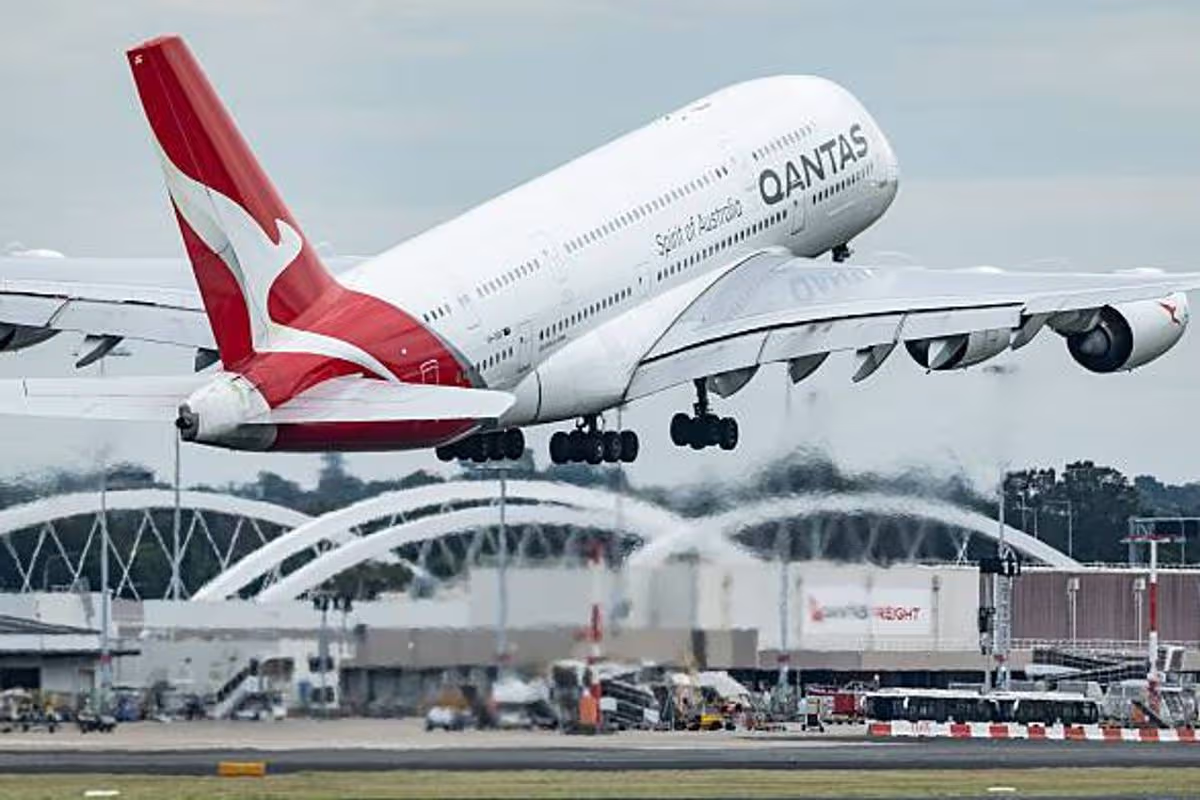
A Qantas flight bound for Dallas was forced to make an emergency diversion to Tahiti after a passenger allegedly bit a cabin crew member mid-flight.

The dramatic incident unfolded aboard QF21, which had departed Melbourne for the gruelling 18-hour journey to the US.

Crew members and passengers reportedly stepped in to assist the flight attendant after the alleged attack took place in the air.

The aircraft was diverted to Papeete, the capital of French Polynesia, where local police boarded the plane and removed the passenger.

Qantas confirmed the man has since been banned from flying with the airline.

A spokesperson for the carrier said: “We have zero tolerance for disruptive or threatening behaviour on our flights.”

After refuelling in Tahiti, the aircraft resumed its journey to Dallas but arrived several hours behind schedule.

It is not yet known what sparked the alleged altercation onboard.

It comes after a weekend of flight chaos.

Airports in Japan, China, India, the UAE, Singapore and Thailand have all been impacted, with airlines cancelling 366 flights and delaying a further 2,949 services, according to aviation tracking data reported by Travel and Tour World.

Major airlines affected include China Eastern Airlines, IndiGo, AirAsia and Etihad Airways, with disruption concentrated around major transit hubs including Tokyo Haneda Airport, Shenzhen Bao’an International Airport, Kempegowda International Airport, Singapore Changi Airport and Zayed International Airport.

Industry analysts say the disruption is being driven by a combination of heavy storms across parts of Asia, congestion at key airports and the continuing impact of Middle East airspace restrictions, which have forced airlines to reroute aircraft and absorb significantly higher fuel costs.

The wider aviation sector is also dealing with fallout from geopolitical tensions linked to the conflict involving Iran, which has led to airspace closures and longer flight times on major Europe-Asia routes.

It has been reported this week that several carriers have already begun scaling back international schedules because of soaring operating costs.
Source link

Major airlines reschedule 2,949 flights and cancel 366 as airports face chaos

Airports in Japan, China, India, the UAE, Singapore and Thailand have all been impacted, with major airlines cancelling 366 flights and delaying a further 2,949 services.

Hundreds of flights have been axed this weekend as severe weather, airspace chaos and growing operational strain cause widespread disruption.

Airports across Japan, China, India, the UAE, Singapore and Thailand have all been hit, with airlines scrapping 366 flights and delaying a further 2,949 services, according to aviation tracking data reported by Travel and Tour World.

Major carriers affected include China Eastern Airlines, IndiGo, AirAsia and Etihad Airways, with the disruption centred on major transit hubs such as Tokyo Haneda Airport, Shenzhen Bao’an International Airport, Kempegowda International Airport, Singapore Changi Airport and Zayed International Airport.

Industry experts say the chaos is being fuelled by a mix of heavy storms battering parts of Asia, congestion at key airports and the ongoing impact of Middle East airspace restrictions, which have forced airlines to reroute planes and shoulder significantly higher fuel bills.

The broader aviation sector is also grappling with the fallout from geopolitical tensions linked to the conflict involving Iran, which has resulted in airspace closures and extended flight times on major Europe-Asia routes.

It has been reported this week that a number of carriers have already started cutting back international schedules due to spiralling operating costs. Air India has confirmed temporary reductions to several long-haul services between June and August, attributing the move to fuel pressures and operational challenges stemming from diversions around restricted airspace.

Despite the turbulence affecting much of the region, Singapore Airlines has revealed plans to boost capacity on certain routes as passengers increasingly opt for direct Asia-Europe flights that bypass Middle Eastern stopovers.

Australian government travel guidance has also cautioned travellers to anticipate continued disruption related to the conflict, including cancellations, delays and fuel supply problems impacting global aviation networks.

Passengers flying through major Asian hubs this week have been advised to verify flight status updates before departing for the airport, with airlines cautioning that additional schedule alterations remain likely should weather patterns and geopolitical disruption persist.

Source link