children

Meet the children left without parents under El Salvador’s emergency decree | Child Rights News

Mental health burdens

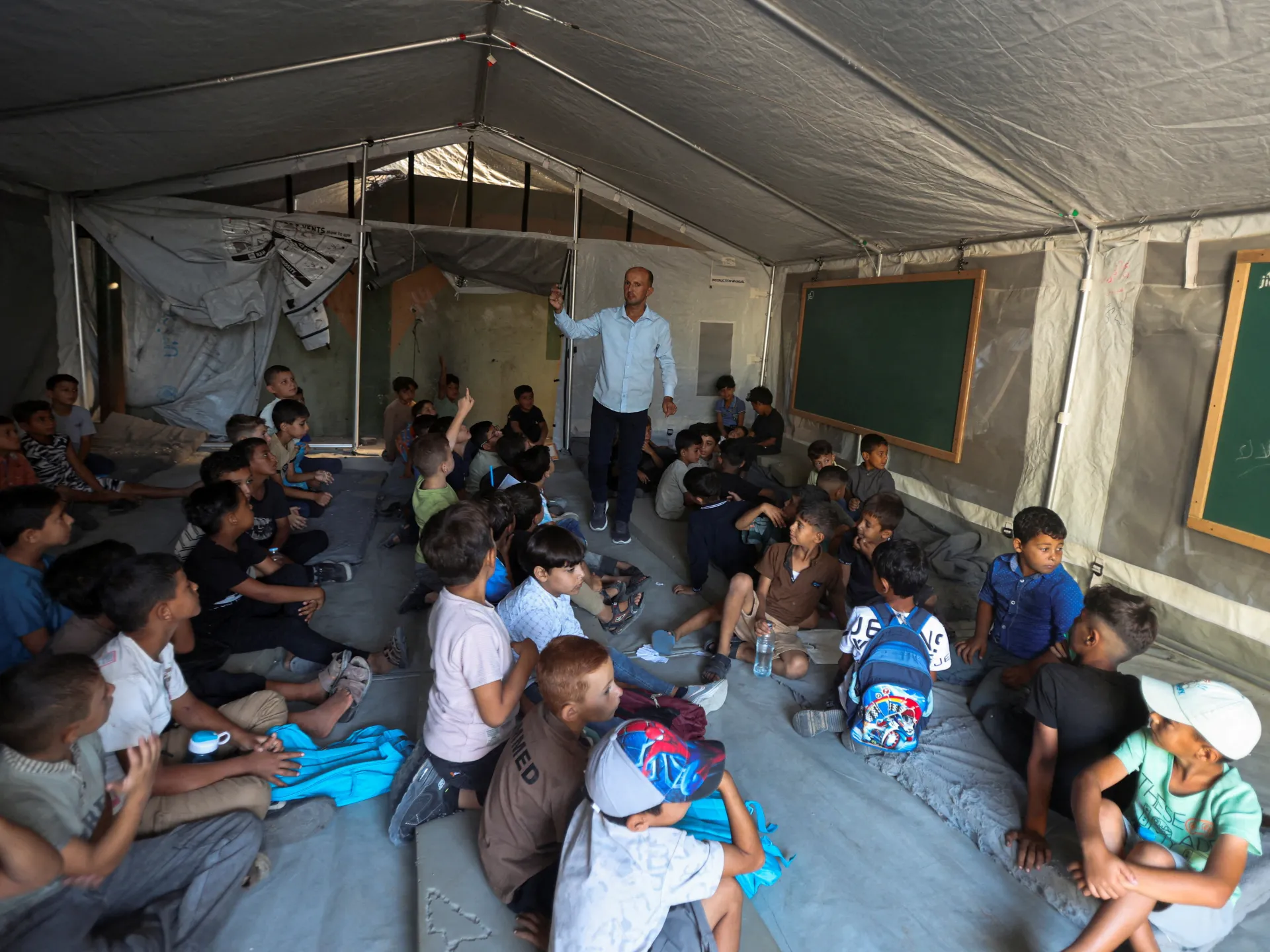
Ramirez is among the advocates who say children are suffering under the uncertainty and widespread detentions taking place in El Salvador.

In 2025, El Salvador had the highest incarceration rate in the world, with approximately 1.7 percent of its population in prison — roughly twice the rate of the next highest country, Cuba.

According to human rights organisations such as MOVIR, El Salvador’s youth are among the most seriously impacted by the downstream effects of mass incarceration, especially when their caregivers are imprisoned.

“There is a very grave situation with children,” said Ramirez. “There are many children who have been left without their parents, so those who used to provide for their basic needs are not there any more.”

As a result, experts say the affected children are experiencing psychological issues.

“Anxiety issues in these children have increased,” said a psychologist with Azul Originario, a nonprofit youth organisation based in San Salvador.

The psychologist often works with children whose parents have been abducted. She asked to remain anonymous for fear of reprisals, as NGO workers and critical voices have been intimidated, surveilled and, in some cases, arrested under El Salvador’s state of exception.

Rosalina González, 59, mother of Jonathan and Mario, who were detained under the state of exception on February 19, 2025, during ademonstration on March 8 2026 in San Salvador, El Salvador [Euan Wallace/ Al Jazeera]
Rosalina González, 59, protests for the release of her sons Jonathan and Mario, who were arrested under the state of emergency on February 19, 2025 [Euan Wallace/Al Jazeera]

“Sometimes they don’t want to do any physical activity or any studying,” she said.

“They don’t want to spend time with other children or go outside. They’re afraid of authorities, because some of them experienced the authorities taking their parents away.”

At a recent demonstration near San Salvador’s Cuscatlan Park, several families echoed those observations.

Among them was Fatima Gomez, 47, whose adult son was arrested in 2022. He left behind two daughters, ages 10 and three.

With their mother working full-time, Gomez has been taking care of the children. But she has noticed the eldest daughter seems traumatised.

“When she sees soldiers and police, she starts crying and runs inside,” Gomez said of the 10-year-old. “She says they are going to take all of us, too.”

Gomez had gathered with a crowd of men and women to demand the release of their loved ones.

Clutched in Gomez’s hands is a blue printed poster, emblazoned with her son’s face and a single word: “innocent”.

It flutters in a rush of wind from the passing traffic.

Source link

Melania Trump hosts world counterparts and tech reps to discuss children, education and technology

Melania Trump on Tuesday called on nations to work together to improve access to education and technology for children around the world, delivering her plea as she addressed a gathering of her counterparts from more than 40 countries.

The first lady’s Fostering the Future Together initiative, which she announced last year, and an inaugural two-day summit that she opened Tuesday are examples of how Melania Trump has expanded her portfolio to embrace global issues.

“As people we dream. As leaders we progress. As nations we will build,” she said in opening remarks. “Beginning today, let’s accelerate our new global alliance, this bond, to positively impact the progress of our children.”

She called on participants to host regional meetings, conduct research studies, begin new partnerships and collaborate with another member country “to cultivate the skills young people need to be successful in this rapidly evolving world.”

She said the goal of empowering children will be achieved by creating innovative programs, advocating for supportive education policies, sponsoring tech-focused legislation and building strong public-private partnerships.

“This room is filled with extraordinary human capital,” the first lady said. She urged the leaders seated around a large U-shaped table in a State Department auditorium to “harness it to elevate your children, to empower your people and to accelerate your economies.”

The gathering included technology companies such as Microsoft, Google and OpenAI.

Among those participating were Olena Zelenska, the spouse of Ukrainian President Volodymyr Zelensky, and Sara Netanyahu, the wife of Israeli Prime Minister Benjamin Netanyahu.

The first lady announced the Fostering the Future Together initiative during the U.N. General Assembly session last fall.

Superville writes for the Associated Press.

Source link

Minnesota hockey reporter, 3 children killed in house fire, NHL says

NHL reporter Jessi Pierce and her three children were killed in a weekend house fire in Minnesota, the league announced Sunday.

Pierce, 37, covered the Minnesota Wild as the correspondent for NHL.com for the last decade.

“The entire NHL.com team is devastated and heartbroken by the loss of Jessi and her children,” said Bill Price, vice president and editor in chief of NHL.com, in a statement. “Jessi’s love of her family and hockey was evident in the energy and passion she brought to her work for us. She was an absolute joy to talk to and work with. She will be deeply missed.”

Firefighters responded to a house fire Saturday morning in White Bear Lake, Minn. Neighbors called 911 and reported seeing flames coming through the roof. Fire crews located an adult, three children and a dog inside the house, all deceased, the White Bear Lake Fire Department said. The department did not release the names of the victims in its statement Saturday.

The cause of the fire is under investigation.

“Out hearts ache for those involved in this tragedy. We ask for the opportunity to allow our community to come together and support one another during this difficult time,” Fire Chief Greg Peterson said in the statement.

The Minnesota Wild mourned her loss on social media Sunday. “Jessi was a kind, compassionate person that cared deeply about her family and those around her. She served as an ambassador for the game of hockey during her time covering the Wild and the NHL,” the post said.

Minnesota is known as the “State of Hockey,” and the Wild have had one of the biggest fan bases since their inception in 2000. The Minnesota North Stars moved to Dallas to become the Stars in the early 1990s.

Hill writes for the Associated Press. AP writer Stephen Whyno in New York contributed to this report.

Source link

WHO says attack on Sudan hospital killed 64, including 13 children | Sudan war News

The attack on a teaching hospital in Al Deain, the capital of East Darfur state, has rendered the facility non-functional.

An attack on a ⁠hospital in Sudan’s Darfur region has killed at least ‌64 people, including 13 children, according to the head of ⁠the World ⁠Health Organization (WHO).

In a social media post, Tedros Adhanom Ghebreyesus said on Saturday that multiple patients, two female nurses and one male doctor were also among those killed in the attack on Al Deain Teaching Hospital in Al Deain, the capital of East Darfur state, on Friday night.

Another 89 people, including eight health staff, were wounded, he added.

The attack damaged the hospital’s paediatric, maternity, and emergency departments, rendering the facility non-functional and cutting off ‌essential medical services in the ‌city.

“As a result of this tragedy, the total number of fatalities linked to attacks on health facilities during Sudan’s war has now surpassed 2,000,” said Tedros, adding that over the nearly three-year conflict between Sudan’s army and the paramilitary Rapid Support Forces (RSF), the WHO had confirmed the killing of 2,036 people in 213 attacks on healthcare.

There was no immediate information about who was behind the attack.

The war between the army and the RSF erupted in mid-April 2023, unleashing a wave of violence that has led to one of the world’s fastest-growing man-made humanitarian crises, with tens of thousands of people killed and more than 12 million forced from their homes.

Both sides have been accused of war crimes and crimes against humanity, while the RSF has been implicated in atrocities in Darfur that United Nations experts say bear the hallmarks of genocide.

“Enough blood has been spilled. Enough suffering has been inflicted,” Tedros said. “The time has come to de-escalate the conflict in Sudan and ensure the protection of civilians, health workers, and humanitarians.”

Source link

How much is a UK passport – fees explained for adults, children and pensioners

Ahead of the busy Easter and summer holidays, the cost of a UK passport application, online and postal, are set to increase, with prices soaring above £100 for the first time

The cost of all passports will significantly increase from next month as the Home Office confirms proposed plans.

The Home Office has proposed an 8 per cent increase in UK passport prices, which could see an adult pay out over £100 for the first time. The price of a child’s and a pensioner’s passport will also increase, with the changes set to be implemented from Wednesday, 8 April.

The Home Office said it will “move towards a system that meets its costs through those who use it, reducing reliance on funding from general taxation”. The fee increases are subject to Parliamentary approval.

The Home Office said in a statement: “The new fees will help the Home Office to continue to move towards a system that meets its costs through those who use it, reducing reliance on funding from general taxation.

“The Government does not make any profit from the cost of passport applications. The fees contribute to the cost of processing passport applications, consular support overseas, including for lost or stolen passports, and the cost of processing British citizens at UK borders.”

READ MORE: British tourists ditch popular holiday hotspot as it’s become ‘too expensive’READ MORE: UK passport holders face major fee change on April 8 2026 ‘for the first time’

How much is an adult passport?

From April 8, the cost of a UK adult passport, for standard online applications, will rise from £94.50 to £102. Meanwhile, postal passport applications could rise from £107 to £115.50 for adults.

How much is a passport for children?

The standard fee for a child’s passport, for online applications, could increase from £61.50 to £66.50, while a postal application could rise from £74 to £80 for children.

How much is a pensioner’s passport?

A standard, 32-page concessionary passport is available free of charge for those who were born on or before 2 September 1929 and at the time of their application, hold any British nationality.

The government said: “Customers who naturalised or registered as British nationals will still qualify regardless when they naturalised or registered.”

While the passport is free, there may be some delivery charges to return the passport or to send any supporting documents.

Will next-day services increase?

While it’s always advisable to apply for a new or replacement passport as early as possible, a next-day premium service is available in the UK. However, the new fees from 8 April could see this rise from £222 to £239.50.

How much will overseas UK passports cost?

Those applying overseas for a UK passport online can expect a rise from £108 to £116.50 for adults and from £70 to £75.50 for children. Meanwhile, overseas paper applications will increase from £120.50 to £130 for adults and from £82.50 to £89 for children.

The last time the price of a UK passport increased was on April 10, 2025, when they rose by around 7 per cent. An adult passport soared from £88.50 to £94.50, while a child’s online application increased from £57.50 to £61.50.

Before 2025, there were increases in April 2024 and February 2023.. However, the price surge in 2023 was the first increase in five years.

The government advised that anyone needing a new passport should apply well in advance, as the renewal process can take up to three weeks in the UK or longer during peak travel periods. For more information or to apply for a new or replacement UK passport, you can visit the government website.

Do you have a travel story to share? Email webtravel@reachplc.com

Source link

Ralf Little fights back tears as he shares heartbreaking reason he doesn’t have children

Ralf Little got emotional as he candidly opened up during the latest episode of Will & Ralf Should Know Better

Death in Paradise star Ralf Little fought back tears as he shared the heartbreaking reason he doesn’t have children.

During the latest episode of Will & Ralf Should Know Better, Ralf, 46, and Will Mellor decided to face their fears, from dangling on a trapeze and tackling fatherhood to the ultimate horror of performing stand-up in front of a Glasgow crowd.

At the start of the show, Will, 49, pointed out to Ralf: “I think I’ve actually done something that you would find more frightening than any of that. What I’ve done that I think you’d find more frightening… is have a child.

“Yes, yes, actually commit to something, commitment. I have had two kids and brought them up. So, to give you a little taste, I’m taking you to a place, it’s like a charity set-up, where dads can go and learn how to be good parents. What to expect from a baby, how to be a parent” to which Ralf admitted: “This my living nightmare!”

At the charity set-up, Ralf was asked “what’s the worry about children” to which he admitted: “It’s a lot of work, innit? I bought a bread maker once and I loved making that bread, but after a little while, I was like, I’ll just unplug it and put it under the cupboard. You can’t really do that with babies, can you?”

The leader of the charity set-up then asked: “Ralf, what is it that you’re most afraid of?” to which the former Death in Paradise star said: “I’ve lived a lot of my life having a mentality where there’s nothing I can’t walk away from.

“It’s actually terrifying to me, the idea of loving something so completely and irreversibly. I can’t walk away from it intact. That’s terrifying to me.”

Following the charity set-up and being given a baby doll to look after, it made Ralf think deeper about why he doesn’t have children. He said: “Yeah, it’s been a funny old day. Just in general for me” to which Will added: “I can see it threw some questions into your mind that you weren’t expecting. I could tell from your reaction that you were a bit like maybe there is a reason a bit deeper why I haven’t had children.”

To which Ralf emotionally admitted: “For sure. My parents were fantastic with us and did the best that they could. But their relationship broke down really in a really difficult way and that was very difficult for us.

“You know, there’s no way of putting this that’s not blunt, but, you know, they had three kids and an idyllic family life and then one of the kids was alive one week and dead the next.

“Everything, their entire lives crumbled right in front of their eyes from that moment on. It’s like, you know, you can’t protect them.”

Ralf then fought back tears as he composed himself and continued: “My mum was really… my mum was really protective of us. Really protective.

“And it happened anyway. It happened anyway because you can’t wrap your kids in cotton wool and protect them 24-7. Like, it’s a lot. And it’s only when I’m forced to sort of say these things out loud that I realise quite what a lot it is.”

Tragically, when Ralf was just nine-years-old, his sister, Ceri, then 14, fell 150ft to her death from a cliff during a family holiday to Cornwall.

Ralf has said that the tragedy was partly to blame for his parents’ divorce and deeply affected his other sister Rowena – but it made him push himself academically and in extracurricular activities.

Will and Ralf Should Know Better is available to watch on Channel 4 and 4oD, as well as U.

**For the latest showbiz, TV, movie and streaming news, go to the new ** Everything Gossip ** website**

Source link

‘Children see magic in the smallest adventures’: exploring Scotland with my four-year-old | Highlands holidays

‘There! There – I can see it!” The cries of my four-year-old echoed around the ruins of 13th-century Urquhart Castle, causing a group of US tourists to come running over to the corbelled bartizans (overhanging turrets) where we stood. “It’s Nessie, I saw her,” he insisted, pointing at the ripples spinning out from the back of a sightseeing vessel on Loch Ness.

This was day four of a budget, week-long Scotland adventure for the two of us, and we were spending the day in Drumnadrochit, on the shores of the country’s most famous body of water, looking for the fabled monster.

It wasn’t the first time that reality and wishful thinking had seemingly combined on this holiday. When I told people I was going to take my son on a week-long trip across Scotland and my budget was £500, they were sceptical – especially as we were travelling in the school holidays. But as a woman who likes a challenge, I was up for proving them all wrong.

We’d begun our adventure in Glasgow, having travelled by train (£30), then picked up a cheap hire car for the five-hour drive to the Isle of Skye. Accommodation on Skye is pricey, but I had a secret weapon – my tent.

The car journey was punctuated by stops at lochs so enchanting they could have been lifted from the pages of a children’s book. We finally reached the island and checked in at Camping Skye, a community-owned campsite by the sea in Broadford. For the £16 cost of a pitch, we spent the evening playing beneath the flanks of Beinn na Caillich, eating chips and mushy peas from the local shop, and roasting marshmallows on a firepit.

Camasunary Bay near Elgol on the Isle of Skye was a hit with Phoebe Smith’s son. Photograph: Phoebe Smith

The next morning, primed for a mini-expedition and stocked up with supplies, we drove to the southern enclave of Elgol. The crowds who flock to the island for the Fairy Pools and spectacular Quiraing rock forms melted away as we went deeper into the countryside. We pulled over at a nondescript parking area and I explained the plan to my son. We were going to walk about 2.5 miles (4km) to our accommodation – and no, mummy couldn’t carry him as I would be carrying all our supplies. Excited by the carrot on a stick in the form of a bag of Percy Pigs, we set off, me with a full backpack, him clad in waterproofs, clutching a walking pole.

“I can do this. It’s going to be hard, but it’s going to be worth it,” I heard him muttering to himself as the ascent kicked in. Along the way I pointed out the purple petals of the devil’s-bit scabious flower – mythology claims the devil was so enraged by the plant’s healing properties that he chewed its roots, leaving them short and jagged. My son loved how stories such as this and the landscape combined, and it distracted him from the climb. When we reached the highest point, we could see down to Camasunary Bay, and the thought of playing on the beach made our descent fly by.

Our accommodation was a free (unbookable) bothy and, being first to arrive, we picked the top bunk of the sleeping platform, and I laid out our things. As more people came, my boy confidently greeted the guests as though welcoming them into his own home, proudly telling them this was his first bothy.

Reindeer in the Cairngorms national park. Photograph: Simon Whaley Landscapes/Alamy

That evening was spent running around on the near-black sand beach just outside the door, making trenches, cooking pesto pasta on my camping stove and laughing at the “loo with a view” that sits above the bothy on the hillside.

Having stayed in many bothies over the past 15 years, I had wondered how taking a child would pan out. But his presence brought everyone together in an amazing way, and by 9pm all 12 residents were fast asleep, likely lulled by the white noise I was playing for him on my phone.

Next morning, my son’s determination to reach the car was only eclipsed by his desire to have ice-cream for breakfast, which I had promised as an incentive to climb up the hill. He was beaming with pride when he told the owner of The Creel pop-up cafe by Elgol harbour that he’d walked more than 5 miles “all by myself” and made friends in a bothy.

From there, it was back to the mainland and a two-hour drive on to Drumnadrochit for a stay in a private room at Loch Ness Backpackers Lodge (£60), with an afternoon spent in the nearby Loch Ness Centre, learning all about Nessie. After the novelty of sharing a bunk bed (me on top, him below), the next day was reserved for paddling in the shallows of the loch, running around the aforementioned Urquhart Castle and getting visitors’ hopes up with proclaimed sightings of the legendary plesiosaur.

That afternoon we journeyed to our final stop – the Cairngorms national park. At the reindeer centre in Glenmore Forest, we met the UK’s only free-ranging herd (which had been brought here to be checked over by a vet) and joined a scavenger hunt designed to teach children about these creatures. We ended the day at Loch Morlich, building sandcastles with children my son befriended in that easy way kids seem to do. I pointed up to the summit of Cairn Gorm – the sixth highest mountain in Britain. “That,” I told him, “is where we go tomorrow.”

Phoebe Smith’s son was happy to walk miles with the right incentives. Photograph: Phoebe Smith

After a night in a camping pod at the Speyside Trust’s Badaguish outdoor centre (£75), we braved the mountain during rain squalls on a guided hike (£35) which involved taking the mountain railway to Ptarmigan top station at 1,097m, then an hour’s walk to the summit. As we stood on the misty peak, our guide told us we were at 1,245m. I’ve never seen such a proud look on my son’s face.

The UK’s highest restaurant, the Ptarmigan, sits at the railway’s top station, and we indulged in hot chocolate before exploring the learning zone’s exhibition, with its panoramic film showcasing the landscapes around us in much better weather than we experienced. There are also interactive sandboxes where children can create their own natural environments. We rounded off the day by taking the train back down and going tubing (£15pp), laughing gleefully as we slid down the purpose-built dry slope in giant rubber rings.

Determined to make the journey home part of the adventure, I had booked the sleeper train back to London – our biggest indulgence at £170 for a cabin with a private loo and shower. Dusk hit as we boarded in Inverness, and the sky began to turn black outside the picture windows while we ate macaroni cheese in the dining car and my son told incredulous strangers about our adventures.

The truth is that kids love holidays – but they love spending time with their parents most of all. And by taking my son on my kind of adventure, I had bonded with him in a way I never thought possible. Children see magic in even the smallest of adventures – and their enthusiasm is utterly infectious. Our total spend after six days away was just under £500 which, when I think of the memories we have made, and the stories my son continues to tell, seems to me the best buy ever – even more fantastical than a magic monster that lives in Scotland’s largest loch.

Phoebe Smith is the author of Wayfarer: Love, Loss and Life on Britain’s Pilgrim Paths (Harper North). To buy a copy for £9.89, go to guardianbookshop.com. Delivery charges may apply


Source link

Nine-country Interpol operation rescues 65 children, arrests 60

Interpol’s Operation Eclipse, conducted between February 2025 and January, focused on dismantling networks linked to producing and distributing child sexual abuse material, with the primary goal of identifying victims and reopening cases that had remained unsolved for years. File Photo by Wallace Woon/EPA

March 5 (UPI) — An international police operation coordinated by Interpol led to 60 suspects accused of sexual crimes against minors arrested and 65 child victims rescued after a yearlong investigation in nine Central American, North American and Caribbean countries, the agency said.

Operation Eclipse, conducted between February 2025 and January, focused on dismantling networks linked to producing and distributing child sexual abuse material, with the primary goal of identifying victims and reopening cases that had remained unsolved for years.

Most of the victims were between 5 and 13 years old, and about 80% were girls, Interpol said.

“Investigating old cases not only serves to deliver justice and protect victims, but also to prevent further harm,” said Cyril Gout, acting executive director of Police Services at Interpol.

“Operation Eclipse demonstrates that, thanks to international cooperation and specialized expertise, it is possible to uncover abuse committed even years ago and bring those responsible to justice.”

The countries that participated in the operation were Belize, Costa Rica, El Salvador, Guatemala, Honduras, Mexico, Nicaragua, Panama and the Dominican Republic.

Some victims had appeared for more than a decade in international archives that collect child sexual exploitation material without having been identified.

Investigators said the alleged perpetrators had different levels of relationship with the victims, including relatives, friends, neighbors, educators, online predators and foreign tourists, showing that sexual offenders do not fit a single profile.

The operation received support from the United Nations Office on Drugs and Crime and the Child Rescue Coalition. Police and judicial authorities across the region synchronized investigations, conducted targeted interventions and gathered evidence in multiple countries.

Interpol said it provided technical support, real-time information sharing and strategic guidance.

One of the most notable cases occurred in Panama, where authorities resolved an investigation in which a victim had remained unidentified for more than 10 years in Interpol’s international database. The identification, the agency said, allowed investigators to gather key evidence for the judicial process and also led to the location of another victim.

Interpol also maintains the International Child Sexual Exploitation Database, which is used by investigators in more than 70 countries to analyze and compare images and videos of child abuse.

The system allows authorities to establish connections between victims, offenders and locations through digital analysis software, helping identify related cases across different countries and preventing duplicate investigations.

According to the organization, the database contains 4.9 million images and videos and has helped identify more than 42,300 victims worldwide.

A joint study by Interpol and global network ECPAT International also found that more than 60% of the unidentified victims in that material are prepubescent minors, including babies and young children, while 65% are girls and 92% of the visible offenders are men.

Interpol provided several cases of the background of victims.

In the Dominican Republic, two minors ages 10 and 13 were allegedly abused by their mother and a transnational sexual offender who lived with them. Both suspects were arrested during the operation.

In Costa Rica, one of the suspects initially posed as an online celebrity to contact his victim. He later used child-grooming tactics, sextortion and threats against the victim’s family to maintain control over her.

A bilateral meeting between Panama and the Dominican Republic led to identifying two suspects wanted by Panamanian authorities for sexual crimes. Both were located in Dominican territory, leading to the start of extradition procedures.

As part of the operation, participating countries also reviewed 57 existing international notices related to individuals believed to live within their borders. These included Red Notices, issued for suspects wanted internationally, and Blue Notices, intended to gather additional information about a person’s identity or location during an investigation.

So far, 12 of those people have been located and detained, while efforts continue to locate and extradite other suspects, Interpol said.

Authorities also said that 45 suspected child sex offenders remain wanted in the countries that participated in the operation.

Source link

Melania Trump chairs UN meeting on children days after Iran school strike | Israel-Iran conflict

NewsFeed

US First Lady Melania Trump has presided over a UN Security Council meeting focusing on children in conflict days after dozens of children at a school in Iran were reportedly killed after Israel and the United States launched attacks.

Source link

Suzi Quatro, 75, reveals first husband & father of her children has Alzheimer’s and she’s now in charge of his finances

SUZI Quatro has revealed how her first husband, and the father of her children, has Alzheimer’s and that she’s now in charge of his finances.

The American rock star, 75, who is now married to her second husband Rainer Hass, revealed the sad news whilst speaking to Kaye Adams.

Suzi Quatro has opened up about her first husband’s Alzheimer’s diagnosisCredit: instagram/@kayeadamsfanpage
Suzi revealed her ex-husband Len Tuckey is battling the devastating diseaseCredit: Alamy
Suzi revealed she is in charge of Len’s finaces now, following his diagnosisCredit: instagram/@kayeadamsfanpage
Suzi shot to fame in the 70s and has enjoyed an incredible careerCredit: Rex Features

Michigan-born Suzi, who is credited with helping women break into the world of rock and roll music, opened up on the Loose Women star’s podcast, How To be 60.

In a candid interview, the singer talked about how her first husband Len Tuckey is battling Alzheimer’s Disease.

Suzi married Len, who was her long-time guitarist, in 1976, but they divorced in 1992.

During their relationship they had two children together, Laura, 44, and Richard, 42.

double take

Star of hit 70s TV show looks very different as she makes rare appearance


golden boy

70s film star looks unrecognisable 52 years after career-defining role

Speaking to Kaye’s podcast, Suzi, who is now married to her second husband Rainer who she wed in 1993, talked about the breakdown of her first marriage to Len.

She then talked about how despite their divorce they remained good friends, and how she became his “power of attorney” because of his Alzheimer’s diagnosis.

Suzi made the admission when she talked about when she decided to leave Len, and how she came about that decision.

“When I did leave, I was sure. I wasn’t doubting. I was sure that it’s time to go,” she revealed to Kaye.

“So I gave it the six years to turn it around. You know, that’s fair.

“You got two kids together, you know. Don’t break it up if you don’t need to. I really tried, but I can’t lie to myself. Nobody can lie to themselves.”

Suzi is now married to her second husband, Rainer HassCredit: Getty

Continuing Suzi said: “I remember saying to him one time during Andy Get Your Gun, actually when that had finished, so it would have been 87, I remember we were sitting in the room here talking. And I said to him, ‘Do you realise how far away you’ve let me go?’

“So I gave him hints along the way, many, many hints, but he didn’t take them.

“And I’m his executor and power of attorney, so we’re still close.

“And he lives in my son’s house because he’s got Alzheimer’s.”

Suzi and her first husband Len divorced in 1992Credit: Alamy

American singer-songwriter Suzi shot to fame in the 70s as the first female bass player to became a major rock star.

The star is known for singles like Can the Can and Your Mamma Won’t Like Me, and has sold more than 50 million albums.

She is credited with helping women become part of the rock and roll era.

Speaking about this, Suzi once told the Metro Times: “Before I did what I did, we didn’t have a place in rock ‘n’ roll.

What are the early signs of Alzheimer’s disease?

IN the early stages, the main symptom of Alzheimer’s disease is memory lapses.

For example, someone may:

  • forget about recent conversations or events
  • misplace items
  • forget the names of places and objects
  • have trouble thinking of the right word
  • ask questions repetitively
  • show poor judgement or find it harder to make decisions
  • become less flexible and more hesitant to try new things

There are often also signs of mood changes, such as increasing anxiety or agitation, or periods of confusion.

And trouble with language, thinking and reasoning difficulties, and a shift in how things are seen and heard are also common.

Source: The NHS

“Not really. You had your Grace Slick and all that, but that’s not what I did. I was the first to be taken seriously as a female rock ‘n’ roll musician and singer.

“That hadn’t been done before. I played the boys at their own game.

“For everybody that came afterward, it was a little bit easier, which is good.

“I’m proud of that. If I have a legacy, that’s what it is. It’s nothing I take lightly. It was gonna happen sooner or later.”

Over the years Suzi has also dabbled in acting, and was famously on Happy Days.

Suzi continues to perform to this dayCredit: Getty

Source link

Mosques attacked, children racially abused as hard right rises in UK | Racism News

Names marked with an asterisk have been changed to protect identities.

London, United Kingdom – “People here are tired, scared and feel forgotten,” says Nabila*, a Muslim mother of two in Basildon, a town in the English county of Essex.

Recommended Stories

list of 4 itemsend of list

Sitting in her living room with a mug of tea, a Qur’an visible on the bookshelf and Japanese prints hanging to its right, she recalls a string of incidents in recent months: Glass thrown from a residential building at Muslim children, a racist attack on the local mosque where red crosses were daubed across its walls alongside the words “Christ is King” and “This is England”, and reports of drivers accelerating as Muslim women cross the road with their children.

Nabila
Nabila has been documenting incidents of racism in Essex, her home county [Courtesy of Nabila]

According to the 2021 census, Basildon is 93 percent white, and Muslims make up less than 2 percent of the population. Campaigners have warned that in areas where ethnic minority communities are smaller and more geographically isolated, they face heightened risks, as visibility increases vulnerability.

A single mother working full time, Nabila has been documenting incidents of racism, supporting victims and organising meetings with local authorities.

She said she no longer feels safe in the place she calls home.

After being racially abused while walking through her favourite park, she stopped going there altogether. Women, she said, are increasingly changing their daily routines, constantly watching over their shoulders. Racism now permeates every aspect of their lives, she added.

At a women’s listening circle organised by Nabila in collaboration with the local authority at the Wat Tyler Centre, another Muslim woman, Zarka*, spoke about her experiences as a young mother in Basildon who wears the hijab.

After being told to “take that rag off your head” during the school run by a passer-by, she stopped taking her children to school for two weeks. Beyond verbal abuse, she described the cumulative effect of everyday hostility, from cars failing to stop at zebra crossings and hostile looks from passersby.

‘I can’t do this any more, Mum.’

Hundreds of miles north, similar experiences are unfolding in Scottish classrooms.

Etka Marwaha’s daughter Anisa was seven when she first experienced racist taunting at her primary school in Glasgow.

Marwaha said Anisa became quiet and withdrawn. She was isolated on the playground and subjected to racial slurs. Months later, she broke down in tears in front of her mother, explaining the abuse she had suffered.

On multiple occasions, Marwaha contacted the school, urging them to take action, even offering her own support on understanding racism. But, she said, they failed in their duty of care, and the extent of the problem was kept hidden.

It went on for two years before Etka felt compelled to take her daughter out of the school.

“The plan was never to move her into a different school,” she told Al Jazeera. “But she was refusing to go to school; she would come home very, very upset. She was isolated.

“She was in tears, saying, “I can’t do this any more, Mum.’ So she made the decision, at that young age, that ‘I want to get out of here.’”

The girl’s new school is not in the catchment area, nor is there a direct bus to it, causing further inconvenience. But it has a zero-tolerance approach to racism, and Anisa is happier.

At her new school, Anisa can speak about her experiences of racism and how it made her feel.

The ordeal brought back painful memories for Marwaha’s own experiences at school.

“The racist bullying, for me, started at secondary school. You’d think times have changed, that people have been educated, but I think things have changed for the worse when a seven-year-old can openly make a racist comment and that’s accepted by society, and parents don’t address it.”

Sam*, a doctor in northwest Scotland with dual heritage children, said he has been surprised by the level of racism in local schools.

“There has been a clear normalising of racist jokes and name-calling. Every one of our kids has been affected,” he said. “Perhaps the biggest surprise is how few other students stand up against racism. When I was growing up, if someone was racist, they would be the person being socially excluded. Now, silence. It has forced us to look at moving out of the UK.”

‘Racism is out of control’

In the latest incident of alleged and potentially dangerous racism, a man walked into Manchester Central Mosque on Tuesday, reportedly with an axe and weapons. The man was arrested. There had been 2,000 worshippers in the mosque at the time, for the evening tarawih prayers during Ramadan.

Official figures underline the scale of the problem.

In October 2025, the UK Home Office revealed that the number of hate crimes recorded by police in England and Wales had risen for the first time in three years, including increases in racially and religiously motivated offences.

Religious hate crimes against Muslims rose by 19 percent, with a spike following the Southport murders and subsequent riots in mid-2025, the Home Office said.

The rise comes as hard-right politicians and activists, such as Reform leader Nigel Farage and the Islamophobic activist Tommy Robinson, rail against immigration. According to recent YouGov polling, if a general election were held tomorrow, Reform would lead with 24 percent.

Shabna Begum, head of Runnymede Trust, a race equality think tank, said, “Mainstream political and media actors have played in normalising and enabling racist narratives that have scapegoated migrants, people seeking asylum, Muslims and people of colour generally.”

In a report released last year, How Racism Affects Health, Runnymede highlighted the hypervigilance that people of colour have to operate with in order to guard their safety, and which causes long-term physiological damage, affecting life expectancy and mental health outcomes.

“For those that live in more disparate communities where they show up as minorities in a more visible way, that sense of threat is acute,” said Begum.

School suspensions for racist incidents have more than doubled in recent years, according to UK Department for Education data.

“Children as young as four are being sent home for racist behaviour,” Begum said. “This shows a society where racism is out of control, and that our school systems are failing to deal with the problem.

“They are making calculated decisions about where they will go, what travel routes they will take; withdrawing from regular social and community activities because they can no longer trust that those spaces will be safe for them.”

Source link