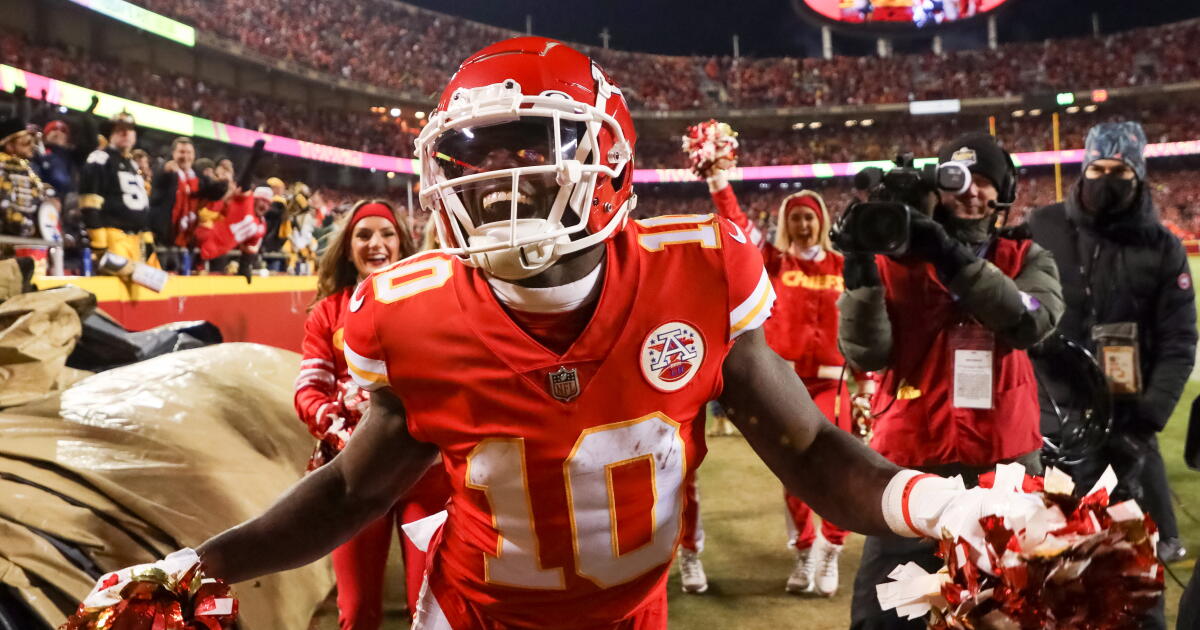
Tyreek Hill once was a superstar receiver with the Kansas City Chiefs, winning a Super Bowl and making six Pro Bowls during his six seasons with the team.
While that was several years ago at this point, it appears that Hill and the Chiefs have mutual interest in a possible reunion.
The Chiefs have a void at wide receiver. Fifth-year player Tyquan Thornton was having the game of his career Sunday against the Las Vegas Raiders — registering triple-digit yardage (11) and multiple touchdowns (2) for the first time — before suffering a dislocated ankle in the fourth quarter that will have him out indefinitely.
Star receiver Rashee Rice suffered a hamstring injury in the first quarter of the Chiefs’ 30-27 win over the Raiders and did not return. His injury isn’t believed to be serious, though, with the team’s bye next week giving him a chance at possibly returning without missing a game.
His former team’s injuries at his position seemed to catch Hill’s attention on Sunday.
“Hm,” he wrote on X.
Hill played for the Miami Dolphins from 2022 through last season. He dislocated a knee and tore several ligaments, including his ACL, during a game against the New York Jets on Sept. 29, 2025, and was released by the Dolphins during the offseason. As Hill continues to recover from the injuries, his agent, Drew Rosenhaus has indicated that he could be ready to play in November.
In fact, Rosenhaus said he plans to begin negotiating a deal for his client on Monday with multiple teams, with the Chiefs in that mix, ESPN’s Adam Schefter reported. The Chiefs were interested in possibly bringing back Hill even before Sunday’s injuries, according to The Athletic’s Michael Silver, and the team reached out to Rosenhaus about that possibility after those injuries occurred.
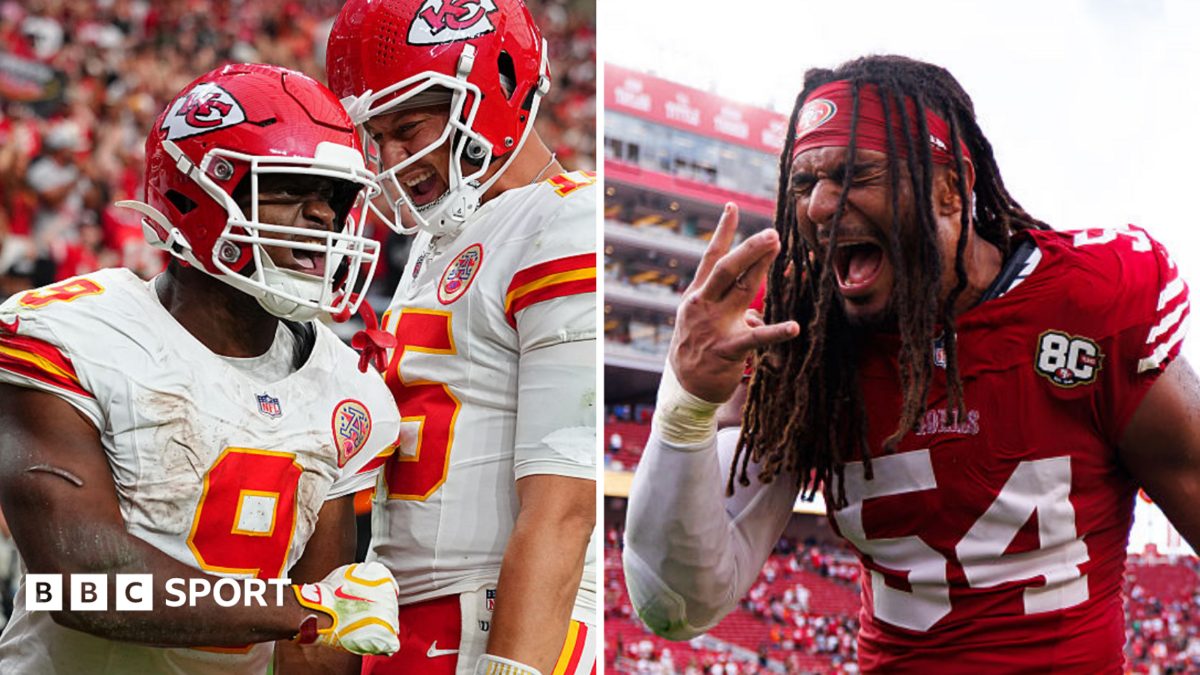
Silver also quoted several Chiefs players who said after the game that they’d be in favor of such a move. Star quarterback Patrick Mahomes said “it’d be pretty cool” if Hill came back to Kansas City.
“I’d love to have ‘The Cheetah’ back in this building,” tight end Travis Kelce added. “He’s a brother. He’s one of those people who, when he sets his mind to something, he usually delivers. You saw that with Miami, when all the haters were saying he couldn’t play and he went and had his best year. I’d be excited by what he could do.”
Kansas City have dominated their rivalry with the Raiders in recent years, but Las Vegas are vastly improved after winning only three games last season and pushed the Chiefs all the way.
The Raiders led 13-10 heading into the final quarter in Vegas, which featured three lead changes before Kansas City held on for a 30-27 win.
The turning point came as new running back Kenneth Walker maintained his stunning start by scoring two touchdowns in 19 seconds, with the Chiefs regaining possession immediately by forcing a fumble on the kick-off return.
The Raiders gave themselves hope with a Brock Bowers score and stayed alive until the final play, when Kirk Cousins was tackled as he threw and his wayward pass was intercepted.
Walker finished with 177 yards from 22 carries, while team-mate Tyquan Thornton also had two touchdowns and 111 receiving yards.
After missing last season’s play-offs, the Chiefs look capable of getting back into Super Bowl contention. They next face the Los Angeles Chargers, who are 0-4 after losing 30-23 to defending champions the Seattle Seahawks.
Bath director of rugby Johann van Graan told BBC Radio Somerset:
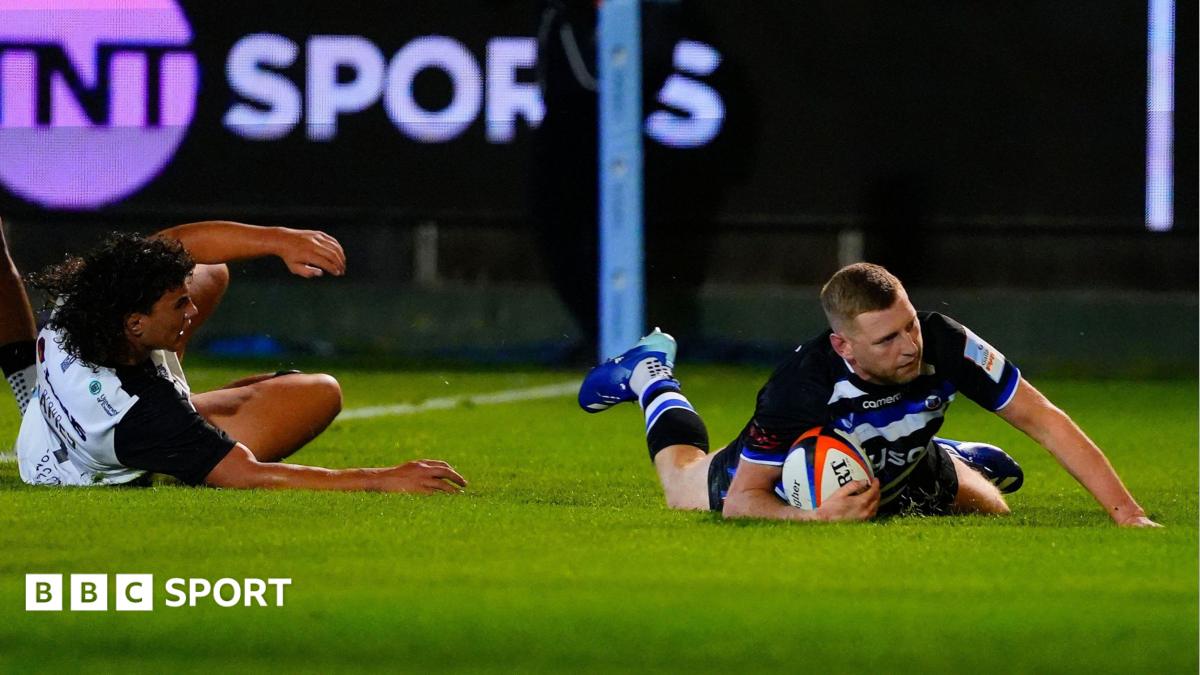
“It was a crazy game of rugby once again, Bath versus Exeter. We started the game really well but then they came out punching after half-time and scored three unanswered tries.
“But then that’s why this game is a 23-man effort as we then came back with the impact of our eight (subs) who made a really good difference, so I’m really happy with the five points.
“We’re very proud of our bench and numbers 16 to 23 at this club are just as important as numbers one to 15.”
Exeter Chiefs director of rugby Rob Baxter told BBC Radio Devon:
“The important emotion is I’m walking away going ‘we’ve got a team here and we’ve got something to work with’.
“Last week was such a patchy performance (losing 45-24 to Gloucester) but today we showed a lot of good qualities.
“The qualities of being in a fight to the death, that’s what Exeter Chiefs are about. Do you want to be perfect or do you want to be in a fight every single week? Well we’ll be in a fight every single week.
“I’m quite happy with that, that’s what we’re good at and I saw that today.”
Bath: Donoghue; Cokanasiga, Lawrence, Redpath, de Glanville; Russell, van der Linde; Obano, Dunn, Stuart, Roux, Ewels (capt), Richards, Pepper, du Preez.
Replacements: Frost, Kirk, Griffin, Hill, Reid, Carr-Smith, Ojomoh, Coetzee.
Rams coaches and personnel executives call it “the moment of truth,” the split second when a defensive back, usually on the run in full stride next to a receiver, must decide how he is going to play a pass that is already in the air.
Top NFL cornerbacks remain calm. They do not panic.
“It’s those guys that just kind of — their blood pressure never rises,” defensive coordinator Chris Shula said.
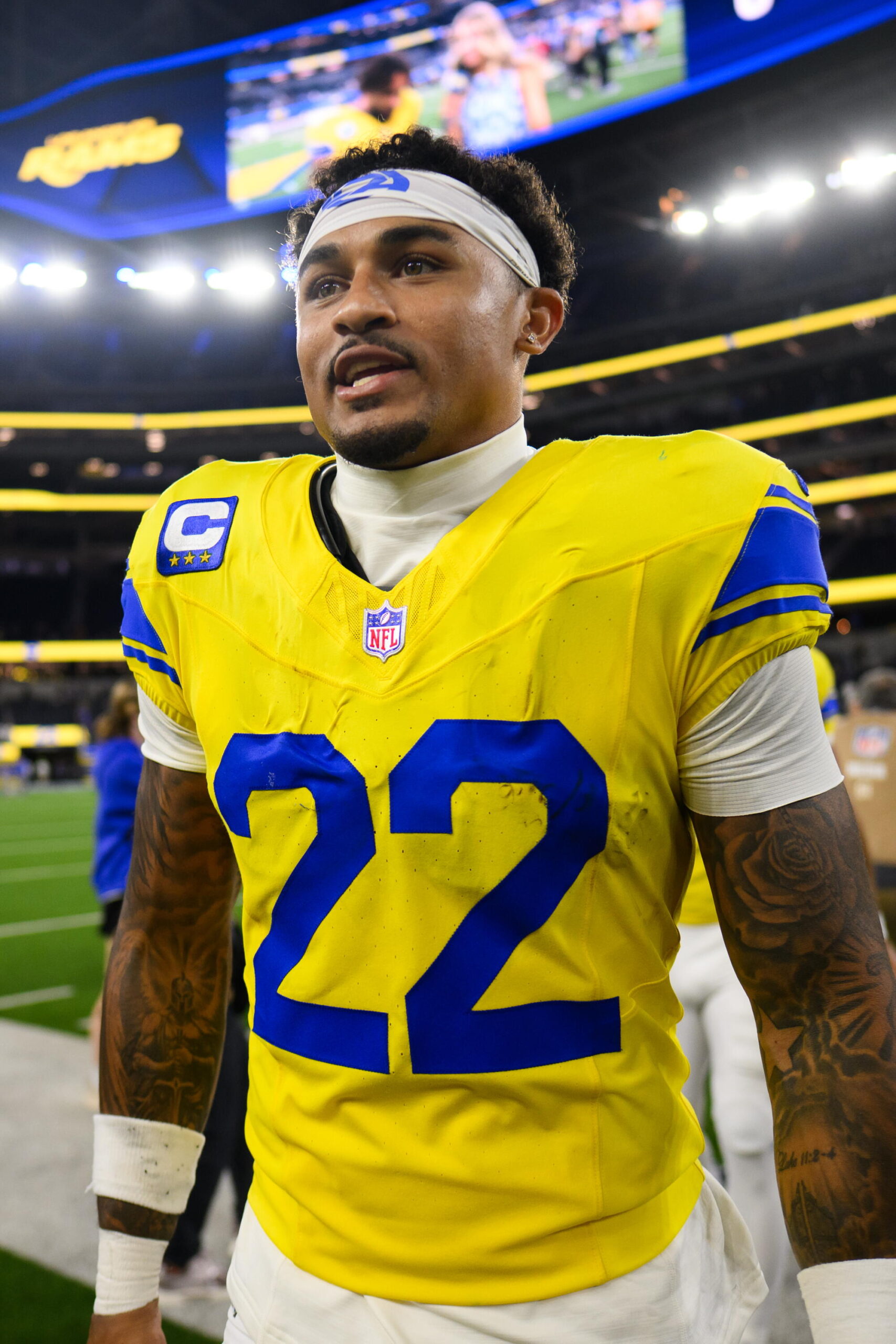
The Rams traded for the All-Pro cornerback in March, sending the Kansas City Chiefs the 29th overall pick and three other draft picks for the four-year veteran. They quickly signed McDuffie to an extension that includes $100 million in guarantees.
Last Monday, McDuffie intercepted a pass in the Rams’ 28-6 victory over the New York Giants, a win that helped erase some of the sting from their embarrassing season-opening defeat by the San Francisco 49ers in Australia.
In McDuffie, a two-time Super Bowl winner, the Rams got even more than expected, coach Sean McVay said.
“He just has an amazing emotional intelligence of how to uplift and lead his teammates and challenge them in a way that’s authentic to his personality,” McVay said. “He loves the opportunity to be able to have some of the hard downs that a lot of corners sometimes don’t want, but this guy wants them.”
McDuffie, 26, is looking to make more plays Sunday night when the Rams play the Denver Broncos at Empower Field at Mile High.
With the Chiefs, McDuffie played against the Broncos six times, and he is still looking for his first interception against the former AFC West rival.
But mainly, he aims to help the Rams continue their momentum after giving up only two field goals against the Giants.
“It was one of those attitude games, where we didn’t have the greatest Week 1 performance,” McDuffie said. “So there was a little chip on our shoulder, a little attitude we brought.”
McDuffie began his rise to NFL stardom during a high school career that featured stops at Santa Ana Mater Dei, Anaheim Servite and Bellflower St. John Bosco, before playing in college at Washington.
Rams cornerback Trent McDuffie walks off the field after a win over the New York Giants on Sept. 21.
(Kyusung Gong / Associated Press)
The Chiefs selected him in the first round of the 2022 draft, and he helped them make three Super Bowl appearances, winning two.
McDuffie said he learned a tough but valuable lesson against the Philadelphia Eagles in Super Bowl LVII in Arizona in 2023.
With the ball at the Chiefs’ 45-yard line, the 5-foot-11 McDuffie lined up against 6-1, 225-pound receiver AJ Brown. As they ran downfield, McDuffie saw the ball in the air. But he did not know which way to turn his head. He did not know how he wanted to play the ball.
Brown caught the pass for a touchdown.
“Too much thinking in my head to where I didn’t make the play,” McDuffie said.
McDuffie turned the experience into a positive while developing into one of the NFL’s top players at his position.
“From then on, it was almost like, ‘All right, the ball’s in the air, it’s not so much a panic, it’s like you get an opportunity now,’” McDuffie said. “When you’re a DB in the NFL, there’s only so many times they’re going to throw the ball your way. There’s only so many times you’re in a position to make a play, so just kind of calming myself down.
“When the ball’s in the air, don’t panic — just become the receiver. Get back to the basics. You know how to play football. You know how to catch the ball. Just go make a play.
“And really, it’s the fear of failure that I don’t have anymore. Like if they make a play, they make a play. Let’s just line up and let’s keep attacking.”
The next season, despite not intercepting a pass, McDuffie earned All-Pro recognition. He forced five fumbles and had three sacks.
It did not take long for McDuffie to make an impression on his Rams teammates. During offseason workouts and training camp, he established himself as a leader and was voted a team captain.
His first interception for the Rams was the fourth of his career.
“I was in the right place at the right time to make the play,” said McDuffie, who also broke up three other passes, “but I think overall as a group we really took a step in the right direction, which looking back at the film was the most exciting part for me.”
Rams receiver Davante Adams raved about McDuffie during training camp. This week, he said McDuffie had been the “best-kept secret” in Kansas City.
“I’m just glad to see him making plays on guys that aren’t our receivers now,” Adams said. “Go out there and do his thing, show the world.”
Defensive lineman Aaron Donald did not see McDuffie up close until he came out of retirement to rejoin the Rams last month. McDuffie made an impression in Donald’s first game against the Giants.
“I usually don’t watch the DBs,” Donald said, “but he caught my eye. He’s something special.”
On Sunday, McDuffie won’t be the only elite cornerback on the field. “There’s a ton of great corners in the league,” McDuffie said, but he regards Patrick Surtain II of the Broncos, the 2024 NFL defensive player of the year, as the best.
“It’s always fun just being able to see him in person and work his craft,” McDuffie said.
McDuffie intends to showcase his own against a Broncos team that features quarterback Bo Nix operating coach Sean Payton’s offense.
The Rams are seeking another dominant performance.
“Now that we did it once,” he said, “now we have to prove it again.
Tries: Iosefa-Scott, E Roots, Varney, Gulley Cons: Slade 2
Gloucester (26) 45
Tries: Loader 2, S Atkinson, Lake 2, Joseph, Denny Cons: C Atkinson 4, Barton
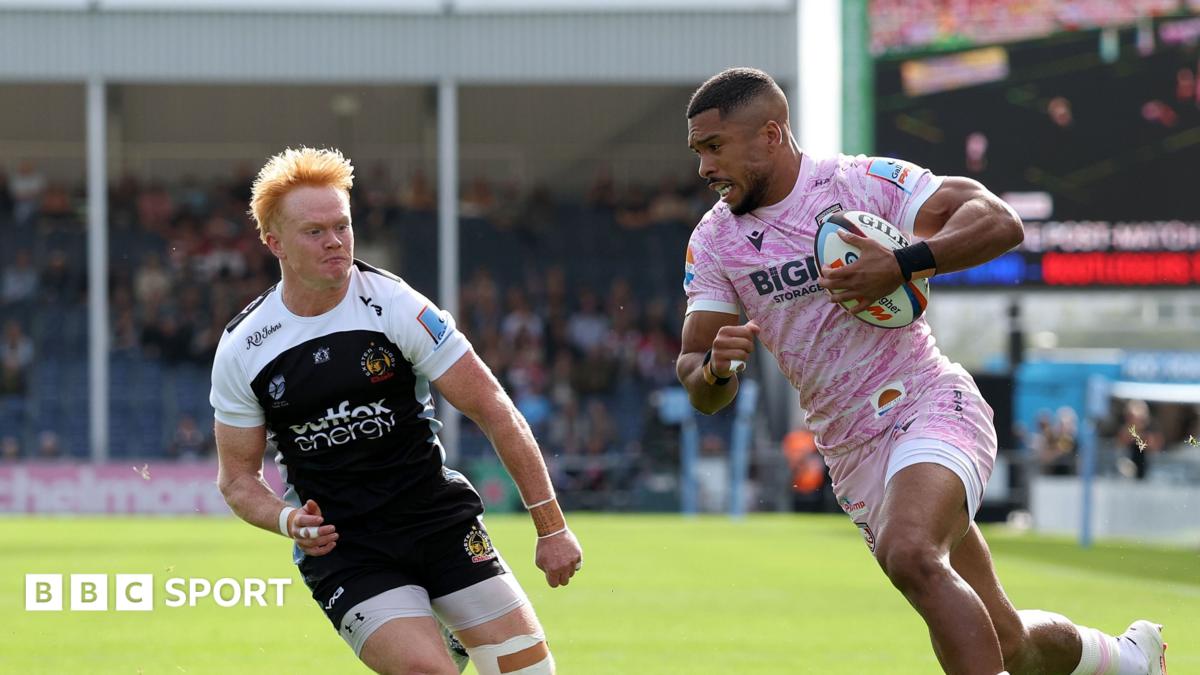
Gloucester delivered an outstanding performance on the first weekend of the new Prem season to stun Exeter Chiefs at Sandy Park.
The Cherry and Whites only once won on the road last term as they finished eighth, but they matched that immediately with this superb showing.
Summer arrival, and new captain and Wales skipper, Dewi Lake led the way with two of their seven tries.
Winger Ben Loader helped himself to two, while Seb Atkinson, a fine solo effort from Will Joseph and a debut try from Junior Denny completed their try haul.
Exeter finished as runners-up last season after losing to Northampton Saints in the final in June, but they were well beaten.
Josh Iosefa-Scott and Ethan Roots grabbed their first-half scores before Stephen Varney and then Louie Gulley ensured they at least managed a bonus point.
After a few years in the doldrums, Exeter had a thrilling spring and summer with their unexpected run to The Prem final at Twickenham. With new American investment at Sandy Park, hopes are high about the direction of travel in Devon but this was a rude awakening to the new season for Rob Baxter’s team.
The Cherry and Whites had a miserable campaign in limping home in eighth and they have not reached the play-offs for seven years, but the acquisition of Wales pair Lake and Jac Morgan has increased belief for the new campaign.
That was in evidence in their positive start as they worked the ball from one corner to the other, with Ben Redshaw’s kick bouncing up perfectly for Loader to finish.
A sustained spell of phases eventually resulted in Iosefa-Scott driving over from close range for the hosts before a smart kick over the top from scrum-half Caolan Englefield allowed England centre Atkinson to win a foot race and touch down as Gloucester regained the lead.
Loader’s second try extended that advantage as he showed impressive footwork to conjure up another fine kick towards the left corner and dive over.
Gloucester had produced an impressive opening half, but Roots grabbed a second try for the hosts as the flanker found himself on the wing with nobody able to stop his charge.
However, there was still time for the men from Kingsholm to secure a bonus point by the break as captain Lake brilliantly went over in the corner after he had turned down a kick at goal to earn a 26-12 interval lead
Lake’s influence in his new team was there for all to see as he was at the back of a driving maul to grab his second try for a dominant Gloucester.
Joseph then scored the try of the game with a brilliant burst of speed from inside his own half that took him outside and inside three defenders.
Varney quickly grabbed Exeter’s third try and with visiting flanker Freddie Thomas sin-binned for the final 10 minutes, replacement hooker Gulley went over on his Prem debut to ensure the Chiefs at least claimed a bonus point.
However, that debut try was matched by 18-year-old winger Denny, who scored with the last play of the game to seal Gloucester’s first win in Devon since 2015.
Gloucester: Redshaw; Jospeh, Cokanasiga, S Atkinson, Loader; C Atkinson, Englefield; Rapava-Ruskin, Lake (capt), Fasagbon, Kleyn, Clark, F Thomas, Morgan, Trenholm.
Youth group threatens return to mass protests, sets deadline for Gyanesh Kumar to quit due to reports of meddling with voter lists.
By Al Jazeera Staff and Reuters
Published On 25 Sep 202625 Sep 2026
India’s ‘cockroach’ party youth movement has threatened to launch nationwide protests unless the country’s chief election officer does not resign by Saturday.
Founder of the Cockroach Janta Party (CJP), Abhijeet Dipke, announced on Friday that protests would begin in Mumbai on October 2 – if Gyanesh Kumar does not step down.
Recommended Stories
list of 4 itemsend of list
The CJP, a satirical outfit born on Instagram in May after India’s chief justice compared unemployed young Indians to “cockroaches” and “parasites”, has shaken the staunchly conservative government of Prime Minister Narendra Modi.
On Thursday, the group demanded that Kumar quit within 48 hours, following a newspaper report linking him to altered voter lists. Opposition parties say the lists have been manipulated to benefit Modi’s Bharatiya Janata Party (BJP).
“If Gyanesh Kumar does not resign by tomorrow, CJP will begin its nationwide protest from Mumbai on 2 October, and take it to cities across India,” Dipke posted on X.
“This Gandhi Jayanti let’s pledge to save democracy,” he added, referring to the October 2 holiday marking independence leader Mahatma Gandhi’s birthday.
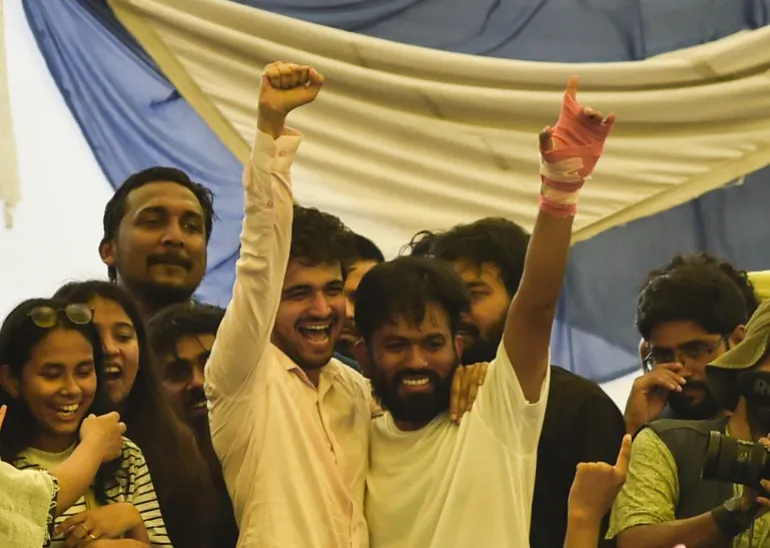
CJP founder Abhijeet Dipke celebrates with supporters in New Delhi after the resignation of India’s Education Minister Dharmendra Pradhan, July 25, 2026 [Ritesh Shukla/Getty]
Report provokes political storm
On Wednesday, the Indian Express newspaper reported that two election commissioners had raised questions or voiced concern with Kumar at least 14 times in 10 months, mostly over the process of updating voter lists that began last year.
The main opposition Congress party announced protest marches on state election offices across India on Friday, demanding Kumar’s arrest, his removal and an independent review of decisions and voter-list changes made under him.
Opposition parties have long accused the commission of deleting the names of millions of voters without warning and adding new voters without verification to favour the BJP.
BJP leaders and supporters at a ‘Drug-Free Punjab’ march in Amritsar [File: Narinder Nanu/AFP]
Election panel rejects claims
The Election Commission of India said that “differing views and observations are a normal part of deliberation in any institution” and that all its actions were lawful.
The BJP has defended the commission, accusing the opposition of a smear campaign because it keeps losing elections.
“Neither the Election Commission of India nor any constitutional body in India is under dictatorial rule,” BJP spokesperson Sambit Patra said on Wednesday.
CJP-led protests in July forced the resignation of Modi’s education minister over exam-paper leaks, one of the prime minister’s biggest political setbacks since coming to power in 2014.
The pact stipulates that an attack on one of the three countries is considered an attack on all of them.
Saudi Arabia, Turkiye and Pakistan have announced they are planning an urgent meeting of their chiefs of staff to discuss ways to support the kingdom under the Mecca Joint Defence Agreement.
The announcement followed a meeting on Thursday in New York between Saudi Foreign Minister Prince Faisal bin Farhan Al Saud, Pakistan’s Deputy Prime Minister and Foreign Minister Ishaq Dar and Turkish Foreign Minister Hakan Fidan, according to the Saudi Press Agency.
Recommended Stories
list of 4 itemsend of list
The statement did not say when the military chiefs would meet or what form of support could be considered.
Saudi Arabia, Turkiye and Pakistan signed the Mecca Joint Defence Agreement on August 7 to strengthen collective deterrence and expand defence cooperation.
The pact stipulates that an attack on one of the three countries is considered an attack on them all.
The three countries have since begun setting up mechanisms under the pact. Their foreign and defence ministers and military chiefs met in Istanbul on August 31 for the first meeting of the Strategic Political and Defence Committee, agreeing to establish a secretariat in Saudi Arabia and to deepen military cooperation.
Thursday’s foreign ministers’ meeting also condemned attacks targeting Mecca as well as civilian and economic facilities in Saudi Arabia, and it affirmed the kingdom’s right to defend itself under Article 51 of the UN Charter.
The diplomatic moves came as Saudi Arabia reported a fresh wave of attacks from Yemen.
Saudi Arabia said its air defences shot down six ballistic missiles launched towards Taif and Yanbu on Thursday.
Major-General Turki al-Malki, the coalition spokesman, said further Houthi escalation would be “dealt with firmly”. Saudi Civil Defence authorities had issued alerts in several areas before later saying the danger had passed.
The Houthis separately claimed missile and drone attacks on a “sensitive target” in Riyadh and Saudi Aramco facilities in Yanbu.
France has also offered to provide defensive support to Saudi Arabia. President Emmanuel Macron said Paris would send military assets to help protect Yanbu.
“We are going to send military assets, meaning soldiers, radars and defence systems to protect this site,” Macron said in an interview with TF1 on Thursday.
Yemen clashes drive rising casualties and displacement
The cross-border attacks have coincided with some of the heaviest fighting inside Yemen since hostilities escalated again.
Fighting across several fronts in Yemen killed at least 150 Houthi fighters and members of government-aligned forces in the 24 hours leading into Friday, according to an AFP news agency tally.
The toll compiled by AFP included 98 fighters on the government side and 52 from the Houthis, with clashes reported around the Kahboub Mountains and areas between Lahj and Taiz overlooking the Bab al-Mandeb strait.
The Houthis have also expanded their presence along Yemen’s Red Sea coast, including by taking the port city of Mocha and strategic islands. The gains have strengthened the group’s position around Bab al-Mandeb, one of the world’s busiest shipping corridors. About 12 percent of global trade normally passes through the waterway, according to AP.
Yemen’s internationally recognised government has urged greater international involvement, warning at the UN General Assembly that Houthi control around the strait poses a wider economic risk.
Vice President Abdullah Abdulkader Al Alimi-Bawzer accused the Houthis of using freedom of navigation as leverage, saying their actions were “taking hostage the entire global economy”.
The renewed fighting has forced more than 230,000 people from their homes since the beginning of September, according to UNHCR, as clashes spread across multiple front lines. The agency said the latest displacement has added to about 5.2 million people already internally displaced across Yemen.
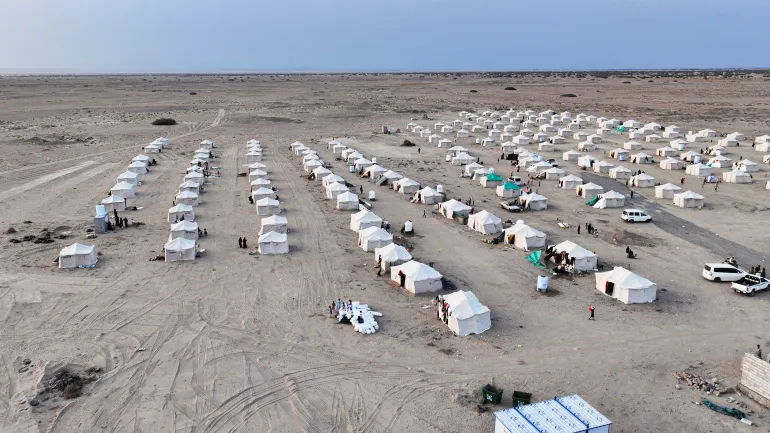
A drone view of a camp for internally displaced people, who fled fighting between the Houthis and government forces, erected near Aden, Yemen, September 19, 2026 [Stringer/Reuters]
UNHCR said families have been uprooted across governorates, including Hodeidah, Taiz, Lahj, Aden, Abyan, Marib, al-Dhalea and Shabwah, with many fleeing at short notice and leaving with few belongings.
Shelter, food, clean water, healthcare and protection services are among the most urgent needs, while host communities and displacement sites are becoming increasingly overstretched.
The U.S. military’s top officer on Wednesday talked about how AI is changing the character of warfare and offered two examples to illustrate his points. His comments included new insights into how two U.S. Army AH-64 Apache crew members were rescued after being shot down by an Iranian drone near the coast of Oman in June. The recovery effort involved America’s first known use of an uncrewed surface vessel (USV) executing a personnel recovery action as part of a military search and rescue operation.
“Information moves so fast that leader decision times have compressed from weeks down to days down to seconds,” explained Air Force Gen. Dan Caine, chairman of the Joint Chiefs of Staff, during his keynote speech at the Air & Space Forces Air, Space and Cyber Conference that TWZ is attending. “In the future fight, advantage will go to the side who can see first, who can understand first, decide first, and act first, and along the way, be a learning organization, and no factor is accelerating change as fast as artificial intelligence and advancing cyber capabilities.”
“AI is here now, and it’s already changing the way militaries see, sense, decide, and act across the joint force,” the chairman proclaimed.
The first example Caine used to highlight these changes took place on June 8. After the Apache went down, “U.S. CENTCOM launched a rapid, responsive joint search and rescue effort to recover the crew. That response drew on the totality of the joint force, and ultimately was required to use enabled unmanned vessels to participate in the rescue of downed U.S. service members for the first time ever.”
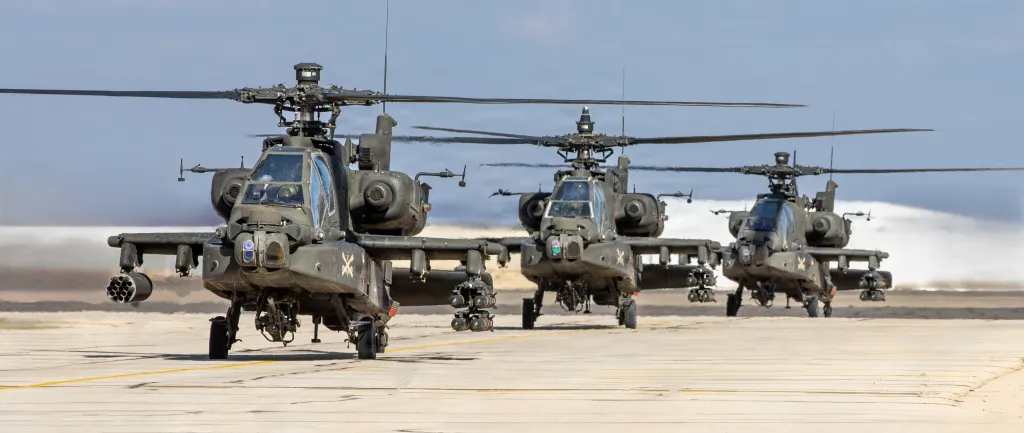
A flight of U.S. Army AH-64 Apache attack helicopters, armed with rockets and Hellfire missiles, taxi out to conduct a scheduled flight in the U.S. Central Command area of responsibility. In addition to rockets and missiles, the Apache is additionally armed with a 30mm chain gun. (U.S. Army photo) U.S. Army Central
As we noted in our previous coverage, CENTCOM deployed “a U.S. Navy Corsair unmanned surface vessel,” the command’s spokesman told us at the time.
The Corsair uncrewed surface vessel (USV) (Saronic)
The ability to pull off that rescue mission “did not appear overnight,” Caine pointed out. “It came from the men and women of Task Force 59, CENTCOM’s forward-leaning unmanned joint maritime unit who spent the last several years testing, integrating, and operationalizing unmanned systems and AI in one of the most demanding and kinetic environments on Earth right now.”
“What helped make this possible was not a bunch of general officers and flag officers,” Caine continued. “What made this possible was a bunch of entrepreneurial sailors and members of the joint force on watch floors, at piers, managing networks of unmanned systems across thousands of miles of water, and using AI to turn massive amounts of data into a crisp, clear, perfect maritime picture that allowed us to go grab those two soldiers in the water.”
A top-down view of the Saronic Corsair USV. (Saronic)
The second example Caine shared about the use of AI “points in the other direction, not how quickly we are using these tools, but how quickly these tools are changing the threat.”
In Ukraine, “we see first-person view drones operating in heavily contested EMI [electromagnetic interference] environments. Some now using AI-enabled computer vision to continue to drive towards targets, even when there’s no GPS or the links are cut. That gives small units affordable precision and shows how quickly software and autonomy are changing what is possible at the tactical edge, and the results are stark.”
“In certain locations on the front line of troops right now, the life expectancy of a new Russian recruit arriving on the front lines is as little as 20 to 30 minutes,” Caine added. “Think about that. This is what happens when low-cost precision is fielded fast, adapted quickly, and scaled across the battlefield.”
“The price of lethal exchange is decreasing day over day,” the chairman noted. “One wonders what the future of close air support looks like, but I am comforted by the fact that each and every one of you are in this room thinking about that. Taken together, these examples from the Straits of Hormuz to the front lines in Ukraine show how quickly technology is changing the character of war, and this means our joint force needs to do two things at one time.”
“[W]e need to prepare the joint force to win in this kind of conflict,” the general stated. “We have to assume from now on that our formations will be hunted by autonomous systems, jammed across the spectrum, and tracked in real time, and we have to transition the joint force to be prepared to fight and win our future war by generating and delivering lethality at scale with an agile, optimized, high-low mix of combat capabilities to give the young members of the 2.8-million member all volunteer joint force the tools that they need before they need them.”