IT MIGHT feel like we have been waiting forever for spring and now you can enjoy it by seeing lots of different sights in bloom.
National Trust sites and properties across the UK are home to an abundance of plants and trees.
Sign up for the Travel newsletter
Thank you!
There are tons of places to see blossom across the UK this spring, including National Trust propertiesCredit: Shutterstock EditorialAnglesey Abbey is less than six miles from Cambridge and features a country house that was built on the remains of a prioryCredit: AlamyThe house is surrounded by gardens, which is where you will find the blossomCredit: Alamy
And with that, there’s a lot of blossom to see.
Whether it be an apple or cherry tree, here are some of the top National Trust sites to see blossom this spring.
Acorn Bank, Cumbria
Acorn Bank is known for having an extensive herb collection as well as sprawling orchards and a working watermill.
And tucked behind its 17th-century walls, visitors will find the orchard with over 175 apple varieties.
From early May, many of the trees bloom with a soft pink-white blossom.
It costs £11 per adult and £5.50 per child to visit.
Anglesey Abbey, Cambridgeshire
Less than six miles outside of Cambridge, Anglesey Abbey features a country house that was built on the remains of a priory.
The house is surrounded by gardens, which is where you will find the blossom.
Back in 2021, Olympian Way was planted with cherry blossoms that bloom pink in March and April.
Visitors will also be able to find cherry blossom in the woodland and Rose Garden.
It costs from £19 per adult and £9.50 per child to visit.
Ardress House, County Armagh
Found in the ‘Orchard County’ of County Armagh, Ardress House features a 17th-century house with 18th-century interiors, as well as a traditional farmyard.
Each May, the property’s apple blossom appears and visitors can also head on a walk which encircles the farmhouse to see more blossom.
Attingham Park, Shropshire
Attingham Park is an 18th-century estate with a mansion and around 200 acres of parkland.
Blossom appears on the apricot trees each year in the Walled Garden from around mid-March, and then other trees follow, such as peach, pear and apple.
Admission to the house and gardens costs from £18 per adult and £9 per child.
Attingham Park in Shropshire has over 130 apple trees in totalCredit: PA:Empics SportBatemans used to be the home of Rudyard Kipling who wrote The Jungle BookCredit: Alamy
Bateman’s, Sussex
Bateman’s in Sussex is the family home of the writer of The Jungle Book, Rudyard Kipling, and was built in 1634.
Each year the orchard becomes alive with blossom from April to mid-May including apple trees and pear trees.
It costs £18 per adult and £9 per child to visit the estate.
Beningbrough, Yorkshire
At Beningbrough, visitors can explore a hall and gallery, eight-acre garden and even a wilderness play area.
And during the spring, the blossom emerges in the walled garden.
The blossom comes from many traditional and newly planted fruit trees.
It costs £16 per adult and £8 per child to visit Beningbrough.
At Beningbrough, visitors can explore a hall and gallery, eight-acre garden and even a wilderness play areaCredit: AlamyThe blossom at Beningbrough comes from many traditional and newly planted fruit treesCredit: Alamy
Blickling Estate, Norfolk
At Blickling Estate, visitors can see a Jacobean mansion which boasts a large collection of books as well as a 55-acre garden.
In the West Garden is where visitors will find magnolias blooming from March in shades of white and pink.
The orchard also features fruit trees which blossom.
It costs £18 per adult and £9 per child to visit.
Brockhampton, Herefordshire
Brockhampton estate features a medieval manor house and is home to the largest orchard in the National Trust, spanning more than 145 acres.
In the orchard, visitors will find prune damsons as well as apple varieties, all of which bloom between March and May.
There are also five interlocking ‘orchard rooms’ which have been designed to reflect the structure of an apple.
Admission to the entire estate costs £12 per adult and £6 per child.
Brockhampton estate features a medieval manor house and is home to the largest orchard in the National Trust, spanning more than 145 acresCredit: AlamyCalke Abbey has 50 varieties of rare and local apple treesCredit: Alamy
Calke Abbey, Derbyshire
At Calke Abbey, visitors can see a Baroque-style mansion that has peeling paintwork and abandoned rooms, as well as the physic garden and a sprawling estate.
In the garden, there are around 50 varieties of rare and local apple trees which means by May the garden is full of pink and white flowers.
At the beginning and end of the season, visitors can also enjoy Calke’s Festival of Blossom with a number of activities.
To visit the house, it costs £15 per adult and £7.50 per child and to visit the park and gardens it costs £8.50 and £4.25 per child.
Coleton Fishacre, Devon
Coleton Fishacre is a 1920s country retreat which also has a tropical garden.
In the garden, visitors can see apple and cherry blossom on a number of self-led trails.
As part of the Festival of Blossom, visitors can also write haiku or tanka poems using blossom poetry cards.
And there are guided mindful walks on March 31, April 13 and 29.
Coleton Fishacre costs £18 per adult and £9 per child to visit.
What’s it like to visit Coleton Fishacre?
TRAVEL Reporter Cyann Fielding has visited Coleton Fishacre and here’s what she thought:
Growing up I visited Coleton Fishacre several times and with each visit, I fell in love with it more.
The 1920s country house with a thatched roof sits on a hill overlooking the Devon coastline.
And inside the house, it is just as special with kitsch interiors that feel cosy.
Make sure to spend some time in the Library and the Saloon.
In the Library, you see tonnes of books with a huge painted map above the fireplace.
And then in the Saloon, there is a theatre-like atmosphere with lots of Art Deco features.
Coleton Fishacre features a subtropical garden with lots of blossomCredit: Alamy
Cotehele, Cornwall
Cotehele in Cornwall is a Tudor house with a mill, garden and estate.
On the estate, the orchard is the earliest to bloom with apple, cherry, plum and pear trees.
Across spring the estate also hosts a number of events including walks, music, creative workshops and community activities.
It costs £18 per adult and £9 per child to visit.
Just outside of Durham, you will find Crook Hall Gardens with a medieval hall and pretty gardensCredit: Alamy
Crook Hall Gardens, Durham
In the north of England, you can head to Crook Hall Gardens.
Here you will find a medieval hall with pretty gardens, just outside of Durham city.
In the orchard all the apple varieties bloom and as the season goes on, more species in the orchard flower.
It costs £10 per adult and £5 per child to visit the gardens.
Dunham Massey in Manchester is often noted as one of the best places to see blossom in Northern EnglandCredit: AlamyThere is also the Orangery, with small waterways and seasonal flowers to exploreCredit: Alamy
In the spring, cherry blossom blooms and is often noted as one of the best places in Northern England to see blossom.
There is also the Orangery, with small waterways and seasonal flowers to explore.
It costs £20 per adult to visit and £10 per child.
Dunster Castle and Watermill, Somerset
Dunster Castle doesn’t just feature a castle, but also a country home and subtropical gardens.
Throughout spring, blossom inspired decorations welcome visitors as well as there being a blossom themed display at the Stables Shop.
Families can also head on the ‘Bees and Blossoms Spotter Trail’ and toward the end of April, there will be a new willow sculpture by artist Woody Fox.
Outdoors, blossom will also appear in the subtropical and riverside gardens.
It costs £19 per adult and £9.50 per child to visit.
Dunster Castle doesn’t just feature a castle, but also a country home and subtropical gardensCredit: Alamy
Dyffryn Gardens, Vale of Glamorgan
At Dyffryn Gardens, visitors can see a number of small themed gardens that reflect different countries and styles, as well as a kitchen garden, arboretum, glasshouse and natural play areas.
During the spring, visitors can expect Dyffryn Gardens has a self-led Blossom Watch Walk through the estate and Edwardian garden rooms.
Visitors can grab a dedicated map which helps to show the highlights of the gardens.
It costs £14 per adult and £7 per child to visit.
Erddig Hall and Garden, Wrexham
Erddig Hall is a late 17th-century country house with an 18th-century Grade I listed walled garden.
Across the 1,200 acre estate there are meadows, lakes, ponds and rivers, to explore.
During the spring, Erddig has blossom across its walled garden, orchards and lime tree avenues.
Visitors can also see cherry, plum, pear and apple blossom appearing in stages across the garden’s fruit trees.
It costs £19 per adult and £9.50 per child to visit.
Felbrigg Estate is home to a 17th-century Hall with one of the largest collections in the National trustCredit: Alamy
Felbrigg Estate, Norfolk
Felbrigg Estate is home to a 17th-century Hall with one of the largest collections in the National Trust.
In the Walled Garden visitors can see blossom across fruit trees as well as historic varieties.
It costs £16 per adult and £8 per child to visit.
Gibside, Tyne and Wear
At Gibside – a Georgian landscape garden – visitors can explore pear, apple and apricot trees all blooming from March to May.
The Walled Garden is also colourful, with lots of pink blossom.
There are a number of events too including blossom bathing sessions, beekeeping demonstrations, pollinator counts, and creative workshops.
It costs £18 per adult and £9 per child to visit.
Greenway Mansion used to be the home of crime author Agatha ChristieCredit: Alamy
Greenway, Devon
Agatha Christie’s home in Devon is a great spot to explore the life of the crime writer as well as see blossom in spring.
Between March 21 and April 30, Greenway has its Festival of Blossom, with large magnolias blooming overhead, lots of fruit trees in bloom and wild hedgerow flowers appearing.
Admission to the whole property costs £18 per adult and £9 per child.
Gunby Estate, Hall and Gardens, Lincolnshire
Gunby Estate features an 18th-century country house with Victorian walled gardens near the Lincolnshire Wolds.
During the spring, visitors can expect to see the fruit trees in the walled gardens spring into bloom with different pastel pinks.
There is also a cherry walk which is great to visit in late April and pear blossom appears in the kitchen garden, alongside apple blossom in May.
Between March 29 and April 23, visitors can also catch some blossom indoors as the ‘Springtime Wonderland’ exhibition by Laura Andrew will be on.
And from April 13 to May 31, there is the Blossom Wellbeing Trail – a self-guided route to appreciate the sights, scents, and sounds of the season.
It costs £12 per adult and £6 per child to visit Gunby Estate.
At Hanbury Hall, there is an 18th-century house featuring original wall paintings by Sir James Thornhill as well as formal gardens.
The site is home to several species of blossom trees, including pear, apple, and cherry blossom, which all flower anytime from March to May.
Later in April and May, visitors can try out blossom bathing in the walled orchard, which has 56 varieties of heritage apple trees.
It costs £19 per adult and £9 per child to visit.
Ham House, London
Ham House is a Stuart house situated on the banks of the River Thames and boasts a unique collection of antiques and furniture.
The house even has its own cherry garden, with lavender and a 17th-century statue of Bacchus.
In the Outer Courtyard, lots of new blossom trees have been planted and even though they are young, more and more sprigs of colour are appearing each spring.
It costs £18 per adult and £9 per child to visit.
Hinton Ampner was rebuilt and today features a large house with a pretty gardenCredit: Alamy
Hinton Ampner, Hampshire
Following a fire in 1960, Hinton Ampner was rebuilt and today features a large house with a pretty garden.
During the spring blossom can be found across the orchard and wild garden.
And don’t miss the sweeping views of the Hampshire Downs.
It costs £18 per adult and £9 per child to visit.
At Killerton in Devon, visitors can head on a waymarked blossom trailCredit: Alamy
Killerton, Devon
Killerton is home to a Georgian house as well a chapel and historic garden and the gardens are one of the first to awaken in Devon according to the National Trust.
Visitors can head on a waymarked blossom route, which is around one-mile.
Along the way, they can read gardener’s notes that highlight the different blossoms.
It costs £18 per adult and £9 per child to visit.
Lyme, Manchester
Lyme in Manchester features a 600-year-old house with 1,400-acre grounds.
Visitors can explore ornamental cherry trees with soft pinks as well as creamy white blossoms.
In the Vicary Gibbs area of the garden, there’s a mindful walk where visitors can bathe beneath the Japanese Mt. Fuji cherry tree.
It costs £19 per adult to visit and £9.50 per child.
Visitors at Nostell in Yorkshire can explore a large Georgian house, landscaped gardens, parkland and stables courtyardCredit: Alamy
Nostell, Yorkshire
Nostell in Yorkshire boasts a large Georgian house, landscaped gardens, parkland and stables courtyard.
Visitors can see blossom across the Kitchen Garden, orchard and pleasure grounds with the season beginning in March.
There’s also a nice walk from the rose garden and orangery to the orchard’s heritage pear espalier.
In the pleasure grounds, make sure to look out for the magnolia with large flowers budding overhead.
It costs £14 per adult and £7 per child to visit.
Paycockes House and Garden, Essex
Paycockes House and Garden is a Tudor merchant’s house and in the gardens this spring, visitors can see blossom across the entire garden,
It costs £12 per adult and £6 per child to visit.
Sissinghurst in Kent has 1,100 fruit trees blooming each springCredit: Alamy
Sissinghurst, Kent
Sissinghurst is a castle with a world-renowned garden, where you will find 1,100 fruit trees blooming each spring.
The garden also has a particularly large blossom tree, known for its fluffy white flowers.
It costs from £20 per adult and £10 per child.
Waddesdon Manor, Buckinghamshire
Waddesdon Manor is a French Renaissance-style château, built by Baron Ferdinand de Rothschild, and it boasts Victorian-style gardens with statues and a wooded playground.
Between March 25 and April 12, visitors can head to Waddesdon’s Festival of Blossom which has fresh floral displays and a blossom trail inside the house.
In the gardens, visitors can see horse chestnut trees which have creamy-white or pink blossom in May.
It costs £27.50 per adult and £13 per child to visit.
Between March 25 and April 12, visitors can head to Waddesdon’s Festival of Blossom which has fresh floral displays and a blossom trail inside the houseCredit: Alamy
Wimpole Estate, Cambridgeshire
Wimpole Estate is home to a 17th-century mansion with Georgian interiors, a walled kitchen garden, and parkland.
Visitors heading to Wimpole’s orchard will see over 300 fruit trees which blossom between April and May.
Also in the Walled Garden are a number of cherry trees which have soft pink blossom.
It costs £21 per adult and £10.50 per child to visit.
What’s it like to visit Wimpole Estate?
TRAVEL ReporterAlice Penwill has visited Wimpole Estate and here’s what she thought:
One of my favourite National Trust spots that I visit throughout the year, in rain or shine is Wimpole Estate in Cambridgeshire.
It’s enormous, all spaced around its 17th-century hall and has a pretty garden which you can visit in the springtime.
But I love to explore the grounds (and it’s free of charge), you can walk for miles through cow fields, around the large ponds and up to the ruins in the folly – which if you’re a Slow Horses fan was used for filming in season one.
Afterwards you can duck into The Old Rectory to get a drink or something to eat, but what lots of visitors do, and myself included, is pack up a picnic and have it on the grass outside.
A London beauty spot is being praised as ‘pretty’ and ‘stunning’ while drawing comparisons to Japan thanks to the abundance of cherry blossom trees that are starting to bloom there
Jess Flaherty Senior News Reporter
15:59, 16 Mar 2026Updated 15:59, 16 Mar 2026
People hoping to see an abundance of cherry blossom trees in the UK are in luck (stock image)(Image: serts via Getty Images)
A “stunning” beauty spot has been branded “special” and “pretty” for offering visitors a taste of Japan, all without leaving the UK.
With spring now in full swing, countless nature enthusiasts are eager to embrace the kaleidoscope of colours emerging as flora and fauna transform with the changing seasons. The bare branches and dormant plants of winter are quickly changing and bursting into bloom.
Cherry blossoms are a highly sought-after sight, strongly linked with regions of Japan. Referred to as Sakura in the East Asian country, blossom trees are the most widespread tree throughout the country, with many tourists timing their Japanese holidays around the cherry blossom forecast.
However, those unable to jet off across the globe in pursuit of picturesque pink petals are in luck, as one corner of London features an impressive display of cherry blossom trees.
Rita Farhi, a digital content creator who focuses on “noticing quiet magic in everyday life” in “London and beyond”, shared a video on Instagram showcasing a “hidden cherry blossom spot” in leafy northwest London.
In the caption alongside the footage, Rita wrote: “London has a few hidden cherry blossom spots… and this little path near Swiss Cottage is one of the prettiest.
“For a few weeks every spring it turns completely pink and feels like walking through Japan. It’s already starting to bloom this year. If you love cherry blossom walks, this one is worth saving for the next sunny afternoon.”
She added: “Have you seen it yet? Swiss Cottage, London. Spring in London never stays long… which makes these little moments feel even more special.”
Content cannot be displayed without consent
In the comments section, Rita provided further detail about her video and explained: “Filmed a few springs ago. The blossoms often start pink and turn paler as they open.”
Felloe social media users were quick to share their thoughts. One person commented: “So pretty”.
Another wrote: “What a beaut!” A third said: “So beautiful” while a fourth agreed: “Stunning”.
Someone else enquired: “This is so beautiful! Thank you for sharing. Where in Swiss Cottage is this?”
Rita replied: “Very close to the tube station”.
Another Instagram user shared: “I saw it yesterday and it’s so beautiful”. While another added: “How beautiful! Love this area”.
For those hoping to spot cherry blossoms across the UK, the Natural History Museum explains: “Most of the common cherry trees planted in the UK blossom in April. Mild winters can result in the trees flowering earlier, sometimes in March, but in cooler years they might not do so until May.
“In London, and other particularly warm and sheltered locations, cherry trees can sometimes burst into flower as early as February.”
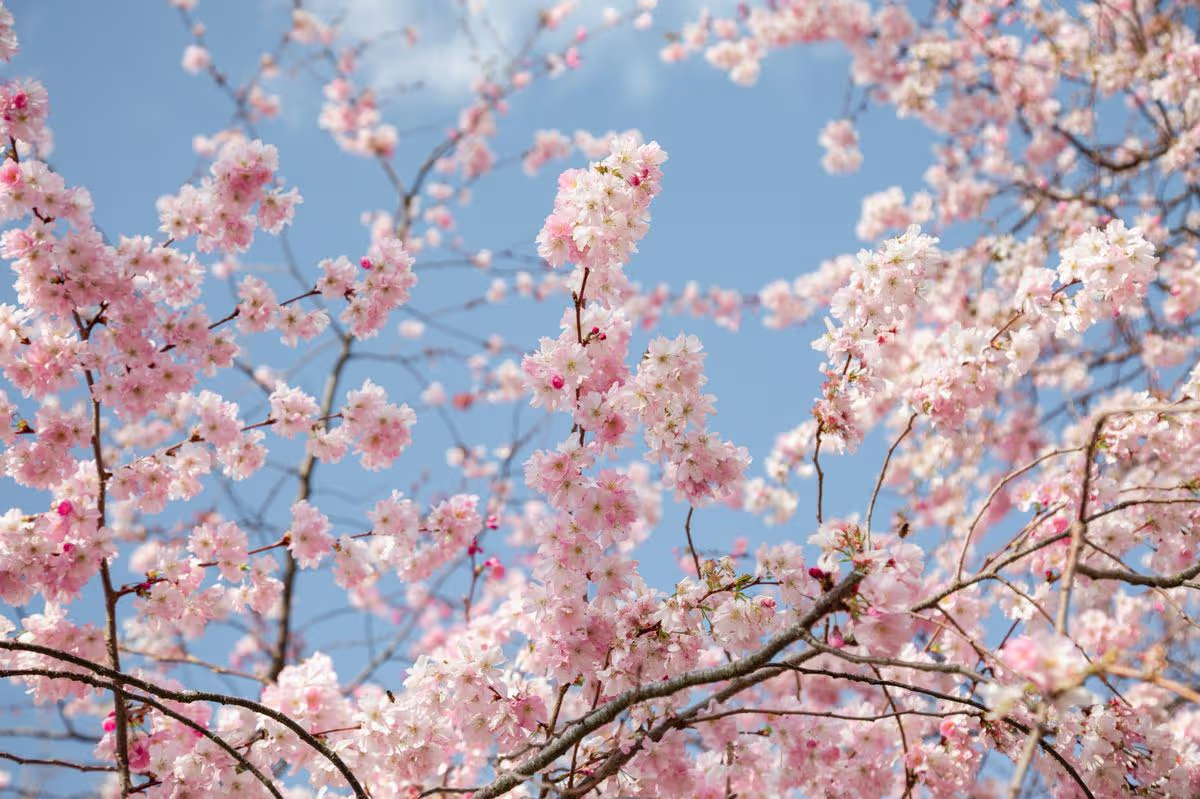
AS SPRING emerges, your Instagram feed will soon look like a sea of pink as people head off to find cherry trees blossoming – and the UK has some great free spots to see them.
Known as ‘hanami’, the tradition of seeing cherry blossoms is a centuries-old Japanese custom.
Sign up for the Travel newsletter
Thank you!
There are a number of places you can see blossom trees for free across the UKCredit: AFP
Taking place in the spring, the tradition celebrates the blossoms which symbolise new beginnings, mortality and the beauty of life.
While the UK doesn’t have anywhere near as many blossom trees as Japan does, there are several locations across the UK where you can catch them blooming for free – here’s some of the best.
Battersea Park, London
In South West London, head to Battersea Park and you will find a long run of cherry blossom trees on Cherry Tree Avenue.
If heading to the park, make sure to enjoy a wander next to the River Thames whilst seeing the 40 blossom trees.
The Meadows is a large public park south of Edinburgh‘s UNESCO World Heritage Old Town.
The park is even protected by an Act of Parliament, that was created in 1827.
During the spring, there are avenues of cherry trees.
They are known to bloom a little later than other places, usually starting to bloom in April.
In Edinburgh, The Meadows has an avenue of cherry treesCredit: Getty
Pittencrieff Park, Dunfermline
Up in Dunfermline, Scotland, head to Pittencrieff Park and walk along the path near the main entrance to enjoy a row of cherry trees that line the path.
The cherry trees usually blossom here in late April and whilst you are exploring the park, make sure to look out for its resident peacocks and the Andrew Carnegie statue.
Nearby, you can also visit Dunfermline Abbey and Palace.
Castle Park, Bristol
Castle Park in Bristol is an open space between the city’s Shopping Quarter and the Floating Harbour.
In addition to ruins in the park, visitors will be able to find different cherry trees.
One spot is the cherry avenue, with 21 trees.
And the other spot is a singular, white Japanese Cherry Tree that was planted in 2014 to mark the 70th anniversary of Hiroshima.
This type of cherry tree had actually died out completely in Japan, but was saved when a single specimen of the tree was found in England in 1923.
Paid-for spots to see cherry blossom in the UK
Kew Gardens, London – has a dedicated cherry walk and Sounds of Blossom festival
Alnwick Garden, Northumberland – home to the world’s largest orchard of Taihaku (Great White) cherry trees
Batsford Arboretum, Cotswolds – over 120 Japanese flowering cherry trees
RHS Wisley Garden, Surrey – an avenue of 140 Yoshino cherry trees