SACRAMENTO — California lawmakers rejected legislation that would have banned pesticides with so-called “forever” chemicals from use on California’s farms, a restriction strongly opposed by the state’s billion-dollar agriculture community.
Assembly Bill 1603 by Assemblymember Nick Schultz (D-Burbank) would have phased out the use of pesticides that contain perfluoroalkyl and polyfluoroalkyl substances, known as PFAS chemicals, a family of compounds that can be lasting and harmful to humans.
Representatives for agricultural groups argued at committee hearings last month that banning the chemicals was an overreach that would result in higher numbers of imports of food from other states and stifle innovation in developing new pesticides.
The latest version of the bill, which will be considered when the state legislature resumes its session next month, requires the state to list pesticides with PFAS in its public database.
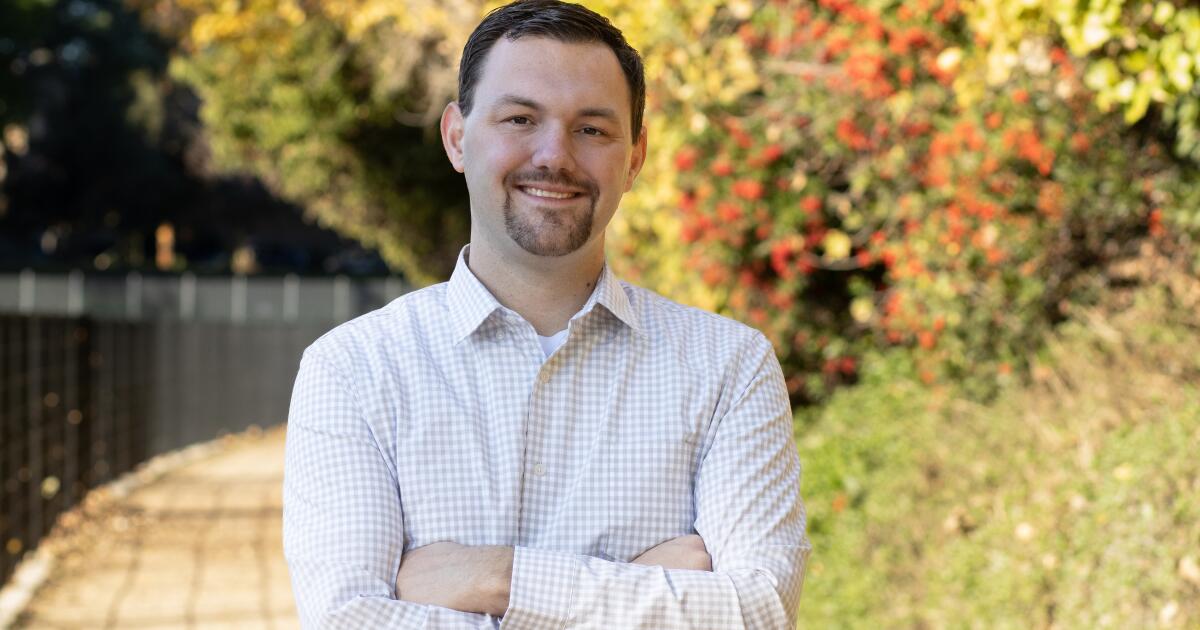
“I’m disappointed,” Schultz said in an interview with the Times, adding that he intends to still push to phase out PFAS chemicals.
The bill marks the latest back-and-forth over PFAS, chemicals that are found in many different consumer, commercial and industrial products and are known as forever chemicals because some of their components don’t easily break down.
State regulators and environmental groups disagree on the definition of the chemicals, making it difficult to find a consensus on regulations or health risks.
Gov. Gavin Newsom last year vetoed a bill that would have prohibited the sale and distribution of popular consumer products, including cookware, dental floss and cleaning products, that contain PFAS chemicals.
The governor, in his veto message, cited affordability concerns. At the same time, the state has passed various laws intended to protect people from PFAS, including banning them in food packaging and firefighting foam.
Studies show that exposure to certain levels of PFAS may lead to decreased fertility and developmental delays in children and increase the risk of cancers, according to the Environmental Protection Agency, and the vast majority of PFAS chemicals have not been tested for human health effects.
The Environmental Working Group, or EWG, an advocacy group based in Washington, D.C., released a study in March that found that nearly 40% of California’s conventionally grown fruits and vegetables tested contained PFAS residues, including 90% of peaches and nectarines.
The EWG, one of the bill’s supporters, uses a broader criteria to define PFAS than the state and federal authorities.
A spokesperson for California’s Dept. of Pesticide Regulation, which oversees pesticide use, said the EWG report looked at detections of the PFAS, but the state “looks at how the detections compare to federal tolerance levels.”
At a June Senate committee hearing on Schultz’s bill, EWG’s chief science officer, David Andrews, said that PFAS pesticides “fall into a regulatory blind spot.” He also said regulators, including the state, have “been inadequate with respect to evaluating immune system harm or the cumulative impacts of these very small PFAS.”
A spokesperson for the Dept. of Pesticide Regulation declined to comment on Schultz’s bill.
Taylor Triffo, a representative for a coalition of California agricultural associations, said at a different Senate hearing in June that the bill’s original language to ban new PFAS chemicals “would deny California farmers access to [the] next generation of crop protection tools that are safer, more targeted, require lower use rates and help address emerging pests and diseases.”
Representatives for agriculture groups said at hearings last month that they don’t object to the state flagging PFAS chemicals in the state database.
Nearly half of the country’s vegetables and more than three-quarters of its fruits and nuts come from California, according to the state.
Sen. Anna Caballero (D-Merced), chair of the Senate Committee on Agriculture, called pesticide use a “balance” at the June hearing before voting for the amended version.
“Part of the challenge agriculture is facing right now is pest invasion from other countries where the critters have moved on plants and in soil and have come into the state,” she said. “We’ve got to do everything, I think, we can to maintain our agricultural production, because we produce products that are produced almost nowhere else in the country.”
Isabella Quinonez, assistant director of Public Affairs at the California Farm Bureau, said her group objected to the original bill because it would have restricted products based on their chemical class rather than on a pesticide’s scientific evaluation of risk.
“We’re confident in the Department of Pesticide Regulation’s rigorous, science-based regulatory process, which includes residue studies, groundwater monitoring, and ongoing reevaluations,” Quinonez said.
Schultz told The Times he hopes to work with the Dept. of Pesticide Regulation on oversight in the coming years. He rejected any premise that there is “absolutely nothing to worry about, nothing off [with PFAS], because that’s just inconsistent with the science.”
Times staff writer Susanne Rust contributed to this report.