Hamilton had started on the medium tyres while Verstappen and Leclerc chose the softs. Despite his theoretically more durable tyres, the Briton pitted on lap 18 to switch to the softs, while Leclerc waited until lap 24 to swap his softs for mediums.
Leclerc came out of the pits from his stop just ahead of Hamilton, who had stronger pace on his softer tyres.
Yet Ferrari chose not to order Leclerc to let Hamilton through to maximise his pace, a decision that was questioned by Hamilton from the car.
A virtual safety car was called on lap 39 and Leclerc and Antonelli, who had chased the Ferraris closely from the start from his fourth place on the grid, took the opportunity for a cheap pit stop – it takes 10 seconds less to stop under a safety car than under racing conditions.
Yet Hamilton, despite having older tyres, did not stop, a decision that promoted him to second behind Verstappen.
As Leclerc was catching Hamilton, the Briton was told he needed to stop again; he pushed back to suggest he try to go to the end, but was told they were six laps short to make it in terms of tyre life.
Leclerc soon caught Hamilton and passed him on lap 46 and set off after Verstappen, but could get no closer than 7.3 seconds to the Red Bull.
Hamilton never did stop, but as his tyres lost grip he fell back into the clutches of Norris and Antonelli.
A passing attempt by Norris on lap 54 with eight to go saw Hamilton run off track and take to the escape road at Turn One, but as he did, Antonelli grabbed the chance to pass the McLaren, and then Hamilton later on the same lap.
Norris followed him through, and now Hamilton fell back towards the second McLaren of Oscar Piastri, who passed him on the final lap after a resolute attempted defence from Hamilton.
It was Hamilton’s call not to stop and he apologised for it on the slowing down lap – but there remain a number of questions as to the choices made.
Russell’s fight back through the field took him up to seventh as he delayed his pit stop as long as possible.
But after dropping back to 10th behind Audi’s Nico Hulkenberg and Alpine’s Pierre Gasly, he passed Gasly after trailing him for 10 laps or so, but could not make it past Hulkenberg, who was himself chasing Racing Bulls’ Liam Lawson.
Red Bull’s Isack Hadjar took the final point in 10th after starting from the back.
Red Bull’s Max Verstappen took his second pole position in a week by beating the Ferraris of Charles Leclerc and Lewis Hamilton in qualifying at the Singapore Grand Prix.
Verstappen’s first lap in final qualifying was enough to take pole, his time fending off a second lap from Leclerc that was 0.054 seconds off pole.
Hamilton was closest to Verstappen after the first runs but was unable to improve on his second run.
In fact, most of the front runners struggled to improve on their second runs, as Mercedes’ Kimi Antonelli took fourth on the grid, from McLaren’s Lando Norris.
Antonelli’s team-mate George Russell was sixth fastest but will drop to the back of the grid with a penalty for using too many engine parts.
McLaren’s Oscar Piastri was the only driver in the top four teams other than Leclerc to improve on his second run but could do no better than qualify seventh.
Alpine’s Pierre Gasly and the Racing Bulls of Liam Lawson and Arvid Lindblad completed the top 10.
Midcentury pop culture expert Charles Phoenix thinks Long Beach gets a bad rap.
“It is very underrated in the grand scheme of all of Southern California, but there is a lot to see and do there,” says the Ontario native, who uses the word “time-honored” repeatedly when describing his favorite attractions in the seaside community. “I often refer to it — under my breath — as the New Jersey of Los Angeles. It doesn’t get much respect, yet it’s loaded with attractions.”
In Sunday Funday, L.A. people give us a play-by-play of their ideal Sunday around town. Find ideas and inspiration on where to go, what to eat and how to enjoy life on the weekends.
When he isn’t gushing over Long Beach, the humorist and author hosts nostalgic slideshows and double-decker open-air bus tours of Midcentury architecture during Modernism Week in Palm Springs. His next event, “LosAngelesland,” is a lively retro slideshow featuring vintage Kodachrome slides taken by Los Angeles locals and tourists in the 1950s and ’60s. The show is scheduled for Oct. 17 during Modernism Week’s October festival in Palm Springs and a Halloween-themed version on Oct. 24 at the Anaheim Fall Festival. Phoenix will also present “Disneyland: Live Retro Slide Show Celebrating the Original Magic Kingdom in the 1950s & ’60s!” at the Hilbert Museum in Orange on Oct. 18.
Phoenix lives in a Midcentury Modern home in Claremont, but he’s always happy to spend a day in Long Beach. His ideal Sunday includes eating clam chowder-topped biscuits at a floating restaurant, shopping for vintage treasures along 4th Street Retro Row, cruising around Naples in an electric Duffy boat and ending the day at a classic diner from 1939.
“There’s more to do in Long Beach,” he says. “I could keep going, but there’s only so much space in this column.”
This interview has been lightly edited and condensed for length and clarity.
8 a.m.: Wake up early and say thanks
When I wake up, I usually have nonfat yogurt, chopped walnuts and one or two types of fresh fruit. Then I walk through my house, and whatever room I walk in first — either the living room or the den and say, “I love you, house.” Those are the first words I speak out loud.
10 a.m.: Drive to the coast for lunch on a floating restaurant
We’re going to start at the only floating restaurant I know of in the Western United States, the Chowder Barge. It stands out on its own, although it’s a bit tricky to find, so it’s a good thing we have GPS or we might never get there. It’s a little bit tiki, a little bit pirate and a little bit seafarer. There’s always an old wizard-like man sitting in the corner with a long beard that reaches the floor. When you’re on the barge and a boat passes by, you can feel it. The best thing there is their fried clams and clam chowder, which you can eat in a bowl or use the chowder as gravy. For breakfast, you could have biscuits topped with clam chowder instead of gravy. It’s the best clam chowder ever. If you want fried clams on top of the biscuits, that’s incredibly delicious. They also have an open-faced hamburger covered with clam chowder and fried clams or just clam chowder.
The place has a deep soul, and everything there is unique and time-honored.
1 p.m.: Go vintage shopping on Retro Row
Next I would go shopping on 4th Street, a.k.a. Retro Row, which is absolutely, in no uncertain terms, the best vintage shopping street in the Western United States — probably the Eastern and Midwestern as well. There are three stores there that I concentrate heavily on. The first is Sneaky Tiki Boutique, which is the destination of all destinations for what I wear all spring and summer and fall — vintage Hawaiian shirts from the ’50s and ’60s. They’re not Hawaiian shirts unless they’re made in Hawaii. Nobody has a better supply than Sneaky Tiki. I mean nobody.
A couple of doors down is another world-class vintage store, Meow. Meow is an institution in the world of vintage clothing, shoes and accessories. And it’s absolutely a spectacular themed environmental extravaganza, as is Sneaky Tiki. There are all kinds of vintage in there. So it is a feast for the senses and your wardrobe and accessory needs.
And then for your Midcentury home decor needs, there’s Xcape Modern. They’ve been there for probably 30 years, and it’s a little mumbo jumbo as far as the way it’s all laid out. It’s a little messy, but they have incredible Midcentury furniture and home decor, including patio items. It’s a spectacular, well-curated collection.
3 p.m.: Explore Rancho Los Alamitos
After that, I’d take a quick late-afternoon scamper around Rancho Los Alamitos. It’s really special, and it’s free, F-R-E-E, free. It’s this gorgeous, time-honored place; basically, you’re walking back into time. The family started building it in 1790 and finished in 1834. I love to look around and walk through the layers of time. The house is beautiful. The barn is beautiful. There are animals there too. It reminds me a little bit of old-timey Knott’s Berry Berry Farm. Chickens walk around, and it just has, again, this deep soul, layers of time, mature garden. And it’s impeccably kept, impeccably groomed. You can spend 20 minutes walking around there or you could spend four hours. And of course, the garden is absolutely out of this world.
It’s its own little world. It doesn’t know the rest of the world exists, which is the kind of place that I really, really love — a place that’s true to itself, time-honored and lost in its own wonderland. You know, it’s just so special to be able to escape to such a rarefied environment.
5 p.m.: Go for a ride on a Duffy Boat in Naples
From there, get ready for my favorite thing to do in Southern California: taking a Duffy Boat ride around Naples. I always rent from Anchors Away. The boats remind me of the Jungle Cruise at Disneyland. Most are white and blue, but a couple of years ago, around the time of the Barbie movie, they added some bright pink ones. You can pay a little extra for the pink boats, but the blue and white ones are just as fun. The boats seat about eight to 10 people, and you rent them for two hours and just cruise around. The canals are much bigger than those in Venice. They give you a map and two hours to enjoy the water. I usually drive the boat while my friends bring drinks, cookies, snacks and whatever they want to drink. I had no experience before my first time, but it’s easy and relaxing. It’s never crowded, the homes are beautiful, and of course, I always wear a captain’s hat.
8 p.m.: Late–night snack at a 1939 diner
After that, even if we’ve already had plenty to eat and drink, we usually end up at one of my favorite diners, Harbor House Cafe, on Pacific Coast Highway in Sunset Beach. It’s been open since 1939. So we drive a couple of miles down PCH, pile into the Harbor House and finish the day with whatever we want — dessert, more dessert, onion rings or a milkshake. It’s our spot to unwind. The onion rings are especially good. It’s an easy, time-honored place, just like everywhere I love to go. I like to soak in the history. After we leave, everyone heads home, and I drive back up the 605 Freeway to Claremont.
Hollywood is filled with book-to-screen adaptations that have ignited grumbling and spirited debates. Even before its release, Zoe Kazan’s interpretation of John Steinbeck’s sprawling 1952 masterwork, “East of Eden,” roused passionate opinions from loyalists of the text on social media.
Much of the discourse surrounds Kazan’s creative choice in how to portray the book’s infamous antagonist, Cathy Ames, in Netflix’s seven-episode limited series out Thursday.
Steinbeck’s multigenerational saga ruminates on family, the power of choice and the nature of good and evil — deeply exploring the biblical stories of Cain and Abel and the fall of Adam and Eve — through the intertwined destinies of two families, the Trasks and the Hamiltons. Cathy (later known as Kate) functions as a chilling, destructive force in the saga.
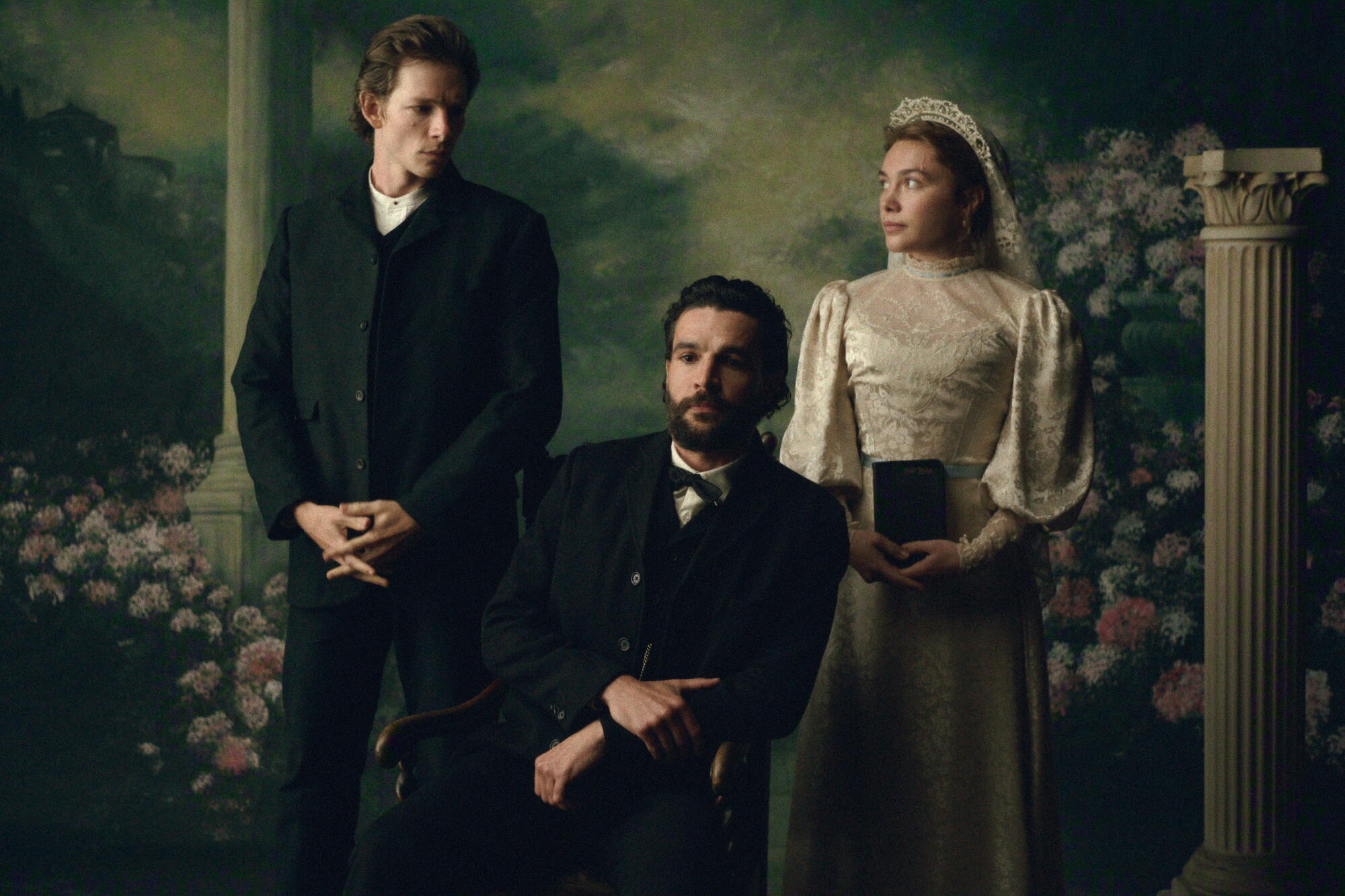
Kazan pared down much of the Hamilton family’s story for the show and centered Cathy (Florence Pugh), whose arrival alters the lives of the Trask brothers, Adam (Christopher Abbott) and Charles (Mike Faist). In doing so, Kazan dared to humanize the character who has been considered one of literature’s most definitive symbols of pure evil, described by Steinbeck to be a “psychic monster” born without a conscience or kindness.
“I’m trying to protect my mental health by not being too much online,” Kazan said in a video call from London on a recent weekday. “I do think it is not surprising to me that this character brings up a lot of strong feelings for people … I’m excited to see what people think once they actually see what we have made and aren’t just anticipating something.”
Mike Faist as Charles Trask, Christopher Abbott as Adam Trask and Florence Pugh as Cathy Ames in Netflix’s “East of Eden.”
(Netflix)
When Kazan, an actor who has expanded her creative footprint behind the camera, first pitched the series in 2019 and was asked about which actor she envisioned as Cathy, she replied: “I have one.” She had seen Pugh in “Midsommar,” “Lady Macbeth” and “Little Women,” marveling at how the actor’s ultra femininity lived alongside her masculine energy.
“The range on that girl … I was like, if anybody can do that, they can play Cathy,” Kazan says. “It allowed me to write Cathy as complicated and mysterious [as I wanted] and with so much shadow and light.”
When it came to Adam and Charles, Kazan knew Abbott and Faist could depict the psychological nuance beyond the binaries of the nature versus nurture debate: “I wanted an Adam where you felt what his true nature was and the nature that his father had pushed him into … and I knew we needed that in Charles as well.”
Adapting a classic is hardly a simple endeavor, particularly one that has been done before. That Kazan would choose “East of Eden,” which unpacks legacy and generational shadows is apt: Her grandfather, Elia Kazan, famously directed the 1955 film version starring James Dean. The actors of the Netflix series are eager for viewers to see her vision come to life.
“When you do an adaptation of a book, especially a seminal American novel, no matter what, you’re always going to be up against it because … whenever somebody reads a book, the budget in their heads is unlimited,” Abbott says. “I think this is such a great adaption in its own right.”
Pugh adds: “I’m excited for people to do the stuff that I’m doing now, which is [to say], ‘Oh my God, let’s read this and see how it fits against what I’ve got in my head.’”
Over a video call together, Pugh, Abbott and Faist reflected on their journey to adapting Steinbeck’s epic story, including their first experiences with it and filling in the shades of these characters who remain timeless allegories of the human condition. This conversation, which contains spoilers, has been edited for clarity and length.
Florence Pugh, left, Christopher Abbott and Mike Faist take on some of literature’s most indelible characters — Cathy Ames, Adam Trask and Charles Trask — made famous in John Steinbeck’s classic “East of Eden.” (Photographs by Sophia Spring / For The Times)
When did you first encounter the book?
Faist: My first encounter with the story was the James Dean, Elia Kazan film. That was a movie that I watched, especially when I first moved to New York and wanted to be an actor. It wasn’t until Zoe and Florence asked if I’d be interested in doing this, that I picked up the book.
Pugh: I want to say maybe my early 20s, I read the book. I only watched the movie recently to prepare myself for these kind of conversations. I’m rereading the book now while we’re heading into press, just so I can like fine-tune what I thought I knew … there’s so much love that’s being breathed into every single sentence of every chapter [in this adaptation], and that is solely down to Zoe’s fantastic brain and her ability to want to dig deeper.
Abbott: A lot of my favorite books I’ve picked up and put down numerous times before actually plowing through it — that was the case here until Zoe approached me about doing it. I was like, “Well, this is a perfect excuse to finally [finish].”
This adaptation lit up social media early on for centering Cathy. She is such a polarizing figure. Some see her solely as an evil monster. Some argue there is more nuance to what’s driving her actions. Florence, how do you see her?
Pugh: It’s tricky because I know I’m gonna get asked this again and again, and I guess I’m still trying to figure out how to word it without totally pissing people off. I love finding characters that people automatically think are villains and trying to find a way for you to love them — it’s my favorite thing to do.
I read these episodes, and I was listening to Zoe and how she was wanting this to come from Cathy’s perspective, how Cathy was her hero and how she’s just been championing Cathy ever since she first read the book — that was so f— exciting to know that we’re not gonna just point the finger and say that she’s evil. It is my job to do my skills as good as possible so that I can argue in defense of them. I believe that I can argue for her, which is terrifying but also really cool. I care for her deeply. I understand where she went and why. Does she do some terrible things? Absolutely. Is she a product of the situation that she grew up in? Totally. You can’t get raped as a child and and you be totally fine for the rest of your life.
Florence Pugh as Cathy Ames. She hopes the adaptation prompts curiosity: “I’m excited for people to do the stuff that I’m doing now, which is [to say], ‘Oh my God, let’s read this and see how it fits against what I’ve got in my head.’”
(Netflix)
That detail was not explicitly stated in the book. What were your conversations with Zoe about it?
Pugh: That’s why we ended up choosing the way that we explained it and the way that we showed it — that little girl is so tiny you can’t even imagine anything bad happening to her, and the fact that she’s holding “Alice in Wonderland,” [in her mind], there’s so many through lines through Cathy and Kate’s life that all come back to that moment. You don’t need to do much. Everybody has the sinking feeling of what might happen to a vulnerable child in that situation. In the book, I think it’s constantly playing with the themes of can we trust her? Is she already a monster as a child?
What Zoe has done is made her a real human, and has given her cause and has given her time to understand. That moment that is alluded [to in the book ] — if Cathy asked the boys to tie her down, and whatever it is that they were doing to her — it’s no longer alluded [in the series]. That [assault] happened, but maybe people didn’t believe her.
Mike, what were you interested in excavating with Charles, this Cain archetype who’s tormented by rejection and jealousy?
Faist: What is amazing about this story is — and it’s the entire through line of the entire novel — is this idea of timshel. What happens in a person’s life, and the burdens that they carry, then the choices they make, and every single moment as they continue to live it. Charles jumped out at me. There was just something about him that I was very drawn to — and along with that pull, there’s this feeling of dread, where you say, “Oh God, I can’t believe that I’m about to jump in and do this thing.” You end up surrendering yourself to it. It is scary and deeply exciting.
Abbott: I don’t have a brother. You forget too that they’re half brothers and what that dynamic is like, what kind of Freudian s— pops up. I think the through line for Mike and I, because there’s a lot of conflict there, that it always comes from a place from love. The letters, as they [Charles and Adam] get older, that are written or the letters that he starts to write and doesn’t send, when there is hate between them, it’s because they love each other so much. Otherwise, it would just be indifference. A lot of that happens in the things that are unsaid.
1
2
1.Mike Faist as Charles Trask. (Netflix)2.Christopher Abbott as Adam Trask. He found the sibling relationship intriguing: “I don’t have a brother. You forget too that they’re half brothers and what that dynamic is like, what kind of Freudian s— pops up.”(Kirsty Griffin / Netflix)
When Zoe approached you, Chris, to play Adam, you questioned whether she actually meant for you to be Charles?
Abbott: I’m just used to being typecast, so I thought she made a mistake. Zoe’s mentioned this idea of masculine and feminine energy — what one presents and what one actually holds, and the old switcheroos of that. The very first email, I was like, “Oh, are you sure?” But I was excited to play with all the nuance of and the layers of what this is. I had seen the movie before, and it [covers] only the last 100 or so pages. It’s really gratifying to play a part where you get to see someone’s whole life and how this guy goes from being this wanderer, drifter to this to stoic, depressed, rigid older man.
What moment between these characters were you most eager or nervous to depict?
Faist: The scene that I reflect back on the most, that actively had the biggest impact on me, is the scene between Cathy and Charles, where she comes into his room and the two of them share this intimacy together. We had talked about what we were wanting to do, then on the day, none of it was really working. I remember Florence had this really specific thing she wanted to bring to the scene. And it was really powerful — there’s these very rare moments when you genuinely feel someone’s objective actively working against your own. [Pugh makes a quizzical face.] No, it’s good! It creates this friction and this tension that does exist and does live.
Abbott: That was your favorite, huh?
Faist: I’m sorry, Chris! That one was just such a visceral feeling of, I know what my character wants in this thing, and her character is very much wanting the exact opposite and the literal clash of that that moment and the feeling of that — I’ll never forget that.
Pugh: It’s such an important scene to get right because it literally is the ending moment of those two; it added so much pressure on the day of shooting. It’s actually really hard when you’re trying to do a sex scene that’s consensual, but it’s definitely not at the right time. The coolest thing about it is it wasn’t working and we had to push everyone out. Everyone was whispering and everyone was trying to figure out what they were comfortable with us doing and, eventually, Mike and I were just like: Right. Done.
Florence Pugh, with Christopher Abbott, left, and Mike Faist, says “East of Eden” endures because “every single one of these characters is struggling to survive realistically.”
(Sophia Spring / For The Times)
Chris, you have the daunting task of, in the closing moments of the series, delivering the word that’s the thrust of the whole story —timshel.
Abbott: I think that was the last scene I shot. I can’t say I was being lazy, but the character had a stroke so he was laying there. You just gotta listen [in a moment like that]. Hoon [Lee, who plays Lee] is reading from the Bible. You take in the room. I nailed it in one. [Pugh and Faist laugh.]
People have deep feelings about “East of Eden.” And it seems to have had a real resurgence recently, even outside of curiosity about this adaptation. Why do you think that is?
Abbott: That’s a big, existential [thing to think about]. There’s a ton of themes in the book that are relevant: displacement, family, love. The themes in the book aren’t specific to the time period. All great works are that.
Pugh: It’s also about generational trauma and change in healing. One of the things I recognized immediately when I started rereading the book months ago, the first few pages about the Salinas Valley describe very quickly that this place is about growth, change and moving on. What I’ve taken from our adaption of Cathy and her generational trauma and what she’s doing to her kids is that not everybody is going to get it right. The reason I think why people keep picking it back up is every single one of these characters is struggling to survive realistically, and they are all making decisions that affect and domino-effect other people around them. Us learning about how we could have done better will always be relevant. And especially with America, and what we’re watching in terms of its constant battle against racism and immigration. It’s relevant to life and to our lives.
Filming a broadcast television show can leave even the most seasoned actors feeling like they’ve lost sense of time. But by afternoon on a recent weekday, Josh Charles actually looks like he teleported to the past as he collapses into a seat inside his production trailer in upstate New York.
He’s in the throes of filming Season 2 of “Best Medicine,” the Fox dramedy he headlines that’s set in a small fishing village in Maine, and the reason he’s shed his character’s usual suit and tie for gaitered trousers and a navy coat with red facings eventually reveals itself: Port Wenn, the show’s fictional town, is putting on a Revolutionary War reenactment. And if you’re familiar with Martin Best, the curmudgeonly doctor with an almost permanently furrowed brow portrayed by Charles, the character’s willingness to don such a getup likely took some coaxing.
That’s the fun of it all for Charles.
He’s been a working actor since childhood — making his debut at 15 in John Waters’ cult classic “Hairspray,” followed soon after by his turn as Knox Overstreet in “Dead Poets Society” — and a fixture in TV and film ever since.
While best known for dramatic roles like high-powered lawyer Will Gardner in “The Good Wife,” Charles easily pivots to comedy — like the time he memorably played the triple-collared, snobby camp ringleader in “Wet Hot American Summer: First Day of Camp.” Now, “Best Medicine” lets Charles leans into the push and pull of the comedy and drama within his tightly wound alter ego.
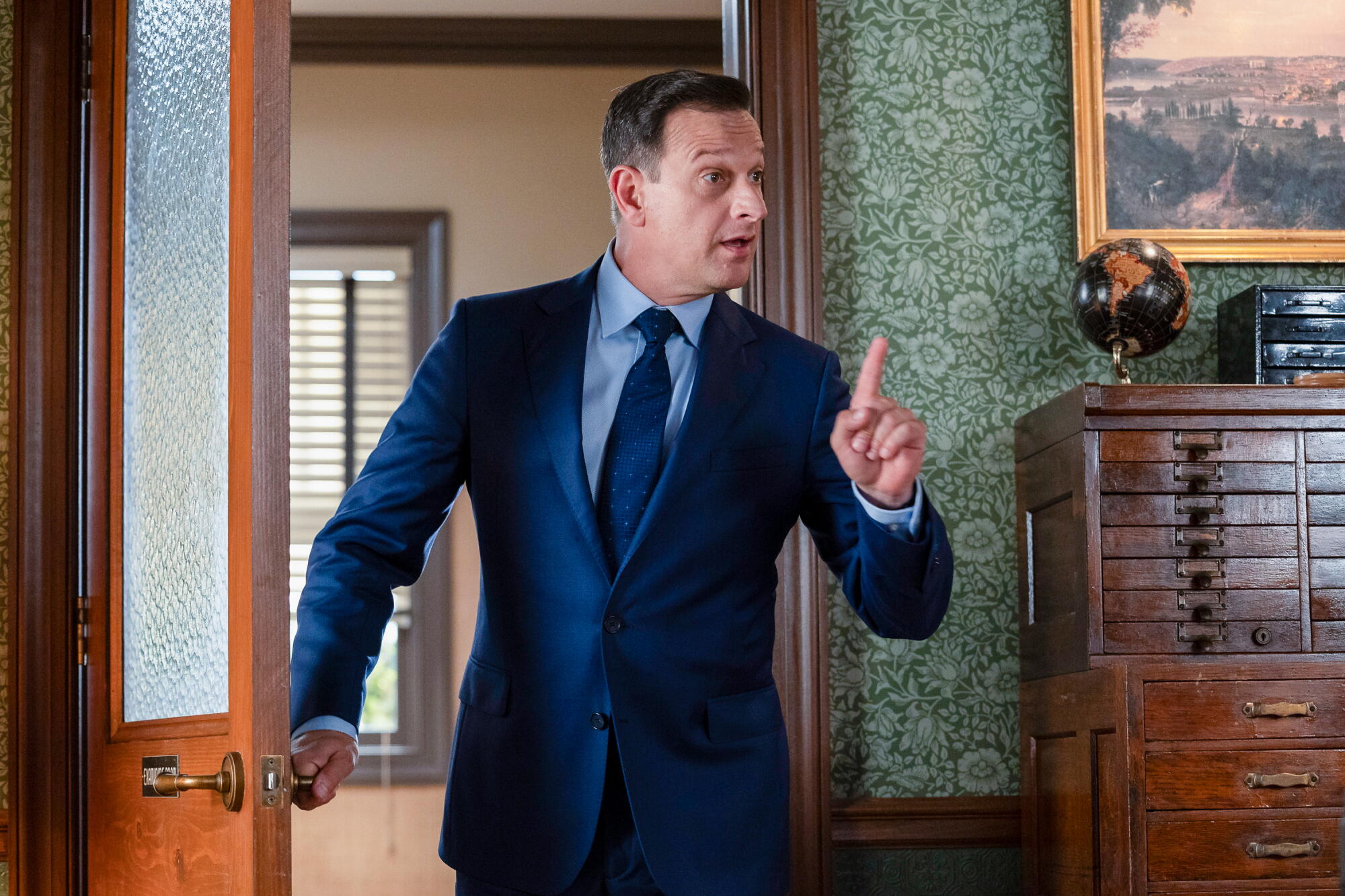
Josh Charles as Martin Best in Fox’s “Best Medicine.”
(Francisco Roman / Fox)
Created by Liz Tuccillo (“How to Be Single,” “Sex and the City”), the series follows a brilliant but cranky heart surgeon who, after developing a crippling blood phobia spurred by a traumatic medical case, abandons his thriving career in Boston to become a general practitioner in the town where he spent summers as a child. Martin Best is a doc whose bedside manner could use some TLC, but he came to town hoping he can still practice medicine — that is, if the townspeople would actually do as he says.
“I have been really wanting to do more comedy lately and looking — especially if I was going to call a place home for a particular period of time, like you do in a television show — for something that was a little more lighter air than I had been networking in of late,” says Charles, whose recent credits include dystopian drama “The Handmaid’s Tale” and spy thriller “The Veil.”
The series is based on the beloved British dramedy “Doc Martin,” which starred Martin Clunes as a doctor with a similar storyline, that aired between 2004 and 2022. Tuccillo says Charles brought an elegance and depth to the fish-out-of-water dynamic his character navigates in the quirky town.
“He never hits a false note,” she says in a separate video call. “I knew the material would be in great hands in that he would always elevate it just by his artistry and being. I knew he was going to be able to play the gruffness, but any time that you’re doing a show, there is a question mark on so many things. To be honest, we were like, ‘But is he going to be super funny? Is he going to want to do pratfalls? Is he going to be game for the comedy part of it?’ When we started working, it was clear he was game for all the shenanigans … he likes to laugh. So I try to devise things that I think will amuse him.”
A special advance preview of the Season 2 premiere aired Sunday, but the show will move into its regular time slot Tuesday. Here are edited excerpts from the conversation with Charles.
Josh Charles poses for photos on the “Best Medicine” set in upstate New York. He says he was drawn to the Fox dramedy because it was “a little more lighter air” than the other work he had done recently.
(Ebru Yildiz / For The Times)
“Best Medicine” hit Netflix after its first season aired. Building an audience outside the traditional linear viewing has become such a key component of television today. How do you feel about it?
One of my dad’s best friends told me, “I’m watching the show on Netflix!” He’s like, “I just can’t watch shows with commercials anymore” — as people are programmed now. That is the new shift. You go into these platforms for periods of time, build your audience in a different way and hopefully keep growing that audience. [Television] keeps evolving and growing in a way that I don’t fully understand, but I do know that it’s a different world right now. Netflix has a great reach, and it’s great that we’re on there and that people are discovering it. And apparently we did very well.
Season 2 opens with Martin on probation and under review by the medical board. What is Martin in for this season?
When it starts off, he’s really in it. Eden [Martin’s ex-girlfriend played by Eliza Coupe] is now back in the picture. She’s coming from Boston every weekend, and she’s rubbed a lot of people in town the wrong way. And the progress that Martin made, we see him maybe take a few steps back in the way that he interacts with people. He’s with her and I think there’s feelings there, but I think their relationship feels very — I don’t know, it’s interesting. It doesn’t have the fire. But she doesn’t make him feel bad about himself. She respects him, and I think those things are important. And he’s around in this town where nobody’s listening to him half the time. People are just always mad at him about something, and she’s not. She puts him a little bit on a pedestal, and I think he really needs that.
All that presents an obstacle for the show’s slow burn: Martin and Louisa (Abigail Spencer). There’s been some discourse about the art of the slow burn and how the pacing has changed in an era of short episode orders and unpredictable renewals. You have experience in this department with “The Good Wife.”
Liz and I have talked about it a little bit. You don’t want to muck bait it and drag it out for the sake of dragging it out. I think they’ve done a good job of putting the obstacles in a way that still feels organic and genuine and not yet a reach. In the British show, things accelerated so much faster. They only made eight [episodes] a year. We want to also have it feel like it’s plausible. It is really fun to have Eliza Coupe here. It’s fun to play scenes with her and [see] the different side that brought out in Martin. That is the challenge because I don’t think we’re as interested in doing it quite that fast [as the British show]. I have faith in them that we’ll land it in a good way.
Ellen Soraya Nikbakht as a peculiar patient and Josh Charles as Martin Best in the Season 2 premiere of “Best Medicine.”
(Danielle Mathias / Fox)
You’ve played in comedy and drama in your career. It’s fun to watch you straddle both sides with this character. How has it been finding the rhythm or tone with him?
A lot of the comedy I’ve done, I’ve done some stuff that’s more silly and kind of over the top. I love playing the fool. What’s really fun [here], to me, are the circumstances they put Martin in where things are blowing up in front of him and he’s just trying to deal. I’ve enjoyed doing a lot of the physical comedy on the show.
I [also] found it really interesting to have a character who doesn’t want to be around people, but he actually does. He just doesn’t really know how to do it, and he’s never really had any kind of practice at it in his life. And he’s gone through a lot of trauma in his life. He’s a really specific kind of workaholic. For him to grow up with what he did, and losing his sister really young in his life — I did research on that and what that does to people and how that can sort of frame your life. I imagine he went to private school, maybe a boarding school, then he goes on the track of going to college and medical school — we know how hard that is, the kind of hours they put in; then to be really successful at it, you put everything you have into your work. There’s this other side of his life that is completely empty. This town kind of just softens off the edges of him a little bit and helps him become a little more authentic version of who he was maybe meant to be. That gives me some place to build off of and to go with the character, other than it feeling kind of just very one-note.
Matthew Goode, left, as Finn Polmar and Josh Charles as Will Gardner in a scene from Season 5 of “The Good Wife.”
(CBS)
This series marks your return to broadcast television after leaving “The Good Wife” in its fifth season. You’ve done TV since then, of course. But a big reason you left broadcast was because of the grind of a 20-plus episode season. With “Best Medicine,” you’re the lead and the second season will have 14 episodes. Does that feel like the sweet spot?
If “The Good Wife” was “The Good Fight,” I would have done that until the wheels come off. I would have never wanted to leave that because I would have had a life. I could have been able to go do a play, travel with my family, see my kids. At the time of “The Good Wife,” I didn’t have kids, but we were about to get married and wanted to have children. I was only going to do 18 [episodes] at most with this show, if they wanted it. And then I asked them this year, “Well, we’re just at 14. What was the decision [there]?” And I’m happy about it. They also agree. This just feels like where the show wants to live creatively. You work really hard for four or five months, and then you get to go explore other projects and travel and live your life.
Your departure from “The Good Wife,” with your character Will Gardner dying, felt like an out–of–body viewing experience as it happened. The fact that it was kept under wraps —
I can’t believe we did it, honestly. There was one journalist who obviously had a source somewhere and did find out. Part of being able to keep that silent until the moment was an agreement that they would come to set and be there as long as it was [kept secret]. I remember like when the episode aired, I was in the editing bay with the editors in L.A. [for an episode I directed]. I’m seeing things come in and I was like, “Oh my God!” I thought it was going to get ruined for people on the West Coast. These days, you know how they make something, how much this cost, how they did this scene … we used to be surprised by things. To be able to truly shock people you know like in an Orson Welles-style “War of the Worlds” way. I felt like in our own sort of network TV way, this was the equivalent of that. We really got to narratively pack a punch. That season was one of the great treats of my career. I just felt the writing on that show that season was at another level.