charged

Saudi national charged with planting a listening device at OpenAI offices | Espionage News

United States federal agents have arrested a Saudi national and charged him with planting a hidden audio recording device in a conference room at the California offices of OpenAI, where he was working as an engineer.

Abdulrahman Alfozan, 35, had been working at the AI company since ⁠July 2025, the US Department of Justice said in a statement on Tuesday.

Recommended Stories

list of 2 itemsend of list

OpenAI discovered the device plugged into a USB port behind a television in an executive conference room at one of its San Francisco buildings on September 30, according to a criminal complaint filed by the Federal Bureau of Investigation (FBI).

Following the discovery, the company placed a camera in the room, which captured Alfozan entering last week and checking behind the television where the listening device had been installed, the FBI alleges.

The case highlights growing security concerns around sensitive AI research as companies and governments compete for the best talent and technology with the potential to alter regional economic and strategic dynamics.

Who is Abdulrahman Alfozan and what is he charged with?

Alfozan has been a legal permanent resident of the US since September 2020.

According to a LinkedIn profile in his name, he studied at ⁠the Massachusetts Institute of Technology (MIT) and the University of California, Berkeley. He previously worked at Meta and Microsoft, it said.

Before he joined OpenAI, he was a venture partner at Raed Ventures, headquartered in Riyadh in Saudi Arabia, which invested “in seed and early-stage startups in Saudi Arabia and MENA”.

Al Jazeera could not independently verify the details mentioned in this LinkedIn profile.

Alfozan made his first court appearance on Tuesday on a charge of “using or endeavouring to use an electronic, mechanical, or other device to intercept oral communications”.

It was not immediately clear if he has legal representation. He is expected to return to court on October 19.

If convicted, Alfozan faces up to five years in prison, a $250,000 ⁠fine, and three years of supervised release.

What happened at OpenAI?

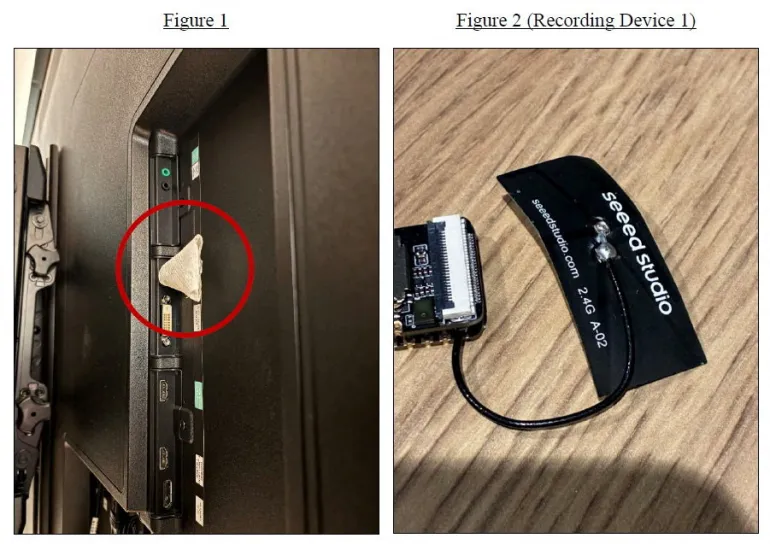
The FBI says a thumb-sized device with a microphone, and which ‌could connect to a camera, had been concealed in toilet paper and placed behind a television set in the conference room. It was installed around September 28, the FBI said. Its stored data was encrypted and inaccessible. Investigators later found a similar device in Alfozan’s personal bag.

In a post on X, OpenAI said it had evidence that the employee intended to place other listening devices throughout sensitive areas of its offices to secretly record meetings.

“At this time, we have no indications of this individual inappropriately accessing or exfiltrating model weights, source code, or customer data. The employee was ⁠terminated,” the company said.

The FBI complaint also alleges that Alfozan used an AI productivity tool to make multiple inquiries about the company’s building addresses, meeting rooms, meeting-room capacities and calendars, despite not having the authority to access these spaces or participate in meetings there.

“This alleged attempt by a Saudi national to steal sensitive communications from OpenAI was taken extremely seriously. Theft of intellectual property involving cutting-edge super intelligence technology poses a serious threat to our national security,” Attorney General Todd Blanche said in a statement on X.

A device, which the US Justice Department says is a hidden audio recording device installed in an OpenAI executive conference room by Abdulrahman Alfozan, a Saudi national employed as an engineer at the AI company, at a location given as San Francisco, California, US, in this combination handout photo released October 13, 2026. US Department of Justice/Handout via REUTERS THIS IMAGE HAS BEEN SUPPLIED BY A THIRD PARTY
A device, which the US Justice Department says is a hidden audio recording device installed in an OpenAI executive conference room by Saudi national Abdulrahman Alfozan [File: US Department of Justice handout/Reuters]

Hasn’t OpenAI been accused of helping to spy on civilians?

In an X post by OpenAI explaining how its own systems were used to trap Alfozan, the company said: “Our security program is designed to protect against a wide range of threat actors, from insider risks to cybercriminals to nation states, and this case is an example of how AI can help address these sophisticated security threats.”

But AI technology is used not only to catch spying, but conversely, to engage in it as well.

In February 2025, an investigation by The Associated Press found that US tech giants had enabled Israel to track and kill people in Gaza and Lebanon through AI and computing services. The AP reported that the Israeli military had bought advanced AI tools from tech companies including OpenAI, the maker of ChatGPT, through Microsoft’s Azure cloud platform, to assist with surveillance.

OpenAI denies having a relationship with the Israeli military.
But OpenAI also faced criticism when it signed a deal with the US Department of Defense in February this year to supply its technology to the US military for use in classified settings, including intelligence gathering. OpenAI’s competitor, Anthropic, refused to sign the same deal unless the Pentagon barred mass surveillance of Americans.

There have been several incidents in which OpenAI models have gone “rogue” by independently breaking out of a testing environment and then hacking into other organisations and even government sites, leading to calls for stronger regulations against unchecked AI surveillance.

Source link

Venezuela’s Nicolas Maduro and his wife charged over torture allegations | Nicolas Maduro News

DEVELOPING STORY,

The new US charge adds to the existing drug trafficking case against Venezuela’s former president and first lady.

Former Venezuelan President Nicolas Maduro and his wife, Cilia Flores, were charged in the US state of New York with conspiring to commit torture in connection with allegations that they tortured political opponents to maintain their power.

The charge announced on Thursday in a Manhattan federal court adds one count of conspiracy to commit torture to the drug trafficking charges the couple already faced.

Maduro and Flores pleaded not guilty to the drug charges and have been held at Brooklyn’s Metropolitan Detention Center since their capture. Their trial is scheduled for June 1.

The charges pile on an ongoing criminal case against Maduro and Flores. A superseding indictment accuses Maduro of working with cartel groups to move cocaine through Venezuela toward the United States.

This is a developing story…

Source link

Two men charged with terrorism offences in Manchester

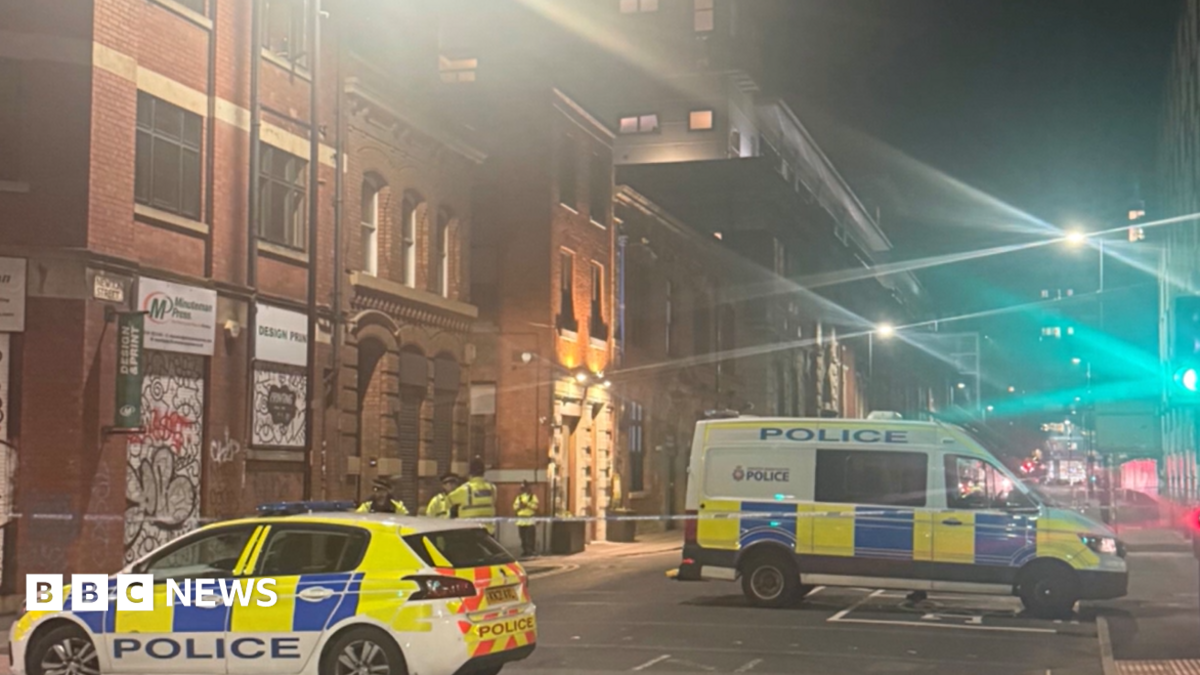
Two Iranian nationals have been charged with terror offences over an alleged plot to target the Jewish community in Manchester ahead of Yom Kippur, Counter Terrorism Policing has said.

Rahman Salehi, 35, and Salam Ahmadyan, 36, are accused of preparing to commit an act of terrorism or assisting another to commit an act of terrorism on or before 20 September.

The duo were arrested in the Northern Quarter area of the city, when thousands of British Jews were in synagogues.

Home Secretary Shabana Mahmood said the news two Iranian men have been charged over an alleged plot in the Manchester area would be “deeply distressing” to the Jewish community and added “both suspects arrived by small boat several years ago”.

The men are due to appear at Westminster Magistrates’ Court on Saturday.

Source link

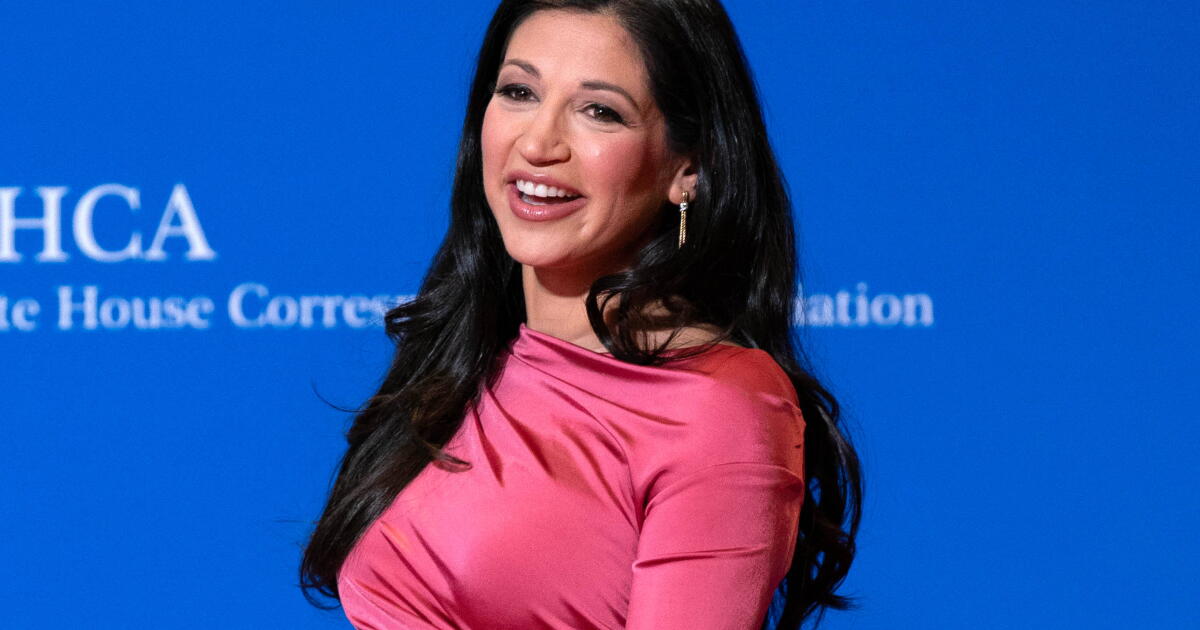
Massachusetts man charged with cyberstalking podcaster and former Trump official Katie Miller

Alanna Durkin Richer and Eric Tucker

A Massachusetts man was arrested Thursday in a federal case alleging he cyberstalked conservative podcaster and former Trump administration official Katie Miller, targeting her dozens of times with menacing phone calls and messages, according to court papers.

Authorities say the man contacted Katie Miller at least 40 times over the course of several weeks, sometimes leaving disturbing voicemails and text messages about her and her husband, Stephen Miller, who serves as White House deputy chief of staff. He also sent messages to phone numbers for her parents, according to prosecutors.

John Anthony Proia III, 41, is charged with one count of cyberstalking. An attorney listed for him didn’t immediately respond to an email seeking comment on Thursday.

The court documents do not identify the victim by name, but a person familiar with the matter confirmed that it is Katie Miller. The person spoke on the condition of anonymity to discuss non-public parts of the investigation.

“Those who use technology to harass, intimidate or torment others should understand that attempts to anonymize their criminal conduct will not shield them from prosecution,” Leah Foley, the U.S. Aattorney for Massachusetts, said in an emailed statement. “We will find you, and we will hold you accountable.”

In a social media post Thursday, Katie Miller thanked Justice Department and FBI officials for keeping her and her family safe.

“Good to see a Boston grand jury indict this man,” she wrote.

The investigation contributed to upheaval inside the FBI’s Washington field office, where two top counterterrorism supervisors were recently reassigned by the office’s leader in part because of dissatisfaction over their handling of and approach to the Miller probe, according to multiple people familiar with the matter who spoke on condition of anonymity to discuss non-public personnel changes.

Darren Cox, the assistant director in charge of the Washington office, said in a statement that the reassignments were not ordered by Director Kash Patel and that the moves were a personnel decision “based on our constant evaluation of mission needs. Any suggestion otherwise is false.”

Richer and Tucker write for the Associated Press.

Source link

Venezuelan man shot by ICE officer in Texas is charged with assault | Crime News

Wilber Rafael Garces Perez has disputed the government’s account of what led to his shooting during a Doordash delivery in Austin, Texas.

A Venezuelan asylum seeker who was shot in the back by a United States Immigration and Customs Enforcement (ICE) officer in Texas is facing a federal assault charge, after prosecutors accused him of striking the officer with his car’s side-view mirror.

Wilber Rafael Garces Perez, 28, appeared in federal court in Austin on Tuesday, where he was charged with assaulting, resisting and impeding a federal officer. He could face up to 20 years in prison if convicted.

Recommended Stories

list of 4 itemsend of list

The charge stems from a September 20 encounter that began while Garces Perez was making a DoorDash food delivery near a shopping centre in Austin, the Texas state capital.

A federal complaint filed on Monday says immigration officers noticed that Garces Perez’s car had its emergency lights flashing, and they ran a database check. They found it was registered to Garces Perez, who was subject to a final order of removal from the US.

When the officers approached, Garces Perez handed over his driver’s license through a partially opened window but did not get out of the car, the complaint says. He asked the officers to wait until his wife could arrive to retrieve the vehicle.

Court documents describe the exchange up to that point as “pleasant and not aggressive”.

About a minute later, however, court documents say Garces Perez “abruptly” closed his window and drove off, striking one of the officers in the torso with his driver’s side mirror.

That officer chased Garces Perez in his own vehicle and caught up with him a short time later. In the complaint, the officer alleges that Garces Perez then tried to drive into him, prompting him to open fire.

There is no publicly available footage showing the events described in the complaint, including the shooting.

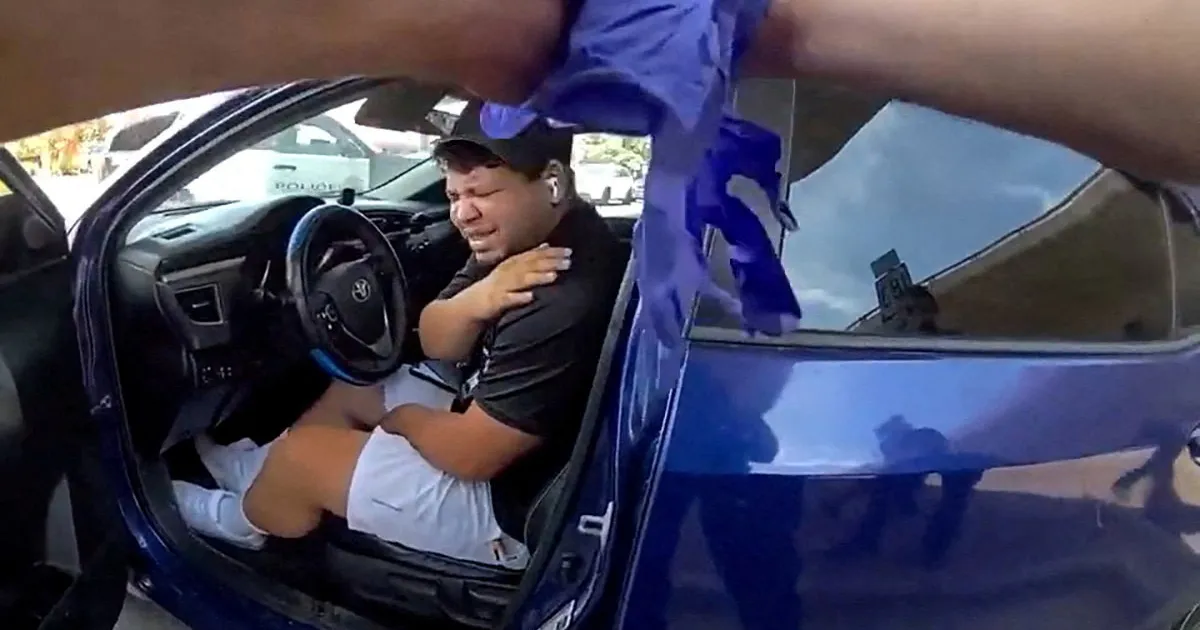
Videos, however, have circulated online showing the shooting’s aftermath, with Garces Perez injured in his car.

The complaint relies on unreleased body-camera footage from one of the two ICE officers who stopped Garces Perez.

The second officer was not wearing a body camera, according to the affidavit. That officer says he was struck by Garces Perez’s side mirror and later shot him.

Garces Perez, however, gave federal investigators a different account of the moments immediately before he was shot.

He told investigators that, after a brief chase, a law enforcement SUV struck his car, causing it to spin around, according to the affidavit. He said the officer then opened fire, shooting him in the back.

Garces Perez has been held in a detention facility in south Texas since the shooting.

His lawyer, Kate Lincoln-Goldfinch, said on Sunday the bullet was still lodged in his body and that he has a fractured clavicle. In a social media post, Lincoln-Goldfinch explained that his supporters were worried he could develop sepsis or suffer permanent damage if he didn’t undergo surgery soon.

The Department of Homeland Security has argued, however, that Garces Perez is receiving adequate medical care.

Garces Perez’s legal team is also seeking to stop his removal from the US.

The Venezuelan national entered the US in 2024 through CBP One, an online programme expanded under former President Joe Biden to allow asylum seekers to make appointments with immigration authorities at the US-Mexico border.

Trump ended the programme on his first day back in office, accusing the app of contributing to an immigration crisis in the US. His administration has since relaunched CBP One as CBP Home, a self-deportation portal.

Lincoln-Goldfinch has said Garces Perez was legally seeking asylum in the US and had a valid work permit. She has asserted that he was ordered to be deported after missing an immigration court hearing because the notice had been sent to an old address.

Garces Perez is due back before a federal immigration judge on Wednesday for a separate hearing on whether he can remain in the country.

The case comes amid a surge in immigration enforcement during Trump’s second term, with ICE reporting more than 50,000 arrests in both July and August.

Source link

Minnesota authorities arrest ICE officer charged with shooting man

Tim Sullivan and Russ Bynum

A federal immigration officer charged with shooting and wounding a Venezuelan man in January and lying about the circumstances to investigators made a brief initial appearance Thursday before a Minnesota judge after state authorities arrested him ahead of a separate hearing in federal court.

During Thursday’s hearing, Judge Paul Scoggin granted Immigration and Customs Enforcement officer Christian Castro bond. Castro wore an orange jumpsuit and appeared behind a glass enclosure.

His attorney, Daniel Gerdts, declined to comment.

Castro was being held without bond after the Minnesota Bureau of Criminal Apprehension arrested him Wednesday in downtown Minneapolis on state charges of assault and false reporting of a crime stemming from the shooting of Julio Cesar Sosa-Celis. Scoggin set bail at $400,000 with no conditions and $200,000 with conditions.

Castro also faces federal charges stemming from the shooting, which occurred during a federal immigration crackdown in the Minneapolis area. Prosecutors say Castro falsely told investigators he had been attacked with a broom and a shovel.

Arrest months after Minnesota charged him

Castro’s arrest by Minnesota authorities and appearance in state court followed a dispute between Minnesota prosecutors and Texas’ governor over Minnesota’s attempts to extradite Castro from his home state to face the state charges. One of the conditions Scoggin set for the lower bail amount for Castro was that he not fight extradition should he be released.

The lead prosecutor for the county handling the state case told reporters after the hearing that “Castro invented a story to justify shooting through a front door into a house with multiple people in it.”

“His appearance in a Hennepin County courtroom today is a critical step in our efforts to hold him accountable for that shooting,” Hennepin County Attorney Mary Moriarty said during a news conference.

Federal case also accuses Castro of lying

The next court hearing for Castro is scheduled for Friday. That hearing will be in federal court in St. Paul and involves the federal case in which he is charged with making false statements to investigators regarding the shooting. Castro’s defense attorneys in the federal case have said he plans to plead not guilty.

It’s the first Justice Department prosecution of a federal officer for actions taken during this year’s massive Operation Metro Surge, which brought thousands of agents to the Twin Cities and led to sweeping protests, arrests and the fatal shootings of two U.S. citizens by federal officers.

In both the federal and state cases against Castro, prosecutors say he shot Sosa-Celis in the leg while firing through the front door of a Minneapolis home. They say Castro later falsely reported he had been attacked with a broom handle and a snow shovel.

Trump administration says only federal authorities have jurisdiction

Minnesota authorities have battled with President Trump’s administration over who should handle any charges against Castro. The Department of Homeland Security has called Minnesota’s prosecution of Castro “unlawful and nothing more than a political stunt,” saying only federal authorities have jurisdiction.

Minnesota charged Castro months before his federal indictment. He was arrested in Texas in May on the Minnesota charges. But Texas Gov. Greg Abbott last month refused to sign an extradition warrant to hand him over to Minnesota authorities. He was released in Texas and soon after was indicted on the federal charges. He then turned himself in to federal authorities and returned to Minnesota on his own.

Sullivan and Bynum write for the Associated Press. Bynum reported from Savannah, Ga.

Source link