Summer mornings in the Hill Tracts region of Bangladesh are a respite from the dissonance of honking cars and construction of the capital city of Dhaka. It was a welcome change to hear chickens and the sound of … wait, was that Julie Andrews’ voice echoing over the hills?
I was visiting my home country when I heard a group of schoolchildren playing ektaras, a traditional string instrument, and singing the “Do-Re-Mi” song for their morning assembly.
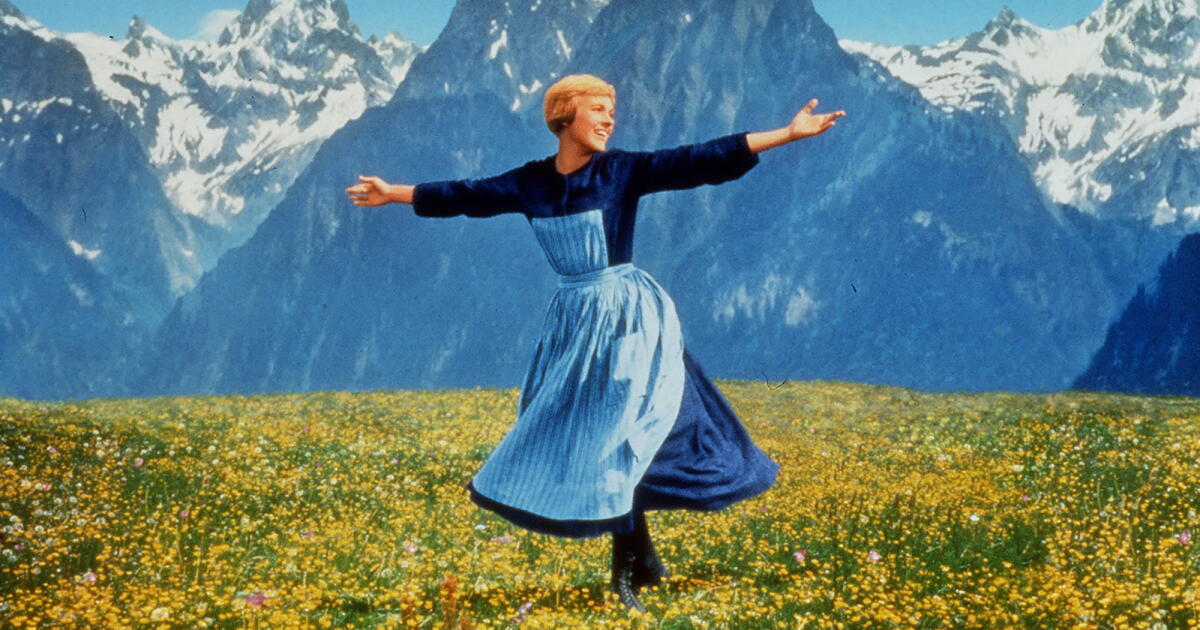
I used my phone to show them a picture of Andrews. “Do you know her?” They immediately leaped in excitement. They didn’t know the composer Richard Rodgers or lyricist Oscar Hammerstein II. But they knew Andrews — even though 60 years have passed since “The Sound of Music” and these children live in a remote Bangladeshi village. The recognition is evidence of something extraordinary.
Andrews is turning 91 on Thursday, and there are calls online to bubble wrap her, just in case. She is indeed a global treasure, and she has been earning plaudits and admirers for eight decades.
Andrews trained in the Italian bel canto tradition and from a young age sang challenging coloratura arias with precision, clarity and range. The bright, happy tone, perhaps a subconscious decision rather than anatomical alone, provided her respite from the doodlebug bombs that fell during her childhood in England in World War II. British critics had dubbed her as the “youngest prima donna,” a title usually reserved for opera greats, and it wasn’t undeserved. At just 12, she routinely floated high Fs above the treble staff during live performances.
Yet before opera could claim her, Broadway stepped in. From “The Boy Friend” to “My Fair Lady” and then “Camelot,” she won the hearts of theater goers and creators alike. Lyricist Alan Lerner described her as “an amazingly quick study in music … who meets any challenge with an unabated eyelid that makes you wonder how Britain ever lost the empire.”
Her voice then was so precise that the late maestro André Previn, who led the London Symphony Orchestra, proclaimed: “No one’s diction in any field of singing can come close. … You understand every syllable from the second balcony — I don’t understand how you do that.”
It’s inaccurate to romanticize her legacy in 2026 as simply nostalgic. That would overlook the depth and progressive nature of her characters. She was essentially the first female superhero on the big screen, as Mary Poppins — who could fly and create alternate realities with the snap of her heels, but whose more stunning superpower at the height of the Cold War was to charmingly portray capitalism as dangerous.
In “Victor/Victoria,” she navigated a gender-bending performance that challenged societal norms, playing a woman who impersonates a man impersonating a woman when it was taboo to speak about any layer of that. Her most overlooked and perhaps her best dramatic role was in “Duet for One,” a 1986 film about a musician who suffers from multiple sclerosis. Tragically this became a moment of life imitating art, foreshadowing her own destiny to lose her instrument after throat surgery in 1997.
Rather than retreat, Andrews adjusted and leaned into voice acting with characters like the dominant Queen Lillian in “Shrek” films, Gru’s hilariously villainous mother in “Despicable Me” and the mysterious Lady Whistledown in “Bridgerton,” for which she won an Emmy, twice.
In real life, the flying super governess fought to adopt two babies from Vietnam just after the fall of Saigon, helping to raise awareness of the need for adoptive parents. She then co-founded the Operation USA disaster relief charity and opened the Japanese wing for the United Nations Development Fund for Women.
Whether it was to support UNICEF after the devastating Bhola cyclone hit present-day Bangladesh in 1970 or jetting to Jordan and Senegal to support women’s and children’s activities, she was a quiet champion for the underserved. In her most famous role, in “The Sound of Music,” she was a savior for children being displaced by war.
Andrews is mostly out of the public eye, but her singing is eternal and accessible. YouTube is home to a trove of Andrews performances, including “This Is My Beloved” from “Kismet,” full-voiced “When You Wish Upon a Star,” from pianissimos to fortes, high B-flats and all — her classical skill shines through. These recordings remind us that beyond just the formulaic legato phrasing that singers from the Italian tradition follow, and the clear resonance, her work it set a gold standard for musical storytelling that few have surpassed since.
Julie Andrews is no longer trilling on the Alps, nor is she reprising her role as queen of Genovia in a “Princess Diaries” film, but her voice, and what it represented for more than 80 years, endures. It lives on not just in films and recordings but also ringing in the minds of children and adults alike, from her hometown of Walton-on-Thames to the Hill Tracts of Bangladesh. In an age of doom scrolling (and alarmingly low singing standards), her vast career offers a rare resonance and a continuing masterclass.
Shams-il Arefin Islam, a Yale-Berkeley College associate fellow who works on climate mitigation and adaptation, is a classically trained tenor.
Kyle MacLachlan is living up to his reputation as the Internet’s Dad.
It’s an especially warm day in August, and the bespectacled actor, best known for his many projects with the late auteur David Lynch, is approaching with a coffee (black, naturally) in one hand and a massive cookie in the other. The snack, it turns out, is meant for us to share.
On the Shelf
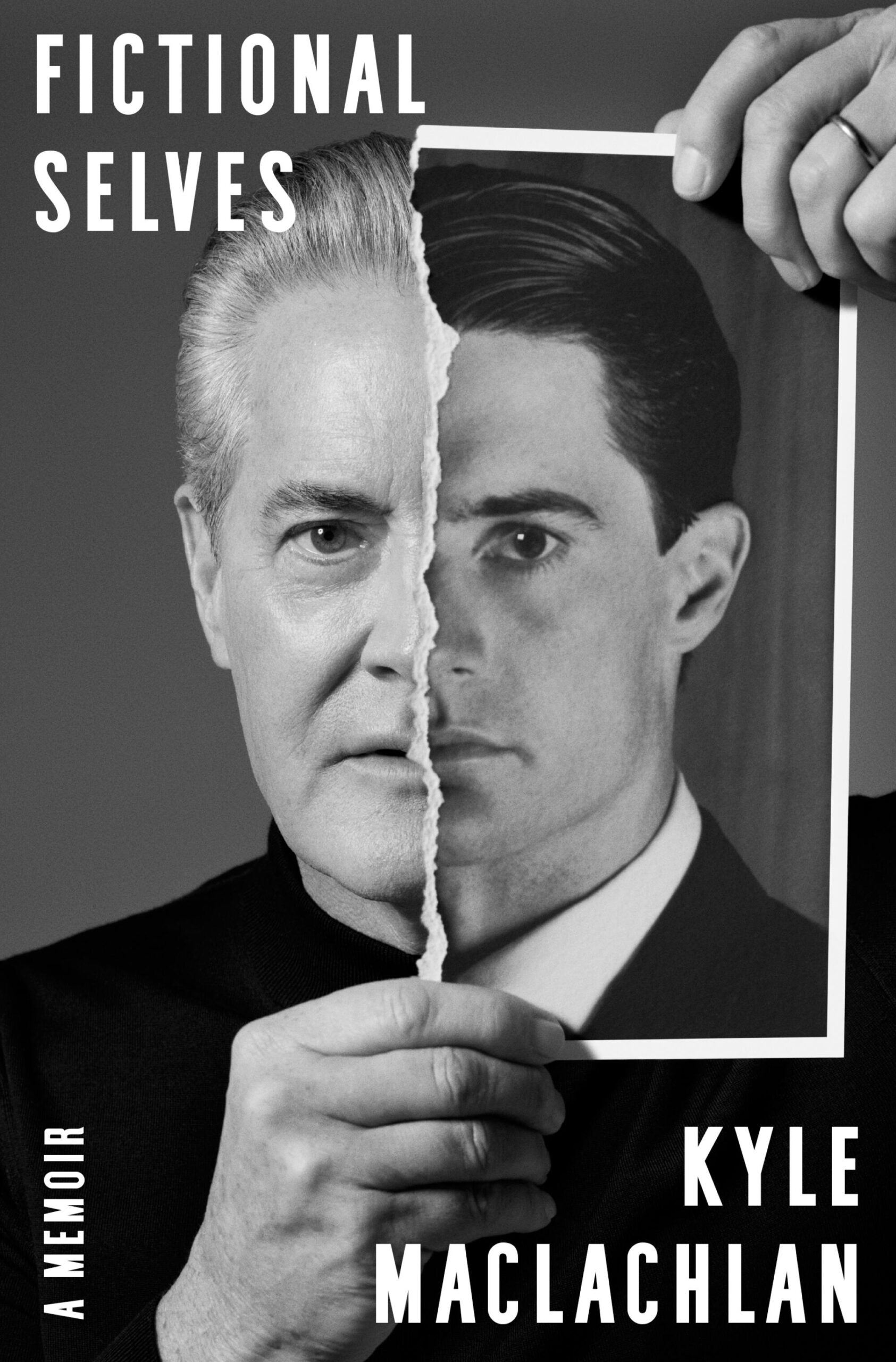
Fictional Selves: A Memoir
By Kyle Maclachlan Crown: 320 pages, $34
If you buy books linked on our site, The Times may earn a commission from Bookshop.org, whose fees support independent bookstores.
“Whatever it is, it’s very healthy,” he says when I ask what sort of confection he chose. “It’s cranberry, oatmeal and gluten-free. Who knows if there’s any sugar in there?”
At 67, MacLachlan isn’t necessarily a health nut. But he is highly amenable and willing to roll with my vegan cafe selection, which is conveniently located near our photo shoot location. “I come from Eastern Washington state — it’s a desert,” he says assuringly when I offer to move us to an indoor seat with air conditioning. Later, as we prepare to leave for the shoot, he clocks my car, a rare station wagon, and dubs it “spec-TAC-u-lar.”
That’s MacLachlan for you — all it takes is one word (he also drops an “Aces!” during our meeting) or enthusiastic gesture (very likely a swooping thumbs up) to channel the type of eccentric and upbeat characters he’s spent the last 40 years playing. Now, with the release of his thoughtful new memoir, “Fictional Selves,” MacLachlan gives us a much closer look at the man behind the chin-jutting grin, and, in doing so, introduces us to his doppelganger, “Other Kyle,” an image-conscious shadow figure constantly trailing behind, questioning his choices.
“There’s definitely another entity, an observer, the ego, the harder self,” MacLachlan says of how he would describe Other Kyle, whom ghostwriter Jon Sternfeld first identified after noticing the way MacLachlan tended to fall into conversation with himself while recounting his life. “[He’s] the kind of person that I’m not comfortable leading within the world. But he’s definitely in there commenting on the things that I do.”
Other Kyle first began to taunt MacLachlan after he saw himself on a gargantuan billboard for “Dune” in Times Square. (In his early 20s, MacLachlan was famously plucked from obscurity to lead David Lynch’s 1984 adaptation of Frank Herbert’s sci-fi epic.)
Well before his alter ego materialized, and well before Hollywood found him, MacLachlan was prone to anxiety and fears of never fitting in. Born in Yakima, Wash., MacLachlan grew up the oldest of three boys; his parents were solidly middle-class, with his father working as a lawyer, and then stockbroker. His mother was a homemaker known in the community for her civic involvement, particularly in local arts programs. In fact, it was MacLachlan’s mother who first encouraged him to try a “Teen Theater” program, drawing him in with the promise that there might also be girls in attendance.
But it took a minute for MacLachlan to genuinely embrace his calling. As a young adult, his father pushed him to study business, while his mother urged him to try PR or communications. His studies at the University of Washington weren’t going well, so he dropped out and worked at a manufacturing plant back in Yakima. It wasn’t until a girlfriend recommended a summer theater program in North Carolina that MacLachlan leaned back into his first real passion, eventually returned to school with a newfound focus, and was accepted into the University of Washington’s professional acting program.
Kyle MacLachlan at the glass and mirror shop LA Mirror Man on La Cienega Boulevard.
(Christopher Patey / For The Times)
Fast-forward 40 years, it’s impossible to imagine that MacLachlan would have anything else for Other Kyle to latch onto. For one, his acting resume is the stuff of thespian fantasy. Sure, “Dune” infamously flopped hard upon arrival, and all planned sequels were immediately canceled. But it wasn’t long before MacLachlan had teamed back up with his mentor, with whom he had developed an almost telepathic bond on “Dune,” to lead Lynch’s much more kindly received 1986 neo-noir arthouse entry, “Blue Velvet.” A few years later, the overwhelming success of the TV mystery series “Twin Peaks” propelled the actor to the upper stratosphere of celebrity.
“When we were working together creating Jeffrey in ‘Blue Velvet’ or [Coop in] ‘Twin Peaks,’ we would sit and talk or not talk, we melded together in some weird way, we were like one person,” MacLachlan says of his bond with Lynch, who died in early 2025 of cardiac arrest due to chronic obstructive pulmonary disease. “It was this very symbiotic kind of thing in front of the camera,” MacLachlan continues. “It was like this weird circular energy. … He’s the only director I share that with.”
And yet, breaking out of what MacLachlan refers to as “The Black Suit,” worn by his unceasingly chipper “Twin Peaks” character, Special Agent Dale Cooper, proved challenging. By the time “Twin Peaks” left the air in 1991, MacLachlan had grown ambivalent about the job that changed his life, partially because he felt Lynch didn’t fight hard enough to keep artistic control of the show’s second season, which saw the network upping its creative involvement and Lynch distancing himself until the final few episodes.
MacLachlan longed to diversify his output — to show that he was capable of being a mainstream Hollywood leading man, one who could interface with a variety of directors. In the book, he writes about jobs he comes so close to booking — roles in Robert Redford’s “A River Runs Through It” and Francis Ford Coppola’s “Dracula” — but losing out at the last minute.
Kyle MacLachlan explores his alter ego “Other Kyle” in his new memoir.
(Christopher Patey / For The Times)
He took these rejections hard at the time. Many decades later, however, he can see how he was the one holding himself back. “I felt like people were only seeing the black suit,” MacLachlan says. “Now, the truth is, they would probably have been more than happy to see me as somebody else, but I was not able to deliver. … I think there was a lot of insecurity,” he continues. “I was like, ‘Maybe it’s not the suit. Maybe it’s me.’”
As the 1990s played out, MacLachlan fought an on-again, off-again existential crisis regarding the type of actor he was really meant to be. His friend and former “Doors” co-star Val Kilmer urged him to accept a lead role in a BBC adaptation of Kafka’s “The Trial,” which didn’t move the cultural needle in the States, but did put him in the same room as enormously pedigreed actors like Anthony Hopkins and Alfred Molina. He snagged a role in a Paul Verhoeven film about topless dancers — a career risk he hoped would pay off but ultimately felt like “walking into a buzz saw,” as he writes in the book.
Despite the cult reappraisal of “Showgirls,” and the lasting popularity of “Sex and the City,” Other Kyle had a few things to say about both of these roles, but the Kyle sitting across from me has a much more measured approach, particularly to “Showgirls.”
“I think it’s fun that it’s still around,” MacLachlan says. “I’ll still argue with anyone that [says] it’s a good movie. It’s not a good movie, but it’s definitely an appreciated movie, and that is kind of where I leave it.”
In the early 2000s, his wife, Full Picture founder and chief executive Desiree Gruber, pushed him to accept a role in HBO’s “Sex and the City,” playing an Upper East Side doctor with erectile issues.
Portraying Trey MacDougal was a mixed bag for MacLachlan. On one hand, he was thrilled to be part of such a cultural juggernaut, and he delighted in the emphasis the show placed on female friendship and sexual agency.
“I want to keep being challenged,” says Kyle MacLachlan, looking ahead to the next chapter of his 40-year career.
(Christopher Patey / For The Times)
At the same time, he had mixed feelings about playing an old-money mama’s boy with a Freudian Madonna-whore complex. Not to mention the sheer ridiculousness of the things the writers would have him do: One scene had him bent over a bathroom sink, masturbating to a pornographic magazine. A passage of “Fictional Selves” also recalls the cringe-inducing moment when Trey gives his wife, Charlotte (Kristin Davis), a cardboard cutout of a baby in an effort to make light of their struggle to conceive.
In the book, MacLachlan recalls being utterly dumbfounded at having been asked to do something so oblivious at best and cruel at worst. Eventually, however, he writes that he realized the writers just needed a way to foist him off the show. (His and Davis’ characters get divorced soon after the cardboard baby incident.)
“Every time I got a script, I’d be like, ‘Oh boy, OK, what’s going to happen here?’” MacLachlan says. “And then it would be, like, whatever they’ve come up with, ‘how can I shape it? What is it that [Trey’s] wrestling with? What are the issues here? Then, you know, realizing that in some cases it was just going to be a sight gag. Like, the Juggs magazine is going to be a sight gag. And as I said in the book, in my mind, I would sort of float away. I would be like, ‘That’s not really me. I don’t know who that is down there doing that.’”
As MacLachlan moved into middle age, he gradually grew more comfortable with the clean-cut oddball characters he’d so often be asked to play: a refined but possibly murderous dentist on “Desperate Housewives,” an idiosyncratic boat obsessive on “How I Met Your Mother,” an over-the-top civic leader on “Portlandia,” and, once again, Special Agent Dale Cooper (plus his doppelgängers) on “Twin Peaks: The Return.”
The 2017 “Twin Peaks” reboot would be the last big project MacLachlan would work on with Lynch, but MacLachlan would frequently visit the director in their shared Hollywood Hills neighborhood. “It’s many things,” MacLachlan says when I ask what he misses most about his friend and mentor. “The voice on the phone — ‘HEY, KALE! Come on up for coffee!’” he continues in a pitch-perfect Lynch imitation. (“Kale” became Lynch’s nickname for MacLachlan, referencing “Dune” producer Dino De Laurentiis’ Italian pronunciation.)
“Towards the end, I would go to visit him, and I would sometimes take my phone and record things. I still have these stories loaded in my iPhone — about ‘Dune,’ or a story about a moment in ‘Blue Velvet,’ or a story about when he met John Huston, or when he got a kiss from Elizabeth Taylor. … I have these little gems, and I savor those.”
Lately, Other Kyle has been replaced by Online Kyle, a goofy, lighthearted version of MacLachlan who primarily lives on TikTok and Instagram — thus the wholesome, Gen Z title of “Internet’s Dad.” And when he’s not playing a father to Ella Purnell on Prime Video’s hit “Fallout,” or interviewing a younger generation of entertainers on his podcast, “What Are We Even Doing,” MacLachlan is also someone’s real dad. One of the most endearing moments in our afternoon happens when his teenage son, Callum, calls looking for something around the house. “Oh, it’s in the fridge in the gym. In a foil. And there’s chicken in the fridge. Love you too,” MacLachlan tells his son.
There’s certainly no doubt that this Kyle doesn’t get in his head — or in his own way — the way earlier versions did. He’s still eager to test his limits as an actor, but he’s comfortable with the thought that there is no plan. “I want to keep working with interesting people,” he says with his trademark buoyancy. “I want to keep doing fun things. I want to keep being challenged. … I don’t really know where I’m going, but something will excite me, and I’d be like, ‘OK, what the hell?’ And I jump in.”
Brodsky is an L.A. culture and music writer. Her biography of Stevie Nicks “Lessons & Lace” is out now.
For many celebrities, getting a Funko Pop! doll modeled after themselves is a sign they’ve made it in Hollywood. The 4-inch vinyl “Pop!” figurines, with their oversize heads and black dot eyes, symbolize being ingrained in pop culture — objects fans buy, celebrate and display.
At Funko’s flagship Hollywood store, there are thousands to choose from, ranging from NFL players to Disney princesses and characters from the Netflix period drama “Bridgerton.”
But the publicly traded company behind the popular dolls has been facing significant headwinds.
Funko Inc. last year posted a loss of $67.4 million on sales of $908.2 million, down 13% from the previous year. The company disclosed it had debts of $225 million.
The Everett, Wash.-based company warned investors in filings that there was “substantial doubt” about its ability to generate enough cash to meet its debt payments, citing the effects of tariffs in China, where most of its toys were made, canceled retail orders and loan covenants it expected to breach.
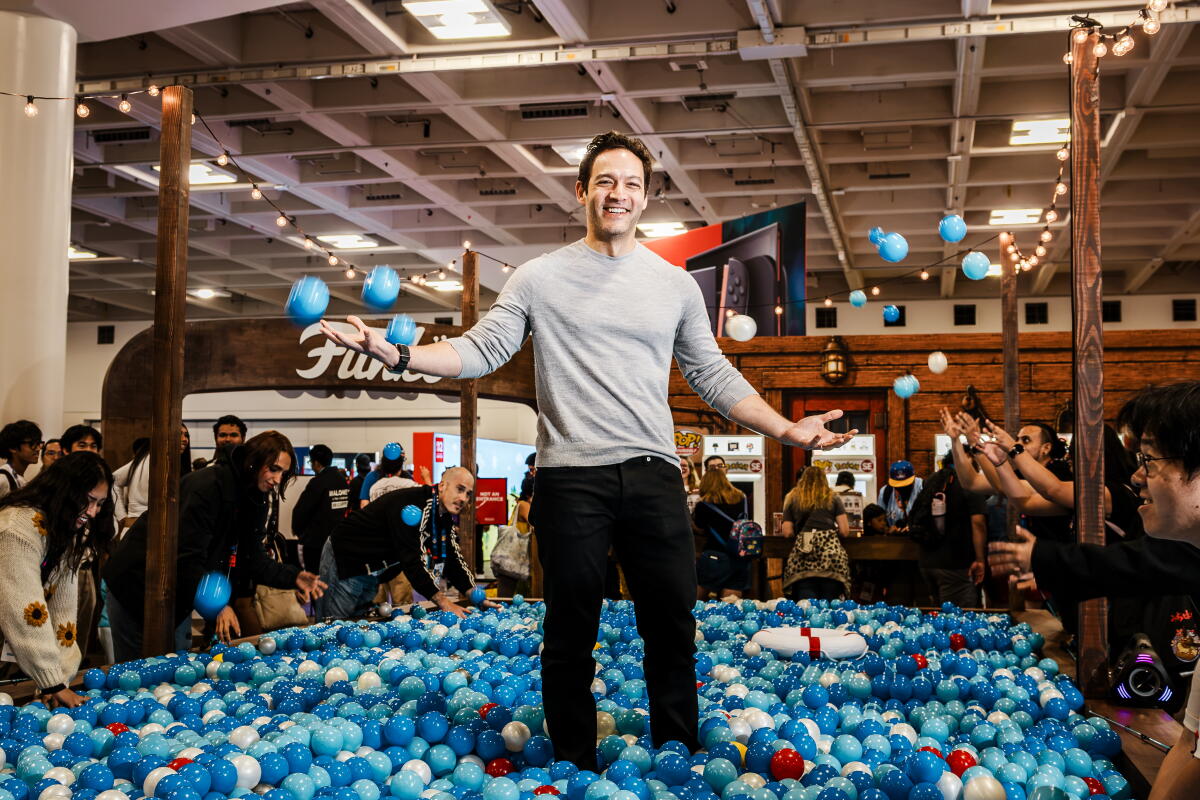
Funko Chief Executive Josh Simon, pictured at the Pokémon convention, says he took over the company at an “inflection point.”
(Carolyn Fong / For The Times)
Now the company is looking to stage a comeback.
Leading the turnaround challenge is Josh Simon, who left his job running global consumer products at Netflix to become Funko’s chief executive in September 2025 — the third person to hold the title in two years.
“Funko was at an interesting inflection point,” said 48-year-old Simon, who lives in Los Feliz. “I felt there was still a lot of really deep fandom and enthusiasm from retailers and at the same time, there were a lot of problems that had to be sorted out at the company. I thought it would be an interesting adventure and hopefully a way to help turn things around a bit and restore it back to that level of fan passion and glory that existed years ago.”
The rise and fall of Funko
Funko began in 1998 when entrepreneur Mike Becker decided bobbleheads would be the next big thing and shipped them out of his garage. After entrepreneur Brian Mariotti bought Funko in 2005, the business began licensing more characters. Sales took off with the launch of its big-headed “Pop!” figurines in 2010.
The company changed ownership over the years, added backpacks and other products, and went public in 2017. Most of its revenue still comes from making licensed characters and selling them through retailers, online and at events.
Funko survived a decline in sales with the rise of kidults — adults who collect toys.
(Carolyn Fong / For The Times)
But Funko’s sales plunged in 2025 following a global trade war.
The company overestimated demand, picked the wrong characters and made too many of dolls, said Gerrick Johnson, senior research analyst at Seaport Research Partners, which has a buy rating on Funko.
President Trump’s heavy tariffs imposed on China substantially raised the costs of making Funko dolls.
Amid lagging sales, retailers marked down the figurines, alienating collectors who want to see items appreciate in value.
“Collectors hate buying things 50% off,” Johnson said. “One of the biggest turnoffs in collectibles is a bargain bin.”
What kept the brand alive through the slump was the rise of kidults — adults who collect toys. Simon was one, picking up Pop! figurines from “Toy Story” and “Back to the Future” long before he worked there. Funko’s job, he said, is to distill what people love about a character into a stylized version of it.
“The number of inbound requests we get from musicians and athletes and celebrities — everyone is excited and pitching us they want a Funko Pop! made of themselves, because in some ways it suggests a mark of establishment in pop culture,” Simon said. “It’s like akin to getting your star on the Hollywood Walk of Fame in some way.”
Convention-goers create custom dolls at a Funko Pop! kiosk.
(Carolyn Fong / For The Times)
One expert said Funko’s job is to distill what people love about a character into a stylized version of it.
(Carolyn Fong / For The Times)
A turnaround plan
Though based in Washington, Funko has a large presence in L.A., where most of its senior leadership is based. They work out of the same offices as the flagship Hollywood store. The company also has employees in Arizona, London, Hong Kong and other markets.
Under Simon, Funko has diversified its supply chain, shifting production out of China to Vietnam and other countries. To improve cash flow, Funko renegotiated the timing of its debt payments and pushed products to market faster.
For example, Funko turned around figurines of the characters from “KPop Demon Hunters” — the Netflix film that became the streamer’s most-watched movie ever after its June 2025 release — in about four months, well ahead of Mattel, whose first items reached stores this spring.
When John Cena stepped into the ring for his final WWE match in December, there were pre-orders for a Funko figure wearing the same outfit down to the shirt reading, “The Last Time is Now,” built from an image Funko received a week earlier. The doll became a bestseller, said Scott Zanghellini, executive vice president of WWE Consumer Products.
“It’s happening in real time and his team being able to move quickly, and us always moving quickly in this world of we have seven hours of programming a week — how do you take advantage of that and give the fans what they want?” Zanghellini said.
Funko is also widening what counts as a license, making figures from “The Folk of the Air,” Holly Black’s fantasy series revived by book lovers on TikTok, as well as creating more original characters that aren’t licensed.
“We really want to make sure that we can be a part of these cultural moments while they’re happening,” Simon said.
Reaching out to fans is another priority. At PokémonXP, the first official Pokémon fan convention held last month at San Francisco’s Moscone Center, Funko ran a Pop! Yourself booth where attendees built custom figures in exclusive Trainer uniforms with a Pokémon of their choice.
“We really want to make sure that we can be a part of these cultural moments while they’re happening,” Funko’s chief executive said.
(Carolyn Fong / For The Times)
Jeff Leu, 40, of San Francisco spent about $100 there on two figures modeled after his kids. He already owns 40 to 50 “The Simpsons” Pop! figures and tracks his collection in a spreadsheet.
“I feel like there is a Funko for everything,” Leu said.
Now he feels the pull of the Pokémon ones.
“As they add more, there’s more pressure to buy it because I like to collect things,” Leu said. “Luckily I have a lot of room to display my toys.”
So far, the turnaround plan has yielded some positive signs.
Second-quarter sales rose 7% to $207.7 million and the company reported net income of $15.4 million, against a $40.5-million loss a year earlier. The quarter, however, included a $25.4-million benefit from expected tariff refunds, without which Funko would have lost money.
Funko’s share price closed Friday around $5.50, up about 1%. The stock has climbed 38% in the last year but is 60% below what it trade at in January 2025.
“It’s way too early to make any sort of calls on Josh at this point, but I like what he’s doing,” Johnson said. “It’s an interesting point in Funko’s history, and it’s a great opportunity for him to grow this business.”
When the 52nd season premieres on Saturday at the usual time, usual place, “Saturday Night Live,” with host Jalen Brunson (of the champion Knicks) and musical guests Katseye, will again make history as the longest-running sketch comedy and variety show on television.
But week to week — multiplatform 50th-anniversary celebrations aside — the entertainment institution that is “SNL” does not dwell much on its history, focusing instead on trying to earn laughs sketch by sketch, moment by moment. Even when alumni like Tina Fey or Will Ferrell show up, it’s usually in the service of something topical, like a political cold open for a very recent event or happening. “SNL” lives in the now, and that can be a blessing and a curse, like when you feel like you’ve seen the same cold open lampooning President Trump 15 times already. James Austin Johnson is a brilliant impressionist, but read the room, guys.
“SNL” is the rare show for which quality is beside the point. As creator Lorne Michaels has said to cast members like Tina Fey, “The show doesn’t go on because it’s ready; it goes on because it’s 11:30.”
That focus on effort over polish has, surprisingly, helped it survive. For every online hater who tediously comments that “SNL” hasn’t been good since the Dana Carvey era or earlier, there are enough of us stalwarts who will every week obsess about the future of “Weekend Update,” rate the monologue (sometimes harshly) and wait breathlessly at the start of every new sketch, hoping we’re about to watch an all-timer.
For those in that camp — who never give up hope that a great sketch is just a commercial break away — here’s what you can expect from the new season.
The first four episodes
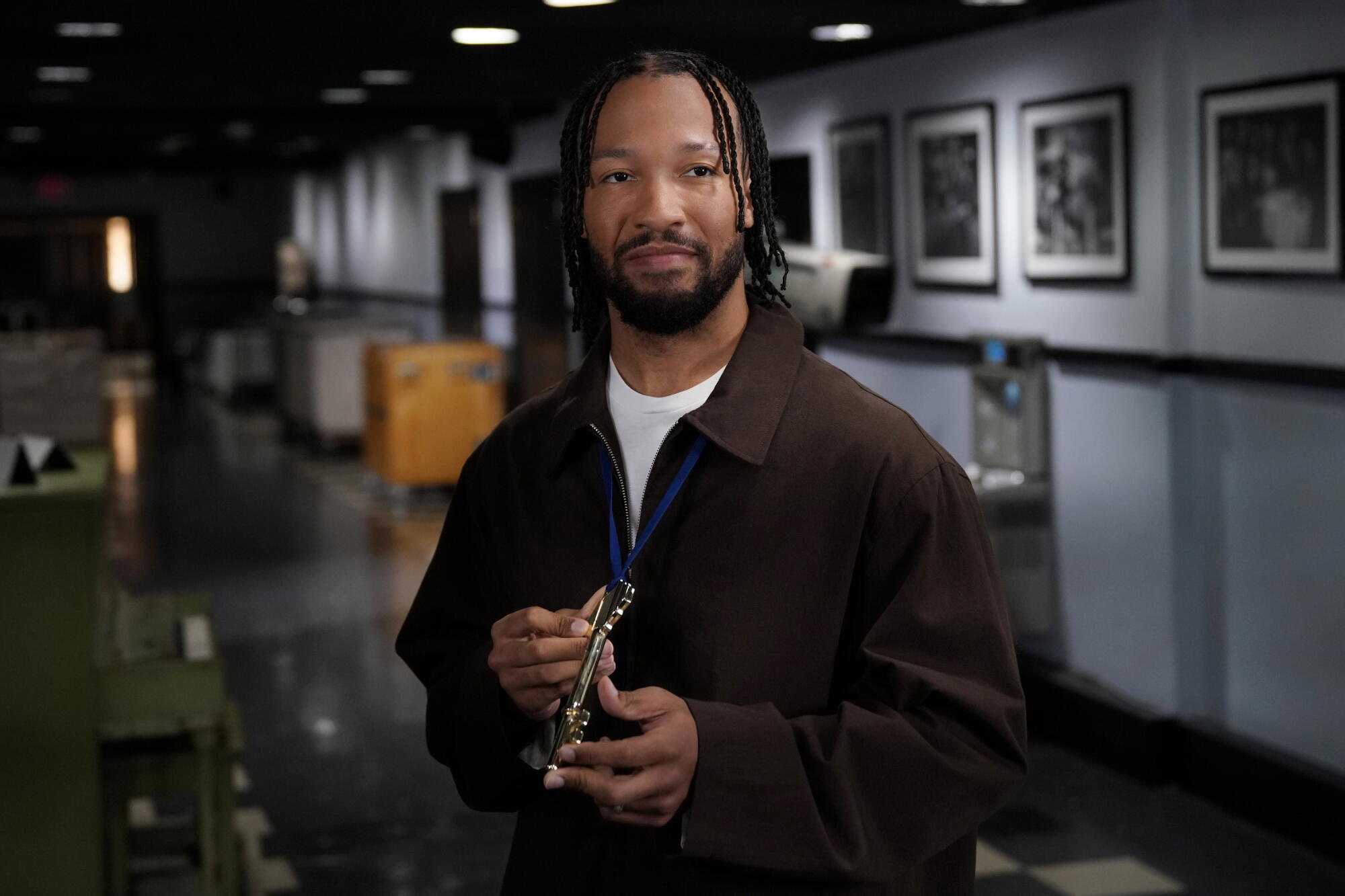
Season 52 will kick off with Knicks point guard Jalen Brunson as the first guest host.
(Rosalind O’Connor / NBC)
New “SNL” episodes usually arrive in batches of three and then the show takes a break for a few weeks. For Season 52, not only was the first trio of hosts and musical guests announced but also the lineup for a Halloween episode.
In addition to Brunson, who might bring along famous friends like Mariska Hargitay or Taylor Swift, actor Dakota Johnson will host, with rock group Turnstile as the musical guest on Oct. 3. On Oct. 10, “SNL” will roll the dice a third time with comedian Shane Gillis, who did not fare too well the last twotimes he hosted. He’ll be joined by musical guest Rosalía.
The Halloween episode will be hosted by newly minted horror queen Inde Navarrette from the hit film “Obsession,” joined by musical guest Gracie Abrams.
Cast changes and new faces
Over the summer, cast member Chloe Fineman — who had a knack for impressions of celebrities like Timothée Chalamet and Melania Trump — departed the show after seven seasons. It won’t be long before we see her onscreen again: She’s been cast in Netflix’s upcoming Harlan Coben adaptation, “Myron Bolitar.” Also departing was writer Martin Herlihy, the second member of the Please Don’t Destroy video trio to exit, leaving only Ben Marshall, who’s listed as a featured player. Last season, Herlihy did a few self-hosted video segments that tended to run late in the show.
Bowen Yang departed midway through Season 51, while Chloe Fineman announced her departure in July.(Jason Armond / Los Angeles Times)(Michael Loccisano / Getty Images)
Bowen Yang extended his run on “SNL” as his star was quickly rising in projects like “Wicked” and the “Las Culturistas Culture Awards,” but left midway through Season 51. Unlike previous transitions between seasons, no one was cut from the show, and those who left stepped away on their own.
Saidah Belo-Osagie, left, and Grace Reiter are the newest “Saturday Night Live” cast members.(Mike Klubeck)(Jill Petracek)
Reiter has already had a supporting role in Tim Robinson’s “The Chair Company” on HBO, and she stars in “Minimum Wage,” which started as a web series and is coming to Netflix in October for a 28–episode run. She was also the star of the very funny “The Hunger Games (But Better),” a low-budget re-creation of the series made over four days by a group of friends.
“SNL” tends to thrive in the run-up to national elections, and with the midterms upon us, the show has its pick of hot-button topics on the campaign trail, from the Iran war to gas prices to the backlash against data centers and AI billionaires.
Johnson’s impression of Trump is likely to be at the center of a lot of these sketches, but the show does well when he serves as a ringleader for characters like Defense Secretary Pete Hegseth (Colin Jost), Vice President JD Vance (Jeremy Culhane) and FBI Director Kash Patel (celebrity guest Aziz Ansari).
Jeremy Culhane as JD Vance, left, and James Austin Johnson as President Trump in a cold-open sketch.
(Lloyd Bishop / NBC)
Last season, Ashley Padilla emerged as a breakout star, carrying a heavy load of women’s roles after the departures of Ego Nwodim and Heidi Gardner. Even when she was giggling with Ryan Gosling because of a writers’ prank, Padilla was hilarious. She’s finally been upgraded to a repertory player and is likely to continue to play the lead in sketches featuring her grounded, emotionally shaky characters, some of whom have terrible haircuts.
Of the new featured players added last season, the two most likely to keep scoring are Culhane — who already has two great “Weekend Update” characters: Mr. On Blast and a masterful Tucker Carlson impression — and Veronika Slowikowska, who proved versatile whether she was portraying a “Guy’s girl” or a dryer with Sabrina Carpenter. Expect them both to be in more sketches this season.
Tommy Brennan, left, Jane Wickline and Ashley Padilla during the “Mom Confession” sketch featured in Season 51.
(Will Heath / NBC)
Marshall, the Please Don’t Destroy writer who joined the cast, has been fine as a utility player and straight man in sketches, but it’s hard to remember anything he was in last season apart from his role as Ron in “Heated Wizardry.”
Tommy Brennan and Kam Patterson both seem like they need to make their mark in sketches and do more than just perform as themselves in “Weekend Update” segments. Unless one or both of them is being groomed as a future “Update” co-host, time’s running out.
As for cast member Jane Wickline, who’s been described as “polarizing” but was also upgraded to repertory, we’re rooting for her. She brings musical talent, which the show needs plenty of, and her awkward vibes frequently add a different and unexpected dimension. An out-on-a-limb prediction: She’s going to have a great season.
What about Lorne?
Every discussion about the state of “SNL” must include a mention of how much longer the show’s steward, who is 81, will remain at the helm. This ongoing Lorne Watch, with predictions of his retirement and potential successors, began around Season 40 and continues. Many thought he’d exit at the end of Season 50, neatly capping an epic TV run.
That did not happen.
Creator Lorne Michaels has been at the helm of “Saturday Night Live” for much of its run.
(Jason Armond / Los Angeles Times)
So now the talk has shifted to what happens if Michaels’ run is interrupted because, you know, something happens to him?
The names suggested (and bet on) as potential replacements, should anything happen, continue to include producers like Steve Higgins; former cast members like Fey and Seth Meyers, who’ve stayed close to Michaels’ orbit; as well as Conan O’Brien and John Mulaney, all of whom seem like good comedic shepherds who could lead the show into its next era. Michaels himself has said publicly that Fey could “easily” do it. But, they all have their own careers and may not want the all-consuming grind that running “SNL” entails. It may take multiple people.
One outlier pick would be Kenan Thompson, the longest-running “SNL” cast member, starting his 24th season on the show this week. For sheer longevity, having been around for nearly half of “SNL’s” run, and because he’s probably not leaving anytime soon, Thompson might be the pick that makes the most sense.
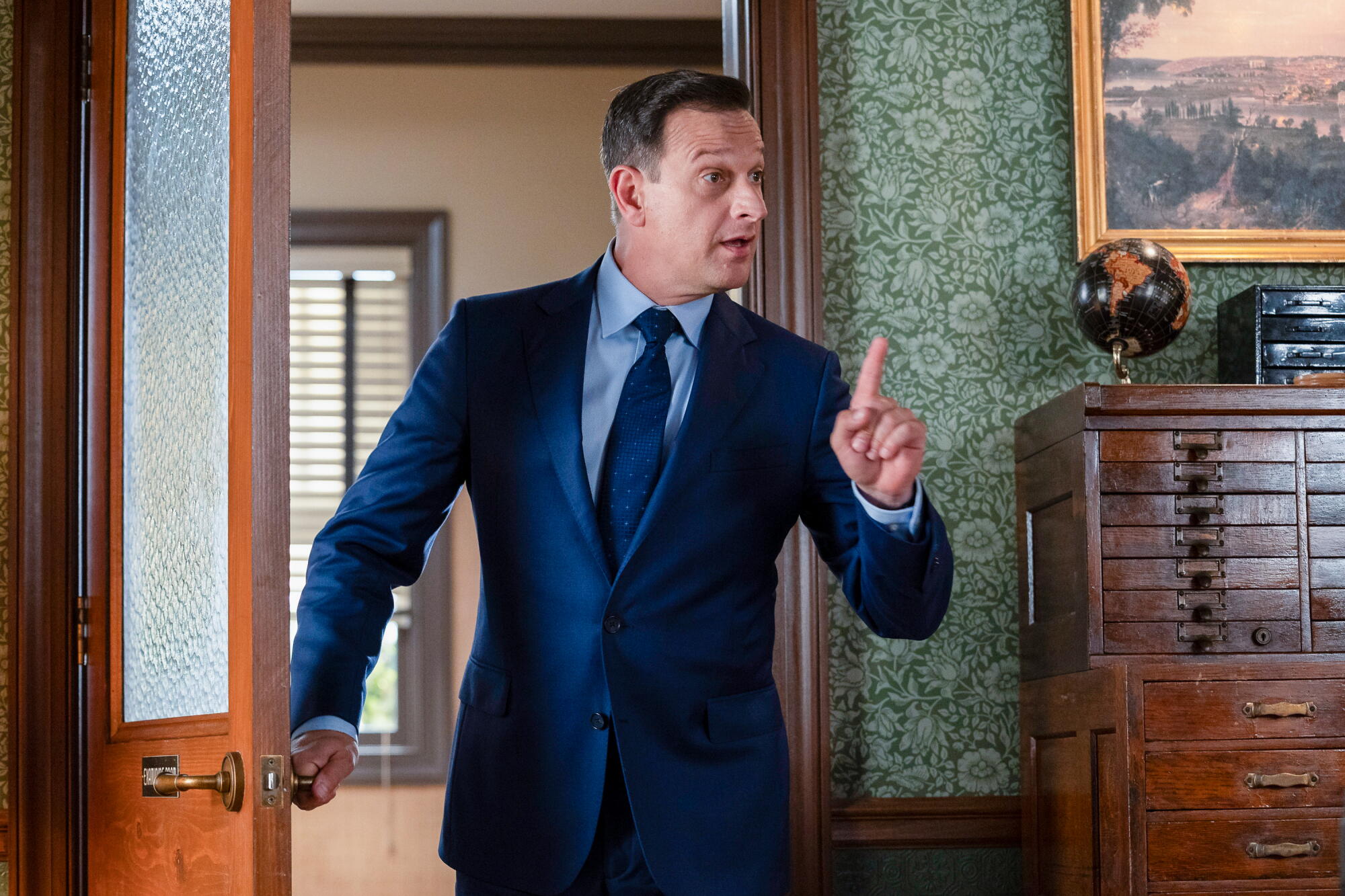
Filming a broadcast television show can leave even the most seasoned actors feeling like they’ve lost sense of time. But by afternoon on a recent weekday, Josh Charles actually looks like he teleported to the past as he collapses into a seat inside his production trailer in upstate New York.
He’s in the throes of filming Season 2 of “Best Medicine,” the Fox dramedy he headlines that’s set in a small fishing village in Maine, and the reason he’s shed his character’s usual suit and tie for gaitered trousers and a navy coat with red facings eventually reveals itself: Port Wenn, the show’s fictional town, is putting on a Revolutionary War reenactment. And if you’re familiar with Martin Best, the curmudgeonly doctor with an almost permanently furrowed brow portrayed by Charles, the character’s willingness to don such a getup likely took some coaxing.
That’s the fun of it all for Charles.
He’s been a working actor since childhood — making his debut at 15 in John Waters’ cult classic “Hairspray,” followed soon after by his turn as Knox Overstreet in “Dead Poets Society” — and a fixture in TV and film ever since.
While best known for dramatic roles like high-powered lawyer Will Gardner in “The Good Wife,” Charles easily pivots to comedy — like the time he memorably played the triple-collared, snobby camp ringleader in “Wet Hot American Summer: First Day of Camp.” Now, “Best Medicine” lets Charles leans into the push and pull of the comedy and drama within his tightly wound alter ego.
Josh Charles as Martin Best in Fox’s “Best Medicine.”
(Francisco Roman / Fox)
Created by Liz Tuccillo (“How to Be Single,” “Sex and the City”), the series follows a brilliant but cranky heart surgeon who, after developing a crippling blood phobia spurred by a traumatic medical case, abandons his thriving career in Boston to become a general practitioner in the town where he spent summers as a child. Martin Best is a doc whose bedside manner could use some TLC, but he came to town hoping he can still practice medicine — that is, if the townspeople would actually do as he says.
“I have been really wanting to do more comedy lately and looking — especially if I was going to call a place home for a particular period of time, like you do in a television show — for something that was a little more lighter air than I had been networking in of late,” says Charles, whose recent credits include dystopian drama “The Handmaid’s Tale” and spy thriller “The Veil.”
The series is based on the beloved British dramedy “Doc Martin,” which starred Martin Clunes as a doctor with a similar storyline, that aired between 2004 and 2022. Tuccillo says Charles brought an elegance and depth to the fish-out-of-water dynamic his character navigates in the quirky town.
“He never hits a false note,” she says in a separate video call. “I knew the material would be in great hands in that he would always elevate it just by his artistry and being. I knew he was going to be able to play the gruffness, but any time that you’re doing a show, there is a question mark on so many things. To be honest, we were like, ‘But is he going to be super funny? Is he going to want to do pratfalls? Is he going to be game for the comedy part of it?’ When we started working, it was clear he was game for all the shenanigans … he likes to laugh. So I try to devise things that I think will amuse him.”
A special advance preview of the Season 2 premiere aired Sunday, but the show will move into its regular time slot Tuesday. Here are edited excerpts from the conversation with Charles.
Josh Charles poses for photos on the “Best Medicine” set in upstate New York. He says he was drawn to the Fox dramedy because it was “a little more lighter air” than the other work he had done recently.
(Ebru Yildiz / For The Times)
“Best Medicine” hit Netflix after its first season aired. Building an audience outside the traditional linear viewing has become such a key component of television today. How do you feel about it?
One of my dad’s best friends told me, “I’m watching the show on Netflix!” He’s like, “I just can’t watch shows with commercials anymore” — as people are programmed now. That is the new shift. You go into these platforms for periods of time, build your audience in a different way and hopefully keep growing that audience. [Television] keeps evolving and growing in a way that I don’t fully understand, but I do know that it’s a different world right now. Netflix has a great reach, and it’s great that we’re on there and that people are discovering it. And apparently we did very well.
Season 2 opens with Martin on probation and under review by the medical board. What is Martin in for this season?
When it starts off, he’s really in it. Eden [Martin’s ex-girlfriend played by Eliza Coupe] is now back in the picture. She’s coming from Boston every weekend, and she’s rubbed a lot of people in town the wrong way. And the progress that Martin made, we see him maybe take a few steps back in the way that he interacts with people. He’s with her and I think there’s feelings there, but I think their relationship feels very — I don’t know, it’s interesting. It doesn’t have the fire. But she doesn’t make him feel bad about himself. She respects him, and I think those things are important. And he’s around in this town where nobody’s listening to him half the time. People are just always mad at him about something, and she’s not. She puts him a little bit on a pedestal, and I think he really needs that.
All that presents an obstacle for the show’s slow burn: Martin and Louisa (Abigail Spencer). There’s been some discourse about the art of the slow burn and how the pacing has changed in an era of short episode orders and unpredictable renewals. You have experience in this department with “The Good Wife.”
Liz and I have talked about it a little bit. You don’t want to muck bait it and drag it out for the sake of dragging it out. I think they’ve done a good job of putting the obstacles in a way that still feels organic and genuine and not yet a reach. In the British show, things accelerated so much faster. They only made eight [episodes] a year. We want to also have it feel like it’s plausible. It is really fun to have Eliza Coupe here. It’s fun to play scenes with her and [see] the different side that brought out in Martin. That is the challenge because I don’t think we’re as interested in doing it quite that fast [as the British show]. I have faith in them that we’ll land it in a good way.
Ellen Soraya Nikbakht as a peculiar patient and Josh Charles as Martin Best in the Season 2 premiere of “Best Medicine.”
(Danielle Mathias / Fox)
You’ve played in comedy and drama in your career. It’s fun to watch you straddle both sides with this character. How has it been finding the rhythm or tone with him?
A lot of the comedy I’ve done, I’ve done some stuff that’s more silly and kind of over the top. I love playing the fool. What’s really fun [here], to me, are the circumstances they put Martin in where things are blowing up in front of him and he’s just trying to deal. I’ve enjoyed doing a lot of the physical comedy on the show.
I [also] found it really interesting to have a character who doesn’t want to be around people, but he actually does. He just doesn’t really know how to do it, and he’s never really had any kind of practice at it in his life. And he’s gone through a lot of trauma in his life. He’s a really specific kind of workaholic. For him to grow up with what he did, and losing his sister really young in his life — I did research on that and what that does to people and how that can sort of frame your life. I imagine he went to private school, maybe a boarding school, then he goes on the track of going to college and medical school — we know how hard that is, the kind of hours they put in; then to be really successful at it, you put everything you have into your work. There’s this other side of his life that is completely empty. This town kind of just softens off the edges of him a little bit and helps him become a little more authentic version of who he was maybe meant to be. That gives me some place to build off of and to go with the character, other than it feeling kind of just very one-note.
Matthew Goode, left, as Finn Polmar and Josh Charles as Will Gardner in a scene from Season 5 of “The Good Wife.”
(CBS)
This series marks your return to broadcast television after leaving “The Good Wife” in its fifth season. You’ve done TV since then, of course. But a big reason you left broadcast was because of the grind of a 20-plus episode season. With “Best Medicine,” you’re the lead and the second season will have 14 episodes. Does that feel like the sweet spot?
If “The Good Wife” was “The Good Fight,” I would have done that until the wheels come off. I would have never wanted to leave that because I would have had a life. I could have been able to go do a play, travel with my family, see my kids. At the time of “The Good Wife,” I didn’t have kids, but we were about to get married and wanted to have children. I was only going to do 18 [episodes] at most with this show, if they wanted it. And then I asked them this year, “Well, we’re just at 14. What was the decision [there]?” And I’m happy about it. They also agree. This just feels like where the show wants to live creatively. You work really hard for four or five months, and then you get to go explore other projects and travel and live your life.
Your departure from “The Good Wife,” with your character Will Gardner dying, felt like an out–of–body viewing experience as it happened. The fact that it was kept under wraps —
I can’t believe we did it, honestly. There was one journalist who obviously had a source somewhere and did find out. Part of being able to keep that silent until the moment was an agreement that they would come to set and be there as long as it was [kept secret]. I remember like when the episode aired, I was in the editing bay with the editors in L.A. [for an episode I directed]. I’m seeing things come in and I was like, “Oh my God!” I thought it was going to get ruined for people on the West Coast. These days, you know how they make something, how much this cost, how they did this scene … we used to be surprised by things. To be able to truly shock people you know like in an Orson Welles-style “War of the Worlds” way. I felt like in our own sort of network TV way, this was the equivalent of that. We really got to narratively pack a punch. That season was one of the great treats of my career. I just felt the writing on that show that season was at another level.
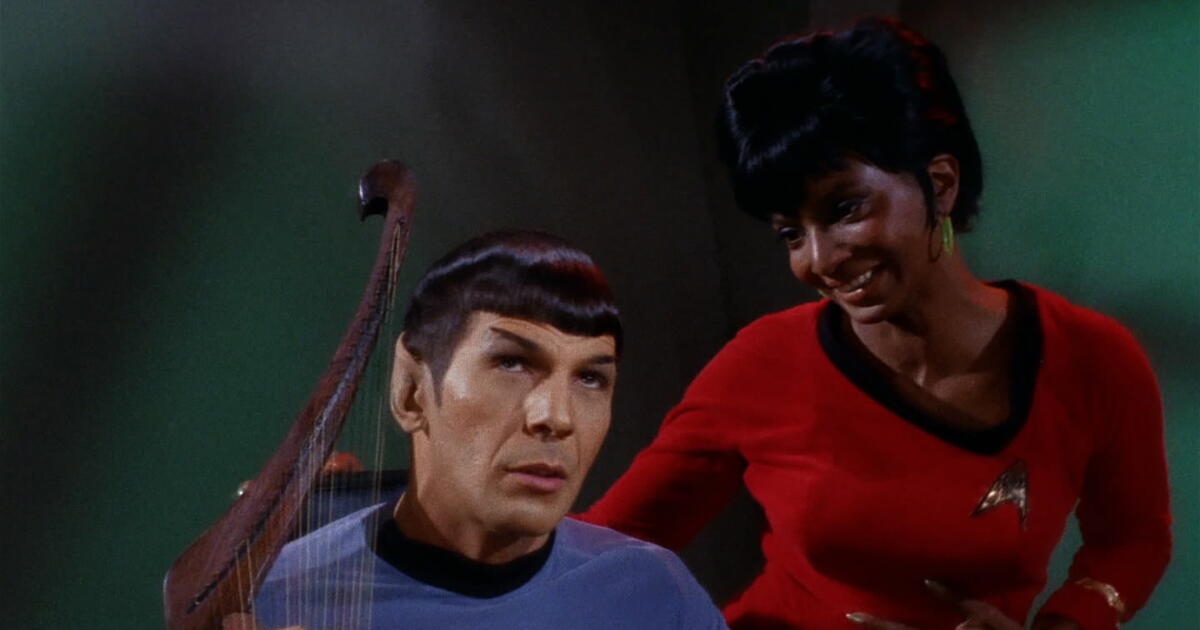
A few years ago, I received a call I’ll never forget. Jeanette Epps, an astronaut aboard the International Space Station, Zoomed into my living room from 250 miles above Earth. During our conversation, she told me that one of the reasons she chose her career was a television show my father created in 1966.
She wasn’t alone. I’ve heard versions of that same story from countless people over the years. Engineers. Scientists. Astronauts. People who saw possibility on a television screen before they ever saw it in the real world.
They credit “Star Trek” for showing them a future they wanted to help build. That’s an extraordinary thing for a television series to accomplish. It didn’t just entertain millions of people. It gave many of them a direction.
And I don’t think that was because of the ships, the gadgets or the aliens. It was because, underneath all of it, was a profoundly human belief that we are capable of becoming something better.
There was a time when science fiction made a bet on humanity. A bet that humanity was worth rooting for. We need storytellers willing to make that bet again.
I don’t think we have an innovation problem. We have an inspiration problem.
We talk a lot about what we’re leaving the next generation. The debt. The climate. The geopolitical mess. But there’s another inheritance we don’t talk about enough: what we show them is possible.
Today, many visions of the future are dominated by collapse, dystopia and fear. Those stories can have value. But conflict doesn’t always have to come from destruction. It can come from discovery. Two minds encountering an idea neither had considered. A crew facing the unknown with curiosity instead of fear. That kind of conflict doesn’t leave you feeling like the world is ending. It leaves you feeling like it’s just beginning.
Most storytelling holds a mirror up to who we are. Our flaws, our failures, our contradictions. But there is another kind. Stories built around characters a step or two ahead of where humanity is. Not perfect. But people who have learned how to cooperate, how to lead, how to stay curious and how to put something larger than themselves first. Characters you don’t just recognize. Characters you want to become one day.
That distinction changes what a story asks of you. And what you walk away believing is possible.
This year, “Star Trek” celebrates its 60th anniversary.
That’s not a milestone you reach by accident. Franchises built on spectacle fade. Ones built on something people actually needed tend to stick around.
The engineers who built Silicon Valley, the astronauts who went to space, the scientists pushing the edges of medicine and artificial intelligence — many of them trace a line back to this show. That wasn’t the plan. Nobody set out to build an innovation pipeline out of a television series. But that’s exactly what happened. When you give people a future worth believing in, they go build it — or sometimes they get inspired to imagine other hopeful destinations and lead us toward them. That’s not nostalgia. That’s a model.
One thing my dad understood that I think gets overlooked: “Star Trek” wasn’t going out into the galaxy to find aliens that looked different. It was going out to find aliens that thought different.
Diversity of perspective is how a species grows. My father gave that idea a name: IDIC. Infinite Diversity from Infinite Combinations. It didn’t mean you had to abandon your own point of view. It meant staying open to someone else’s. Because that’s how you grow. That idea has never been more relevant. And it has never been more achievable.
For the first time in history, a creator anywhere in the world can tell a story that reaches everyone, and now it can come from anywhere. The future belongs to everyone. The stories that shape it should too.
That astronaut who called me from space didn’t just watch a television show. She saw a future worth dedicating her life to.
Every generation needed something to build toward before they ever picked up a tool. A vision. A direction. A story that made the future feel worth the work. And right now, we’re not building enough of that.
We need stories that don’t just entertain us, but also become our compass. We need the kind of storytelling that doesn’t ask what could go wrong, but asks what could go right.
Rod Roddenberry, founder of the Roddenberry Foundation and son of “Star Trek” creator Gene Roddenberry and actor Majel Barrett Roddenberry, is an executive producer on current “Star Trek” television shows.
Insights
L.A. Times Insights delivers AI-generated analysis on Voices content to offer all points of view. Insights does not appear on any news articles.
Perspectives
The following AI-generated content is powered by Perplexity. The Los Angeles Times editorial staff does not create or edit the content.
Ideas expressed in the piece
The article argues that optimistic science fiction can do more than entertain: it can give audiences a constructive vision of the future and inspire people to pursue careers in science, engineering and space exploration. “Star Trek” is presented as an example of storytelling that made human progress feel attainable.
It contends that contemporary culture is overly saturated with collapse, dystopia and fear. Although such stories can be useful, the article suggests that narratives centered on discovery, cooperation and curiosity can encourage audiences to imagine what might go right rather than merely anticipate disaster.
The piece maintains that aspirational characters—people who have learned to cooperate, remain curious and serve purposes larger than themselves—can function as moral examples. In this view, fiction should not only reflect present flaws but also depict people and societies worth becoming.
It further argues that “Star Trek’s” emphasis on cultural and intellectual diversity remains especially relevant. The franchise’s principle of “Infinite Diversity in Infinite Combinations” is presented as a model for learning through different perspectives, while the series’ enduring influence is cited as evidence that hopeful stories can shape real-world ambitions.[1][2]
Different views on the topic
A contrasting perspective holds that dystopian and cautionary science fiction serves an essential purpose by exposing the consequences of reckless behavior, political failure and technological overreach. Recent commentary argues that many influential works were intended as warnings or satire, not as blueprints for an attractive future.[3]
Feminist dystopian fiction offers another counterpoint: bleak speculative narratives can make systemic problems—including misogyny, violence against women, gender inequality and threats to reproductive rights—more visible. From this perspective, darkness is not simply pessimism; it can be a way to represent harms that already exist and demand attention.[4]
Critics also caution that “Star Trek’s” hopeful vision can obscure tensions within its own world. The franchise combines ideals of cooperation and equality with armed exploration, alien conflict and interventionist politics, making it both an image of peaceful progress and a vehicle for examining militarism and political failure.[2]
Consequently, the strongest science fiction may not choose between hope and warning. Utopian stories can provide direction, while dystopian stories can identify dangers and test whether an envisioned future genuinely addresses exclusion, power and conflict. Treating either mode as sufficient on its own risks producing either inspiration without scrutiny or criticism without a constructive destination.[3][4]
Among novelist Mona Awad’s prized possessions is a handmade rabbit brooch with delicate hanging daggers. It’s a gift from a reader. The present was inspired by Awad’s goth-tinged comic novel “Bunny,” which has garnered a cult following on social platforms like BookTok over the last several years with readers who call themselves “bunnies.” Driven largely by these devoted fans, the book’s sequel “We Love You, Bunny” hits shelves this month in paperback, while Awad hops across the U.S. on her latest book tour.
The bunnies are so enamored with Awad’s horror-adjacent satires centered on academia and female friendships (and often compared to “Heathers” and “Mean Girls”), they have created their own online — and offline — aesthetic universe.
Their videos and artwork, spanning Pinterest, YouTube, Instagram and TikTok, bring the novels’ surreal, “creepy-cute” aesthetic to life. The fan art features moody Ivy League backdrops with bunny ears, heavy tomes, blood-red candles and saccharine doll-like fashion. It’s a style ripped straight from the book’s antagonists — one of whom wears a pink dress patterned with beheaded girls. Some bunnies cosplay lace-adorned, ax-wielding characters and post the images on social media, or illustrate them.
Sara Ah Sing, a 30-year-old multidisciplinary artist in San Diego who considers herself a bunny, is one such illustrator. She discovered Awad’s fiction when she went down a BookTube dark academia genre-themed rabbit hole. “I was taken aback by how intense and vivid the descriptions were, and not only detailed, but very viscerally described … Mona Awad is not a generic prose writer,” Ah Sing says.
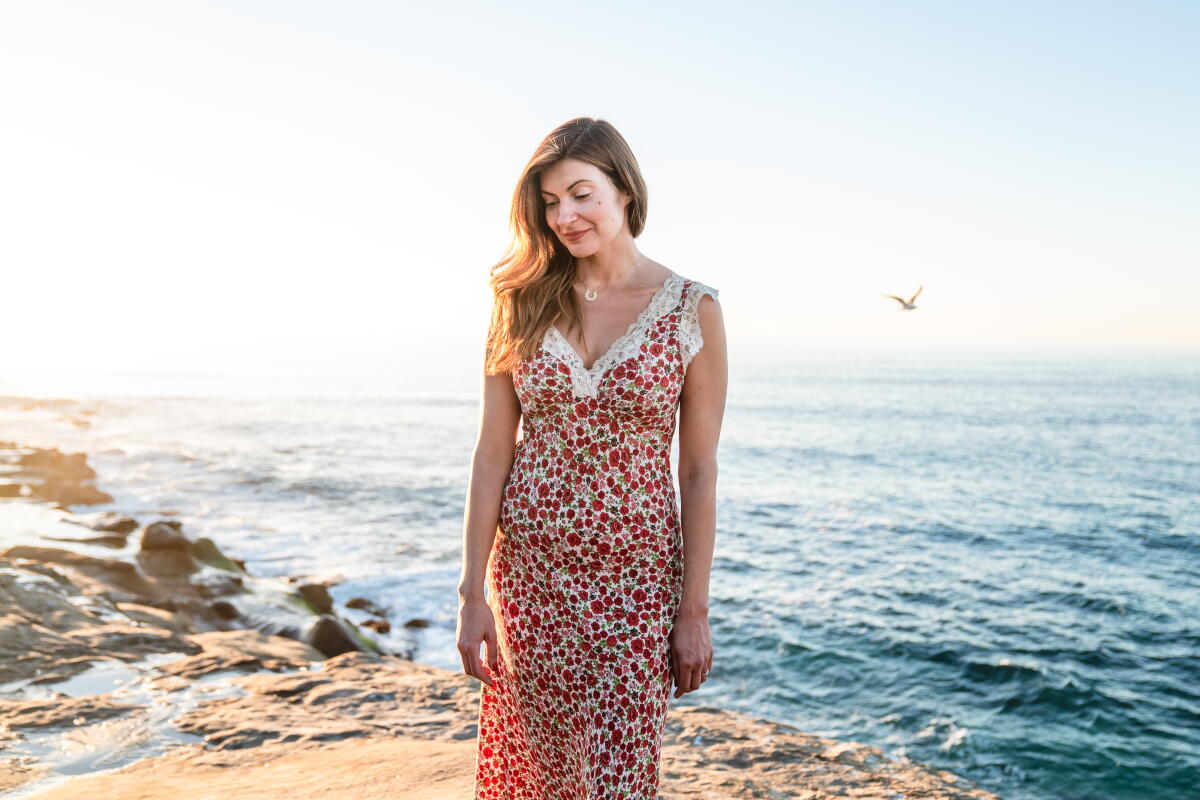
Author Mona Awad writes and dreams up her fiction in La Jolla, where she has a second home.
(Ariana Drehsler / For The Times)
She recalls a protagonist called Cupcake. “She’s described as a person who looks like a cupcake … something like ‘The Children of the Corn’ going to prom. And, it’s like, OK, what does that mean? For an artist it begs for interpretation — and I just have to illustrate it.”
Her imagination has been reignited with the sequel, “We Love You, Bunny.” Ah Sing illustrated its tortured central character, Aerius, as a muscled romance book cover star — with a twist. “Instantly when we meet him in the new book, he’s described with all these delicious descriptions. He’s got all these very specific tattoos that are in very specific places on his body,” Ah Sing says. “He’s wearing pearls and has auburn hair that covers one eye — it’s like a playground for your brain reading that kind of stuff.”
Awad’s vivid descriptions have led to all kinds of fan-led creations. Los Angeles-area Bookstagrammer Michelle Grondine, 40, is inked with five “Bunny”-inspired tattoos. “I have one on my inner ankle, one on my forearm, one on my collarbone, one on my lower back of a cat reading ‘Bunny’ and one on my thigh,” Grondine says. Each of the tattoos varies in style, not unlike the distinct personalities in the book’s fictional MFA cohort.
Grondine plans to attend Awad’s upcoming event at Skylight Books in Los Angeles on Sept. 21 with her best friend, Valentina Feldstedt, who lives in Northridge. The two met online after Grondine spotted Feldstedt’s “Bunny” social posts, and they quickly bonded over their shared obsession. They have collected various editions of the series (including the Barnes & Noble-released “We Love You, Bunny,” which features a bonus chapter), gone to see Awad live several times and crafted Taylor Swift Eras tour-style friendship bracelets for fellow fans and Awad (whom they call “our alpha bunny.”)
“Bunny” author Mona Awad’s spread of her fan art and gifts in her home in La Jolla.(Ariana Drehsler / For The Times)
Feldstedt, 30, has her own “Bunny” tattoo, which she says doubles as an excuse to pitch the novel to strangers. “It’s weird, but if you get it, you get it,” Feldstedt says. “And if you don’t, you’re not a bunny — and that’s fine.”
Awad says her sequel, in part, owes to bunnies like Ah Sing, Grondine and Feldstedt. “When readers started finding it online and creating and expanding the universe of it, it gave me permission to go back to it,” Awad reflects.
She walks around her Boston home and plucks up a fan-made crocheted rabbit toting an ax. Another fan, a nail artist, crafted spooky bespoke black and purple press-ons decorated with intricate white hares. Awad says there’s a song written about the book by an indie band from western Massachusetts called the Greys, and you can buy fan-crafted “Bunny” merch on Etsy.
A poster signed by fans at Mona Awad’s book signing for “We Love You, Bunny” at the Center for Yoga in Los Angeles.
(Ariana Drehsler / For The Times)
But “Bunny” didn’t always have such a rabid fan group. In fact, when the first book was published in 2019, it received critical acclaim, but Awad was disappointed it wasn’t selling as well as her previous novel, “13 Ways of Looking at a Fat Girl.”
“I was like, well, maybe it’s just a weird book,” she recalls on a Zoom call in her literature-lined home. A few years later, during the height of the COVID-19 pandemic, Awad got a call from her publisher. The book was selling, and they couldn’t figure out why. “It was beginning to sell more than 1,000 copies a week, which is crazy two years after publication,” she says. Around that time, BookTok and BookTube had discovered her novel. Next came the bunny ears.
“More and more readers were tagging me on Instagram, and they were dressed in bunny ears, or they had a bunny tattoo, or they were sharing visual art that they had made, envisioning the characters — paintings, ink drawings, cartoons, comics, so many different iterations of this — and then all of these reels and collages that were just so incredible to see,” she says, pausing to emphasize her amazement. “I was really startled by it. It just kind of came in this wave, and then it just grew from there.”
Jane Friedman, a books industry veteran who tracks publishing news, trends and the intersection with technology in her newsletter “The Bottom Line,” says that intense literary fandoms aren’t entirely new. “Apart from BookTok, there have always been these really obsessive fan communities,” Friedman says. “The internet and social media just made it easier for them to come together, making them far more powerful.”
Friedman emphasizes that some critics are concerned that a so-called BookTok phenomenon pushes literature toward consumerism and waters down literary quality. “You can sometimes see authors chasing a trend rather than writing what they would ordinarily write, hoping their book will go viral,” Friedman says. “But I don’t think that’s the case here. It’s probably a mix of timing, serendipity, literary quality and, you know, the stars aligning.”
Awad was born in Montreal to a French Canadian mother and an Egyptian father. She grew up in a French-speaking family, and when her mother enrolled her in an English-speaking school, she recalls feeling like a complete outsider. It was an experience that would happen again and again — like later when her family moved to a Toronto suburb (where, of course, she had a few goth years), and again in her 30s during grad school when she earned her MFA at Brown University.
1
2
3
4
5
1.Superfan Valentina Bunny lives in Northridge.(Valentina Feldstedt)2.Madelyn Bunny hails from Kentucky.(Madelyn Chimento)3.L.A.’s Michelle Bunny has five rabbit tattoos with plans for more.(Michelle Grondine)4.Valentina Bunny, left, and Michelle Bunny with author Mona Awad.(Michelle Grondine)5.Chloe Bunny lives in Australia.(Chloe Bunnie)
“It was kind of my first taste of New England, which was very, very mythical to anybody who doesn’t come from there … It was disorienting in ways that I suppose were productive in retrospect, but it was hard. It was my first taste of being critiqued. It was my first experience of sharing work with others and having them talk about it with me, and it wasn’t easy,” she says. “I mean, the whole world of the MFA felt like fodder for horror.”
Being an outsider looking in remains a central theme across her novels, including her other critically acclaimed works, and it resonates deeply with readers. The wildly imaginative “Bunny,” often described on TikTok as a “fever dream,” has been translated into 17 different languages. Awad notes that she has an especially huge readership in war-plagued Ukraine, where the book is a breakout bestseller. “It’s so moving to me,” she says. “What they say is that it’s a very anti-fascist book, and it’s a very anti-establishment kind of book. It is about resisting the pull of the clique, finding your own ground, standing on your own ground, and being authentically yourself and embracing that.”
It’s a theme she will continue in the third Bunny book. “The minute I turned in ‘We Love You, Bunny,’ I missed the characters and the world,” Awad reflects. She knew there would be another one. Although Awad has deep roots on the East Coast where she’s taught university-level creative writing courses — her students perhaps not so unlike some of the MFA characters in her “Bunny”-verse — nearly all of her books were written in Southern California, where she has a second home and plans to write her next novel. She notes that a short story she wrote in 2025 for the New Yorker was set in the San Diego area, as was her novel “Rogue.” “It’s been such a generative place for me,” she says. “I’ve become sort of superstitious about it.”
Her next book is taking shape as she works and dreams near the ocean. Meanwhile, her existing work is set to make waves in Hollywood. “Bunny” is slated to be adapted into a film by J.J. Abrams’ production company, Bad Robot, and was recently acquired by a major streaming service — although Awad can’t disclose which one yet. She says she’s been deeply involved. “I feel like my vision of the book is being honored, which is really meaningful. Part of the reason that’s so important to me is because I want to honor my readers’ connection to it.”
That deep bond is something Awad witnesses firsthand nearly every night on the road, where her digital fandom materializes into physical rooms filled with devoted readers (often donning rabbit ears). “The thing that moved me the most about going on tour for the hardback — and it’s happening as I’m on tour for the paperback too — is seeing just how many people bond over the book,” Awad reflects. “Not only the art that has been generated by ‘Bunny,’ but so much community and friendship has been formed. You see this kindred spirit through reading, and it’s the most beautiful thing.”
Mona Awad presents “We Love You, Bunny” at Skylight Books on Sept. 21. 1818 N. Vermont Ave., L.A.
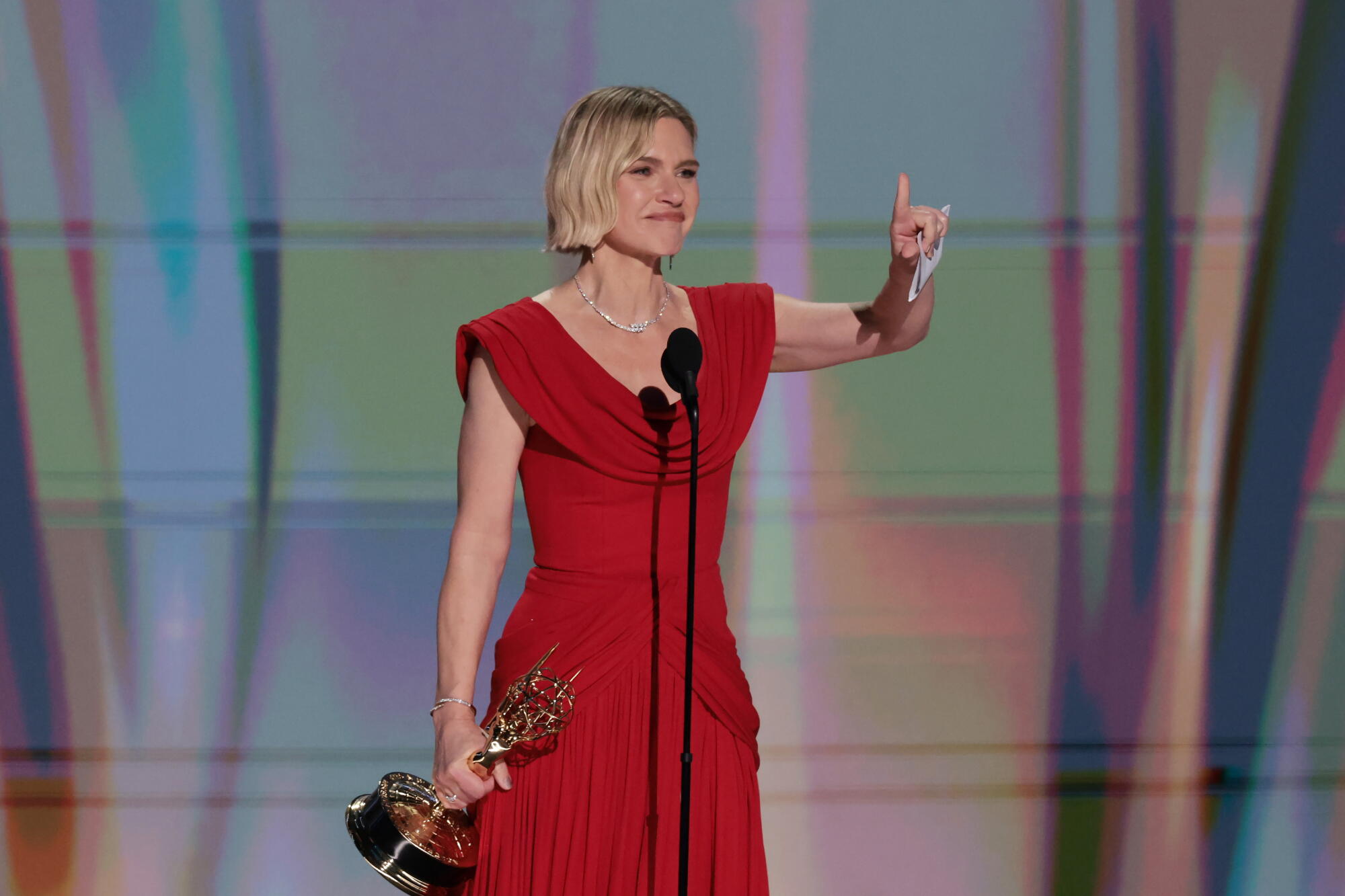
The 78th Primetime Emmy Awards saw a number of firsts: A first-time host, a first-time Emmy winner and the first to win two lead acting Emmys in a night. These notable achievements were coupled with moments of remembrance for legendary actors and creators, like Dolly Parton, Rob Reiner and Catherine O’Hara, among many others.
With Mariska Hargitay at the helm, the show ran at a quick pace without feeling rushed, giving room to winners to say their thanks in acceptance speeches while still having moments of fun in between. Here, our writers discuss some of the best moments of the ceremony. — Maira Garcia
Best moment of overdue recognition: Rhea Seehorn
Rhea Seehorn finally won an acting Emmy, an accolade that was long overdue.
(Robert Gauthier/Los Angeles Times)
If you appreciate Rhea Seehorn’s complex, subtle acting, her dynamic range and her deadpan humor, then you’ve probably found the Emmys to be maddening over the years. She famously wasn’t nominated for playing poker-faced attorney Kim Wexler on “Better Call Saul” until the show’s two-part final season. And she never won, not even for the raw, heartbreaking work she did in those last episodes. So seeing her win, finally, for her lead turn on “Pluribus” was thrilling, long overdue recognition that, given her history, made you wonder if it would ever come. Awards voters typically don’t appreciate nuanced acting, too often equating “best” with “most.” But Seehorn’s work on “Pluribus” was undeniable. Playing Carol Sturka, a sad woman forced to save the world from happiness and hive mind, Seehorn had the role of a lifetime and ran with it. This Emmy was a long time coming, and you could feel that when she choked up on stage accepting it. Her palpable joy thanking “Pluribus” creator Vince Gilligan, wiping away tears, is one reason why we keep watching the ceremony. — Glenn Whipp
Best double Emmy haul: Matthew Rhys
Matthew Rhys with his double Emmy haul for “The Beast in Me” and “Widow’s Bay.”
(Ronaldo Bolanos/Los Angeles Times)
It was the sort of epic night that might make life vest-wearing mayor Tom Loftis jolt from his boat seat in shock or compel the villainous real estate heir Nile Jarvis to scarf down a whole rotisserie chicken with a glint in his eye — Matthew Rhys, the actor who brought both characters to life on screen, won two Emmys during Monday’s ceremony.
In doing so, he achieved a feat no actor has accomplished in 78 editions of the Emmy Awards: he won two lead acting Emmys in the same night. He was recognized for lead actor in a limited series for his turn in Netflix’s psychological thriller “The Beast in Me,” where he played Nile equal parts charming and terrifying. Later, he took the stage to accept the lead comedy actor prize for his optimistic but skeptical take on a mayor of a small, haunted island town in Apple TV’s horror comedy “Widow’s Bay.”
Rhys didn’t react like his characters might have — instead, he thanked his homeland: “To the great and good people of Wales… we are a small but mighty nation!”) And he took in the moment being feted by his partner, Keri Russell, who hung on him with pride as he made his way back to the main seating area after his first win.
The double wins add to Rhys’s collection of gold across the acting categories. In 2018, he took home the prize for lead drama actor for “The Americans.” — Yvonne Villarreal
Best reaction to someone else winning: Martin Short
Martin Short, left, with his “Only Murders in the Building” co-star Steve Martin on the red carpet at the Emmys.
(Christina House/Los Angeles Times)
Rhys may have taken home lead actor Emmys for limited series and comedy series, but the award for best reaction belongs to Martin Short.
During Rhys’ acceptance speech for lead actor in a comedy, the camera briefly panned to Short, who was nominated for “Only Murders in the Building,” just in time to catch him ripping paper into pieces — presumably his speech — and throwing it on the floor in anger and disbelief.
It lasted only a few seconds, but Short took advantage of the moment.
The timing. The commitment. The expressive performance. Short’s full comedic arsenal was on display before the camera moved on. It was the kind of quick visual gag that was easy to miss, and plenty of people probably did. But for those who caught it, I hope it was worth the spit-take. I am certainly glad I had a napkin at hand.
Short may have lost the Emmy, but his comedic timing remains undefeated. Stay funny, Short. — Anthony Solorzano
Best emotional moment that emptied our tissue box: Michael J. Fox
Michael J. Fox received the Bob Hope Humanitarian Award for his work and advocacy on Parkinson’s disease.
(Robert Gauthier/Los Angeles Times)
In an Emmys telecast full of genuine emotion — Reba McEntire’s musical celebration of Dolly Parton, a heartbreaking In Memoriam segment that ended with Jamie Lee Curtis’ personal tribute to Rob Reiner — the most moving moments were claimed by Michael J. Fox, receiving the Bob Hope Humanitarian award.
Fox’s decades-long battle with Parkinson‘s disease, and for those who suffer from it, is well known, as is his refusal to let it define him or his career — he received his 19th Emmy nomination this year, for guest actor in “Shrinking.” But when he first came out on stage, in a wheelchair and classic black, he spoke first about his admiration for Bob Hope, a man whose tireless support of soldiers “and military families like mine” illuminated, for Fox, the necessity of showing up for others. “When it starts to get tough, you show up, you help, and if you add a little joy while you’re doing it, that’s so you know it’s even better.”
The utter silence of that room as he spoke, the admiration on all those famous faces said it all. Fox remains as he has long been — funny, sincere, wildly talented and one of the most courageous people many of us will ever know. — Mary McNamara
Best self-depricating host: Mariska Hargitay
Mariska Hargitay didn’t take herself too seriously as host, cracking a number of silly jokes throughout the night.
(Robert Gauthier/Los Angeles Times)
Host Mariska Hargitay was refreshingly lewd and charmingly self-deprecating as the first female host of the Emmys in 15 years.
By not taking herself too seriously, she set a laid-back tone for a high pressure show that for many nominees feels like a life or death moment.
Winning is not everything, Hargitay regularly reminded the crowd, with bits that grounded actors’ experience, like a clip from a 1984 B-horror film she starred in called, “Ghoulies,” which, as she explained to everyone, is a film, “where a monster pops out of a toilet.”
“Jamie Lee Curtis isn’t the only scream queen around here,” Hargitay quipped.
That joke came after an ongoing series of goofy, blue wisecracks, including one about “Law & Order” producer Dick Wolf, saying his real name was “Richard Penis;” that her “SVU” character, Olivia Benson, was “America’s sweetheart sex cop;” that aging fans who once loved and watched “Hannah Montana” would soon need “Hannah Mammogramas;” and an aside about her packed work schedule, noting that “Margo may have money troubles, but Mariska’s doing just fine.”
She ended the night with a mic drop by introducing Woody Harrelson and Matthew McConaughey as “my two favorite flavors of vape.” — Jessica Gelt
Best changes to a host’s hair: Hargitay and her hairstylist
A sampling of Mariska Hargitay’s hairstyles at the Emmy Awards.
(Robert Gauthier/Los Angeles Times)
Beach waves, bombshell, Targaryen-inspired twists, luscious locks and a tousled bob. Mariska Hargitay changed her hairstyle so many times throughout the Emmy Awards it was hard to keep track. One can only imagine the quick work happening backstage to get her hair coiffed amid costume changes. And one can only hope there was a wig wall somewhere inspired by Catherine O’Hara’s Moira Rose. The bombshell blowout was reportedly a tribute to her late mother, ‘50s starlet Jayne Mansfield — Hargitay took home two Emmys earlier this month for a documentary she directed about her. Her quick-turn tresses were yet another example of the first-time host’s infectious enthusiasm. — Brittany Levine Beckman
Best presenter who should host the next awards show: John Mulaney
John Mulaney introduced the award for lead actor in a drama series, but not before sending up men.
(Robert Gauthier/Los Angeles Times)
I’ll say it: I’m not sure how I feel about John Mulaney. I’ve waffled over the years. I used to love his work, then I found it tired, then I fell off the bandwagon altogether. So believe me when I tell you: I wasn’t sure how I’d feel about him presenting lead actor in a drama series. I wasn’t primed to like his speech. And yet.
He won me — I’m not necessarily a certified Mulaney hater, but certainly not a full-blooded Mulaney lover — over with a truly funny arpeggio of riffs about the mediocrity we accept from men and male actors. I was trepidatious, as was the live audience. (“This award is for the guys. Just men being men,” is a scary start.)
But then Mulaney rounded the curve with a tongue-in-cheek reference to the “Bluey” dad controversy and I sat up straighter. If the line, “some of the men in this category do method acting, and some do regular, less annoying acting” didn’t get me, then “they can play anything, these nominees, not just doctors — they can play a cop or an FBI agent or a secret agent, and then that’s it, no other examples,” certainly did. Don’t get me started on the DJ Khaled quote (I loved it).
Let this man host an awards show, as he is clearly trying to do. I recognize the game, and I respect it.
Also: a very honorable mention to Meg Stalter dressed as a literal Emmy statue. Meg, you are the only method actor I respect. — Laura Zornosa
Best Targaryen family reunion: Emma D’Arcy and Emilia Clarke
Emma D’Arcy and Emilia Clarke nodded to “Game of Thrones” before presenting the award for lead actress in a limited series or television movie .
(Robert Gauthier/Los Angeles Times)
One of the last things I ever expected to see on an awards show in 2026 is the Mother of Dragons speaking in High Valyrian on stage. So “Game of Thrones” star Emilia Clarke hitting the stage with “House of the Dragon’s” Emma D’Arcy to present the award for lead actress in a limited series or television movie was a pleasant surprise.
“In the ‘Game of Thrones’ universe, Emilia is my great-great-great-great-really-great granddaughter,” D’Arcy said. “And in honor of our shared Targaryen lineage, Emilia is going to address you in High Valyrian — our mother tongue — and I will translate.”
Clarke earned four Emmy nominations during “Game of Thrones’” run for portraying Daenerys Targaryen, one of the last surviving members of the family that long reigned over Westeros. D’Arcy, meanwhile, plays Rhaenyra Targaryen in “House of the Dragons,” which is set at a time when there are so many Targaryens that a war of succession became inevitable.
The Targaryen team-up was my favorite but it wasn’t the only name-based collaboration of the night. An earlier segment saw Olivia Benson, the fan-favorite “Law & Order: SVU” character played by Hargitay, share the screen with another Olivia Benson — Taylor Swift’s cat that is named after her. The cat made a surprise cameo along with the mega pop star in a pre-recorded segment about the likelihood of Swift appearing at the Emmys. — Tracy Brown
Best invitation to dinner at their house: Marcello Hernández
Marcello Hernández presented an award, but not before presenting some dinner invitations to a few people in the crowd.
(Robert Gauthier/Los Angeles Times)
When I saw “SNL’s” Marcello Hernández would be presenting at the Emmys, I knew it would be a special moment, and he didn’t let me down. The actor, who presented the award for directing for a comedy series, promptly made himself at home, shouting out, “Donde ‘tan los Latinos?” He then took the opportunity to say hello to a few fellow actors in the room.
“Very quickly, I would like to say hello to Harrison Ford,” he said, looking at the actor sitting in the audience, who gave an exasperated look and waved. “You are a legend and a real inspiration to me and I would like to invite you to have dinner at my house.”
The room erupted in laughter, but he wasn’t finished. He then extended an invitation to Zendaya and her partner, Tom Holland: “I want to say hi to Zendaya, you’re a beast and you’re amazing. And I saw you and I wanted to play it cool, and I decided I can’t do that. So I would like to invite you and Spider-Man to have dinner at my house.”
Then he proceeded to invite Oscar Isaac, the Guatemalan actor who utilizes his given name professionally, suggesting they might be related. “You are so good in ‘Beef’ and you are also Hernández, like I am. So we could be cousins, you never know. And I will see you at Christmas, I will cook you whatever you want.”
Lastly, he said a hello to Matthew McConaughey, and quoted his Cuban tía, who told him if he works very hard, he can hang out with “Matthew McCon-i-purse.” It was a light-hearted speech that spoke to anyone who suddenly finds themselves in a room wondering how they got there. — M.G.
Poorna Jagannathan has played everything from a ruthless gangster (“Deli Boys”) to an overbearing immigrant mom (“Never Have I Ever”). Now with HBO’s “Lanterns,” she adds an all-powerful galactic android to her acting resume.
Her character’s identity was a secret for much of HBO’s DC Comics series until a reveal in Episode 4 that a rancher’s trophy wife, Zoe Macon (Jagannathan), was, in fact, the deadly Manhunter. Then another great surprise rocked the “Lanterns” universe Sunday when in Episode 5, she is killed by Lantern trainee, John Stewart (Aaron Pierre).
“She is dead, for sure. Maybe …” teases Jagannathan, who had to take a crash course in Green Lantern lore before assuming the role in the eight-episode series from showrunner and co-creator Chris Mundy (“Hell on Wheels,” “True Detective,” “Ozark”).
Jagannathan’s character belongs to an ancient, shape-shifting race created by the Guardians of the Universe as the galaxy’s first police force, but they’ve since gone rogue and are now out to eliminate the human race. Green lanterns are interstellar peacekeepers who wear rings that give them extraordinary powers. When veteran Lantern Hal Jordan (Kyle Chandler) and his mentee Stewart are tasked with solving a murder in rural Nebraska, they trip upon a great mystery that included ferreting out which resident in the small town of Rushville is the Manhunter.
The series has been lauded for elevating the superhero genre while presenting as a gritty crime drama. In this edited conversation, Jagannathan explains the demise of the Manhunter, how she morphed into a comic book villain for the role and what it’s like to feel all powerful at this stage in her career.
John Stewart (Aaron Pierre) and Zoe Macon (Poorna Jagannathan) in a scene from Episode 5 of “Lanterns.”
(HBO)
How much did you know about the DC universe before taking on this role?
I didn’t understand a lot of this world, but I did grow up on Wonder Woman. I twirled my way into my teens. So at least there’s that. It’s such a huge property, so there’s a lot to learn. But I realized that there’s a lot of similarities between Lucky (the gangster she played in “Deli Boys”) and Zoe. Lucky was originally written for a man. So with “Lanterns,” when I was first reading the script, I just kept looking at the cast of characters and thinking who might it be? I just expected a man would be playing the Maneater.
Maneater?
I mean Manhunter. I kept messing up and saying that when we started working on the show, too. It’s the name of an old Hall & Oates song. [Jagannathan hums, “She’s a man eater… .”]
Explain who or what a Manhunter is.
Manhunters were created by the galaxy as part of a police force, and then they went rogue. They were created to enforce justice, but it was a very particular kind of justice. There was no gray in the Manhunter. No emotion. It was either right or wrong, and they would eliminate what was wrong. But then they started feeling things.
The guardians saw it was an operation that went wrong so they closed it down. She [Zoe] is a sole survivor. She runs away to a place where she adapts quickly to the creatures around her, and learns how to feel. So she’s this feeling machine that battles against her own programming, but at the end of the day she can’t help her programming. When there’s a conflict, she resolves it by killing half the population.
Jagannathan on her character in “Lanterns”: “She’s a sole survivor. She runs away to a place where she adapts quickly to the creatures around her, and learns how to feel.”
(Christina House / Los Angeles Times)
Manhunters morph to fit in with the population around them, but the skin your character chooses is that of a brown Indian woman. She does not look like anyone else in the small, predominantly white town of Rushville. Her explanation of why she made that decision — to essentially not fit in — is really powerful. Can you recall what she said?
I remember that monologue. [John Stewart] asks, “Why did you choose this skin?” I say, “Power.” “How do you conquer a civilization and a people?” You come to it from the outside. “How do you learn about things from the outside?” In your world, you don’t want obstacles, but in my world, I need those obstacles to get a higher vantage point, to see a deeper purpose.
The absolute outsiderness is a relatable point. I did ask Chris about it and he basically said that as an Indian woman in Nebraska, you’re an outsider. You’re already alien. People are not going to ask you a lot of questions. You’re not going to be part of any power structure. So she just is an anomaly, and there’s no more questions around it.
Did you know Zoe would turn out to be the Manhunter when you first auditioned for the role?
No. The scenes that I got were the one at the bar where I’m picking up Stewart, and the scene right before I die, which is [when we’re] in bed and I’m trying to get him to leave. Like “You gotta go or you’ll die!” They didn’t indicate she was extraterrestrial in anyway. There was no E.T. flair to [the dialogue]. It was so grounded that it was easy to inhabit this character. I’m happy because if I had had even an inkling she was the Manhunter, I might have brought an alien touch to the scene. But I couldn’t quite figure out her place in the story. Definitely not during the audition, and definitely not till I read the last [scene].
Your first big breakthrough on American television was in 2016’s “The Night Of.” That was 10 years ago. Now you’re landing all these powerful, commanding and sometimes villainous roles.
I’m telling you, it’s like I couldn’t have imagined a future like this. If you’d asked me back then what kind of role do you want, I’d have no idea. Between Zoe and Lucky, they’re my two favorite TV baddies. Then Nalini (the overbearing mom in “Never Have I Ever”) and Salma (who has an affair with the title character in “Ramy”). All these characters are very strong women.
What is it that you channel to embrace these powerful roles?
The second I turned 50, I just felt an inexplicable comfort in my own skin that I never felt before. A belonging in my own skin. That translates into belonging in different spaces where I could have been uncomfortable in before, so it’s a great time to inhabit these characters. Before I would have really s— myself with a character like Lucky or Zoe, but now it feels a lot more accessible.
1
2
1.Jagannathan as Aunt Lucky in Hulu’s “Deli Boys.”(James Washington/Disney)2.Maitreyi Ramakrishnan as Devi, left, and Jagannathan as Nalini in Netflix’s “Never Have I Ever.”(Isabella B. Vosmikova/Netflix)
Do you see similarities between the characters you’ve played over the past few years?
They’re untethered, powerful women. They will do anything to keep their power. Their north star is power over anything else. Usually with female characters, everything always hearkens back to the family. Zoe is older. She is confident. She weaponizes her femininity right away, and she’s unafraid. She does it with nonchalance. She appears to not give a [damn].
All villains and warriors have an Achilles’ heel, and for female roles in particular, it’s usually sacrificing themselves to protect their family. Family is their kryptonite.
But a character like Zoe is willing to destroy everything, including her family, to keep power. She’s untethered from love and responsibility. You always expect a very masculine force to come in with this kind of power, and the fact that it never does with “Lanterns” is so unique.
You spoke on a “Lanterns” panel at San Diego Comic–Con? Describe the experience.
The [people who come in costume] are better humans than I am. To go somewhere and have your entire family dressed in Spider-Man regalia, roaming the streets of San Diego. It’s a manifestation of pure, unbridled passion from youth then passed down through generations. I wish I too had a passion like that.
“The second I turned 50, I just felt an inexplicable comfort in my own skin that I never felt before,” Jagannathan says. “That translates into belonging in different spaces where I could have been uncomfortable in before, so it’s a great time to inhabit these characters.”
(Christina House / Los Angeles Times)
Were you terrified somebody would ask you a complicated question …
… about Green Lantern?
Yes.
I had to be really upfront and honest and explain that I know so little. It’s Aaron [Pierre] who is really into comic books. He really got into this world. I did speak to a Green Lantern expert as part of the preparation for the role. I do remember him telling me how special John Stewart was in the universe. One of the first introductions of a Black superhero [in mainstream comics] was in Green Lantern, so it holds a very sacred space in comic book history.
Can you talk about your forthcoming Apple TV drama series, “Nocturne.”
It comes out Oct. 30, and it’s basically like if “Silence of the Lambs” was a documentary on Florence Nightingale. That makes it seem so tame, but it’s so, so frightening. The serial killer genre is new for me. I read the book [it’s based on] and had to install a security system in my home. I couldn’t sleep anymore! It’s with Stephen Graham, Liev Schreiber and Zazie Beetz. I play an overworked FBI agent who was brought in to help solve a crime that [law enforcement] initially tried to deal with internally and they messed it up. So they decided they decided to bring in the big guns.
You said earlier that Zoe is an outsider. Did you consider yourself an outsider, too?
Growing up, we moved around a lot. I was literally changing languages every three years. I needed to adapt quickly to whoever was around me, and it often came at the expense of never really knowing myself. You just had to quickly read the society. The language. The gestures. You had to decode quickly in order to fit in.
Even as an adult, I was not fully settled into a point of view until my 40s. That was maybe the allure of acting — getting to show a little bit of my insides through acting. It’s finding out who you might be.
It’s never too late to go back to school. But after years of deferred admission, can a new generation of students at Hillman College score high at delivering a compelling, modern take on the groundbreaking sitcom “A Different World”?
The foundation for an updated version of the popular sitcom set at a historically Black college was set three decades ago. In the 1993 series finale, the show’s central couple — smart, bespeckled math whiz Dwayne Wayne (Kadeem Hardison) and high-maintenance Southern belle Whitley Gilbert-Wayne (Jasmine Guy) — were embarking on their next chapter as newlyweds, relocating to Japan and expecting their first child. Before their departure, a professor jokingly quips to Dwayne: “I can’t wait to have your child in my class in the year 2014.”
The only guide you need for fall entertainment.
But plans for a revival — the original series itself was a spinoff of “The Cosby Show,” centered on the Huxtables’ free-spirited daughter Denise (Lisa Bonet) — to suit that time frame were in limbo for years. Producer and director Debbie Allen, who joined the original series in its second season to help it better reflect the HBCU experience, actively pitched and tried to relaunch “A Different World” in the early 2010s, but those efforts were derailed by the highly publicized sexual assault allegations against the show’s creator, Bill Cosby.
“It’s very difficult,” Allen told The Times. “The biggest difficulty, just being totally transparent, was people’s hesitation to work with Mr. Cosby; to have anything to do with him. [But] we were so independent. He kind of put us on a boat and said, ‘Go.’ And that’s what we did. And he was happy to know that we were going on our way.”
In early 2023, another push began to revive the series while also distancing itself from Cosby. Now, its decades-long gap year finally complete, a new incarnation of “A Different World” is starting up classes this fall at Netflix. And it hopes to carry on the legacy of its predecessor, which was celebrated for its depiction of Black culture and life in a higher education setting during its six-season run on NBC, from 1987 to 1993, bringing HBCUs into the mainstream.
Rashida (Alijah Kai), left, Deborah (Maleah Joi Moon) and Hazel (Kennedi Reece) in Netflix’s “A Different World.” After years of trying to tell the story of a new class at fictional Hillman College, Debbie Allen, who returns as an executive producer and director, says the sequel arrives at the right moment: “If there’s any voice we need to hear from right now, it’s young people.”
(Daniel Delgado Jr. / Netflix)
Billed as a sequel series premiering Sept. 24, a Wayne offspring is our anchor for the freshman class at Hillman College, the show’s fictional historically Black college based in Virginia. Deborah Wayne (Maleah Joi Moon) is an aspiring artist forced to attend her parents’ alma mater on academic probation after her NYU acceptance is rescinded. As the youngest Wayne child, she continues the family’s legacy at the school: her older sister — the child Whitley was pregnant with at the end of the original series — and an older brother are both alums.
She’s joined by a mix of first-gen and legacy students: star quarterback Shaquille Johnson (Cornell Young IV), who is the only child of original character Ron Johnson (Darryl M. Bell); criminal justice major Rashida Duvall (Alijah Kai); psych major Amir Rodale (Jordan Aaron Hall); Ghanaian-Nigerian fashion merchandising student Kojo Achebe (Chibuikem Uche); and small-town pastor’s daughter Hazel Henry (Kennedi Reece).
Some of the show’s original creative team join Allen as executive producers, including Tom Werner, and original series writers Reggie Rock Bythewood and Gina Prince-Bythewood. (Mandy Summers of “That ’90s Show” is also an executive producer.) To shepherd this reimagined version of the sitcom, Allen enlisted her former “Grey’s Anatomy” colleague Felicia Pride, who was most recently part of the writing staff on “Bel-Air,” the dramatic reboot of ’90s comedy “The Fresh Prince of Bel-Air.” It was a dream call for Pride, who as a kid living in Baltimore recorded and rewatched episodes — namely, the one involving a step competition that she obsessively watched after school to learn the routine. But she was reluctant.
“I love the show so much,” Pride said, seated next to Allen inside a Netflix conference room in Los Angeles on a recent day. “I was like, ‘I don’t want to be the one to mess it up.’ But she [Debbie] was so adamant that the time was now to hear from young Black America — and that, I could get with.”
Allen remembers it this way: “I don’t have an ego. I begged her. It’s the truth. To get this show back up, we’ve tried for years. But this is the time that’s right … We had inspired all these kids, not just Black kids, all young people to go to college. This was a peep into college that had never happened before, where you saw young people being responsible and living their lives and being crazy, but still dealing with what is happening in this world. If the young people in the country don’t have a voice, that country is dead. And if there’s any voice we need to hear from right now, it’s young people.”
1
2
1.The original “A Different World”: Dwayne (Kadeem Hardison), left, and Ron (Darryl M. Bell).2.Jaleesa (Dawnn Lewis), left, Freddie (Cree Summer) and Whitley (Jasmine Guy). With Netflix’s modern take, showrunner Felicia Pride wanted the series to be intergenerational: “That’s why I’m so glad that we were able to have the legacy cast in the show — I wanted it to have the heart.”(NBCUniversal via Getty Images)
The show has been credited with boosting enrollment at HBCUs. While overall HBCU enrollment rose by 26% between 1976 and 1994, according to the National Center for Education Statistics, much of that increase occurred during the stretch of the show’s run.
Pride said she rewatched the original series, paying particular attention to the shift that materialized in Season 2 when Allen was brought on to overhaul it, as a starting point. Allen had a document of ideas detailing the types of characters she wanted to see depicted, including a star athlete, the first out queer character in the show’s universe and an African student. One major detail was a nonnegotiable: Allen wanted the show to revolve around Dwayne and Whitley’s daughter. (How they arrived at the character’s name — Deborah (pronounced Deb-OR-ah), which also happens to be Allen’s first name — is fuzzy. Pride remembers the name already being set by Allen; Allen recalls being amused upon seeing it on the page, thinking Pride had chosen the name.)
And just as in college, legacy matters on TV.
“I wanted the show to feel of now,” Pride said. “I also wanted it to be intergenerational. That was important to me, and that’s why I’m so glad that we were able to have the legacy cast in the show — I wanted it to have the heart … These [characters] were like my friends. I felt comfort in them. I felt like I could be them. It was also culture in a way that I hadn’t seen before, represented by people who look like me.”
Several familiar faces from the original make their way into the sequel, some taking on the mentor role of the older characters from the original, others representing how one gives back to the community that shaped them. Hardison and Guy lead the cast from the original series who reprise their characters, along with Bell, Cree Summer as Freddie Brooks, Charnele Brown as Kimberly Reese Boyer, Ajai Sanders as Gina Deveaux, Karen Malina White as Charmaine Brown, Jada Pinkett Smith as Lena James, Jenifer Lewis as Dorothy Dandridge Davenport and Allen as Dr. Langhorne.
Several original “A Different World” cast members reprise their roles in the new version of the series, including Charnele Brown, left, Jasmine Guy, Kadeem Hardison, Darryl M. Bell and Cree Summer.
(Quantrell Colbert / Netflix)
“They were so happy to be back,” Allen said. “There was a day they were all together —”
“That was the day where I felt like, ‘Oh, this is history,’” Pride added.
“In between takes, it was just chaos,” Allen continued. “They just laughed and acted up. It was just wonderful.”
To make the new characters and their stories resonate in a deeper, more contemporary way required as large a commitment to reflecting HBCU life as the original had under Allen’s guidance. The creative team assembled two paid student councils from various HBCUs — one to advise the writers’ room on storylines and campus issues; the other worked on the show’s Atlanta set, with students hired as production assistants that had working schedules tailored to their classes. The background performers filling up scenes in the quads, classrooms and parties feature 59% HBCU students and grads. And some key characters are portrayed by HBCU alumni who bring their lived experience to the screen, including Reece, who went to Howard University.
The freshman season will explore issues that Gen Z is grappling with such as financial insecurity, learning struggles, activism in the age of social media and matters of mental health, as well as bigger systemic issues like uncertainty around funding for HBCUs and immigration enforcement. The series also doesn’t shy away from its real-world backdrop — while it doesn’t explicitly mention President Trump by name, there is reference to the state of affairs under his administration.
Actors Jordan Aaron Hall, left, Cornell Young IV, Chibuikem Uche and Dasan Frazier are part of the new class of students at Hillman College in “A Different World.”
(Eli Joshua Ade / Netflix)
But this version of “A Different World” departs from its source material in its narrative format and tone. The original series was a multi-camera sitcom taped in front of a studio audience — and Allen initially thought any sequel of it would follow that same blueprint. But when the new series found its home at Netflix, it became a 10-episode single-camera dramedy. (Allen directed three episodes in the season, including the premiere, which set the cinematic style of the series.) As if to signal this iteration hasn’t completely deviated from its roots, in the show’s opening moments, Deborah Wayne coolly flicks the iconic flip-up frames made famous by Hardison’s Dwayne. And its memorable theme song that had versions from Phoebe Snow, Aretha Franklin and Boyz II Men hasn’t gone anywhere: Brandy was tapped to give a fresh spin on it that helps straddle the line between generations.
Now, Allen and Pride are on the cusp of seeing how this long-gestating idea will fare in the streaming world.
“You play the cards you’re dealt,” Allen said. “It took a while, but it was right for it not to happen until now. Right now is when we need it. Young people are struggling to find hope and inspiration and guidance, connection …”
Allen’s hope is that the show will have enough seasons to let the characters evolve: “On Netflix, not too many shows go past three, maybe four [seasons],” Allen said. What’s the goal? “At least three.”
Pride isn’t thinking ahead to graduation just yet. She’s still thinking about surviving the first day of school with this different (but familiar) show made for a different world.
“I came to understand we can never re-create the original show, and … even trying to pursue that is just not the thing to do,” Pride said. “It was a different time. It was a different everything, and it should stand on its own. What I wanted to do, personally, was just [focus on]: How can we capture that spirit and hopefully have a show that young people today can see themselves in, and that people [who watched the original] can also enjoy and be proud of?”
TELLURIDE, Colo. — Standing ovations at film festivals are a rite: part appreciation, part obligation, part a need to stretch your legs after sitting for a couple of hours.
But for an audience to explode and roar their approval in the middle of a movie? That rarely, if ever, happens.
Except it did, midway through the Telluride Film Festival world premiere of Jesse Eisenberg‘s delightful comedy “The Debut.” The applause followed a scene between Julianne Moore and Paul Giamatti that took its audience on such an exhilarating journey that there was almost no choice but to cheer in admiration, as if to say: What did we just see?
Sitting in the theater, Eisenberg, producer Emma Stone and Paul Giamatti looked at each other and asked themselves the same question but for a different reason.
“It was hard to process and, at the same time, just so affirming,” Eisenberg told me a couple of hours after the premiere.
The next day, sitting down to grab a quick bite with Moore and Giamatti, that giddy feeling had not dissipated, though, truth be told, they knew this scene was an all-timer from the moment they read it.
Let’s set the stage for you in a way that won’t spoil this constantly surprising film when it arrives in theaters in December and starts piling up acclaim and awards for all concerned.
Moore plays Mona, a meek, thoroughly unseen wife and mother who impulsively decides to audition for a community theater production of a musical titled “Nosy Neighbors,” despite having no experience apart from singing in the church choir when she was 13. The director Jerry (Giamatti) cuts her tryout short, sending her home, only to relent when the woman he’d already cast (Bernadette Peters!) drops out and he has nowhere else to turn.
Mona is, as Moore puts it, a “nice lady.” But she’s not a natural performer. She can’t get into character playing Miss Danielle, the show’s tough, toolbelt-wearing building super. So Jerry takes Mona aside because that’s what he does. As her cast mates note, “He’s going to drag you through the s— and the mud and you have to be ready for the s— and the mud.”
It turns out, though, that Jerry is the one who isn’t ready for what’s about to happen. Sitting in a chair on the theater stage, Jerry holds an envelope containing cash, telling Mona that it’s her job to make him hand over the rent. It’s an acting-class exercise designed to make you listen, react and dig into your character’s truth. Moore begins with a whisper and builds to a roar as Mona improvises a manic rant that involves rats and the plague.
Suffice to say, Jerry hands over the rent.
“When I read that scene, I stood up, put my iPad down and started doing laps around my dining room table,” Moore remembers. “I couldn’t believe how beautiful it was. I was just like, ‘Oh my God!Aaaaaaagh!‘”
“It was five pages long,” Giamatti marvels. “Jerry just needs Mona to be better. And then he sees that maybe she could actually be kind of great. He cracks her open and he’s like, ‘Oh wow, who is this lady? Who the hell is this?’ The funny thing about that scene is s— like that happens in classes.” He turns to Moore. “Did that ever happen to you?”
“I had an audition for a university, actually, where they threw chairs in front of me while I did the monologue and made me climb over the chairs,” Moore says, laughing. “I look back on that now. I was 18 years old and I was like, “What?’ Yeah. It was really strange. They’re trying to get you to react authentically and be alive.”
She smiles at Giamatti. “Hopefully when you get to be our age, you don’t need that.”
Though the scene has Mona improvising, it was performed as written, down to every last pause.
“Everyone keeps asking if we improvised and I’m like, ‘Hell, no,’” Moore says. “Jesse’s like the Coens. Everything’s there on the page.”
Adds Giamatti, “It’s incredibly specific. You follow his punctuation. The commas matter in his writing.”
“What’s so f—ing delightful about about working with Paul is that his sense of timing and rhythm is so tight,” Moore continues. “That scene is a set piece that requires you to work in tandem and you need somebody to hit it back with the same intensity and the same speed.”
When Eisenberg first met Moore, he told her flat-out, “I don’t want you to worry about this scene.” He knew it was a bear, with pages and pages of lines, so he told her he’d have a teleprompter on set.
“That section, all that crazy s— she goes off on, that would be really hard,” Giamatti says.
“And I was like, ‘Phew, that’s fantastic,’ because I knew all I would do would be to worry about all those lines and be so scared,” Moore says. “But because he said that to me, I never worried. And I didn’t need the teleprompter.”
They shot the scene in one morning, just Moore and Giamatti alone on the stage with the rest of the crew downstairs in the video village. There was an energy on set, spiked by an unusual number of visitors (“People knew,” Giamatti says) and then they went to work.
“I remember the first time you really hit that speech and they called cut, I just couldn’t stop grinning,” Giamatti tells Moore. “And I reached out and just kind of held you for a second because I was like, ‘That was amazing.’ I wanted to convey just how great it was, what you were doing.”
Moore beams. “I just love him. Just love him, love him, love him. I have so much gratitude for Paul.”
“To watch you be a bad actor was so hilarious and then you would you would modulate it and change it,” Giamatti continues. “Watching her was the experience that Jerry was having. It was such a joy.”
The scene is the beginning of a simpatico relationship between Jerry and Mona, mentor and protege, predicated on the power of imagination and how it can make outcasts feel seen and heard.
“Everyone wants to be known as who we are, even though it’s so scary for us to really reveal it,” Moore says. “There’s a real mind-altering power in just being yourself.”
VENICE, Italy — “My actual personality is not very friendly, I’m afraid,” claims Korean actor Jeon Do-yeon. “Myself and actor Sul Kyung-gu, we can be a little bit brusque. We don’t really have the talent to make the set fun.”
As she says it, though, Jeon and co-star Cho Yeo-jeong are laughing — making the assertion rather harder to believe when it arrives in English from Korean via an interpreter. Throughout our conversation, in fact, the pair chuckles, nods along to each other’s answers, interjects sounds of assent. Enough for me to understand that their chemistry comes naturally, whatever Jeon’s protestations.
“In the film I play a character that chases [Jeon’s character] and it really suited me, almost to the point where I didn’t really need to try and act this role,” as Cho puts it. “I was almost like a sunflower, constantly facing and chasing actor Jeon.”
The actors needed every ounce of the sublime chemistry they forged to portray the magnetic but fatally flawed relationship at the heart of auteur Lee Chang-dong’s first film in eight years, “Possible Love,” which premiered Sunday at the Venice Film Festival. South Korea’s international feature submission for the 2027 Oscars, the Netflix film sees Ye-ji (Cho), a documentarian married to a wealthy businessman (Zo In-sung), cozy up to Mi-ok (Jeon), whose husband (Sul) has been seriously injured in a brutal crackdown on striking factory workers, in order to secure an interview with him — only for divisions of class and professional ambition to expose the fault lines in their relationship, and in turn their marriages.
“It seems like they want to be friends with each other, but then there seems to be a line that just cannot be crossed between them,” says Lee, also through an interpreter, of the actors’ accomplished double act, referring to a scene in which Ye-ji bristles at Mi-ok’s suggestion that her high-end clothes are out of place interviewing unemployed laborers. “[Jeon and Cho] knew of that and they went into shooting that scene knowing that it was quite challenging to express. There were, of course, some things that were up to the camera in bringing that about, but I think that was a scene where the two were able to express just how nuanced and quite strange the relationship can be.”
The film itself is just as slippery and multi-layered, down to Lee’s heady admixture of documentary and dramatic aesthetics. Inspired by real-life labor conflict in South Korea, “Possible Love” uses Ye-ji’s nonfiction study of laid-off workers as a window into the lives of ordinary people swept up in large-scale social change, against the backdrop of which the two women’s competing priorities are thrown into stark relief. Can a filmmaker who totes a $4,000 Lora Piana backpack, however well-intentioned, truly understand the plight of the working class? Is a subject eager to publicize a political struggle prepared for the risk that her personal privacy will be invaded in the process?
To choreograph the film within the film — so compelling that I almost missed seeing its conclusion when “Possible Love” shifts the focus to interpersonal fireworks in the third hour — Lee cast a real-life documentary director and cinematographer as Ye-ji’s crew, lending what Cho calls their “natural energy” to the movements of the camera. Cho herself prepared by consulting the late master of the form, Frederick Wiseman, who was unabashed about the tension between documentary filmaking’s often radical politics and the privilege required to turn it into a profession.
“[Wiseman] was posed the question by some students studying film and documentary: ‘How can I pursue this work in reality?’” she recalls. “And he replied with the immortal words, ‘Marry a rich man.’ And you know, I was preparing for the role of Ye-ji, so it was such an apt response for her situation.”
Jeon, left, and Cho in “Possible Love.”
(Joo Jae-bum/Netflix)
The potential for conflict bursts into the open at a seaside home that has been in Ye-ji’s husband’s family for years, where the group has decamped for a supposedly restorative holiday. Reminded of the setting by the location of our conversation — a set of green-curtained, pink-carpeted suites at the Hotel Excelsior, overlooking the northern shores of the Adriatic — I ask the actors what’s going through their characters’ minds when Mi-ok and Ye-ji’s promising connection ultimately severs.
Mi-ok “doesn’t really want to reveal to anyone else what’s going on in the family … She only wants to show the good side that they are trying to live their best life and trying to improve and move forward with hopefulness,” Jeon says, citing an early scene in which Mi-ok asks the crew not to film her son’s awkward taekwondo at a school field day. When the camera’s prying eye becomes more intrusive, though, she “feels a great sense of betrayal, that her family is being used and exploited.”
For Cho, who says Ye-ji is “constantly balancing the ethical dilemma” between documenting the truth and treating her subjects with care, the break was always inevitable, and no amount of Ye-ji’s remorse or guilt can repair the damage.
Against this microcosm of the class war Lee sets the emergence of artificial intelligence, which threatens to further destabilize labor across a range of industries — including his own. Although he’s uncertain if, when or how AI will “intrude” on the “entirely creative” filmmaking process, the “Poetry” and “Burning” director is already using it for everyday tasks.
“Before going to see the doctor, I like to ask AI all the symptoms that I have, ask what’s wrong with me. Or I would ask, you know, ‘What’s the weather like in Venice?’” he says. “AI gives us instant answers, and it goes even beyond that to where it gives you advice these days. And in that sense, AI has indeed really gotten deeply intertwined in my daily life.”
Similarly, Jeon is open to using AI for more “trivial” matters, such as simultaneous translation from English to Korean and vice versa. But she admits to more “extreme thoughts” than Lee about the technology’s role in the future of screen acting.
“I’m going to be starring in a [Korean-language adaptation] of Anton Chekov’s “The Cherry Orchard” upcoming in New York. And I was wondering, actually, is the stage the last place that cannot be conquered by AI, and will not be replaced by AI?”
Perhaps. But the scene in “Possible Love” that best captures the finely honed chemistry of its female leads, in which Mi-ok and Ye-ji drunkenly bond over soju and Korean barbecue as their bemused husbands look on, seems to me beyond the capabilities of AI — it’s too warm, too meticulously rendered to be anything other than fully human, the sort of acting one hopes the Venice jury will remember when it hands out the Volpi Cup for best actress on Saturday.
“It is quite difficult technically and practically — it was a scene that we shot all night long,” Cho says. “But I remember shooting it with a lot of pleasure.”
Actor and playwright Ellen McLaughlin, who originated the role of the Angel in Tony Kushner’s “Angels in America,” has put her own modern spin on ancient Greek dramas. Her “Helen,” a satirical reworking of Euripides’ tragicomedy and the eternal beauty myth, ought to be better known.
McLaughlin’s modern verse “translation” of Shakespeare’s “Pericles” is now receiving its West Coast premiere at Boston Court Pasadena. I’m traditionally more resistant to playwrights fiddling around with Shakespeare than I am with them updating Greek tragedy. Making Shakespeare’s plays accessible is a noble goal, but there are other ways to go about this beyond modernizing the text and diluting its lyrical beauty and nuance.
When actors understand what they’re saying, audiences tend to catch their characters’ drift while absorbing poetry that’s still at the root of the English language. But “Pericles” isn’t a play that should raise purist hackles. There is an authorship question. The first two acts and the final three may have been written by different writers. There’s an assumption that the second half is Shakespeare’s, but scholars continue to quarrel over attribution.
Julanne Chidi Hill, Desiree Mee Jung, Adam J. Smith, Joel Swetow (center), Rio Rasch, Nicole Javier and Alexander Matos in “Pericles” at Boston Court Pasadena.
(Brian Hashimoto)
Whatever the scholarly truth, it’s safe to say that “Pericles, Prince of Tyre,” to give this late romance its full title, is a patchwork. A strange epic yarn ignited by incest and attempted murder, the play is crammed with shipwrecks and miraculous rescues, devastating suffering and last-minute recoveries. I don’t think I’ve ever read the final act without shedding tears. That said, the play requires an extra-strength dose of willing suspension of disbelief.
McLaughlin’s most notable change concerns the frame of the play, which now unfolds in a disaster relief center. The conceit is that the worried and impatient evacuees amuse themselves with an impromptu performance of “Pericles,” of all unlikely theatrical works.
Outside, a monstrous storm rages. Inside, under flickering lights, a group of reluctant strangers is coaxed into acting out, in a converted gymnasium, a wild tale promising redemption from agonizing tragedy.
Randolph Thompson, Nicole Javier, Joel Swetow Adam J. Smith, Desiree Mee Jung and Rio Rasch in “Pericles” at Boston Court Pasadena.
(Brian Hashimoto)
The production, directed by Margaret Shigeko Starbuck, runs with the makeshift energy and comical freedom that this contextual shift allows. The characters aren’t professional actors, so it’s fine for them to wear their masks loosely. Flashlights illuminate darkened spaces. And props are improvised so that pool noodles are used for jousting and an earbud case serves as an engagement ring.
Joel Swetow, in the role of Gower, smoothly marshals the narrative, advancing the story from one delightful implausibility to the next, recapping what’s happened in the meantime and, when necessary, urging some of the more reluctant characters to stay with the performance. He also takes on the role of malevolent and benevolent kings, whom Pericles (an excellent Randolph Thompson) encounters on his tumultuous odyssey.
Most of the lead players lock into their roles once the performance of “Pericles,” the play within the adaptation, is underway. Thompson is particularly skilled at emotionally investing in his character’s plight even as the spontaneous production refuses to take itself too seriously.
Randolph Thompson, Joel Swetow and Nicole Javier in “Pericles” at Boston Court Pasadena.
(Brian Hashimoto)
A little meta-theatrical hamminess goes a long way, and actors in general have a tendency to overdo the joke. I appreciated the restraint that the cast imposes on itself without spoiling the fun. Nicole Javier who plays Thaisa, Pericles’ seemingly doomed wife, and Troy Leigh-Anne Johnson, who plays Marina, Pericles’ transcendentally good daughter born into sorrow, ensure that we care about the fate of a man who trails disaster behind him.
Julanne Chidi Hill, Desiree Mee Jung, Adam J. Smith and Alexander Matos adroitly flesh out the world of a play that sets virtue and vice in neon opposition. Their sporting way of differentiating their roles keep the staging brisk and lighthearted, qualities that are cleverly maintained by a design team that conjures ocean swells with a metallic-looking sheet, royal garb out of contemporary casual wear and a deadly threat from a pocket umbrella.
I missed the rhythms of Shakespeare’s music, though the most compelling poetic imagery in the adaptation is from the original. But the biggest sacrifice, one that is never fully restored unlike Pericles’ grievous losses, is the emotional weight of the play’s climax. It’s hard to allow yourself to fully believe in the incredible turn of events when the prevailing attitude is so emphatically tongue-in-cheek.
Adam J. Smith, Joel Swetow, Nicole Javier, Julanne Chidi Hill, Jamie Gallo, Randolph Thompson and Rio Rasch in “Pericles” at Boston Court Pasadena.
(Brian Hashimoto)
Johnson’s Marina performs with lovely gravitas, as do Javier’s Thaisa and Thompson’s Pericles. But the rollicking jollity that accompanies the final two acts, which includes the entrance of pirates and the abduction of Marina to a brothel, robs the ending of some of its pathos. A touch more solemnity would not have been amiss.
My eyes for once failed to moisten. But I was nonetheless relieved that Pericles’ happy ending is intact — a reassuring sight in our age of successive disasters.
‘Pericles’
Where: Boston Court Pasadena, 70 N. Mentor Ave., Pasadena
When: Check theater website for schedule. Ends Sept. 27
August Wilson’s “Ma Rainey’s Black Bottom,” the first of his plays to reach Broadway, catapulted the author’s playwriting career.
It’s the only drama in Wilson’s 10-play American Century Cycle not set in Pittsburgh’s Hill District. But the series might never have come to fruition were it not for the way “Ma Rainey’s Black Bottom” heralded the emergence of a major new American dramatist.
Although it’s still one of his most produced works, “Ma Rainey’s Black Bottom” has the hallmarks of an early piece. Wilson discovers his playwriting voice in this play, but he’s still working out his approach to dramatic structure.
I wasn’t champing at the bit to see another production of “Ma Rainey’s,” but I’m glad I didn’t miss this latest Wilson revival at A Noise Within, directed by Gregg T. Daniel. Acted with breathtaking ensemble naturalness, the play seems lived in rather than performed.
Francis C. Edemobi, from left, Amber Liekhus and CJ Obilom in August Wilson’s “Ma Rainey’s Black Bottom” at A Noise Within.
(Craig Schwartz)
The voices of the characters come through as though we’re eavesdropping from a discreet distance on their banter and squabbles. There’s nothing more riveting on stage than the truth, and here we have human beings in all their flagrant, unadorned and seemingly irreconcilable complications.
Set in a Chicago recording studio in 1927, the play splits its focus between the title character, a fictitious re-creation of the great blues singer Ma Rainey engaged in a power struggle with her white industry overlords, and the exchanges of her sidemen, a quartet of Black men with markedly different ambitions and sensibilities.
Levee, the role magnificently played by Chadwick Boseman in George C. Wolfe‘s 2020 film adaptation, may have more of a claim on the protagonist role than even Ma Rainey, who’s the play’s thematic center. As she throws her diva weight around in defense of a talent born out of Black suffering, she crystallizes the racial politics that Wilson powerfully illuminates.
But Levee’s role is the most dynamic in the play. A trumpeter who wants to move the band in a more musically sophisticated direction, he’s written his own arrangement of the song “Ma Rainey’s Black Bottom” that they’ve come to the studio to record. But Ma Rainey insists on doing it her way, even if Levee’s version is more interesting from a jazz perspective.
Overcome with anger from a traumatic childhood in which he witnessed his mother being raped by a mob of white men, he can’t tolerate slights, big or small. And his fiery temper, igniting at every possible moment with his older and more accommodating bandmates, turns this snapshot of history into genuine tragedy.
Kai A. Ealy, from left, Alex Morris, Gerald C. Rivers and Jamar Gilbert in August Wilson’s “Ma Rainey’s Black Bottom” at A Noise Within.
(Craig Schwartz)
The bedraggled studio has been visually renovated with the wood-slatted elegance of Tesshi Nakagawa’s scenic design. Daniel’s production demands that we experience the play in a fresh light. The period is respected but never allowed to become stiff or artificial. This isn’t a waxwork staging.
Standing microphones, placed on different tiers of the set, never let us forget that Wilson was first and foremost a conductor of voices. He bestows on his characters arias, and Daniel’s cast delivers them as though the words were expressly made for these particular actors.
Jamar Gilbert’s Levee moves through the world as if it’s a battle zone, which of course for him it has been. Conflict has dogged him his entire life, and injustice is what he’s come to expect. His focus is on himself, his music, his sensual pleasures and his determination not to be anyone’s victim. He takes as much pride in the shine of his new shoes as he does in the flirtatious giggle of a pretty woman.
Toledo (Gerald C. Rivers), the philosopher and historian of the group, tries to broaden Levee’s perspective, but the two men have a knack for getting under each other’s skin. Their antagonism is fueled in part by Levee’s immaturity, but there’s also a divide in their worldview: Levee wants society to change in time for him to make good while Toledo is more concerned with the collective spirit of his people.
Meanwhile, Slow Drag (Alex Morris) mostly wants to get on with the session, collect his money and enjoy life as it was meant to be enjoyed, with whiskey, a little reefer and good-looking women. Cutler (Kai A. Ealy) tries to be a moderating influence, but he winds up as exasperated by Levee as Toledo.
Alex Morris, from left, Amber Liekhus and Jamar Gilbert in August Wilson’s “Ma Rainey’s Black Bottom” at A Noise Within.
(Craig Schwartz)
The authenticity of the production encompasses the music. These actors don’t mime making music, as is often the case in revivals. They jam together, modestly but effectively enough to make their recording session real to us.
There’s nothing at all modest about Amber Liekhus’ musical talent. Indeed, Liekhus is the first actor who was able to convince me that the character of Ma Rainey really is a professional, jobbing singer. She doesn’t imitate being the mother of the blues, as her character is known. She earns the distinction through the wondrous depths of her soulful singing.
She refuses to be bulldozed by either Irvin (Bert Emmett), her manager, or Sturdyvant (Matt Foyer), the owner of the recording studio, knowing full well that they depend on her gift for their pile of money. Her insistence that Sylvester (Francis C. Edemobi), her nephew with a pronounced stutter, speaks the intro to her new record, is her way of asserting human control over corporate greed.
Liekhus’ Ma Rainey isn’t merely being temperamental, as Sturdyvant and Irvin assume. She’s using her limited leverage in whatever ways she can. There’s something touching about her imperiousness, a regal vulnerability that shines through even in her romantic interaction with Dussie Mae (CJ Obilom), whom Levee has his predatory eye on.
The honesty of the acting is so enlivening that I’m tempted to rank this production among the very best Wilson revivals I’ve seen. If there’s one slight misstep, it happens at the play’s violent climax. The moment makes perfect psychological and dramatic sense, but the confrontation needs a few more beats than Daniel allows.
But this encounter with “Ma Rainey” reveals that even early Wilson can, in the right hands, offer unadulterated playwriting greatness.
‘Ma Rainey’s Black Bottom’
Where: A Noise Within, 3352 E. Foothill Blvd., Pasadena