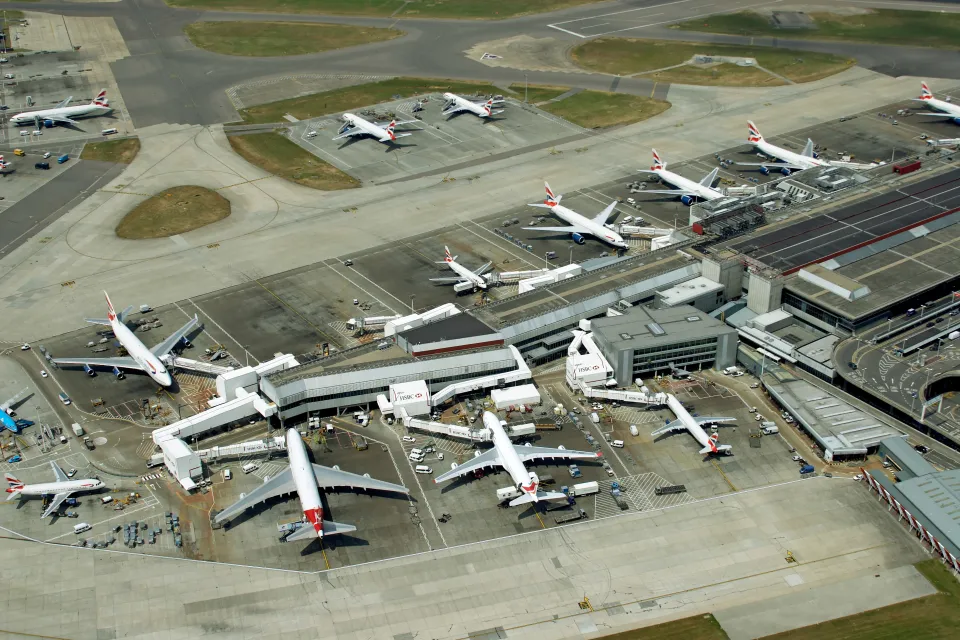
chaos

Say goodbye to Spring Break? Government shutdown sparks concern of travel chaos over busy period

SPRING Break travelers are set to be hit by disruption amid the partial government shutdown.

Major airlines and travel groups have urged Congress to sort out funding for thousands of Transportation and Security Administration workers.

Millions of high school and college students are preparing to travel nationwide for Spring breakCredit: Getty
50,000 TSA workers will be hit by the partial government shutdownCredit: Reuters

It comes as millions of high school and college students are preparing to travel nationwide for Spring break.

The annual one-to-two-week academic vacation period is kicking off soon.

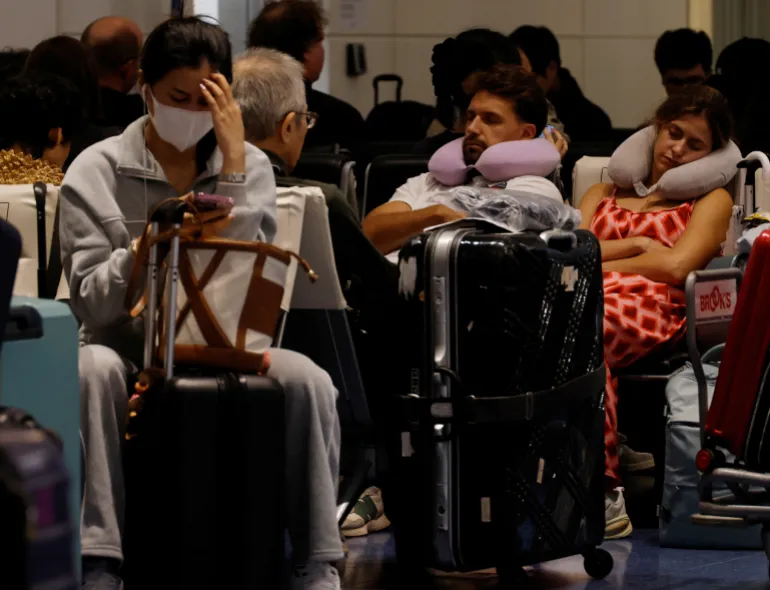
But, holidaymakers and flyers will be hit by annoying flight delays and longer wait times at security due to the partial US homeland security shutdown, according to travel groups and airlines.

And, TSA staff are likely to suffer financially, reported Simple Flying on Saturday.

“Not again: 50,000 TSA officers face unpaid work as shutdown threatens Spring Break travel,” its headline warned.
“As yet another government shutdown looms, so does one of the busiest travel times of the Year — spring break,” said U.S. Travel, Airlines for America, and the American Hotel & Lodging Association in a joint statement last Friday.

“Travelers and the U.S. economy cannot afford to have essential TSA personnel working without pay.”

They warned that the funding delays raise “the risk of unscheduled absences and call outs, and ultimately can lead to higher wait times and missed or delayed flights.”

The annual one-to-two-week academic vacation period is kicking off soonCredit: Getty

The partial government shutdown began on Saturday over money for the Department of Homeland Security.

Congressional Democrats and President Donald Trump’s team failed to reach a deal on legislation to fund the department through September.

And their inability to reach a compromise has sparked huge concern within the travel and hospitality industry – particularly with Spring break looming, plus the FIFA World Cup 2026.

The United States, along with Canada and Mexico, will be hosting the biennial football competition from June 11 through July 20.

Airlines for America also warned that funding uncertainty is “creating lasting damage to the entire travel ecosystem.”

The organization said the damaging interruption would hit “airlines, hotels and thousands of small businesses the travel industry supports.”

Tips on getting through TSA security faster during the 2026 partial shutdown

Funding for the DHS expired at midnight last Friday

The 95% of TSA workers deemed essential personnel will be required to keep working – but without pay.

To minimize delays at the airport:

  • Arrive at the airport with ample time to pass through airport security – about 1–2 hours before your flight
  • Ensuring you are dressed without excess layers or metal devices
  • Slip-on shoes also make the screening at TSA much quicker

Source: Simple Flying

“With America’s 250th anniversary and the 2026 World Cup this summer, the nation should be focused on showcasing the country on the world stage and maximizing the multi-billion-dollar economic opportunity these events bring,” the statement added.

“A lapse in TSA funding will significantly undermine those efforts.

“Last year’s shutdown alone resulted in an economic impact of $6 billion —nearly $140 million per day — and disrupted travel for more than 6 million travelers.”

FATAL SHOOTINGS

It comes days after Delta Air Lines’ boss told international visitors ahead of the World Cup that the U.S. remains a welcoming destination despite the controversial crackdown on immigration.

“Hopefully, the World Cup will bring a lot of Europeans, a lot of international visitors into the US market,” said Ed Bastian last Thursday.

“Yes, the US has a focus on immigration. This is not immigration. This is tourism,” Bastian added.

“And as long as people are coming with the proper credentials, they’re not having any issues.”

Democrats are demanding changes to how immigration operations are conducted after the fatal shootings of U.S. citizens Alex Pretti and Renee Good by federal officers in Minneapolis last month.

Congress is on recess until February 23.

OFF SICK

The longer the shutdown continues, the more likely flyers will be hit with delays as they will have to queue in longer lines at airports if workers call in sick.

Ha Nguyen McNeill, the acting TSA administrator, explained last Wednesday that TSA remained “laser-focused on returning the U.S. back to being the top global travel destination.”

Spring break 2026 – in numbers

  • Spring breakers are primarily high school and college students
  • 2 million college students travel for the holiday nationwide
  • Florida enjoys a $2.7 billion economic windfall from Spring break
  • Cancun’s Spring break tourism brings in $300 million yearly
  • More than 500,000 students flock to South Beach Miami
  • 1.5 million visitors attend Spring break in Panama City Beach
  • Only around 30% of bookings are made within 30 days of travel
  • The most popular domestic beach destinations this year are: Orlando, Fort Lauderdale, Miami, Los Angeles, and San Diego

Sources: Travel Awaits and Gitnux

However, this can’t happen “in a timely manner if Congress does not fund DHS through the end of Fiscal Year 2026.”

“With the United States hosting the 2026 FIFA World Cup in June of this year, TSA does not have the luxury of time to prepare for the influx of passengers and international travelers,” McNeill warned.

“A lack of funding and predictability will pose significant challenges on our ability to deliver transportation security for the American public with the level of excellence we expect, and the American taxpayer deserves.”

It follows a record 43-day shutdown last fall.

TSA agents fall under the DHS.

Source link

Four-hour airport queues set to cause chaos for Brits this summer

HEADING to the airport this summer? Getting through border control could take hours longer than usual.

Airlines have warned that holidaymakers could face delays of up to four hours at European airports during peak months due to EES registration.

EES rules for Brits is predicted to result in four hour delays during peak summerCredit: Reuters
The biometric Entry and Exit is set to be fully rolled out by April 2026

The Entry/Exit system for Brits heading abroad was first introduced in October 2025.

Non-EU travellers must use the new machines which record biometric data like fingerprints and photographs to track entries, exits in the Schengen area.

But these new rules have already caused delays for Brits and officials have warned there will be more to come.

Late last year, disgruntled Brits heading on holiday reported two hour delays at arrivals in Lanzarote.

DREAMY DEALS

Our pick of the best long haul holidays for short haul prices


SUNNY STEALS

Winter sun holidays that cost less than your monthly energy bill – from £75pp

There were also three hour queues in Lisbon and even longer in Prague back in December.

Airports Council International, Airlines for Europe and Iata, the airline trade body, have warned about further delays during the summer.

They said there are already “persistent excessive waiting times of up to two hours at airport border control.”

They added: “Failing immediate action to provide sufficient flexibility, severe disruptions over the peak summer months are a real prospect, with queues potentially reaching four hours or more.”

Olivier Jankovec, the director general of ACI, added that “non-EU travellers are experiencing massive delays and inconvenience. This must come to an end immediately.”

At the moment, there are no plans to delay the EES rollout, as it’s set to complete in April 2026.

With the number of travellers likely to increase over the summer period – delays are also predicted to increase.

ACI has said that the capturing of biometric data entering the Schengen area has resulted in border control processing times at airports increasing by up to 70 per cent.

Factors in the delays include the unavailability of self-service kiosks.

As well as the unavailability of Automated Border Control (ABC) gates for EES processing, and the unavailability of an effective pre-registration app.

At the moment, 35 per cent of arrivals are required to go through digital registration.

For more on EES checks, here’s everything you need to know about them from a travel expert.

And one major airline introduces strict new luggage rules with £125 fines for rulebreakers.

Delays are likely to increase during summer thanks to EES registrationCredit: Getty

Source link

Major European airport SHUTS with all flights grounded as snow, freezing rain and black ice sparks chaos

TRAVELLERS are facing major disruption as one of Europe’s busiest airports was forced to shut today due to freezing rain and black ice.

The shutdown has left passengers stranded and flights grounded as crews battle to make runways safe amid worsening winter conditions.

Passengers in front of check-in counters at Berlin Brandenburg Airport.
Berlin Brandenburg Airport was forced to close due to adverse weather conditionsCredit: AP

According to FlightAware, around 170 flights at Berlin Brandenburg Airport have been cancelled in the last 24 hours.

Operations came to a sudden standstill on Thursday at 6pm CET, with the airport saying on its website: “Due to weather conditions, no take-offs or landings are currently possible.”

The airport remains closed today as adverse weather conditions continue to disrupt transport across north Germany.

Berlin Brandenburg Airport said in a statement: “We currently have freezing rain and black ice and cannot yet predict when takeoffs and landings will be possible.

SUPER SAVER

See Super Bowl 2027 in Los Angeles with this once-in-a-lifetime travel deal


LEAGUE OF THEIR OWN

Premier League Darts is almost sold out with ticket packages from £125

“Passengers need to be patient and expect significant delays and cancellations.”

British Airways and EasyJet cancelled some of their morning services from London airports to Berlin.

Lufthansa also scrapped a number of flights in and out of the city.

German weather service DWD warned of “significant slipperiness” caused by icy conditions spanning Berlin to the Baltic Coast and Polish border.

Forecasters were uncertain about when travel disruptions might ease, with the cold snap anticipated to continue across northwest Europe into next week.

Germany’s national railway operator Deutsche Bahn said train service between Berlin and Hanover have also been affected by the icy weather.

Source link

Brits warned of holiday chaos as flights are ‘full’ with little wiggle room

Flights are fuller than ever with UK load factors reaching 85-90%, increasing the risk of passengers being ‘bumped’ from overbooked planes during the busy February half-term break

Within just a few weeks, thousands of British families will be jetting off during the February half-term break, with airports bracing themselves for exceptionally high passenger volumes. However, holidaymakers have been cautioned about possible travel chaos during this period, as flights are operating at peak capacity.

The aviation sector is experiencing unprecedented growth, with more aircraft taking off each year to whisk passengers away to sought-after destinations. The industry has witnessed remarkable expansion in its scale, capabilities, and global connectivity, showing no indication of easing off.

Last summer proved particularly remarkable, with over 90 million travellers passing through UK airports between July and September alone – the busiest three-month stretch ever recorded, according to figures from the UK Civil Aviation Authority. Furthermore, ACC Aviation reports that a staggering 3,593 new flight routes were introduced across various carriers throughout 2024 and 2025 to meet surging passenger demand.

READ MORE: Spain holiday warning for Brits after major clampdown this week

Despite February half-term being a considerably shorter holiday window, flights are still anticipated to be jam-packed as families escape abroad for a winter getaway. Yet lurking behind this travel boom could be an unseen hazard for passengers, as aircraft are being booked out more heavily than at any point previously.

Figures from the International Air Transport Association (IATA) published last week showed that the global passenger load factor – the proportion of available seats occupied by travellers – hit an all-time high of 83.6 per cent in 2025, marking a 5.3 per cent increase. Breaking down the statistics, European carriers recorded a load factor of 84.1 per cent, whilst UK airlines routinely surpassed 85-90 per cent, according to Air Advisor, reports the Express.

READ MORE: Cheapest dates to travel during the 6-week summer holidays – including ‘golden’ week

Looking ahead, travel demand in 2026 is projected to climb further, meaning more than 83 out of every 100 seats could be taken, leaving minimal spare capacity. This not only complicates rebooking cancelled flights but may also see passengers denied boarding at airports altogether.

Carriers routinely overbook flights to offset no-shows, however when capacity runs high, this practice can trigger significant issues. Air Advisor highlighted that if a carrier anticipates 10 per cent of passengers won’t turn up and overbooks accordingly, but only 5 per cent actually miss their flight, it could end up with more passengers than available seats.

Furthermore, airlines may struggle to accommodate all confirmed passengers if they deploy a smaller aircraft than originally scheduled. With aircraft fuller than ever before, the likelihood of overbooking incidents has substantially increased.

This means certain passengers could find themselves being asked – or even compelled – to surrender their seat on the aircraft. According to the Civil Aviation Authority (CAA) website: “If this happens to you, it means you have been ‘bumped’ from your flight. It is also called ‘denied boarding’. Often, you can volunteer to be bumped, but sometimes airlines will bump you without your agreement.”

However, passengers who voluntarily agree to be ‘bumped’ will receive compensation from the airline, ranging anywhere from £110 to £520. Furthermore, travellers – whether they volunteered or were involuntarily ‘bumped’ – will be provided with either a refund or an alternative flight, though the wait time for the next available departure can differ based on flight availability.

The increased appetite for travel, resulting in fuller planes, also creates additional challenges. It becomes significantly more difficult to secure an upgrade, reduces the number of available empty seats, and can occasionally affect last-minute bargains.

To minimise the risk of being ‘bumped’, holidaymakers are encouraged to check in online as soon as it opens, choose their seat in advance and turn up at the boarding gate with time to spare.

Do you have a travel story to share? Email webtravel@reachplc.com

Source link

Britain’s busiest station hit by string of closures for entire MONTH sparking chaos for millions

BRITAIN’S busiest station will be hit by a string of closures which will impact millions of passengers for the whole of next month.

Network Rail explained the closures will enable vital maintenance, renewals and repairs to be undertaken.

The concourse of Liverpool Street Station with many blurred people walking by and a large departure board overhead.
Liverpool Street station in London is to be hit by a string of closures for the entire month of MarchCredit: Alamy

Rail bosses have revealed plans for an entire month’s worth of major disruption at Liverpool Street Station.

All routes and services to and from the station will be impacted by works throughout the month of March.

Liverpool Street’s mainline station along with its concourse will close for a total of five days but these will be spaced out throughout the month.

The closures will impact Elizabeth line, London Overground and National Rail services, including Greater Anglia and c2c.

DRINK IT IN

The beautiful village pub you can spend the night in with hearty Yorkshire food


PARK UP

Travel expert reveals best UK holiday parks from £13 a night… & Center Parcs dupe

However, the closures are planned for the weekends only and should not affect week day journeys.

On March 15th the whole station will be closed and London overground services will run from London Fields.

There will therefore be no access to the main concourse. but the Elizabeth line services will be running.

On March 21-22, the Elizabeth line services will again be running, but again there will be no access to the main concourse as the station will be closed.

There will be no Overground Weaver line trains on both of these days and on March 22 there will be no Elizabeth line trains.

The whole station including the concourse will be closed once more during March 28-29 and there will be no Overground Weaver line trains on both days.

Although the Elizabeth line trains will continue to run – there will be no access to the station on those dates.

Last year it was confirmed that Liverpool Street is the busiest train station in the UK.

The weekend closures at Liverpool Street Station

March 15: whole station closure
* London Overground services will instead run from London Fields
* Elizabeth line services will be running, though no access to the main concourse
March 21-22: whole station closure
* On March 21 Elizabeth line services will be running, no access to the main concourse
* On March 22 no Elizabeth line trains
* No Overground Weaver line trains on both days
March 28-29: whole station closure
* Elizabeth line services will be running, no access to the main concourse
* No Overground Weaver line trains on both days

An image collage containing 1 images, Image 1 shows Tourist in Liverpool Street Station checking the departure timetable
The closures are planned for the weekends only and should not affect week day journeys

Source link

Lando Norris expects ‘more chaos in races’ from F1 rule changes

The engines are still 1.6-litre V6 turbo hybrids, as they have been since 2014, but one of the two electrical motors that recovered energy has been removed.

The total amount of electrical energy has been increased by a factor of three, but the battery is more or less the same size. If the battery is fully depleted, the engine loses 350kw (470bhp), leading to potentially dramatic speed differentials.

Drivers will be backing off towards the end of straights – and being careful about when they apply the throttle – to ensure the most efficient energy usage, even on a qualifying lap.

The cars are also smaller and lighter, have less downforce and have ‘active aerodynamics’ – where both front and rear wings open on the straights to increase speed and the possibility for energy recovery.

Norris said the new car “certainly feels more powerful and quicker” on the straight.

“The biggest challenge at the minute is battery management and knowing how to utilise that in the best way,” he said.

“It’s not simple. You can explain it in quite simple terms. It’s just you have a very powerful battery that doesn’t last very long, so knowing how to use it in the right times, how much energy, how much of that power you use, how you split it up around the lap…

“The biggest challenge is how you can recover the batteries as well as possible, and that’s when it comes down to using the gears, hitting the right revs.

“Obviously, you’ve got some turbo lag now, which we’ve never really had before. All of these little things have crept back in, but I don’t think that changes too much.

“In a perfect world, I probably wouldn’t have [all] that in a race car, but it’s just F1. Sometimes you have these different challenges.”

His team-mate Oscar Piastri said the cars were “not as alien as I think we might have feared” and insisted he “didn’t think F1 had lost its identity at all”.

The Australian added: “There’s going to be some things to get used to but in terms of some of the fears that maybe we had before we got on track, a significant majority of those have been alleviated now.

“There’ll be some differences, but I think fundamentally they’re still the fastest cars in the world.”

Source link

UK’s busiest train station faces ‘decade of chaos’ ahead of multi-million pound upgrades

LONDON Liverpool Street station is set to undergo a huge transformation – but it will result in years of ‘chaos’ for commuters.

The proposed plans are set to redevelop the busiest train station in the UK and could cost as much as £1.2billion.

Liverpool Street station in London is set to undergo a huge transformationCredit: Network Rail Property and ACME
But the upgrades could see up to 10 years of disruption for travellersCredit: Unknown

Network Rail has proposed a project to expand the country’s busiest train station that will completely change it and the surrounding area.

The proposals include improved accessibility and the building of a 19-storey office block over the station concourse.

According to The Standard, these plans have had around 2,500 objections but more than 1,100 supporting comments.

Campaigners believe that the works will result in almost a decade of chaos for commuters and tourists alike.

Read More on UK Staycations

COAST IT

Fascinating UK holiday spot with 2 coasts, secret seaside pools & hidden beaches


COAST IT

White sand beaches, pirate pubs & Gibraltar Point – Sun readers Lincolnshire faves

One architect who has opposed the plans said during a recent campaign meeting that the disruption could last for 10 years.

As part of the planning process, Network Rail has revealed the extent of disruption that commuters would face despite the station remaining open during the works.

There would be an impact on some London Overground routes on Greater Anglia services including those from Chingford, Cheshunt and Enfield Town.

Documents reveal that platforms 1 and 2 which are used by London Overground trains would be closed for up to two years.

Proposals also suggest that later on, the area between platforms 9 and 10 would be needed for the building of a new upper concourse.

But Network Rail says these platforms as well as platforms 16 and 17 would remain open throughout the work.

Services could possibly face ‘thinning’ which is likely to result in overcrowding – particularly at rush hour.

The Stansted Express could possibly face disruption too.

Part of why Liverpool Street is so busy is due to the addition of the Elizabeth Line which was added in 2022.

However this would be unaffected by the construction to the main station.

Plans reveal a new office building above the main concourseCredit: Network Rail Property and ACME
On top of the new building will be rooftop gardens

If the proposals go ahead, work would start at the beginning of 2029 and last seven years, with the new station completed by mid-2036.

Network Rail’s scheme is set to be considered by the City of London Corporation’s planning committee on February 10, 2026.

Network Rail recently revealed a new fly-over video to show their proposed plans which has a large concourse area set to ease congestion during busy times.

It includes increased step-free access across rail and underground platforms, eight new lifts and more escalators which will increase from four to ten.

To reduce queues, additional ticket barriers would be added along with more toilet and family facilities on all levels.

On the upper concourse will be more cafes and food outlets and outside will be more green spaces.

Renders also show what the new office building that’s set to be built above the station concourse near the Grade II* listed Andaz Hotel will look like – with rooftop gardens.

Talking about the potential disruption, a spokesperson for Network Rail said to The Standard: “The scheme has been carefully designed and phased to ensure that the station remains open and operational during the works.

“There will be changes to entrances and routes and the only platform closure can be accommodated across the remaining platforms for that short period.

“We are engaging with our transport partners and ensuring customers can continue to use Liverpool Street with as little disruption as possible during the works is as important as the transformation for the future.”

Plus, this UK seaside town has revealed a new £14million transformation of historic train station.

And this small English town’s huge £12million railway upgrade could soon be scrapped.

Renovations at London Liverpool Street could result in a decade of disruptionCredit: Alamy

Source link