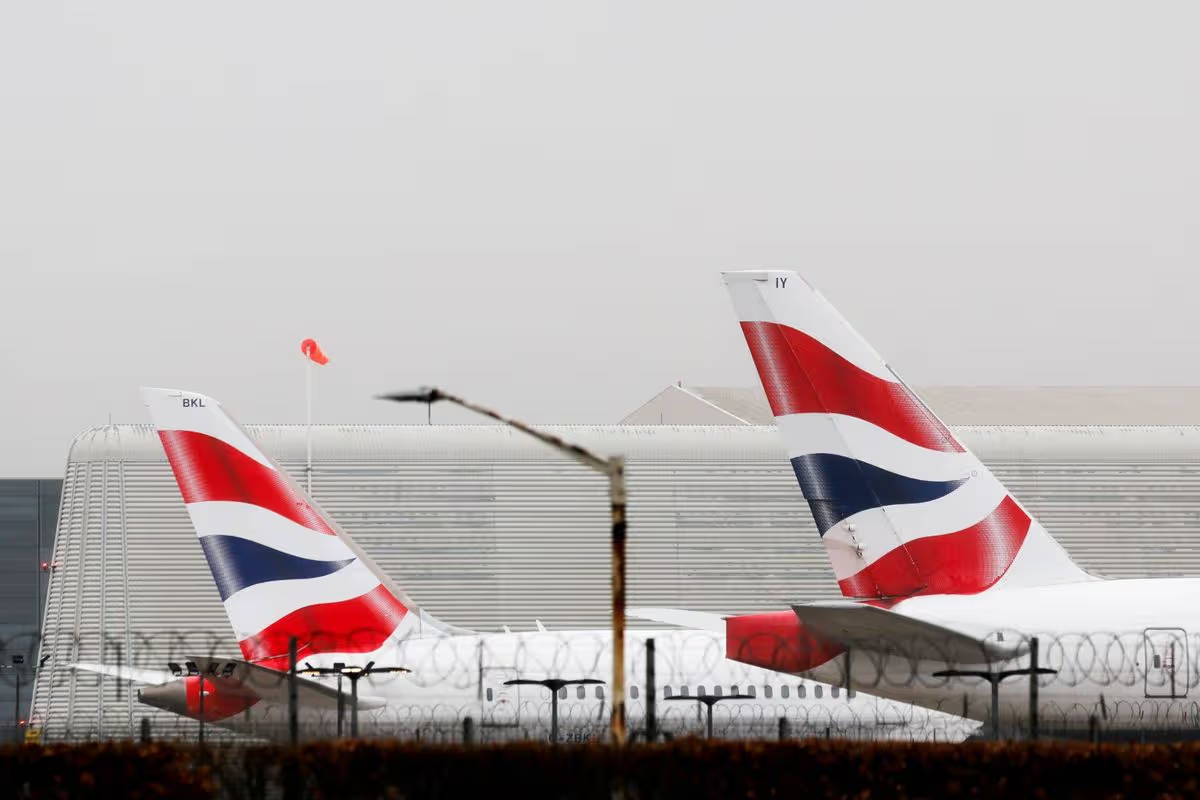
chaos

Six-day Easter shutdown on UK’s busiest railway to throw thousands of journeys into chaos next month

RAIL passengers commuting over the Easter period can expect major disruptions to services.

The UK’s biggest intercity line will be closed for six consecutive days early next month.

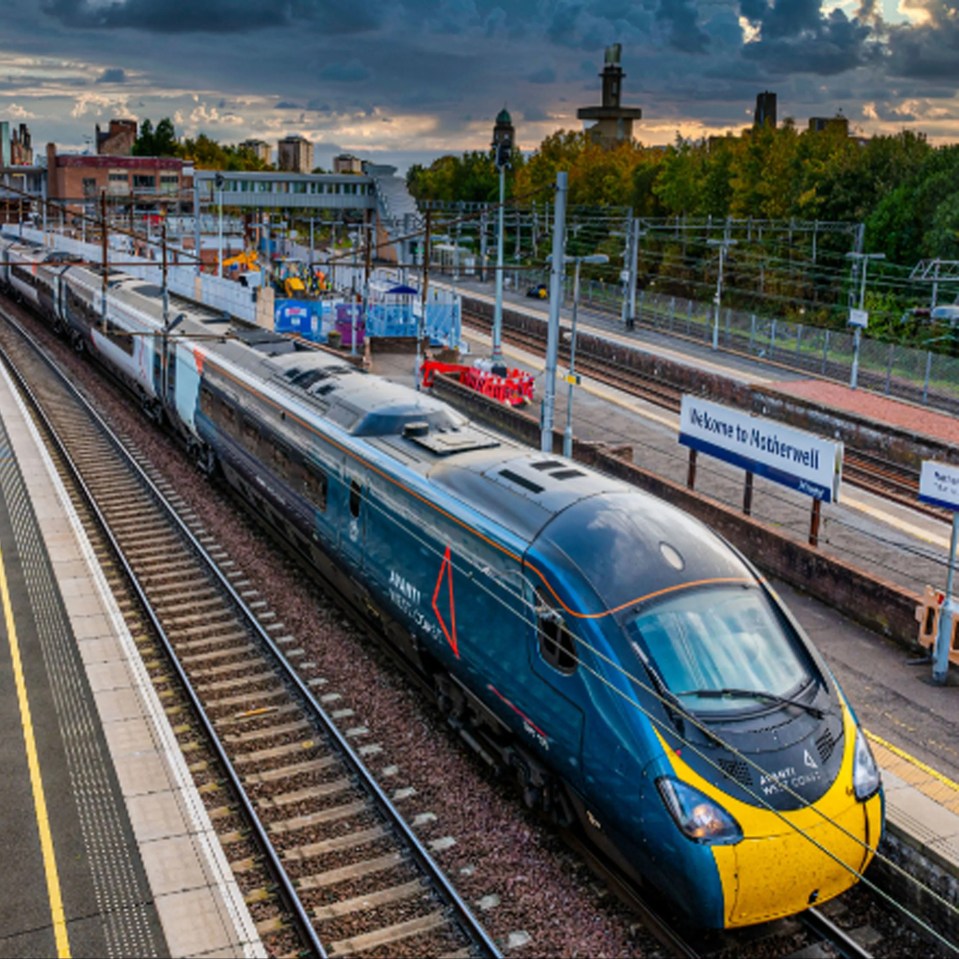
Motherwell train station with an Avanti West Coast train on the tracks.
Rail passengers planning to travel on Britain’s busiest intercity line can expect disruptions to services this Easter (stock image)Credit: PA

Engineering work has been planned for the busy route, which carries over 75 million passengers a year, from Good Friday (April 3) to Wednesday, April 8.

There will be no west coast mainline services between London Euston and Milton Keynes on these dates, with services between Preston and Lancaster halted on Easter weekend (Saturday, April 4 and Sunday, April 5).

The upgrade works are part of a wider £400 million project, which will see improvements to the line’s reliability as well as repairs to tracks.

Jake Kelly, Network Rail’s regional director for the north-west and central region spoke to the Guardian about the latest upgrade.

TRACKING CHANGE

Images of ‘bullet train’ cutting LA to San Francisco trip in half revealed


TO YOUR BENEFIT

Full list of 14 conditions & benefits eligible for £126 rail discount

“The four-day period at Easter gives us a valuable opportunity to complete projects that simply can’t be delivered during a normal weekend,” he said.

“This ensures we maximise the time our teams are out working on the tracks.”

While the north London neighbourhood of Willesden, north London will see new tracks laid, there will also be repairs and upgrades at Harrow and Wealdstone station.

And a historic bridge in Ledburn, Buckinghamshire, which gained international notriety in the Great Train Robbery, is also scheduled for upgrades over Easter.

Kelly added that Network Rail is working hard “to keep as much of the network open as possible while carrying out these vital upgrades”.

Avanti West Coast will run services between Preston and Carlisle via the Settle-Carlisle line over the Easter period, while Anglo-Scottish services will be diverted via Dumfries and Kilmarnock between Good Friday and Easter Monday.

Network Rail has advised passengers to check before they travel on these dates.

Over 270 other upgrade projects are planned for various rail routes over the Easter period this year.

Source link

No service on ENTIRE tube line all weekend sparking travel chaos for hundreds of thousands of Brits

HUNDREDS of thousands of commuters are bracing for travel chaos this weekend.

An entire tube line will be brought to a halt due to track work.

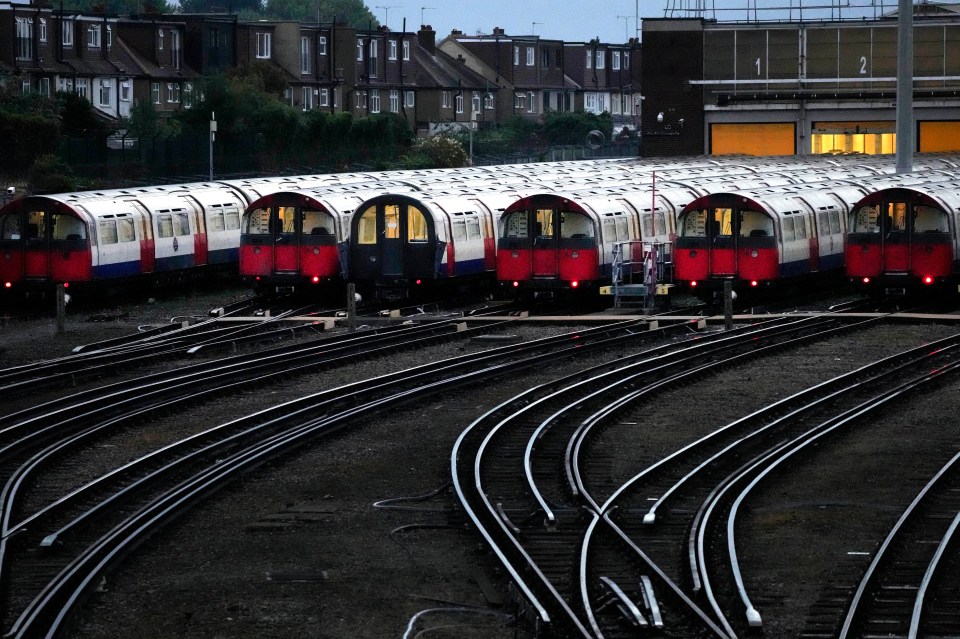
Piccadilly line trains in a depot during a strike.
An entire tube line will be shut down this weekendCredit: AP

Transport for London has warned that the Hammersmith&City line will be shut across Saturday, March 7 and Sunday, March 8.

This is reportedly due to track work being carried out along the line.

Sections of the Circle, District and Metropolitan lines will also be affected by the shutdown.

Passengers traveling between Hammersmith and Tower hill, and between Edgware Road and High Street Kensington on Circle and District lines will need to find a different route.

ON THE UP

Europe’s top 100 cities in 2026 named with 17 UK spots… including Coventry


HAVE A BALL

Budget airline to launch its first-ever flights from the UK to US for World Cup

Those who commute between Baker Street and Aldgate on Metropolitan line will also have to pick an alternative journey.

A huge chunk of Piccadilly line will also be closed over the weekend with no service between Cockfosters and Uxbridge, even on Friday and Saturday Night Tube.

The disruption comes as part of a major upgrade plans on the line, which will see new trains introduced, tracks improved and better CCTV installed on platforms.

Acton Town and Heathrow will continue to provide services.

The closure means commuters will have to seek alternative routes or replacement transport, with other Tube and rail services expected to be busier than usual.

Meanwhile, parts of the DLR will be closed to test out a batch of upgraded trains.

Source link

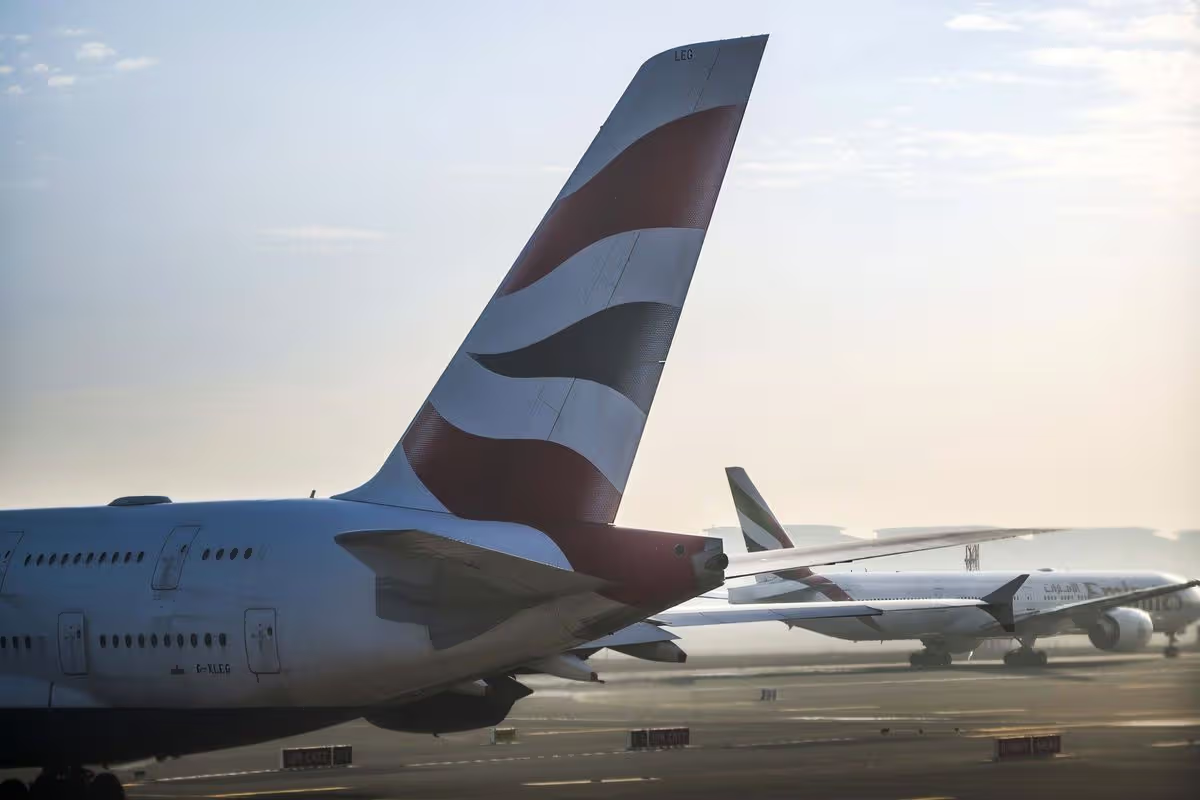
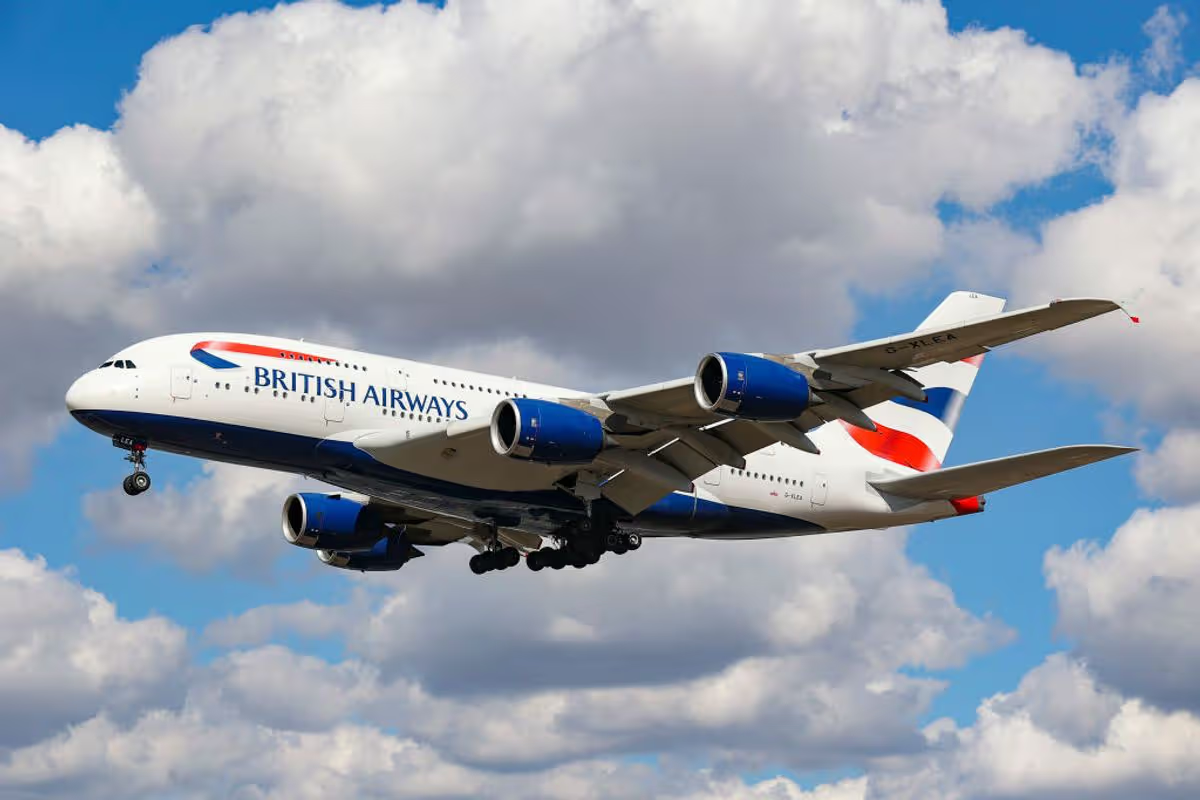
British Airways’ ‘fully booked’ update as Middle East travel chaos continues

British Airways has warned all services from Oman up until March 7 are now fully booked as the scramble to return from the Middle East continues amid regional tensions

British Airways has issued a warning that flights returning to the UK are ‘fully booked’ as the rush to get back from the Middle East intensifies.

In its most recent public statement, the UK’s flag carrier cautioned that all services departing from Oman through to 7 March are now completely full.

“Flights from Muscat on 5, 6 and 7 March are now fully booked. We will continue to review the situation and, if we are able to, we will add additional services,” a BA spokesperson stated at 2.14pm on Wednesday.

Oman is the nearest nation to major hubs, including Dubai and Abu Dhabi, with accessible airspace. Out of the 136 flights scheduled to depart from Oman today, just 14 have been axed so far. This stands in stark contrast to the UAE, Bahrain, Kuwait, Iraq and Lebanon, where most flights remain grounded.

READ MORE: Majorca set to introduce new cap on tourist numbers over summer monthsREAD MORE: FCDO travel advice updated for Thailand, Dubai and 8 other countries amid Iran tensions

The latest guidance from BA reads: “We remain unable to operate flights from Abu Dhabi, Amman, Bahrain, Doha, Dubai and Tel Aviv. We have scheduled further flights from Oman (Muscat) to London Heathrow departing on 6 and 7 March.

“Flights are for our customers with an existing booking who are in Oman or the UAE. If you wish to travel on one of these flights, please contact us via our dedicated phone line on +44 203 467 3854. Our teams will also be getting in touch with our customers.”

One BA flight bound for London Heathrow left Muscat after just a short delay this morning. Another is scheduled to leave at 2.30am local time tomorrow, and a third at the same time on Saturday.

Home Office minister Alex Norris has announced that a Government-chartered plane, which failed to depart from Muscat, is now scheduled to leave for the UK on Thursday.

However, he was unable to provide an exact departure time.

Mr Norris expressed confidence that the first Government rescue flight departing Oman amidst the escalating conflict in the Middle East would take off on Thursday, following an overnight delay. When questioned by LBC about the reason for the delay, he explained: “It didn’t take off because there are operational reasons… about getting passengers on board, and it wasn’t able to happen in the time that it had to happen. So that’s now going to go today instead.”

Earlier on BBC Breakfast, Mr Norris said: “We made sure we got them (the passengers) hotel rooms for the night as well, and we are facilitating and rebooking today’s flight. We hope that they do, and there’s multiple flights after it as well.”

In other news, Defence Secretary John Healey is en route to Cyprus in an attempt to defuse tensions with the island’s government following a drone strike on the British base RAF Akrotiri.

Mr Healey is expected to land in Cyprus later on Thursday. His visit follows the Cypriot high commissioner to Britain expressing his disappointment at the UK Government’s response to defending the island.

On Monday night, a hangar at RAF Akrotiri was struck by an Iranian-made Shahed drone, launched from Beirut in Lebanon, according to Cypriot officials. Two further drones detected on Monday were sh.

Shot down by British warplanes that took off from Akrotiri.

The UK has deployed air defence destroyer HMS Dragon to aid in the protection of Cyprus, although the Type 45 warship isn’t expected to set sail until next week.

Wildcat helicopters equipped with anti-drone capabilities have also been sent to the island and are anticipated to arrive this week.

In other developments in the conflict:

– Iran’s ambassador Seyed Ali Mousavi was summoned by the UK Government on Wednesday.

– A US submarine sank an Iranian warship in the Indian Ocean.

– Iran persisted in launching attacks at countries across the region, with Saudi Arabia and Kuwait targeted with missiles and drones.

– Western officials reported that the rate of Iranian missile strikes had declined, estimating that Tehran had several more days of capability to continue based on the current firing rate – although they warned that the decrease could also be a result of Iran trying to conserve its stockpiles.

– Turkey reported that a “ballistic munition” launched towards it from Iran was intercepted by Nato air defences.

– Economic uncertainty continued over the conflict in a region that plays a crucial role in international oil and gas supplies.
Source link

Airlines FINALLY restart limited flights from the Middle East after five days of chaos

A NUMBER of airlines are starting to relaunch limited flights back to the UK from the Middle East.

Thousands of flights have been cancelled in recent days following the US-Iran conflict, which affected destinations such as Dubai and Doha.

Flights remain cancelled although airlines are starting limited repatriation routesCredit: Shutterstock Editorial
Some passengers have returned to the UK from Abu DhabiCredit: PA

This lead to the closure of both major airports and, being major flight hubs, resulted in hundreds of thousands of passengers stranded abroad.

While some parts of the airspace are still closed, some airlines have confirmed a few flights will start taking off.

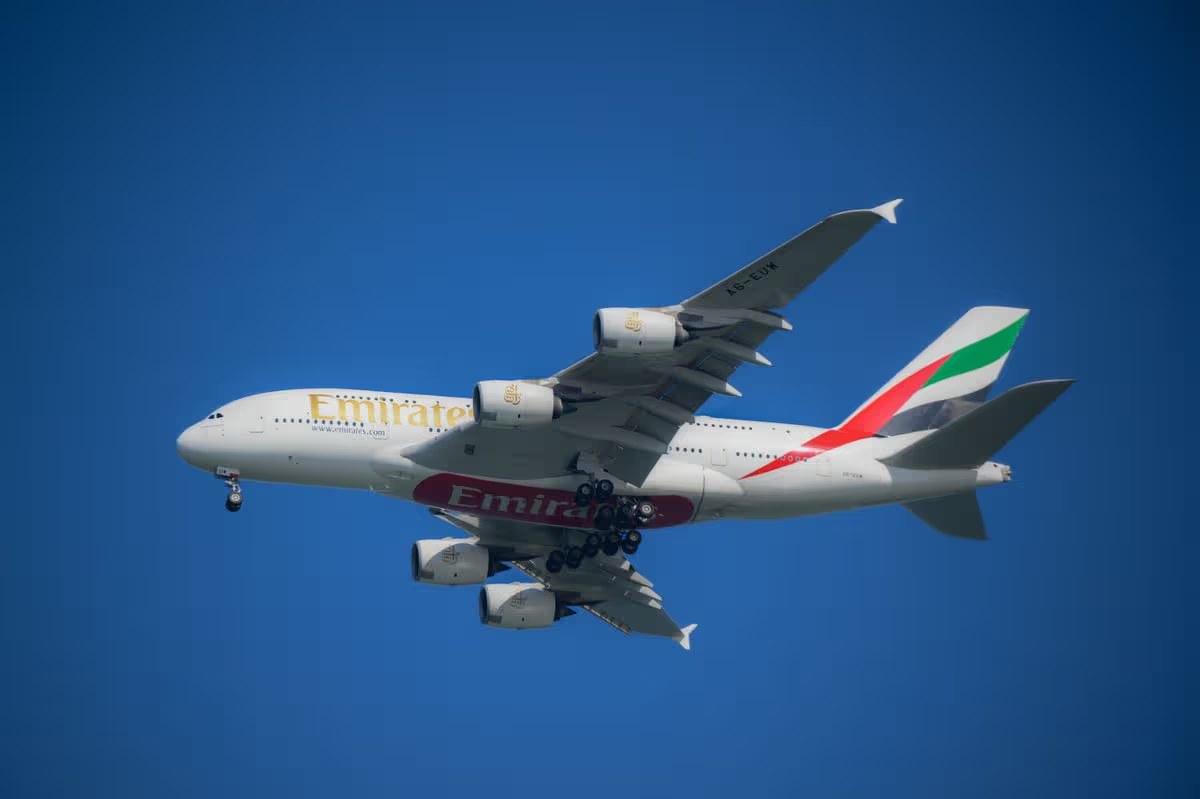
Emirates, one of the worst affected airlines being based in Dubai, confirmed a “limited number of passenger repatriation and freighter flights” will take off today.

This includes seven flights to the UK, to London Heathrow, London Gatwick, Manchester and Edinburgh.

ASK US

Our Travel Expert answers YOUR questions on flights and holidays amid Iran crisis


GROUNDED

Thousands more flights and holidays cancelled as all travel to UAE banned

However, they warned that this was for passengers with earlier bookings.

Otherwise the airline warned: “All scheduled Emirates flights to and from Dubai remain suspended until 12pm UAE time on March 4, due to airspace closures across the region. 

“Please do not go to the airport unless you have been notified directly by Emirates, or hold a confirmed booking for these flights.”

Virgin Atlantic has also launched relaunched flight from Dubai and Riyadh back to the UK.

They said: “Following our latest assessments and in line with guidance from international aviation authorities, some of our flights are now operating in the region.”

And Etihad confirmed that some repositioning and repatriation flights had taken.

But they also warned that flights were suspended until at least 2pm on March 5.

British Airways is yet to restart flights from the Middle East.

Qatar Airways confirmed flights from Doha are yet to relaunch, with another update to take place on Friday.

They confirmed: “Qatar Airways flight operations remain temporarily suspended due to the closure of Qatari airspace.

“Qatar Airways will resume operations once the Qatar Civil Aviation Authority announces the safe reopening of Qatari airspace.

“A further update will be provided on March 6 by 9am Doha time (6am UTC).”

Despite this, hundreds of thousands of people are still stranded abroad.

Tourists in destinations such as Thailand, Sri Lanka, Maldives and Bali are being forced to look at alternative routes home due to the ongoing Dubai and Doha closures.

The Sun’s Head of Travel explains your rights if affected by the cancellations

Lisa Minot, Head of Travel, said:

For passengers meant to be flying in or out of the region, your rights depend on whether you were flying directly in or out of the UK or EU or if you are flying with an UK or EU airline.

Those who are will not get compensation as it is not the fault of the airline but they do have a duty of care to look after impacted passengers – depending on the length of the delay that could include food and drink, a means of communicating and if necessary, overnight accommodation.

Those flying on non-UK or EU carriers may find their rights are slightly different if they are not on a direct flight to the UK as different rules apply and you may not be provided with the same assistance.

They are, however, expected to offer you the right to a refund or another flight in the case of cancellations.

As well as those directly impacted by cancelled flights, the closure of so much of the Middle Eastern airspace will mean even more congestion on alternative routes that could impact flights across the globe.

For those due to travel in the coming days, staying in contact with your airline and checking before travelling to the airport is essential as schedules may change at short notice.

The Sun’s Head of Travel answered all of your questions about any holidays you have planned.

We’ve also explained if you are covered by travel insurance if caught up in the chaos.

Most flights are cancelled until at least tomorrowCredit: AP:Associated Press

Source link

News Analysis: Toppling Iraq’s Hussein unleashed chaos. Why Iran war poses similar risks

A shock-and-awe campaign laying down a tsunami of bombs. An enemy succumbing rapidly under overwhelming firepower. And a triumphant U.S. president trumpeting a quick and easy campaign.

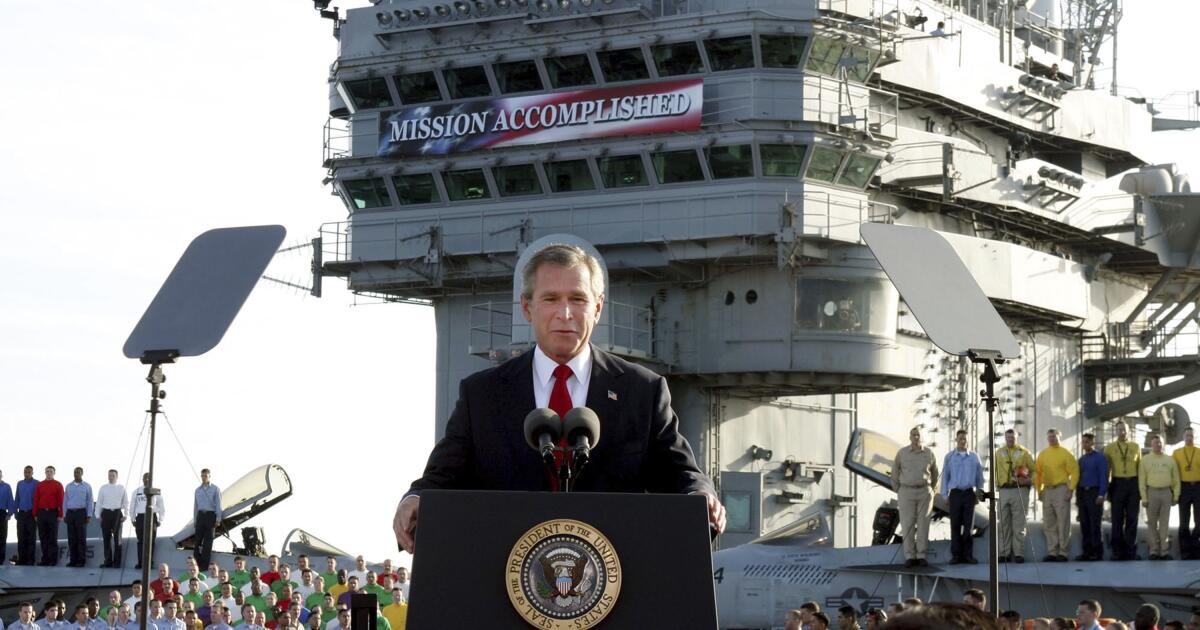
In 2003, President George W. Bush strode confidently on the deck of an aircraft carrier less than five weeks after he ordered the invasion of Iraq and declared the “end of major combat operations” under a banner proclaiming “Mission Accomplished.”

It proved anything but.

The invasion became a meat grinder, leaving thousands of Americans and possibly more than a million Iraqis dead. It unleashed forces whose effects are felt in the region and beyond to this day.

More than two decades later, another U.S. president attacked another Persian Gulf nation, promising rapid success in yet another Middle East adventure that he says will remake the region.

President Trump and his staff have vehemently rejected any comparison between “Operation Epic Fury,” launched Saturday, and “Operation Iraqi Freedom.” On Monday, Defense Secretary Pete Hegseth gave a pugnacious news conference, insisting, “This is not Iraq. This is not endless.”

Yet the assault on Iran — almost four times larger than Iraq with more than double its population — presents no lack of challenges, ones that could spread chaos far beyond Iran’s borders and become a defining feature of Trump’s presidency.

In many ways, analysts say, toppling Iran’s leadership represents a much more complex task than Iraq ever did. Iraq was a state with deep sectarian divisions that was largely dominated by a single dictator: Saddam Hussein.

The Iran that emerged after the 1978-79 Islamic Revolution had a supreme leader, but Iran also developed an elaborate system of governance. That includes a president, a parliament and varying governmental, military and religious hierarchies, noted Paul Salem, senior fellow at the Middle East Institute.

“Unlike Saddam’s Iraq, the Iranian state is multi-institutional and hence much more resilient — and, yes, not as vulnerable,” Salem said. “And hostility to the United States and Israel is at the heart of the Islamic Revolution — baked into the state.”

Here are some of the ways the Iran attacks could develop into the very scenarios Trump once derided in his days as the antiwar candidate:

Boots on the ground

For now, the U.S. and Israel have wielded air power to pound Tehran into submission. In the first minutes of the joint operation, a 200-plane fleet — Israel’s largest — struck more than 500 targets in Iran, according to the Israeli military. One such strike killed Supreme Leader Ayatollah Ali Khamenei.

Iran is still fighting back, lobbing missiles at Israel, Persian Gulf nations, Jordan and other areas with U.S. bases in the region. The U.S. has the qualitative and quantitative edge of materiel to eventually prevail, but Iran’s capabilities will not make it easy, as the losses in service members and planes have demonstrated in the last two days.

And wars have never been won with air power alone. Rather than relying on boots on the ground, Trump expects ordinary Iranians to finish the job for him.

“When we are finished, take over your government. It will be yours to take,” he said in a video address on the first day of the campaign.

During the Arab Spring of 2011, protesters throughout the Middle East took to the streets to demand change. But those efforts mostly did not lead to significant reforms and, in some countries, prompted further repression.

In Iran, it’s true many people would welcome the Islamic Republic’s demise — as many Iraqis rejoiced at Hussein’s fall. But it’s unlikely that mostly unarmed protesters will triumph in a confrontation against enforcers from the Islamic Revolutionary Guard Corps or its volunteer wing, the Basij.

It’s also difficult to gauge how many of Iran’s 93 million people despise the government enough to rise up against it.

Meanwhile, Trump has left the door open for dispatching U.S. troops, but the math of such a deployment raises doubts.

According to the U.S. Army, counterinsurgency doctrine dictates 20 to 25 troops for every 1,000 inhabitants to achieve stability. In the case of Iran that would entail deploying 1.9 million people — almost all the U.S. military’s active duty, reserve and National Guard personnel.

New leadership unclear

At this point, it’s not clear that decapitation of much of Iran’s leadership class will produce any real change in government, much less a successor inclined to bend to U.S. wishes. The top echelons of the Islamic Republic boast a deep bench of mostly hard-liners — not surprising, perhaps, for a nation that has braced for attack for years, if not decades.

Whatever new leadership that does emerge could rally around the “martyrdom” of Khamenei. Not especially popular in life, he appears to have become, in death, a rallying cry for defiance. And martyrs are exalted in Shiite Islam, Iran’s prevalent faith.

“He was the religious leader of the Shiites, so it’s sort of like killing the pope,” Salem said. “And he’s more popular dying as a martyr, than, say, of a heart attack. … He went out in style, no doubt about it.”

When the U.S. occupied Iraq, the expectation was that whatever came next would be a fervent U.S. ally, an idea perhaps best captured in the notion in Washington that a grateful Iraqi populace would shower U.S. troops with flowers. That didn’t happen. And in the Darwin-esque culling of leaders that followed, the ones that emerged victorious had little love for the U.S.

One of them was Nouri Al-Maliki, a Shiite supremacist whose policies were blamed for fueling years of sectarian bloodletting, and whose loyalties often seemed more aligned with Tehran than Washington.

Meanwhile, Tehran, playing on its proximity and deep ties to the new Iraqi ruling class, was able to steer Iraq — a majority Shiite country — deeper into its orbit.

After the Iraqi government — with the help of a U. S.-led coalition — pushed Islamic State out of Iraq in 2017, Iran was able to embed allied militias into Iraq’s armed services. That created the paradoxical situation of Tehran-aligned fighters wielding U.S.-supplied materiel.

Iraq has yet to emerge from Iran’s shadow. After Iraq’s most recent elections, Maliki seems poised to become prime minister once more, prompting Trump to write on Truth Social, “Because of his insane policies and ideologies, if elected, the United States of America will no longer help Iraq.”

A fragmented opposition

Iran’s population is diverse; an estimated two-thirds of Iranians are Persian, while minorities include Kurds, Baloch, Arabs and Azeris.

Those minorities have long-standing grievances against the ruling majority. It’s possible that Trump’s campaign and the resulting disorder could fuel separatist tensions.

Just last month, Iranian Kurdish factions joined together in a coalition that they said would seek the overthrow of the Islamic Republic “to achieve the Kurdish people’s right to self-determination, and to establish a national and democratic entity based on the political will of the Kurdish nation in Iranian Kurdistan.”

An experienced insurgency

Over the decades, the Islamic Republic created a network that at its peak stretched from Pakistan to Lebanon.

It was a fearsome constellation of paramilitary factions and amenable governments that became known as the Axis of Resistance. It included Hezbollah in Lebanon, Hamas in Palestinian lands, Yemen’s Houthis, and militias in Iraq, Afghanistan and Pakistan.

After Hamas’ Oct. 7, 2023, attacks, Israel — and, eventually, the United States — launched offensive campaigns to defang the groups.

Although weakened, the factions still survive, and could form a powerful, transnational and motivated insurgency when the time comes to fight whatever emerges if the Islamic Republic falls.

Bulos reported from Khartoum, Sudan, and McDonnell from Mexico City.

Source link

Celeb’s tears, Love Island couple’s ‘screaming match’ & star ‘kicked out of afterparty’… How chaos at the Brits unfolded

SCREAMING matches, tears and table mutiny is what you expect from Christmas Day with your in-laws – not at the Brit Awards.

But this year’s swanky ceremony in Manchester’s Co-op arena was a hotbed of misbehaving drunk stars, disgruntled execs who weren’t dished up their puddings and desperate agents who, on the night, were still begging organisers to get their A-listers into the label after-parties – with one Hollywood actor being repeatedly turned away because “they’re known for being a nightmare”.

The 2026 Brit Awards, hosted by Jack Whitehall, saw tears, tantrums and furious guests complaining about delays and meagre portion sizesCredit: Getty
Maya Jama broke the ‘no vaping’ rule inside the venueCredit: Shutterstock Editorial
The Love Island host was seen holding a pink vape in the arenaCredit: The Sun

On Saturday night, over 1,000 of the biggest names in music and entertainment descended on Manchester’s Co-op Live Arena floor to enjoy a swanky three-course meal before Harry Styles opened the Brits.

The experience, which is usually luxurious to say the least, got off to a shaky start when guests, who’d forked out over £25,000 for a table, were hastily ushered out because Robbie Williams still needed time to rehearse.

The delay in proceedings ended up causing chaos before the show had even begun, and later, angry guests were overheard moaning about the meagre portion sizes and a Manchester tart pudding, which, for hundreds of guests, failed to materialise.

One top celebrity agent moaned to me: “A table costs £25,000, but four bits of celeriac, a tiny bit of venison and no pudding is outrageous.

“Everyone on my table wanted tequila shots, but when we went to order them, the staff said they couldn’t serve them straight.

“Then, because Robbie’s rehearsal messed with timings, there wasn’t time for the puddings to come out before the show started.

“Some tables got their tarts, others got absolutely nothing – and there was no apology. We were all starving.

“The service felt like we were at a badly organised wedding.”

On the floor, music and acting royalty, including Jeff Goldblum and Oasis legend Noel Gallagher, mingled amid discontent – before acts including Harry Styles, Olivia Dean and Mark Ronson put on epic performances.

As the ceremony got started, not everyone was having fun.

Love Islander’s Toni Laites and Cach Mercer had a screaming match mid-way through the show – leaving them on the brink of a split.

Meanwhile, Maya Jama, Olivia Attwood and Lola Young broke the strict “no vaping rule” and irked their nearby table neighbours by puffing out fumes.

One well-respected publicist told me during the night: “It was like sitting next to the Flying Scotsman sitting near Lola Young.

“She was exhaling these huge plumes of vapour. It was ignorant and arrogant.

“And don’t get me started on Bez – he’d had so much to drink he looked like he was struggling to stand.

“He was dressed like a court jester, and he tried to introduce himself to Alex Warren, who looked totally baffled by the entire interaction.

“Alex was totally polite, but he didn’t have a clue who this seemingly mad man was who was trying to shake his hand.

“Eventually, someone he was with got Bez away from him so he could carry on watching the show.”

Guests, who paid £25,000 for a table and a swanky three-course meal, were hastily ushered out because Robbie Williams still needed time to rehearseCredit: Getty
VIPs with tables on the arena floor had to wait longer than expected while Robbie rehearsed his awards speech
A well-respected publicist said being near Lola Young was like ‘sitting next to the Flying Scotsman’ due to her vapingCredit: Getty
Toni Laites and Cach Mercer had a screaming match mid-way through the show – leaving them on the brink of a splitCredit: Getty

Censoring was a big point of contention on the night too, with Jack Whitehall’s funniest quips – including a gag about Peter Mandelson – and Geese drummer Max Bassin’s shout of: “I just want to say: free Palestine and f*** I.C.E,” all edited out by ITV.

“It was bizarre,” another publicist quipped to me the following day.

“Noel Gallagher shouted ‘Up the f***ing blues,’ and rather than just beeping out the swear word, they decided to lose the entire sentence – meaning anyone watching at home just suddenly heard him being booed by Manchester United fans in the arena.

“The BBC totally botched up the Baftas, so maybe ITV were scared of getting it wrong.

“But it meant that some of the editing didn’t make a whole lot of sense.

“Why are you letting one of the night’s biggest stars get loudly booed with zero context?”


It was like sitting next to the Flying Scotsman sitting near Lola Young.

As the clock ticked closer to 11pm, stars keen to get out of the arena and to after parties thrown by major labels including Warner and Sony, found themselves being blocked by security.

“People just wanted out towards the end,” one of the on-site crew explained.

“The floor usually is chaotic towards the end of the ceremony because people are drunk, but you can’t have half the tables suddenly going missing.

“Vernon Kay and Sharon Osbourne managed to evade capture, but security were trying to turn most people back to their tables.”

The rush to the after-parties made sense, given how tight the guest lists were.

Amber Gill was pictured in tears at Warner’s Brit Awards after-partyCredit: The Sun
Noel Gallagher shouted ‘Up the f***ing blues’ but ITV edited it out – so people watching at home only heard him being booed with zero contextCredit: Reuters
‘Furious’ Selling Sunset star Breana Tiesi, pictured right, was left shivering on the pavement outside of Warner Music’s bash after not being allowed back inCredit: Getty
The Brits 2026 at Manchester’s Co-op Live ArenaCredit: Getty

I’m told one major Hollywood acting agent was ringing around organisers on the day to try and get their client, who is a household name and has been in massive films, into a bash.

“The guest list is full, that’s the party line,” one insider told me.

“But basically, if your client is a nuisance, they aren’t getting in.

“This actor is known to party hard and can be a nuisance. His agent was begging him to be allowed into the parties, but everyone kept saying no.

“In the end, he didn’t bother coming, which was a relief. But there was no way this agent would have let their Hollywood client slum it on the pavement outside.”

Out in the cold

As stars and execs jostled to get into the parties, Selling Sunset star Breana Tiesi was left shivering on the pavement outside of Warner Music’s bash after briefly stepping outside the event and being told she wasn’t allowed back in.

“Bre was furious,” one onlooker told me. “She was an invited guest and had been inside.

“But she stepped out and wasn’t allowed to get back inside again.

“They kicked up a massive stink, and it eventually got sorted. But it wasn’t a good look.

Amber Gill then ended up in tears and was sobbing in the foyer – all while you’ve got mega A-list stars like Dua Lipa singing a cocktail just a few feet away.

“It’s scenes you just can’t make up.”

Source link

Dubai airport chaos: British Airways cancels Middle East flights amid airspace closures

British Airways has cancelled flights to Tel Aviv, Bahrain and Amman with passengers offered free changes or refunds – as travellers are warned they may need to ‘get creative’ amid mass disruption

Travellers will need to “get creative” if they want to fly in the coming days, an expert has cautioned, with hundreds of thousands of people stranded or rerouted to alternative airports following widespread airspace closures throughout the Middle East.

Israel, Qatar, Syria, Iran, Iraq, Kuwait and Bahrain have all closed their airspaces. Flight tracking website FlightRadar24 recorded no flight activity over the United Arab Emirates, with the UAE government announcing a “temporary and partial closure” of its airspace.

British Airways has confirmed flights to Tel Aviv and Bahrain will remain suspended until next week, whilst flights to Amman, Jordan, were scrapped on Saturday.

READ MORE: Donald Trump tells Iran ‘better not’ strike after Ayatollah Khamenei killedREAD MORE: Dubai airport chaos: Emirates confirms when flights will resume as Brits scramble to flee

Ensure our latest headlines always appear at the top of your Google Search by making us a Preferred Source. Click here to activate or add us as your Preferred Source in your Google search settings.

This resulted in the shutdown of crucial hub airports in Dubai, Abu Dhabi and Doha, and the scrapping of over 1,000 flights by leading Middle Eastern carriers, reports the Express.

The three principal airlines operating from those airports – Emirates, Qatar Airways and Etihad – typically handle approximately 90,000 passengers daily through those hubs, with even greater numbers of travellers bound for Middle Eastern destinations, according to aviation analytics firm Cirium. Dubai international airport ranks as the world’s busiest airport for international flights.

Aviation industry analyst and president of Atmosphere Research Group Henry Harteveldt said, via AP: “For travellers, there’s no way to sugarcoat this… you should prepare for delays or cancellations for the next few days as these attacks evolve and hopefully end.

“Travellers should anticipate that there will be a lot of disruptions,” he said, before adding: “To be honest, if you haven’t left home, chances are you won’t be leaving home if you’re supposed to travel to or through these destinations for at least several days, if not longer. And if you are returning home, you will have to be very creative about how you get home.”

BRITISH AIRWAYS: FULL STATEMENT ON FLIGHTS TO AND FROM THE MIDDLE EAST.

BA released an official statement on its website late on Saturday (February 28) for passengers who may be affected by the rapidly developing situation in the Middle East.

Here is the statement in full:. “We are closely monitoring the situation and have cancelled a number of our flights to the Middle East. Safety is always our top priority and we would never operate a flight unless it was safe to do so.

“If you are due to fly between London Heathrow and Abu Dhabi, Amman, Bahrain, Doha, Dubai or Tel Aviv you can change your flight free of charge up to and including 6 March. Customers travelling up to and including 4 March may also request a full refund.

“Should you wish to do so, please ring our contact centres on 0800 727 800 within the UK or 020 3250 0145 where a member of our team will be happy to assist. You can also find useful information, including details of your consumer rights, at ba.com/helpme..

“Thank you for your understanding and we look forward to welcoming you on board soon.”

BA’s statement comes as airlines serving the Middle East cancelled or diverted flights en masse on Saturday in the wake of US and Israeli airstrikes against on Iran.

Iran hit back by launching a wave of attacks, targeting Israel and four Gulf Arab nations hosting US military bases – Bahrain, Kuwait, Qatar and the UAE.

British Airways, Virgin Atlantic and Wizz Air were amongst the carriers to reduce their schedules to Middle Eastern destinations, citing safety concerns. The UK Foreign Office urged British nationals in Bahrain, Qatar, Kuwait and the United Arab Emirates (UAE) to immediately shelter in place following explosions.

UK Foreign Office issues advice for Britons trapped in Dubai.

For any Britons currently in the UAE, the Foreign Office released new guidance overnight.

All citizens already present in the UAE are strongly encouraged to notify the UK government by registering their presence to receive further updates as the situation continues to develop across the Middle East. “Due to reported missile attacks, British nationals in the UAE should immediately shelter in place. Remain indoors in a secure location, avoid all travel and follow instructions from the local authorities.”

The FDCO also advised British nationals in the UAE to take sensible precautions, taking into account their own personal circumstances.

  • – Read the UK Government’s fact sheet If you’re affected by a crisis abroad. This includes guidance on how to prepare for a crisis with suggestions on what you might include in your emergency supplies and what to do in a crisis.
  • – Follow advice from the local authorities and sign up to receive information and alerts. Read the FDCO fact sheet: National Emergency Crisis and Disaster Management Authority’s guidance across numerous emergencies.
  • – Sign up to FCDO Travel Advice to get email notifications on updates as they happen.

Follow our live blog for the latest travel updates by clicking here.

Source link

Dubai airport chaos: Emirates confirms when flights will resume as Brits scramble to flee

Airlines serving the Middle East cancelled or diverted a large number of flights on Saturday in the wake of US and Israeli airstrikes against on Iran – Emirates have issued an update

Thousands of holidaymakers have been left stranded after aviation giant Emirates axed all flights in and out of Dubai on Saturday.

The ongoing situation in Iran and the Middle East has lead to multiple regional airspace closures over Dubai.

Emirates issued a “red alert” suspension lasting until at least 3pm local time Sunday. The carrier is “actively monitoring” the high-stakes situation as authorities scramble to manage the unfolding crisis. While safety remains the “highest priority,” the move has sparked travel mayhem for those caught in the crossfire.

Airlines serving the Middle East cancelled or diverted a large number of flights on Saturday in the wake of US and Israeli airstrikes against on Iran. British Airways, Virgin Atlantic and Wizz Air were among carriers to scale back their schedules to destinations in the Middle East, citing safety concerns.

READ MORE: WW3 mapped as US and Israel launch strikes on IranREAD MORE: Ayatollah Ali Khamenei’s daughter, son-in-law, and grandchild reportedly killed in airstrikes

Ensure our latest headlines always appear at the top of your Google Search by making us a Preferred Source. Click here to activate or add us as your Preferred Source in your Google search settings.

Taking to X an Emirates spokesperson said: “Due to multiple regional airspace closures, Emirates has temporarily suspended all operations to and from Dubai, up until 1500hrs UAE time on Sunday, 1 March. If you are booked to travel in the next 72 hours, your options are:

“Rebook on an alternate flight. You can rebook on another flight to your intended destination up to 10 days from your original date of travel. If you booked your flight with a travel agent, please contact them. If you booked with us directly, contact us.

“Request for refund. You can request for a refund of your ticket by completing the refund form if you booked with us directly. If you booked your flights with a travel agent, please contact them. We urge all customers to check flight status before proceeding to the airport. Customers impacted by flight cancellations must contact their travel agency for rebooking.

“If booked directly with Emirates, please contact us. Customers are requested to ensure their contact details are correct by visiting http://emirat.es/managebooking to receive updates We are actively monitoring the situation and engaging with relevant authorities. We apologise to customers affected by disruptions for any inconvenience caused. The safety and security of our passengers and crew remain our highest priority.”

The update comes in the wake of confirmation from Iran’s state broadcaster that Supreme Leader Ali Khamenei was killed in the early hours Sunday local time in US and Israeli aristrikes.

Follow our live blog for the latest travel updates by clicking here.

Source link

Four Spanish airports to launch special queues for Brits amid fears of travel chaos this summer

MAJOR airports in Spain are introducing Brit-only border control to avoid travel chaos this summer.

New EES requirements have resulted in large queues at airports for British holidaymakers.

Spanish airports are set to add areas for Brits-only and non-EU residents at border controlCredit: Getty
Aena has revealed that four airports will adapt their security and border control for BritsCredit: Alamy

According to local media, the Spanish operator Aena has revealed that four airports will adapt their security and border control for Brits.

These airports are in Ibiza, Menorca, Malaga and Palma, Majorca.

It’s set to be put in place to ease the queues caused by new EES rules.

These will have a single access point to non-Schengen boarding zones to be used only by UK and non-EU passengers.

DREAMY DEALS

Our pick of the best long haul holidays for short haul prices


WINTER WARMER

Best winter sun hols with NO jet lag & hot temps, picked by The Sun’s experts

There’s concern that the new EES requirement is causing delays in airports and will only grow during peak travel times, like the summer holidays.

Officials have expressed their worry that queues could be up to four hours or more.

The changes form part of Aena’s huge investment plan to its airports set to take place between 2027-2031.

These airports will use the investment ‘redesign control areas to improve passenger flow’.

They will allocate 29 per cent more space for passengers to ‘ensure smoother processing and better service quality’.

Malaga Airport could receive €1.5billion (£1.3billion) which could see it double the size of the terminal and increase capacity to handle 36million passengers each year.

Palma Airport (called Son Sant Joan) could receive €621.6million (just over £544million) for upgrades.

The investment is set to go towards the airport’s platforms, runway and taxiway pavements, taxiways, and renovation of boarding bridges.

In the case of Ibiza, the investment is set to be €229.7million (£201million), and in Menorca, the investment will reach €170.7million (£149million).

It will also include the adaptation to border control regulations to improve its efficiency.

At all four of the upgrade plans at these airports include allocated areas for Brits and non-EU passengers.

In order to fund the investment, Aena has proposed an average annual increasing its fees for airlines.

This hasn’t been well-received by the likes of Ryanair which has planned to axe over a million seats to certain Spanish routes, with some being cut down or cancelled completely.

Here’s more on the Spanish city which is getting MORE Ryanair flights after budget airline scrapped millions of seats.

And here are the cheapest destinations to fly to from six major UK airports including Spanish resorts to Greek islands.

Brits and non-EU residents could get their own queue at certain Spanish airportsCredit: Alamy

Source link

The Heat chaos as ITV2 show sparks co-star ‘feud’ just two episodes in

ITV2’s The Heat sees aspiring chefs vying to impress award-winning cook Jean-Christophe Novelli

Tensions are already mounting just two episodes into ITV’s brand new reality competition, The Heat.

Fronted by Olivia Attwood, the culinary programme follows ten ambitious chefs working in an upmarket Barcelona restaurant led by award-winning cook Jean-Christophe Novelli.

The determined group are challenged with operating the restaurant daily in a bid to impress Jean-Christophe.

But it’s not just their kitchen exploits that take centre stage, cameras also track the young competitors on evenings out as well as during their leisure time.

Wednesday’s (February 25) episode saw unexpected drama unfolding between the chefs as Seren and Kat both developed feelings for the same bloke, reports the Daily Star.

Whilst visiting a local Spanish bar, Seren confided in her close mates that she fancies Djordje but there’s a complication. She said: “I think he’s very fit. However, he likes Kat.”

The fashion marketing student went on to disclose that she had noticed chemistry developing between Kat and Djordje when they worked on the pastry section together during the day.

Seren later acknowledged her genuine feelings in the confessional room, saying: “I would love to tell you that I’m deeply happy for them, but do I wish it was me? Possibly.”

The Buckinghamshire chef had already revealed her feelings to Djordje the previous night, but that didn’t prevent Kat from making her own advance.

Kat even recognised that her connection with Djordje could create a rift with her co-star. “Seren told Djordje last night that she liked him,” she said.

“So I am feeling a little bit awkward. I don’t want to be stepping on toes.”

Despite her reservations, Kat and Djordje subsequently enjoyed a flirtatious conversation and chose to leave together.

Wakefield-born Djordje then discussed their budding connection, revealing: “I had an amazing chat with Kat tonight, it went exactly as I planned.”

For the latest showbiz, TV, movie and streaming news, go to the new **Everything Gossip** website.

Yet he made it clear she wasn’t his sole focus. “But you know me, my doors are always still open. I’m here to have fun in Barcelona,” the chef remarked.

Meanwhile, Seren remained optimistic about her chances with the tattooed chef. She confided to producers: “It’s not over yet.”

A preview for episode three hints at the fallout from Kat and Djordje’s evening together, though viewers will need to tune in to discover whether Seren will make her move to gain the advantage.

The Heat continues on ITV2 and ITVX tomorrow at 9pm

Ensure our latest headlines always appear at the top of your Google Search by making us a Preferred Source. Click here to activate or add us as your Preferred Source in your Google search settings.

Source link

“Sell America” Panic: Markets Plunge Amid Trump’s Tariff Chaos

U.S. trade policy uncertainty has sent shockwaves through global markets, as President Donald Trump moved to impose a 15% tariff following the Supreme Court of the United States ruling invalidating his emergency trade levies. Investors reacted quickly, rotating out of risk assets and the dollar, while seeking shelter in gold, silver, and safe-haven currencies. The turbulence highlights the fragility of global investor confidence when policy reversals collide with high-stakes geopolitical and economic risks.

Wall Street and Currency Volatility

U.S. stock futures fell sharply, with S&P 500 futures down 0.5% and Nasdaq futures slipping 0.6%. The dollar weakened across major pairs, losing 0.21% versus the yen and 0.34% against the Swiss franc, while the euro gained 0.23%. European equities also reflected caution: the STOXX 600 fell 0.19%, Germany’s DAX slid 0.36%, and Britain’s FTSE 100 edged down 0.1%.

Asian markets, however, were mixed. The MSCI Asia index excluding Japan rose 0.83%, while Hong Kong’s Hang Seng surged 2.53% on expectations of lower tariffs for China. Japan’s Nikkei futures fell 0.4% ahead of a holiday, highlighting regional divergence driven by perceived winners and losers in U.S. tariff policy.

Safe-Haven Assets Rally

Amid the uncertainty, investors sought protection in gold and silver, which climbed 0.6% and 2% respectively. Safe-haven currencies, including the Japanese yen and Swiss franc, appreciated as risk-off sentiment grew. Government bonds saw slight gains, with the U.S. 10-year Treasury yield dipping to 4.077%, reflecting flight-to-quality buying. Brent crude prices fell 1.1% to $70.97 a barrel, reversing gains from earlier geopolitical risk sentiment linked to U.S.-Iran tensions.

Tariff Confusion and Its Economic Implications

Trump’s latest tariffs add layers of ambiguity. While the Supreme Court struck down his emergency powers, the new 15% levy relies on Section 122 of the 1974 Trade Act, an untested statute. Questions remain over timing, exclusions, and applicability by country. Some nations, including the UK and Australia, had lower tariffs under prior rules, while many Asian exporters faced higher duties. The Yale Budget Lab estimates the average effective tariff rate at 13.7% following the announcement, down from 16% pre-ruling, with the 15% rate potentially dropping to 9.1% after 150 days.

“This circular process of tariff announcements, legal challenges, and revisions is creating profound uncertainty for markets,” said Rodrigo Catril, senior FX strategist at NAB.

Market Sentiment and Investor Behavior

The episode reflects broader structural concerns about U.S. trade policy’s unpredictability. Investors are no longer just reacting to tariffs themselves, but to the instability and volatility of policy enforcement. The uncertainty affects supply chains, corporate earnings forecasts, and capital allocation decisions. Nvidia’s upcoming earnings, for example, are being closely watched, given the company’s 8% weighting in the S&P 500, demonstrating how trade policy shocks can amplify market sensitivity to specific corporate results.

Analytical Outlook

Trump’s oscillating trade policy highlights a critical tension between political objectives and market stability. While tariffs are framed as instruments to advance domestic economic priorities, the resulting unpredictability imposes systemic costs: currency swings, equity market volatility, and flight to safe assets. The mixed regional responses Asian equities partially rallying, European markets cautious underscore how interconnected global trade and finance are, and how unevenly shocks are absorbed.

In essence, this episode illustrates a modern economic paradox: protective trade measures intended to strengthen domestic interests can, in practice, destabilize markets worldwide. Investors now must hedge not only against tariffs themselves but also against the policy volatility that accompanies them a scenario likely to persist as long as U.S. trade decisions are made unilaterally and unpredictably.

Trump’s approach has transformed trade from a predictable framework into a high-stakes, reactive arena, forcing global markets to continuously recalibrate. The lesson is clear: in today’s interconnected financial system, the cost of policy uncertainty often outweighs the intended protectionist benefit.

With information from Reuters.

Source link

Storm Hernando: Travel chaos as flights cancelled at major UK airports

Hundreds of flights departing and arriving in the UK have been cancelled across several airports due to dangerous weather conditions with passengers advised to contact their airlines

Flights departing and arriving at several UK airports have been cancelled due to dangerous weather conditions.

Storm Hernando is causing chaos in the USA and, as a result, hundreds of flights have been cancelled on Monday, February 23.

The weather conditions on the east coast of the USA have already caused thousands of flights to and from the region to be cancelled.

Ensure our latest headlines always appear at the top of your Google Search by making us a Preferred Source. Click here to activate or add us as your Preferred Source in your Google search settings.

Flights from London Heathrow, London Gatwick, Manchester Airport, Edinburgh Airport and Dublin Airport have all been impacted by the storm.

The National Weather Service has warned: “A major winter storm is expected to bring heavy snow, strong winds, and coastal flooding across the Mid-Atlantic and north-east that may cause impossible travel conditions and power outages.”

Flights to JFK airport in New York, Newark airport in New Jersey and Boston airport are affected.

A huge 32 flights leaving from London Heathrow to JFK on Monday, February 23 have been cancelled. As well as departing flights, arrivals from the US destination have also been cancelled.

Three direct flights from Manchester have also been impacted. In Scotland, 35 flights that depart from Edinburgh have the second leg of their flight cancelled.

Posting on X, Dublin Airport said: “Due to adverse weather (Storm Hernando) on the east coast of the US, airlines have cancelled a number of flights due to operate to/from Dublin Airport on Monday.”

Dublin Airport said airlines had cancelled seven outbound and six inbound flights so far as a result of the storm.

Passengers have been advised to contact their airlines for the latest updates.

Source link

Britpop’s epic war explodes on stage as Oasis v Blur battle is reborn with C-bombs, chaos and 90s swagger

IT was the long, hot summer of 1995, John Major was in No10 and Blackburn Rovers were Premier League champions.

The music charts had been dominated by acting duo Robson and Jerome, until one crazy week in August when Britpop’s heavyweights began slugging it out.

Damon Albarn, who fronted Britpop legends BlurCredit: Refer to source
The unmistakable Liam Gallagher performing with Oasis in 1994Credit: Getty
A publicity shot from The Battle, with Oasis frontman Liam Gallagher played by George Usher and Damon Albarn taken on by Oscar LloydCredit: © Helen Murray 2026

Oasis and Blur released their new singles Roll With It and Country House on the same day in a race for the No1 spot — and the nation was absolutely mad for it.

It was an era-defining, pop culture moment, billed as North v South, working-class v posh boys and sing-along anthems v lyrical sophistication.

Yet even their most ardent fans would have struggled to imagine that 30 years down the line the rivalry in all its boozy, sweary glory would be transformed into a theatrical production.

The Battle — which opened at the Birmingham Rep theatre this week — is a comedic caper that tries to recreate the 90s vibe.

Girlband star says group were ‘banned from eating carbs and called ‘fat w****s’


‘LESS INSECURE’

Stepping back was key to finding our confidence says Mumford & Sons’ Marcus

So Oasis frontman Liam Gallagher — played by George Usher — is seen snorting lines of coke, swigging champagne and threatening to knock Blur singer Damon Albarn’s block off.

And the production includes more uses of the C word than have been uttered in much of the rest of British stage history put together.

The play’s writer, best-selling novelist John Niven, tells me he had to explain the context of the expletive-laden script to the actors.

He said: “The young cast found some of the language challenging at first.

“I had to say that that was just the way people spoke back then. It was more full-on and a much more unfiltered time.

“There’s five or six c***s in it but I guess that’s a lot for the theatre.

“But there’s no way you could accurately reflect those musicians over a five-month period without a few C-bombs dropping. It wouldn’t be authentic.”

John, 60, said he took inspiration for the narrative from a comment by Oasis manager Alan McGee about the rise of his band from a tough Manchester suburb.

He recalled: “Alan said, ‘The thing is, Blur think this is all good media fun but you’ve got five lunatics off a council estate in Burnage who actually want to f*****g kill them’.

“Blur moved the release date of their record to coincide with the Oasis single, so Liam thought, ‘Right, they’ve offered us out’.”

With actor George, 21, successfully aping Liam’s loping gait, he also gets to deliver the most one-liners.

John, who spoke to Blur’s bassist Alex James while writing the play, added: “Someone like Liam is so seductive to write for.

Noel and Liam are both very funny in completely different ways.

“Noel is really dry and has got great timing, like a stand-up comedian, while Liam is much more surreal, random and unfiltered. He’s a delight to write dialogue for.

“Sometimes you think, ‘F***, have I gone too far there?’

“And then you could go online and find an interview with Liam where he said something ten times crazier.”

John — who began writing the play in 2023, long before the triumphant Oasis reunion last year — also had to explain to the young cast how the Britpop battle came to dominate the national conversation.

He said: “It was such a big cultural phenomenon. The whole country, from six-year-olds to 60-year-olds, knew about it.

“It went from the music papers to the broadsheets to the tabloids to News At Ten. Back then, things spread via radio, TV and the Press, whereas now the culture is so atomised.

“I’ve got teenage kids and you can have acts with a billion TikTok followers who play Wembley Stadium and I’ve never heard of them.”

After a blast of Blur’s Girls & Boys, the play begins at the February 1995 Brits, where Blur won four awards to Oasis’s one.

Blur’s Graham Coxon, Damon Albarn, Alex James and Dave Rowntree at the 1995 MTV awardsCredit: Getty
Noel and Liam Gallagher after dominating the Brit Awards in 1996Credit: News Group Newspapers Ltd
Writer John Niven said he had to reassure the young cast about the play’s expletive-heavy script, insisting the strong language was true to the unfiltered spirit of the Britpop eraCredit: Getty

Collecting the prize for best British group, Damon insisted: “I think this should have been shared with Oasis.”

Interviewed later, Noel Gallagher said: “As far I’m concerned, it’s us and Blur against the world now.”

But the love-in didn’t last. Later that year Noel said of Blur: “The bassist and the singer, I hope the pair of them catch Aids and die because I f***ing hate them two.”

(The guitarist would later appologise, insisting he was “f***ed” on drugs when he made the remark).

When John began writing the play, he recalled the resentment that had built up between the bands in a few short months.

The former music company executive who was at the Brits that year, added: “I thought. Now there’s a dramatic arc.

“Back in February they had all been mates with Noel giving an interview saying, ‘It’s us and Blur against the world now’.

“Now he was saying he hoped they died.”

Then, in August Oasis’s record company Creation announced their new single Roll With It would be released a week before Blur’s Country House.

John added: “Blur’s manager Andy Ross was worried that Oasis would have a massive No1.

“Back then a single could top the charts for a month so Andy was worried the Blur would be stuck at No2.”

Andy, played by Gavin and Stacey star Mathew Horne, decides to move Country House’s release date forward to coincide with Oasis and all hell was unleashed.

The then influential music magazine NME produced a front cover with the headline, British Heavyweight Championship, Blur v Oasis.

A then 29-year-old Clive Myrie reported breathlessly for the BBC News At Ten on the brewing rivalry.

Like the Beatles and the Rolling Stones in the 1960s, the two bands divided friends and families into rival camps.

An exclusive in the The Sun revealed that Oasis-mad Mandy Vivian-Thomas had kicked out her husband Richard for being a massive Blur fan.

Richard said: “Mandy’s been a nightmare. She’s spent a fortune on trash about Oasis and the last starw was using my card to buy their record.

“I’m out on my ear but I’m hoping things will calm down.”

Headlined, You Blurty Rat, the Sun article takes centre stage in The Battle.

It’s cited by Blur guitarist Graham Coxon as a symptom of how the chart battle has seen his band drift away from their indie ideals and into the mainstream.

John explained: “It became apparent how different the two bands were because I think Noel and Liam loved being in the tabloids and wanted to be that big.

“They had no problems with having loads of reporters outside their door. They thought, ‘We want to be the biggest band in the world and this is part of it’.

“But I reckon Blur found it all much more uncomfortable, especially Graham. That when you get that big you’ve got the tabloids banging on your door.

“I think he thought, ‘This is getting crazy now.’”

Liam and Noel onstage during the Oasis Live ’25 World Tour in 2025Credit: Getty
Damon and Graham perform with Blur at Wembley Stadium on July 08, 2023Credit: Getty

In the end, it was Blur who would win the Battle of Britpop with Country House topping the charts but Oasis would go on to have a more stellar career.

John added: “Damon and Noel are pals now.

“When men are in their 20s and 30s and they’re really ambitious, they’re all claws and teeth, sharp edges and hustling.

“You hurt people trying to get where you want to be but I think as men get older in their 40s and 50s they get a lot nicer and they calm the f*** down a bit.”

John hopes the play will transfer to the West End after runs in Birmingham and Manchester.

“I don’t think we’ll see a time when two bands dominate the national consciousness in a way like that again,” he said.

“It’s almost impossible to imagine.”


TOUCH OF TARANTINO

The Battle — which opened at the Birmingham Rep theatre this week — is a comedic caper that tries to recreate the 90s Britpop vibe

EFFING and jeffing as he struts around the stage like a rampant chimp, George Usher has Liam Gallagher down to a tee.

I’m supping a lager in the stalls at the Birmingham Rep, where if you suck your gut in and comb your hair forwards, it could be 1995 all over again.

With blasts of their hits, and aided by newsreel and radio clips, the great Battle of Britpop is fought once again.

The dialogue is pacy, comedic and very sweary. Yet with two bands, assorted managers and girlfriends to cover, there is little time for character development.

However, just as the play seems to be running out of narrative, it plunges into a Quentin Tarantino-esque sequence.

It’s a fittingly surreal end to this parable of a drug-addled decade.

★★★☆☆


Source link

Say goodbye to Spring Break? Government shutdown sparks concern of travel chaos over busy period

SPRING Break travelers are set to be hit by disruption amid the partial government shutdown.

Major airlines and travel groups have urged Congress to sort out funding for thousands of Transportation and Security Administration workers.

Millions of high school and college students are preparing to travel nationwide for Spring breakCredit: Getty
50,000 TSA workers will be hit by the partial government shutdownCredit: Reuters

It comes as millions of high school and college students are preparing to travel nationwide for Spring break.

The annual one-to-two-week academic vacation period is kicking off soon.

But, holidaymakers and flyers will be hit by annoying flight delays and longer wait times at security due to the partial US homeland security shutdown, according to travel groups and airlines.

And, TSA staff are likely to suffer financially, reported Simple Flying on Saturday.

“Not again: 50,000 TSA officers face unpaid work as shutdown threatens Spring Break travel,” its headline warned.

“As yet another government shutdown looms, so does one of the busiest travel times of the Year — spring break,” said U.S. Travel, Airlines for America, and the American Hotel & Lodging Association in a joint statement last Friday.

“Travelers and the U.S. economy cannot afford to have essential TSA personnel working without pay.”

They warned that the funding delays raise “the risk of unscheduled absences and call outs, and ultimately can lead to higher wait times and missed or delayed flights.”

The annual one-to-two-week academic vacation period is kicking off soonCredit: Getty

The partial government shutdown began on Saturday over money for the Department of Homeland Security.

Congressional Democrats and President Donald Trump’s team failed to reach a deal on legislation to fund the department through September.

And their inability to reach a compromise has sparked huge concern within the travel and hospitality industry – particularly with Spring break looming, plus the FIFA World Cup 2026.

The United States, along with Canada and Mexico, will be hosting the biennial football competition from June 11 through July 20.

Airlines for America also warned that funding uncertainty is “creating lasting damage to the entire travel ecosystem.”

The organization said the damaging interruption would hit “airlines, hotels and thousands of small businesses the travel industry supports.”

Tips on getting through TSA security faster during the 2026 partial shutdown

Funding for the DHS expired at midnight last Friday

The 95% of TSA workers deemed essential personnel will be required to keep working – but without pay.

To minimize delays at the airport:

  • Arrive at the airport with ample time to pass through airport security – about 1–2 hours before your flight
  • Ensuring you are dressed without excess layers or metal devices
  • Slip-on shoes also make the screening at TSA much quicker

Source: Simple Flying

“With America’s 250th anniversary and the 2026 World Cup this summer, the nation should be focused on showcasing the country on the world stage and maximizing the multi-billion-dollar economic opportunity these events bring,” the statement added.

“A lapse in TSA funding will significantly undermine those efforts.

“Last year’s shutdown alone resulted in an economic impact of $6 billion —nearly $140 million per day — and disrupted travel for more than 6 million travelers.”

FATAL SHOOTINGS

It comes days after Delta Air Lines’ boss told international visitors ahead of the World Cup that the U.S. remains a welcoming destination despite the controversial crackdown on immigration.

“Hopefully, the World Cup will bring a lot of Europeans, a lot of international visitors into the US market,” said Ed Bastian last Thursday.

“Yes, the US has a focus on immigration. This is not immigration. This is tourism,” Bastian added.

“And as long as people are coming with the proper credentials, they’re not having any issues.”

Democrats are demanding changes to how immigration operations are conducted after the fatal shootings of U.S. citizens Alex Pretti and Renee Good by federal officers in Minneapolis last month.

Congress is on recess until February 23.

OFF SICK

The longer the shutdown continues, the more likely flyers will be hit with delays as they will have to queue in longer lines at airports if workers call in sick.

Ha Nguyen McNeill, the acting TSA administrator, explained last Wednesday that TSA remained “laser-focused on returning the U.S. back to being the top global travel destination.”

Spring break 2026 – in numbers

  • Spring breakers are primarily high school and college students
  • 2 million college students travel for the holiday nationwide
  • Florida enjoys a $2.7 billion economic windfall from Spring break
  • Cancun’s Spring break tourism brings in $300 million yearly
  • More than 500,000 students flock to South Beach Miami
  • 1.5 million visitors attend Spring break in Panama City Beach
  • Only around 30% of bookings are made within 30 days of travel
  • The most popular domestic beach destinations this year are: Orlando, Fort Lauderdale, Miami, Los Angeles, and San Diego

Sources: Travel Awaits and Gitnux

However, this can’t happen “in a timely manner if Congress does not fund DHS through the end of Fiscal Year 2026.”

“With the United States hosting the 2026 FIFA World Cup in June of this year, TSA does not have the luxury of time to prepare for the influx of passengers and international travelers,” McNeill warned.

“A lack of funding and predictability will pose significant challenges on our ability to deliver transportation security for the American public with the level of excellence we expect, and the American taxpayer deserves.”

It follows a record 43-day shutdown last fall.

TSA agents fall under the DHS.

Source link

Four-hour airport queues set to cause chaos for Brits this summer

HEADING to the airport this summer? Getting through border control could take hours longer than usual.

Airlines have warned that holidaymakers could face delays of up to four hours at European airports during peak months due to EES registration.

EES rules for Brits is predicted to result in four hour delays during peak summerCredit: Reuters
The biometric Entry and Exit is set to be fully rolled out by April 2026

The Entry/Exit system for Brits heading abroad was first introduced in October 2025.

Non-EU travellers must use the new machines which record biometric data like fingerprints and photographs to track entries, exits in the Schengen area.

But these new rules have already caused delays for Brits and officials have warned there will be more to come.

Late last year, disgruntled Brits heading on holiday reported two hour delays at arrivals in Lanzarote.

DREAMY DEALS

Our pick of the best long haul holidays for short haul prices


SUNNY STEALS

Winter sun holidays that cost less than your monthly energy bill – from £75pp

There were also three hour queues in Lisbon and even longer in Prague back in December.

Airports Council International, Airlines for Europe and Iata, the airline trade body, have warned about further delays during the summer.

They said there are already “persistent excessive waiting times of up to two hours at airport border control.”

They added: “Failing immediate action to provide sufficient flexibility, severe disruptions over the peak summer months are a real prospect, with queues potentially reaching four hours or more.”

Olivier Jankovec, the director general of ACI, added that “non-EU travellers are experiencing massive delays and inconvenience. This must come to an end immediately.”

At the moment, there are no plans to delay the EES rollout, as it’s set to complete in April 2026.

With the number of travellers likely to increase over the summer period – delays are also predicted to increase.

ACI has said that the capturing of biometric data entering the Schengen area has resulted in border control processing times at airports increasing by up to 70 per cent.

Factors in the delays include the unavailability of self-service kiosks.

As well as the unavailability of Automated Border Control (ABC) gates for EES processing, and the unavailability of an effective pre-registration app.

At the moment, 35 per cent of arrivals are required to go through digital registration.

For more on EES checks, here’s everything you need to know about them from a travel expert.

And one major airline introduces strict new luggage rules with £125 fines for rulebreakers.

Delays are likely to increase during summer thanks to EES registrationCredit: Getty

Source link