chance

Sudan cannot afford to dismiss a chance for dialogue | Opinions

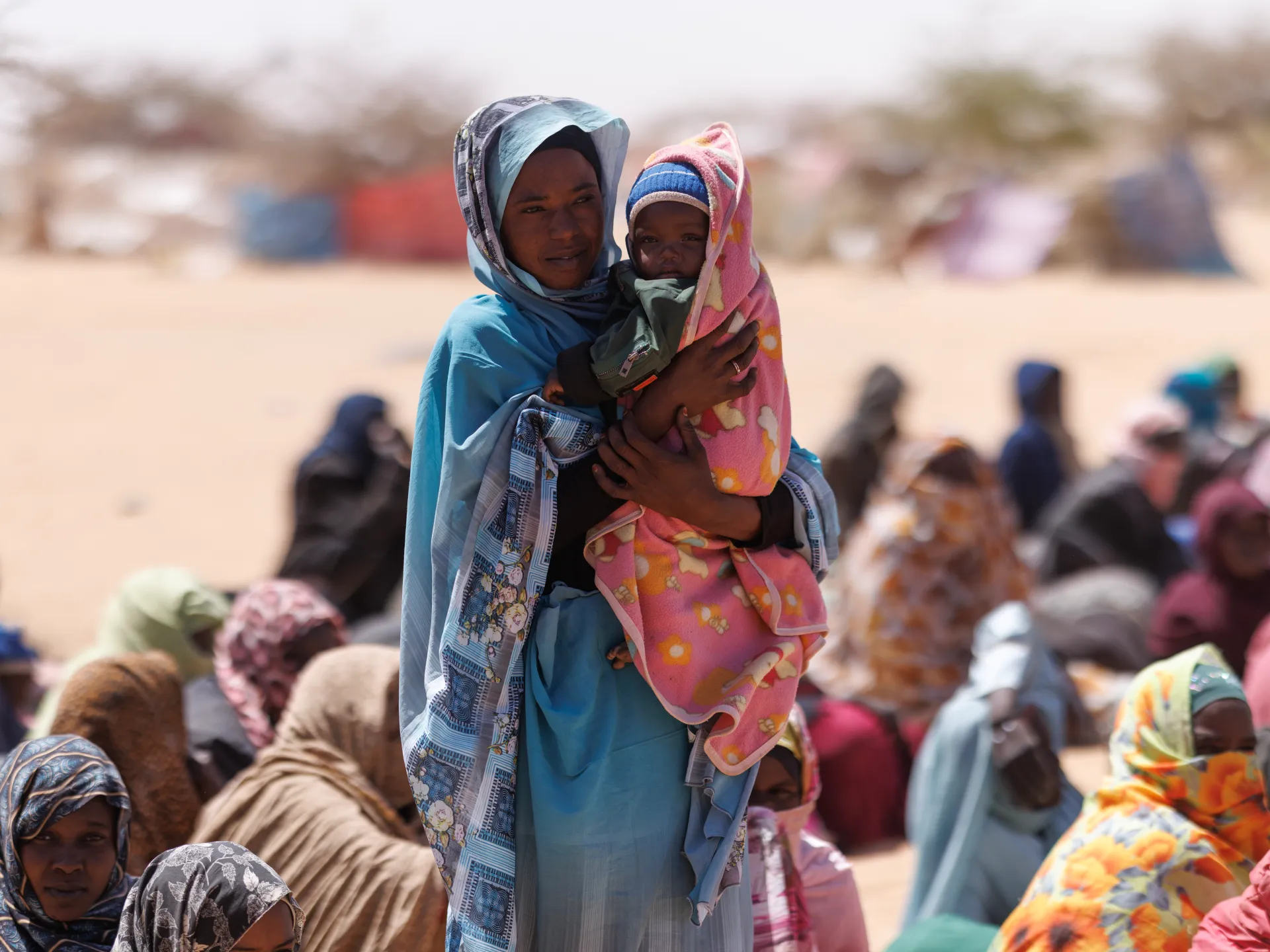
More than three years into the war between the Sudanese Armed Forces (SAF) and the Rapid Support Forces (RSF), Sudan is desperately in need of a political settlement. The fighting has caused immense suffering, and a military solution alone cannot rebuild the state or reunify its fractured society. Under such circumstances, any effort aimed at encouraging Sudanese-Sudanese dialogue deserves serious consideration rather than outright rejection.

In August, a self-appointed committee of 19 Sudanese public figures, chaired by Ahfad University President Qasim Badri, launched an initiative to prepare the ground for national dialogue inside Sudan. Its members had earlier met SAF chief General Abdel Fattah al-Burhan and called for legal restrictions on opposition politicians to be lifted. The authorities subsequently issued a decree to drop certain politically motivated charges against Sudanese abroad returning for dialogue and grant participants temporary legal protections. These are limited but important confidence-building measures.

The initiative has nevertheless faced strong opposition. The civilian coalition Sumoud, led by former Prime Minister Abdalla Hamdok, and Ta’sis, an alliance that includes the RSF, have opposed the proposed internal dialogue. They question its independence and warn that holding talks in army-controlled areas could legitimise al-Burhan’s authority and entrench the country’s divisions. These concerns are legitimate and deserve serious attention. But the committee says it is not seeking to negotiate Sudan’s future or determine the agenda of a national dialogue. Its role is to help create the conditions for Sudanese political actors to engage one another directly. The question is whether it can fulfil that role without allowing one side of the conflict to dominate the process. Dismissing the initiative before it has had an opportunity to demonstrate its value would be premature.

The country’s political actors and civil society organisations remain deeply divided, previous mediation efforts have faltered, and the war continues to make comprehensive political engagement increasingly difficult. The committee’s initiative is an attempt to break the deadlock. Efforts to prepare for political dialogue should not be postponed until the fighting stops. Securing a ceasefire and ensuring humanitarian access are urgent priorities, but preparations for political dialogue can proceed alongside efforts to achieve them.

The committee’s members were not elected, and they do not represent every political constituency. Yet the committee’s legitimacy cannot be judged solely by how it was created. It must also be judged by whether it can help bring a broader range of political actors into a national dialogue.

Good intentions alone cannot resolve concerns about credibility. Political dialogue can succeed only if participants believe the process is fair and independent. The legitimacy required to facilitate a political opening is not necessarily the same as that required to negotiate a national settlement. But even a preparatory initiative must earn the trust of those it seeks to bring together.

The committee’s meeting with al-Burhan was a practical necessity. As army chief and head of the Sovereignty Council, he was in a position to respond to the committee’s demands for legal protections. Engaging with al-Burhan does not in itself amount to an endorsement of his authority. But if the initiative becomes too closely associated with the army, other political actors may view it as an extension of al-Burhan’s political agenda rather than an independent facilitator. The committee must therefore demonstrate that its engagement extends beyond the military authorities and that it is prepared to work with political forces that oppose them.

The initiative was launched in Khartoum, which is under army control. This raises a genuine concern about whether a process beginning in territory controlled by one side of the war can attract the confidence of political forces across the country. A national dialogue cannot be confined to one geographical or political constituency. Entire regions have experienced different realities of war, governance, displacement and insecurity. The committee must find ways to reach those living outside army-controlled areas, including Sudanese displaced by the fighting, and ensure they can participate freely and without intimidation.

Sumoud and Ta’sis’s decision to reject the initiative does not automatically invalidate the process. Their concerns deserve consideration, but outright rejection at this early stage risks closing off an opportunity for political engagement. At the same time, their absence matters. Sudan’s crisis is too deep and complex to be addressed by any single political current. The committee cannot expect every stakeholder to endorse its initiative immediately, but it must create conditions that persuade reluctant actors to participate. If it fails to do so, the initiative itself will have failed.

The African Union Commission and the Arab League have also welcomed the initiative, providing an important measure of regional support. Their endorsement lends weight to the effort to revive Sudanese-led political dialogue, although external backing cannot substitute for the confidence of Sudan’s own political forces.

The committee’s initiative should therefore be judged without excessive optimism or automatic suspicion. The legal measures announced following its engagement with al-Burhan are an encouraging first step, but the real test lies ahead. Does it help remove legal and political obstacles facing opposition actors in practice, not just on paper? Can it win the confidence of those who have rejected it? Can it ensure that Sudanese across the country’s political and geographical divides have an opportunity to participate freely?

What is clear, however, is that Sudan’s crisis will ultimately require Sudanese actors with profoundly different visions of the country’s future to sit together and engage one another politically. No committee can do that on their behalf. No external actor can do it for them. At best, a preparatory initiative can help create the conditions under which such engagement becomes possible. The concerns raised by its critics should not be dismissed, but neither should they be grounds for rejecting the initiative before it has had an opportunity to address them. Those who have rejected it should remain open to reconsidering their position if the committee demonstrates that it can build an independent and inclusive process. If it succeeds, it will have rendered an important national service.

The views expressed in this article are the author’s own and do not necessarily reflect Al Jazeera’s editorial stance.
Source link

Dodgers blow chance to seize control of NLDS, fall to Braves in Game 2

Michael Harris II shouldn’t have been 90 feet away from scoring the go-ahead run in the first place.

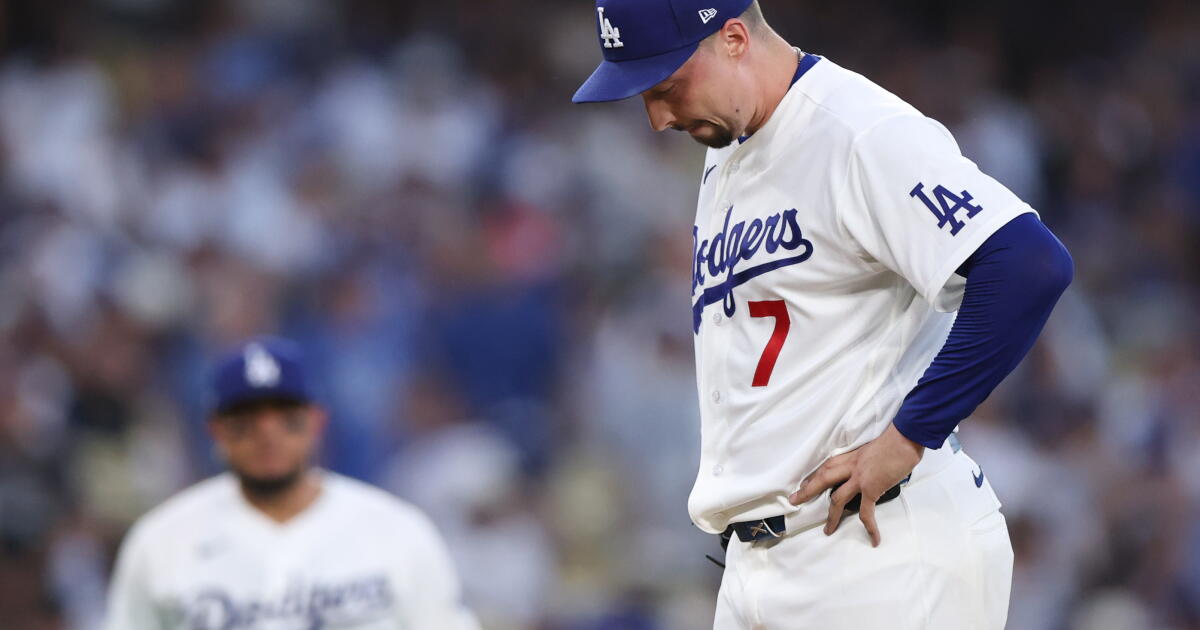
But he was, after Teoscar Hernández took a bad route to his line-drive triple. Then, to make matters worse, Dodgers left-hander Kris Bubic lost control of a sweeper. It flew high and outside, off the end of catcher Will Smith’s glove and to the edge of the grass behind home plate.

Harris scored standing up. And the Dodgers handed the lead back to the Atlanta Braves.

The Dodgers had every advantage heading into Game 2 of the National League Division Series against the Braves. In a 3-2 loss to even the series at one win apiece, they gave away every edge they had.

“The advantage for us is we have an opportunity to not let their pitching staff come up for air,” manager Dave Roberts said this week, when asked about how taxed the Braves pitching staff was coming out of their wild-card series. “… We have an opportunity to really expose them if we take the right at-bats and the right approach.”

Braves left-hander Ray Kerr, who excelled out of the Braves bullpen down the stretch as a long reliever, served as the opener Sunday, in the Braves’ second straight bullpen game this series and third overall. And for the second straight day, the Dodgers failed to score against the Braves opener or even run up his pitch count to get him out of the game early.

The Dodgers managed just two hits off Kerr, each to open an inning. Freddie Freeman lined a single into right field to kick off the second inning. And Miguel Rojas sent a double into the left-field corner to begin the third.

The Dodgers stranded both.

The failure to bring in Rojas was especially egregious. Tommy Edman popped up a bunt immediately after. Then Mookie Betts, the Dodgers’ only other baserunner before Kerr handed over the ball with two outs in the third inning, drew a four-pitch walk. Shohei Ohtani came up to the plate with two runners on and popped up a high cutter on a full count. He was the last batter Kerr faced.

So, the Dodgers offense let the Braves come up for air. And Dodgers left-handed starter Blake Snell’s short start forfeited their starting pitching advantage Sunday.

His first inning could have been a bigger blow. With one out, Snell gave up a single to Ronald Acuña Jr. and then walked Matt Olson and Ozzie Albies to load the bases. He escaped with just one run scored, on a grounder up the middle from Mauricio Dubón. Betts made a diving stop but had no chance at throwing out Dubón at first.

Snell then struck out Sean Murphy to end the inning, finishing the at-bat with three straight curveballs for strikes.

The one-run deficit could be erased. But the damage on his pitch count, up to 27 in that first inning, was done.

Snell surrendered just one more hit, but when he issued his fifth walk of the game, with two outs in the fourth inning, his pitch count was already up to 90 pitches. Roberts strode from the dugout to pull him from the game. Snell had lasted just one inning longer than the Braves’ opener.

In the bottom half of the inning, Freeman, who was optimistic that he could shake off his September slump over the bye week, tied up the game with a solo homer. But in the fifth, the Dodgers handed the lead right back to the Braves.

With two outs, in an 0-2 count, Bubic got Harris to chase an outside sweeper moving away from him. Harris leaned over to get his bat out to it and send a line drive into the left field corner.

Hernández took a circuitous route to the ball, trying to cut it off and then having to adjust back when it became clear he was too shallow. He still only missed the ball by inches, and it carromed off the wall, allowing Harris to reach third base, in position to score on a wild pitch.

The Braves expanded their lead in the seventh inning against Dodgers hard-throwing right-hander Edgardo Henriquez, who gave up a single to Olson and an RBI double to Harris.

Then right-hander Roki Sasaki got himself into a bases-loaded situation in the eighth, with Ronald Acuña Jr. at the plate, but got out of it with a double play. Sasaki then retired the side in order in the ninth.

By contrast, the Dodgers offense barely threatened in the late innings. The Braves relievers retired 15 of the last 16 batters they faced to end the game, with Max Muncy’s solo home run in the ninth the only exception.

Rookie Josue De Paula made his psotseason debut as a pinch hitter, with two outs in the ninth. But he popped up in foul territory to end the game.

Next, the series heads to Atlanta, where the Braves will have home-field advantage for two games.

Source link

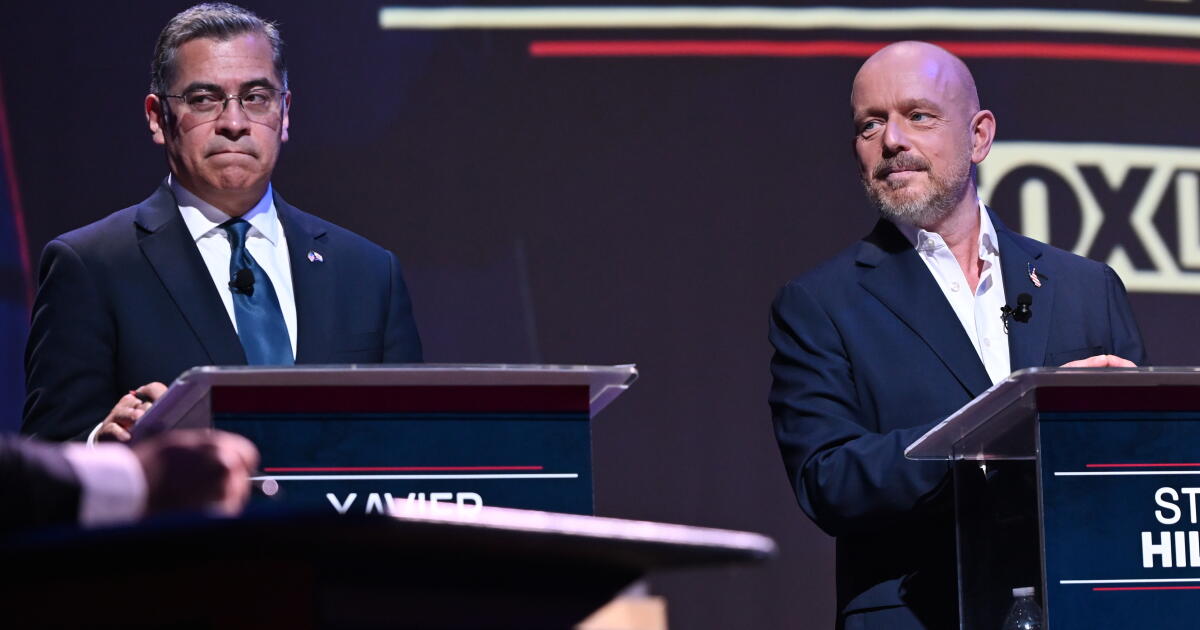
Live chat: Times columnists analyze the CNN Hilton-Becerra debate

Xavier Becerra has made a campaign out of saying nothing. Steve Hilton will seemingly say anything to anyone as long as there’s a microphone.

Neither dynamic is promising for voters tuning into Wednesday night’s televised debate on CNN with the two candidates vying to replace Gavin Newsom as California’s new governor.

But don’t worry, Golden State voters — Times columnists Gustavo Arellano, Mark Z. Barabak and Anita Chabria are watching every minute, every second, really, to bring you the zingers, gaffes and hopefully maybe even some insights.

*

Chabria: Let me start things off by saying my hope is that Hilton will push Becerra into specifics around issues including affordability, what we’re going to do about the coming Medicaid cliff, housing and education. California has been focused on raising up our most vulnerable and struggling residents for years — which is important.

But the middle class is suffering now, too, in all those areas. Hilton is right that the status quo isn’t working. That’s going to be a challenge for Becerra when he gets into office (and honestly, he could vacation in Hawaii until November and still get elected), so I’ll be looking for answers on how he plans to lift all boats.

Barabak: There will be much critiquing to come, so let me start by paying both gentleman a compliment.

Hilton has been campaigning hard, as though he has more than the merest speck of a chance of pulling an epic upset and somehow prevailing. Good for him!

And Becerra, who’s made himself exceedingly scarce, is stepping up and debating, as he should. And he’s not being cute about it, insisting on, say, a midnight appearance on local cable TV in Alturas. So props for that.

Arellano: I’m hoping that Becerra will once again channel his inner cholo, as I urged him to during the primary.

The Tío Xavier persona that Becerra supporters have trotted out — a kind, chuckling sage — isn’t what California needs right now. Becerra knows that the most loved uncles in Latino households aren’t the safe, boring ones but the ones who risked it all: the ones who came into this country without papers, who pulled themselves up by their bootstraps so that their kids could drive hybrids, and who proudly warble “El Rey” during the mariachi portion of the latest family wedding instead of sit quietly at the table.

We need the loco uncle, Xavier, not the fresa — uppity — one.

And I’m hoping Hilton will rebuke Donald Trump. I know, I know: there’s a better chance of England winning the FIFA World Cup than that ever happening.

But if there’s an iota of hope for the British expat to beat Becerra, it can only happen by him showing Californians that he’s willing to stand up to the loathed president instead of cozying up to him.

Otherwise, as a famous Brit once sang backed by sinuous xylophones, “Baby, baby, baby, you’re out of time.”

Insights

L.A. Times Insights delivers AI-generated analysis on Voices content to offer all points of view. Insights does not appear on any news articles.

Viewpoint
This article generally aligns with a Center Left point of view. Learn more about this AI-generated analysis
Perspectives

The following AI-generated content is powered by Perplexity. The Los Angeles Times editorial staff does not create or edit the content.

Ideas expressed in the piece

  • Chabria argues that the debate should press Becerra for concrete plans on affordability, the coming Medicaid funding cliff, housing and education. In particular, the piece says California’s middle class is struggling and that the status quo is not working, leaving Becerra with a challenge if elected.
  • Barabak welcomes both candidates’ participation: Hilton, for campaigning energetically despite his long odds, and Becerra, for agreeing to a televised debate rather than avoiding the encounter.
  • Arellano contends that Becerra should project a more forceful, less cautious persona, drawing on the immigrant and working-class experience of Latino families. The column also argues that Hilton would need to show independence from President Trump to make a stronger case to California voters.

Different views on the topic

  • A contrasting case for Hilton’s candidacy is that California needs a sharp break from current policies. Hilton has proposed eliminating state income taxes on the first $150,000 of earnings and says he would offset the lost revenue with budget cuts; he has also blamed climate policies and regulations for high fuel costs.[3][1]
  • Becerra’s record of public proposals complicates the article’s portrayal of a candidate who has made a campaign out of saying little: his platform calls for expanding housing construction, streamlining approvals and addressing utility and insurance costs. At the same time, his healthcare proposals have been described as broad rather than detailed, lending weight to calls for greater specificity.[4][2][3]
  • The candidates also offer different approaches to affordability. Hilton has promised to unwind policies he blames for high costs, while Becerra says the state should maintain environmental standards as it works to lower costs and stabilize fuel supply.[3][1]

Source link

Shohei Ohtani gets a hit in his return, but Dodgers fall to the Padres

Shohei Ohtani’s swing was a little out in front of a slider delivered by Padres left-hander Robbie Ray. But Ohtani held back his hands long enough to extend them to the pitch and shoot it through the right side of the infield.

It wasn’t flashy. But considering it was his first at-bat in more than two weeks, in a tough matchup no less, it was a promising sign.

“It’s been a while since he’s played in a game, but it just felt like he wasn’t sped up at all,” manager Dave Roberts said after the Dodgers’ 5-1 loss to the Padres. “And I think he came out of it pretty well.”

The good news quickly dried up for the Dodgers after that, as they missed a chance to clinch a first-round bye with a win. But Ohtani’s return was still significant, and the success of his end-of-season tune-up will have playoff implications.

Ohtani did not address reporters Wednesday and has only done so once in the last five weeks, despite multiple requests.

The Dodgers activated Ohtani, who went one-for-four Wednesday, from the 15-day IL before the game and optioned rookie Josue De Paula to Triple A. De Paula is still under consideration for the National League Division Series roster as a bat off the bench.

“This was the original thought, that once Shohei gets back, we’re going to send him out,” manager Dave Roberts said. “We had a runway to give him, which we gave him and he performed more than admirably. This also, as far as the timing, just gives us an opportunity to potentially have him back for the postseason. He’s a part of the conversation, and he’s earned that, and that’s what I told him last night.”

De Paula joined triple-A Oklahoma City for Game 2 of the PCL Championship on Wednesday. And Ohtani slid into the Dodgers lineup, hitting second in the batting order for the first time this season, with Mookie Betts leading off against the Padres southpaw.

“I know Shohei, Mookie, they’re always on board with whatever I decide to do,” Roberts said. “I think it just makes it tougher to navigate versus left. There’s a Mookie tax [to get to Ohtani]. If you want to get to Freddie [Freeman], there’s a Will Smith tax. I like that. And versus a right-hander, I like kind of flipping those two for the same reasons.”

Ohtani, welcomed back in his first at-bat by a partial standing ovation, walked in his second plate appearance. And with two out and the bases loaded in the bottom of the fourth inning, he appeared to have walked again.

Then Padres catcher Ethan Salas tapped the top of his head to challenge the ball call. And an ABS review showed the fastball had clipped the top of the strike zone. Ohtani fouled off the next two pitches before whiffing on a sinker to end the inning.

That missed opportunity rolled right into a sloppy fifth inning for the Dodgers defense.

Starting pitcher Yoshinobu Yamamoto had given up a two-run homer to Manny Machado the previous inning but had otherwise avoided damage.

To open the fifth, he induced Salas to hit the ball on the ground, but it got away from second baseman Tommy Edman as he dove up the middle, for a single.

Yamamoto then got a soft grounder out of Fernando Tatís Jr. But it was too soft, giving Tatís time to reach first before third baseman Max Muncy could get off a throw.

With runners on first and second, Yamamoto had a chance to contribute on defense, fielding Dustin Harris’ comebacker bunt. But Yamamoto’s throw to third sailed wide, allowing a run to score. Machado then made it a 4-1 game with a sacrifice fly.

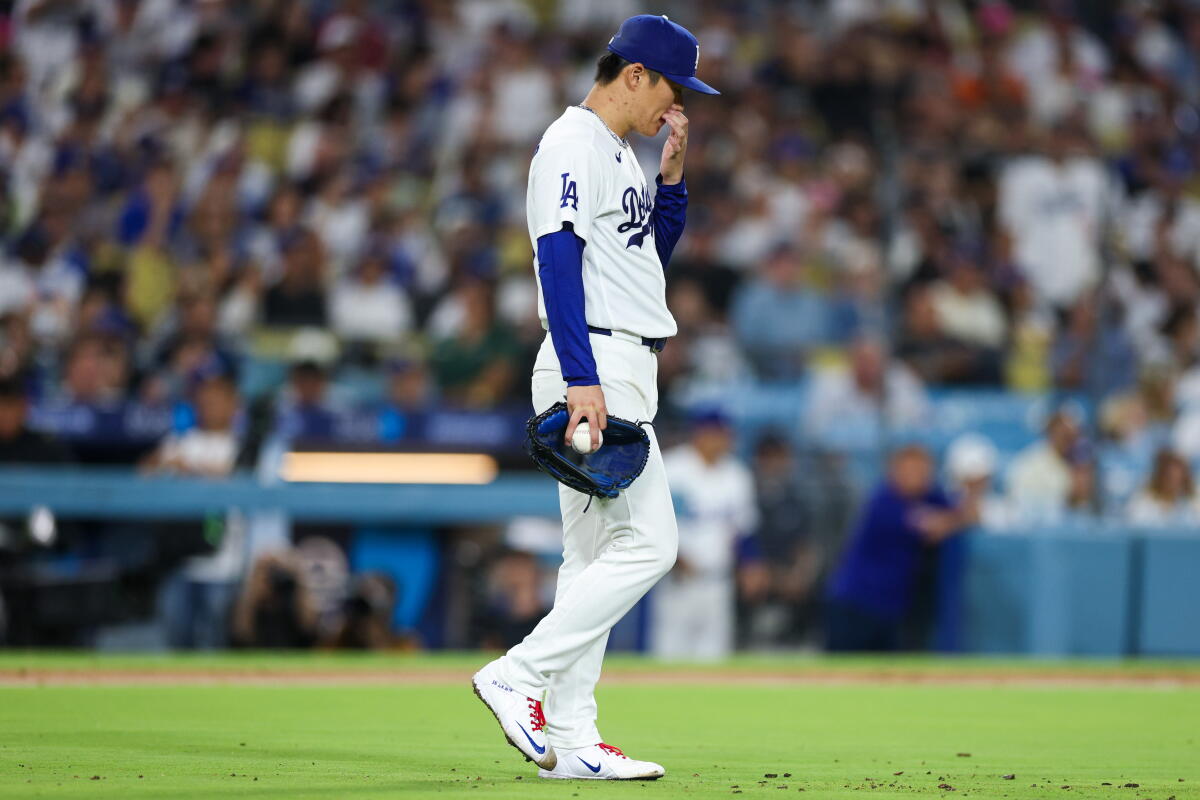
Yoshinobu Yamamoto reacts after a throwing error to third base in the fifth inning.

Yoshinobu Yamamoto reacts after a throwing error to third base in the fifth inning.

(Ronaldo Bolaños / Los Angeles Times)

Ohtani came up to the plate again in the seventh inning and put Dodgers fans on the edge of their seats by sending a long fly ball to straightaway center field. But the cheers died down as it fell shy of the fence.

“I think if you look back at the last couple weeks when he was active, he wasn’t really getting to that pitch,” Roberts said of the high fastball. “I think there might have been one pitch late that he squared up to left field that was at the top of the zone. But outside of that it was hard for him to catch up. I think tonight showed that he’s in a good spot physically.”

The top of the Dodgers order got one last chance to start a rally in the ninth inning, against star closer Mason Miller. Only Will Smith reached base, on a walk, and advanced to third on defensive indifference. Ohtani struck out on a slider.

“[Ohtani] certainly feels way better with the rest,” president of baseball operations Andrew Friedman said before the game. “The biggest thing with five games to go is get him as many at-bats as we can, some rhythm and timing.”

Ohtani could get a day off in that span, Friedman said, but the Dodgers will make those decisions based on how he’s feeling.

“Just getting as many at-bats as he can and that rhythm and timing back before we head into October is going to be really helpful,” Friedman said.

Ohtani was not in rhythm before he landed on the IL. In the last three weeks before the Dodgers finally shelved him, he had a .130 batting average. And he only had two hits in his last seven games (26 at-bats) before the move.

“You end up making subconscious adjustments where you’re protecting yourself,” Friedman said, “and there’s just slight degradation as that’s happening that compounds over time.”

Though the Dodgers downplayed the correlation before Ohtani landed on the IL, they now hope that Ohtani’s improved health will go hand-in-hand with better performance.

“Shohei says he feels back to where he was earlier in the year, which is great, which is a good start,” Friedman said. “As they are coming back, it’s important for them to feel that way … now the question is, as you start to load on real games and that intensity and that workload, it’s making sure that what we’ve done keeps guys in position to be at their best.”

Source link

Cycling Road World Championships 2026: GB medal chance with Pogacar absence

Great Britain’s impressive rider line-up for cycling’s Road World Championships means the team have rarely stood a better chance of glory.

For the men, there is also the helpful factor of Slovenian superstar Tadej Pogacar being absent, after he suffered crash injuries during the Vuelta a Espana in August.

But at the same time a new generation of British cycling talent is rising, and GB riders could take the coveted winner’s rainbow jersey in the men’s and women’s road races in Montreal this weekend.

While Pogacar crashed out of the Vuelta, the race showcased the continued emergence of 21-year-old British rider Matthew Brennan, who won five stages of the three-week endurance test for Visma Lease a Bike – a record for a Grand Tour debutant.

There are currently 49 British riders competing across the men’s and women’s world tours – more than ever before – and some of those will compete in this World Championship weekend.

The road race itself is much like a stage of the Tour de France, but in which riders compete in national squads, looking to out-think and out-muscle each other.

A lot of the British potential is thanks to the inspiration of British cycling’s golden period, which featured great success from the likes of Team Sky, Mark Cavendish and Lizzie Deignan across the past 15 years.

Deignan won the road race in 2015, while Cavendish triumphed in 2011.

In total, British riders have won the elite road races seven times, including Tom Simpson (1965), Beryl Burton (1960 & 1967), Mandy Jones (1982) and Nicole Cooke (2008).

Amid an unpredictable performance landscape for the women, Britain’s best young female riders have a chance to infiltrate the once-dominant Dutch contingent.

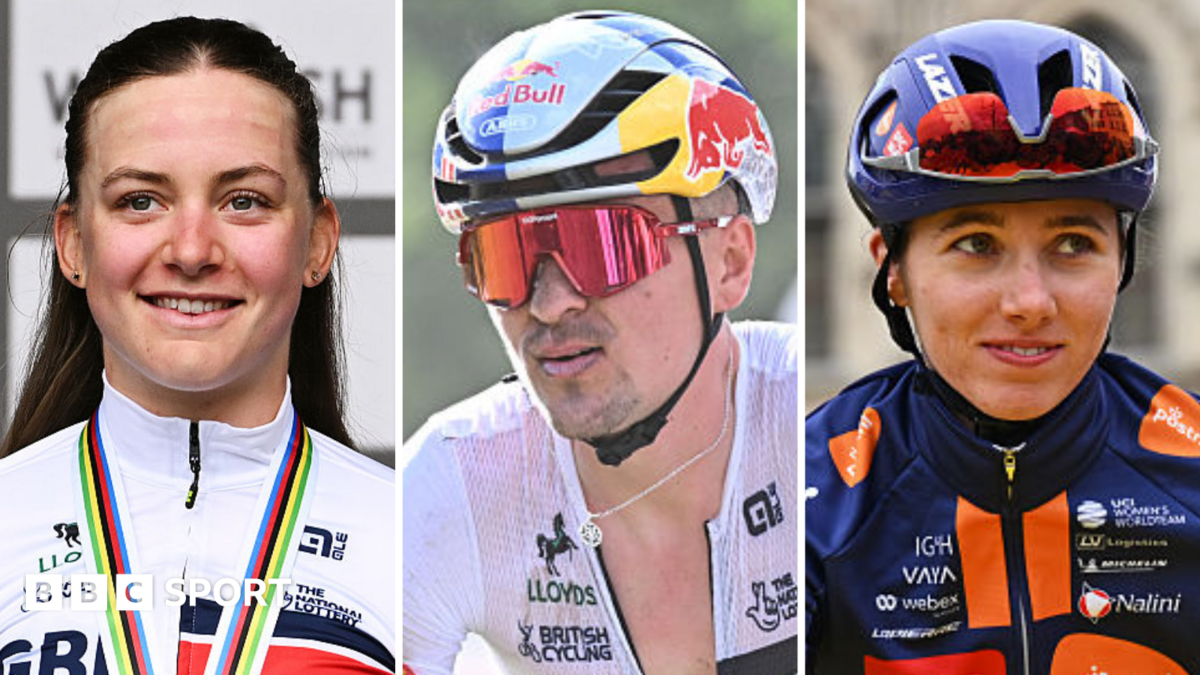
Tour de France Femmes winner Demi Vollering remains the sport’s best overall, but Briton Zoe Backstedt’s brilliant second place in Sunday’s Worlds time trial was her first shot at the elite level.

She will be involved in Saturday’s women’s road race, and Olympic mountain bike gold medallist and Tour de France stage winner Tom Pidcock will race for the men on Sunday.

“You need a lot of faith in your team to be present at the front,” Backstedt told BBC Sport. “You need to talk, hear, see and feel each other to know they are there, especially as there’s no team radio.

“Obviously it’s about knowing the big names to follow. If Demi or Kasia [Niewiadoma] go off the front, you know it’s a dangerous move and you need to be there.

“But we’ve got a super strong team, and if any one of us was with them, we all could stand have a chance.”

The women’s road race is 180.4km long, which includes eight laps of Montreal, and the men’s 273.2km race incorporates 12 circuits.

Source link

Dodgers’ Dalton Rushing will have chance to make case for postseason roster spot

The Dodgers plan to give catcher Dalton Rushing a chance to make his case for a spot on the postseason roster, after playing just four games in the last seven weeks because of a right elbow injury.

He’s set to be activated from the injured list before the end of the season, manager Dave Roberts said, and he’ll serve as a left-handed bat off the bench.

“Just showing them that I can swing it, and it’s an option,” Rushing told The Times after taking live batting practice Tuesday for the first time since landing on the IL earlier this month. “I know that you kind of tie [the team’s] hands up when you can’t play defense. So, I’m not expecting anything… just continue to take at-bats and see where we go from there.”

The slight tear in Rushing’s ulnar collateral ligament made headlines after he landed on the IL on Aug. 3. But Rushing’s MRI scans suggest the UCL — which is associated with Tommy John surgery — is not the issue.

The pain in his elbow seems to stem from a flexor strain. The small tear in his UCL has remained the same size since 2022, he said.

Rushing received platelet-rich plasma injection after aggravating the flexor injury a second time while working through a throwing program at the beginning of the month.

“I’m pretty confident I can still avoid surgery after the shot,” he said, noting that he’s been getting regular scans to monitor his healing. “Obviously, when I re-injured it the second time, I was almost 70-30, thinking that I was for sure going to need surgery. But after I got the shot and it ran its course, I feel as close to healthy in my arm as I have in a pretty long time.”

This time, Rushing has abandoned the throwing program. But he said he doesn’t regret trying to return to the field the first time around.

“In my eyes, me trying to throw is me showing them that obviously I want to help the team win,” he said. “I want to give us the best available option that we have at that moment, and that was my whole plan all along. So I hope they see there wasn’t any selfishness in that.”

The Dodgers will need a left-handed bat off the bench in October, but Rushing now has competition.

Rookie Josue De Paula replaced Shohei Ohtani on the roster when the superstar landed on the 15-day IL two weeks ago. His first major-league hit was a three-run home run, and he entered Tuesday with a .974 OPS in 10 games.

Even if the Dodgers option De Paula on Wednesday when they reinstate Ohtani, 10 days before the NL Division Series, he will be eligible to be added to the NLDS roster via petition to the Commissioner’s Office.

“It’s going to be a good debate,” Roberts said. “Hitting off the bench is very difficult, and so you’re just trying to figure out who gives us the best chance. To be quite frank, it’s going to be tougher for Dalton given the time that he’s missed, and … you have three games to get back in the playoff form, which is tough to do. It’s not a knock on him. He’s been great for us. But it’s still tough given that also you’re talking about the consistency of at-bats recently from Josue. We have to have those conversations and make a decision.”

Rushing played a large role in the Dodgers’ regular season. In his second year in the majors, he was thrust into the primary role behind the plate for two months because of Will Smith’s lingering neck injury. Now, he might not see the field in the postseason.

“It sucks,” he said of the injury derailing him down the stretch. “I mean, that’s really the only thing I can say about it, it’s not what I wanted — by no means.”

Looking beyond the playoffs, Rushing plans to evaluate his routine, hoping to set himself up to be available for more of 2027.

“I don’t even want to talk about it right now because we still have obviously a bigger task at hand,” Rushing said. “But my main plan moving into playing every day in the future is, make sure that my body can hold whatever stress or whatever is needed for this team — first base, behind the plate, whatever they need. I want to make sure my body can handle it and do it for 162.”

Source link

Ohio voters once rejected Sherrod Brown. Can he get a second chance?

In the wood-paneled basement of a union hall, retirees sat in folding chairs last week as they recalled how miles of steel mills and plentiful jobs had slowly disappeared.

“We told our children to get your education, get out, and don’t come back,” said Al Antonelli, who has been a member of Ohio Laborers’ International Union of North America Local 125 for nearly 50 years. “Because there’s no future here, especially blue collar.”

Versions of Youngstown’s story played out across the industrial Midwest, where disappearing jobs and frustration in longtime Democratic strongholds helped fuel Donald Trump’s political rise. When Trump visited as president in 2017, he promised the jobs that had left Ohio were “all coming back.”

“Don’t sell your house,” one of the retirees recalled Trump saying during his Youngstown visit.

Nearly a decade later, the old industrial economy Trump promised to revive has not returned, and Democrats hope the political tide is shifting again. Two years after Democrat Sherrod Brown lost his Senate seat, he’s attempting a comeback by trying to win back some of the same voters who turned on his party. Brown wants to harness dissatisfaction with the economy, the war in Iran and the expansion of artificial intelligence data centers to dislodge Republican Sen. Jon Husted in November.

Brown’s chances of returning to Washington depend largely on whether he can win again in parts of the state that have spent years drifting away from Democrats. His race is also part of a much broader challenge for Democrats, who need to make inroads in Republican-leaning states like Ohio, Iowa, Alaska and Texas if they are to win control of the chamber in November.

Brown outlasted Democrats’ decline in Ohio — until he couldn’t

For years, Brown was able to outrun the Democratic Party’s decline in Ohio. His pro-labor populism resonated with enough swing voters to deliver decades of victories from the statehouse to Congress.

Trump carried Ohio by 8 points in 2016, four years after Barack Obama won it. Yet Brown won his third term in the Senate two years later, in part by continuing to perform well in places like Mahoning County, anchored by Youngstown.

By 2024, even Brown could no longer hold on, losing his reelection campaign to Republican Bernie Moreno by 3.5 percentage points.

Trump carried Mahoning by more than 10,000 votes, a remarkable reversal in a previously loyal Democratic county that Obama had won by nearly 30 percentage points just 12 years earlier. With Trump’s endorsement, Moreno won the county by just 220 votes.

The transformation extends across the Mahoning Valley. Neighboring Trumbull County went from backing Obama by 23 points in 2012 to Trump by nearly 17 points in 2024.

“The Mahoning Valley has struggled with deindustrialization, job loss for years, and the politicians in power have seemed to understand that, but it doesn’t seem like they were doing enough about that,” said Cryshanna Jackson Leftwich, a politics professor at Youngstown State University. “So at some point, 20, 30 years of supporting the candidates, people are gonna say, well, look, this has never worked for us, right?”

Trump and other Republicans offered voters something different, Leftwich said.

“Did they keep their promises? Not at all. Is the county still poor? Absolutely,” she said. “But they at least said they were going to do something different.”

Brown faces a much different environment this year

Democrats’ bid to flip the Senate requires them to net four seats, including by competing deep in Republican territory.

Two months from the end of midterm campaigns, high gas prices stemming from the war in Iran have compounded discontent with the economy.

Trump has also escalated a trade war with neighboring Canada, a fight with particular implications for Ohio. The state exported $17.5 billion in goods to Canada in 2025, or nearly a third of the state’s total exports, according to federal statistics.

Tension from the economic strain is visible in Parma, a working-class Cleveland suburb that split its ticket in 2024, backing both Trump and Brown. At a watch party for the Republican midterm convention in Dallas, supporters who stayed late into the evening cheered Trump but acknowledged that other issues would most likely determine the midterms.

“The real thing that’ll move the needle is going to be economics. Gas prices, grocery prices,” said Parma City Councilor Kevin Kussmaul. “That’s really what’s going to help.”

Parma Republican Party President Doris Peters said similarly that “everyone’s concerned about the high gas prices.”

“It’s all about the economy,” she added. “People remember how much money’s in their wallet and how much is not in their wallet.”

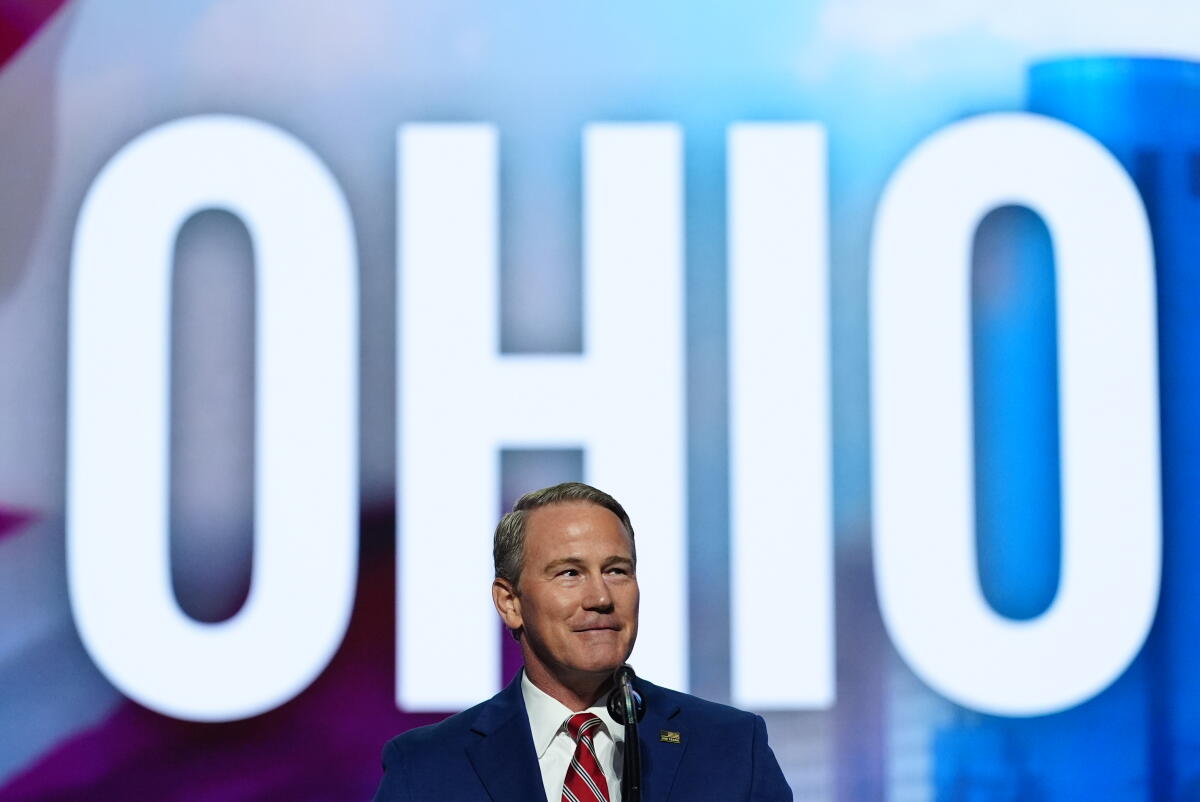
Sen. Jon Husted, R-Ohio, speaks at the Republican convention

Sen. Jon Husted (R-Ohio) speaks at the Republican convention in Dallas.

(Julia Demaree Nikhinson / Ap Photo/julia Demaree Nikhinson)

The limits of a Democratic rebound in Ohio

Husted presents a different opponent than the one Brown faced two years ago. His restrained demeanor contrasts with Moreno, the brash former car dealer who entered politics as an outsider. Husted spent nearly 25 years in Ohio politics, as a state lawmaker, House speaker, secretary of state and lieutenant governor, before being tapped to fill Vance’s Senate seat.

But Husted may not need to generate much enthusiasm of his own. Except for Brown and candidates for the Ohio Supreme Court, a Democrat hasn’t won a statewide race for state office in Ohio since 2008.

Adam Radogna, 37, who hosted the watch party Wednesday for Parma Republicans at his Italian restaurant, has attended more than 80 Trump rallies and remains an ardent Trump supporter. But Husted is not someone he’s followed closely.

“I don’t know him at all,” Radogna said of Husted. “But I mean, I will vote for him.”

Brown faces enthusiasm problems of his own as he asks voters to return to a 73-year-old former senator whom they rejected just two years ago.

Ellen Zban, 67, a longtime Youngstown resident who said she leans Democratic but has voted for Republicans, said she won’t support Husted because she doesn’t believe he has listened enough to the community.

“I really don’t think he’s done anything for us,” she said. “We never hear from him.”

But Brown isn’t necessarily the candidate she wishes Democrats were offering either.

“He’s my best option,” Zban said. “But I’d like to see younger people running.”

The race is being flooded with money as both sides try to drum up enthusiasm and define the choice for voters. Husted and allied Republican groups have already spent more than $80 million with $86 million more reserved through Election Day, according to AdImpact. Brown and Democratic groups have spent $69 million, with $67 million reserved.

Elon Musk has also waded into the race through his America PAC, which is running online and streaming ads attacking Brown over transgender issues.

“Billionaires are lying to try and bail out their ‘Golden Boy’ because Jon Husted has always put special interests ahead of Ohio,” Brown’s campaign manager, Patrick Eisenhauer, said in a statement.

Brown has attempted to make data centers central to the race, an issue that has seen bipartisan outrage in communities across the country. Brown’s allies have called Husted the face of Ohio’s data center boom, blaming the massive facilities for contributing to rising electricity costs. Husted helped promote Ohio as a destination for data centers while serving as lieutenant governor.

The ads and backlash have generated enough concern among Republicans that an internal party memo described data centers as an “anchor” around Husted in the race.

“Thirty-two years in Washington turned Sherrod Brown into a liar,” Amy Natoce, a spokesperson for Husted, said in a statement. “Jon Husted is fighting to lower costs and help Ohioans keep more of what they earn. Sen. Husted introduced legislation requiring data center companies to pay for the power they use and return excess electricity to the grid.”

The state’s politics could shift again

In Youngstown, the union retirees who watched the Mahoning Valley shift toward Republicans aren’t convinced the movement is permanent.

Rich Troisi, business manager of Laborers’ Local 127, said Republican candidates in recent elections could win support in the area largely by aligning themselves with Trump. This year, he said, that dynamic may not hold.

“I don’t think Donald Trump’s endorsement is going to be what it was,” he said.

Antonelli, the longtime union worker, pointed to independent voters, who he said tend to move with their economic circumstances.

“My dad used to say, it depends on how tight your shoes are. Tight meaning, how’s the money?” he said. “Right now, the shoes are pretty tight, no matter who you are.”

Cappelletti writes for the Associated Press. AP reporter Julie Carr Smyth contributed to this report from Columbus, Ohio.

Source link