Chan

California Democratic and Republican candidates are testing the waters with AI ads.

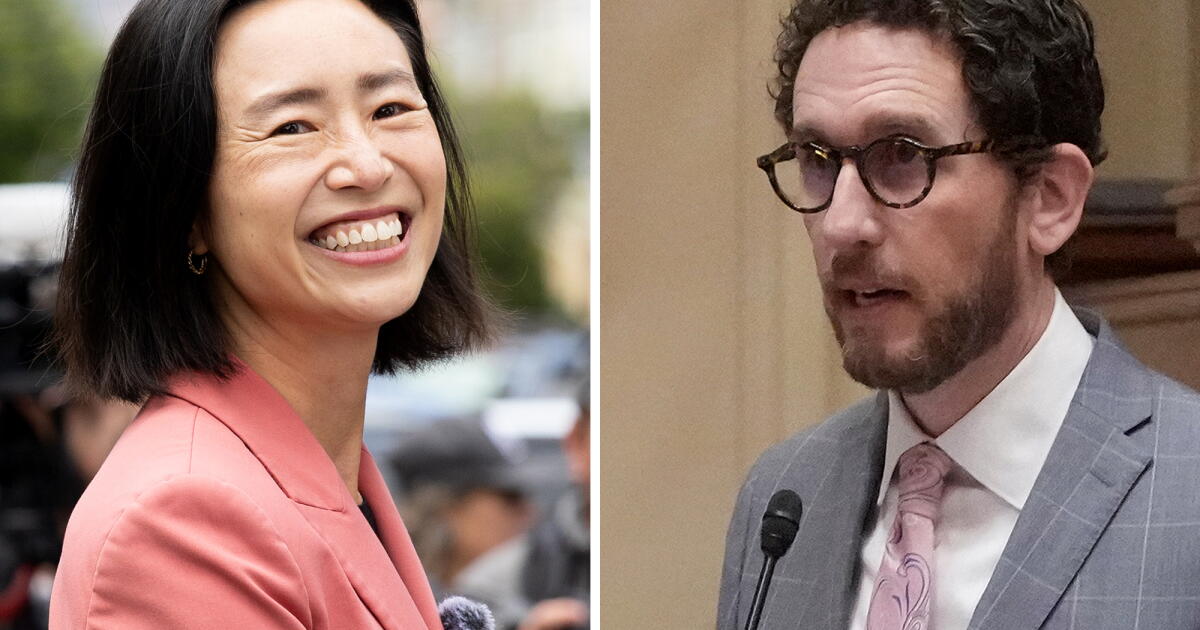
A parody AI chatbot designed by California congressional candidate Scott Wiener’s campaign to mock the record of his opponent attracted the attention politicians crave and criticism most loathe.

The short-lived experiment stirred controversy over the use of artificial intelligence in campaigns ads and drew sharp criticism from former House Speaker Nancy Pelosi, who has endorsed Wiener’s opponent for the coveted San Francisco congressional seat. Wiener quickly pulled the plug.

Candidates on both sides of the aisle have been testing the waters by integrating generative AI into campaign ads. It comes as no surprise to political sociologist Mindy Romero, the director of the Center for Inclusive Democracy, who said candidates have long used all tools at their disposal to reach voters, from the invention of the radio and TV to social media.

“Using AI is just part of the progression,” Romero said. Generative AI is particularly useful for political candidates since it allows them to subconsciously influence viewers by putting words in their opponents’ mouths, she said.

Even as political campaigns experiment with more outlandish applications of the technology, many have already been using AI in quieter ways, including to compose tailored mailings and participate in digital chat rooms, Romero said.

GOP gubernatorial candidate Steve Hilton on July 24 released three cinematic ads made using generative AI, the first of which features fictional portrayals of Kamala Harris and Gavin Newsom, shown sharing a lavish meal.

The ad also depicts a fake Xavier Becerra, his Democratic rival in the governor’s race, who is heard saying, “I believe all the things that Newsom believes.” The ad ends with Hilton facing off against a massive red-eyed robot meant to represent the “Democratic machine.” An AI disclaimer appears in the last five seconds of the two-minute and 29-second video.

“Campaigns have always adopted new technology, from television to the internet to social media,” Hilton campaign spokesperson Hector Barajas said in a statement. “Generative AI is the next step, and we believe it would be irresponsible not to use every lawful, ethical, and innovative tool to communicate with California voters.”

Spencer Pratt, who unsuccessfully ran for L.A. mayor, in May reposted on X a viral Batman-inspired AI-generated video that depicted Mayor Karen Bass as the Joker, the clownish supervillain. Charles Curran, the filmmaker who made the fan video in support of Pratt, appears to now be working with Hilton’s campaign in a more official capacity, with his X account tagged on several campaign social media posts.

“I view this as the evolution of political satire,” Curran said, referring to his AI videos, in an interview with the Washington Times. “Like Mark Twain. Like Tammany Hall.” Curran did not respond to interview requests.

“We’re on the bleeding edge right now,” said Sacramento political consultant Tim Rosales, who ran Republican John Cox’s 2018 gubernatorial campaign. He said he anticipates that campaigns will more fully understand and use AI to its full extent in the next two election cycles.

California campaigns have long been at the forefront of adopting new technologies. In the 1980s, the late political strategist Clint Reilly was among the first political consultants to use voter roll data to segment and target pivotal voters for turnout and persuasion.

Rosales said that because campaigns in California are more expensive and raise more money than those in other states, “You have a lot more tools in your tool box and more toys you can play with.”

Lynn Vavreck, a political science and communications studies professor at UCLA, said the persuasive effects of Hilton’s AI videos are likely “limited” as they are most likely being watched by supporters. The videos, she said, are more akin to “content creation” than to ads.

Romero said AI technology can be beneficial for campaigns, particularly those with limited funds, that may use it to create outreach lists, assist with analysis or generate creative and campaign materials.

But AI-generated video, images and audio are a “double-edged sword,” Romero said. While effective at drawing attention, they may have the unwanted effect of making viewers uncomfortable by blurring the lines of reality — even if the AI use is disclosed. As a result, political campaigns must make a “strategic calculation” when they opt to use them, she said.

Those perils surfaced last week when the campaign of Wiener (D-San Francisco), who is running for the congressional seat held by the outgoing Pelosi, unveiled an AI chatbot that could be accessed on the ConnieChan.ai website.

The site referred to itself as “Connie, the world’s first AI trained to say no to anything you ask.” The footer included a note that the site is not affiliated with or endorsed by Chan, is meant as parody, and is paid for by Wiener’s campaign.

“Bring me an idea and I’ll explain why it can’t, shouldn’t, and won’t happen,” the site said, followed by a box encouraging users to type in a query. The chatbot would then produce a snide response parodying Chan.

When The Times entered the word “housing” into the text box last week, its response came seconds later.

“I built my career opposing new housing in San Francisco,” the chatbot’s response read. “I aggressively defend the status quo, and I’m fine with exploding rents and mass displacement.” It then rattled off examples including Chan’s opposition to Wiener’s state law to streamline housing projects.

Wiener campaign spokesperson Joe Arellano said Wednesday that he came up with the idea of making a chatbot ad shortly after the June primary election, when he saw a video showing a group of people putting up parody tech and AI advertisements in the New York City subway.

“I thought, this is an opportunity to do this right in the heart of innovation here in San Francisco,” Arellano said. “San Francisco right now is having this moment around AI and the billboards. … The overall craze around the industry has become a cultural moment.”

The chatbot cost $5,000 to make, a sum that includes the cost to secure the domain, host the site and obtain the pro version of Anthropic’s Claude AI model, plus staff time, according to Arellano. The campaign spent an additional $20,000 to rent two billboards in San Francisco promoting the bot.

The idea was to highlight Chan’s “record of obstructing progress” through a “chatbot that essentially says no to any kind of policy that you’re proposing,” Arellano said.

Chan’s campaign and her allies saw it differently.

“[It’s] never a good idea for a man to put words in a woman’s mouth — especially when they are falsities fraught with racist and sexist undertones,” Ian Krager, a spokesperson for Chan’s campaign, said in a text message. The chatbot, Krager said, showed Wiener was “bought and paid for by Big AI.”

Chan’s campaign shared several screenshots of interactions with the chatbot with The Times, including one in which the chatbot was asked if it was “from China.” (Chan was born in Hong Kong.)

According to the campaign’s screenshot, the chatbot replied that its “origins are classified under about seventeen different committee review processes.”

Then, it pivoted: “But I’d love to help obstruct something *else* you’re curious about! Here are some of my favorite topics,” and spat out a menu of topics to choose from, which included “blocking housing” and “derailing public transit.”

Wiener’s campaign said the chatbot was created with “strict guardrails” and designed to ignore controversial and malicious prompts and pivot back to Chan’s policy record.

Pelosi, who has endorsed Chan in the race, released a statement Thursday criticizing Wiener’s campaign for the chatbot, calling its use of AI to “fabricate a woman’s voice for ridicule or attack” a “gross misuse of technology.”

At first, Wiener defended himself, writing on X Thursday evening that his rival’s campaign inundated the chatbot with “malicious questions” about her accent, race and citizenship that the chatbot refused. The next day, Wiener reversed course.

“[Our] use of an AI chatbot clearly missed the mark,” Wiener said in a statement Friday. “The conversation became about the tactic instead of the issues that actually matter to San Franciscans.”

Wiener’s campaign on Friday took the chatbot offline and announced plans to take down the billboards.

Romero said experts began to have widespread discussions about how AI could be used to sway voters and affect democracy in the lead-up to the 2024 election when a company sent deceptive phone messages that used AI to mimic President Biden’s voice and discourage people from voting.

Since then, there have been several efforts by California lawmakers to rein in AI-generated advertising.

Gov. Gavin Newsom in September 2024 signed several AI-related bills. They include AB 2839, which banned the distribution of materially deceptive content that could harm a candidate’s reputation or electoral prospects, with exceptions for satire and parody, and AB 2355, which requires a committee that creates a political ad to disclose if it was generated or substantially altered by AI.

U.S. Sen. Adam Schiff (D-Calif.) and Rep. Ro Khanna (D-Fremont) have renewed an effort to update the Federal Election Campaign Act of 1971 to clarify that existing bans on “fraudulent misrepresentation of campaign authority” and the “fraudulent solicitation of funds” also extend to AI-generated content.

“Fraudulent AI advertising has already proliferated in races across the country, and if Congress does not act, this runaway challenge will only get worse as AI becomes increasingly capable of blurring the lines between fact and fiction,” Schiff said in a statement.

Elena Kuhn, a spokesperson for Schiff, said the proposed legislation applies to material that attempts to “speak on behalf of other candidates,” meaning Hilton’s AI-generated cinematic clip of himself fighting a robot would be not be banned — contrary to the Republican candidate’s claims that it would be.

Source link

K-pop influencer Mina Chan, 26, takes her own life during alarming livestream after ‘harassment’ from band’s fans

An image collage containing 1 images, Image 1 shows A young woman in a graduation cap and gown holding a diploma and a large bouquet of white roses

K-POP influencer Mina Chan, 26, has taken her own life during a disturbing livestream.

She said she had been harassed by the fans of a popular boy band for “overstepping boundaries” in the days before her death.

A young woman with light brown hair poses with a puckered lip expression while sitting in a leather booth in a bar.
Mina Chan has died aged 26
A young woman with blonde pigtails and a floral sundress stands next to a bus stop sign for Seongsu Station, exit 4, and a sign for the Seoul International Garden Show.
She took her own life on a disturbing livestream

The Japanese social media star died by suicide in the early hours of August 5.

She was based in South Korea and known for running a fan account for K-pop boyband Enhypen.

How to get help

EVERY 90 minutes in the UK a life is lost to suicide

It doesn’t discriminate, touching the lives of people in every corner of society – from the homeless and unemployed to builders and doctors, reality stars and footballers.

It’s the biggest killer of people under the age of 35, more deadly than cancer and car crashes.

And men are three times more likely to take their own life than women.

Yet it’s rarely spoken of, a taboo that threatens to continue its deadly rampage unless we all stop and take notice, now.

If you, or anyone you know, needs help dealing with mental health problems, the following organisations provide support:

More to follow… For the latest news on this story keep checking back at The Sun Online

Thesun.co.uk is your go-to destination for the best celebrity news, real-life stories, jaw-dropping pictures and must-see video.

Like us on Facebook at www.facebook.com/thesun and follow us on TikTok @TheSun.


Source link

Elim Chan will lead the San Francisco Symphony in a historic first

That sound of breaking glass? It’s Hong Kong-born conductor Elim Chan, 39, shattering a particularly stubborn ceiling after being named the first woman to lead the San Francisco Symphony in its 115-year history. Her title is currently Music Director Designate, and when she officially steps into the job of music director in September 2027, she will become the first woman to lead a major American orchestra.

Chan arrives as the orchestra’s 13th music director at a precarious moment for the organization, which in 2024 was rocked by the resignation of its last music director, Esa-Pekka Salonen, who declined to renew his contract after five years and said he didn’t share the same vision as the orchestra’s board of governors. Like many arts organizations, the symphony is still struggling with a pandemic-precipitated drop in attendance and a shrinking budget.

Fans will get their first chance to see Chan in action on June 5 and 6 when she’ll take the stage in a program including Richard Wagner’s Prelude from “Tristan und Isolde,” Hector Berlioz’s “Les Nuits d’été” wih mezzo-soprano soloist Sasha Cooke, and Claude Debussy’s “La Mer.”

“In Elim Chan, we have found a musician of unusual gifts and a leader of equal substance — a rare combination, and the one behind her remarkable international rise,” said San Francisco Symphony Chief Executive Matthew Spivey in a news release. “What sets her apart on the podium is the conviction she brings to the music itself. Works orchestras have played a hundred times sound newly made under her hand, lit by a feeling for structure, color, and emotional architecture that audiences hear before they can name.”

Chan studied piano and cello in Hong Kong before moving to the U.S. to attend Smith College. She went to graduate school at University of Michigan, Ann Arbor, where she ultimately earned a Doctor of Musical Arts degree in 2015. The year before that she became the first woman to win the prestigious Donatella Flick LSO Conducting Competition, and was named assistant conductor of the London Symphony Orchestra.

Chan made her conducting debut with SF Symphony in January 2023 and has conducted the orchestra twice since. A rep for the the group said the feedback they’ve received from “our Orchestra, press, our audiences, and donors has been remarkable.” Chan is, indeed, a electrifying presence to behold onstage, a fact that no doubt played a major role in the search committee’s decision.

And now audiences get to delight in her fresh, invigorating approach to the conductor’s podium. Glass ceilings should be broken more often.

I’m Arts editor Jessica Gelt rooting for something new and different. This is your arts and culture news for the week.

You’re reading Essential Arts

Our critics and reporters guide you through events and happenings of L.A.

The week ahead: A curated calendar

FRIDAY

David E. Frank and Nicolet Anton hold glasses onstage.

David E. Frank and Nicolet Anton in “Limonade Tous les Jours: A Paris Love Story” at City Garage.

(Paul Rubenstein)

Limonade Tous les Jours: A Paris Love Story
Romance in the City of Lights from Obie Award-winning playwright Charles L. Mee, in which a young chanteuse and a reserved American in his 50s ponder amour amid classic French cabaret songs.
8 p.m. Fridays and Saturdays; 4 p.m. Sundays, through June 28. City Garage, 2525 Michigan Ave., Building T1, Santa Monica. citygarage.org

Three Lives
Written, directed by and starring Alex Xander Luu, this solo theater performance shares the dramatic, sometimes humorous, story of the Luu family’s escape from Saigon in 1975 through the perspectives of a father, son and grandson.
8 p.m. Friday-Saturday; 2 and 8 p.m. Sunday. Sierra Madre Playhouse, 87 W. Sierra Madre Blvd. sierramadreplayhouse.org

David Call and Lena Dunham sit together.

David Call and Lena Dunham in the movie “Tiny Furniture.”

(Joe Anderson / IFC Films)

Tiny Furniture
Multi-hyphenate Lena Dunham’s breakout 2010 indie feature about a new college graduate adrift in New York City screens with “Welcome to Bushwick a.k.a The Crackcident,” an episode from Dunham’s series “Girls.”
7:30 p.m. Friday; 6 p.m. Saturday. The Eastwood (Oxford Underground), 1089 N Oxford Ave. eastwoodpac.stagey.net

SATURDAY

Daisuke Ryu in Akira Kurosawa's 1985 film "Ran."

Daisuke Ryu in Akira Kurosawa’s 1985 film “Ran,” screening Saturday at the Academy Museum.

(Winstar Cinema)

Darkness and Humanity: The Complete Akira Kurosawa
The series continues with 35 mm screenings of “Ran,” the filmmaker’s 1985 adaptation of Shakespeare’s “King Lear” transported to 16th century Japan; and “Kagemusha,” a 1980 feudal epic executive produced by George Lucas that helped revive Kurosawa’s career and cement his legacy.
“Ran,” 7:30 p.m. Saturday; “Kagemusha,” 6:30 p.m. Sunday. 6067 Wilshire Blvd. academymuseum.org

A man cuts away Yoko Ono's top in "Cut Piece."

“Cut Piece,” 1964, performed in “New Works of Yoko Ono,” Carnegie Recital Hall, New York, filmed by David and Albert Maysles. Part of the exhibit “Yoko Ono: Music of the Mind” at the Broad.

(© Yoko Ono)

Yoko Ono: Music of the Mind
The first solo museum exhibition in Southern California of the singular artist, musician and activist, organized in collaboration with Tate Modern, London, includes work from her seven-decade career; direct participation by visitors will be invited in many of Ono’s transformational works.
Through Oct. 11. The Broad, 221 S. Grand Ave., downtown L.A. thebroad.org

A young woman with long, dark hair wearing a white shirt poses for a portrait.

Artist Kyungmi Shin, whose solo exhibition “My Fantasy’s Burdens” is currently showing at Perrotin Los Angeles, talks with Aleesa Pitchamarn Alexander on Sunday.

(Todd Gray)

Kyungmi Shin
The L.A.-based artist will discuss her work, including the current exhibition “My Fantasy’s Burdens,” with Aleesa Pitchamarn Alexander, curator of Modern and Contemporary Art at the Cantor Arts Center and co-director of the Asian American Art Initiative at Stanford University. “My Fantasy’s Burden” includes both paintings and ceramics by Shin, featuring the artist’s practice of interrogating the Asian American diasporic identity, focusing on the cultural, economic and scientific consequences of colonialism.
4 p.m. Saturday; the exhibition concludes May 30. Perrotin Los Angeles, 5036 W Pico Blvd. perrotin.com

SUNDAY
Bob Dylan double feature
It’s the music icon’s 85th birthday and what better way to celebrate than with screenings of his 2021 concert film “Shadow Kingdom,” directed by Alma Har’el, and the 1987 musical melodrama “Hearts Of Fire” — one of Dylan’s forays into acting — directed by Richard Marquand.
7:30 p.m. Aero Theatre, 1328 Montana Ave., Santa Monica. americancinematheque.com

Stephen Schwartz sings and plays piano onstage.

Stephen Schwartz performs during the Songwriters Hall of Fame induction and awards gala in 2025.

(Charles Sykes /Invision / AP)

An Evening With Stephen Schwartz
Katharine McPhee, Joey McIntyre, Loren Allred and other performers join the celebrated composer-lyricist for a benefit concert to help the Altadena Music Theatre recover from the Eaton fire. Schwartz has won three Oscars, three Grammys, four Drama Desk Awards, a Golden Globe and the Richard Rodgers Award for Excellence in Musical Theater, in addition to six Tony nominations for shows including “Wicked,” “Pippin” and “Godspell.” Preceded by a VIP cocktail hour.
7:30 p.m. Manoukian Cultural Performing Arts Center, 2495 E. Mountain St., Pasadena. altadenamusictheatre.com

Arts anywhere

New and recent releases of arts-related media.

An Evening with Nicole Scherzinger

The lead singer of the Pussycat Dolls crowned her triumphant, Olivier- and Tony-winning turn as Norma Desmond in the musical revival of “Sunset Boulevard” with a series of solo concerts at prestigious venues (including Walt Disney Concert Hall). The latest edition of “Great Performances” captured Scherzinger’s performance at London’s Royal Albert Hall in October 2025, when she sang showtunes, covers and songs from her own repertoire. 9 p.m. Friday on PBS and streaming on the PBS app

"Reading Pictures: A History of Illustration," by D.B. Dowd.

“Reading Pictures: A History of Illustration,” by D.B. Dowd.

(Princeton University Press)

Reading Pictures: A History of Illustration

In this visual chronicle, D.B. Dowd, a professor of design and American culture studies at Washington University in St. Louis, follows this unique art form from relief prints and woodcuts in ancient China and Japan, through the development of the printing press in 15th century Europe, and on to modern developments such as illustrated news, recreational reading and ad-driven consumer culture. Dowd reconsiders the traditional narrative to view illustration in the context of race, gender, literacy and cultural memory. The book examines the integration of reading and looking, the increasing prevalence of images in the digital age, and what it means to be literate in the 21st century. Princeton University Press: 400 pages, $60

— Kevin Crust

Culture news and the SoCal scene

Kylie Victoria Edwards and Daniel Yearwood in "Brigadoon."

Kylie Victoria Edwards and Daniel Yearwood in “Brigadoon” at Pasadena Playhouse.

(Jeff Lorch)

Theater lovers rejoice: “Brigadoon” at the Pasadena Playhouse may be the “best local staging of a musical” Times theater critic Charles McNulty has seen in 20 years covering the scene for The Times. The revival, directed by Katie Spelman with an updated book by playwright Alexandra Silber, is “the high-water mark so far of Pasadena Playhouse producing artistic director Danny Feldman’s ongoing reexamination of the American musical canon,” McNulty writes. In the same column, McNulty notes that another classic musical revival, “Flower Drum Song” at East West Players, does not hit its mark.

The Skirball Cultural Center‘s latest exhibit takes on the genesis of Punk rock in the 1970s, and traces its rise from the UK to New York and Los Angeles. The exhibit, “Outsiders, Outcasts, Rebels + Weirdos: Punk Culture 1976-86,” pegs punk’s year zero to 1976, “when the Ramones debuted their self-titled record. That same year, the Sex Pistols cursed on live TV, John Holmstrom and Legs McNeil co-founded Punk magazine, and the Damned released the first British punk single, ‘New Rose’.”

A person walks outside Musichead Gallery.

Erin Davis, son of Miles Davis, poses for a portrait during Musichead Gallery’s photography exhibition marking a centennial celebration of the jazz musician.

(Jason Armond / Los Angeles Times)

As the world celebrates the centennial of jazz legend Miles Davis, a unique photo show is happening at Musichead Gallery on Sunset Boulevard. “The show celebrates the late jazz musician’s centennial through imagery captured over a career spanning nearly five decades,” writes staff writer Julius Miller, noting that some of those photos have not even been seen by members of the Davis family.

Times classical music critic Mark Swed sat down for an exclusive interview with Los Angeles Philharmonic Music and Artistic Director Gustavo Dudamel as he readied to play his final shows with the orchestra at Walt Disney Concert Hall before departing for the New York Philharmonic. “I’m living here and I’m not living here,” Dudamel told Swed. “The connection will always be here.”

Swed also weighed in on two performances marking composer Philip Glass’ 90th birthday (which arrives at the end of January): Paris Opera’s “shocking” new “noir” production of Glass’ “Satyagraha”; and a UC Santa Barbara Arts & Lectures-commissioned show called “Philip Glass and the Poets,” which premiered at Campbell Hall featuring readings by performance artist Taylor Mac and dancer/choreographer Lucinda Childs.

An immersive art installation.

Lisa Waund’s work in the Joy Department at the Hospital of Emotions at St. Vincent Medical Center.

(Carlin Stiehl / For The Times)

The Times got an exclusive first look inside the soon-to-open Hospital of Emotions, which features 70 artists in a takeover of 80 rooms at the shuttered St. Vincent’s Medical Center on the outskirts of downtown L.A. The sprawling immersive art project is divided into various departments including joy, fear and sadness, and shines a spotlight on wellness and mental health.

Meow Wolf L.A. won’t open until later this year, but The Times got an early look at a new character that will be featured in the immersive art space. Its name is WoWoW and it’s the creation of the experimental video art collective Everything Is Terrible. Read all about the “20-foot-tall, 1,000-pound amoeba-like creature” here.

Enjoying this newsletter? Consider subscribing to the Los Angeles Times

Your support helps us deliver the news that matters most. Become a subscriber.

Guests sit on blankets at Barnsdall Art Park.

Guests enjoy wine and friendship at the Barnsdall Art Park Foundation’s weekly wine tasting.

(Janna Ireland / Barnsdall Art Park Foundation)

Barnsdall Friday Wine Nights are returning for a 17th year. The event is set to begin May 29 and run through Sept. 11, every Friday evening from 5:30 to 9:00 p.m. Located on the West Lawn of Frank Lloyd Wright’s magnificent Hollyhock House, the gathering occupies one of the city’s most magical outdoor spots. A $55 general admission ticket gets you four glasses of wine from Silverlake Wine, along with a rotating lineup of food trucks. DJs also regularly perform throughout the series. Best of all: Proceeds support arts programming and preservation at Barnsdall Art Park. A rep for the event notes that, “this year’s fundraiser is especially critical amid proposed budget and staffing cuts to the City of Los Angeles Department of Cultural Affairs.”

Break out your best picnic basket and blanket: Independent Shakespeare Co. has announced this summer’s Griffith Park Free Shakespeare Festival, which runs outdoors every year at the park’s Old Zoo. This year’s lineup includes the Bard’s “Coriolanus” and “The Comedy of Errors.” Performances are free, but registration is requested at www.IndieShakes.org.

— Jessica Gelt

And last but not least

Times restaurant critic Bill Addison declares the 10-table Wilde’s the new “crown jewel” of Los Feliz.

Source link