Ceuta

Spain reveal Nations League squad in Ceuta in support of migration crisis | Football

World Cup winners Spain choose Cueta to announce Nations League squad in solidarity with migration crisis in region.

Spain coach Luis de la Fuente announced his Nations League squad from Ceuta on Friday in a show of support for the Spanish city in northern Africa that has become the centre of a migration crisis.

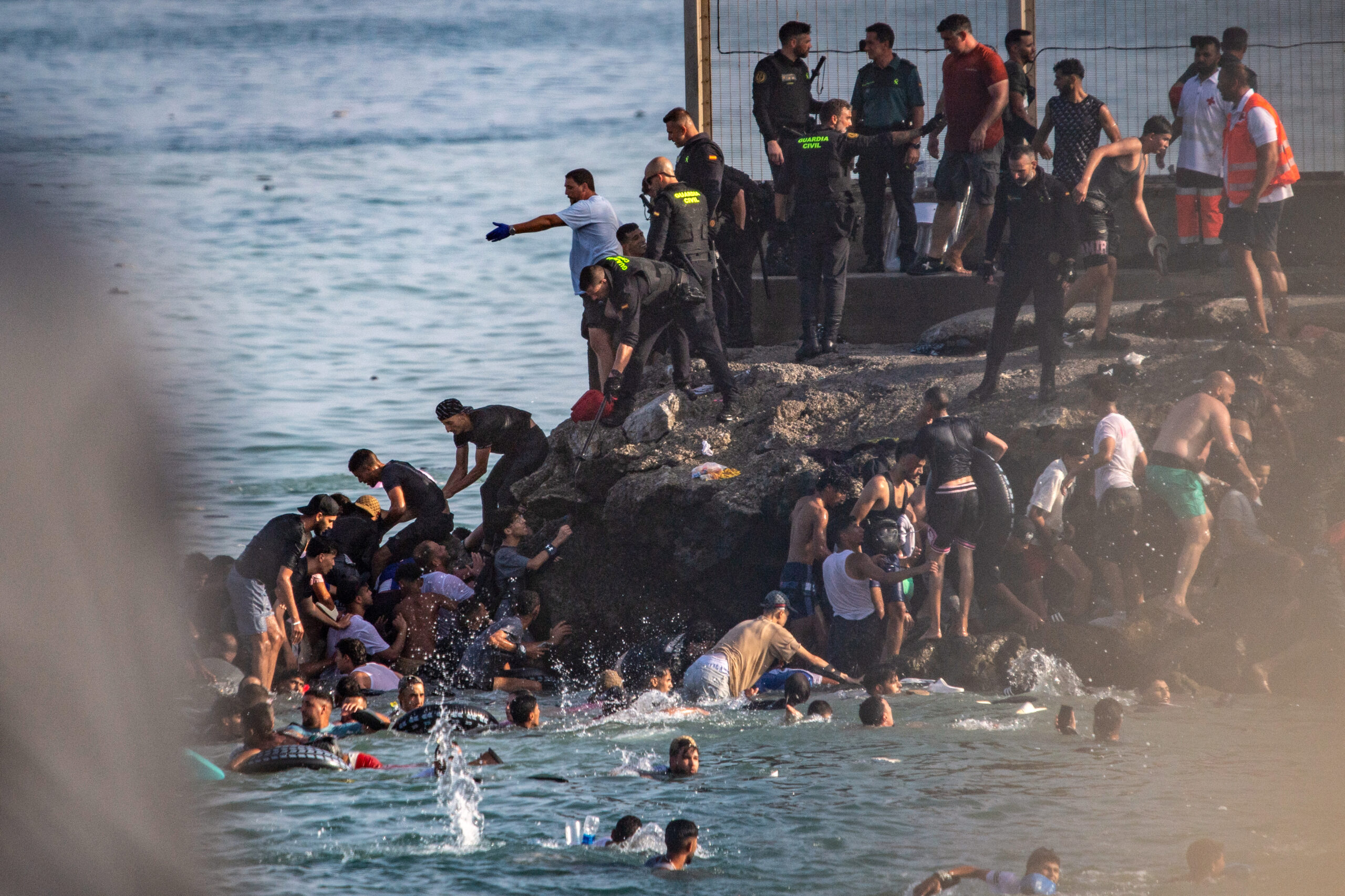
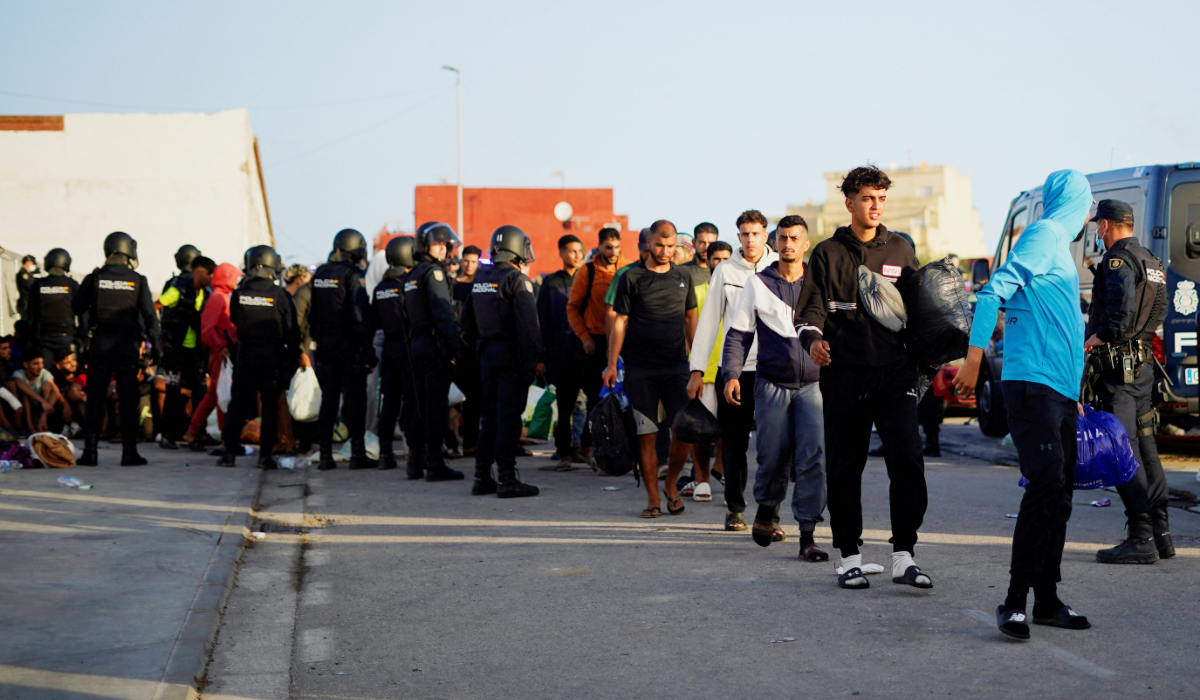
For his first squad announcement since Spain won the World Cup in July, De la Fuente revealed his list in a video featuring him in Ceuta accompanied by residents of the Spanish exclave. More than 70,000 people stormed across the border in late July from Morocco, with more than 100 dying in the chaos. Most quickly returned, but a few thousand remain in the city of just over 80,000.

Recommended Stories

list of 4 itemsend of list

De la Fuente did not directly mention the border crossing or its impact, but did say: “This is Ceuta, this is Spain.” It echoed the rise in sentiment in Spain that Ceuta – a territory that until the mass crossing was mostly an afterthought for most mainland Spaniards – needs to be supported.

Spain opens the Nations League against England at Wembley Stadium on September 26 , when its players will wear two stars on their shirts for the first time since winning their second world title.

After visiting London, Spain will host Croatia on September 29 and the Czech Republic on October 3 , before visiting Croatia on October 6 .

De la Fuente kept his World Cup squad mostly intact.

Inter Milan goalkeeper Josep Martinez replaces Barcelona’s Joan Garcia, who is out with a minor knee issue. Real Madrid defender Dean Huijsen is in for Marcos Llorente, who retired from international football. Fermin Lopez replaces fellow Barcelona midfielder Gavi, while Espanyol striker Roberto Fernandez got his first call-up, replacing Borja Iglesias.

Ceuta is one of two Spanish territories on the north African coast along with Melilla. Ceuta has been in Spanish possession since 1580. Christians and Muslims, Spanish and Moroccan residents and day workers all live there in relative harmony behind a border fence that many migrants from across Africa attempt to cross or swim around for a better life in Europe.

A Real Madrid supporters’ group has demanded a public apology from their star striker Kylian Mbappe and two of his teammates after the trio declined to fully wear a T-shirt in support of the people of Ceuta.

Mbappe, Vinicius Junior and Ibrahima Konate wore a tribute shirt along with the rest of the squad ahead of Madrid’s 3-2 win at Elche on Tuesday in La Liga, although theirs were partially rolled up to cover the message.

Spain’s Nations League squad:

  • Goalkeepers: Unai Simon (Athletic Bilbao), David Raya (Arsenal), Josep Martínez (Inter Milan)
  • Defenders: Aymeric Laporte (Athletic Bilbao), Pau Cubarsi (Barcelona), Eric Garcia (Barcelona), Marc Pubill (Atletico Madrid), Alejandro Grimaldo (Atletico Madrid), Marc Cucurella (Real Madrid), Dean Huijsen (Real Madrid), Pedro Porro (Tottenham).
  • Midfielders: Rodri Hernandez (Barcelona), Pedri Gonzalez (Barcelona), Fermin Lopez (Barcelona), Martin Zubimendi (Arsenal), Mikel Merino (Arsenal), Fabian Ruiz (Paris Saint-Germain), Alex Baena (Atletico Madrid).
  • Forwards: Lamine Yamal (Barcelona), Dani Olmo (Barcelona), Ferran Torres (Paris Saint-Germain), Yeremy Pino (Crystal Palace), Nico Williams (Athletic Bilbao), Mikel Oyarzabal (Real Sociedad), Victor Munoz (Liverpool), Roberto Fernandez (Espanyol).
Source link

Arab News | Spain says over 5,300 migrants left Ceuta in month

MADRID: The Spanish government on Sunday said more than 5,300 of the migrants who remained in Ceuta after July’s influx had returned to Morocco in a month, as it faces pressure to restore normality to the increasingly tense city.

The new figures come as criticism over the speed at which the migrants are being returned from the Spanish north African territory damages Socialist Prime Minister Pedro Sanchez before next year’s election.

More than 70,000 migrants entered Ceuta on July 30 and 31 in an unprecedented and deadly rush, with most returning to Morocco in the following hours.

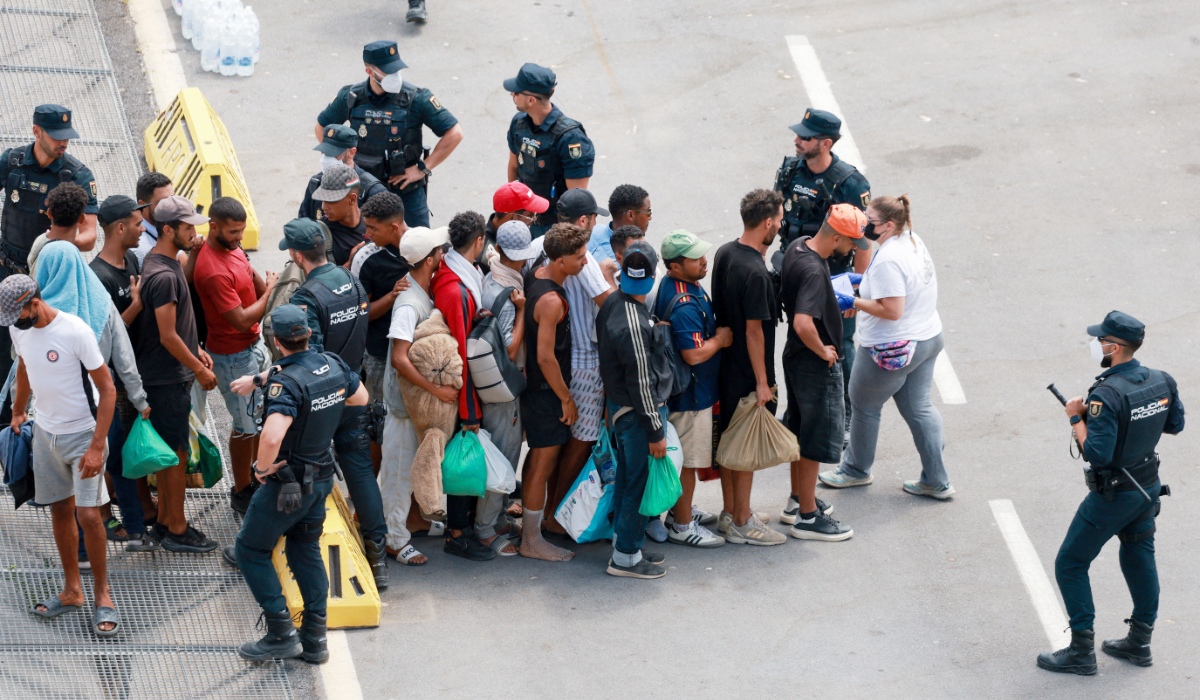
The government has had to identify the thousands of migrants who have remained for weeks to check if they are entitled to asylum, while unaccompanied children cannot be summarily deported.

Angel Victor Torres, the minister tasked with leading the government’s response, said in a video posted to social media that 5,321 people had “voluntarily returned” to Morocco since August 10.

Ninety people had “given up” their request for international protection and “almost 1,000 people are being registered with the aim of being able to complete their return proceedings,” Torres added.

The minister did not say how many migrants remained in Ceuta after those returns, a figure that has consistently sparked controversy between the leftist government and the conservative-run city.

On Friday, Ceuta’s leader Juan Jesus Vivas, of the main opposition right-wing Popular Party, put their number at 13,000, but the government’s estimations have been significantly lower.

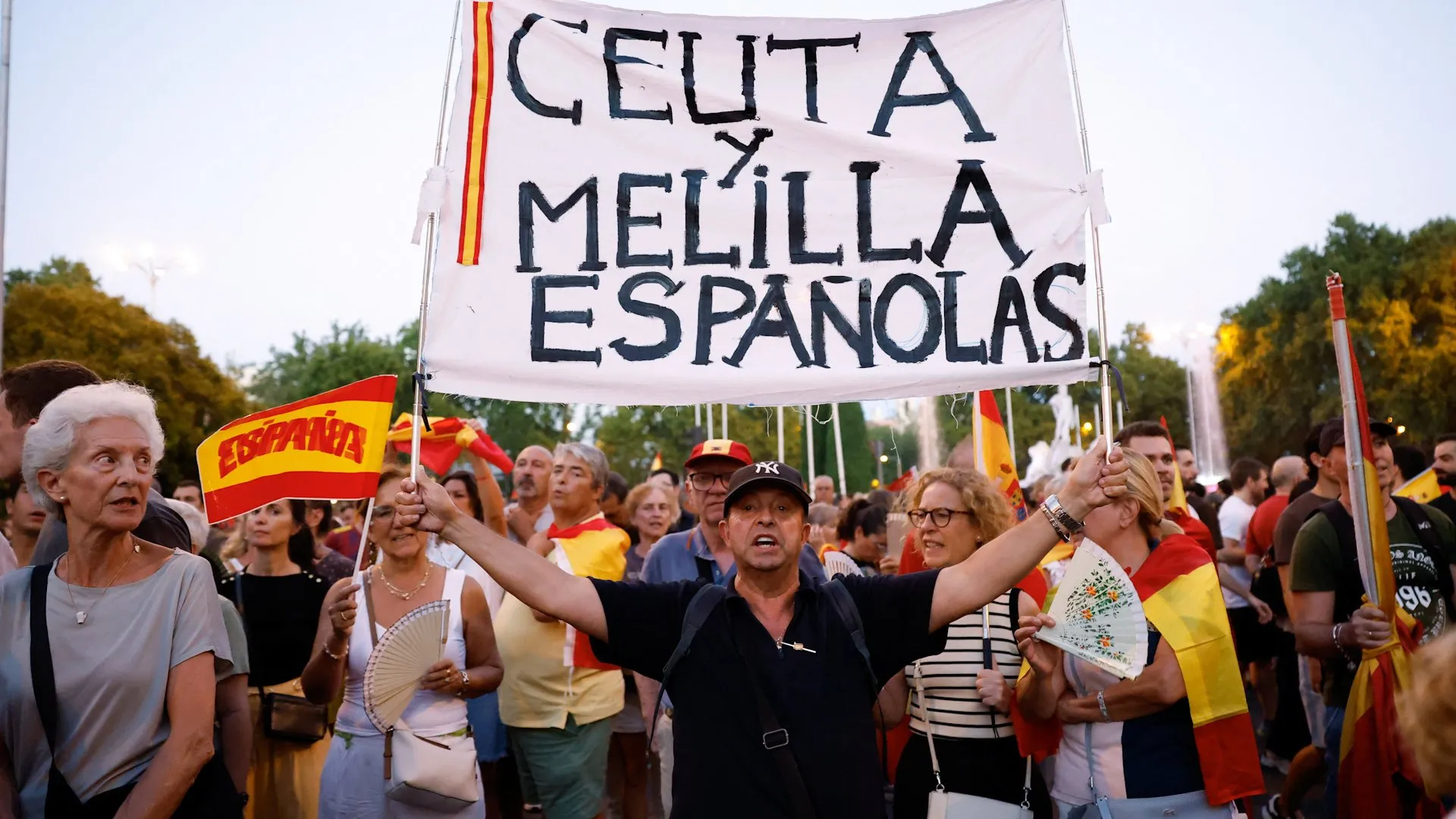
Locals have protested regularly as the migrants continue to camp on beaches and sleep in the streets, accusing the government of abandoning the overwhelmed city amid a humanitarian crisis.

The migration ministry announced on Sunday the creation of another 864 places in temporary migrant shelters, taking the total to around 4,300 and with a view to reaching 6,000 “in the near future.”

Doubts about what the government knew beforehand and the possible role of Morocco, with which Madrid has spent years trying to improve relations, have also increased the political fallout for Sanchez.


Source link

Arab News | Morocco says not involved in Ceuta migrant influx

Rabat: Morocco said on Thursday there were “no facts” establishing its involvement in the massive migrant rush into Spain’s North African exclave of Ceuta in July.

More than 70,000 migrants entered Ceuta from Morocco on July 30 and 31 in an unprecedented, chaotic surge that left scores dead and sparked European Union infighting over the touchy issue of migration.

The Moroccan foreign ministry said there were “no facts or reports proving any involvement by the Moroccan authorities”.

The ministry added that Rabat refused to become the “scapegoat for political score-settling” in Spain.

The statement marked the kingdom’s first official reaction to a Spanish police report accusing Morocco’s security forces of “total permissiveness” when the mass crossing took place.

Spain’s Prime Minister Pedro Sanchez has consistently avoided blaming Morocco, noting that there was no “solid proof” that the North African country orchestrated the migrant rush.

Source link

Arab News | Morocco and Spain joust over which will host 2030 World Cup final amid border crisis

CASABLANCA, Morocco: Morocco and Spain are arguing over the right to host the 2030 World Cup final — with besieged FIFA boss Gianni Infantino hovering backstage.

FIFA has yet to officially announce which country will host the biggest match of the biggest event in soccer. And even though the 2026 edition just finished with Spain winning the title this summer, Moroccan and Spanish officials are staking their claim on the next final.

The tussle over the soccer match also comes with Spain still reeling from a massive border crossing by tens of thousands of migrants who pushed through the frontier from Morocco into the north African Spanish enclave in late July.

One big game for two proud countries

The head of Moroccan soccer boasted that his country had it locked up on Thursday.

“The city of Benslimane will host the World Cup final. Hate it or love it, and if anyone wants to talk on top of that, let them talk,” Moroccan federation president Fouzi Lakjaa told a political rally.

“The city is Benslimane, the Hassan II stadium is the stadium, and I hope that Morocco will be playing it,” he added.

This week, the head of the Spanish soccer federation, Rafael Louzán, insisted it was Spain that deserved the game, while acknowledging that it has not been guaranteed that honor.

“We all signed to accept the candidacy … it’s too bad that, regarding the final, it wasn’t made clear, totally clear, where it is to be played,” Louzán said. “Spain, as world champion both in men’s and women’s soccer, must host the final.”

European soccer officials believe that the sprawling, multi-nation 2030 event, which includes Portugal and even a handful of games in South America, should be considered a European event with the final on the continent.

In a request for comment by the Associated Press on Thursday, FIFA said its decision will be made “in due course.”

Infantino has found support in Morocco

The dispute over the final comes with Infantino under intense pressure after UEFA, the umbrella organization of European soccer federations, led a successful revolt to scuttle his plan to sell stakes in the World Cup.

By contrast, six Arab nation federations, including Morocco’s, have backed him since that fiasco.

The King Hassan II Stadium near Casablanca is being built in Benslimane, on the outskirts of Casablanca. It is planned to seat 115,000 spectators. Spain can offer the home stadiums of Real Madrid or Barcelona as potential sites for the final.

Infantino has recently made two trips to Morocco, meeting with King Mohammed VI during annual celebrations of his ascent to the throne in July and then holding a FIFA crisis meeting there in August.

World Cup final spat among other tensions

When confirmed three years ago, the joint candidacy between Spain, Portugal and Morocco looked like a perfect event to bridge Europe and Africa and strengthen bonds between the western Mediterranean neighbors.

But the dispute over the final comes with diplomatic tensions between Madrid and Rabat already frayed over who was responsible when tens of thousands of mostly Moroccans driven by posts on social media pushed into the small Spanish enclave of Ceuta that borders Morocco. Spain’s prime minister said 140 people died in the crossing.

Spain’s government has been under political pressure at home to get tough on Morocco, which it has said acted in good faith in the border crisis. Spanish police assessments couldn’t rule out complicity by Moroccan security forces but said that it was unlikely the Moroccan government had intentionally orchestrated it.


Source link

Arab News | Intel reports warned Spain of mass entries in Ceuta

MADRID: Spanish Intelligence and security reports declassified on Wednesday had warned of possible “mass entries” by migrants into Ceuta just before thousands crossed into Spain’s North African enclave from Morocco.

Prime Minister Pedro Sanchez had told parliament when he announced he would declassify these 40 documents that there was “no information that conveyed the magnitude” of “the crisis we were going to suffer” on July 30 and 31.

“Internal communications have been detected in migrant groups in which they are trying to organise mass entries on the night of 29/07/2026,” reads a document from CENIF, a border division of the National Police, issued on the eve of the arrival of more than 70,000 migrants in the small Spanish territory.

CENIF said almost 1,000 people swam in from Morocco between July 1 and 28 — “a drastic upward trend compared to last year,” and “a consolidated and priority threat”.

An urgent memo from the National Intelligence Centre on the afternoon of July 29 warns of “several calls to carry out entries into Ceuta” in Facebook groups, one of them with over 160,000 members.

In a message on X Wednesday, Sanchez said that “with the information available at the time, no one could have foreseen the migration crisis that unfolded on the 30th and 31st. No competent body did so. Neither in Spain nor in the EU.”

He also said he had not received any document with “solid evidence that Morocco planned or carried out the incident”.

The government declassified the documents amid questions over Rabat’s role in the events and whether the Spanish government had been warned of the likelihood of mass entries.

Sanchez has insisted his government did not receive any report that would have allowed it to anticipate the scale of what was going to happen, nor anything containing “solid evidence that Morocco planned or carried out the episode.”

Doubts about Morocco’s role increased after the leak last week of a police report that pointed to the “permissiveness” of its security forces during the crisis.

A declassified document issued by military intelligence at midday on July 30 states that it is “highly likely that the Moroccan authorities are not actively encouraging the migratory wave, but have so far acted in a negligent and passive manner.”

The opposition accuses the government of failing to act despite being warned about what was going on and criticises it for exonerating Morocco, which it sees as being behind the mass entry.

“The government knew everything that was happening… They had the information. They are directly responsible for the invasion of Ceuta,” Ester Munoz, spokeswoman for the right-wing Popular Party in parliament, told reporters.


Source link

Arab News | Moroccan media slam Spanish police report on Ceuta migrant influx

RABAT: Moroccan media have criticized a Spanish police report that accused Morocco’s security forces of failures as tens of thousands of migrants crossed into the Spanish territory of Ceuta.

More than 70,000 migrants entered Ceuta from Morocco on July 30 and 31 in an unprecedented, chaotic surge that left scores dead and sparked European Union infighting over the touchy issue of migration.

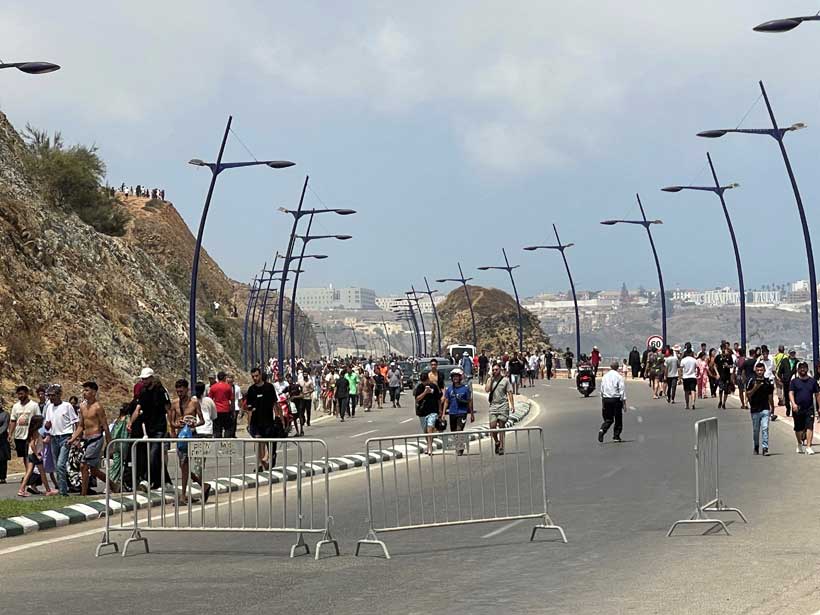
The Spanish police report seen by AFP flagged a Moroccan police response of “total permissiveness” that it said facilitated the rush, with some officers directing migrants toward the water.

Moroccan police numbers around the border post were “clearly smaller than usual” and officers “made no serious attempt” to stem the surge, said the report.

But Spain’s Prime Minister Pedro Sanchez has consistently avoided blaming Morocco, noting that there was no “solid proof” that the North African country orchestrated the migrant rush.

Sanchez’s leftist government has tried for years to improve the countries’ historically delicate relations — notably over the status of Ceuta and Spain’s other north African territory, Melilla.

Moroccan authorities have yet to comment on the leaked police report, but several Moroccan media outlets have weighed in on its allegations.

Moroccan news site Hespress on Friday called it “particularly weak,” saying it lacked material evidence and contained “glaring contradictions.”

Hespress said the police report sought to make Morocco “the scapegoat” in Spanish political and judicial disputes.

Moroccan news site Le Desk on Thursday described the report as “botched,” pointing to factual errors including a reference to June 30 instead of July 30.

And TelQuel said that claims by some media that the report directly accused Morocco of “planning and executing” the influx were false, adding that the allegations did not name any Moroccan official as responsible.

News site Medias24 challenged the “permissiveness” claim by arguing that it was based solely on one satellite image that was “obviously just a snapshot.”

Last month, a senior Moroccan official told AFP on condition of anonymity there had been no Moroccan security failures during the influx.

Source link

Spanish PM Sanchez denies he was warned about Ceuta influx in advance

Sept. 3 (UPI) — Spanish Prime Minister Pedro Sánchez rejected allegations Thursday that his government had forewarning of the influx of more than 70,000 migrants into the disputed territory of Ceuta, a tiny Spanish enclave on the north African coast.

“It’s absurd to think that the government knew and did nothing,” Sánchez told lawmakers in Parliament in Madrid.

“We have examined all of the messages, statements and verbal reports from the state security apparatus. I can assure you that none of them went any further than a description of the data or routine reporting, and that absolutely none of them predicted the probability or the scale of what ended up occurring,” said Sánchez.

Sánchez’s comments came after tens of thousands of people and opposition parties took to the streets to protest his government’s handling of the July 30-31 border crossing.

The Opposition People’s Party called for Sanchez’ resignation, accusing the government of deception and a whitewash.

The developments followed reports that Spanish officials were advised a ruling by a Spanish court could see the number of arrivals by sea increase because it had been misinterpreted by many migrants as meaning they would permitted to remain in Ceuta if they swam from Morocco.

Saying the government had “nothing to hide,” Sanchez vowed to publish all the information and reports that officials had access to.

All but about 10,000 of the migrants have since returned to Morocco but the matter has snowballed into a serious domestic and diplomatic issue for the government that has impacted ties with Rabat and its EU neighbors amid allegations Morocco, which claims Ceuta as Moroccan, had done nothing to stop the mass crossings and may have encouraged it.

Sánchez said Thursday that he would seek assistance from Brussels, including requesting the EU border agency Frontex to set up a permanent operation in Ceuta and the establishment of a special Europol task force to monitor illegal migration into the enclave.

He said he would also ask for assistance to secure the border of Melilla, another coastal Spanish territory about 180 miles southeast of Ceuta.

Sánchez doubled down of his rejection of those claims, repeating statements made Monday in which he said there was no evidence Morocco was behind the inlflux.

“Lots of people think that the Moroccan authorities provoked this crisis. Up to this point, no one has provided any definitive proof to the government that would allow us to conclude that this mass border crossing… was planned or executed by the Moroccan authorities,” said Sánchez who stressed that the matter was still under investigation.

The crisis strained relations with Italy which temporarily sealed its border with Spain on July 31 and saw Foreign Minister Manuel Albares summon the Italian ambassador after Italian Foreign Minister Antonio Tajani accused Madrid of running a immigration policy that “encourages human trafficking.”

Sánchez responded by noting that Ceuta is not part of Europe’s common travel area, that Italy more allowed illegal migrants to enter than Spain and criticized Spain’s EU partners for offering “very little support” to Madrid.

Retired Deputy Police Chief Sam Pulia places American flags at the 9/11 memorial south pool before the start of the 9/11 Commemoration Ceremony at the National September 11th Memorial and Museum in New York City on September 11, 2025. Nearly 3,000 died in the September 11 attacks. Photo by Peter Foley/UPI | License Photo

Source link

Did Morocco Orchestrate the Ceuta Border Surge? Spain Says No Evidence

Spain has found no evidence that Moroccan authorities planned or orchestrated the massive migrant surge into the Spanish enclave of Ceuta in July, Prime Minister Pedro Sánchez told parliament. His comments come amid conflicting accounts over whether the unprecedented border crossing was a spontaneous migration event or a coordinated operation designed to overwhelm Spanish border controls.

A Massive Border Surge

More than 70,000 migrants entered Ceuta from Morocco during the July 30 to 31 crisis, overwhelming local authorities and creating a major humanitarian and political challenge for Spain.

The scale of the movement has raised questions about how such a large number of people were able to reach the Spanish enclave within such a short period.

Sánchez Rejects Moroccan Involvement

Sánchez told lawmakers that neither Spain’s diplomatic services, the European Commission nor international organisations had provided evidence showing that Morocco had planned or carried out the incident.

Stay ahead of the geopolitical week.

MD Briefing delivers expert analysis across five global fronts — the Indo-Pacific, energy, geoeconomics, European security, and the Middle East — every Monday morning. Free.

However, he acknowledged that Moroccan security forces allowed crossings to continue during a critical 10 hour period on July 30, when arrivals reached their peak.

Sánchez said Spain had not yet determined whether this reflected deliberate inaction or an inability to control the situation.

Police Report Raises Questions

The government’s position has been complicated by a police report that reportedly described the influx as a planned and phased operation rather than a spontaneous movement.

According to reports on the document, Moroccan security forces were initially deployed in smaller numbers near the Tarajal crossing and did not make a serious effort to disperse the crowds. Some uniformed officers were also allegedly seen directing people towards the crossing.

However, the report did not identify individual officers or provide independently verified evidence that Moroccan authorities had ordered the operation.

Morocco Denies Enabling the Crossing

Moroccan authorities have rejected accusations that they deliberately facilitated the mass movement into Ceuta.

The controversy has nevertheless put renewed pressure on Spain’s relationship with Morocco, a crucial partner in controlling migration across the western Mediterranean.

Conflicting Accounts in Spain

The allegations have also created a political problem for Sánchez’s government.

Spanish authorities have previously attributed the surge largely to misinformation circulating online and the activities of smuggling networks. Reports suggesting possible Moroccan involvement therefore challenge part of Madrid’s explanation for how the crisis developed.

Spain’s police leadership has also pushed back against claims that an official police report conclusively blamed Morocco for orchestrating the incident.

Why Morocco Matters to Spain

Morocco plays a central role in Spain’s efforts to manage migration from North Africa. Any deterioration in bilateral cooperation could make it harder for Madrid to control future crossings and could turn migration into a wider diplomatic dispute.

Ceuta and Melilla are particularly sensitive because they are Spanish territories located on the North African coast and represent the European Union’s land borders with Africa.

Analysis

The central issue is no longer simply whether thousands of migrants crossed into Ceuta, but who enabled the conditions that made the surge possible.

Sánchez’s position protects Spain’s strategically important relationship with Morocco and avoids directly accusing Rabat without conclusive evidence. At the same time, the reported police findings create a credibility problem for Madrid because they suggest that Moroccan security forces may have played some role in allowing or directing the movement, even if they do not establish government-level planning.

The distinction between deliberate orchestration, passive border enforcement and inability to control the crowd is therefore crucial. Evidence of Moroccan officials physically facilitating crossings would not necessarily prove that the Moroccan state ordered the operation.

For Spain, the episode also exposes the vulnerability of Ceuta’s border to sudden mass movements and information campaigns. For Morocco, the accusations carry diplomatic costs because migration cooperation is an important component of its relationship with Spain and the wider EU.

The immediate challenge for Madrid is to establish what happened without turning an unresolved border investigation into a diplomatic confrontation with Rabat.

With information from Reuters.

Source link

Tuesday 1 September Ceuta Day in Ceuta

Ceuta is an enclave located on the north coast of Africa surrounded by the Kingdom of Morocco. 

Since antiquity, this city has been an important strategic location on the Strait of Gibraltar, giving whoever ruled the city control on who was sailing between the Mediterranean and the Atlantic. This has meant a colourful past, with the city having passed through the hands of Carthaginians,  Romans, Vandals and even the Byzantine Empire. It fell under Muslim control in the 8th century.

In late August 1415, King John I of Portugal led an assault that would come to be known as the Conquest of Ceuta. The Portuguese captured the city with surprising ease. Maybe this is why nobody thought about what flag to use after the city was taken. Luckily someone had packed the flag of Lisbon, which they all decided would be a great design for Ceuta. The coat of arms of Portugal was added to the middle and that flag is still used for Ceuta today.

Over the following centuries, Spain and Portugal Ceuta squabbled like Iberian brothers with Ceuta passing between them. The city was finally ceded to King Carlos II of Spain on January 1st 1668 by the Treaty of Lisbon.

Although Ceuta was conquered by Portugal on August 22nd 1415, it is celebrated on September 2nd as Spain and Portugal adopted the Gregorian calendar in 1582, moving dates forward by ten days.

The Day of the Autonomous City of Ceuta has been celebrated since 1998.