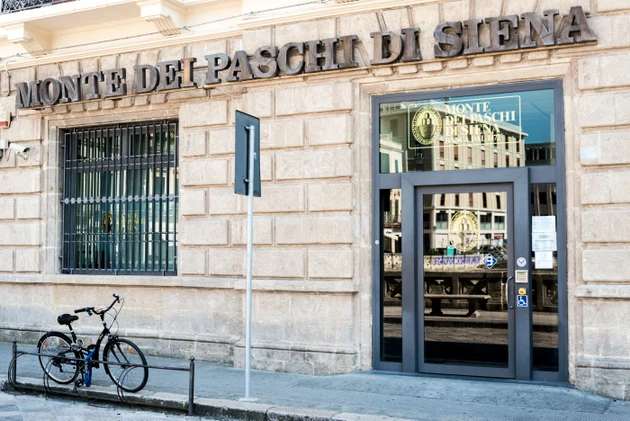
Glass Lewis backs Palermo in Monte Paschi CEO showdown
Glass Lewis backs Palermo in Monte Paschi CEO showdown
Source link
Glass Lewis backs Palermo in Monte Paschi CEO showdown
Source link

Home  Executive Interviews Liquidity CEO Discusses UAE’s Strategic Advantage Despite Regional Turmoil
Liquidity CEO Ron Daniel says UAE operations remain resilient despite war risks, as Israeli firms expand after Abraham Accords normalization
Following the Abraham Accords, which normalized diplomatic relations between Israel and several Arab countries in 2020, more than 600 Israeli companies have begun operating in the United Arab Emirates (UAE). Among them: Liquidity, an AI-driven fintech direct lender that manages a multi-billion-dollar portfolio.
Liquidity’s largest office is now in Abu Dhabi, and its second largest in Tel Aviv. Liquidity CEO Ron Daniel spoke with Global Finance about the latest regional developments amid US and Israeli strikes on Iran.
Global Finance: How are you handling the situation?
Ron Daniel: Well, I have many people on the ground in the UAE and many people in Tel Aviv. In total, that’s more than half of my employees who are in a war zone right now. We are dealing with the situation daily. We continue business, but in both locations, a lot of work is done from home. Our first concern is the safety of our people. If someone wants to relocate to their home country, or outside the main cities, we finance that, but most of the team has been quite resilient.
From the UAE, only a few of our employees went back to their country of origin. Our office is open in Abu Dhabi, but most of our staff chose to work from home. We empower our staff to make the decisions that are right for them and their families. The company is functioning as normal; it’s a bit of a stressful time, but we hope it will end soon.
GF: Iran targeted the US-Israeli interests in the region. How is that affecting Liquidity?
Daniel: Yes, just before the war started, Iranian hackers published a direct threat through Telegram to Israeli companies. That meant we had to take additional measures. We contracted a private security company to ensure our office is safe and secure. Our employees are also able to contact them directly and receive advice for any security-related concerns. Thankfully, we’ve never had to use it because the Emirate authorities have been doing a good job in providing clear information and strong security.
GF: How have attacks on data centers in Bahrain and the UAE affected your business?
Daniel: The situation actually doesn’t affect our business, because our business is global, with multi-billion-dollar assets under management and capital deployed in over 45 verticals across 35 countries. Our research and development centers in Abu Dhabi are unaffected. I believe the UAE remains a very good location for data centers because it has affordable energy and ample land and I don’t see the security issue as a long-term threat. The UAE have intercepted most of the incoming drones and missiles. The region is, in my opinion, still a very good destination for investment.
GF: A big selling point for the UAE has always been its status as a safe haven for investment. Is that still true?
Daniel: I still think it’s a safe haven. If you look at the world, there really isn’t a 100% safe haven. Some investors have left the region, and I think it’s a mistake. It shows a lack of understanding of this region’s strategic advantage. At Liquidity, we don’t do politics. We do business, and as a business, the UAE has been and will remain a very significant hub for us. It sits between East and West, and geopolitically, they are OK with everyone, which is good for business. The security situation is a bit challenging, of course, but I believe it is temporary and will resolve itself relatively quickly. I chose to be in the UAE back in 2020 because it was a strategic location for us, and the current situation doesn’t change anything for me.
GF: You have been a strong advocate of normalization of relations between Israel and the UAE since 2020 – how do you see things evolving?
Daniel: I believe the region is heading towards a brighter future in the long run. I think, taking the fundamentals into account, it is a place that’s good for business and good for people. Overall, the situation doesn’t affect my feelings about the normalization process.
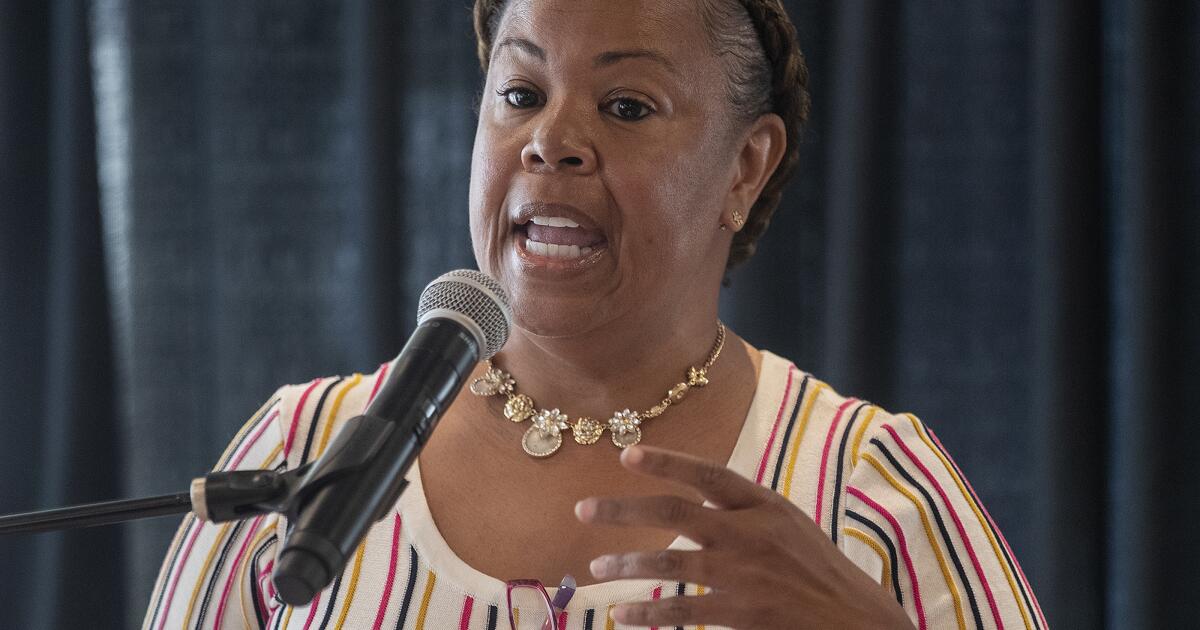
Los Angeles County’s chief executive officer Fesia Davenport, who has been on medical leave since October, has announced that she will resign next month.
In a LinkedIn post, Davenport said she was leaving county service to “focus on my health and wellness.”
A notice to the Board of Supervisors provided to The Times Saturday said she had decided to step down April 16 “based primarily on hereditary and ongoing health issues initially uncovered late last year, the risks of which have become clearer based on more recent medical testing and consultation with my doctors.”
She said the “extraordinary amount of time and energy” required of the chief executive played into her decision.
“Although I originally assumed that I would be able to return to my post, I now know that I would be unable to do the job as it deserves to be done while also prioritizing my health,” she told the supervisors.
Supervisor Kathryn Barger issued a statement Saturday saying, “I’m disappointed by Fesia Davenport’s decision to step down. Her dedication and accomplishments over nearly three decades have left a lasting impact on Los Angeles County.”
Davenport, who was appointed to the county’s top job in 2021, received an undisclosed $2-million settlement last summer to compensate for damage to her “professional reputation” from Measure G, a voter-approved ballot measure that will soon eliminate her position.
In a July 8 letter, released by the county counsel in October through a public record request, Davenport said she sought $2 million in damages for “reputational harm, embarrassment, and physical, emotional and mental distress caused by the Measure G.”
Under Measure G, which voters approved in 2024, the county chief executive, who manages the county government and oversees its budget, will be elected by voters instead of appointed by the board. The elected county executive will be in place by 2028.
Measure G “has had, and will continue to have, an unprecedented impact on my professional reputation, health, career, income, and retirement,” Davenport wrote to county counsel Dawyn Harrison. She said it had “irrevocably changed my life, my professional career, economic outlook, and plans for the future.”
At the time the payout was disclosed, Davenport had begun a medical leave, saying at the time she expected to be back to work early this year.
A lengthy email to her staff, posted on LAist, which first disclosed her resignation, said the unspecified “health crisis” has affected three of her siblings and posed risks to her that “have become clearer based on more recent medical testing and consultation with my doctors.”
Her brother Raymond died in 2018 after “experiencing a sudden health crisis,” she said. Last year, two more of her sisters survived the same health crisis, but one will now require 24-hour care for the rest of her life, she said.
“Although I am not out of the woods yet, I am thankful to the Board for granting me the space to focus on my health and to arm myself with the knowledge I needed to make informed decisions,” she wrote.
The office of chief executive issued a statement Saturday saying chief operating officer Joe Nicchitta will continue serving as acting chief executive officer while Davenport remains on medical leave.
“We appreciate Fesia’s nearly three decades of service to Los Angeles County and all that she has accomplished on behalf of its residents and communities,” the statement said.
Davenport listed a number of accomplishments in her letter to the board, including setting up five new departments maintaining the county’s credit rating when other jurisdictions were being downgraded and “balancing the budget while developing a financing plan to compensate sexual assault victims — the largest settlement of its kind in American history.”
That payout has now come under scrutiny after a Times investigation found that some plaintiffs had been paid to join the class-action lawsuit.
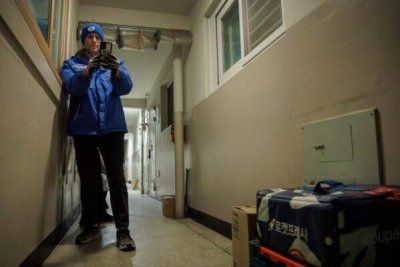

Coupang interim CEO Harold Rogers takes part in an overnight to dawn delivery shift in Seongnam, South Korea. Courtesy of Coupang
March 20 (Asia Today) — Coupang interim CEO Harold Rogers joined an overnight to dawn delivery shift in Seongnam, south of Seoul, after accepting a lawmaker’s request at a National Assembly hearing to experience the job firsthand. Rogers worked from 8:30 p.m. Wednesday to 6:30 a.m. Thursday, taking part in the full process from loading to delivery, according to Coupang and local media reports.
The overnight shift followed a proposal made by Democratic Party lawmaker Yeom Tae-young during a parliamentary hearing in December, which Rogers agreed to at the time. Coupang said the experience was intended to deepen management’s understanding of field operations and strengthen trust by following through on that commitment.
Rogers and Yeom began at Coupang Logistics’ delivery camp in Yatap, where they completed safety training and helped load packages. They then rode with a directly employed Coupang delivery driver, known as a “Coupang Friend,” and delivered orders to apartments, villas and detached homes across Jungwon-gu.
Coupang said it would use the experience to accelerate workplace improvements and strengthen safety management by reflecting feedback from the field. Rogers said he was proud of all Coupang workers, including delivery staff, and pledged to continue building what he described as safe and advanced working conditions.
Separately, Coupang Fulfillment Services said it will begin holding job fairs Monday in Suwon, Daegu and other locations to recruit logistics workers as Rocket Fresh expands. The company said the events will use a one-stop hiring format covering consultation through interviews.
— Reported by Asia Today; translated by UPI
© Asia Today. Unauthorized reproduction or redistribution prohibited.
Original Korean report: https://www.asiatoday.co.kr/kn/view.php?key=20260320010006133
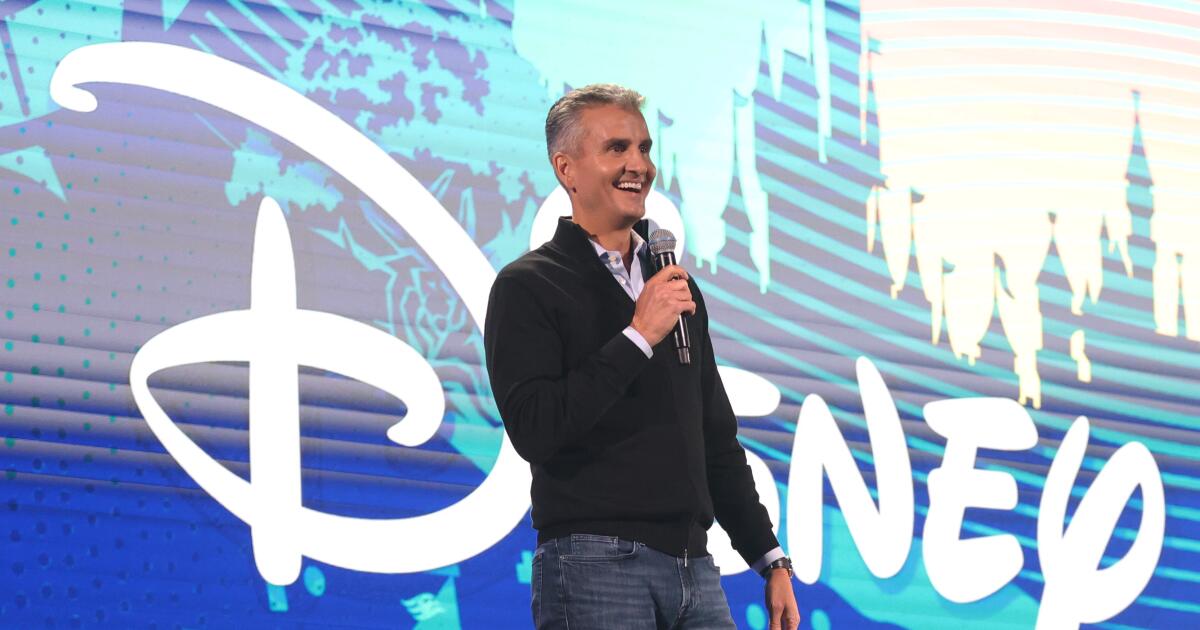
Disney has a new captain, and his eyes are on the stars.
Taking over the reins from Bob Iger on Wednesday, new chief executive Josh D’Amaro signaled a bold shift for the entertainment giant: a future where emotional storytelling remains the “North Star,” but cutting-edge technology provides the fuel.
From ESPN to the Magic Kingdom, D’Amaro said in his first letter to employees as the top boss that his mission is to turn a century of nostalgia into a more personal, high-tech reality for fans worldwide.
“Used thoughtfully, it can empower our storytellers, strengthen our capabilities, and help us create more immersive, interactive and personal ways for people to experience Disney,” he wrote in the Wednesday morning note.
D’Amaro also said he wants the sprawling company, which includes film and TV studios, a tourism division, streaming services and live sports programming, to operate as “one Disney,” saying the global businesses all play a role in deepening consumers’ relationship with the Mouse House.
That connection people have with Disney’s brand is key to the company’s future. Consumers have more film, TV and experiences to choose from than ever, meaning Disney needs to distinguish itself among competitors.
To do that, D’Amaro plans to focus on the emotions consumers feel when they encounter Disney. As an example, he reminisced about his own first visit to Disneyland more than 40 years ago.
He recalled the joy on his father’s face as the two rode Peter Pan’s Flight together. And when they soared over the miniature version of London on the ride, he remembered his father leaning in and saying, “See, I told you. It feels like we’re flying!”
“That feeling of flying I had on Peter Pan all those years ago is still real to me,” he wrote in the Wednesday morning note. “And today, I am honored to move forward with all of you — with ambition, optimism, and absolute confidence in what we can build together.”
That new era also included a goodbye to Bob Iger, who handed over the reins Wednesday and now moves into a senior advisory role for the rest of the year before his planned retirement.
The company paid tribute to Iger in a video during Disney’s annual shareholders meeting Wednesday morning.
With clips from his earliest public appearances as Disney’s CEO, a highlight reel of the acquisitions the company made under his tenure and even a nod to his previous career behind the anchor desk, the video highlighted Iger’s legacy at the company and the role he played in bulking up Disney’s franchises, global theme parks, sports and streaming platforms.
When asked in the video about where he’ll go from here, Iger laughed and replied, “To Disneyland.”
In a pre-recorded speech, Iger said his time at Disney has spanned much of his life and that he never expected to become CEO of the company — much less twice.
“Over the years, we experienced extraordinary change and faced real challenges that were particularly profound in the last three years,” Iger said. “It was daunting at times, but through it all, what sustained me was the passion I saw every day from great storytellers, innovators, leaders and people around the world.”
In his parting remarks during that speech, he expressed confidence in the new leadership team of D’Amaro and Dana Walden, who is now president and chief creative officer of the company.
“I will be cheering on Josh, Dana and all of you as I sail off into the sunset,” he said. “So thank you for the trust you placed in me, for the memories we created together, and for allowing me the honor of serving. It has meant more to me than I can say.”
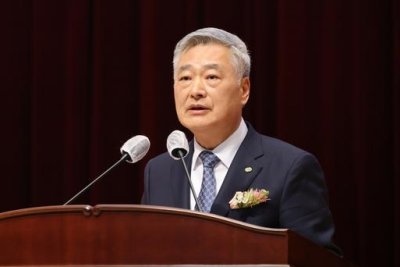

Korea Hydro & Nuclear Power CEO Kim Hoe-chun speaks during his inauguration ceremony
at the state-run company’s head office in Gyeongju on Wednesday. Photo courtesy of Korea Hydro & Nuclear Power
March 18 (UPI) — Korea Hydro & Nuclear Power said Wednesday that new CEO Kim Hoe-chun has officially taken office to lead the state-run company over the next three years.
The chief executive said that he would establish a dual-track strategy of focusing on large-scale nuclear reactors and small modular reactors, or SMRs, at the same time to gain a stronger foothold in the global market.
SMRs refer to next-generation nuclear power plants, which are smaller but considered safer than traditional massive reactors. Korea Hydro & Nuclear Power, or KHNP, has worked on its own models, known as “innovative SMRs.”
“We will successfully carry out already secured overseas projects while pursuing tailored bidding strategies to enter new markets,” Kim said during an inauguration ceremony at the firm’s head office in Gyeongju, around 180 miles southeast of Seoul.
“We will develop the KHNP-style integrated management model as an export product and take a leading position in the international nuclear power market through innovative SMR technologies,” he said.
In June 2025, KHNP signed a contract to build two nuclear reactors in the Dukovany region of the Czech Republic. The agreement is estimated to be worth about $18 billion.
The company also has been competing with global players to win nuclear contracts in other countries.
Before taking the helm at KHNP, Kim spent decades at Korea Electric Power Corp., where he held a series of key positions after joining it in 1985. Between 2021 and 2024, he served as CEO of Korea South-East Power, an affiliate of KEPCO.
Home Executive Interviews Iran Conflict Sparks Risk, And Opportunity, For Egypt: CIB CEO Hisham Ezz Al-Arab
As the regional conflict involving Iran intensifies and shipping through the Strait of Hormuz has nearly come to a halt, business leaders across the Middle East are considering both the risks and potential opportunities. Hisham Ezz Al-Arab suggests that some oil shipments might shift to the Suez Canal.
As CEO and board member of Commercial International Bank (CIB), Egypt’s largest private-sector bank, Hisham Ezz Al-Arab sees first-hand how the war is shaking regional financial markets, disrupting emerging economies, and putting pressure on currencies as investors rush toward safe-haven assets.
Global Finance: How is the current war on Iran affecting the economies and the financial sector of the region?
Hisham Ezz Al-Arab: The region faces a lot of uncertainty as markets react more strongly than they did during last June’s 12-day war. Oil prices crossed the $100/bbl mark for the first time since 2022 as a result of the closure of the Strait of Hormuz, which controls around 25% of global oil and 20% of gas shipments, in addition to refineries that shut down due to security risks. This poses a key risk on GCC countries, particularly Qatar and Kuwait with both high oil production and reliance on the Strait of Hormuz, as well as increased freight and insurance costs.
GF: What is the impact on Egypt?
Ezz Al-Arab: In the short term, the situation impacts Egypt in terms of the uncertainty. Emerging markets — including Egypt — have seen major portfolio outflows, particularly placing pressure on the Egyptian pound and reversing its progress against the US dollar over the past year to reach an all-time low. This has subsequently triggered a hike in safe-haven assets, including USD and gold, as risk-averse investors have reallocated their investments from emerging markets. In the long term, risks include inflation re-accelerating and Central banks keeping rates on hold.
GF: What is your take on the currency adjustment?
Ezz Al-Arab: I think the central bank (CBE) is doing an excellent job with its flexible approach to managing the exchange market, particularly regarding cash repatriation. With a significant volume of carry trades being unwound — estimated at roughly $7 billion–$8 billion out of a total $35 billion–$40 billion — the CBE has allowed the pound to move from approximately 47 to 53 EGP per dollar. In the past, this was not possible. We had fixed rates, which drove capital away, rather than retaining it. The shift to a flexible exchange rate framework has proven to be a critical tool in absorbing external shocks, and I think the CBE will not hesitate to let the pound gradually drift as long as more money is coming out.
GF: Can you see some opportunities for Egypt?
Ezz Al-Arab: I believe the conflict provides an opportunity for Egypt as it hosts alternatives to the Hormuz Strait: The Sumed pipeline (2.5mb/d capacity), as well as being a possible bridge to Saudi Arabia’s Red Sea pipelines (5mb/d capacity). This places Egypt as a strategic partner in the current crisis as well as provides the country with preferential access to a congested oil market.
Additionally, the situation will positively impact the Suez Canal. The ships that used to go through the Strait of Hormuz to reach Gulf nations will likely now unload in Jeddah and Yambu on Saudi Arabia’s Western coast. So whatever is coming from Europe will now go through the Suez Canal with a lower risk, as well as all the traffic coming to Saudi or out of Saudi, even in terms of oil or products. Another potential upside is that recent regional tensions may prompt some travelers to consider alternative destinations, and Egypt remains well-positioned given the strength and diversity of our tourism sector.
GF: How is the situation affecting the 3 million Egyptians employed in the Gulf, especially in Saudi Arabia and the UAE?
Ezz Al-Arab: I think whoever doesn’t have a second residence in Egypt will start to think about buying one, and that should have a positive impact on demand for real estate. But on the other hand, we wouldn’t like to see the economy in the GCC being impacted because potential job losses or an exodus of workers could ultimately lead to a decline in remittances.