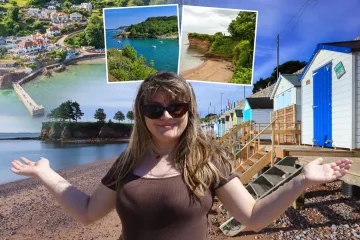
A HIDDEN Greek island is set to boom next year thanks to a major blockbuster movie.
Ithaca in Greece is known as being the home of Odysseus from Homer’s Odyssey.
Ithaca in Greece is known as being the home of Odysseus from Homer’s OdysseyCredit: AlamyThe island has pretty beaches as well as quaint villagesCredit: Getty
And thanks to the recent Hollywood movie release, the island is expecting more tourists.
Quieter than its famous neighbours, you’ll find olive groves across the island as well as secluded coves that are ideal for snorkelling.
Sign up for the Travel newsletter
Thank you!
In the capital, Vathy, you can head to one of the world’s largest natural harbours.
The town is also home to an Archaeological Museum with artefacts dating back to the Roman times.
And if you hadn’t had enough of museums, you could then head to the Nautical and Folklore Museum, which dates back to 1923 and showcases the lifestyle of Old Ithaca.
Like many places in Greece, there are also a number of archaeological sites to explore such as the School of Homer.
Or you could visit Aestos – an ancient acropolis sat on a hilltop.
According to Sunvil, the island has “barely changed for centuries” making it the perfect Greek holiday without the crowds and influences of modernity.
Across the island there are also a number of historical sitesCredit: Getty
There are several beaches across the island to explore including Gidaki Beach, which is a white pebble beach with clear waters.
Filiatro Beach is probably the most accessible; it is a short drive from Vathy.
At the beach you can rent a sunbed and there is a small beach bar as well.
A recent visitor said: “Love this beach, parking simple, turquoise waters, calm, great for snorkeling, toilets available, paddle boards to hire kept our kids happy, loads of shade under the olive trees.”
From Ithaca you can also head to a number of other islands, including Kefalonia and seasonally to Lefkada, Corfu and Zante.
There are lots of places to stay on Ithaca, though most of the options are villas – including ones with breathtaking views and pools.
The best way to get to Ithaca is by flying to Kefalonia Airport, which costs from £28 per flight.
The drive is around 30 minutes to the port of Sami where you can catch a ferry over to Ithaca, which takes around another 30 minutes.
The abandoned settlement was one a busy town(Image: Getty)
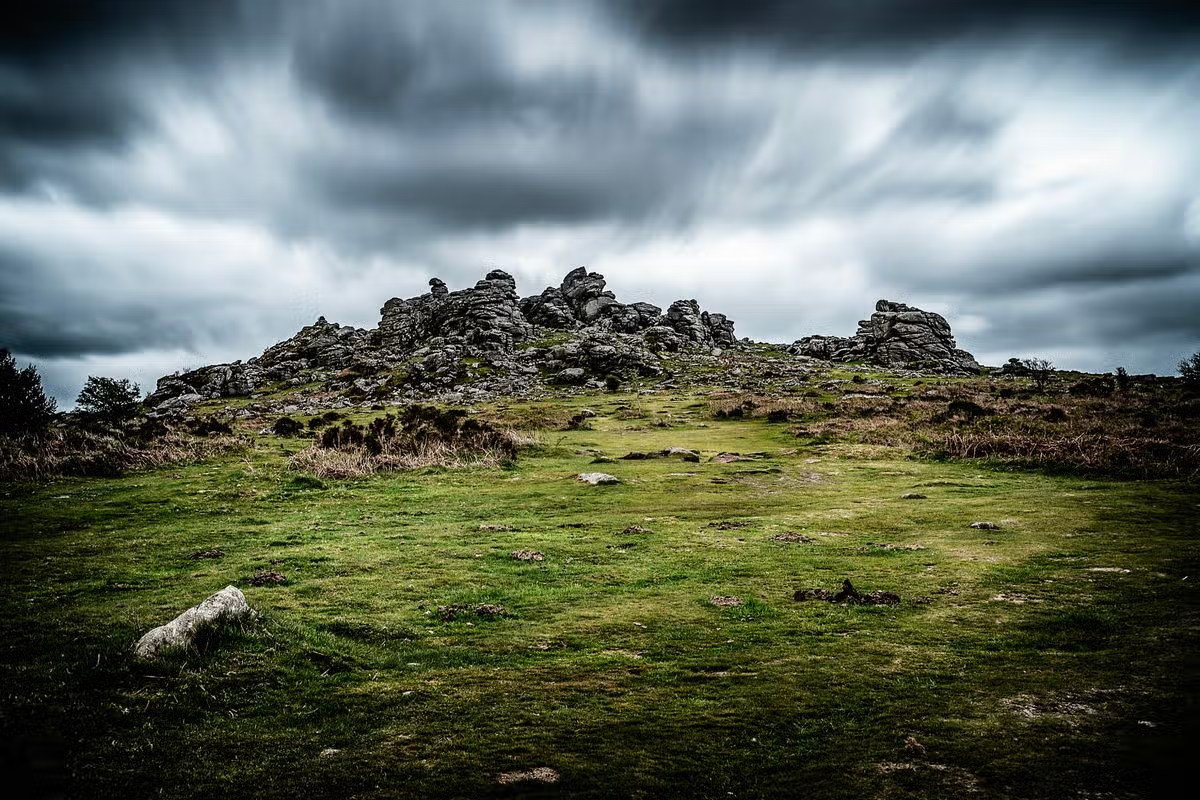
Perched atop a hillside in the back of the UK’s most beautiful areas are the ruins of a once thriving town. Tucked away inside Dartmoor National Park in Devon is the remains of the medieval settlement known as Hundatorra – a town which was once home to several households, and named in the Domesday Book.
Lying beneath the shadow of Hound Tor is the ancient ruins of this once bustling town. The whole settlement has an eerie feel to it – in fact, it’s thought that the area was created by the curse of a witch.
According to legend, the rock formations atop the Tor are the remains of a hunter and his dogs who ran foul of a coven of witches and were drowned in a mire as a result.
As a final insult, the witch turned the hunter and his dogs to stone – and they are what you can see looming over the ancient settlement of Hundatorra.
Historians think this land has been farmed since as early as the Neolithic Age – but by the 15th century the village was completely abandoned.
No one is exactly sure why this town, once bustling with agriculture and life, fell away – but according to Historic UK there are some theories.
The first is that during the 14th century, the weather across not only Britain but all of Europe deteriorated.
Extraordinarily cold winters, chased by cold, wet summers, meant that farming became very difficult. This led to what’s now known as the Great Famine of 1315 -1317. Smaller famines continued through the 14th century which led to the average life expectancy to plummet to just 29 years old.
Now, it’s thought that this devastating weather which led to such misery was actually caused by a volcanic eruption in New Zealand.
Around 1314, the eruption of Mount Tarawera is thought by some scientists to have sent aerosols into the stratosphere which in turn disrupted global atmospheric circulation and depressed surface temperatures, leading to unsettled weather.
The second theory as to why Hundatorra was abandoned is that famine was not the only threat to life medieval Brits had to deal with. In 1348, the Black Death touched down on English soil and by its end, a third of Devon had been wiped out.
During the Black Death, the average life expectancy was just 17.
Now, the ruins of the town still stand atop the hillside as a reminder of those who came before.
The remains of four 13th century longhouses where Medieval Brits lived alongside their livestock, three barns , and three other unidentifiable buildings can still be seen. The barns appear to have been adapted to include corn dryers – a sign of the desperation to harvest despite deteriorating weather.
The historic abandoned village is steeped in history and is said to have inspired an iconic novel Jane Eyre
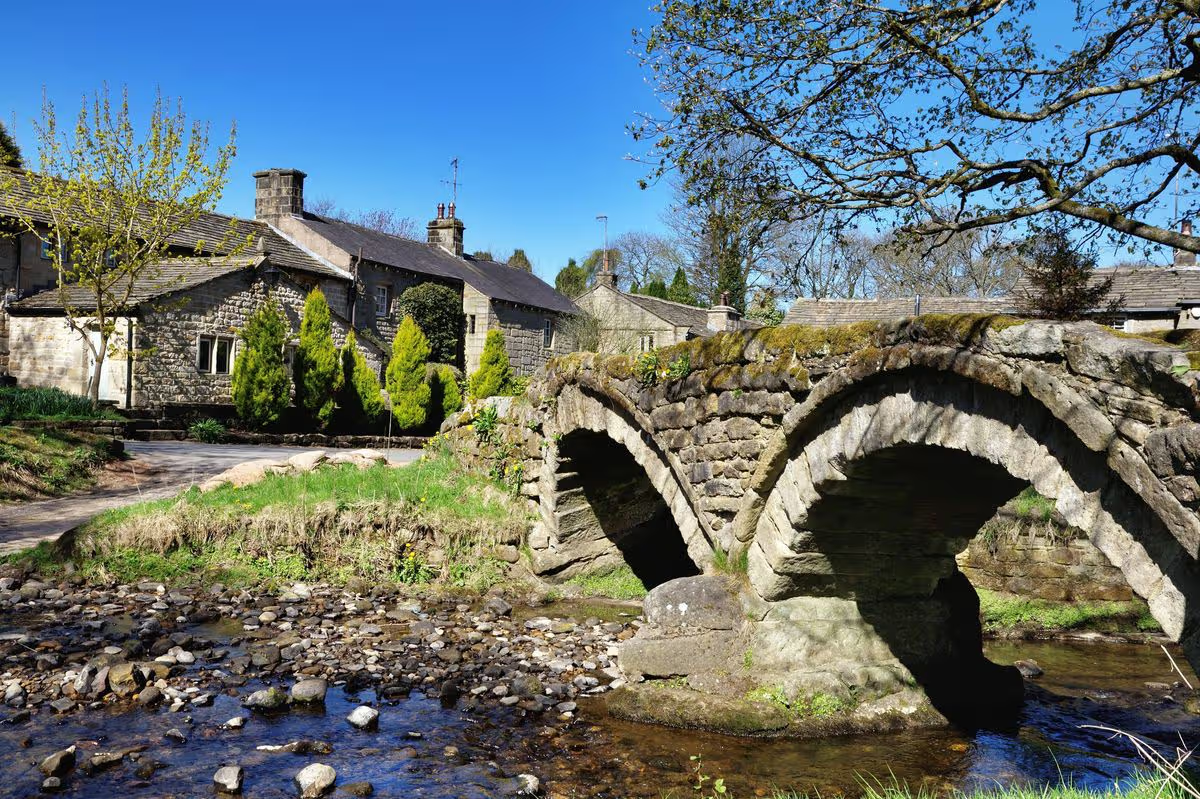
There is a 13th century packhorse bridge(Image: Khrizmo via Getty Images)
Just four miles from Colne sits the historic village of Wycoller, providing a remarkable glimpse into a long-forgotten era, boasting ancient ruins and a compelling literary heritage.
This abandoned village is particularly celebrated for its ties to the legendary Brontë sisters, who made their home in nearby Haworth.
In her seminal novel Jane Eyre, English author Charlotte Brontë created a fictional setting, Ferndean Manor, widely believed to have been inspired by the present-day ruins of Wycoller Hall.
From the 16th through to the 18th century, the hall stood as the village’s centrepiece, dominating the surrounding landscape and almost certainly catching the eye of the author during her travels through the region.
The novelist was known to visit Gawthorpe Hall as a guest of the Kay-Shuttleworth family, and it is widely thought that on these journeys, this striking structure fired her imagination.
The telling clue lies in her depiction within the novel of the approach to the Manor along the old coach road, which bears a striking resemblance to Wycoller Hall. Sadly, today only rubble and remnants remain of what was once a vibrant and picturesque community, reports Lancs Live.
After years of abandonment, local volunteers stepped in to save the village during the 1940s, with Lancashire County Council later taking ownership of the site. Now forming part of Wycoller Country Park, the site is open to all those who wish to explore and wander amongst its historic remains.
Among the heritage highlights, visitors can discover several bridges spanning the peaceful beck that winds through its heart.
Clam Bridge stands proudly amongst these ancient structures, regularly crossed by park visitors, with origins stretching far beyond the 19th century and the era of the Brontës. This bridge is believed to be an ancient monument, over 1,000 years old – and it’s not the only testament to the area’s deeply-rooted history.
Another equally impressive bridge in Wycoller is Sally’s Bridge, which earned its fame by featuring in the film The Railway Children. It has stood the test of time, with origins traced back to the 13th-15th century.
Clapper Bridge likewise comprises substantial gritstone slabs resting on piers, thought to date from as early as the 16th century.
Artefacts unearthed amongst the remnants of this deserted village reveal evidence of human settlement stretching back to the Stone Age.
The site continues to draw visitors today, who come to explore the ruins and uncover the stories of those who once called it home.
Preservation measures are firmly in place to protect its unspoilt charm, keeping modern intrusions well away. This includes a car-free zone, meaning no accessible roads reach the village, which can only be approached on foot, unless you are a resident holding a permit.
One visitor documented their trip on TripAdvisor, writing: “Wycoller is such a cute, picturesque little place. It has a lovely stream for sitting by or paddling in. There’s plenty of shade in summer, from the huge trees.
“There was also a small exhibition, some ruins and well preserved stone bridges. It’s not a long walk but it’s perfect for a picnic and/or for the kids to paddle in the stream.”
Another added: “Beautiful place to go with amazing sights and a lovely shop for snacks and a warm drink. There are also different little trails and bridges to go over and plenty of ducks to feed. I recommend this to anyone who fancies going out for the day to be in touch with nature.”
One of my favourite recent photographs is of me (unusually), perched on the bonnet of our car, about to set off on a solo, two-week road trip from our Sussex home to the wilds of Scotland, taking in Eryri (Snowdonia), Lancashire, the Lake District and Yorkshire. I had no idea that the research trip I was about to embark on – for my book, which traces the story of British holidays over 400 years – was going to reveal my homeland as somewhere I barely knew.
As a southerner, it was the northern half of Britain that I needed to discover. I’d stitched together my route with visits to museums, archives and classic seaside resorts that had once blazed so brightly. I’d visited Cumbria before, but the Conwy coast, the Lancashire countryside, Blackpool, Morecambe, Scarborough? All these were unknowns.
My first stop was Eryri, where it turned out my hotel, the Royal Oak in Betws-y-Coed, had been welcoming artists such as JMW Turner since the late 18th century. Fifty years later, it became the hub of the country’s first artists’ colony, drawn here by the dramatic beauty of the dense, bottle-green swathes of the Gwydir Forest and the spectacular peaks of the Glyderau range and Moel Siabod.
Llandudno has one of the most complete Victorian promenades in the UK. Photograph: James Clarke/Alamy
Over coffee, hotel manager Katie Valentine told me about the artists who called the area home – David Cox, Henry Clarence Whaite and Thomas Collier among others – at least until Betws railway station opened in 1868. “At that point,” she said, “many moved to houses further up the valley, grumbling that the place was becoming flooded with tourists.” As I would discover on this journey, it seems overtourism is far from a contemporary travel trend.
From Eryri, it was a short hop to Llandudno, a beach town so pristine it felt a little like a Victorian theme park resort. “In some ways it is,” Judith Phillips, trustee of the Llandudno Museum, told me. “The family who built Llandudno in the mid-19th century – the Mostyns – still own much of it now, and control everything from what colours people can paint their hotels to what businesses are allowed on the promenade.”
The Llandudno Museum made plain that much of our history is not in the great city museums, but in libraries, archives and small museums on quiet high streets, often run by passionate volunteers with an encyclopaedic knowledge of their local heritage.
Driving from Llandudno up to Lancashire along the North Wales Expressway, I whipped in and out of tunnels, emerging to see great swathes of the cobalt-blue Irish Sea stretching to the horizon.
Further into my journey, I was pointed towards early editions of the very first guidebooks to the Lake District, written by Thomas West and William Wordsworth, at the Armitt Library in Ambleside; shown handwritten letters by Queen Victoria at Blair Castle (including her personal recipe for potato salad); and told wonderful stories of Wakes Week holidays in Blackpool by the dapper Richard Croisdale at Blackburn Museum – their longest-serving volunteer, at a sprightly 90 years old.
Annabelle Thorpe drove up from Sussex to the Highlands via north Wales and Lancashire. Photograph: Annabelle Thorpe
Blackburn’s grandiose Victorian museum and Bolton’s neoclassical town hall stand as legacies of the era when Lancashire towns were affluent manufacturing bases home to tens of thousands of factory workers. The Georgian streets of Richmond are like a mini Bath, but steeped in Yorkshire heritage. But perhaps nowhere confounded my expectations more than Blackpool.
Arriving on a Friday night, the promenade buzzed with lights and life; the illuminations blazing all the way to the tower, kids skipping along the seafront entirely unaware they had been brought to one of the most deprived towns in the country. “We are a town of extremes,” said Claire Smith, co-owner of the chic Number One South Beach B&B. “We have pockets of absolute joy next to complete caverns of woe. There’s no blending. It’s either amazing or awful.”
Claire and husband Mark shared stories of Blackpool in the 1970s, not least his coming back from the pub as a teenager to find his parents had let his bedroom – along with their own – to guests, leaving them to sleep in the lounge. This was the era when guests queued in their dressing gowns to use the bathrooms, landladies locked the doors between mealtimes, and peach Melba was the height of culinary flair.
“They were simpler times, people expected much less,” Claire told me, a little wistfully. “But I do think people were happier.” There’s still plenty of joy to be found, though. When I visit the Pleasure Beach as it opens on a Sunday morning, families are streaming in; the first coasters rattling skywards; a general air of giddy excitement that is a stark counterpoint to the rundown streets elsewhere in the town.
So many of my preconceptions were corrected or reversed: the elegant St George’s Hotel in Llandudno showed me that not all grand dame seaside hotels are faded or old-fashioned. And while we do love to run down our own seaside resorts, I saw beaches to rival anything the Med has to offer, from Scarborough’s South Bay to Morecambe’s vast, empty sandscapes.
Nowhere confounded Annabelle’s expectations more than Blackpool. Photograph: Alex West/Getty Images
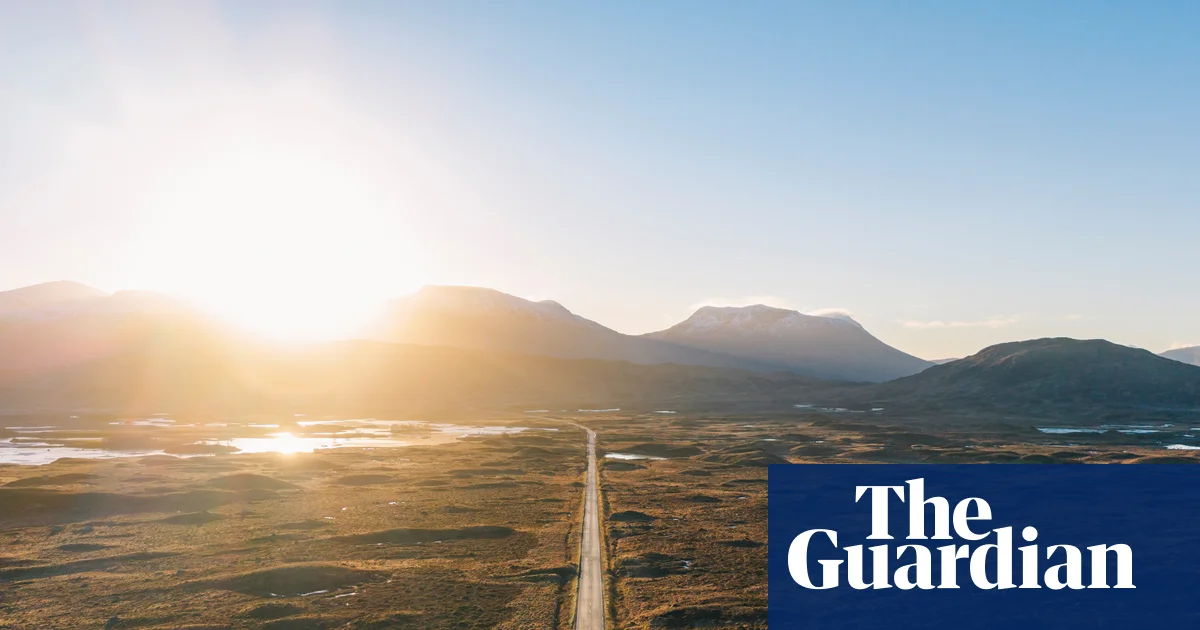
Beyond the seaside, it was Scotland that really blew my mind. Following in the footsteps of William and Dorothy Wordsworth, who toured the Highlands and Lowlands for six weeks in 1803, I headed up the western flank of Loch Lomond, entirely unprepared for what I was about to discover. Dusk was falling as I drove across Rannoch Moor – a silent, pockmarked moonscape that seemed entirely bereft of life, save for a lone pair of car headlights, somewhere up ahead. And then, in the distance, great, hulking mountains began to rise up, guarding the entrance to Glen Coe. It is a landscape so forbidding that when I pulled up at the Three Sisters viewpoint, I was genuinely relieved to see another couple, so I didn’t have to stand alone among the ominous peaks.
Scotland had stories, too: from the spruce and redwood trees planted in Glen Coe by Lord Strathcona in the 1890s to make his Canadian wife feel at home, to Queen Victoria taking the first ever fly-and-flop (train-and-flop, perhaps more accurately) at Blair Castle in 1844. Her visit was hosted by the 6th Duke of Atholl, who promised the security of his own private army (and who had to move out of his own castle during the royal stay). It was the beginning of a royal love affair with Scotland that led to the purchase of Balmoral in 1852.
When I got home from the long road trip – 13 days and 1,600 miles later – my husband took the same photograph of me perched on the car. It had been more of an adventure than I could have ever imagined – to lands unknown on the island I call home.
The Great Escape: Britain’s 400-Year Love Affair with Holidays by Annabelle Thorpe (£18.99, DK Red) is available now. To support the Guardian, buy a copy from guardianbookshop.com for £17.09